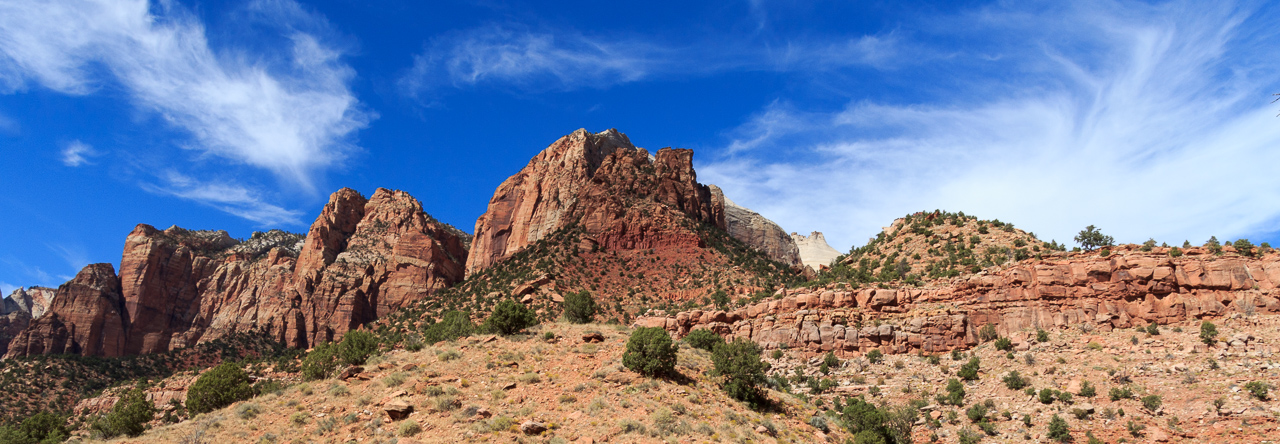
Black Hills, South Dakota – Part III

Crazy Horse Memorial: Respected Tourist Attraction or Rip Off?

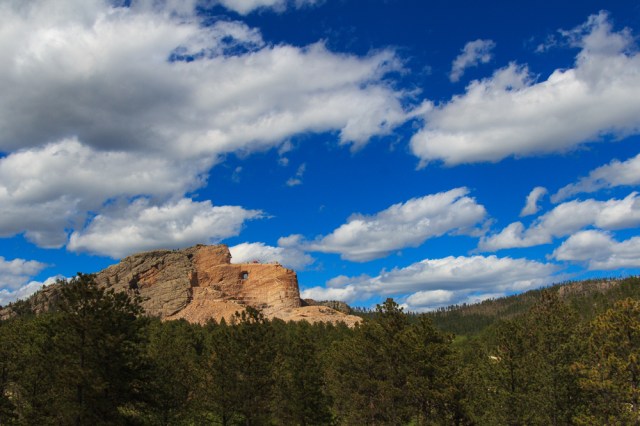
I wasn’t sure what to expect from the Crazy Horse Memorial. A woman had told us it was more of a tourist trap. “Why pay for something you can see from the road?” she said. “That family is ripping people off.” It’s true, you can see the memorial from the road, but I had no idea why the family raised the hackles on the back of her neck.
IMG_2447

Everyone else told us we had to see it. So, we paid the price of admission, $22 for both of us and only $28.00 for a car with more than two people. Those prices seemed reasonable to me.

Had we only viewed the sculpture from the road, we would have missed learning about the man behind the sculpture, how the memorial came about, and of course the American Indian artifacts and the arts and crafts in the Indian Museum of North America. And I would never have been able to zoom in close enough to capture a view of the work on the mountain.

At 87 feet and 6 inches, Crazy Horse’s face dwarfs the construction equipment and crew. Between and below the red and yellow pieces of equipment, there is a dark speck. This is the spot where two men stand on one of the slanted ledges. Zooming in further, one of the men appears to be working with what looks like a jack hammer. Looks like a dangerous task to me.

IMG_2445

The amount of work that has and will go into this creation, astounds me. From the infrastructure consisting of roads to allow access for heavy equipment to the safety measures required for handling explosives and working on the side of the mountain, it seems an impossible feat. All of this activity gave me a glimpse into the complexities of the making of Mount Rushmore.

Background

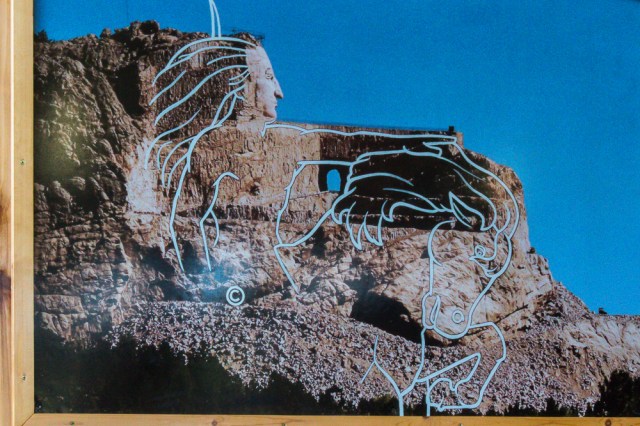
In 1939, Henry Standing Bear, an Oglala Lakota chief, commissioned Korczak Ziolkowski to sculpt a memorial that would honor Crazy Horse, an iconic Native American who fought against the U.S. military in the Battle of Little Bighorn in June 1876.
 

IMG_2453
Drawing on Monument Superimposed on Photo of Thunder Mountain


Korczak Ziolkowski began working on the project in 1947 with the first blast on June 3, 1948. In 1950, he married Ruth Ross who came to the Black Hills to work on the memorial in 1948 with a group of young volunteers. Korczak and Ruth had five girls and five boys.

What attracted the twenty-two-year-old woman from Connecticut to the Black Hills of South Dakota when the area lacked basic infrastructures? Why would she leave the comfort of her home for the wilds of the west? According to Wikipedia, Ruth first met Ziolkowski when she was thirteen. Had Ruth harbored a love for Korczak for nine years? Or did their love grow after her arrival?

When Korczak died in 1982, Ruth and her children took over the construction and many of the family members still work on the project keeping Korczak’s dream alive. The family completed Crazy Horse’s face in 1998 and work continues today.

Except for the gift shop, which is operated by a private company, the memorial, visitor complex, and all activities are conducted under Crazy Horse Memorial Foundation, a 501(c) 3 nonprofit organization. The organization files an IRS Form 990 and is audited annually. No federal or state funds are used to finance the construction of the monument. The cost of construction comes mainly from contributions and admission receipts.

Included with Admission

Admission includes a return trip at night to view the laser show. For an additional fee of $4.00, visitors can take a bus tour to the base of the mountain. Or, become a Crazy Horse Story Teller for $125.00 and travel to the construction site to see the work in progress. We opted out of the bus tour and visit to the construction site. We found plenty to look at in the visitor complex which includes the sculptor’s log home, studio, bronze showroom, and the artist’s workshop. Also, there is an orientation film and a 1/34 scale model of what the finished memorial will eventually look like if it is ever completed.
IMG_2443
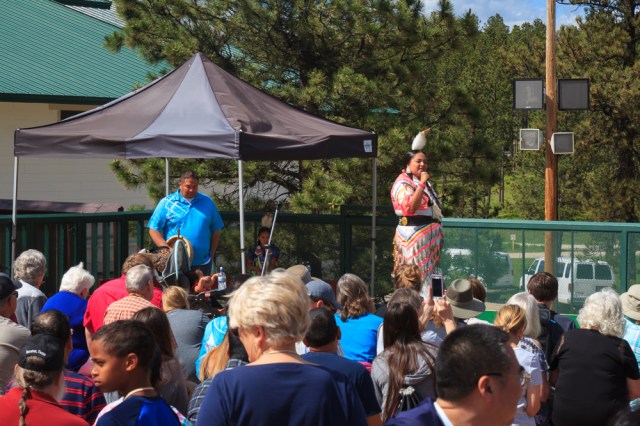
Dancing and Singing Demonstration on the Patio
IMG_2442
This Frame Shows Colors From Nature Used in Weaving 
IMG_2440
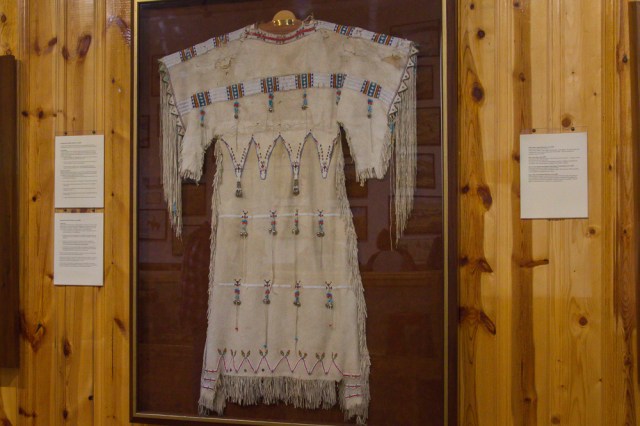
Native American Beaded Dress

Controversy

A certain amount of controversy surrounds the monument, although not discussed at the visitor center, or at least not that I saw. Of utmost concern is the amount of time the memorial has taken to construct. Since 1948, the warrior’s face is the only portion of the monument that the Ziolkowski family has completed thus far. Work is currently underway on the outstretched hand and the horse’s mane and there does not seem to be an end date for completion of the entire structure.

The second controversy is the way Ziolkowski depicted the outstretched hand in the model with a pointing finger. In his article, Mistake on the Mountain, David B. Conrad stipulates “the traditional American Indian . . . does not point with the solitary index finger.” He cites three sources as evidence that Oglala Sioux, the same tribe as Crazy Horse, would point using his thumb, not a forefinger. Perhaps Conrad’s article had the desired effect of inspiring individuals to contact the Ziolkowski family so they could make the necessary corrections.
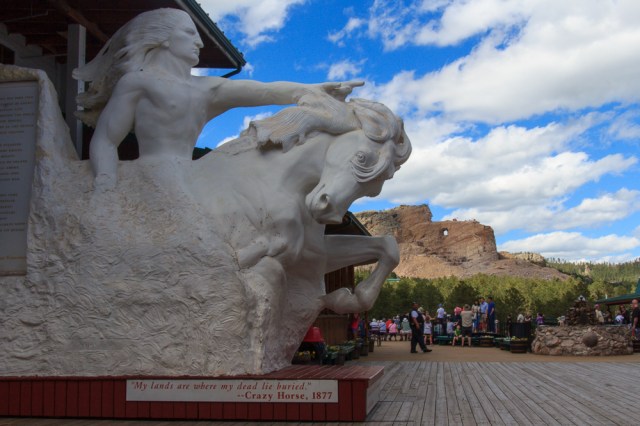
IMG_2452
Model of Crazy Horse Monument with Thunder Mountain in the Background

Although Korczak Ziolkowski selected Crazy Horse as the model for the monument, photographs of the man do not exist so there is no way the memorial will represent his likeness. Ruth Ziolkowski emphasized the monument is a memorial to a race of people and not to just one man.

The fourth controversy is that descendants of Crazy Horse object to the use of their ancestor. They claim Chief Henry Standing Bear had no right to ask Ziolkowski to create the monument and feel that carving up the hills as a memorial is a desecration of their Indian culture.

Conclusion

After reading the stories of controversy, I understood why the woman I met might not have fond feelings toward the memorial or the family. But what about the “ripping off” comment? I dusted off my CPA hat and read the 2014 IRS Form 990. Yes, family members receive compensation for work they do for the organization. However, I did not see anyone receiving compensation that was out of line for the position they held within the organization or due to the size of the Foundation compared to non-profits of similar size. In addition, several outside directors determined compensation for the more highly compensated individuals. I was also pleased to see the organization receives regular audits of its financial statements.

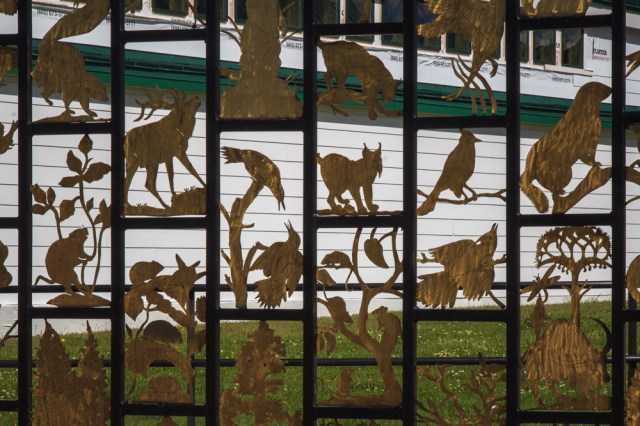
IMG_2454
Black Hills Nature Gates Captured our Curiosity
IMG_2455
Close Up View of Nature Gates

We were glad we had visited the Crazy Horse Memorial. It is so much more than the carving on the mountain. The dedication of the family to see their father’s dream come alive was inspiring, the Native American arts and crafts were interesting, and the artifacts and historical significance were thought-provoking. I believe it is best at this point that the family continues their work. The partially carved up mountain would only be an eyesore in the beautiful Black Hills if they were to abandon Korczak’s dream. In the future, I’ll be watching the slow artistic progress as it unfolds on Thunderhead Mountain.

Safe Travels

Black Hills, South Dakota – Part I

Welcome to the Black Hills of South Dakota, home to Mount Rushmore and Crazy Horse monuments and so much more.

IMG_2806
Yeah! We Made it to the Black Hills.

We selected Buffalo Ridge Camp Resort in Custer, South Dakota, our base camp in the Southern Hills for eight nights starting on June 18, 2017. We never know what we are getting when we make reservations. As we drove up a small hill on the gravel road, I wasn’t sure we had chosen wisely. All doubts flew away, however, when we crested the hill to see the large expanse of grassy knolls and RVs tucked up under a stand of large pines. Buffalo Ridge is also a great place for tent campers with cabana/shelters, picnic tables, fire rings, and plenty of grass between sites.

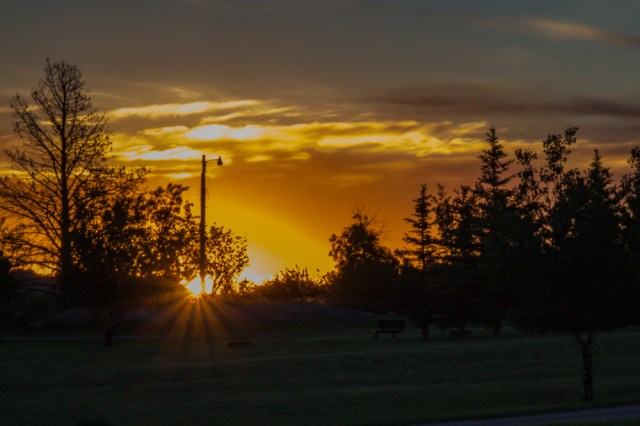
I couldn’t resist including this sunrise at Buffalo Ridge.

IMG_2457
Sunrise at Buffalo Ridge Camp Resort

Hill City

Hill City, established in 1876, is a cute little town with restaurants, shops, art galleries and of course a Harley Davidson store.

IMG_2436
Restaurant in Hill City
IMG_2437
Hill City Harley Davidson 

Once a thriving tin mining town, industries that support the city today include timber, tourism, and telecommunications. The art scene is also on the rise in the town, like this sculpture by John Lopez.

IMG_2438
John Lopez Horse Sculpture

How many objects can you identify in the sculpture?

The Alpine Inn served up a delicious French dip with fruit on the side and we didn’t even have to wait. We had heard that since the restaurant does not take reservations, the lines could grow long. Oh, and you can leave your credit card at home, they only accept cash and checks.

IMG_2431
Get Your Name on the List Early to Avoid Long Waits at the Alpine Inn

With all of the usual types of gift and souvenir shops, one store stood out. Art Forms Gallery, a co-op of twenty Black Hill artists offer a great variety of paintings, jewelry, woodwork, hand woven scarves, photography art books, and other artistic items for sale. It was nice to have a selection of goods made by local artists to browse through.

The 1880 Train

The Black Hills Central Railroad and the 1880 Train is what drew us to Hill City. We were too late to ride the train the first day we visited, so we returned a few days later. The steam locomotive, which takes three hours to prepare, pulls the train up and down 4% to 6% grades to Keystone over the course of the two-hour twenty-mile round trip.

IMG_2689
Locomotive Spewing Steam
IMG_2699
Engineer Patiently Waiting for Locomotive to Warm Up
IMG_2691
Water Tower Used to Refill Locomotive

The Black Hills Central Railroad does a fantastic job renovating the cars and locomotives. Prefer a cushy seat? Grab a leather one in one of the enclosed cars. All of the windows open and close easily.

IMG_2700
The Seat Backs Flip From One Side to the Next. No Matter the Direction, Riders Face Forward.

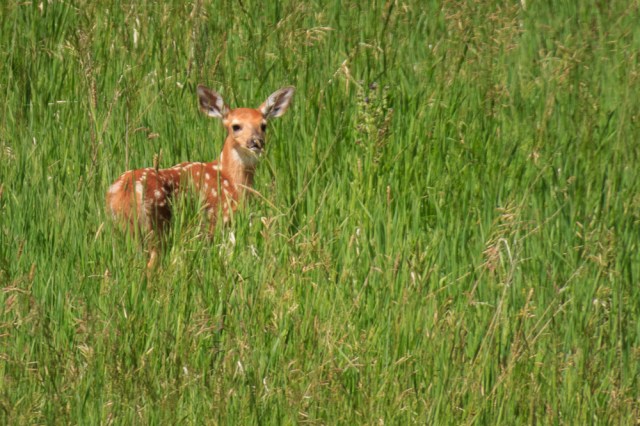
We saw Tin Mill Hill, Black Elk Peak, Elkhorn Mountain, and Old Baldy Mountain from the windows of the train cars among the farms, abandoned properties, and deer grazing in the fields. Here is a sampling of sights seen on the train ride from Hill City to Keystone.

IMG_2766
Bambi in the Grass
IMG_2761
Cold Storage Built Into Hill
IMG_2750
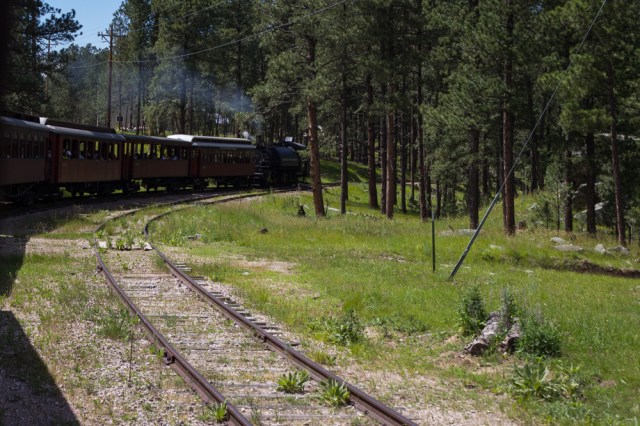
One of the Many Curves on the Route
IMG_2753
Farm Seen From Train
IMG_2754
Abandoned Buildings
IMG_2760
Wooden Cabin
IMG_2745
Did the Boulder Fall on the Building or Was the Building Built Under the Boulder?
IMG_2704
Another Abandoned Building

Keystone

We got off the train to browse the shops selling T-shirts, hats, Native American art, leather goods, jewelry, and candy and check out which restaurant might satisfy us for lunch.

IMG_2717
Motorcyclists are Common in the Black Hills
IMG_2708
The Keystone Mercantile Sells Just About Everything

The Ruby House looked like a good bet and when I crossed the threshold, I thought time had shifted to the 1880s. The gold and red velvet wallpaper lining the walls, brass chandeliers hanging from the ceiling, and the paintings of cowboys, Indians, and portraits of people in their latest fashions of the day hung on the walls created an immersive atmosphere.

IMG_2718
Ruby House Restaurant a Great Place to Eat.
IMG_2714
Ruby House Restaurant Interior

After exploring the stores and filling our bellies, we arrived early at the train depot and watched the locomotive pull into the station.

IMG_2722
Train Arriving At Keystone Depot

Be sure to sit on the opposite side of the train when returning to Hill City so you can see what you missed on the way to Keystone.

Stay tuned for future posts which will detail Mount Rushmore, Crazy Horse, Needles Highway, and other sights.

Safe Travels

Rawlins and Douglas, Wyoming

We pulled into Western Hills RV Park in Rawlins, Wyoming on June 15, 2017, for a one-night stay. The doors nearly flew out of our hands when we opened them to step out. Sand pelted my bare legs as Jon and I set up the trailer. What was up with all the wind? Good thing we weren’t staying more than one night.

On to Douglas KOA in Douglas, Wyoming and more wind. The wind was great when it pushed us down the road, not so much when it hit us broadside. After driving for about an hour, I realized we were going the wrong way. That will teach us to rely on only the GPS. Back to using a paper map.

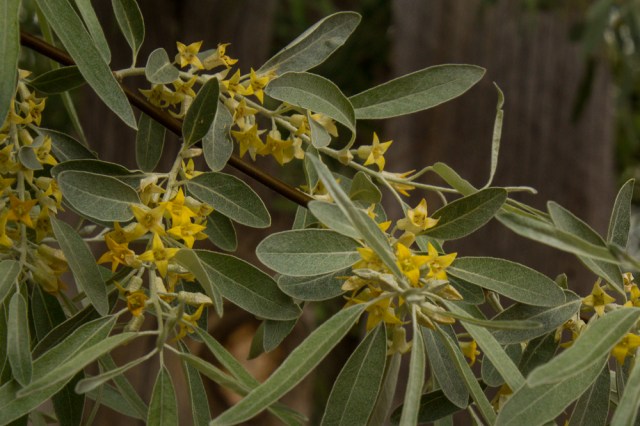
When we stepped out of the truck at the Douglas KOA, the most wonderful perfume greeted us to the RV park. Was that scent coming from those dusty leafed trees with yellow flowers?

IMG_2379
Campsites at Douglas KOA
IMG_2416
Russian Olive Tree Blossoms

Yep, they were Russian olive trees. Once used as a drought resistant windbreak, the state now considers them a noxious weed, banned from sale by nurseries. Also, county weed and pest control departments throughout the state are required to determine whether removal or control is warranted. Although I wanted to bottle the smell and take it home with me, I had to be satisfied with enjoying the aroma while in Douglas and then say goodbye.

Two nights in Douglas allowed us to explore a few places in the area. First up was the Douglas Railroad Interpretive Museum. They had a restored train engine and a few cars on display.

IMG_2380
Douglas Railroad Interpretive Museum
IMG_2393
Train Cars and Depot at Douglas Railroad Interpretative Museum
IMG_2403
Caboose and Depot at the Douglas Railroad Interpretive Museum

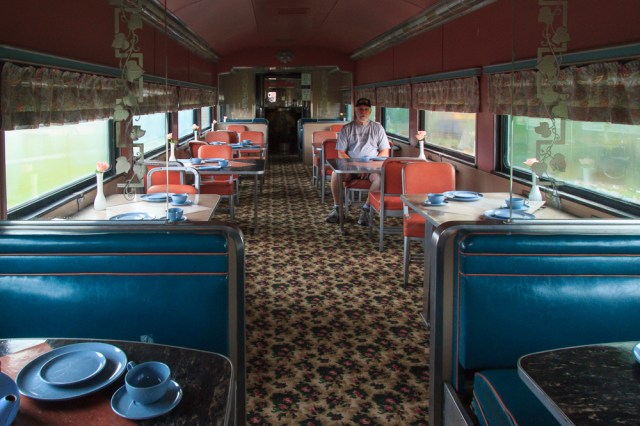
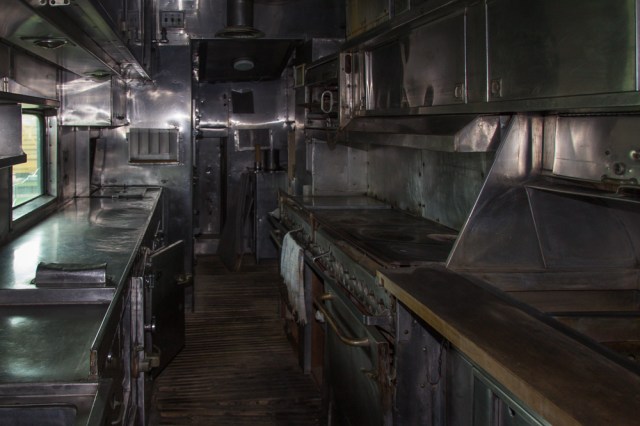
The dining car was impressive as was the gleaming stainless steel galley.

IMG_2395
JT is Ready for his Meal in the Restored Dining Car at the Douglas Railroad Interpretive Museum
IMG_2396
Tables Set for Customers
IMG_2399
Galley in Dining Car at the Douglas Railroad Interpretive Museum

Many towns claim to have the original Jackalope and Douglas is known as the first town to claim such a creature. The city’s version is this statue.

IMG_2405
Jackalope Statue

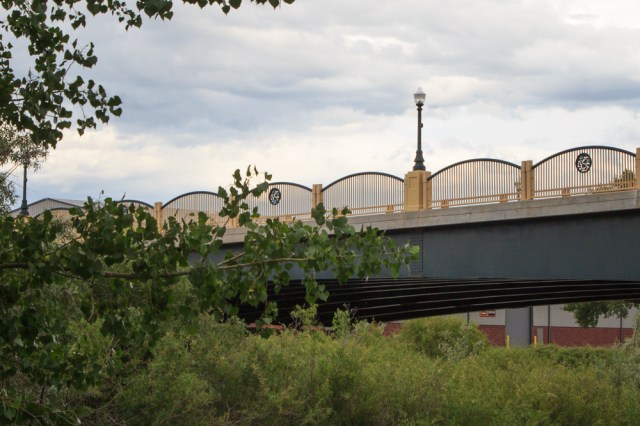
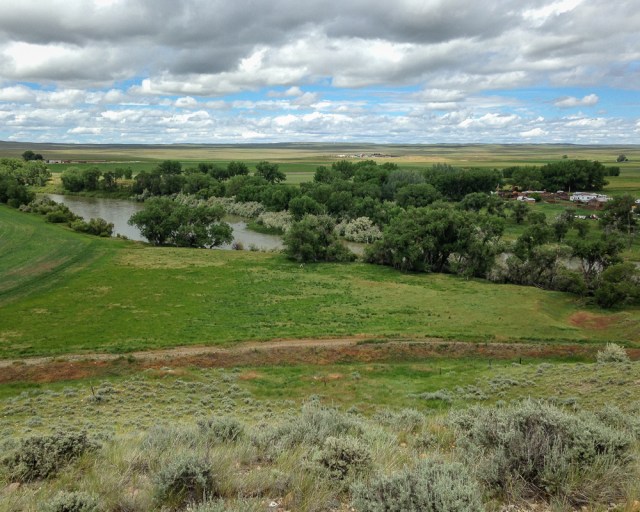
We walked the North Platte River Pathway Trail taking in the views of the river, admiring the wildflowers, and enjoying the aroma of the Russian olive trees along the riverbank.

IMG_2407
Bridge Over North Platte River
IMG_2411
North Platte River View from Trail
IMG_2408
Oak Tree Along Platte River

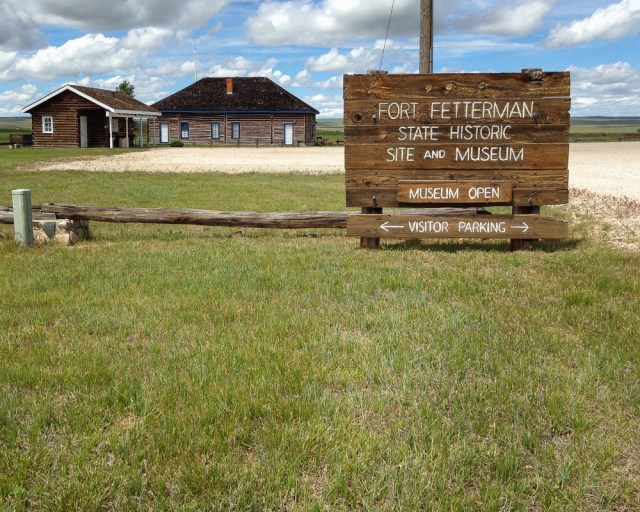
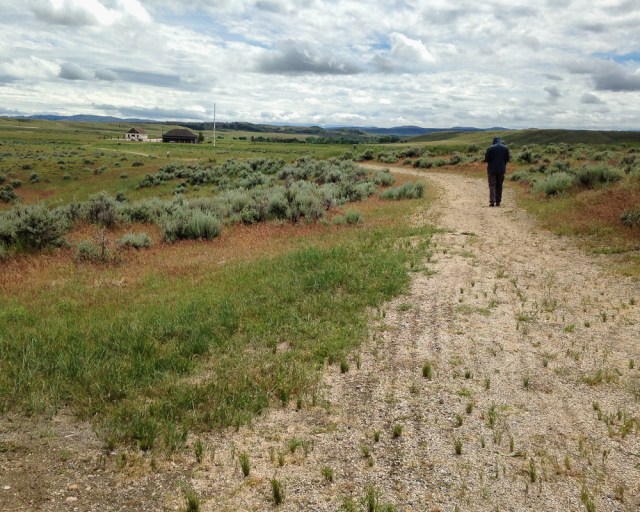
Fort Fetterman is a Wyoming historic site preserving the military post, which was established in 1867. The museum and ordinance warehouse are the only buildings remaining, but visitors can walk the grounds where the different buildings that did exist are identified. A gazebo at the end of the trail has great views of the Platte River valley below from the plateau.

IMG_1487
Fort Fetterman State Historic Site and Museum
IMG_1488
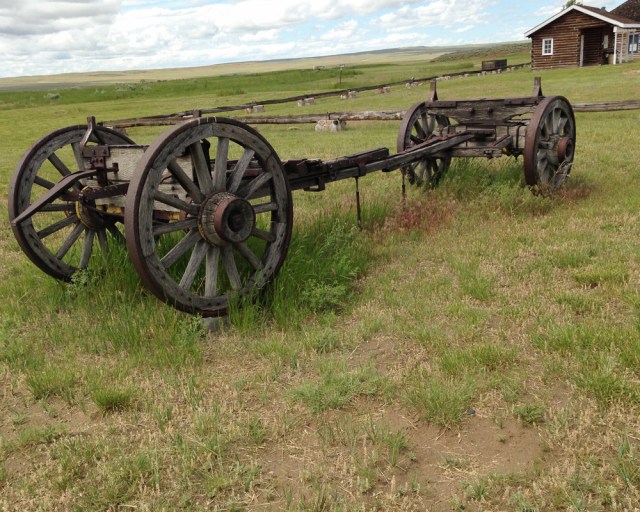
Historic Wagon Chassis
IMG_1481
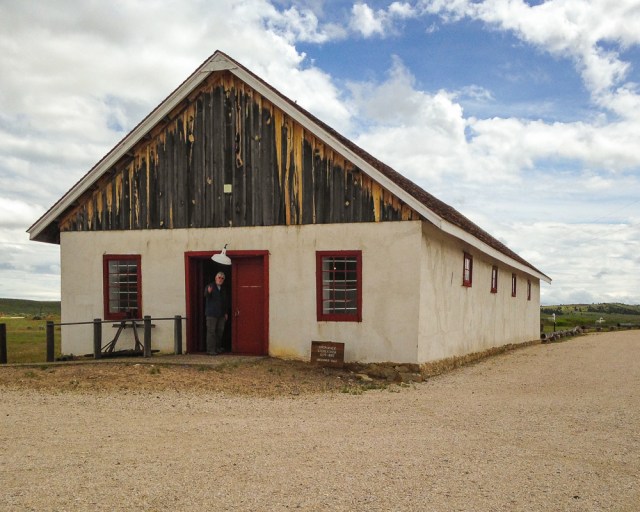
Ordinance Warehouse
IMG_1490
Donated Building Waiting for Restoration
IMG_1478
Trail To and From Museum and Gazebo
IMG_1475
View of River Valley from Gazebo

We found out why so many vehicles drove around town covered in red mud when we tried to drive out to Ayres Natural Bridge. Caterpillars and construction signs warned us this might not be an easy drive. We didn’t expect the bumpy muddy mess to continue for three miles, but that appeared to be the case. Although we wanted to see the natural bridge, it wasn’t worth getting stuck in the muck. Other cars and trucks continued on the road as if they were driving on a freeway. The first car wash was our next stop. Letting the clay-like red earth dry out would not have been wise.

We also spent time at the Wyoming Pioneer Memorial Museum. Located at the county fairgrounds, it holds several collections including guns and memorabilia from the Johnson County War between the regulators and rustlers near Buffalo, Wyoming in 1892, art depicting life in the West, Native American decorative arts, the 1864 Sioux style teepee used in the 1990 production of “Dances with Wolves,” and much more.

Another interesting place in Douglas is the Camp Douglas Officers’ Club State Historic Site. The camp housed 2,000 Italian and 3,000 German POWs and 500 army personnel during 1943 through 1946. A few of the POWs even returned to Douglas to live after the war. Only the officers’ club building has survived. Fortunately, much of its original construction remains intact and restorations are completed when funds are available. Original murals created by three Italian prisoners still grace the walls, many of which are re-creations from movies and western artists of the time. Examples of wooden boxes, laminate wooden bowls, and colored pencil artwork are also displayed.

Douglas, Wyoming turned out to be a great place to stay for a few days and soak up the history of the area. We also recommend the Douglas KOA as a place to stay.

Black Hills South Dakota, here we come.

Safe Travels.

Salt Lake City – Part II

Antelope Island State Park

Antelope Island, the largest of ten islands within the Great Salt Lake, was next on our list of places to visit while in Salt Lake City (SLC). A sign at the entrance gate announcing no refunds due to biting gnats almost caused us to make a U-turn and find something else to occupy our time. When the lady at the entrance booth assured us the rain had chased the gnats away, we drove on to the visitor center where another lady gave us a quick history and a few ideas of what to see.

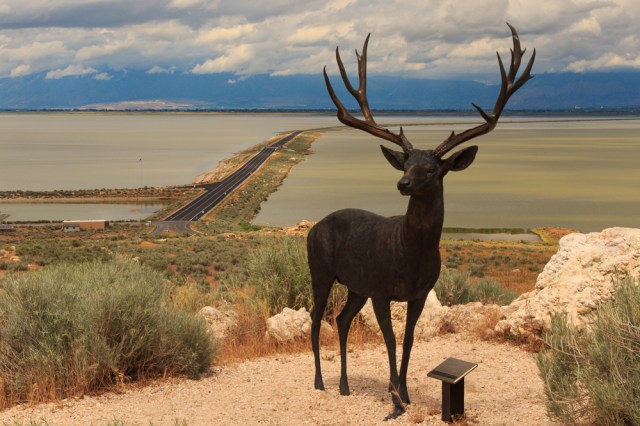
This elk statue greeted us at the visitor center. I wish he had been real. The Davis County Causeway is to the left of the statue. It is the only road on and off the island.


IMG_2275.jpg
Antelope Greeter at Visitor Center


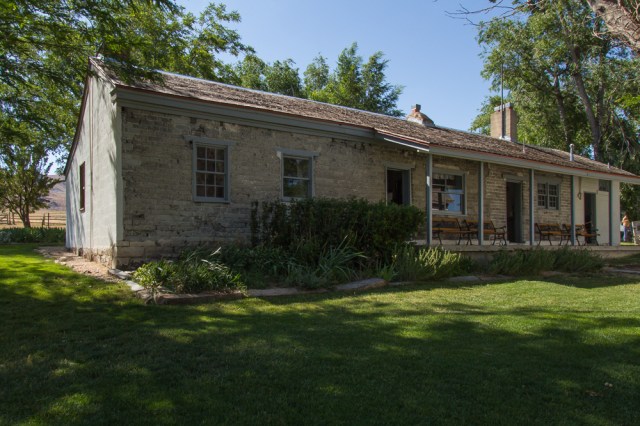
Our first stop was the Fielding Garr Ranch House where we spent an hour or so walking around the ranch buildings and grounds where historic farming equipment was stored.


IMG_2310
Fielding Garr Ranch House


The house served as the home of not only Fielding Garr, but later the managers that operated the ranch. The house is the oldest Anglo-built house in Utah still on its original foundation. Fielding Garr was the first permanent residence on the island in 1848.

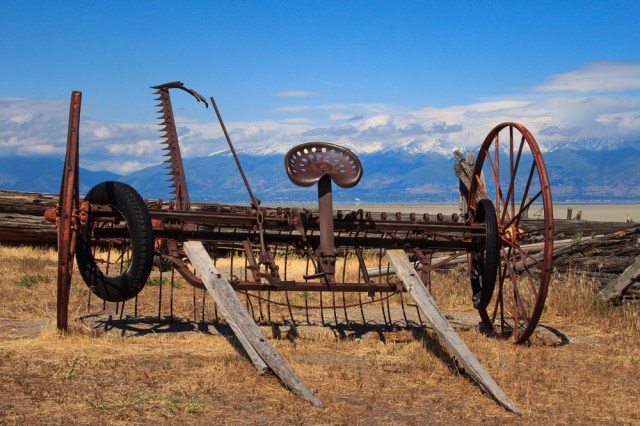
Historic farm equipment was arranged around the barnyard with signs that told what they were and how they were used.


IMG_2297
Farm Equipment at Fielding Garr Ranch


Inside the barn, is a place where the ranchers sheared sheep. The stalls ran from the rear of the barn to the front. I’m not an expert at shearing sheep, but it looked like they were herded down the back side of the row, entered a shearing stall where their wool was removed, then exited the other end of the station. It must have been sweaty dirty work for the men who stood in the stalls shearing sheep after sheep for hours at a time.

Various tools and gear were arranged in the barn as if ready for use.

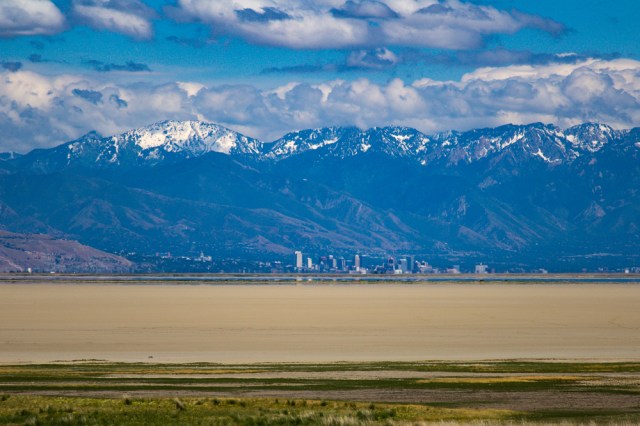
The ranch property presented views of the Wasatch Mountains across Buffalo Bay.


IMG_2296
Wasatch Mountains and Salt Lake City Across Buffalo Bay


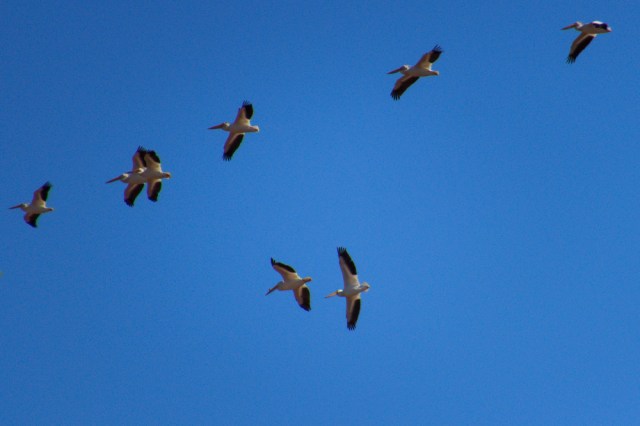
We arrived on the island too late in the day to see all the wildlife that call the island home. A few bison congregated below the road near the marina as we approached the visitor center, but there was nowhere to pull off and snap a photo. The island supports a herd of 550-700, selling off the excess each year.  Other wildlife in the ecosystem includes pronghorn antelope, mule deer, bighorn sheep as well as coyotes, badgers, bobcats, owls, hawks, and falcons.  I did manage to capture a squadron of pelicans flying in formation.


IMG_2329
Pelicans in Flight


We checked out the campgrounds for future reference. All campgrounds are barren and primitive with no water or electricity and vault toilets. Bridger Bay Campground was the nicest with shade pavilions, picnic tables, concrete pads, and drive through loops.  Trees had been planted near some of the sites, but they weren’t big enough to provide any relief from the scorching sun. The water looked crystal clear and as blue as the sky toward the west.


IMG_2334
Salt Lake, Bridger  Bay Campground.


The lady at the visitor center recommended hiking up Buffalo Ridge because of its beautiful view. We started out with no problem but as we ventured higher up the hill, we had to swat a few gnats away. They weren’t too bad so we continued. Then the gnats increased with each inch in elevation until we flapped our arms and brushed our heads to keep the gnats off. When a family coming down the trail told us the gnats were even worse at the top, we turned around. No view is worth bites by gnats who laugh at any amount of DEET a person might douse on themselves. I still managed to capture a few views from higher elevations out of reach of the gnats.


IMG_2325
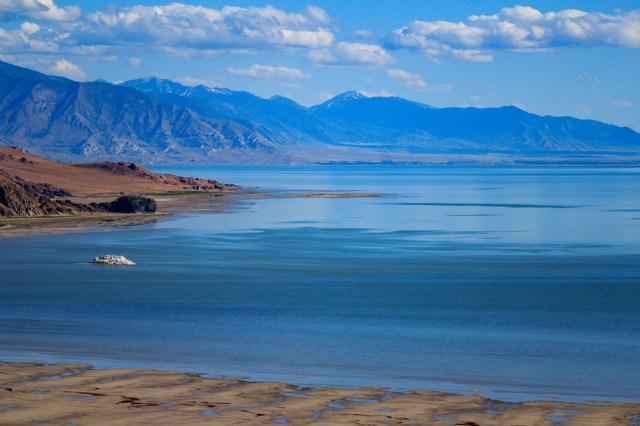
View of Lake Looking Southeast
IMG_2323
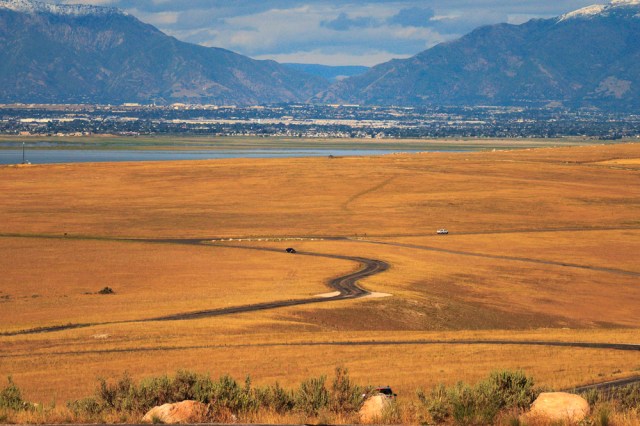
View of Park Road and Towns Across Buffalo Bay


Park City

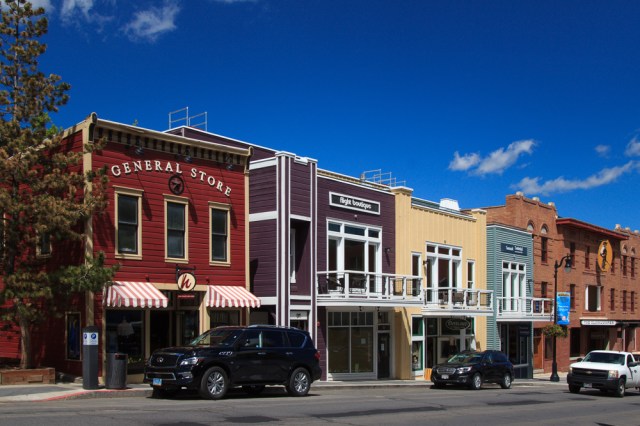
It was wonderful weather on our final day in SLC for a trip to Park City. No gnats, no wind, and no rain, only sunshine with high temps reaching 70 in Park City and 80 in SLC. The beautiful drive through green mountains populated with pines was reminiscent of many other mountain resorts we have visited. Although Park City seemed a bit more city-like than other resort communities with their newly paved streets, gutters, and restored historic buildings. This is probably due to Park City hosting the Sundance Film Festival each year and the Winter Olympics in 2002. Our favorite part of any town is always the main street and Park City doesn’t disappoint with its restored historic buildings.

IMG_2356
Park City, Utah Street View

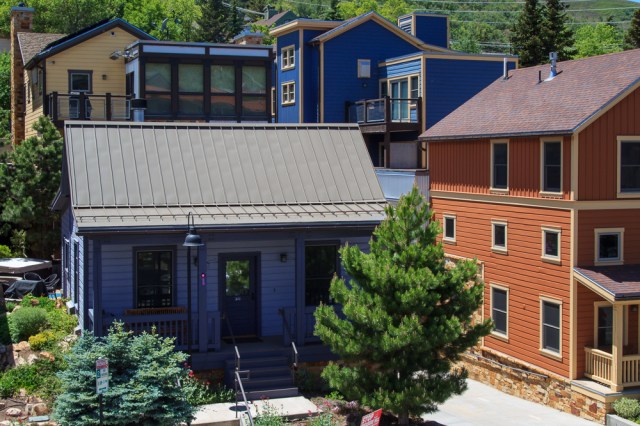
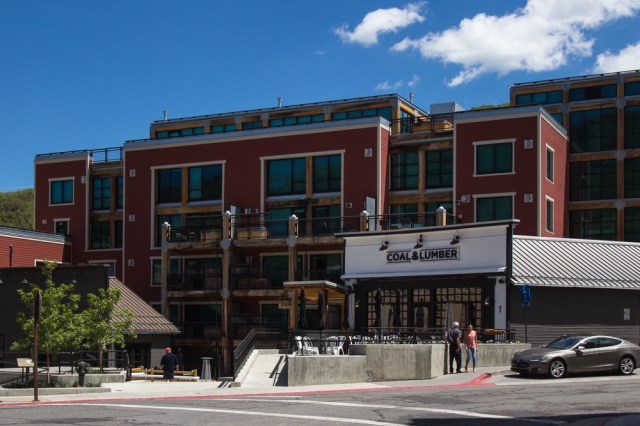
We passed one historic building undergoing significant foundation work. Other buildings were new construction in a modern style that looked like stacked rectangular boxes.


IMG_2338
Historic Park City Business Buildings


IMG_2352
Historic Park City Residences


IMG_2341
Modern Looking Building


The silver mining town flourished from the 1860s until 1950 when it became a virtual ghost town. In an effort to save their town, the remaining miners developed a ski resort, which opened in 1963. A population of 8,000 supports the nearly 4 million tourists that visit each year. Main Street is home to 64 Victorian buildings listed on the National Register of Historic Places.


IMG_2366
Egyptian Theater Originally Built in 1926


We stepped into Shirt Off My Back to purchase T-shirts. Southwest Indian Traders had a large selection of magnets and ornaments with Park City engraved on them. And Sock City sold colorful and funny socks for humans of any age. A dish of gelato inside La Niche Gourmet and Gifts was a cool treat after walking the streets.

We must have arrived before the crowds because, by the time our feet grew tired, we had to side step visitors walking toward us or dodge dogs tugging leashes attached to their owners. We took a break at Bridges where they served up a tasty pork sandwich and salad. I must have been hungry because I ate the whole thing even though there was too much bread, wilted lettuce, and tomatoes with a few spots of skin that had taken on the look of crepe paper.

Revived from our lunch we joined the crowds and made our way back to the truck. I thought the green balls hanging outside on one building were interesting. Then I saw another business with red balls, and another with orange balls. Do the balls have a connection? Just decoration? Some significance? Does anyone know?

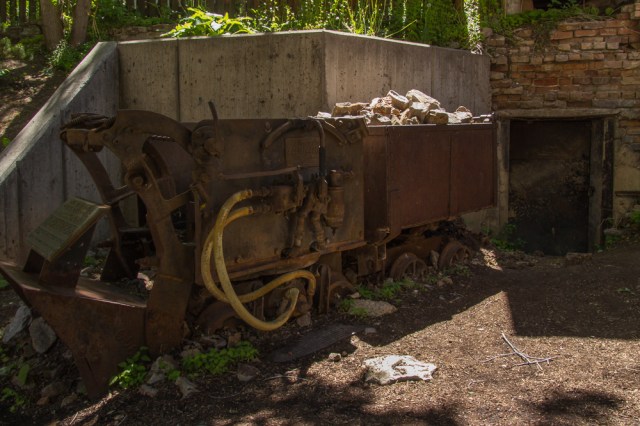
A little park next to the public restrooms is dedicated to the mining industry that built the town. A plaque placed by the American Society of Mechanical Engineers in 2000 tells the story of the Elmco Rocker Shovel Loader, Model 12B patented on October 25, 1938. It was the “first successful device to replace human labor in removing the rubble resulting from blasting in underground hard-rock mines.”


IMG_2371
Elmco Rocker Shovel Loader


Every new technology has the potential to displace workers. I wonder how many humans lost their jobs when the loader arrived at the mine.

Returning to our RV site, we found ourselves surrounded by new neighbors, again. Each morning there was a mass exodus of motorhomes, travel trailers, and fifth wheels leaving the RV park, and each evening the spots filled up again. We occasionally stay only one night in a spot, too, even though we prefer longer stays. After four nights in Salt Lake City, it was time to make progress toward the Black Hills of South Dakota.
Next stop? Rawlins and Douglas, Wyoming.
Safe Travels