Welcome to the Black Hills of South Dakota, home to Mount Rushmore and Crazy Horse monuments and so much more.
Yeah! We Made it to the Black Hills.
We selected Buffalo Ridge Camp Resort in Custer, South Dakota, our base camp in the Southern Hills for eight nights starting on June 18, 2017. We never know what we are getting when we make reservations. As we drove up a small hill on the gravel road, I wasn’t sure we had chosen wisely. All doubts flew away, however, when we crested the hill to see the large expanse of grassy knolls and RVs tucked up under a stand of large pines. Buffalo Ridge is also a great place for tent campers with cabana/shelters, picnic tables, fire rings, and plenty of grass between sites.
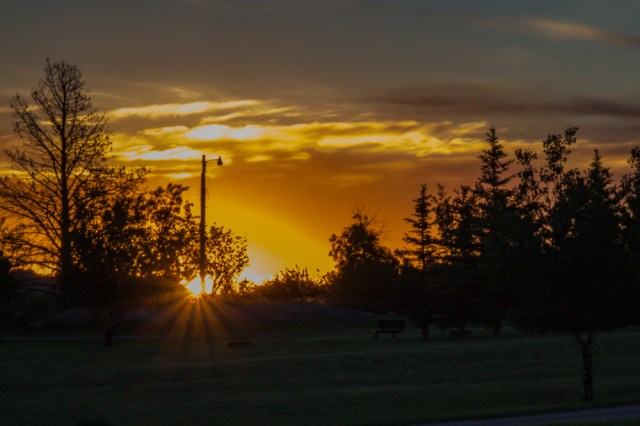
I couldn’t resist including this sunrise at Buffalo Ridge.
Sunrise at Buffalo Ridge Camp Resort
Hill City
Hill City, established in 1876, is a cute little town with restaurants, shops, art galleries and of course a Harley Davidson store.
Restaurant in Hill CityHill City Harley Davidson
Once a thriving tin mining town, industries that support the city today include timber, tourism, and telecommunications. The art scene is also on the rise in the town, like this sculpture by John Lopez.
John Lopez Horse Sculpture
How many objects can you identify in the sculpture?
The Alpine Inn served up a delicious French dip with fruit on the side and we didn’t even have to wait. We had heard that since the restaurant does not take reservations, the lines could grow long. Oh, and you can leave your credit card at home, they only accept cash and checks.
Get Your Name on the List Early to Avoid Long Waits at the Alpine Inn
With all of the usual types of gift and souvenir shops, one store stood out. Art Forms Gallery, a co-op of twenty Black Hill artists offer a great variety of paintings, jewelry, woodwork, hand woven scarves, photography art books, and other artistic items for sale. It was nice to have a selection of goods made by local artists to browse through.
The 1880 Train
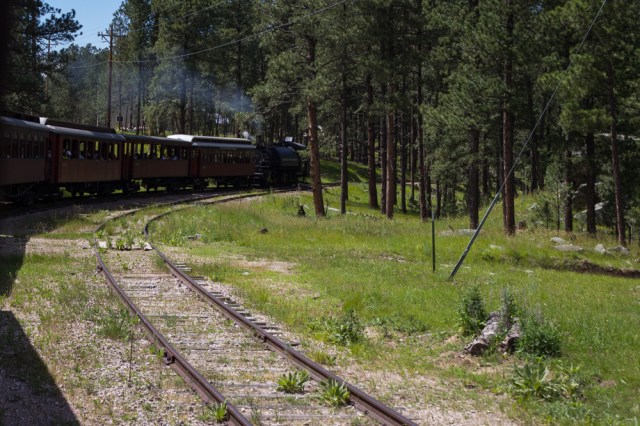
The Black Hills Central Railroad and the 1880 Train is what drew us to Hill City. We were too late to ride the train the first day we visited, so we returned a few days later. The steam locomotive, which takes three hours to prepare, pulls the train up and down 4% to 6% grades to Keystone over the course of the two-hour twenty-mile round trip.
Locomotive Spewing SteamEngineer Patiently Waiting for Locomotive to Warm UpWater Tower Used to Refill Locomotive
The Black Hills Central Railroad does a fantastic job renovating the cars and locomotives. Prefer a cushy seat? Grab a leather one in one of the enclosed cars. All of the windows open and close easily.
The Seat Backs Flip From One Side to the Next. No Matter the Direction, Riders Face Forward.
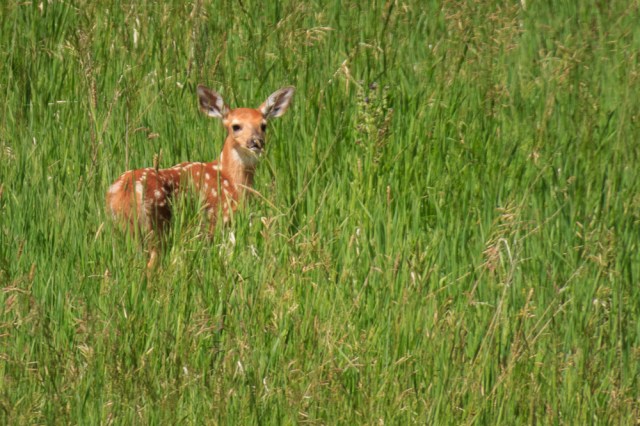
We saw Tin Mill Hill, Black Elk Peak, Elkhorn Mountain, and Old Baldy Mountain from the windows of the train cars among the farms, abandoned properties, and deer grazing in the fields. Here is a sampling of sights seen on the train ride from Hill City to Keystone.
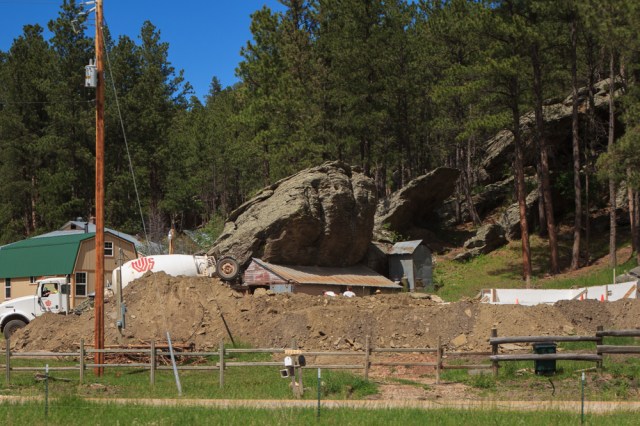
Bambi in the GrassCold Storage Built Into HillOne of the Many Curves on the RouteFarm Seen From TrainAbandoned BuildingsWooden CabinDid the Boulder Fall on the Building or Was the Building Built Under the Boulder?Another Abandoned Building
Keystone
We got off the train to browse the shops selling T-shirts, hats, Native American art, leather goods, jewelry, and candy and check out which restaurant might satisfy us for lunch.
Motorcyclists are Common in the Black HillsThe Keystone Mercantile Sells Just About Everything
The Ruby House looked like a good bet and when I crossed the threshold, I thought time had shifted to the 1880s. The gold and red velvet wallpaper lining the walls, brass chandeliers hanging from the ceiling, and the paintings of cowboys, Indians, and portraits of people in their latest fashions of the day hung on the walls created an immersive atmosphere.
Ruby House Restaurant a Great Place to Eat.Ruby House Restaurant Interior
After exploring the stores and filling our bellies, we arrived early at the train depot and watched the locomotive pull into the station.
Train Arriving At Keystone Depot
Be sure to sit on the opposite side of the train when returning to Hill City so you can see what you missed on the way to Keystone.
Stay tuned for future posts which will detail Mount Rushmore, Crazy Horse, Needles Highway, and other sights.
We pulled into Western Hills RV Park in Rawlins, Wyoming on June 15, 2017, for a one-night stay. The doors nearly flew out of our hands when we opened them to step out. Sand pelted my bare legs as Jon and I set up the trailer. What was up with all the wind? Good thing we weren’t staying more than one night.
On to Douglas KOA in Douglas, Wyoming and more wind. The wind was great when it pushed us down the road, not so much when it hit us broadside. After driving for about an hour, I realized we were going the wrong way. That will teach us to rely on only the GPS. Back to using a paper map.
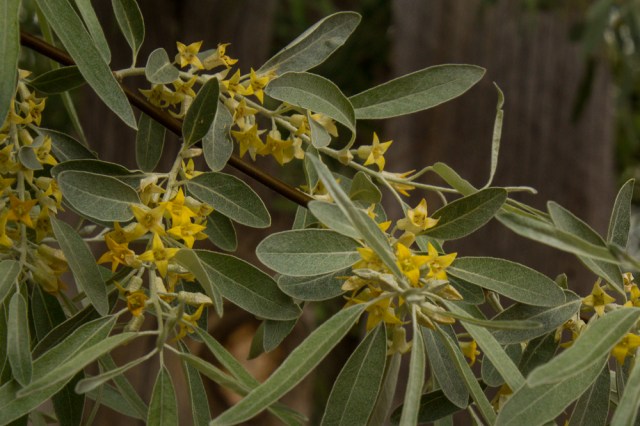
When we stepped out of the truck at the Douglas KOA, the most wonderful perfume greeted us to the RV park. Was that scent coming from those dusty leafed trees with yellow flowers?
Campsites at Douglas KOARussian Olive Tree Blossoms
Yep, they were Russian olive trees. Once used as a drought resistant windbreak, the state now considers them a noxious weed, banned from sale by nurseries. Also, county weed and pest control departments throughout the state are required to determine whether removal or control is warranted. Although I wanted to bottle the smell and take it home with me, I had to be satisfied with enjoying the aroma while in Douglas and then say goodbye.
Two nights in Douglas allowed us to explore a few places in the area. First up was the Douglas Railroad Interpretive Museum. They had a restored train engine and a few cars on display.
Douglas Railroad Interpretive MuseumTrain Cars and Depot at Douglas Railroad Interpretative MuseumCaboose and Depot at the Douglas Railroad Interpretive Museum
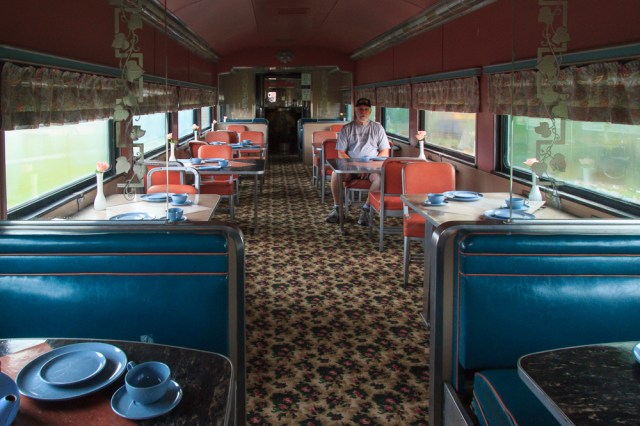
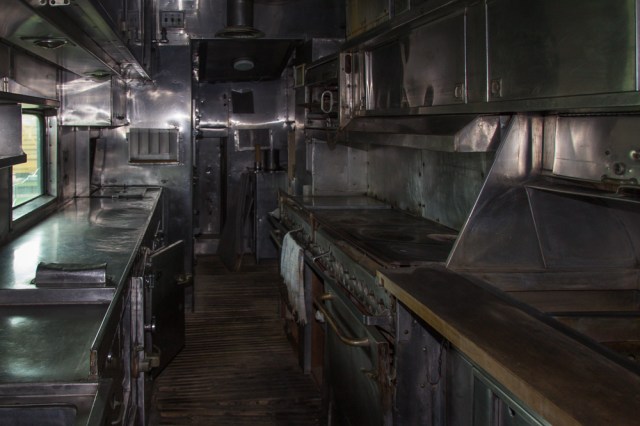
The dining car was impressive as was the gleaming stainless steel galley.
JT is Ready for his Meal in the Restored Dining Car at the Douglas Railroad Interpretive MuseumTables Set for CustomersGalley in Dining Car at the Douglas Railroad Interpretive Museum
Many towns claim to have the original Jackalope and Douglas is known as the first town to claim such a creature. The city’s version is this statue.
Jackalope Statue
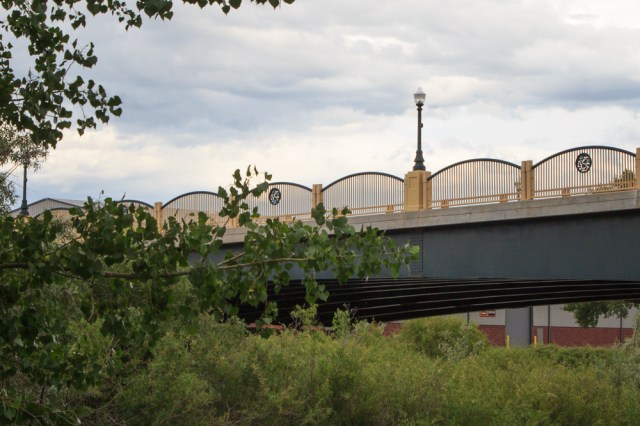
We walked the North Platte River Pathway Trail taking in the views of the river, admiring the wildflowers, and enjoying the aroma of the Russian olive trees along the riverbank.
Bridge Over North Platte RiverNorth Platte River View from TrailOak Tree Along Platte River
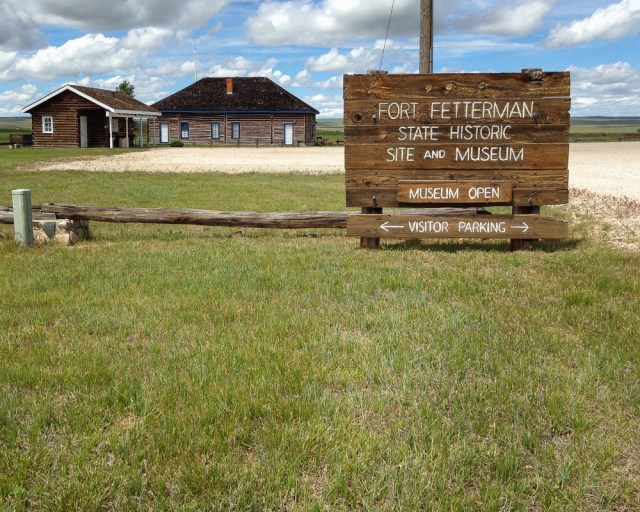
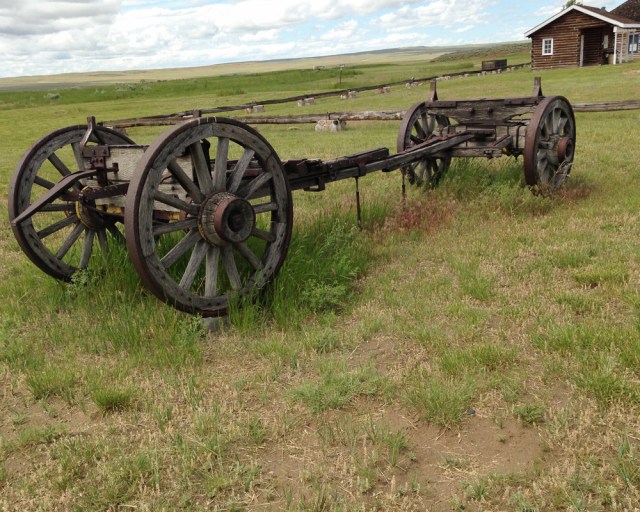
Fort Fetterman is a Wyoming historic site preserving the military post, which was established in 1867. The museum and ordinance warehouse are the only buildings remaining, but visitors can walk the grounds where the different buildings that did exist are identified. A gazebo at the end of the trail has great views of the Platte River valley below from the plateau.
Fort Fetterman State Historic Site and MuseumHistoric Wagon ChassisOrdinance WarehouseDonated Building Waiting for RestorationTrail To and From Museum and GazeboView of River Valley from Gazebo
We found out why so many vehicles drove around town covered in red mud when we tried to drive out to Ayres Natural Bridge. Caterpillars and construction signs warned us this might not be an easy drive. We didn’t expect the bumpy muddy mess to continue for three miles, but that appeared to be the case. Although we wanted to see the natural bridge, it wasn’t worth getting stuck in the muck. Other cars and trucks continued on the road as if they were driving on a freeway. The first car wash was our next stop. Letting the clay-like red earth dry out would not have been wise.
We also spent time at the Wyoming Pioneer Memorial Museum. Located at the county fairgrounds, it holds several collections including guns and memorabilia from the Johnson County War between the regulators and rustlers near Buffalo, Wyoming in 1892, art depicting life in the West, Native American decorative arts, the 1864 Sioux style teepee used in the 1990 production of “Dances with Wolves,” and much more.
Another interesting place in Douglas is the Camp Douglas Officers’ Club State Historic Site. The camp housed 2,000 Italian and 3,000 German POWs and 500 army personnel during 1943 through 1946. A few of the POWs even returned to Douglas to live after the war. Only the officers’ club building has survived. Fortunately, much of its original construction remains intact and restorations are completed when funds are available. Original murals created by three Italian prisoners still grace the walls, many of which are re-creations from movies and western artists of the time. Examples of wooden boxes, laminate wooden bowls, and colored pencil artwork are also displayed.
Douglas, Wyoming turned out to be a great place to stay for a few days and soak up the history of the area. We also recommend the Douglas KOA as a place to stay.
Antelope Island, the largest of ten islands within the Great Salt Lake, was next on our list of places to visit while in Salt Lake City (SLC). A sign at the entrance gate announcing no refunds due to biting gnats almost caused us to make a U-turn and find something else to occupy our time. When the lady at the entrance booth assured us the rain had chased the gnats away, we drove on to the visitor center where another lady gave us a quick history and a few ideas of what to see.
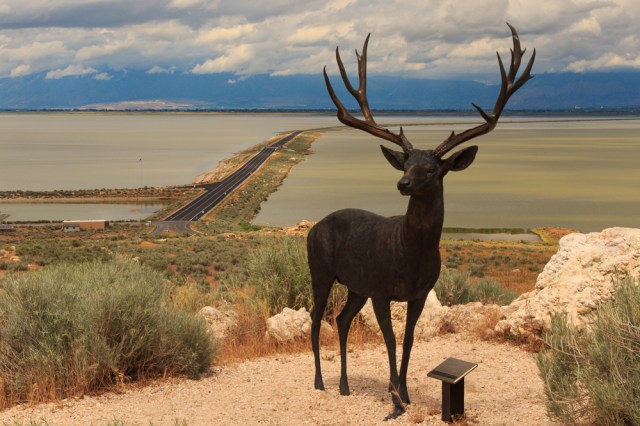
This elk statue greeted us at the visitor center. I wish he had been real. The Davis County Causeway is to the left of the statue. It is the only road on and off the island.
Antelope Greeter at Visitor Center
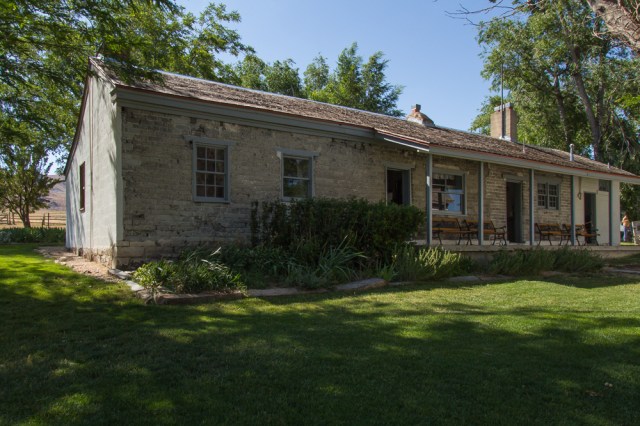
Our first stop was the Fielding Garr Ranch House where we spent an hour or so walking around the ranch buildings and grounds where historic farming equipment was stored.
Fielding Garr Ranch House
The house served as the home of not only Fielding Garr, but later the managers that operated the ranch. The house is the oldest Anglo-built house in Utah still on its original foundation. Fielding Garr was the first permanent residence on the island in 1848.
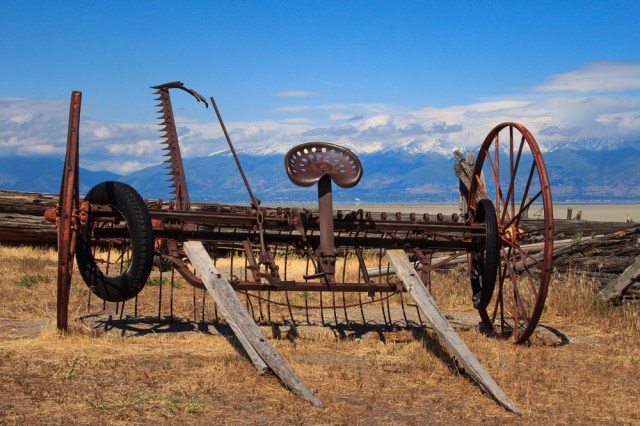
Historic farm equipment was arranged around the barnyard with signs that told what they were and how they were used.
Farm Equipment at Fielding Garr Ranch
Inside the barn, is a place where the ranchers sheared sheep. The stalls ran from the rear of the barn to the front. I’m not an expert at shearing sheep, but it looked like they were herded down the back side of the row, entered a shearing stall where their wool was removed, then exited the other end of the station. It must have been sweaty dirty work for the men who stood in the stalls shearing sheep after sheep for hours at a time.
Row of Sheep Sheering Stalls Line the Barn at Fielding Garr Ranch
Sheep Sheering Stall
Various tools and gear were arranged in the barn as if ready for use.
Barn Tools and Equipment
Three Oil Lamps
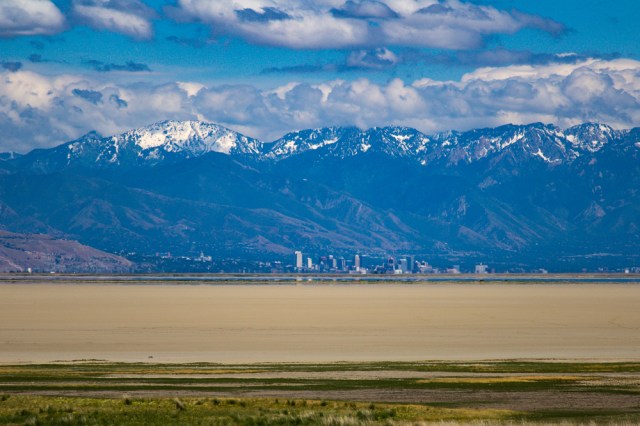
The ranch property presented views of the Wasatch Mountains across Buffalo Bay.
Wasatch Mountains and Salt Lake City Across Buffalo Bay
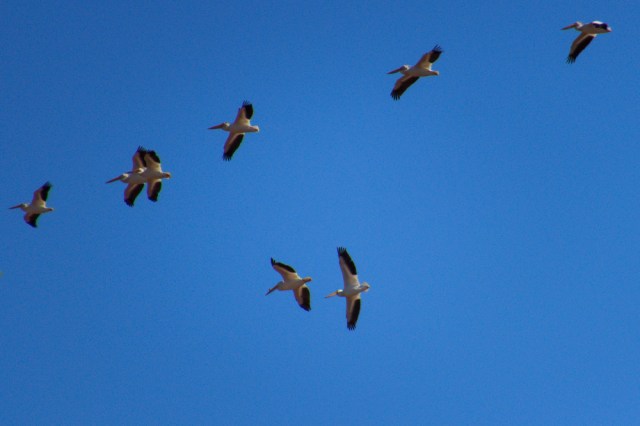
We arrived on the island too late in the day to see all the wildlife that call the island home. A few bison congregated below the road near the marina as we approached the visitor center, but there was nowhere to pull off and snap a photo. The island supports a herd of 550-700, selling off the excess each year. Other wildlife in the ecosystem includes pronghorn antelope, mule deer, bighorn sheep as well as coyotes, badgers, bobcats, owls, hawks, and falcons. I did manage to capture a squadron of pelicans flying in formation.
Pelicans in Flight
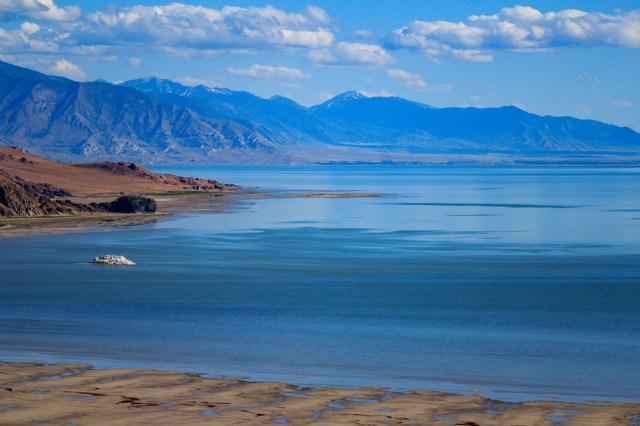
We checked out the campgrounds for future reference. All campgrounds are barren and primitive with no water or electricity and vault toilets. Bridger Bay Campground was the nicest with shade pavilions, picnic tables, concrete pads, and drive through loops. Trees had been planted near some of the sites, but they weren’t big enough to provide any relief from the scorching sun. The water looked crystal clear and as blue as the sky toward the west.
Salt Lake, Bridger Bay Campground.
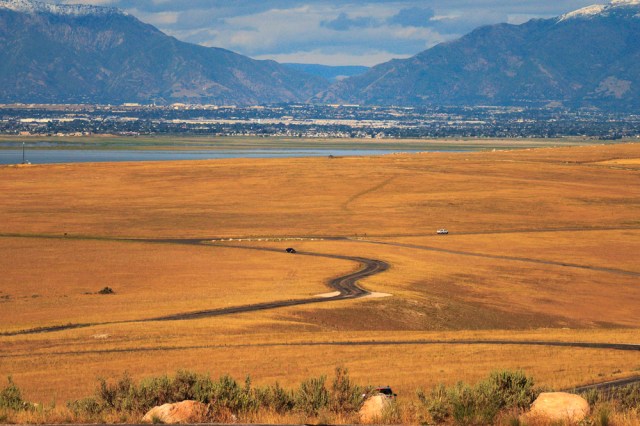
The lady at the visitor center recommended hiking up Buffalo Ridge because of its beautiful view. We started out with no problem but as we ventured higher up the hill, we had to swat a few gnats away. They weren’t too bad so we continued. Then the gnats increased with each inch in elevation until we flapped our arms and brushed our heads to keep the gnats off. When a family coming down the trail told us the gnats were even worse at the top, we turned around. No view is worth bites by gnats who laugh at any amount of DEET a person might douse on themselves. I still managed to capture a few views from higher elevations out of reach of the gnats.
View of Lake Looking SoutheastView of Park Road and Towns Across Buffalo Bay
Park City
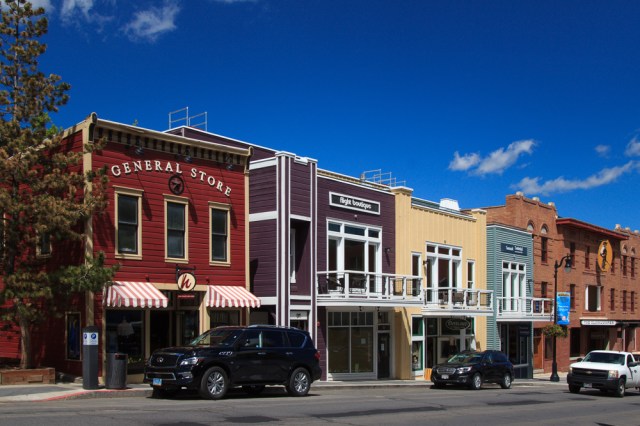
It was wonderful weather on our final day in SLC for a trip to Park City. No gnats, no wind, and no rain, only sunshine with high temps reaching 70 in Park City and 80 in SLC. The beautiful drive through green mountains populated with pines was reminiscent of many other mountain resorts we have visited. Although Park City seemed a bit more city-like than other resort communities with their newly paved streets, gutters, and restored historic buildings. This is probably due to Park City hosting the Sundance Film Festival each year and the Winter Olympics in 2002. Our favorite part of any town is always the main street and Park City doesn’t disappoint with its restored historic buildings.
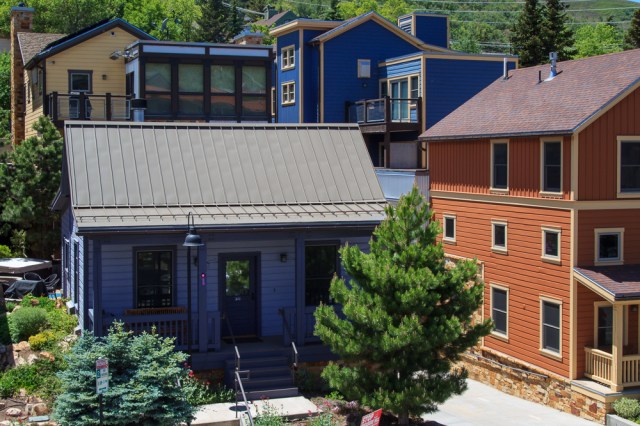
Park City, Utah Street View
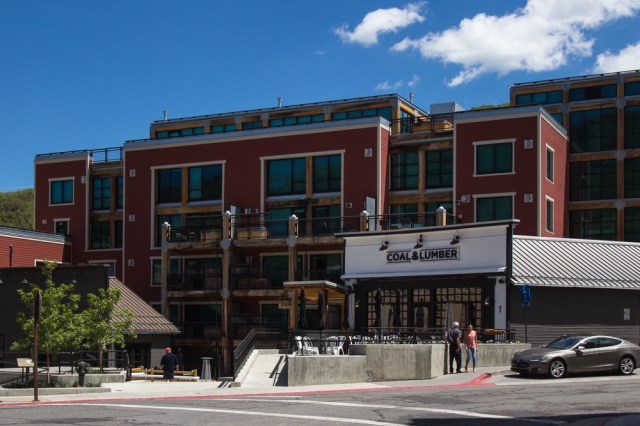
We passed one historic building undergoing significant foundation work. Other buildings were new construction in a modern style that looked like stacked rectangular boxes.
Historic Park City Business Buildings
Historic Park City Residences
Modern Looking Building
The silver mining town flourished from the 1860s until 1950 when it became a virtual ghost town. In an effort to save their town, the remaining miners developed a ski resort, which opened in 1963. A population of 8,000 supports the nearly 4 million tourists that visit each year. Main Street is home to 64 Victorian buildings listed on the National Register of Historic Places.
Egyptian Theater Originally Built in 1926
We stepped into Shirt Off My Back to purchase T-shirts. Southwest Indian Traders had a large selection of magnets and ornaments with Park City engraved on them. And Sock City sold colorful and funny socks for humans of any age. A dish of gelato inside La Niche Gourmet and Gifts was a cool treat after walking the streets.
We must have arrived before the crowds because, by the time our feet grew tired, we had to side step visitors walking toward us or dodge dogs tugging leashes attached to their owners. We took a break at Bridges where they served up a tasty pork sandwich and salad. I must have been hungry because I ate the whole thing even though there was too much bread, wilted lettuce, and tomatoes with a few spots of skin that had taken on the look of crepe paper.
Revived from our lunch we joined the crowds and made our way back to the truck. I thought the green balls hanging outside on one building were interesting. Then I saw another business with red balls, and another with orange balls. Do the balls have a connection? Just decoration? Some significance? Does anyone know?
Hanging Green Balls
Hanging Red Balls
Hanging Orange Balls
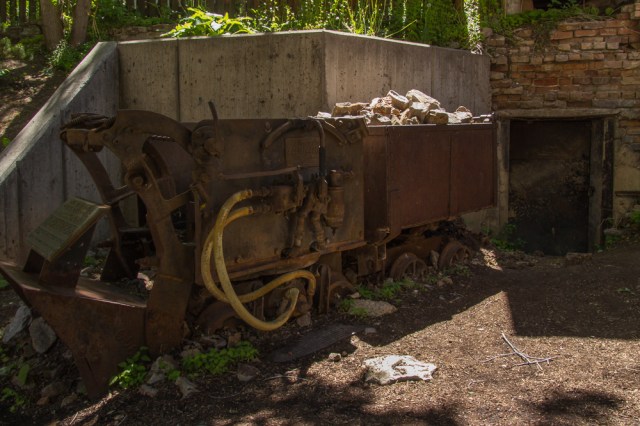
A little park next to the public restrooms is dedicated to the mining industry that built the town. A plaque placed by the American Society of Mechanical Engineers in 2000 tells the story of the Elmco Rocker Shovel Loader, Model 12B patented on October 25, 1938. It was the “first successful device to replace human labor in removing the rubble resulting from blasting in underground hard-rock mines.”
Elmco Rocker Shovel Loader
Every new technology has the potential to displace workers. I wonder how many humans lost their jobs when the loader arrived at the mine.
Returning to our RV site, we found ourselves surrounded by new neighbors, again. Each morning there was a mass exodus of motorhomes, travel trailers, and fifth wheels leaving the RV park, and each evening the spots filled up again. We occasionally stay only one night in a spot, too, even though we prefer longer stays. After four nights in Salt Lake City, it was time to make progress toward the Black Hills of South Dakota.
We left Elko on Sunday, June 11 for Salt Lake City, Utah and drove through territory we had never traveled before. The terrain did not change much from Elko with snow capped mountains, green hills, valleys rich with sagebrush and green grass, and full rivers flowing occasionally alongside the freeway. Up and down the mountain passes we went with much the same scenery until we crested the mountain outside of Wendover, Utah.
Bonneville Salt Flats
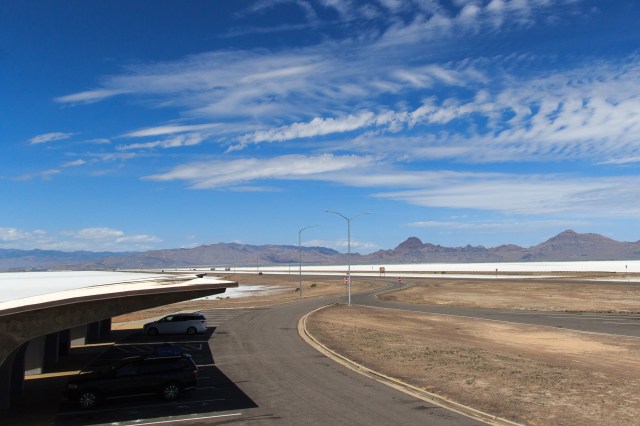
Our jaws dropped when the Bonneville Salt Flats spread out before us as far as we could see. I really got a feel for the size of Bonneville Lake before it broke through causing a mother of all floods that created the Snake River on its path toward the Pacific Ocean. What a geological wonder.
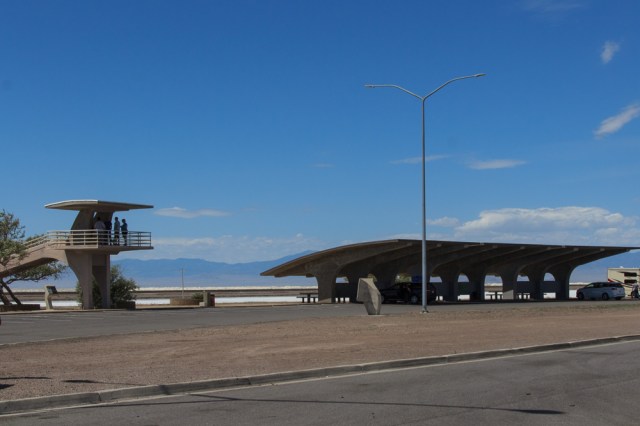
We stopped at the Salt Flats Rest Area where a raised platform allowed visitors to take in the expanse of the salt flats.
Salt Flats Rest Area
The salt was glaring white as snow and bare of any plants or trees. Here is the view from the platform looking west.
View Looking Toward the West
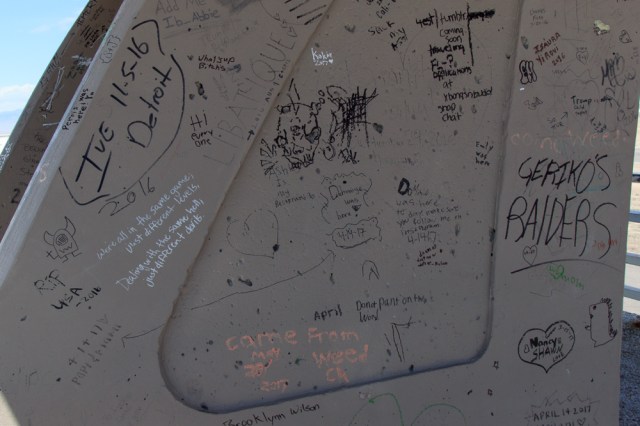
As I walked up the steps to the overlook four or five teenagers discussed what they should graffiti on the roof support walls. A modern day ‘register rock’ or wall where travelers document their presence.
Graffiti on Platform Support
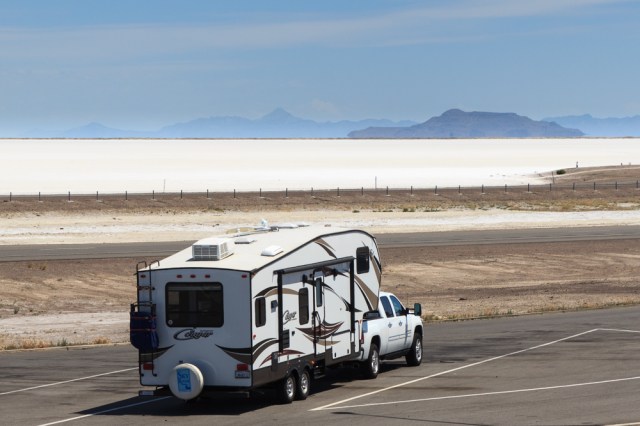
A few people ventured out onto the salt flats. A woman stood at the foot wash rinsing her feet.
Couple Walking out to Salt FlatsView North
We continued on to Pony Express RV Resort where we had reservations for four nights. I had overlooked this park when researching available locations until my first pick claimed they were booked solid. Pony Express turned out to be the perfect place for us, except for the constant wind blowing, and the freeway noise.
Utah Capitol Building
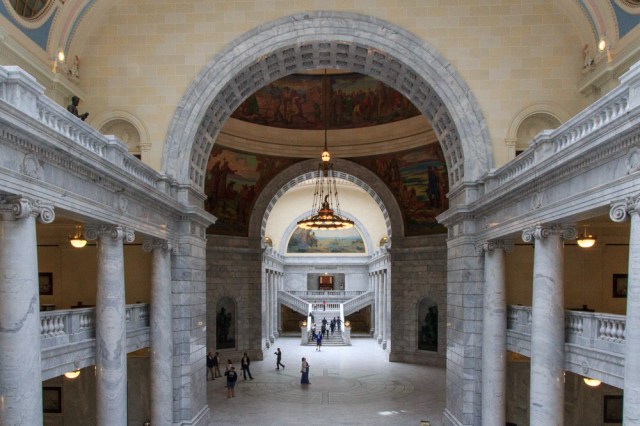
Windy, cold, and rainy weather greeted us on Monday. Undeterred, we headed downtown with the intent to hang out at the planetarium until the rain subsided. We arrived too early, so we drove up the hill to the Utah State Capitol Building and wandered around gawking at all the marble columns, walls, and intricate details.
Utah State Capitol BuildingUse of Marble Inside the Capitol Building is ExtensiveLooking from Supreme Court toward House of Representatives
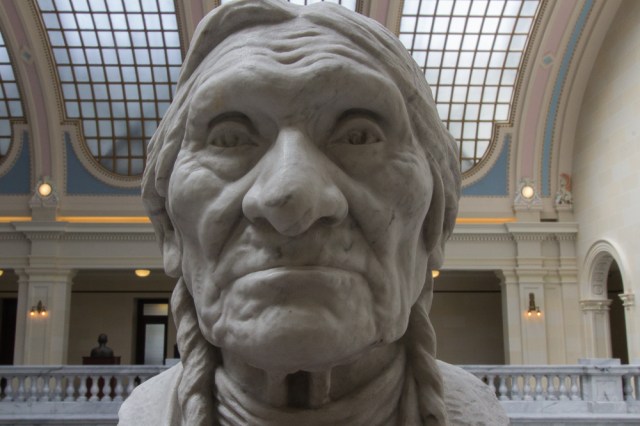
In the Hall of Governors, portraits of the governors are displayed and statues of historical Utahans are given prominent floor space on the fourth-floor gallery, and murals depicting Utah life and industry are abundant.
Philo T. Farnsworth “Father of Television”I was Impressed with the Eyes on Unca Sam, a Ute Indian, Hunter, and Fur Trader.
Symbolism seemed to be everywhere, from the beehive, which is the state’s emblem and represents industry and unity, to laurel wreaths which represent victory, vitality, and success. We forgot all about the planetarium.
Laurel Wreath
Shield on Banister
Detail at Top of Column
Window in Governor’s Office
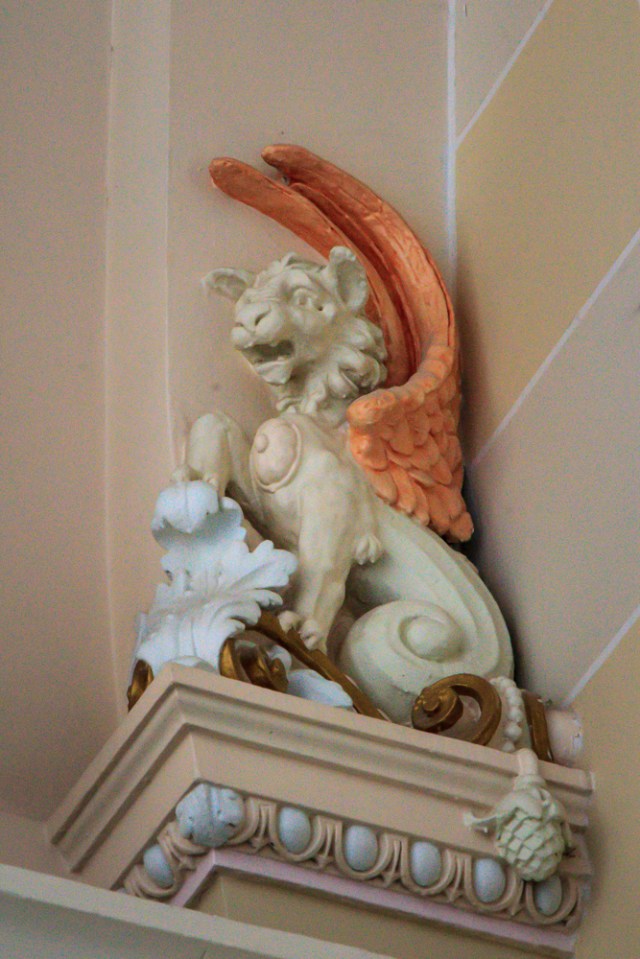
Then there were the creatures standing guard high up in the four corners of the fourth-floor gallery. A lion with wings? Does anyone know what they symbolize? Perhaps protection?
I Wonder about the Symbolism in this Creature.
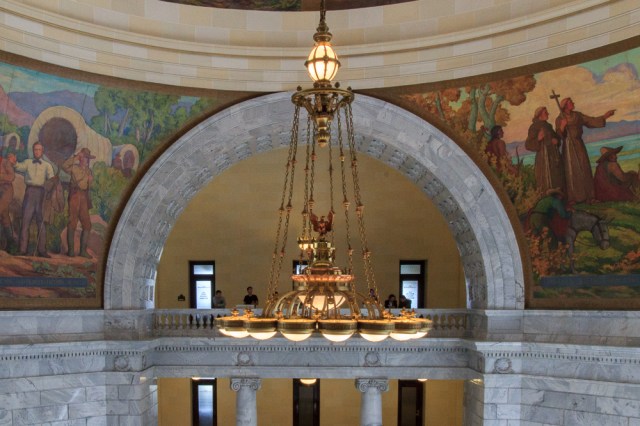
The chandelier hanging in the rotunda was especially impressive.
Rotunda Chandelier
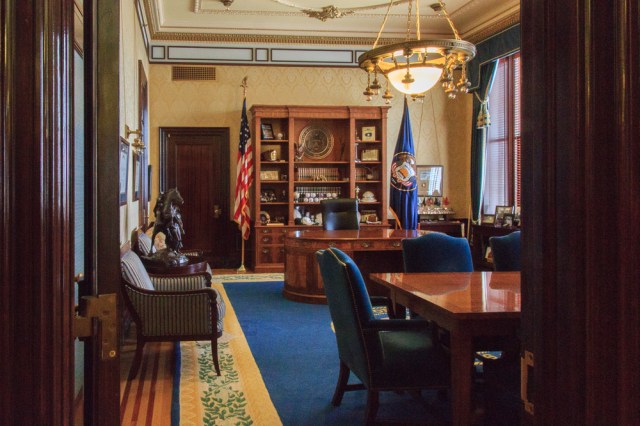
In the Governor’s office used for public activities, sits a desk that was built with wood recovered from one of the trees felled during a tornado.
Governor’s Office. Notice the Tornado Desk.
The magnificent building seemed overkill for a legislature that is in session for only 45 days out of the year. However, besides the governor, lieutenant governor, senate, house, and the state supreme court, the building also houses the highway patrol and the state treasurer’s office. So it seems they make good use of the property. And who can fault the state for wanting to showcase the many riches the state has to offer?
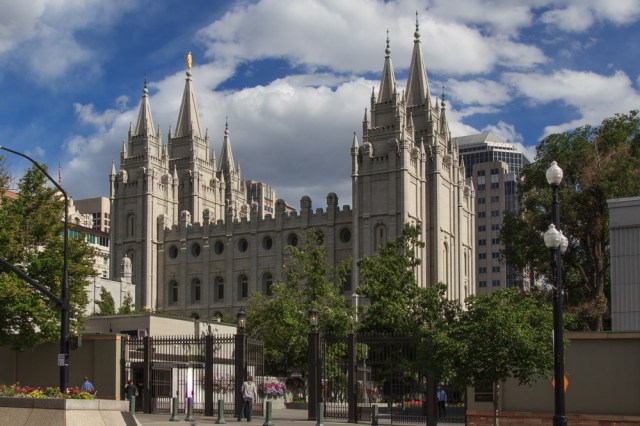
Mormon Temple and Square
A trip to Salt Lake City would not be complete without a visit to the Mormon Temple Square.
Mormon Temple
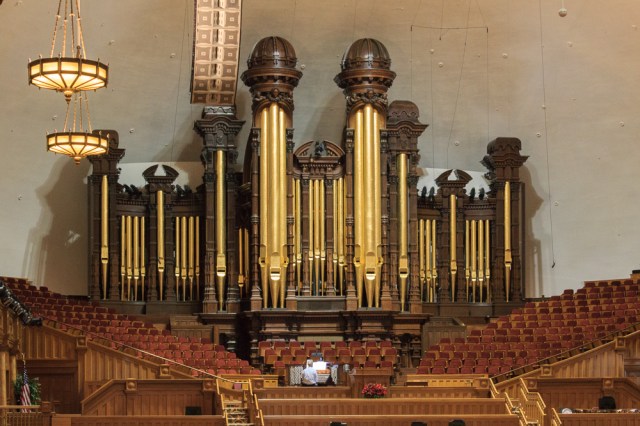
We joined a tour where two ‘sisters’ volleyed their presentation, which consisted of a bit of history, the faith’s origin story, and detail of the temple’s building, and a bit of proselytizing thrown in. They also cleared up a few rumors about some of the Mormon practices, such as baptizing dead people. They don’t, people who have died can be baptized through a proxy. In other words, a family member is baptized in the name of the deceased. The sisters did not push or insist that their religion was the only religion, but encouraged those of us on the tour to ask questions, research, and take one of the free Book of Mormons for more information. The best part of the tour was the organ, which contains 11,623 pipes. The organ pipes and Tabernacle Choir tiers dwarfed the person who played the organ.
Tabernacle Choir Organ
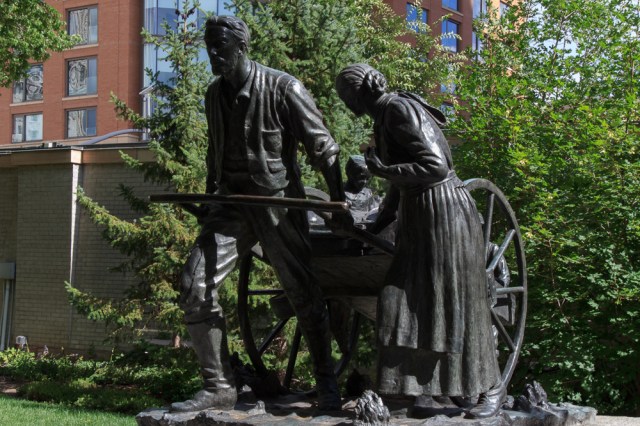
One of the most interesting bits of history that I never thought of was how many of the Mormons traveled across the country to Utah with only a hand cart to haul their belongings. I thought the emigrants in covered wagons were hearty folk. I can’t imagine the hardships endured by the people who pulled handcarts.
We may have never made it to the planetarium, but we enjoyed seeing the capitol building and taking the tour of the Mormon Temple Square. Next week’s post will include Antelope Island and Park City, Utah.


























 The Traveling Todds