Arches National Park had been on our must-see list for at least six years. Each time we were near Moab, we either didn’t have time to stop or we couldn’t get reservations near enough to make it worthwhile. I braced for disappointment again when I called the first RV park on my list. When I heard the words, “Yes, we can accommodate you on those dates,” I felt like I won a jackpot and jumped for joy around the fifth wheel until I made myself dizzy.
Wilson’s Arch: drive-by photo taken June 4, 2019
But first we had one more stop. On May 5, 2023, we continued traveling west on Highway 50, noticing the difference between prairie and high deserts as we passed through the continental divide. The awe-inspiring scenery captured my attention as the landscape zipped along outside the windshield. Through Canon City and Royal Gorges, advertisements flashed by for helicopter rides and river rafting and historic towns to explore. Budding trees rose above dry grasses, yellow sage brush, and junipers served as the foreground to the distant snow-capped mountain ranges and peaks. Spring is a wonderful time to travel.
Gunnison KOA
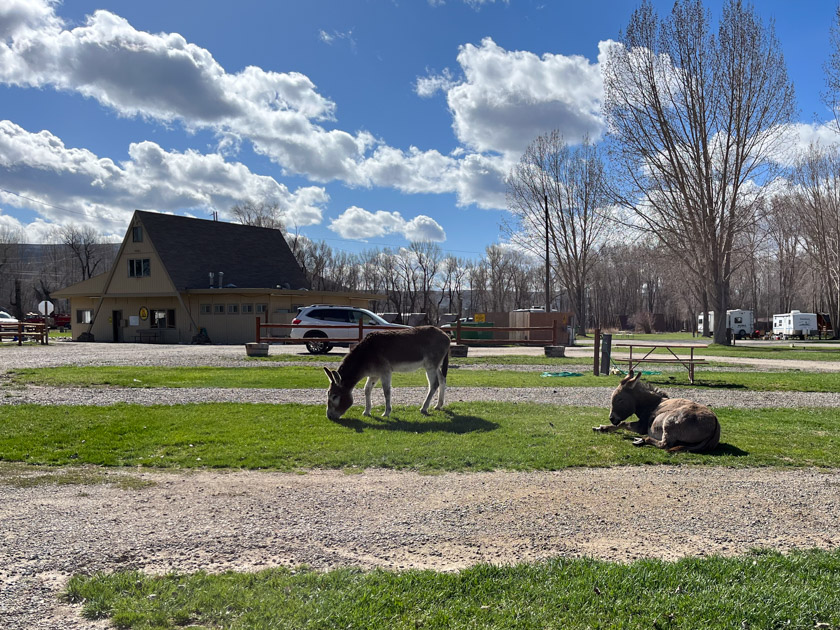
We stopped at the Gunnison KOA in Gunnison, Colorado, for the night. Burros, a small horse, and other farm animals had the run of the place, grazed on the grass in between the RV sites, and provided entertainment for the campers. When walking around, we kept an eye out for road apples.
Nibble, nibble
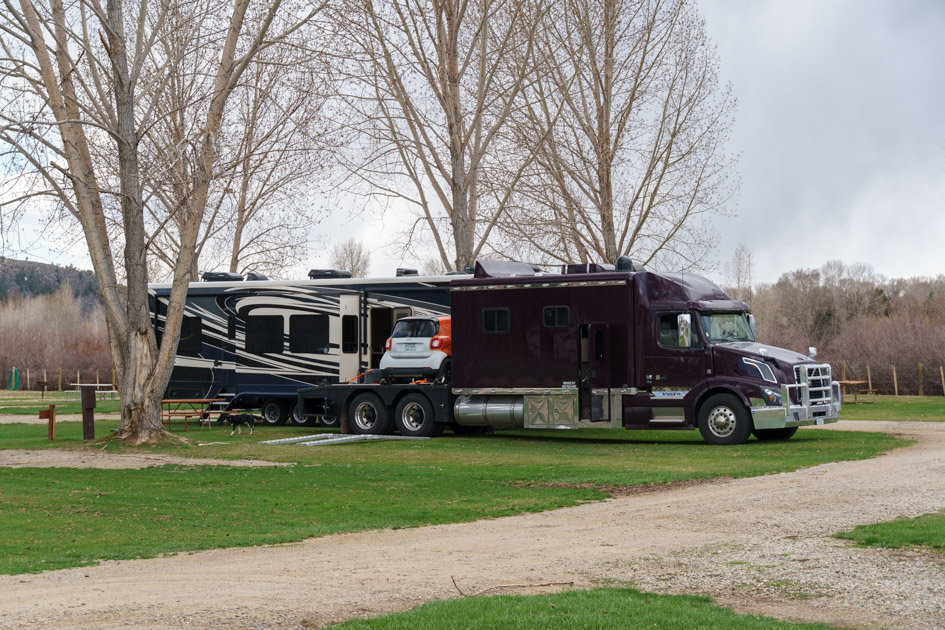
This rig had all the toys
The next day we arrived at Sun Outdoors in North Moab, thankful we had finally made it, and in time to run a few loads of laundry through the washer and dryer. Laundry done, we ate dinner and retired early so we could make our 7:00 am reservation for park entrance. Timed reservations are required from April-October between 7:00 am and 4:00 pm. And even with reservations, the lines to enter the park can be long.
Arches National Park, boasting over 2,000 arches (the largest in the world), became a national park in 1971. Before congress named Arches as a national park it held the distinction as a national monument from April 12, 1929, the date Herbert Hoover designated it as such. Wow! Almost 100 years ago.
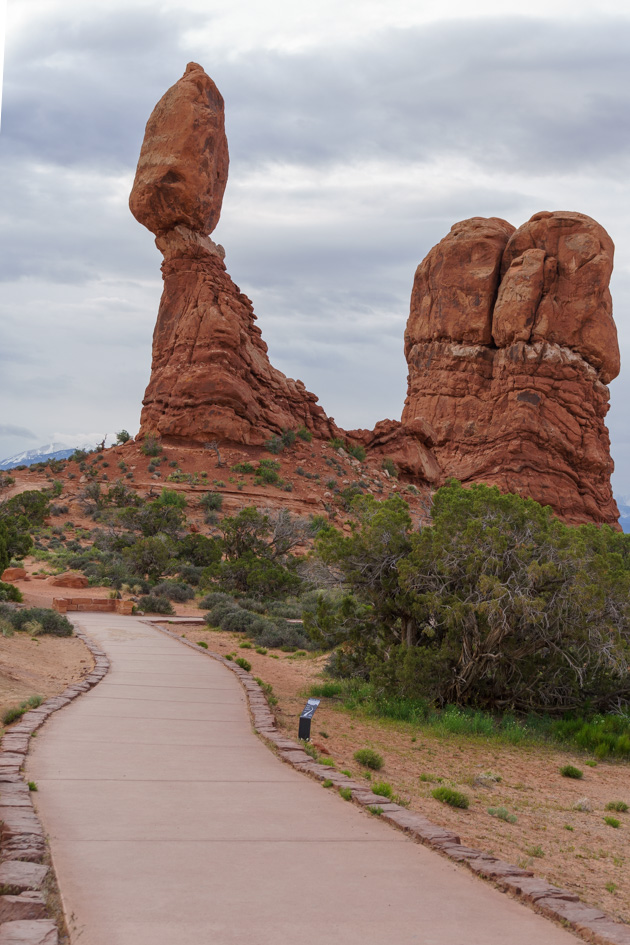
Balanced rock
Plenty of snow on them thar hills
We had only a short wait to pass through the Arches gate and begin our tour. After a stop at Balanced Rock, we headed to the top of the park and worked our way back down, stopping at various sites for short hikes to rock formations and views.
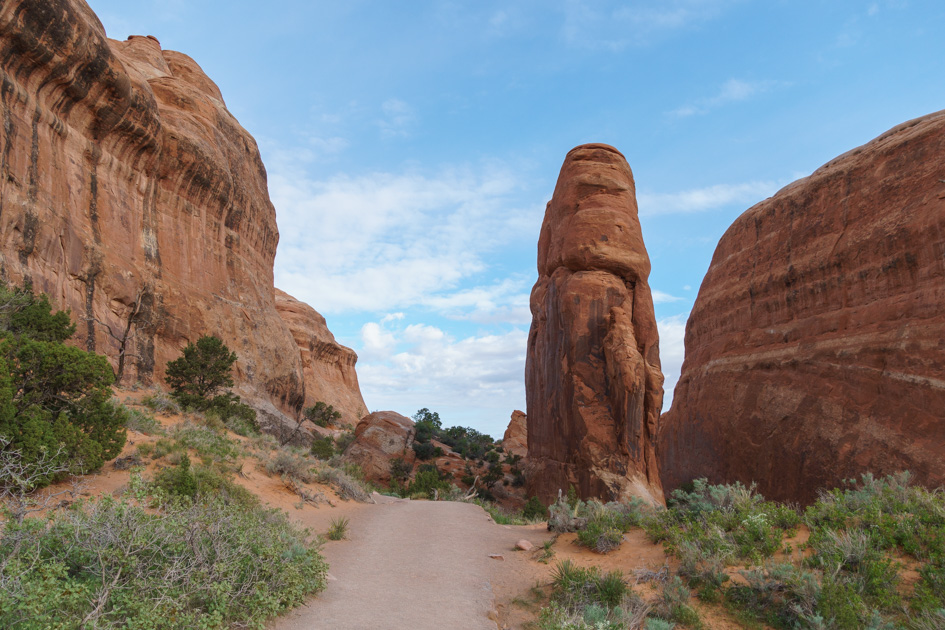
View on the trail
Jon holding up a tree
Walking the trail
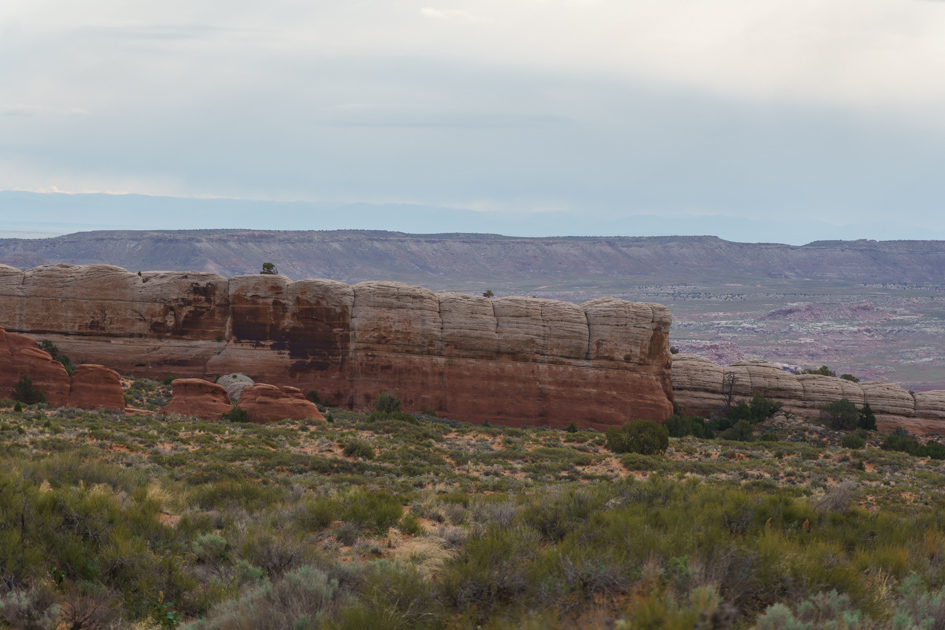
Not sure what this formation is called. Looks like bales of wool to me.
Landscape Arch
Besides Herbert Hoover, two other people deserve our thanks for saving Arches from development: Loren “Bish” Taylor who editorialized the marvels of Moab in the Moab newspaper in 1911, and John “Doc” Williams who teamed up with Rio Grande Western Railroad in 1923 to bring visitors to the area by train and promote Arches as a national park.
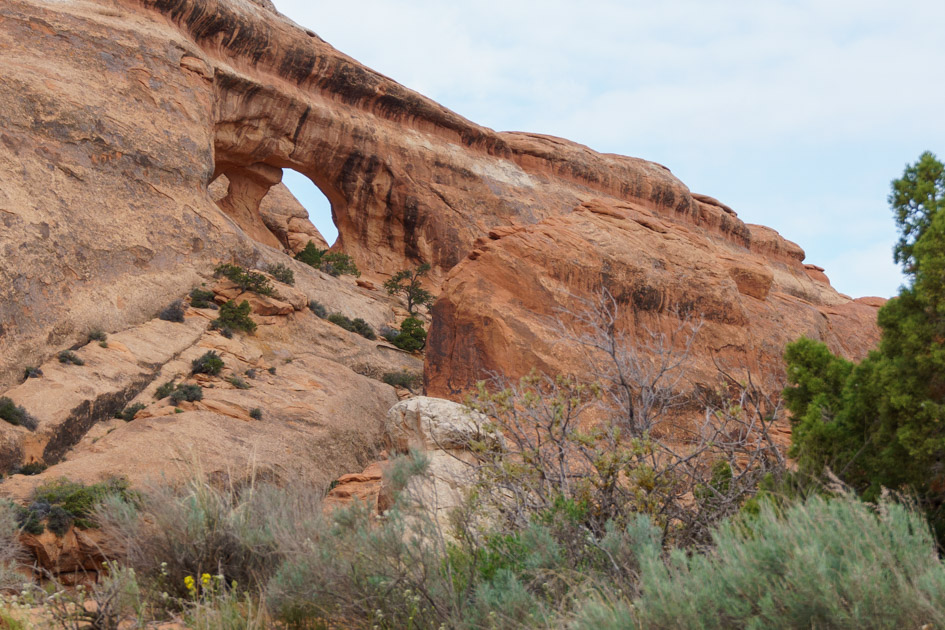
Not sure of this Arch’s name
Posing with one fine juniper tree
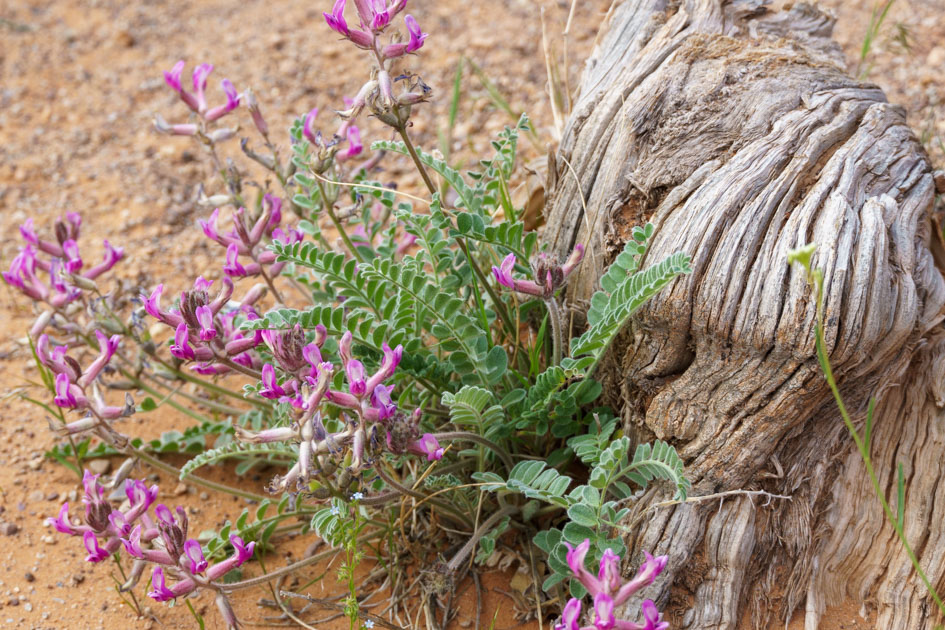
Wooly Locoweed
Closer view with sunlight
Behind us in the photo below was a tight squeeze and slanted, sandy, shale. This was a year after breaking my wrist, so I wasn’t about to tempt fate and risk another slipper slope.
Scaredy Cats
A permit obtained through Recreaction.gov is required for a self-guided tour of Fiery Furnace.
Fiery Furnace Viewpoint 1
Fiery Furnace Viewpoint 2
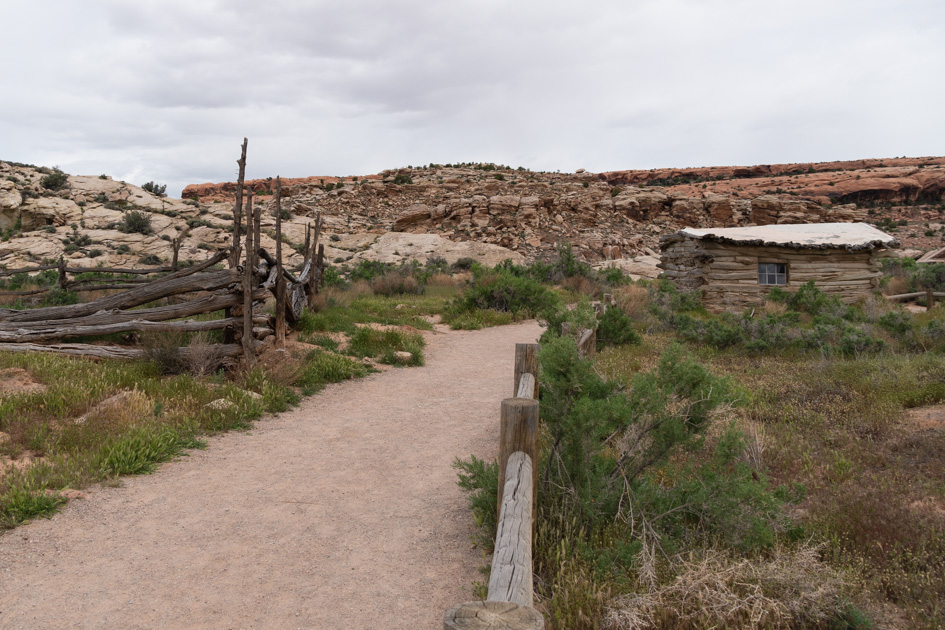
Wolfe Ranch (also known as Turnbow) was a one-room, 17′ x 15′ wood-floored cabin built by John Wolfe in 1906 to house a family of six. A root cellar, irrigation dams, and a corral rounded out the ranch where the family grazed 1,000 head of cattle on the surrounding land.
Wolfe Ranch Cabin and Corral
Wolfe Ranch Root Cellar
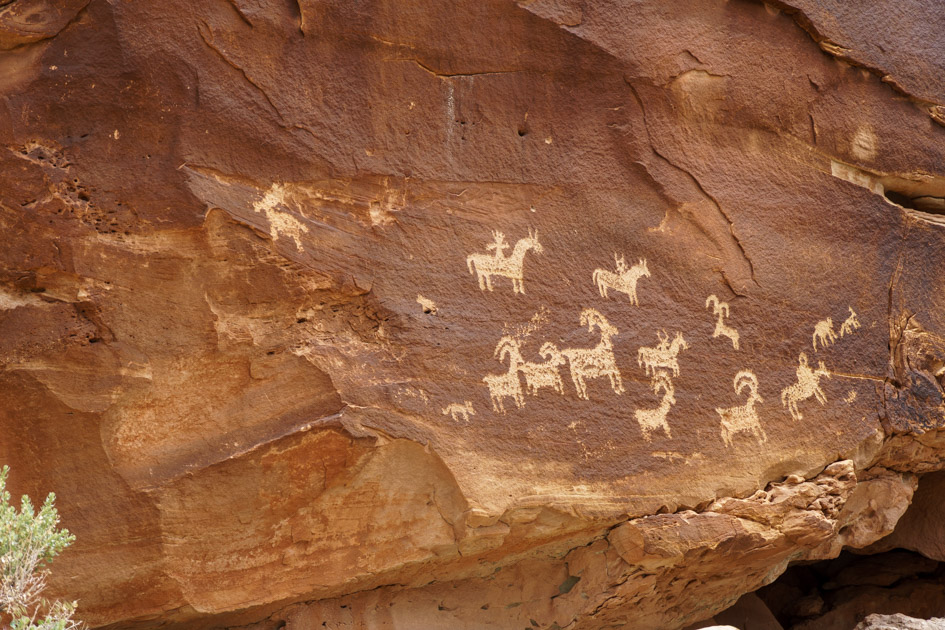
The Zuni, Hopi, Ute, Paiute and other American tribes are known to have traveled through and camped in the area where they hunted and gathered plants and made their marks on the rock walls.
Petroglyph panel
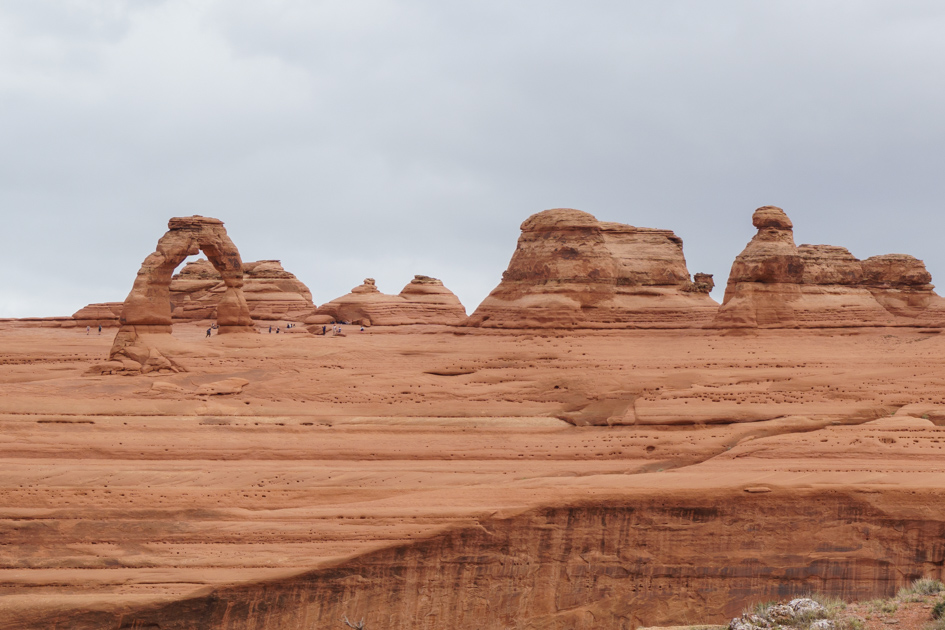
Beyond the petroglyph panel was a 3-mile roundtrip strenuous trek to Delicate Arch. We opted for a view from Upper Delicate Arch Viewpoint.
We arrived at the same time as a small tour group, yet we all had plenty of room to spread out and enjoy the view. Some people took off across the sandstone to the Arch itself. Zoom in close and they look like ants crawling around the foot of castles.
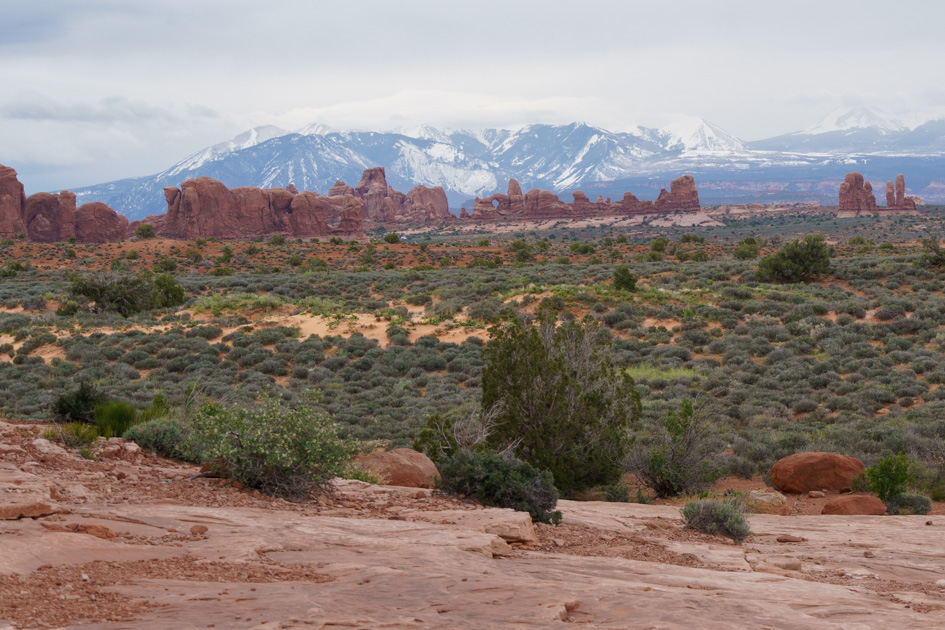
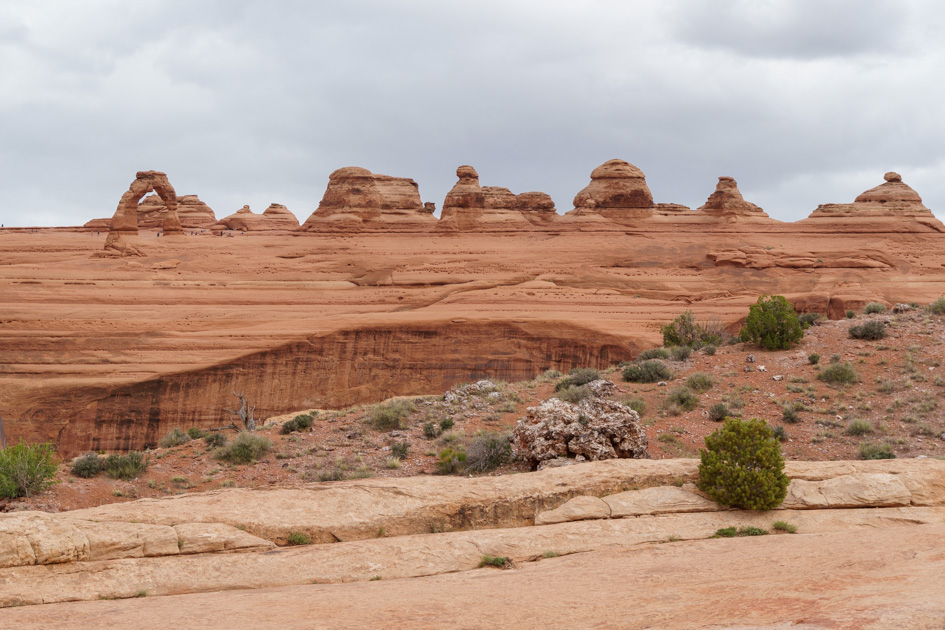
Delicate Arch and Other Formations
Delicate Arch from the Upper Delicate Arch Viewpoint was my favorite view. The rock formations in a row reminded me of a caravan traveling along the ridge with Delicate Arch leading the way.
Closer view where specs of people at the foot provide perspective of the arch’s size
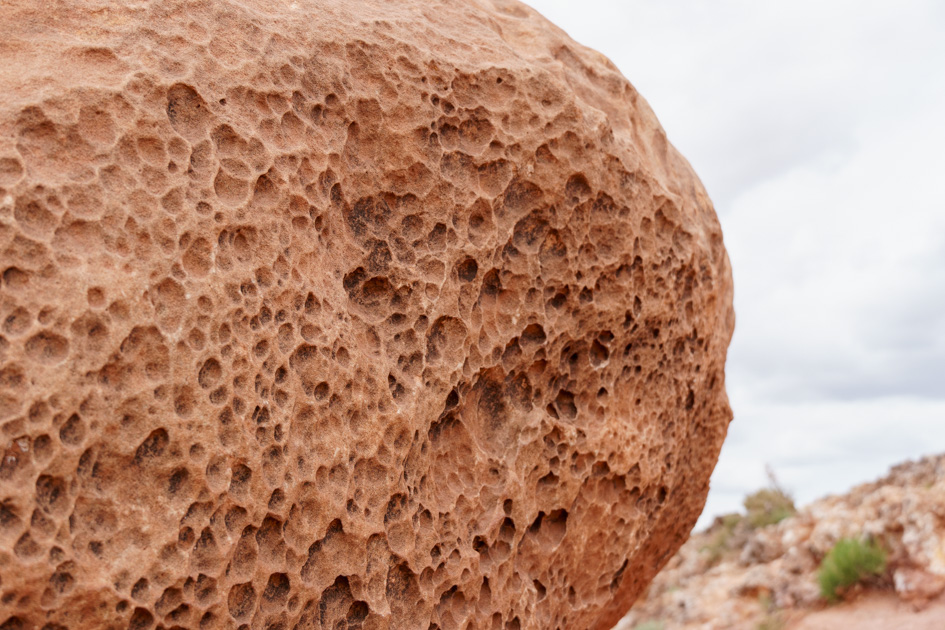
Close up of the nooks and crannies in this boulder
Desert Primrose
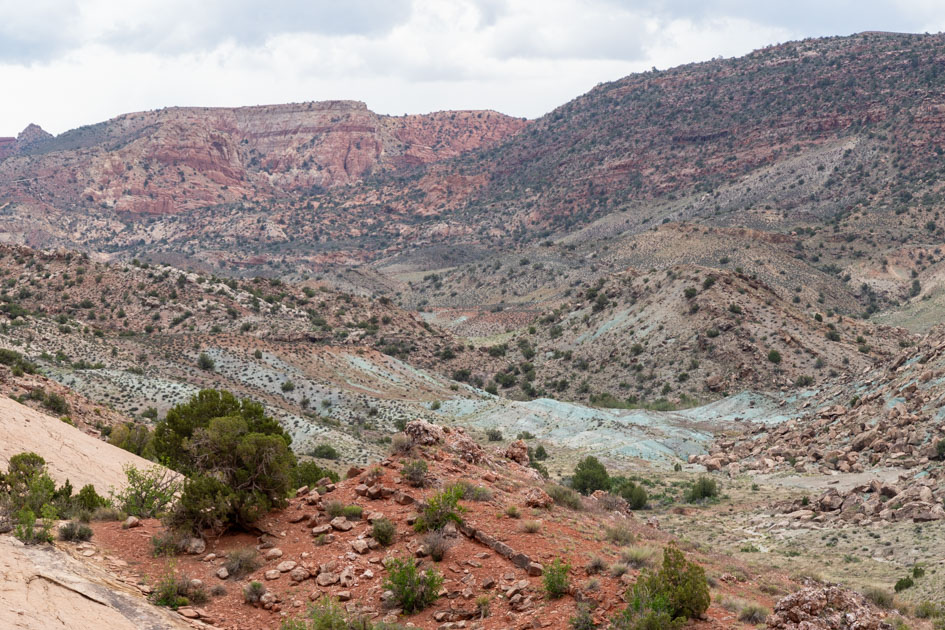
The rocks and formations in Arches were formed from volcanic ash containing iron. Mostly we see the red rocks, sand, and hills which were created in an oxygen rich environment. The green rocks and hills were formed in a low-oxygen environment typically under water during the Jurassic period.
View showing a mix of the red and green rocks
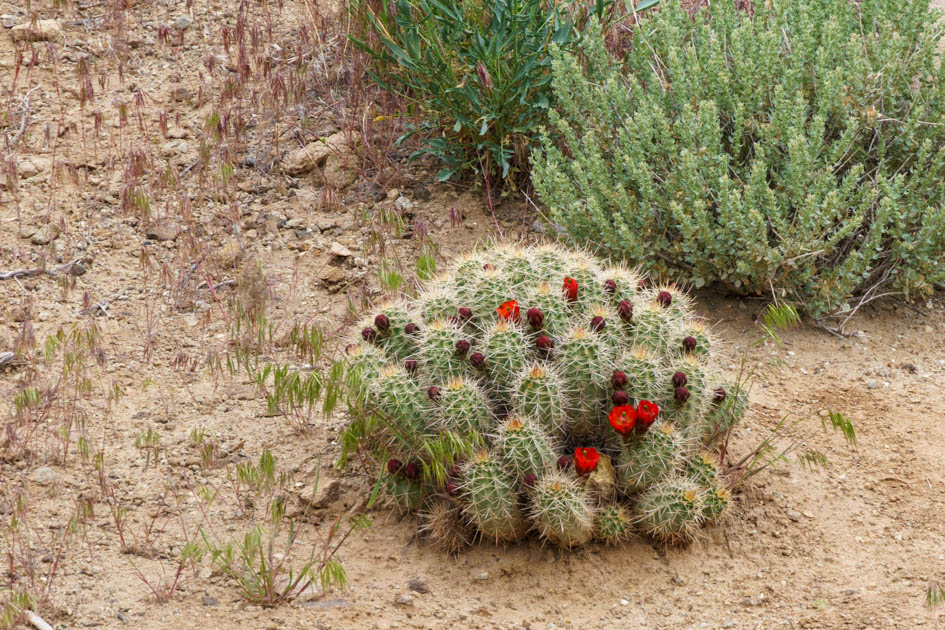
Claret cup or scarlet hedgehog cactus in bloom. I like the way they cuddle up to each other. The hedgehog cactus is native to the southwest from California to Texas.
Claret Cup Hedgehog
Although the reservations are timed, that doesn’t mean no lines. If the park is too congested, park officials will restrict access for up to to 3-5 hours. Come prepared with food, plenty of water, sunscreen, and don’t forget to use the restrooms before lining up and entering the park.
Whew! We enjoyed our visit to Arches and would love to return one day in the future if possible. For now, though, we are satisfied we finally made it.
Next Up: St. George, Utah, then on to California and home.
We missed riding the Broadmoor Manitou & Pikes Peak Cog Railway during our visit to Colorado Springs in September 2018 because it was closed for renovation. Instead, we made it to the top by driving about halfway up the mountain and taking a shuttle the rest of the way.
2018 Visit to Pikes Peak summit by truck and shuttle
So, on our way back to California in May 2023, we made a point to stop and ride the brand-new train and allow a couple days to acclimate to the higher altitude. We arrived at Pike’s Peak RV Park in Manitou Springs on May 2, 2023. Dinner at the Cliff House Hotel was a good idea after our long drive. The salmon and trout were delicious entrees accompanied by the tastiest rosemary bread I’ve eaten and the peach cobbler was the perfect choice for dessert.
Cliff House Hotel and Restaurant
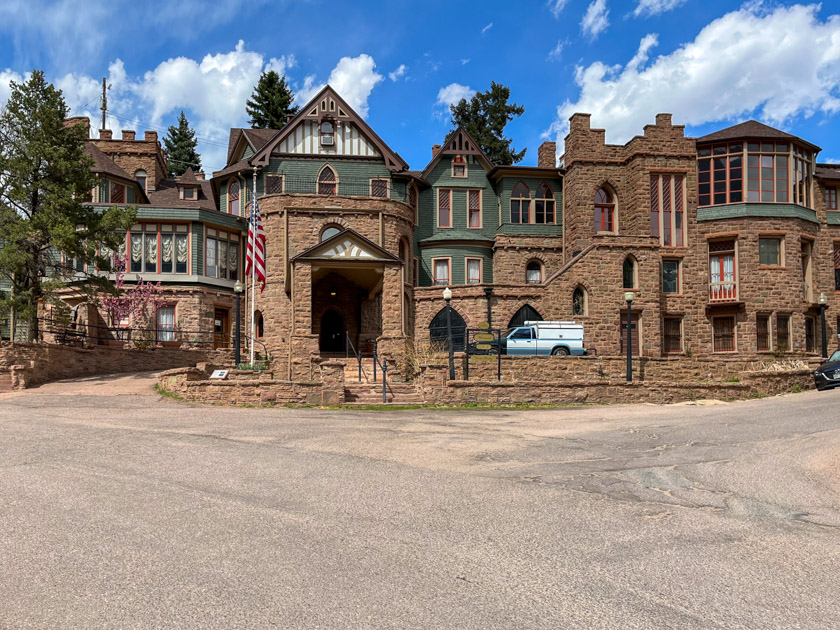
We booked reservations at The Miramont Castle for the next day where we enjoyed high tea at the Queen’s Parlour Tea Room. They serve up mouthwatering sweet and savory bites that satisfy the taste buds, along with several varieties of teas.
Miramont Castle
City of Manitou
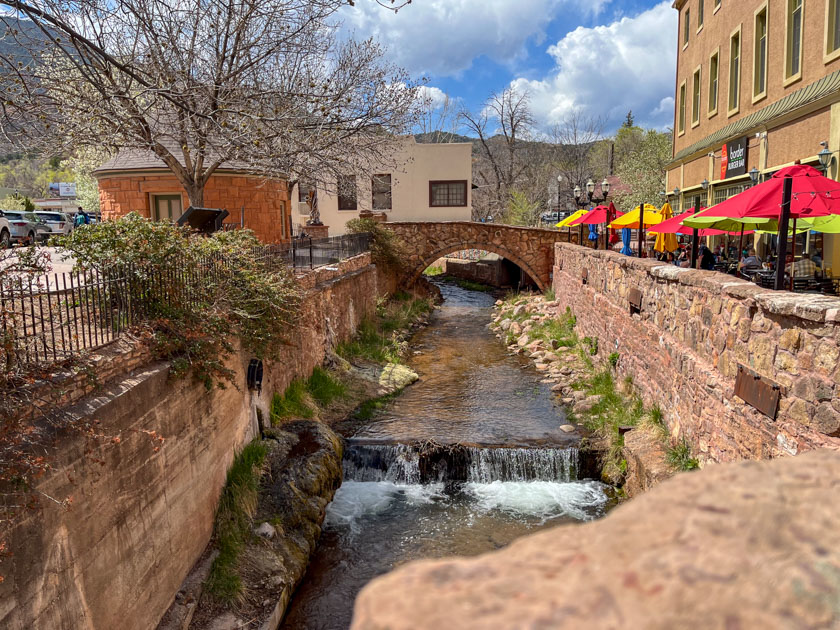
After stuffing ourselves, we needed a walk along the streets of Manitou. We hadn’t taken the time to wander the streets the last time and were surprised to find the colorful buildings, spring water fountains, and art pieces along the sidewalks.
A spring runs through it
Shops along the street
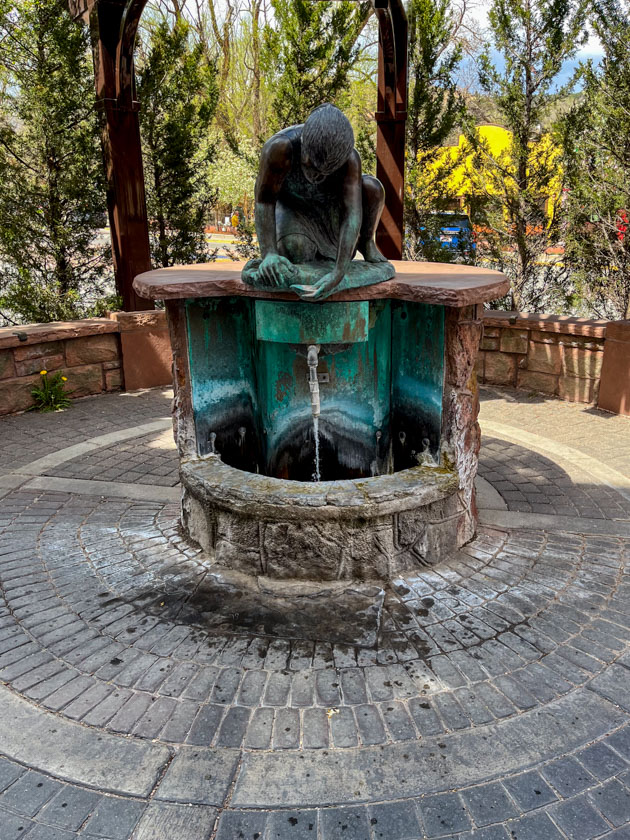
We stopped at the Stratton and Cheyenne Springs for photo opportunities. In all, there are eight carbonated springs that flow under the town.
Spring Maiden sculpture by Fred Darpino
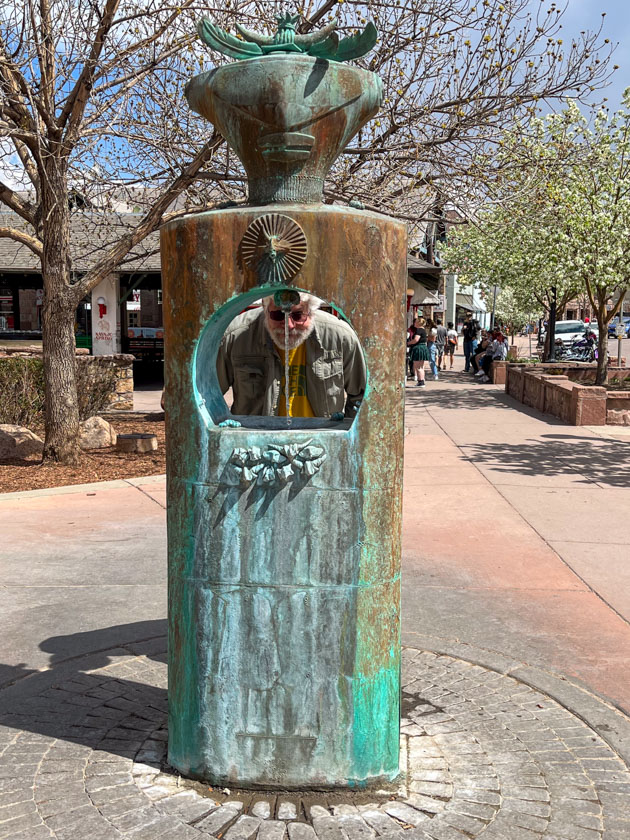
For anyone wanting to take a tasting tour of the springs, stop by the Chamber of Commerce and Visitors Bureau to pick up a map and collapsible souvenir cups for $2.00.
Untitled sculpture by Paul Roger
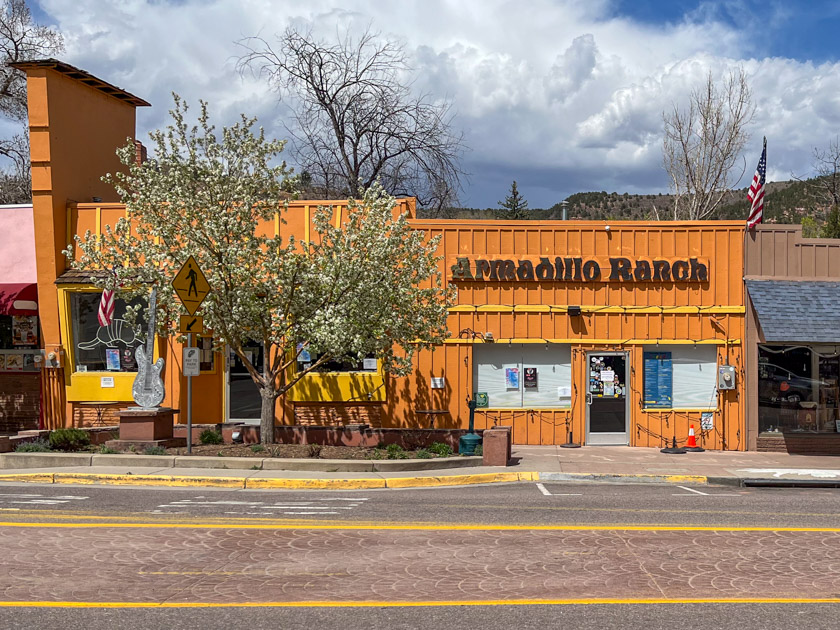
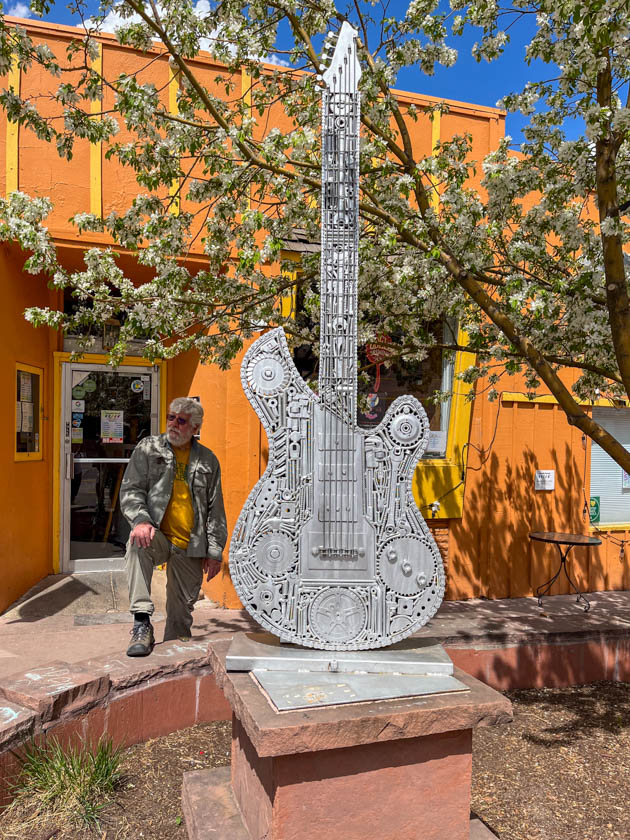
In front of the Armadillo Ranch Bar, Restaurant, and Live Music Venue is where the guitar sculpture “Comforting Melody” by Flaminio Antonio was installed in September 2022 under a one-year contract.
Armadillo Ranch Bar, Restaurant, and Live Music
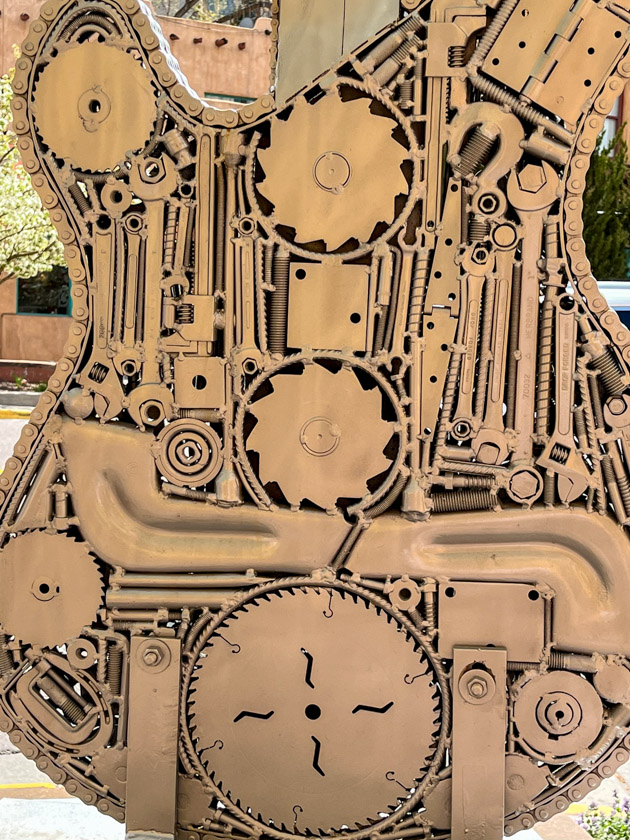
On January 30, 2024, Creative Alliance Manitou Springs began a campaign to raise $6,000 to purchase the scrap metal sculpture for a permanent installation. As of March 11, 2024, they have collected $4,525 toward the purchase. To learn more or to donate, visit Here.
“Comforting Melody” by Flaminio Antonio
Detail of guitar sculpture
Broadmoor Manitou and Pikes Peak Cog Railway
We have Zalmon G. Simmons to thank for the creation of the Pikes Peak Cog Railway. In 1888, after a two-day trip by mule up Pikes Peak while surveying Englemann Canyon for telegraph lines, Simmons wanted a mode of transportation that was a quicker and more comfortable ride to the summit. Fortunately he had the means and the will to fund the construction of a railway. Construction began in 1889, limited service opened in 1890, and by 1891, the trains reached the top of Pikes Peak.
Railway yard and barn
Depot
Cog railway tracks
Inside the railway car
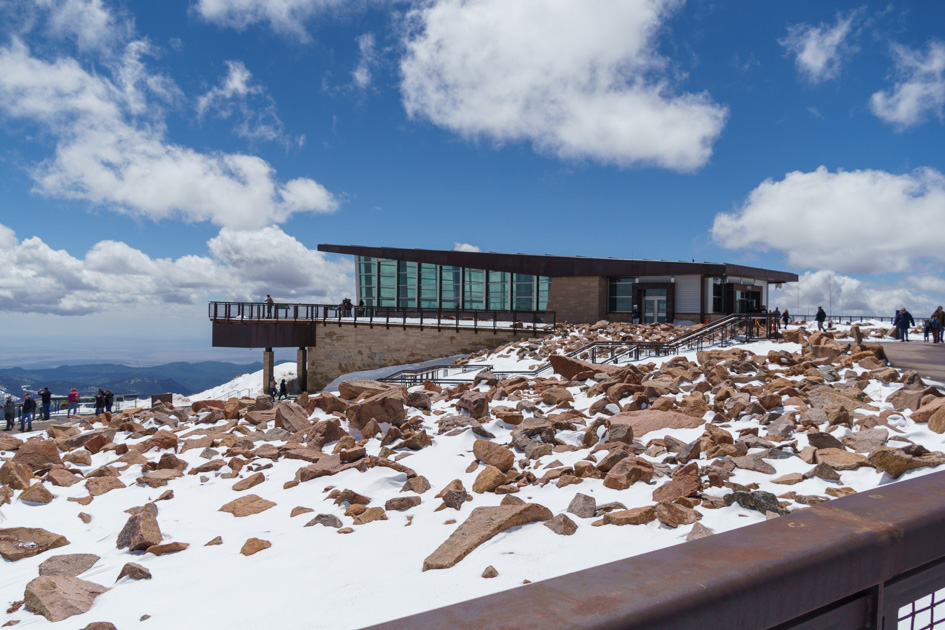
We boarded the train, excited to see what changes had been made at the visitor center. In a word, it was ‘awesome’. Where the cramped shed-like building commanded the top spot, a sprawling multi-story building with glass walls took its place. The views from inside the building were as spectacular as those outside.
Come on everybody, here we go
Steam locomotives were the first workhorses, then diesel in 1938, followed by self-propelled railcars purchased from Swiss Locomotive and Machine Works in 1964.
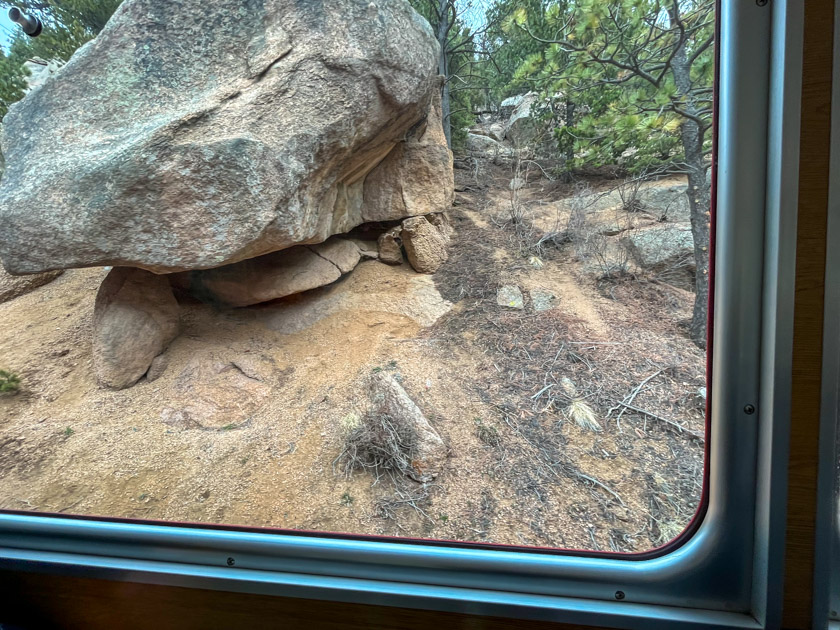
Balancing rock
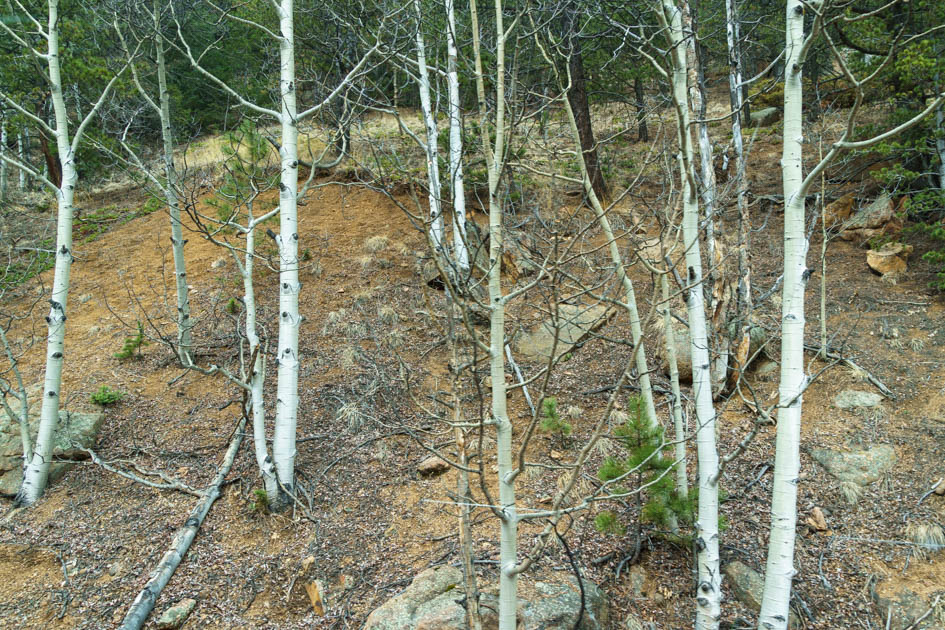
Aspen grove
To accommodate the increase in tourism in the 1970s, two passing sidings were built at Minnehaha and at Windy Point to allow trains to pass on the hill. This allowed the railway to operate eight trains per day instead of only three. And business boomed.
First passing siding
Second passing siding
While preparing for a major maintenance project in the fall of 2017, the work crew realized the maintenance project would not be sufficient. A complete overhaul was required. In March 2018, the railway was closed indefinitely.
The owners, Anschutz Corporation, and the City of Manitou Springs signed an agreement in November 2018 to fund the estimated $36 million renovation through tax breaks over a 50-year period. The project consisted of replacing the track infrastructure; rebuilding the visitor center, depot, other facilities, and older railcars; and purchasing three new trainsets. Work began in March 2019 and reopened on May 20, 2021.
We’re here
It’s interesting that the railway took three years to build initially, and 138 years later, it took a little over two years to completely rebuild the world’s highest and longest cog railroad in the Northern Hemisphere.
Pikes Peak Visitor Center
All interior and external areas surrounding the visitor center are ADA compliant. Inside, guests will find a snack bar, interactive and interpretive exhibits, and a gift shop. And the 1,500 pound donut machine has returned to the delight of previous travelers to the mountain.
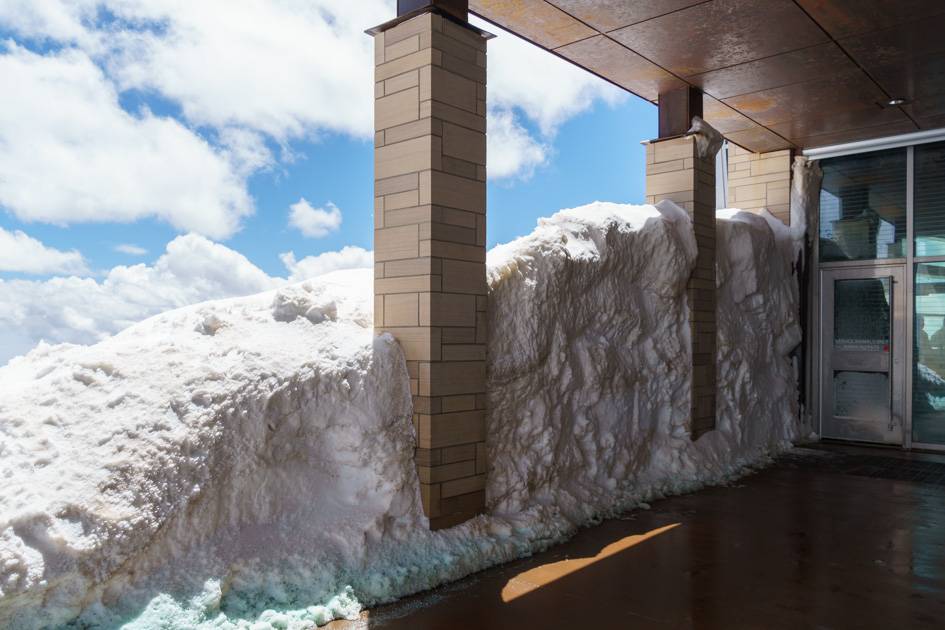
Snow piled high
View from second floor of building
Although we enjoyed the ride up and down the mountain, we found that one day was not sufficient to acclimate to conditions at the peak. Within minutes, Jon’s altitude sickness attacked him so badly that he returned to the railcar.
View from top deck
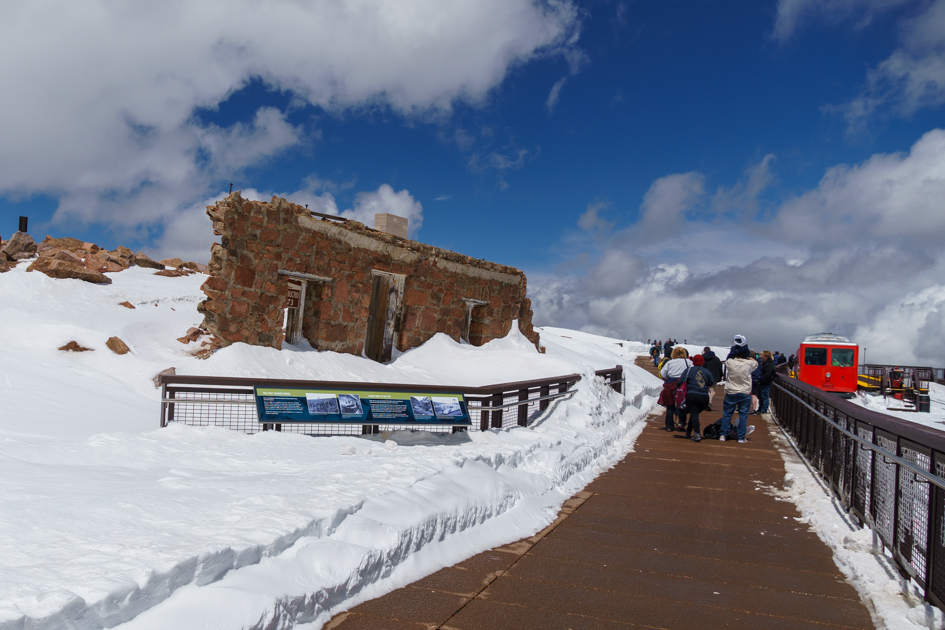
I ignored the awful feeling the best I could and walked slowly on the ice and snow while taking photos. I wanted to enjoy the views as much as I could since I figured we’d never make it to the top again. The air is too thin at fourteen thousand feet for our bodies to function properly.
View from upper level
Time to go
We recommend riding the Broadmoor and Pikes Peak Cog Railway when traveling near Colorado Springs. Just be aware that altitude sickness is real, especially for those of us who live near sea level. More days of acclimating and staying hydrated can help reduce symptoms, but they may not eliminate them.
If interested in reading about our trip to Colorado Springs in 2018, go here.
Next Up: We continue west toward Arches National Park
Our last post was on December 5, 2023, which featured our visit to the Dwight D. Eisenhower Presidential Library and Museum during our Spring Adventure. Jon’s hernia surgery, my broken arm, and various medical appointments limited my time at the keyboard for several weeks. I’ve been playing catchup ever since. A word of caution: Jetways may be slippery when wet, so hang onto the handrails.
Now, on to this week’s post. A short one as we get back into the groove.
We headed from Salina, Kansas, on May 1, 2023, and traveled to the Goodland, Kansas, KOA. We arrived early enough to poke around close by. Goodland’s claim to fame is the “Big Easel,” a reproduction of van Gogh’s painting “Three Sunflowers in a Vase” by Cameron Cross. At 80 feet tall, it is known as the World’s Largest Easel, according to the World Record Academy.
The Big Easel
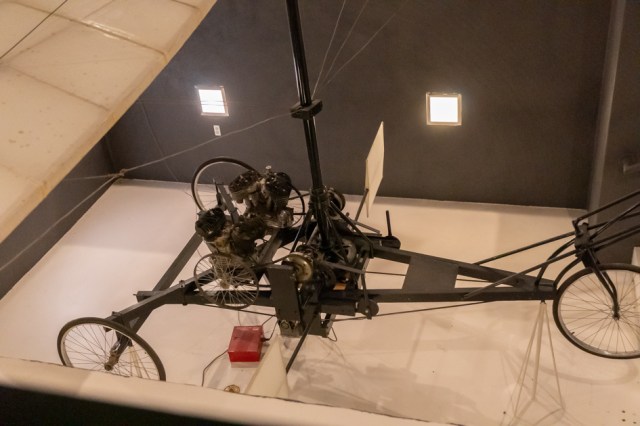
Down the road is the High Plains Museum, operated by the City of Goodland. Artifacts include items donated, such as a replica of the first patented helicopter, the Goodland’s Flying Machine co-invented by William J. Purvis and Charles E. Wilson.
Replica of first helicopter to receive a patent
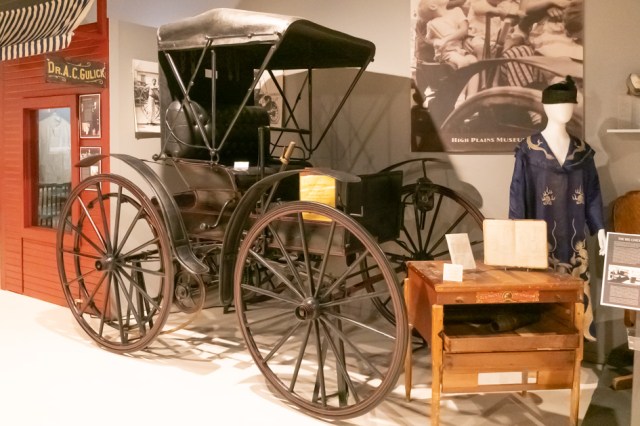
The displays also included a 1902 Holsman Auto owned and driven by Dr. A. C. Gulick, a Sherman County Physician. The car is missing a few safety features compared to our modern vehicles.
1902 Holsman Auto
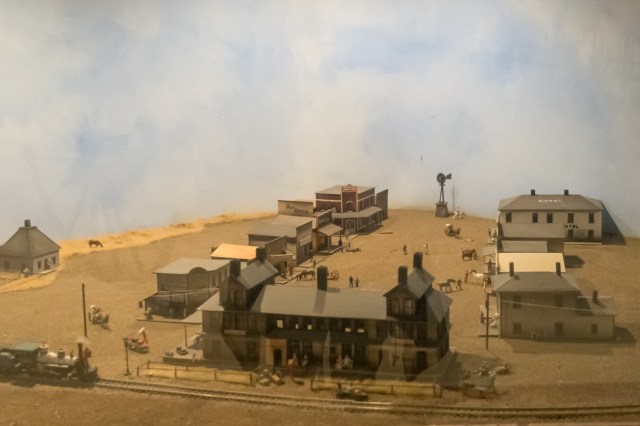
Dioramas reflect the town as it might have appeared during its founding, along with various machinery, equipment, and household goods.
One of many dioramas
Next door to the KOA sits a historic farmhouse under renovation. I wondered who once lived there and who might live there again some day. According to the owner, they bought the house 37 miles away and moved it to its new location. She was out watering the trees, which were not doing well because of the drought in the area.
Historic home under renovation
If we pass through this area again, we might stay more than one night and take in other roadside and historical sites. I hear the Giant Grasshopper made from tractor parts is a must see quirky tourist sight.
As we approached the Dwight David Eisenhower Presidential Library and Museum on April 29, 2023, I tried to remember what I had learned about this man. Only three tidbits popped up: 1) he was a military general, 2) had something to do with the country’s interstate system, 3) and his nickname was Ike.
Eisenhower had been my president for the first eight years of my life as I obliviously watched Romper Room, donned my cowgirl outfit—complete with pistol, holster, and boots—and later played with my Barbie. I also attended Eisenhower Junior-Senior High School in my hometown. Go Eagles! Shouldn’t I have learned more about the man, at some point? Maybe I did and don’t remember, or maybe I didn’t because my dislike of World War II history never held my interest.
Eisenhower as a young boy
Here are the highlights of what I learned about the president that polls rank in the top 10 of all presidents. As with all the presidential museums we’ve visited, we walked through Ike’s life, starting with his boyhood.
Dwight David Eisenhower (nicknamed Ike) was born on October 14, 1890, in Denison, Texas. His family moved to Abilene, Kansas, in 1892, where Dwight lived with his parents and five brothers.
Ike entered West Point on June 14, 1911, and graduated on June 12, 1915, as a Second Lieutenant. Although he didn’t make the baseball team, he played varsity football as a halfback until a knee injury ended his sports career.
Ike, the West Point graduate
In October 1915 while stationed at Fort Sam Houston, Texas, Eisenhower met Mamie Geneva Doud while visiting friends in San Antonio. Was it fate she and her Denver, Colorado, family had rented a house in San Antonio for the winter? Dwight’s and Mamie’s romance was a whirlwind, announcing their engagement on February 14, 1916, and married by July 1, 1916. They had two boys, the first of which died of scarlet fever within four months. The military family moved extensively from post to post until World War II broke out and Mamie settled in at the Wardman Park Hotel in Washington, DC.
Fun Fact: Dwight David Eisenhower II, Ike’s and Mammie’s grandson, is married to Julie Nixon, Richard and Pat Nixon’s daughter. Richard Nixon was Eisenhower’s vice president.
Dresses worn by Mamie during Eisenhower’s presidency
Between 1915 and 1922, Eisenhower served in the Infantry and Tank Corps, earning promotions along the way. In 1919, he volunteered to participate as a Tank Corps observer in the First Transcontinental Motor Convoy. The lack of roads that could accommodate the heavy equipment the Army moved across the country made the task difficult.
During the 1920s and 1930s, Eisenhower racked up promotion after promotion while serving in various posts under the command of several generals. Then, on December 7, 1941, the attack on Pearl Harbor dragged the US into World War II.
The War Years
In May 1942, Eisenhower was designated Commanding General, European Theater, London England. By November 1942, he was named Commander-in-Chief, Allied Forces, North Africa. In December 1943, he was appointed Supreme Commander, Allied Expeditionary Forces and commanded forces of the Normandy Invasion on June 6, 1944.
On December 20, 1944, promoted to General of the Army with 5 stars and after the German surrender on May 8, 1945, he was appointed Military Governor, US Occupied Zone, Frankfurt, Germany.
He held the position of Supreme Allied Commander of NATO in Europe and had operational command of US forces in Europe from December 1950 to July 1952.
In Abilene, Kansas, on June 4, 1952, Eisenhower announced his candidacy for the Republican party nomination for president. He won the nomination and the presidency against Adlai Stevenson II and beat Stevenson again for a second term.
Campaign memorabilia
During Eisenhower’s presidency, the economy boomed. I suspect the pent up demand after the bans, restrictions, and rationing during the war had as much of a hand in the bounce back as the president in office did.
From 1950 to 1960, the number of cars on the road increased by nearly 22 million and home ownership increased from 55% to 62%
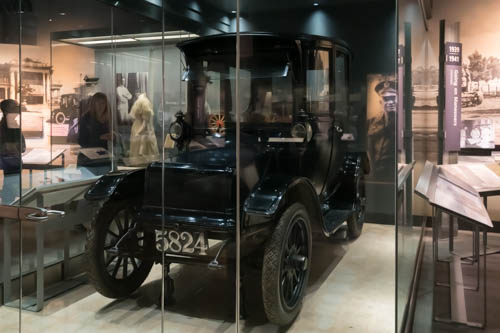
Eisenhower occasionally drove the car below. It belonged to Mamie’s mother, Elivera Doud. It cost $4,300 when new and the driver could use either the front or rear seat controls.
1914 Rauch & Lang electric car
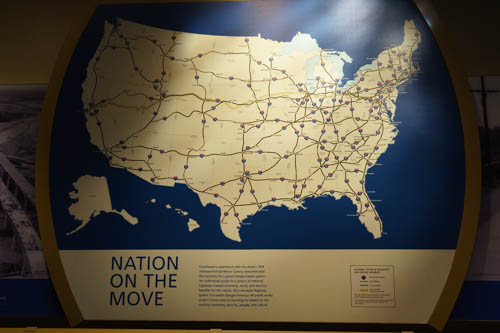
The National Interstate and Defence Highways Act (1956) was one of Eisenhower’s notable achievements as president. This display claims, “No public works project comes close to equaling its impact on the country’s economy, security, people, and culture.”
Map of projected Interstates by 1971
Eisenhower’s foreign policy focused on reducing military aid and preventing the spread of communism. These policies ended the fighting in Korea with the Korean Armistice Agreement signed in July 1953. They also increased the country’s nuclear weapons and delivery systems and prevented other countries from acquiring or using them against the US.
Eisenhower relied on secret CIA missions to fight communism in Southern Asia, South America, and the Caribbean instead of using the military. Some critics argue these actions have left the US with unresolved foreign policy issues that continue to cause havoc to this day.
Desegregation was another contentious issue his administration dealt with. Eisenhower continued President Truman’s orders to desegregate the federal workforce and armed forces. The Supreme Court decision in Brown vs the Board of Education, came down in 1954, which led to the Civil Rights bill.
The bill established a bipartisan congressional commission to investigate civil rights violations, created a civil rights division in the Department of Justice, and gave the Attorney General authority to pursue contempt proceedings against violators of civil and voting rights.
After exploring the museum, we took a break outside and discovered a statue of Eisenhower in the “Champion of Peace” circle. In the background are memorial pylons. Phrases on the pylons commemorate Eisenhower’s life from birth through presidency.
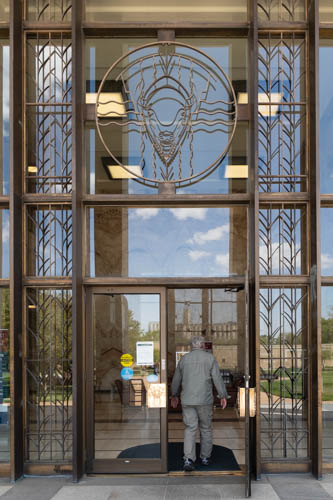
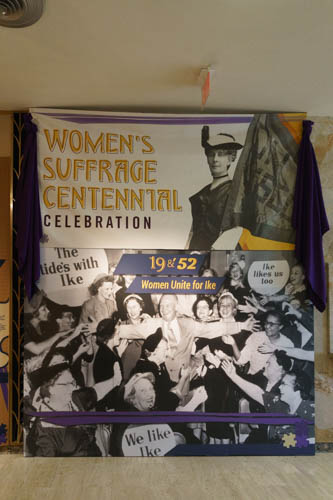
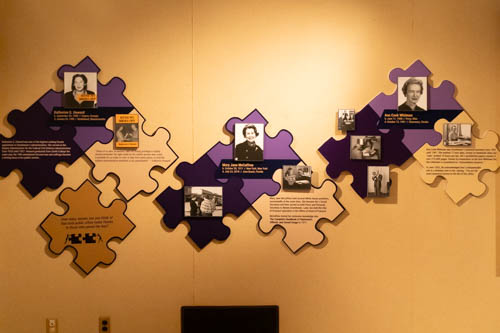
Across from the museum is the library building. During our visit, we found the Women’s Suffrage Centennial exhibit upstairs. It celebrated the women who campaigned for Eisenhower and those who served in his administration. His was the first presidential campaign to focus on the vote of women.
Library entrance
Eisenhower and troops in the library
Below is the chapel, or mausoleum, where Dwight and Mamie are buried.
Inside are quotes from Eisenhower’s speeches. The one on the back wall is from his Guildhall Address, London, June 12, 1945. It says, “Humility must always be the portion of any man who receives acclaim earned in blood of his followers and sacrifices of his friends.”
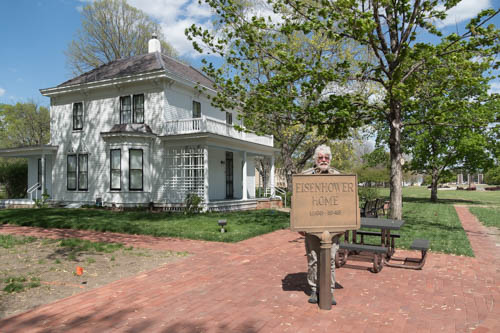
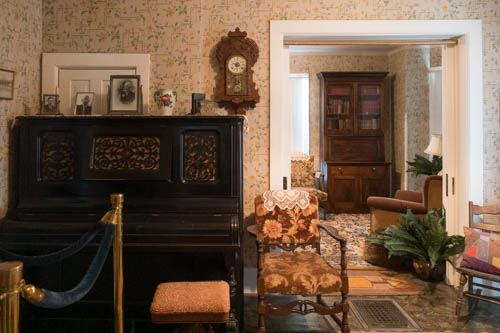
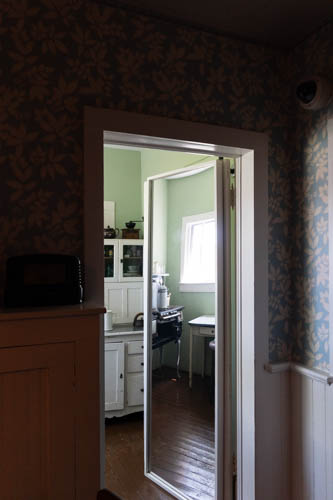
Also outside is Eisenhower’s boyhood home, which we toured with a guide. Under the National Archives website, is a video tour of the house and historical detail for those who are interested.
Eisenhower painting of his boyhood home
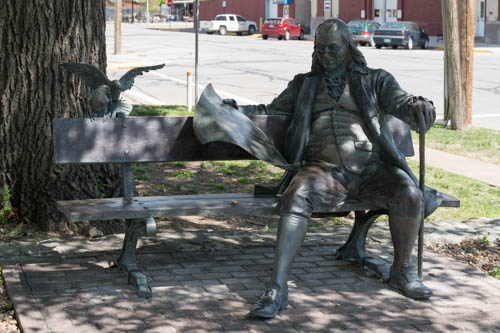
A few photos of the surrounding area in Abilene, Kansas.
Is that Ben Franklin reading the paper?
Well, I finally learned about my first president and I’m not sure what to think. He impacted the country in positive ways when you consider he ended the Korean War, authorized the construction of the Interstates and signed the Civil Rights act, among other good deeds. Yet the use of the CIA for covert operations has left lasting damage to relationships with other countries.
Analyzing all of his actions to determine if Eisenhower deserves a top ten rating would require more research than I wanted to do. So I read the Farewell Speech he gave before leaving the White House. He made several points I found interesting and relatable to current affairs around the world and in today’s political climate:
1) He talked about how the President and Congress need to work together to find the best solutions to shape the nation’s future.
2) He said, “America’s leadership and prestige” does not rely only on our “unmatched material progress, richs and military strength, but on how we use our power in the interests of world peace and human betterment.”
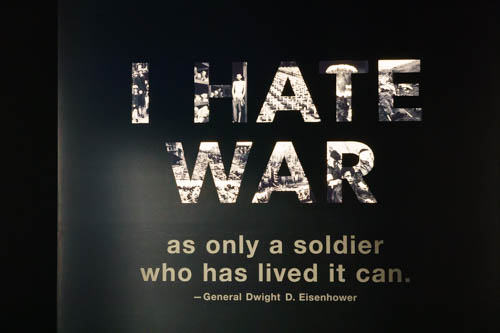
3) He spoke at length about the buildup of the country’s military-industrial complex during the previous years and the importance to “guard against the acquisition of unwarranted influence, whether sought or unsought, by the military-industrial complex.” And he recognized that “the potential for the disastrous rise of misplaced power exists, and will persist.”
4) On conservation, he said we must, “Avoid the impulse to live for today, plundering … the precious resources of tomorrow. We cannot mortgage the material assets of our grandchildren without risking the loss also of their political and spiritual heritage. We want democracy to survive for all generations to come, not to become the insolvent phantom of tomorrow.”
And his parting prayer at the end of his speech asked for a utopia for the world I fear will never exist. However, that doesn’t mean we should stop striving for the dream.
“We pray that peoples of all faiths, all races, all nations, may have their great human needs satisfied; that those now denied opportunity shall come to enjoy it to the full; that all who yearn for freedom may experience its spiritual blessings; that those who have freedom will understand, also, its heavy responsibilities; that all who are insensitive to the needs of others will learn charity; that the scourges of poverty, disease and ignorance will be made to diappear from the earth, and that, in the goodness of time, all peoples will come to live together in a peace guaranteed by the binding force of mutual respect and love.”
Reading the speech brought me closer to agreeing with Eisenhower’s ranking in the top ten of all presidents. I like how he laid out the threats to the country that existed then and gave warnings or advice about the future. And I’m sad more people didn’t pay attention.
Up Next: We stop in Goodland, Kansas, for a few days




































 The Traveling Todds