Welcome back to Big Bend National Park, where we visited in February 2016. Of the 62 national parks in the nation, Big Bend clocks in at over 801,000 acres, making it the 14th largest in the system.
For more information about this section of the park, see the Big Bend National Park overview in Part Five.
The Rio Grande Village in the eastside of the park is 41 miles from the Maverick Junction entrance where we entered. Be sure to heed the posted speed limit of 45 mph. A park ranger had to warn Jon to slow down a tad.
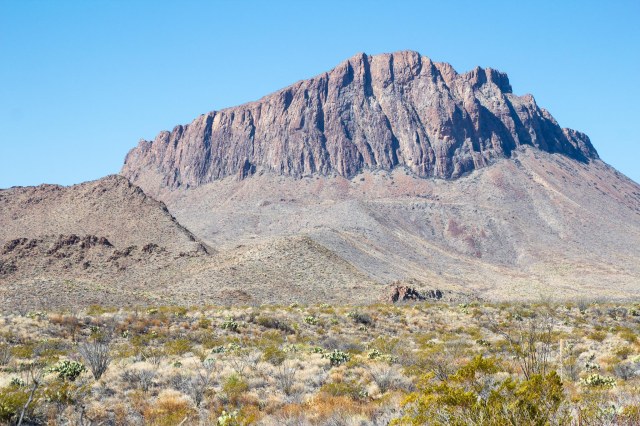
Volcanic peak rising from the desert floor
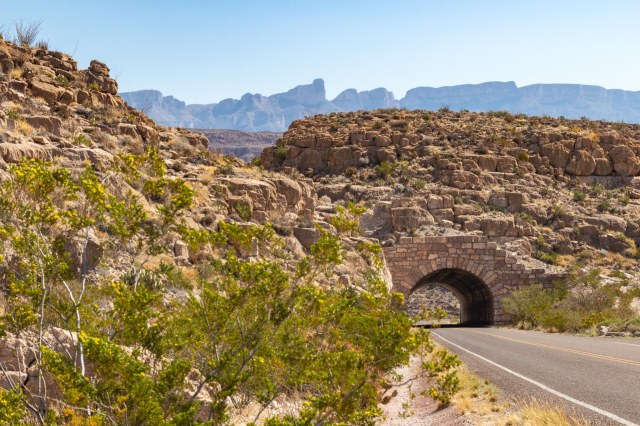
From Terlingua, Highway 118 is the route to take to the eastside of the park. Although this tunnel is short compared to the Zion-Mount Carmel tunnel in Zion or the Wawona in Yosemite, when we see a tunnel and there’s a place to park, we have to take a picture.
Rio Grande Tunnel built in 1959
From the Rio Grande Visitor Center, the Rio Grande Village Nature Trail leads to a viewing platform on a pond and continues up a hillside for river and mountain views.
Viewing platform at pondGreat Blue HeronReeds against blue skyRio Grande River was low
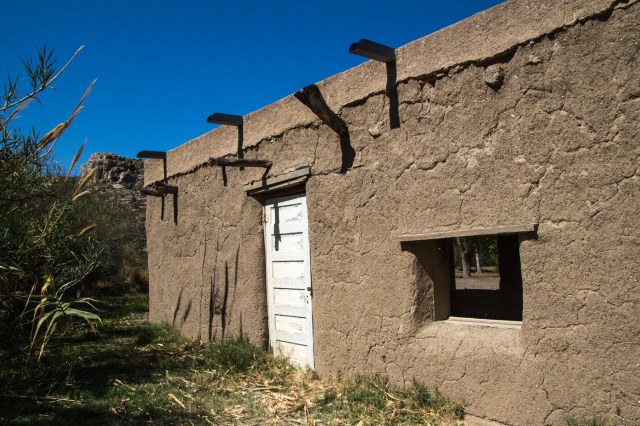
We took a lunch break at the Daniels Farm House, which is a 1920 adobe farmhouse representing Texas pioneer farming. John O. Wedlen, a Swedish immigrant who came to Texas for greener pastures, built the building as a shed for farm equipment.
Picnic setting at Daniels Farm House
Daniels purchased the farm in 1937 and moved into the former storage shed as his residence. Later he added a room to use as a small store, serving the local residents in the Boquillas community.
Daniels adobe-style farm house
Daniels converted 100 acres of land to cotton and moved away in 1944 when the park was established. The home, or shed, is 44 feet by 15 feet, or 660 square feet.
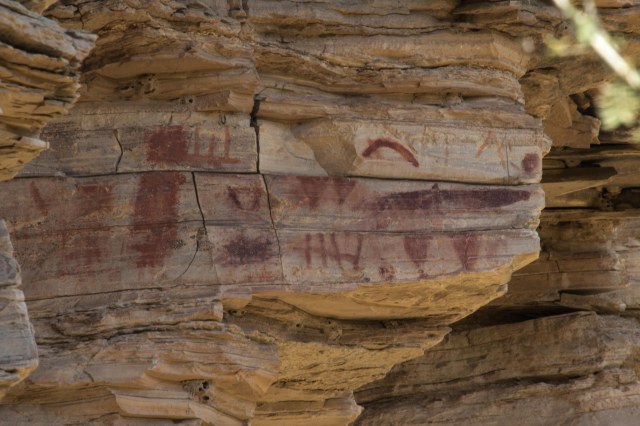
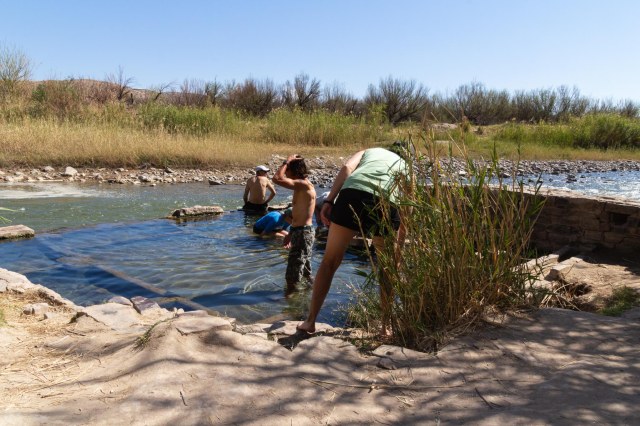
At the Hot Springs Historic District, visitors will find preserved buildings, pictographs, and the foundation from the old bathhouse. The 105-degree water entices guests to come on in, soak a while, the water’s fine.
I think this building was used as a storeRooms for guests
When J. O. Langford heard about the healing powers of hot springs in Texas, he filed a claim under the Homestead Act sight unseen.
Pictographs and petroglyphs are visible on the cliffsTrail leads to the bathhouse
After following a 21-day treatment of bathing and drinking the spring water and experiencing relief from his recurring bouts of malaria, he opened the spring to other bathers at 10 cents a day or $2.00 for the full 21-day treatment.
Visitors try out the warm waters of the spring
Besides starting tourism in the area, he also became a schoolteacher, a self-taught doctor, and a postman.
There is plenty more to see in the eastside of the park, and I’d love to come back and spend a week or maybe two.
Next up we check out the westside of the park. Until then, stay safe.
We continue our Winter 2016 Tour with a stop in Las Cruces, New Mexico. Fans of old western towns, we selected Old Mesilla, New Mexico, for a bit of sightseeing.
Mesilla, New Mexico
Mesilla was established in 1848 by the Mexican government after the Treaty of Guadalupe Hidalgo ceded to the United States the northern portions of what is now New Mexico. The town became a haven for Mexican citizens who did not want to be part of the United States.
Just five years later the US purchased the southern portions of New Mexico and Arizona under the Gadsden Purchase Agreement. On November 18, 1854, the US held an official flag-raising ceremony claiming Mesilla and the surrounding area as part of the United States.
Basilica of San Albino stands watch over the Mesilla Plaza. Established in 1851 as an adobe church by the Mexican government, the current building was dedicated on April 12, 1908, atop the adobe’s foundation. The church bells date back to the early 1870s. In 2008, San Albino was granted minor basilica status.
Basilica of San Albino
At the crossroads of Butterfield Stagecoach and Camino Real de Tierra Adentro, Mesilla became the center of the area until 1881 when the Santa Fe Railway chose Las Cruces as the train route.
Colorful displays outside stores invite shoppers in to browse
To demonstrate how valuable the routes and train stops were to the early western towns, compare the population between Mesilla and Las Cruces today. Las Cruces has an estimated population of 100,000 while the city of Mesilla is around 2,200. The Mesilla townsfolk may like their city just the way it is since tourists come from all over to enjoy the festivals and soak up the history.
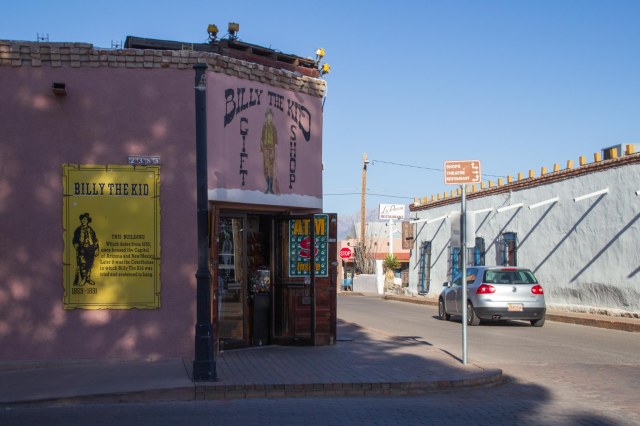
At the location of this gift shop, a judge sentenced Billy the Kid to hang. Although he escaped, he was later captured and killed.
From 1861 to 1862, Mesilla served as the capital of the Confederated Territory of Arizona until 1865 when the Volunteers of the California Column recaptured the town, and it became the headquarters for the military district of Arizona.
The town’s cantinas and festivals during the Wild West era attracted lawmen and lawless alike including Pat Garrett, who killed William H. Bonney, also known as Billy the Kid, and Francisco “Pancho” Villa, the Mexican general who commanded the northern division of the Constitutionalist Army.
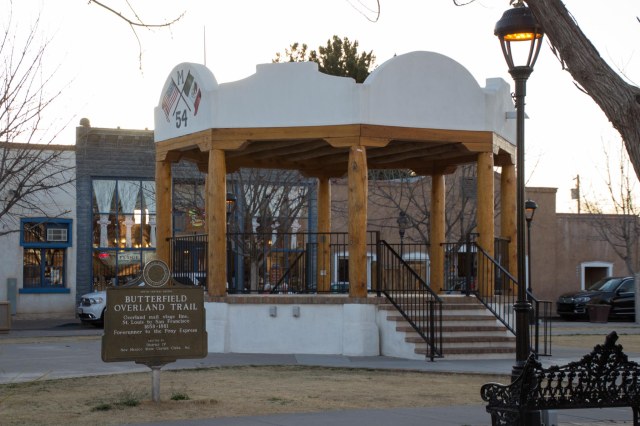
The Mesilla Plaza was named as a National Historic Landmark in 1961, and the original bandstand was built in the 1970s.
Mesilla bandstand
Structural issues required the demolition of the bandstand in October 2013, and it was ready for use at the Cinco de Mayo celebration in May 2014. The plaque honors the Butterfield Overland Trail—a precursor to the Pony Express—and the stage line that connected St. Louis to San Francisco from 1858 to 1861.
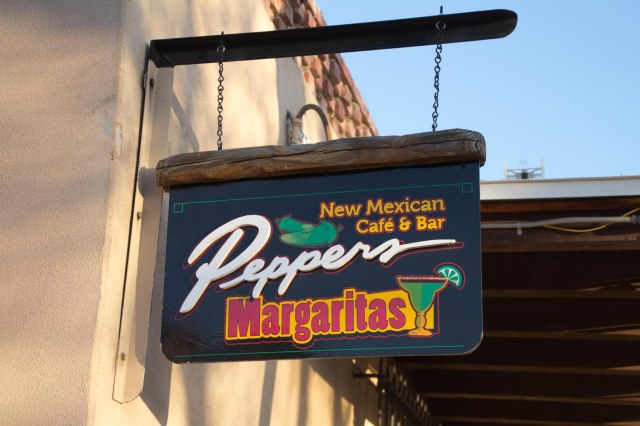
When in New Mexico, one must sample New Mexican cuisine. What better place for hungry travelers to stumble into but Peppers Café & Bar for entrees and margaritas.
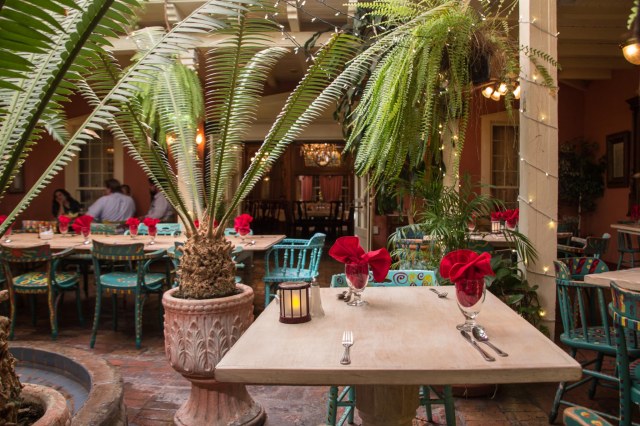
Great food and margaritas at Peppers
This historic building that houses Peppers has a reputation for being haunted. We arrived in between dinner and lunch, so they allowed us to wander around the place and peek into the various private rooms on the chance a ghost or two may appear. They must come out only at night.
This bright and cheery room belies what lurks in dark corners and beyond the doorways Kaleidoscope of color in a stain glass panel
Does this room remind anyone of the Haunted Mansion at Disneyland or Magic Kingdom? I could almost see the gossamer ghosts floating around the room, the statue head speaking spooky words, and the men in the paintings watching our every move.
Are those eyes spying on me?
Mesilla Book Center has been in business since 1966. Besides books about New Mexico and the Southwest, they sell jewelry, gifts, souvenirs, and Native American kachinas.
Support your local independent book store
The Thunderbird de la Mesilla building is the oldest brick structure in New Mexico. Some might say the building harbored bad luck in its early years. Augustin Maurin started construction in 1860, using burned bricks from his own kiln. Augustin met an untimely death when robbers murdered him in 1866. Cesar Maurin, Augustin’s heir, arrived from France to claim the property and died two years later of natural causes. Pedro Duhalde, a former Mesilla saloon keeper, took over the building, and robbers murdered him too.
Thunderbird de la Mesilla
Tiburcio Frietze is listed as the current owner on the building’s plaque. Sadly, he passed away on January 1, 2020. The building was used as a general store, residence, saloon, and town hall. Today it is a gift shop selling jewelry, carvings, textiles, pottery, religious symbols, and various sundry items.
Entering Texas
The next day we continued on Interstate 10 through El Paso and transitioned onto US Route 90. Our son-in-law told us about the Prada store out in the middle of nowhere, so we stayed alert as we neared Valentine.
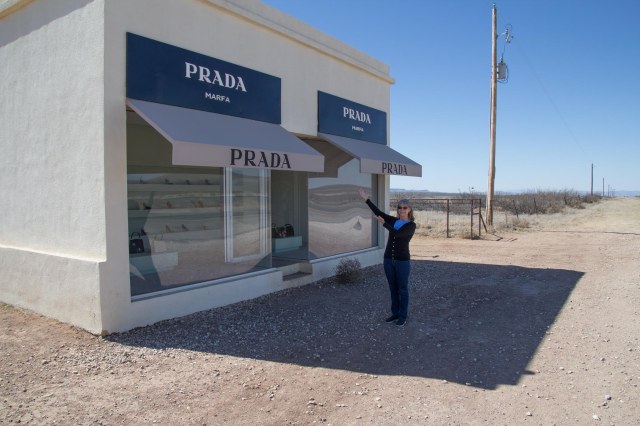
Prada Marfa by artists Elmgreen and Dragset
There it was on the right side of the road filled with shoes and purses from the 2005 fall collection, the same year the structure was established. Keep your credit card in your pocket because shopping is not possible.
Love locks on a fence behind the Prada Marfa store
The building is a permanent land-art project commissioned by nonprofit organizations Art Production Fund and Ballroom Marfa. There are no clerks in the store, and the door never opens.
We had picked out the Lost Alaskan in Alpine, Texas, to stay for the night until we saw the banner advertising the Cowboy Poetry Gathering. With no luck getting a spot in Alpine, we drove on to MacMillen RV Park in Fort Davis, Texas. It didn’t look like much when we drove in, but it was only for one night, and they had a high rating for the best bathrooms ever.
MacMillen RV Park, Fort Davis, Texas
Hooray, we finally made it to Texas and only 380 miles before we arrive at Big Bend National Park.
Fort Davis National Historic Site
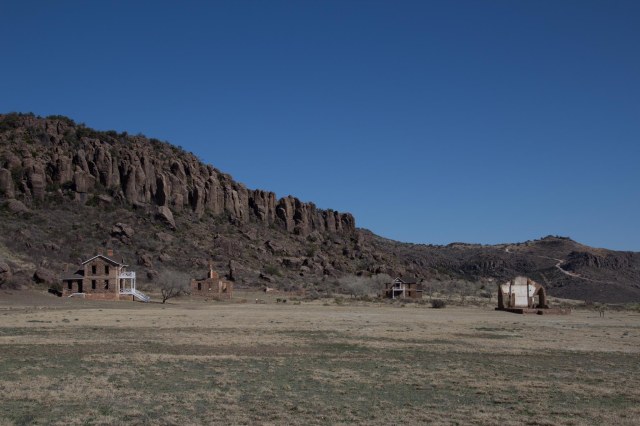
While we were in the neighborhood, we had to check out Fort Davis National Historic Site, an Indian Wars’ and frontier military post from 1854 to 1891.
Fort Davis National Historic Site
The fort protected emigrants, mail coaches, and freight wagons on the Trans-Pecos portion of the San Antonio-El Paso Road and the Chihuahua Trail.
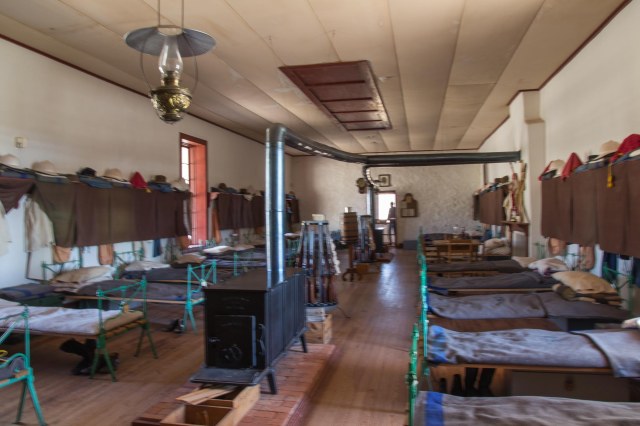
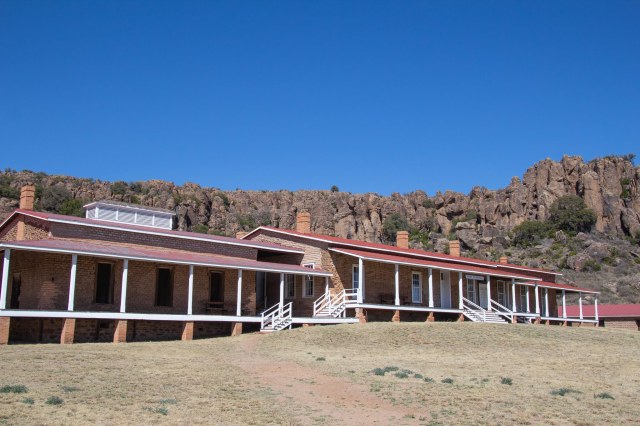
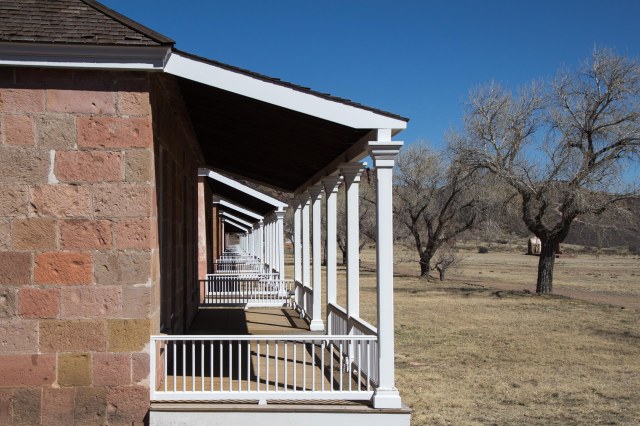
First stop on the docent tour was the barracks
Between the summers of 1866 and 1867, 885 enlisted African-American men of the Ninth Cavalry, commanded by Lieutenant Colonel Wesley Merritt, arrived at the abandoned Fort Davis post.
Docent on site at the Commander’s house
The Ninth was responsible for constructing the new post and protecting travelers and the mail on the San Antonio-El Paso Road from Comanche and Apache Indians. In September 1975, the Ninth transferred to New Mexico, and various other cavalry and infantry companies occupied the fort over the years.
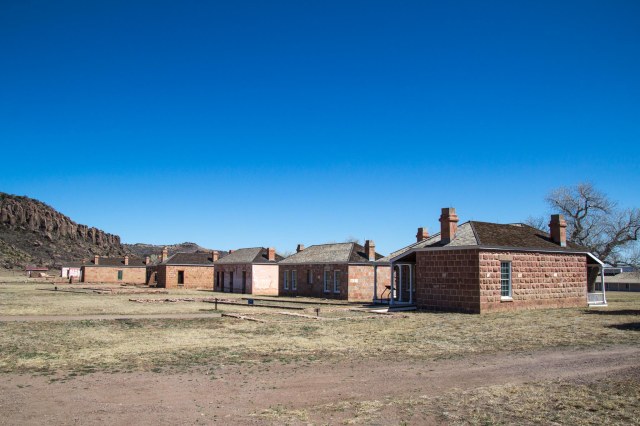
Another view of the housing
I love it when we’re poking around and something pops up that we learned at another location. This time it was camels.
Building waiting for renovations
Ten days earlier while we were in Quartzsite, we came across a monument to Hi Jolly, an Army camel driver from Syrian and Greek parentage who was hired to test out camels in the southwest desert. Apparently, the camels traveled through Fort Davis on their way to Arizona in 1857. Hi Jolly most likely had arrived at the fort with his brigade of drivers and camels.
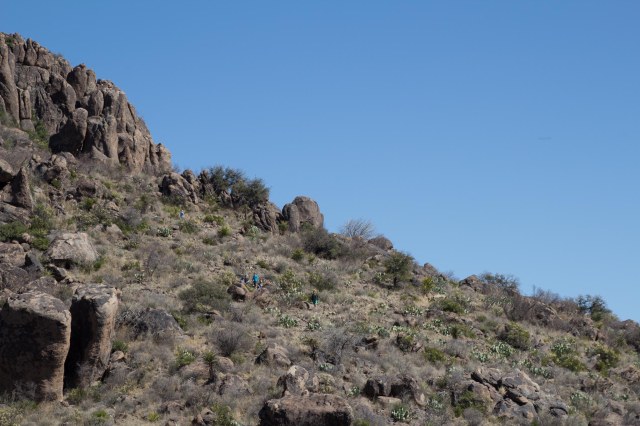
The house on the left was the commander’s homeHiking trails are available in the parkNot too recent graffitiThe hospitalOfficer housingBack of officer housingAll I need is a rocking chair and a glass of iced tea
That wraps up the fourth installment of our Winter 2016 Adventure. We finally arrive in Terlingua, Texas, and Big Bend National Park in the next post. Thanks for sticking with us these past weeks.
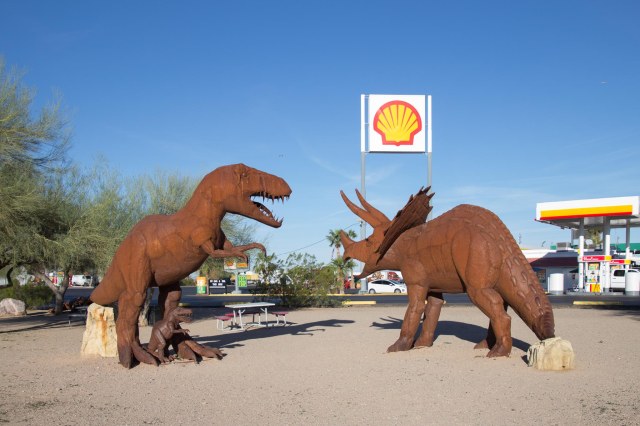
On our way out of town on February 24, 2016, we fueled up at the Shell gas station in Gila Bend. While Jon filled up the tank, I snapped a few photos of these fierce-looking dinosaurs.
I’m bigger than you, so keep on walking
We settled in at Butterfield RV Resort in Benson, Arizona. With a fierce wind forecast, their asphalt roads and pads drew us in. What we weren’t aware of was the railroad tracks only a block away. Because there are several streets the train must cross in town, we heard the whistle tooting softly off in the distance, and then blasting outside our door, before fading out again, repeatedly throughout the night.
The rest of the resort is quite nice, and they even have an observatory on site. The observatory was closed due to the wind on this trip. With park models and plenty of RV sites, the resort is a favorite destination for winter visitors.
Benson, Arizona, sprouted from the desert in 1880 when the Southern Pacific Railroad selected the site to cross the San Pedro River. The town boasts a population of approximately 5,000. With a Safeway, Walmart, and Tractor Supply store, what more could an RVer want?
A twenty-minute drive took us to the Kartchner Caverns State Park. A strict policy to protect the bats living in the cave prevents patrons from bringing in purses, backpacks, or bags of any kind and no photography (thus no photos) or video equipment allowed. Food and drinks, even bottled water, are also banned. They request visitors to stow their belongings in the cars and provide lockers if needed. Caves we have been to in the past are always cold. Not so at Kartchner, where the inside temperature is warm and humid.
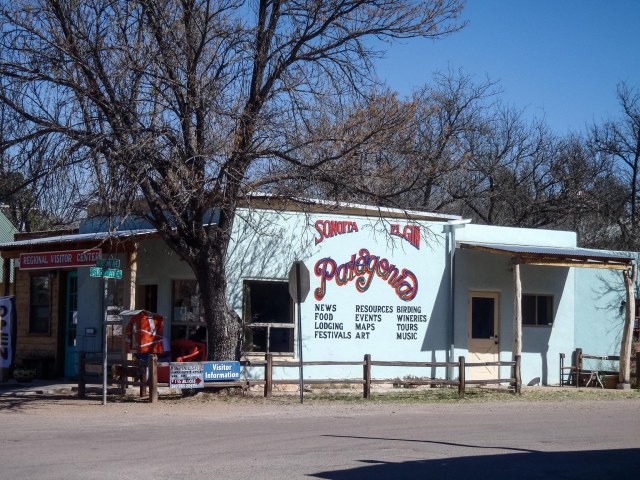
The next day we drove to Patagonia, Arizona, and then circled back to Tombstone before heading back to Benson. Founded in 1898, Patagonia incorporated fifty years later in 1948.
Visitor Center has brochures and things to do
The estimated population today is under 1,000 residents. The city draws in their share of tourists each. They come to spend time at the Tucson Audubon Society’s Paton Center for Hummingbirds and the Nature Conservancy’s Patagonia-Sonoita Creek Wildlife Preserve. Other tourist activities include hiking the Arizona Trail, camping and boating at the Patagonia State Park, or shopping and eating in the downtown area.
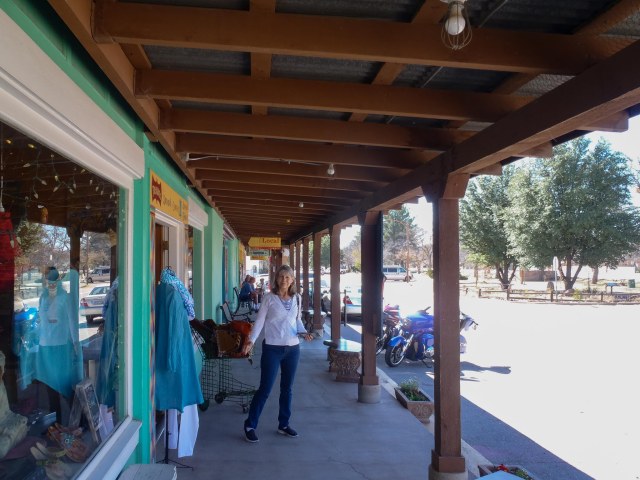
Come on, let’s shop
We only had time to cruise around the little downtown area and wander in and out of the stores. There wasn’t much activity during our visit, which is fine with us. We like having a place to ourselves.
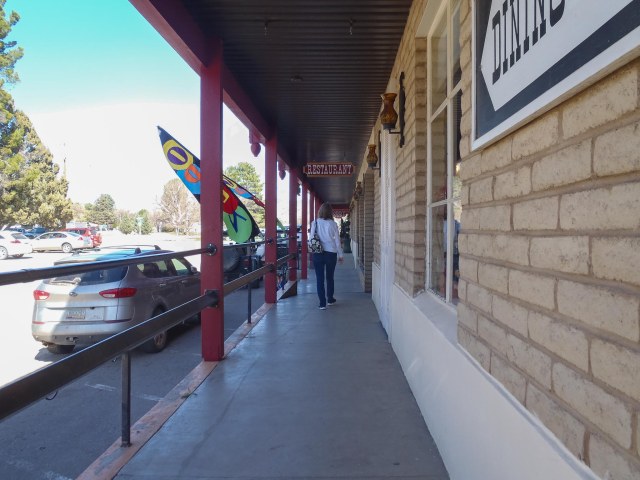
Look, a restaurant. Let’s eat lunch.
Tombstone, Arizona, is a historic town founded in 1877. It is best known for the OK Corral gunfight on October 26, 1881, with Doc Holliday and the Earp brothers (Wyatt, Virgil, and Morgan) pitted against the Clanton-McLaury gang. The lawmen against the cowboys, or you might say, the Republicans against the Democrats.
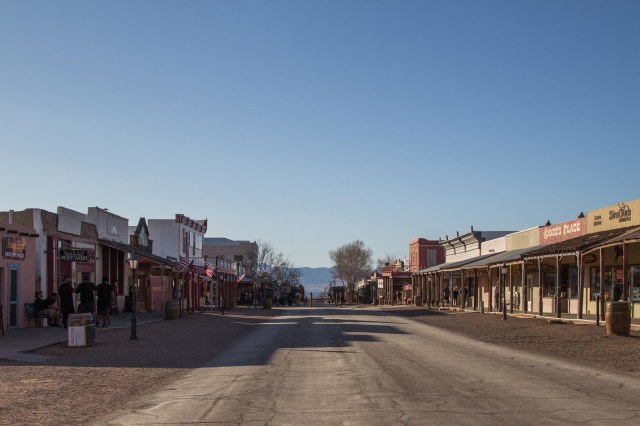
Gift shops, saloons, and restaurants line three blocks of shaded boardwalks.
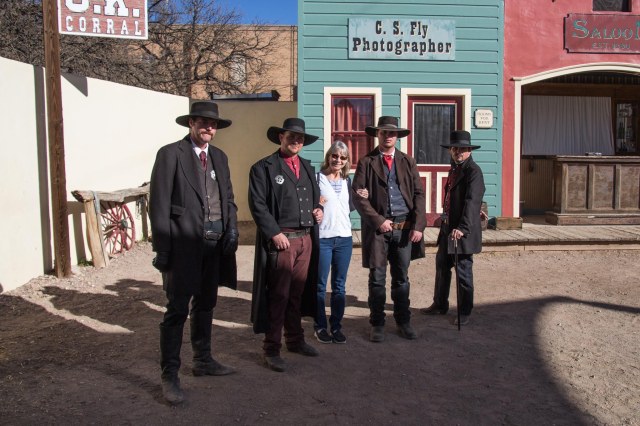
For a small fee, visitors are treated to a reenactment of the conflict. I had to drag Jon along to see the show. He’s not impressed with what he calls a “tourist trap” although I thought it was fun. The actors have to eat and put a roof over their heads like everyone else.
Me with Doc Holliday and the Earp boys
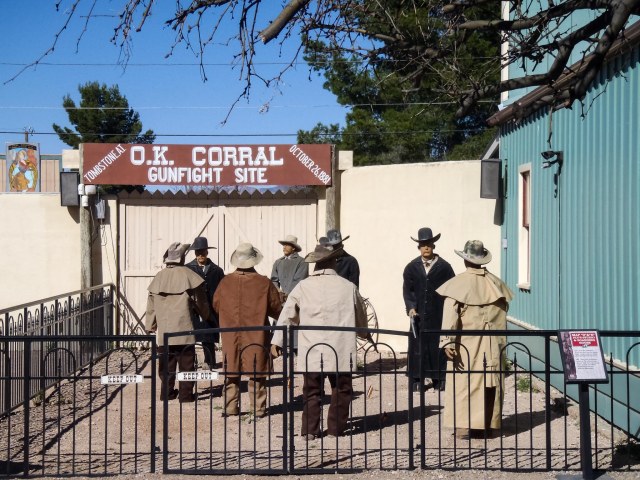
We learned that the actual shootout occurred in a vacant lot owned by C. S. Fly, a famous photographer. The lawmen won the battle that famous day, killing Tom and Frank McLaury and Billy Clanton, all of whom are buried in the town’s Boothill Graveyard a few miles from the historic part of town.
Mannequins depict the location of the participants as recorded by Wyatt Earp. They’re so close together it’s no wonder three men were killed.
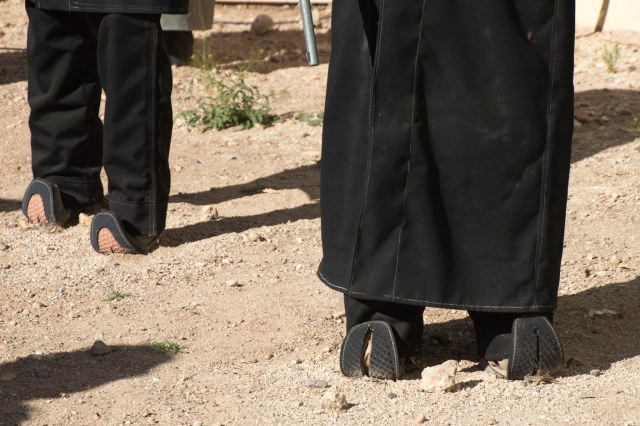
No social distancing for these guys.Talk about curling toes; these men need a fresh pair of boots
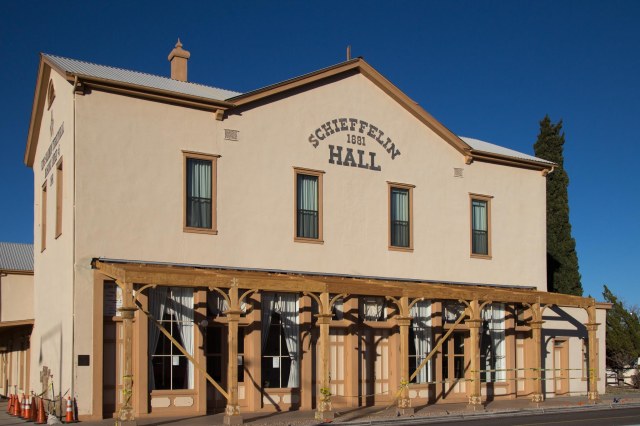
The Schieffelin Hall opened on June 8, 1881. Schieffelin was a surveyor who happened upon a vein of silver ore and subsequently formed the Tombstone Mining and Milling Company with a partner and investors.
It looked like Schieffelin Hall had a recent facelift
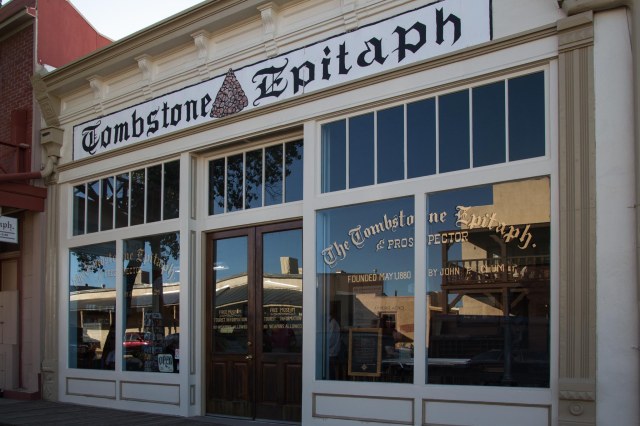
Reprints of the Tombstone Epitaph with original reports of the gunfight are available at the newspaper office and museum with the ticket from the gunfight show. John Philip Clum started the newspaper on May 1, 1880. He arrived in Tombstone five months earlier from the East, bringing with him experience as a meteorologist, Apache agent, lawyer, and newspaperman. In 1881, town folks elected Clum mayor. He also served as the postmaster and was the head of the local vigilance committee. For the past 135 years, the newspaper has reported on the people, events, and places of the old west. A subscription today costs only $25.00 a year.
Tombstone Epitaph
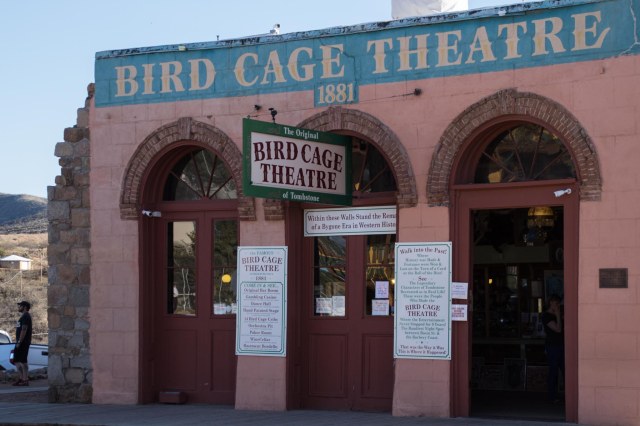
During its eight-year heyday, the Bird Cage Theatre earned its reputation as the wildest, wickedest night spot between New Orleans and San Francisco. Open 24 hours a day, 365 days a year, the building contains over one hundred and forty bullet holes, and a legend says twenty-six people lost their lives there. Hmmm, I wonder if the Tombstone Epitaph has information that will confirm or dispel the legend.
The haunted Bird Cage Theatre
Gone are the cowboys and prostitutes. Visitors now buy tickets at $25.00 a piece to take a ghost tour of the building and possibly encounter an apparition or two or three.
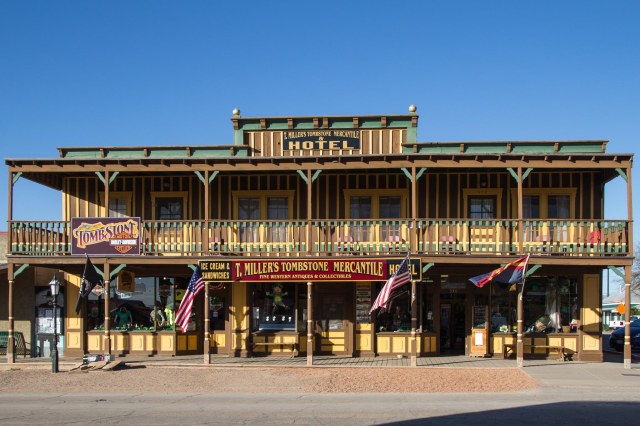
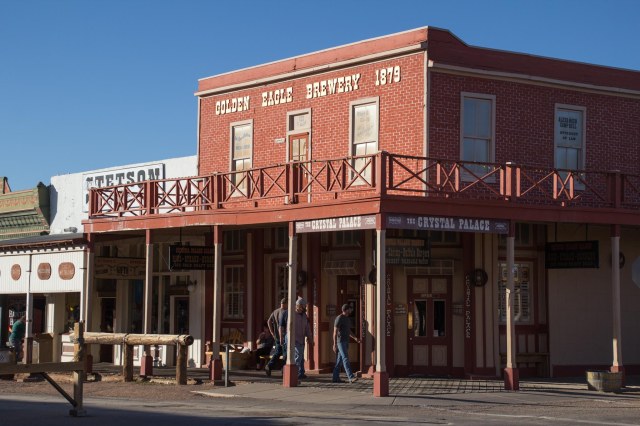
Hotel and MercantileThe Crystal Palace
That concludes our time in Benson, Arizona. Next up, we make a quick stop in Las Cruces, New Mexico, before continuing into Texas.
On February 19, 2016, we continued our Winter 2016 tour toward Big Bend National Park, stopping at the Gila Bend KOA in Gila Bend, Arizona, for a few days of poking around. We liked the extra roomy spaces with plenty of room for multiple vehicles. The park was fairly quiet with only a negligible amount of road noise and the soft rumble of trains off in the distance. The friendly neighbors, who had wintered at the park for years, were a bonus. They gave us ideas for things to do.
Hard to beat an Arizona sunset
In need of restocking our pantry and refrigerator, we inquired at the office to find out the best place to shop. The town of Gila Bend once had a regular grocery store, but it had closed. Our choices were the Family Dollar that had a small supply of food or the Mercado De Amigos Carniceria that had mostly meat.
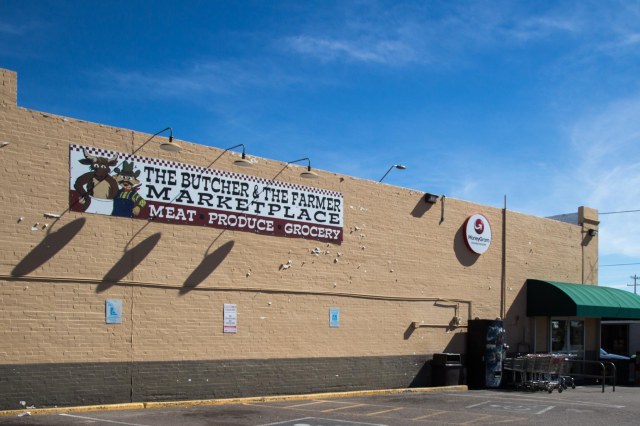
The Butcher & the Farmer in Buckeye, Arizona
Had we known, we would have stopped in Buckeye at the Butcher & The Farmer Marketplace a half-hour north before we arrived. Our grocery shopping curtailed the amount of sightseeing, so we picked a drive to Organ Pipe National Monument and a quick ride to the Painted Rock Petroglyph Site.
Organ Pipe National Monument
Seventy-six miles south on SR 85 from Gila Bend led us to the Kris Eggle Visitor Center. It was well worth the trip to see the Organ Pipe National Monument, and we were glad we had packed lunch because there was no food near the monument.
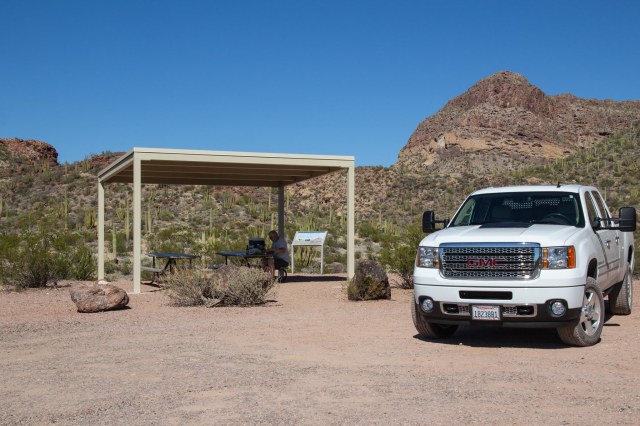
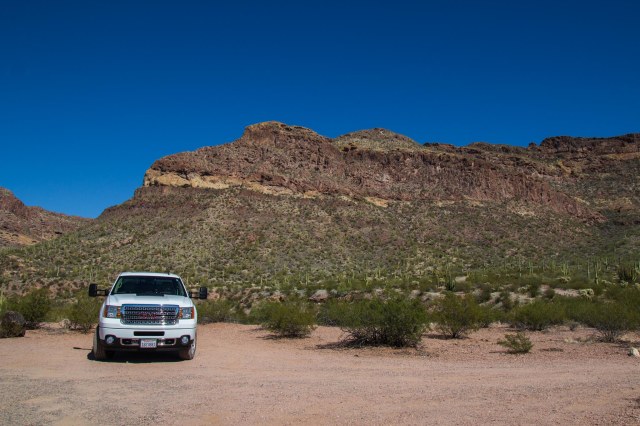
Our lunch spot along the Ajo Mountain Drive
This, our first visit, introduced us to the east side of the park and the 21-mile Ajo Mountain Drive, which made us fall in love with the area.
Sorry little squirrel, you need to find your own food.The rock formation reminded us of a dinosaur head
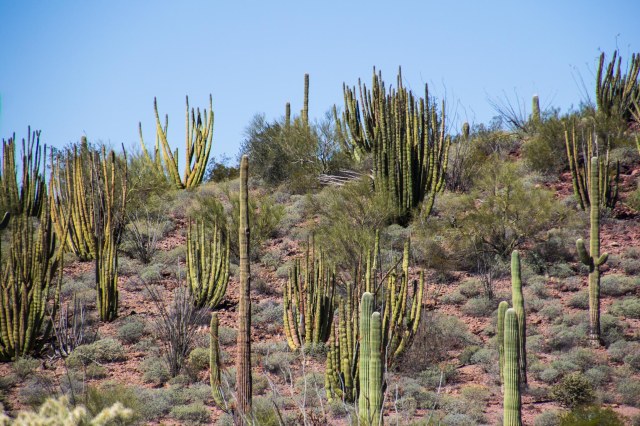
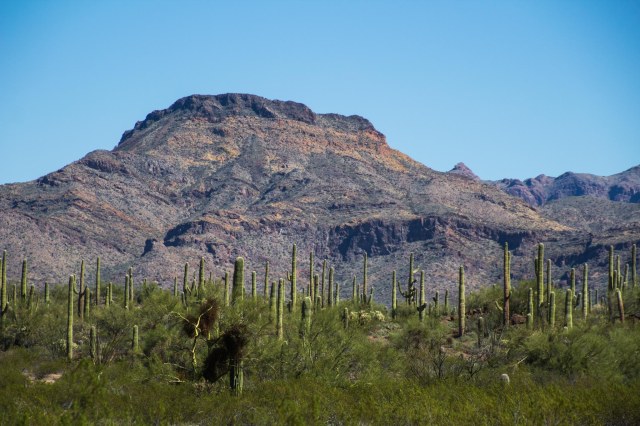
The well-graded gravel road took us through forests of organ pipe cactus, saguaros, and ocotillo.
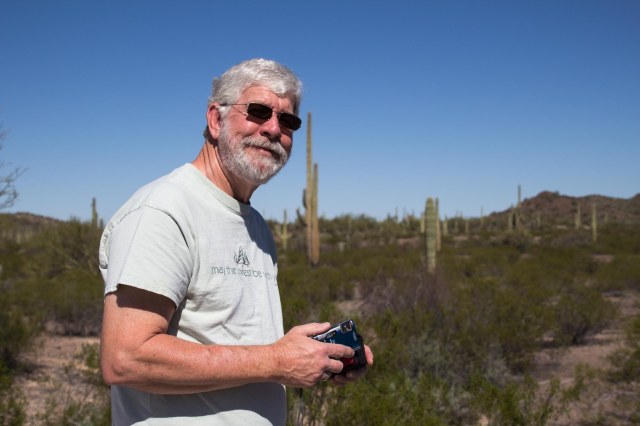
Organ pipe cactus and saguarosThe organ pipes get hugeJon taking photosNot many saguaros with arms in this area
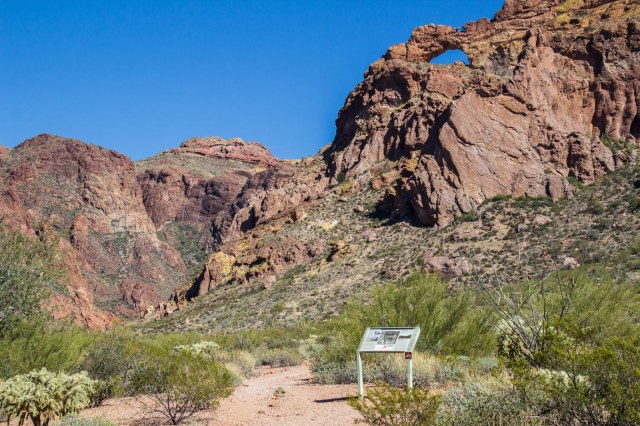
About halfway around the one-way loop road, we stopped at Arch Canyon where visitors can take an easy 1.2-mile round-trip walk into a canyon.
Arch Canyon Trail
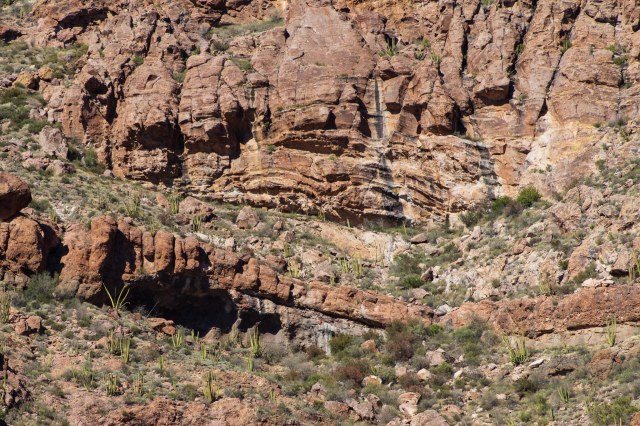
Aptly named, the canyon contains several arches, which are difficult to see depending on where the sun shines.
We almost missed the bridge in the bottom third of the photo.
A sign warned the steep hill was a dangerous climb. I went up a little way and carefully scrambled down before I landed on my bottom.
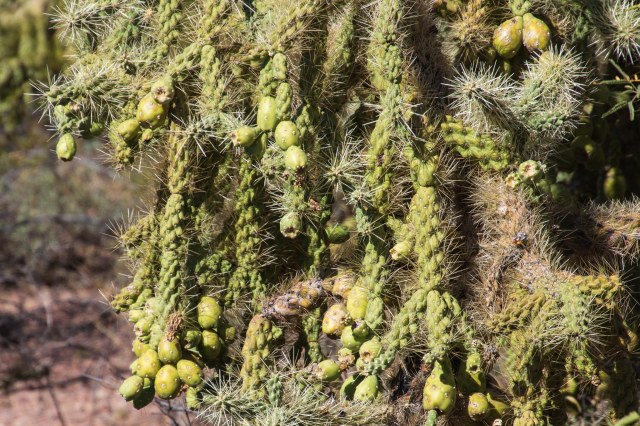
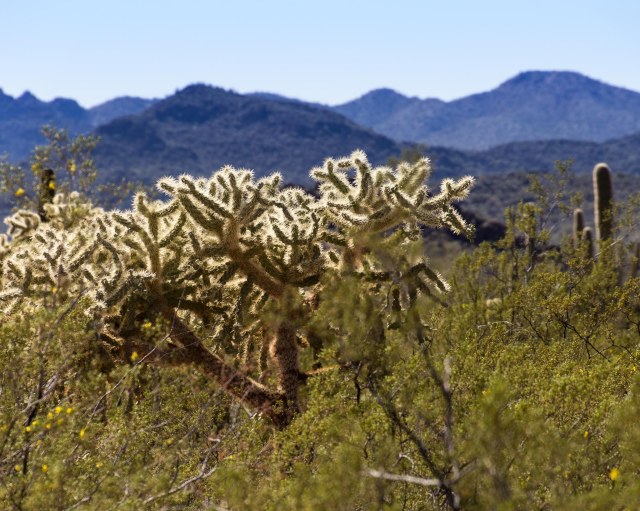
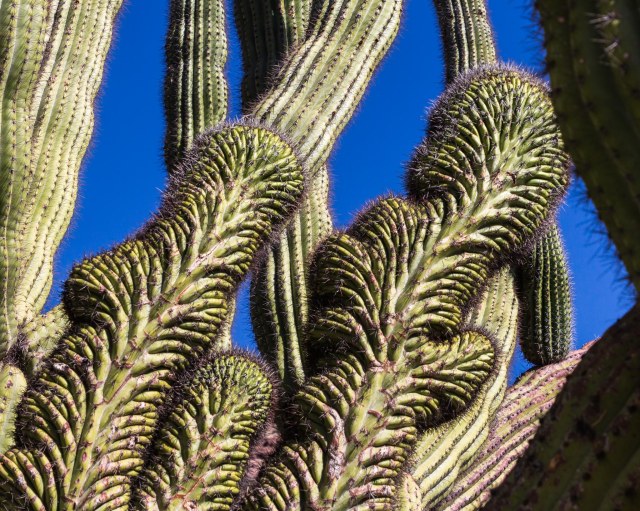
Careful on the slippery rockChain chollaJumping chollaPrickly pearCrested organ pipe cactusOcotillo bloom
Interested in learning more about the monument? We’ve stayed in the Twin Peaks campground a couple times since our first visit and have posted descriptions and pictures here and here.
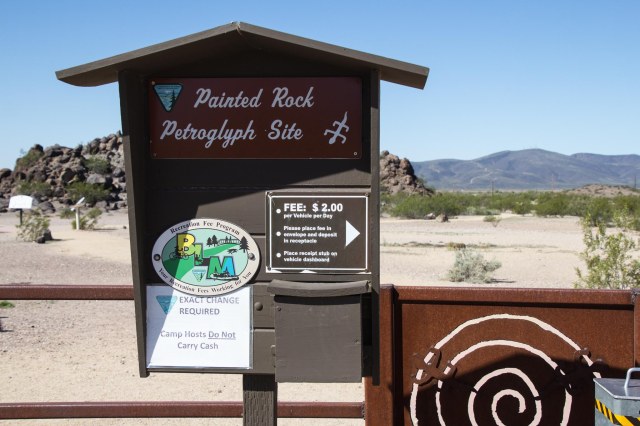
Painted Rock Petroglyph Site
It is about a 30-minute drive east of Gila Bend to the Painted Rock Petroglyph Site and Campground. Visitors will find hundreds of petroglyphs on the jumble of rocks at this ancient archaeological site. There is no potable water at the campground, so plan accordingly when visiting.
Bring your own water, there is none around here
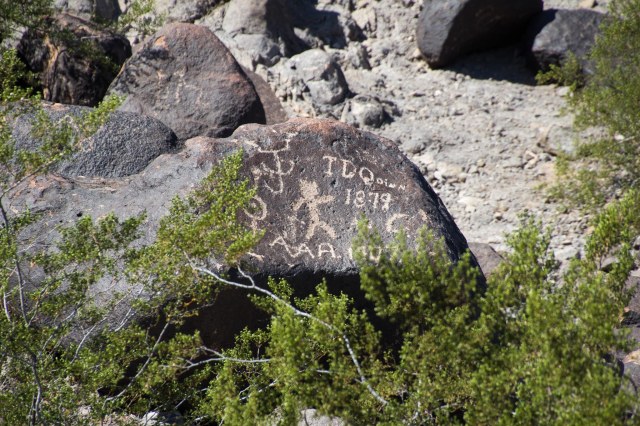
Jon and I took the path to the right around the cluster of rocks and boulders, searching for the petroglyphs. We didn’t see much until we had walked halfway around. I’m glad we took the route we did because when I saw so many petroglyphs, I wasn’t sure where to look. If we only knew the meaning of the etchings, we could learn so much about the culture that lived there thousands of years ago.
Split rockTravelers from the 1800s left their marks beside the ancient onesSo many petroglyphs
Jon called me over, “Hey, look at this.” I had never seen a lizard so beefy and long before. I didn’t want to get too close.
Common chuckwallas are rock dwellersThere must be a story in there somewhereDesert Sunflower
That ends our time in Gila Bend, Arizona. We next make brief stops in Benson, Arizona; Las Cruces, New Mexico; and Fort Davis, Texas. Big Bend National Park will come up soon.

























 The Traveling Todds