We interrupt the Summer 2021 New Mexico series, to bring you a more current update. We’ll have blog posts about our Fall 2021 Family & Friends Tour once we finish the New Mexico series. But for now, we wanted to give our friend Chris Blackwell and The Bunker Bar in Lake Havasu a stand-alone post.
Our last visit to Lake Havasu was in November 2019. During that trip, we saw the progress made toward a dream. I understood the concept even though it was hard for me to visualize what the blank slate of land would become.
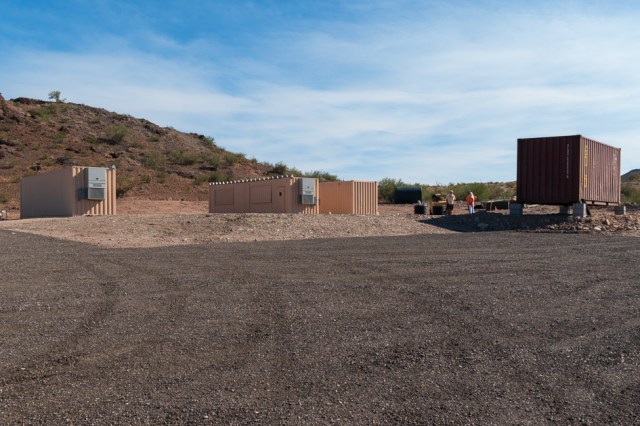
Container structures for the bar, store, restrooms, and band stage
He and his family had worked for years to bring a desert bar to the community of Lake Havasu. He saw the potential to offer a place about 2.5 miles off US Route 95 for people from town and sport utility vehicle enthusiasts to step off the dusty trail for a cold drink, tasty food, and music.
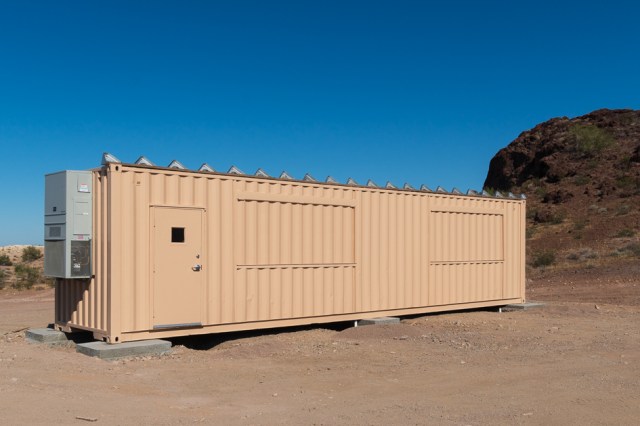
This container is for the drinks
The simple plan turned into one hurdle after another until on January 1, 2020, when the venue opened for business. A few months later the bar closed due to the pandemic. Another tough obstacle to overcome for a business only opened three days a week during the cooler months of the year.
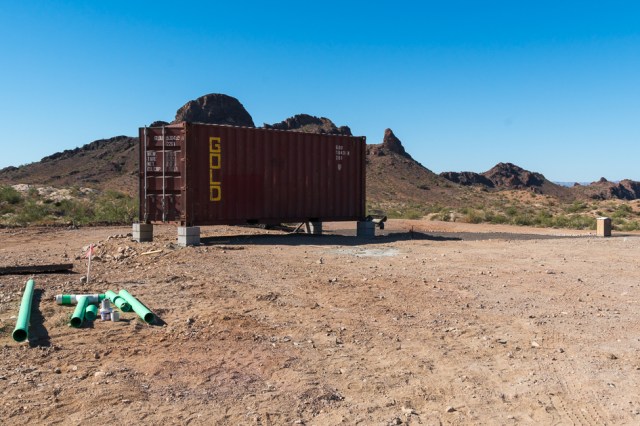
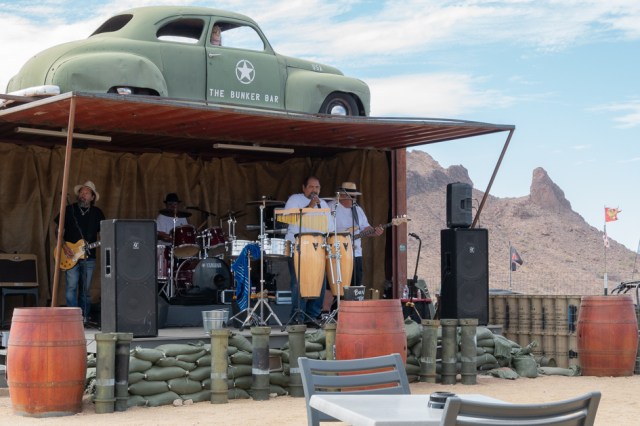
This container will become the stage for the band
We avoided The Bunker Bar on November 6, 2021, because they were hosting lunch for the Desert Hills PFFA 3rd Annual Side X Side Poker Run event. Come Sunday, we traversed the gravel road and were amazed at the transformation and pleased to see the success of Chris’ hard work and patience.
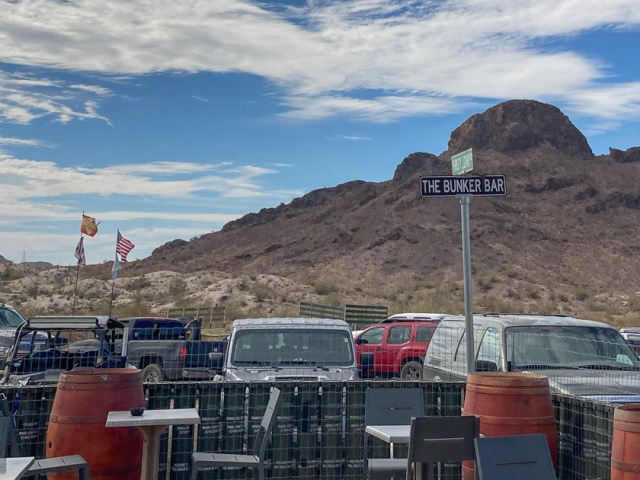
The Bunker Bar at Thirsty Lizard Road
Ashtrays on each table keep the place clean of butts
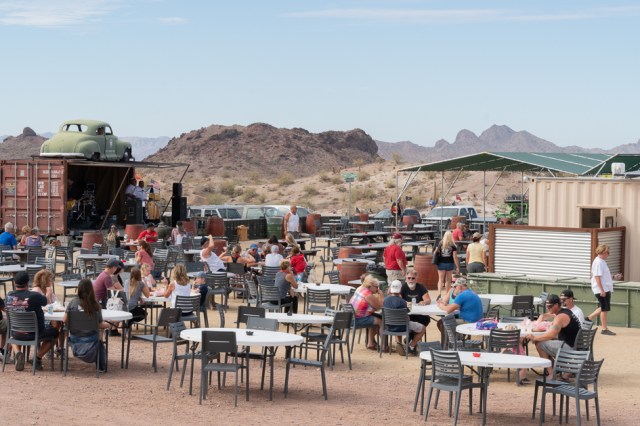
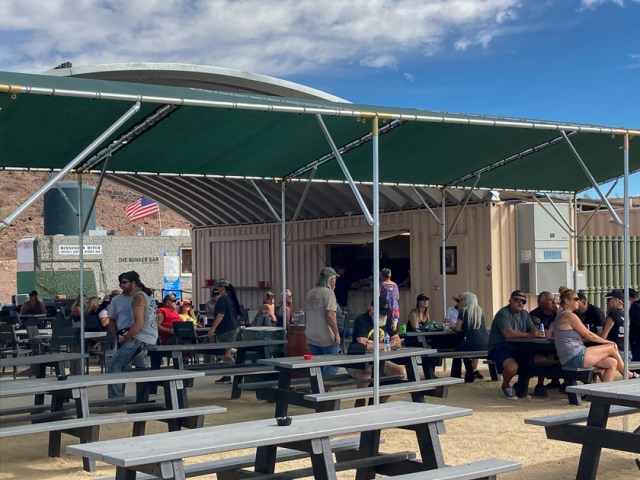
While the band plays in the background, gals and guys can sit and talk at the tables (if the band doesn’t play too loud), dance in front of the bandstand, or show off their cornhole skills. It looks like there are enough sets to conduct a tournament.
Great music. Wish I knew the name of the band.
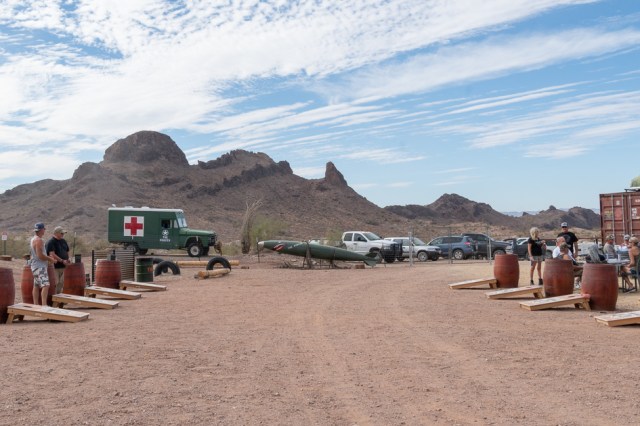
Anyone up for a game of cornhole?
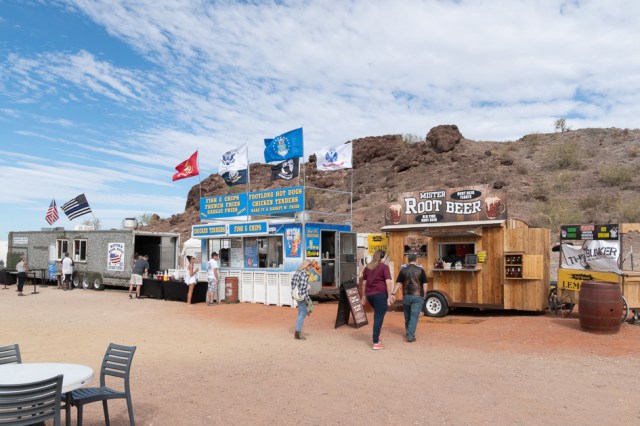
Minnesota Mitch’s Mess Hall serves up hamburgers, sandwiches, and fries. Or one can opt for a hotdog, fish & chips, or chicken tenders. Non-alcoholic drinkers can pick up a Mister Root Beer or fresh lemonade. Step up to the bar for a mixed drink, or choose one of the locally brewed beers.
Food and non-alcoholic drink stands
Stop by the store to pick up a T-shirt, hat, drink cozy, and other products.
Sittin’ in the shade in front of the store
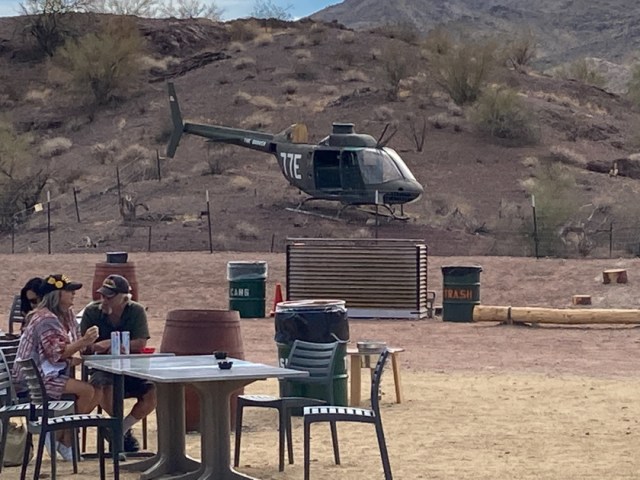
Olive drab trash/recycle drums and helicopter are all part of the military theme
Jon created a 360-degree video of the bar while the band played. Click here to watch the video and hear a snippet from the band.
So here’s to Chris and his family who supported him through the process, and play roles to make The Bunker Bar a success. May the guests continue to roll in, may the drinks and food continue to flow, and may the musical bands continue to play on and on for many seasons to come.
Congratulations to all who made The Bunker Bar possible.
On July 9, 2021, the two-hour drive from Santa Fe to Taos made for an easy moving day. Taos Canyon Stop RV Park was our second choice for staying near Taos. Yet it turned out to be one of our all-time favorites. The wildflowers outside our back window were a surprise, and we treasured the quiet after our stay in Santa Fe.
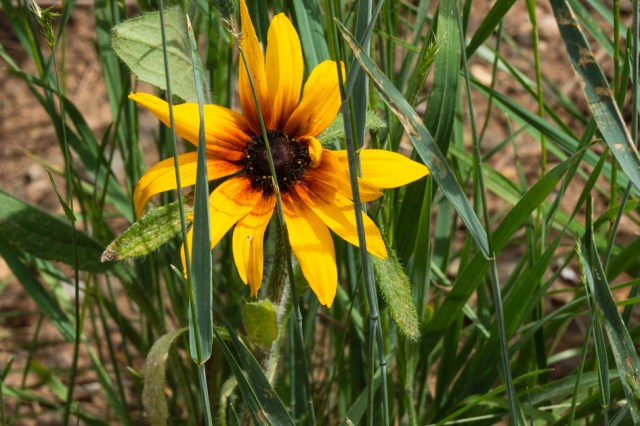
Orange and yellow daisy
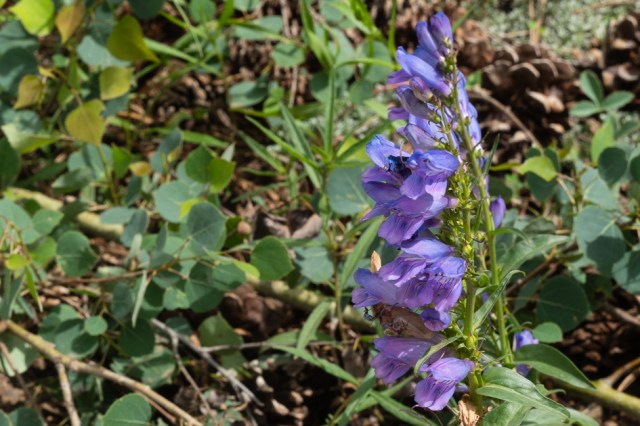
Lavender trumpets
Red lipstick
Papery petals
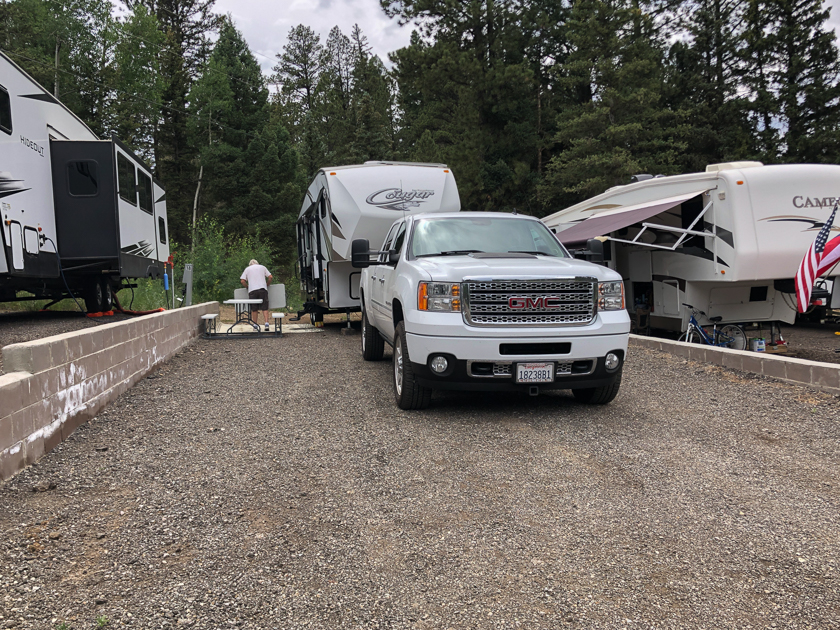
Terraced lots with brick retainer walls gave us the feeling of having our separate space while encouraging conversation with our neighbors. The drawback was the lack of cell service or usable Wi-Fi, although lack of connectivity has its benefits. An online break now and then can be a good thing.
Jon sets up our campsite
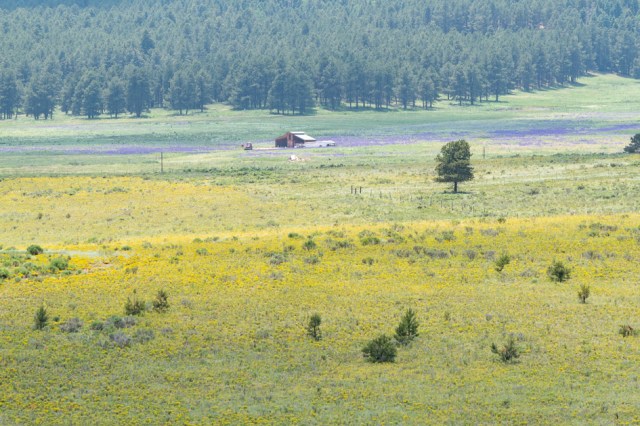
Purple and yellow wildflowers blanketed the Angel Fire valley
Angel Fire Resort
In search of decent Wi-Fi, we drove up to Angel Fire, a ski resort area in the winter and a mountain bike trail during the summer. Horseback riding, hiking trails, and a golf course are other amenities available.
Angel Fire Resort lobby
We drank our decaf mochas and caught up on internet stuff in the lobby area outside of the coffee shop. The cozy-cabin décor looked comfy and instead of typing away on my keyboard, I would have preferred curling up on the sofa, reading a book.
Wi-Fi was best in the lobby area
For a ski resort, Angel Fire, incorporated in 1986, is more low-key than other such resorts we’ve visited. This could be due to the village’s population of around 1,000 people. Participation in sports activities seems more important than shopping, although there are a few sports gear and other types of stores. With the hotel and plenty of condos near the ski area for accommodations, the resort’s popularity is clear. The Village of Angel Fire is 28.84 sq mi (74.68 km2) and encompasses the entire Angel Fire Ski Resort.
Indoor Jacuzzi at Angel Fire Resort
Vietnam Veterans Memorial
Angel Fire is also home to one of the best Vietnam Veterans Memorials we have seen where visitors will find a chapel, visitor center and gift shop, and an adjacent cemetery.
According to the memorial’s website, the David Westphall Veterans Foundation honors, “America’s veterans and members of its military forces by memorializing the sacrifices they have made and by recognizing the sense of duty and the courage they have displayed as they answered their country’s call to arms.”
Views of Vietnam Veterans Memorial
Foundation partnerships with the National Veterans Wellness and Healing Center in Angel Fire and the Village of Angel Fire provide free retreats for veterans and their spouses diagnosed with post-traumatic stress disorder.
Doug Scott’s Dear Mom & Dad
Dr. Victor and Jeanne Westphall conceived the memorial to honor their son, 1st Lt. David Westphall, who died in combat during a 1968 ambush in Vietnam. Constructed between 1968 and 1971, the memorial was the first major Vietnam memorial in the United States and recognized by congress in 1987 as a Memorial of National Significance.
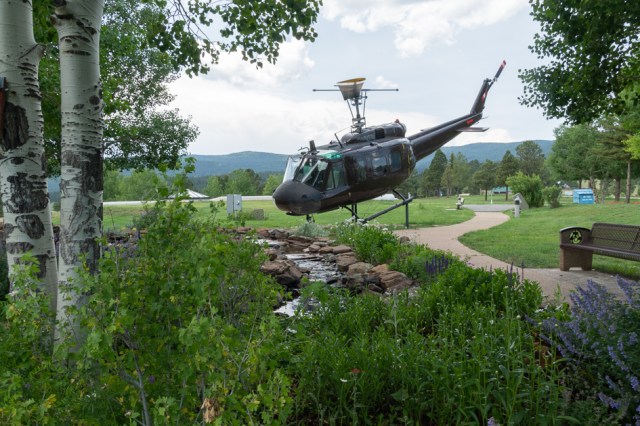
The A/C 670 Huey helicopter, known as the Viking Surprise, served with 121st Assault Helicopter Company (AHC). Damaged, repaired, and reassigned to the 118th AHC. New Mexico National Guard donated it to memorial grounds in 1999. Restored in 2016-17.
Inside the visitor center, we found a walled-off corner where the HBO movie, Dear America: Letters from Vietnam, was playing. We settled into chairs and watched for a few minutes. Then I understood why someone had strategically placed tissue boxes nearby. When our emotions ran high, we left. Better to watch in the privacy of our home.
Senator John McCain is featured in the photo on the bottom left.
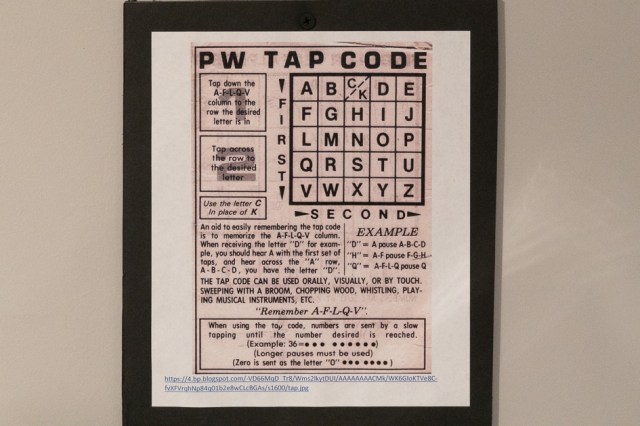
Remember A-F-L-Q-V
Lakota Nation-Oglala Sioux Tribe Display
Displays in the visitor center
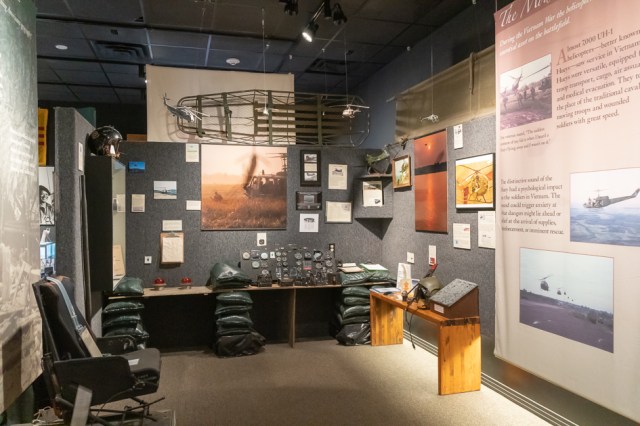
Helicopter display
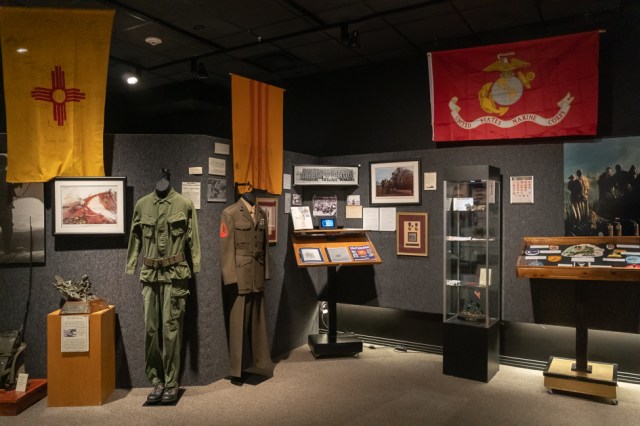
New Mexico and Marine Corps displays
Jon served in the 11th Armored Cavalry Regiment in Vietnam during 1969-70
The US Military Aluminum Mermite Hot/Cold Insulated Food Container shown in the photo below brings back memories from 50 years ago for Jon. The days when the helicopters arrived in the field lifted his spirits. Along with fuel and ammo for the armored vehicles, the choppers also brought hot meals in the Mermites for the soldiers.
Mermite, also known as Hot Boxes
After looking at all the photographs and memorabilia inside, I felt the same sorrow, solemnity, and peace I experienced during our visit to the USS Arizona Pearl Harbor Memorial in Oahu several years ago. The thought of all the lives cut short and the families and friends that mourned for their loved ones became oppressive, sending me outside to wander among the trees and flowers and bushes.
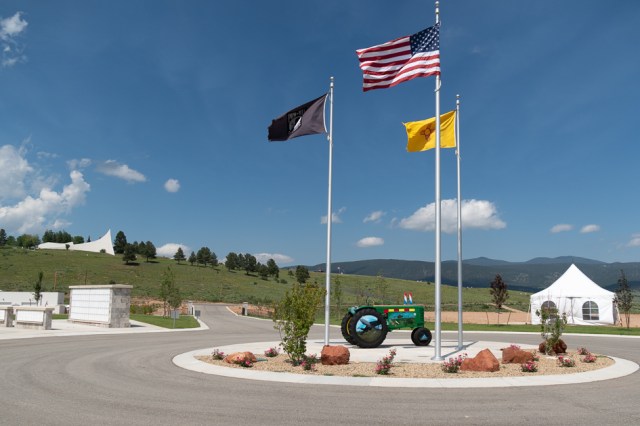
State Veteran Cemetery Angel Fire, New Mexico
The State Veteran Cemetery is a recent addition to the memorial and held its first interment on July 2021.
View of cemetery and valley
Recent gravesites
Roundabout and flags
Coming up in future episodes, we explore Downtown Taos Historic District, Red River ski area, Kit Carson Home & Museum, Earthship Biotecture, and much more.
In some respects, we were glad to move to Taos after our two weeks in Santa Fe. In other respects, we were sad to leave. We had tired of our cramped spot, the daily traffic on Cerrillos, and the screaming kid a few doors down. Yet, we hadn’t checked everything off our “To Do” list. There was so much more art and history to soak up; fitting it all in proved difficult. What follows is an apology, list of sites we missed, and a few words about memorial conflict.
An Apology
Before we get into all of that, I first need to apologize to what I consider the “main event” at the New Mexico Capitol Building. For some strange reason, I failed to include his photo in Episode 2 of this series.
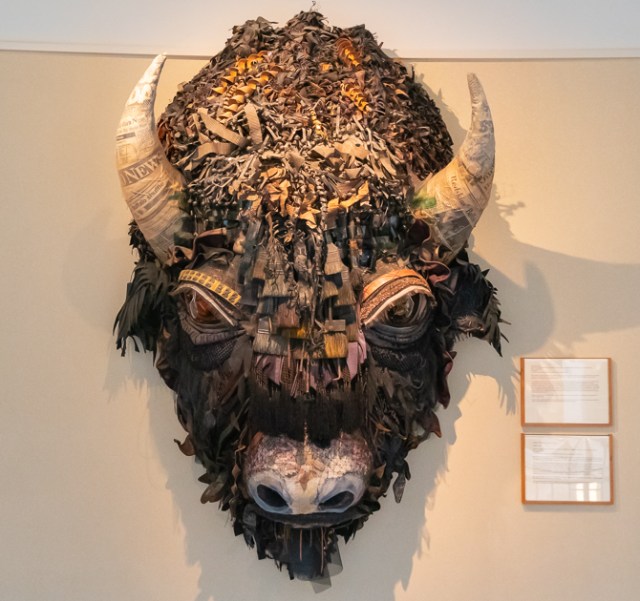
Buffalo mixed media sculpture by Holly Hughes
My friend Lani Longshore alerted me to my faux pas, which allowed me to update the post and include him in his rightful place. Knowing people don’t often revisit previously read posts, I present him here to ensure everyone has a chance to meet him.
Detail of Buffalo
What We Missed
And now, back to the wrap-up. We never had a chance to visit any of the many galleries, not even the one that captured my imagination several years ago when we stayed in the city: Georgia O’Keeffe. Although we had been there before, I was certain the paintings displayed this time would have been different. Canyon Road contains historic sites, galleries, restaurants, Cristo Rey Church, the First Ward School, and the Randall Davey House and Audubon Center &Sanctuary. Nor did we see House of Eternal Return at Meowwolf, a contemporary “Experience of the Unknown.”
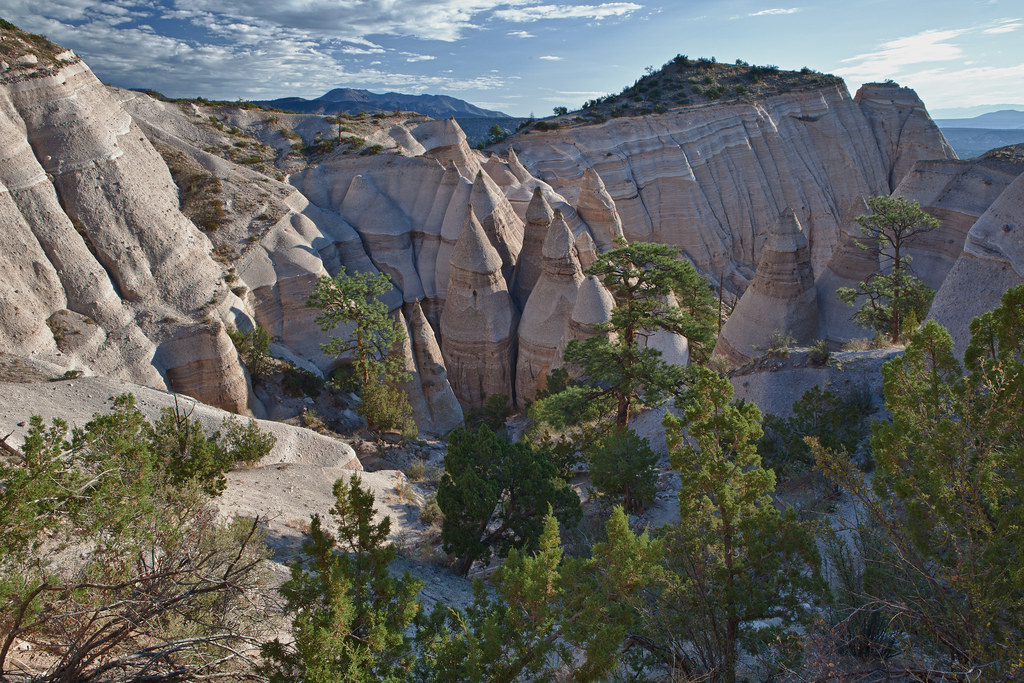
Our day trip to Cochiti Lake, discussed in Episode 5, included Kasha-Katuwe Tent Rocks National Monument. Unfortunately, the monument was closed due to COVID-19 restrictions at Pueblo de Cochiti, the monument’s gateway. It remains closed as of October 15, 2021, until the Bureau of Land Management and the Pueblo de Cochiti work together on plans to reopen. We noticed many of the pueblos and casinos throughout the state were closed. The American Indians were doing all they could to reduce virus exposure in their communities.
Photo credit: “American Hiking Society Instagram Takeover: Kasha-Katuwe Tent Rocks National Monument, New Mexico” by mypubliclands is licensed with CC BY 2.0. To view a copy of this license, visit https://creativecommons.org/licenses/by/2.0/
Then there was Los Alamos. Our day trip planned for Bandelier initially included the Manhattan Project National Historical Park in Los Alamos, the Valles Caldera NationalPreserve, and the Jemez Historic Site. Why I thought we could hit all four places in one day was beyond me.
We got up early so we could eat breakfast in White Rock at the Pig + Fig. Thank goodness we arrived before a long line formed.
To get our bearings, we stopped in at the Visitor Center to pick up flyers and brochures. We left the truck in the parking lot and rode the shuttle bus to Bandelier. I would compare the ride up the mountain to Mr. Toad’s Wild Ride at Disneyland. At times, I thought the bus would fly off the cliff until the driver careened around a curve. On the way down was more to my liking.
White Rock Visitor Center
Art inside the White Rock Visitor Center
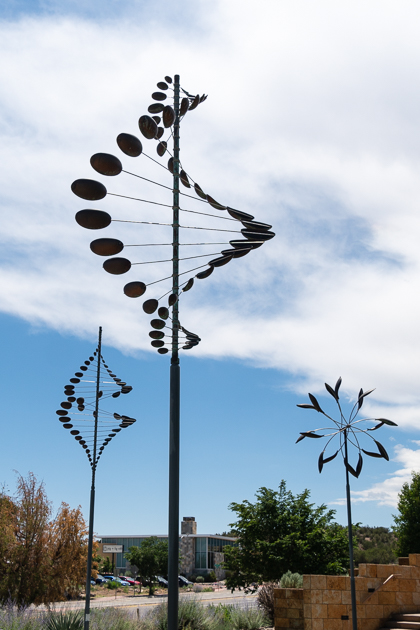
Outside the visitor center: Kinetic Wind Sculptures, Lyman Whitaker
After Bandelier, we nixed Valles Caldera and Jemez from our list and drove to Los Alamos. As we drove through town, we felt like we had entered an episode of the Twilight Zone. Very few people were out and about, and the Bradbury Science Museum, Los Alamos History Museum, and the Manhattan Project National Historical Park were all closed.
All is quiet at Bradbury Science Museum
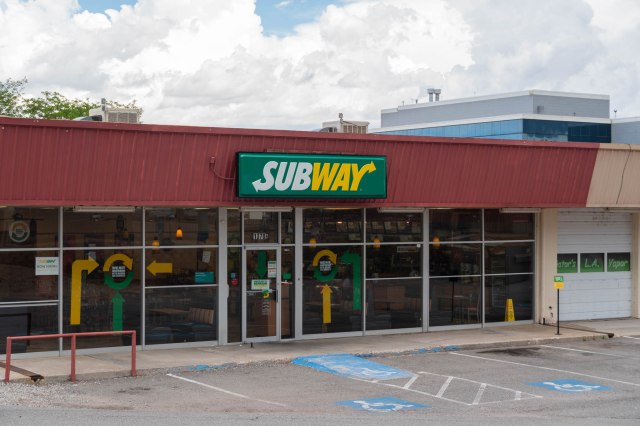
The Ashley Pond Park was the only happening place with families enjoying a picnic. We had to settle on the local Subway for a bite to eat—the only restaurant we found open.
Only place in town to eat
I guess Monday, July 5, wasn’t the best time to visit Los Alamos. It seemed like most everyone had gone out of town for vacation. We’ll try to get one of the RV sites next to the visitor center when we’re in the area again. Then we can spend a few days exploring rather than a few hours, assuming we are no longer dealing with restrictions.
Another Memorial Conflict
The Santa Fe Plaza is a popular place with so many people around it’s difficult to get a photo. It was clear enough for us to walk through one day without bumping into ten people every few feet. For some reason, it didn’t look like what I remembered from years past. In the middle of the Plaza stood a stone plinth, missing whatever once sat on top and I couldn’t remember what it was.
A few days later, while taking photos of the Scottish Rites building, we found the missing piece from the Plaza. The entire structure was erected around 1866 as a memorial commemorating soldiers who served during the Civil War and battled with Native Americans. Does anyone see where this story is headed?
Obelisk from the Plaza outside United States Court House
For more than a hundred years, people and groups begged the city to replace the obelisk with something else or amend words inscribed on the base panels. While the words were commonplace in the 1800s, over time, the words became hurtful and offensive. Outright removal was rejected, while efforts to chisel off offensive wording were more successful. Unauthorized alterations were also made.
About 40 primarily white protesters toppled the top three sections of the obelisk on October 12, 2020. So now the stone and marble monument is separated. The Plaza remains the home for the plinth, while the obelisk stands in front of the Federal Court House encased in a crate, at least when we saw it on July 8, 2021.
On June 16, 2021, the Union Protectiva de Santa Fe sued the city’s mayor over the destruction and plans to move the memorial permanently. The Hispanic group claims the monument honors the Hispanic soldiers who fought and died for the Union in battles with Confederate soldiers and indigenous tribes, and its destruction and removal dishonors the Hispanic soldiers.
A temporary fix is in the works through the city’s Arts and Culture Department. Is it possible to arrive at a solution that makes everyone happy? While discussing how every story has more than one side, our friend Jim Koch came up with a great idea. “Why not design a multi-sided monument that tells the story from the different perspectives?”
Why not, indeed? I hope Jim submits his idea to the Santa Fe Arts and Culture Department for consideration. With all the diverse artists living in or near Santa Fe, I trust the community to come up with something that pays tribute to and honors the interests of all groups.
Next up: We move on to Taos, The Soul of the Southwest, for another week of adventure in New Mexico.
A 30-mile drive southeast of Santa Fe to Pecos National Historical Park (PNHP) made the park an easy drive for a day trip. PNHP’s mission is to preserve “the natural and cultural resources” by stabilizing and repairing existing buildings.
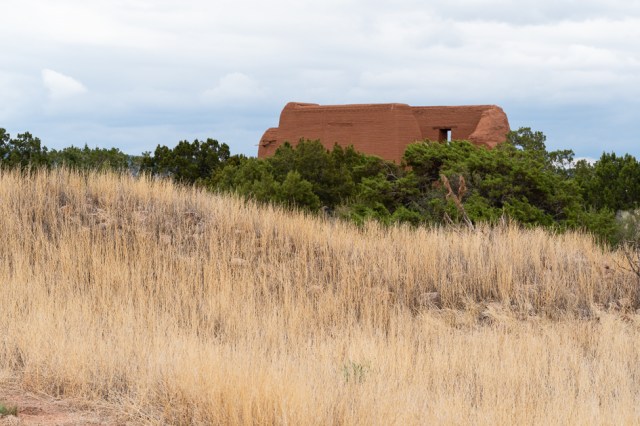
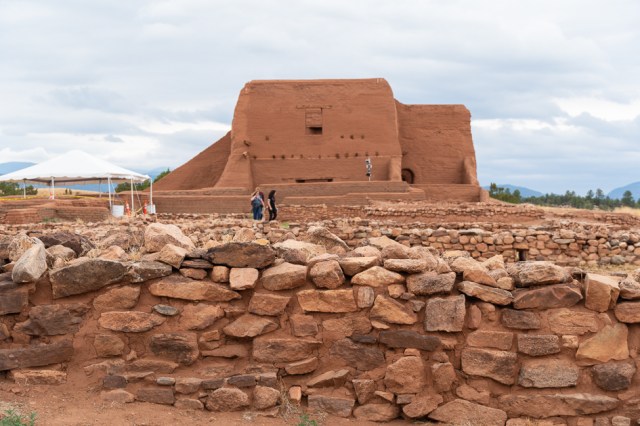
Convento (church) from afar
We started our tour by watching the introductory film in the kiva-style theater and exploring the displays in the visitor center. Then we picked up the Ancestral Sites Trail Guide and ventured outside.
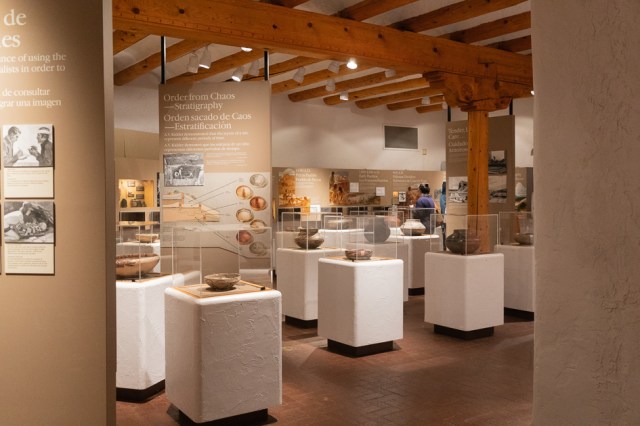
Bowls and baskets in display cases
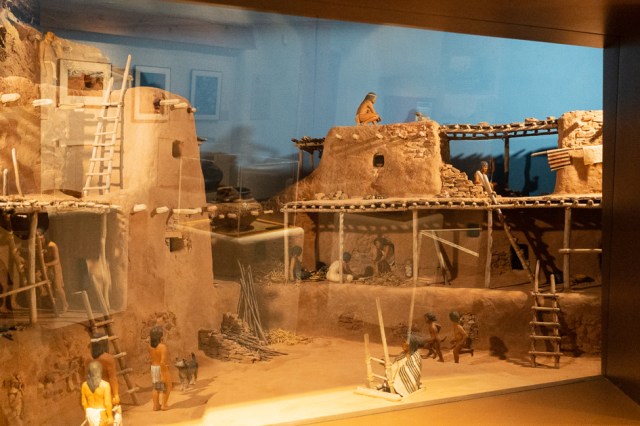
What the village might have looked like
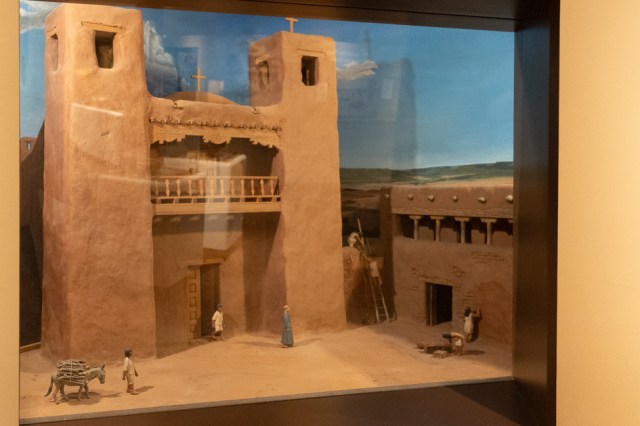
What the church may have looked like
Signs along the trail matched the guide, which allowed us to learn more about the people who called this place home for hundreds, if not thousands of years.
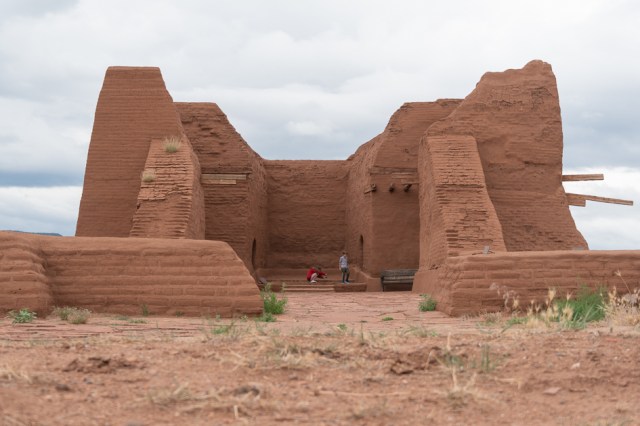
Four churches, or conventos, were built outside of the pueblo, with the first built in 1617-18. A second larger church built in 1625 was destroyed during the Pueblo Revolt of 1680. A third one-room church replaced the one destroyed. What we see today are ruins of the fourth church, completed around 1717, that sits upon land where the second church stood.
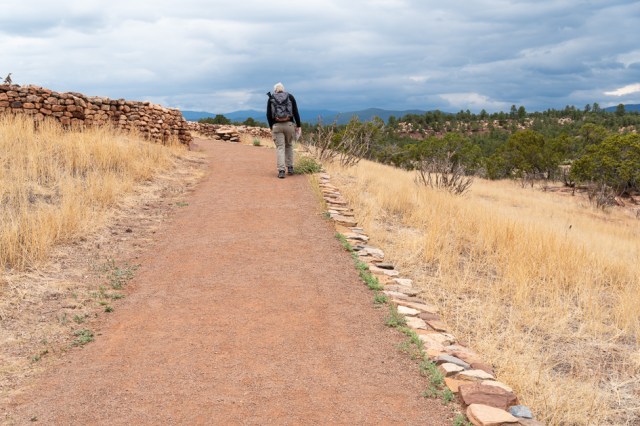
Jon takes the lead
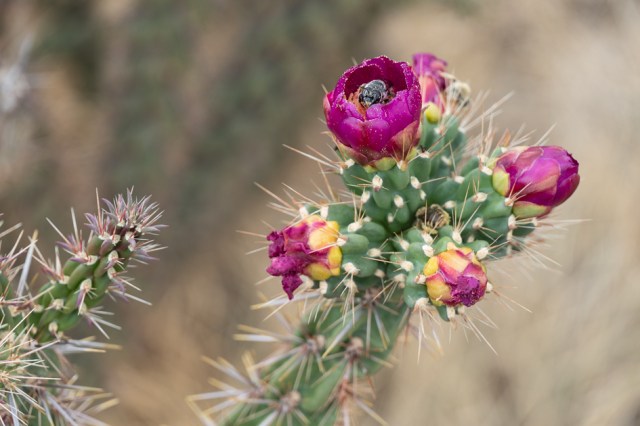
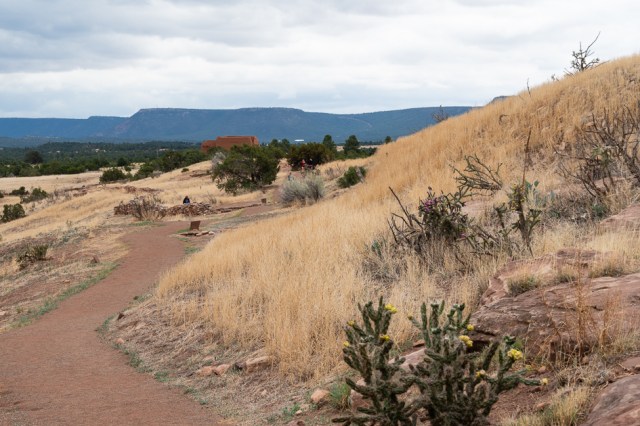
Blooming cholla
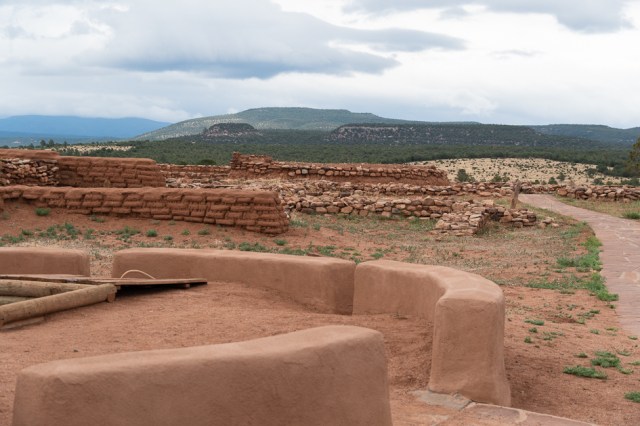
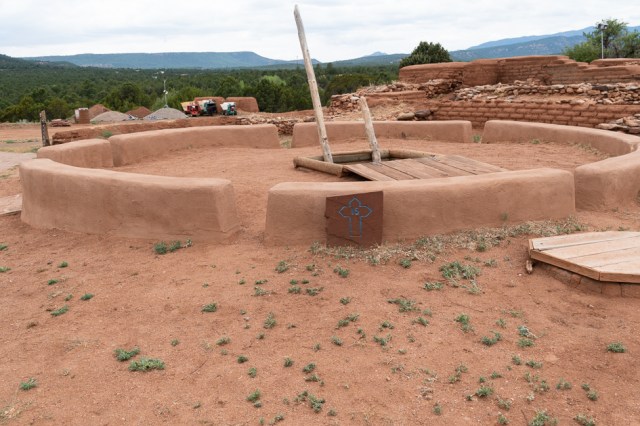
One of 20 kivas in the village
Archaeologists believe the village once supported up to 2,000 people. The first encounter with the Spanish occurred in 1540, when a scouting party from Francisco Vazquez de Coronado’s expedition came on the scene. Fifty-eight years later, the Spanish returned with settlers and Franciscan priests.
Inside a reconstructed kiva
Shelter and trail rest stop overlooking the river valley
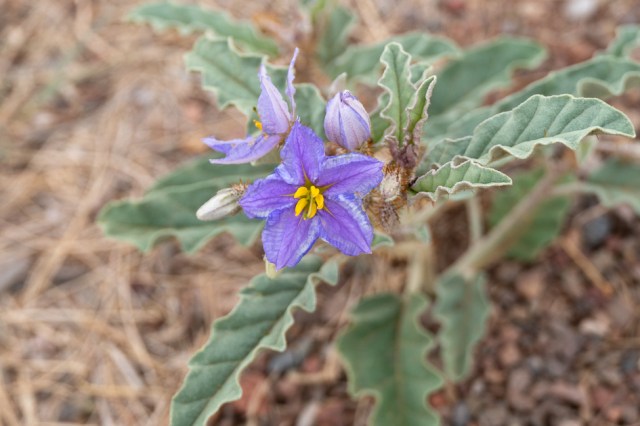
Silverleaf nightshade
Trail leads to the convento
The technique currently used to preserve the church is encapsulation, whereby park staff make bricks on site—using original methods—then encase the original adobe bricks. Another technique is to apply a coat of mud plaster to prevent further weathering of the original bricks.
Front of convento ruins
Another view of the convento
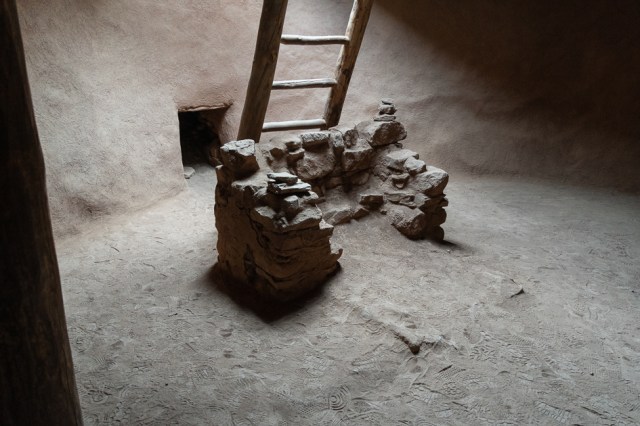
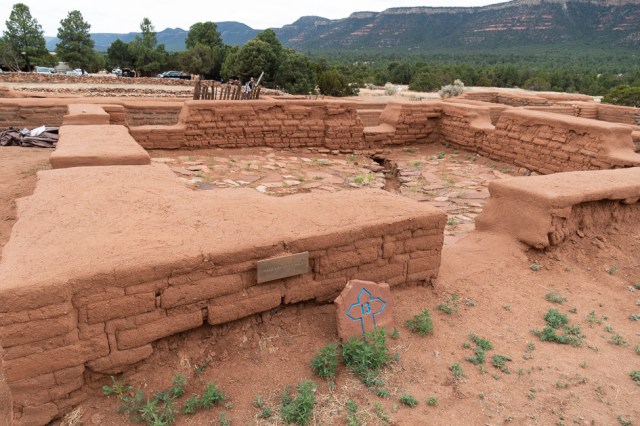
This kiva, built before the 1680 Revolt, is one of only three found near a mission or convento
Original flagstone patio with a drain that emptied into a cistern at the other end of convento
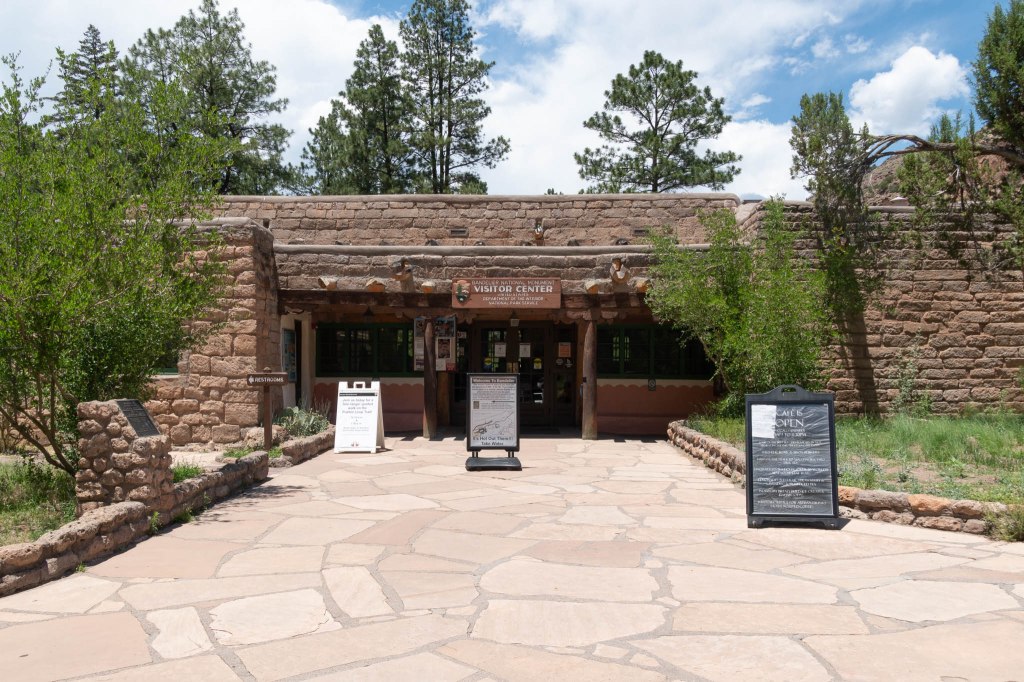
Bandelier National Monument
A fifty-mile drive took us to Bandelier National Monument, another site populated by ancestral pueblo people. Except at this site, it appears the people abandoned the village during the mid-1500s. Thus Bandelier avoided Spanish influence and populated settlements that could have destroyed the ruins.
Bandelier National Monument Visitor Center
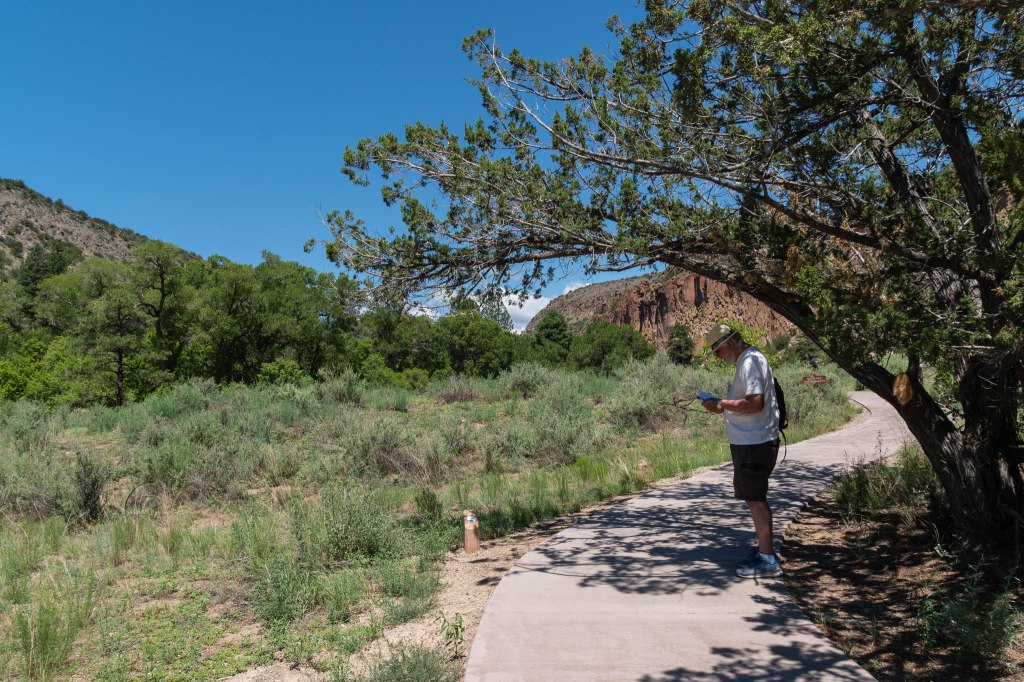
We picked up the Main Loop Trail Guide and followed the numbered spots through Frijoles Canyon on the 1 ¼ mile trail.
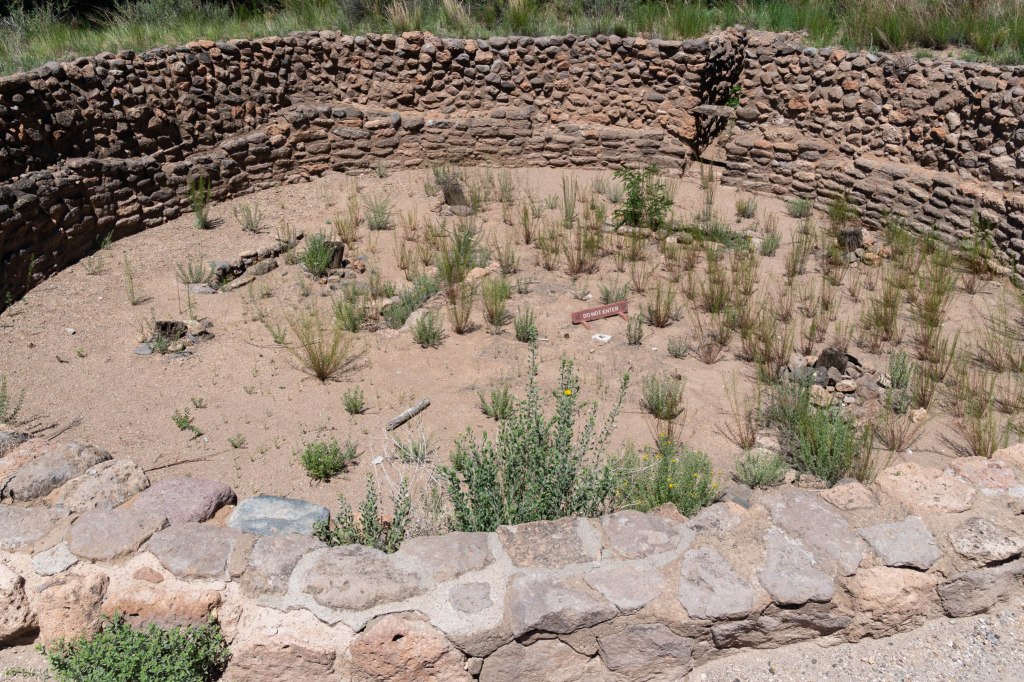
The trail guide described the kiva as having a roof supported by six wooden pillars with ladder through the roof used as the entrance. The guide continued, “Imagine climbing down the ladder into a darkened room, flickering torches offering the only light, people sitting on the floor and along the walls.”
Edgar Lee Hewett, an educator and archeologist is responsible for the designation of Frijoles Canyon as national monument. His efforts began in 1899 and continued for 17 years until President Woodrow Wilson designated 22,400-acres for the monument on February 11, 1916.
Another day, another trail guide
Large kiva structure
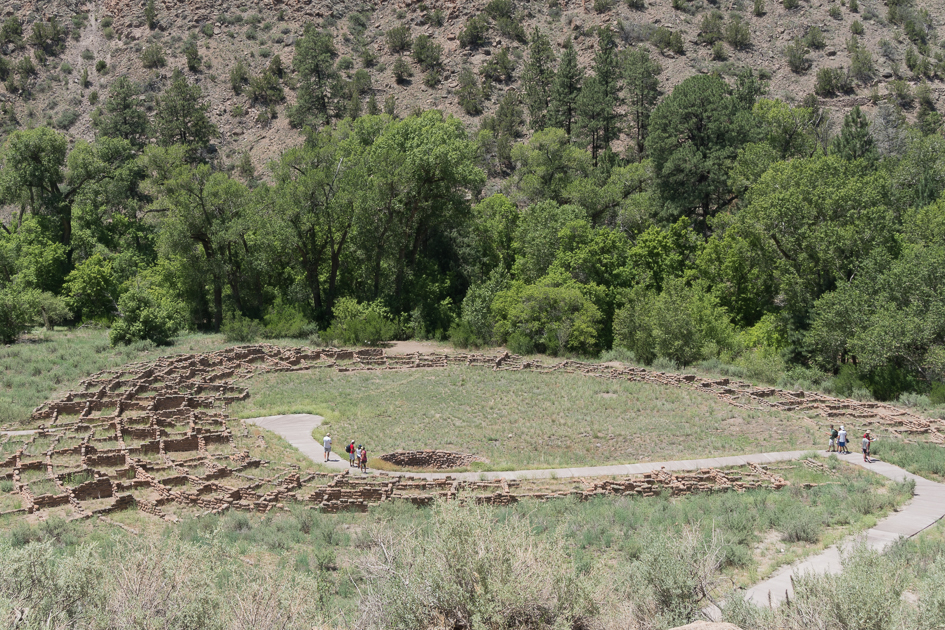
From above, the scale of the community is brought to life with each square of brick walls representing a home or storage area that may have risen two or three stories in places.
Village ruins
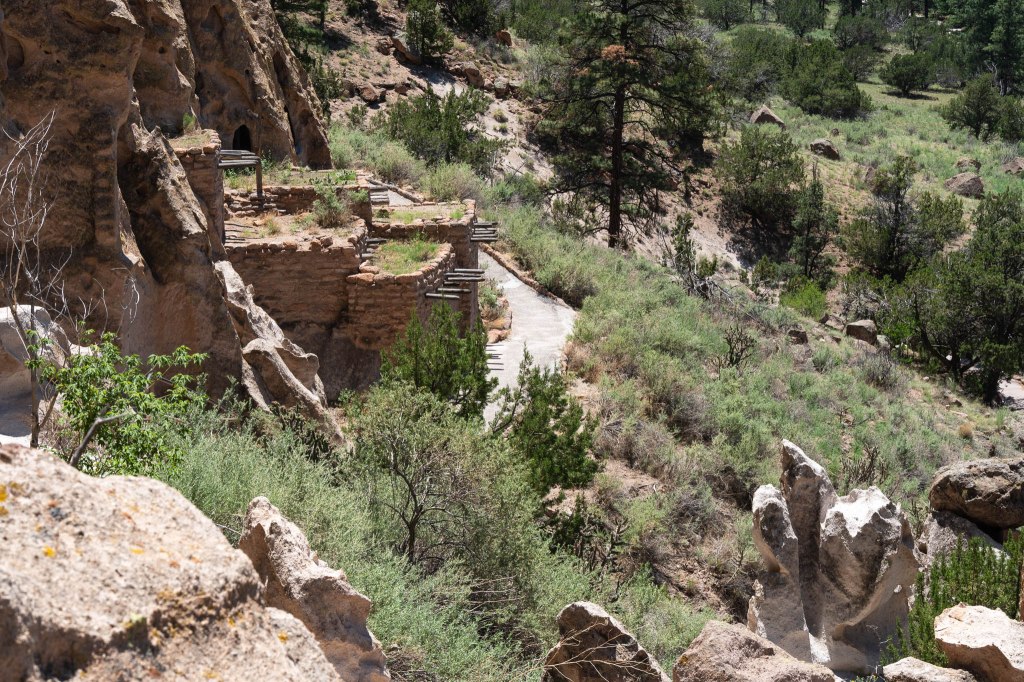
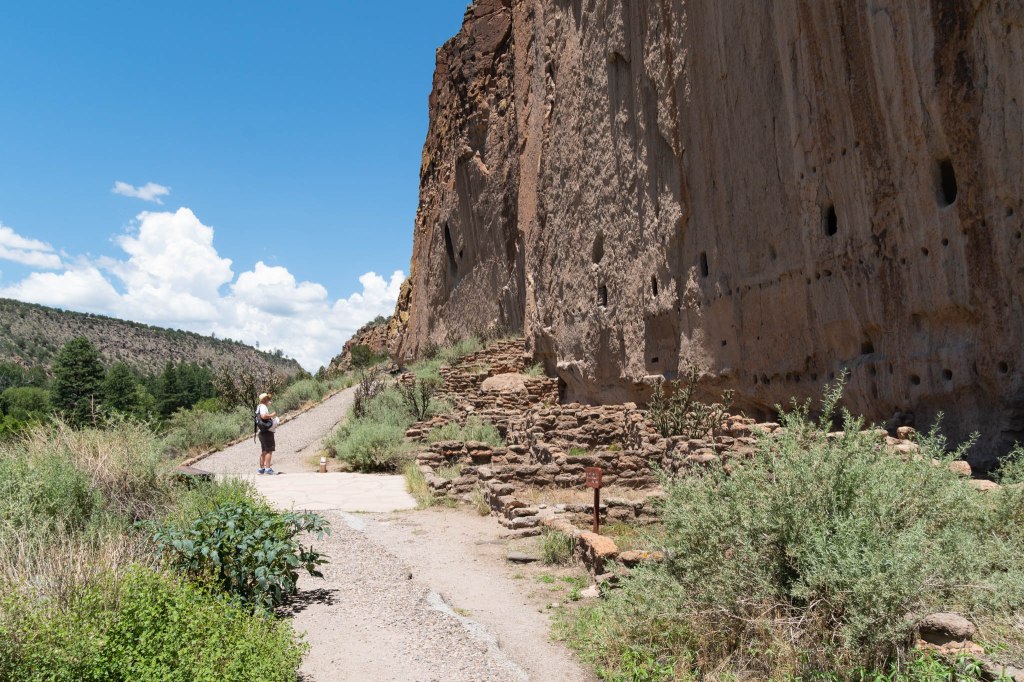
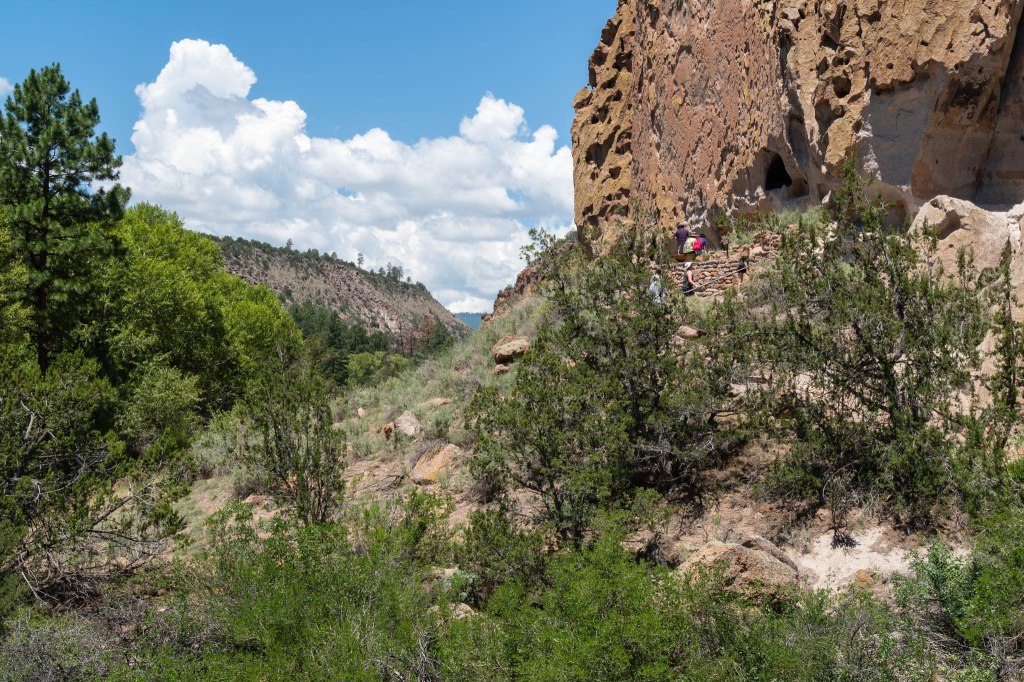
The cliffs are made of volcanic tuff. The inside walls of the dwellings would have been plastered, and the ceilings smoke-blackened to make the tuff less crumbly.
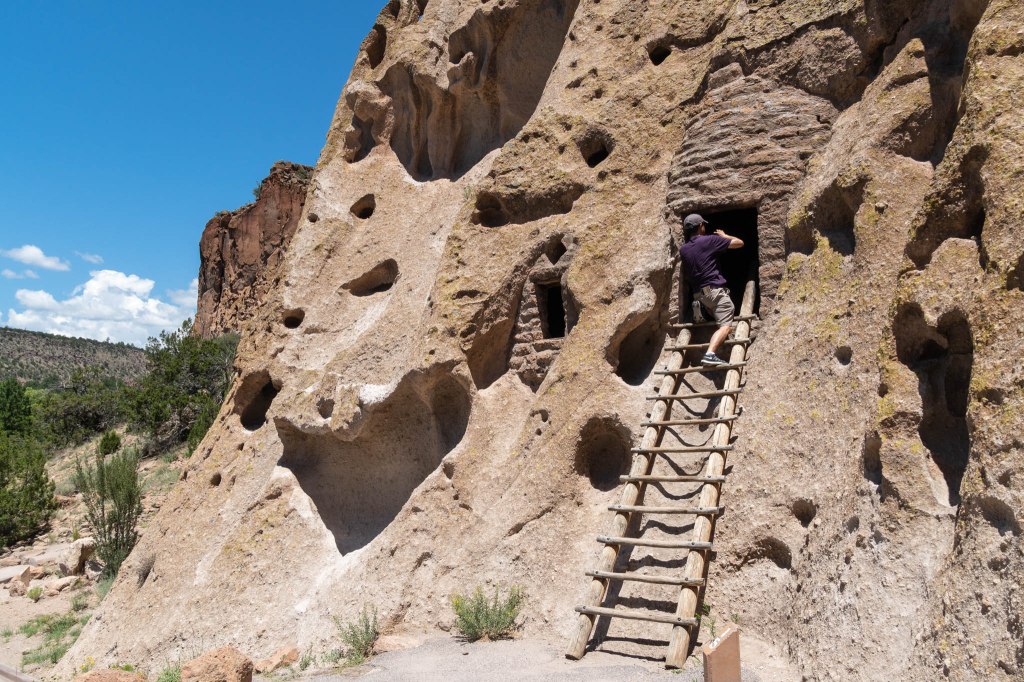
Yeah! I made it up the ladder.
A 1920s reconstruction of what the dwellings might have looked like
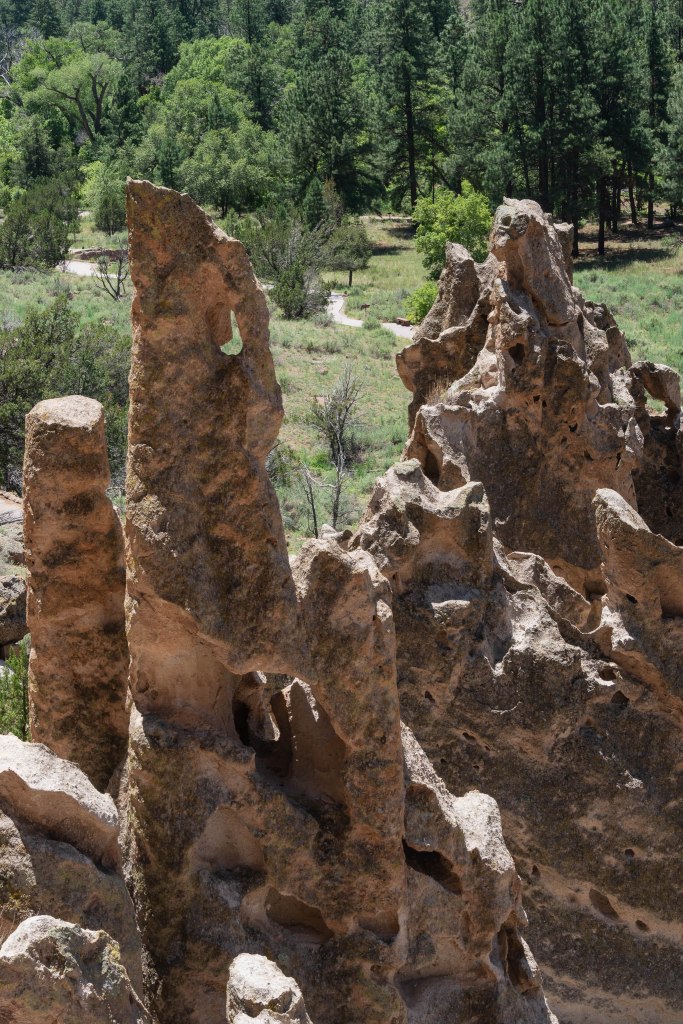
Gnarly volcanic rock structures
More dug out cliff dwellings
The smaller holes in the wall are where poles were inserted to create a roof
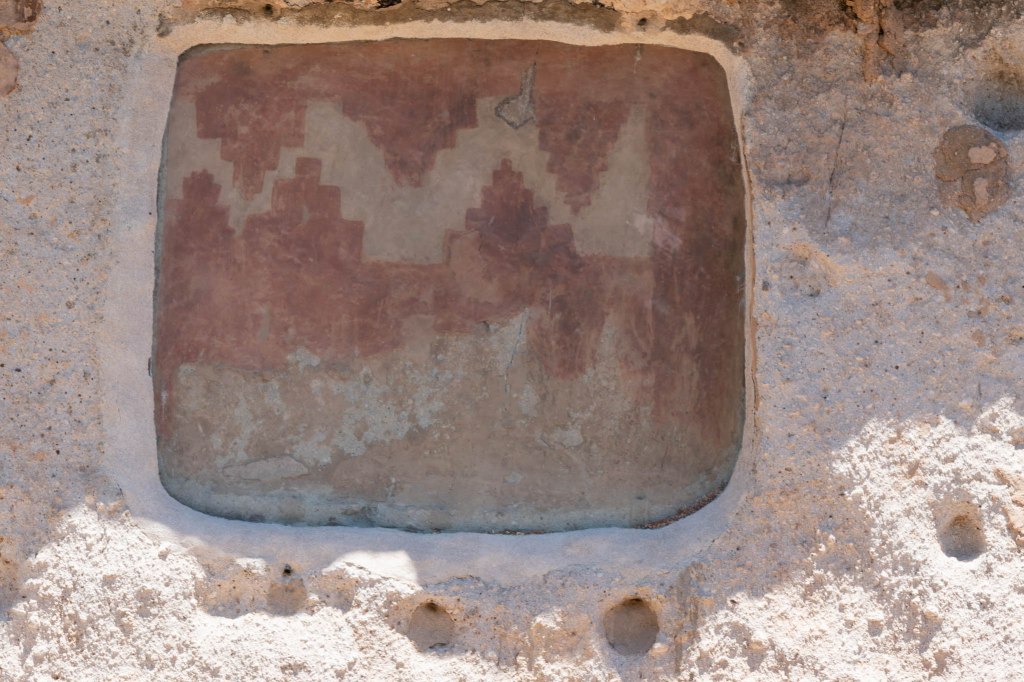
Pictograph found hidden behind a layer of plaster
End of the line
The people who lived here had a life expectancy of 35 years. The average women stood five feet tall and men averaged five feet six.
Cochiti Lake
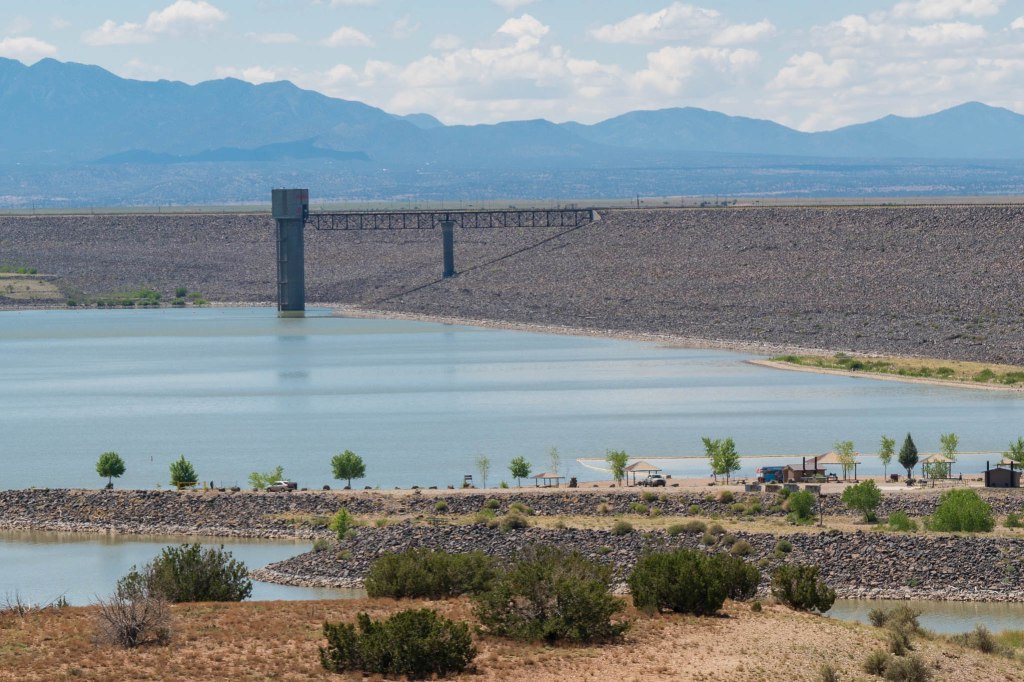
Within the boundaries of the Pueblo de Cochiti Nation on the Rio Grande, sits Cochiti Lake and Dam.
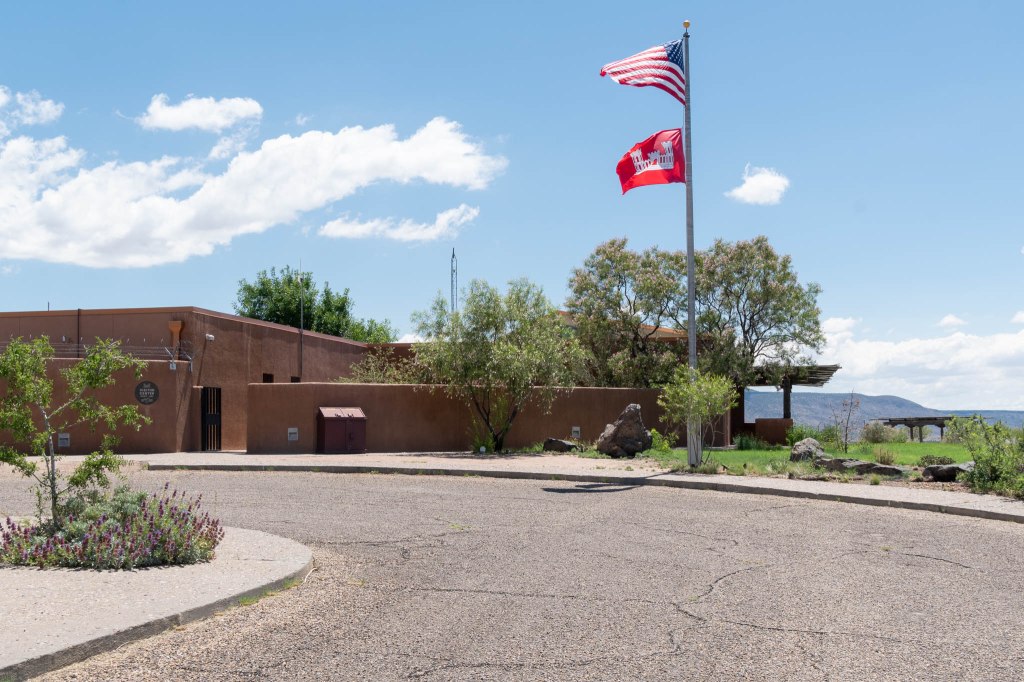
Cochiti Lake Visitor Center
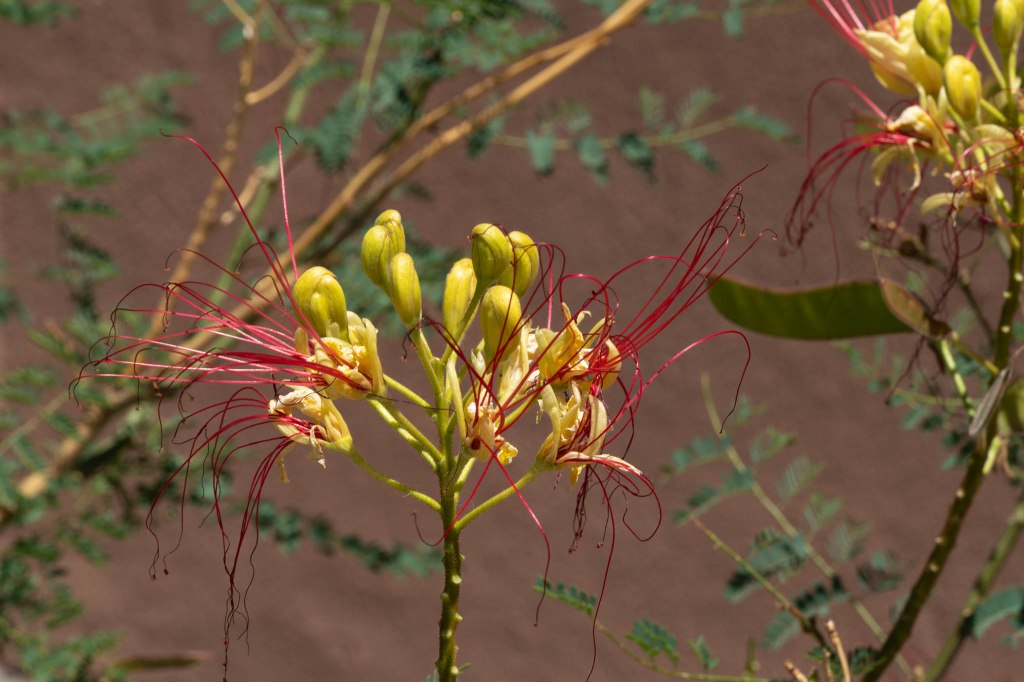
Found in parking lot
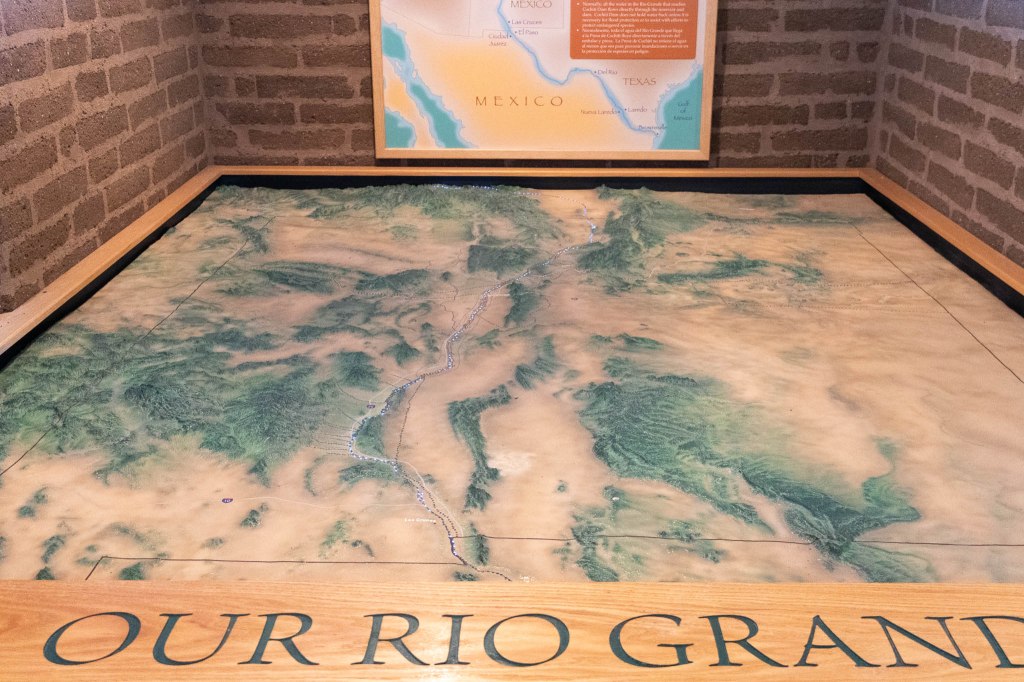
Inside the Army Corps of Engineers (ACOE) visitor center, we found displays detailing the dam and lake’s history along with their role in controlling flood and sediment along the Rio Grande System.
The earthen fill dam is 50 miles north of Albuquerque, the 23rd largest dam in the world, one of ten largest dams in the US and one of four United States Army Corp of Engineers projects for flood and sediment control on the Rio Grande System.
Map depicts the system of flood and debris control along the Rio Grande
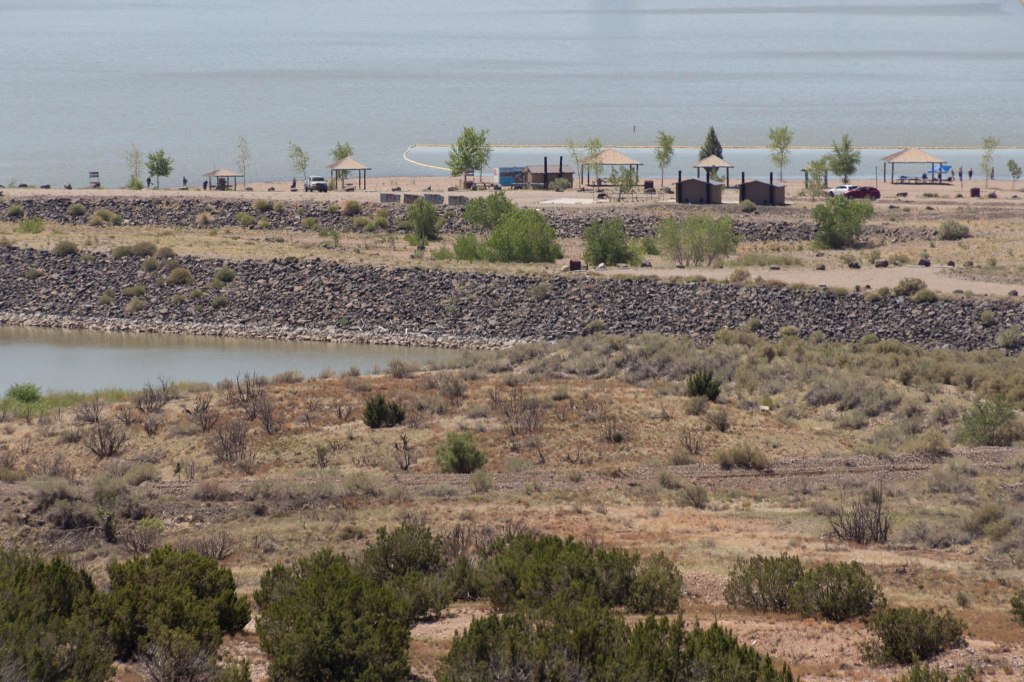
Outside is a loop trail with views of the lake and dam.
The control tower is about the height of a 20-story building
Controversy seems to pop up in places we visit, especially in locations involving tribal groups. Without going into too much detail, agreements were required between the government and the Cochiti Keres Pueblo, promises were made, promises were broken, and a sacred place was destroyed. Who’s heard this theme before?
Day use area
Besides the destruction of a sacred place, the Cochiti Keres Pueblo lost significant tracts of agricultural land and had to fend off encroachment by a developer in order to protect their land and way of life. ACOE made a public apology to Cochiti Keres nearly twenty years later in 1994 for destroying a plot of land ACOE promised to protect, and the federal government paid to restore the agricultural land.
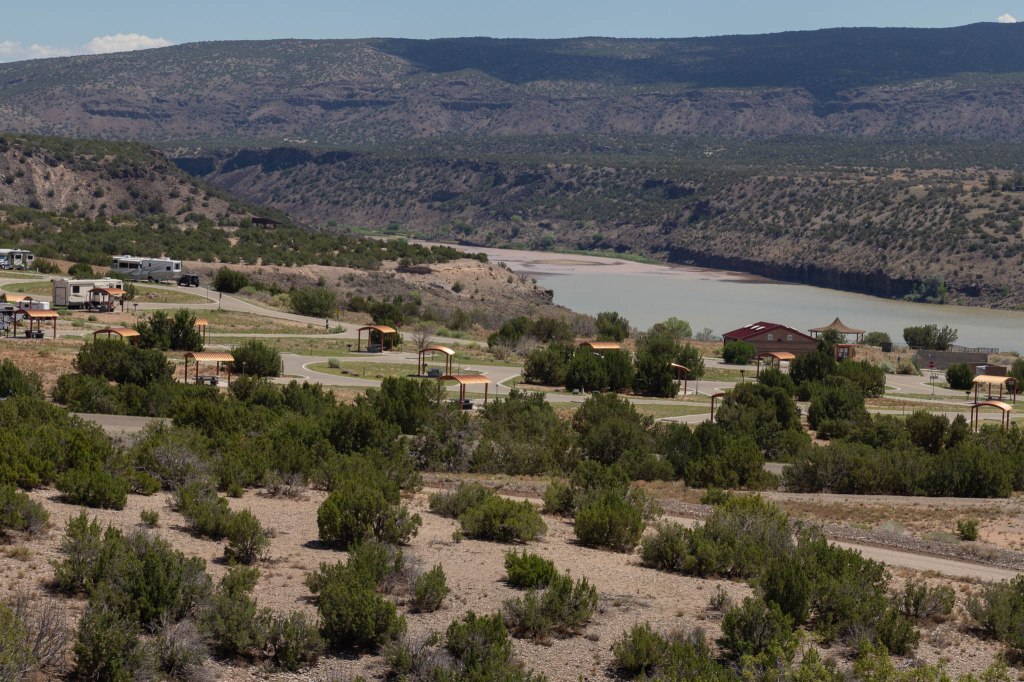
Four loops of campsites range from no hookups and community spigots to electric and water hookups
Overall management of the Cochiti Lake area now rests with both the Cochiti Keres Pueblo and ACOE under a 2008 agreement. I wonder how the situation would have turned out had the federal government invited the Nation to join them back in 1950. Sadly, we’ll never know.
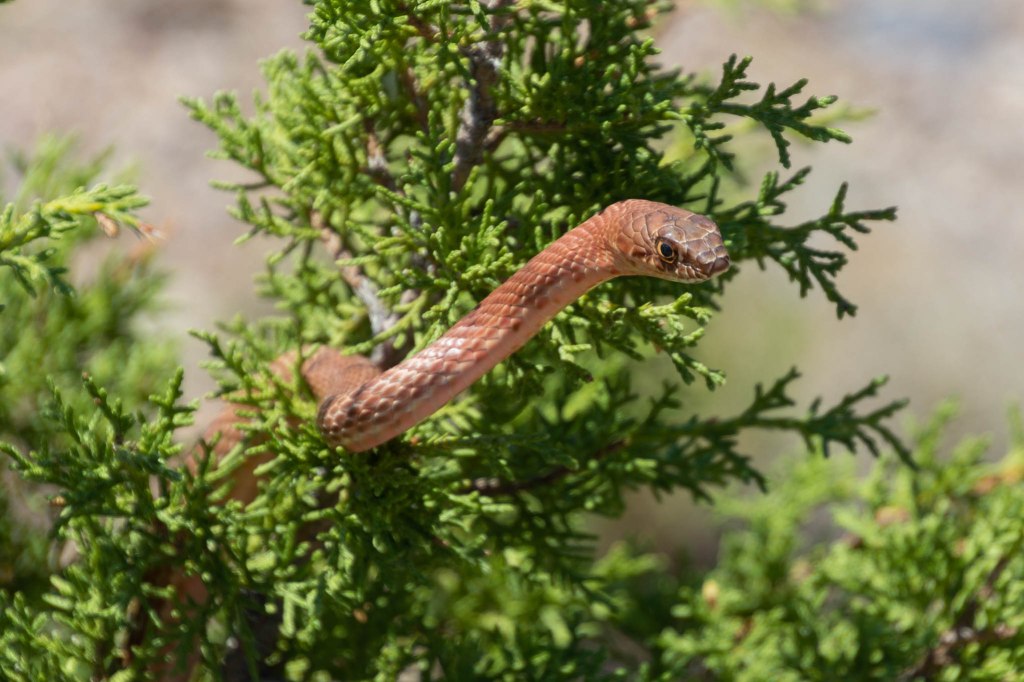
Besides the colorful rocks, shrubs and cactus, along the trail, hikers may even find a snake hanging out in a bush.
Slithering Snazzlefrass
Next up: We wrap up our time in Santa Fe before packing up and heading north to Taos.



















 The Traveling Todds