Cortez, Colorado

Week Two – Cortez, Colorado

It’s May 31, 2019, and we’re still hanging out in Cortez, Colorado. Several days of rain and snow kept us inside for the first few days, which was okay since Jon was dealing with his sciatica. Since we weren’t on a strict timeline, we could afford to snuggle up in the trailer during the winter weather and wait for sunny warmer days.

Did acupuncture work?

Jon’s excitement for a miracle pain relief dissipated after the first treatment. Discouraged there was no improvement, he wanted to cancel the next appointment. “You can’t expect it to work the first time,” I said. He persevered, though, dragging his feet and skepticism into Dr. Hawes’s office. When he noticed improvement after the second and third visits, he said, “Maybe there is something to this after all?”

By the fourth visit, he hurriedly stripped to his skivvies, climbed onto the table face down, and immediately relaxed, offering up his body as a human pin cushion.

Whether it was the acupuncture, the CBD oil, the natural course of things, or a combination, the moans and groans have subsided. Not yet ready for a ½-mile hike, he can now make it halfway around the grocery store. This is a great improvement over our first days in Cortez when he could barely make it inside the store before having to grab a seat at the Starbucks kiosk.

Although we weren’t able to hit the trails with our new trekking poles, we still had fun exploring the Canyons of the Ancients National Monument, Hovenweep National Monument, and Mesa Verde National Park.

Enough with the medical issues and on to the explorations. Let’s start off with Canyons of the Ancients and Hovenweep National Monuments and leave Mesa Verde National Park for the next post.

Canyons of the Ancients National Monument

Canyons of the Ancients National Monument, designated on June 9, 2000, covers over 176,000 acres of federal land administered by the Bureau of Land Management (BLM). The number of sites contained within the monument is estimated at 30,000, more than 6,355 of which have been recorded.
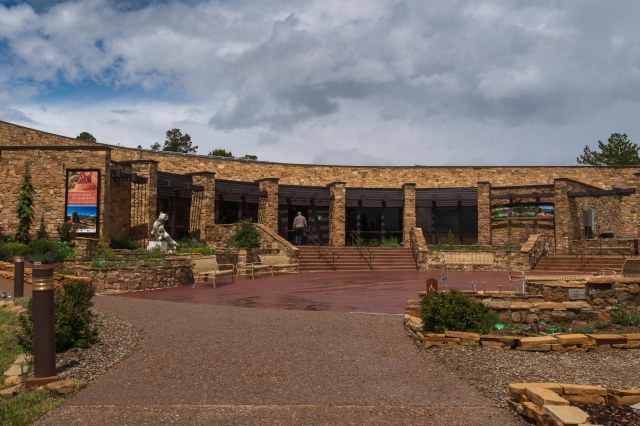
Canyons of the Ancients Visitor Center and Museum

Humans who have inhabited the area for the past 10,000 years left evidence of homes below ground, above ground and tucked under cliff overhangs, towers of some sort, and sweat lodges, along with reservoirs and dams for irrigation of crops. Some areas contain more than 100 sites within a square mile.
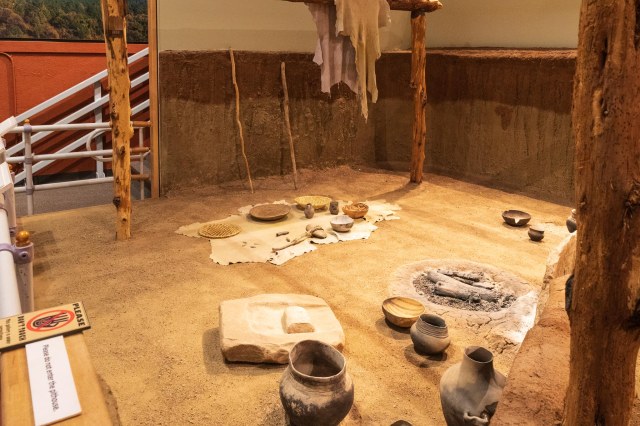
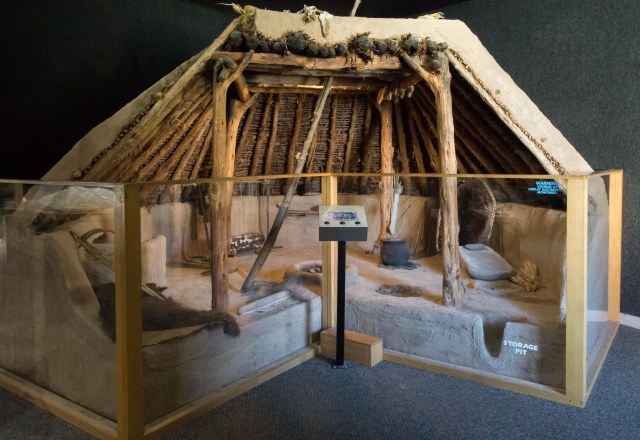
A replica pit house shows how people lived

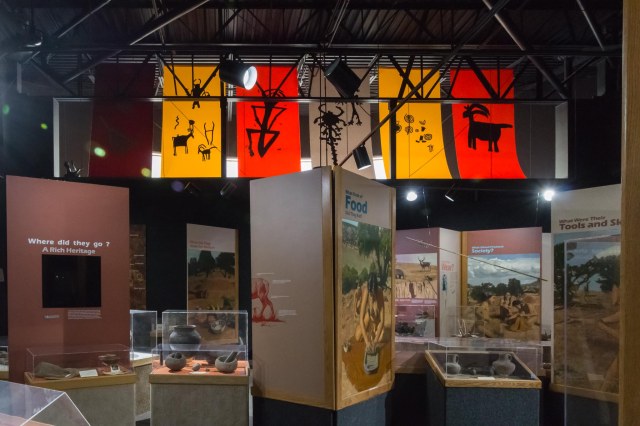
A stop at the Canyons of the Ancients Visitor Center and Museum is recommended before venturing out to the public sites. The cost is $3.00 for adults March to October and free in November through February. Federal Interagency passes are accepted. At the center, visitors gain an appreciation of the people who once occupied the land through the movies and exhibits that depict native cultures of the Four Corners region. Key archeologists and their work are also on display.
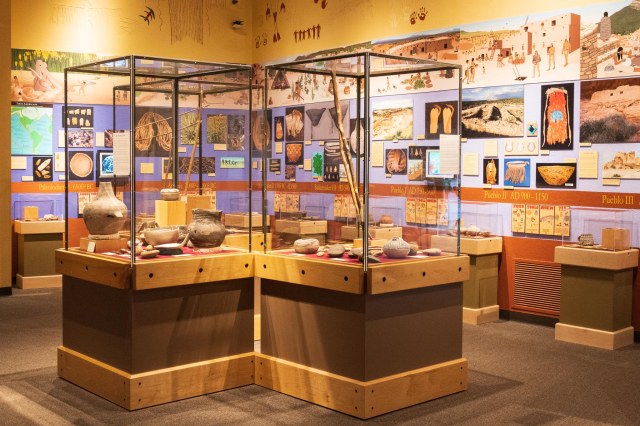
Artifacts contained in display cases and timeline depictions on the walls

What I found amazing is the condition of the structures and their contents at the time they were located. Architects found intact pottery and baskets, tools and cooking implements, and shoes made from the yucca plant. To think these items survived untouched for thousands of years is mind-boggling.
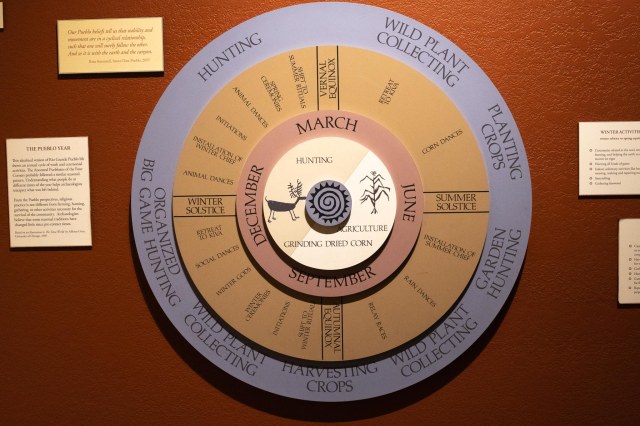
Seasonal calendar

Computers are set up that detail the timelines and different cultures. The information covers the different types of dwellings each culture built as well as the enterprises they engaged in such as weaving or pottery.
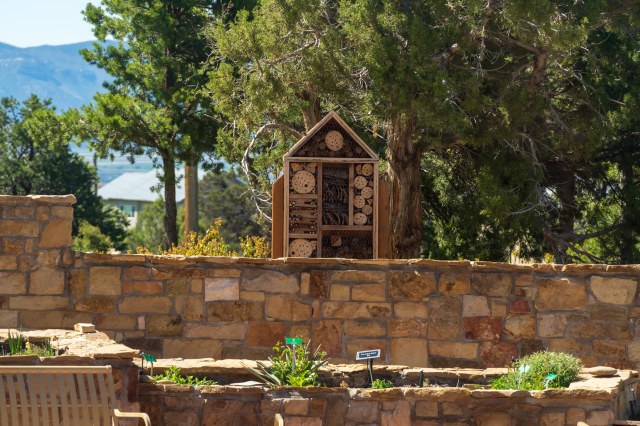
Gardens and art in front of the visitor center

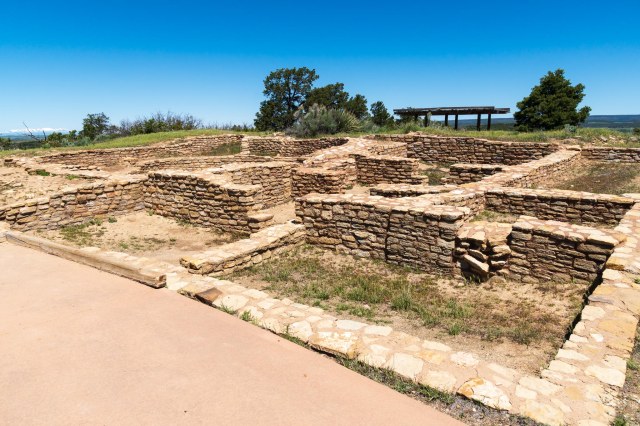
Follow the concrete paved trail around the side of the building to the Escalante Pueblo for a bird’s eye view of the surrounding landscape, mountains, and McPhee reservoir. Time for a picnic? Find tables with protective covers at the start of the paved trail. While the wind blew hard in front of the visitor center, the path side of the hill had very little wind until I reached the top.
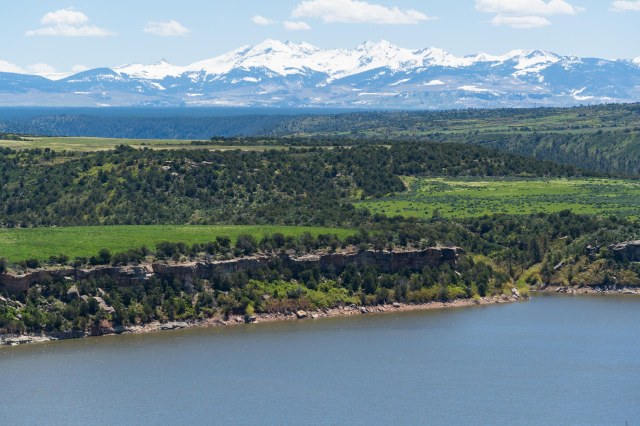
San Juan Mountain Range
Escalante Pueblo at Canyons of the Ancients Visitor Center and Museum
Escalante Pueblo
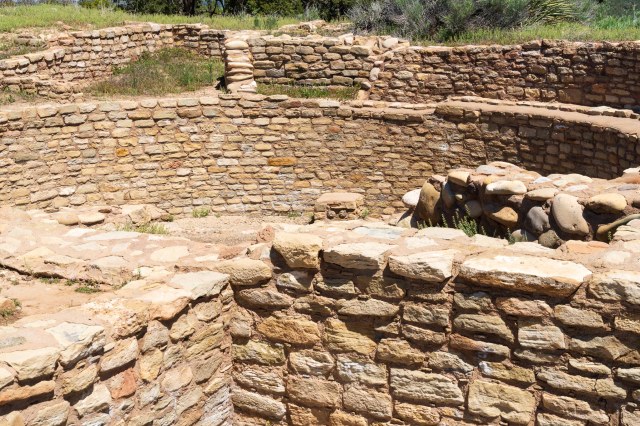
Kiva at Escalante Pueblo

Lowry Pueblo

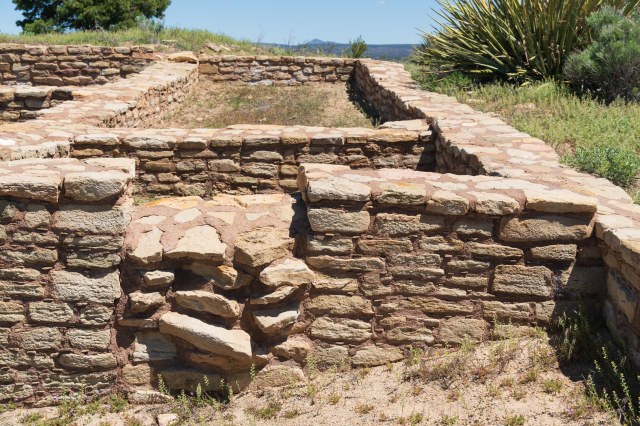
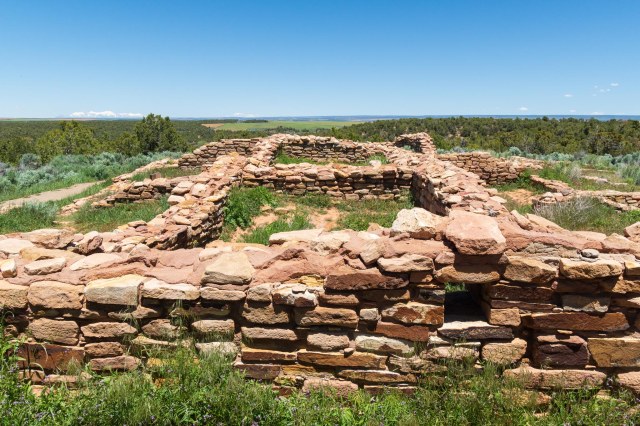
Twenty-five miles from the visitor center is the Lowry Pueblo. Constructed around 1060 AD, it housed at least 40 – 100 people at a time for approximately 165 years. The entire structure consisted of 40 rooms and multiple kivas. Archeologists found evidence of hunting, farming, pottery, and cotton weaving up until the early 13th century.
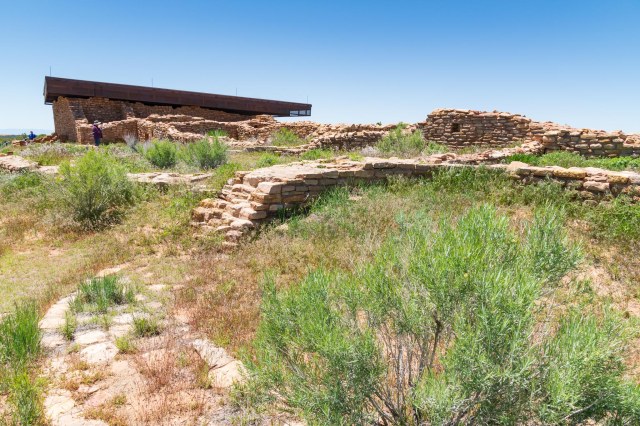
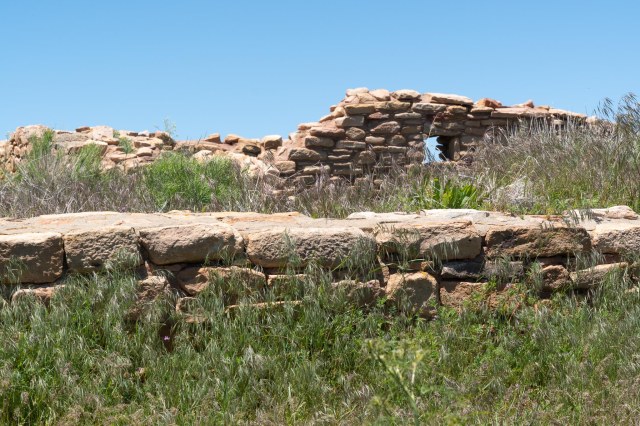
Lowry Pueblo
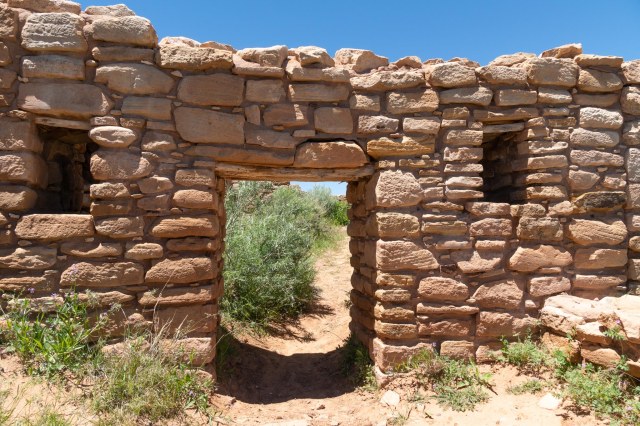
Is that hole in the wall a window?
The doorway was so short I had to squat my way through.
View of the ruins after crawling through the doorway

As I stood inside the walls, I couldn’t help but wonder what the niches were used for. Were they places to stash belongings, decorations, supplies, pots filled with water, baskets holding herbs and seeds and nuts, or maybe tools used in farming.
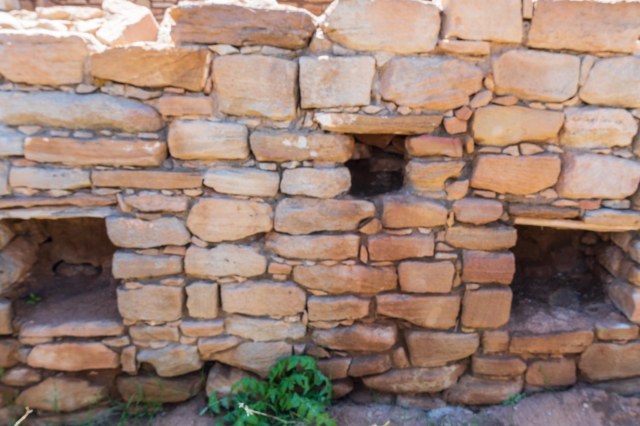
What was the purpose of the niches?

Hovenweep National Monument

President Warren G. Harding proclaimed Hovenweep a part of the National Park Service in March 1923.
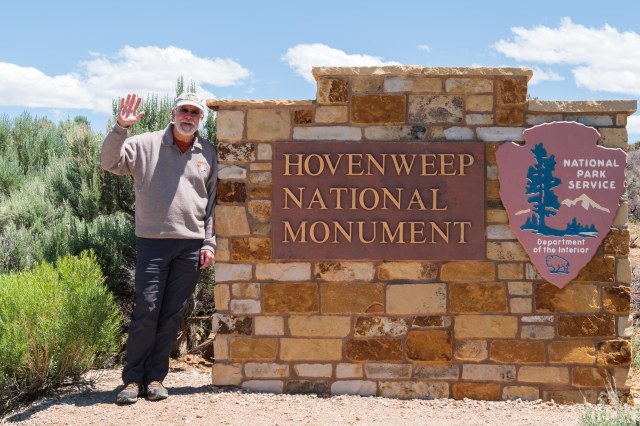
As many as 2,500 people lived in the six prehistoric villages built between 1200 and 1300 A.D. Hovenweep is known for its multistory towers lining the canyon rims and balanced atop boulders. Photos are from the Square Tower group. The only group of ruins accessible from a paved path.
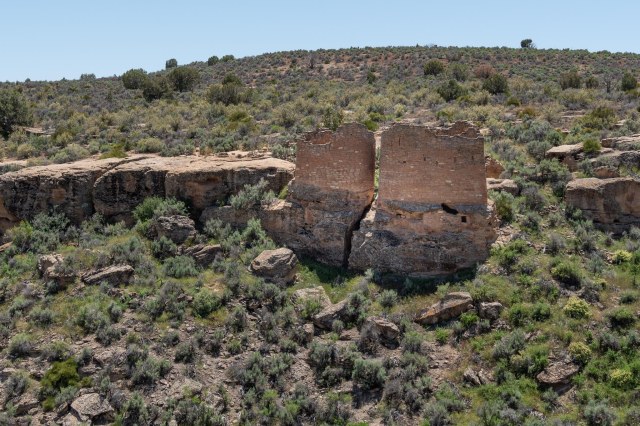
The Twin Towers

The function of the towers, many shaped like the letter D, remains a mystery. Some theorize they were used as celestial observatories, defensive structures, storage facilities, civil buildings, homes, or a combination of all these.
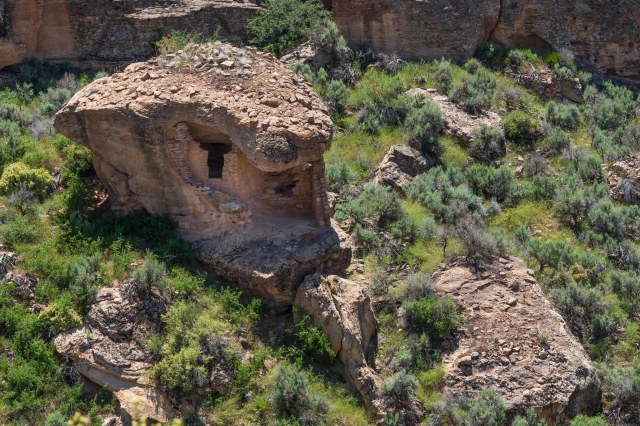
Eroded Boulder House

Occupation ended around the later part of the 13th century due to a prolonged drought and depletion of resources, or factionalism, or warfare. The actual reason is still unclear. However, it is believed the ancestral Puebloans migrated south to the Rio Grande Valley in New Mexico and the Little Colorado River Basin in Arizona. The Pueblo, Zuni, and Hopi people of today trace their heritage to culture from the Four Corners region.
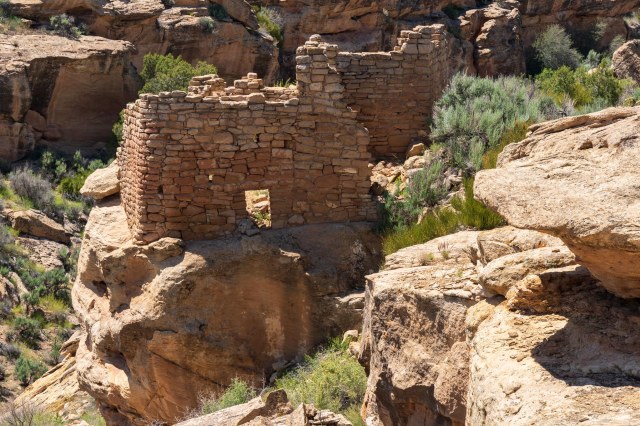
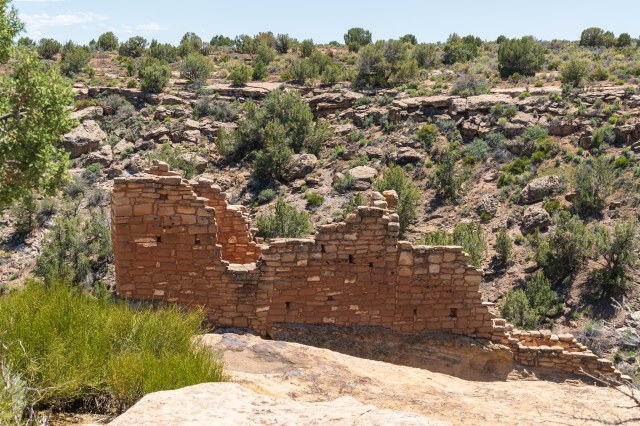
Unit Type House
Stronghold House

To wrap up this post, I present a delicate flower I found along the pathway to the ruins. With its soft white petals and yellow stamen, I couldn’t pass up the photo opportunity to contrast with the masonry work of the ancients.
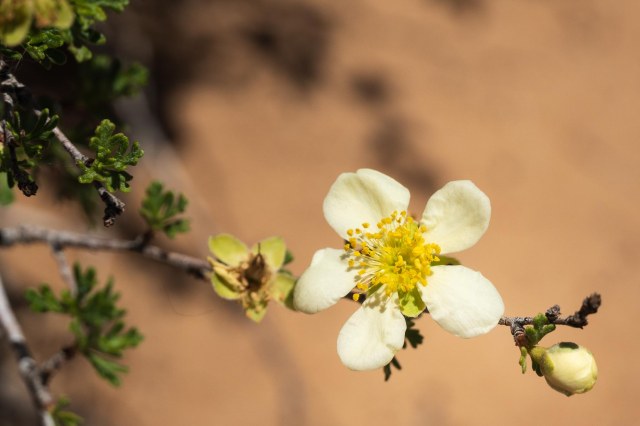
Stansbury Cliffrose

It would seem as though once you see one stone building lasting over a thousand years, you’d seen them all. That wasn’t the case for me. All of the structures were unique in their craftsmanship and given the tools they had available to them, the architecture and construction impressive.

Next up: We visit Mesa Verde National Park in the next post.

Safe Travels

Late Spring 2019 Tour

Week One – Kickoff

Aah! It feels good to be back on the road exploring these great United States. Between heart surgery and recovery for me, and sciatic nerve pain for Jon, we were ready to roll.

We pointed at the landscape that zoomed by as we left the Bay Area. “Look over there,” I said. “The hills were still green in the Tri-Valley. At the Altamont Pass they turned the color of a teddy bear.” Further on, the fruit and nut trees along Interstate 5 had already leafed out, and newly planted crops painted the San Joaquin Valley floor in patchwork fashion.

We stopped for the night at our favorite way station in Bakersfield, the Orange Grove RV Park. Dove calls, the chip-chip-chip of quail, and the trilling and singing of other birds welcomed us to the grove. Sure, we have birds in the Bay Area, but the abundance of birds nestled in the orange trees was like a chorus.

Orange Grove RV Park in Bakersfield, California

Guests are allowed to pick the fruit when in season so long as they don’t use ladders or climb in the trees.

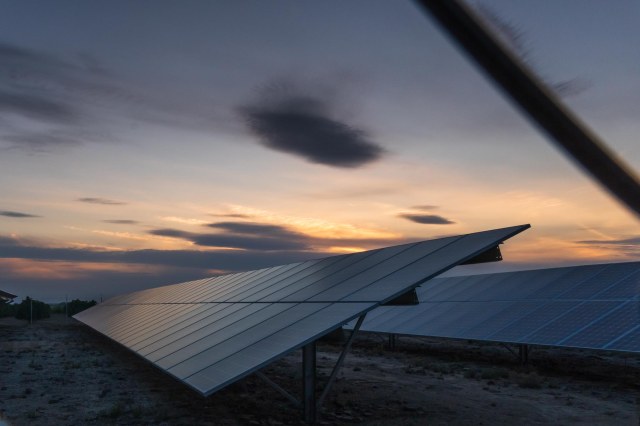
It seems like we are seeing more and more solar panels in use where ever we go.

Solar Panels at Orange Grove RV Park

The next day, we continued oohing and aahing over the landscape. The sage, bristlebush, creosote, Joshua trees, and grasses colored the desert terrain green. Even yellow mustard still bloomed in the higher elevations.

A train of black tankers with double engines at the head, mid-train, and rear worked its way through Tehachapi pass. We wanted to know what the tankers held, where they were going, and where they began their journey. Our curiosity and taste for adventure returned quickly after the nine-month absence.

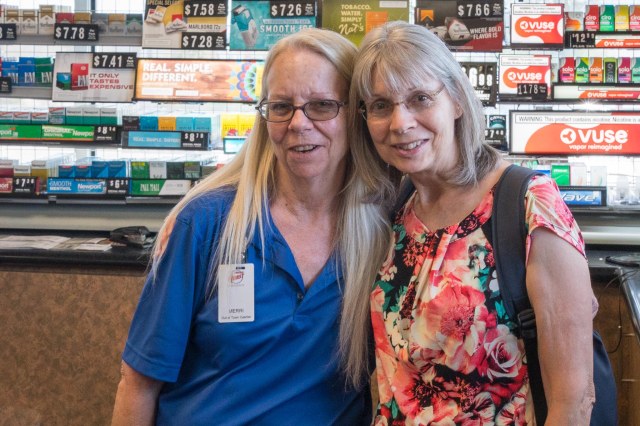
Lake Havasu City (LHC) came next so we could say hey to my sister Merri. Unfortunately, she had to work so we didn’t get to spend much time together during our three nights there. A breakfast meet-up at The Red Onion downtown and a quick goodbye at her place of business would have to suffice. We’ll have to make sure our next visit coincides with her days off.

A mural in downtown Lake Havasu City

One day while in LHC, Jon and I walked along the channel south of the London Bridge.

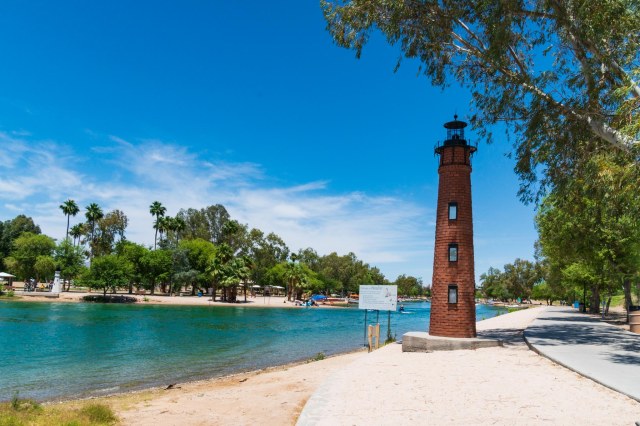
Lake Havasu City is home to replica famous lighthouses from across the United States. This one is of Currituck Beach Lighthouse constructed along the channel walkway.
The channel is a great place to boat and people watch
These little blackbirds are a common sight
JT taking a rest with the London Bridge in the background

We stopped in at Kokomo. A refreshing Mai Tai and a slice or two of pizza was the perfect snack.

Kokomo is not only a place to get drinks. You can play corn hole, drop a basketball in a trash barrel or jump in the pool for a game of volleyball.

Then we wandered about before making our way back to Rotary Park. It was a good thing the walkway included plenty of benches to sit and take a break in the shade. After almost a week of very little sciatica, Jon had trouble walking without pain for more than a few yards. We discussed turning back home, but he would not hear of it so we pressed on.

Love locks at the top of London Bridge
Trees are a welcome sight in 100-degree weather in Lake Havasu City
Closer view of the London Bridge

The weather forecast for May 19 predicted a high wind advisory for the state of Arizona and rain the next day in Cortez, Colorado, where we had reservations. We decided to skedaddle and called Cortez/Mesa Verde KOA for early arrival.

But before we left LHC, we stopped in to say goodbye to my Merri.

Bye, Merri. It was great to see you. Miss you already.

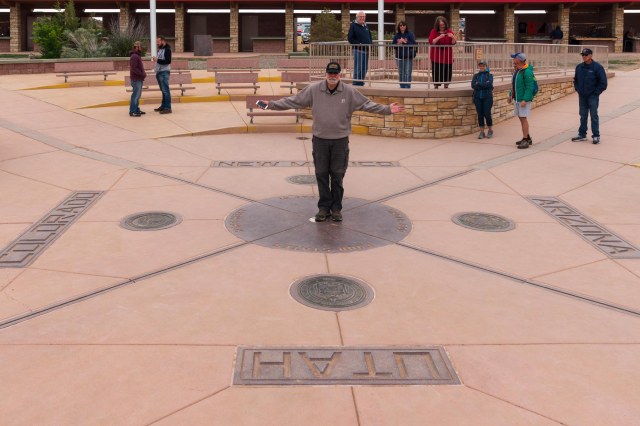
We made an overnight stay in Tuba City, Arizona, at the Quality Inn and RV park, and a quick stop at Four Corners Monument the next day.

Four Corners Monument
Photo op at Four Corners Monument

Then we arrived safe and sound at the KOA.

Site 46 at Cortez/Mesa Verde KOA
A bit of yard art at the KOA
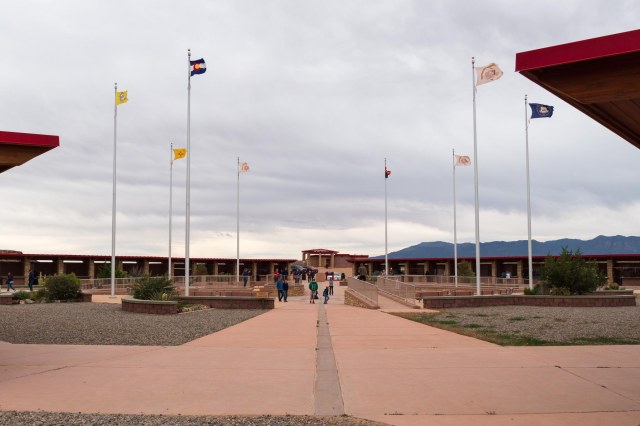
View from the Cortez high school parking lot

Our decision to arrive early turned out perfect. Snuggled in our fifth wheel on Monday, May 20, we gazed out at RVers arriving, not in the rain as forecast, but in the snow. The freak storm surprised the park operators as much as it did us. Accuweather.com sure got it wrong. It wasn’t until late in the day the app actually acknowledged that snow had fallen.

Three little cabins sitting in the snow
A bit of green among all the white

The snow stopped after about four hours. I zipped up my jacket, pulled on my knit cap, and slung my new Sony A6500 around my neck. I needed some quality time with my new camera. The smaller form factor and weight was my goal for purchasing new gear. A bonus was the 5-axis in camera stabilization. I wasn’t sure I’d like going mirrorless. But so far I’m quite pleased with the lighter weight and stabilization. I rarely use a tripod and have noticed an improvement in the sharpness of my photos. Editing the raw images also seems easier and quicker.

Canon Rebel T3i with Tamron 16 to 300 zoom lens versus the Sony A6500 with 18 to 135 lens. Which would you rather carry around?
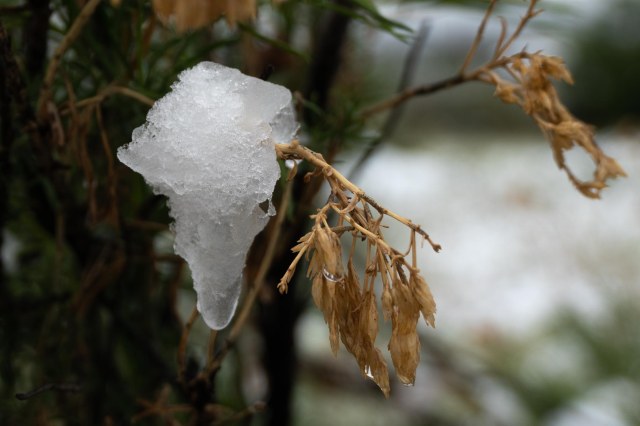
Ice on a branch
The snow melted fast once it quit falling
Little yellow wagon in the snow
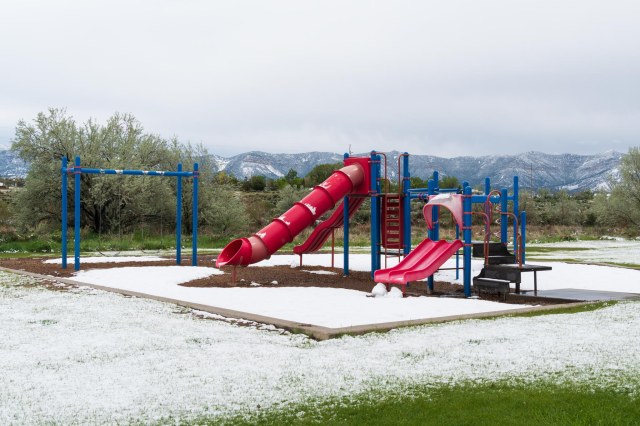
Playground at Denny Park
Denny Lake with campsites in background
From 90 degrees in Lake Havasu to 30 degrees in Cortez, Colorado

For the past few days, we’ve stayed close to camp because of the weather, but also because of the return of Jon’s sciatica. The week before we left on this trip, Jon’s pain had eased considerably with physical therapy and exercises. After being on the road for a few days, the beast struck again. His walks of a 1/2 mile to a mile have reduced to a few steps. Will acupuncture give him some relief? “I’m ready to try anything at this point,” Jon answered.

Stay tuned for the results and a little bit about Mesa Verde National Park, if we’re lucky.

Safe Travels

Cathedral Gorge State Park, Tonopah, Nevada, and Home Sweet Home

We continued our westward trajectory on September 16, 2018, the 55th day of our Summer 2018 Tour. Caliente, Nevada, seemed like a good distance to drive, except we didn’t get that far. Cathedral Gorge State Park popped up on the map so we decided to try it. With plenty of spots to choose from, we opted for paying $15.00 without electricity. We should have paid the extra $10.00.

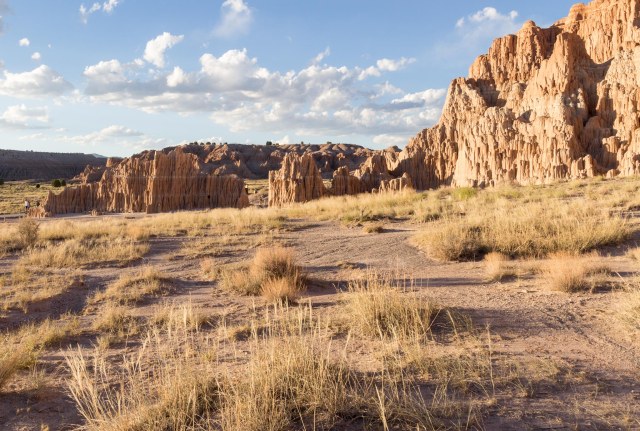
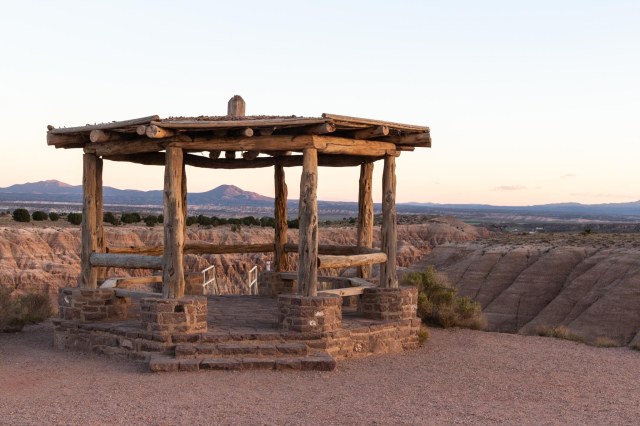
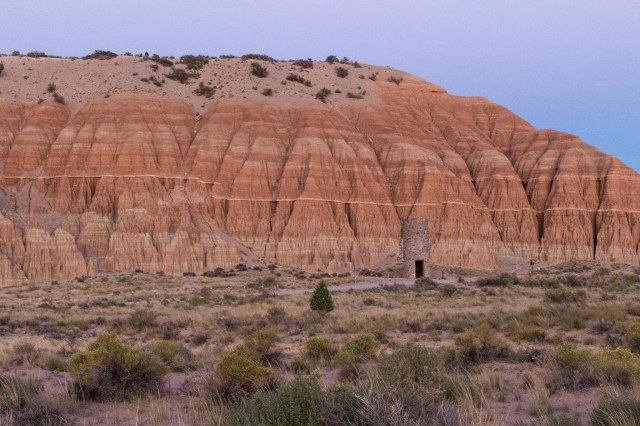
Cathedral hills and water tower

After about an hour, strong gusts of hot wind blew and sand pelted the side of the trailer until shortly before sunset. As if the fifth wheel wasn’t dirty enough, a thick layer of sand settled on the floor, the dining table, countertop, and every available surface. All I could see was a full day of deep cleaning ahead of me.

IMG_0185
Cathedral Caves

Once the wind died down, we were able to stretch our legs and explore a little before the sun settled in for the night. Cathedral Gorge State Park, consisting of nearly 2,000 acres once occupied by the Fremont, Anasazi, and Southern Paiutes, became Nevada’s first state park in 1935.

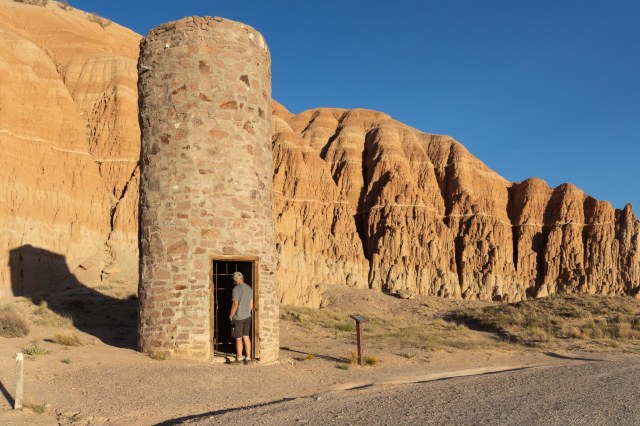
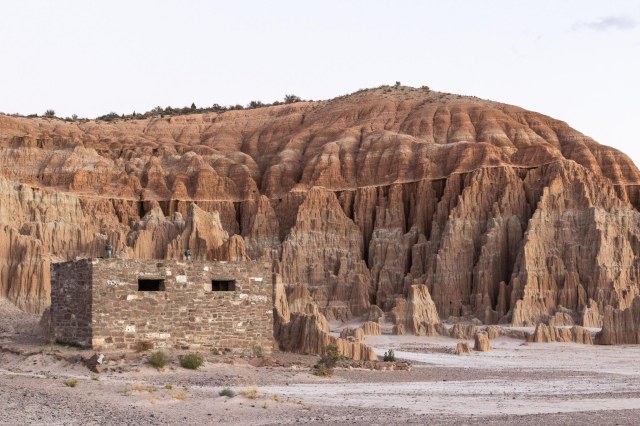
A stone water tower and restroom building built in the 1930s by the Civilian Conservation Corps (CCC) are no longer in use but still standing. The original picnic facilities continue in use today.

Water tower built by CCC
Restroom building built by CCC

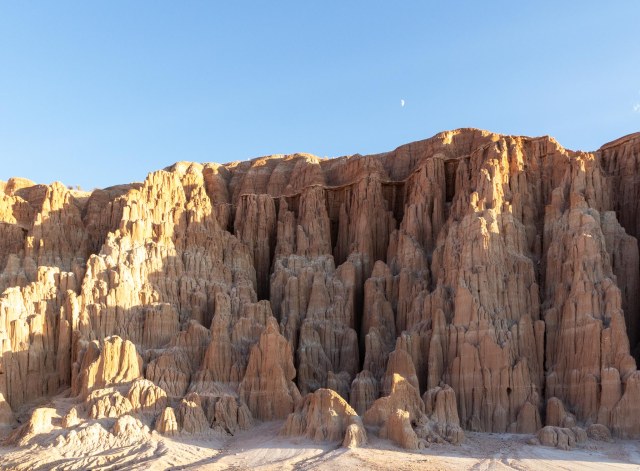
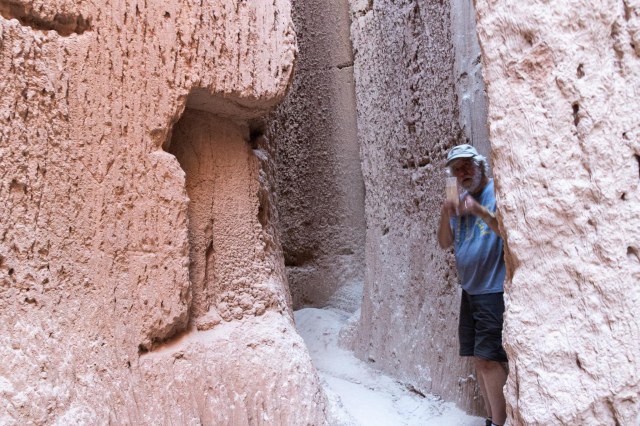
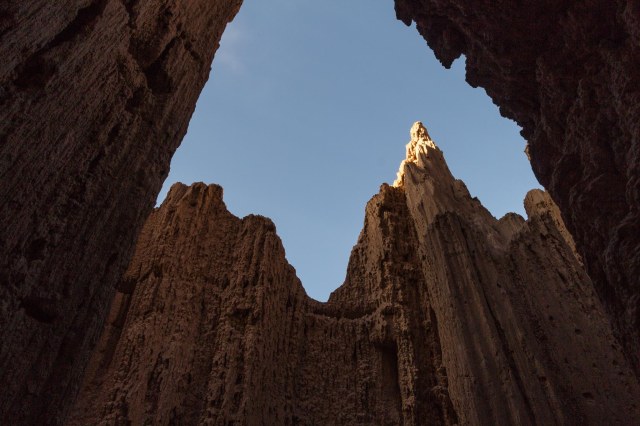
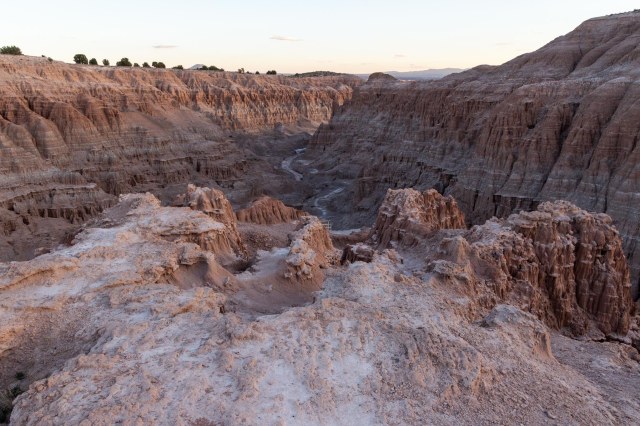
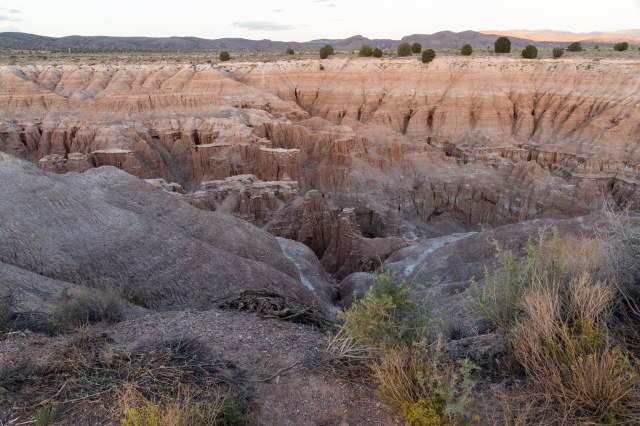
The formations, composed of silt, clay, and volcanic ash, aptly contain the reference to cathedrals, with their tall spires and skinny slot canyons and caves. It would be a great place to play hide and seek.

Peek a boo.
Inside one of the cathedral caves

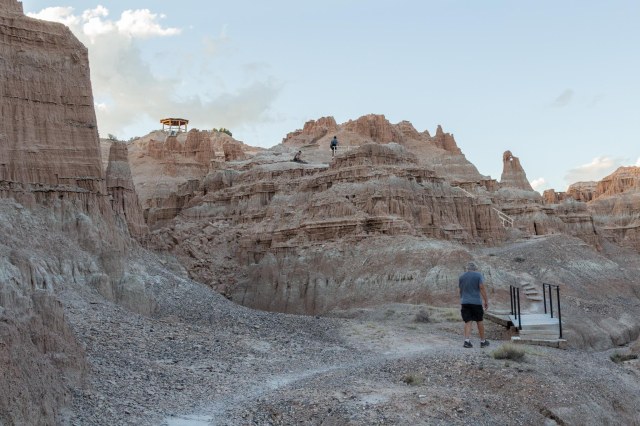
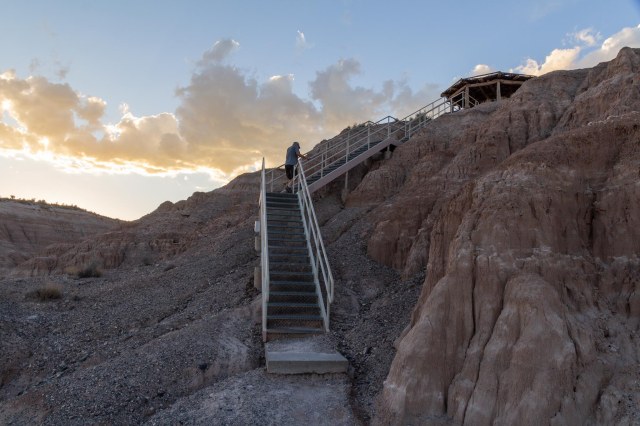
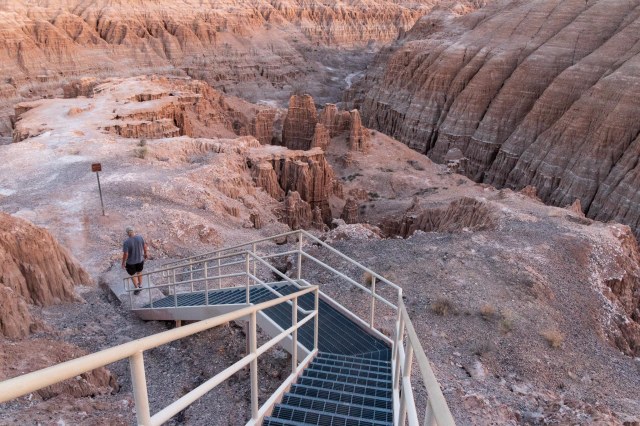
We took the Miller Point Trail which traveled up a canyon and through a dusty wash until a set of stairs appeared. The several sets of stairs took us to the point where we had wonderful views and watched the sunset.

On our way to Miller Point

Although the campground filled up with other RVs and tent campers, it was quiet outside. As the sky turned dark, and the campers across the road finished up their dinner, someone treated us to a little guitar music. I couldn’t remember the last time I heard a guitar while camping. In my younger years, it seemed like everywhere we went there was always someone playing guitar. Are people not interested in picking up the instrument nowadays?

Not much further.
Almost there.
Whew! We made it.
View of canyon and trail from Miller Point
Another view from Miller Point
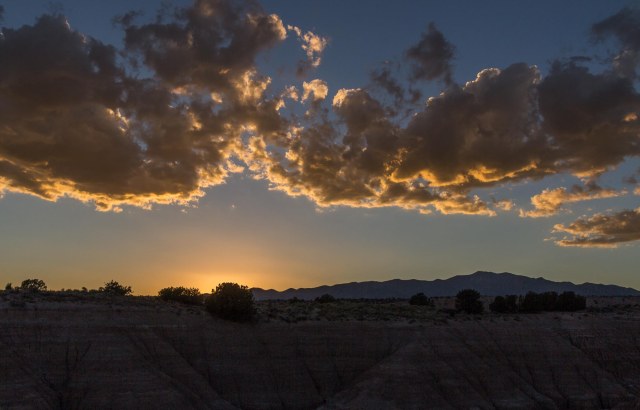
Goodnight sun.
On our way back.

When I woke up to close the windows in the middle of the night, I witnessed a spectacular show of twinkling stars along with the Milky Way streaking across the sky. That was something I hadn’t seen in a long time and it almost made up for the sand storm mess.

The next day, we drove through Caliente on our way toward Tonopah, Nevada. Young’s RV looked like it might be a decent place to stay. They even had tall shade trees and grass. The cute downtown area contained stores, restaurants, and shops. There was also a railway museum undergoing renovations that piqued our interest. Maybe we should have kept driving the day before. Oh, well chances are good that we’ll make it back there someday.

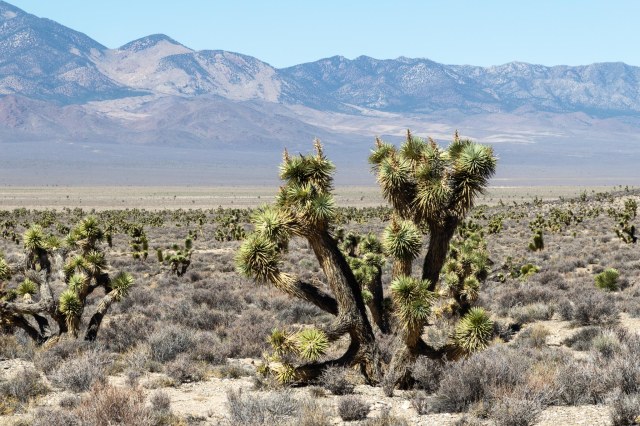
We drove the Extraterrestrial Highway 375. A couple of buildings and signs referred to aliens. And in Rachel, Nevada, where only about 50 people live, the Little A’Le’Inn Bar advertised food and lodging, but we weren’t in need of either so we drove on. For miles, there wasn’t much else to look at except the huge cattle ranches and open range. Pinon pines, junipers, and sage popped up going through Oak Summit, then we dropped into Tikaboo Valley, where Joshua Trees grow. We stopped at a BLM site that included information panels about the trees. This valley is unique in that both types of the trees are present, the tall tree-like western (Yucca brevifolia) species and the bushy eastern (Yucca jaegeriana) species. I found it interesting that each species of tree is pollinated by a different species of Yucca moth.

IMG_0214
Eastern Joshua Tree

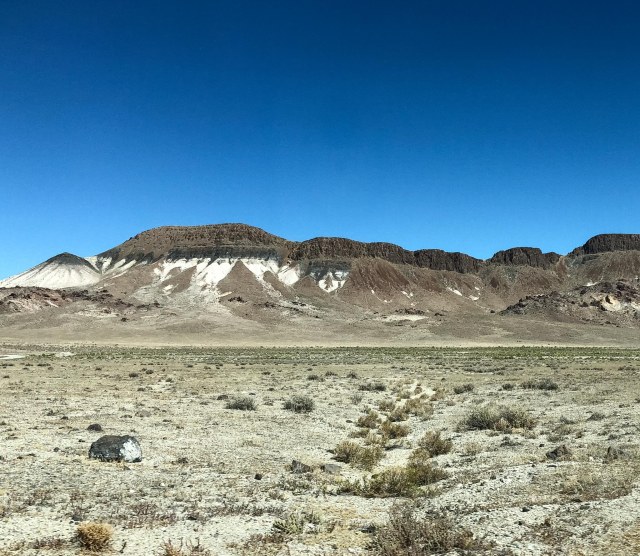
Before we came into Tonopah, a group of hills looked like scoops of vanilla ice cream with crumbled Oreo cookies and caramel on top.

Yum! Vanilla ice cream topped with crushed Oreo cookies.

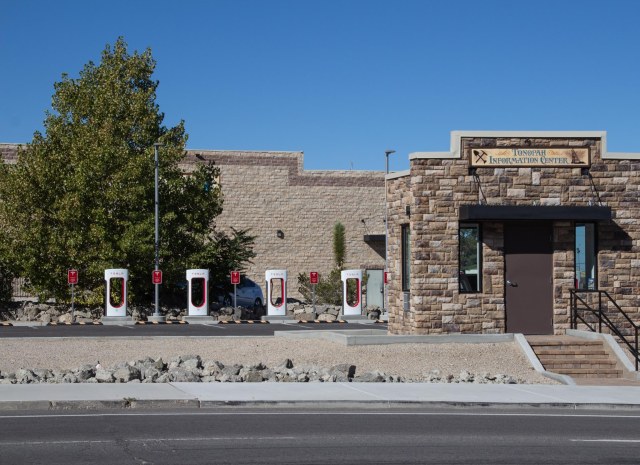
We were surprised to see a Tesla recharging center in Tonopah since we rarely see the cars in remote areas. It made sense once I thought about it though. The 7-hour 440-mile drive between Reno and Las Vegas on Interstate 95 puts Tonopah at about the halfway mark. The mileage range, depending on model and battery size, is 295 for the Model X to 335 for the Model S. The roadster, on the other hand, can make the trip with 180 miles to spare. (Mileage ranges obtained from Tesla’s website on February 8, 2019.)

Tonopah Information Center and Tesla charging station.

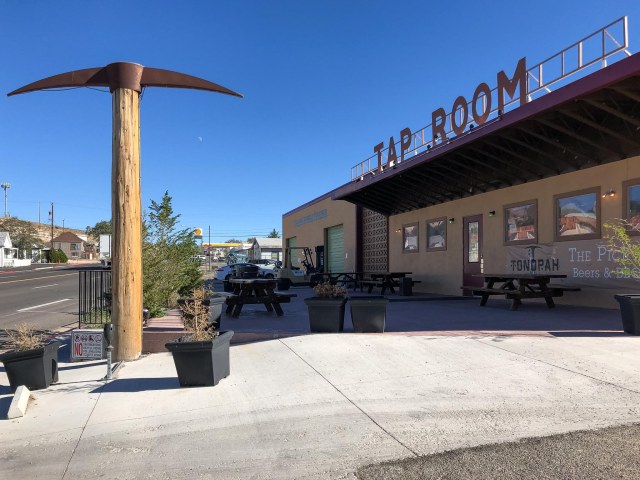
We settled into our site for the night at the Tonopah Station Hotel, Casino, Restaurant, and RV Resort. Boy, what a mouthful. I sure wouldn’t call it a resort, but for a quick stop, it fit the bill. RVs park behind the building on an asphalt parking lot with utility towers and trash barrels between each unit. The Tap Room at the Tonopah Brewing Company served up tasty BBQ and a nice selection of beer to satisfy any beer drinker’s taste.

IMG_2340
Tonopah Brewing Company Tap Room

The next day we traveled through Yosemite, staying the night at Yosemite Pines, a campground nestled in a valley on Old Highway 120. It offered covered wagons, cabins, retro trailers to rent, RV sites of all sizes, and tent sites. Outdoor play equipment, a pool, trail around the park with exercise stations, and an animal yard that included goats, burros, alpacas, and chickens. It would have been nice to stay awhile, but that didn’t work out so we drove the rest of the way home on September 19, 2018, our 58th day on the road.

For those readers who like statistics, here they are for our 2018 Summer Tour:

  • Days – 59
  • Total miles driven – 4,723
  • Miles pulling fifth wheel – 3,414
  • Diesel Fuel – 419.4 gallons
  • RV Parks/Campgrounds – 18
  • States – 4
  • National Monuments and Parks – 4
  • Museums and Historical sites – 12

It is February already and my recovery from surgery is going well and nearing completion. We are both itching to get back on the road. But before we do, Jon has a few fifth wheel projects in the works and we have other tasks to complete that will keep us at home until at least mid-April. I’m hoping we’ll be able to fit in a short trip here and there before April, so stay tuned.

Safe Travels
 

Richfield, Utah

We found the Richfield KOA to be one of the best places we have stayed. Their shaded sites are so large they can accommodate a tow vehicle and a large toy hauler or motorhome with plenty of room to spare for a few ATVs. Since our rig is not large and we don’t tug along ATVs we enjoyed the extra room to move about. The park also has easy access to the miles of trails that wind their way throughout Richfield and the surrounding area.

Fremont Indian State Park and Museum

Besides the ATV trails there is the Fremont Indian State Park and Museum, and Candy Mountain within a reasonable driving distance.

Fremont Indian State Park and Museum

We started out by visiting the Fremont Indian State Park and Museum where we watched a movie about how the museum came about. It all started with the construction of I70 during the 1980s. The plan was to take down four of the five-finger range hills and use them as fill to build up the valley after diverting the river/creek.

The last of the five finger hills

When the crew began digging, they found an ancient Indian settlement consisting of several pit houses and storage facilities. Archeologists rushed to the area to document and preserve what they could. It turned out that this was the largest Fremont Indian settlement found.

A depiction of family life in a pithouse
Possible trapper attire and tools of his trade

The neighboring community did not want the artifacts to sit in a university somewhere and pushed for the state park. Their dream came true and the park preserves the history of these ancient peoples.

What a find this jar was. It was found upside down in a pithouse

The museum depicts life as it was including a mockup of a pithouse with a vent that brought fresh air in and a hole at the top where smoke escaped.

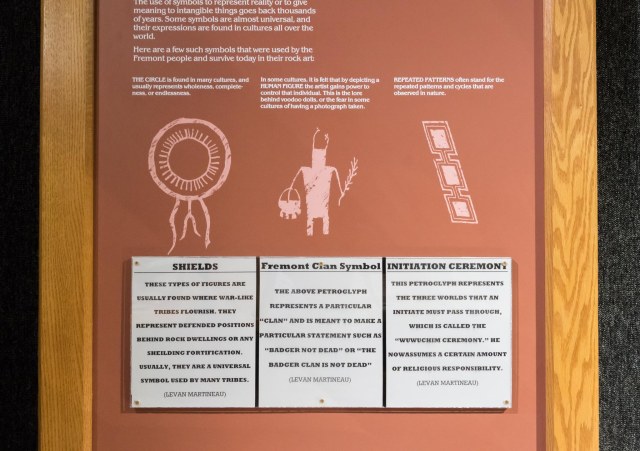
Possible meanings of petroglyphs

Cooking and work areas are also displayed. One of the most interesting objects was a recreation of remains that were found a few miles away. The recreation shows how the woman might have looked like when she was alive. A push of a button starts audio so visitors can hear her story and learn how tall she was, the condition of her teeth, the age when she died, and how she was buried.

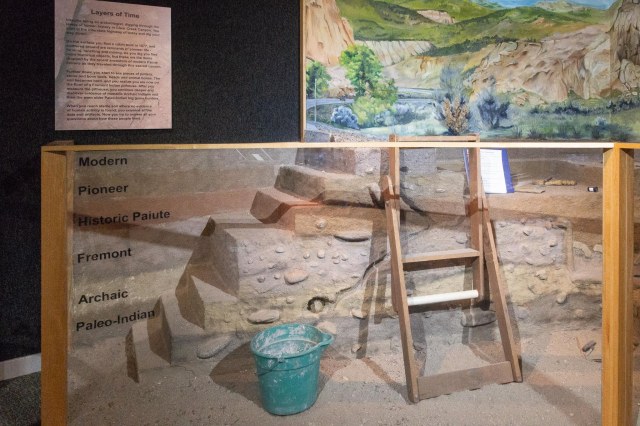
Layers of time

Clear Creek Road and I70 run through the middle of the narrow park with trails on both sides of the freeway to explore the terrain and view petroglyphs and pictographs. When we finished in the museum, we ventured outside to explore more. a short drive on Clear Creek Road took us to panels where petroglyphs and pictographs have survived erosion.
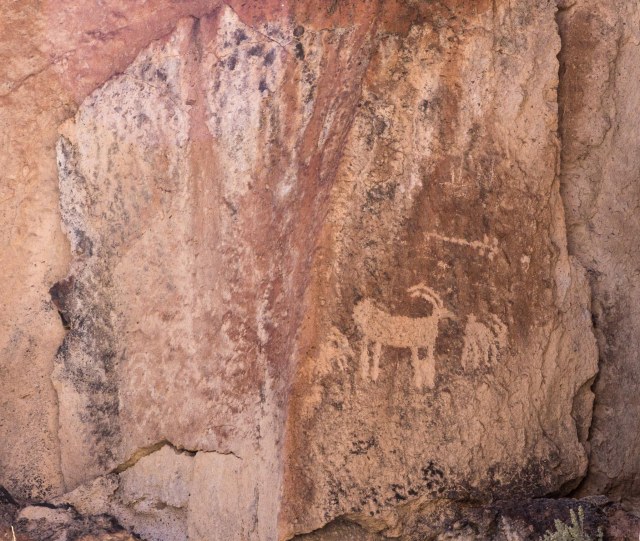
Petroglyphs are carved into the stone and depict a story, the meaning of which has been lost over 500 to 1,000 years
Pictographs are drawn using some kind of coloring or pigment. These seem to represent blankets.
It’s amazing that these have lasted so many years

Across the freeway are caves and the Sevier River.

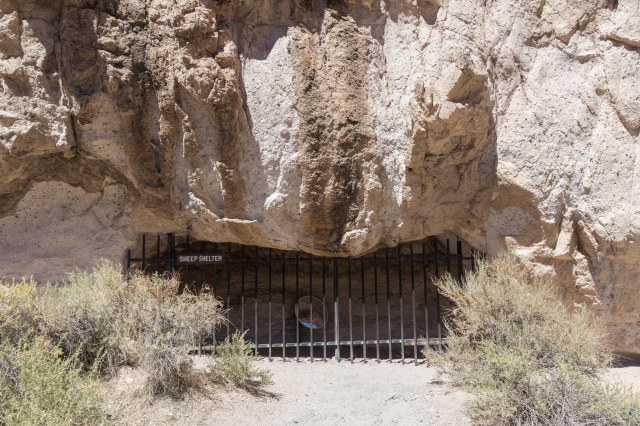
Sheep Shelter
The mirror in Sheep Shelter reflects a view of the ceiling where more petroglyphs are carved
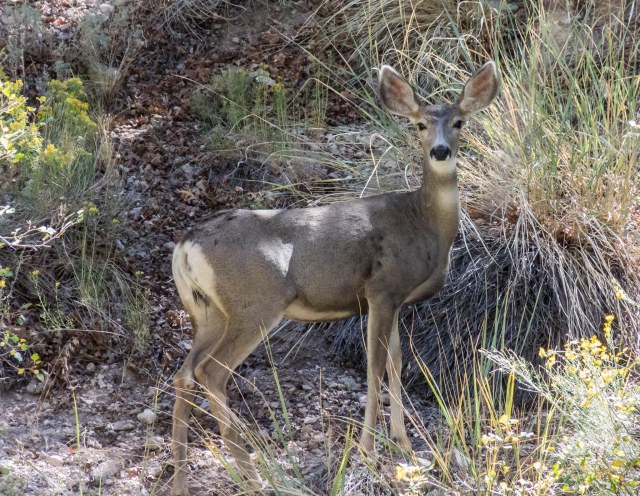
I love it when wildlife poses for a photo. It sure is better than when they show me their backside.

This cabin is similar to what the Joseph Lott family may have built on this site when they settled here in the 1880s.

1880s cabin

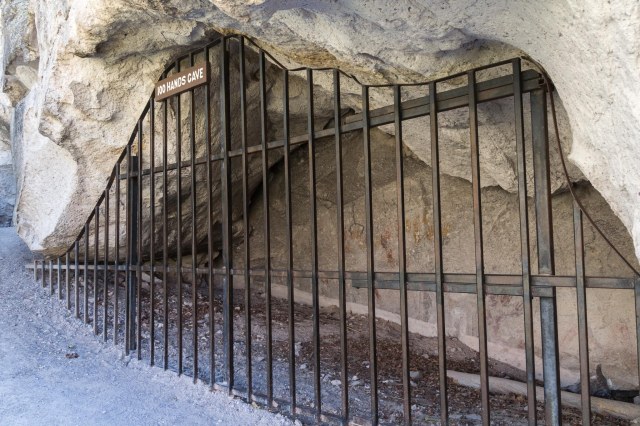
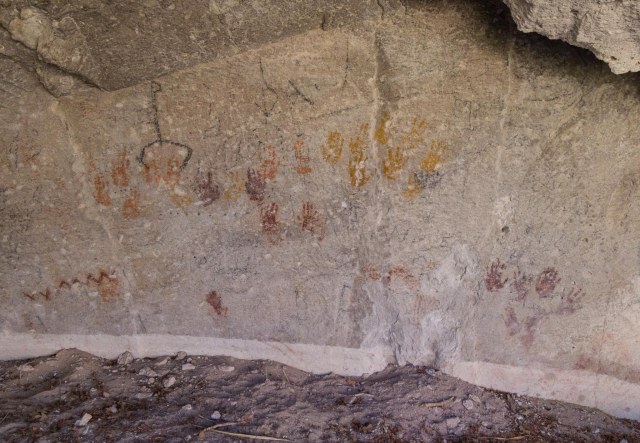
The 100 Hands Cave caught my interest. When were they placed here? Why did they make the pictograph? Was it some kind of ritual? How long did the pigment stay on their hands?

100 Hands Cave

It’s a good thing the park protects this art with a wrought iron gate. Given the evidence that modern day artists had a mind to destroy this artifact, I can’t imagine what it would look like if not for the protection.

Close up of 100 Hands Cave

The last stop on our adventure at the Fremont State Park was the Jedediah Strong Smith Memorial. Yes, the same hunter, trapper, and explorer of the American West who traveled through the Great Salt Lake, Colorado River, Mojave Desert, California, and Oregon. To think of all the changes made since the 1820s when Smith roamed the west, it boggles the mind. I wonder what it will all look like in another 200 years.

Jedediah Strong Smith Memorial

Big Rock Candy Mountain

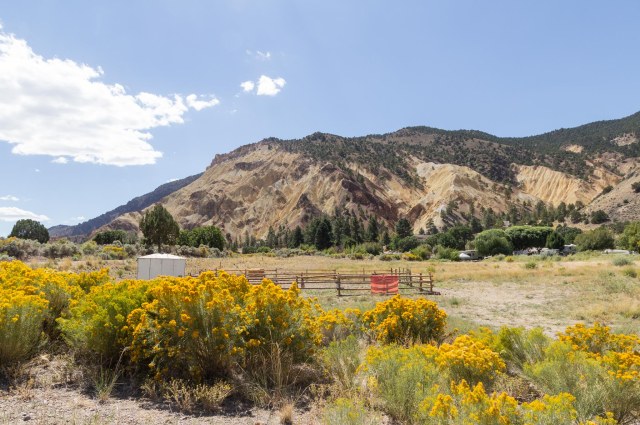
What attracted us to Big Rock were the mountains that looked like cakes dripping with yellow, white, and caramel icing. Volcanic activity is what gave the mountains their colorful feature. Different types of minerals produced different colors.
Big Rock Candy Mountain

Besides the mountain, hiking and ATV trails and access to the Sevier River are also available.
Big Rock Candy Mountain across the field. On the far right and middle of the photo is the RV park under the cluster of trees

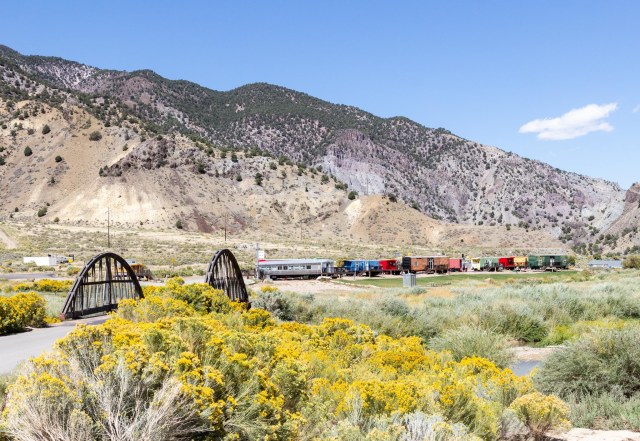
The Big Rock Candy Mountain Resort offers places to stay in an RV Park with about 30 sites including water, sewer, and electricity; eight suites in the lodge; and 12 converted train cars in the Caboose Village. It looks like Big Rock Grill and Smokehouse serves breakfast, lunch, and dinner. At least as I write this.

Caboose Village from across the river

Piute State Park

No, I did not misspell the word Piute. Although the park was named after the Native Americans who lived in the area at one time, the state legislature decided to change the spelling. I’m not sure why they would want to do that.

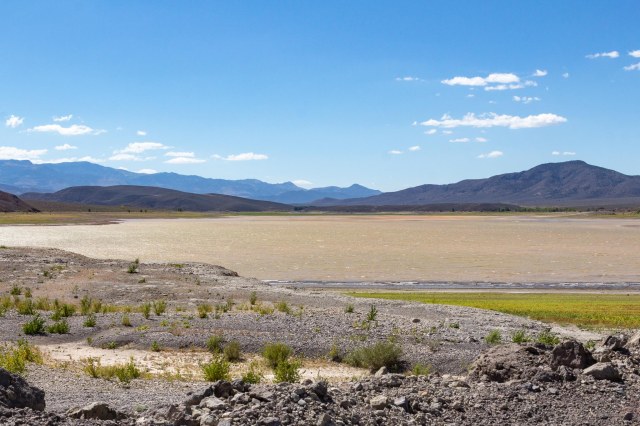
The park was abandoned when we visited, most likely due to the low level of water in September. The reservoir is used for irrigation purposes, so I guess it was all used up. I’m not sure how fish could remain alive in the reservoir at this low level, though. The water was quite murky, as was the runoff.

Low tide at Piute Reservoir. This is the boat ramp.

The park sits on the Sevier Plateau and contains a portion of the Piute Reservoir where anglers can try their luck for a trophy-sized rainbow, cutthroat, or brown trout. A boat ramp and day-use shade shelters are also available.

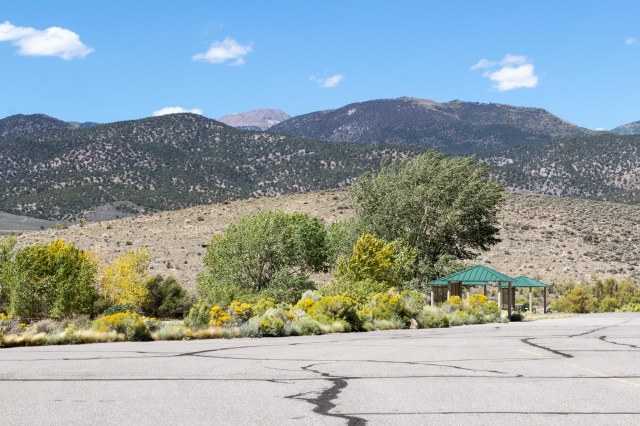
Day use shade cabanas

The park is quite primitive, including the campground. Only pit toilets are available and there is no water, so be sure to bring what you need. There are also three ATV trail systems accessible from the park.

Looking south across the Piute Reservoir

Next up we continue our trek west toward California.

Safe Travels