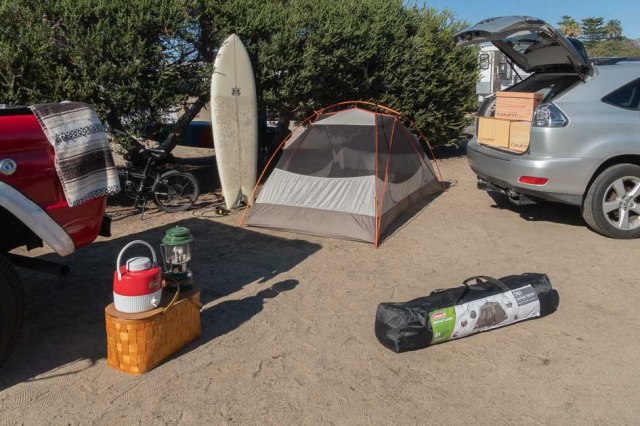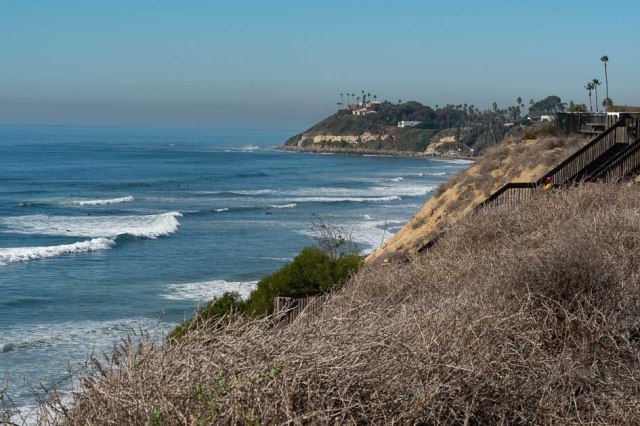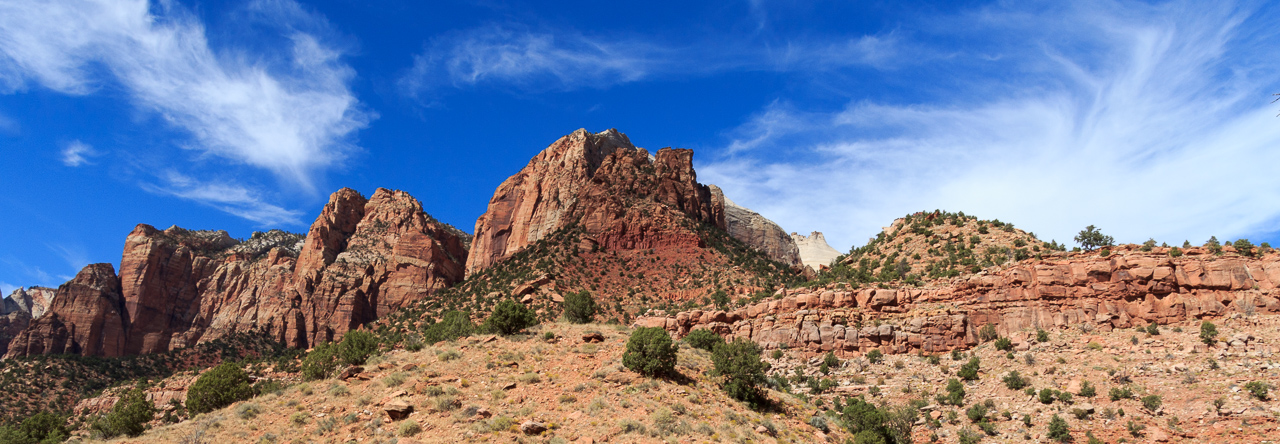
Fall 2021 Tour Episode 6: Lake Havasu City, Arizona

Lake Havasu City, Arizona, was our destination on November 5, 2021. We hadn’t seen my sister, Merri, since November 2019, four months before the world shut down to ward off a nasty virus. On the way, we stopped for a break at a spot large enough for our rig somewhere in the desert north of Desert Center on Rice Road, State Route 177. We lingered a while to take in the view of the red hills across the road.

Red hills somewhere on State Route 177

Our usual RV Park of choice is Prospectors RV Resort, when we visit Lake Havasu. This time we tried Campbell Cove. At our site across from the office, trees shaded the driver’s side of our fifth wheel. And no one pulled in beside us. Although the sites were smaller than the ones at Prospectors, being closer to town was more convenient.

Breakfast at the Red Onion is a must, so we met Merri there the next day. After our meal, I noticed the London Bridge Mural on the building across the parking lot. “Hey,” I said. “Let’s take a selfie?” The series of photos below will give you an idea of how many boomers it takes to create a selfie.

“No, not like that.”
“Hold the phone like this.”
“Okay, let me try.”
“Hey, I’ve got it.”

We featured our visit to The Bunker Bar in our November 11, 2021, blog post, so here, I’ll just compare what the place looked like while under construction in November 2019 and what it looked like two years later. If interested in reading more about the bar and watching a 360 degree video, go here.

The Bunker Bar Before
The Bunker Bar After

What could be better than sitting with family on The Blue Chair—now just called The Chair—patio overlooking the London Bridge, eating lunch, and listening to live music? The afternoon could not have been more perfect with a great view, great food, great music, and great family fun.

Check out The Chair for good eats and view

I wish I had photographic evidence of Jon, Merri, and me paddle boarding for our first time. None of us wanted to risk dropping our phones in the water, and I sure didn’t want to drop my Sony A6500 camera. Nautical Watersports hooked us up with boards, paddles, and life vests and set us loose in the little cove a few steps from the store. The no-wake location was the perfect place for our maiden attempt at balancing on a board and paddling about.

Merri, the youngest of us, popped up on her board first. I started out on my knees and graduated to a squatting position before my shaky legs straightened enough to stand. Then presto, magic. My legs stopped shaking. It took Jon a while to stand, and he said his legs never stopped shaking. Next time, we’ll do better. Can’t wait for warm weather to return so I can try paddle boarding again.

On our final day, we fit in a short hike at Mesquite Bay to enjoy the views of the Havasu National Wildlife Refuge, to get a bit of exercise, and take in the views. Mesquite Bay 1 and 2 both have parking, fishing piers, and informational panels, and shelters. Non-motorized watercraft only are allowed in Mesquite Bay.

Mesquite Bay Havasu National Wildlife Refuge

President Franklin D. Roosevelt established Havasu Lake National Wildlife Refuge (current name Havasu National Wildlife Refuge) in 1941, to establish a migratory bird habitat. The refuge encompasses 37,515 acres along the Colorado River and protects 40 river miles and 300 miles of shoreline from Needles, California, to Lake Havasu City, Arizona.

Fishing pier with sun shade

Hundreds of birds find the refuge a place to stop, rest, and refuel during their migratory journey each year. And like the human “snowbirds” that roll into town in their RVs, many of the fowl spend the winter and some even breed in the area.
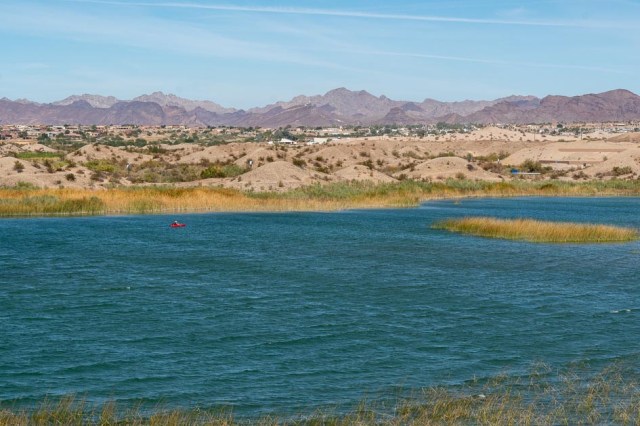
Mohave Mountains in the background

Sadly, our visit to Lake Havasu came to a close, and it was time to move on. But I’m positive this won’t be our last trip to Lake Havasu City.

Next up: Barstow, California, where we check out Calico Ghost Town Regional Park, Peggy Sue’s Restaurant, Barstow Railroad Museum, the historic Harvey House, and Route 66 Mother Road Museum.

Safe Travels

Fall 2021 Tour Episode 5: Riverside, California

Kudzu Swamp Monster in California?

We settled in at Rancho Jurupa RV Park on October 31, 2021, snagging the same site we used during our visit last year. After an early dinner, we walked to the camp store. Since we hadn’t eaten lunch, we splurged for desert with Haagen-Dazs coffee ice cream bars covered with dark chocolate and almonds. Yum. Yum. One of my favorites.

This is not one of the two fishing lakes at Rancho Jurupa Regional Park

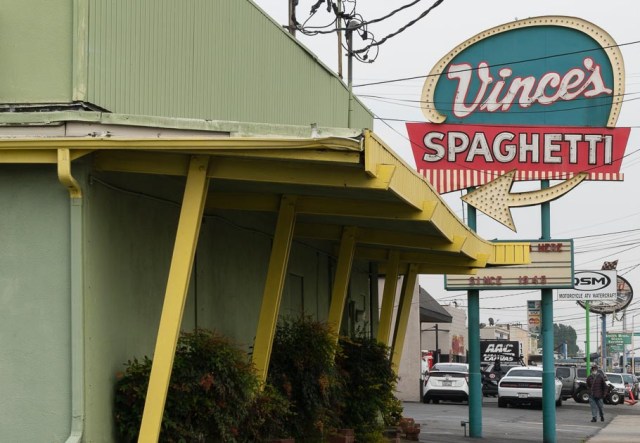
The next day, we met Jon’s brother, Lee, at Vince’s Spaghetti for another early dinner. Every trip to the area, we always go to Vince’s for dinner. It was our go-to place for a Friday night out with the kids when we lived in Rialto. As I type this, my mouth waters for the iceberg lettuce salad with Italian dressing, the minestrone soup, garlic and cheese bread, and the mound of pasta smothered in meat sauce. Oh, and don’t forget the box of Junior Mints on the way out the door.

Vince’s Spaghetti on Holt in Ontario amid auto sales and service enterprises

Opened in 1945, the original location on Holt in Ontario is still going strong and still family owned. They also have locations in Rancho Cucamonga and Temecula.

The next day we headed out on a reminiscent tour, starting with breakfast at Cracker Barrel, where the Rialto Municipal Airport used to be. It was strange seeing how much the area had changed in the past 20 years, from open fields and old groves to housing developments and commercial buildings.

We drove by homes where I lived as a child and the two homes Jon and I owned before moving to Northern California. The Rialto Ave house I lived in until I was 7 looked the best. The garage conversion and driveway looked natural. Fresh paint and a well-designed landscaping completed the look.

Coming in second was our first home on Elm Court, which looked well cared for. Where I lived on Cascade from age 7 until I left at 18 needed paint and landscaping. The Orange house, the last one we owned in town, was the worst. We stopped to say hello to one of our neighbors, and she said the people who bought the house from us have done nothing since they moved in. Our house and backyard had been so inviting. Now peeling paint, wood rot, an unkempt lawn, and the twenty-some-odd rose bushes someone had ripped out showed the lack of care. So sad.

The town itself, we thought, was in better condition than when we had moved away. The occupied business buildings and street improvements downtown made a big difference from what we remembered.

This building housed Bert’s Food Market downstairs, until it closed, and my daughter’s dance studio upstairs in the 1980s and early 1990s.

Then we drove out to San Bernardino. The Central City Mall opened in October 1972 and did away with most of the historic downtown. Other amenities, including a monorail, never materialized, and it wasn’t long after the mall’s opening that local gangs claimed it as their hangout. Conditions continued to plague the mall and the surrounding area even after ownership changes and a 1991 renovation. Anchor stores closed in the early 2000s and the mall finally closed in 2017.

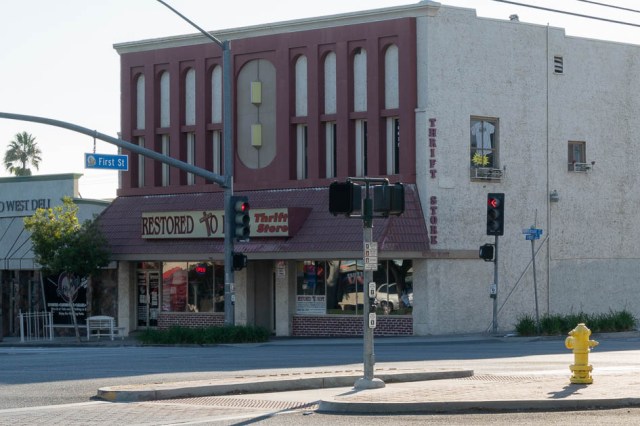
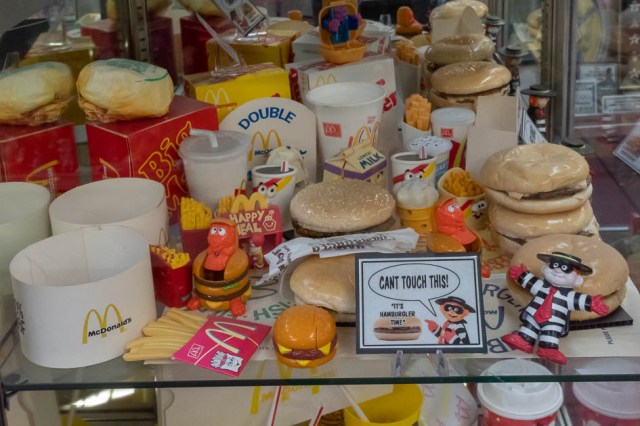
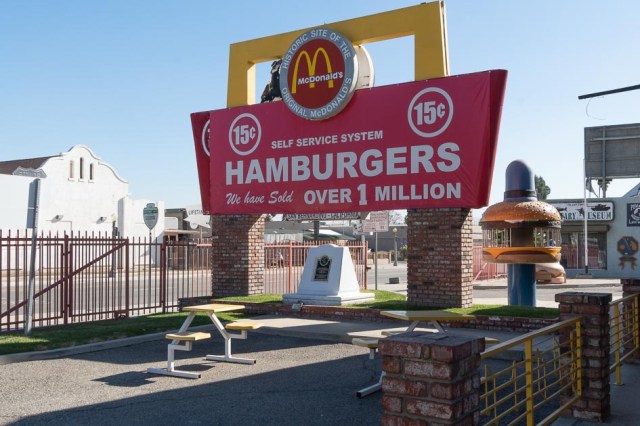
The McDonald’s Museum turned out to be the bright spot to an otherwise depressing trip to San Bernardino. It’s not an official corporate McDonald’s Museum. But the site is where brothers Richard and Maurice McDonald started business in 1940 as McDonald’s Barbecue Restaurant at 14th and E Streets. My mother, who had lived a few blocks away in her teens, told me she and her friends had hung out there. Inside is a treasure trove of all things McDonalds through the ages, many of which have been donated.

Unofficial McDonald’s Museum
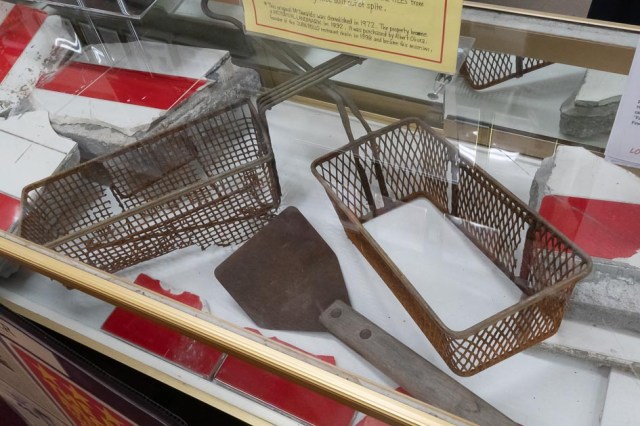
Kitchen items and red and white tile chunks

The McDonalds—with an eye on speedy service, a simple menu, and low prices—changed course in 1948 by converting their restaurant into a fast-food enterprise selling hamburgers, fries, milkshakes, and sodas.

Props autographed by the cast of the movie The Founder starring Michael Keaton as Ray Kroc.
Minions promoted at McDonald’s in 2015

The original building had long since been demolished, and the property was in foreclosure when Albert Okura, owner and CEO of the Juan Pollo restaurants, purchased it in 1998. He later opened the unofficial McDonald’s Museum where he preserves artifacts and memorabilia related to the landmark and honors the McDonalds for their contribution to the food industry.

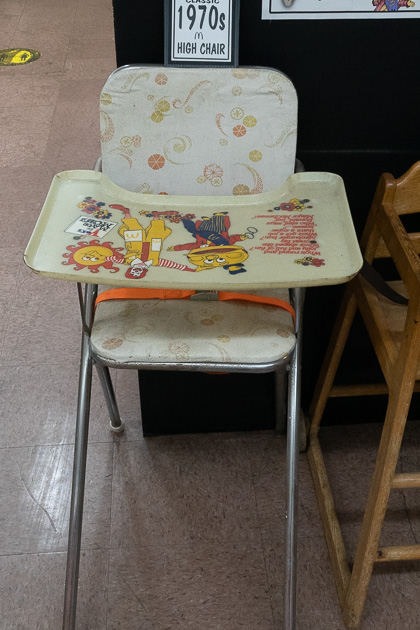
1970s era high chair
Cookie Jar?

The brother’s innovative approach caught Ray Kroc’s attention. He offered to work as a franchising agent for them and in 1955, he founded McDonald’s System, Inc. The company’s first franchise restaurant opened in Des Plaines, Illinois. Four years later, restaurant No. 100 had opened and in 1961, Kroc purchased the company from the McDonald brothers.

The Hamburglar display
Brothers Richard and Maurice McDonald featured near the entrance.
Recreated McDonald’s Sign

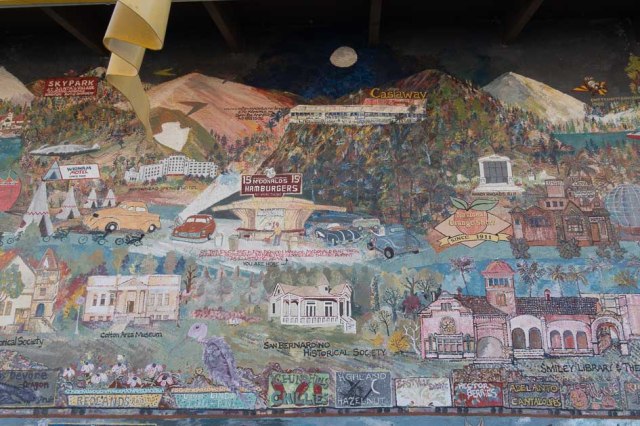
On the side of the building, a colorful mural depicts historical sites and businesses around the Inland Empire. Jon and I had fun picking out all the places we remembered from our childhoods and teen years.

Take a trip down memory lane while viewing this colorful mural.
Sky Park At Santa’s Village, Arrowhead Springs, and Original McDonald’s Hamburgers are featured in this panel.

After seeing much of what we remembered of San Bernardino destroyed, decayed, or remaining the same, we were glad to see a small part of it preserved. Our thanks go out to Albert Okura for having the foresight to create a museum and save a little piece of what once made San Bernardino great along Route 66. The museum is free but asks for a donation to enter.

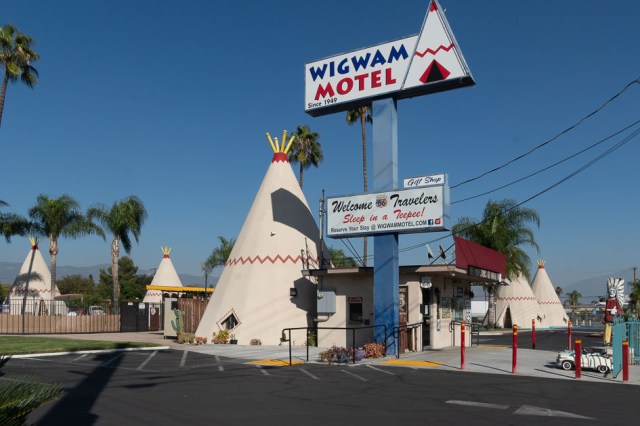
After visiting the museum, we searched for a place to eat. Not finding anything along the way, I had Jon stop so I could take photos of the Wigwam Motel. They looked the best I ever remembered and are a good example of the many places spruced up along Route 66 for tourists to experience.

Route 66 Wigwam Motel in San Bernardino, California, on the border next to Rialto never looked so good.
Wigwam Motel with lush landscaping

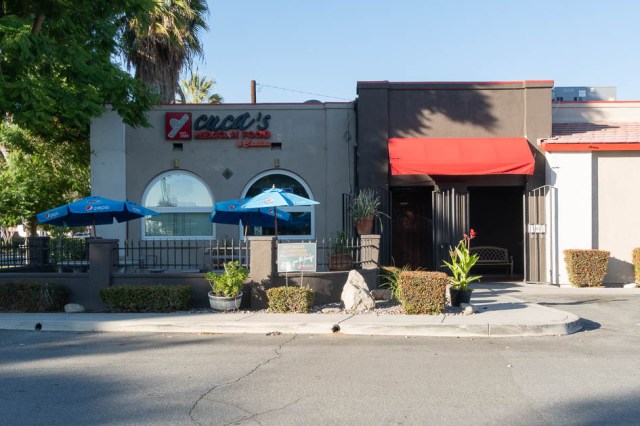
We ended our day at Cuca’s in Rialto for margaritas and Mexican food. The friendly staff made us feel welcome, and we enjoyed sitting in another piece of history: the old Rialto train station, where the sliding doors still hang in place and still work. Over margaritas, chips and salsa, and our meals, we discussed all we had seen that day and were pleased we had encountered a few bright spots along the way.

Cuca’s Mexican Food
Our server told us these are the original railroad station barn doors

Next up: Another trip to Lake Havasu City to see my sister, her daughter, and granddaughter.

Safe Travels
Fall 2021 Tour Episode 4: Temecula, California

Oh, no. The Halloween weekend foiled our plans. Rancho Jurupa Regional RV Park was booked solid until Sunday, October 31, so we settled in Temecula at Pechanga RV Resort for two nights.

Temecula has a lot to offer in the area, from gambling and entertainment at the Pechanga Casino, to wine tasting, to soaring above the vineyards in a hot-air balloon.

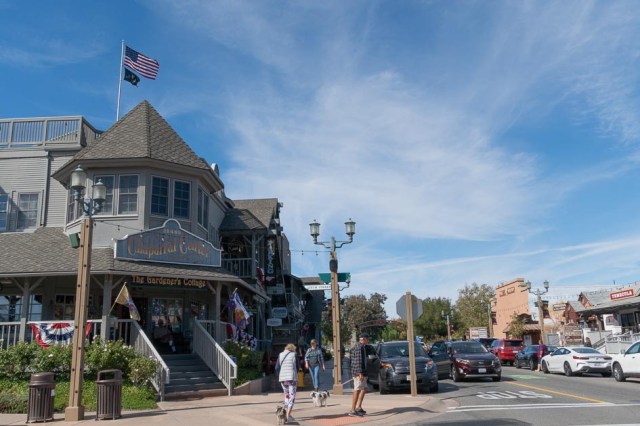
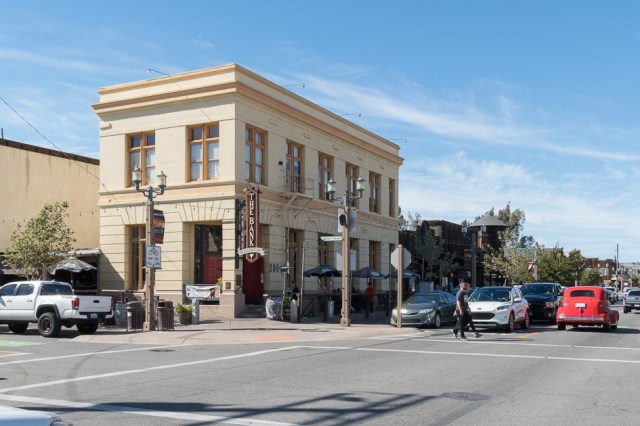
Old Town Temecula street scene

We did none of those things. The day of our arrival, October 29, found us at the local Trader Joes to replenish the refrigerator and pantry. Then I made a salad to go with our grilled salmon while Jon went out hunting for a jug of water.

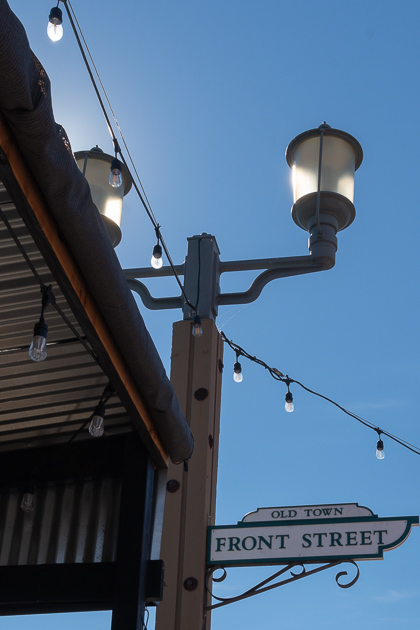
Front Street is the place to be

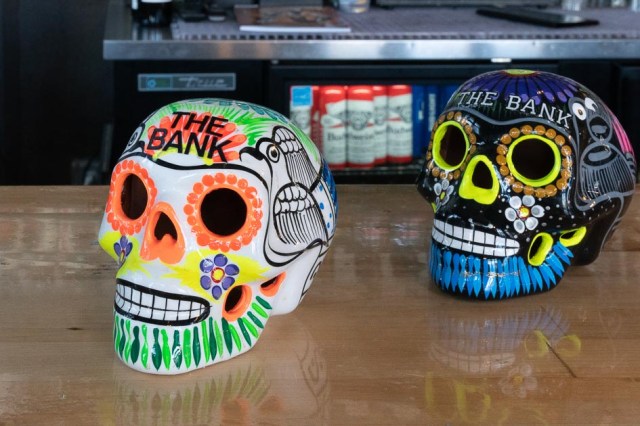
After breakfast the next morning, we roamed around Old Town Temecula, popped in a few gift and clothing stores, and scoped out a place for lunch. I had eaten dinner at The Bank years ago while working in the area. It was obvious the restaurant had changed hands since my last visit. The wait staff were friendly, the service a bit sketchy, and our meal was just okay, definitely not what I had remembered.

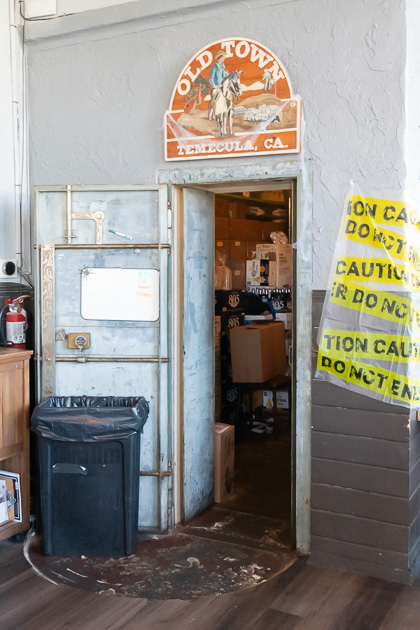
The Bank of Mexican Food
The Bank vault is now a storage room
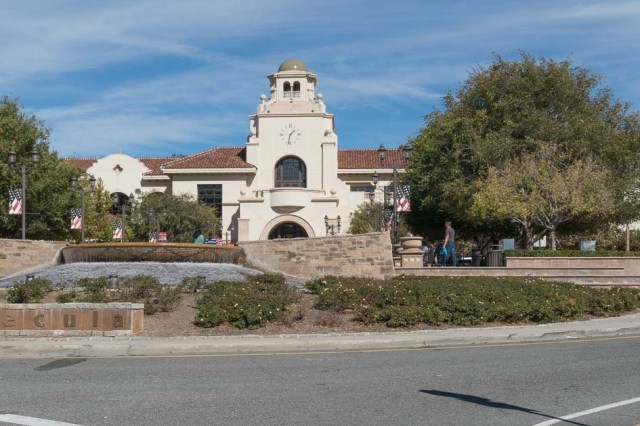
City of Temecula Civic Center and Town Square Plaza opened to the public in December 2010
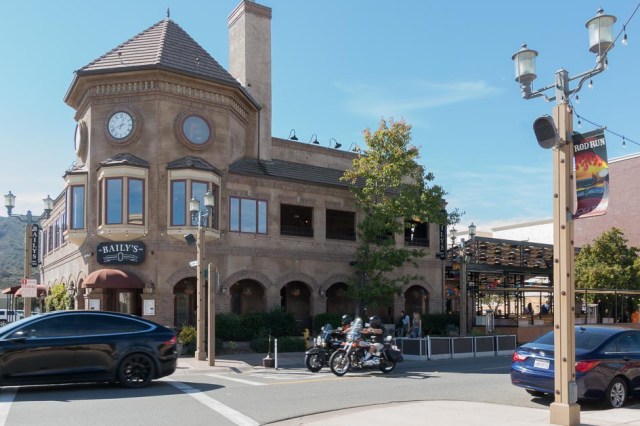
We could have eaten at Baily’s where they served something for everyone: burgers, fish & chips, pizza, banh mi, enchiladas, lasagna and more.
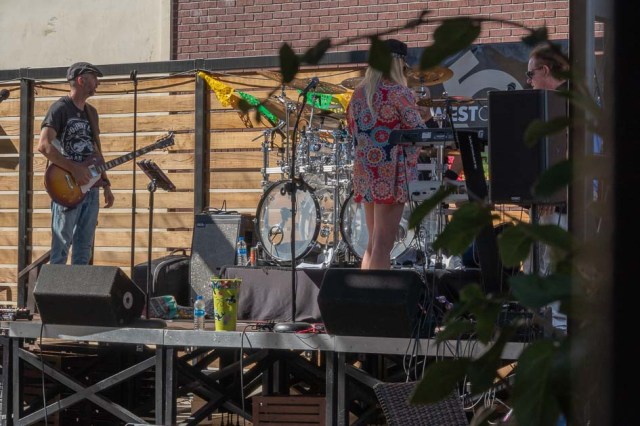
Band setting up for a night of music at Baily’s
Historic jail
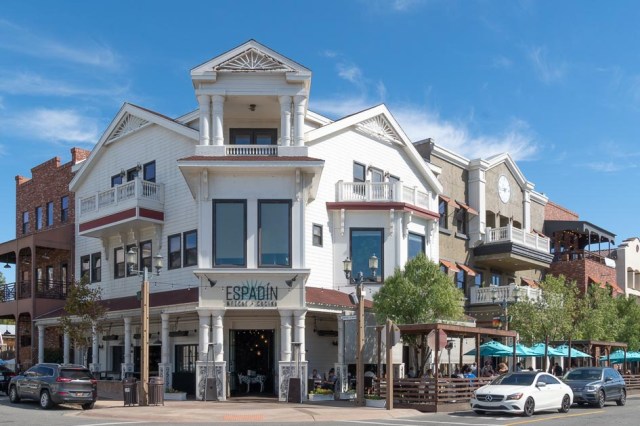
Or we could have eaten tacos, burritos, enchiladas, and more at Espadin.
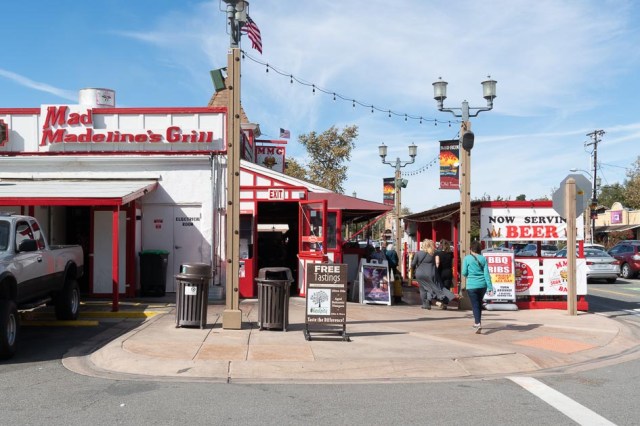
Or at Mad Madeline’s Grill, we could have had a best burger in town.
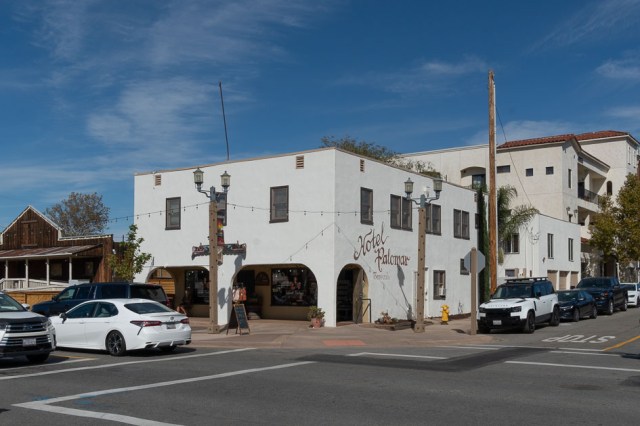
Stay in the 10-room historic Palomar Inn Hotel, built in the 1920’s.

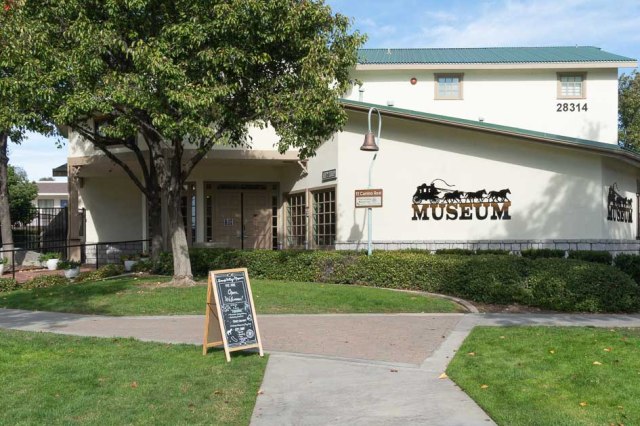
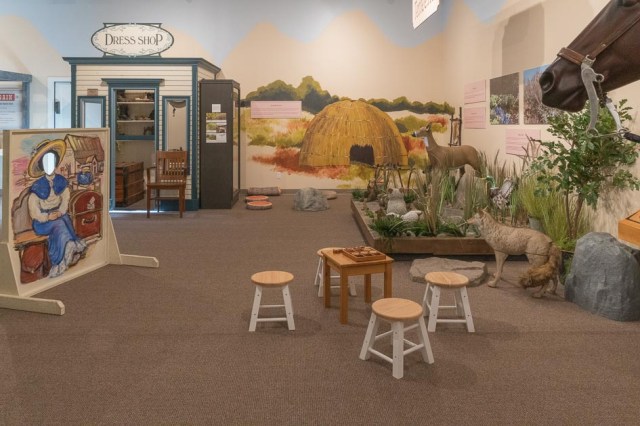
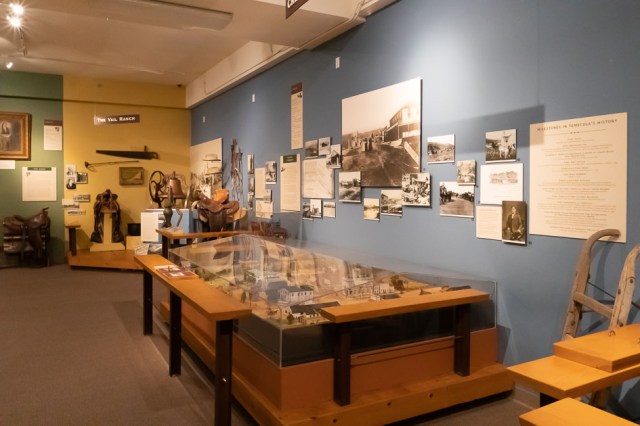
The highlight of our visit was the Temecula Valley Museum. As we wandered around the exhibits, we learned about Vail Ranch (an 80,000-acre cattle ranch), the people who settled in Temecula, about the native people who lived there before the colonists and settlers arrived, and about how the Ramona Pageant got its start.

Temecula Valley Museum
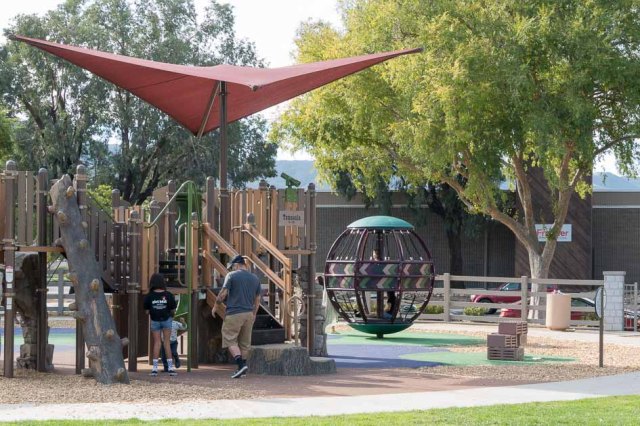
Playground at the park in front of Temecula Valley Museum

I remember hearing of the pageant each year growing up in Southern California, but never attended. I was pleased to learn it was still going strong. Perhaps someday I can sit in the stands and enjoy the play in person. So, what is the Ramona Pageant?

Play area for children

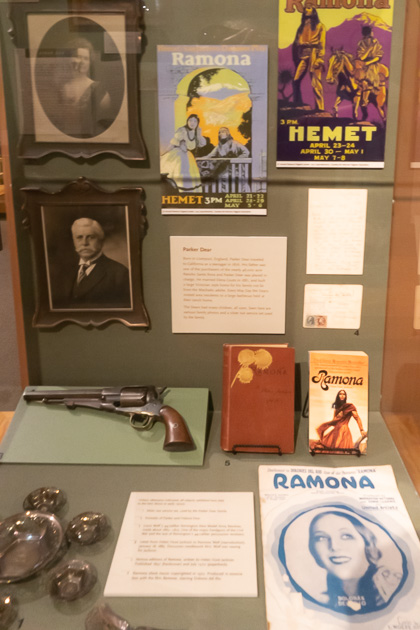
The story begins when Helen Hunt Jackson wrote A Century of Dishonor in 1881, documenting the government’s horrendous treatment of Native Americans. When the book failed to change Americans’ views of Indian rights, she turned to fiction, creating a romantic story set within historical events of the 1870s and 1880s. Ramona, published in 1884 by Jackson, was a success and earned Jackson acclaim. Her story subsequently became the basis for an outdoor pageant set in the hills at the Ramona Bowl.

Ramona by Helen Hunt Jackson

The first Hemet-San Jacinto Pageant Ramona was held in 1923 on April 13, 14, and 15. To secure a permanent site for the pageant, the chamber of commerce and Ramona Pageant Association bought 160 acres. The 99th consecutive season of Ramona is scheduled April 23 and 24 and April 30 and May 1, 2022. Nestled in the foothills above Hemet, California, the bowl’s humble beginnings required patrons to hike up a hill, provide their own seating and provisions, and make do with no restroom. A parking lot, restrooms, and other amenities greet audiences today.

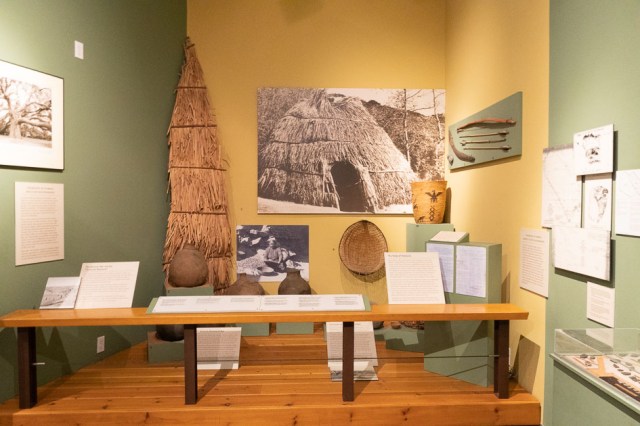
One of many Native American exhibits.

And what is the connection of the Ramona Pageant to the City of Temecula? The story details the fictional love story of Ramona, a young Scots-Native American woman who grew up on her father’s ranch, and Alessandro, a young Native American man from Temecula. Historical events relating to the mistreatment and eviction of the Native Americans who had lived in Temecula since 4,000 B.C. serves as the backdrop for the love story and plot.

Display on ranching in the valley

Another connection to the Ramona story is the Pechanga Band of Luiseño Indians. They are descendants of the earliest settlers in Temecula. As the U.S. government agent investigating the living conditions of Southern California Indians, Helen Hunt Jackson reported first-hand accounts of the Eviction. Her report helped secure land for the creation of Pechanga Indian Reservation in June 1882.

The Temecula Museum also honors Erle Stanley Gardner, the author and co-creator of the Perry Mason series. Gardner lived on the 3,000-acre Rancho del Paisano in the Temecula Valley from 1937 until his death in 1970. The ranch was renamed Great Oak Ranch and is now part of the Pechanga Reservation.

Erle Stanley Gardner exhibit

After all of our poking around for the day, we returned to the RV park to a Halloween Party of sorts. Wait, what? Halloween wasn’t until the next day. Still, many of the RVers had decorated their rigs with lights, webs, spiders, witches, and all manner of spooky paraphernalia. Music blared all around us. Kids rode their bikes and scooters up and down the streets. And laughter echoed through the park.

I took a walk to soak in the festivities and saw that people had set up tables lined with treats and bowls of candy. A girl offered me a cookie, but I declined. Then a pair of young men offered me a Jell-O shot. I was tempted for a second, and then I remembered the time I drank beer ladled from a punch bowl. I know. Who puts beer in a punch bowl? I didn’t appreciate the LSD trip then and wasn’t about to risk a repeat.

Passing through Temecula over my lifetime, I never realized how much history there was to discover in the area. After our visit to the museum and poking around, I was glad we had to wait for a spot at Rancho Jurupa Regional RV Park. If that had not been the case, I would still continue driving through town thinking the only thing Temecula offered was the casino, wineries, and hot air ballooning.

For more information on the Pechanga Band of Luiseño Indians, visit their website at https://www.pechanga-nsn.gov/

For more information on the Ramona Bowl, visit their website at https://www.ramonabowl.com/

Next Up: The Historic Site and Museum of the Original McDonald’s

Safe Travels
Fall 2021 Tour Episode 3 Photo Shoot in San Elijo State Beach

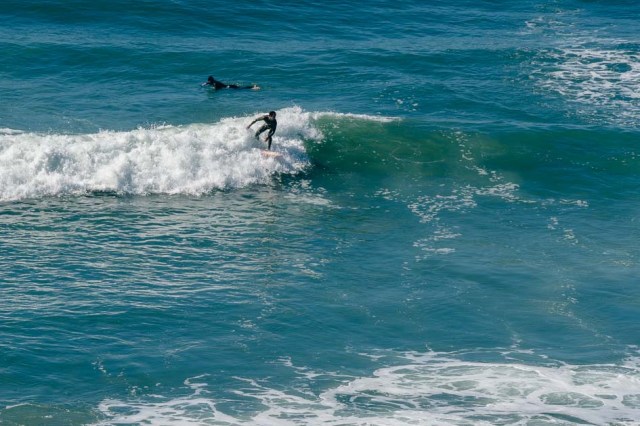
Wave catcher

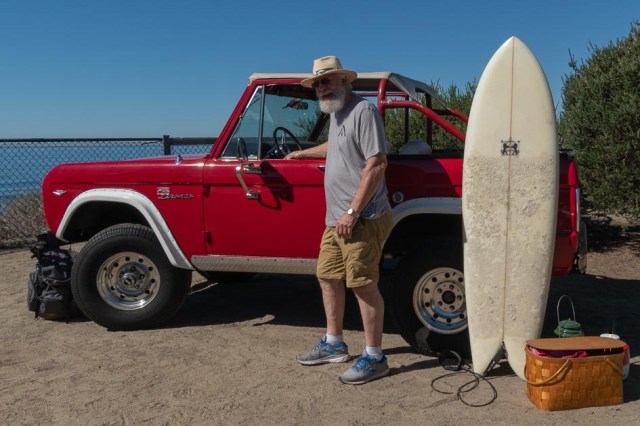
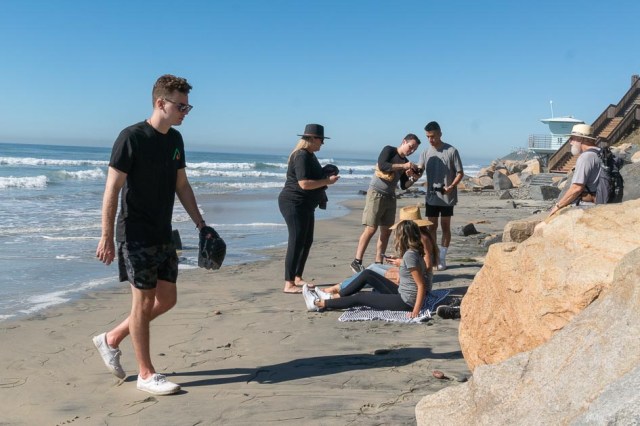
Our last full day in the San Diego area was a new adventure for us. Bailey invited us to a photo shoot of the CampIt, a product she was preparing to launch. We had never been on a photo shoot before and I looked forward to capturing behind-the-scene activity and snapping candid photos of everyone.
Jon poses with the props

We arrived at San Elijo State Beach campground, where her friends, Amy, Vanessa, and Valerie were setting up the “craft services” with snacks and drinks.

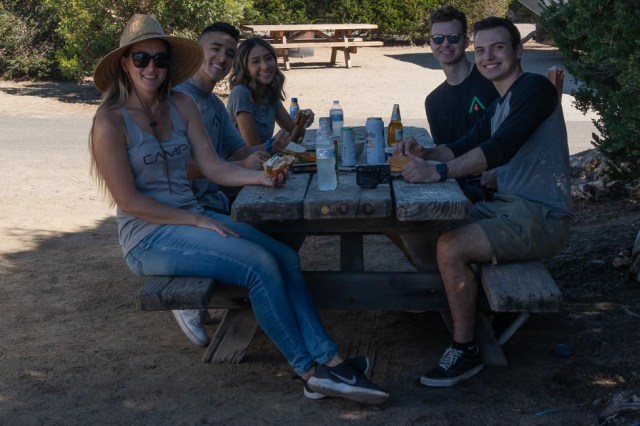
Come get your snacks

Bailey had lucked out in snagging the campsite a few weeks earlier. Campsites at the beach usually sell out within hours or minutes of them opening up online six months in advance.

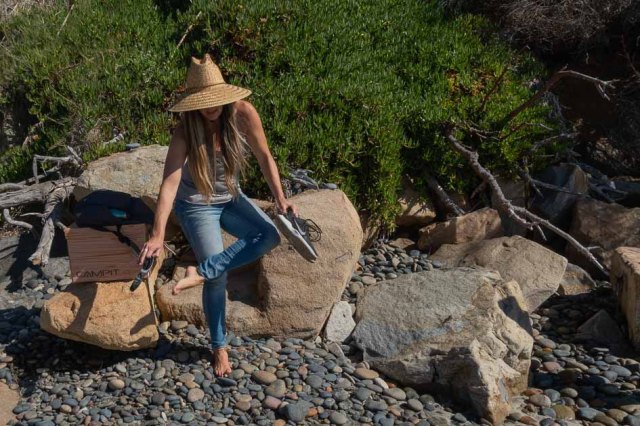
Wait up! I need to put my shoes on.

The large size of the campsites surprised me. They accommodate tents and RVs up to 35 feet, include picnic tables, and bushes separate the sites for a bit of privacy. Restrooms and showers are also available.

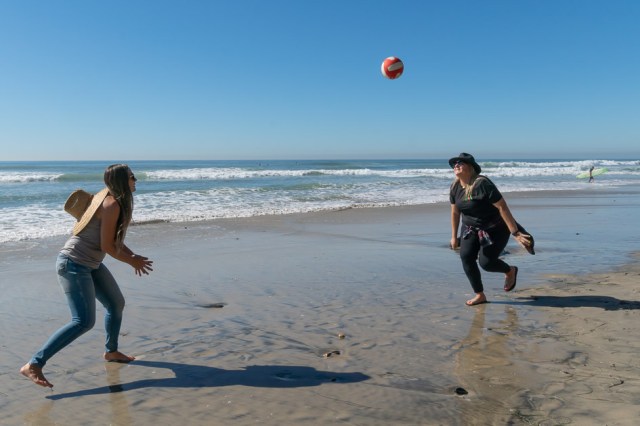
Let’s play ball

Besides the “craft services,” a group of interns shot videos, photographed still shots, and also filled in as models. They and Bailey photographed Jon and me too. One of Jon’s photos made the cut and ended up on one of the GoCampit.com website’s pages.

Switching players

I had expected fast-paced activity with someone directing people to their spots for filming or photography to catch the best light and background. Instead, the scene was calm and slow-paced. Even a walk down the stairs from the cliff to the beach was more of a stroll rather than a hurry-up-before-the-tide-comes-in rush.

A little volleyball action

Too late. The tide had covered up most of the beach. A few throws of the baseball and spikes of the volleyball, was about all they could do.

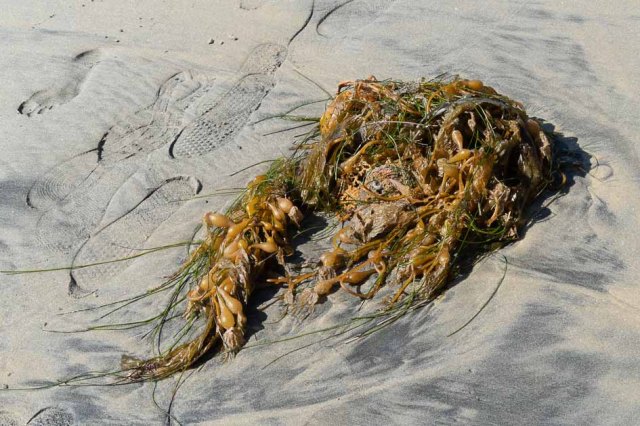
Just a pile of seaweed washed ashore

Back at the campsite, we all ate lunch and sat around talking. Then the videographer filmed Bailey and the interns/models, putting contents of the CampIt in the box one at a time.

Bailey with the interns

They filmed the interns assembling a tent. A truly hilarious entertainment.

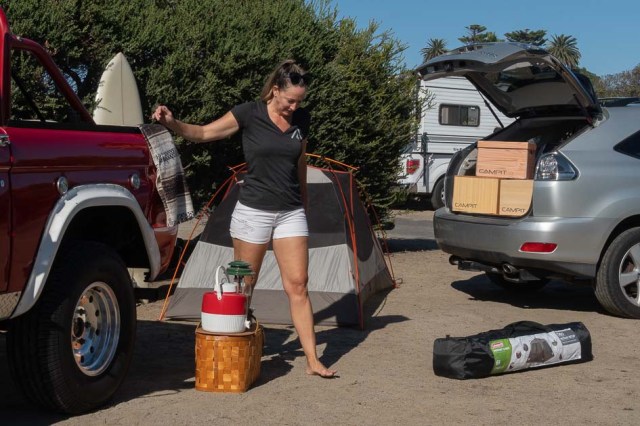
Okay! Time to put up the tent.
How many people does it take to put up a tent?
Bailey to the rescue

Then they filmed an interview with Bailey talking about the CampIt’s origin story.

Okay, ready to go.
The scene is set.

After a few takes, Jon and I took our leave in search of a dinner spot before heading back to the trailer. Brigantine in Del Mar was the perfect place to fill our bellies with fresh seafood.

The three different styles of CampIt
View from the campsite
Drink break
Filming of Bailey during interview
Kobe wanted his picture taken too.

It was sad to leave San Diego after a perfect week of exploring Balboa Park, the San Diego Zoo, and visiting a photo shoot. Our week in San Diego couldn’t have been more perfect, but it was time to move on. We had more places to go, and more people to see.

Next Up: Temecula, California

Safe Travels