2024 Pacific Northwest Adventure Episode 6: Leavenworth, Washington, and Wanatchee State Park

City of Leavenworth

On July 8, 2024, we arrived at Leavenworth/Pine Village KOA Holiday RV Park around 3:30 pm, and settled in during a heat wave. First order of business? Turn on the A/C. Pronto.
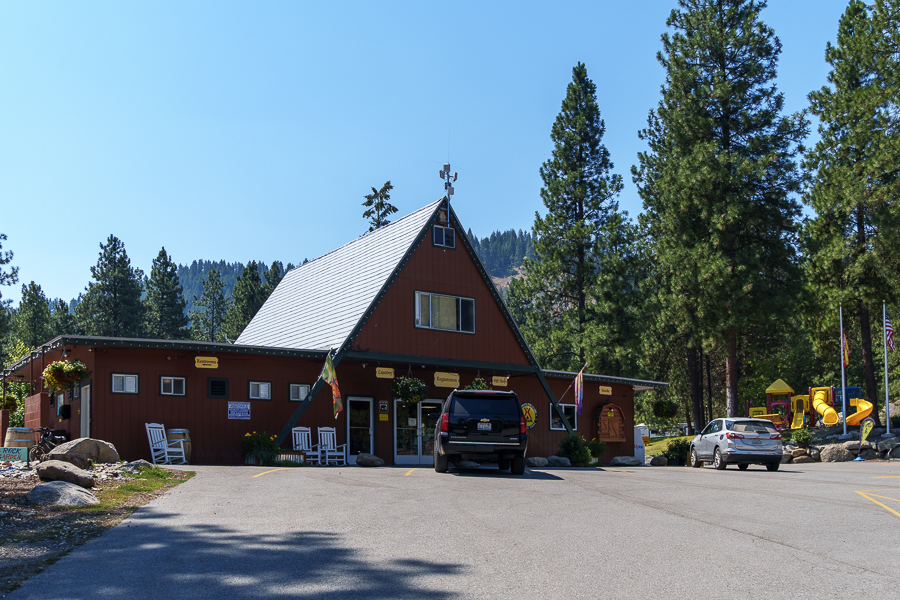
Leavenworth/Pine Village KOA Holiday RV Park

I guess July wasn’t the best time of year to have our Bavarian Getaway. The morning hours were the best time to get out and about. When temperatures rose above 100 degrees, we sought things to do inside.

Our campsite
The Wanatchee River wraps around the KOA

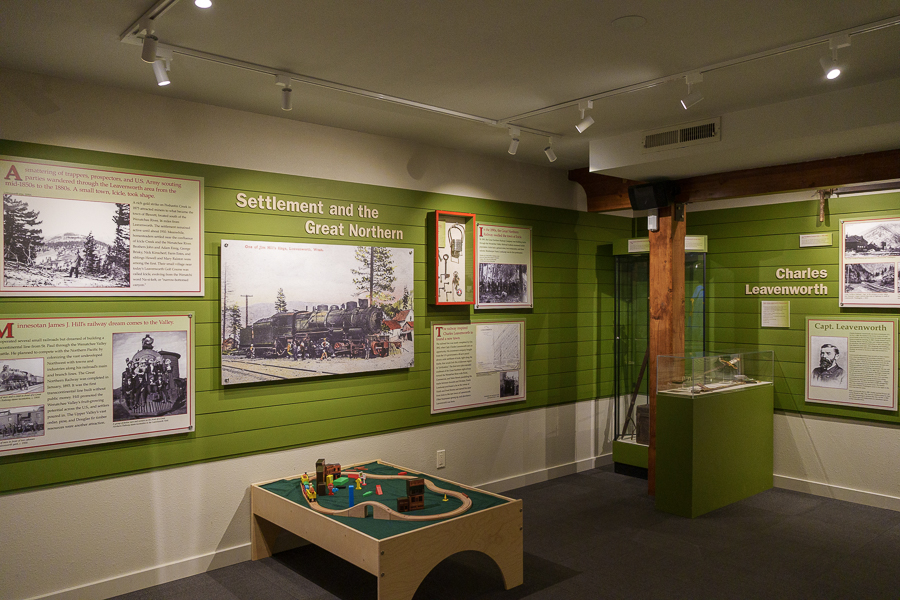
The Greater Leavenworth Museum was one of those air-conditioned spots we enjoyed for about an hour. While there, we learned how Leavenworth got its start as a Bavarian-themed travel and vacation spot.

Present and Past

Ted Price and Bob Rodgers sparked the idea of a Bavarian-themed town to the economically depressed Leavenworth in the early 1960s. They believed the town’s transformation would bring in tourists, as it did for them. They were the owners of the alpine themed Squirrel Tree Inn 20 miles outside of Leavenworth.

Bob and Ted’s Story

To demonstrate their belief, they sold their inn and invested in Leavenworth property. Their renovations inspired others to create Bavarian-themed storefronts on their buildings. And to use a cliché, the rest is history.

Even today, strict regulations exist to retain the Bavarian look of signs, buildings, and other infrastructure. Even McDonalds had to abide by the design requirements.

McDonald’s with a chalet exterior
Exhibits include how Leavenworth was settled and who Charles Leavenworth was.

Soon the town committed to three festivals: Maifest, Oktoberfest, and the Christmas Lighting Festival. Other outdoor and sports activities also drew people to the area.

Curious to know how Leavenworth got its name, I searched for an exhibit that told the story. Known as Captain Leavenworth, Charles Frederick Leavenworth was a prominent businessman who settled in Santa Rosa, California, from Rochester, N.Y. in 1871. He married Kate Mead two years later.

Capt. Leavenworth may have used a survey transit c. 1900 like this one when he surveyed the town.
Displays on indigenous peoples and other topics

While in California, he designed and built a steam-operated flour mill and a municipal water system for Modesto, California. In 1883, he moved to Tacoma, Washington, where he invested in a sawmill. He built a larger sawmill in Gray’s Harbor, so he could ship lumber to California. His shipping business is where his nickname, Captain, came from.

Deserted town?. No, the people are hiding out in the shade or inside buildings.
The building on the left contains the Historical Museum and the Nutcracker Museum.
Next door is a building under renovation.

On October 13, 1892, Leavenworth filed a warranty deed for Leavenworth. He surveyed and platted the new town, and with a group of financiers sold town lots. The Panic of 1893 caused a depression that lasted several years and put an end to their enterprise. He returned to Western Washington until his death on February 2, 1909. He never returned to the town of Leavenworth to live. Apparently, there wasn’t much to see after the local mill closed and the Great Northern Rail Road pulled out. I wonder what he would think if he could see it today.
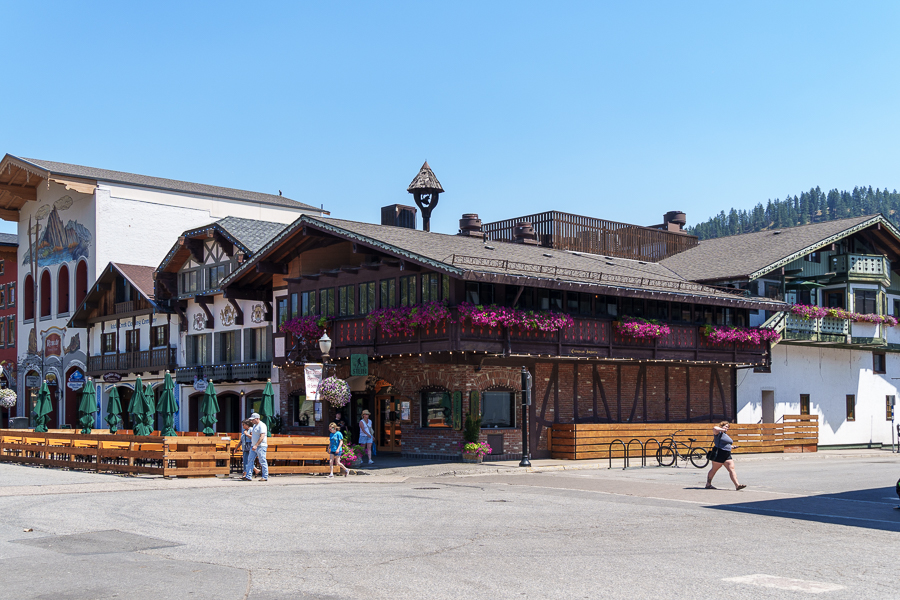
Stein in Leavenworth serves 55 beers on tap
Or pick up something sweet at Big Foot Donuts at Steins
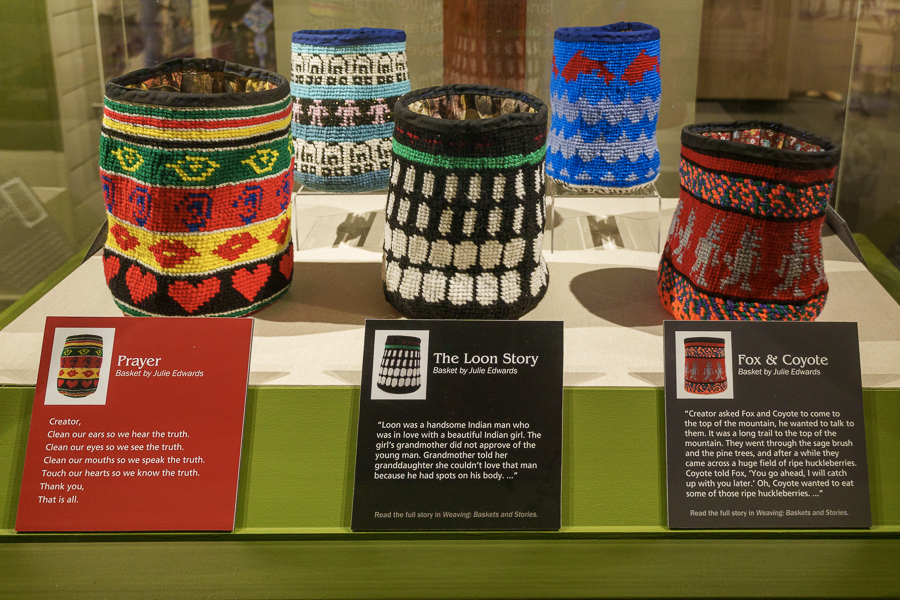
The museum’s display of baskets created by Julie Edwards began in 2021. She twists the weaving process by using yarn instead of traditional materials, using the designs to tell a story. In April 2025, she held a book signing for her book titled, Weaving: Baskets and Stories.

One might think the pole on main street is a totem pole. Actually, it is a 96-foot tall Maibaum, or Maypole. The blue and white stripes are traditional Bavarian colors. Attached to the pole are placards that depict the town’s history.

Maibaum (Maypole)

The placards highlight key industries in the community’s history and today. These industries include logging, railroading, skiing, and a few more. At the base is a traditional Bavarian blessing, which in English translates to, “Maypole rise to the blue-white sky so our homeland may forever prosper.”

Mural on our way back to our RV site

I have to agree with Bob and Ted. It may have taken a few years for their vision to take hold, but from the looks of what we saw, the community persevered and created a thriving community. We had a pleasurable visit despite the heat.

Lake Wanatchee State Park

One day during our visit, we drove about 30 miles to Lake Wanatchee State Park and Campground. The campground includes 197 campsites for tents, camper vans, truck campers, and small trailers under 20 feet. Too small for our 30-foot fifth wheel.
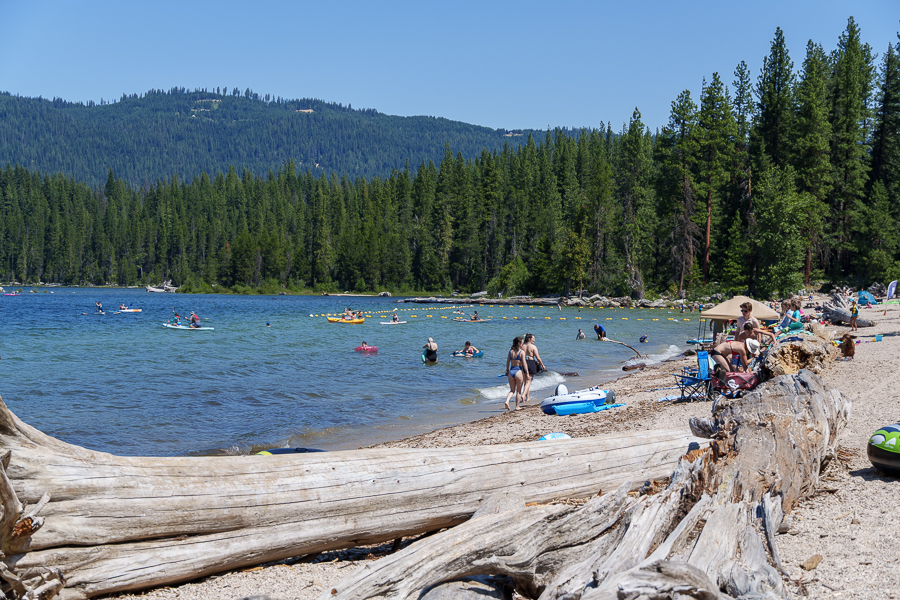
Beating the heat at Lake Wanatchee

Lake Wanatchee, a glacier- and snowmelt-fed lake, feeds into the Wanatchee River. At an elevation of 1,873 feet (571 meters), the length of the lake is 5 miles (8.0 kilometers) with a surface area of 2,480 acres (1,004 ha) and a maximum depth of 244 feet (74 meters).

Drift wood on the beach
Kayak, anyone?
Picnic shelter

While poking around the park’s lake area, we kept hearing planes flying over. And then I noticed a plane glide along the lake’s surface, filling its tanks and flying off in less than a minute. About every 15 minutes, they came back for more water. I had to take a video. It was my first attempt with my new camera, so ignore the jerky first few seconds.

Super Scoopers Work at Lake Wanatchee

They must have been fighting the Shoofly fire, which was 20 miles west of the state park. Their skill in piloting the planes to skim the surface of the lake amazed me.

That wraps up our Bavarian getaway. Perhaps we’ll make our way back some day during fall so we can experience Oktoberfest.

Next Up: The Glass Museum in Tacoma, Washington.

Safe Travels

2024 Pacific Northwest Adventure Episode 5: Gardens and Riviera Sunset Cruise from Gig Harbor

Before we get to the gardens and sunset cruise, I have to pay tribute to this little bird. Each morning, I’d see the little guy or gal perched on a sign outside the window. I was honored she or he posed for me instead of flying away.

American robin practicing tree pose

Wilkinson Farm Park and Community Garden

The City of Gig Harbor acquired the Wilkinson Farm property in 2001 and officially named it Helen Independence Wilkinson Farm City Park. The park links Gig Harbor to its agricultural past and to the perseverance of one pioneer family. Washington State added the 1914 Wilkinson Barn to its list of historic barns in 2008. Along with the dairy barn, the property includes three original outbuildings, an orchard, meadows, and large wetlands.

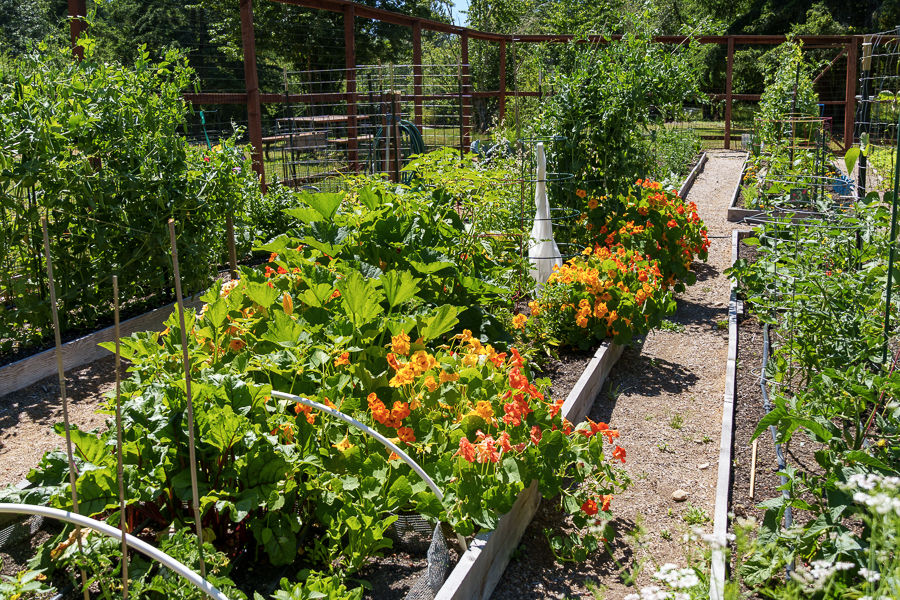
Community Garden

While we didn’t get to see the barn and homestead, the community garden allowed us to walk around and look at what folks were growing. From a lady who was tending her plot, we learned there was a waiting list to rent an individual plot for a small fee. An automatic watering system provides water to the 45 raised beds, relieving growers from having to haul water in.

Squash blossoms add color to the garden

The garden also supports those in need by dedicating space for volunteers to grow and harvest organic vegetables. Through their efforts, each year they deliver nearly 1,000 pounds of produce to various food banks in the area.

Rosedale Gardens

Rosedale Gardens in Gig Harbor is a full service gardening center and gift shop. We weren’t in the market to purchase plants to take home, but we did enjoy walking the paths that wound through beautiful foliage.

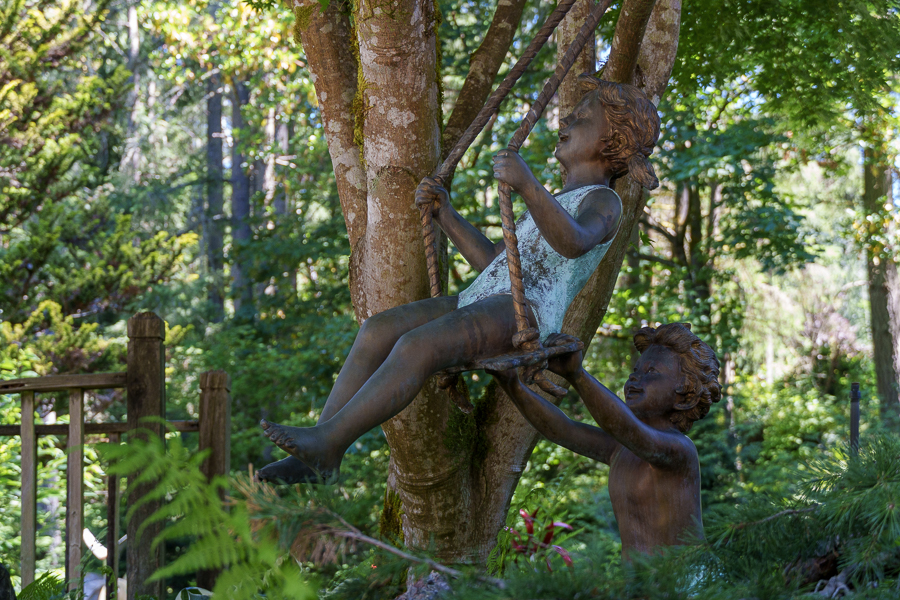
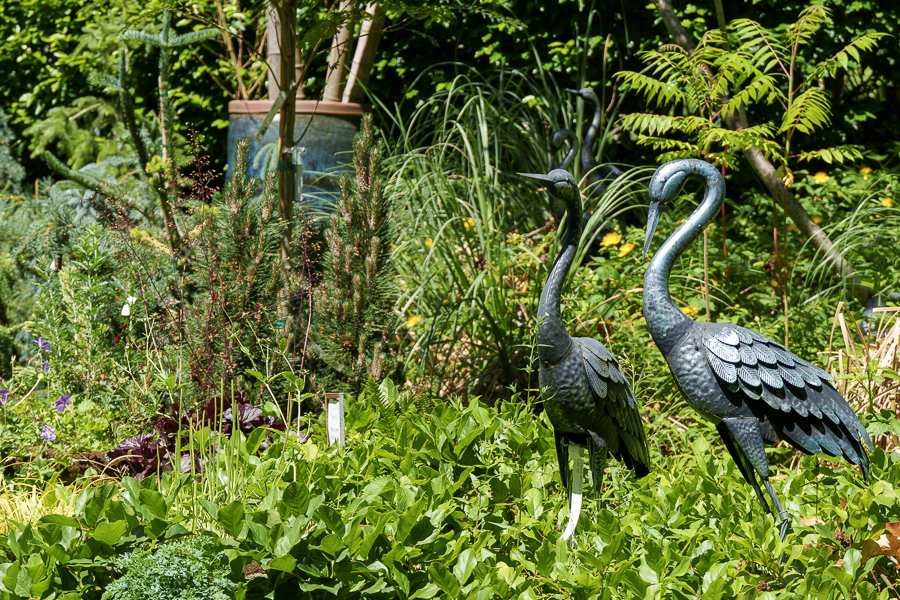
For me, the highlight had to be the bronze statuary. I saw a few pieces I would have brought home if I lived closer. Alas, the limited space in our RV didn’t allow for hauling something so heavy and cumbersome. Here are but a few pieces that spoke to me.

We soaked up the atmosphere, surrounded by a variety of plants and trees. It’s a place I would visit every season if I lived nearby.

Tides Tavern

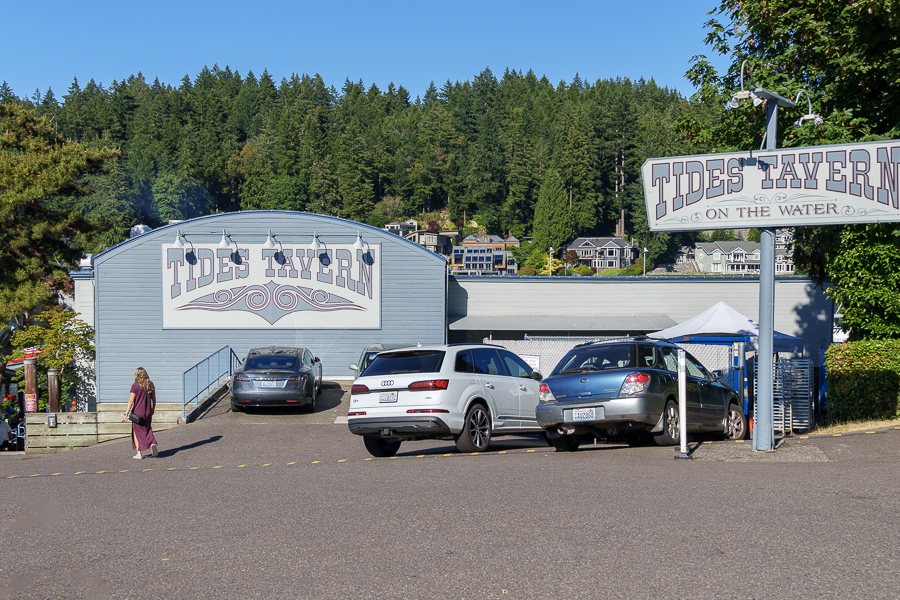
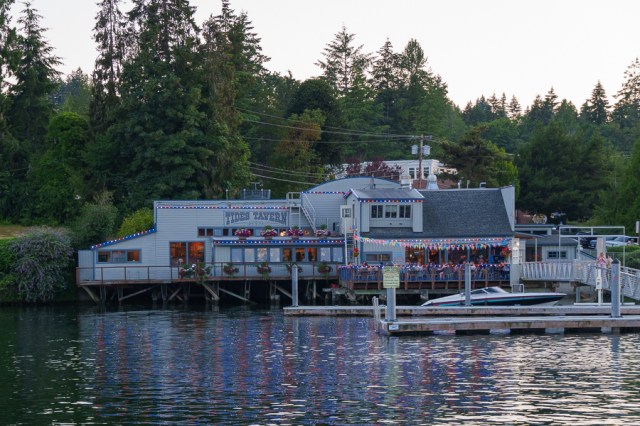
We stopped in at Tides Tavern for an early dinner before catching our Riviera Cruise at 6:00 pm. The building housing Tides Tavern started out as the West Side Mercantile next the “People’s Dock,” the only public ferry landing at the time. At the end of prohibition, the owners added a tavern.

Great food at Tides Tavern

Several ownerships of the business occurred between 1930 and 1973 when Peter Stanley bought the property. Stanley commenced a two-month renovation before reopening, and some months later enlarged the kitchen. The Tides offer a selection of tavern food and drinks, a view of the harbor, and live music on the weekends.

Inside Tides Tavern
Building at street level
Same building at water level

Riviera Sunset Cruise

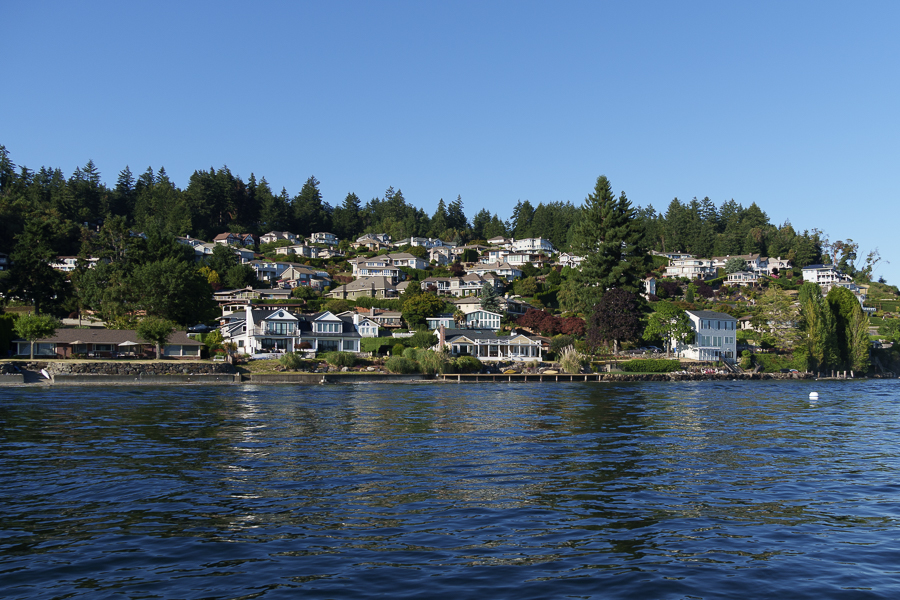
Our narrated 3-hour sunset cruise began at the Maritime Pier next to Tides Tavern. We enjoyed warm weather as we motored out of Gig Harbor, toward the Tacoma Narrows Bridge, Point Fosdick, Cromwell, Wollochet Bay, Fox Island, and Henderson Bay, staying mostly right of center down the waterway. Then we cruised back to the harbor, hugging the opposite side.

Pier where we met our boat

The captain and narrator had lived in Gig Harbor most of his life, so he had plenty of stories to tell about the businesses, boats, and homes along the shore. I wish I could have remembered all of them.

The Red House
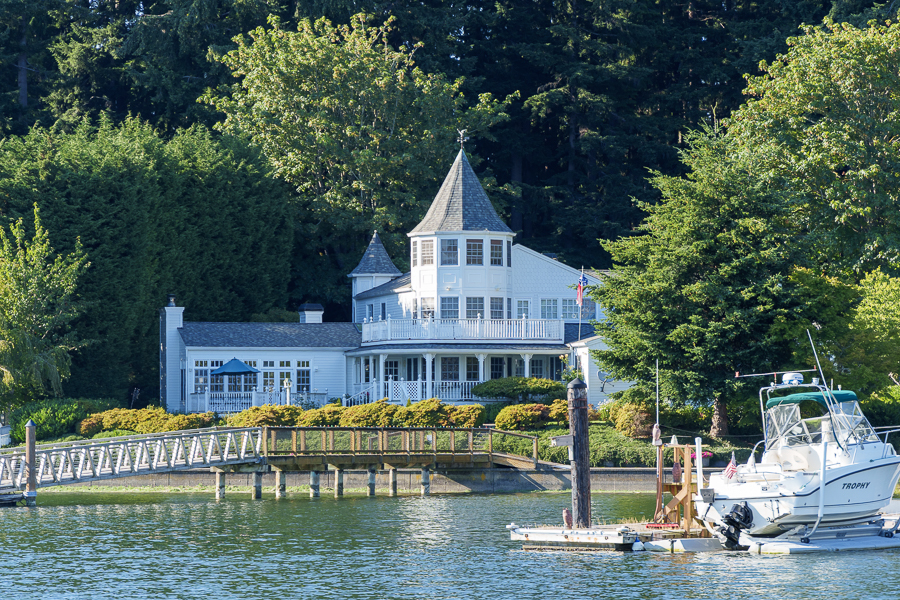
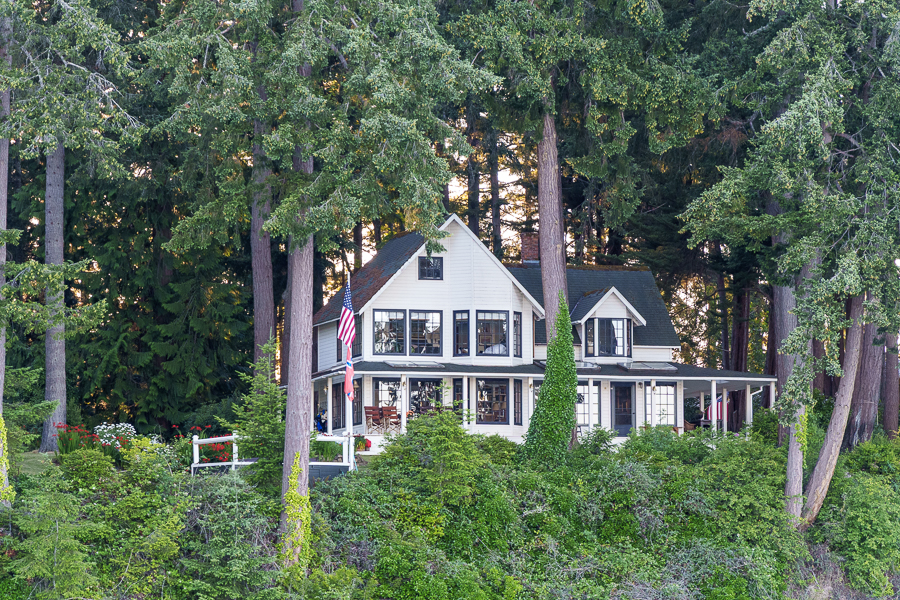
The White House

As we passed by the homes, I pictured myself on the porches, wrapped in a sweater with a cup of tea and watching the boats float in and out of the harbor. Alas, I had to be content with viewing them from afar.

I bet the insurance price tag for these homes is pricey.
A sleek vroom, vroom motorboat
And then, there’s the SeaNash at 164 feet
Fancy a harbor tour in a gondola?
1926 restored Veteran purse seiner built by Skansie Shipbuilding Company
Lovely craftsman style home with a perfect porch for me
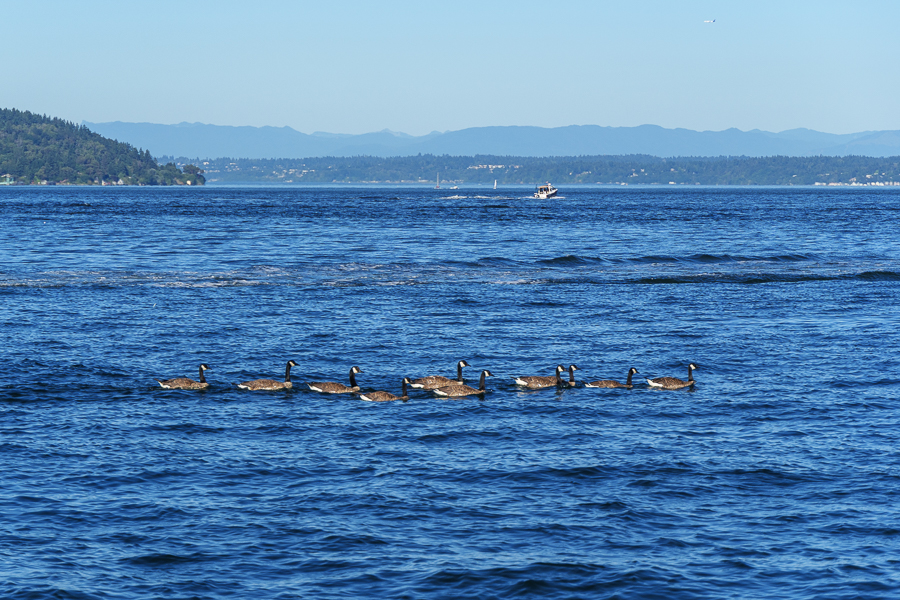
A gaggle of geese
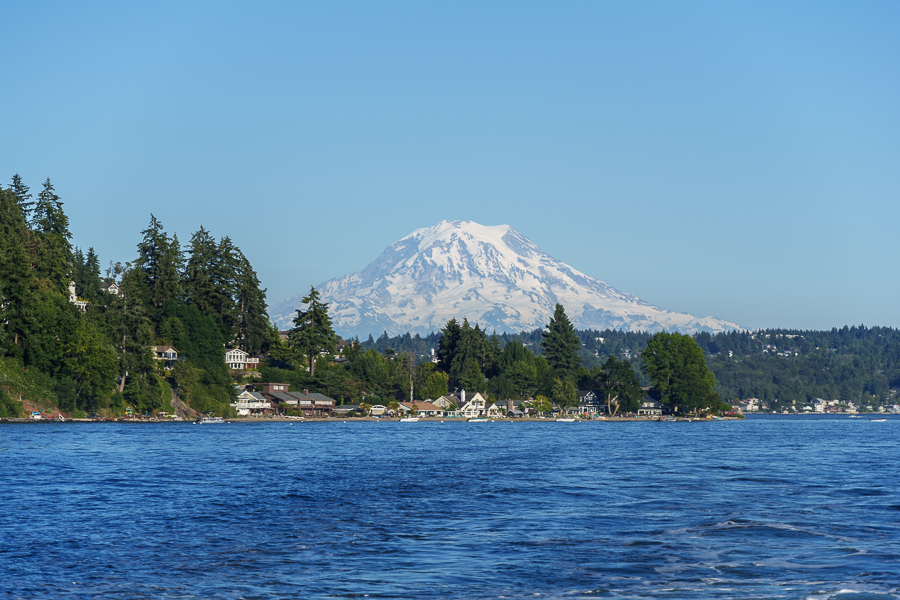
A frosted Mount Rainier
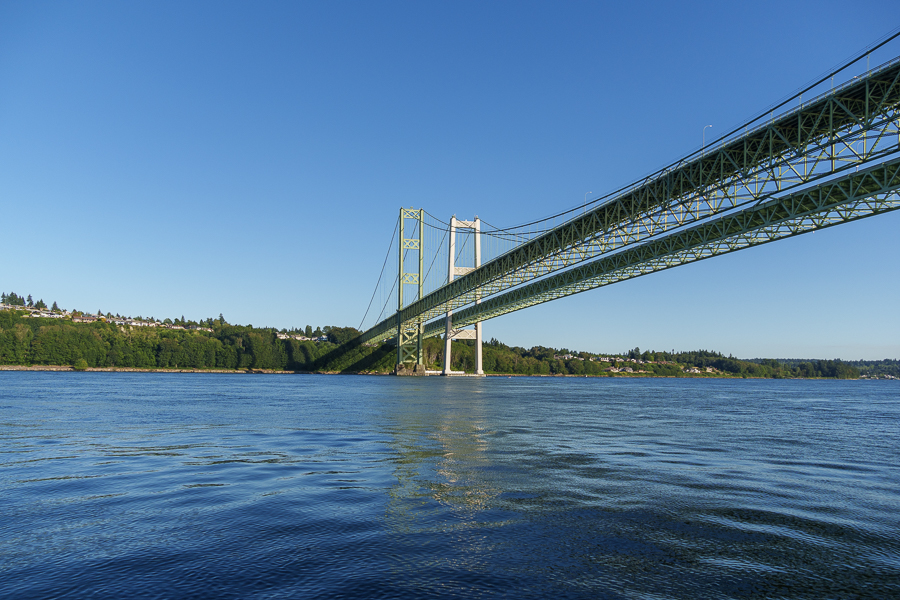
Tacoma Narrows Suspension Bridge
The bridge carries State Route 16 traffic
Good times happen under the bridge
Buildings dwarfed by 14,400 foot Mount Rainier
Some hills have clusters of homes
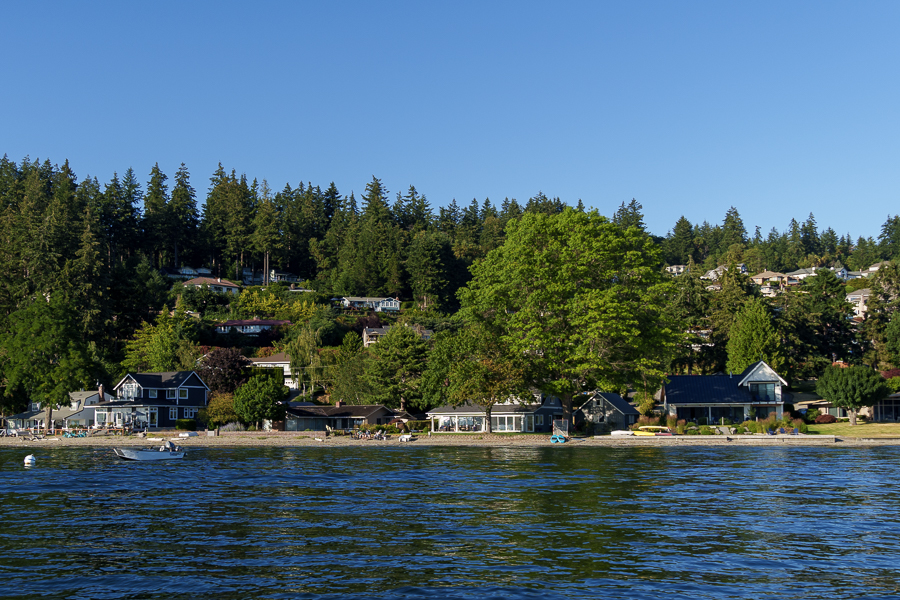
Other hills have more trees than homes
Can’t take too many photos of Mount Rainier
Mighty steep stairs
This house has a totem pole

Tanglewood Island, off the northern shore of Fox Island, has an interesting history. The first known use of the island was as a graveyard. The Nisqually Indians honored their dead by burying them in dugout canoes suspended in the island’s fir trees.

Tanglewood Lighthouse

The reason I remember the story about this island must be because I like visiting graveyards. They are such a peaceful place to wander and I get lost in reading the inscriptions and dates and imagining what the person’s life must have been like. I don’t know what I would think about burials in dugouts in trees, though. I guess it would be better than being loaded on a raft or in a dugout and shoved out to sea. Or maybe not.

Dock, home, and outbuildings on Tanglewood Island

Anyway, the island became the summer home of Conrad L. Hosca, a Tacoma pioneer. The Smithsonian supposedly removed all relics by 1891, but my research did not reveal where any human remains may have been reburied. A rabbit hole to crawl into on another day.

What a view

Dr. Alfred Schultz purchased the island in 1933 and operated Camp Ta-Ha-Do-Wa for boys from 1945 until the 1970s. I bet plenty of ghost stories told around the campfires at night led to a few nightmares. In 1979, The Schultz family sold the island to a group of people who subdivided it for their private personal use. They have had confidence no spirits remained to haunt the island and the residents. Hmm! Sounds like the island sounds like a perfect setting for a mystery or horror story.

The camp included the lighthouse (which may or may not have been sanctioned), a pavilion, and a salt-water pool. These facilities subsequently fell into disrepair. The owners demolished the pavilion a few years ago and in 2021 began a renovation of the lighthouse.

Inside the cabin
The timing of our cruise coincided with train’s schedule.

As we turned back toward Gig Harbor, and the sun fell lower in the sky, I pulled my jacket from my backpack. A few minutes later, the crew passed out blankets, for which I was grateful.

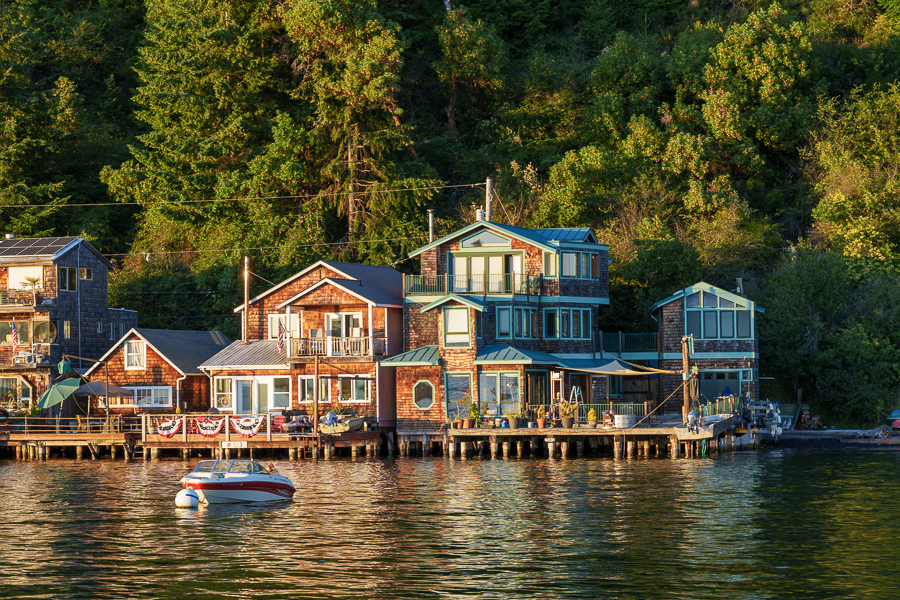
Livin’ on the water
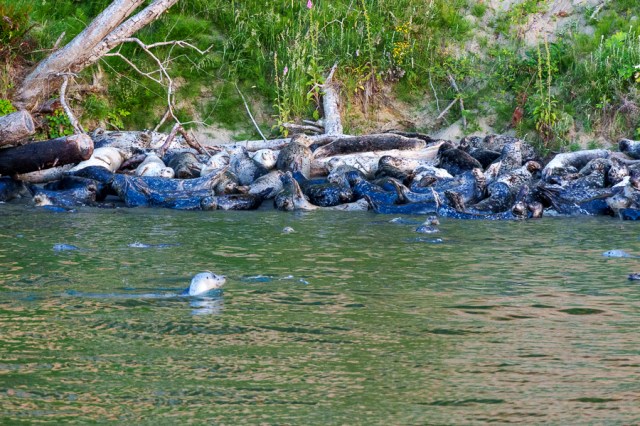
Seal headed for the logs. Oh wait, not logs. It’s a herd of seals.
Last view of Mount Rainier
Tides Tavern from the water

We found the Riviera Sunset Cruise a perfect way to soak up the history and stories about Gig Harbor and the surrounding area. Special thanks to the captain for an informative and pleasurable three hours.

Next up: We leave Gig Harbor behind and head to Leavenworth, Washington.

Safe Travels
2024 Pacific Northwest Adventure Episode 4: Bainbridge Island, Washington

On July 3, 2024, we drove to Bainbridge Island to see the Japanese Exclusion Memorial. We have visited a few of the War Relocation Centers in the past, yet I had never heard of an exclusion memorial, so I wanted to visit.

Bainbridge Island Japanese American Exclusion Memorial, a Unit of Minidoka National Historic Site

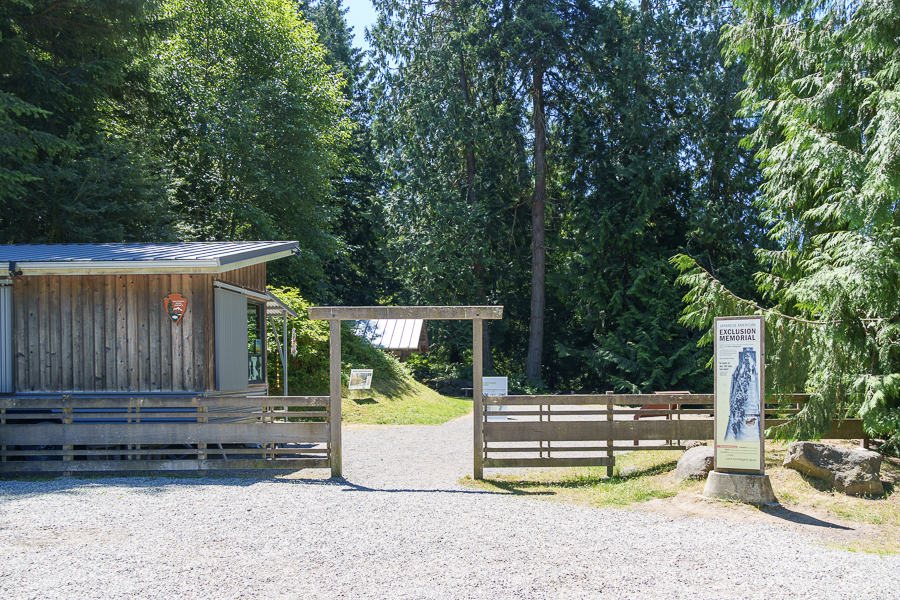
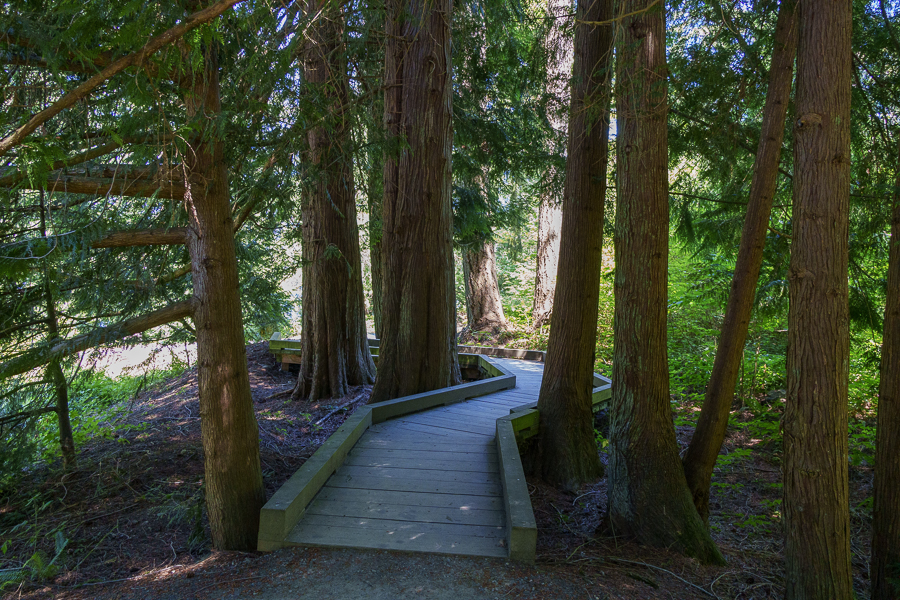
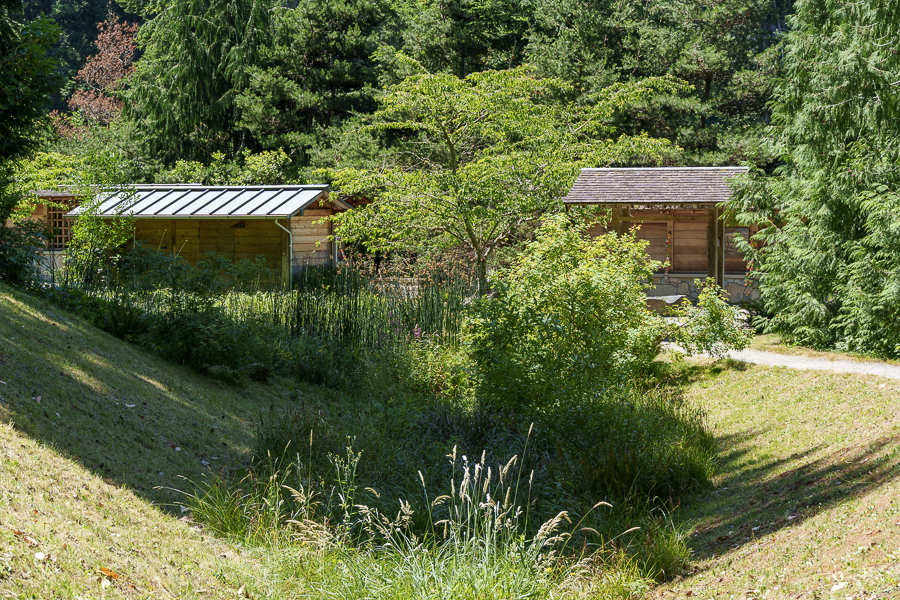
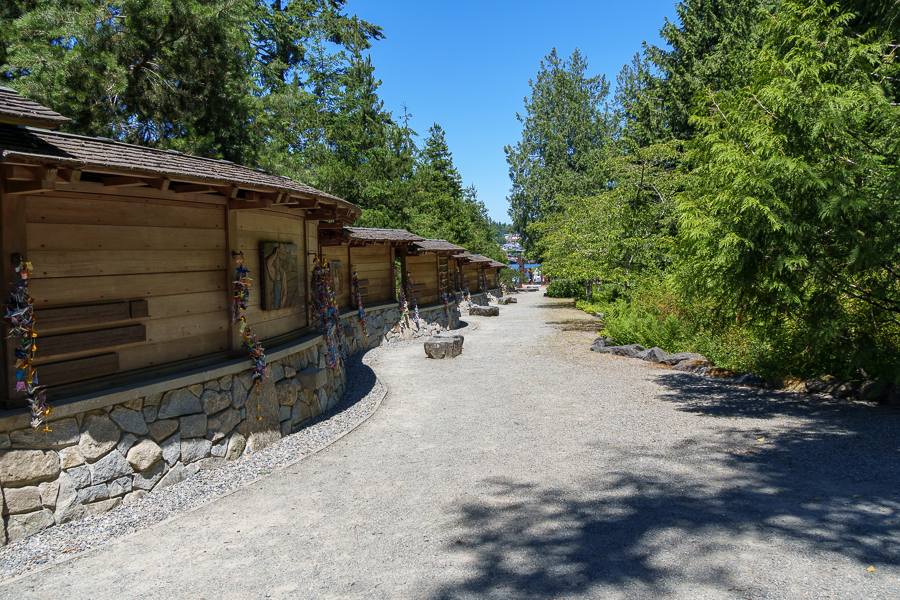
We accessed the memorial through the Pritchard Park entrance. Visitors will find a small temporary visitor center, and a shaded trail that leads to the “story wall” and dock area. The landscape provides a quiet place to reflect on the shameful treatment of U.S. Citizens.

Visitors Center and Entrance
The story of opportunity, forced removal, adapting, and new beginnings.

This memorial commemorates the first Japanese and Japanese Americans forced to leave the island and enter a war relocation center after the bombing at Pearl Habor. I use the term “war relocation center” here because the National Park Service used the term during World War II and still does. Other terms used include internment or concentration camps.

Along the path
Nidoto Nai Yoni, Let it not happen again.

The “story wall” is constructed from old-growth cedar, granite, and basalt. It marks the path where the first 227 exiled Japanese and Japanese Americans walked toward Eagledale Dock. With the meager possessions they could carry, they boarded the Keholoken Ferry under the watchful eyes of armed guards and began a journey to where? They did not know.

Path to the dock

The military first took them to Manzanar Relocation Center in California. Later they were taken to Minidoka in Idaho, where they remained until the war’s end. More than half of the 227 people returned to Bainbridge Island.

The panels tell stories of the people

Why was Bainbridge Island selected as the first place on the West Coast for the removal of Japanese Americans? Apparently, the Army considered them a risk because they were so close to the base. They had only six days to prepare to leave. Not much time when you consider they had to leave their homes, farms, and businesses behind and their children would have to leave school.

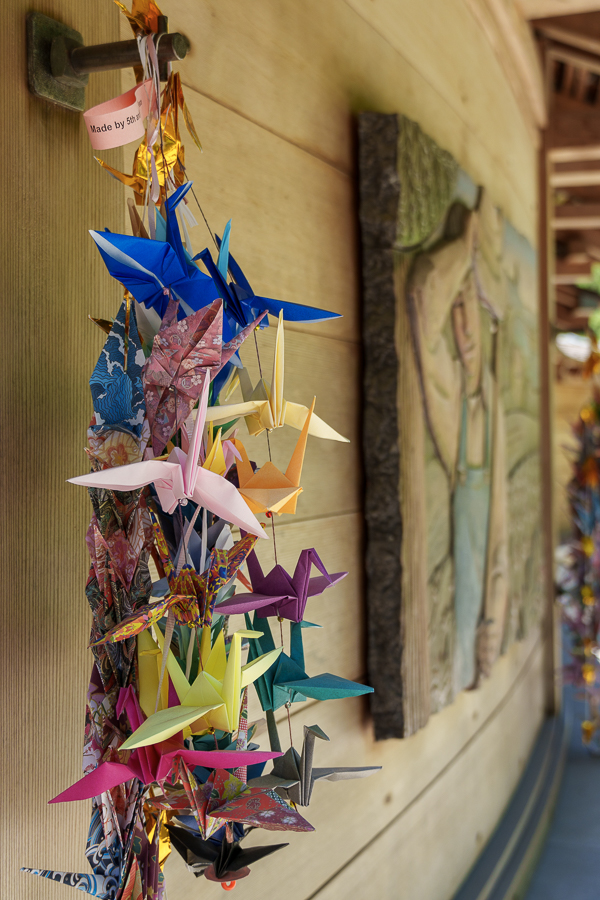
Grade school children and religious organizations made the cranes: a sign of peace, hope, and healing.
Recreated dock with armed guards on either side
Metal art depicts shoes of the exiles

The Bainbridge Island Japanese American Exclusion Memorial Association is raising funds for a permanent visitor center project that will include indoor and outdoor space, an amphitheater, office space, plus exhibits and displays. As of June 2025, they have received $4.38 million in donations toward their goal of $4.5 million. However, threatened elimination of a promised federal grant may require them to raise more.

In 1987, the land occupied by the park and memorial was designated as a top priority Superfund. Once cleared of toxic waste, the community created a park and the memorial. I admire the community for honoring the people subjected to such cruel treatment with this memorial. It stands to recognize those who suffered—physically, financially, emotionally—and to spread their message to the world:

Nidoto Nai Yoni, Let it not happen again.

Bainbridge Island History Museum

Bainbridge Island History Museum in the Winslow neighborhood, or downtown area, of the City of Bainbridge Island, was our next stop. The museum celebrates the different cultural communities who make Bainbridge Island their home. Early settlers include the Suquamish. They continue to harvest traditional foods, retain their fishing rights, and are active in protecting the waters of Puget Sound.

The Filipino and Indipino Communities also have exhibits. Indipino refers to ancestors of the 36 Indigenous women from Canadian, Alaskan, and Washington State tribes who migrated to the island during the 1930s and 1940s. They came to pick berries for Japanese American farmers and eventually married Filipino immigrants. The women left behind their heritage and primarily adopted the Filipino culture until the 1980s when adult Indipinos began to embrace their indigenous way of life.

Indipino and Filipino American Displays

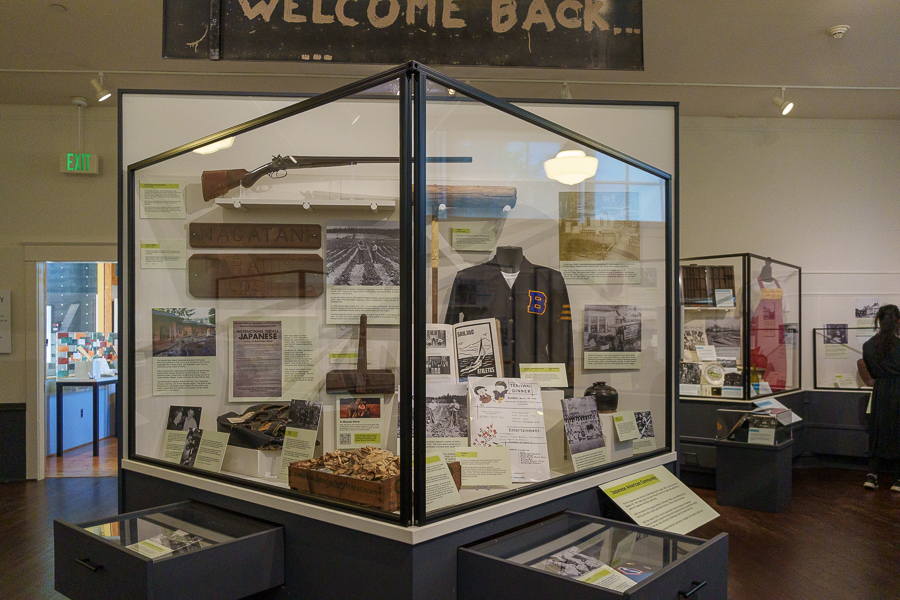
Japanese American Community display shows the community’s contribution to the island over the years.

Japanese American Community Display

In 1857, Douglas Fir and Western Red cedar comprised nearly 80% of the land, with Western hemlock and hardwoods covering the rest. By 1900 very few trees remained.

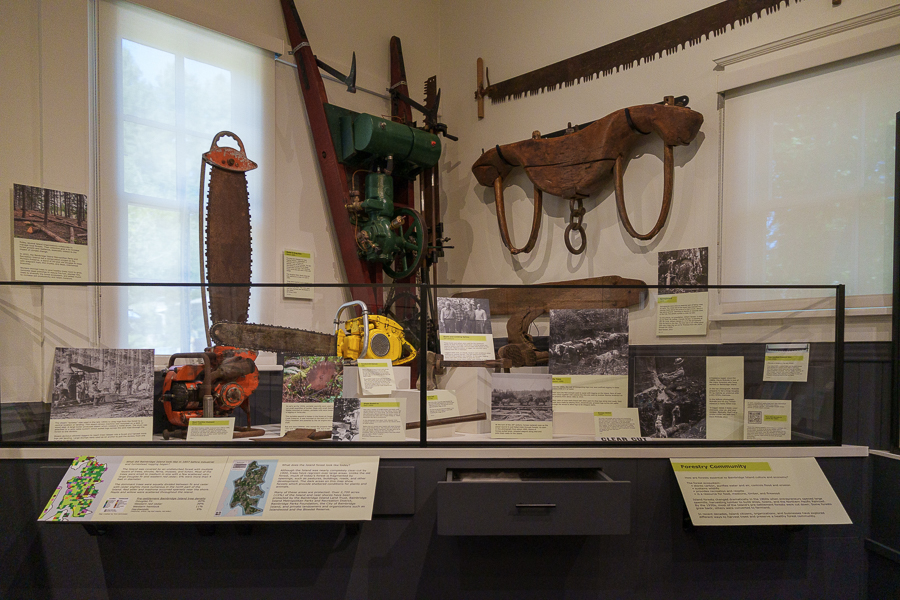
Besides farming and military installations, historic industries on Bainbridge Island include logging, lumber, and shipbuilding.

Today, over 2,700 acres, or 15% of the island, have recovered through the efforts of a land trust, the parks, and recreation district, the city, landowners, and other organizations. They protect and preserve these valuable resources.

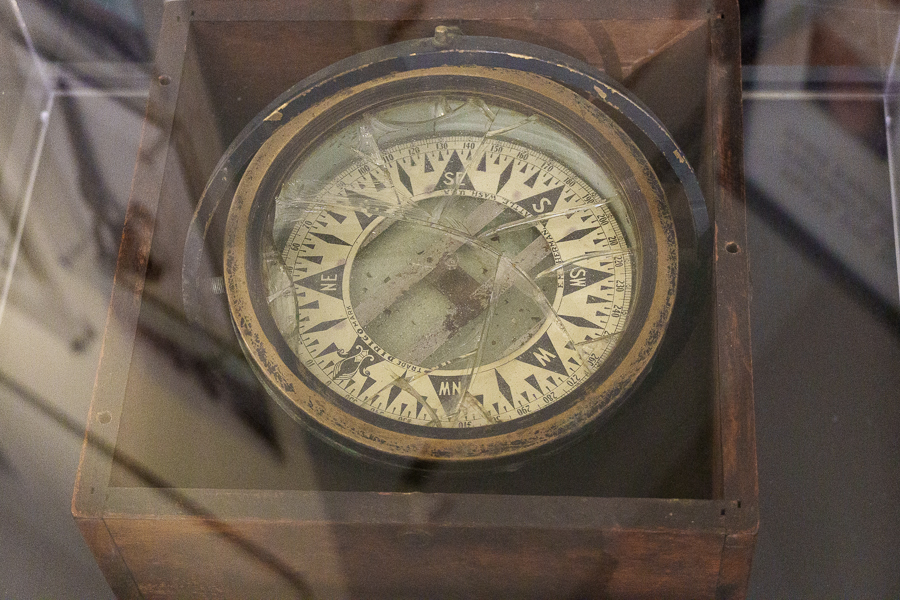
Early 1900s Compass used on the steamer Florence K.

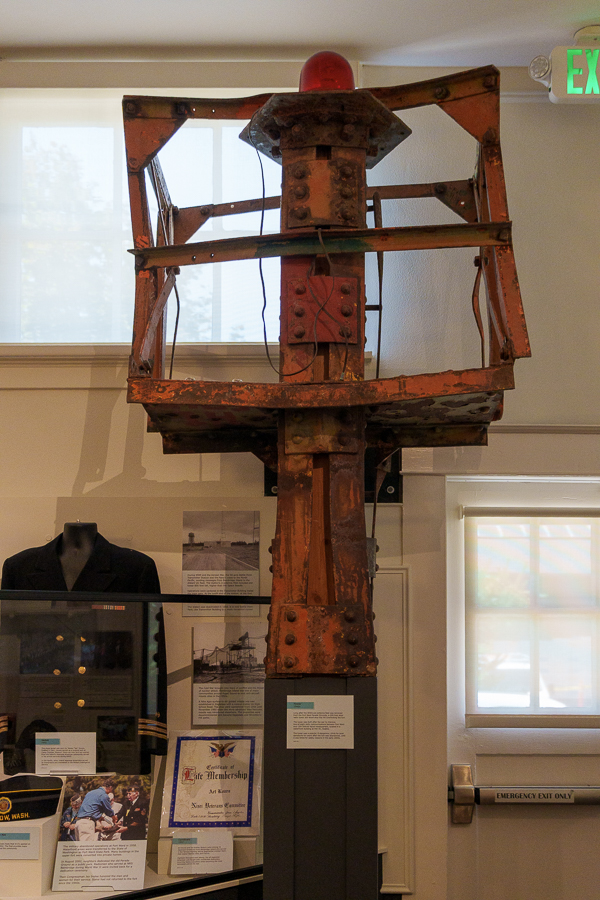
After World War II, the antenna tower in the photo below was built to improve line-of-sight radio communications between Fort Ward and the 13th District Naval Headquarters in a waterfront building at Pier 91 in Seattle. The navy decommissioned the fort in 1958 and sold it to Washington State Parks in 1960. For decades, the tower enticed thrill seekers to climb to the top, and was removed in the early 2000s for “safety” reasons. Hmm, it didn’t pose a danger for all those 40-plus years?

Top portion of Cold War Era radio tower

The popular sport of Pickleball began as a challenge for Joel Pritchard, Bill Bell, Barney McCallum, and their families one summer day in 1965 on Bainbridge Island. Boredom and the lack of a badminton shuttlecock motivated the group to create the new game. Over the summer, through trial and error and a series of iterations, they lowered the badminton net, tried different balls and paddles, and designed the court and rules. Pritchard, along with friends, formed Pickle Ball, Inc. in 1968 to manufacture wooden paddles and kits and promote the sport.

Pickleball display

Today Pickleball is so popular local, collegiate, and professional teams have formed. The State of Washington named pickleball as the official state sport in 2022. The Sports and Fitness Industry Association named pickleball as the fastest growing sport in the United States four years in a row from 2021 through 2024. After hearing of the increase in pickleball injuries, Jon and I have not tried the sport, but we know a few people who enjoy playing.

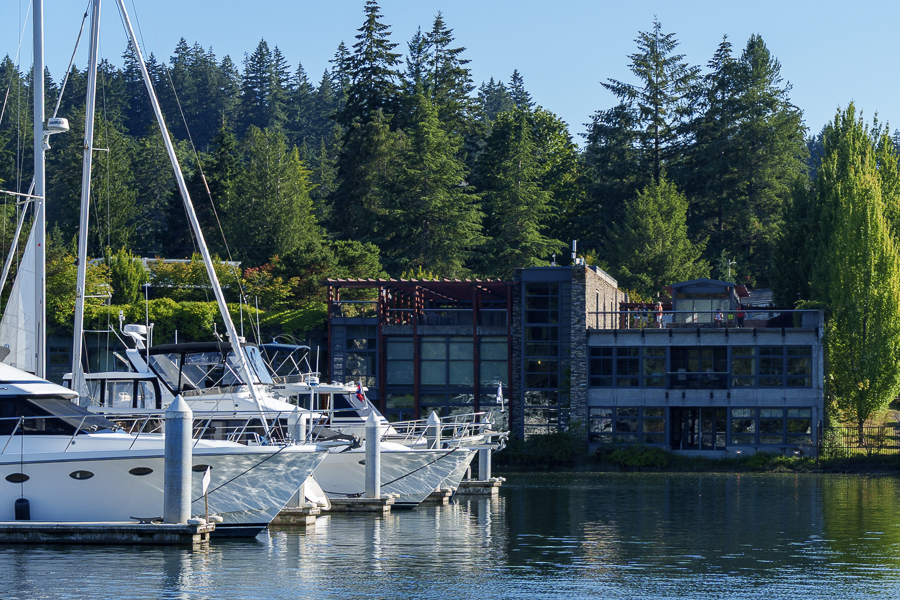
Doc’s Marina Grill Bainbridge Island

We needed nourishment when we finished with the museum, so we found a spot near the water. We loved Doc’s clam chowder and ate everything we ordered, but we have to rate the blackened salmon sandwich and rock fish blackened tacos as okay. Maybe we just aren’t fans of blackened food.

Fisherman and woman?
Yoga rocks

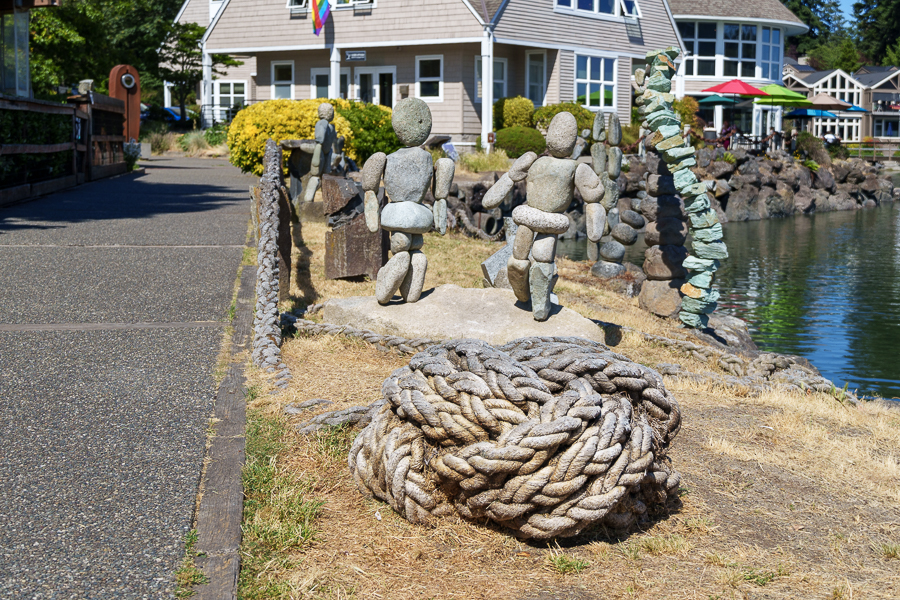
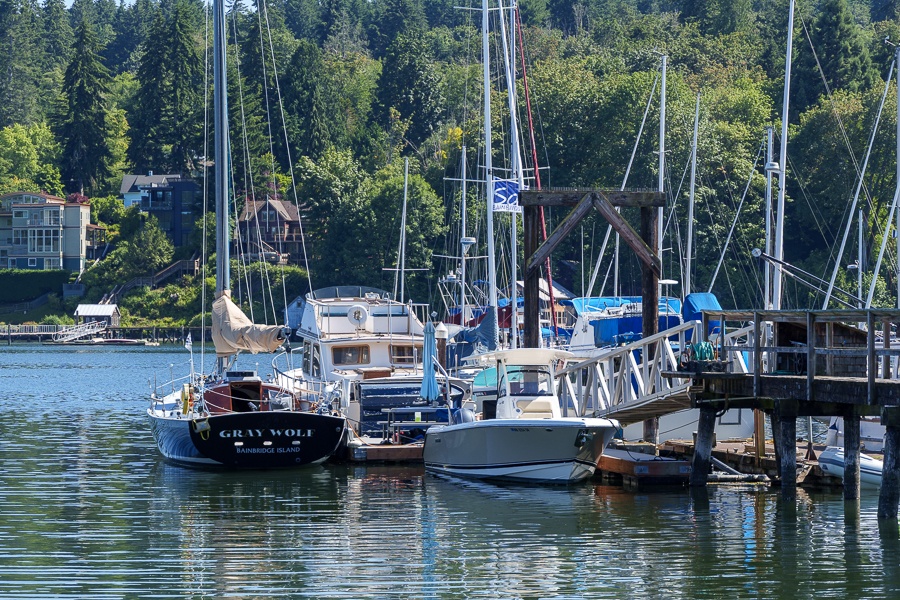
After our meal, we walked around the marina, gawking at the boats, enjoying the sunshine, and admiring the artwork.

I’m surprised Jon didn’t sneeze
Day lilies and daises
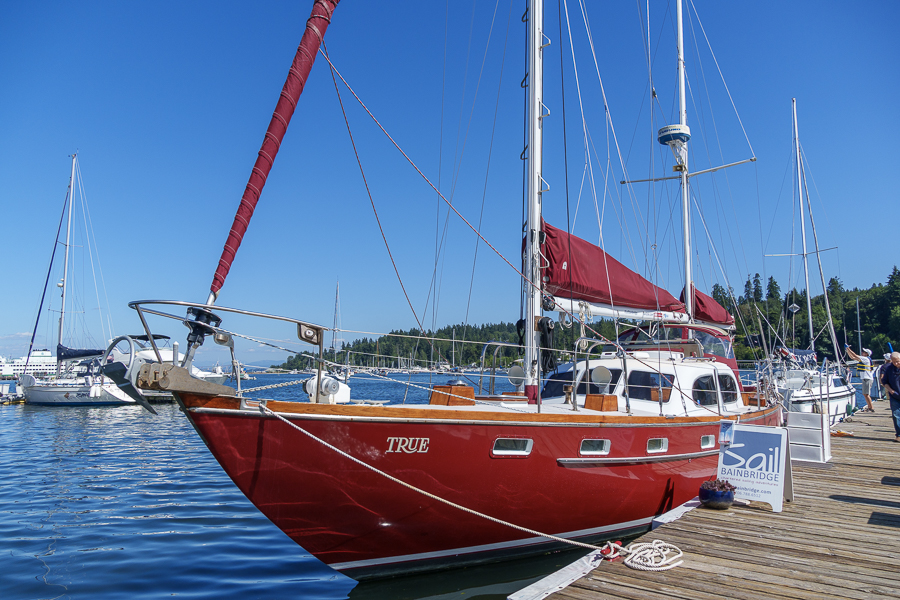
Looks like a fun boat for sailing

Camp Yeomot

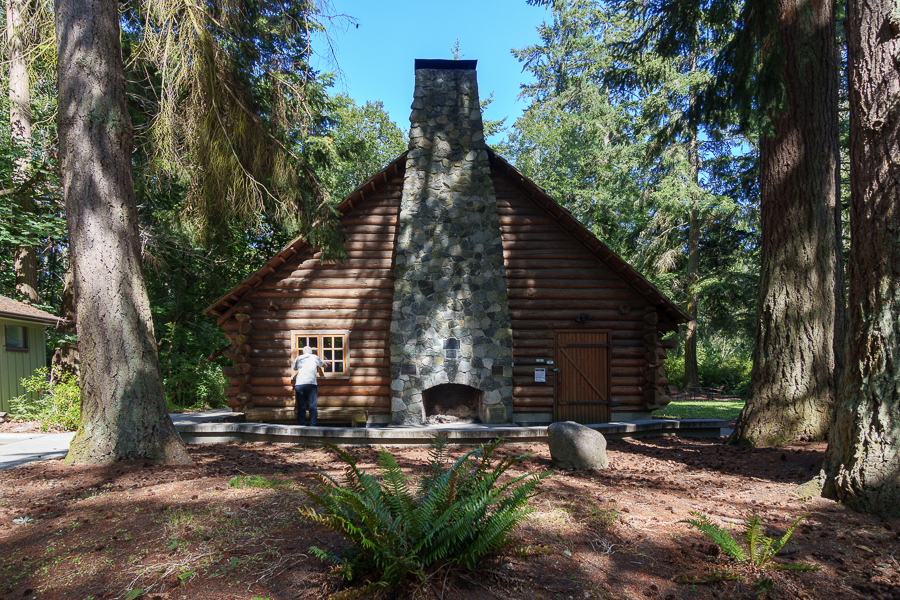
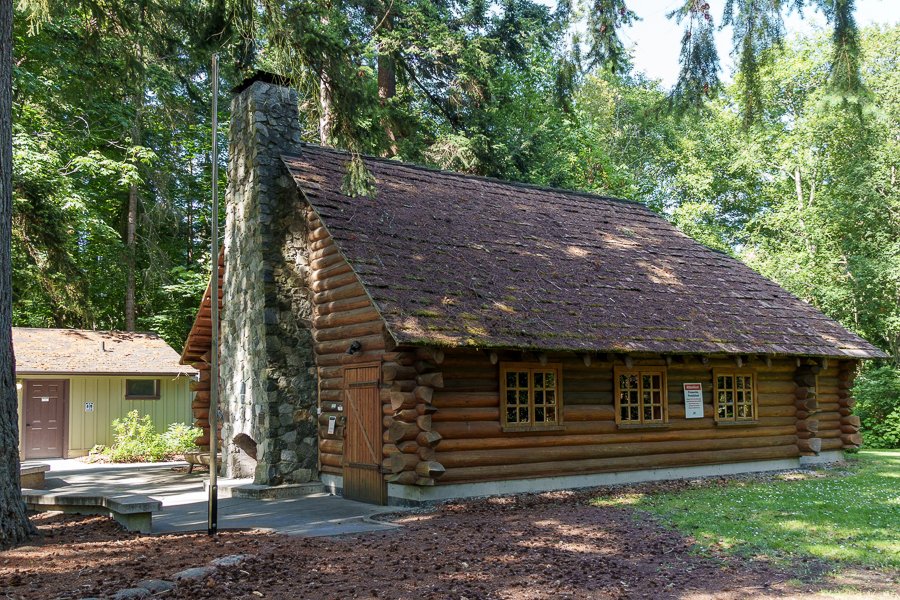
Unemployed residents, using local materials, built the cabin as part of a Boy Scout Camp in 1935 through Roosevelt’s WPA program. In 1942, the US Army 202nd Coast Artillery’s Bainbridge Island housed their headquarters and added a bathhouse, which is now a classroom.

Historic Boy Scout cabin
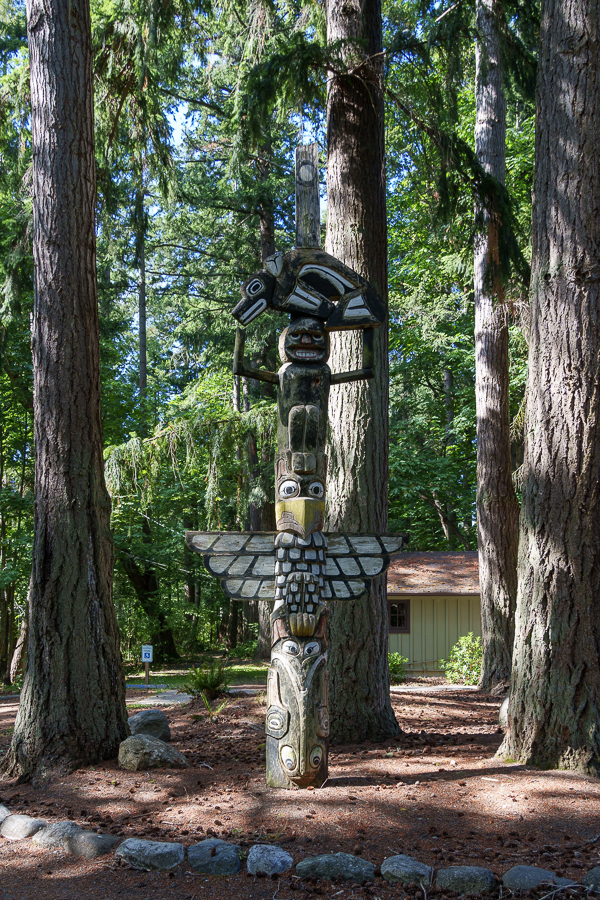
Loved this totem pole

Ownership changed to Bainbridge Island Metro Park and Recreation District in 1987 and renamed Camp Yeomalt Park in 2000. When the need for restoration was announced, an anonymous donor came forth to begin the project. Restoration using authentic materials and methods earned allowed the cabin to be included on the National Register of Historic Places in 2005.

Hard to read with all the shade

Today the park district preserves the cabin and uses it for programs, youth and community activities, education, performances, and classes.

Bainbridge Island Library Haiku Gardens

The “Haiku no Niwa” or Haiku Garden at the Bainbridge Library was the perfect place to end our tour on the island. From the moment I entered the garden, the rush of going here and there all day melted away.

Bay Otters 1998 Tony Angell

We followed a pathway on one side of the library that wound through verdant groundcover, shrubs, and trees, and led to a pond. Water flowed over rocks until cascading into the pond where koi lounged in the shady corners.

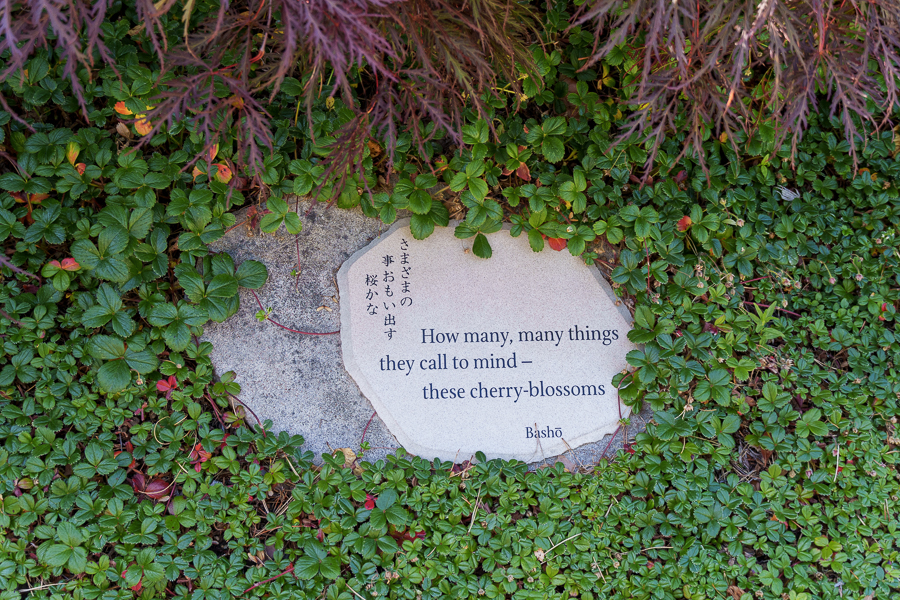
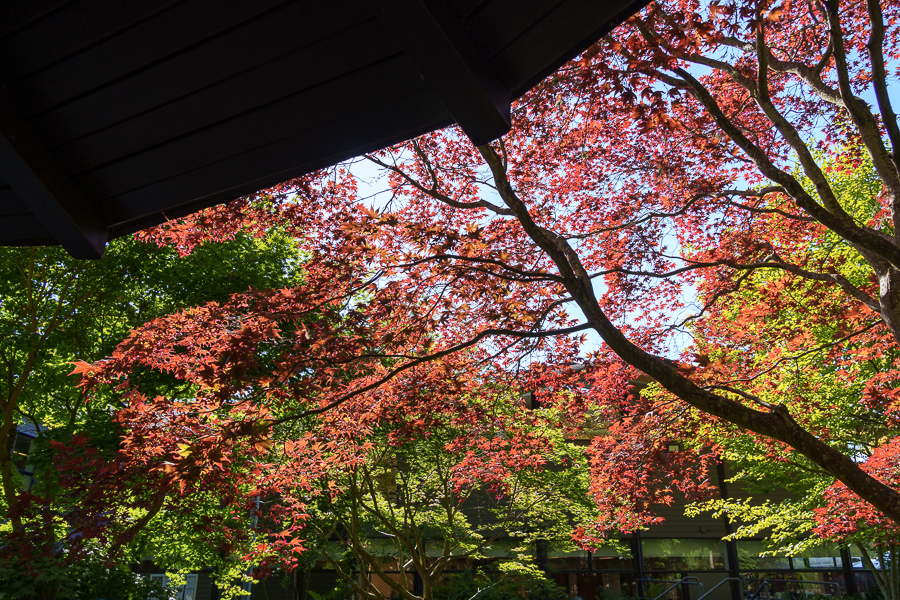
Nestled within the ground cover were concrete plaques on which haikus were written in both Japanese characters and English words. The Japanese maples furnished welcome shade and smeared splashes of red with varying hues, ranging from deep burgundy to burnt orange.

We had spent a full day wandering around the island and it was time to head “back to the barn,” as Jon might say. I was thankful for the respite in the garden. The haikus and the beauty of the place put me in a reflective frame of mind for the drive back to our trailer to settle in for the night.

Up Next: Community garden, Rosedale Gardens, and Riviera Sunset Cruise

Safe Travels

2024 Pacific Northwest Adventure Episode 3: Puyallup Farmer’s Market, Bonsai Museum, Rhododendrons, City of Poulsbo

One benefit of choosing the Pacific Northwest location for our adventure was we could visit with our good friends, the Greigs. We had enjoyed many days, evenings, and Super Bowls together when they lived in Walnut Creek.
Having people we know as our personal guides to the area brought us to unique places we might not have found on our own. One day they took us to the Puyallup Farmers’ Market and a Rhododendron Species Botanical Garden. Another day we picked them up in Silverdale and explored the City of Poulsbo.

Puyallup Farmers’ Market

Here’s a bit of Puyallup history. Puyallup was formally incorporated in 1890, after Native Americans had lived in the area for thousands of year, after White settlers arrived in 1830, and after the Native American War of 1855-56 led to the signing of the Medicine Creek Treaty.

Between the war and incorporation, the growing of hops became a major crop in the Puyallup area, with up to 100 farmers by 1884. This part of history Puyallup shared with Pleasanton, California, where we live. (There’s a good chance our home sits on land where hops once grew.)

Indoor portion of the Farmers Market

By 1891, the harvest had grown to 3,000 pounds per acre. Farmers recruited Native Americans and Chinese workers to help. Then hop lice joined the party, attacked the crops, and decimated the plants in less than a year. (The blame for the demise of the hops crop in Pleasanton falls on World War I, a labor dispute, and prohibition.)
Raspberry, blackberry, daffodils, dairy, and poultry farms, along with lumber mills, replaced the hop fields. And the economy boomed.

Although local farms still grow flowers, berries, and various produce; housing and commercial businesses have replaced some agriculture pursuits. Each April, local residents and visitors honor the town’s current and historical farming past at the Western Washington Fair, along with rides, a midway, and food booths. Also in April, they celebrate with the Daffodil Festival.
We’ve yet to find any kettle corn that’s better than
what we buy at the Pleasanton’s Farmers Market

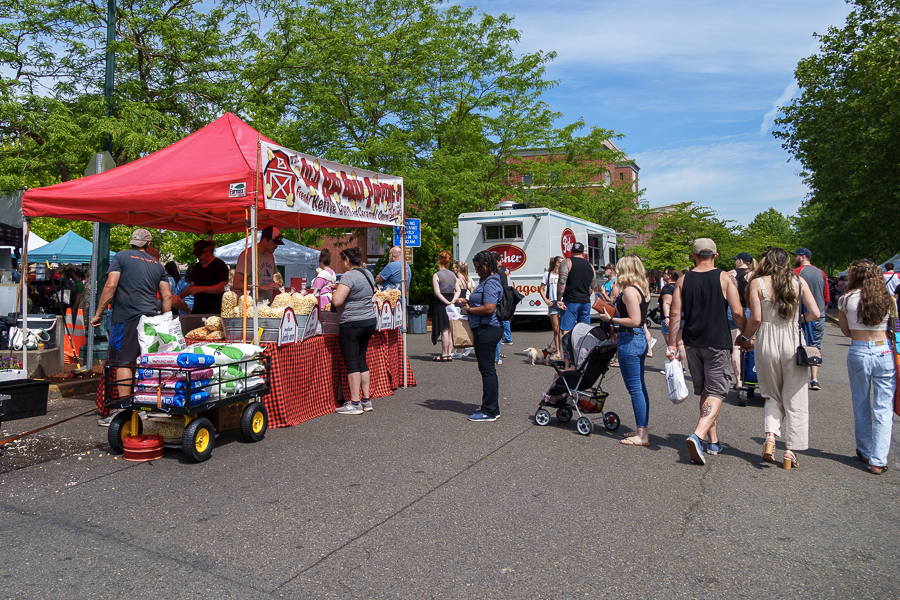
I thought the whole town must have come out for the farmer’s market. We had to park several blocks away and walk to the entrance. People greeted each other, stood in groups, or in lines. As I wandered through the crowds, I caught bits of conversations while people shared about the weather, gossip, or told stories of their lives.

Gregor and Marylou went off in one direction, while Jon and I worked our way around outside. I found it too difficult to see what the vendors were selling, much less take photos. It was cooler inside with more vendors.

They had quite a selection of food trucks

Whenever Jon sees someone selling fudge, he has to ask if they sell penuche, his favorite. Nine times out of ten, he walks away disappointed. The fudge booth in Puyallup must have been his tenth ask, because he stepped away with a chunk of the treat made with brown sugar and no chocolate. He even shared with the rest of us.

All loaded up and waiting for Marylou

Pacific Bonsai Museum and Rhododendron Species Botanical Garden

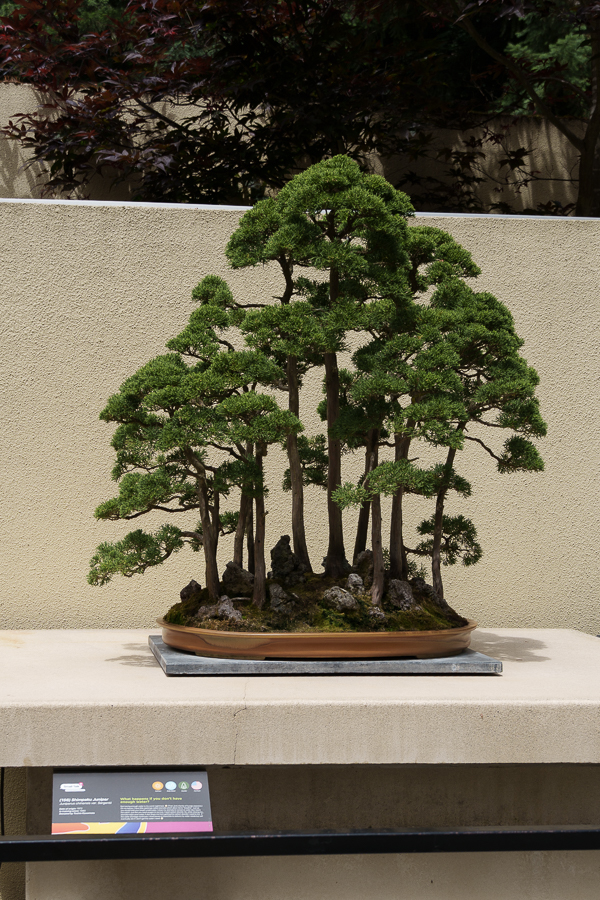
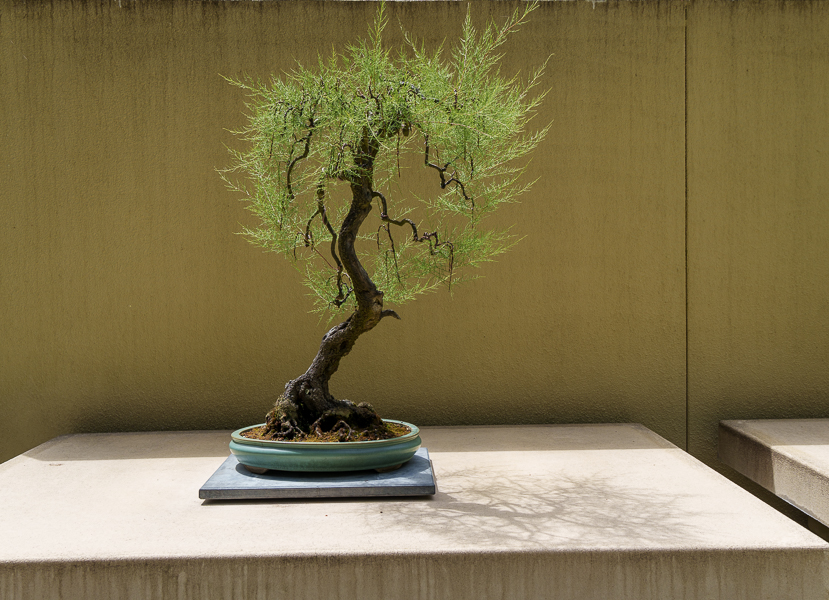
Gregor piqued my interest when he mentioned a bonsai museum. I’ve seen bonsai exhibits in other museums, but never a museum dedicated to bonsai. What a surprise to walk around and read the markers showing the dates of origin. One plant dated back to the 900s, and another originated in the 1500s.

Shimpaku Juniper – Origin Date 1972 – In training since 1980
Chinese Juniper on Sierra Juniper – Origin Date 990 – In training since 1970 – The white wood is dead, only the bark covered vein is alive and growing

I wonder how many different people have trained these trees. Is their current artistic state what the first person envisioned? I’d love to go back and take a tour with a docent.

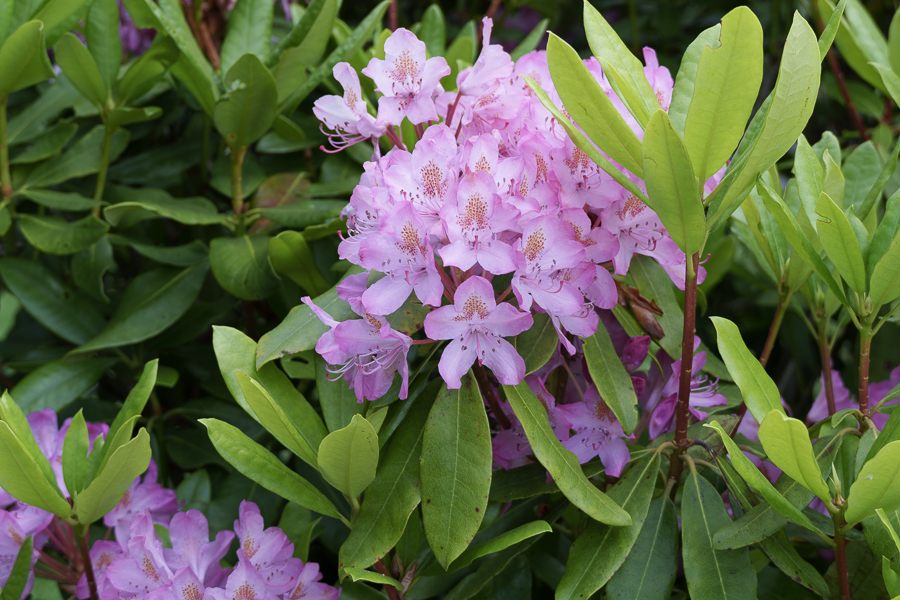
Next door was the Rhododendron Species Botanical Garden. Only a few of the shrubs and trees wore blooms.

That was fine with Gregor. He was on the lookout for new plants to add to his personal arboretum.

City of Poulsbo

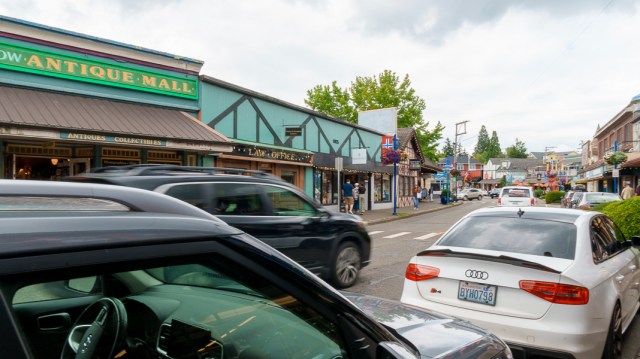
Poulsbo is a Scandinavian-themed town, also known as Little Norway. The city’s history is much like Puyallup’s. Native Americans occupied the lands before White settlers arrived and pushed them into a reservation. Available land, resources, and the landscape drew Norwegians and Scandinavians to the area in the 1880s from Midwestern states.

Poulsbo street scene

The historic downtown includes shops and galleries and restaurants. In May they hold a Viking Fest, which sounds like fun. Liberty Bay is the place to go for water sports boating, kayaking, and paddle boarding.

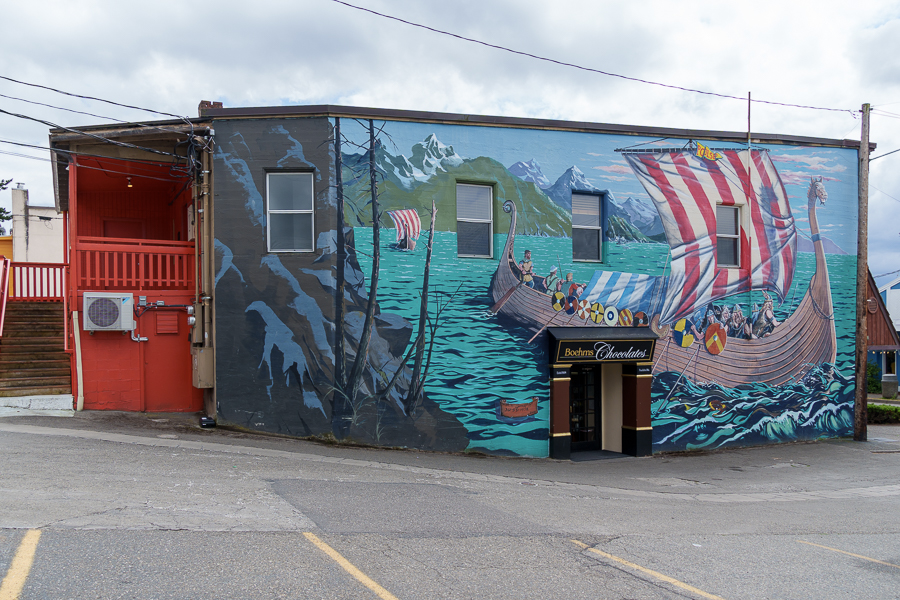
A sample of the many murals around town
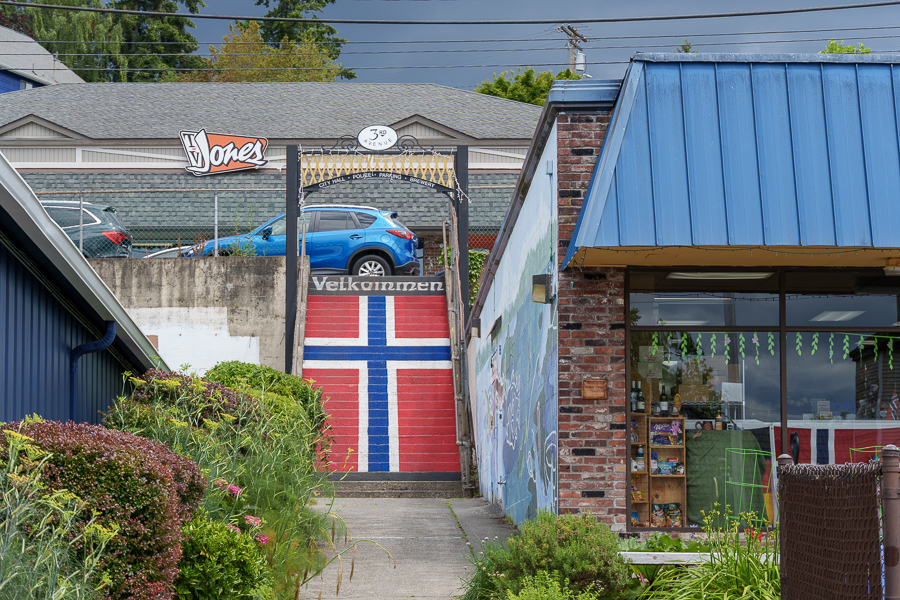
Be careful when navigating the steps

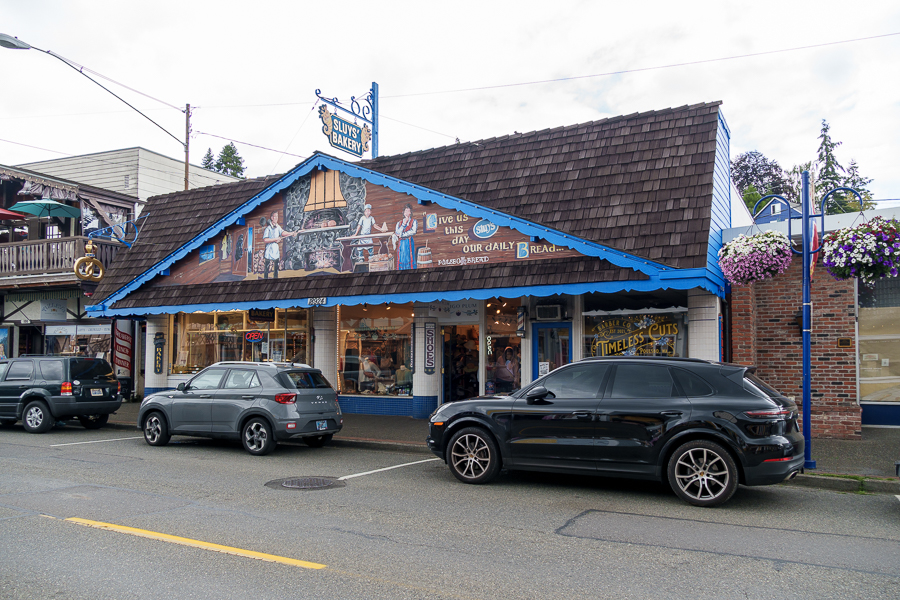
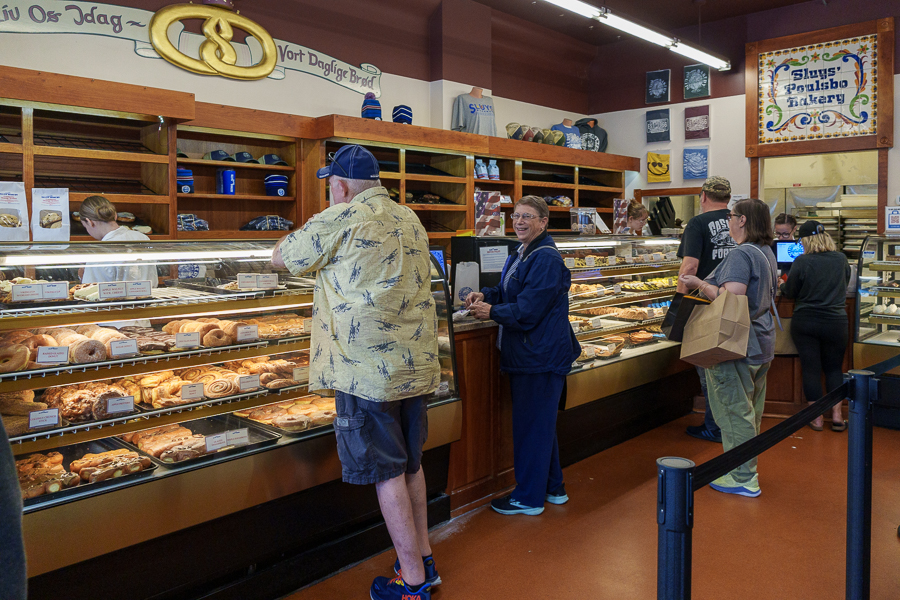
We stopped at Sluy’s Bakery to sample their pastries. The bakery is famous for its Poulsbo Bread—a bread created by using the Ezekiel 4:9 scripture verse. Had I known about the bread while there, I would have picked up a loaf. Instead, my eye spied a donut and pastry with cream cheese and raspberry filing. Maybe I’ll call them and order a loaf or two and have it shipped.

Sluys Bakery
Customers deciding which delicious pastries to select

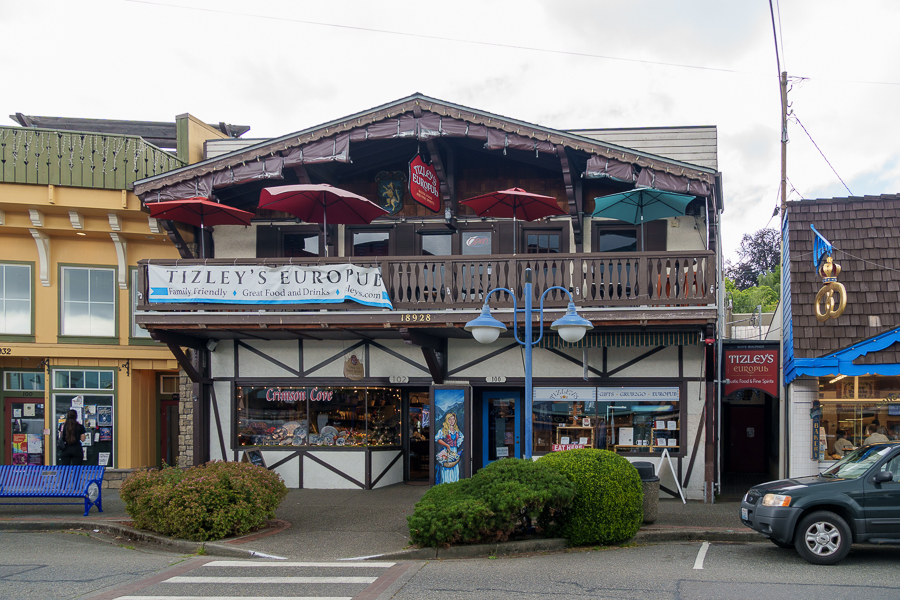
For our Scandinavian dinner, someone had recommended Tinsley’s EuroPub for a bite to eat. I had the Swedish meatballs with Rotkohl (German Red Cabbage) and mashed potatoes. Jon had Shepherd’s Pie. The Greigs both had Rueben sandwiches. The meal was good, not great, and the service was a bit uneven. I’m not sure what was going on because only one other table was occupied. Maybe it had to do with us arriving between lunch and dinner, and perhaps it would have been better during peak hours. Who knows?

Tizley’s EuroPub
Liberty Bay Books

The Greig’s Home

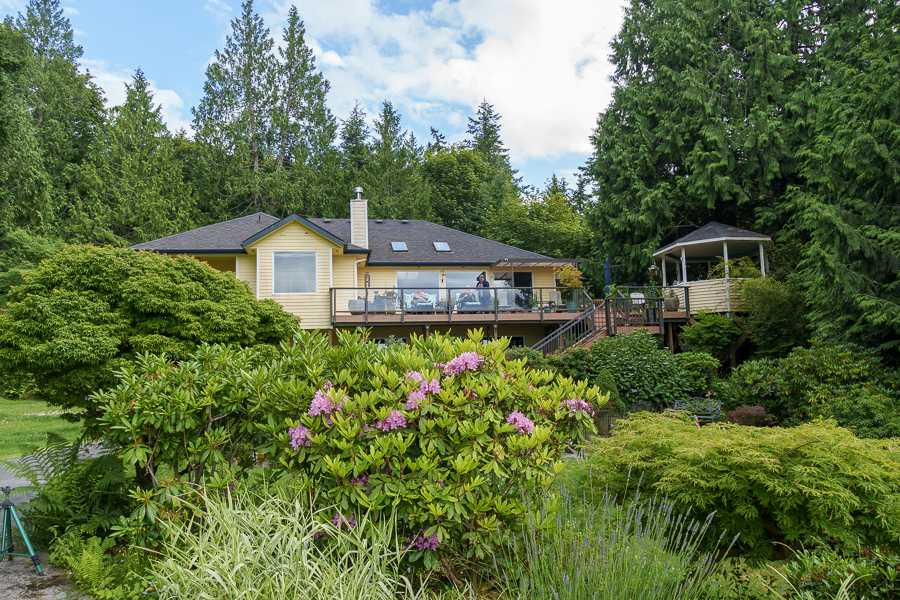
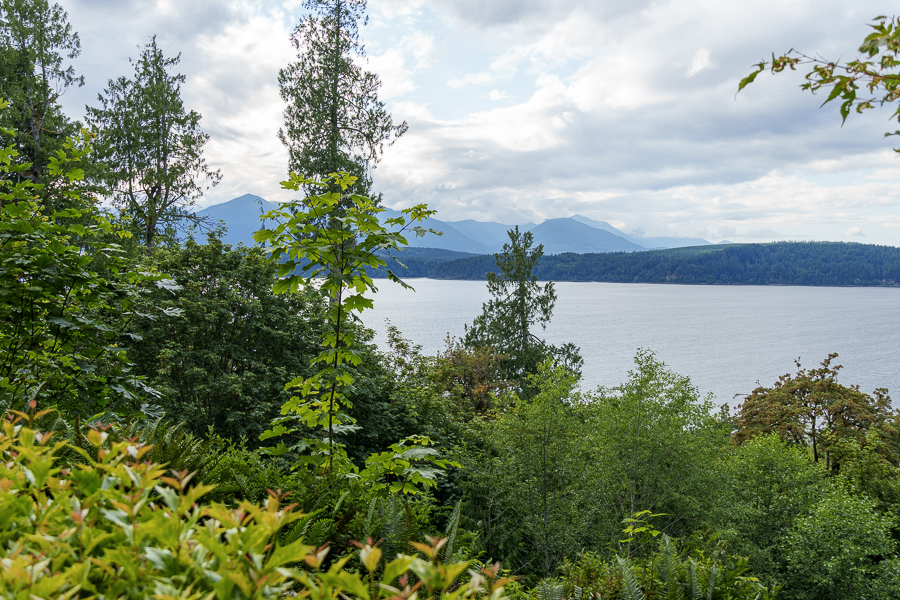
Gregor and Marylou have found their slice of heaven overlooking the Hood Canal. Views from inside the house, views from the deck at the back of the house, views at the fire pit on the lower level of the yard, and a view closer still to the cliff that drops off into the water are all perfectly situated to inspire wonder.

Marylou, Gregor, and Jon

We had the pleasure of visiting twice. Once when we went to Poulsbo and again to celebrate Gregor’s birthday. Both times, I felt safe and at peace surrounded by the beauty he has cultivated during their time owning the home. The views, the flora, and crisp sea air left no room for the world’s chaos to invade my thoughts.

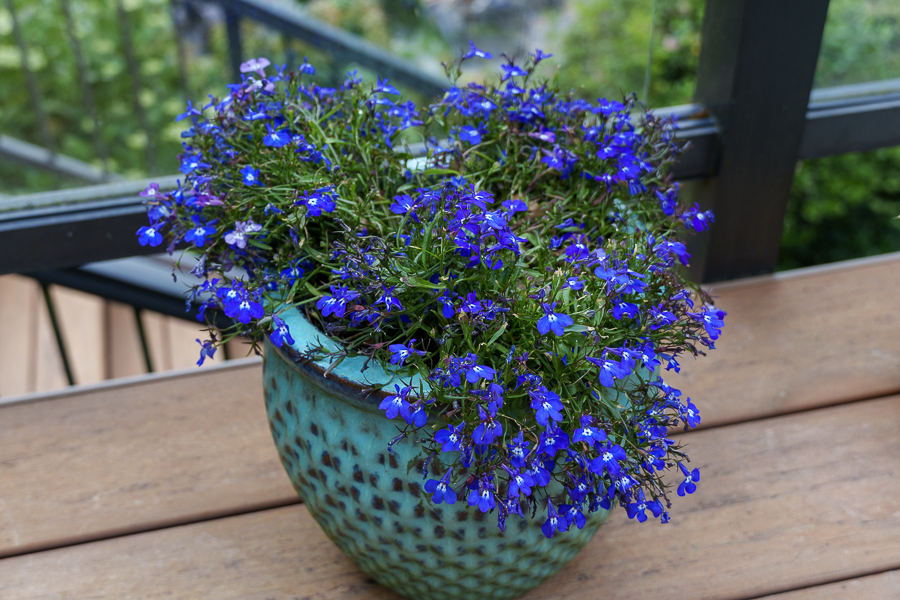
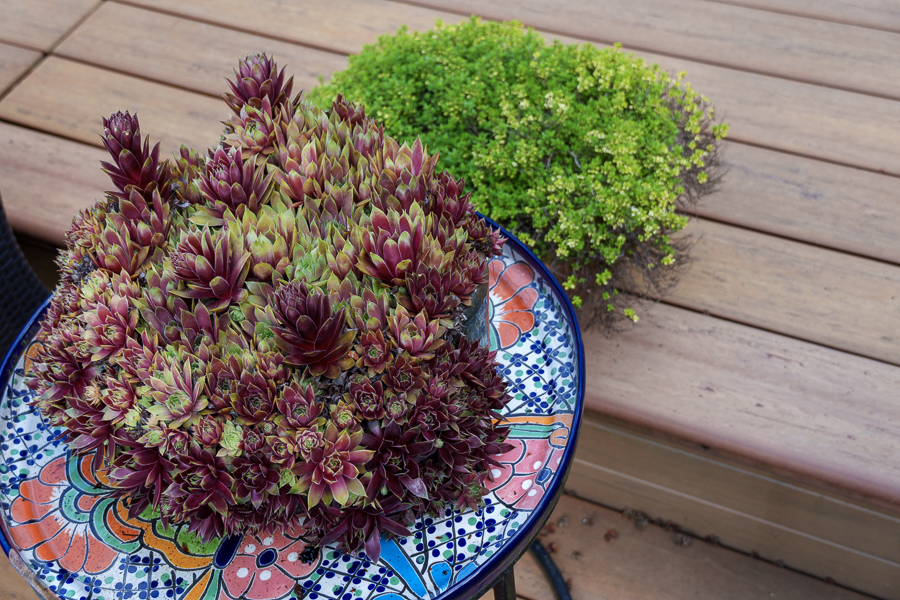
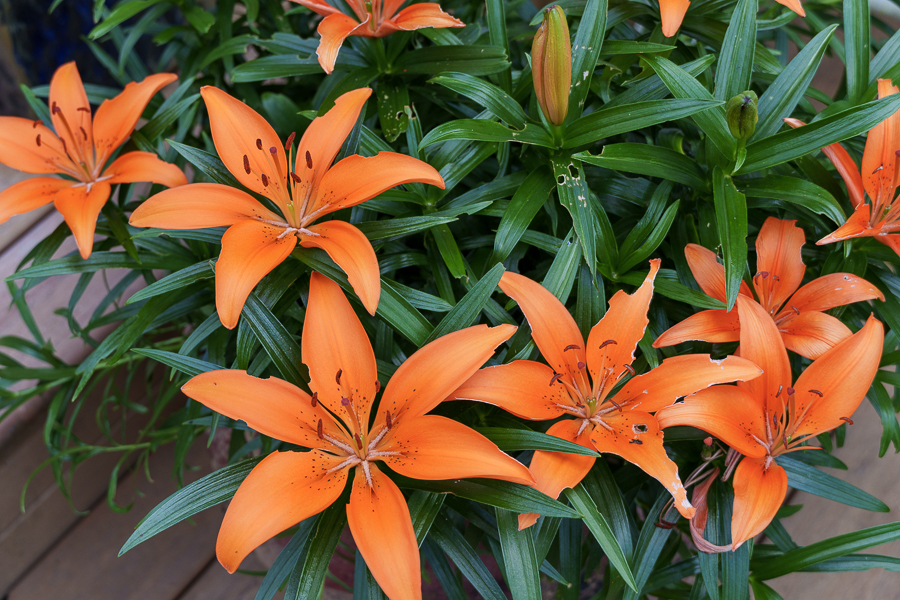
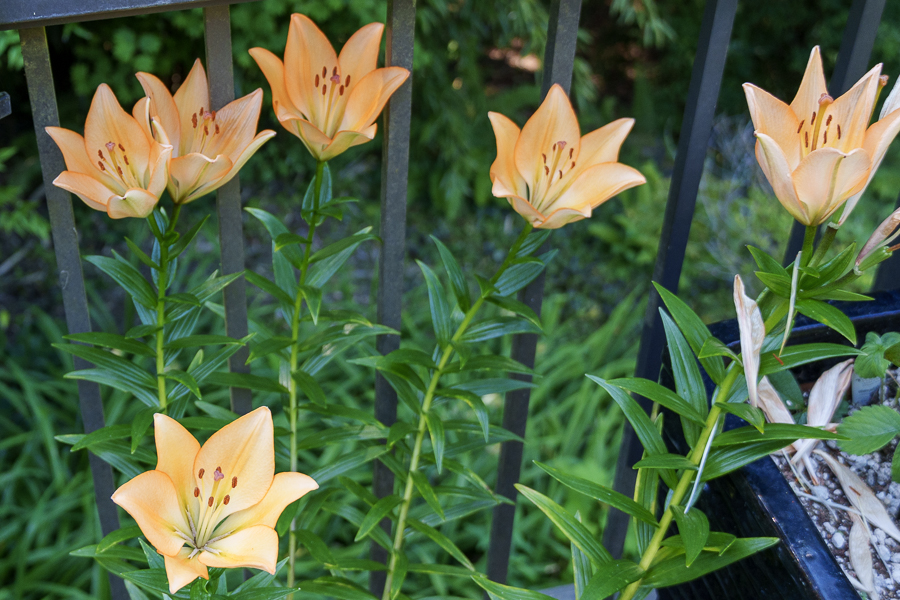
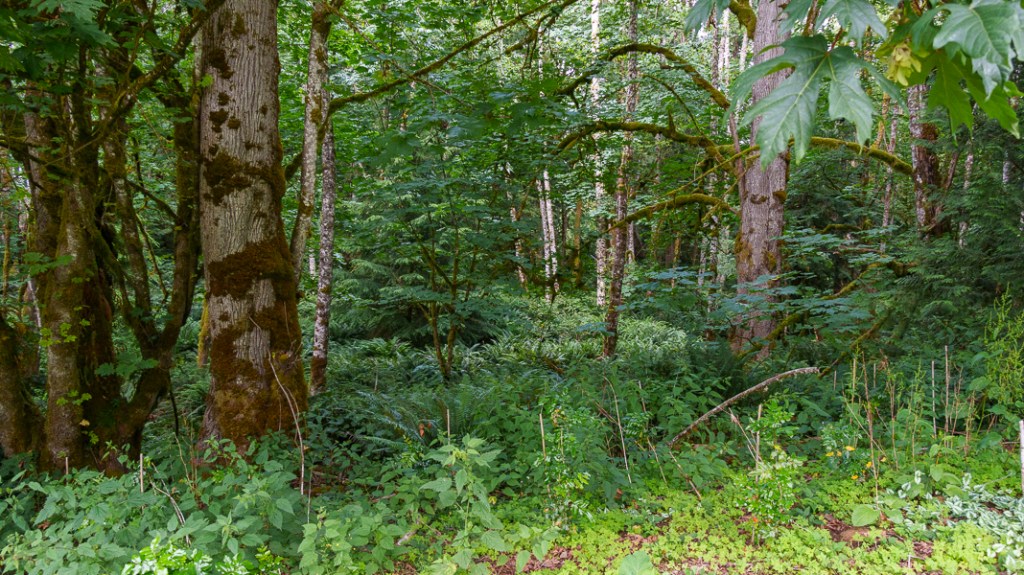
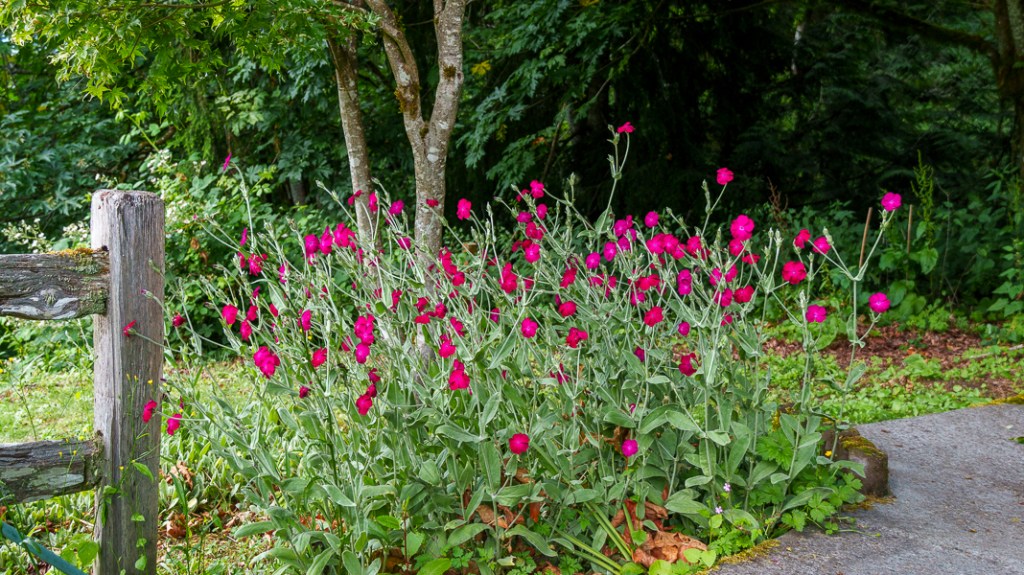
For a respite, take time viewing the photos below. With no words to read, imagine sitting in a chair, skin brushed by a cool breeze, the scent of evergreen in the air, swallows flitting in and out of the trees, a cormorant or an eagle gliding on thermals.

Happy 80th Birthday Gregor. Thanks to Marylou for inviting us. We had a blast visiting with your family and friends. And thank you for sharing your wonderful garden.

Eighty? Really? Looking good for 80 years.
Don’t forget the gifts
Yummy birthday cake
Make a wish

Next up: Bainbridge Island, Japanese Exclusion Memorial, Rosedale Gardens, Riviera Boat Cruise.

Safe Travels