2024 Pacific Northwest Adventure Episode 4: Bainbridge Island, Washington

On July 3, 2024, we drove to Bainbridge Island to see the Japanese Exclusion Memorial. We have visited a few of the War Relocation Centers in the past, yet I had never heard of an exclusion memorial, so I wanted to visit.

Bainbridge Island Japanese American Exclusion Memorial, a Unit of Minidoka National Historic Site

We accessed the memorial through the Pritchard Park entrance. Visitors will find a small temporary visitor center, and a shaded trail that leads to the “story wall” and dock area. The landscape provides a quiet place to reflect on the shameful treatment of U.S. Citizens.
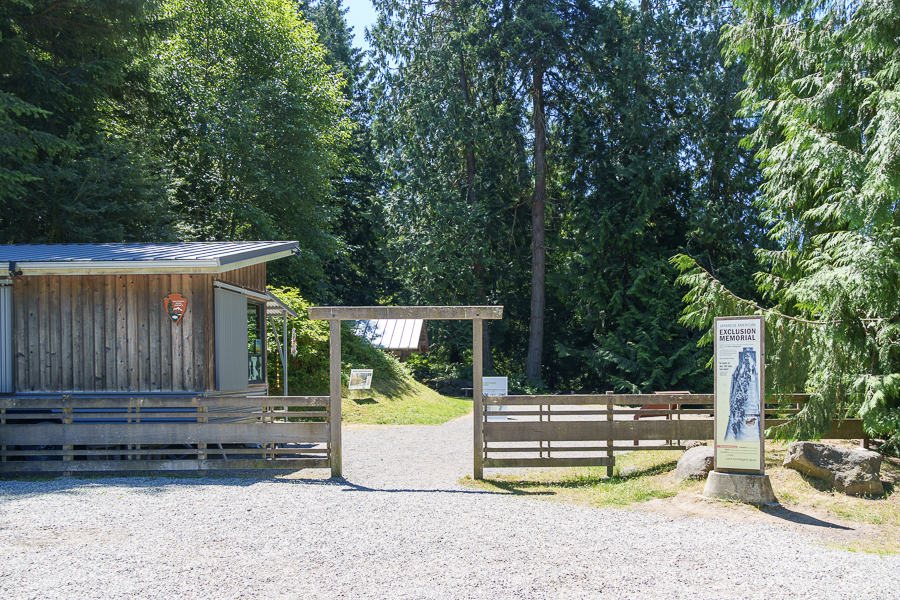
Visitors Center and Entrance
The story of opportunity, forced removal, adapting, and new beginnings.

This memorial commemorates the first Japanese and Japanese Americans forced to leave the island and enter a war relocation center after the bombing at Pearl Habor. I use the term “war relocation center” here because the National Park Service used the term during World War II and still does. Other terms used include internment or concentration camps.
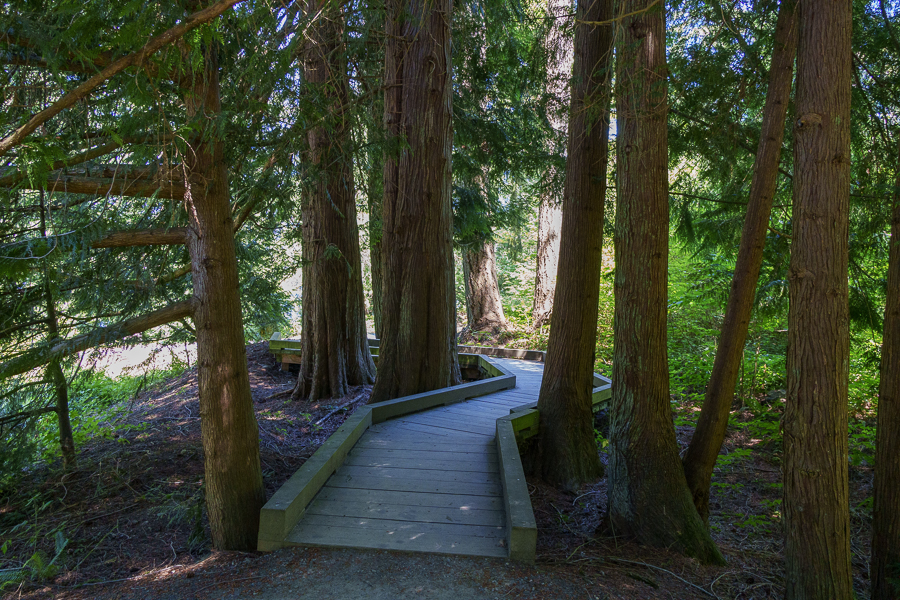
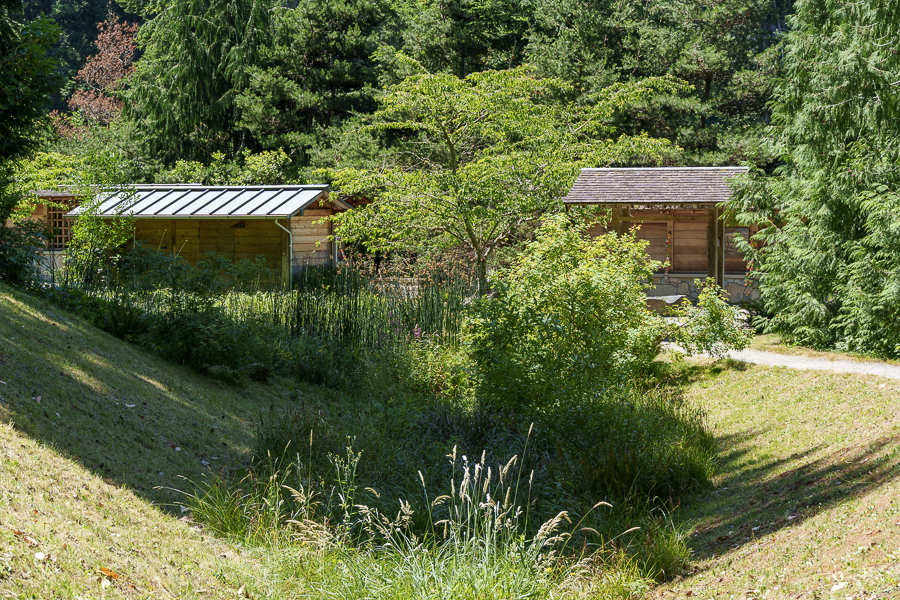
Along the path
Nidoto Nai Yoni, Let it not happen again.

The “story wall” is constructed from old-growth cedar, granite, and basalt. It marks the path where the first 227 exiled Japanese and Japanese Americans walked toward Eagledale Dock. With the meager possessions they could carry, they boarded the Keholoken Ferry under the watchful eyes of armed guards and began a journey to where? They did not know.
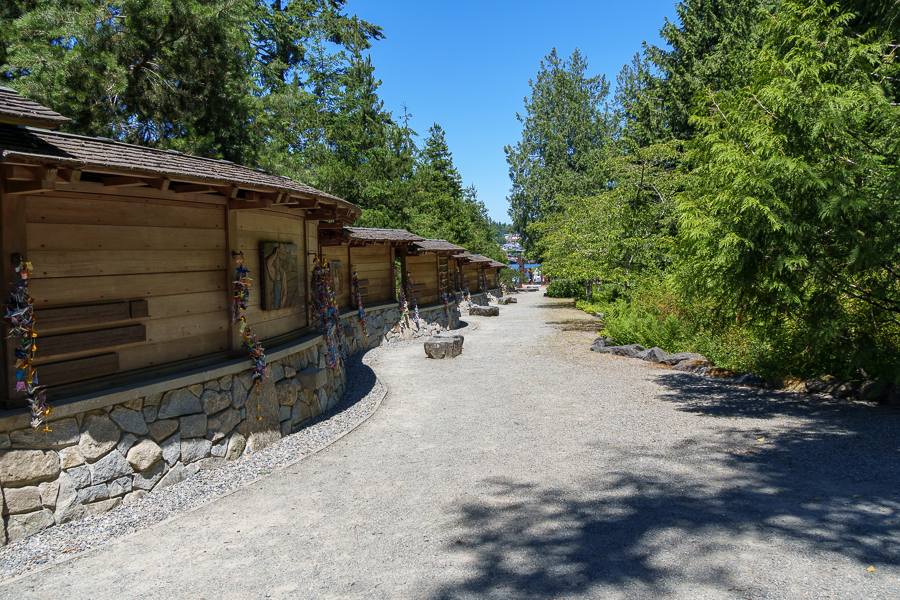
Path to the dock

The military first took them to Manzanar Relocation Center in California. Later they were taken to Minidoka in Idaho, where they remained until the war’s end. More than half of the 227 people returned to Bainbridge Island.

The panels tell stories of the people

Why was Bainbridge Island selected as the first place on the West Coast for the removal of Japanese Americans? Apparently, the Army considered them a risk because they were so close to the base. They had only six days to prepare to leave. Not much time when you consider they had to leave their homes, farms, and businesses behind and their children would have to leave school.
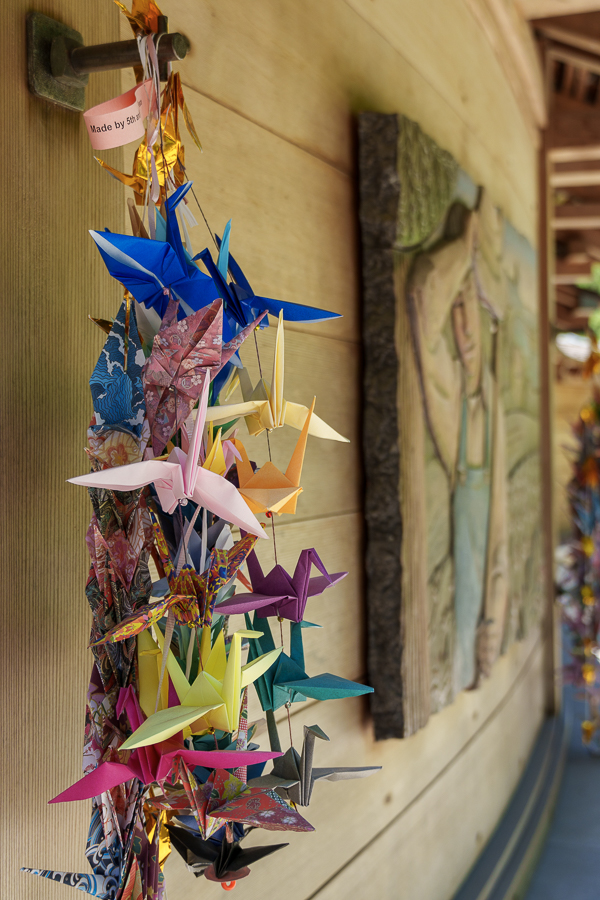
Grade school children and religious organizations made the cranes: a sign of peace, hope, and healing.
Recreated dock with armed guards on either side
Metal art depicts shoes of the exiles

The Bainbridge Island Japanese American Exclusion Memorial Association is raising funds for a permanent visitor center project that will include indoor and outdoor space, an amphitheater, office space, plus exhibits and displays. As of June 2025, they have received $4.38 million in donations toward their goal of $4.5 million. However, threatened elimination of a promised federal grant may require them to raise more.

In 1987, the land occupied by the park and memorial was designated as a top priority Superfund. Once cleared of toxic waste, the community created a park and the memorial. I admire the community for honoring the people subjected to such cruel treatment with this memorial. It stands to recognize those who suffered—physically, financially, emotionally—and to spread their message to the world:

Nidoto Nai Yoni, Let it not happen again.

Bainbridge Island History Museum

Bainbridge Island History Museum in the Winslow neighborhood, or downtown area, of the City of Bainbridge Island, was our next stop. The museum celebrates the different cultural communities who make Bainbridge Island their home. Early settlers include the Suquamish. They continue to harvest traditional foods, retain their fishing rights, and are active in protecting the waters of Puget Sound.

The Filipino and Indipino Communities also have exhibits. Indipino refers to ancestors of the 36 Indigenous women from Canadian, Alaskan, and Washington State tribes who migrated to the island during the 1930s and 1940s. They came to pick berries for Japanese American farmers and eventually married Filipino immigrants. The women left behind their heritage and primarily adopted the Filipino culture until the 1980s when adult Indipinos began to embrace their indigenous way of life.

Indipino and Filipino American Displays

Japanese American Community display shows the community’s contribution to the island over the years.
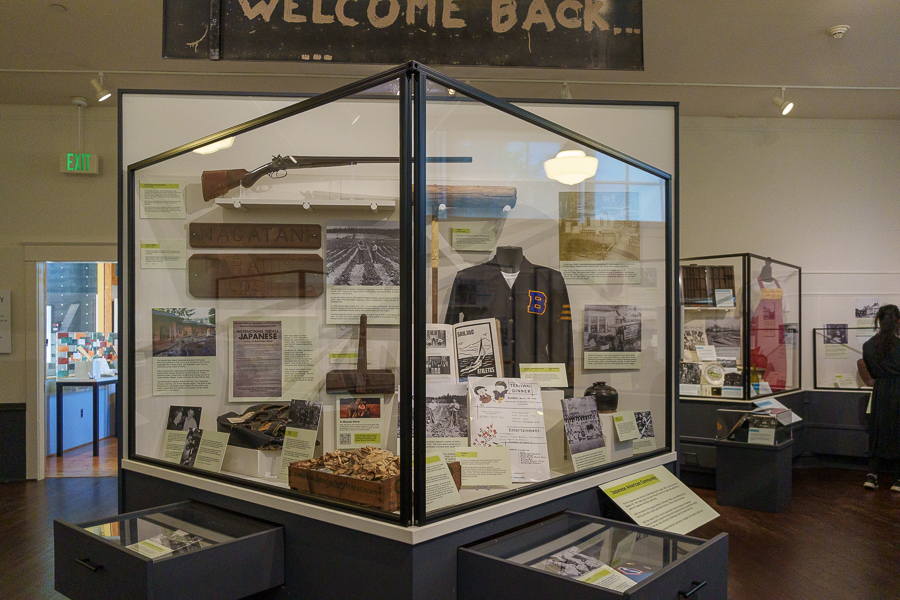
Japanese American Community Display

In 1857, Douglas Fir and Western Red cedar comprised nearly 80% of the land, with Western hemlock and hardwoods covering the rest. By 1900 very few trees remained.
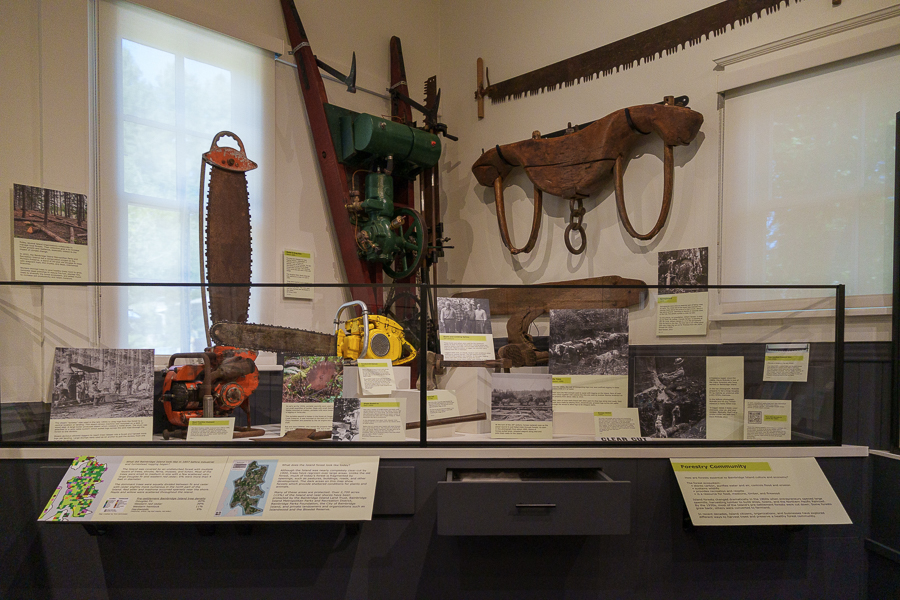
Besides farming and military installations, historic industries on Bainbridge Island include logging, lumber, and shipbuilding.

Today, over 2,700 acres, or 15% of the island, have recovered through the efforts of a land trust, the parks, and recreation district, the city, landowners, and other organizations. They protect and preserve these valuable resources.
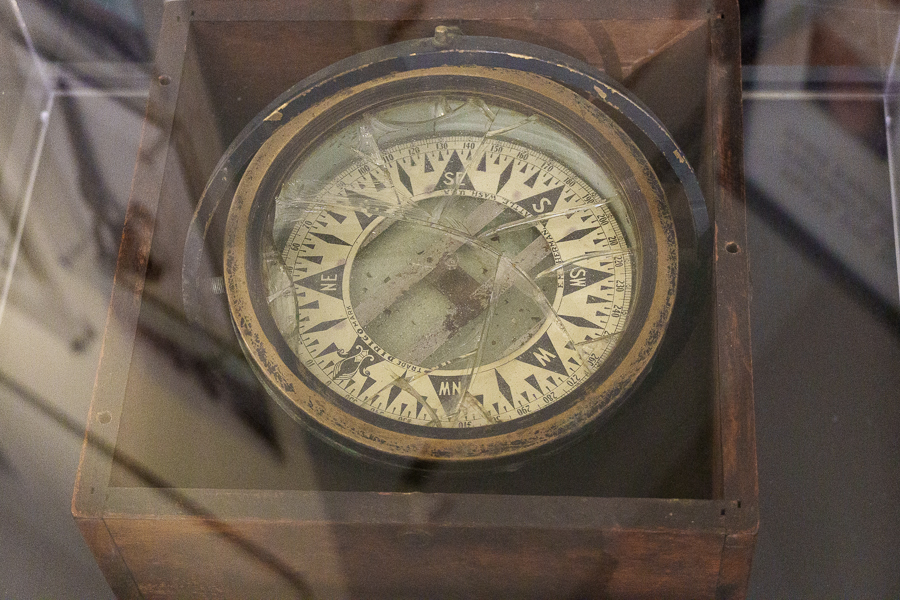
Early 1900s Compass used on the steamer Florence K.

After World War II, the antenna tower in the photo below was built to improve line-of-sight radio communications between Fort Ward and the 13th District Naval Headquarters in a waterfront building at Pier 91 in Seattle. The navy decommissioned the fort in 1958 and sold it to Washington State Parks in 1960. For decades, the tower enticed thrill seekers to climb to the top, and was removed in the early 2000s for “safety” reasons. Hmm, it didn’t pose a danger for all those 40-plus years?
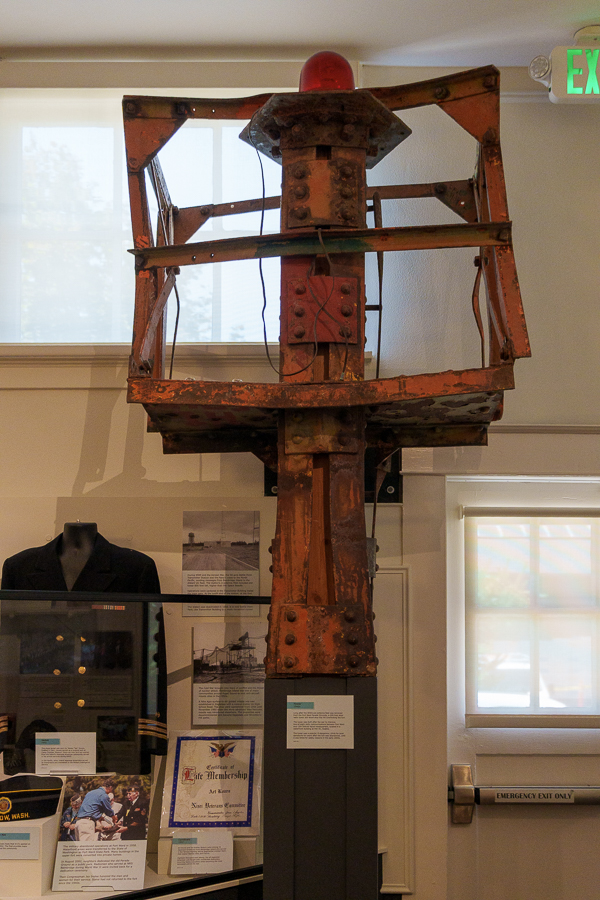
Top portion of Cold War Era radio tower

The popular sport of Pickleball began as a challenge for Joel Pritchard, Bill Bell, Barney McCallum, and their families one summer day in 1965 on Bainbridge Island. Boredom and the lack of a badminton shuttlecock motivated the group to create the new game. Over the summer, through trial and error and a series of iterations, they lowered the badminton net, tried different balls and paddles, and designed the court and rules. Pritchard, along with friends, formed Pickle Ball, Inc. in 1968 to manufacture wooden paddles and kits and promote the sport.

Pickleball display

Today Pickleball is so popular local, collegiate, and professional teams have formed. The State of Washington named pickleball as the official state sport in 2022. The Sports and Fitness Industry Association named pickleball as the fastest growing sport in the United States four years in a row from 2021 through 2024. After hearing of the increase in pickleball injuries, Jon and I have not tried the sport, but we know a few people who enjoy playing.

Doc’s Marina Grill Bainbridge Island

We needed nourishment when we finished with the museum, so we found a spot near the water. We loved Doc’s clam chowder and ate everything we ordered, but we have to rate the blackened salmon sandwich and rock fish blackened tacos as okay. Maybe we just aren’t fans of blackened food.
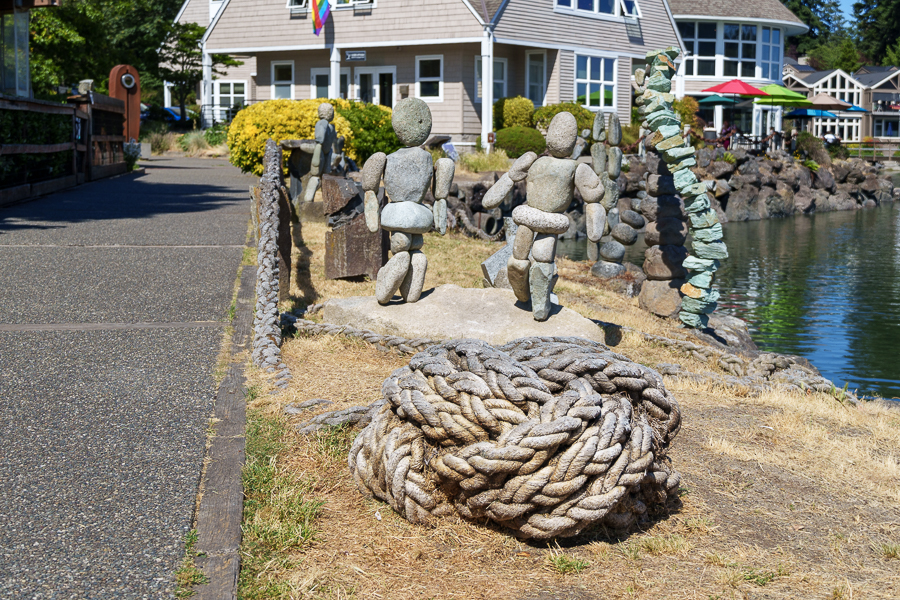
Fisherman and woman?
Yoga rocks

After our meal, we walked around the marina, gawking at the boats, enjoying the sunshine, and admiring the artwork.
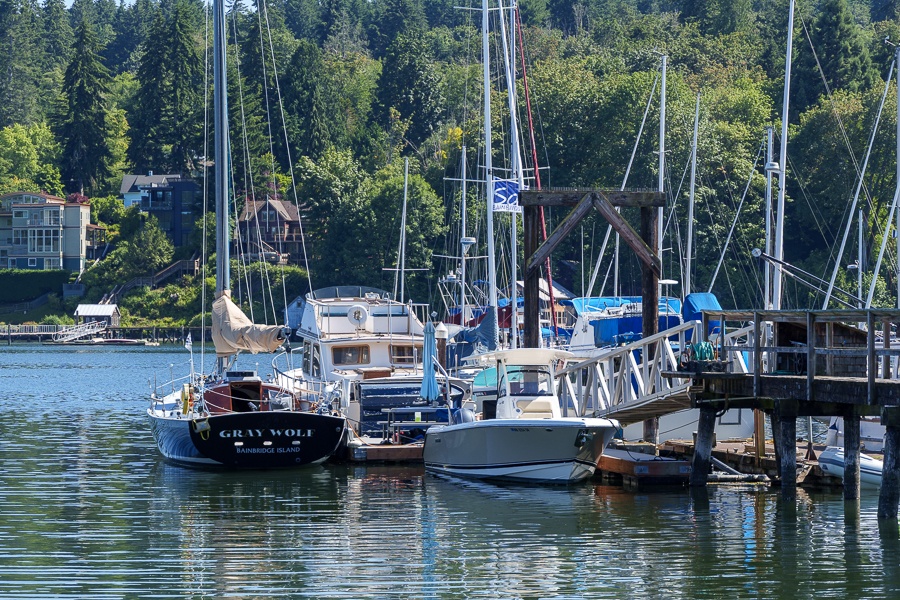
I’m surprised Jon didn’t sneeze
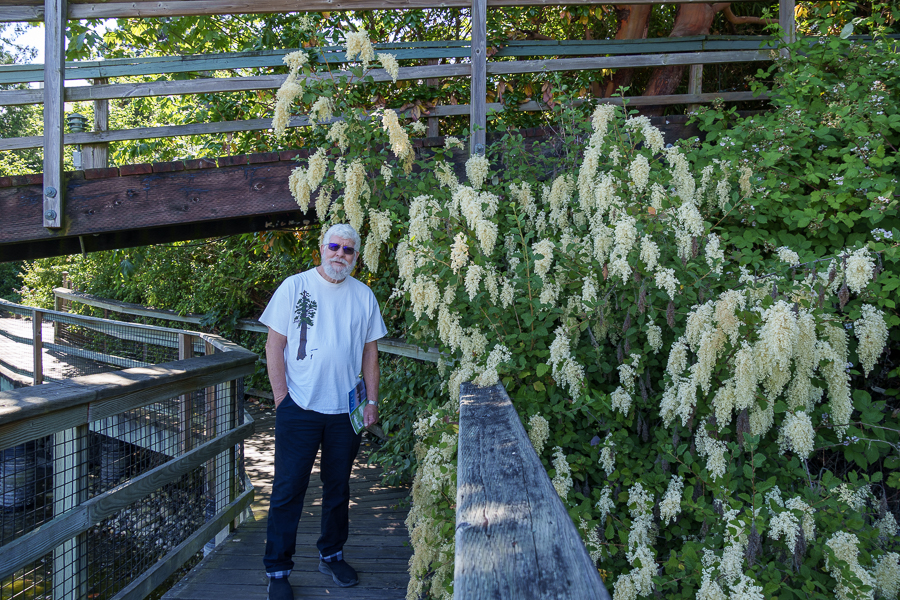
Day lilies and daises
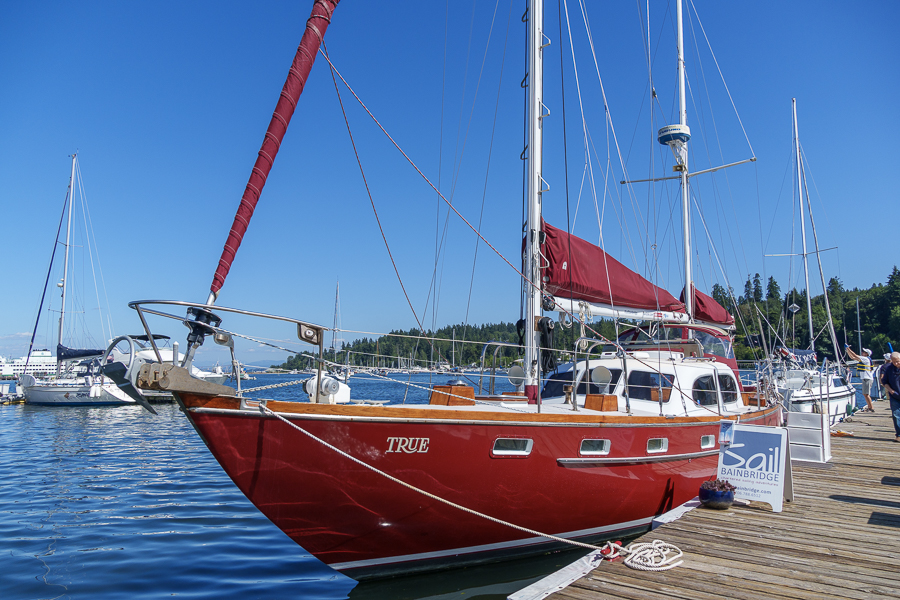
Looks like a fun boat for sailing

Camp Yeomot

Unemployed residents, using local materials, built the cabin as part of a Boy Scout Camp in 1935 through Roosevelt’s WPA program. In 1942, the US Army 202nd Coast Artillery’s Bainbridge Island housed their headquarters and added a bathhouse, which is now a classroom.
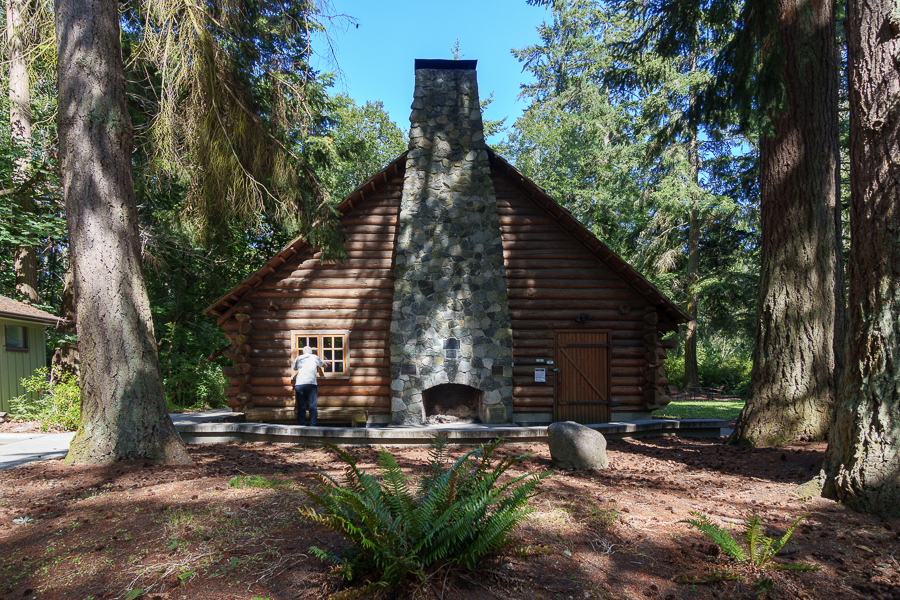
Historic Boy Scout cabin
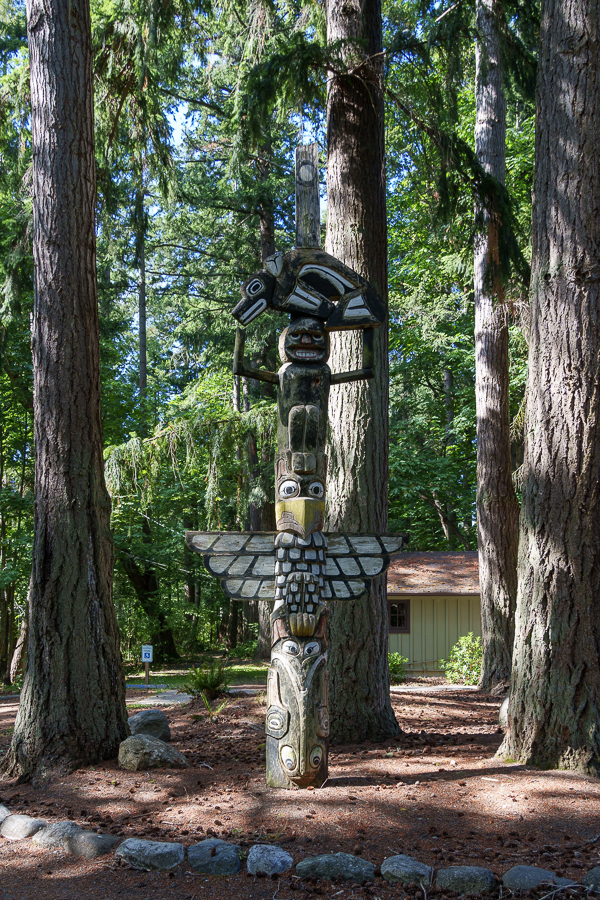
Loved this totem pole

Ownership changed to Bainbridge Island Metro Park and Recreation District in 1987 and renamed Camp Yeomalt Park in 2000. When the need for restoration was announced, an anonymous donor came forth to begin the project. Restoration using authentic materials and methods earned allowed the cabin to be included on the National Register of Historic Places in 2005.
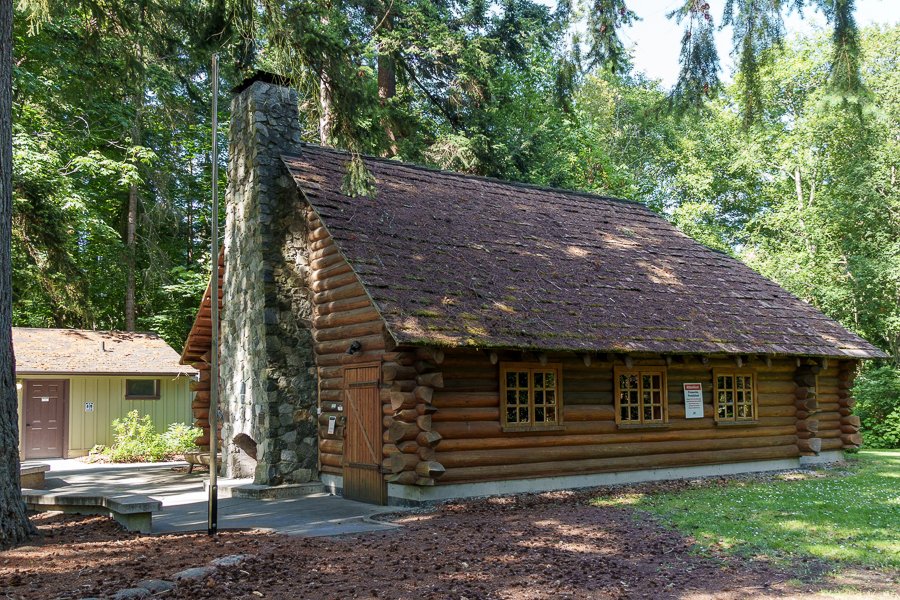
Hard to read with all the shade

Today the park district preserves the cabin and uses it for programs, youth and community activities, education, performances, and classes.

Bainbridge Island Library Haiku Gardens

The “Haiku no Niwa” or Haiku Garden at the Bainbridge Library was the perfect place to end our tour on the island. From the moment I entered the garden, the rush of going here and there all day melted away.

Bay Otters 1998 Tony Angell

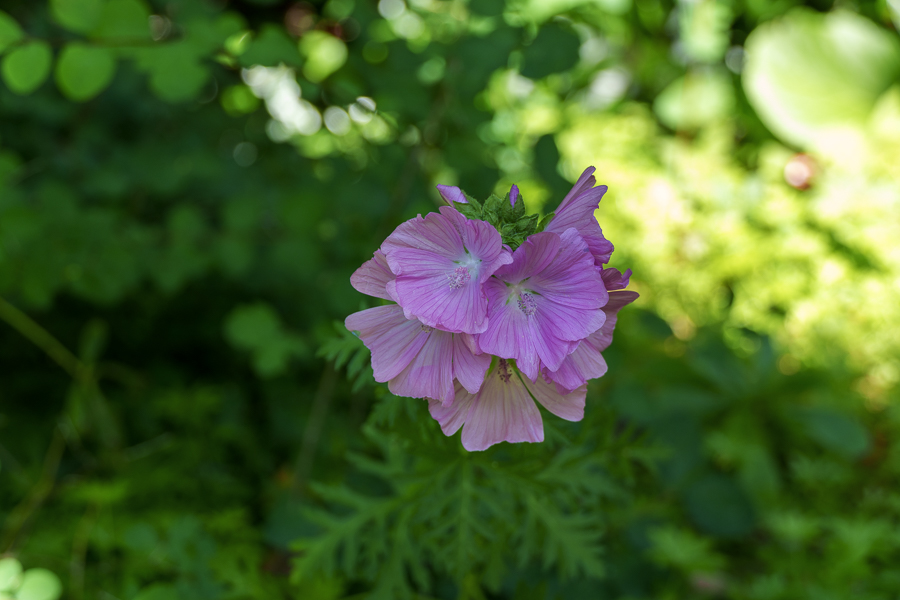
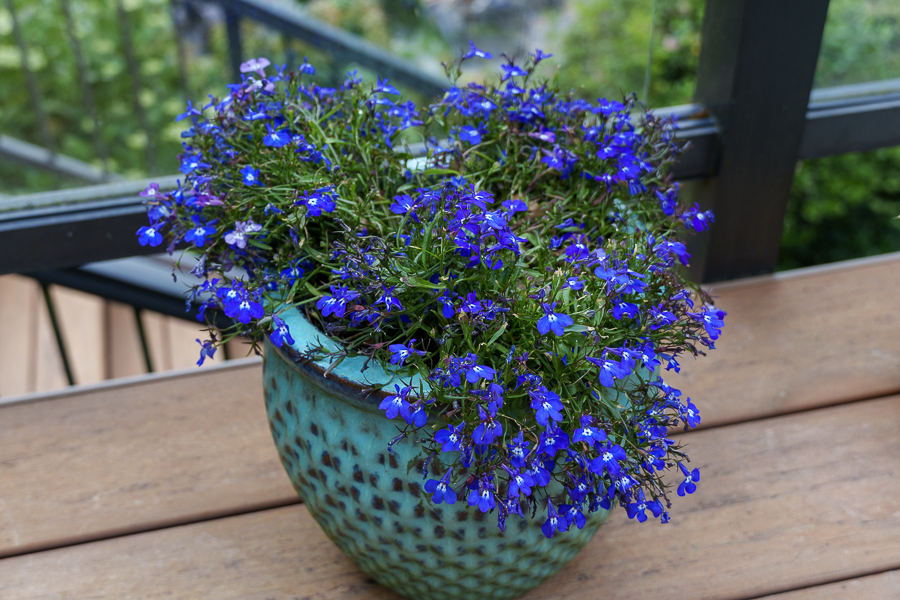
We followed a pathway on one side of the library that wound through verdant groundcover, shrubs, and trees, and led to a pond. Water flowed over rocks until cascading into the pond where koi lounged in the shady corners.

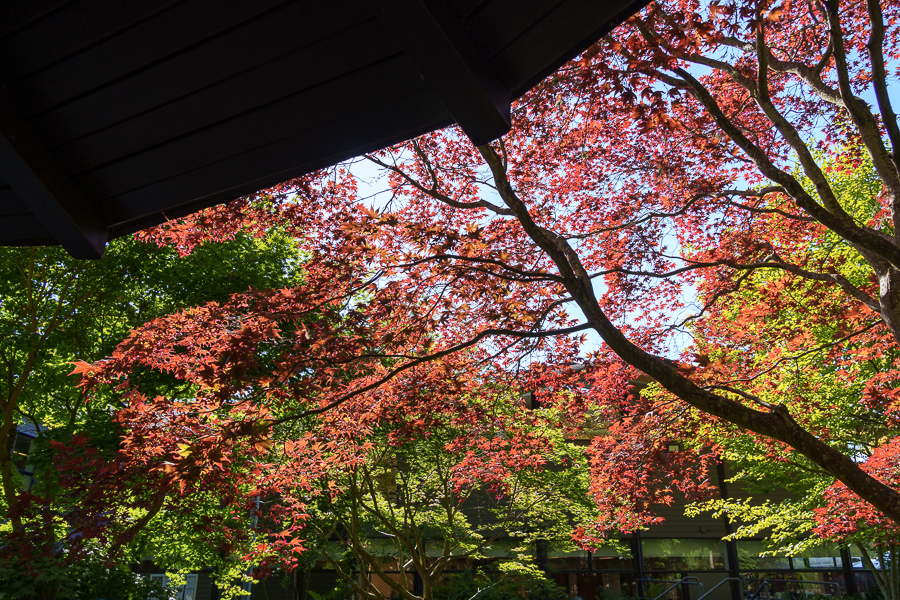
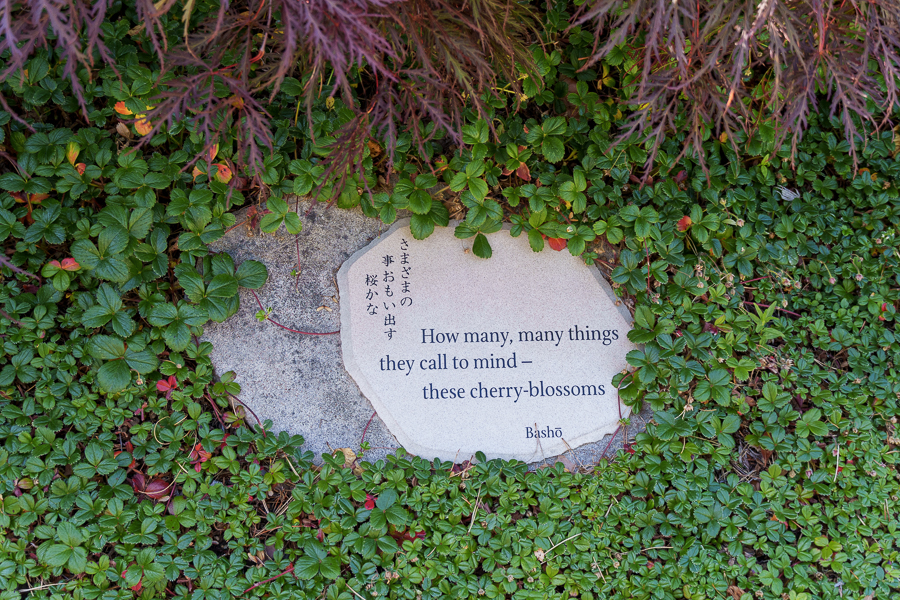
Nestled within the ground cover were concrete plaques on which haikus were written in both Japanese characters and English words. The Japanese maples furnished welcome shade and smeared splashes of red with varying hues, ranging from deep burgundy to burnt orange.
We had spent a full day wandering around the island and it was time to head “back to the barn,” as Jon might say. I was thankful for the respite in the garden. The haikus and the beauty of the place put me in a reflective frame of mind for the drive back to our trailer to settle in for the night.

Up Next: Community garden, Rosedale Gardens, and Riviera Sunset Cruise

Safe Travels

2024 Pacific Northwest Adventure Episode 3: Puyallup Farmer’s Market, Bonsai Museum, Rhododendrons, City of Poulsbo

One benefit of choosing the Pacific Northwest location for our adventure was we could visit with our good friends, the Greigs. We had enjoyed many days, evenings, and Super Bowls together when they lived in Walnut Creek.

Having people we know as our personal guides to the area brought us to unique places we might not have found on our own. One day they took us to the Puyallup Farmers’ Market and a Rhododendron Species Botanical Garden. Another day we picked them up in Silverdale and explored the City of Poulsbo.

Puyallup Farmers’ Market

Here’s a bit of Puyallup history. Puyallup was formally incorporated in 1890, after Native Americans had lived in the area for thousands of year, after White settlers arrived in 1830, and after the Native American War of 1855-56 led to the signing of the Medicine Creek Treaty.

Between the war and incorporation, the growing of hops became a major crop in the Puyallup area, with up to 100 farmers by 1884. This part of history Puyallup shared with Pleasanton, California, where we live. (There’s a good chance our home sits on land where hops once grew.)

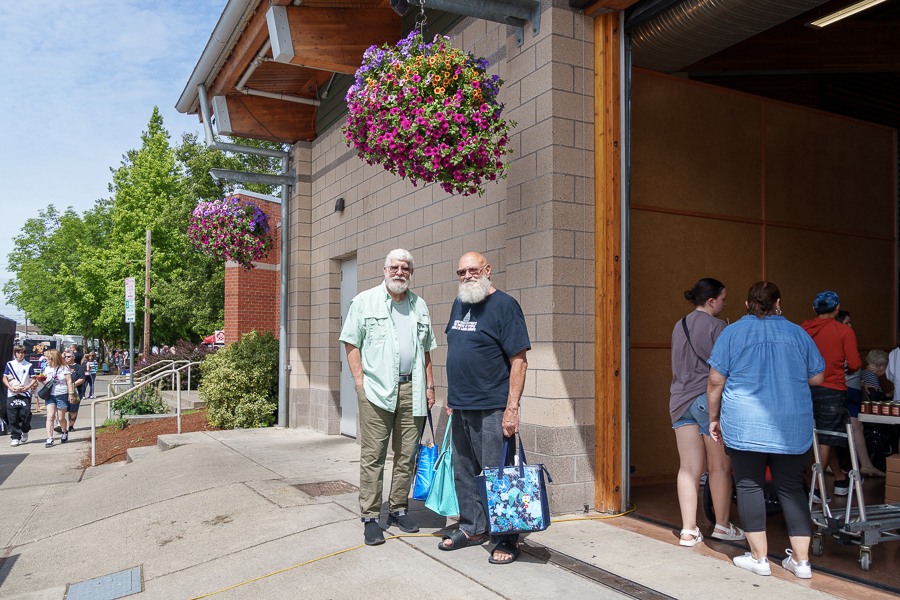
Indoor portion of the Farmers Market

By 1891, the harvest had grown to 3,000 pounds per acre. Farmers recruited Native Americans and Chinese workers to help. Then hop lice joined the party, attacked the crops, and decimated the plants in less than a year. (The blame for the demise of the hops crop in Pleasanton falls on World War I, a labor dispute, and prohibition.)

Raspberry, blackberry, daffodils, dairy, and poultry farms, along with lumber mills, replaced the hop fields. And the economy boomed.

Although local farms still grow flowers, berries, and various produce; housing and commercial businesses have replaced some agriculture pursuits. Each April, local residents and visitors honor the town’s current and historical farming past at the Western Washington Fair, along with rides, a midway, and food booths. Also in April, they celebrate with the Daffodil Festival.

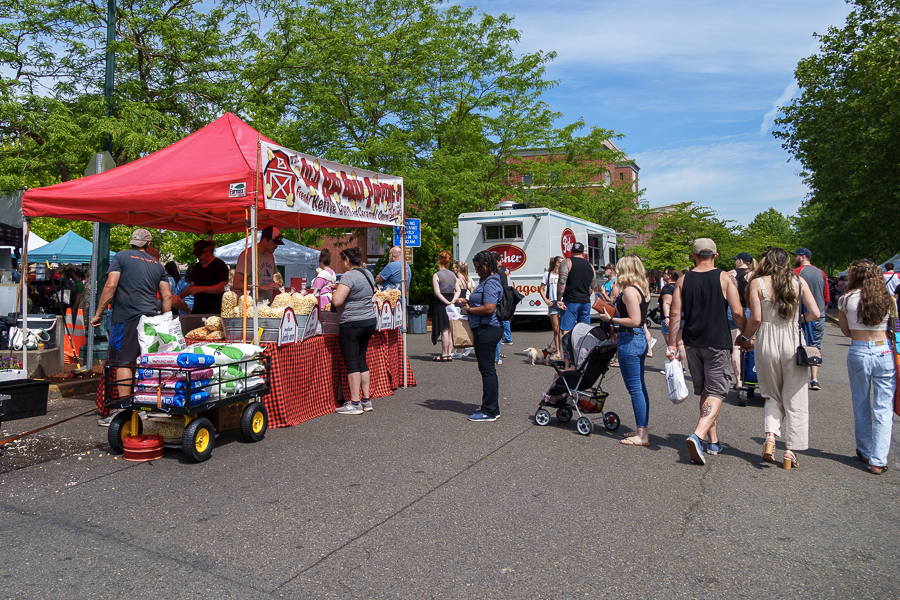
We’ve yet to find any kettle corn that’s better than
what we buy at the Pleasanton’s Farmers Market

I thought the whole town must have come out for the farmer’s market. We had to park several blocks away and walk to the entrance. People greeted each other, stood in groups, or in lines. As I wandered through the crowds, I caught bits of conversations while people shared about the weather, gossip, or told stories of their lives.

Gregor and Marylou went off in one direction, while Jon and I worked our way around outside. I found it too difficult to see what the vendors were selling, much less take photos. It was cooler inside with more vendors.

They had quite a selection of food trucks

Whenever Jon sees someone selling fudge, he has to ask if they sell penuche, his favorite. Nine times out of ten, he walks away disappointed. The fudge booth in Puyallup must have been his tenth ask, because he stepped away with a chunk of the treat made with brown sugar and no chocolate. He even shared with the rest of us.

All loaded up and waiting for Marylou

Pacific Bonsai Museum and Rhododendron Species Botanical Garden

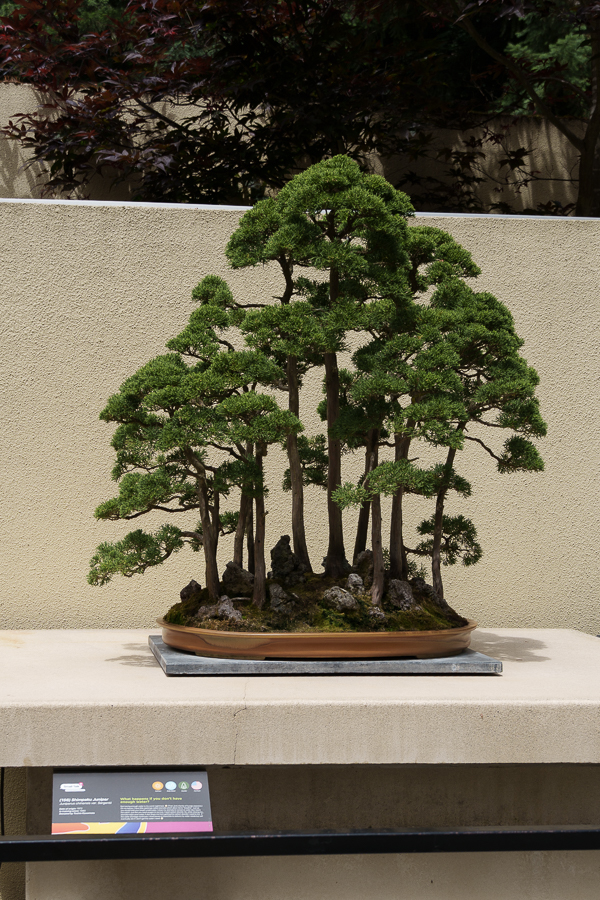
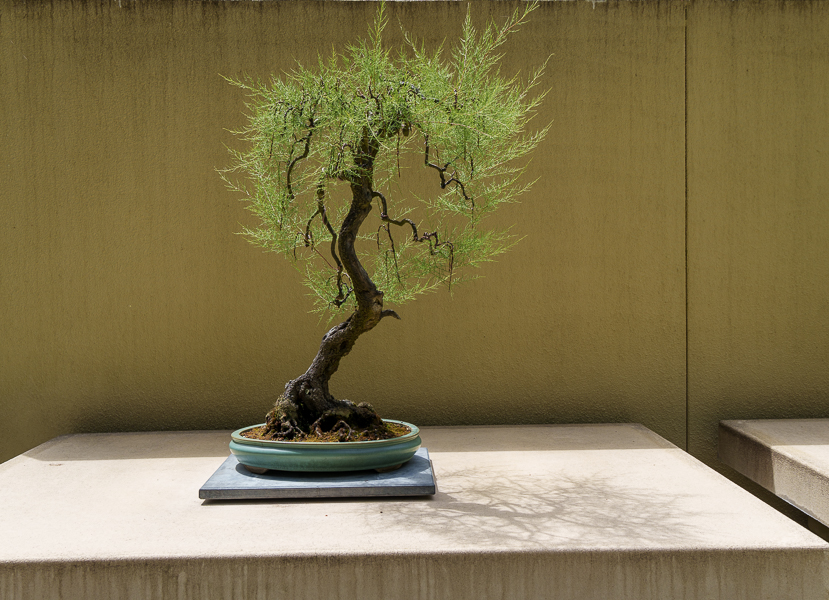
Gregor piqued my interest when he mentioned a bonsai museum. I’ve seen bonsai exhibits in other museums, but never a museum dedicated to bonsai. What a surprise to walk around and read the markers showing the dates of origin. One plant dated back to the 900s, and another originated in the 1500s.

Shimpaku Juniper – Origin Date 1972 – In training since 1980
Chinese Juniper on Sierra Juniper – Origin Date 990 – In training since 1970 – The white wood is dead, only the bark covered vein is alive and growing

I wonder how many different people have trained these trees. Is their current artistic state what the first person envisioned? I’d love to go back and take a tour with a docent.

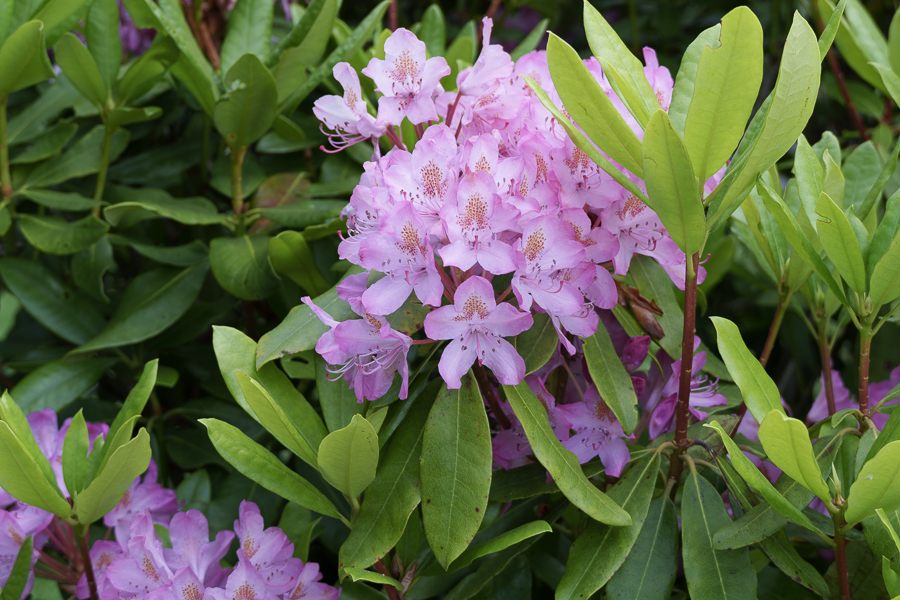
Next door was the Rhododendron Species Botanical Garden. Only a few of the shrubs and trees wore blooms.

That was fine with Gregor. He was on the lookout for new plants to add to his personal arboretum.

City of Poulsbo

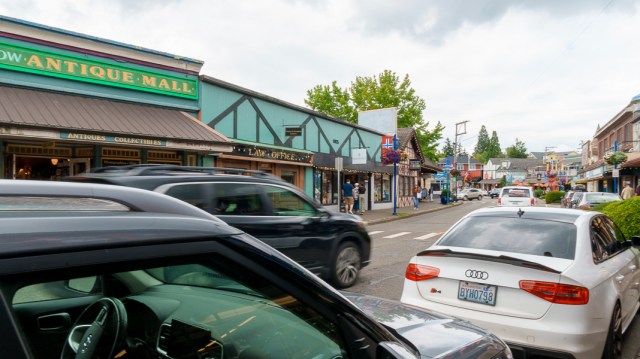
Poulsbo is a Scandinavian-themed town, also known as Little Norway. The city’s history is much like Puyallup’s. Native Americans occupied the lands before White settlers arrived and pushed them into a reservation. Available land, resources, and the landscape drew Norwegians and Scandinavians to the area in the 1880s from Midwestern states.

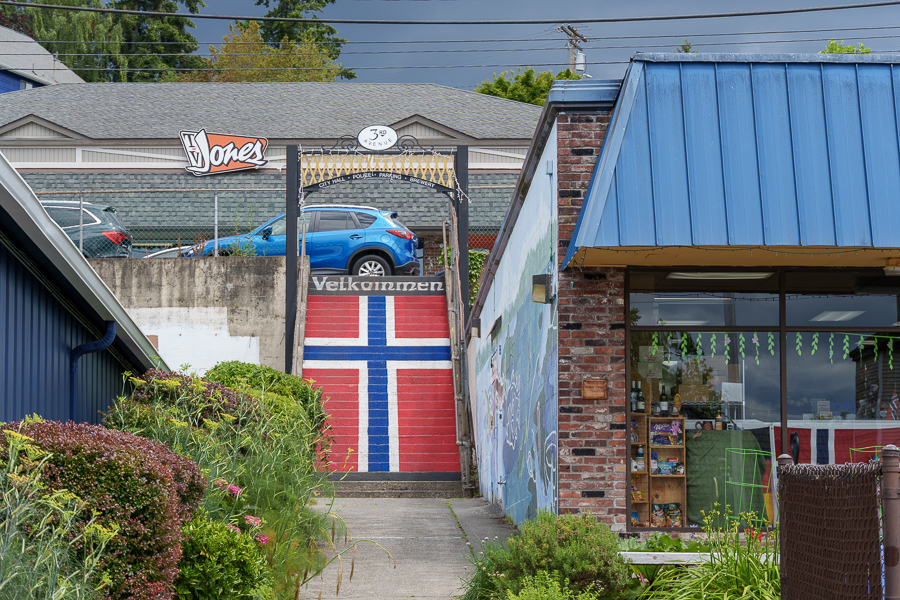
Poulsbo street scene

The historic downtown includes shops and galleries and restaurants. In May they hold a Viking Fest, which sounds like fun. Liberty Bay is the place to go for water sports boating, kayaking, and paddle boarding.

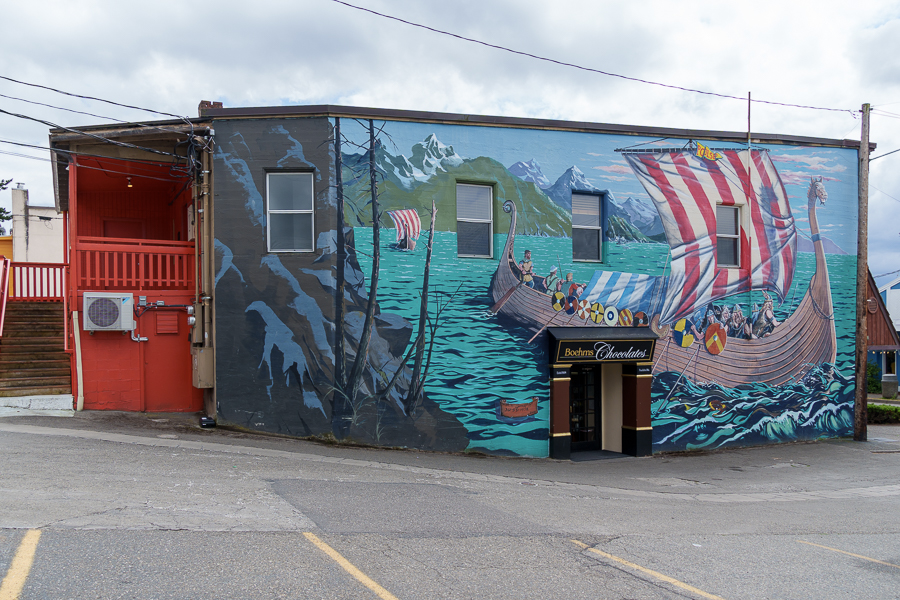
A sample of the many murals around town
Be careful when navigating the steps

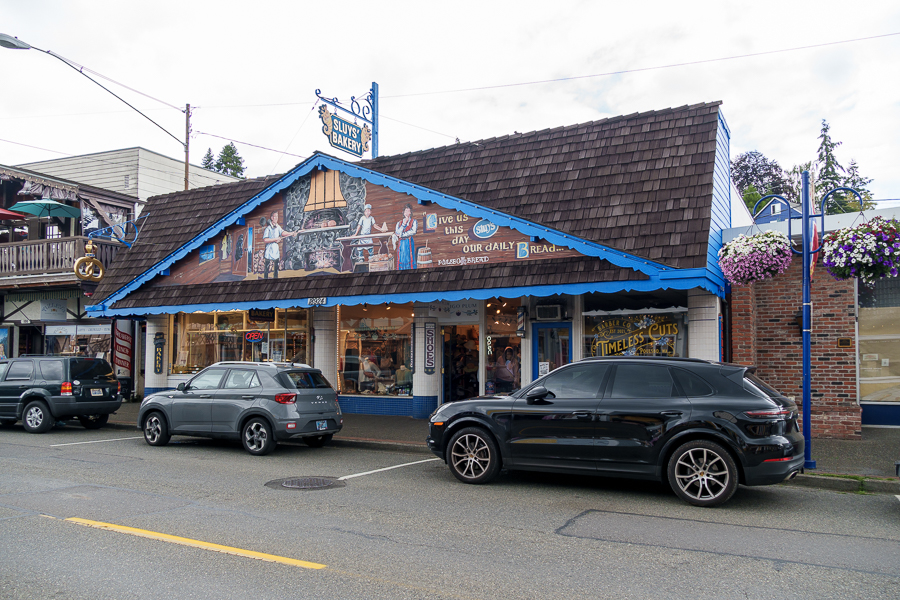
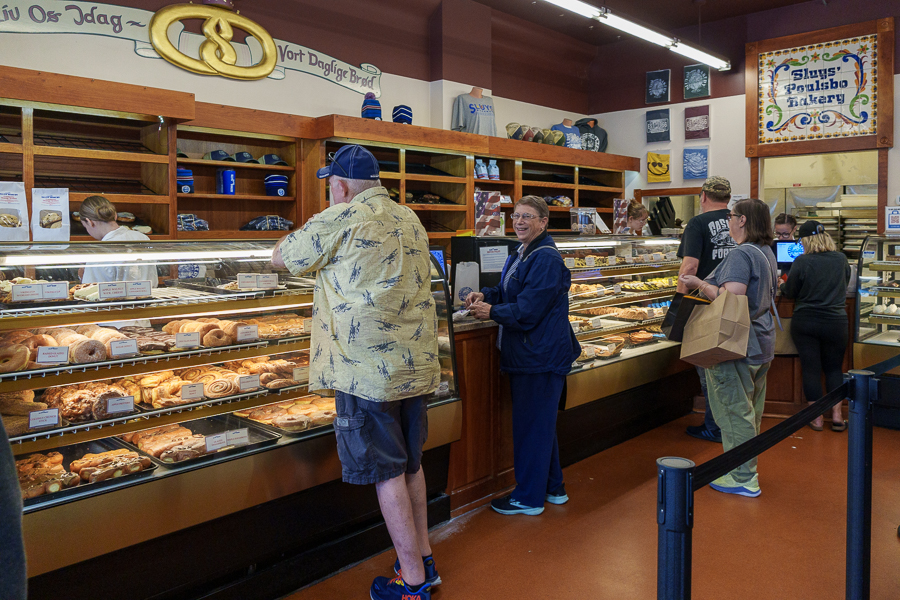
We stopped at Sluy’s Bakery to sample their pastries. The bakery is famous for its Poulsbo Bread—a bread created by using the Ezekiel 4:9 scripture verse. Had I known about the bread while there, I would have picked up a loaf. Instead, my eye spied a donut and pastry with cream cheese and raspberry filing. Maybe I’ll call them and order a loaf or two and have it shipped.

Sluys Bakery
Customers deciding which delicious pastries to select

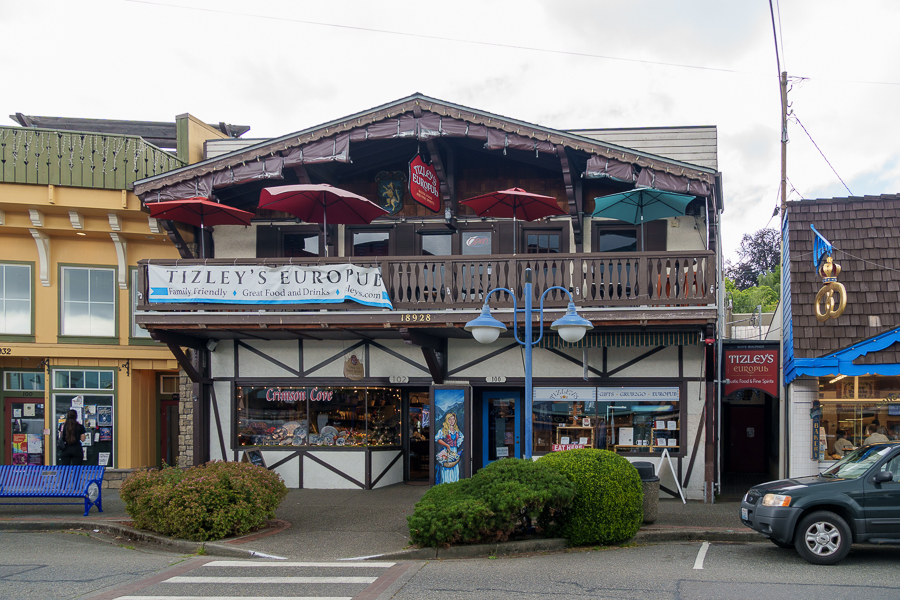
For our Scandinavian dinner, someone had recommended Tinsley’s EuroPub for a bite to eat. I had the Swedish meatballs with Rotkohl (German Red Cabbage) and mashed potatoes. Jon had Shepherd’s Pie. The Greigs both had Rueben sandwiches. The meal was good, not great, and the service was a bit uneven. I’m not sure what was going on because only one other table was occupied. Maybe it had to do with us arriving between lunch and dinner, and perhaps it would have been better during peak hours. Who knows?

Tizley’s EuroPub
Liberty Bay Books

The Greig’s Home

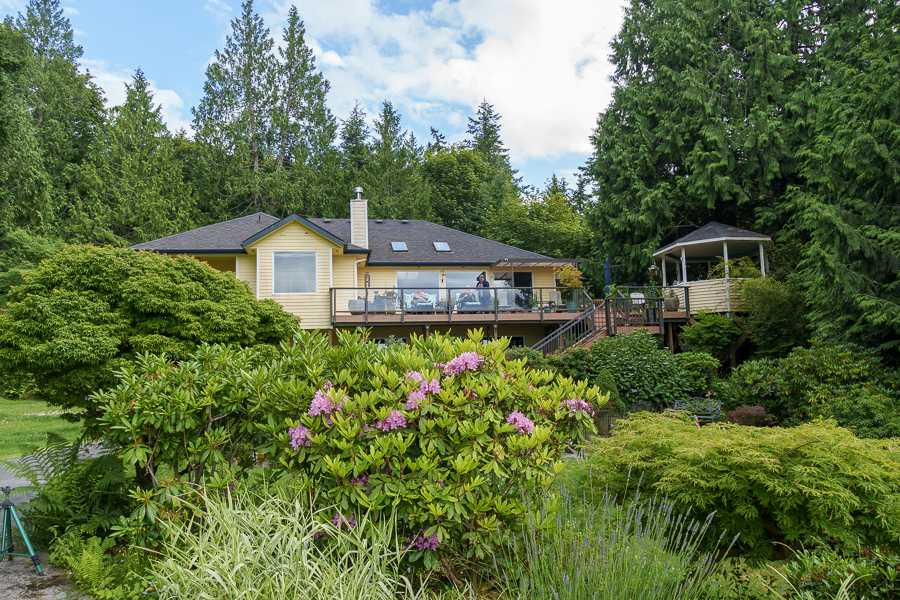
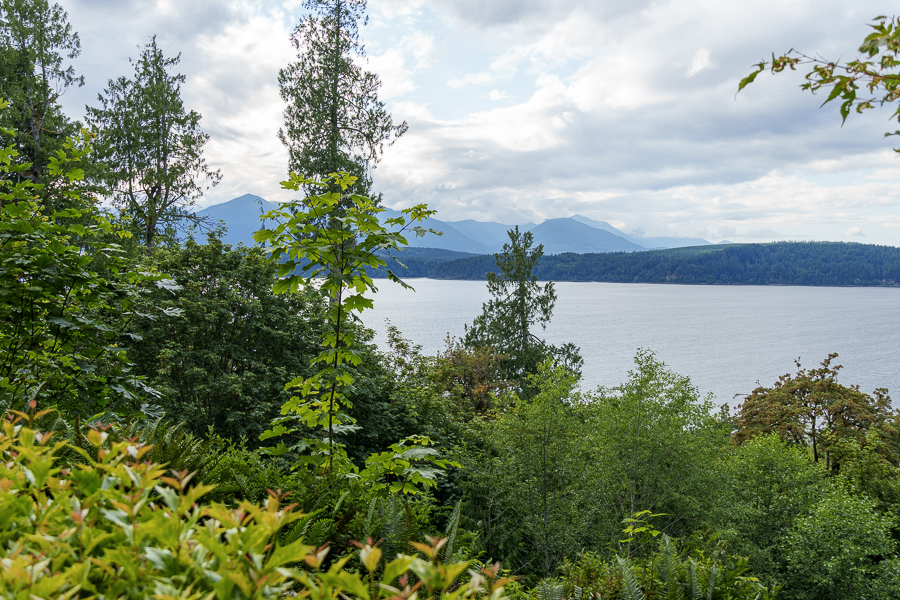
Gregor and Marylou have found their slice of heaven overlooking the Hood Canal. Views from inside the house, views from the deck at the back of the house, views at the fire pit on the lower level of the yard, and a view closer still to the cliff that drops off into the water are all perfectly situated to inspire wonder.

Marylou, Gregor, and Jon

We had the pleasure of visiting twice. Once when we went to Poulsbo and again to celebrate Gregor’s birthday. Both times, I felt safe and at peace surrounded by the beauty he has cultivated during their time owning the home. The views, the flora, and crisp sea air left no room for the world’s chaos to invade my thoughts.

For a respite, take time viewing the photos below. With no words to read, imagine sitting in a chair, skin brushed by a cool breeze, the scent of evergreen in the air, swallows flitting in and out of the trees, a cormorant or an eagle gliding on thermals.

Happy 80th Birthday Gregor. Thanks to Marylou for inviting us. We had a blast visiting with your family and friends. And thank you for sharing your wonderful garden.

Eighty? Really? Looking good for 80 years.
Don’t forget the gifts
Yummy birthday cake
Make a wish

Next up: Bainbridge Island, Japanese Exclusion Memorial, Rosedale Gardens, Riviera Boat Cruise.

Safe Travels
2024 Pacific Northwest Adventure Episode 2 Gig Harbor, Washington

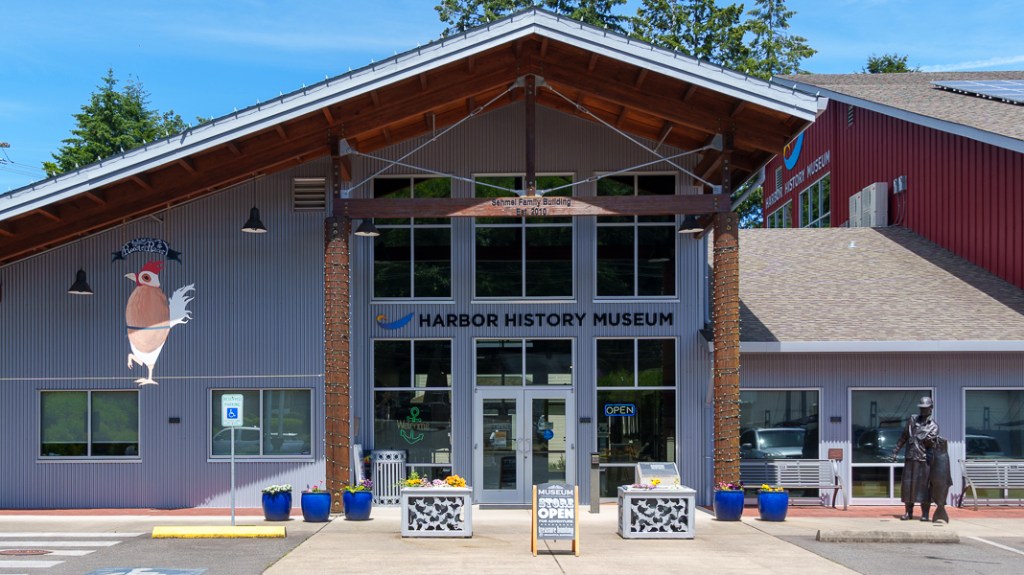
We enjoy local museums to gain an understanding of the community and its history and the Gig Harbor Historical Museum did just that. The museum’s centerpiece, a labor of love for a multitude of volunteers, and a pride of joy is the 65-foot fishing boat Shenandoah.

The museum, established in 1964, began operations in 1976. The doors are open and docents are present to assist visitors on Sundays through Tuesdays from 11:00 am to 4:00 pm. They also offer programs for students. Here are but a few of the exhibits that caught our attention.

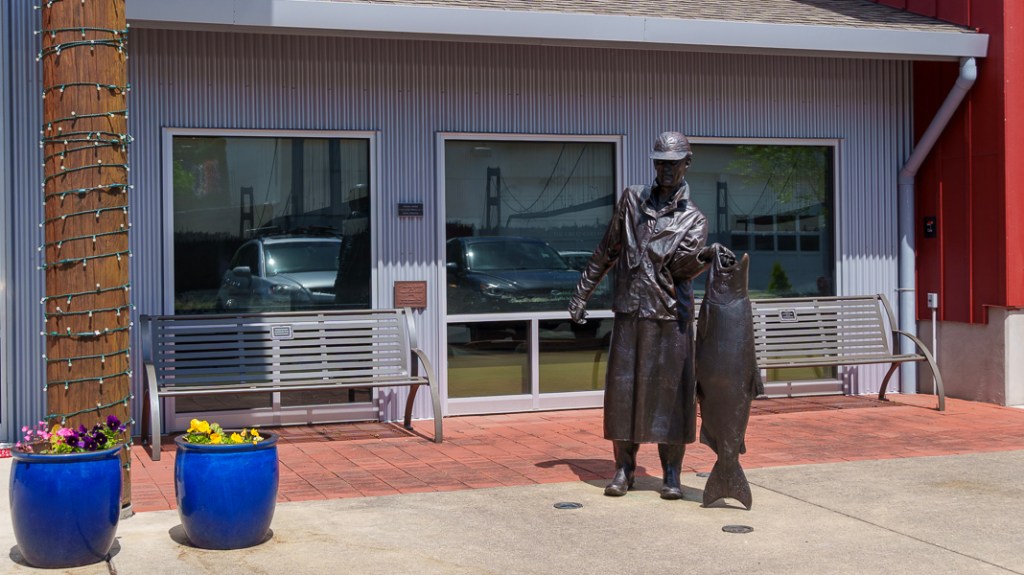
The Big Catch by Douglas Granum, life-sized bronze sculpture

Before we looked at the Shenandoah, though, we found plenty to contemplate inside while waiting for the docent to escort us into the Maritime Gallery.

Shenandoah’s home

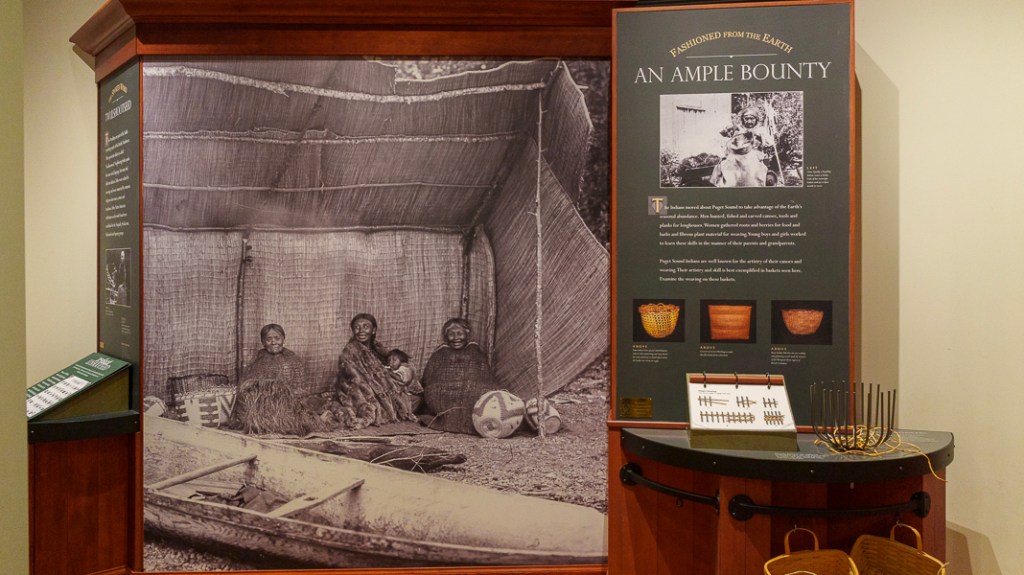
The museum honors the ancient peoples who occupied the land before a U.S. Exploring Expedition arrived in 1841 with their own exhibit. The people who lived and visited in the area were from the Puyallup, Nisqually, and Squaxin Island Tribes. The Native Americans had occupied, hunted and gathered on land, and fished the sea for many years before the expedition’s arrival.

Native Americans near Gig Harbor are known for their basket weaving
Early mailboxes and mailing slot
Gig Harbor was a draw for Scandinavian immigrants
The Mosquito Fleet refers to the 126 steamers that plied the Pugent Sound waters from Seattle to Olympia, carrying commerce and passengers for over 60 years.

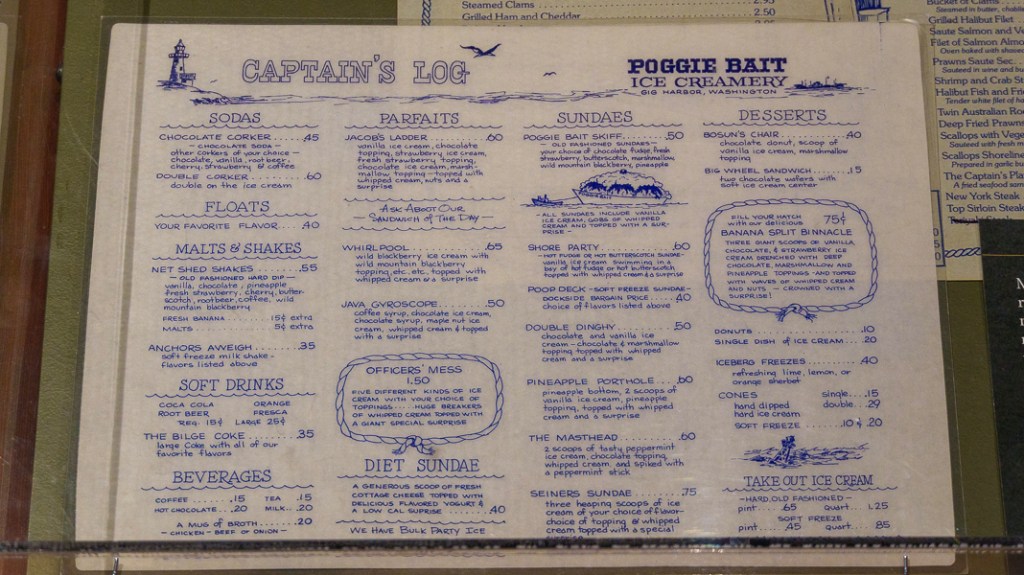
Poggie Bait. The phrase surprised me. I never heard the term before I met Jon and had thought it was a term used by his Slovak mother and grandmother. Down into another rabbit hole, I crawled to research its true etymology.

Menu from Poggie Bait Ice Creamery

The phrase has a few meanings, one of which is a naval term meaning sweets and snacks and spelled as pogey. Aha! It didn’t come from his Slovak side; it came from his father who served in the Navy during WWII. A mystery I had never been curious about before solved through my research while writing this blog post.

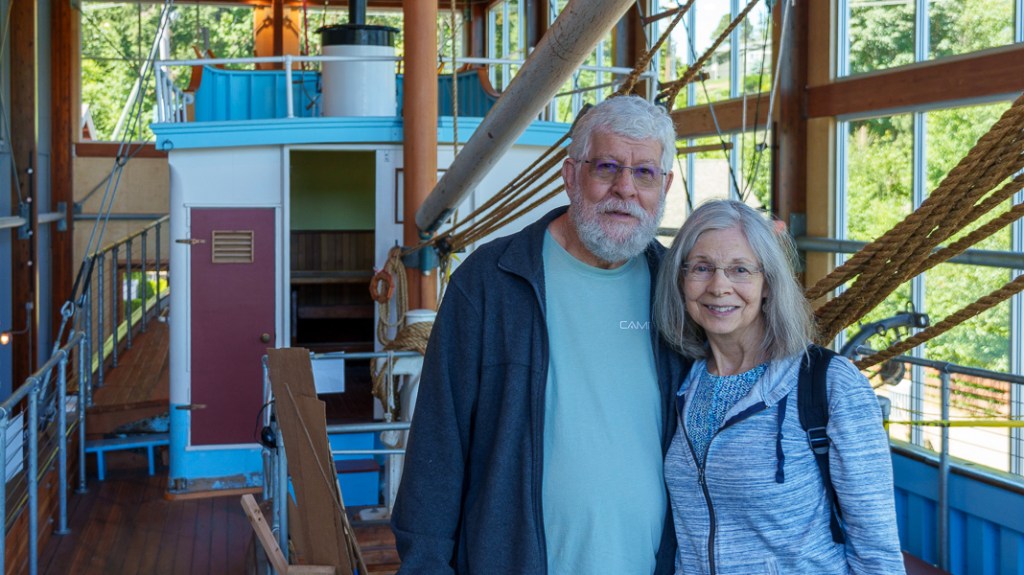
The docent freed up, so we followed her into the maritime gallery where she allowed us to step aboard to look around on deck and peek inside the building.

The deck portion of our tour.

The three lives of the Shenandoah over the past century: The Skansie Ship Building Company in Gig Harbor built the 65-foot purse seiner in 1925 for John Dorotich. Its first life began as a cannery tender and later a purse seiner in Alaska from 1925 to 1967.

To fully explore the life of the Shenandoah, the preservation merged two periods of its life. The port side shows its original 1925 build while the starboard side reflects how it looked during 1970-80s.

Its second life began when Tony Janovich purchased the fishing boat in 1967 and operated it until he retired in 1998. He then donated it to the museum in 2000, which began the ship’s third life.

Rudder and propeller

In 2003, the museum pulled the ship out of the water, paraded it through town, and deposited it in a lot next to where the museum is now located. The museum began a $2 million capital campaign in April 2019, which was later raised to $3 million. Campaign donations made possible the conservation and renovation of the Shenandoah, enclosure of the Maritime Gallery, and creation of new exhibits.

The museum celebrated 100 years of the Shenandoah on April 26, 2025. We wish we could have been there to join in the celebration and see the finishing touches on the exhibit.

Hmm. Atlas Imperial diesel engine from Oakland, California. Their factory closed in 1950, yet some of their engines still operate today, according to Wikipedia.
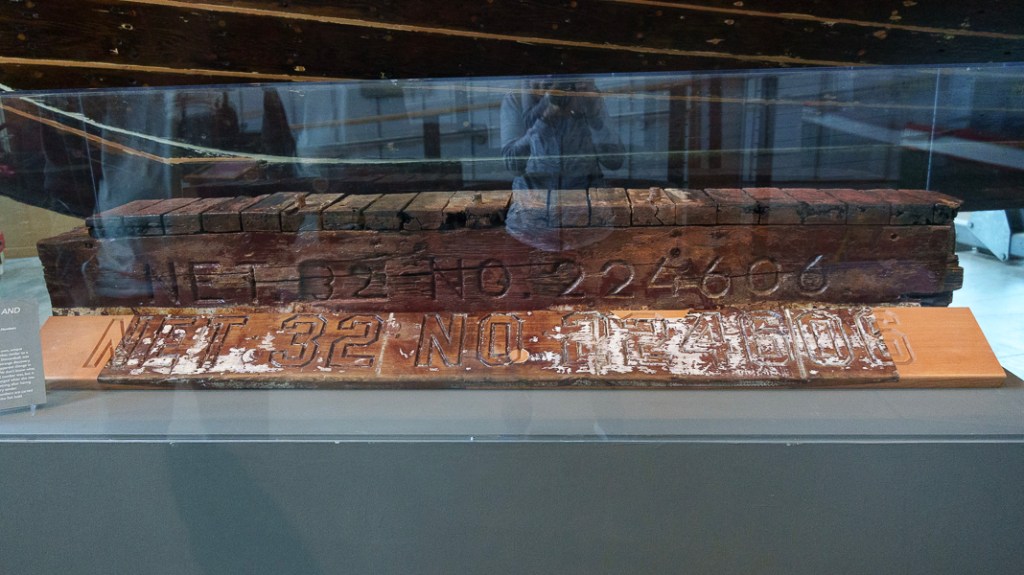
The vessel’s hull identification number

Outside, we peeked inside the Midway School Building. The museum offers grade-appropriate programs for schools.

School building placed on National Register of Historic Places in 1987.
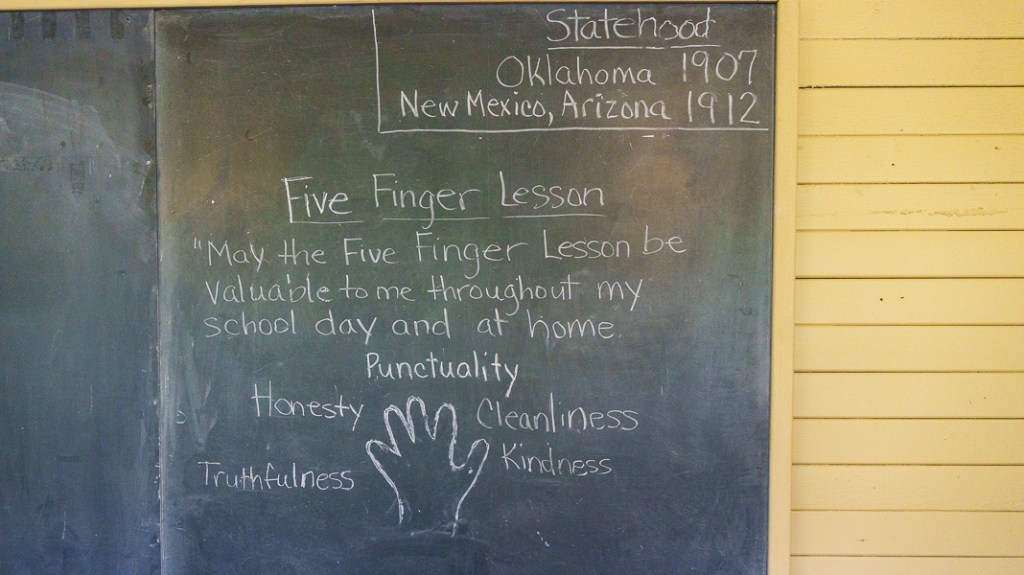
I never heard of the Five Finger Lesson, but I like it.
Jonny waits for class to start

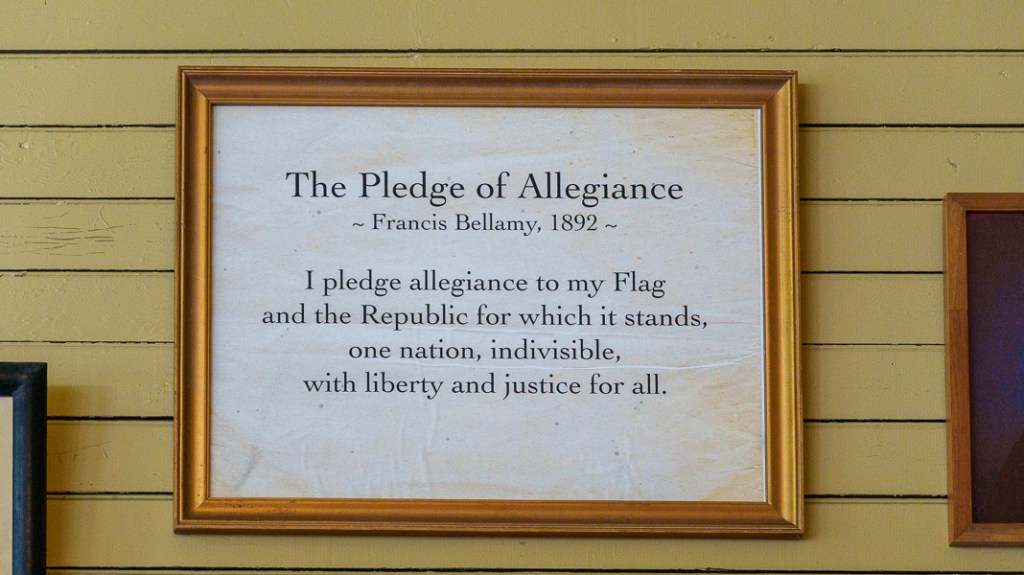
What possessed me to check the Pledge of Allegiance quote citation? I shimmied down another rabbit hole in search of Francis Bellamy, who is credited with writing the pledge. It seems a 13-year-old schoolboy from Kansas by the name Frank E. Bellamy, coincidentally, may have been the first to write the pledge.

Did one author steal from another? Did they each come up with something very close on their own? Who knows when over a century has passed? I gave up. If reliable historians cannot agree, I sure won’t figure it out. Besides, congress made word changes when they formally adopted it in 1942 and altered it again in 1954.

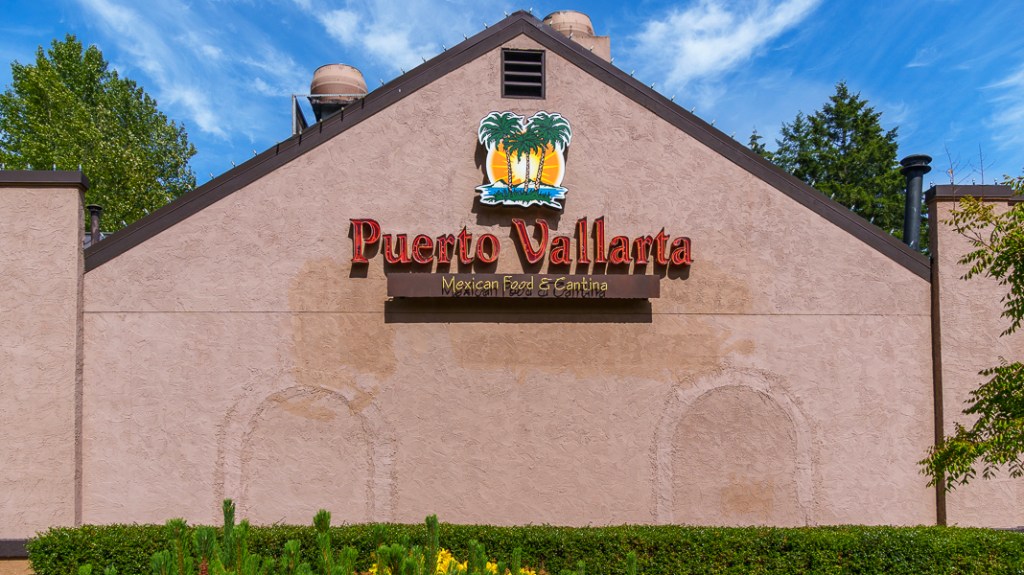
Famished by the time we finished with the museum. We’re always on the lookout for Mexican food when we travel and we’re happy to say Puerto Vallarta satisfied our hunger for the cuisine.

The building looks great except for that stucco job.

If the rest of our Pacific Northwest adventure turns out as interesting as the Harbor Historical Museum, this trip will turn out grand.

Up next: Puyallup Farmer’s Market, Pacific Bonsai Museum, the Rhododendron Species Botanical Garden, and Poulsbo, Washington.

Safe Travels
2024 Pacific Northwest Adventure: Episode 1 On Our Way to Gig Harbor

I’m sad to say, the year 2023 didn’t end on a cheerful note for me. While boarding a plane in December, I slipped and broke the head of my right humerus in three places. Doctor appointments and physical therapy kept us from venturing too far from home.

Our “get-away” day finally came on June 20, 2024, after my final physical therapy session. We hooked up the fifth wheel, climbed in the truck, and headed north with smiles on our faces and adventure in our hearts.

While many RVers might rush to reach their destination, putting in long hours of driving, we prefer a more leisurely pace. We planned six days for our trip to Gig Harbor, Washington, from the San Francisco Bay Area. This allowed us to stay two nights at each stop and poke around a bit.

Our first stop was Fawndale Oaks RV Park in Redding, California. I would rate this park as “okay,” if we ignore the electrical issue that prevented us from running the AC. Thank goodness trees provided enough shade to limit the heat. Fortunately, the grass had not yet turned brown because the antique fire truck did nothing to soothe our fear of a fire evacuation order during our stay.

This rig didn’t appear to be in working order

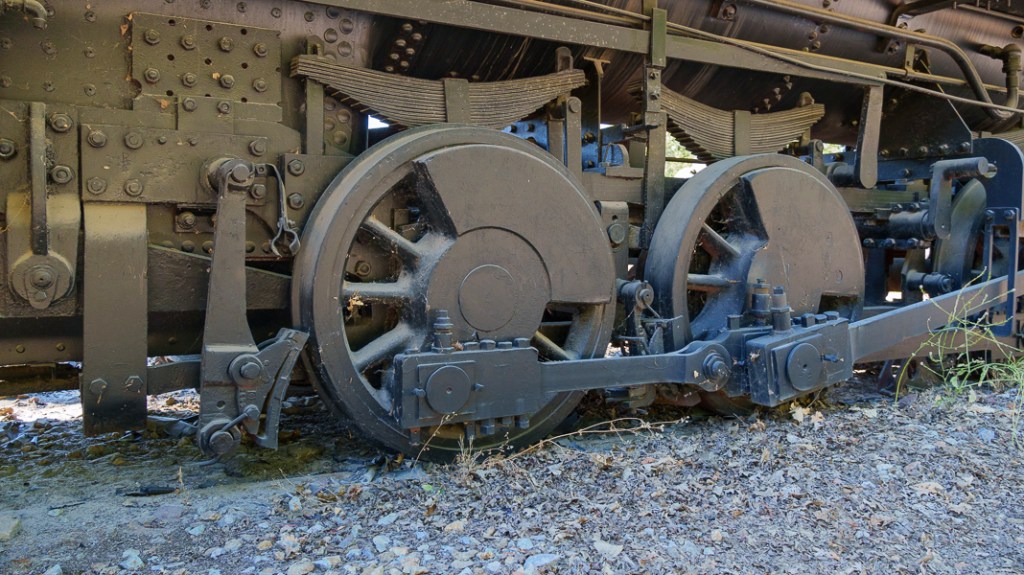
A recent resident at the Fawndale Oaks RV Park is the Sacramento Valley & Eastern Railway Locomotive No. 2, a Baldwin 2-6-2T. The plaque says it was dedicated on December 11, 2021.

Train engine built in Philadelphia in 1902
Detail of the running gear

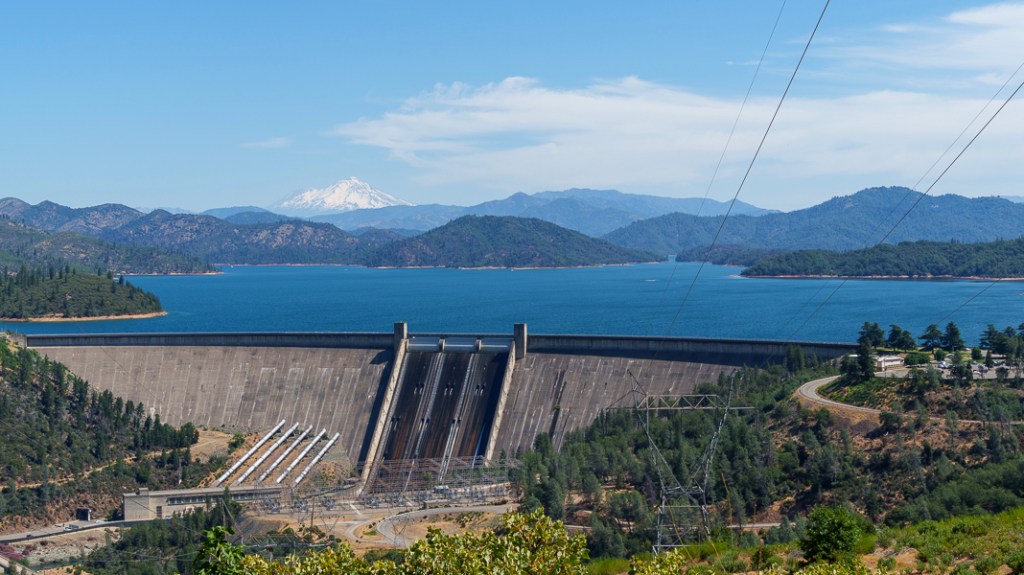
The next day we drove to Shasta Dam. My goal was to capture another photo of the Three Shastas: Shasta Dam, Shasta Lake, and Mt. Shasta. We last visited the area in 2013. That year we took the full tour of the dam, which we enjoyed and highly recommend. This year we only walked along the top and enjoyed the view.

Photo taken April 24, 2013
Photo taken June 21, 2024 from a different location
Sacramento River downstream from the dam
From the dam a view of Mt. Shasta 70 – 75 miles away
View of Shasta Dam visitor center from the dam

We then drove to Burney Falls, only to see them from a distance because the trail was under construction.

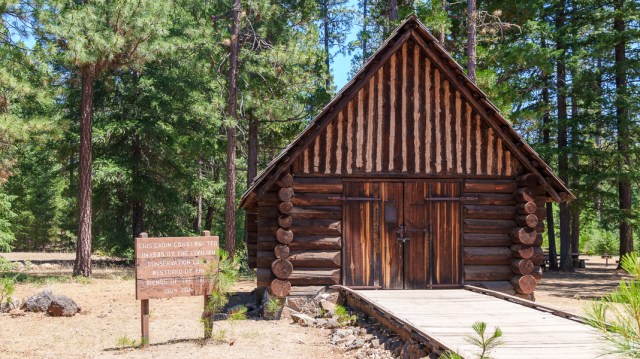
Nearby, we saw a cabin constructed in 1935 by the Civilian Conservation Corps (CCC). The sign says the Friends of the Falls restored the cabin. I’m guessing the restoration occurred between 1984 and 1986 since the plaque includes those dates. It amazes me whenever we encounter a CCC project, and I’m pleased we can enjoy the hard work the men put in to create all the infrastructure and amenities throughout the country.

Reconstructed CCC cabin

For our second stop, we chose Rising River RV in Roseburg, Oregon, on the banks of the South Umpqua River. This RV Park earned a “great’ rating for their wide spots with short picket fences between them, plenty of grassy areas, and large shade trees that weren’t overgrown. They also had awesome bath houses with individual showers and restrooms like campers might encounter at a state or federal park.

The next day, Jon was on a mission to: 1) find fabric for a tablecloth he wanted me to make and 2) search for a water-flow gauge. I’m not sure why he thought we needed fabric then. It’s not like we had the sewing machine with us and I sure wouldn’t sew it by hand. We found material we liked at Joann’s and packed it away for when we returned home. He wasn’t so lucky in the search for a water-flow gauge. We tried at least six stores with no luck. Defeated, we drove through the Dutch Bros Coffee and treated ourselves to mocha frappes. There’s nothing like a mocha frappe on a hot summer day to soothe disappointment.

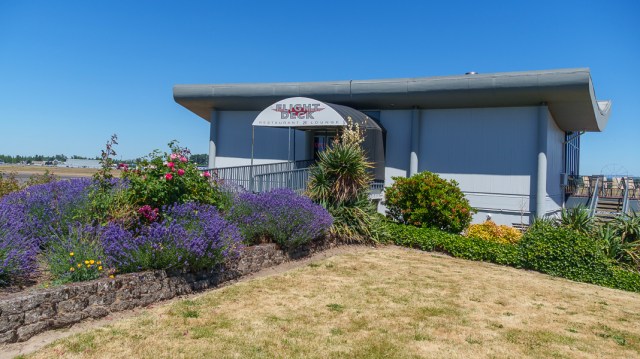
Next stop was Salem, Oregon, where we hoped to visit the Capitol building and take a tour. We arrived at Hee Hee Illahee RV Park around two. After set up, it was too late for lunch and too early for dinner, so we found the Flight Deck Restaurant at the Salem-Willamette Valley Airport serving exceptional food. So if you eat around three do you call it “dunch” or “linner”?

Flight Deck was a great place to stop and have a meal.

We’ve had positive experiences with regional airport restaurants in the past and Flight Deck did not disappoint. Salmon and asparagus for me were delicious, and Jon dubbed his Swiss burger, “the best I’ve eaten in a long time.” Another winner.

We love watching the planes take off and land

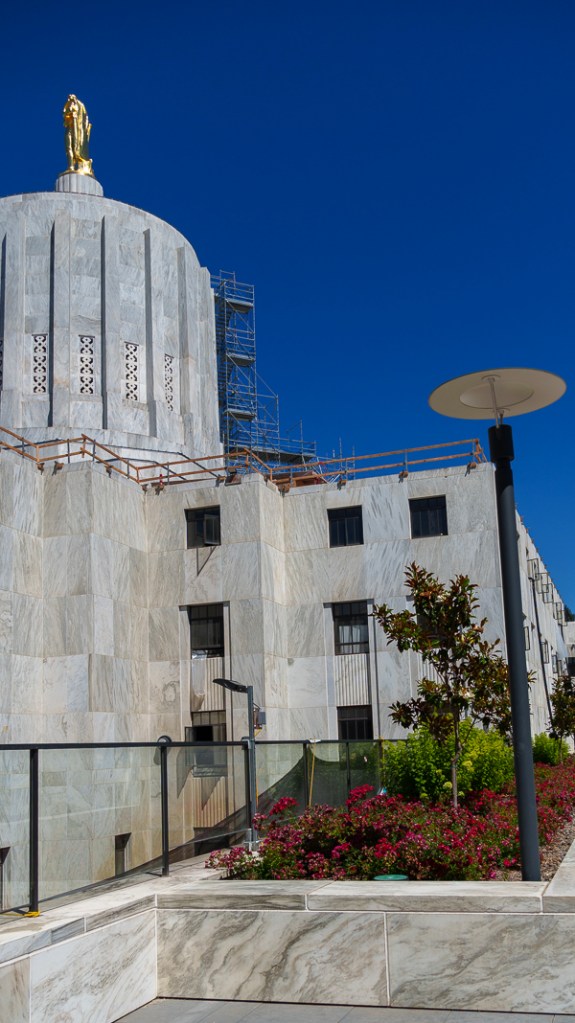
Our planned adventures in Salem didn’t turn out the way our meal did. A major reconstruction project at the Oregon Capitol prevented us from seeing most of the building. Elevator access to an upper level allowed us to walk onto a balcony that ran from one wing of the building to another. From there, we could see Waller Hall across the street.

World War II Memorial
Names etched on the wall of the memorial
A Parade of Animals by Peter Helzer in foreground. Note the scaffolding and Oregon Pioneer atop the building.
A closer look of Oregon Pioneer

Oregon Pioneer (also known as Gold Man), created by Ulric Ellerhusen, is a twenty-two-foot-tall hollow bronze sculpture with gold leaf. Installed The sculpture, installed in 1938, is visible from various places throughout Salem.

And even more detail

Waller Hall, built between 1864 and 1867, had started its life known as University Hall. The name changed in 1912 to honor Reverend Alvan (Alvin) F. Waller, the person who spearheaded the fundraising to construct the building. Materials used in construction included 500,000 bricks made from the clay soil removed to build the basement. While a fire decimated the interior of the building in 1921, the sturdy brick walls—about thirty inches thick—remained intact.

Waller Hall

And as one might imagine, the building has gone through major renovations throughout its nearly 160 years. From the one building university, Willamette University has grown to 56 buildings around Salem and in Portland, Oregon.

Japanese anemone perhaps?

A quick peek at the capitol’s website at the time of writing this post revealed all guided tours should resume during 2025. Perhaps they will occur in the fall?

On June 26, 2024, we pulled our rig into Sun Outdoor Gig Harbor Resort for a 12-night stay. At first, the tight spot they gave us with no neighbors on either side was a disappointment. Once we settled in, though, we had to rate it “excellent” for its coziness and privacy.

Our temporary home at Sun Outdoors Gig Harbor

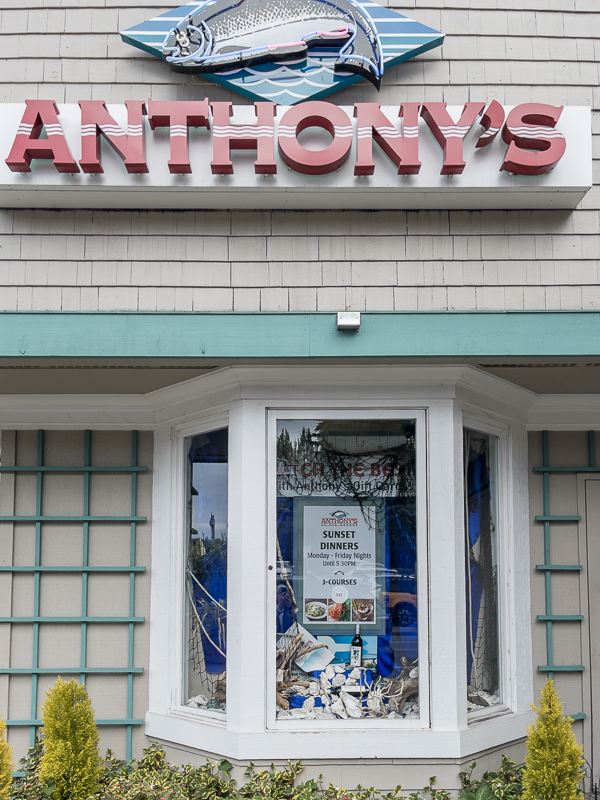
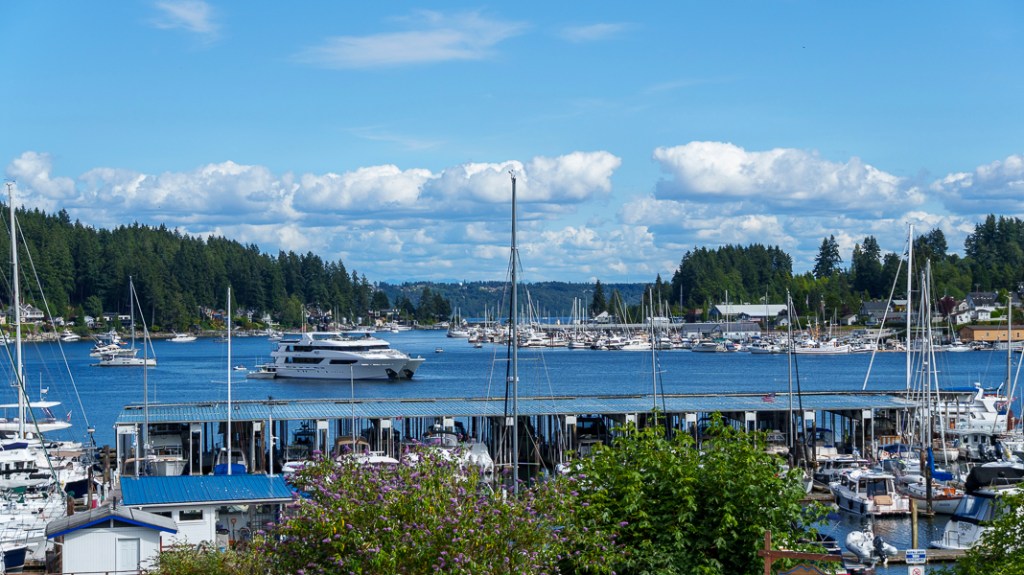
After our days of travel, we craved a reward: a seafood dinner, a glass of sparkling wine, and views of the harbor at Anthony’s at Gig Harbor. Viewing the photos and writing about the meal made my mouth water.

Anthony’s for delicious seafood and a view of the harbor
View of the harbor from Anthony’s
Another view of the harbor

We were happy to have arrived safely in Gig Harbor and looked forward to all we would do and see, even if we looked a bit bedraggled and tired.

Linda waits for her food
Jon takes a break from the view

Up Next: Museums, farmers’ market, gardens, boat tour, and so much more.

Save Travels