Lakeview, Oregon, and Graeagle, California

Junipers Reservoir RV Resort in Lakeview, Oregon

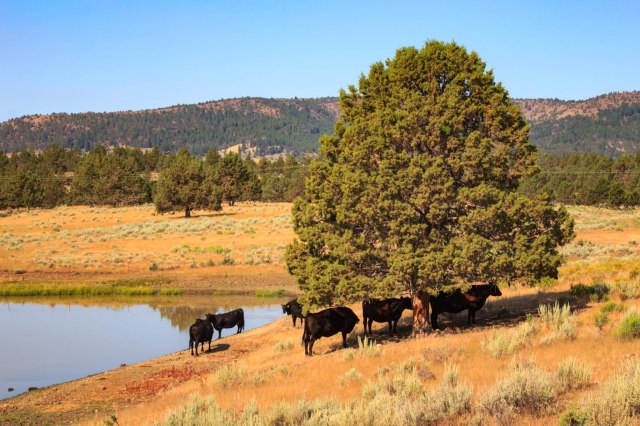
On July 26, 2017, Junipers Reservoir RV Resort in Lakeview, Oregon, turned out to be another working ranch. We have had good experiences staying at ranches and hoped for the best here.
IMG_3803
Junipers Reservoir RV Resort and Ranch

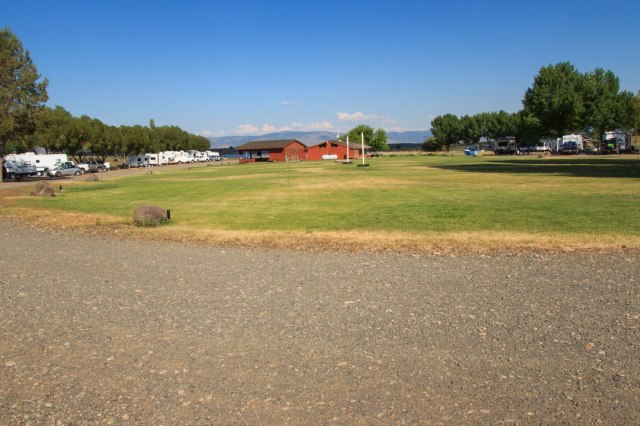
About a mile down a gravel road off the main highway and tucked behind hills, the RV sites were arranged in a circle with tent sites at the edge of the grassy center field.
IMG_3780
Junipers RV Resort

This was a great place to clean the trailer, wash clothes, then sit back and relax.

IMG_3782

One evening, we walked along one of the ranch roads and veered off onto a trail where a deer grazed among the trees.

IMG_3779
Hello There.

The trail continued until we came to a creek. “Come on,” Jon said. “We can cross on those dead tree trunks by the barbed wire fence.” Say what? With care not to fall in the little creek or grab one of the fence barbs, we balanced on the logs and found the trail up the hill. I was glad to see a road that connected with the resort and relieved to have made it back to the trailer with no damage to any of our body parts.

Here are a few more photos from around the ranch.

IMG_3787
Farm Equipment
IMG_3789
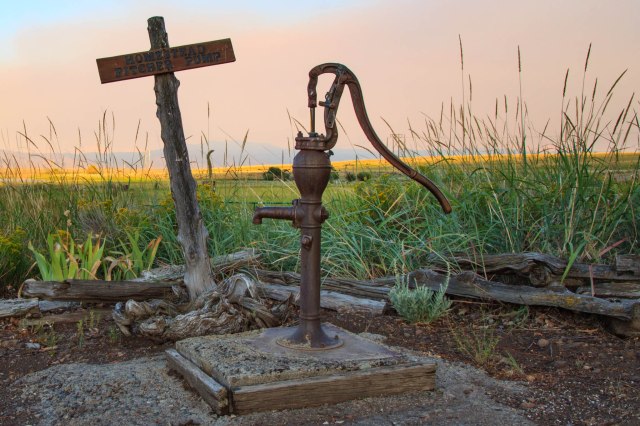
Homestead Pitcher Pump. Smoke Rolling into the Valley.
IMG_3786
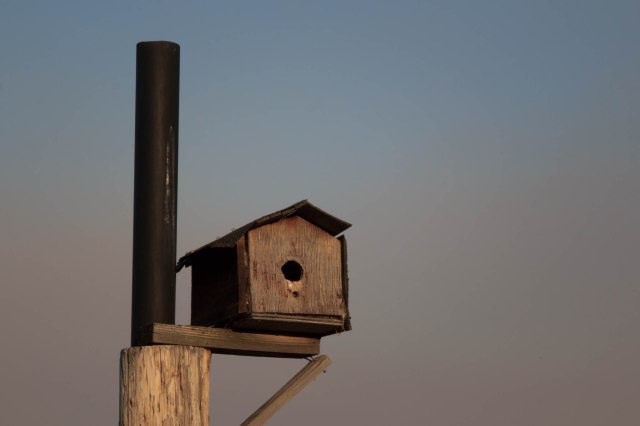
Little Birds Flitted In and Out of the Birdhouses

Before leaving the area we headed into town to restock the refrigerator and the pantry. While there, we found a little nature trail that circled up a hill at the city park. We didn’t make it through the entire trail because at one point bushes grew over the trail. I wasn’t about to blaze the trail with bare legs and arms. Before heading back down, we enjoyed the view.

IMG_3797
Town of Lakeview

We bought a bag of limes and other items from the smallest Safeway I had ever seen. We then drove to Goose Lake. There is not much there except a state park that would be a good spot for an overnight, but not much longer. Smoke from a fire in Alturas blew in overnight raining ash even though we were an hour away.

Contraband Confiscation

On July 29, 2017, we turned the wheels toward Graeagle, California, our next stop. Smoke grew thicker as we continued on Highway 395 and approached Alturas, California. We slowed and stopped at the California Agriculture Inspection. The woman greeted us with the usual questions of where we had stayed and then said she had to look inside our trailer. What? We’ve never had that happen before. After her grand tour, she stepped out of the trailer carrying our newly purchased bag of limes. Really? The limes we purchased yesterday from Safeway? Safeway had probably transported the limes into Oregon from California, now California Agriculture was confiscating them? Note to self, when traveling from Oregon into California, don’t carry any citrus products.

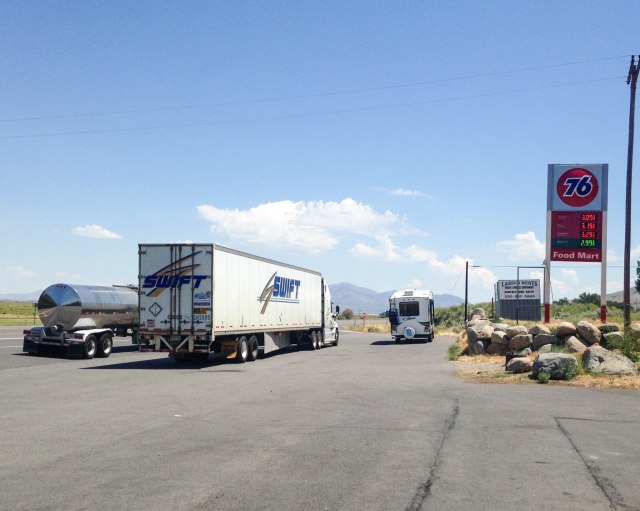
About ten miles from the crappy rest stop with pit toilets and some kind of water feature, the skies turned blue and clouds became visible. We stopped in Herlong, California, at a The Mark mini-mart and 76 Station for fuel and as a bonus purchased fresh made-to-order deli sandwiches. Be aware the sandwiches are huge. They also sold the usual pizza and fried food, such as corn dogs, chicken, and burritos. The picnic table inside and the one outside were both filled with people chowing down their lunch, so we stood next to a retaining wall, which was the right height for eating our sandwiches. When driving on Highway 395 we recommend a stop at this 76 station. As you can see there is plenty of room for RVs and semis to park
IMG_1525
The Mark Mini-Mart and 76 Gas Station

Moving West RV Resort

We arrived at Moving West RV Resort and they assigned us one of the best spots in the park. The fifth wheel fit snuggly among a stand of trees. On the curbside was a large grassy area with a triangle tarp for afternoon shade and a newly installed redwood fence along the dusty lane, which rarely saw a vehicle pass.

IMG_3804
Moving West Campsite

Raptor Adventures

The reason we stopped at Graeagle was so Jon could take advantage of his Christmas present, a Raptor Adventure with Jim Tigan. How wonderful to be up close with Louise the owl,

IMG_3812
Louise the Owl
IMG_3813
My What Large Eyes You Have

Fifi the golden eagle,

IMG_3834
Fifi the Golden Eagle
IMG_3838
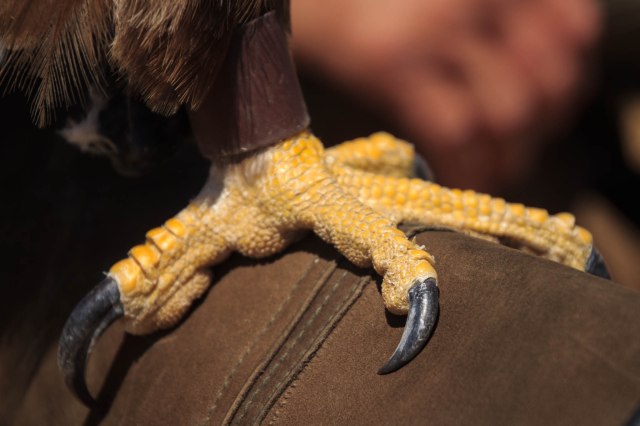
Check Out Her Talons
IMG_3839
Okay, I Posed. Now, Where’s My Meat?
IMG_3840
Soft Feathers

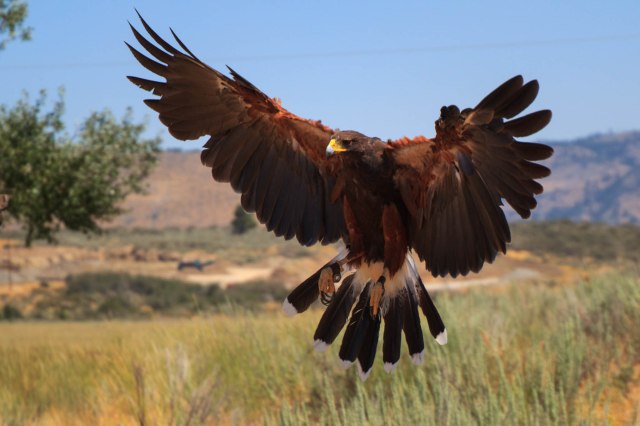
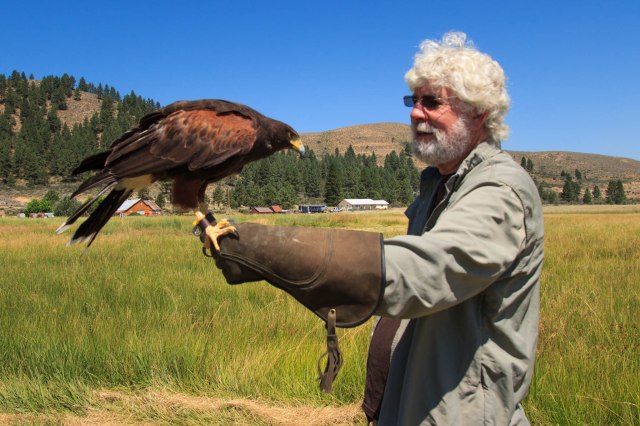
and go for a walk with Sonia the Harris hawk.

IMG_3920
Sonia the Harris Hawk
IMG_3908
Look at My Wing Span


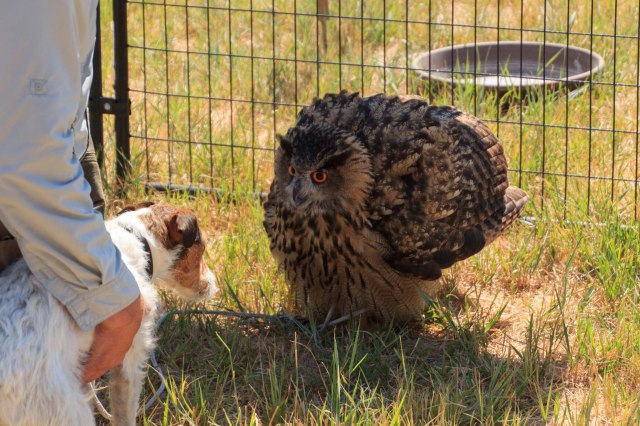
The owl didn’t much care for Bonnie, the new terrier that joined the family two weeks earlier. Louise ruffled her feathers and hissed at the little dog. Bonnie was more curious than scared of the owl.
IMG_3819
Get Back Dog

Although apprehensive at first to be nose to beak with the birds, Jon warmed up and was soon talking to them like he would an old dog. He petted their soft feathers and felt them breathe under his hand. The birds were so sweet and docile, soft to the touch, yet they possessed strong talons.

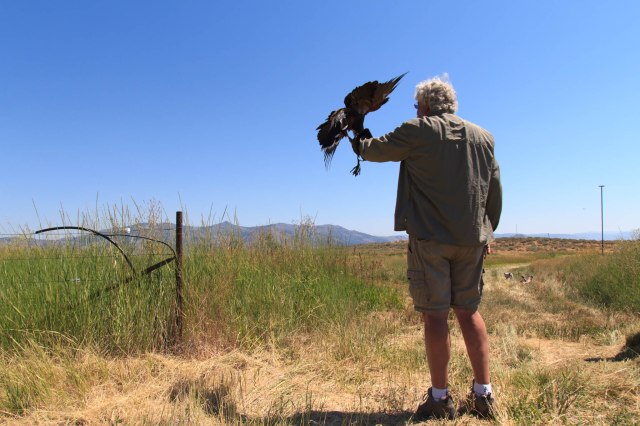
Jim taught Jon how to call Sonia from her perches, land on the glove, and peck at the meat he held in his hand.

IMG_3903
Sonia Soars From Her Perch
IMG_3879
Watch Out. Coming in for a Landing.
IMG_3880
Whew! Made it.
IMG_3891
Meat Please

I even got a chance to feed Sonia. She was so light she didn’t jostle my arm when she landed or when she plucked at the piece of meat I held in the space between my gloved thumb and first finger.

We always marvel at these creatures whenever we see them atop electric poles searching for their dinner or in the sky coasting on thermals with their wings spread wide. We appreciate their magnificence even more after meeting them up close and personal.

To see a PBS program about Jim and his birds, click here. To see a Youtube video of best friends Annabelle the dog and Louise the owl click here.

Madora Lake

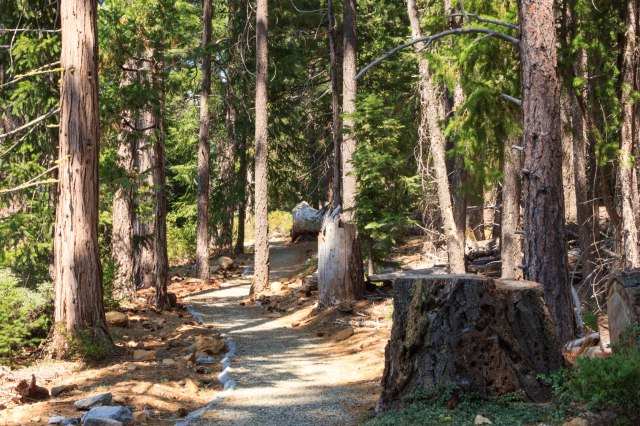
The next day we took a hike to Madora Lake. We saw signs the trail was under construction, but no one was working that day. In places, large rocks edged the trail and fine gravel filled the space between the edges.
IMG_3977
Madora Lake Trail
IMG_3979
Come On. Let’s See Where This Bridge Goes.
IMG_3978
Madora Lake Trail
IMG_3975
One of the Few Places to See the Lake

Eureka Lake

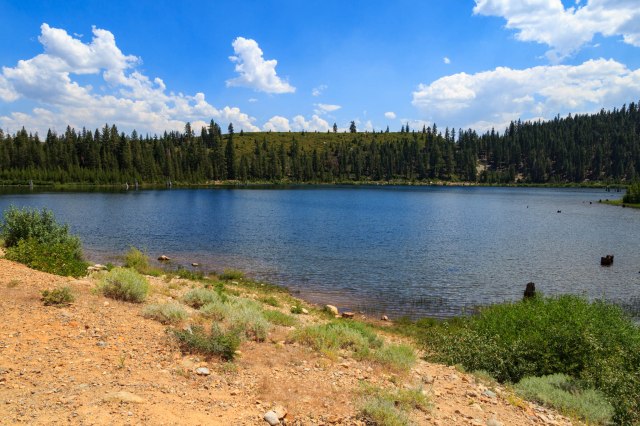
We next drove to Eureka Lake on a dirt road for 1.3 miles and hiked up a trail until we had broken through the tree line. From the side of the mountain, the view gave us the feeling that we were on top of the world.
IMG_3988
Alpine Eureka Lake
IMG_3987
Heading Down the Trail

A cold Frostee was in order after our drive and hikes.

IMG_4001
Make Mine Cherry

On Tuesday, August 1, 2017, we put the adventures and miles behind us and turned the truck toward home. We’ve seen wonderfully beautiful mountains during our travels these past few months, but Donner Pass on Highway 80 in California had to be one of the best with its high cliffs that rise above the freeway and rushing river that flows not far from the road. As we dropped down into the Central Valley, blue skies and puffy white clouds gave way to gray haze and smog. Temperatures nearing 100 degrees and a spare-the-air day welcomed us home to the San Francisco Bay Area.

Stay tuned for our next adventure to Southern Utah and Northern Arizona where we gazed down at the hoodoos of Bryce, up at the cliffs of Zion, and across the Grand Canyon from the North Rim.

Safe Travels
Tri-Cities Wrap Up and On to Oregon

Sacajawea State Park

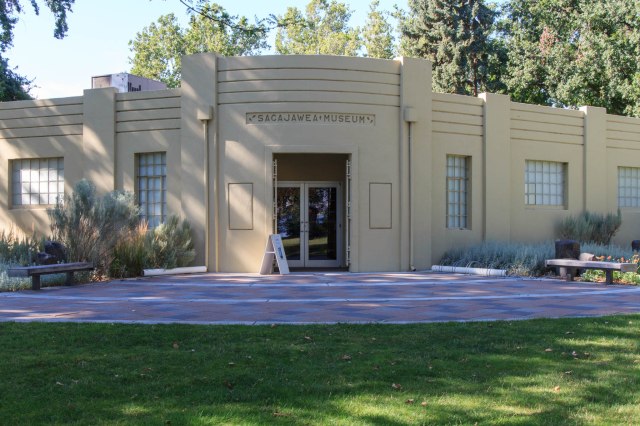
Our last visit in the Tri-Cities area was the Sacajawea Historical State Park and the Sacajawea Interpretive Center along the Columbia River.


IMG_3618
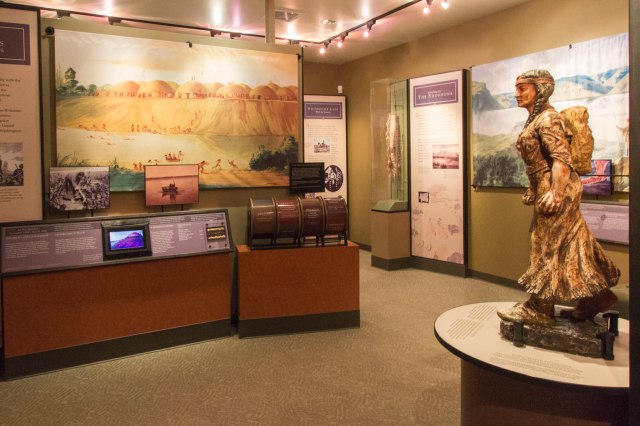
Sacajawea Interpretive Center


The museum tells the story of Sacagawea, her husband, and the Lewis and Clark expedition near the site where the party made camp for two nights at the confluence of the Snake and Columbia Rivers while traveling to the Pacific Ocean. Other displays include the stories of the Native Americans who resided in the area.


IMG_3612
Sacajawea Interpretive Center

Why the different spelling of the Shoshoni woman? Recent research and study of the original journals indicate the proper spelling and pronunciation with a hard ‘g’ not a ‘j.’ The name of the state park kept the original spelling.


IMG_3620
Sacajawea State Park

Besides the Sacajawea Center, the 257-acre day-use park includes two boat ramps, fishing, swimming, boating, and 1.2 miles of hiking trails.


IMG_3616
View of Rail Bridge from Sacajawea State Park

We made one more visit to the Ice Harbor before we left the area. This time we opted for the Clover Island Marina location, which is an upscale version that includes a more inviting building, more food selections, and the same great beer.


IMG_3609
Ice Harbor Brewing Company at the Marina
IMG_3608
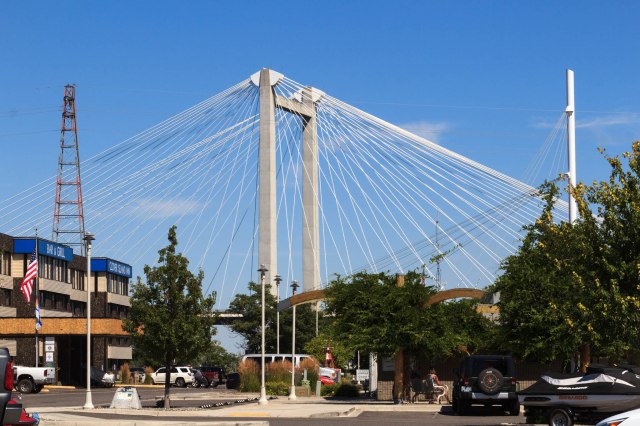
Cable Bridge 

The American Empress came into view near the harbor so I managed to snap this photo between the trees. I wish I could have gotten the paddle wheel. The steamboat vessel cruises the Columbia and Snake Rivers along the Lewis and Clark trail.

IMG_3668
Glimpse of American Empress 


After spending the past couple of weeks in noisy locations near or on major highways and freeways, we craved a quiet place. We made reservations at Crooked River Ranch RV Park near Redmond, Oregon and crossed our fingers that it would satisfy our craving.

On to Oregon

 On Sunday, July 23, 2017, we followed the Columbia River through golden cliffs, rivers the width of small lakes, windmills on top of cliffs, a few farms, of course, and Mount Rainier poking his snowcapped peak above the terrain. In Washington, the air had a smoke haze look to it, but cleared as we entered Oregon. At one point, we could see the snowcapped peaks of Mt. Rainier, Mt. Hood, Mt. Jefferson, and the Three Sisters. What a sight.

When we arrived at Crooked River Ranch RV Park, we were pleased to find that for at least three nights we would be far from any major roads.


IMG_3695
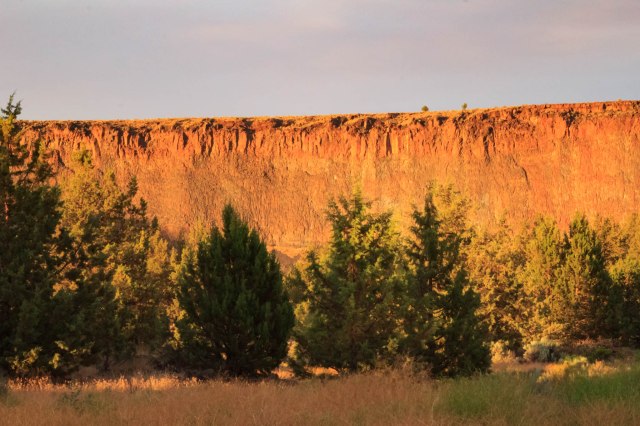
Sunset View of Cliffs from Crooked River Ranch


Newberry National Volcanic Memorial Park

The next day we visited the Newberry National Volcanic Memorial Park. We arrived just in time to hear a ranger talk on the geology of the park. Afterward, we took a hike with him partially up Lava Butte, a cinder cone, where he pointed out examples of what he had discussed on the patio.


IMG_3692
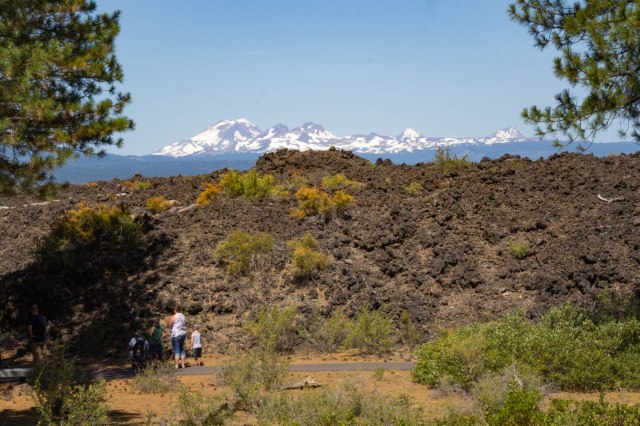
Lava Butte Kind of Looks Like a Dinosaur Back


IMG_3674
Path Around the Lava Flow

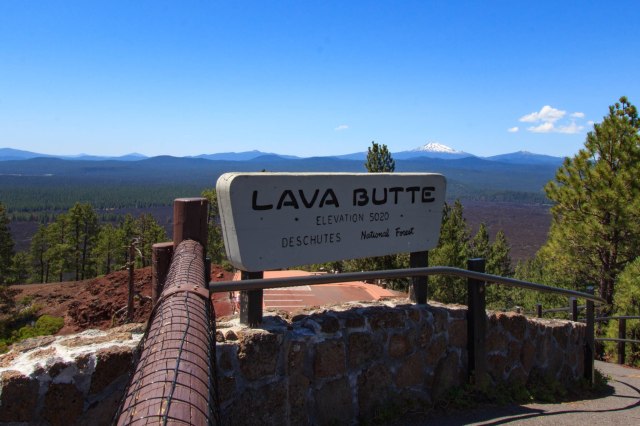
A shuttle bus took us to the top of Lava Butte where there were magnificent views of the valley below and peaks to the west. The lava flow reminded us of Craters of the Moon in Idaho.


IMG_3687
Lava Butte
IMG_3681
View From Atop Lava Butte


Lava Butte erupted 7,000 years ago creating a 9 square mile lava flow. Besides Lava Butte, visitors can see Lava River Cave, Big Obsidian Flow, and Paulina Falls and Paulina Peak, which rises 7,984 feet. Hikers, horse riders, and bicyclists can enjoy the many trails within the park that range from easy to difficult. Several tent campsites are available in the Newberry Caldera and East Lake has one RV campground with 45 sites, all of which are reservable, while the tent sites have some first-come-first-served sites.

Sisters Oregon

We also visited Sisters, Oregon, a small town of less than 2 square miles and a population of 2,038 as of the 2010 census. We found Sisters a quaint little town with plenty of stores to keep any shopper busy, restaurants to satisfy hunger, and places to rest at night.


IMG_3722
Sisters Market
IMG_3723
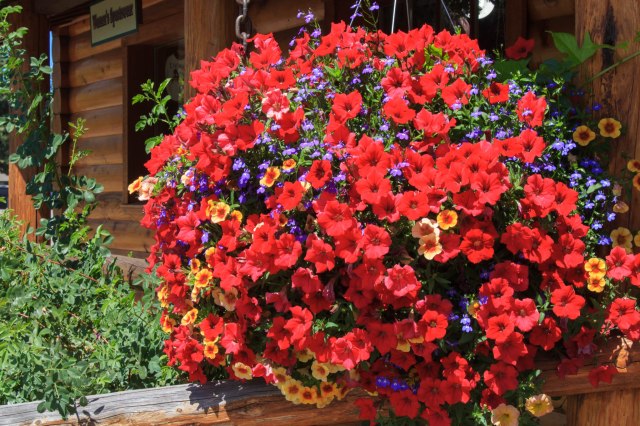
Baskets of Petunias Hang from Lightposts
IMG_3725
Loved the Restored Buildings
IMG_3727
For Cooking Equipment and Utensils, Stop in at The Cook’s Nook
IMG_3729
It was Too Early in the Day to Grab a Cold One at Sisters Saloon


A small park with a couple picnic tables was the perfect place for us to eat our packed lunch before heading to the Whychus Creek Overlook Trail.


IMG_3734
View from Whychus Creek Overlook Trail


IMG_3732
Whychus Creek Overlook


Continuing down the road, we came across a burned out area giving way to views of the peaks.


IMG_3750
Peaks Rise Above a Burned Out Area
IMG_3745
Naked Trees Against Blue Skies and Clouds
IMG_3747
Signs of Forest Rebirth

On our way back to Crooked Ranch, we drove by alpaca grazing in a field.


IMG_3754
Alpaca Grazing in a Field

There are a total of four alpaca farms in the Bend, Oregon, area. We come across a lot of cows and cattle in our travels, but this was the first time we saw alpacas.


Peter Skene Ogden State Scenic Viewpoint

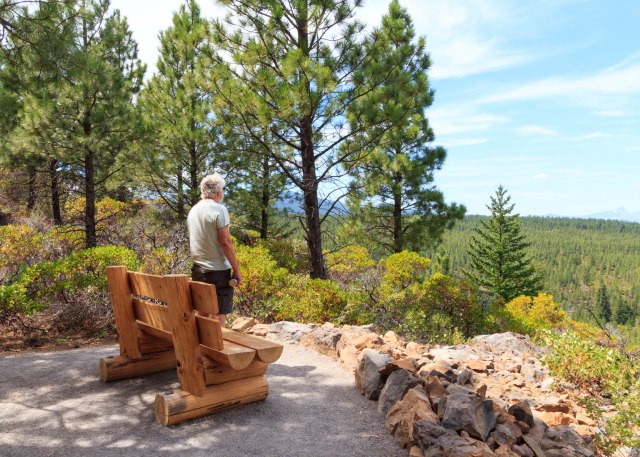
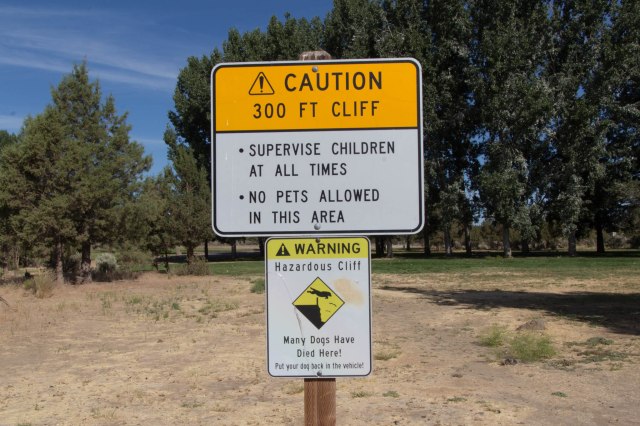
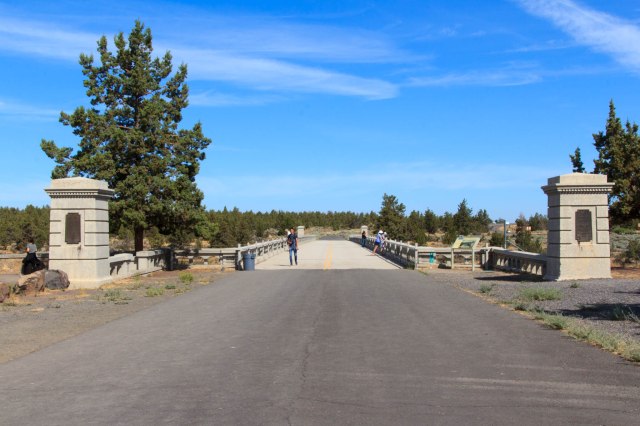
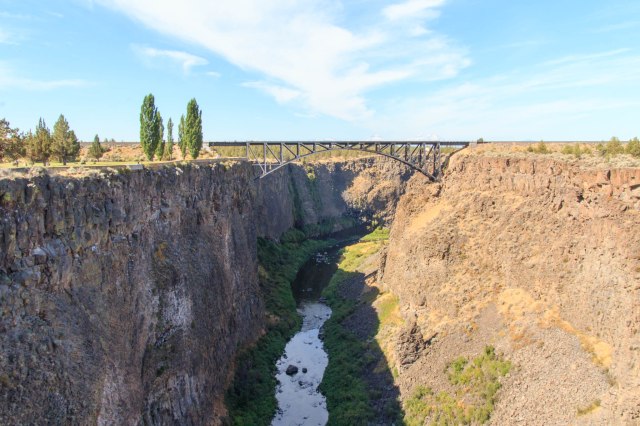
We stopped in at the Peter Skene Ogden State Scenic Viewpoint in Terrebonne, Oregon. The viewpoint includes views of basalt cliffs, river, and peaks along with the closed Rex T. Barber Veterans Memorial Bridge. Several signs warn visitors to watch children at all times and leave pets in the car.

IMG_3699
Keep Children and Dogs Safe


IMG_3712
Rex T. Barber Veterans Memorial Bridge U.S. Highway 97
IMG_3717
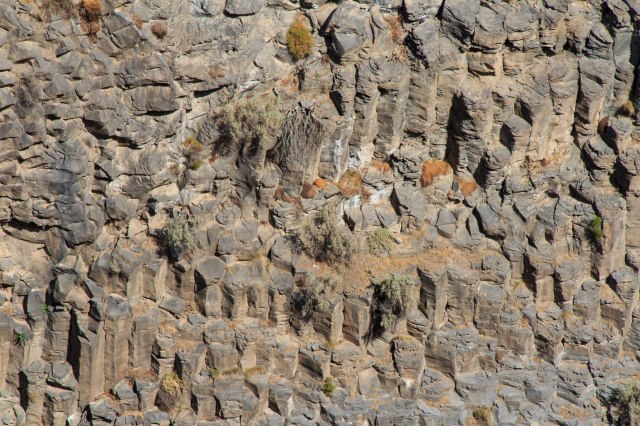
Detail of Cliffs at Peter Skene Ogden State Scenic Viewpoint
IMG_3707
View From Top of Cliff Down to River
IMG_3711
Crooked River High Bridge Built in 1926 Now Closed to Traffic
IMG_3701
Trunk Railroad Bridge
IMG_3714
Canyon Below Trunk Railroad Bridge

The night before leaving Crooked River Ranch, smoke drifted into the valley creating a spectacular sunset view of the hills and sky beyond the bridge.


IMG_3766
Rex T. Barber Veterans Memorial Bridge U.S. Highway 97


Next up we continue searching for out of way places and Jon redeems a Christmas gift.

Safe Travels
 

Tri-Cities Washington – Hanford B Reactor and the Manhattan Project

On July 19, 2017, we made our way to Pasco, Washington. We stopped in Easton at Turtle RV Town for breakfast. The only waitress provided great service for the customers. The food, on the other hand, was a bit mixed. Great pancakes, over-cooked ham, yucky eggs, and okay decaf coffee. After passing through mountainous areas, farms and vineyards, desert, and lava rock hills and canyons, disappointment set in when we arrived at the Pasco KOA. The campground sat right next to a freeway. And I thought the traffic in Poulsbo, Washington, was bad. At least semis didn’t drive by all hours of the night.

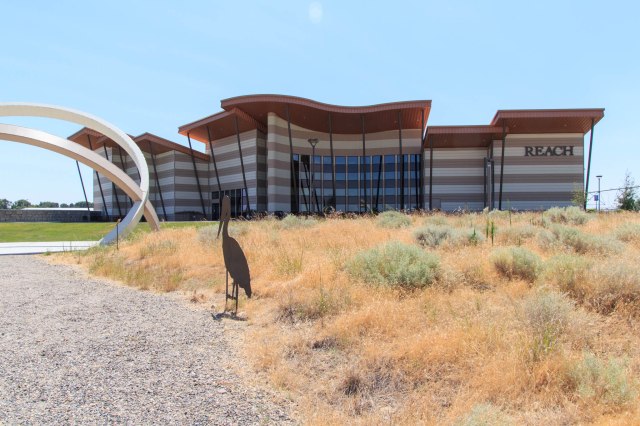
The Hanford Reach Interpretive Center was our first stop in the Tri-Cities.


IMG_3598
Hanford Reach Interpretive Center


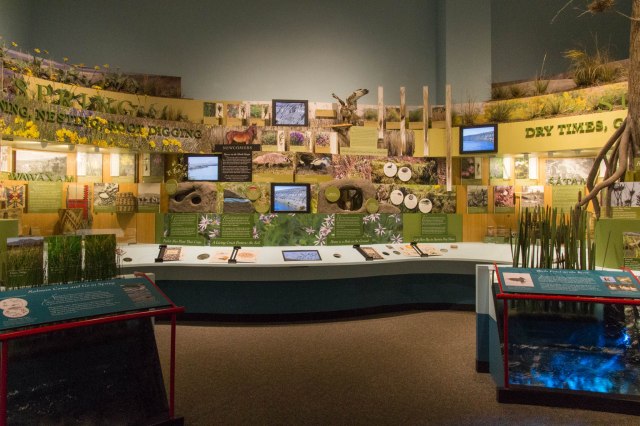
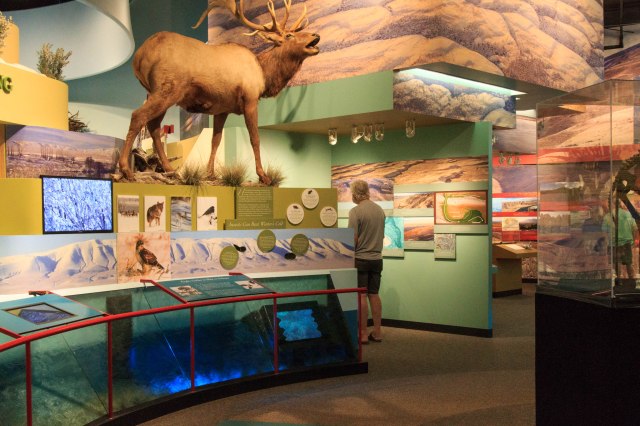
The museum includes exhibits on geology and formation of the Columbia River, flora and fauna, Native American artifacts, Manhattan Project and towns of Hanford and White Bluffs, atomic era and the secret weapons project, and the post-cold war activities.


IMG_3600
Display at Interpretive Center
IMG_3599
Display at Interpretive Center

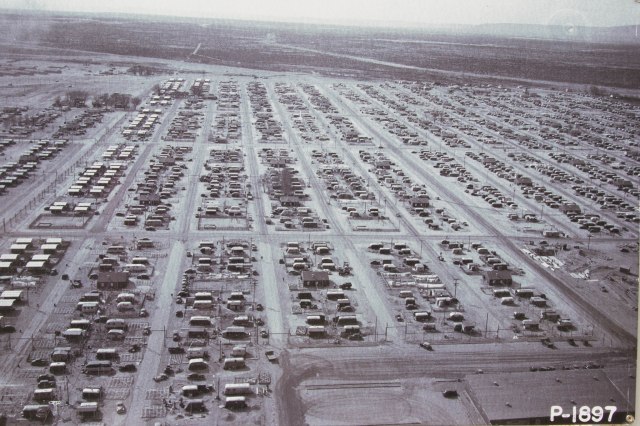
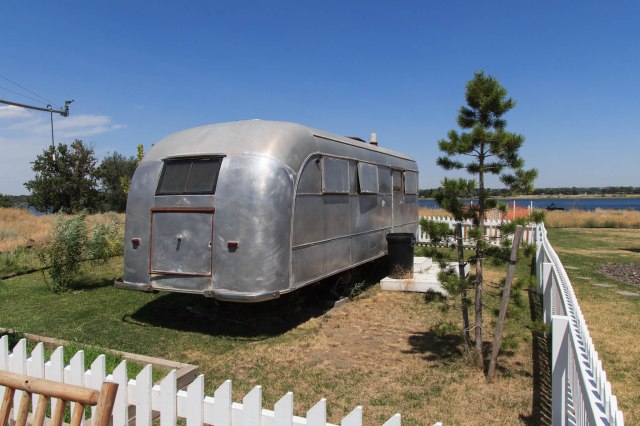
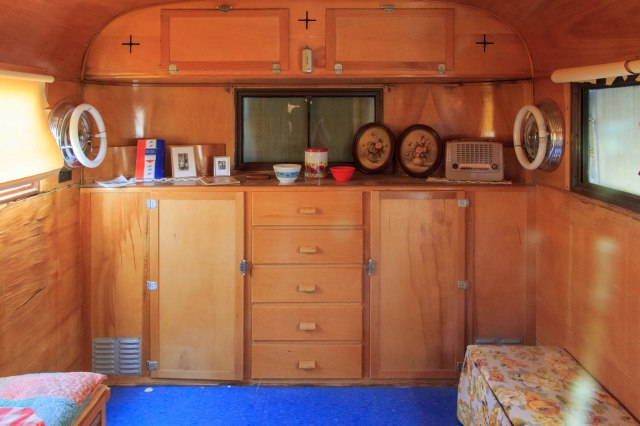
Before houses were built, workers lived in trailers. Although they looked comfortable, I’m thankful my modern fifth wheel contains at least a bathroom. Twenty trailers in Hanford had to share the restroom facilities


IMG_3596
Photo of Trailers Where Workers Lived
IMG_3594
One of the Trailers Where Workers Lived
IMG_3593
Galley and Bedroom Portion of the Trailer
IMG_3591
Living Area of Trailer

Hanford, along with Los Alamos in New Mexico and Oak Ridge in Tennessee, was designated as part of the Manhattan Project National Historical Park in November 2015. Hanford’s part of the project was the production of plutonium.

IMG_3597
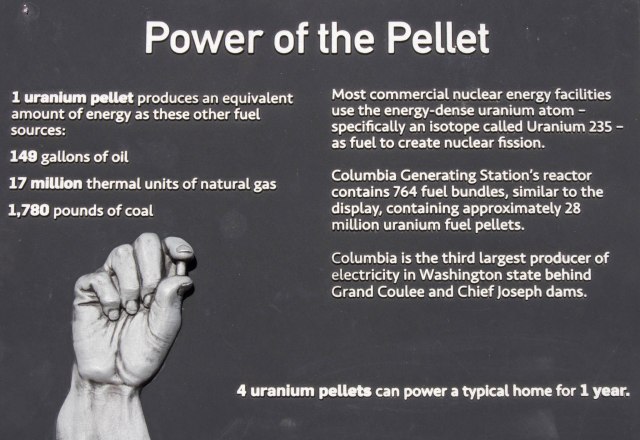
Energy Output of Uranium Pellets Compared to Other Sources

The next day, we headed out in search for the Manhattan National Historic Park. We drove around an area where a map indicated it was located only to find an abandoned building and then the Columbia Generating Station. Maybe we could get directions there.

We drove down the drive headed toward the guard shack, the road split into three lanes. I saw a sign directing all drivers without a badge to the far right lane. Jon missed the sign and headed straight toward the armed guard in military garb. The guard signaled to stop and gave us a threatening stare. He signaled us to pull forward and covered his sidearm with his right hand, as we approached. I prayed he wasn’t a shoot-first-ask-questions-later type of guy.

Jon rolled down his window with a chuckle and said, “Uh, obviously we’re lost.” The guard relaxed his tense posture and scolded us for not following the sign directions. He didn’t know about the park but thought we needed to take a tour. We made a U-turn; I’m sure to the relief of the guard. I pictured him telling his buddies about the crazy tourists who drove their GMC pickup on site with a generator and a 5-gallon gas container strapped to the front rack of their truck.

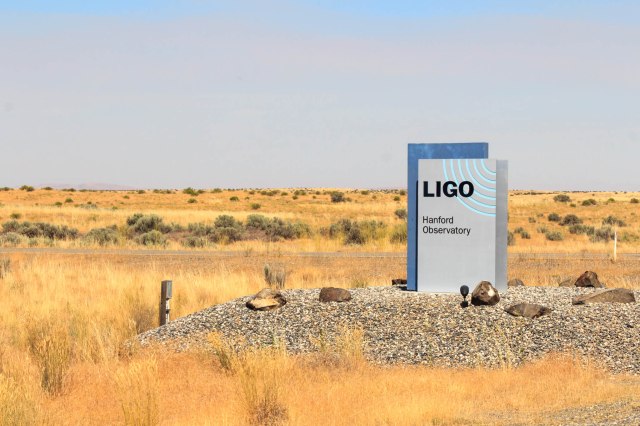
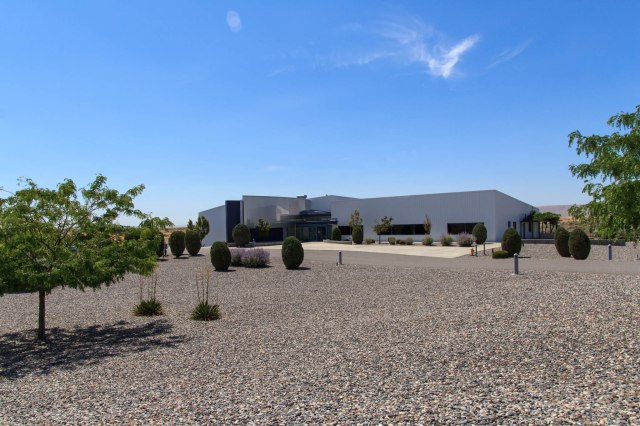
Next, we stumbled across LIGO Hanford Observatory. LIGO stands for Laser Interferometer Gravitational-wave Observatory detectors. Their website says, “LIGO is a sophisticated physics experiment designed to detect gravitational waves from some of the most violent and energetic events in the Universe. By making gravitational-wave detections, LIGO will provide physicists with the means to answer key scientific questions.”

IMG_3606
LIGO Hanford Observatory Sign
IMG_3603
LIGO Visitor Center and Administration Building
IMG_3604
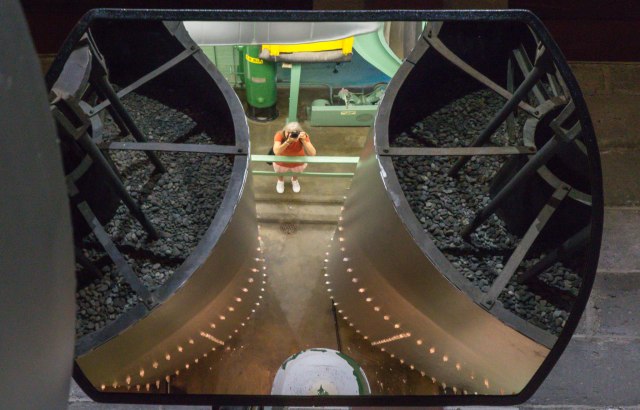
Equipment Used to Measure Gravitational Waves

No one was on site to give us a tour and explain in layman’s terms what the displays meant, so we wandered around trying to make sense of the exhibits that far exceeded the level of our undergraduate physics courses. LIGO founders Barry C. Barrish and Kip S. Thorne from Caltech and Rainer Weiss from MIT were awarded the 2017 Nobel Prize in Physics. Visit LIGO if you’re interested in the measurement of gravitational waves and the benefits made to science.

On our way out, the woman who greeted us when we came in handed us directions to where we could arrange to take the tour. Finally, someone who knew what to do.

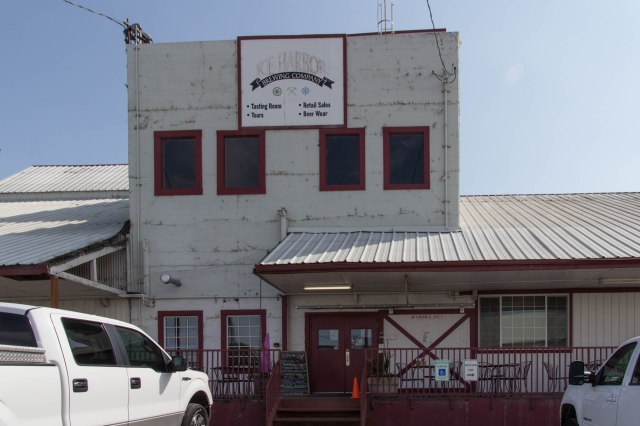
We headed back to town, made reservations for the next day to take the B Reactor tour, and stopped at the Ice Harbor for a beer. The building is not much to look at, but they have good food and beer.

IMG_3602
Ice Harbor Brewing Company

The next day, we met the tour group at the National Park office, watched a short movie, and then climbed aboard the shuttle bus for the B Reactor. This is where the government produced plutonium for the first atomic bomb used during WWII and for bombs during the Cold War. The plant was decommissioned in February 1968.

IMG_3622
National Park Service and Department of Energy Office

All that remains of the 30 buildings and 20 service facilities of B Reactor operations is the reactor building, main exhaust stack, and the river pump house, which is used for current site activities, which consist of a cleanup project.

IMG_3633
Entrance to B Reactor
IMG_3632
Back Side of Reactor Building

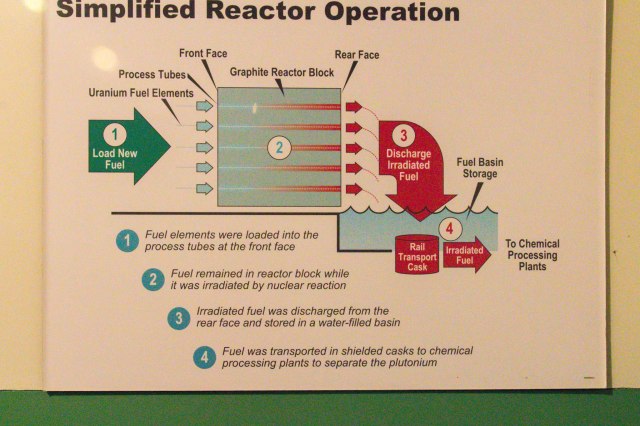
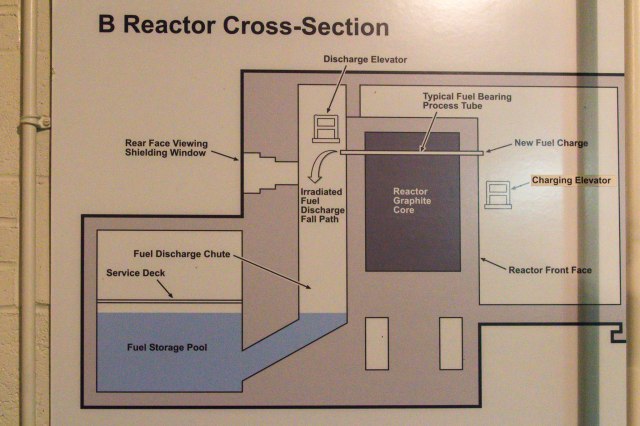
Inside the building, docents gave a presentation explaining the workings of the reactor. Then we had plenty of time to roam around and look at other areas and listen to more detailed presentations of the control room and the valve pit.


IMG_3625
Workroom Showing Front Face of Charging Tubes in Pile


IMG_3627
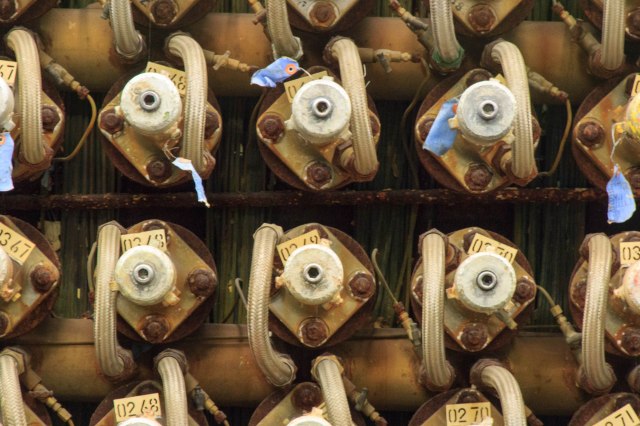
Close up of the Charging Tubes
IMG_3628
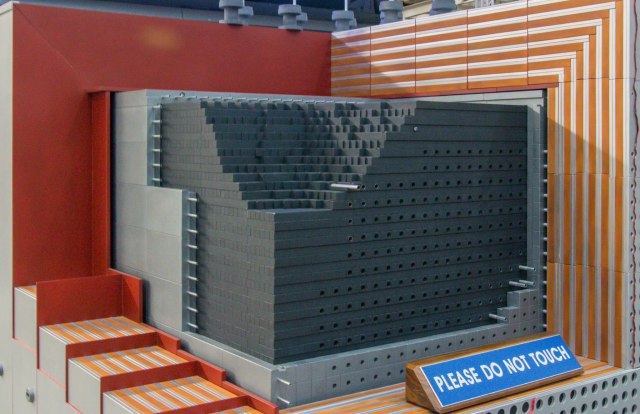
Model of Reactor Core
IMG_3650
A Portion of the Control Room through Enrico Fermi’s Office

Seven hydraulic accumulators served as an additional safety measure in the event of a power outage or other event that threatened the pile. The accumulators would pump oil to insert shim rods to shut down the reactor.


IMG_3651
Accumulators Used as Safety Measure

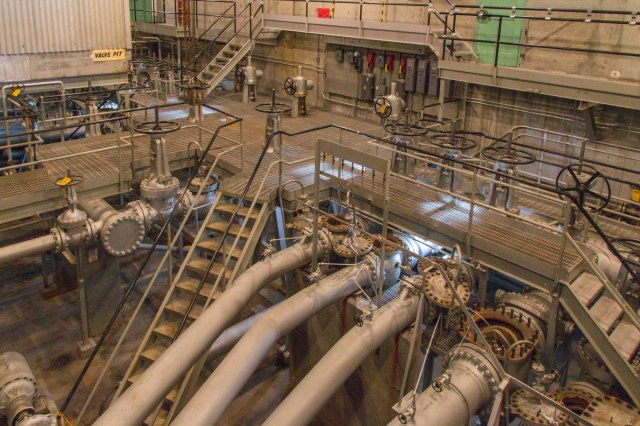
Adjacent to the workroom room was the valve pit where the main connections and valves controlled the process water lines from the pump house to the pile.


IMG_3657
Closeup of the Valve Pit
IMG_3656
Valve Pit


IMG_3638
Reactor Operation
IMG_3636
B Reactor Cross-Section

A few more photos from the B Reactor Tour.

IMG_3661
Supply Cabinet
IMG_3637
Telephone
IMG_3635
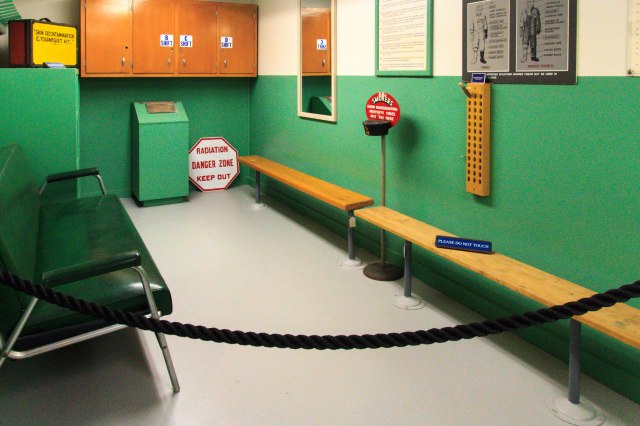
Workers’ Locker Room

The safe housed classified papers.


IMG_3644
The Safe Was Used Only for the Most Important Papers

We enjoyed learning about the B Reactor, but the tour guide and the docents threw out so many terms, facts, and information it was difficult to remember everything that was said. Fortunately, there is a virtual tour and plenty of other information available online to learn more about Hanford and the B Reactor. A Google search of Hanford, B Reactor, and Manhattan Project will give a student of any age plenty of meaty data, history, and other information to dig into.

We finish up our visit to the Tri-Cities in next week’s blog post.

Safe Travels


Wilbur, Washington – Grand Coulee Dam

Wilbur, Washington, was our first stop back in the states on July 16, 2017, where we checked in at Country Lane RV Park.

IMG_3562
Our Site at Country Lane RV Park

Our main objective, besides getting forty winks, was to visit the Grand Coulee Dam. We dropped the trailer and drove the 23 miles to the visitor center in time to catch the last tour of the day.

The volcanic rock terrain reminded us of Craters of the Moon, only several thousand years later after the rock had broken down and soil had covered the surface allowing trees and bushes to grow. Farmers made use of the land by arranging their fields around the larger rock formations.

Grand Coulee Dam

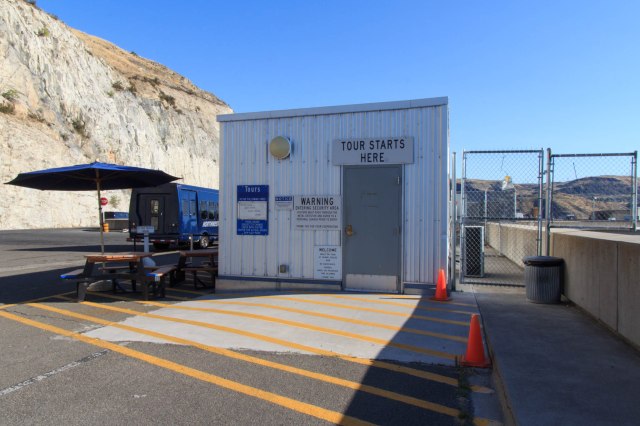
The visitor center tells the story of the dam, and the guided tour gives an up-close view of the generators, the pumps, and top of the dam. The tour starts here, not at the visitor’s center, but they provide directions.
 

IMG_3579
Location of Guided Grand Coulee Dam Tour. The Only Way to See the Dam Up Close


A concrete gravity dam, Grand Coulee Dam contains 421 billion cubic feet of concrete, enough concrete to build a highway across the United States. Operated by the Bureau of Reclamation, it is the largest producer of hydroelectric power in the United States and the third largest hydroelectric facility in the world.


IMG_3583
Grand Coulee Dam


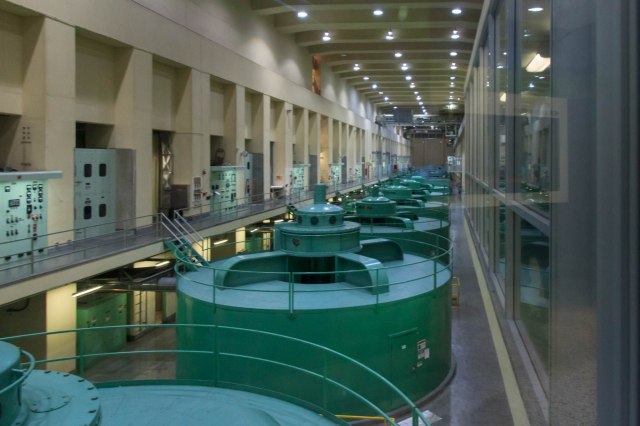
The dam’s twenty-eight generators within four power plants can produce up to 6,809 megawatts annually and are the primary source of electricity to many Northwest states.

IMG_3565
Power Plant Seen on Guided Tour of Grand Coulee Dam

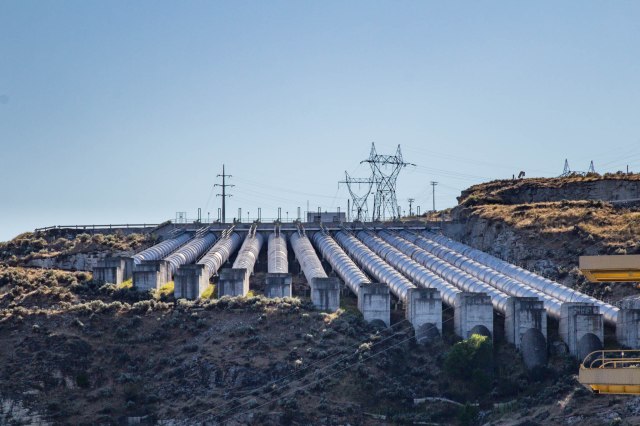
In addition to the power plants, the dam also provides irrigation water through the Pump-Generator Plant located on the east bank of the Columbia River. Twelve pumps lift water up the hillside to a canal that flows into Banks Lake, the 27-mile-long reservoir for the Columbia Basin Project.


IMG_3569
Water Pumped Uphill for Irrigation


IMG_3574
Top of Grand Coulee Dam


IMG_3570
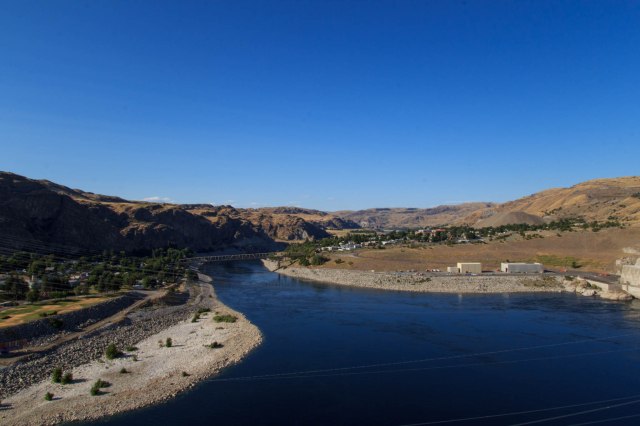
Columbia River


I asked the guide a couple of questions that went unanswered, like what is the purpose of that Honeywell gizmo down there? The tour guide said he either could not tell me or did not know the answer due to security measures. However, he did not prevent me from taking a picture.


IMG_3573
What Does This Gizmo Do?


We drove through the Town of Coulee Dam—The Green Oasis at the Foot of Grand Coulee Dam—which was populated with quaint cottages, plenty of trees, green grass, and flowers.


IMG_3584
Town of Coulee Dam


I would love to see these trees ablaze with yellows, reds, and oranges during the fall.

The town, founded in 1933 by the U.S. Bureau of Reclamation, served as headquarters for construction of the Grand Coulee Dam.  One part of the town, known as Mason City, housed the lead contractor. The other part was known as Engineers Town and owned by the government.  In 1948, Mason City was incorporated in Coulee Dam, and by 1959, the government had completed its process of selling the town to the public.

A Short Jaunt to Poulsbo, Washington

We left Wilbur, Washington, the next day for a six-night stay at Cedar Glen RV Park in Poulsbo, Washington to visit friends. As we decided on what to do in our spare time while near Seattle, miles and miles of wheat fields and other grains mesmerized us. We would crest a hill, and all we could see in a 360-degree radius were fields of wheat and other grains. No cities, no buildings, not even an out building in sight. Some of the fields had recently been cut, others newly plowed, while others still contained stalks standing tall. About every ten or fifteen miles, clumps of trees, shimmering silos, and barns, would appear in the distance. The acres of agribusiness was a side of the Washington State I had never seen before and was as amazing as its coastline and waterways.

About two hours before we arrived, the RV Park manager called. Oops! Our six-night stay was now only two nights, so much for seeing a couple of sights. At least we had a good visit with our friends in Silverdale.

It was probably a good thing we only had two nights. I didn’t think I could take the road noise another night. The large evergreen barrier that separated our space from the main road did little to muffle the roar of nonstop traffic to and from the naval base and ferry in Bremerton and other populated areas.

One more word about the State of Washington: The state grows the friendliest toll takers we have ever encountered. The woman who took our money smiled at us and wished us a good day. After fighting the traffic to get to the bridge, her attitude made the rest of our daily journey pleasant.

Next up: The Tri-Cities Area of the State of Washington along the Columbia River.

Safe Travels