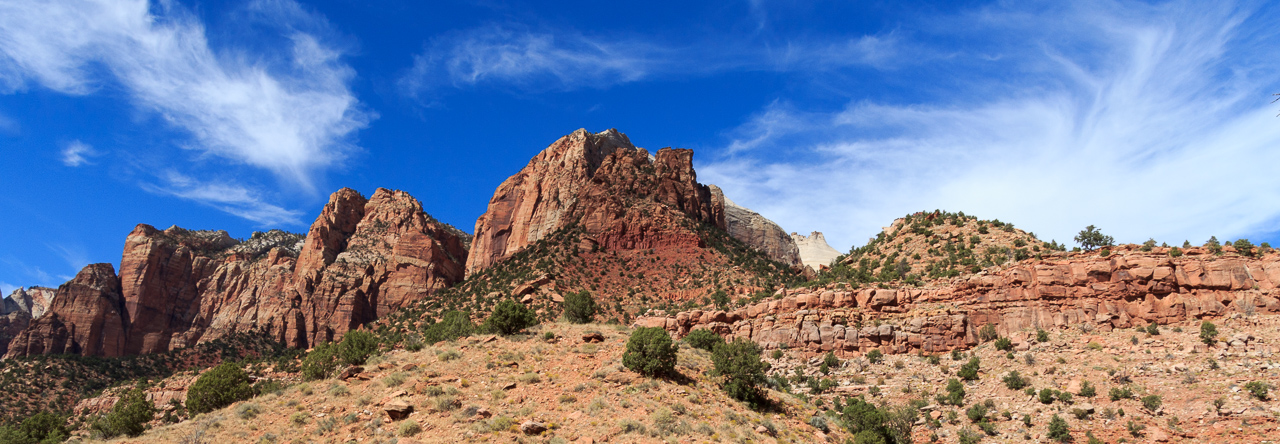
Ronald Reagan Presidential Library in Simi Valley, California

We kicked off our Winter 2020 Tour with a visit to the Ronald Reagan Presidential Library and Museum on January 24, 2020. Oak Park Campground in Simi Valley, California, was a convenient, inexpensive place to park the fifth wheel. They only offer electricity and water as hookups, which was sufficient for the two-night stay.

We backed up to an embankment under a tree, then realized the Los Angeles Metro traversed a set of tracks at the top. The noise was not a problem, though. The trains whisked east and west without a blaring whistle or rumbling of the ground.
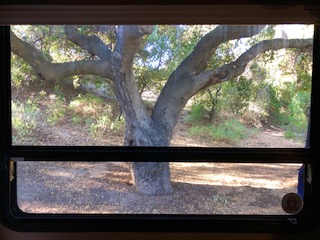
View from RV’s back window

The next day we thought we arrived at Reagan’s museum in time to obtain a parking spot. Silly us. We turned around and joined the line of cars on the side of the road.

The Easy Fire in October had caused approximately $500,000 in damage to the library by destroying trees, landscapes, and banners along Presidential Drive. The entire network and cabling were burned, cutting off the internet and point of sale systems. Through hard work from the information systems team, all systems were up and running within 30 hours. Fortunately, the buildings and artifacts remained untouched due to the efforts of fire personnel.
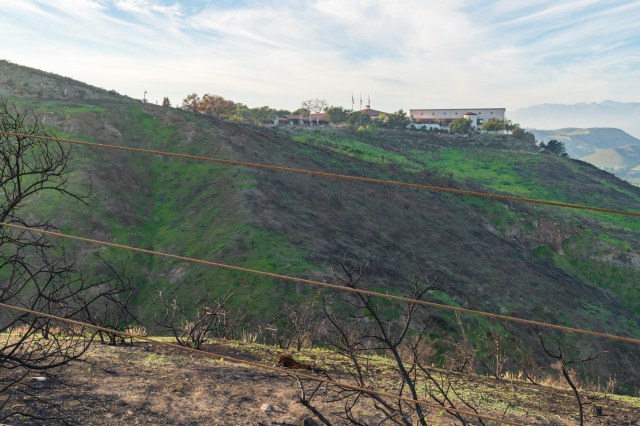
Green shoots popping up through the burn scars below Reagan Presidential Library and Museum

This was our fourth presidential library to visit. Our first three were Lyndon B. Johnson, George H. W. Bush, and George W. Bush. If anyone is interested, our blog posts for each are located here, here, and here, respectively.

Construction of the facility began in 1988, and the center was dedicated on November 4, 1991. The Reagan library and museum is the largest, in terms of size, of the 14 presidential libraries and contains millions of documents, photographs, films, and tapes. Permanent exhibits display the President’s life and his presidency, the Air Force One plane used by the president, and a section of masonry from the Berlin Wall. The property chosen for his library and museum is located in Simi Valley on a hill with views of the surrounding property and more hills in the distance.
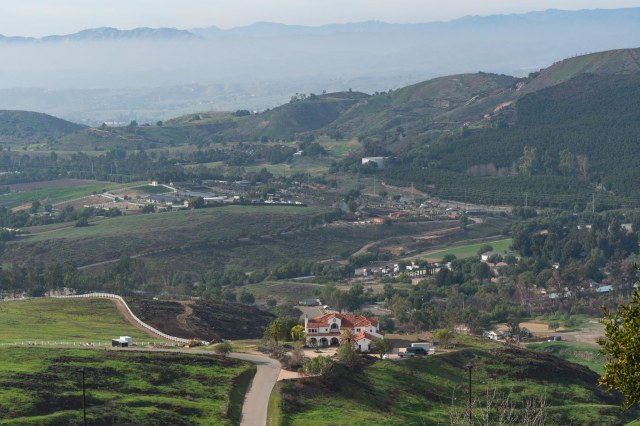
View from Reagan library and museum

Former President Reagan and his wife Nancy greet visitors at the start of the museum.

Ronnie and Nancy allowed Jon to enter even though he was a tad underdressed

The museum starts off with Reagan’s early life, high school, and university. Displays include sports memorabilia and photographic posters.

Early life display

Jon addressed the crowd as Nancy Reagan, Barbara Bush, and Jimmy Carter applauded.

Jon gives his acceptance speech

A docent stands inside the Oval Office and tells stories about the president and points out the objects in the room. Only a few people at a time can stand and listen to the docent, and there are no photo opportunities allowed while sitting at the desk.
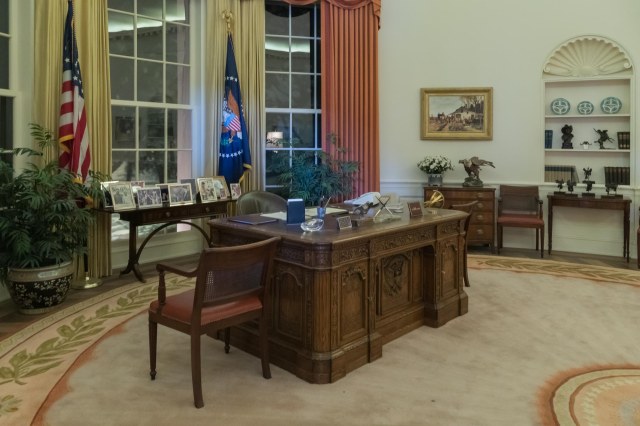
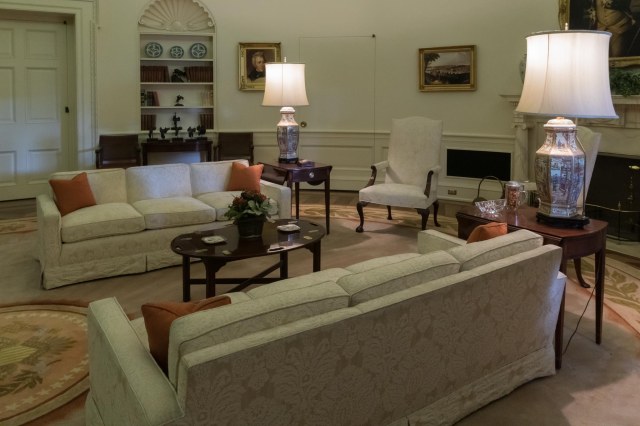
Oval Office as it was during Reagan’s presidency
Sitting area in Oval Office. Can you spot the jelly beans?

Panels in this hallway display many of the gifts received from foreign dignitaries.
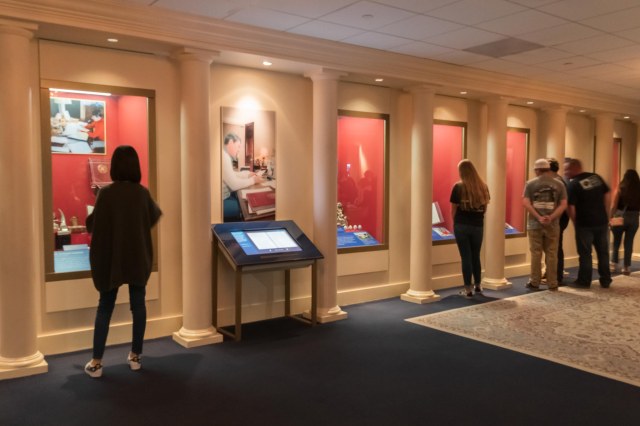
Displays with gifts from dignitaries

As if they were models, first ladies often wear the most fashionable attire. This case displays only a few of the garments Nancy wore during her time in the White House. The information panel under the black dress in the middle says Nancy added the straps with the bows.
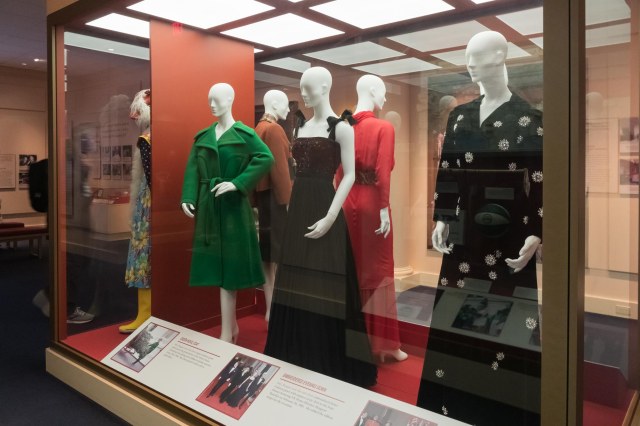
Nancy Reagan’s gowns

This is what it would look like coming face-to-face with the man, the actor, the 40th president of the free world. It was only a mural on the wall but felt strangely real.

Mr. President

The first half of the museum ends in a hallway that looks out onto the Rose Garden.
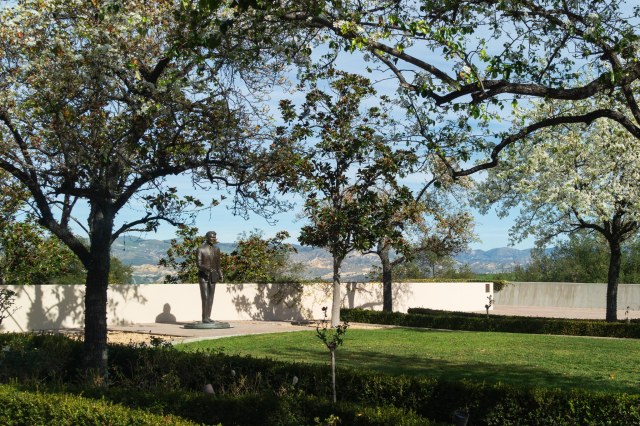
Rose Garden

We continued down the hall to see the Air Force One Pavilion before taking in the second half of the museum.

The Air Force One Pavilion houses the Boeing 707 aircraft used as Air Force One during Reagan’s administration and by six other presidents until it was retired in 2001. The plane was flown to San Bernardino International Airport where Boeing disassembled it, then trucked it in pieces to the library where it was reassembled and restored.

The pavilion was dedicated on October 24, 2005, by Nancy Reagan, President George W. Bush, and First Lady Laura Bush. Reagan was buried on the library grounds in an underground vault on June 12, 2004. Nancy Reagan was buried next to her husband on March 11, 2016.

The glass wall, massive Air Force One raised on 25-foot (7.5 m) pillars, Reagan’s travel timeline, a Johnson-era Sikorsky VH-3 Sea King helicopter (Marine One), Reagan’s 1984 inaugural presidential limousine, and the history of the Flying White House mural, made this exhibit my favorite part of the whole museum. The 90,000-square-foot (8,400 m2) addition is breathtaking and awe-inspiring.

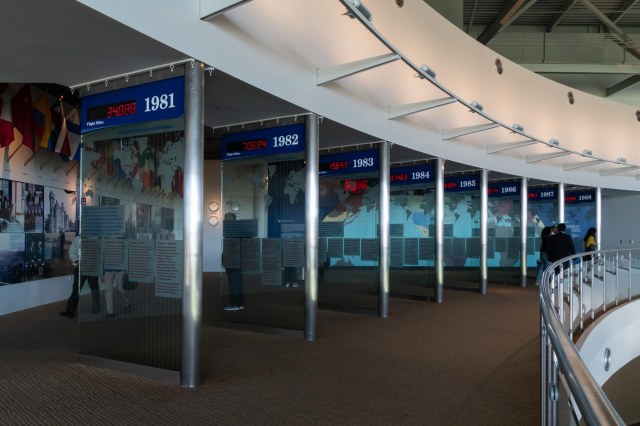
The glass wall of Air Force One Pavilion
Reagan’s travel timeline details over 660,000 miles to 26 foreign countries and 46 U.S. States
Sikorsky VH-3 Sea King
The History of the Flying White House Mural

Inside of Air Force One, visitors can envision life aboard the jet as it raced across the country or toward foreign lands.

Meeting compartment
Fruit and jelly beans available for snacks

A chocolate cake was always on board in case it was someone’s birthday.
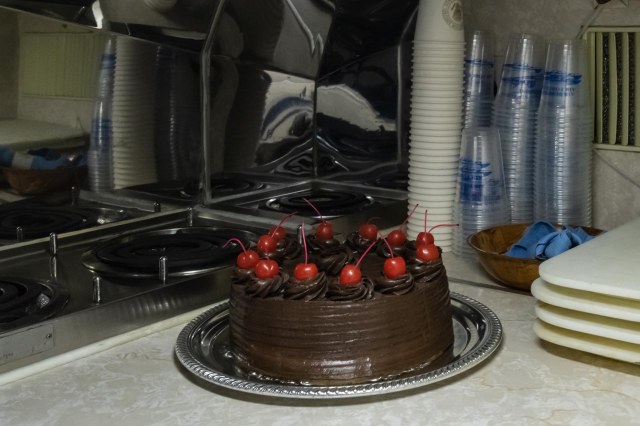
Chocolate cake

Photos are not allowed at the entrance to the jet because someone is there to take your picture for a fee. We settled for the exit and rear of the plane.
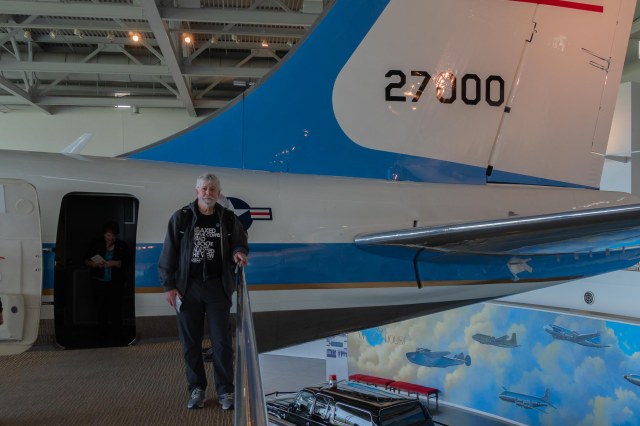
Jon at the tail

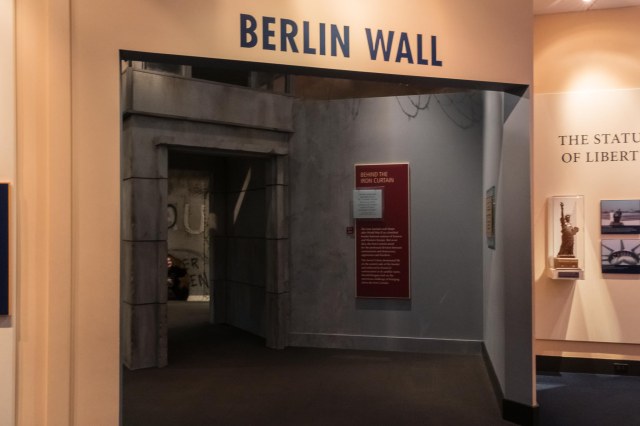
Back to the rest of the tour, we walked through exhibits with information on the Camp David Peace Accord, negotiations with Gorbachev, and the Berlin Wall among other historic events during Reagan’s presidency.

An interactive table offers further learning
Berlin Wall exhibit set a bleak mood
Grafitti
Sculptures and information panels

Posters and memorabilia depicting life on Rancho del Cielo are also included. Visitors can also have their picture taken riding next to Ronnie at his ranch.
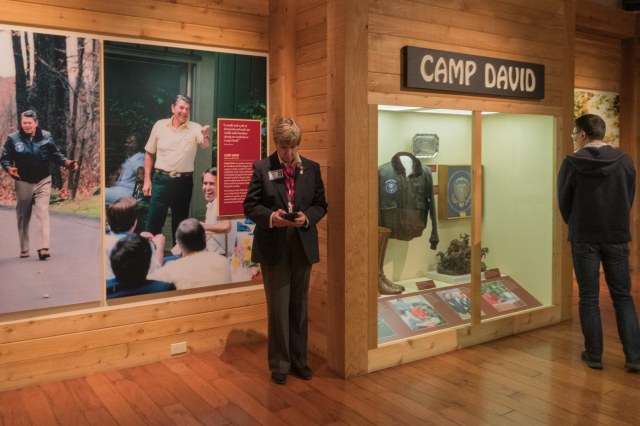
Camp David display
We passed on the photo op

At the end of the tour is this case with iconic memorabilia.
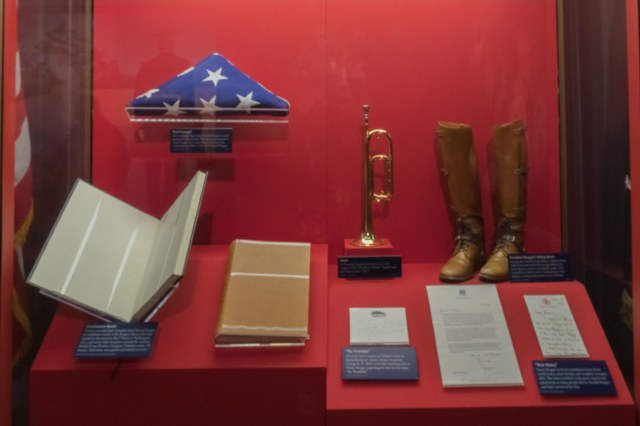
Memorabilia

Visitors can also see a 1980s stealth fighter and aircraft used in the first 1981 Gulf of Sidra incident.
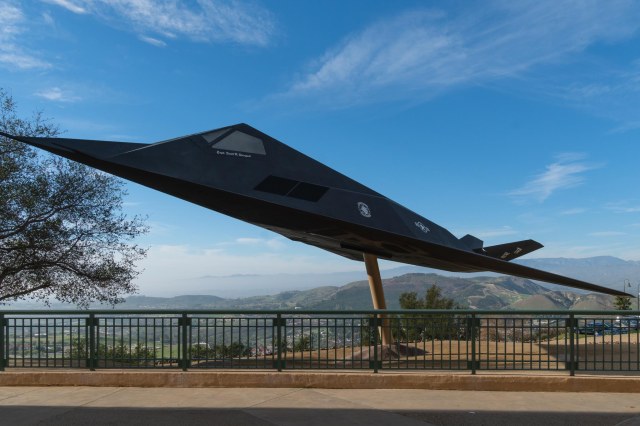
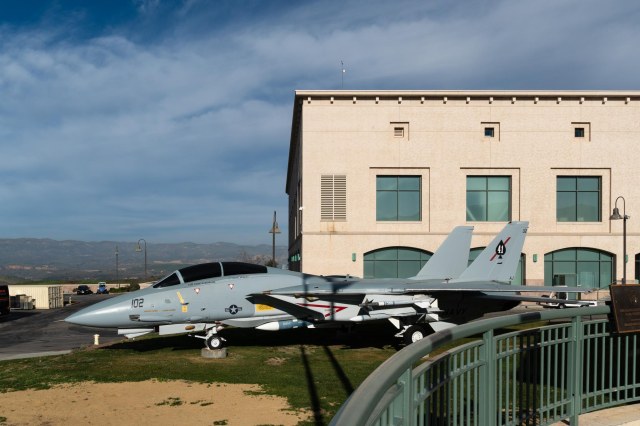
F-117 Nighthawk
F-14 Tomcat

A visit to this library can take the whole day, so come early, eat lunch in the cafe, and enjoy all there is to see. In addition to the information on Reagan, the library also hosts special exhibits, which are announced on the website.

We enjoy comparing and contrasting the different presidential libraries and museums. So far, we favor Lyndon B. Johnson’s best, although each of the ones we’ve seen is special and unique.

Next stop: Palm Desert, California, where we poke around and soak up the desert sun.

Safe Travels
Blackhawk Museums, Danville, California

We returned from our fall 2019 adventures a week before turkey day, faced with a whirlwind of activity. As soon as we finished cleaning out the fifth wheel and sorting the mail, preparations for Thanksgiving dinner captured our attention as did the day itself with family and friends. Without a breather, we rolled into the Christmas and New Year season by decorating the house, making lists, shopping for gifts, and planning another dinner.

We never make plans to celebrate our anniversary, which falls three days after Christmas. This year, however, we thought we at least deserved to spend a day together to celebrate our 45th year. We started with breakfast at Nonni’s Bistro in downtown Pleasanton, California. Breakfast at Nonni’s is like having breakfast at a quaint bed and breakfast establishment. Then we were off to Blackhawk Plaza and the Blackhawk Museum in Danville, California.

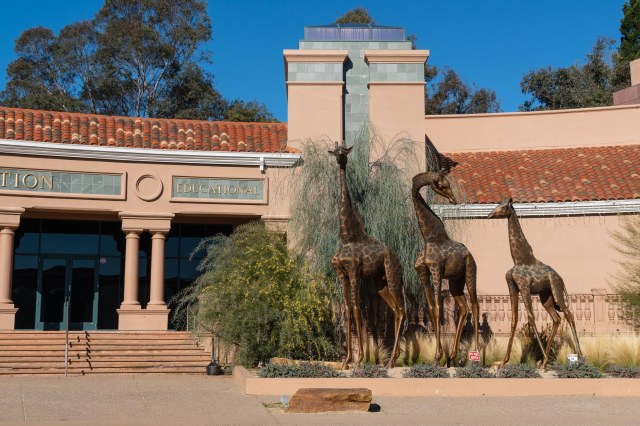
Behring Foundation wing of the museum

The museum began in 1988 when real estate developer Ken Behring (1928 – 2019) and car collector Don Williams joined forces to showcase classic automobiles in a newly established museum. The auto gallery rotates its inventory to attract visitors throughout the year.

No matter the age or type of vehicle on display, the one commonality they all possess is that they are rare and unique models. One of the earliest cars on display was the Stanley Steamer (a term I thought came from the carpet cleaners).

1902 Stanley Steamer Stick Seat Runabout

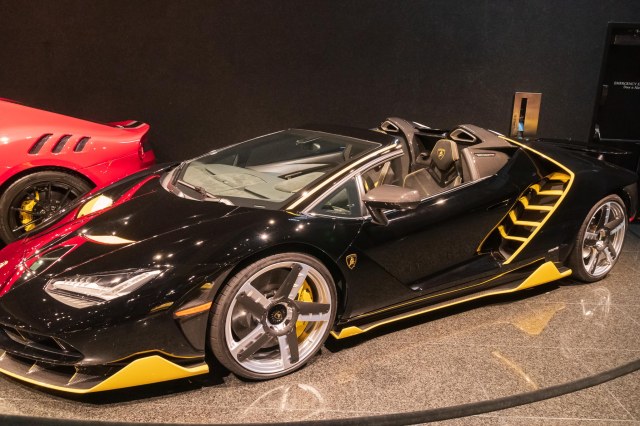
This Lamborghini, one of only 40 built, represented the newer models.

2017 Lamborghini Centenario

Jon rushed up to an “Evening Orchid” painted 1965 Chevrolet Impala S/S. “Hey, my dad owned one of these that he called the purple people eater.” I could see his father behind the wheel, wearing a golf outfit to match. He loved bright colors, be they yellow, green, blue, or pink.

1965 Chevrolet Impala SS Sport Coupe with Evening Orchid paint

The holiday fairy lights hanging from the ceiling made it difficult to capture the brilliance and shine of the paint jobs. Occasionally, I found the right angle even if it meant catching the subject in a reflection.

1955 Desoto Fireflight convertible in reflection

This 1950 Monarch (Mercury) “Woody” Station Wagon reminds me of warm summer days, beach towels on the sand, the smell of suntan oil, the crash of waves, and surfers bobbing in the water on the horizon waiting to catch the big one.

Surfs Up

I’ve always been partial to panel trucks and the whimsy of this one caught my eye. It brought back memories of the Helm’s Bakery trucks that cruised our neighborhood in the 1960s and the fresh-baked bread and donuts the driver sold. The crullers with chocolate icing on top were my favorite.

Chevrolet panel or delivery truck

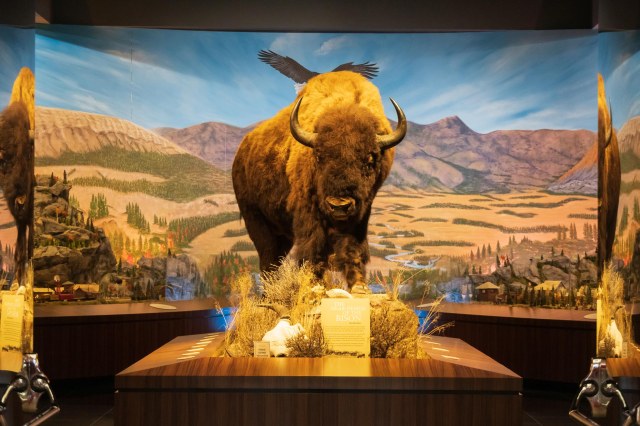
The museum also contains The Spirit of the Old West, a permanent collection of 19th-century North American artifacts of Native Americans and the European expansion of North America in the 1800s.

Howdy pardner. Come on in.

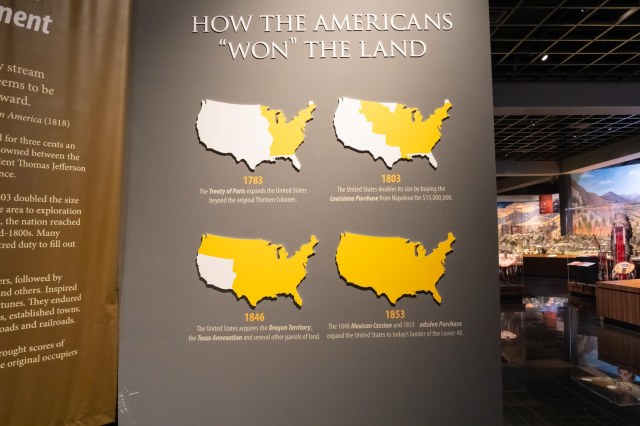
One side of the exhibit tells the story of how Americans “won” the land.

While the opposite side tells the story of how the Native Americans “lost” the land.

Displays include the early years when mountain men explored the territories.

Buffalo-hide coat

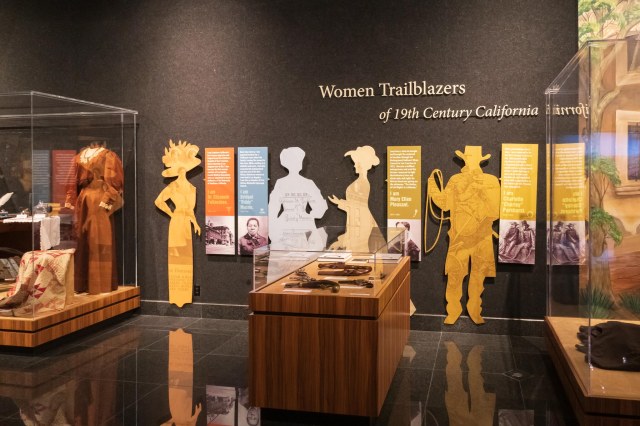
Contributions of women during 19th-century California are honored.

Women who shaped California

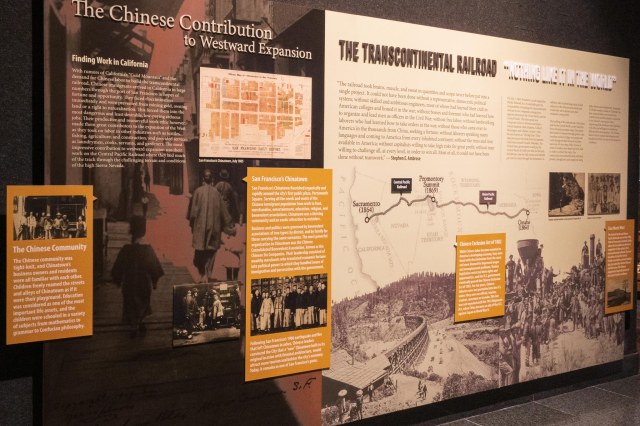
The Chinese labor force that brought us the Transcontinental Railroad is recognized.

How the railroad hastened the westward expansion

Even a life-sized wagon and oxen are on display.

Imagine walking alongside these beasts

Paintings and artifacts are used to present the Native American side of the story.

Trail of Broken Dreams by Don Oelze
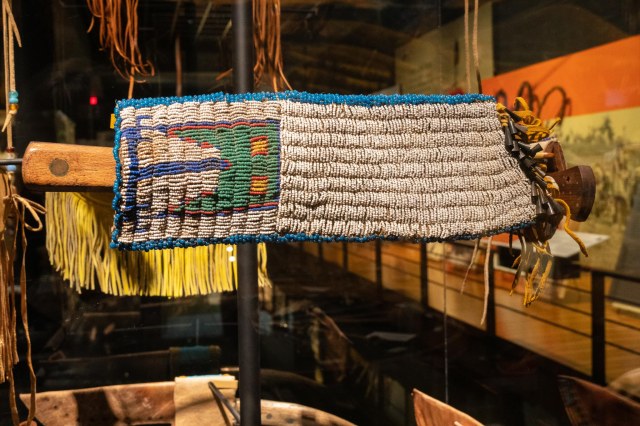
Knife and holder
Replica of a rowboat built in a circle
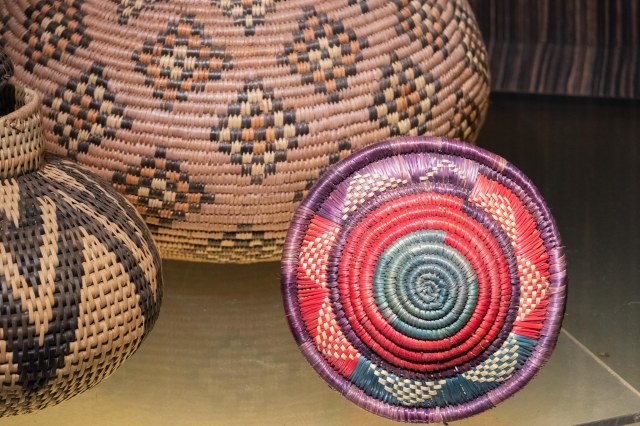
Native American baskets

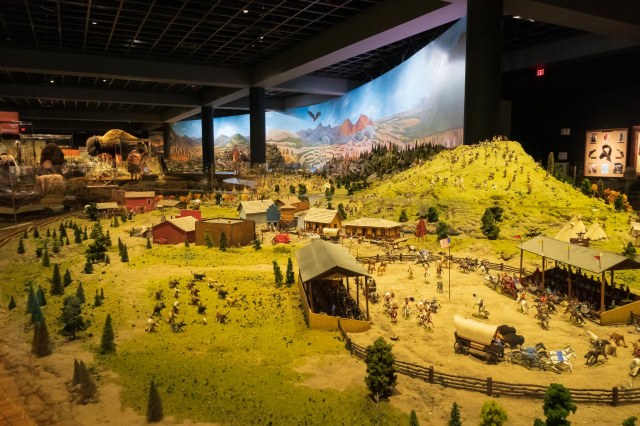
A large diorama also tells the stories of the early west. Information panels and audio explain further the objects displayed in the diorama.

How the west was won and lost diorama

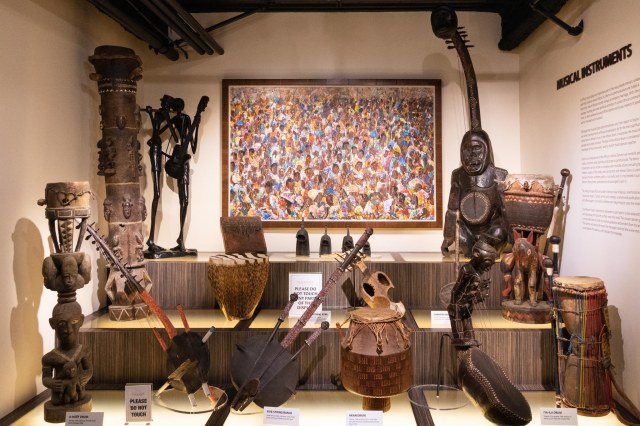
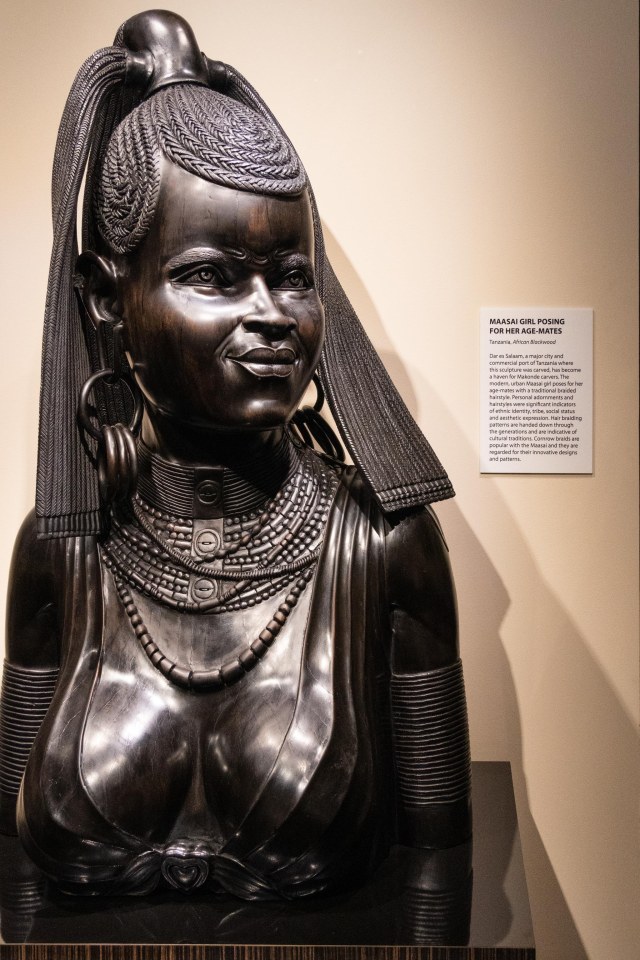
Temporary installations occupy additional exhibit halls in the building. We found carvings, masks, paintings, and other art objects dominated the Art of Africa exhibit.

African musical instruments and sculptures
Masks of Africa
Majestic
Maasai Girl

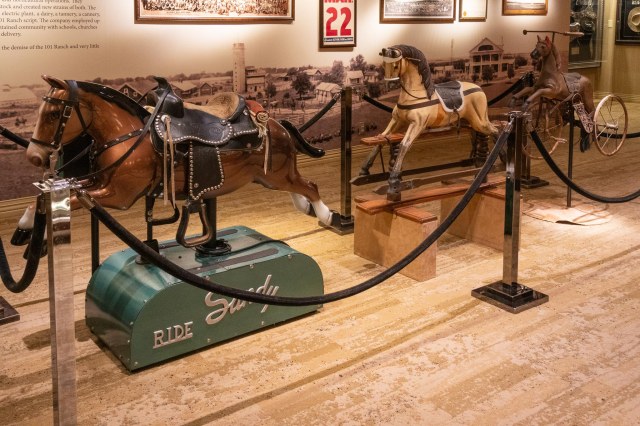
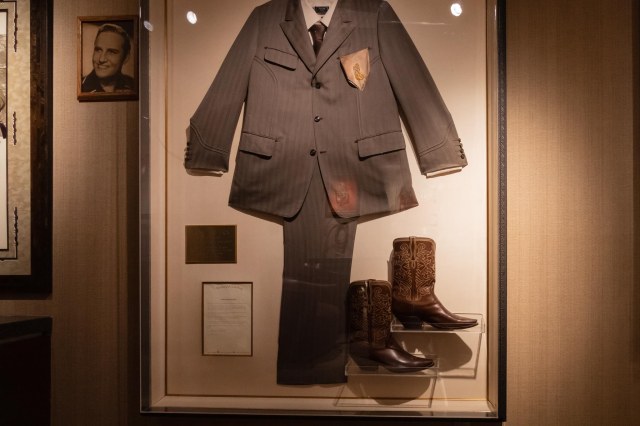
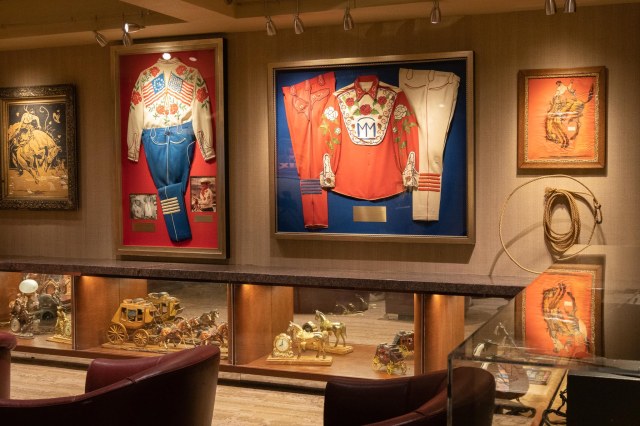
On display in the Western exhibit were various types of memorabilia.

Ride ’em cowboy.
Gene Autry suit and boots. Note the boots on the pocket-handkerchief
Monty Montana costumes
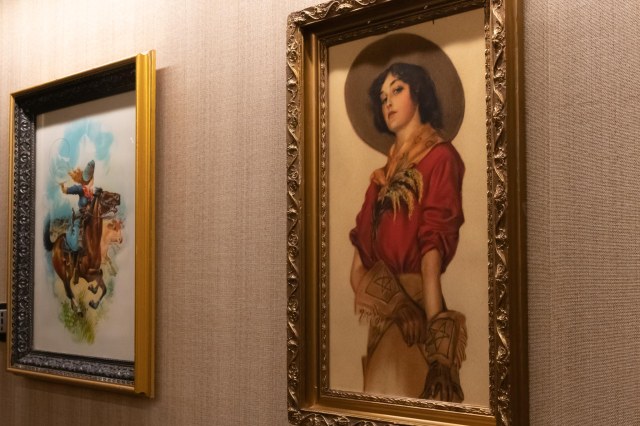
Paintings of horsewomen

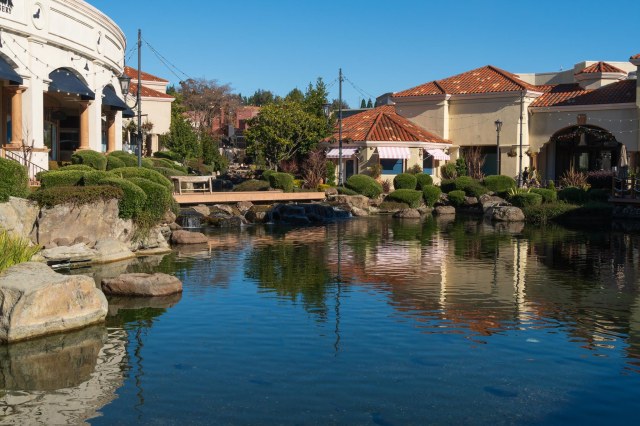
Outside in the Blackhawk Plaza, a walkway passes by stores and several restaurants as it meanders through landscaping, beside a creek and water features, and crosses over bridges.

Blackhawk Plaza

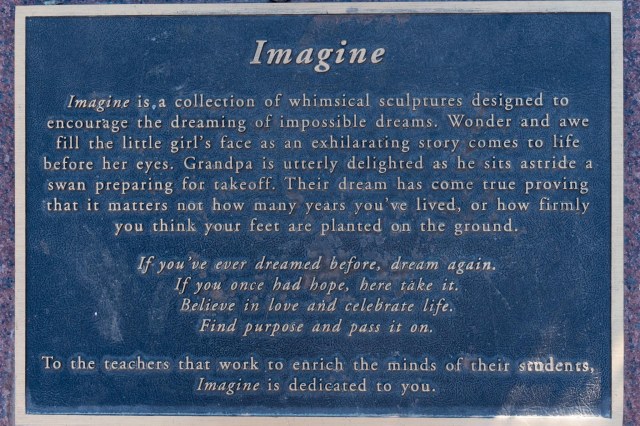
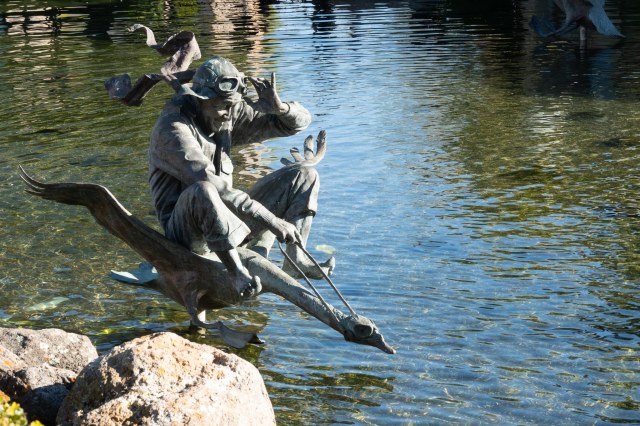
Whimsical sculptures near the playground stand to prompt us all to “Imagine.” The plaque below details the meaning of the sculptures.

Sculpture plaque
Girl riding swan
Grandpa reading to girl with museum building in the background
Up, up, and away

We sat and watched a raft of ducks playing in the pond. This duck entertained us for about a half-hour as it bobbed for something at the bottom.

Bobbing for dinner

There’s nothing like a respite from the hustle and bustle of the holidays to remind us that even in our little corner of the world there are places to see and explore.

Itchy feet, however, had us packing up the trailer again on January 24, 2020, for a bit of winter travel in the southern part of California. Our next post will feature the Ronald Reagan Presidential Library and Museum in Simi Valley, California.

Until then, safe travels.

Lake Mead and Boulder City, Nevada

Boulder City was our destination on November 9, 2019, with a plan to visit Hoover Dam. It had been twenty years or more since our last visit. With a new freeway and a 25% increase in population since our last visit, we were unable to recognize anything we remembered.

We selected Lake Mead RV Village as our home base. No lake-view sites were available so we squished between the units on either side of us. We planned to spend our time poking around so it wasn’t like we were going to spend a lot of time at our space.

Lake Mead NRA Alan Bible Visitor Center

The Hoover Dam website warned of no tours due to maintenance on November 18 and 19 when I checked before leaving Lake Havasu City. Disappointment set in when we headed to the visitor center to learn the maintenance had begun early and there would be no tours for the duration of our stay. We’d have to find other things to do while in the area.

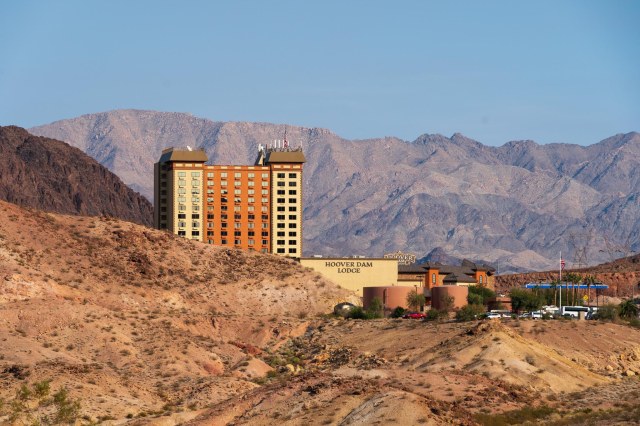
Boulder City boasts a vibrant historic downtown region with a diverse assortment of galleries, antique stores, shops, and restaurants. By historic, we’re talking the 1930s when the town was built to house workers during the construction of Boulder Dam (renamed Hoover Dam in 1947). It wasn’t until January 4, 1960, that Boulder City was incorporated and it remains as one of two locations in Nevada where gambling is not legal. Gamblers need not worry, though. The nearby Hoover Dam Lodge and the Railroad Pass Hotel and Casino gladly accept deposits of hard-earned paychecks.

Hoover Dam Lodge and Casino

Boulder City residents are serious about their art. A collection of 67 statues and murals grace the sidewalks and buildings of downtown. At the BoulderCity.com website, download a walking guide for a tour of all the statue and mural locations, or download their app, which contains walking, driving, history, adventure, and retail tours. The two statues below are a good representation.

Afternoon Breeze by Roy Butler
Hitchin’ a Ride by L’Deane Trueblood

Someone somewhere needs Jake & Elwood Blues to grace their den.

Sherman’s House of Antiques

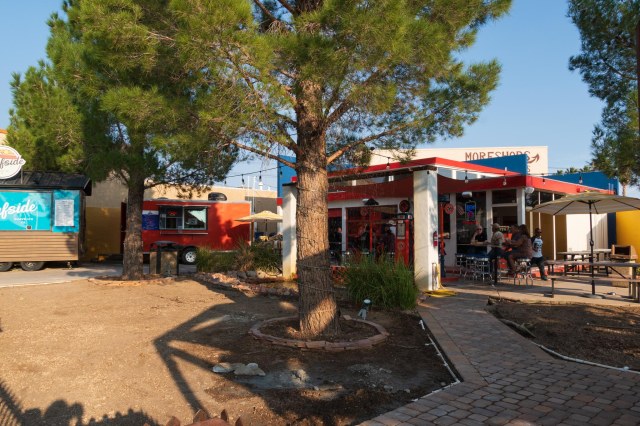
We’ve seen a number of gas station conversions before, but Two Wheels Garage Grill wins the award as the best. Seating is available inside and out with a mister that cools the air on hot days.

Two Wheels Garage Grill

We selected Evan’s Old Town Grille for our night out and were not disappointed. I chose the salmon and was glad I did. It’s not often that salmon is cooked to perfection, but the salmon at Evan’s was the best I’ve eaten in a long time.

The Historic Railroad Trail kept us busy for a few hours as we walked the nearly five-mile roundtrip gravel road through the five tunnels, stopping occasionally to marvel at the views of the lake and search for bighorn sheep.

Bighorn sheep checking out the people walking
The sentry

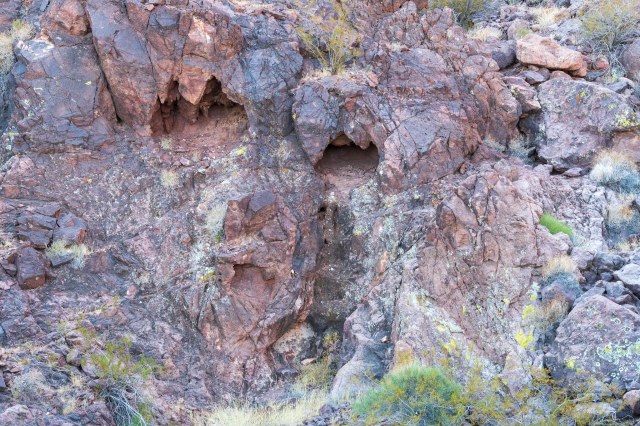
The rocky cliffs triggered my imagination and I soon saw shapes that morphed into faces and animals in much the same way as clouds do when I look up at the sky.

Gruesome face, ape face, or a Bells Palsey afflicted face?

Tunnels are 300 feet by 25 feet, which were large enough to accommodate the large equipment. Seventy-one people operated the systems over the standard-gauge 90-pound rails with nine steam and four gas locomotives.

Tunnels are reinforced and some include cargo containers to protect hikers from falling rock

Restrooms and a picnic table are a welcome sight at the end of the line.

End of the line
One the way out

This section of the system was used as a set in the 1977 motion picture “The Gauntlet” starring Clint Eastwood and Sondra Locke. In the movie, assassins in a helicopter chase the Clint Eastwood and Sondra Locke characters who are riding on a motorcycle. Motorcycles aren’t allowed on the trail, however, tour helicopters buzzed overhead as they took off from their landing pad and returned after their flight over the lake.

Catch helicopter rides at the Boulder Lodge

The mostly level trail is accessible for small children, strollers and wheelchairs with benches along the way to rest. Dogs are also allowed on leashes.

After our hike, we drove to the Lakeview Overlook for another perspective of the trail, the lake, and a view of the city.

Historic Railroad Trail
Lake Mead and the marina
Trailhead parking and visitor center to the left and Boulder City in the foothills

I guess Hoover Dam and Boulder City is a place we will definitely arrange to come back to. Taking a tour of the dam is still on our list of things to do.

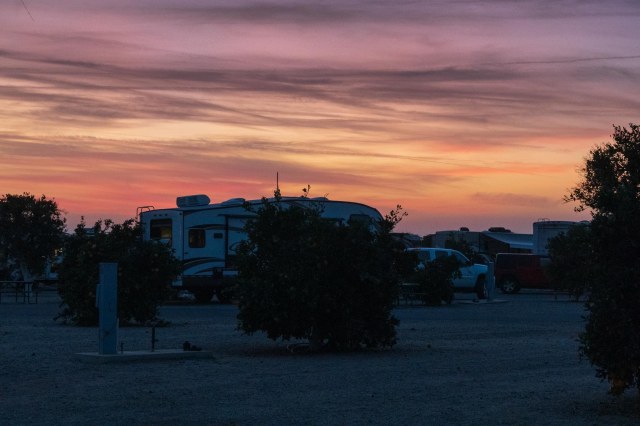
We headed home after leaving Boulder City, stopping at the Orange Grove RV Park in Bakersfield once again where we enjoyed another magnificent sunset.

Sunset over the orange grove

This post wraps up our Fall 2019 Tour. In the next one, we will share a local favorite, the Blackhawk Museum in Danville, California.

Safe Travels
Back in Lake Havasu City Again

With family and friends residing in Lake Havasu City, Arizona, we find Lake Havasu City a convenient place to stop when traveling to and from California. We had a special reason to roll into town on November 2, 2019. My sister’s daughter and granddaughter were coming in from Missouri for a visit. We couldn’t pass up a chance to see the baby in person for the first time.

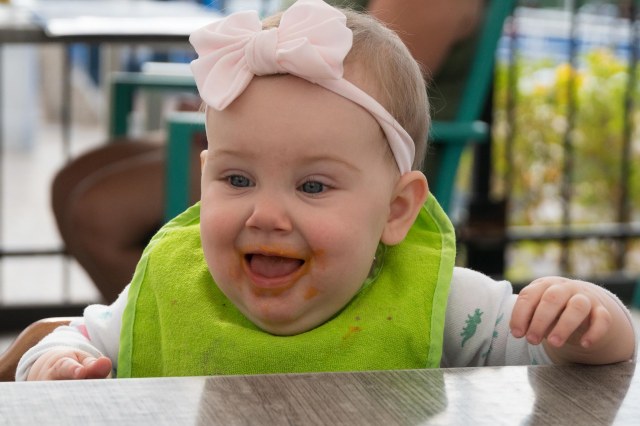
Our grandniece, Amelia, entertained us with her good humor and smiling face while we ate our lunch at the Blue Chair. The Blue Chair at the English Village is a great place for a meal with a view of the London Bridge and boats navigating through the canal.

What you doin’ over there, Uncle Jon?

Amelia entertained not only us, but also the waitress and other diners nearby. She has a way of smiling with her whole body that invites a person in to take notice and bask in her sunshine of happiness.

Our niece Jessi and grandniece Amelia
Amelia kept up the smiles the entire time we ate our lunch
I’ll have what you’re having

Lake Havasu Museum

As many times as we have been to LHC, we had never ventured near the museum. This trip was our opportunity. The self-guided tour starts with honoring the people who resided in the area before the US government forced them into reservations during the 1860s and 1870s. On display are individual stories about the Mojave, the People by the River, and the Chemehuevi, the Special People, and artifacts from their time.

Native peoples lived here before the Europeans arrived
Try your hand at grinding grain

Parker Dam was built between 1934 and 1938, creating Lake Havasu. The construction brought jobs to the unemployed during the Great Depression, generated electricity and provided water for aqueducts that quenched the thirst of agricultural, industrial, and residents arriving in the Arizona desert.

Building the Parker Dam

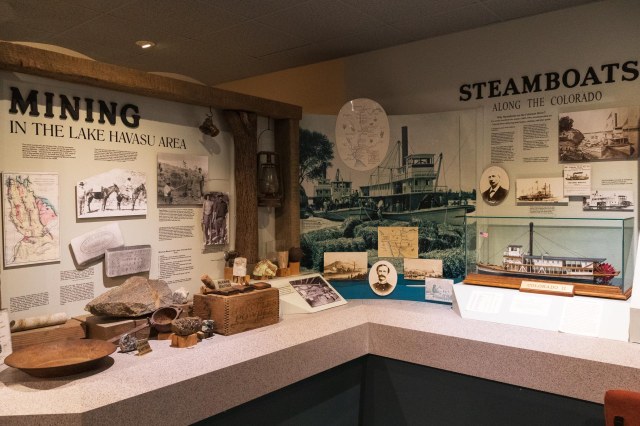
Evidence suggests that Mexican miners worked in the mountains and the backcountry of Lake Havasu City as early as the 1830s. In 1857, Anglos discovered gold and mining continues to this day. Local prospectors often find a few nuggets using a method called placer mining, or sifting through gravel to find pieces of gold.

Mining then and now

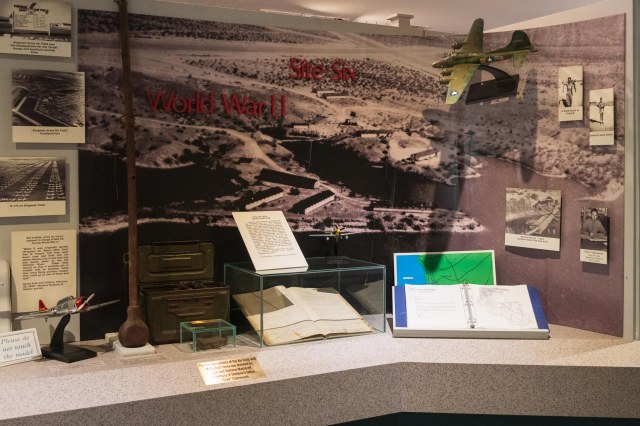
Site Six was built during WWII as an emergency landing strip and later used as an R&R facility for Air Force personnel. Later it was purchased by McCulloch and used for testing his outboard motors. The city now operates a recreational boating facility on the property within the Lake Havasu State Park.

World War II Site Six

While looking at the display about Lake Havasu City history, one of the volunteers told us stories about the early years. She and her husband arrived in 1971 when he took over the practice of a retiring certified public accountant.

A city grows

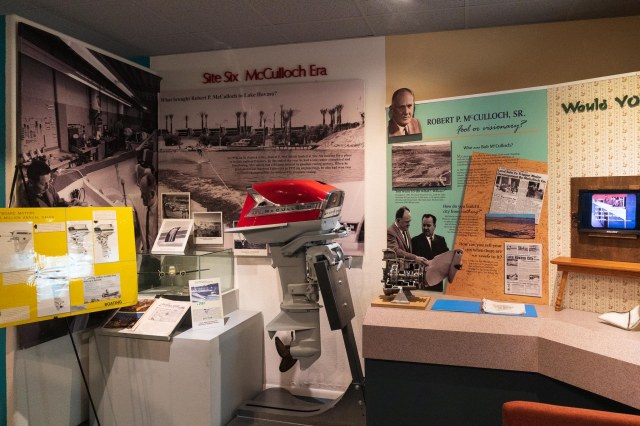
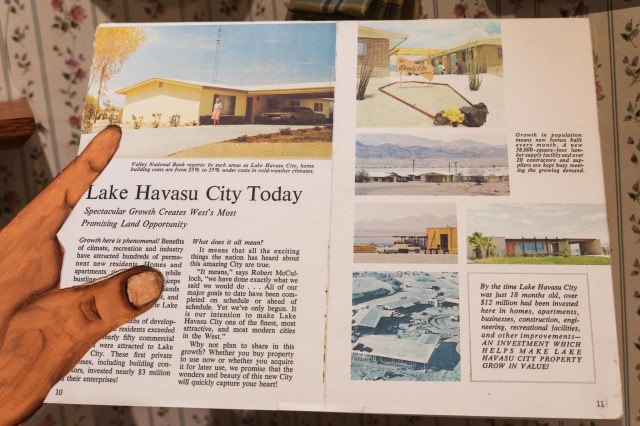
She told us how Robert P. McCulloch arrived in Lake Havasu City in 1958 in search of a test center for his outboard motors and how his company, McCulloch Properties Inc., purchased 16,250 acres from the State of Arizona in 1963 for $73.00 per acre. The rocky undeveloped land became the city built on the shores of Lake Havasu.

The business that started it all
Promotional articles brought investors to Lake Havasu City

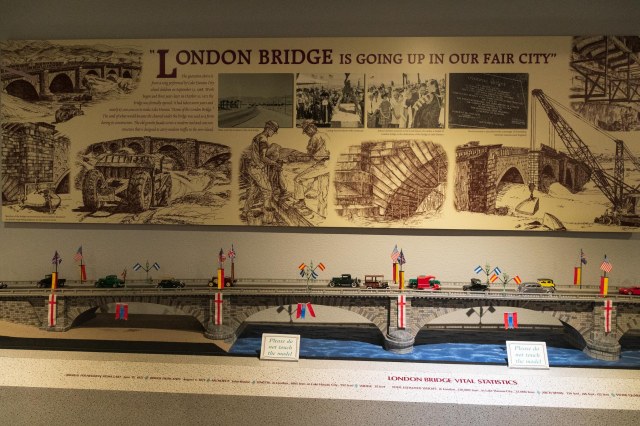
In 1968, Robert P. McCulloch purchased the London Bridge at a cost of $2,460,000. It took another $7 million and three years to label the granite bricks with markings indicating their arch span, row number, and position; ship the 10,000 tons of granite across the ocean, through the Panama Canal, and into the desert; and put the bridge together again. To allow for traffic over the bridge, the granite bricks encase a hollow core of steel-reinforced concrete. The channel where water flows under the bridge was dug out to create the island.

Museum display about the London Bridge

On October 10, 1971, the London Bridge was celebrated with fanfare that included skydivers, fireworks, marching bands, hot air balloons and a meal fit for King William IV who unveiled the original bridge in London in 1831. London’s Lord May attended along with actor Robert Mitchum and Dan Rowan of the Rowan & Martin comedy duo on television’s Laugh-In.

Although many thought McCulloch’s bridge was a waste of money and a boondoggle, it turned out to be a clever marketing scheme that grew the city from only a few hundred people in the early 1960s to 10,000 by 1974 and brought in visitors totaling two million.

The docent made sure to point out the heads on stakes displayed in the middle of the building. They represented people in London who King Henry VIII had ordered beheaded for their crimes. The king may have only perceived the people guilty and found his orders as a means to dispose of his enemies. In any case, displaying the heads on a 1500s version of the London Bridge was used as a crime deterrent.

Heads on a stake

The second head from the left represents Thomas Cromwell who died in 1540. He was King Henry VIII’s Chief Minister who supervised the English Church’s break with the Catholic Church. After arranging for the king’s marriage to the German Princess, Ann of Cleves, his fourth wife, the king blamed Cromwell for the marriage to Ann because she was not attractive. Cromwell was jailed on trumped-up charges and condemned to death without trial. His beheading occurred on the day the king married Katherine Howard, his fifth of six wives.

Red Onion and a Walk to Gawk at Classic Cars

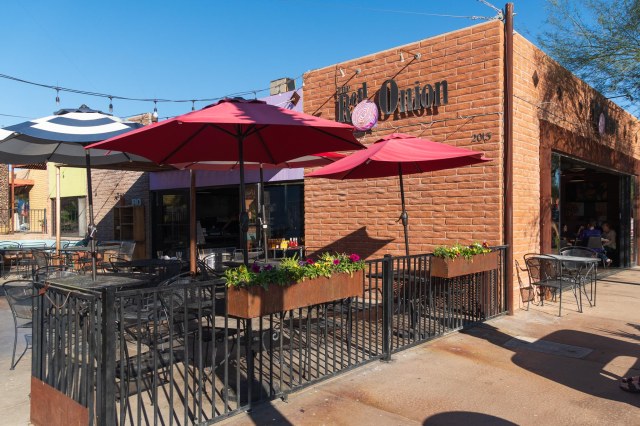
On a late Thursday afternoon, we drove downtown for lunch at the Red Onion. While there, classic car owners rolled up to show off their rides, drink beer, grab a bite to eat, and engage in car talk. Food trucks were also on hand to feed the hungry.

Visit Red Onion Restaurant for breakfast or lunch
Chrome reflection
Pontiac GTO
Come on, let’s go for a ride
Look at that shine

Bill Williams River National Wildlife Refuge

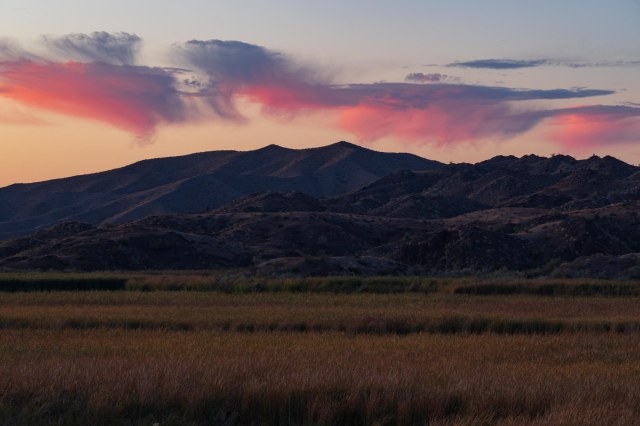
We headed out to Bill Williams River National Wildlife Refuge one evening to snap a few photos of the sunset. Although not spectacular, I had fun playing with the tripod and settings on my camera.

Bill Williams Bridge
Lake Havasu beyond the Bill Williams River National Wildlife Refuge
The colors really popped after the sunset

Visiting Lake Havasu City

Boredom is something that no one needs to worry about in Lake Havasu. With over 300 annual events throughout the year, there is always something happening: London Bridge Days, Winterfest Street Festival, Balloon Festival, music festivals, Parade of Boats, Buses by the Bridge, fishing tournaments, Havasu 95 Speedway, rodeos, and much more. Other activities include golfing, fishing, exploring the backcountry, or taking the ferry across the lake to Havasu Landing Casino. Oldsters, youngsters, and in-betweeners will find something to keep them busy.

Next stop: Lake Mead

Safe Travels