Summer 2021 Ruidoso Episode 4: White Oaks, Cedarvale Cemetery, and Hurd Gallery

In this episode we visit a ghost town and cemetery, walk through a lava field, and finally find a surprise.

White Oaks Ghost Town and Cedarvale Cemetery

The first thing we encountered on our way to White Oaks was the Cedarvale Cemetery.

Help! Let me out.

Near the entrance, a New Mexico historic marker honors Susan McSween—Alexander McSween’s widow from the Lincoln County War story. She moved to White Oaks after selling her ranch holdings and is buried in the cemetery.
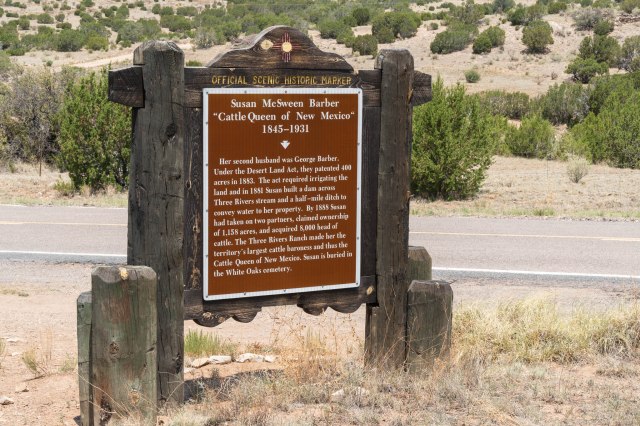
Susan McSween Barber earned her very own historic marker
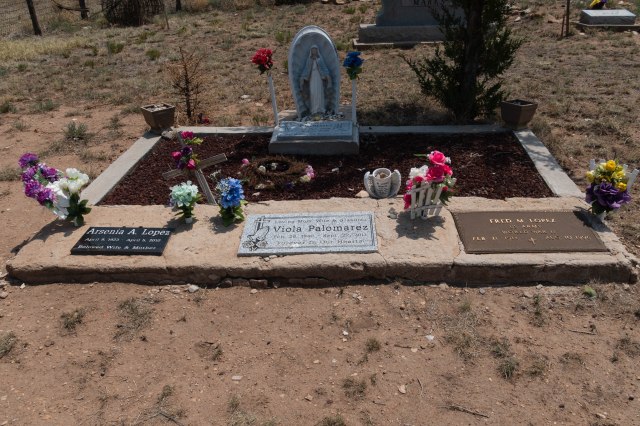
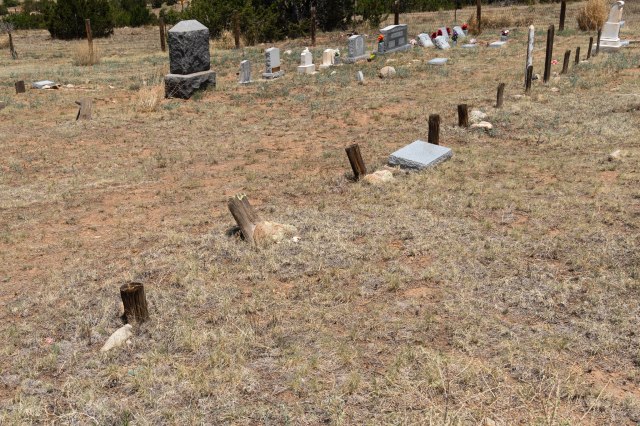
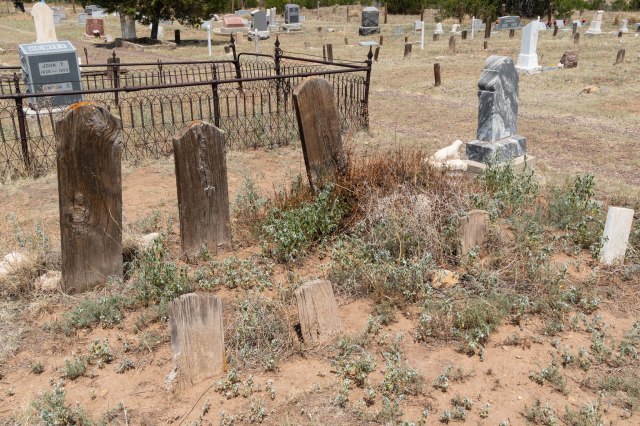
Wood planks, marble stones, and iron fences mark the gravesites
Plastic flowers add a touch of color
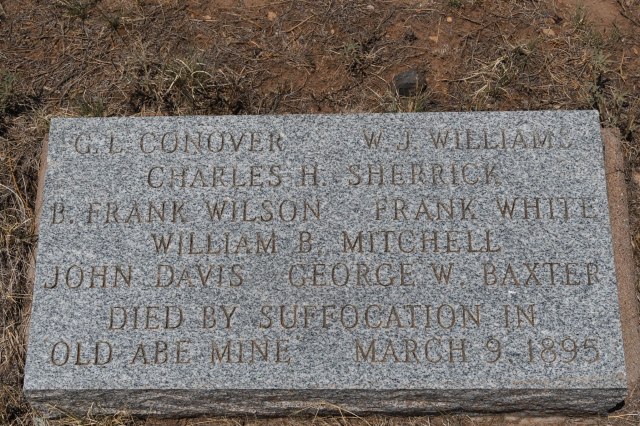
March 9, 1895, eight men died in Old Abe Mine
Names of the men who died in the Old Abe Mine
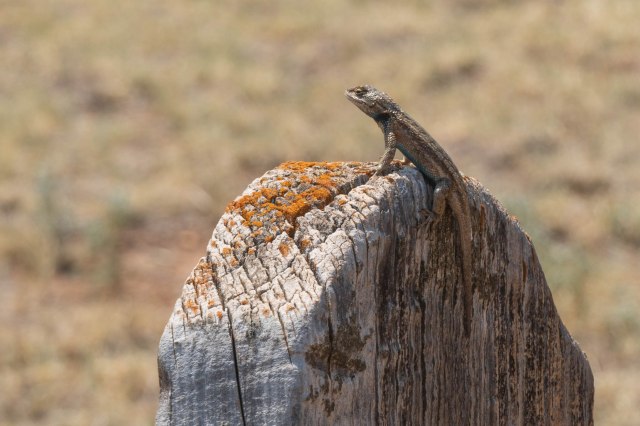
Lizard on alert
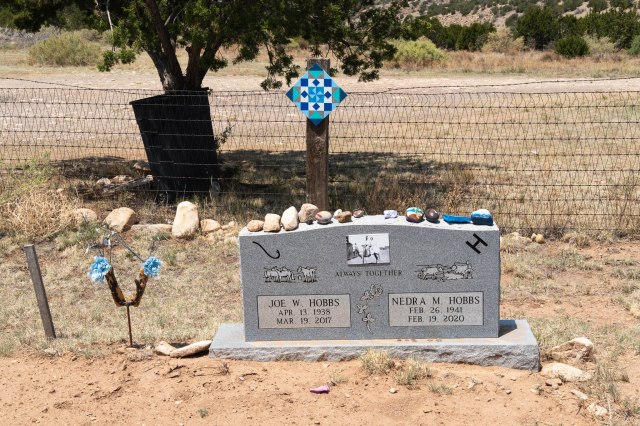
Joe and Nedra Always Together
Visitors leave coins on Bell’s headstone

Driving up to White Oaks, it’s hard to imagine the town was once the second largest in New Mexico during the 1880s. It teemed with merchants, brothels, saloons, miners, ranchers, and lawyers. People came from the east, bringing their business acumen, architecture, and greed. Cattle rustlers, including Billy the Kid, considered the town a resort.
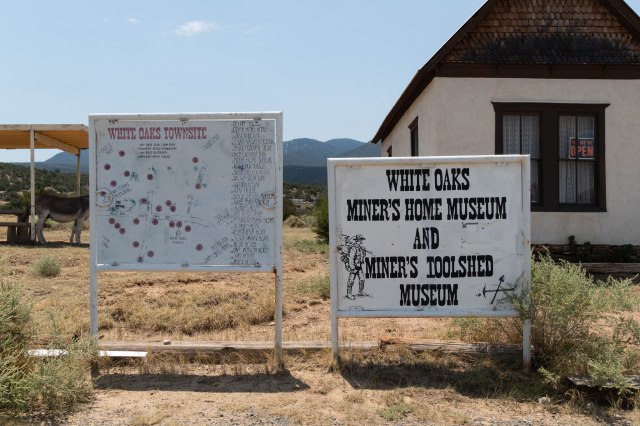
The museum was open, but no one around
Burros take advantage of the shade
Come on in and look around.
Rear of the house with ADA ramp
Inside is a kitchen
The parlor
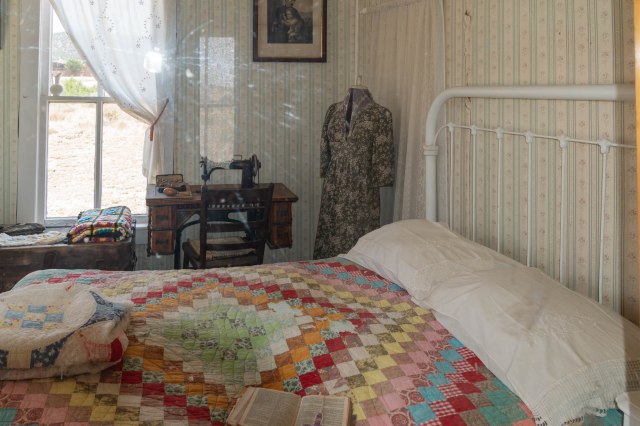
One bedroom, the other one had twin beds

The town got its start in 1879 when John Wilson, an alleged escapee from a Texas prison, told two friends of his gold discovery in the Jicarilla Mountains. Wilson sold out to his friends, who established two claims, made a profit, and eventually sold them for $300,000 each.
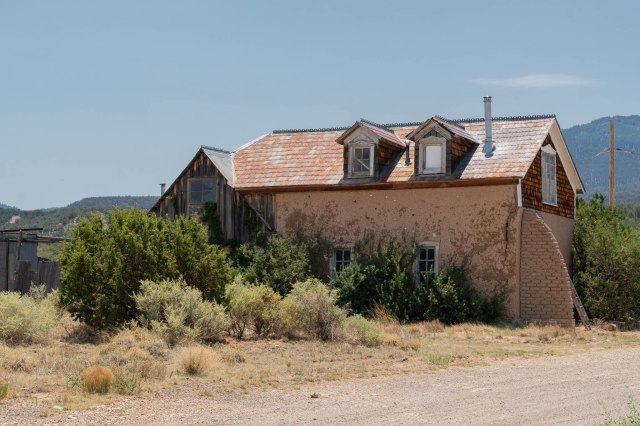
Expanded adobe home

White Oaks may have prospered even after the gold mines petered out had the Santa Fe and El Paso Northeastern railroads selected White Oaks for their route. When I read the Wikipedia article as to the reason why the railroad bypassed White Oaks, it evoked an image of greedy businessmen twirling their Snidely Whiplash mustaches in anticipation of a bidding war for right-of-ways.

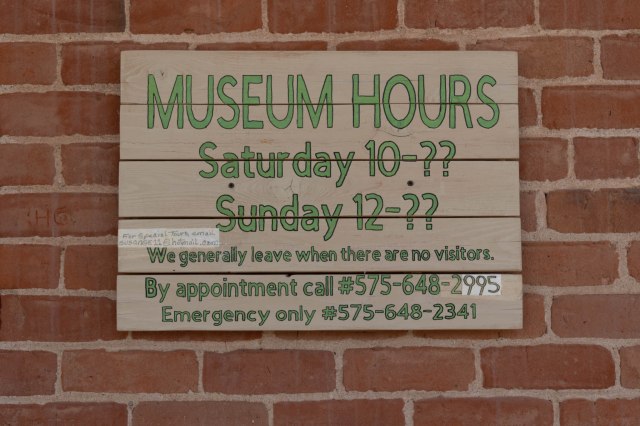
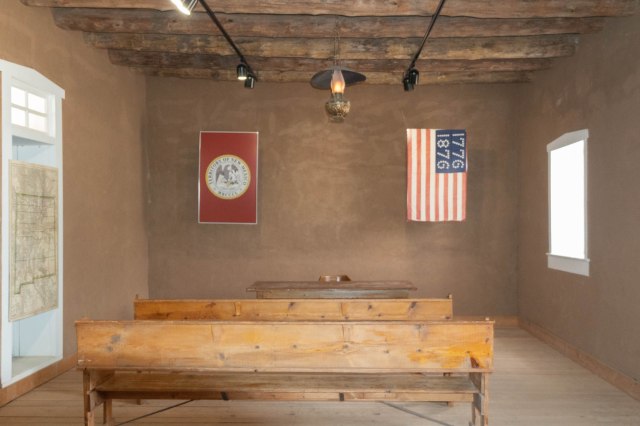
School house and museum
No one around
Facilities come equipped with hand sanitizer
Antiques in the schoolyard

That image vanished when I chanced upon the White Oaks New Mexico Goldrush (WONMG) website. They claim Wikipedia’s account of the railroad, which is not supported by references, is a fictional story repeated over the years by others.
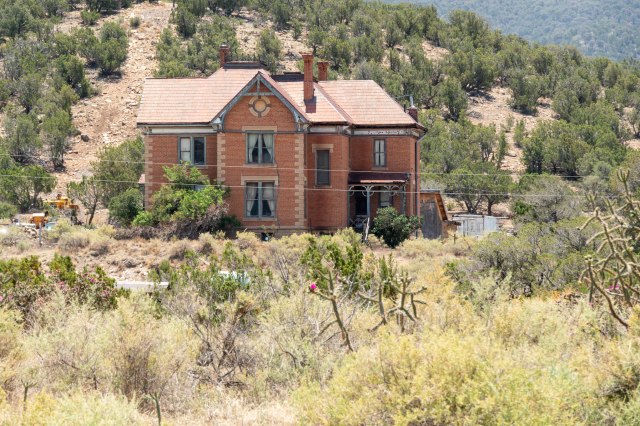
Hoyle’s Folly built by Watt Hoyle in 1893
Possibly the Exchange Bank Building, or former Postoffice Building, or maybe both at different times

Supported by documentation, WONMG asserts the railroad pulled away from White Oaks after the Lincoln County Leader, White Oaks newspaper, published an unflattering article about Jay Gould after his death. Gould, often referred to as an unscrupulous robber baron, controlled the railroad. WONMG infers the family chose Carrizozo because the article angered them. Gould was the subject of plenty derogatory articles and political cartoons. Would they be so indictive?

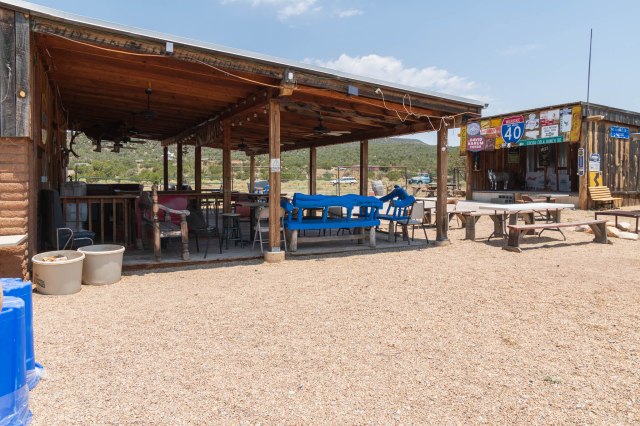
No Scum Allowed Saloon, “Come out back for music and fun. But only when we’re around.”
Stage and patio in the back of No Scum Allowed Saloon
Not everything is bleak in White Oaks
Little black bugs feast with a butterfly

No matter the reason, Carrizozo was the recipient of the railroad stop and became the state capitol, while White Oaks continued its demise. There’s still sign of residents in town. One lady came out to water her plants, a handful of cars rolled through the street, and a sign said White Oaks Pottery was closed for the day.

Valley of Fires Recreation Area

After White Oaks, we drove to Valley of Fires Recreation Area managed by U.S. Department of the Interior Bureau of Land Management (BLM). Created 2,000 to 5,000 years ago, the lava field covers 125 square miles of the Tularosa Basin. In the center it measures up to 160 feet thick.

The 1-mile Malpais Nature Trail loops through the lava field
Pahoehoe lava

We found a small visitor center; picnic shelters; 19 campsites (14 with electricity) including sun shelters, water, restroom and shower facilities; and the Malpais Nature Trail.
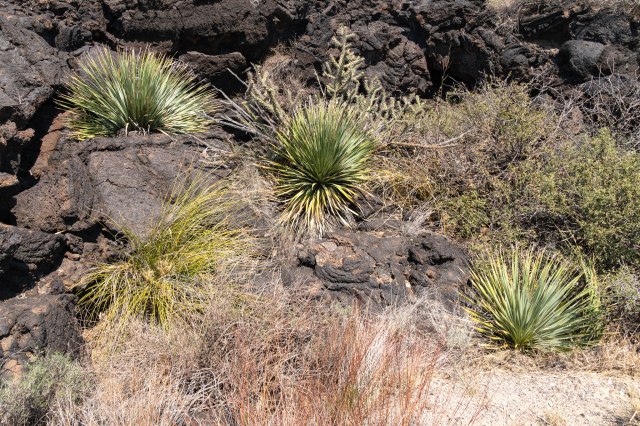
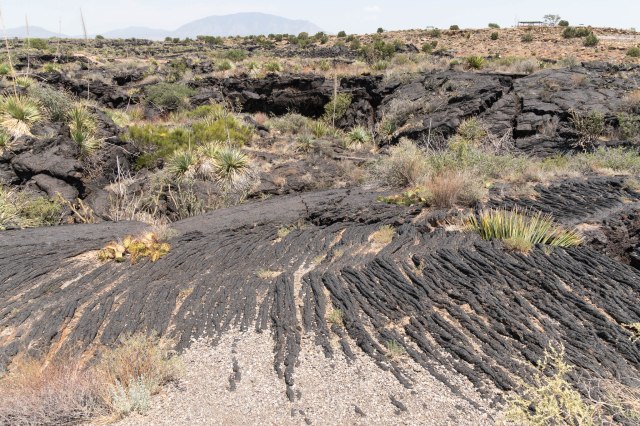
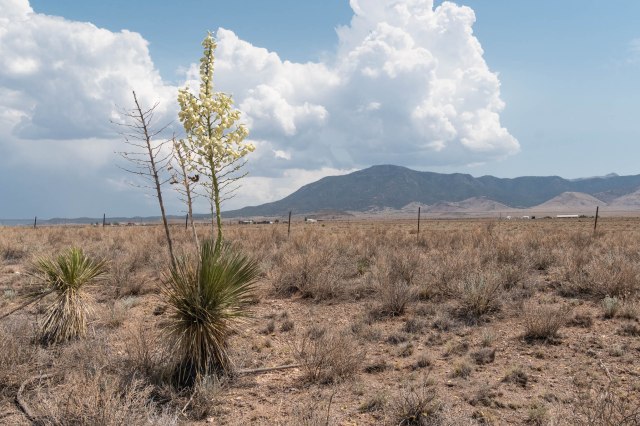
Yucca and cholla and other desert plants grow in the lava
A big hole reveals a collapsed bubble

The 90-degree temps had us slathering on sun screen, donning hats, and grabbing water, before walking the concrete path. Numbered posts and a pamphlet told us what we were seeing.

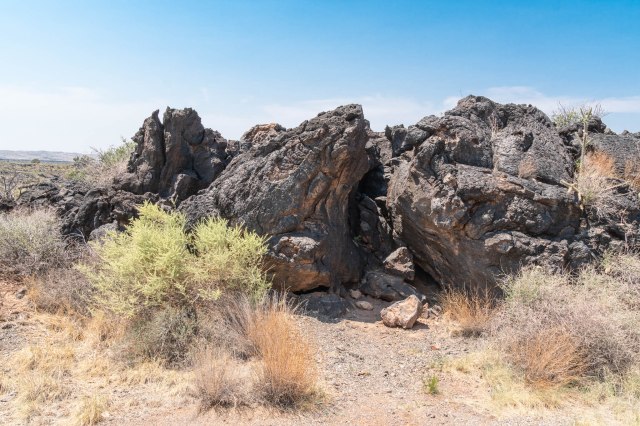
Estimated age of this juniper is 400 years
Hiding spot for rodents and lizards and snakes
Yucca in bloom beside the road

Only a 10th the size of Craters of the Moon in Idaho, Valley of Fires is still an impressive site and more accessible.

Surprise Find: Art and Wine in Hondo Valley

Twice I had seen a sign advertising the Hurd Gallery while driving through Hondo Valley and by San Patricio on US 70. Not sure what we’d find, we drove to the gallery on our last day.

Below the highway, the Rio Ruidoso runs through the valley of green fields and trees. It felt like leaving civilization behind when we dropped into the valley and St. Jude Roman Catholic Church came into view. Was the adobe-style building 100 years old or more? The sign out front gave away its true origins, recognizing the dates of 1967-2017 as its 50th anniversary. I still liked the architecture so took photos.
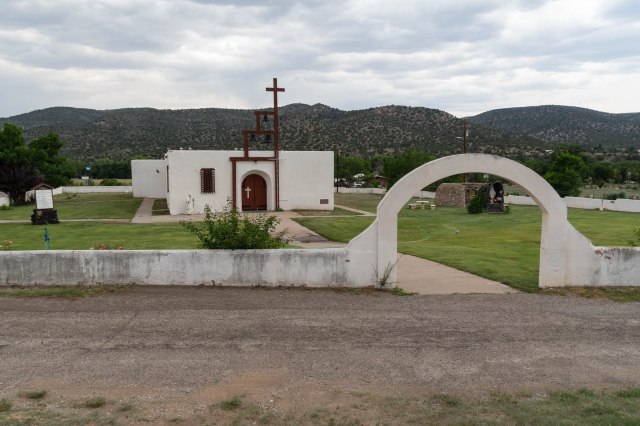
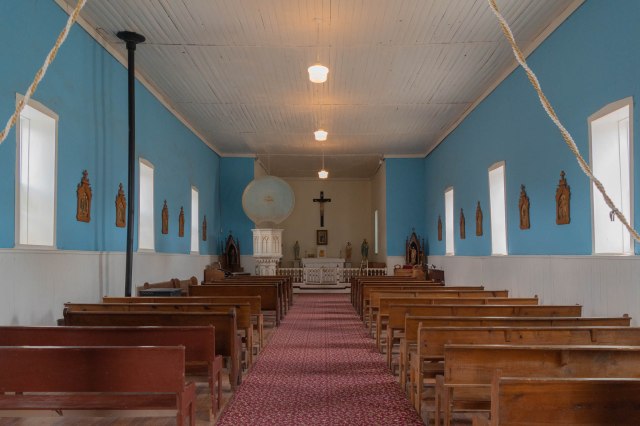
St. Jude Roman Catholic Church Mission

From the outside, I thought we had pulled up at a house. A sign directed us to the left. Inside, we found small rooms and hallways filled with paintings, sketches, albums, and memorabilia from five artists representing three generations.

Hurd La Rinconada Gallery. Enter the gallery on the left, walk through the large space in the middle, and sip wine on the right.

June greeted us and filled us in on each person with works displayed in the gallery. The artists were Michael Hurd, his father Peter and mother Henriette Wyeth-Hurd, NC Wyeth, and Andrew Wyeth.

Peter Hurd studied with N.C. Wyeth, where he met and married Henriette. Henriette had studied with her father from the age of eleven. N.C. Wyeth is best known for illustrations of Treasure Island and other popular stories of his time and created nearly 4,000 works of art. The Roswell Museum of Modern Art houses the largest collection of Wyeth’s work. Henrietta’s younger brother Andrew painted, among other works, Christina’s World, which hangs in the Museum of Modern Art in New York.

The talent of these artists amazed us as we wandered around the small space and dropped into a gallery large enough to hold a party with singing and dancing to the tune of the piano in the corner.

Then we heard about the wine. Beyond the large gallery, we entered the tasting room. We appreciated having the place to ourselves while Elaine filled our glasses with generous pours and told us more family tales.
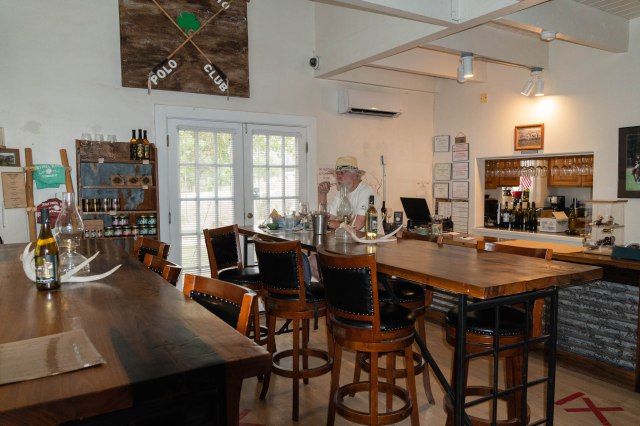
Jon enjoys a snack while tasting wine

At one point, Michael came into the room, introduced himself, and hung one of his new paintings. If there had been room in the trailer and space on a wall in my home, I would have purchased one of his paintings. The dilemma would have been selecting which one. We settled on a few bottles of wine.

As we sipped our last tasting, two men arrived. One of them grew up in Dublin, California, the town on the other side of the freeway from us, so we had an interesting conversation. Small world. The other man owned race horses that competed at Ruidoso Downs, one of which won a sweepstake the past weekend, so they were celebrating.

To learn more about Hurd La Rinconada Gallery, the artists, and winery, or to rent one of the four adobe-casita guest homes, go to Hurd Gallery.

Some days, we venture out with no particular expectations. Then wham! We drive through a beautiful green valley, find a renowned art gallery to explore and a tasty selection of wine to drink and buy. And Surprise! We end up with one of our best days in Ruidoso, New Mexico.

That’s a wrap for Ruidoso, New Mexico, a wonderful place to relax and explore. I’ll end with a moving-day sunrise that seemed to say, “Are you sure you want to leave?”
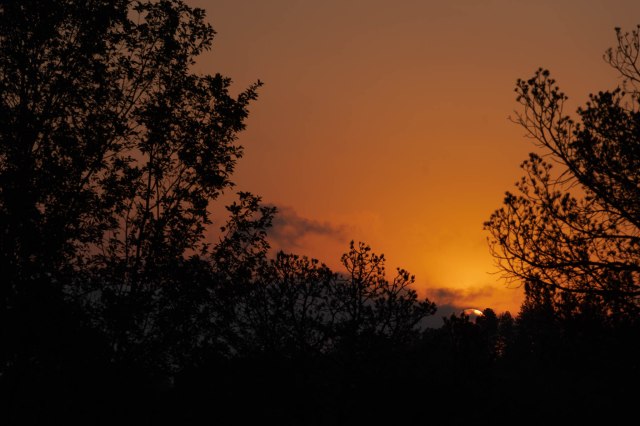
Ruidoso Sunrise

Next Stop: Santa Fe. All aboard.

Safe Travels

Summer 2021 Tour Ruidoso, New Mexico, Episode 3: Wild Horses, Grindstone Lake, Lower Cedar Creek Trail

In this episode, we encounter wild horses, drive up to Grindstone Lake, and take a hike. I know at the end of last week’s post I teased a hike, a ghost town, and a surprise, but I couldn’t shoehorn the ghost town and surprise into this post. They’ll pop up in next week’s episode. On to the horses.

Wild Horses of Lincoln County

We followed the directions and signs to the Monjeau Lookout, hoping for clear skies and a fantastic view. The dirt road lead through Villa Madonna, a small community tucked among the trees and hills. Jon shimmied past a Jeep on the side of the road and parked. Up the hill, a herd of horses grazed in a field.

Wild, or feral, horses keep watch to protect their herd

A young family walked toward us, so Jon asked if the Monjeau Lookout was up ahead. “Yes, sir, but the gate’s closed,” said the father in a polite Texas drawl. Jon asked, “Do you know if the horses are wild?” “Yes, sir,” the father said, “They’re feral.”

Wait a minute. I’ve heard of “feral” cats, but “wild” when referring to horses. Was he being friendly or making fun of us oldsters? If the later, we were glad we could make them laugh.

Villa Madonna community saved from a fire

As the family walked back to their Jeep, I noticed the father’s gun on his hip. People walking around with guns at their waist or strapped to their thigh is not something we ever see in the San Francisco Bay Area. I suppose carrying a gun in this part of the country might not be a bad idea. Besides horses, elk, and deer; bear live around Ruidoso. I’d sure hate to bump into a big black bear without some kind of protection. We should think about making more noise while hiking. The crunch of gravel under our shoes may not be enough to keep a bear from our path.

How did this one tree survive the blaze?

Watching the horses graze on the hill cured our disappointment in not seeing Monjeau Lookout, a site we’ve put on our list for our next visit to Ruidoso.

Grindstone Lake

Completed in 1987, the Grindstone roller-compacted concrete dam stores water from the Rio Ruidoso and Grindstone Canyon Creek as a community water supply. The dam sits at 6,918 feet above sea level and has a surface acreage of 40 acres. In front of the dam, the lake is 115 feet deep. Well, maybe not that deep with the water level so low.

Kayaks and canoes for rent at the lake

Ruidoso Parks and Recreation operate the recreational activities at Grindstone Lake and WiBit Water Park. Fishing, hiking, canoeing, kayaking, and paddle boarding, among other activities, are available. The Dam House has boat rentals, fishing equipment, and snacks.

There’s still enough water for Wibit Water Park fun

A fee is required to park at the lake and advanced reservations are required Friday through Sunday. An additional fee and reservations are also required for the Wibit Water Park. No one is at the water park in the photo because it was closed the day we visited.

View homes dot the hilltop and anglers try their luck

Lower Cedar Creek Trail

Behind Smokey Bear Ranger Station on Cedar Creek Road are trailheads that lead to several paths used by equestrians, bicyclists, and hikers. One morning, we chose the 1.5-mile Lower Cedar Creek trail for an early morning hike.

The V Tree

A squabbling congregation of crows greeted us at the trailhead. Their debate followed us several yards as the trail wound its way near the creek, and finally abated as we continued up and down hills, and through a varied landscape of junipers, pines, and cactus. (Note: Yes, I know “murder” is the technical term for a group of crows, but I liked the ring of congregation or crows)

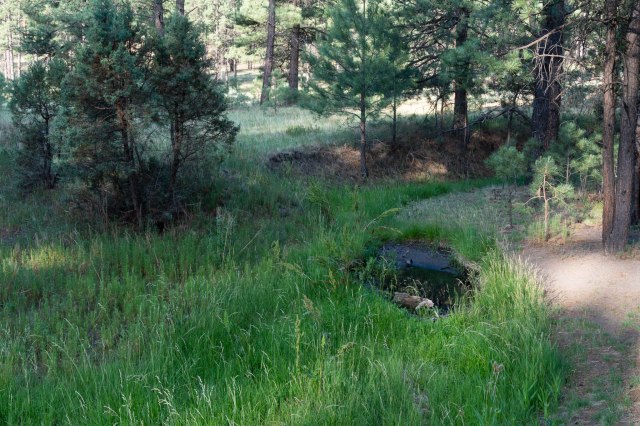
Small pond in a wetland area
A middle tree?
Prickly pear
Jon powers up the hill
How many seedlings will survive?

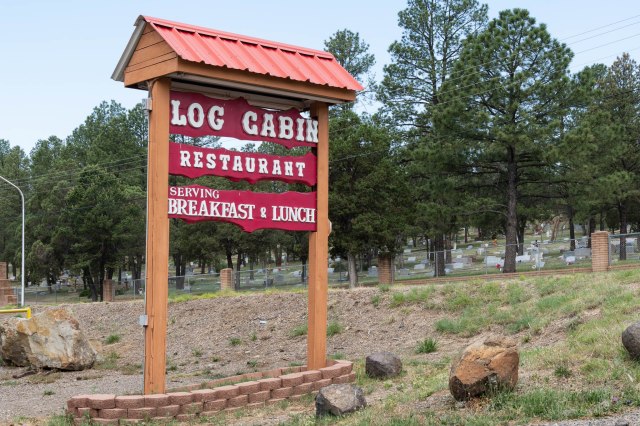
The crows were still squabbling when we returned to the trailhead. Apparently, they hadn’t resolved their disagreement. Back at the truck, Jon realized his hiking shoes had carried him for the last time. A trip to mid-town to buy a new pair was added to our daily to-do list, but first we needed food. Cars had crammed into the parking lot in front of Log Cabin on previous days when we passed by. On this day, we lucked out with a spot in front and enjoyed a filling breakfast.

We recommend Log Cabin Restaurant for breakfast

Brunell’s in mid-town had a large selection of shoes for Jon to choose from. The friendly staff stacked boxes of shoes and boots around him. After trying several on, he found the perfect pair and wore them the rest of the day with no soreness or blisters.

That wraps up this episode. Next week for sure we’ll share our visit to the ghost town, a lava field, and the surprise find.

Safe travels

Summer 2021 Tour Ruidoso, New Mexico, Episode 2: Billy the Kid, Fort Stanton, and Lincoln

One day we took Billy the Kid Trail to Capitan, Fort Stanton, and the Village of Lincoln

Smokey Bear Historical Park

We missed seeing the Hubbard Museum, but were lucky to find the Smokey Bear Historical Park open for business in the Village of Capitan. The Historical Park contains a museum with various fire prevention displays, Smokey Bear memorabilia and trinkets to purchase, and a garden filled with native trees, plants, and flowers.

Smokey Bear memorabilia
Available for purchase
Firefighting displays
Photo of CCC crew. The first time I saw this photo, the guy leaning off the stake bed truck in the far right center drew my attention. He brought the picture to life for me.

After wandering through the museum, we headed out back to the shady garden where they buried Smokey Bear and where little plaques identify plants and trees and flowers.

Tiny cactus
Cactus bloom
Image of Smokey as a cub in the garden
Firefighter memorial
JT poses with Smokey

Here are a few Smokey Bear fun facts we learned:

  • While fighting a fire in the Capitan Mountains, a group of soldiers from Ft. Bliss, Texas, found a badly burned bear cub clinging to a charred tree on May 9, 1950.
  • Ray Bell, a New Mexico game warden, flew the injured five-pound cub to Santa Fe where veterinarian Dr. Ed Smith treated him.
  • Ray Bell’s wife and daughter, Ruth and Judy, helped nurse the cub back to health.
  • An article written by Dorothy Guck, a Lincoln County newspaper reporter, and photographs taken by Harold Walter brought national attention to the plight of Hotfoot Teddy, Smokey’s original name.
  • A formal fire prevention campaign began in 1942 by the USDA-Forest Service, adopting a bear as its symbol in 1944 and the message “Remember . . . Only YOU can prevent forest fires” in 1947.
  • Once recovered, Hotfoot Teddy became Smokey and sent to the National Zoo in Washington, D.C., becoming the “living symbol” of fire prevention.
  • The Secretary of Agriculture controls the image of Smokey, which has allowed the collection of millions in royalties for forest fire prevention education efforts, including the Junior Ranger Program.
  • Smokey had received so much fan mail by 1965 the postal service gave him zip code, just like the President of the United States.
  • Smokey Bear was buried at the historical park, as is the original 1993 Smokey Bear Balloon, which was destroyed during a flight on October 10, 2004.

The message “Remember . . . Only YOU can prevent forest fires” must have worked on me all these years because whenever I’m near a forest, those words pop into my thoughts. In April 2001, the slogan was updated to “Only You Can Prevent Forest Fires.” I think the shorter version has more punch.

Fort Stanton

We said goodbye to Smokey and headed down the road to Fort Stanton. Fort Stanton is one of seven New Mexico Historic Sites and is managed by the Department of Cultural Affairs.

Main Museum and Visitor Center, originally constructed of local stone in 1855 and used as barracks for enlisted soldiers. Extensive remodel occurred during the hospital years and used as an administration building.

Founded as a military fort in 1855, it served a number of functions during the past 166 years including a tubercular hospital, Civilian Conservation Corps camp, state hospital, drug rehab, correctional facility, and since 2001, a living history museum.

The colors on the jackets symbolize the rank. Not sure which color goes with which rank.

There are 25 locations or buildings surrounding or near the parade grounds, nine of which are open to the public. The open buildings we went in contained equipment and furniture of the times along with information posters and signs detailing the history and people that worked there.

Photos and historic stories
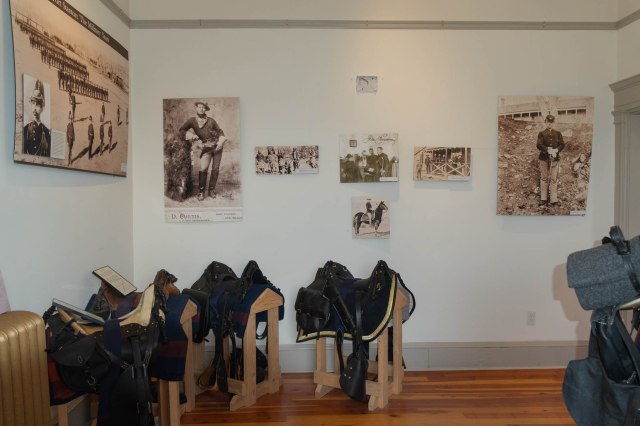
Saddle and photo room inside visitor center
Parade grounds
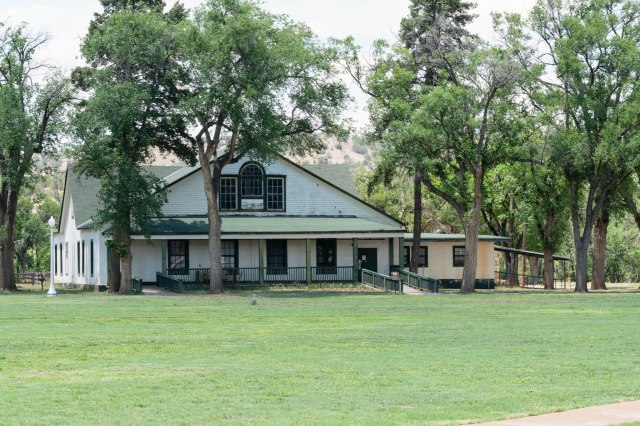
Originally built in 1883 as a duplex to house two officers and their families. It’s now used by the Bureau of Land Management.
Fort Stanton Marine Hospital built in 1936 for up to 85 tubercular patients. Doctors were also tubercular patients.
Period furniture and equipment occupy the hospital rooms
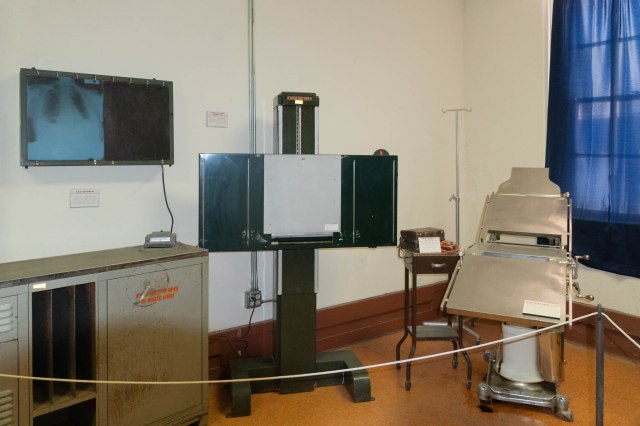
X-ray machine in an exam room
A dentist office.

I lost interest in the buildings when grazing horses appeared on the parade grounds, and I set out photographing them instead of browsing inside buildings. I seem to remember that hunger was also a factor that kept us from exploring the fort in more detail.

One of the grazing horses
This building, built in 1855 as a single story building, was used for Fort Administration. During hospital years, it became the amusement building, with a general store, telephone exchange, post office, and a theater.

Lincoln Historic Site

Settled in 1849, the village of Lincoln became the county seat when Lincoln County was established in 1869. Except for the paved main street, the town has preserved the look and feel from the late 1800s, with a few alterations. The site boasts 17 territorial-style adobe structures and outbuildings, 6 of which are open for touring (4 opened yearly and 2 seasonally).

Built in the 1850s, the thick walls of the Torreon (the keep) protected Spanish Americans from the Apaches. The Murphy-Dolan group stationed sharpshooters in the structure during the Lincoln County War.

So what is so special about Lincoln that earned the entire town as a New Mexico historic site designation?

The Lincoln War

In the early years of New Mexico Territory, range wars were common occurrences that pit one group of cattle ranchers against another or three or four. The Lincoln War, however, turned out to be one of the deadliest waged by both respectable and criminal types alike.

The saga is filled with a cast of characters with greed in their hearts, guns in their holsters, and in their minds, murder.

The Covento building, built in 1868 as a flat-roofed adobe building was used as a saloon, dance hall, community center, a county court, and a local parish of the Roman Catholic Church.

Instead of filling this post with a doctoral thesis on the Lincoln War, I present an extremely short synopsis.

Inside a portion shows the Covento as a courthouse.

Lawrence Murphy and James Dolan enjoyed an economic and political monopoly over the Lincoln area after procuring lucrative federal contracts to supply Fort Stanton and reservations nearby. They enjoyed the fruits of those contracts until November 1876. That’s when John Tunstall came to town with cattle rancher John Chisum and attorney Alexander McSween. They were intent on upsetting the monopoly by establishing a ranch, store, and bank to compete with Murphy-Dolan.

Additional displays tell stories about historic events or people. These panels tell the story of the Horrell War, which also resulted in numerous deaths.

Sides were drawn, gangs were formed, harassment and cattle rustling ensued, killings occurred, which led to more killings. Tunstall’s group formed the Regulators and Billy the Kid joined them. The Regulators and the Sheriff’s posse battle it out a few times and more men die.

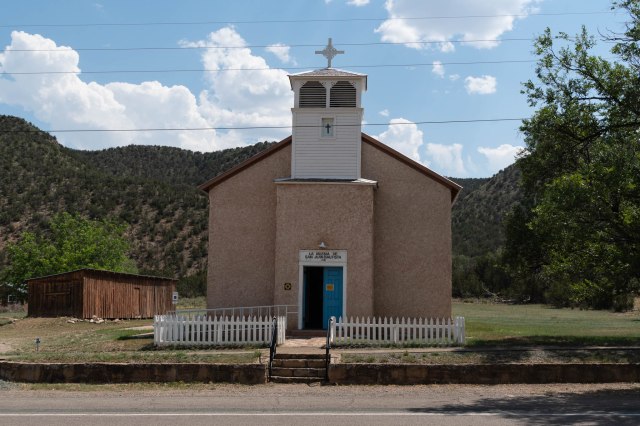
San Juan Mission building

Then came the Battle of Lincoln. The Murphy-Dolan faction surrounded the Regulators in Lincoln on July 15, 1878. For the next three days, gunfire rang out in the town, along with a volley of taunts and shouts. The US Army troops arrived, pointed cannons at the Regulators, causing many of them to flee.

Inside the San Juan Mission building

The conflict culminated on July 19 when the Murphy-Dolan group set the McSween house on fire where McSween, two women and five children, Billy the Kid, and other Regulators were holed up. The women and children were allowed to leave, and the fighting continued until the Regulators fled. Some of them were gunned down during their escape. Billy the Kid escaped unscathed.

We missed seeing the Tunstall Store Museum as it was closed.

Not much resulted from the war other than the killing of at least nineteen men. The new governor of the territory declared amnesty for the remaining individuals involved in the war. As it turned out, the governor did not include Billy the Kid in the declaration. Sheriff Pat Garrett and his posse tracked Billy and two of his compadres, killing all of them in July 1881.

Old Dolan House. A sign out front advertises it as a B&B, yet it was closed during our visit.

One might say the person who benefited from the war was Susan McSween, Alexander McSween’s wife. She amassed a large amount of ranch holdings that averaged between 3,000 and 5,000 head of cattle and became known as the Cattle Queen of New Mexico. She died on January 3, 1931, at 85 years old.

After reading article after article and falling into research rabbit holes, I’m still debating who was respectable and who was criminal. Both sides engaged in a deadly game of tit for tat, so it’s hard to tell. Maybe the Old West definition of justice meant something totally different from how it’s defined today. Or maybe it is the same, minus all the killing. Or maybe I just have a Pollyannaish sensibility, looking for the good guy where one does not exist.

Up next: We stretch our legs on a hike, visit a ghost town, and stumble upon a surprise.

Safe Travels

Summer 2021 Tour Ruidoso, New Mexico Episode 1: We roast in Tucson and arrive in Ruidoso

We left the cool San Diego breezes for the furnace of Tucson, where temps reached 115 degrees or more. Tucson/Lazydays KOA Resort was our stop to split up the 12-hour drive to Ruidoso. It was 6:30 pm when we arrived. About an hour later, Jon walked in the door and sat down. Seconds later someone knocked on the door. It was the security guard who had showed us to our site. He said management wanted us to move.

What? No!

A regular guest wanted our site because it had a tree, and they were staying until October. Really? The tree was a scrawny little thing, and the site was one of several that had a cover for shade. Jon talked the manager out of his crazy idea and averted a heatstroke.

The next day we washed clothes, cleaned house, and stayed cool in the air conditioned trailer. We ended the day with an early dinner at Obon Sushi + Bar + Ramen, a place we had eaten before and highly recommend.

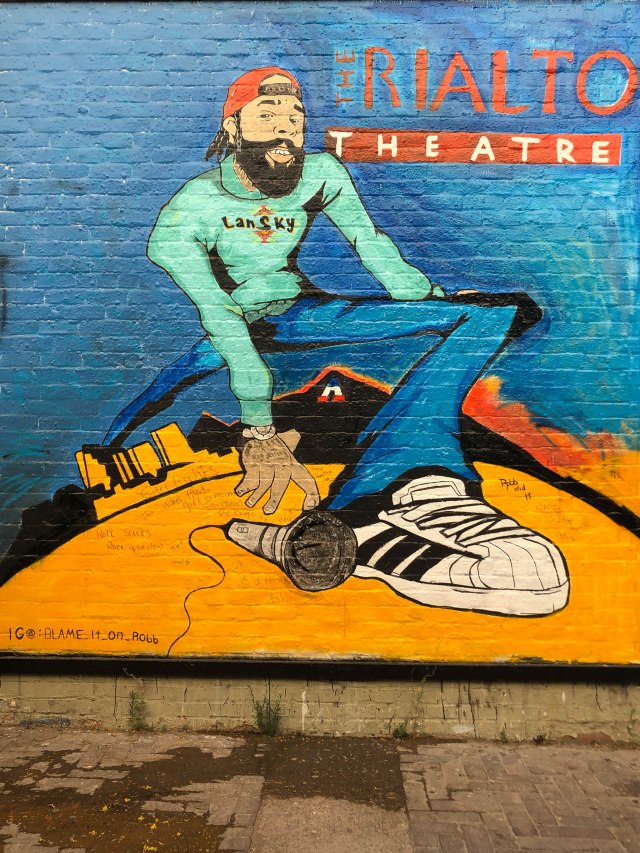
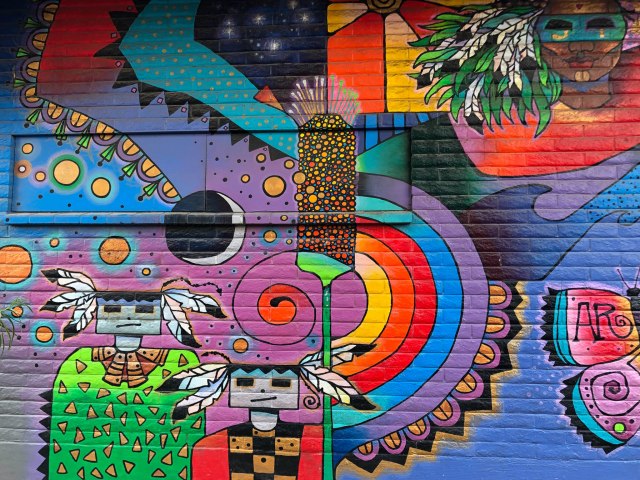
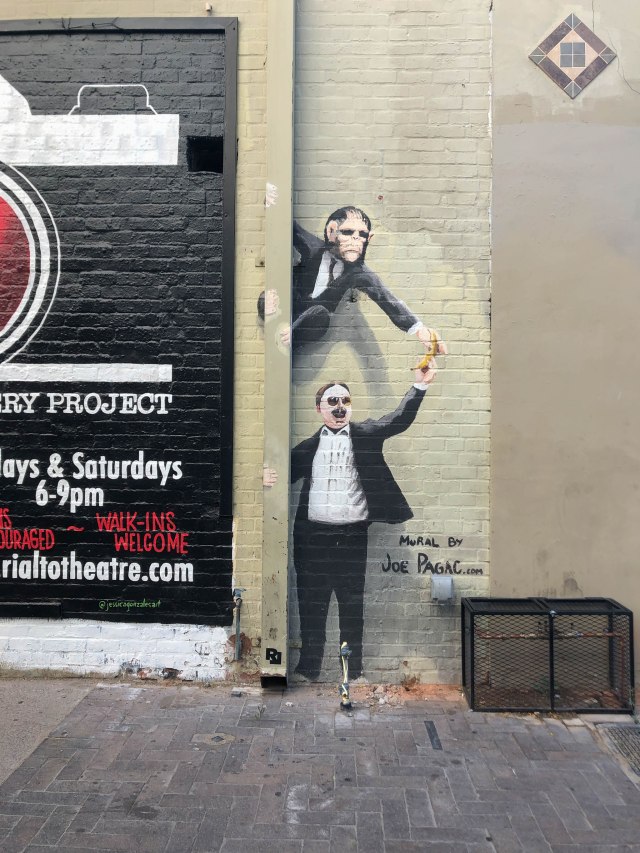
While walking back to the truck, I captured a few murals we saw in an alley and a couple of buildings. It’s never too hot to snap a few photos.
Rialto, California, is where I grew up, so whenever I see the name, I have to take a photo. Wikipedia lists 22 theaters named Rialto across the United States.
Mural found in the alley next to the theater
Love the images and colors in this one
3D Effect

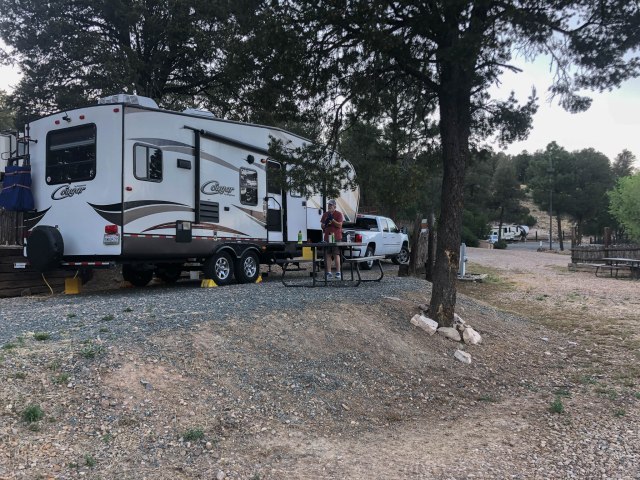
On Thursday, June 17, 2021, we drove the final 6 hours to RV Resort of Ruidoso, New Mexico. The location of our site could not have been better. The park is terraced, and our site was below one site and above another so that we did not feel crammed together. The bonus was that we only had neighbors on the weekend. Compared to all the other sites in the park, I think ours was the best.

RV Resort of Ruidoso campsite.
View from our picnic table

We jumped at the chance to have Bailey’s mother and step-father show us around town. This helped us get our bearings and see where everything was located. The gracious company and our lunch at Oso Grill in Capitan was the highlight. Thanks Dale and Dorothy.

Good eats at Oso Grill in Capitan

On Saturday, we headed to the Hubbard Museum of the American West. Sadly, it had not reopened after its pandemic closure, so we admired the statuary outside.

The empty parking was a sign the museum was closed.

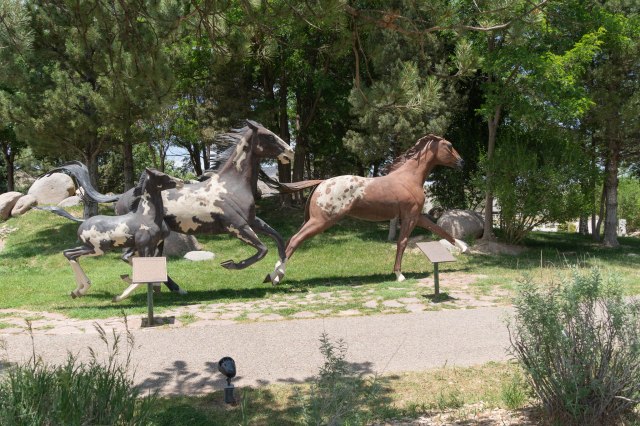
I had seen the galloping horses from the street when we were driving around the day before and wanted to see them up close.

The breeds represented are Standard, Thoroughbred, Quarter horse, Appaloosa, Paint, Arabian, and Morgan.

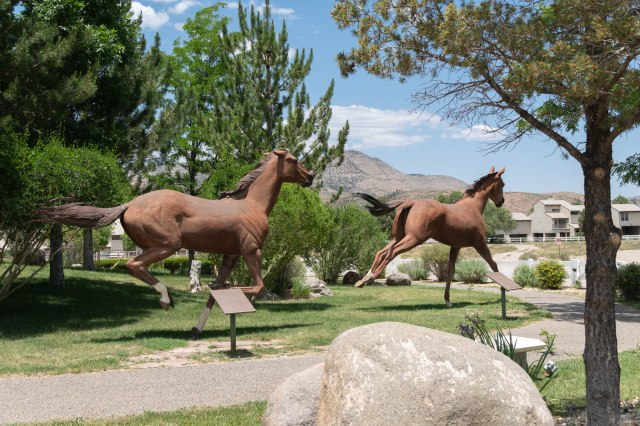
The Free Spirits at Noisy Water are a collection of eight bronze horse sculptures created by Dave McGary who is known for his realistic and colorful portrayals of Native Americans.

It’s hard to believe the tail and mane are made of bronze too.

The horses appear to jump and gallop, their muscles taut, manes and tails flowing. I was amazed to learn that the eight horses weigh 3,000-5,000 pounds each and are supported and balanced by only nine hooves.

It’s unbelievable the foal galloping next to its mother has all four hooves off the ground.

Plaques detail information on each of the seven breeds represented. The distance from the leaping horse at the top of the hill to these two out front spans 255 feet.

McGary was a master working with bronze

After capturing the photos of the horses, we walked across the street to see if Billy the Kid Scenic Byway Visitor Center was open.

Billy the Kid National Scenic Byway Visitor Center

We picked up maps and pamphlets and wandered around the museum. Billy the Kid (born Henry McCarty and also known as William H. Bonney, Henry Antrim, and Kid Antrim) was a busy guy in Lincoln County. He left a trail of so many historical spots where he committed crimes, where he was jailed, or where he hid out from the lawmen, that he rates a National Scenic Byway. The roads connect the dots between Ruidoso, Capitan, Fort Stanton, Lincoln, and Ruidoso Downs along Highways 48, 380, 230, and 70.

Billy the innocent?

With all the attention Billy gets in this area, you’d think he was a national hero, not an outlaw and murderer. I guess notoriety, no matter what kind, is something to commemorate.

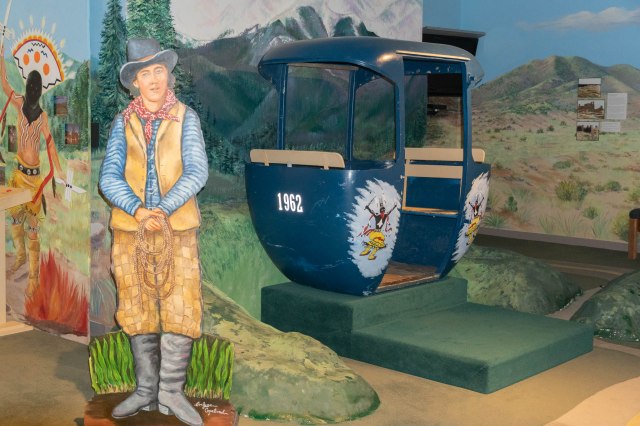
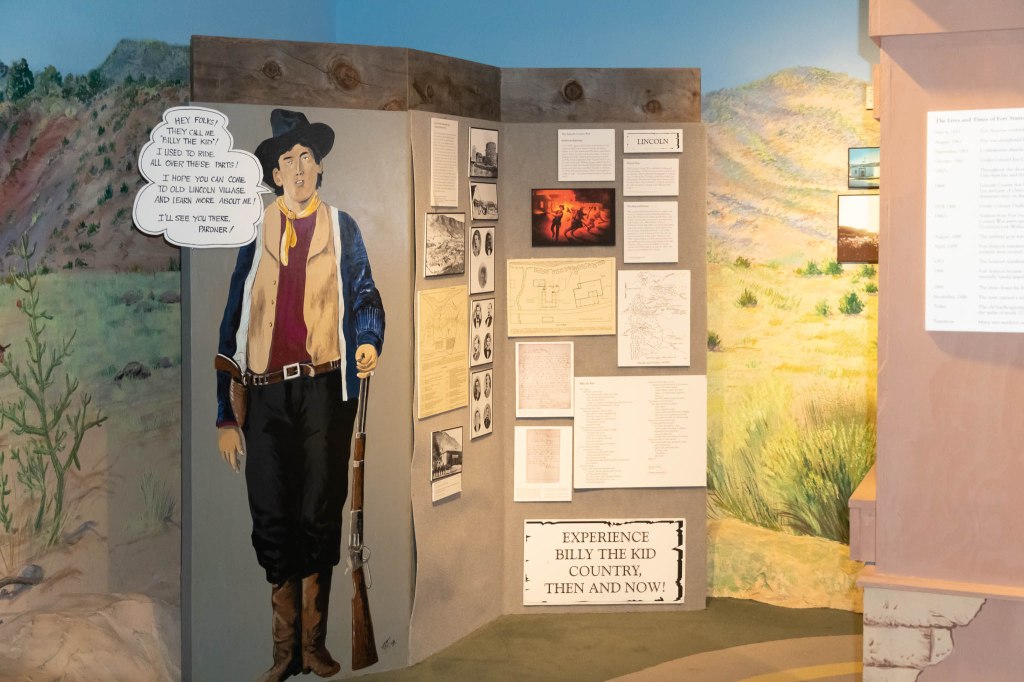
Visitors can learn about many of Billy’s escapades, including his role in the Lincoln County Wars, from the displays.

Billy says, “Learn more about me in Lincoln. I’ll see you there.”

We’ll share a few more tidbits about Billy the Kid in future episodes.

Interested in extraterrestrials? They’re featured here to give a shout out to Roswell.

Extraterrestrials are also featured. Roswell is only 75 miles away.

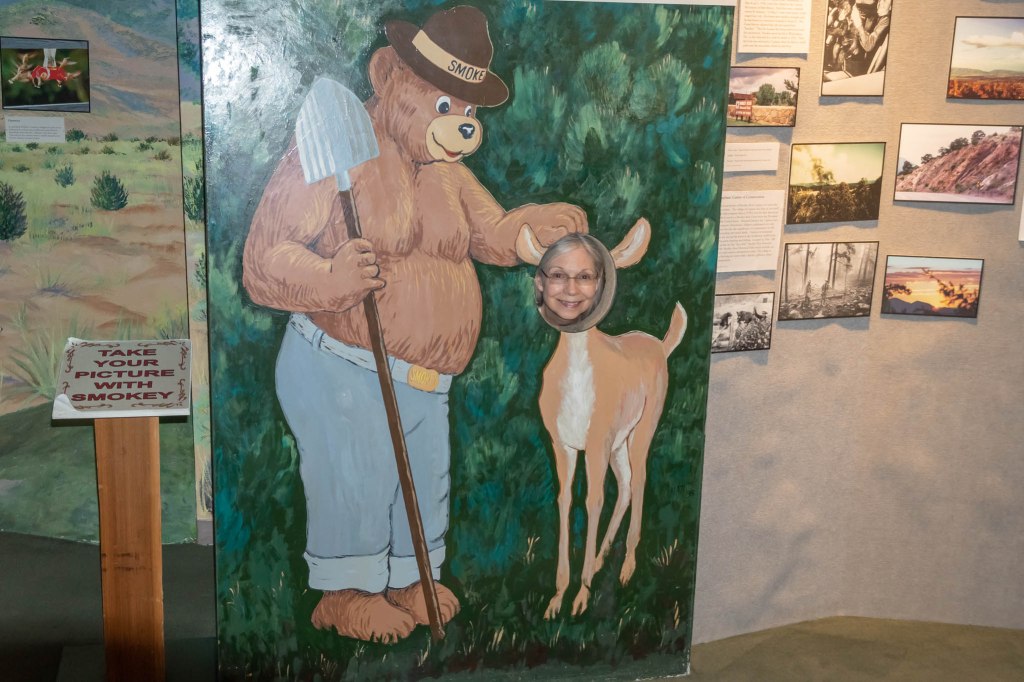
Smokey the Bear is another popular guy in Lincoln County with a museum dedicated to his life and memory in the Village of Capitan.

Don’t forget the photo op with Smokey.

The Village of Ruidoso is in Lincoln County and next to the Lincoln National Forest. It had a population of approximately 8,000 in 2019 and sits at an elevation of 6,920 feet (2,051 meters). Ruidoso is a popular destination for the ski resorts in the winter. The rest of the year, the village and surrounding area offers lake and river fishing, hiking, exploring local history, and horse racing at Ruidoso Downs.

Artist: Michael Fish

Next we drove to Midtown Ruidoso to check out the independent stores and eateries. We didn’t stay long. With so many out-of-town visitors, it was difficult to find parking and hard to walk on the sidewalk with the families and friends taking up the entire width.

Avoid the crowds on Saturday

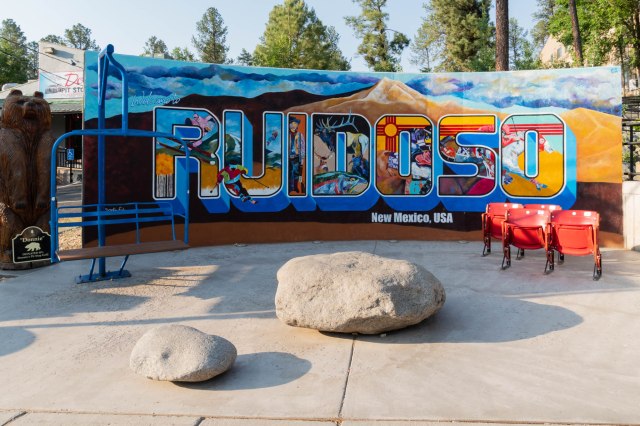
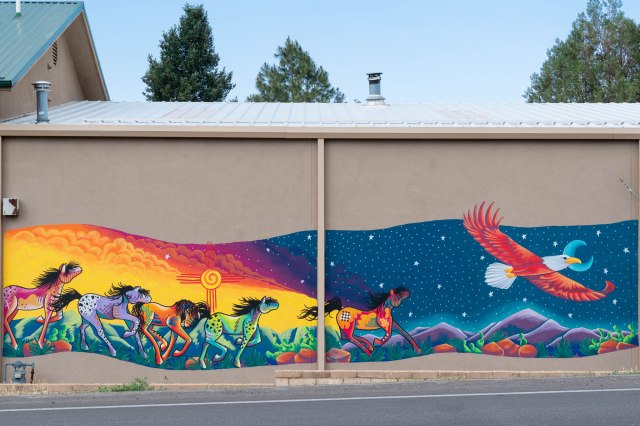
We found a much calmer atmosphere when we came back early in the morning one day during the week. With no crowds and few people, I had fun photographing the murals that graced many of the buildings. The Midtown Association funded the public art project, creating a fun outing for photographers and for people who share on social media.

Artist: Jeff Hayes
Artist: Trish Wade
Artisits: Logan Flerity, James Flores, and JB Heard
Artisit: Michael Fish
Artist: M. Rabourn
Artist: Trish Wade

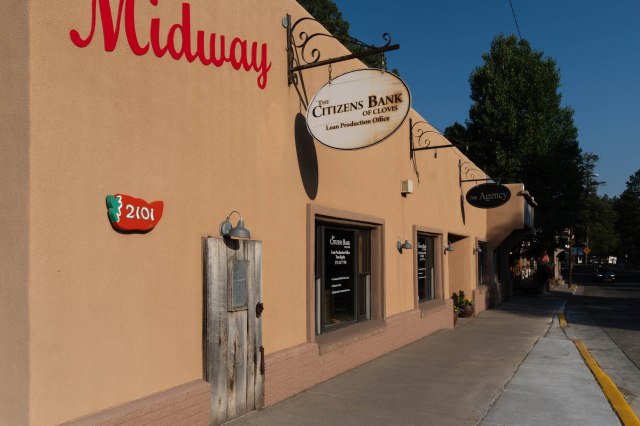
While taking the mural photos, I came across this Citizens Bank building. I sure would like to know why that little wooden door is there.

Little Wooden Door

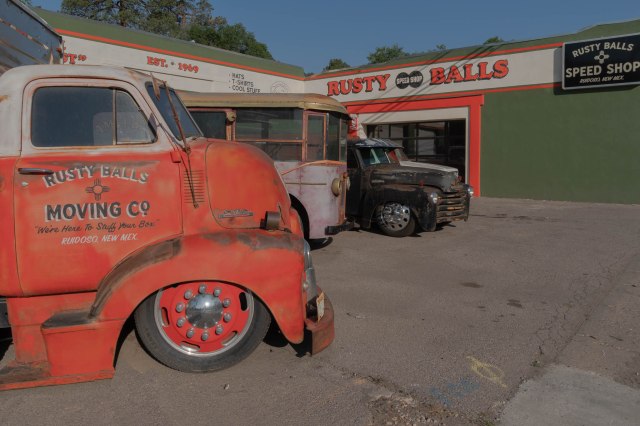
Another curiosity were the antique vehicles out front of Rusty Balls Speed Shop.

That moving van is going nowhere.

And the final spot in this post goes to the Ruidoso Fire Department’s community-built Wall of Courage mosaic monument. The monument measures twenty by seventy-five feet.

Wall of Courage, Brian Sarinova, designer and lead artist

Stay tuned for more episodes covering our week in Ruidoso.

Safe Travels