Livingston, Montana

Only July 4, 2017, we made progress toward Glacier National Park selecting Livingston, Montana, as a waypoint for a few days. Smoke streaked across the sky along Interstate 90, even though Inciweb indicated no fire in the area. A few miles east of Hardin, we drove under the stream of smoke leaving clear skies ahead. We continued through hills sporting their golden summer hue, saw a cornfield growing between the freeway and a train yard near Laurel, and experienced the finest rest area ever. Greycliff Rest Area Westbound didn’t have the usual dark and dank multi-stall facilities one finds when stopping along the freeway. Instead, we found two building wings—one for men and one for women—with individual ADA accessible rooms. The room couldn’t have been any cleaner or more comfortable. As we continued our route, the Crazy Mountains loomed ahead with the remnants of winter snow outlining the crevices and valleys.

Off Pine Creek Road (US-89 S) we found the Livingston Paradise Valley KOA nestled between tall cliffs of a canyon. I thought for sure the authorities had banned fireworks in this area of forest, farms, and ranchlands that border the Yellowstone River. Silly me, the explosions echoed in the canyon until at least midnight. Happy Birthday, USA.

The City of Livingston, Montana, is a historic railroad and ranching town and was the first gateway into Yellowstone National Park. Art galleries, bookstores, outfitters, breweries, restaurants, boutiques, and banks occupy several blocks of historic buildings.

IMG_3178
Independent Stationery Stores Still Thrive
IMG_3177
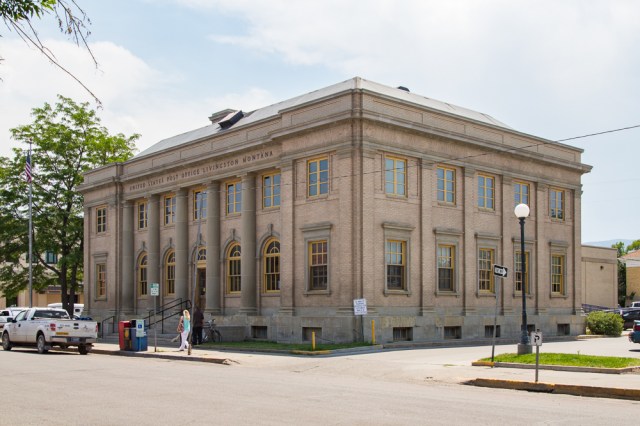
Livingston, Montana, Post Office

Step into Montana Watch Company for a custom-made timepiece. I’d love to own one of these gorgeous watches. Unfortunately, their price point is beyond my budget.

IMG_3182

To escape the sweaty 100-degree weather, we stopped in at Katabatic Brewing for a pint of Hefeweizen and taco salads served by Fiesta En Jalisco, a Mexican restaurant next door. I received a meteorological lesson when I asked about the name Katabatic. The owners named the brewery after the ever-present winds in Livingston, which can equal or exceed 70 mph. The Santa Ana winds in Southern California are also of the katabatic variety where the wind carries high-density air from higher elevations down slope. With winds exceeding 30 mph on 246 average days a year, Livingston is the windiest city in Montana. What else would you call a brewery in the windiest city?

IMG_3173
Katabatic Brewing Co.
IMG_3168
Katabatic Offerings On Tap

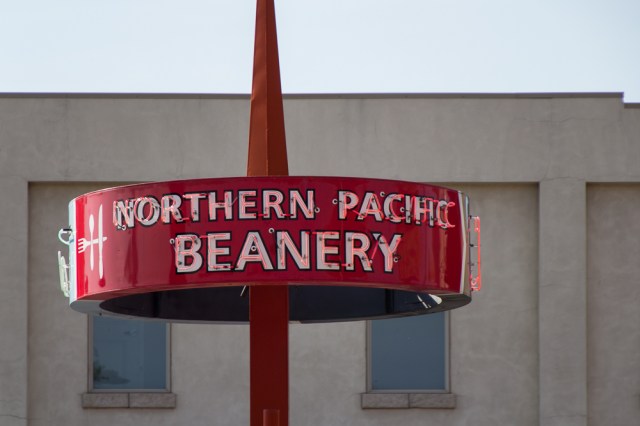
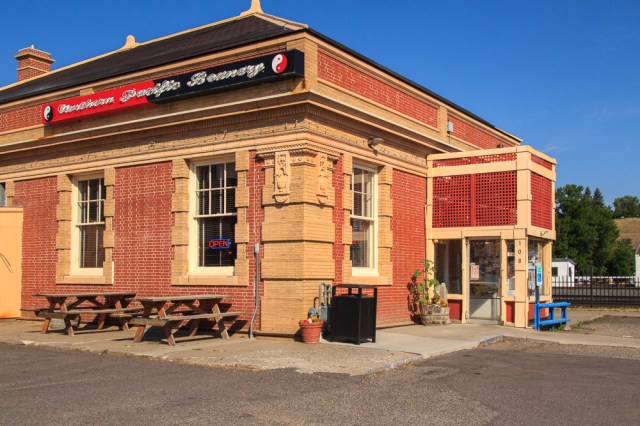
We recommend breakfast at Northern Pacific Beanery in Livingston. With vintage décor and a choice of counter seating or chairs at a table, you’ll feel like you stepped into the 1900s when the location served railroad workers, locals, and visitors who rode the train to Yellowstone, the world’s first national park.
IMG_3185
Best Breakfast in Town at Northern Pacific Beanery
IMG_3184
Historic Building of Northern Pacific Beanery

On the hunt for freshly baked bread, we headed to Bozeman. Our mouths watered when we walked into Great Harvest Bread Co. and smelled the yeasty goodness baking in the ovens.  We enjoyed the aroma of a loaf of Honey Whole Wheat the rest of the day and until we returned to the KOA.

While in Bozeman, we visited the American Computer and Robotics Museum. Their displays range from stone tablets to an iPad, cyborgs and robots, early video games, an original Apple I signed by Steve Wozniak, and the first PC. They have filled each room with memorabilia for the theme be it robotics, computers, video games, or brains and thinking machines. Also included are pictures and biographies of the creators and scientists.

IMG_3186
1945 Clifford E. Berry Analog Computer Reduced Calculations of Simultaneous Equations from 5 Hours to 44 Minutes.
IMG_3189
Grace Hopper Conceptualized Programming Language That Led to Development of COBOL
IMG_3192
From Stone Tablets to Apple iPad in 4,000 Years

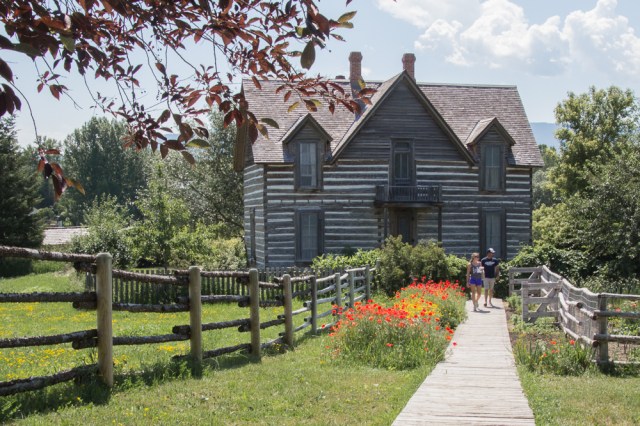
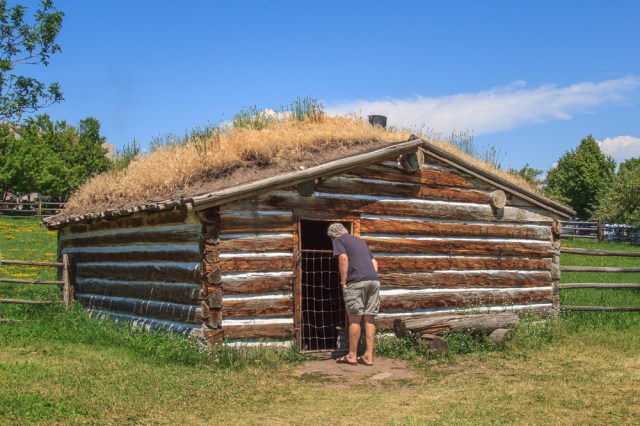
The Tinsley Living History Farm at the Museum of the Rockies was our next stop. The volunteers stationed in each of the main rooms of the house wore period costumes, multiple petty coats under cotton dresses with long sleeves in 100-degree heat. Oh, my! I was glad I had on shorts and a sleeveless top. The docents detailed the history of the house and the people who lived in the home. In the kitchen, they took turns churning cream into butter. Tinsley descendants and other people donated many of the furnishings, decorations, and appliances, some of which could have been purchased from the Sears catalog in the day. Outside we found a wheat field, chickens, gardens, and a replica of the Tinsley’s original log cabin with a sod roof, in which they lived for 20 years before they built the house.
IMG_3197
Tinsley House Built in 1889
IMG_3193
Blackbill Magpies Squawked at the Visitors
IMG_3199
School Room and Work Room
IMG_3200
Sit a Spell and Sew a Few Stitches
IMG_3201
Vintage Working Loom
IMG_3204
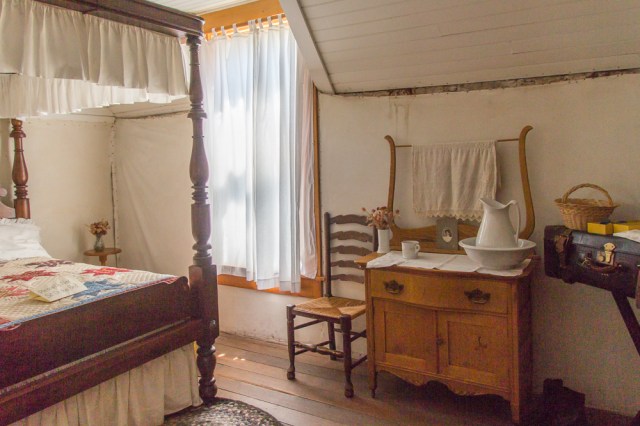
One of the Bedrooms in the Tinsley House

It looked like the walls were lined with a sail cloth fabric. We were told it was actually paper.
 

IMG_3205
Another Bedroom


IMG_3207
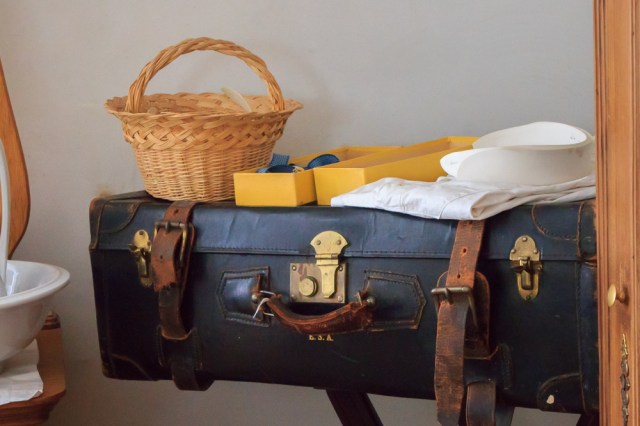
It’s the Little Details that Help Tell the Story


IMG_3206
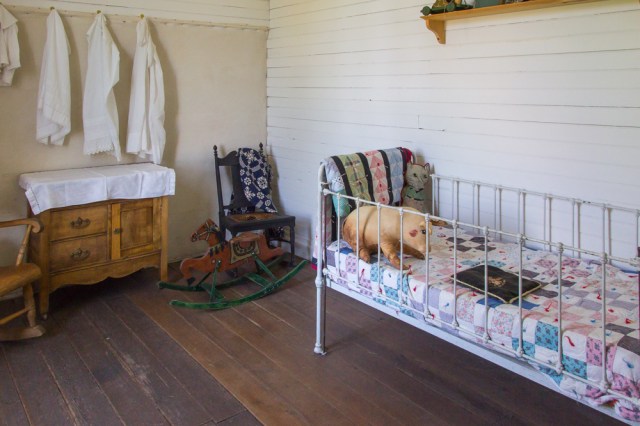
Child’s Bedroom
IMG_3213
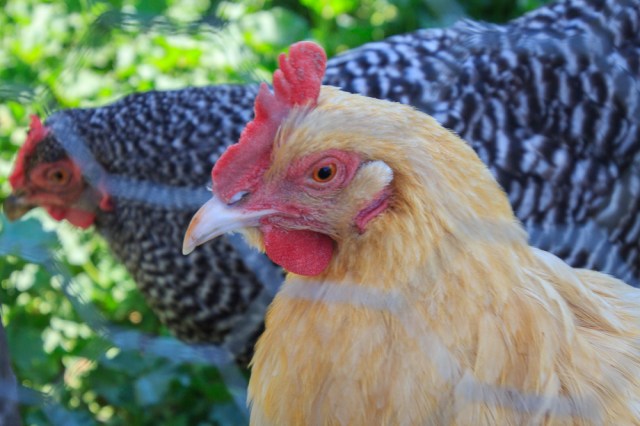
Here Chicky, Chicky
IMG_3214
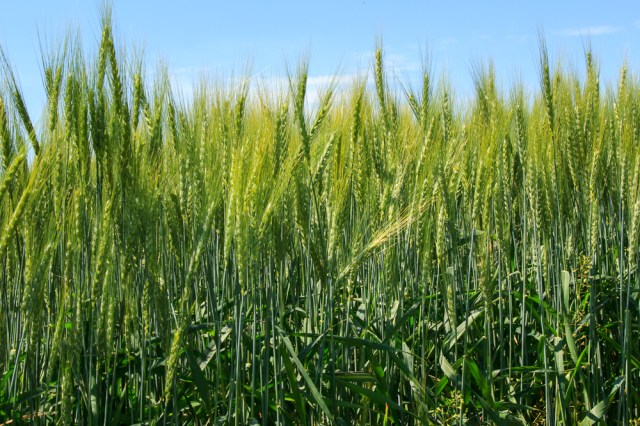
Can’t Wait To Harvest The Wheat

The Tinsley’s, along with their eight children, lived in a cabin similar to this one for twenty years before they built the big house. I can’t imagine living in that tiny space with more than one other person, much less eight children.
IMG_3217
Replica of Tinsley Homestead Cabin

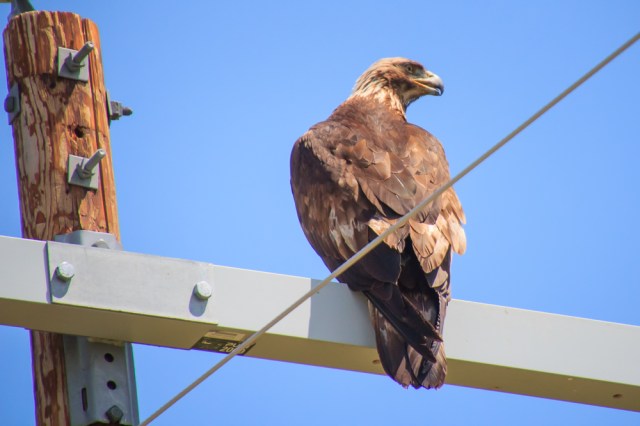
After each day of sightseeing while in Livingston, this golden eagle greeted us back to the campground. Always perched on the same electrical pole and scanning the field for dinner.
IMG_3226
Golden Eagle Greeter

We waved goodbye to the golden eagle on July 7, 2017, and pointed the truck in the direction of Columbia Falls, Montana. On our way, we found a couple of gems worth mentioning.

In Missoula, Montana, we stopped for fuel and some lunch. What a surprise to bite into a generous serving of sandwich fillings between freshly baked bread from Wheat Montana Bakery and Deli. We were thankful for the fresh ingredients and tasty meal worthy of a gourmet restaurant. It was so unexpected at a fueling station where the usual offerings consist of pizza, soggy cellophane wrapped sandwiches if you’re lucky, or anything that is fried or spinning on a spit.
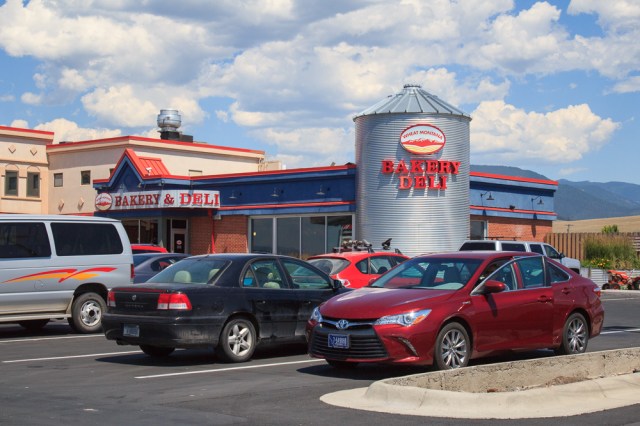
IMG_3232
Wheat Mountain Bakery Deli

Bowman Orchard and Winery on Highway 35, which runs along the east side of Flathead Lake had ample parking for our rig. We munched on sweet cherries the rest of the way to Columbia Falls.

IMG_3233
Visit Bowman Orchards & Winery for Sweet Cherries

Join us next week when we begin our tour of Glacier National Park from our base camp in Columbia Falls, Montana.

Safe Travels

Garryowen, Montana

We left the Black Hills of South Dakota in our rearview mirror on June 30, 2017, and headed for 7th Ranch RV Camp in Garryowen, Montana. We were surprised to find that our campsite was at an actual working ranch with cows and horses.

IMG_31287th Ranch RV Camp

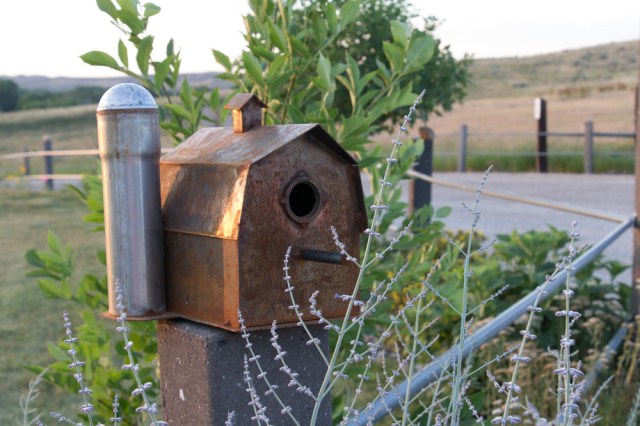
The best part about 7th Ranch was the free huckleberry ice cream sandwich we received upon checking in. They made a perfect treat after setting up the trailer for our four-night stay. We enjoyed waking in the morning to the sounds of cows mooing and walking the property to see all the whimsical birdhouses that sat atop fence posts.

IMG_3094
Yikes! Wasps! Run!
IMG_3101
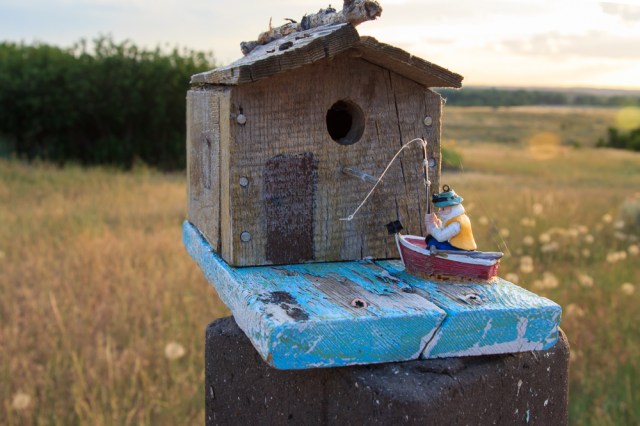
Here Fishy Fishy Fishy
IMG_3127
Big Home for a Big Bird

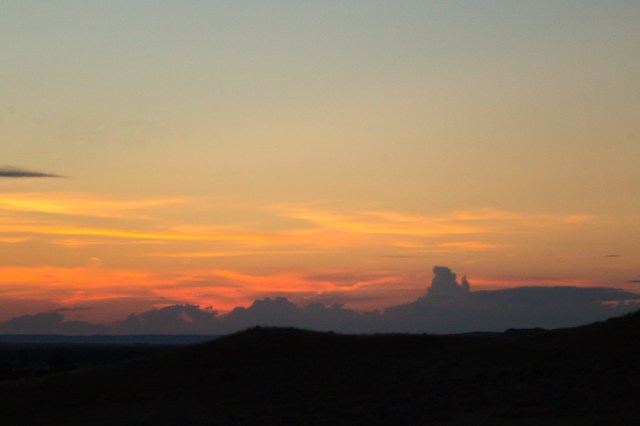
Oh, and I can’t forget the beautiful sunsets each night.

IMG_2997
Fiery Sunset
IMG_3166
Calming Sunset

What’s in Garryowen, Montana? Not much other than a privately owned Custer Battlefield Museum, a Conoco gas station, and a trading post. However, one exit to the north is the Little Bighorn Battlefield National Monument, also known as Custer’s Last Stand, and by the Lakota and Plains Indians as the Battle of the Greasy Grass.

Little Bighorn Battlefield National Monument

We counted ourselves lucky to have arrived at the monument in time to hear a ranger talk on the two-day battle between the American Indians and the Cavalry.

IMG_2952
Ranger Will Abbot, A Great Storyteller

Through his storytelling, I could see smoke rise from the American Indian camp near the river, and hear the thunder of horses, the cracks of rifles, and the shouting and whooping as the cavalry and Indians clashed. Mr. Abbot explained the impetus that culminated in the conflict, the strategy of each side, the skirmishes within a five-mile stretch of hilly land, and how it all ended. The National Park Service had a unique opportunity to perform painstaking research when a 1986 fire uncovered archeologically significant evidence. This discovery allowed them to corroborate the American Indian oral histories and written accounts by the troops who came upon the scene in the days after the conflict for a more accurate account.

IMG_2979
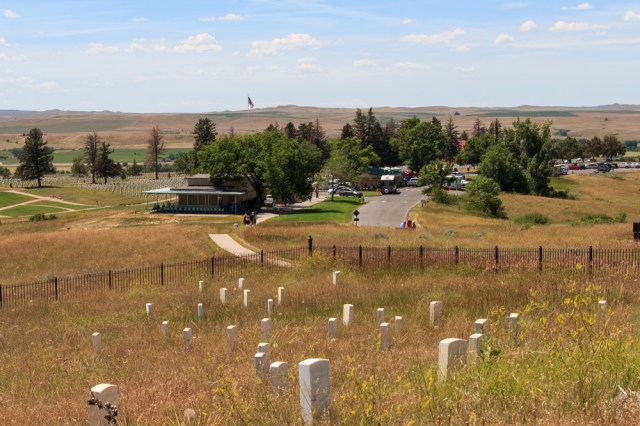
View of Visitors Center from the Custer Monument

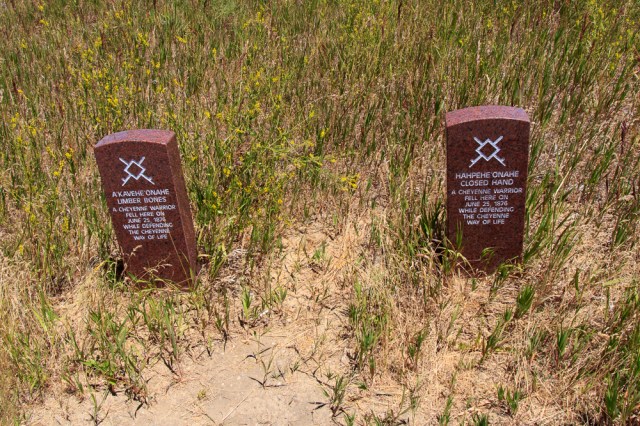
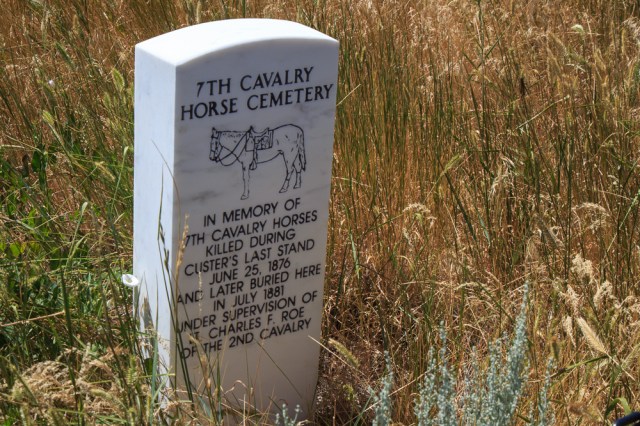
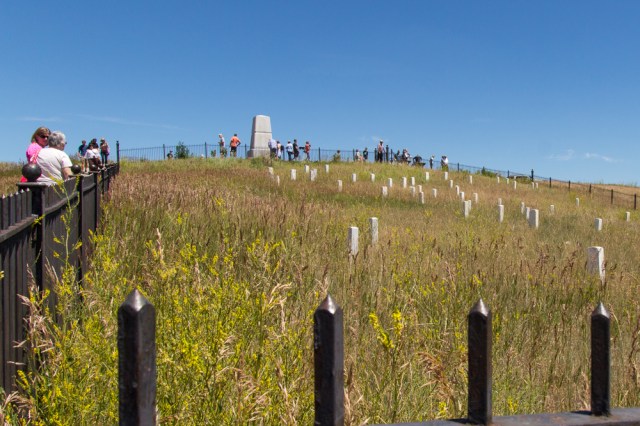
We drove the 4.5-mile trail pulling over at each information stop to listen to a recording on the cell phone of what happened in that location. White posts marked the spots where the cavalry troops fell during the battle, red posts marked places where the American Indians fell. Even the horses that died in the conflict have their own memorial at their burial site.

IMG_2966
Cheyenne Warriors Remembered
IMG_2962
Cavalry Troops Remembered
IMG_2965
Cavalry Horse Cemetery

Jon, with his military background, was most interested in the skirmishes and determining what the cavalry did right and what they did wrong. The senseless death and destruction affected me more. While driving the battle route and walking the grounds of the national cemetery I wanted to whisper and walk softly to honor the sacred ground of both the white and red men who fought and died to protect their way of life.

IMG_2981
Custer National Cemetary
IMG_2978
Custer Monument
IMG_2976
Custer Monument and Field of Fallen Troops
IMG_2973
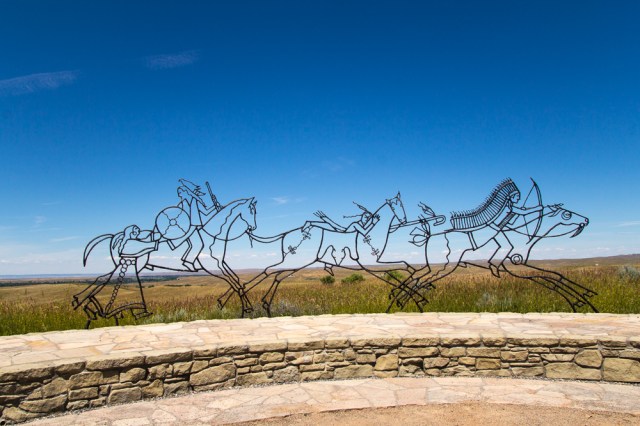
Indian Monument
IMG_2967
Artwork at Indian Monument

The place calls out for solemnity, the same feeling I experienced when we visited the Arizona at Pearl Harbor in Hawaii where over 1,100 sailors are entombed in the ship.

Yellowtail Dam National Park

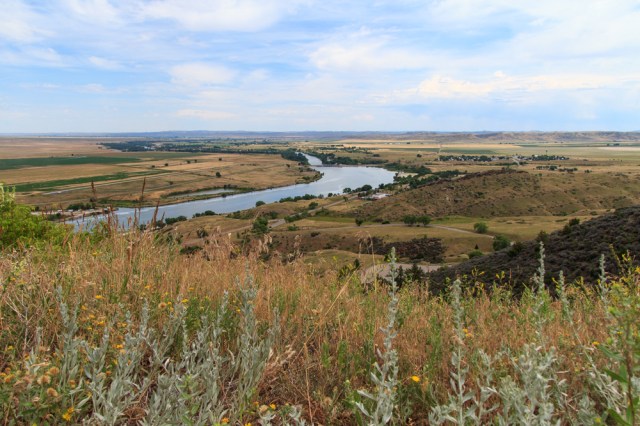
The picturesque drive to Yellowtail Dam National Park took us through the Crow Indian Reservation ranch and farmland along the Bighorn River. The river is a fly-fishing paradise with numerous cabins and camps along the banks.

IMG_3015
Bighorn River and Valley

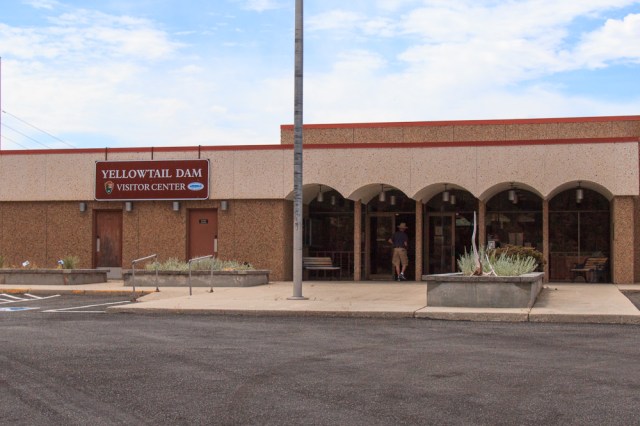
No tours are offered of the dam, but the visitor center has nice displays depicting the building of the dam, the after bay, and river. They also show a movie that explains the surrounding area, recreation opportunities, and wildlife.

IMG_3014
Yellowtail Dam Visitor Center

The dam regulates the flow of the Bighorn River for irrigation purposes and generates power to residences in the area.

IMG_3011
Yellowtail Dam and Red Canyon Walls
IMG_3012
Water Flows Into the After Bay Before Becoming Part of the River

Near the park headquarters, we found Ok-A-Beh Road and headed out to the marina on Bighorn Lake. We enjoyed the views of more green grassland, red canyon walls, and the river valley.

IMG_3045
Green Fields and Red Hills

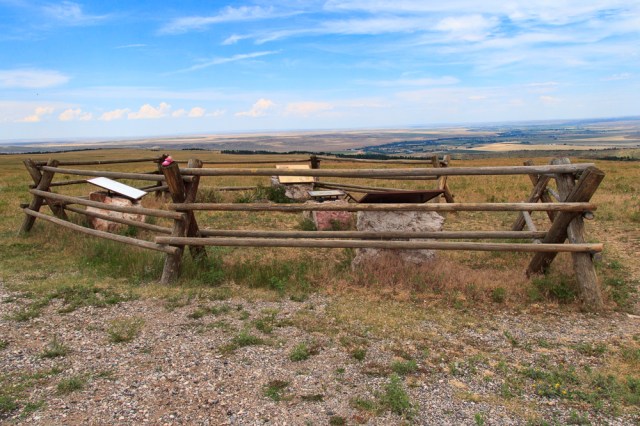
We pulled off at one point to look at a fenced off area. Posters inside the fence told the story of the vision quest and gave other information about the tribe.

IMG_3026
Displays About American Indian Culture

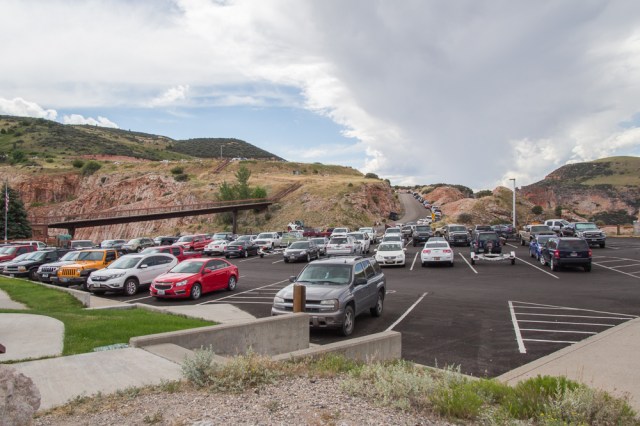
About a half hour or so of driving, without seeing more than one or two vehicles along the way, all of a sudden cars, SUVs, and trucks, some with boat trailers, lined both sides of the road for about a quarter-mile. We gave up on the idea of eating our lunch at the marina. We dropped down into the main parking lot to turn around. Up one lane and down another.

IMG_3038
Ok-A-Beh Marina Parking Lot

Then, “Wait. Slow down. That guy is jingling his keys.” No one else vied for his spot. Score! We munched our tuna sandwiches and tortilla chips with salsa while boats and jet skis glided in and out of the marina. The red canyon walls and the lake enhanced our view under cloudy skies.


IMG_3031
Bighorn Lake and Ok-A-Beh Marina

Big Horn County Historical Museum

With temperatures approaching 100 degrees, an inside activity seemed the smart choice for our sightseeing one day so we drove to Hardin, Montana, to wander among the artifacts and displays inside the air-conditioned Big Horn County Historical Museum.

IMG_3088
A Display Inside the Big Horn County Historical Museum

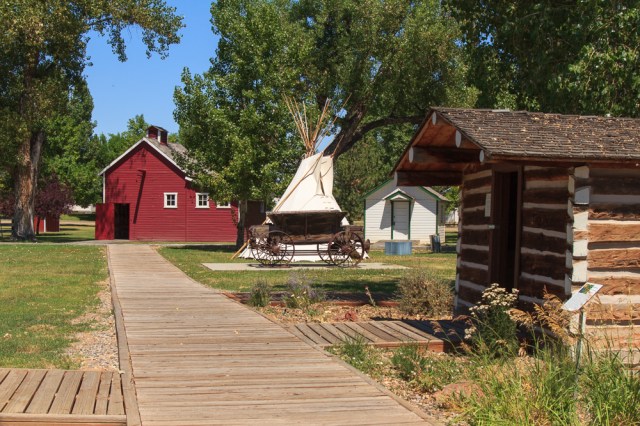
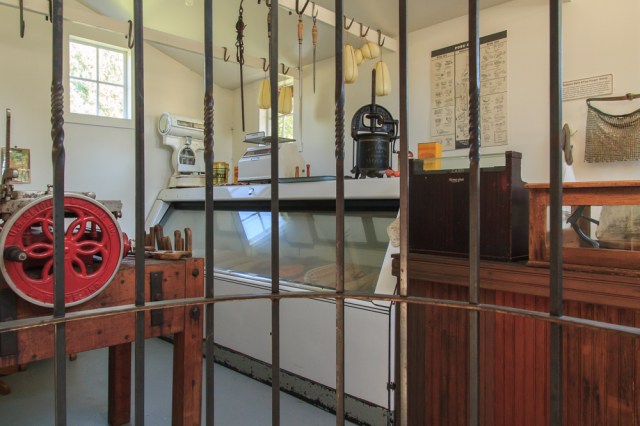
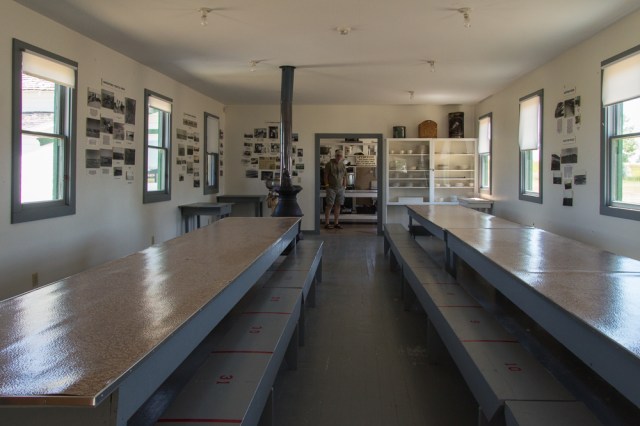
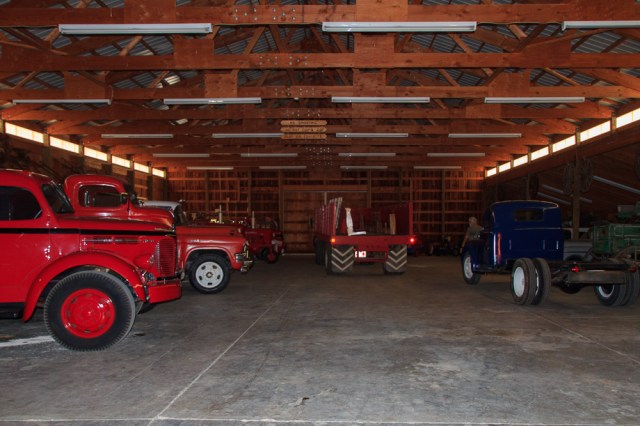
As it turned out, most of our visit was outdoors exploring an early mid-1900 farmhouse, a schoolhouse, ranch cabins, a train depot, and two barns filled with vehicles including surreys with fringe on top, stagecoaches, mid-century fire trucks, and other conveyances.

IMG_3049
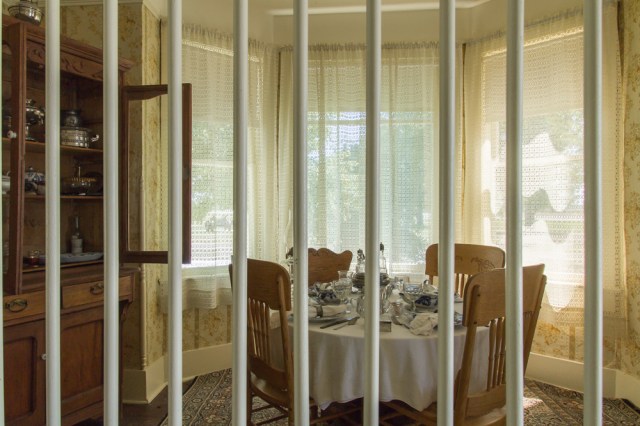
Mid-Century Farm House Dining room
IMG_3077
Schoolhouse
IMG_3056
Ranch Cabins


IMG_3057
Ranch Cabin, Teepee, and Out Buildings
IMG_3051
Tool Board
IMG_3053
Meat Market
IMG_3069
Train Depot Kitchen
IMG_3079
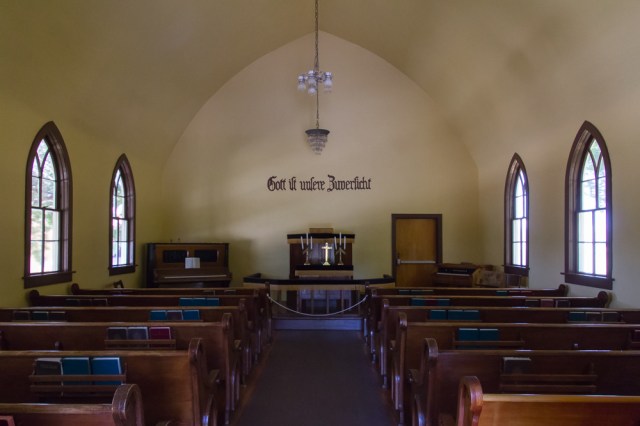
Church Outside
IMG_3081
Church Inside
IMG_3073
Ranch Camp Dining Room and Kitchen
IMG_3082.jpg
The Fly Inn Gas Station and Corinth Store
IMG_3086
One of the Barns Filled with Vehicles

And Then There Is Food

We had seen several Taco John’s locations for the past couple of weeks but never tried them out. We were surprised to find they had a large selection of tacos and other Mexican-style dishes, all made to order with fresh ingredients, chips, and a variety of salsa to choose from. It definitely was not Taco Bell. I’m sure we will visit them again when we are near one of their stores.

IMG_1515
Great Tacos at Taco John’s

Next up? Glacier National Park after a few days in Livingston, Montana.

Safe Travels

Black Hills, South Dakota – Part V

Finally, the last post for the Black Hills in South Dakota with Rapid City, Jewel Cave, Deadwood, Devils Tower, and a few more sights.

Rapid City

None of the jewelry stores near Custer could replace watch batteries so off to Rapid City we drove. With a new battery and refreshing drinks in hand, we explored the downtown area. John Adams looked thirsty so Jon gave him a sip from his Frappuccino

IMG_2668
Jon Making Friends with John Adams

Bronze statues of 43 US Presidents stand on almost every corner of the downtown city blocks earning Rapid City the honor of the “Most Patriotic Best Small Town in the United States.” We had fun guessing who the statues portrayed before we read the plaques. Visit the City of Presidents visitors center for to see the original statues, information on the presidents, and a map.

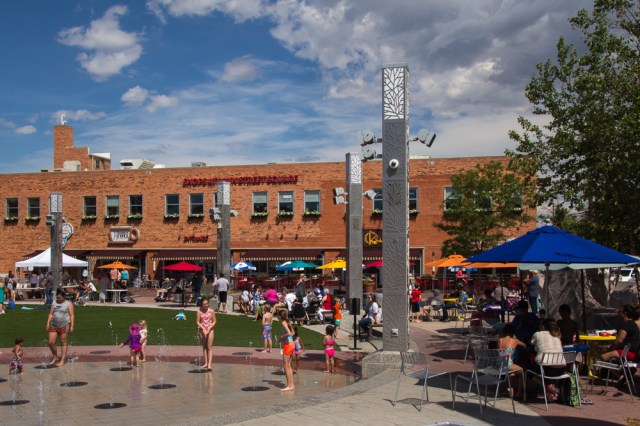
The City Park was hopping while we were there. On stage groups of children performed while family, friends, and neighbors beat the heat by playing in the water feature or huddling under umbrellas.

IMG_2666
Keeping Cool in Rapid City Park

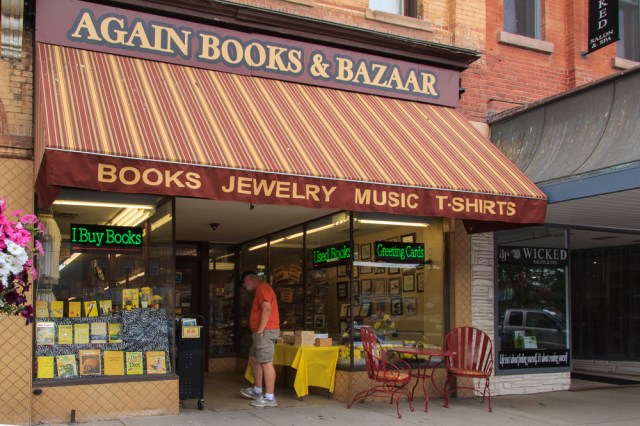
Independent bookstores have a tough time these days keeping the doors open. Diversifying the business model to include jewelry, music, and T-shirts seems to help this store make ends meet.

IMG_2648
Again Books & Bazaar

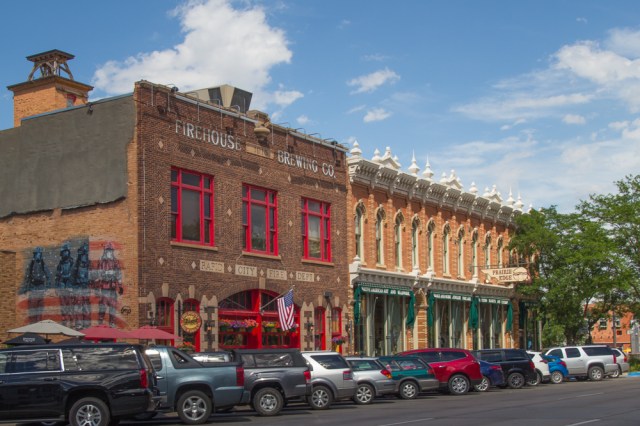
The popularity of brewpubs has done wonders to revitalize run down buildings in older cities. Firehouse Brewery converted the old Rapid City Fire Department building, complete with a 9/11 tribute mural on the side.

IMG_2669
Firehouse Brewing Co.

I’ve seen other breweries housed in old firehouses during our travels. Buildings renovated by breweries throughout the country include banks, churches, factories, and old hotels. What would have happened to all those buildings without the popularity of craft beer?

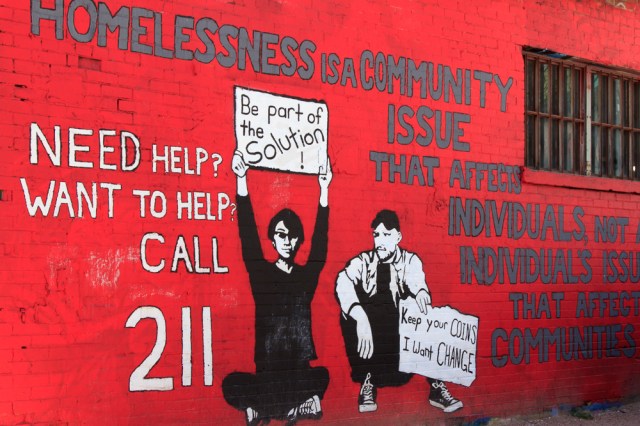
One of the most interesting parts of the city was Art Alley. A one-block alley filled with art painted on the walls of buildings, staircases, and dumpsters. Some of the art expressed a message.

IMG_2674
Mural in Art Alley

Others contained cartoon characters in contemplation.

IMG_2675
Contemplative Homer

As is often the case with any rules, not all artists obtained the required permit from participating businesses or honored the prohibition against painting stairwells and dumpsters.

IMG_2671
Superheros and More
IMG_2672
Art Alley Murals

Looks like the owner or tenant of this building gave up the idea of having a pristine canvas on the wall.

IMG_2680

Is this considered art?

IMG_2681

I liked the detail in this mural of a man.


IMG_2682
Art Alley


Although we only stayed a couple of hours, we liked the feel of the town. We encountered friendly people, a thriving downtown scene, and other amenities a population of 73,000 might enjoy. I wouldn’t mind going back and spending more time.

Jewel Cave National Monument

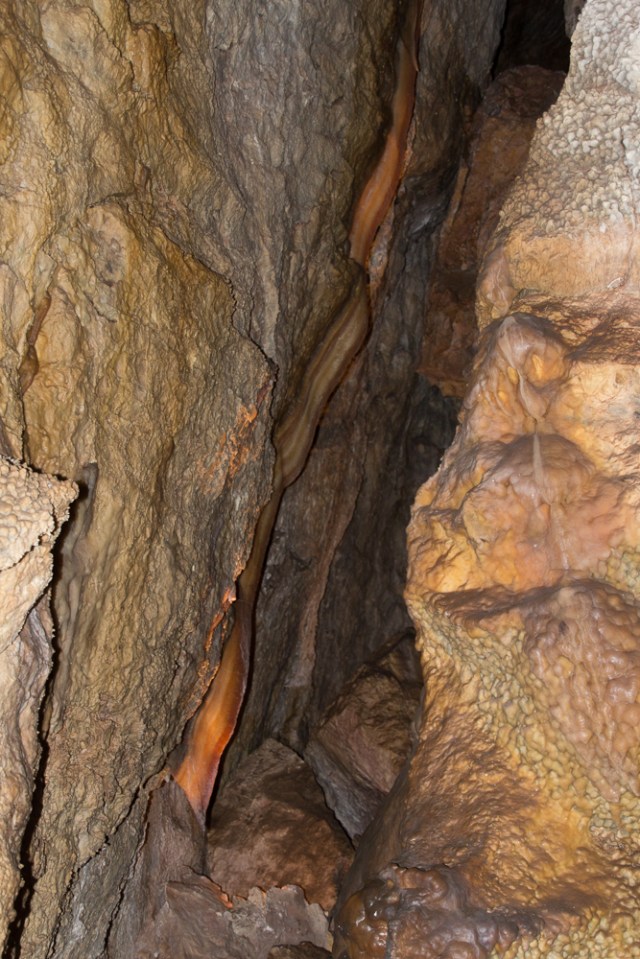
Jewel Cave was the last place on our list to visit before leaving the southern end of the Black Hills. Tickets for the 80-minute scenic cave tour are distributed on a first come, first served basis. We arrived around 10 a.m. and the next available tickets were for the 12:40 p.m. tour. Jewel Cave is not as pretty as other caves we have toured. There aren’t as many stalactites or stalagmites. But the sparkling quartz gives Jewel its own unique beauty.

IMG_2819
Quartz Formation in Jewel Cave
IMG_2830
Different Formations On Same Wall
IMG_2827
Cauliflower, Broccoli, or Jelly Fish?
IMG_2833
Great Example of Bacon Drapery Formation

Other tours are available: A 20-minute program, a historic lantern tour, and a wild caving tour, and internship for students. Jewel Cave is the third longest cave in the world, only about 3% of which has been explored. Some people believe it is possible that Jewel Cave and Wind Cave, 20-miles away, are connected.

Roubaix Lake

On Monday, June 26, we drove a short distance to Roubaix Lake Campground in the Black Hills National Forest hoping to snag a campsite for a few nights.

IMG_2882

The campground host directed us to the unreserved sites and I think we managed to get the best site in the campground. The large space that overlooked the rest of the campground made it easy to maneuver the fifth wheel in place for a patio view of the forest and no close neighbors.

IMG_2858

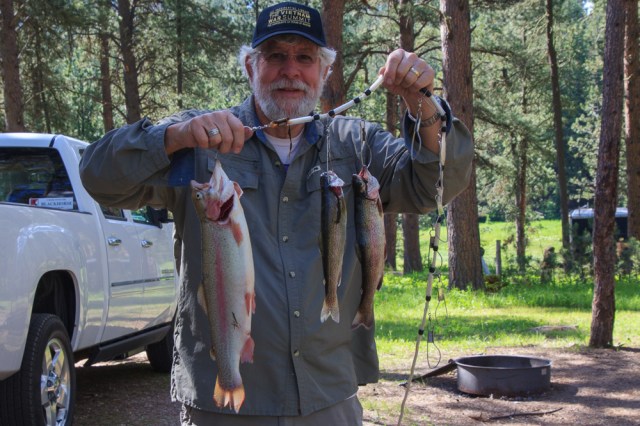
Upon viewing the lake and learning that the Game Fish and Parks Department had recently stocked trout, Jon found a place to purchase a three-day fishing license.

IMG_2843

While Jon went fishing for two days, I enjoyed sticking around the trailer. Although cellular service, Wi-Fi, and electricity were non-existent, I kept busy writing with pen and paper and catching up on my reading backlist. Jon was thrilled to have reeled in one of the biggest trout he has ever caught.

IMG_2861

Deadwood and Sturgis

One afternoon we took in the sights at Deadwood and Sturgis. Deadwood was a typical western town complete with gift shops, restaurants, bars and grills, and even a cigar bar below street level.

IMG_2864
View From Atop the Parking Structure
IMG_2862
Another View from the Parking Structure
IMG_2866
This Close to Sturgis a Motorcycle Shop is a Must
IMG_2877
Below Street Level, End of Walkway is a Cigar Bar
IMG_2867
Candid Street Shot

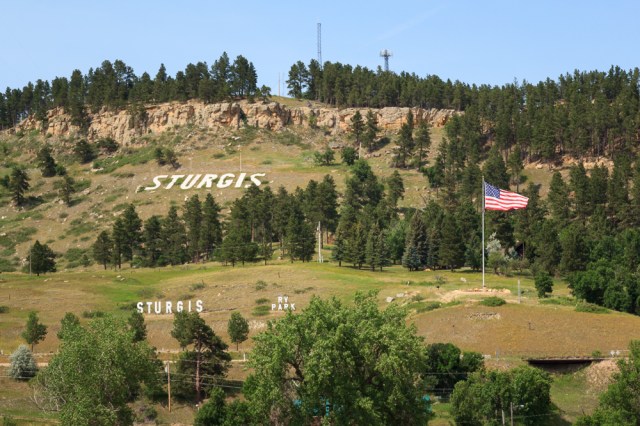
Sturgis did not impress us. Then again, we arrived on a slow day. Motorcycles, Camaros, or Mustangs did not fill the streets. Perhaps it’s not the city itself that is the attraction, but the rallies that occur several weeks out of the year and the people who attend. Or, maybe we went to the wrong part of town. Only one lone photo to prove we had been there.

IMG_2879

Spearfish Canyon Scenic Byway

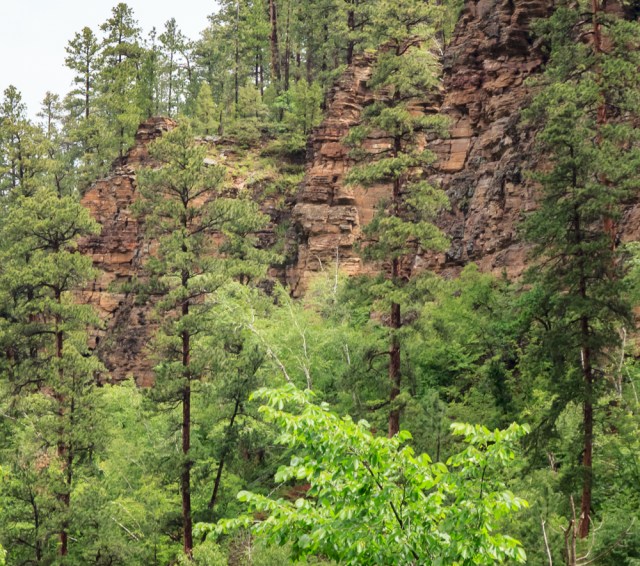
Fall must be a magical time to drive through Spearfish Canyon. Ponderosa and spruce pines share the Spearfish Creek banks with aspen, birch, and oak trees. The damp rainy weather that accompanied us on our drive coated the leaves and branches with droplets of rain. Layers of limestone in beige or tan, mauve, pink or red hues, sit atop layers of brown sandstone.
IMG_2894
Spearfish Canyon Scenic Byway

I had picked out a couple hikes for us to try along the canyon. Unfortunately, the inclement weather kept us in our truck. That is until we came to Bridal Veil Falls where we had to make a stop long enough to dodge the plops of drops to snap a photo.

IMG_2892
Bridal Veil Falls in Spearfish Canyon

Sundance, Wyoming, and Longhorn Saloon

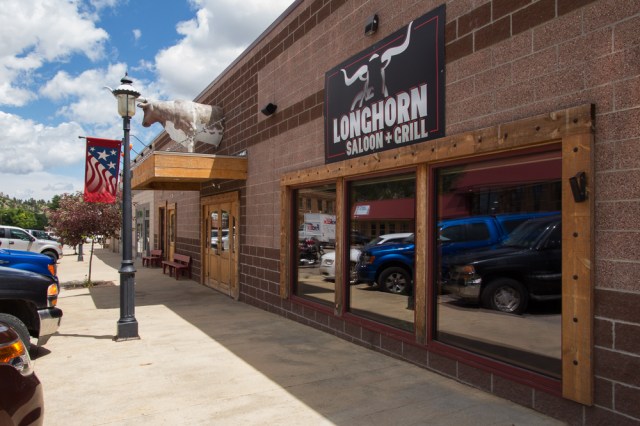
After driving through Spearfish Canyon, we drove out to Sundance, Wyoming. This small town is where Harry Longabaugh spent eighteen months in jail for stealing a gun, horse, and saddle from a nearby ranch. Longabaugh continued his criminal activity and later earned the nickname the Sundance Kid. We ate the best burgers and service ever at the Longhorn Saloon and Grill.

IMG_2895

Devils Tower National Monument

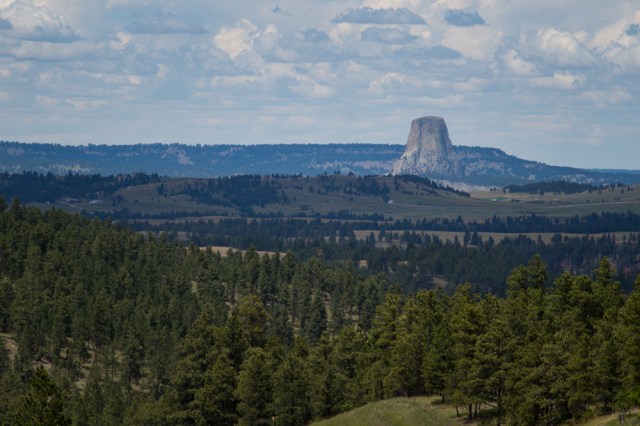
Devils Tower National Monument was our next stop. The tower was visible for miles as we approached. Several vehicles stopped at this viewpoint to take pictures.

IMG_2896
View of Devil’s Tower from Scenic Overlook
IMG_2901
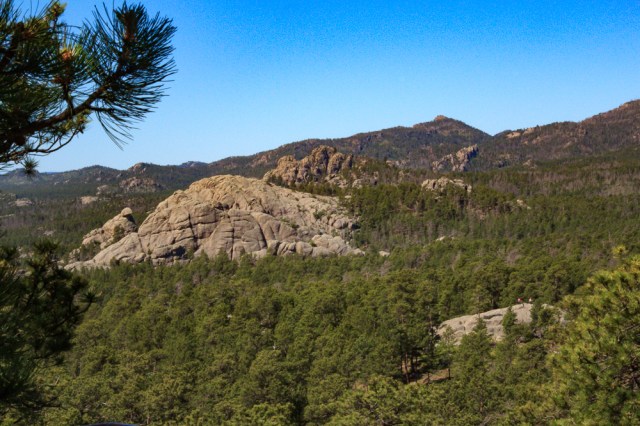
Red Canyon Next to Scenic Overlook

We were glad we hadn’t towed our trailer to the monument. Parking was limited at the visitor’s center and not suitable for a truck and trailer rig.

The 1.3-mile loop trail around the base of the formation delivers views of the surrounding area, spots to check out the progress of climbers, and a multitude of perspectives of the tower. Sacred to the Northern Plains Indians and other tribes, it is a place requiring reverence.

IMG_2909
Devils Tower

We made it back to the visitor center with only a few raindrops on our heads, but while I was in the restroom, a hailstorm let loose and bombarded me on my way back to the truck.

What caused the geological formation to rise from the landscape with such significance? Geologists agree on what formed the tower, but not how. Visit the National Park Service online for more information.

We had a great time in the Black Hills, but for now, it was time to move on. Next stop? Little Big Horn Battlefield.

Safe Travels

Black Hills, South Dakota – Part IV

Iron Mountain Road & Needles Highway

A trip to the Black Hills is not complete unless visitors drive the Iron Mountain Road and Needles Highway. Designed for motorists to slow down and enjoy the view of the hills and the fresh pine scent of the forest, the 17-mile Iron Mountain Road, constructed in 1933, contains 314 curves, 14 switchbacks, 3 pigtails, 3 tunnels, and 2 splits. The slow pace kept my motion sickness at bay as the road corkscrewed in a 360-degree fashion through the pigtails and the 180-degree switchbacks.

Below is one of the pigtails. Note the asphalt below the bridge and how the road continues through the tunnel.

IMG_2502
One of Three Pigtails

The tunnels were so tight I thought for sure we’d scrape the truck on the granite walls.

IMG_2505
One of Three Tunnels

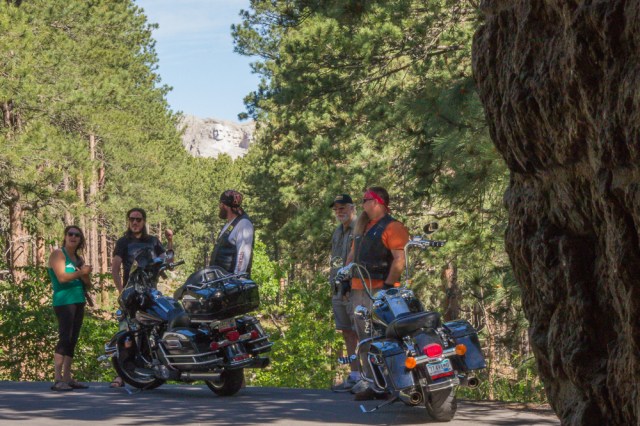
Stopping at the turnouts to catch a glimpse of the presidents or peer out at the expanse of forest is a requirement.

IMG_2504
Mount Rushmore Seen From Iron Mountain Road
IMG_2517
View From One of The Stops, With People Standing on the Foreground Rock

At one stop, we saw the driver of this motorhome considering whether to stuff his rig through the tunnel.

IMG_2506
“Should We Try It?” “Sure, Dad. It Will Fit.” “I Don’t Know.”

The motorcyclists made encouraging comments, but the RV started a slow backup process around the curves he had just navigated.

IMG_2508
Motorcyclists We Met At Tunnel

One of the motorcyclists said the motorhome found a place to turn around a few yards down the road. I guess the driver of the RV ignored the cannot-miss signs that warned against oversized vehicles, or maybe he didn’t realize how big his unit really was.

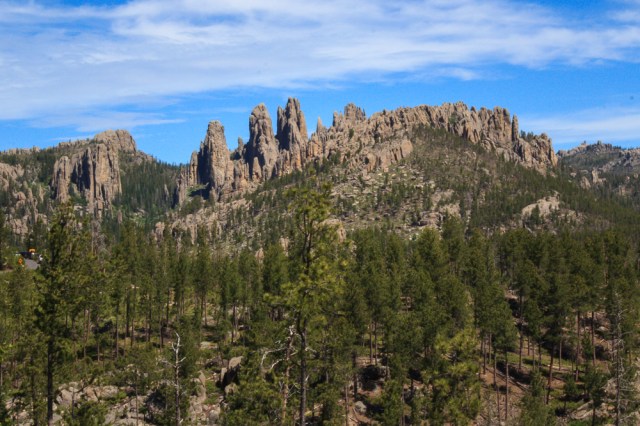
Needles Highway came next, another beautiful drive through the green forest, granite spires, and one-way tunnels, on a curvy narrow road.

IMG_2523
View of Meadow With Mount Rushmore Rising Behind the Forest
IMG_2529
I See A Dragon’s Back. What About You?
IMG_2791
Climbers Creep Up Toward the Mouth of This Creature

The Needles Eye is a popular place for taking photos. There are a few parking spots, but they fill up fast during busy times.


Sylvan Lake

After winding our way through the scenic roads, Sylvan Lake surprised us at the end. Ah, a perfect place to stretch our legs.

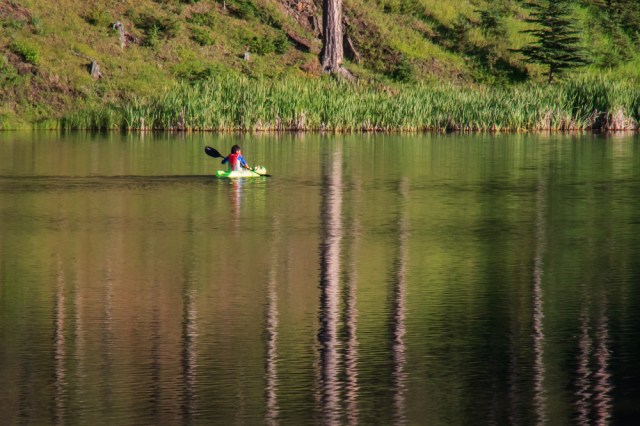
IMG_2549
Sylvan Lake
IMG_2551
Sylvan Lake Spillway

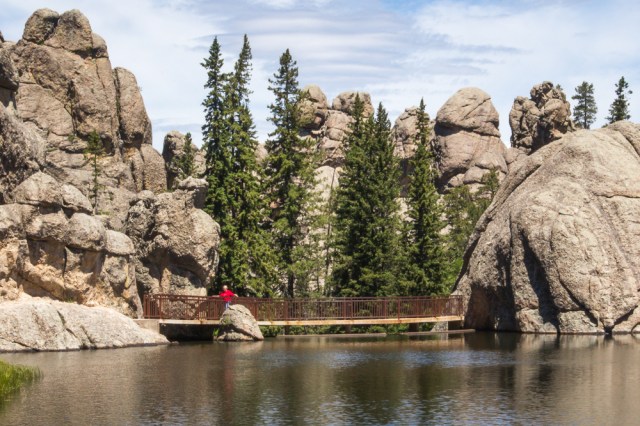
The lake was created by Theodore Reder when he built a dam across Sunday Gulch in 1881 and it became part of Custer State Park in 1921. It wasn’t a large lake, but very popular for fishing, swimming, paddleboards, and kayaks. Sylvan Lake Campground offers sites nearby for hike-in, tents, and small RVs and trailers between 25’ and 27’ in length. Interested in something more elegant, try Sylvan Lake Lodge where a couple can also host a wedding.

Custer State Park – Wildlife Loop

The best viewing for animals on Wildlife Loop in Custer State Park is around sunrise or sunset. We opted for another early morning to catch the animals before they hunkered down for the heat of the day. Six o’clock A.M. was slow going when watching the road for signs of deer that might bound out in front of the truck.

IMG_2641
One of Many Deer Alongside the Road

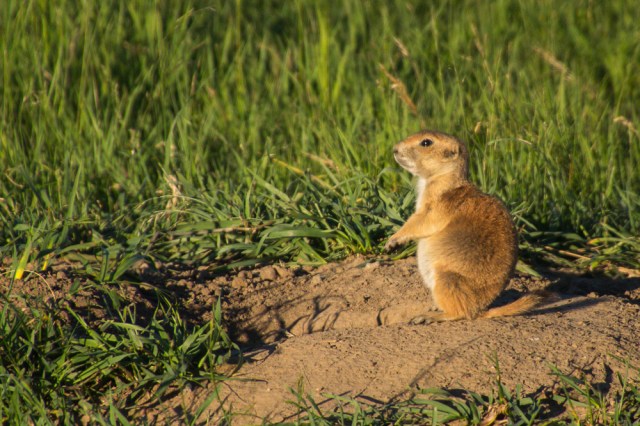
Prairie dogs poked their heads out of their burrow or stood on their hind legs as if scouting the horizon for predators. I wondered if there was a hierarchy involved in determining which rodent lived in which neighborhood. And what about their governance structure? Who is in charge? Off to Wikipedia to learn more. I won’t go into the details. If you are interested, click here.

IMG_2579
Prairie Dog

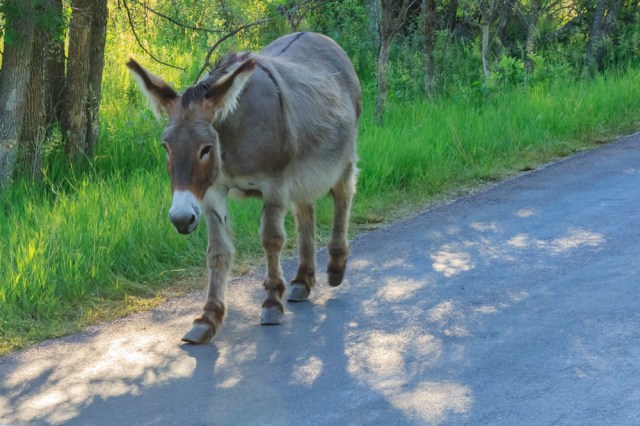
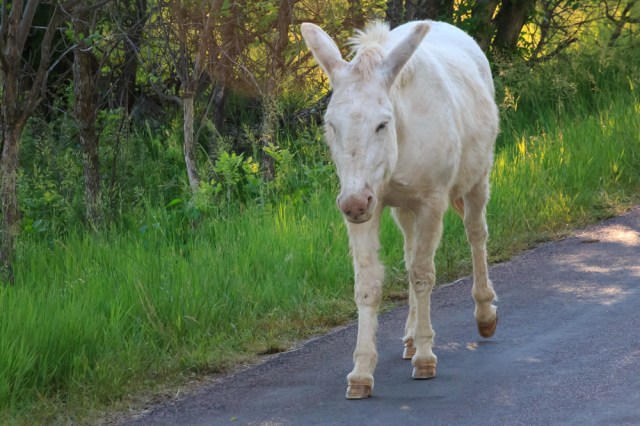
At one point, wild burros walked toward us on the road. In their group was one with a white coat. I don’t think I have ever seen a white burro before. Have you?

IMG_2584
Gray Burro
IMG_2586
White Burro

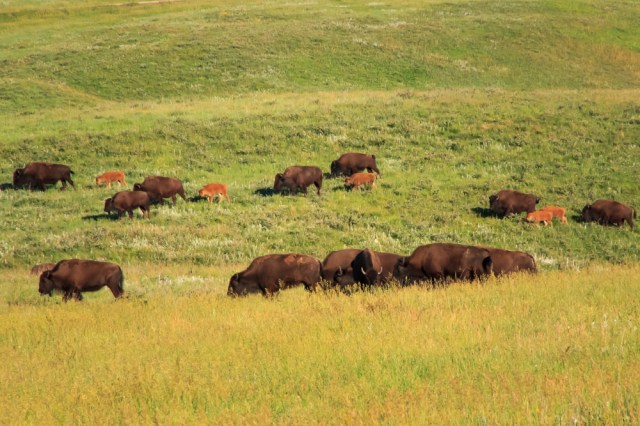
The buffalo were next. What a sight to watch them amble along a path only they knew existed, nibbling on grass as they traveled.

IMG_2601
Herd of Buffalo

The young calves would run up toward the road and stop, look back, and scamper back to the adults. Then they’d repeat their antics, back and forth. They reminded me of our son when he was young. On our hikes, he would run ahead, run back to us, then run ahead again. He must have hiked twice as far as we did.

IMG_2616
Young Calves Waiting for Mom and Dad

We watched the buffalo make their way across the road for about a half hour until a certain cow and bull finally made it to the other side. Then the young ones ran ahead. What a sight to watch these powerful beasts. They seemed so docile as they slowly moved forward to their destination until a couple males exerted their dominance and charged at each other. I was sure glad I was safely inside our truck.

IMG_2622
Hey. Get Out of Here. That’s My Grass.

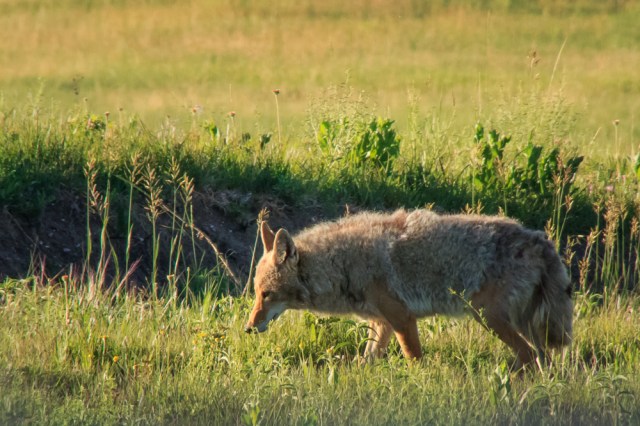
Not too far from the buffalo, we spotted a coyote up on a hill.

IMG_2589
Coyote Shedding His Winter Coat

I fell in love with the Black Hills on this trip. However, there was one thing I did not care for. The helicopters.

IMG_2532The whop, whop, whop of the blades seemed to follow us everywhere and ruined the ambiance of the Black Hills experience. The aircraft flew overhead at Mount Rushmore and Crazy Horse, while we rode the 1880 Train, as we traveled Iron Mountain and Needles Highway, and at Sylvan Lake.

I don’t begrudge people who want to see the scenery from the air. I’m sure they gain a different perspective of the place. I only wish the helicopters could fly as quietly as an electric car. I prefer to experience nature without a side of whop, whop, whop in the air.

Next up is the final episode of our Black Hills adventure.

Safe Travels