2023 Fall Adventure Episode 14: Gerald R. Ford Presidential Museum in Grand Rapids, Michigan

With Grand Rapids, Michigan, only 100 miles north of Elkhart, Indiana, we jumped at the chance to check off another presidential library from our list.
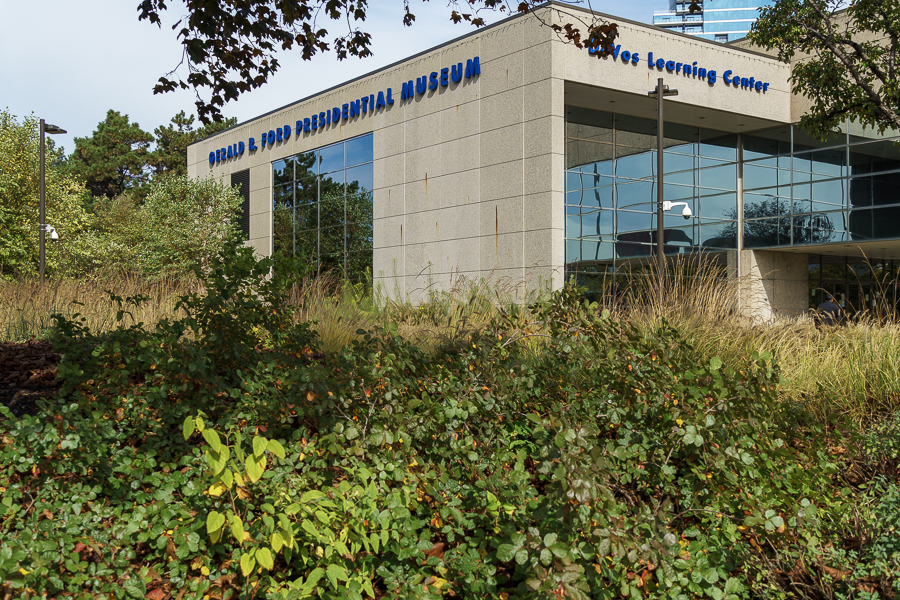
Gerald R. Ford Presidential Museum

I wondered why Ford’s library was in Ann Arbor, and the museum was in Grand Rapids. Ford agreed in 1963 that Bentley Historical Library at the University of Michigan would house his congressional papers.

Replica of sculpture in US Capitol’s National Statuary Hall. Created by J. Brett Grill.

Upon leaving the presidency, he deeded his papers to the National Archives and a new presidential library at the university in Ann Arbor was born. Since considered Grand Rapids his hometown, he opted to build the museum there.

The sculpture Man in Space by Judson Nelson commemorates President Ford’s commitment to the NASA space program. J. Brett Grill also sculpted Betty Ford’s statue.

All three sculptures exhibit a suggestion of movement. Ford holds papers in one hand and takes a step. The astronaut floats in space. And Betty smiles and reaches her hand out as if to welcome visitors. Or maybe she’s dancing a step.

Like most presidential museums, Ford’s starts off by telling the president’s life from birth and early years. Then moves on to education, political career, and the years after presidency.

Seeing the baby book surprised me. Did I miss them at other museums?

Gerald R. Ford was quite the catch in high school and at the University of Michigan. He played in the “All-City” and “All-State” football teams in high school. Then played on a national championship college football team in 1932 and 1933 at the University of Michigan where he earned a BA in economics. And in 1934 he was named valuable player.
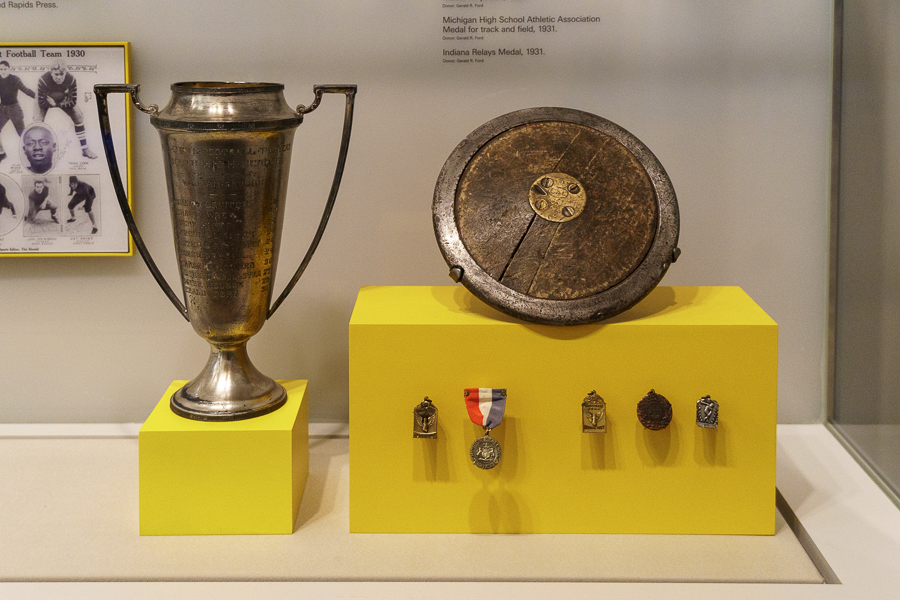
President Ford was quite the athlete

If that’s not enough to impress the girls, he worked in the family paint business and at a local restaurant and became an Eagle Scout in November 1927. With all of his extra-curricular activities, time for a social life may not have existed.

Ford joined the Michigan Tribe and the Delta Kappa Epsilon Fraternity

He rejected offers to go pro from the Detroit Lions and the Green Bay Packers. Instead, he went to Yale to coach boxing and assistant coach varsity football. The coaching positions allowed him to attend Yale law school.

Accolades and awards piled up

In 1941, he earned his bachelor of law (LLB) degree, passed the Michigan bar, and opened a law practice with one of his fraternity brothers. He also became active in Grand Rapids’ republican politics.

Ford set aside a professional athletic career for one in law

When the United States entered World War II, Ford joined the US Naval Reserve. His athleticism qualified him as a physical fitness instructor at a pre-flight school in Chapel Hill, North Carolina. In 1943, he boarded the USS Monterey light aircraft carrier bound for the South Pacific. A typhoon in the Philippines in 1944 damaged the ship, sending Ford stateside until his discharge in February 1946.

Elected in 1948 to the house of representatives, where he continued to serve until sworn in as Nixon’s Vice President in December 1973 after Spiro Agnew resigned.
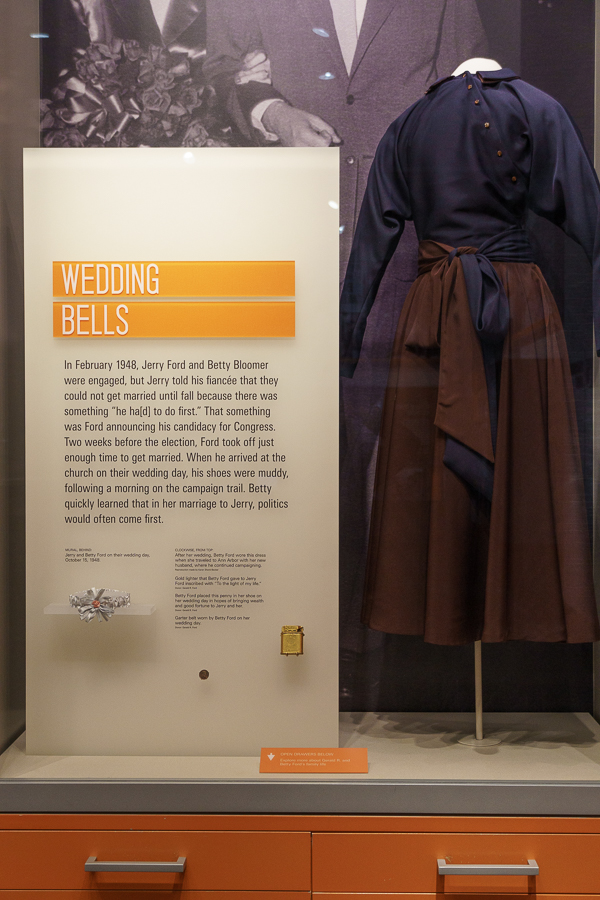
Gerald Ford and Betty Bloomer were married on October 15, 1948, two weeks before Ford was elected to his first term in congress. See more about Betty below.

Ford settled into his congressional duties and Betty settled in her life as a congressman’s wife. They raised four children during their time in Washington, DC.

The Fords had four children, three boys and one girl.
Photos and narrative panels tell Ford’s life story
Ford investigated the assassination of President Kennedy

His dream to become the majority leader never materialized, although he served eight years as minority leader. In 1973, Nixon tapped Ford as vice president after Spiro Agnew resigned under pressure.

Ford served as House Minority Leader for eight years

Ford supported and defended Nixon until evidence tied Nixon to the Watergate coverup. What more could a vice president have done?
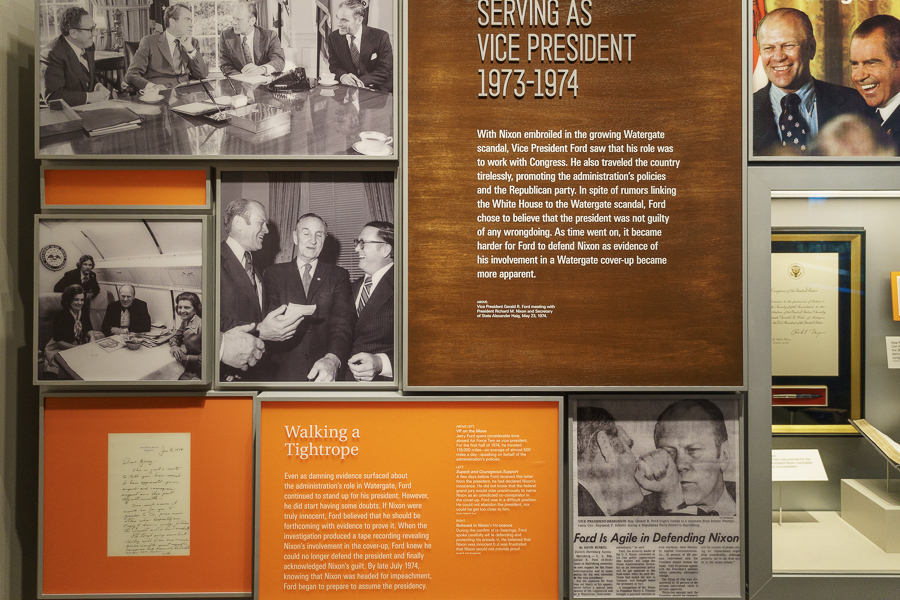
Nixon tried his best to hide incriminating tapes that revealed his knowledge of a burglary at Watergate. His efforts failed and on August 9, 1974, he resigned and Ford became president.
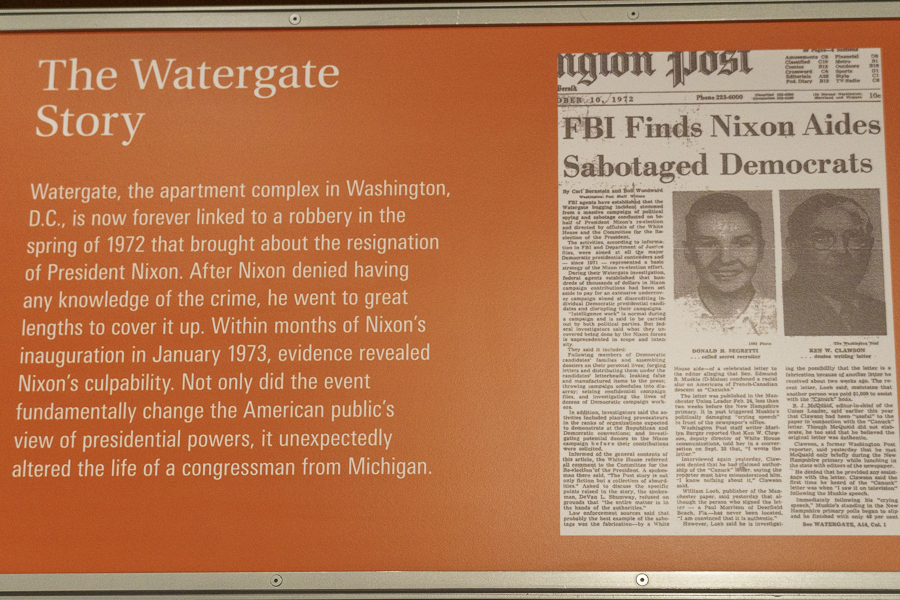
After proclaiming, “I am not a crook,” the FBI proved Nixon wrong.
Gerald R. Ford becomes president.

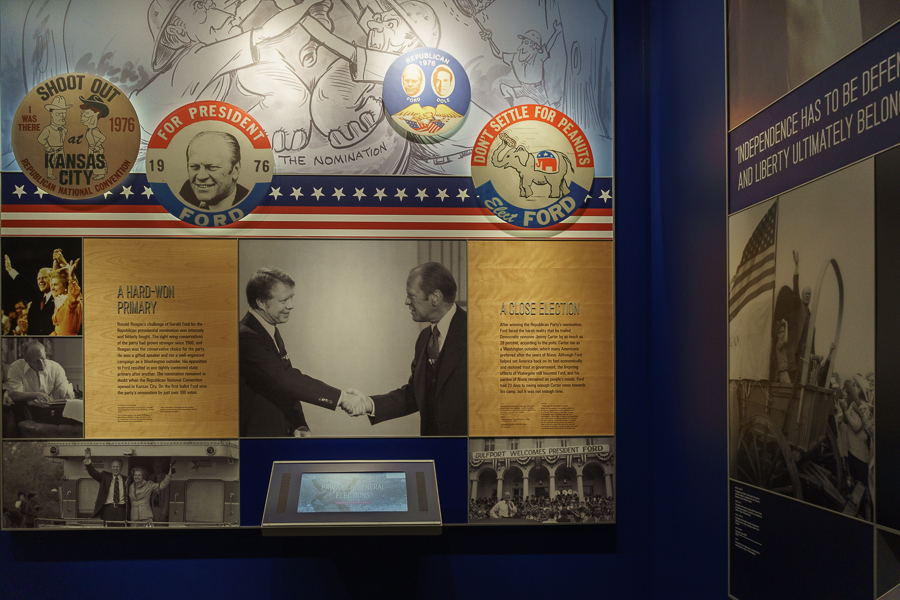
Timelines, photos, and artifacts at the museum display Ford’s presidency.
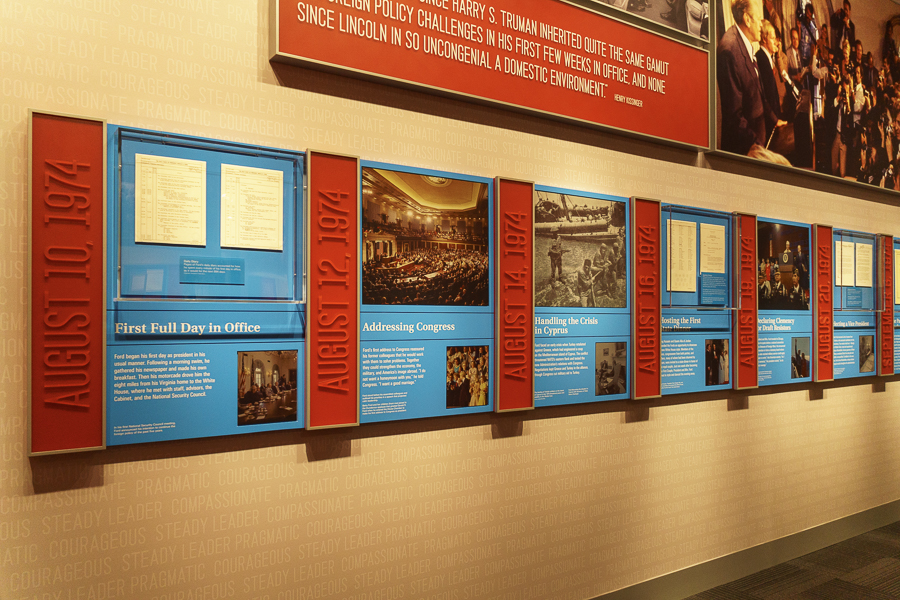
Timeline of events during Ford’s tenure as president.

President Ford dealt with many issues, concerns, and problems plaguing the United States and the world. War, inflation, energy shortages, negotiations with the Soviet Union, and the Apollo-Soys joint-manned space flight are but a few of the issues that vied for the new president’s attention.

Photos, posters, and videos present text and images of major events.

Three major events in 1975 are of particular note.

The Vietnam War ends. In early March 1975, the US began evacuations of civilians from Tan Son Nhut Airport and continued until April 28, 1975, when the Vietnamese People’s Air Force attacked the Tan Son Nhut Air Base.

Then Operation Frequent Wind began evacuations from the US Embassy in Saigon. Helicopters shuttled personnel, Vietnamese, and third-country nationals to USS Midway and other ships until April 30.
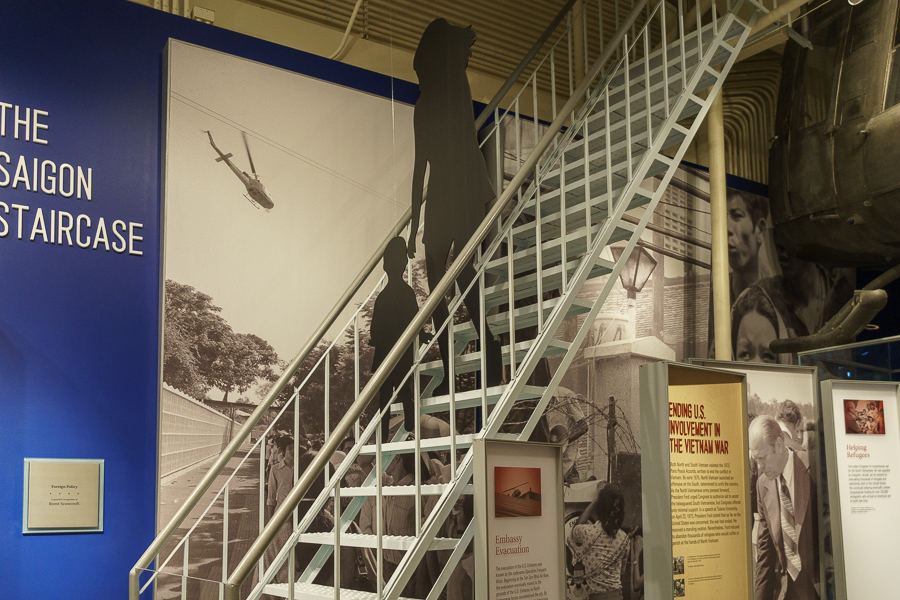
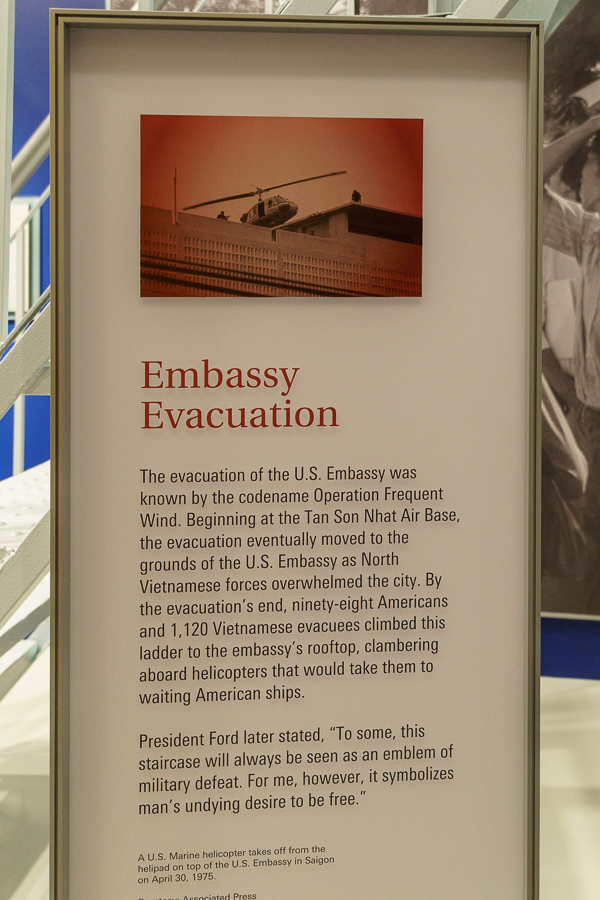
The Saigon Staircase

On May 12, 1975, Cambodian gunboats seized the SS Mayaguez, an American merchant ship in international waters. On May 14, 1975, Ford ordered US forces to retake the ship. They recovered the vessel, saved thirty-nine crewmembers, and lost forty-one American lives. Historians study the operation to learn from mistakes made.

He endured two assassination attempts. Both carried out by women. Both occurred during September 1975 while Ford visited California.

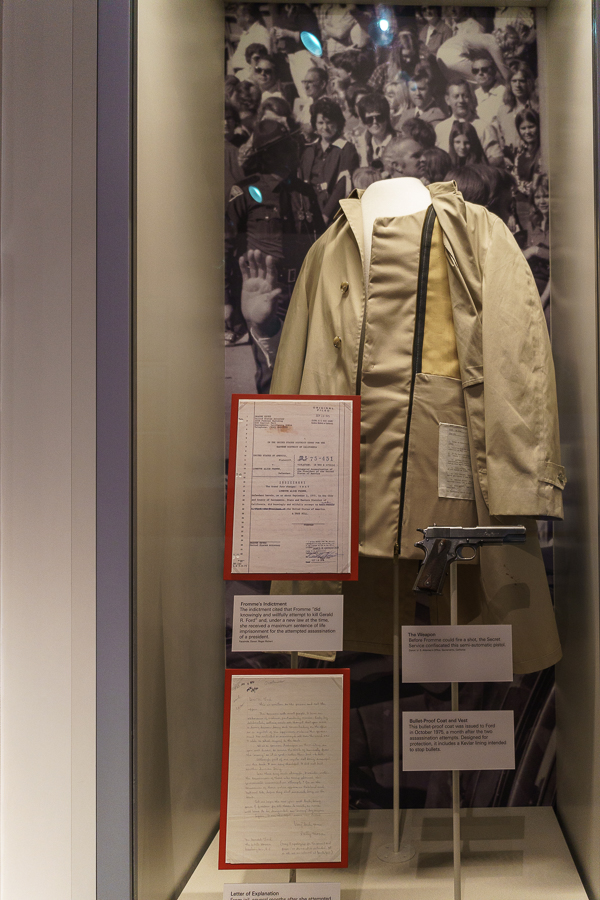
Sara Jane Moore and Squeaky Fromme attempted assassinations of Ford
Ford was issued a kevlar-lined coat after the attempts on his life.
The Freedom Train rides again for bicentennial
After two and a half years as president, Ford turns over the presidency to Jimmy Carter.
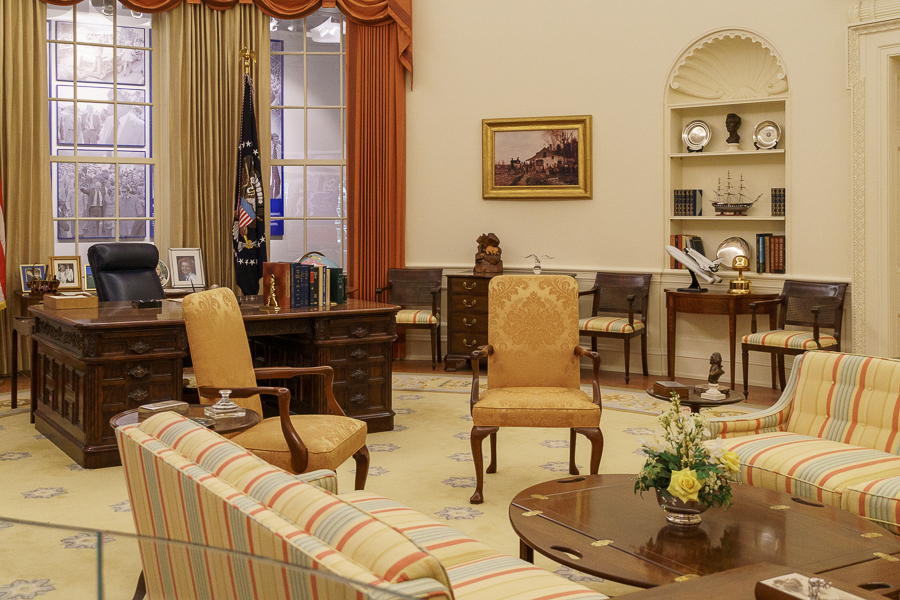
Oval office
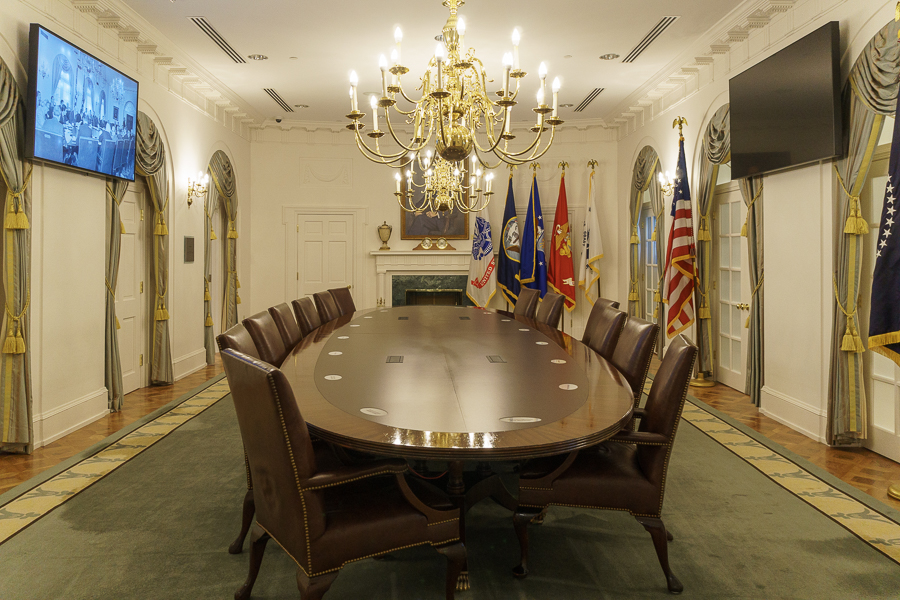
Cabinet Room

And now, a little about Betty. Elizabeth “Betty” Anne Bloomer was born April 8, 1918. Raised in Grand Rapids, her love of dance took her to Vermont’s Bennington School of Dance where she met choreographer Martha Graham.

Betty later studied with Graham in NYC and performed at Carnegie Hall. In 1941, she went back to Grand Rapids, working at Herpolsheimer’s and helping children with disabilities. Married to and then divorced from William Warren, she met Gerald Ford in 1947.
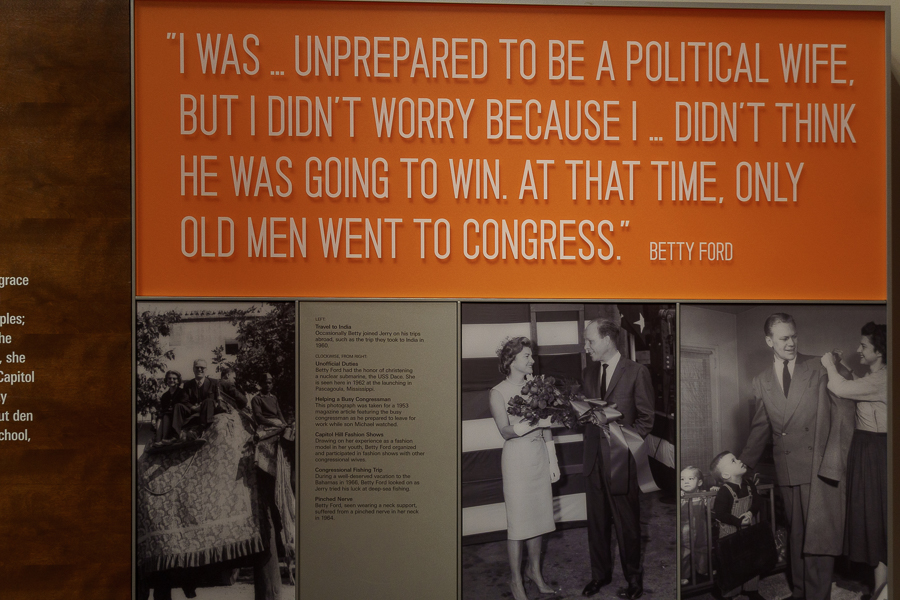
She and Ford married on October 15, 1943. She wasn’t shy about her drug and alcohol abuse and recovery or her breast cancer diagnosis and treatment. People attribute her courage to speak out while others retreated to the “Betty Ford Blip,” a 15% increase in women seeking mammograms.

Fashion of the day

And a few more artifacts.

The largest aircraft carrier in the world—the length of three and half football fields. Commissioned on July 22, 2017, and first deployed on October 4, 2022. Named for Ford to commemorate his service on the USS Monterey during WWII.

USS Gerald R. Ford,

A section from the Berlin Wall. A gift from Frederik GH Meijer to the museum on its tenth anniversary. Dedicated by President Ford on September 6, 1991.

A view from inside the museum

After our visit, we selected Roam by San Chez for a place to eat. We loved the atmosphere and great food.

Next up: We make a few stops on our way back to California

Safe Travels

2023 Fall Adventure Episode 13: Elkhart, Indiana, RV/MH Hall of Fame and Museum

On October 14, 2023, we packed up and headed to Morris, Illinois, for a one-night stay before arriving in the “RV Capital of the World,” Elkhart, Indiana. My skepticism about staying at a truck stop soon dissipated once we backed into our site. The extra room to put out the slide and stairs left plenty of space between our neighbors and us. We’ll consider Love’s RV Hookup during future travels, especially for one-night stays.

Overnighted at a Love’s

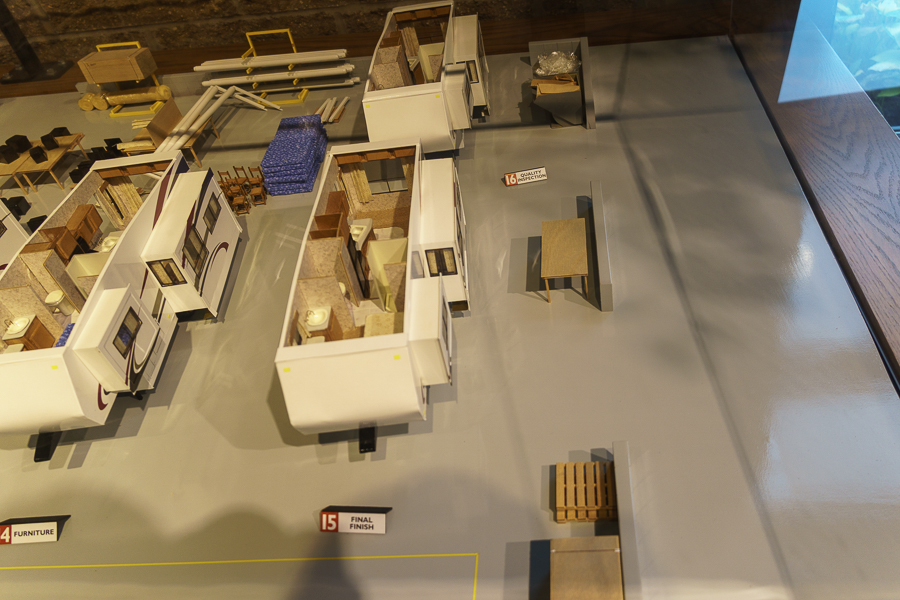
I goofed at the end of last week’s post when I mentioned a Grand Design Factory tour. I forgot they did not permit posting tour photos because they might reveal trade secrets. Fortunately, two days after our tour, we visited the RV/MH Hall of Fame and Museum, where they had a miniature display of the factory process. The photos in this post show the RV manufacturing process and take a peek at the collection of museum’s historical trailers and motorhomes.

Here are the sixteen (16) steps of the RV manufacturing process:

Steps 1 and 2: Start with a frame and install holding tanks
Steps 3 and 4: Install carpet and lino, then cabinets
Steps 5 and 6: Install exterior walls and roof
Steps 7, 8, and 9: Run electrical wiring, cover with roof decking, and install roof rubber
Steps 10 and 11: Install windows and slideouts (roof omitted to show interior)
Steps 12 & 13: Install doors and drawers, then appliances
Steps 14, 15, and 16: In goes the furniture, final finish, and quality inspection

I saw nothing that was proprietary in this photo, so thought I’d include it. This is the inspection area of the factory. The inspectors go through the entire unit and tag anything that needs fixed before it leaves the area.

I always enjoy factory tours and Grand Design’s was one of the best. We glimpsed behind the curtain to see how they made our 5th wheel from the ground up.

And here’s a sampling of the units included in the RV/MH Hall of Fame and Museum:

1880s John Deere Conestoga Wagon
The Covered Wagon, or Gypsy Wagon, was the origin of both the RV and MH industries.
The inside reminds me of today’s class B vans
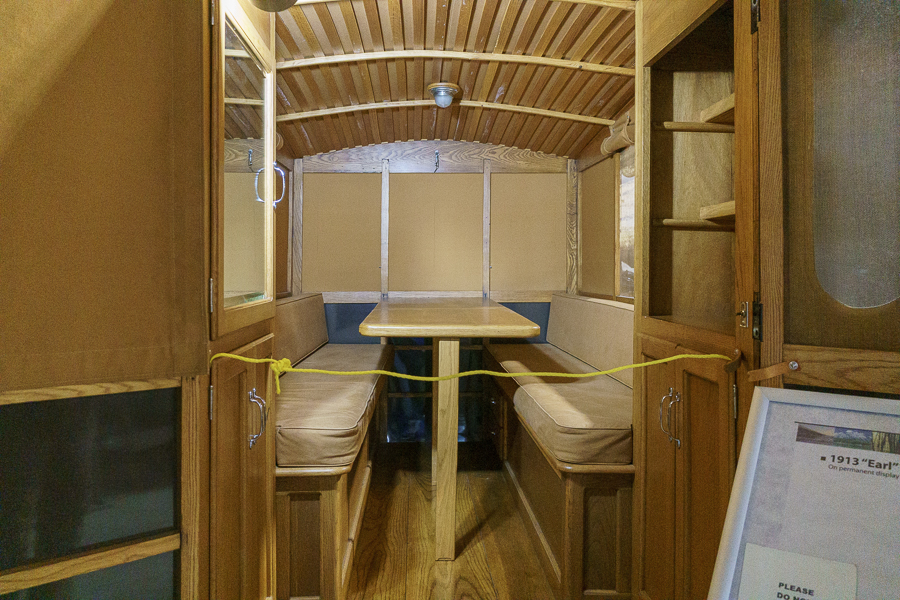
The oldest travel trailer in the world? It’s a 1913 “Earl” custom made for Cal Tech professor by an LA carriage maker.
The dining table seats four and converts into a double bed.

It’s been a roller coaster ride for the RV industry these past few years. Low demand for new RVs, increase in interest rates, and recession fears predicted a downturn in the industry going into 2019. When the pandemic hit in 2020, scores of individuals and families clamored to purchase an RV and find freedom on the road.

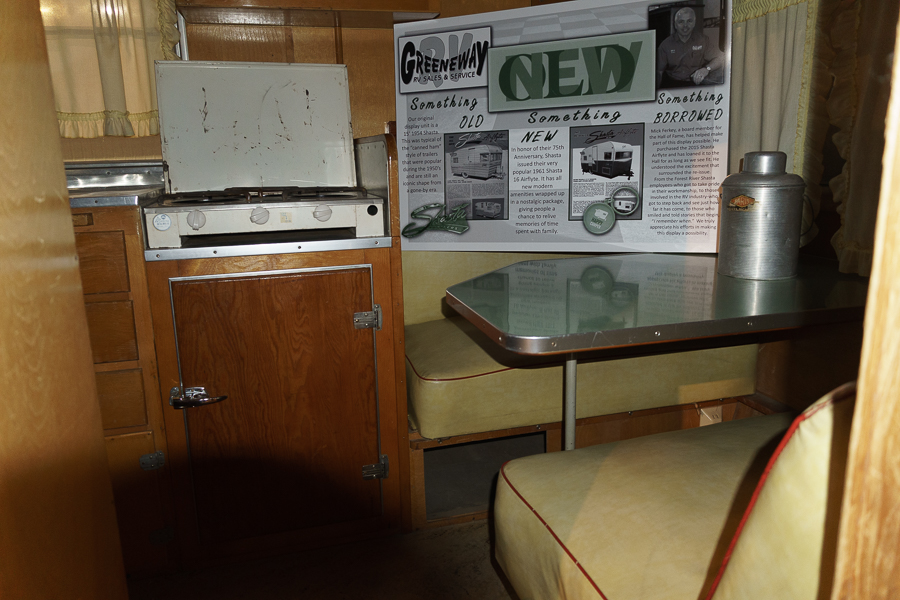
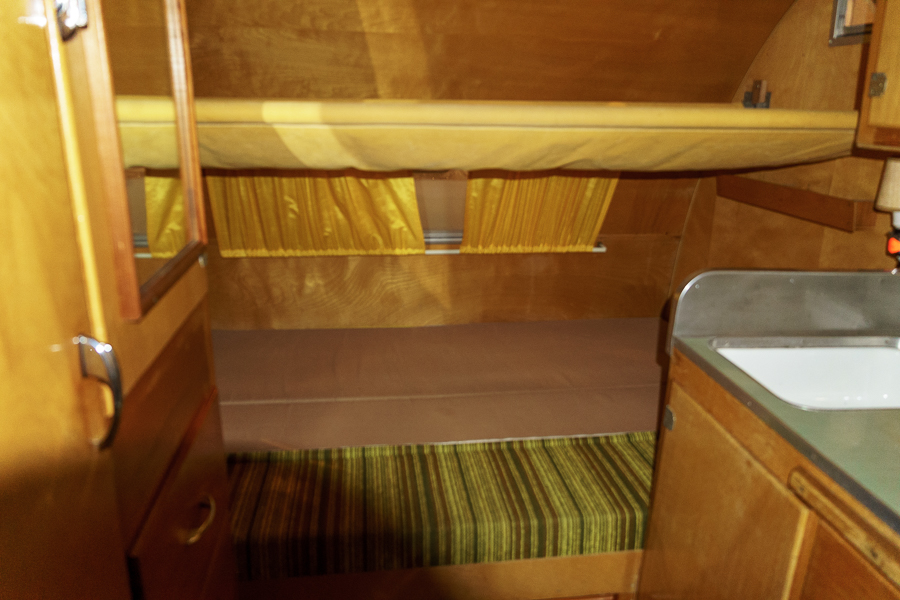
In the early 1980s, we started out in a trailer like this. Ours was a 1957 Kenskill
Jon and I slept in the bottom bunk, our daughter slept in the top bunk, and we swapped out the dining table for our son’s pack-and-play
Restored and airbrushed “On Cabin Time” a 1967 Fan Camper once featured in Vintage Camper Trailers Magazine
In the section for RV vendors to display their products, we found this outfitted motorhome.
The motorhome is furnished with many of the products sold by Furrion by Lippert
They included all the creature comforts

After a peak of 600,240 delivered units in 2021, the industry dipped in 2023 with 313,174 units, according to RV Industry Association. Indiana Business Review expects 350,000 units shipped in its 2025 forecast. Of course, many factors may upset that forecast, mainly interest rates, tariff threats, and unforeseen events and policies. It makes me wonder why people forecast anything.

1928 Pierce Arrow Fleet Housecar
A Mid-Century Dream
Cozy living room
Kitchen hall and bedroom
Clark Cortez motorhome made by Clark Forklift

Indiana holds the largest concentration of shipped units at 84%, with 67% shipped from Elkhart. So, in whatever direction the economy and RV industry winds blow, so goes the economy and job opportunities in Elkhart. On the Grand Design tour, we learned that many of the workers at the factory are Amish. Perhaps they are better prepared than us city dwellers to wait out a downturn in the economy.

Bluebird Daydream Motorhome

If an RV factory tour doesn’t suit your fancy, there’s plenty more to see and do in Elkhart and the surrounding towns. To mention a few, visitors can take a buggy tour, shop downtown, or browse through the Shipshewana Trading Place.

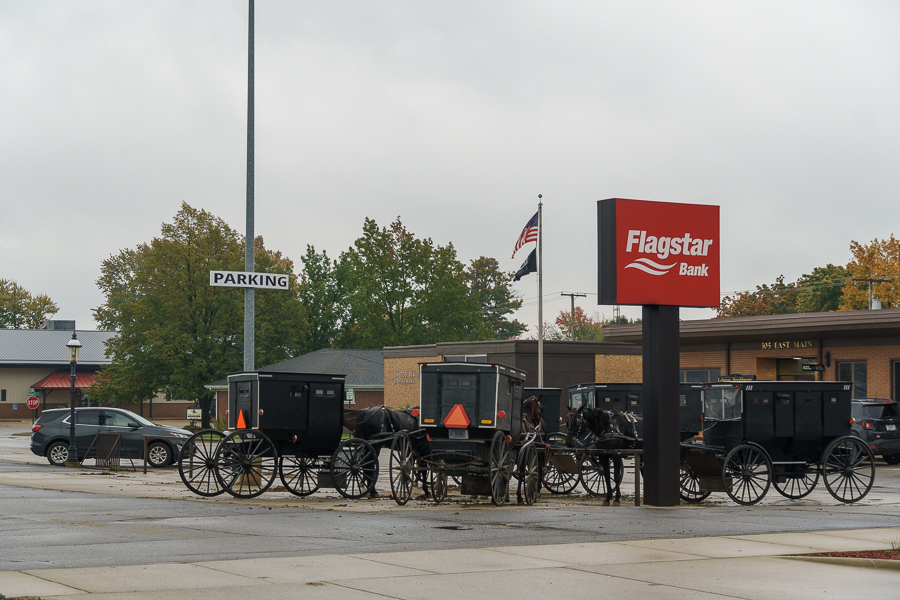
Amish parking. Who cleans up the horse droppings?

Visitors can also tour the Menno-Hof Museum, Ruthmere Museum Campus, or Wellfield Botanic Garden. And don’t forget the restaurants. We picked Blue Gate Restaurant and Bakery for dinner one night.

Blue Gate Restaurant

Want a place to stay for a night or two? The RV/MH Hall of Fame and Museum is a Harvest Host with plenty of room for self-contained RV parking. Hookups not available.

Next Up: Gerald R. Ford Presidential Library in Grand Rapids, Michigan

Safe Travels

2023 Fall Adventure Episode 6: Runge Conservation Nature Center, Jefferson City, Missouri

On October 5, 2023, our last day in Jefferson City, we explored the Runge Conservation Nature Center, one of several centers throughout the state. The Missouri Department of Conservation, which was founded in 1937, operates the center. The department’s purpose was to restore, conserve, and regulate Missouri’s fisheries, forests, and wildlife. Once funded through hunting, fishing, and trapping permits, a 1976 program dubbed Design for Conservation, also provides funding of 1/8 of 1% of all sales tax dollars.

Runge Conservation Nature Center Visitor Building

Inside the rustic wood building, we found displays of live fish, turtles, and snakes. Also included were taxidermy displays of animals in their natural habitat. These displays rivaled similar scenes at Johnny Morris’s Wonders of Wildlife Museum, although much smaller in scale.

Water turtle
Alligator Snapping Turtle
Rattlesnake
Eastern Copperhead
Mountain Lion
Hoot, hoot, where’s my food? Oh, wait, I don’t eat.

Other exhibits featured a more educational focus by explaining the importance of marshes, wetlands, and timber in the state.

Alcoves were set aside for children to play and learn through hands-on activities and an indoor wildlife-viewing area overlooked several bird feeders.

Play and learn area for little ones
Through the viewing windows
The upside down cone keeps the squirrels away.

And art gallery of display boards featured paintings by local artists.

Art display

We wandered around inside the building for an hour or more and then headed outside where five loop trails crisscross each other. Some trails are paved and accessible for all while woodchips mark the way on other trails.

Note: The center does not allow pets on any of the trails.

Along the way we crossed bridges, climbed steps, stopped at ponds, wetlands, a savanna, a tallgrass prairie, and forested environments.

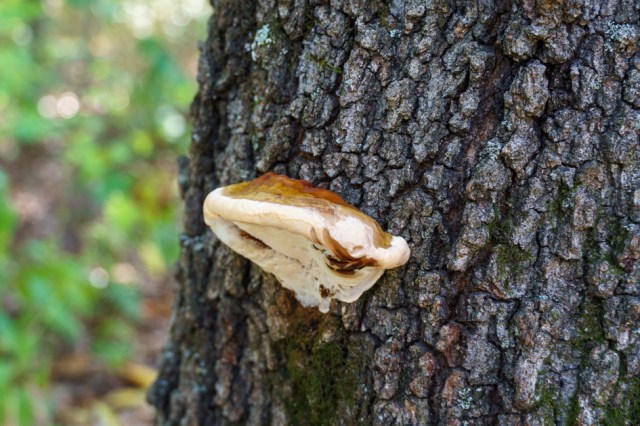
Fungi on bark
Come on, let’s see what’s on the other side
Marshy area
Fall’s a comin’

We caught glimpses of the 70-foot fire tower. Built in 1949 to replace two previous towers, the structure provides historic interpretation. It stood at the Rocky Mount Tower site southwest of Eldon until 2000, when Runge Conservation Center took possession. PA Hess was the towerman from 1956 to 1987. For thirty-one years, he climbed up and down those stairs to keep his neighbors safe from fire.

Fire tower from a distance
Fire tower close up

During much of the 1900s, lookout towers were the primary way to detect fires in the state and communicate their location to authorities. Out of 260 fire towers in Missouri during the 1900s, there remain about sixty, thirty of which are still sometimes used for spotting fires.

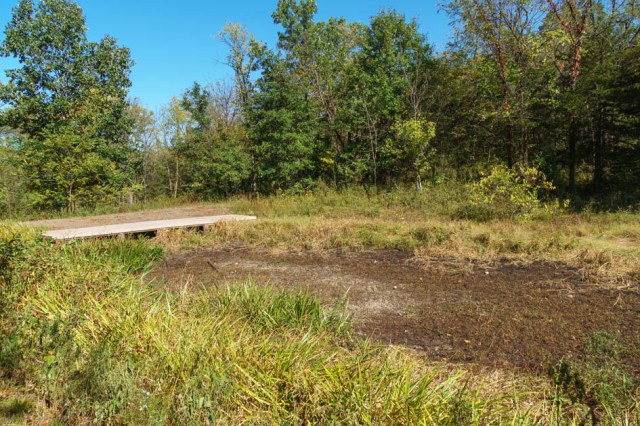
The landscape at Runge was once overgrown and thick with invasive plants. A dedicated team of employees and volunteers turned the messy area into a vibrant and diverse environment. An environment that supports animals and plants of different habitats. It’s clear the employees and volunteers continue to maintain the area for future guests.

Having a stressful day at work or at home? Take a nature bath at the Runge Conservation Center, or your local outdoor space, by walking the trails. The center’s compact size will tame the stress and soothe the soul in an hour, or more, if you like. Listen to the birds calling each other, watch lizards and squirrels dart in and out of underbrush, and feel the breeze on skin. We did and still had time to wash a few loads of clothes when we returned to our home away from home.

One of the best parts of the nature center is that it doesn’t empty your bank account. Free makes Runge the right price and right size for young families.

Up Next: Hannibal, Missouri

Safe Travels
2023 Fall Adventure Episode 5: State Capitol Jefferson City, Missouri

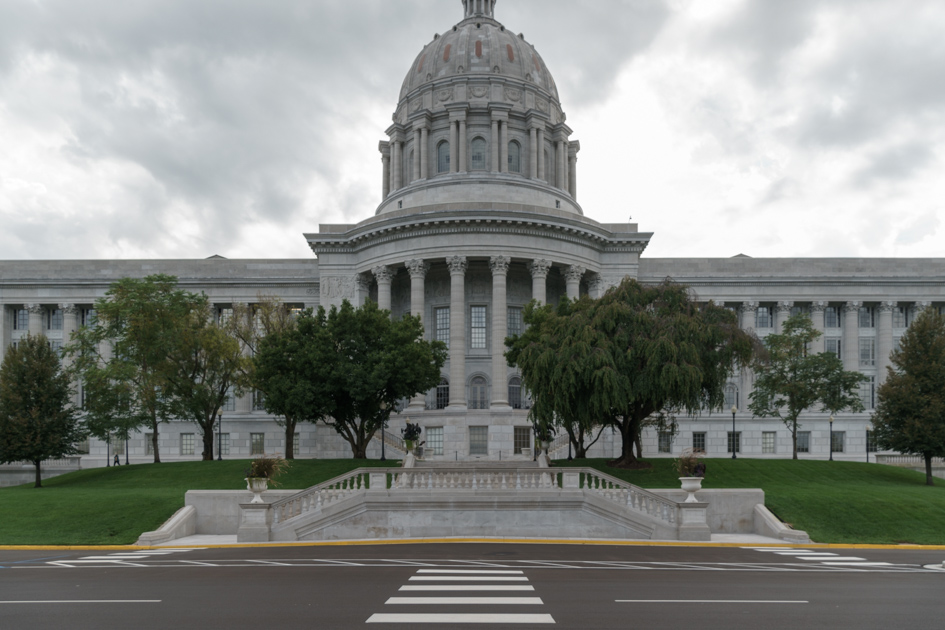
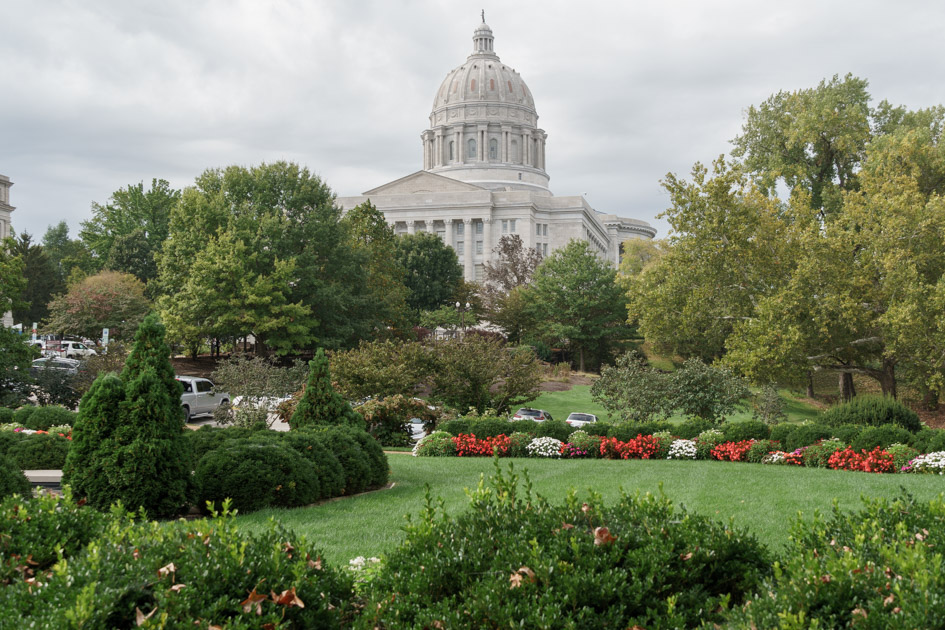
State of Missouri Capitol Building

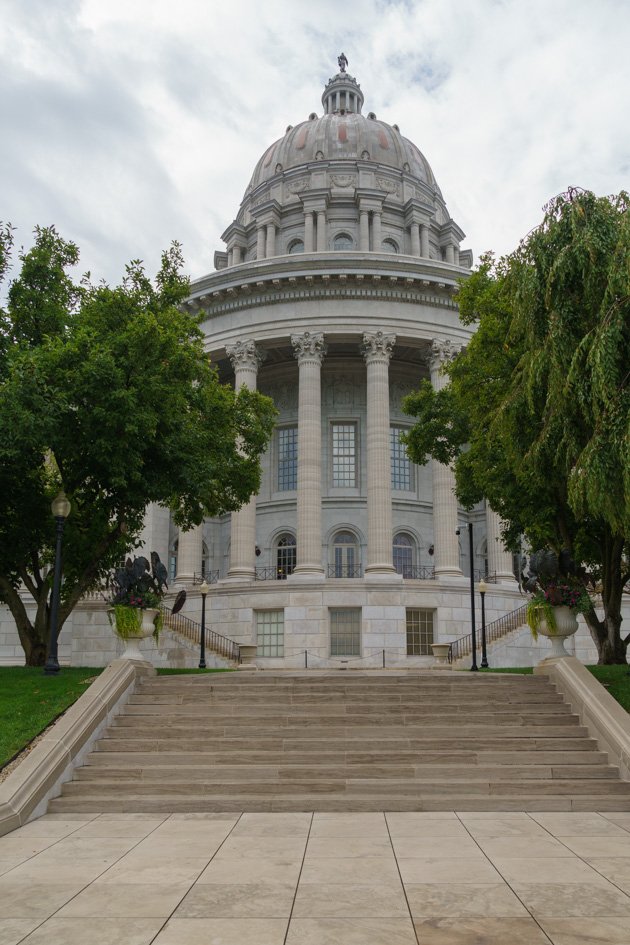
The current capitol building is the third for the state, after the first and second buildings were both damaged by fire. As soon as we neared the city, the Baroque dome (rising 238 feet (73 m) was easy to spot and beckoned us to come take a glimpse. The structure is listed on the National Register of Historic Places and is a contributing property in the Missouri State Capitol Historic District. Over the past 107 years, the state has done a great job of upgrading, expanding, and preserving the building, originally completed in 1917.

At the top of the dome stands a bronze statue of Ceres, the Greek goddess of agriculture.

We don’t dare pull our truck into a parking garage because they rarely are tall enough for our beast. So we circled around the capitol, searching for a parking spot on the street. Then I saw the Reserved Veteran Parking sign. Ding, ding, ding. With Jon’s veteran status, we had hit the parking jackpot.

Reserved veteran parking? Yes, please.

Across the parkway from the building is the Fountain of Centaurs and a bronze relief depicting Monroe, Barbe-Marboise, and Livingston, signing the Louisiana Purchase, which doubled the size of the United States. The state purchased much of the art inside and outside of the capitol building with $1 million dollars left over from construction.

Fountain of the Centaurs by Alexander Weinman

Relief of the Louisiana Purchase signing by Karl Bitter
Visitors will notice the Missouri Seal replicated throughout the building. This one was above the elevator doors.
Historic artifacts lend to the authenticity and age of the building
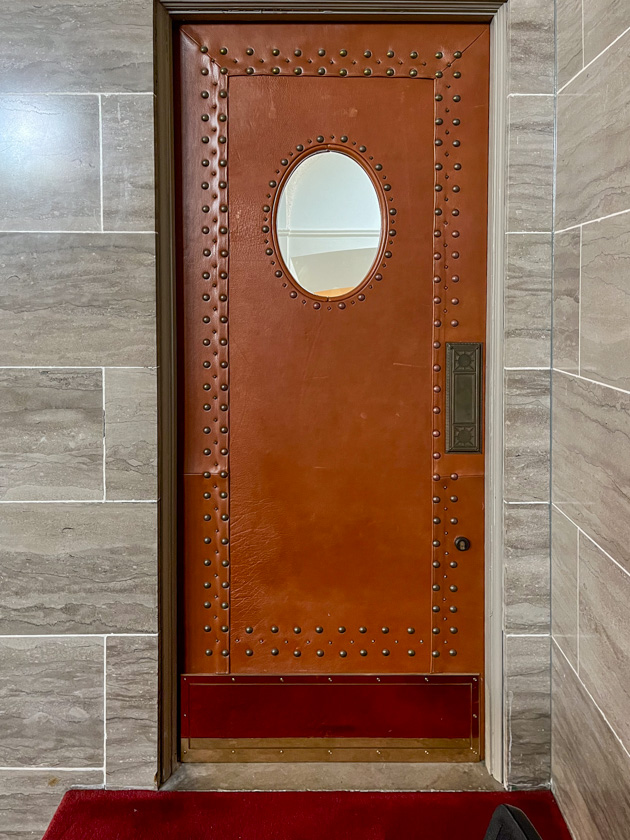
Leather covers the doors to the House and Senate Chambers

Symbols are displayed everywhere in the building and the House Chambers is no exception. To name only a few, the large stained glass window represents the glory of Missouri peace. Created by H.T. Schlader Mundt in 1924. To the left of the dais is a light-colored painting of Abraham Lincoln representing the republican party. On the right side is a dark-colored painting of Thomas Jefferson representing the democratic party.

House Chambers

We found a few spots around the building where we had expansive views of what lies beyond. Here are a few of those photos.

View of parking garage entrance and the bicentennial bridge that leads to Deborah Cooper park on Adrian’s Island.
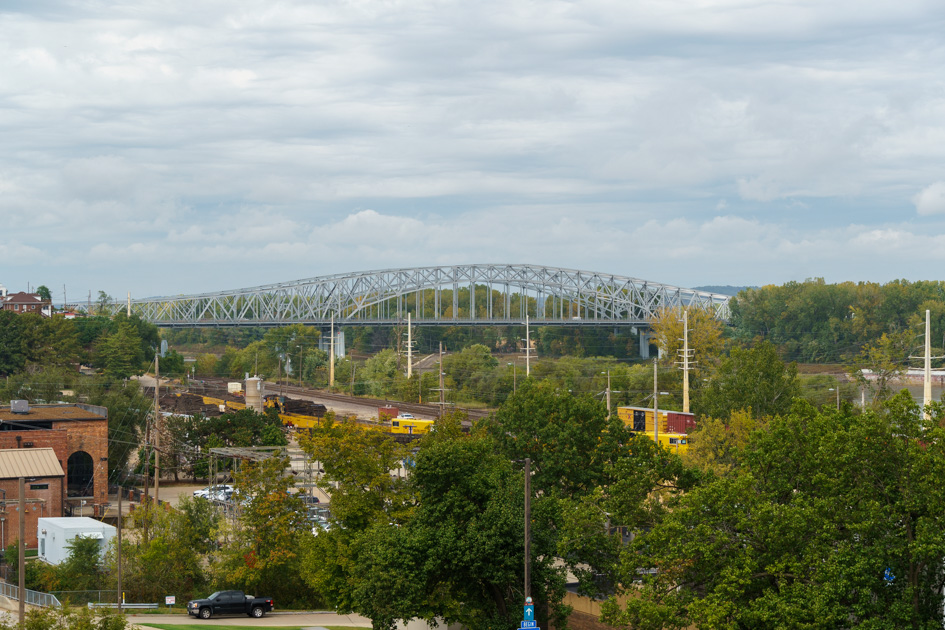
View of the Jefferson Bridge, which was renamed Senator Roy Blunt Bridge by the state legislature in 2022.
St. Peter Catholic Church was established in 1846 and the building erected in 1883. Listed on the National Register of historic places on June 18, 1976.

The half-moon paintings below are called lunettes. Forty-one of these paintings grace the second floor walls. They depict historic events in Missouri’s history.

The Battle of Wilson’s Creek August 10, 1861
The Battle of Westport October 23, 1864

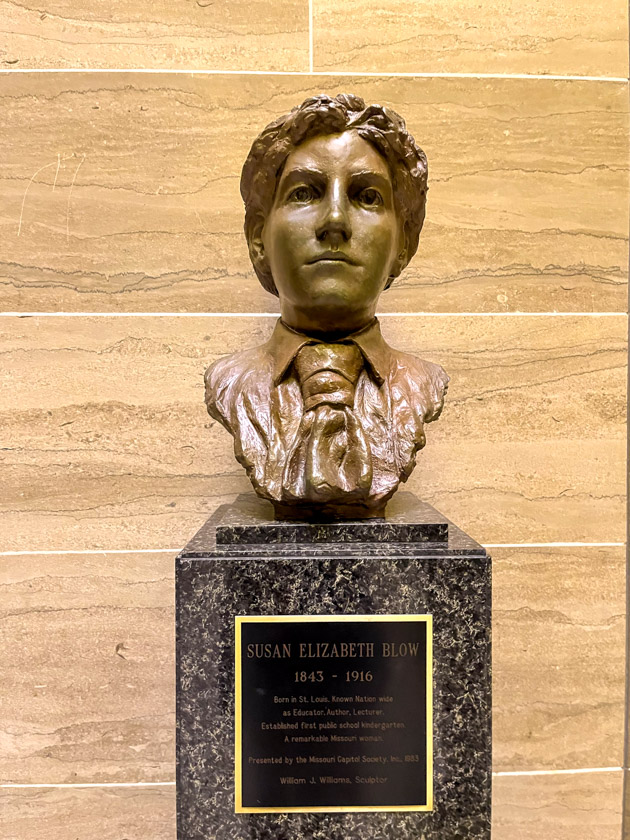
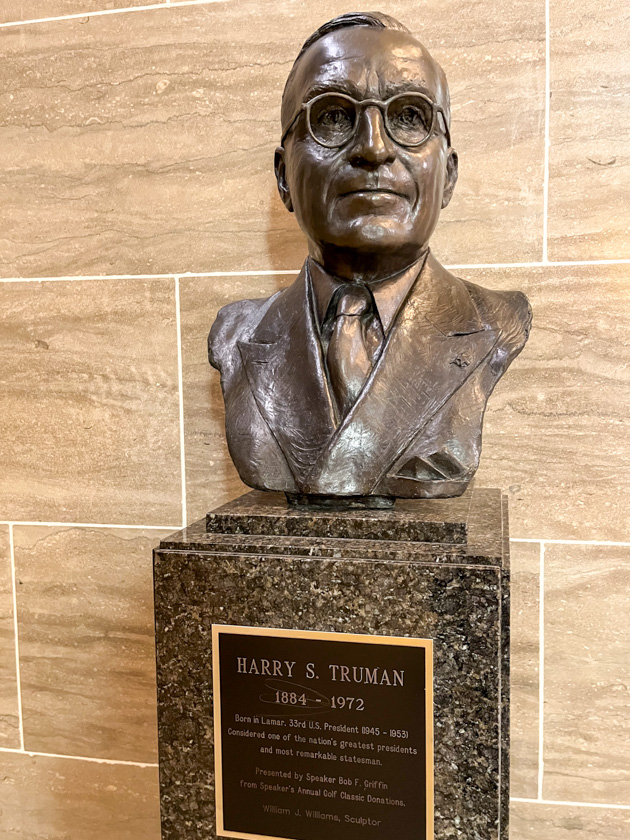
The third-floor rotunda is where visitors will find the Hall of Famous Missourians. Bronze busts honor their achievements and contributions to the state. I had fun finding the well-known and not so well-known people, at least by me, who had made a difference in the world.

Of course, Samuel Clements (aka Mark Twain) would be so honored.

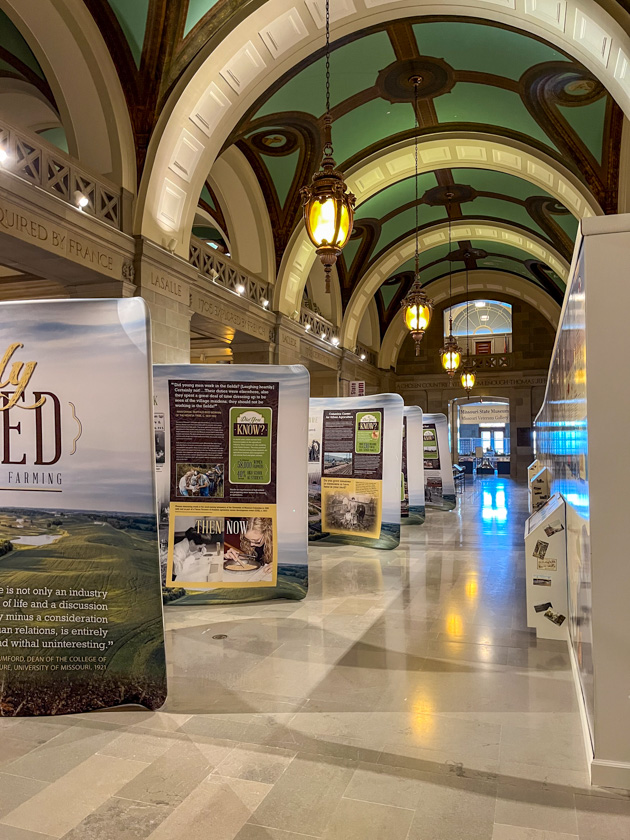
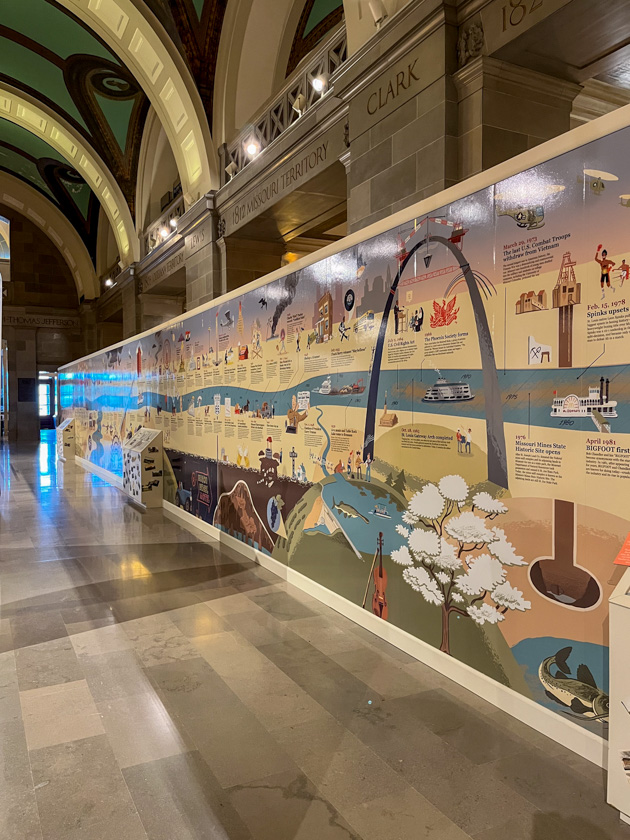
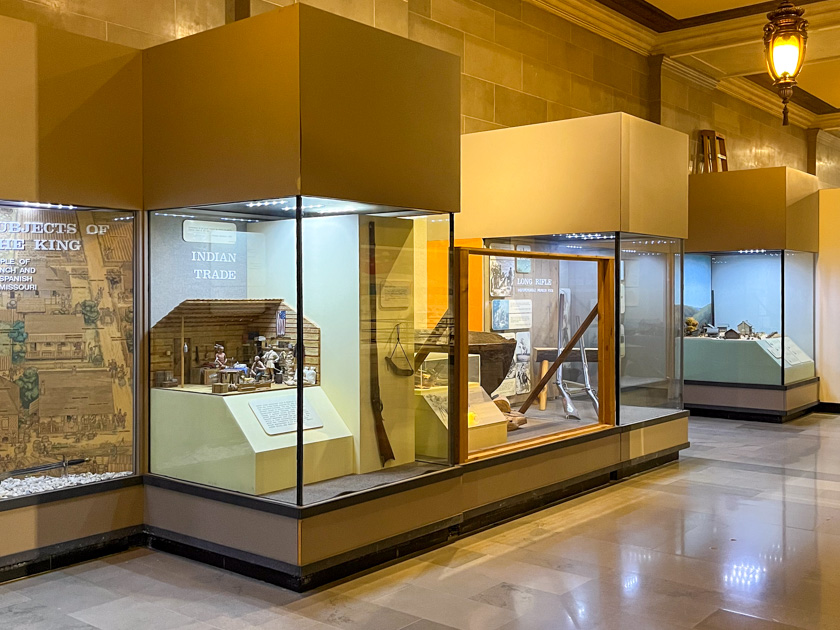
The Missouri State Museum occupies much of the first floor of the capitol building. On one side of the rotunda are displays about the historical events that shaped the state, including a timeline. On the other side, the state’s resources take center stage.

State resources portion of the museum
Historical timeline mural tells the Missouri story.

Various displays tell the stories. These displays discuss the Osage people who roamed the lands before the white settlers arrived.

Museum displays

After our tour of the capitol, we found two other places to explore within a short walk: the Governor’s mansion, which has served as the governor’s residence since 1872, and the Jefferson Landing State Historical Site.

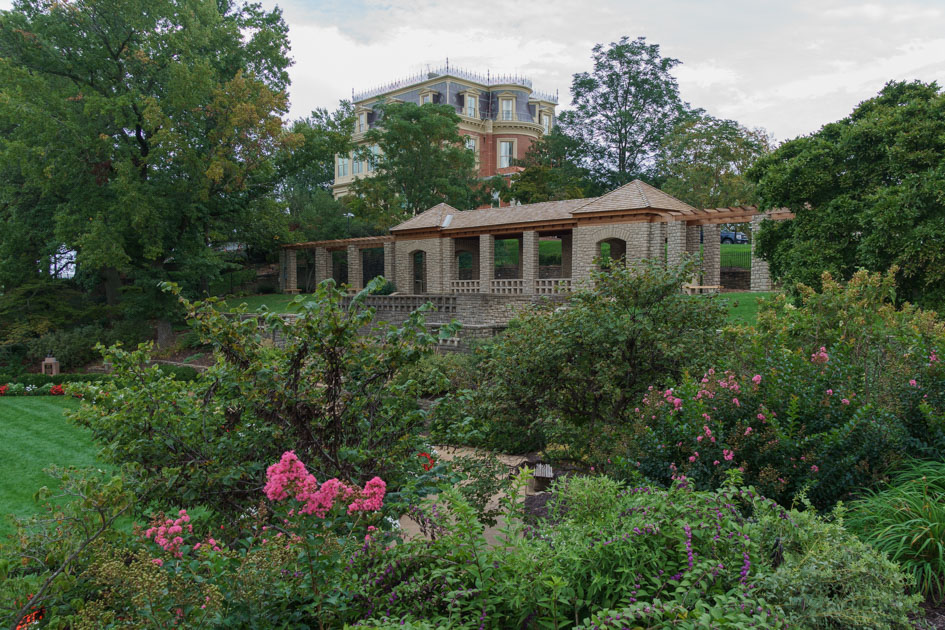
Governor’s Mansion garden with the historic Lohman Building and Union Hotel of the Landing site in the upper left background

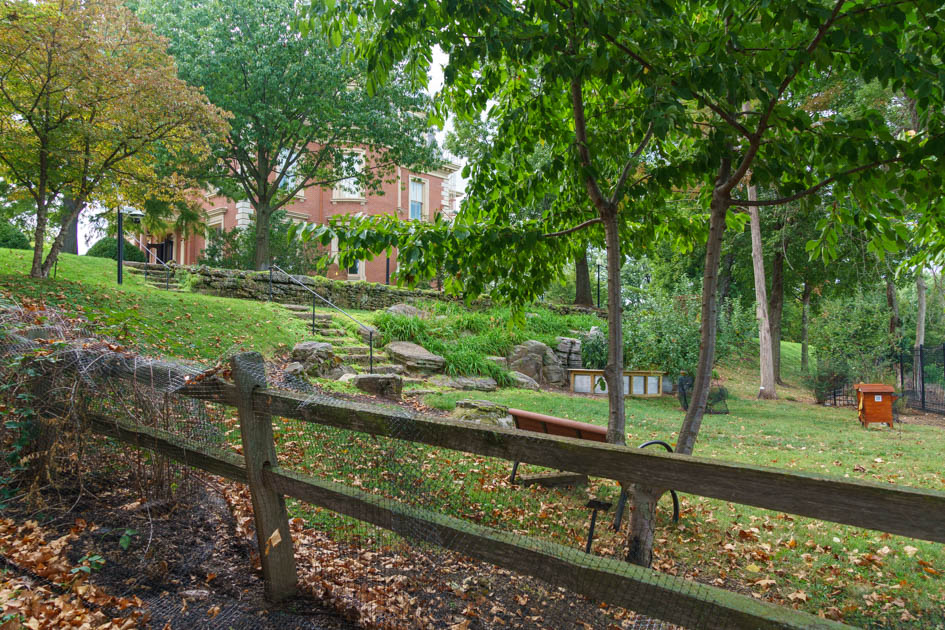
Imagine living in the mansion that sits up on a knoll and encompasses 10 acres of gardens. With views of both the Missouri River and the State Capitol, the governor can keep a watchful eye on their domain.

View of mansion from the garden

George Ingham Barnett designed the building in the Second-Empire architectural style. It took eight months to construct, with the help of prisoners from the nearby penitentiary.

Front of the Governor’s Mansion
Back of Mansion
Side view
View of capitol building from the mansion garden

The Landing comprises two buildings. The Union Hotel and the Lohman buildings.

The Lohman Building is the oldest existing building in Jefferson City. Charles Maus and his brother-in-law, Charles Lohman, bought the east section of the Crump’s building and opened a general store in 1852.

Lohman building
River side of Lohman building

Maus built the hotel across the street in 1855. The state acquired the hotel and the Lohman Building in the 1960s and surrounding land to use it as a parking lot. Concerned citizens had other ideas. In 1974, the state’s official bicentennial project adopted the Jefferson Landing as its project. Restorations took place and the Lohman building opened to the public on July 4, 1976. Today, Amtrack uses the first floor of the hotel as a train station.

Union Hotel
Rear of Union Hotel
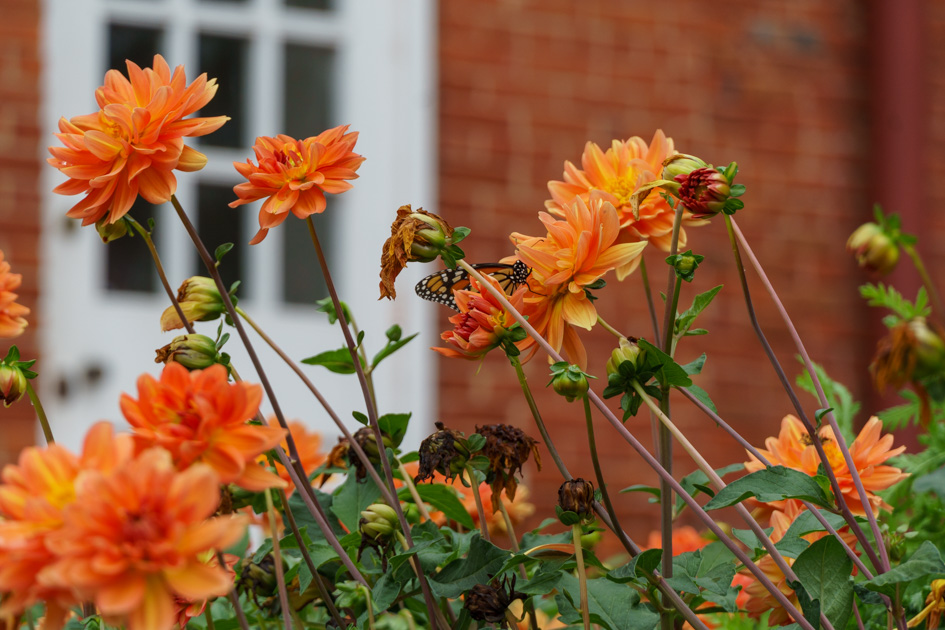
Butterfly in orange blossoms

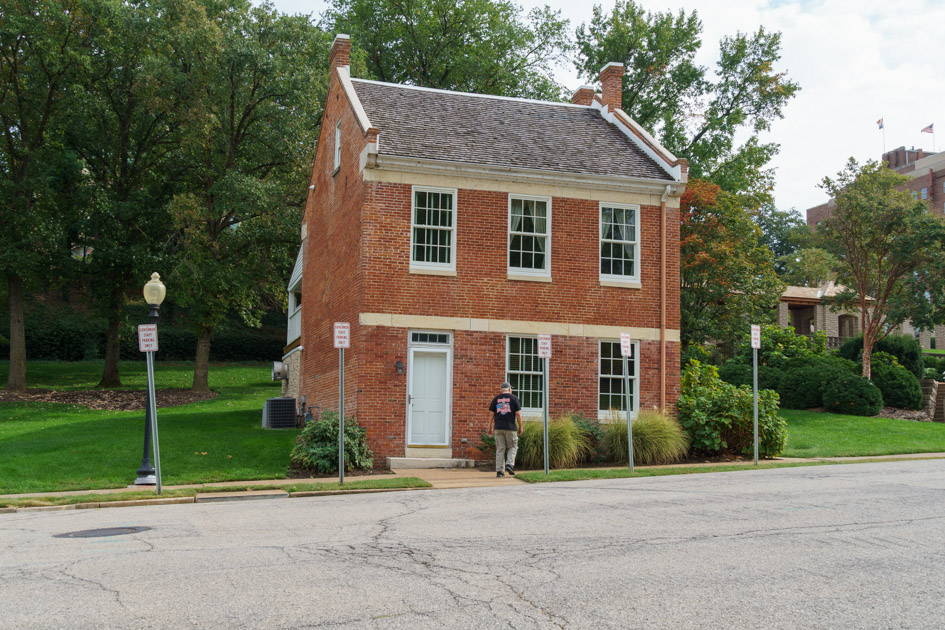
Christopher Maus, a stonemason, built the pre-civil war brick home (pictured below) near The Landing around 1854. Christopher Maus was the brother of Charles Maus. The state maintains the house along with the State Historic Site. Unfortunately, it is not open for tours.

Christopher Maus House

I saw this plaque and read that it marked the place of a time capsule. Oh, wouldn’t it be great to come back and see what’s inside when they open it? On closer look, I realized that trip, would not be possible.

Missouri State Parks time capsule

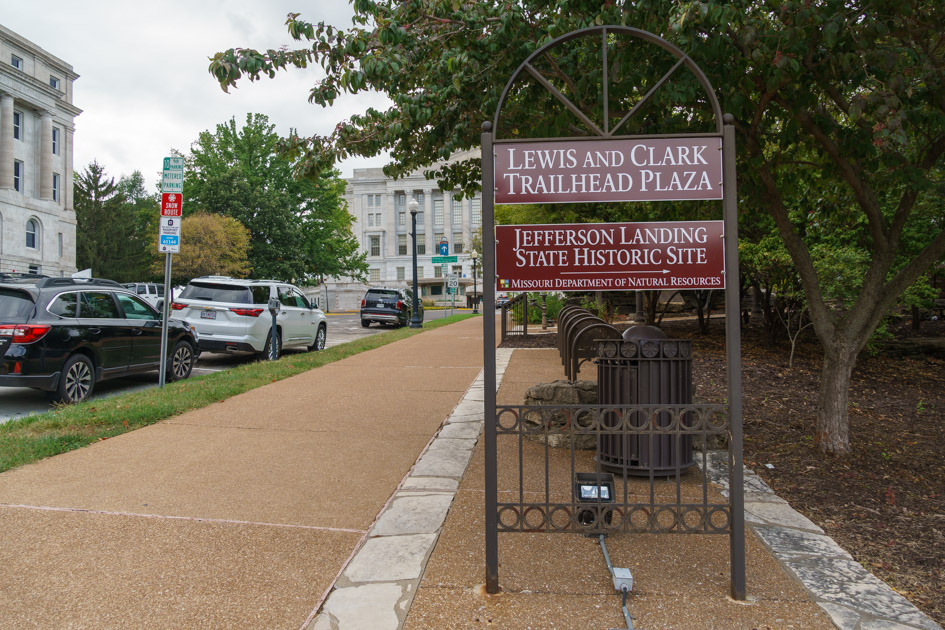
As we walked back to the truck, I noticed the Lewis and Clark Trailhead Plaza. The sign led to a memorial that commemorates the famous expedition. I couldn’t help but think about how different the area looks today compared to when the company camped in the area on June 4, 1804.

History captured my attention and imagination on this day. While grocery shopping an hour later, I thought about how people lived in the 1700s and 1800s and even the early 1900s. Their struggles to provide for food and shelter and safety made me thankful for how easy we have it today. All we need to do is walk into our local grocery store and pick what we need or want from the abundance of produce and other products available. How lucky we are to live in these times.

Next up: We visit the Runge Conservation Center in Jefferson.

Safe Travels