2023 Fall Adventure Episode 5: State Capitol Jefferson City, Missouri

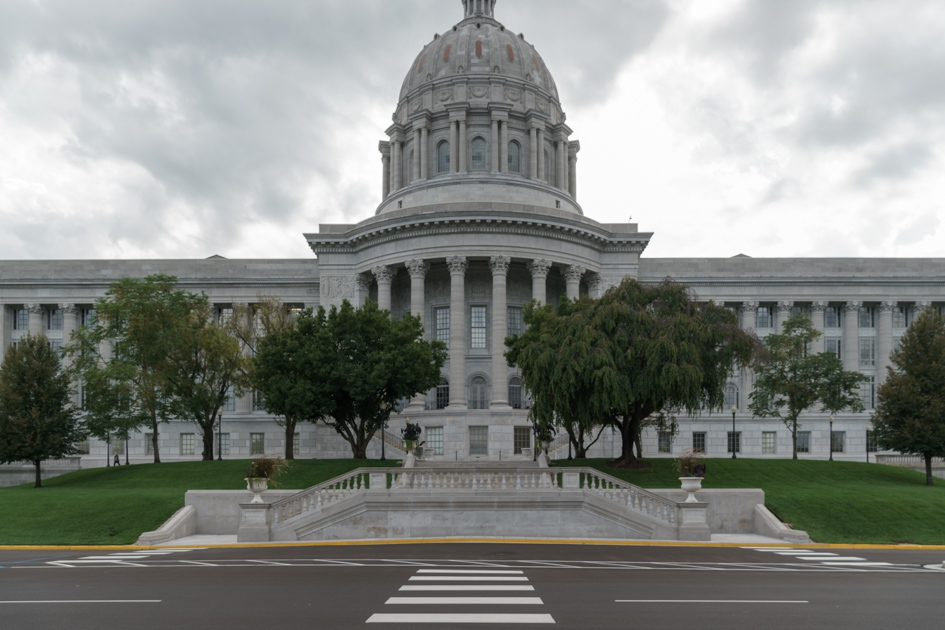
State of Missouri Capitol Building

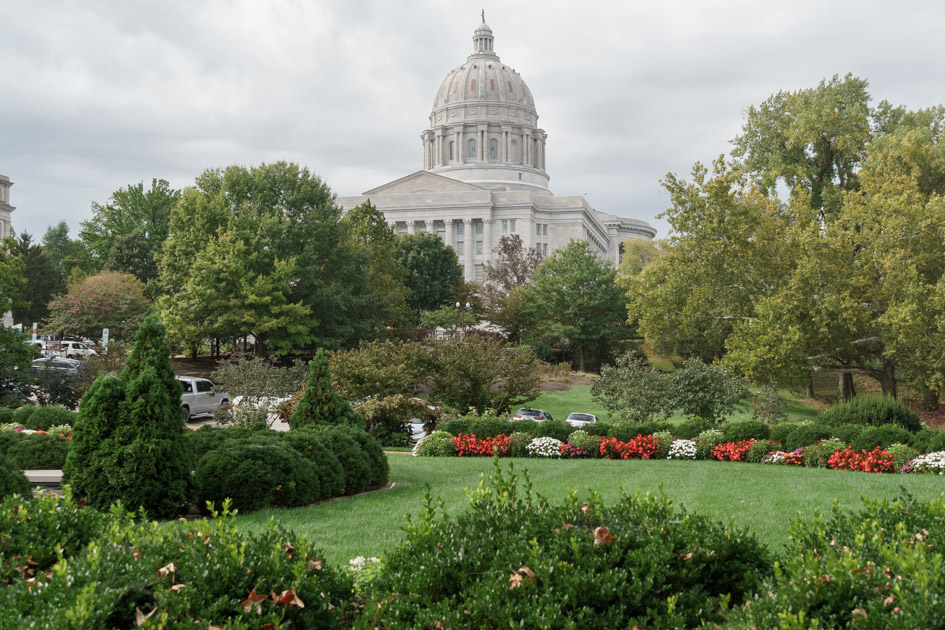
The current capitol building is the third for the state, after the first and second buildings were both damaged by fire. As soon as we neared the city, the Baroque dome (rising 238 feet (73 m) was easy to spot and beckoned us to come take a glimpse. The structure is listed on the National Register of Historic Places and is a contributing property in the Missouri State Capitol Historic District. Over the past 107 years, the state has done a great job of upgrading, expanding, and preserving the building, originally completed in 1917.
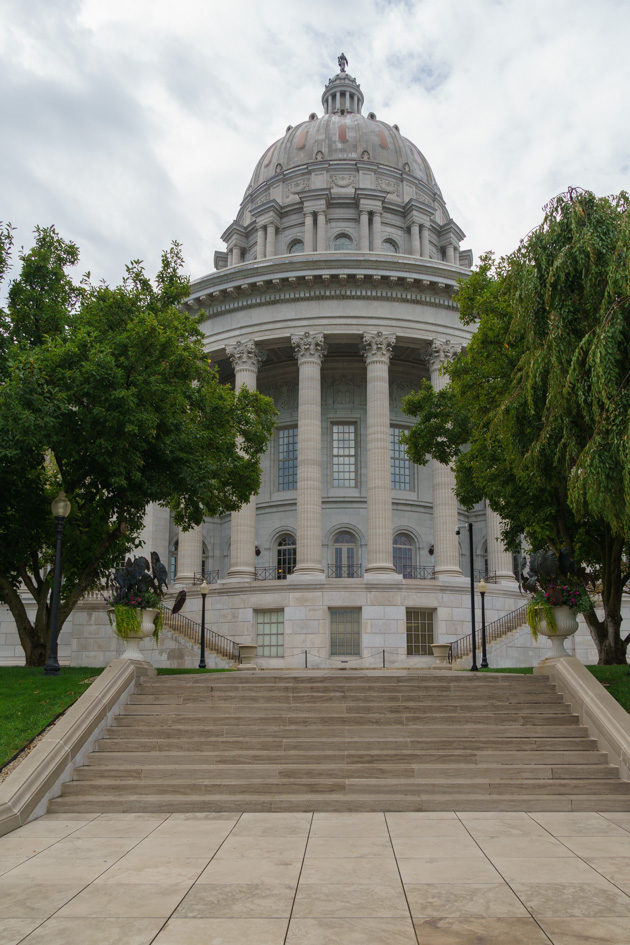
At the top of the dome stands a bronze statue of Ceres, the Greek goddess of agriculture.

We don’t dare pull our truck into a parking garage because they rarely are tall enough for our beast. So we circled around the capitol, searching for a parking spot on the street. Then I saw the Reserved Veteran Parking sign. Ding, ding, ding. With Jon’s veteran status, we had hit the parking jackpot.

Reserved veteran parking? Yes, please.

Across the parkway from the building is the Fountain of Centaurs and a bronze relief depicting Monroe, Barbe-Marboise, and Livingston, signing the Louisiana Purchase, which doubled the size of the United States. The state purchased much of the art inside and outside of the capitol building with $1 million dollars left over from construction.

Fountain of the Centaurs by Alexander Weinman

Relief of the Louisiana Purchase signing by Karl Bitter
Visitors will notice the Missouri Seal replicated throughout the building. This one was above the elevator doors.
Historic artifacts lend to the authenticity and age of the building
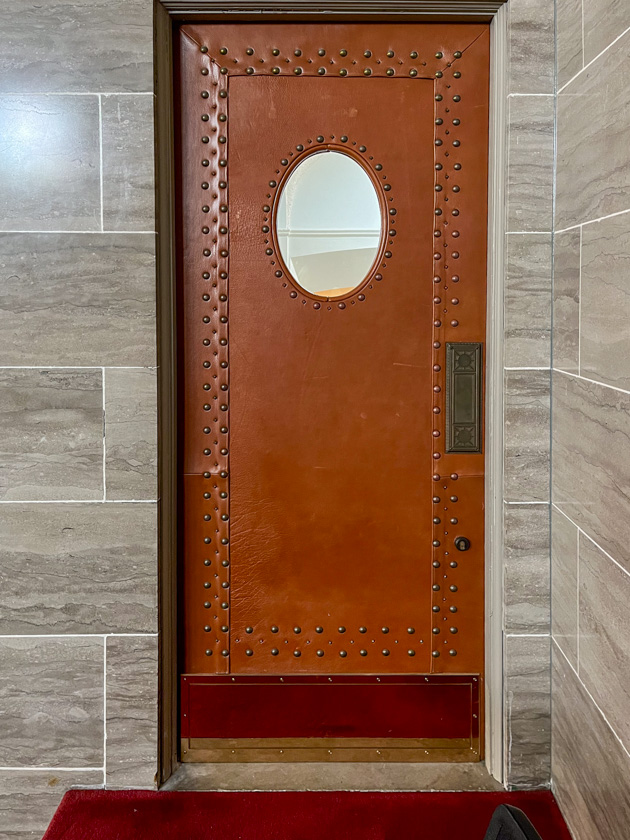
Leather covers the doors to the House and Senate Chambers

Symbols are displayed everywhere in the building and the House Chambers is no exception. To name only a few, the large stained glass window represents the glory of Missouri peace. Created by H.T. Schlader Mundt in 1924. To the left of the dais is a light-colored painting of Abraham Lincoln representing the republican party. On the right side is a dark-colored painting of Thomas Jefferson representing the democratic party.

House Chambers

We found a few spots around the building where we had expansive views of what lies beyond. Here are a few of those photos.

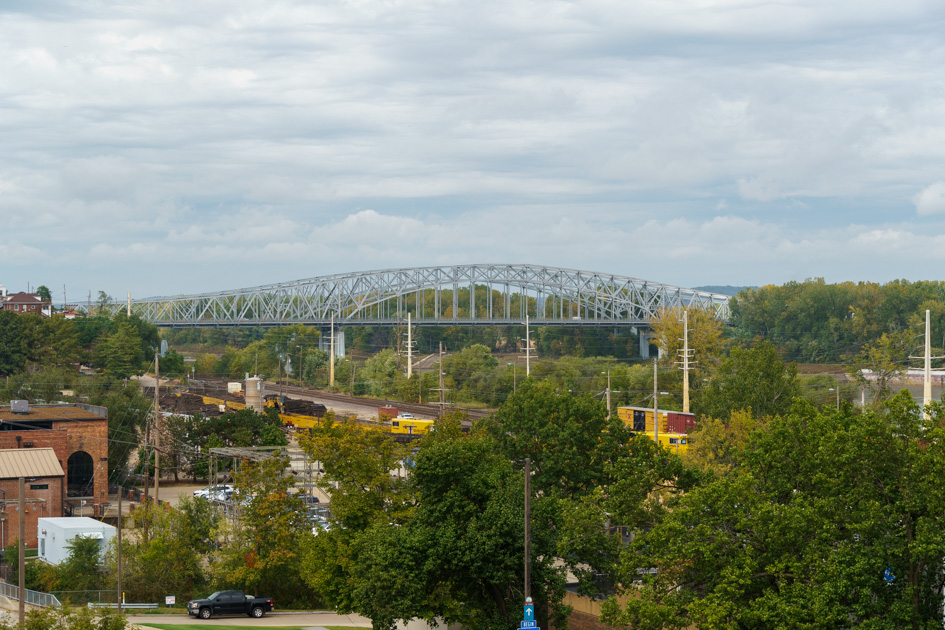
View of parking garage entrance and the bicentennial bridge that leads to Deborah Cooper park on Adrian’s Island.
View of the Jefferson Bridge, which was renamed Senator Roy Blunt Bridge by the state legislature in 2022.
St. Peter Catholic Church was established in 1846 and the building erected in 1883. Listed on the National Register of historic places on June 18, 1976.

The half-moon paintings below are called lunettes. Forty-one of these paintings grace the second floor walls. They depict historic events in Missouri’s history.

The Battle of Wilson’s Creek August 10, 1861
The Battle of Westport October 23, 1864

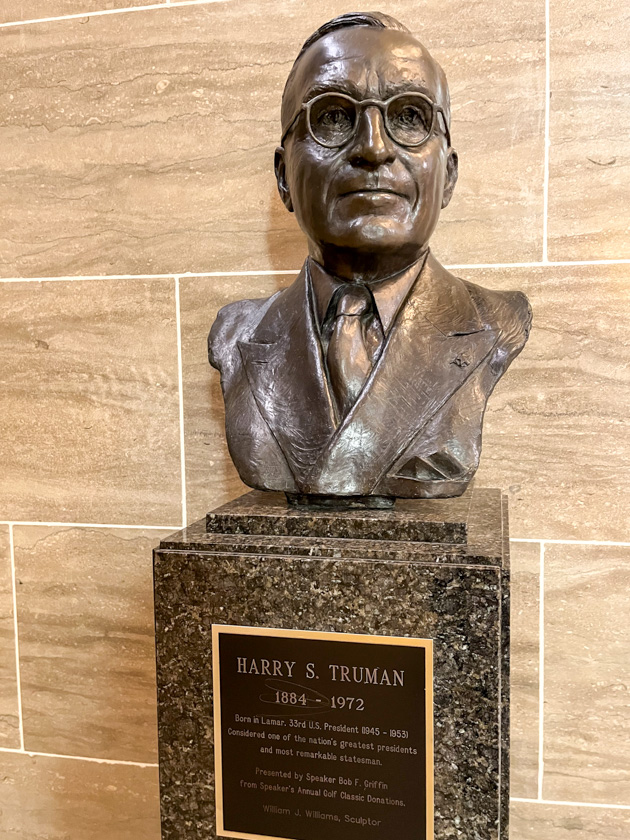
The third-floor rotunda is where visitors will find the Hall of Famous Missourians. Bronze busts honor their achievements and contributions to the state. I had fun finding the well-known and not so well-known people, at least by me, who had made a difference in the world.

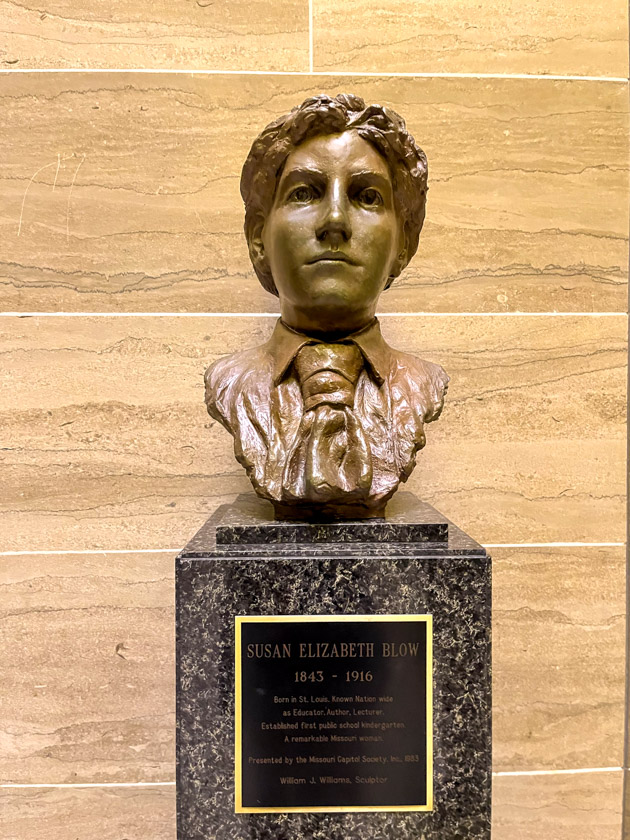
Of course, Samuel Clements (aka Mark Twain) would be so honored.

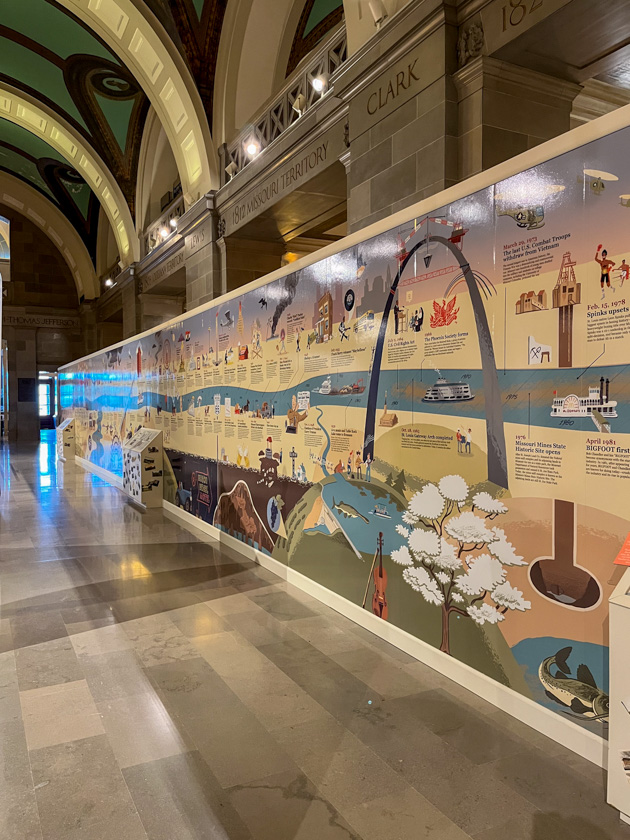
The Missouri State Museum occupies much of the first floor of the capitol building. On one side of the rotunda are displays about the historical events that shaped the state, including a timeline. On the other side, the state’s resources take center stage.
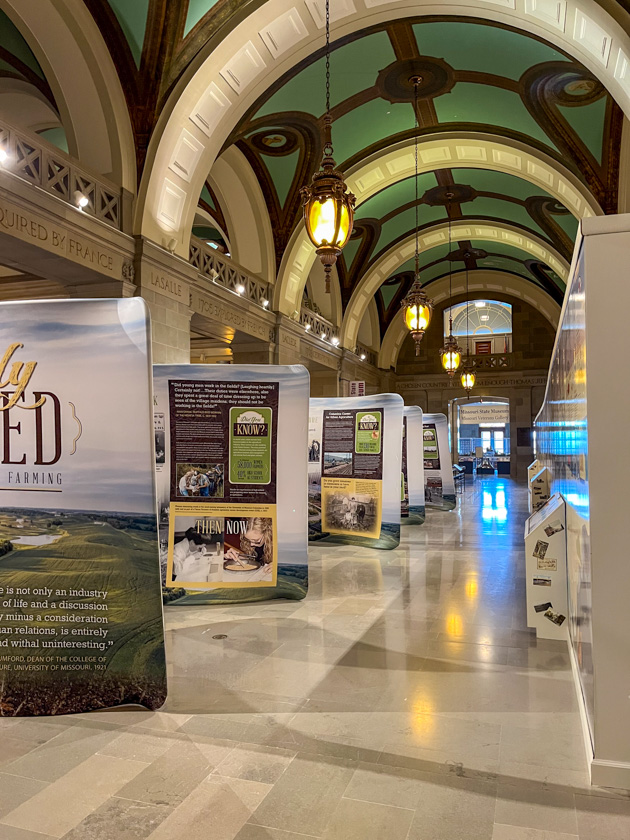
State resources portion of the museum
Historical timeline mural tells the Missouri story.

Various displays tell the stories. These displays discuss the Osage people who roamed the lands before the white settlers arrived.
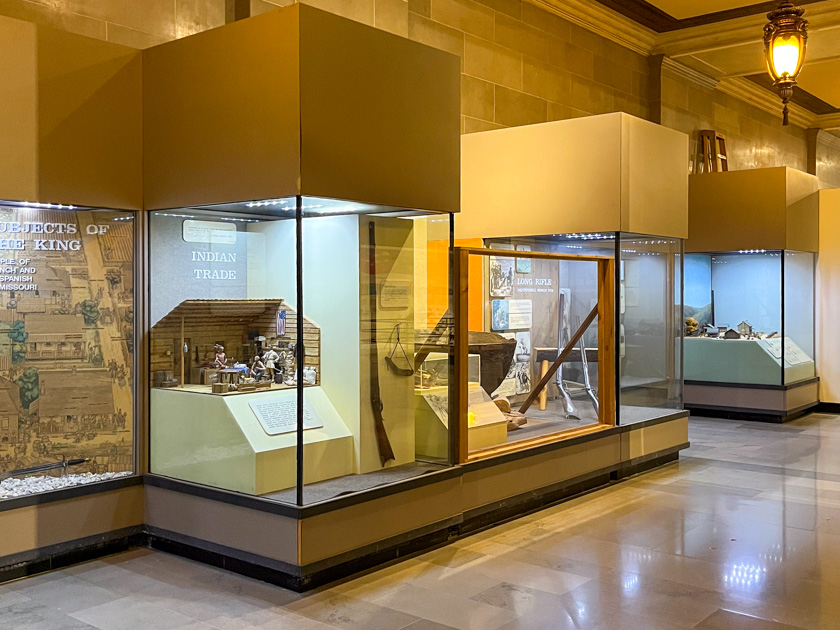
Museum displays

After our tour of the capitol, we found two other places to explore within a short walk: the Governor’s mansion, which has served as the governor’s residence since 1872, and the Jefferson Landing State Historical Site.

Governor’s Mansion garden with the historic Lohman Building and Union Hotel of the Landing site in the upper left background

Imagine living in the mansion that sits up on a knoll and encompasses 10 acres of gardens. With views of both the Missouri River and the State Capitol, the governor can keep a watchful eye on their domain.
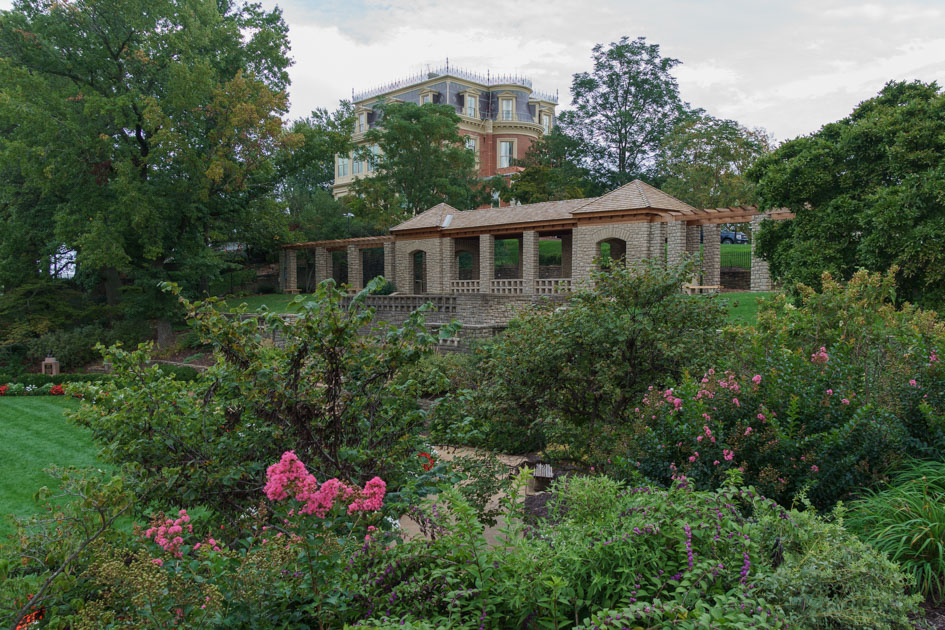
View of mansion from the garden

George Ingham Barnett designed the building in the Second-Empire architectural style. It took eight months to construct, with the help of prisoners from the nearby penitentiary.

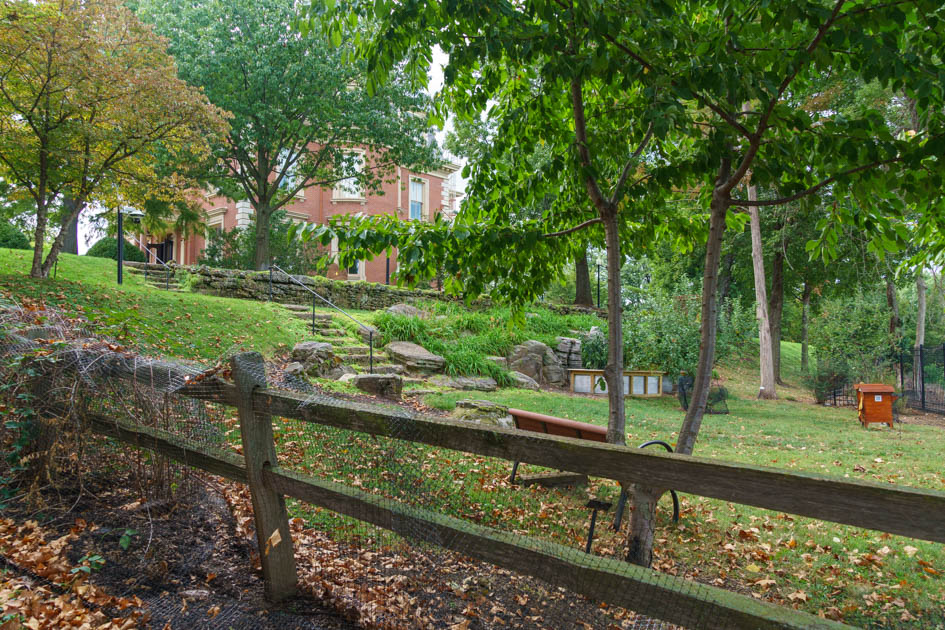
Front of the Governor’s Mansion
Back of Mansion
Side view
View of capitol building from the mansion garden

The Landing comprises two buildings. The Union Hotel and the Lohman buildings.

The Lohman Building is the oldest existing building in Jefferson City. Charles Maus and his brother-in-law, Charles Lohman, bought the east section of the Crump’s building and opened a general store in 1852.

Lohman building
River side of Lohman building

Maus built the hotel across the street in 1855. The state acquired the hotel and the Lohman Building in the 1960s and surrounding land to use it as a parking lot. Concerned citizens had other ideas. In 1974, the state’s official bicentennial project adopted the Jefferson Landing as its project. Restorations took place and the Lohman building opened to the public on July 4, 1976. Today, Amtrack uses the first floor of the hotel as a train station.

Union Hotel
Rear of Union Hotel
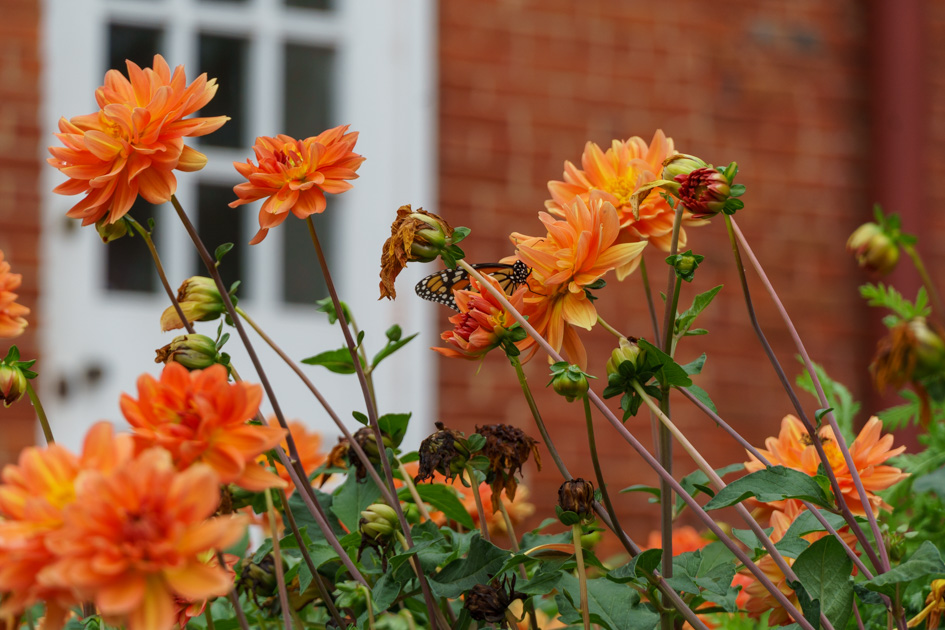
Butterfly in orange blossoms

Christopher Maus, a stonemason, built the pre-civil war brick home (pictured below) near The Landing around 1854. Christopher Maus was the brother of Charles Maus. The state maintains the house along with the State Historic Site. Unfortunately, it is not open for tours.
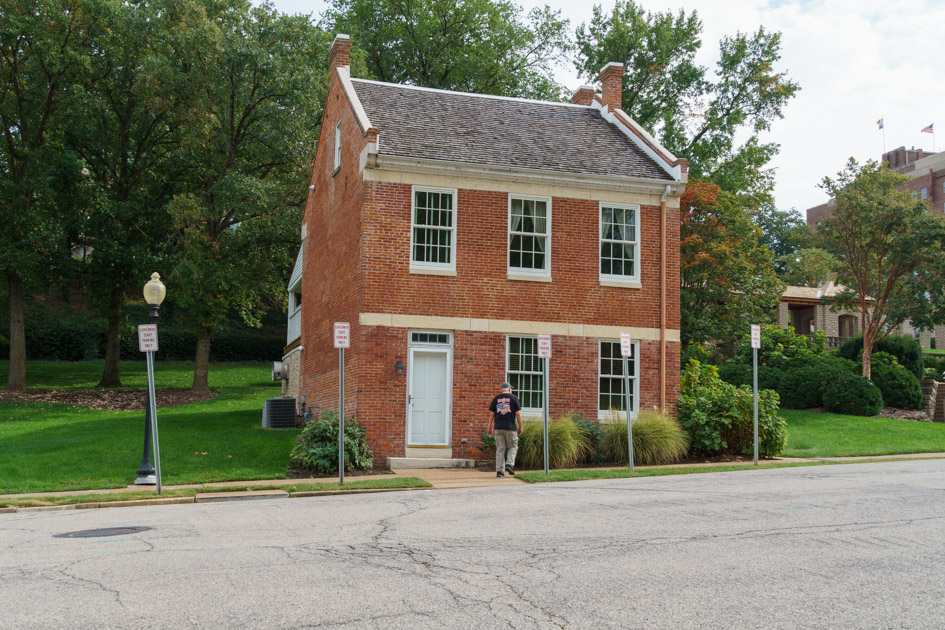
Christopher Maus House

I saw this plaque and read that it marked the place of a time capsule. Oh, wouldn’t it be great to come back and see what’s inside when they open it? On closer look, I realized that trip, would not be possible.

Missouri State Parks time capsule

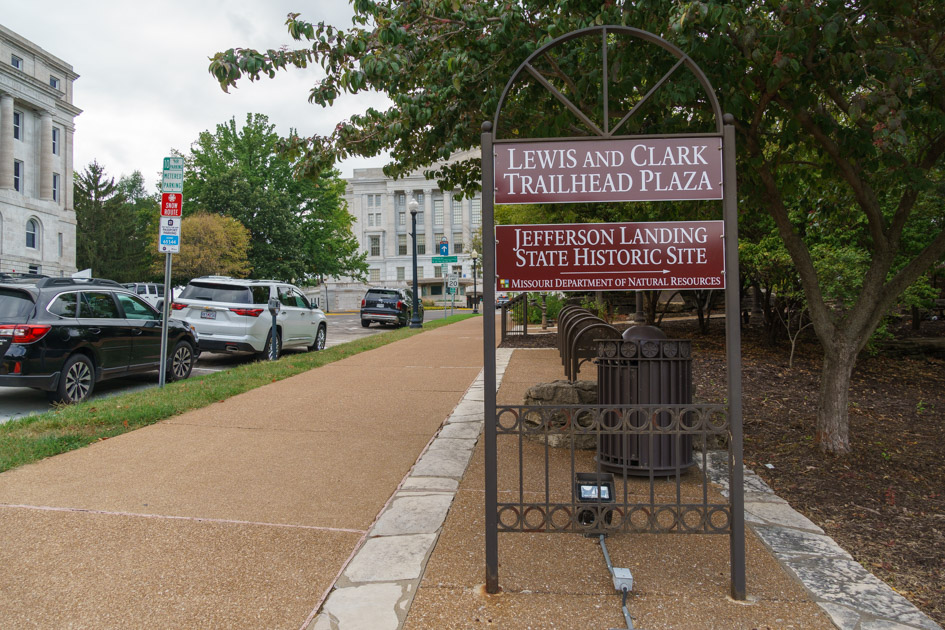
As we walked back to the truck, I noticed the Lewis and Clark Trailhead Plaza. The sign led to a memorial that commemorates the famous expedition. I couldn’t help but think about how different the area looks today compared to when the company camped in the area on June 4, 1804.
History captured my attention and imagination on this day. While grocery shopping an hour later, I thought about how people lived in the 1700s and 1800s and even the early 1900s. Their struggles to provide for food and shelter and safety made me thankful for how easy we have it today. All we need to do is walk into our local grocery store and pick what we need or want from the abundance of produce and other products available. How lucky we are to live in these times.

Next up: We visit the Runge Conservation Center in Jefferson.

Safe Travels

2023 Summer Solstice Adventure La Paz, California Sur – Part 2

We continue our visit to La Paz with a look at the sights we saw around town, plus a guided hike, breakfast, and beach time.

Sights Seen About Town

Murals and architecture, both new and old, gave us a glimpse into the history and lives of the locals. Walking, as our main mode of transportation around town, allowed us an up-close view of the newly renovated or constructed buildings and structures in their last days of decay and everything in between. Each building—some enhanced with painted murals—provided unique personalities my camera lens could not ignore.

Desert, sea, and land
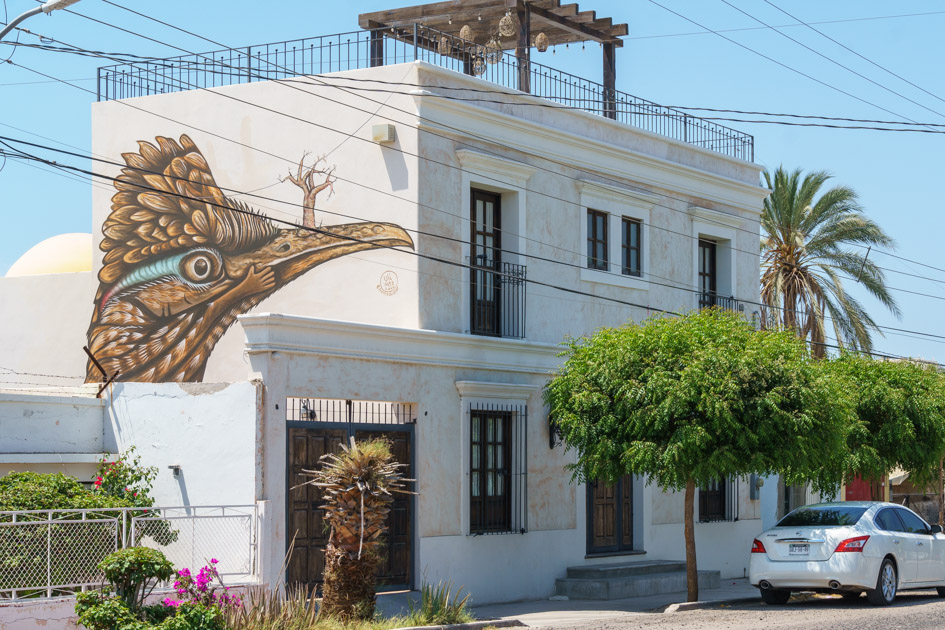
Roadrunner house
I see you and you see me
Pajaro
Hoo, hooo, hoooot
Watch out for the fangs
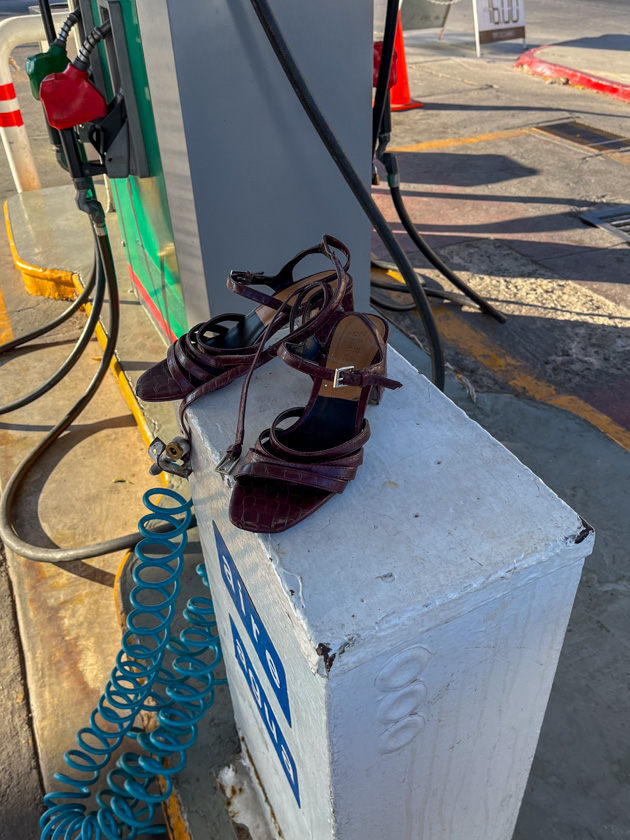
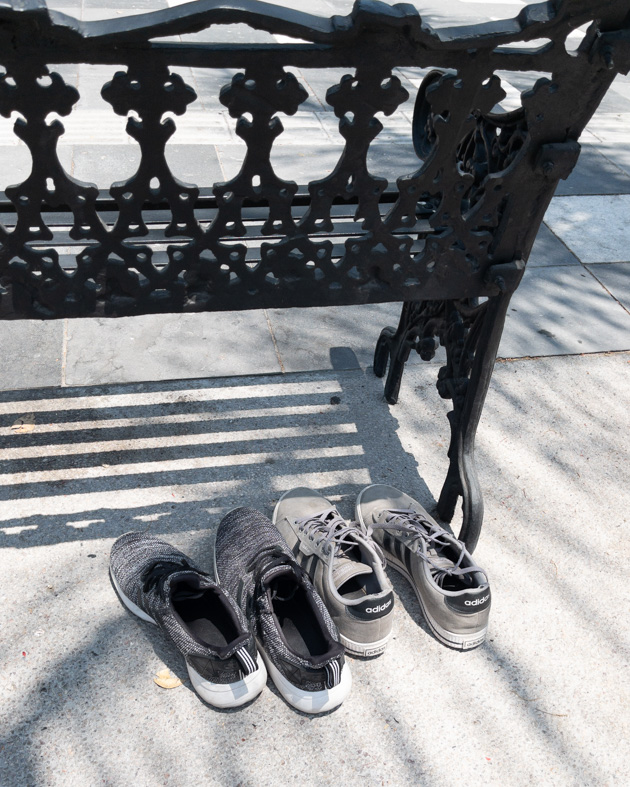
Abandoned shoes . . . broken strap?
These shoes look perfectly fine.

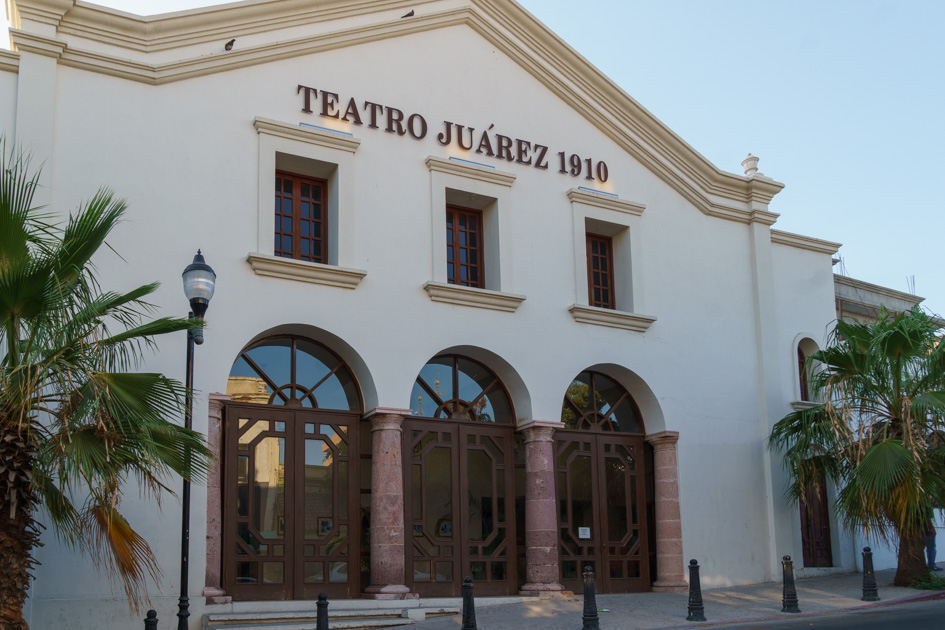
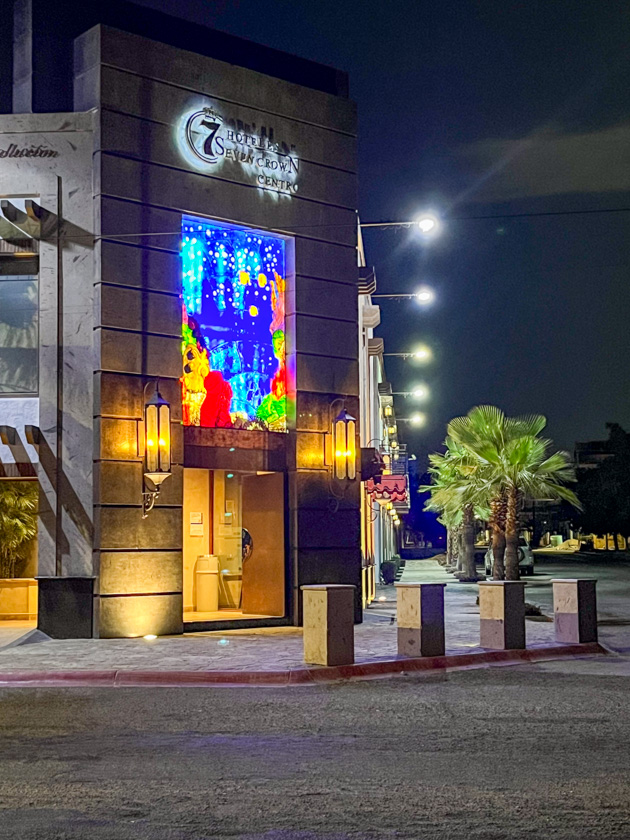
The contrast between daylight and nighttime tells a whole different story about the the building.

Day into . . .
Night
Oh, the music and dance and stories told here over the past century
No activities this night
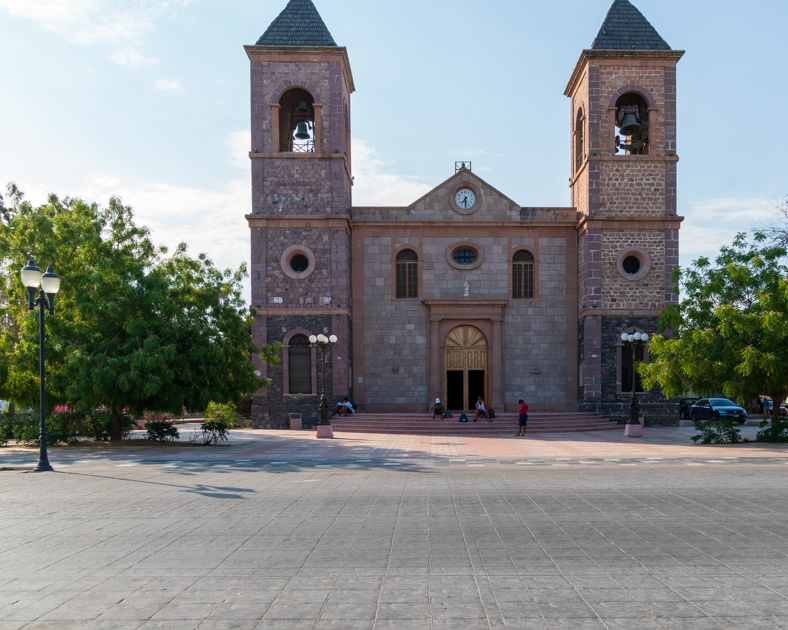
Our Lady of Peace Cathedral
Moon over cathedral
Day . . .
and Night
Tattoo anyone?
Museo de Arte de la Ciudad de La Paz at night
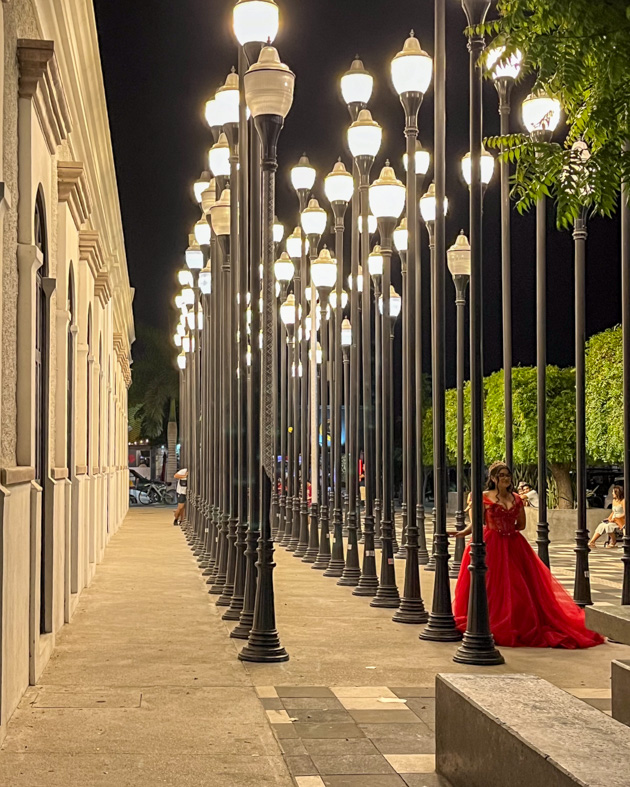
Quinceanera pose
Moon over hacienda
Did I mention the metal basket on the left is where trash goes for pickup?
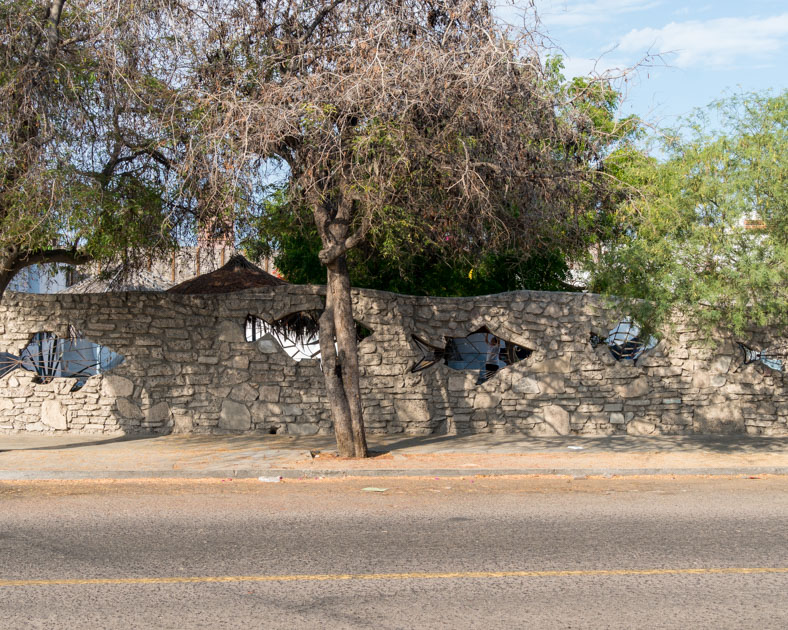
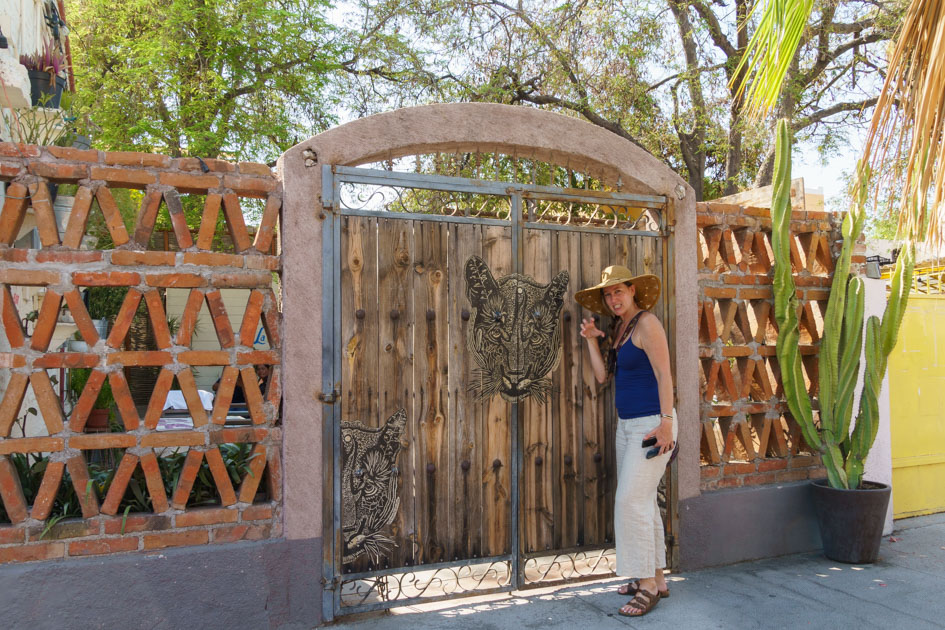
How did the stone mason make those cutouts?
Loved these colors together
Silly Bailey
The peeling paint and sidewalk debris of long-closed businesses often contrasted with the brightly colored storefronts and swept sidewalks.

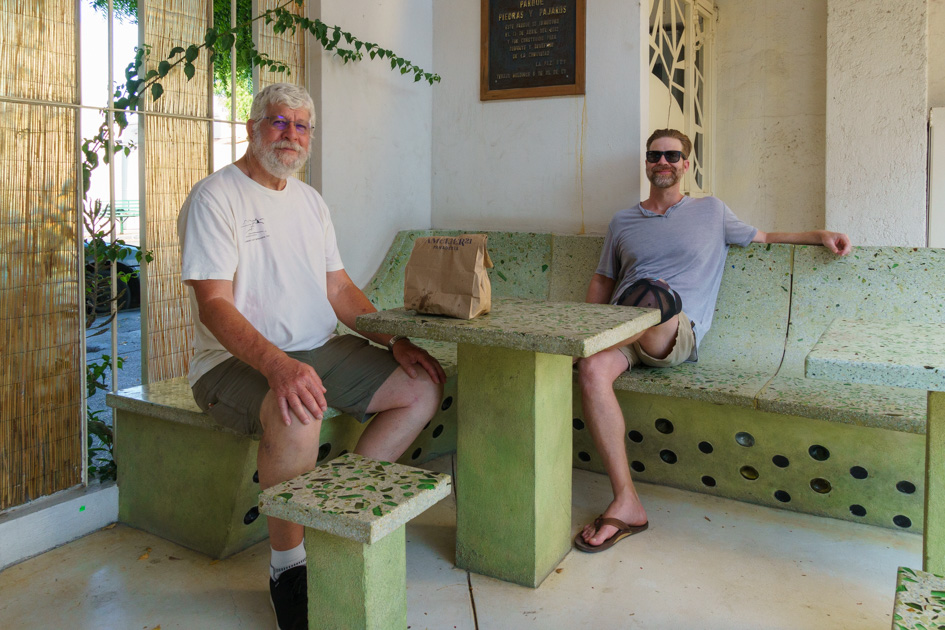
This was an interesting little park and a great place to stop and cool off in the shade near the water feature. Coro en Armonia (Choir in Harmony) was created by Benito Ortega Vargas. Each mask appears to sing a different note of the musical scale.

Piedras y Pajaros
Do, re, mi, fa, sol, la, ti, do.
Jon and Kevin enjoy the coolness of Piedras y Pajaros
Smile, You’re on Candid Camera.

If we stood long enough under one of these cameras, we could see the face rotate. I pictured someone in a basement somewhere watching a bank of monitors for any trouble that might pop up.
A house squished between two commercial buildings.
The news stand was closed when we walked by
It looked like this building was under renovation.
A private room in Villa Lorena is listed as an Airbnb property
Looks like this house has a courtyard off the sidewalk
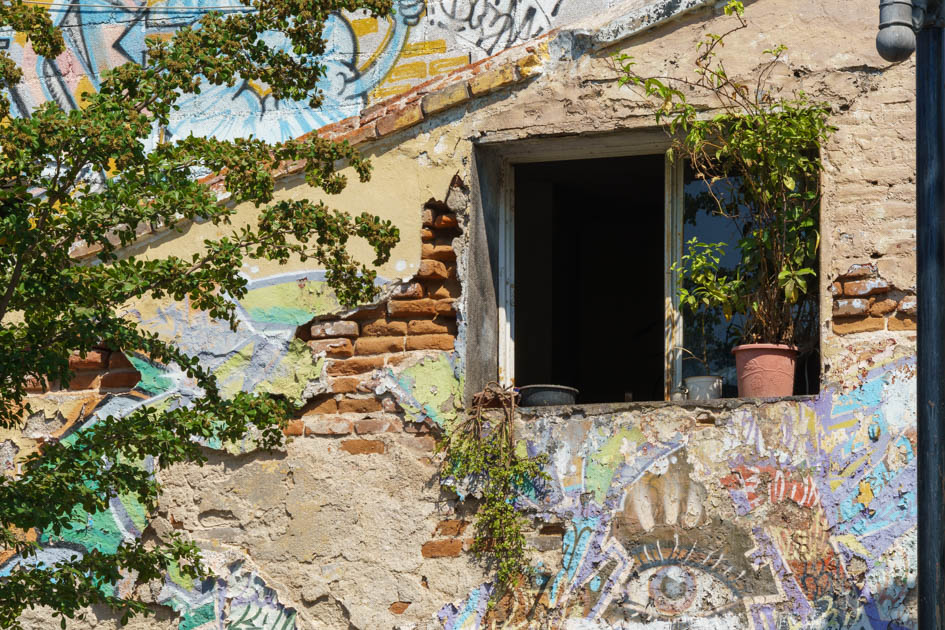
Art meets decay

If it hadn’t been so hot, I could have walked for hours taking photos of unique and interesting sites.

Rancho San Lorenzo Guided Hike and Organic Breakfast

We got up early for our Rancho San Lorenzo Guided Hike and Organic Breakfast at a working ranch. A rental car—picked up the night before—was required for us to make the trip to the tip of the peninsula north of La Paz. At 9:00 am, we piled out of the car to meet our guide Eduardo (Lalo) Mendez, from Guadalajara.

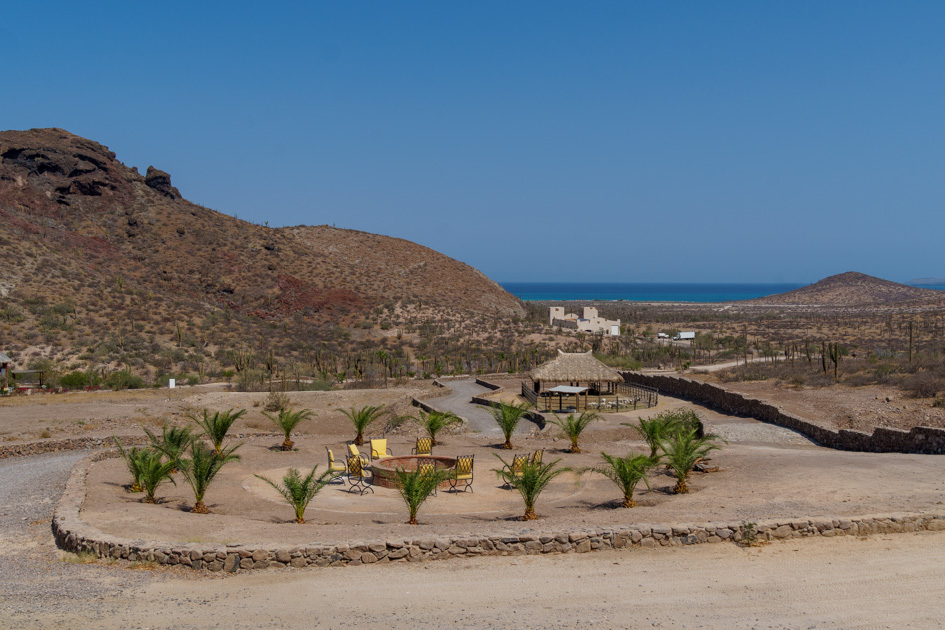
View of ranch house from the trail

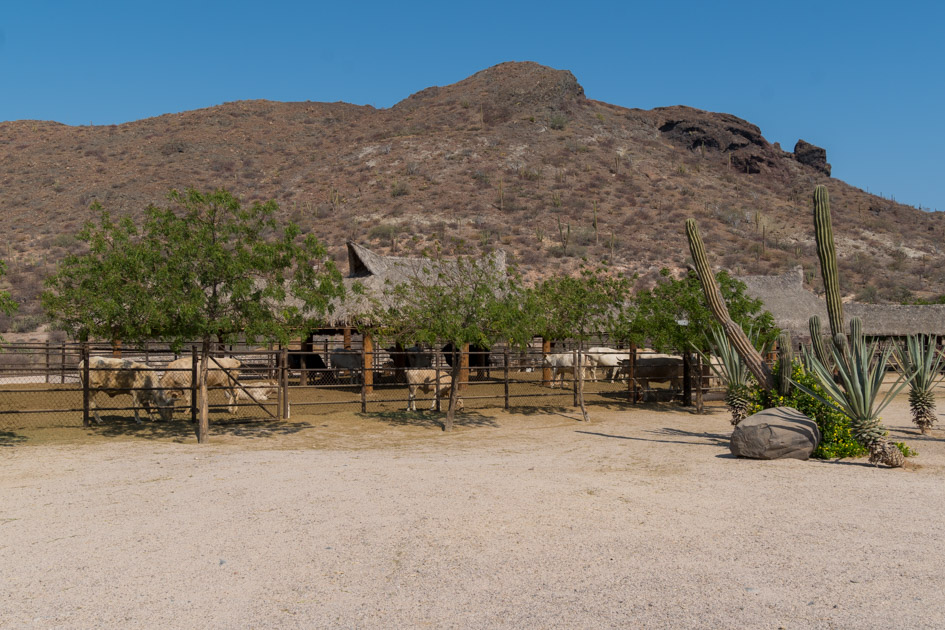
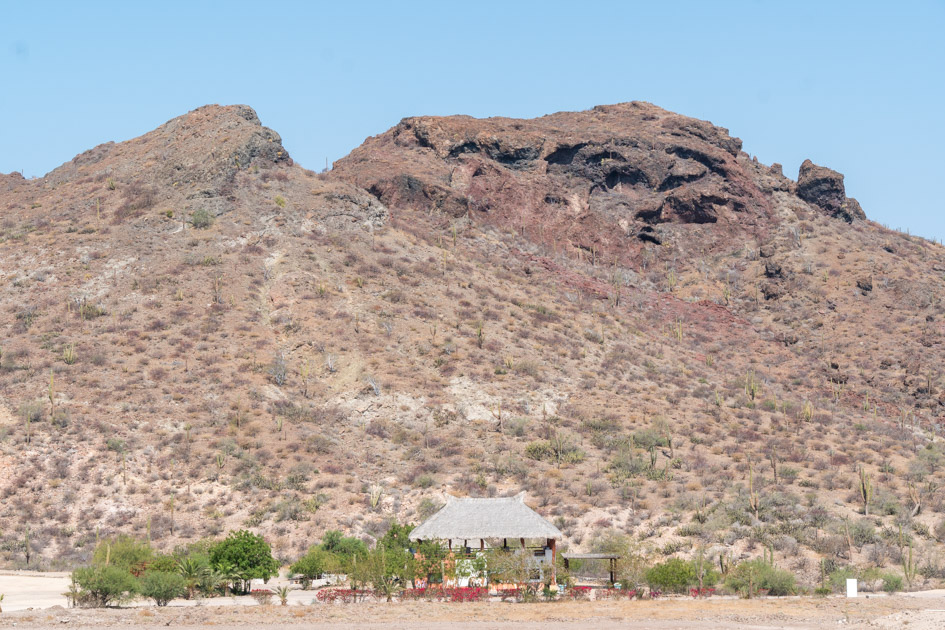
The 1,000-acre desert ranch and preserve are populated with wild and tamed animals alike. Siting between the Coyote Mountains and the Sea of Cortez, there’s plenty of diverse terrain for the animals to roam. Rabbits, foxes, deer, and the occasional mountain lion have the run of the place, while goats, donkeys, horses, chickens, and ostriches are safe, cozy, and well-fed in their respective pens or corrals.

Vultures cooling their jets

Lalo, gave us an option for a strenuous hike or one less strenuous. We agreed the less strenuous would be best, since I was still nursing my broken wrist and wearing the brace just in case I might fall. Along the trail, Lalo would stop to point out rock formations in the mountains and hills, small caves, and the local flora and fauna, or talk about the history.

Desert flora is tricky. From far away it looks dead.
Up close its leafing and budding out
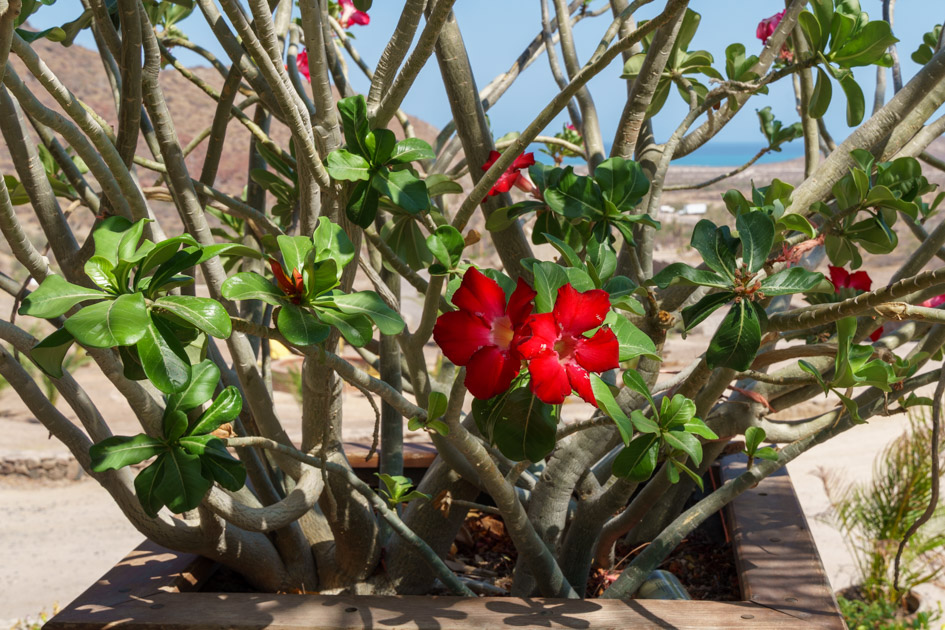
Even delicate florals survive in the desert
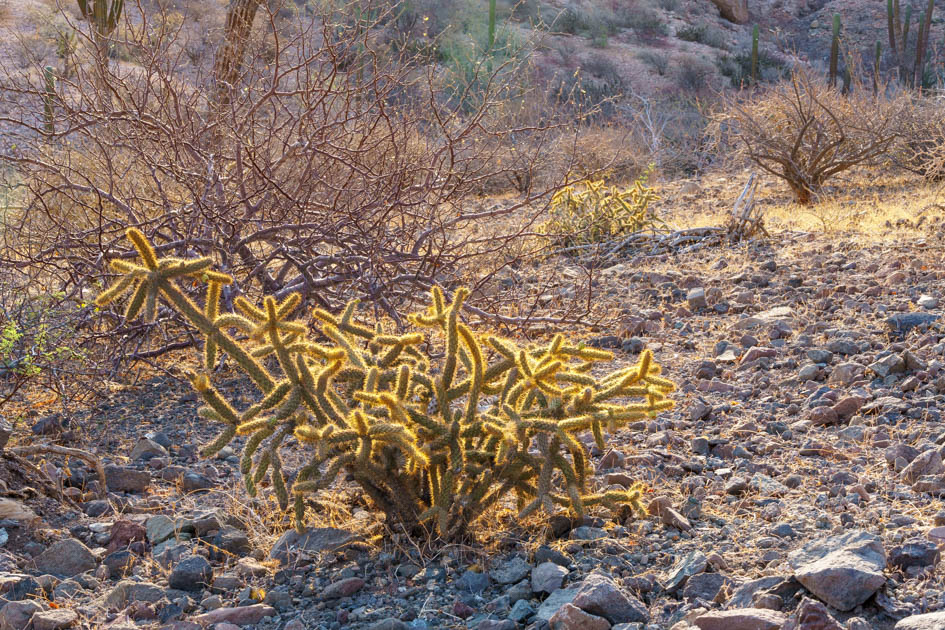
Steer clear of the cholla. It’s everywhere and known to jump and hang on.

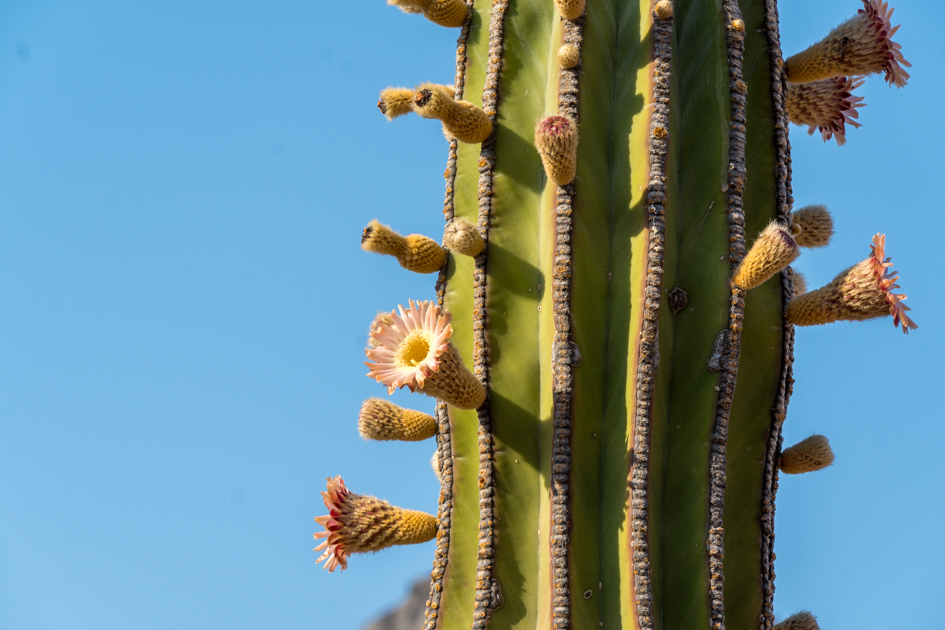
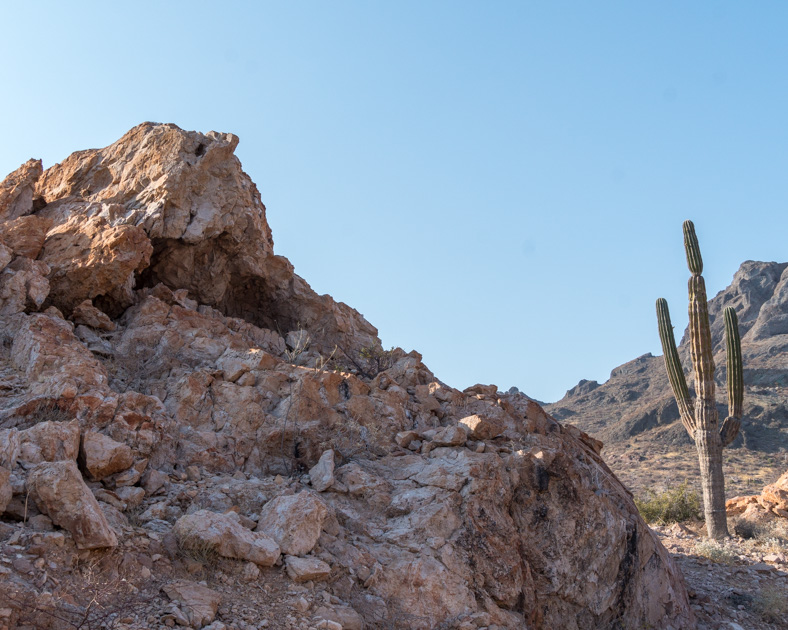
We spied a variety of birds in the sky or resting on desert cactus. The vultures were most interesting as they found their perch atop the spikey Mexican cardón, or elephant cactus. Lalo was quick to tell us these saguaro look-alikes are another species entirely. The cardón can grow double the height and weight compared to their cousins to the north and live nearly twice as long.

Paper bark

We stopped to rest and hydrate at a mesa that overlooked the sea before turning back to the ranch house where breakfast waited for us.

There’s a cave up there
A sign the ocean is nearby
Palo Adán perhaps?
Donkeys eating breakfast
Barrel cactus
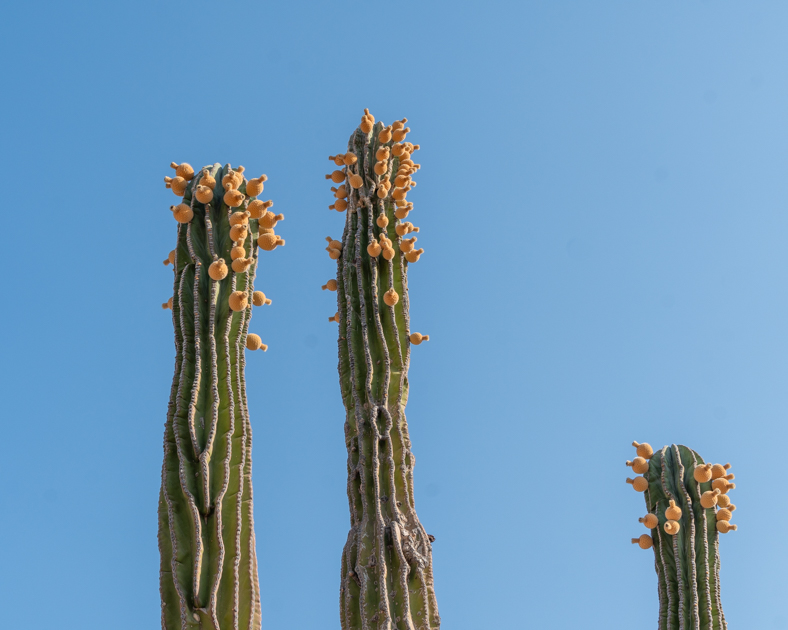
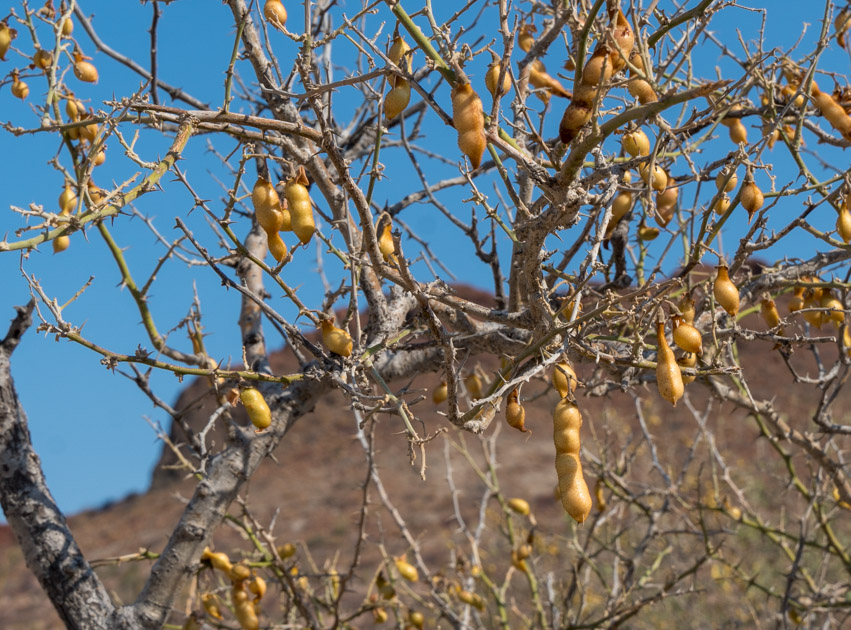
The cardóns are ready to bloom. Not sure what the orange flowers are.
“See how the nurse bush protects the cardón?”
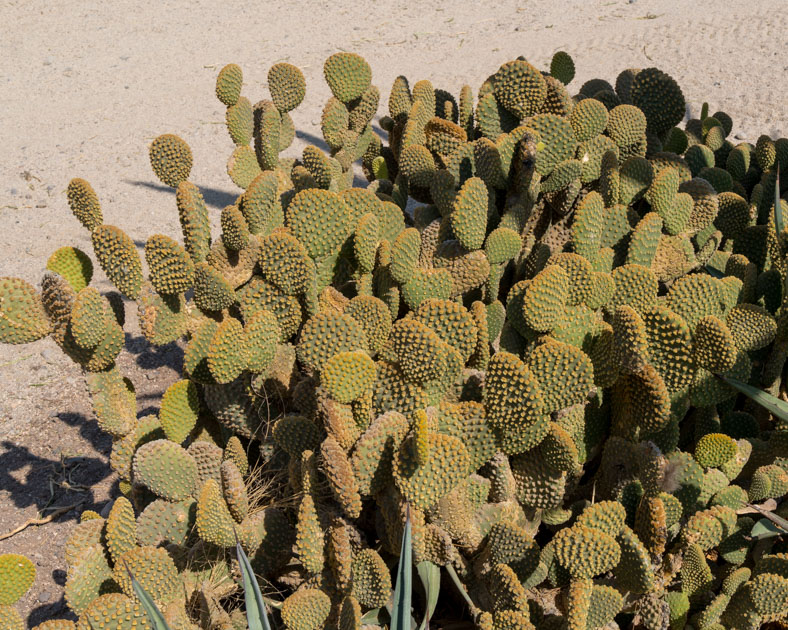
The pads may look soft and fuzzy, they are not.

On the outdoor patio, fresh squeezed orange and guava juice and plates of fresh fruit (pineapple, papaya, mango, plantains, grapes, cantaloupe) was the first course of our colossal breakfast. Then came the creamy beans, eggs, machaca, toast, and handmade tortillas. It was the best breakfast ever after a hike. Oh, and to top it all off, they brought Jon a giant slice of chocolate cake for his birthday. We all helped him eat it.

Anyone ready for a hammock?
Beach storage palapa
View from our breakfast table
Owl face hill

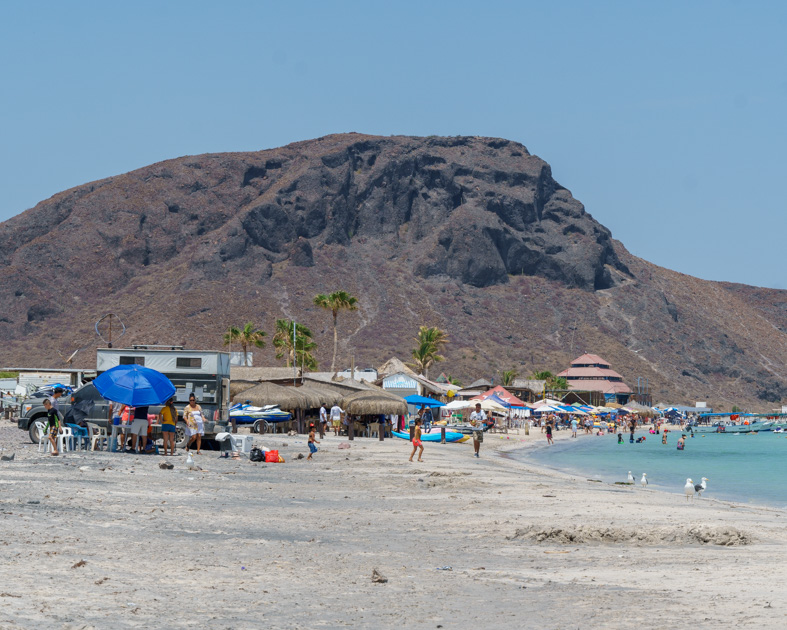
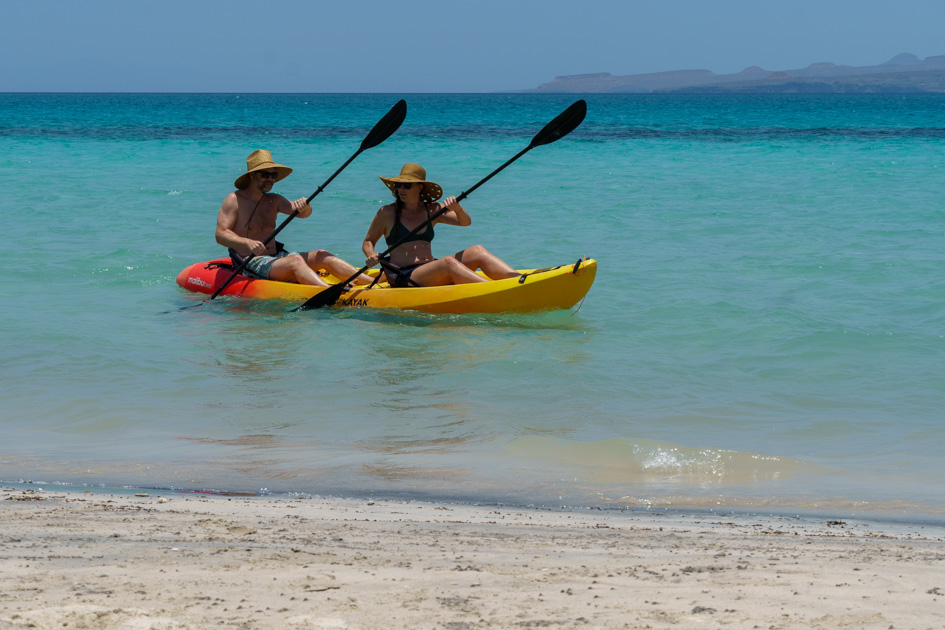
One would think the guided hike and the breakfast were enough for the day. But no, there was more. Included with the hike was a trip to the beach. Two rancheros loaded up a trailer with a cabana, chairs, kayak, paddle board, and drove us along a dirt back road to the beach. We stayed a few hours sinking our toes in the sand, wading and swimming in the warm water, and watching the pelicans patrol above us.

Playa El Tecolote
Row, Kevin. Row.

Hikes and breakfast are not all Rancho San Lorenzo offers its guests. How about a morning horseback ride and breakfast, or a sunset horseback ride and dinner? There’s also a house that accommodates 12 people, or select the smaller one that accommodates 4.

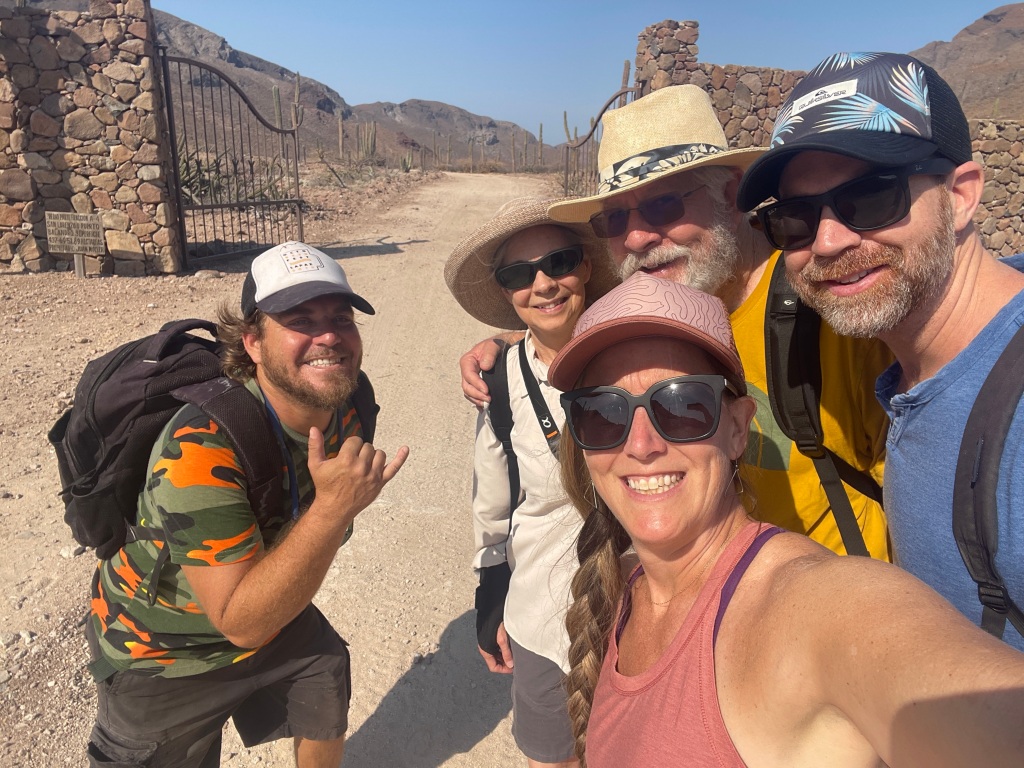
Lalo and the gang

Up next: We have two more parts to wrap up our La Paz adventure. We’ll look at the art and history museums, an art walk, restaurants, and a sunset sail.

Safe Travels

2023 Summer Solstice Adventure La Paz, Baja California Sur – Part 1

A 13-day trip to La Paz, Baja California Sur? During the 2023 summer solstice? Were we crazy?

The promise of super-hot days could not deter us from accepting an invitation from our son, Kevin, and his partner, Bailey.

Waiting at Dublin/Pleasanton BART Station on our way to Oakland Airport for a flight to San Diego

The Flight

On June 22, 2023, we breezed through Cross Boarder Express (CBX) and Aeropuerto Internacional de Tijuana with Spanish-speaking Bailey leading the way and telling us what to do and when. Had Jon and I been traveling on our own, we might have ended up in La Paz, Bolivia, instead of Mexico.

A recording delivered safety instructions and announcements over the speakers in both Spanish and English during the nearly two-hour Volaris Airline flight. The flight attendants served us snacks and drinks and made us feel welcome. Be forewarned, Uber, or DiDi as it’s called in La Paz, can’t pick up arriving passengers at the airport. It’s either rent a car, take a taxi, or public transportation. We took a taxi because our accommodations were in a central location so we could walk most places.

The House

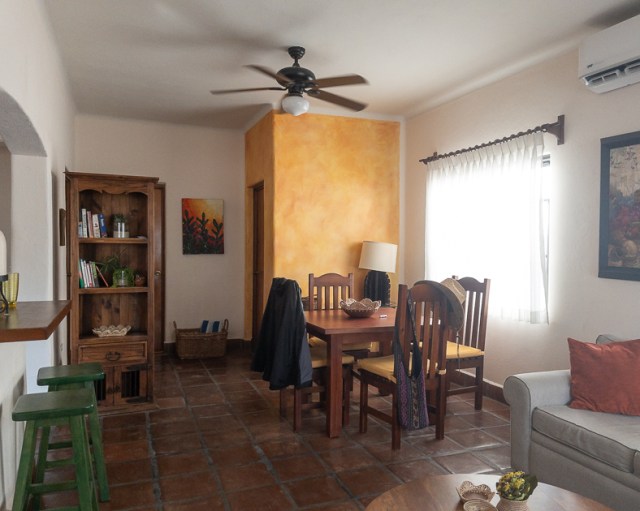
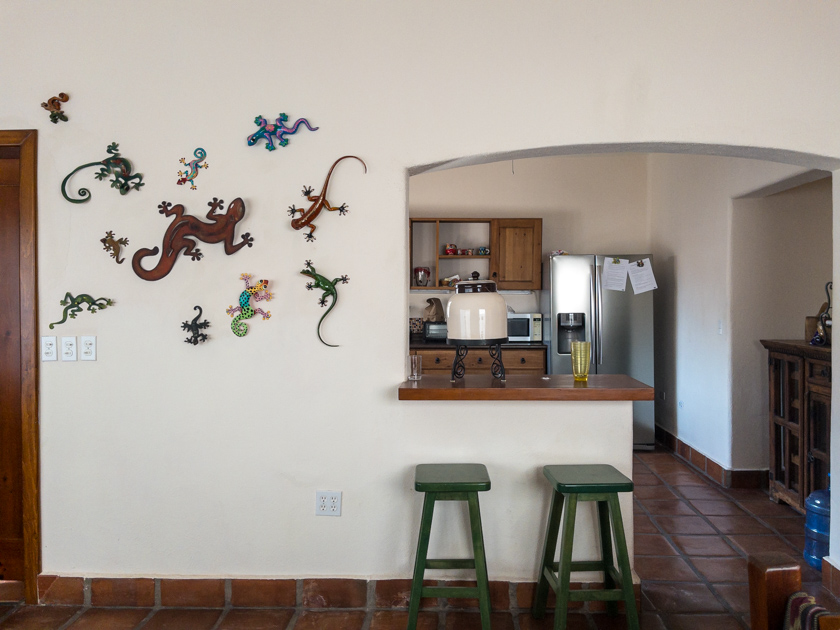
Turning on the air conditioning was the first order of business when we arrived at the house. The two-bedroom, two-bath home included a functioning kitchen, living and dining area. A courtyard in the back provided a pool, desert landscaping, mood lighting and gecko plaques on the brick wall. This was going to suit us just fine.

Our La Paz vacation home
Living area
Dining – kitchen to the left – bedroom entrances at the back
Don’t drink water from the tap – bottled water is for cooking and drinking.
The kitchen contained all the essentials for meal preparation and eating

The sounds of cooing doves serenaded us in the morning and throughout the day. While out by the pool we’d watch groups of female frigates with their white throats and males sporting a patch of red on their chest fly around in circles above us in the sky. Lizards popped out every once in a while, and Bailey saw a little gecko.

Staying cool in the pool

While in La Paz, we learned pretty quick to do as the locals do. Mornings are for working or exploring, afternoons are for resting and staying calm and cool. Reading while submerged in the pool became a daily favorite pastime.

The Malecon

On our first visit to the Malecon we found a sleepy and quiet atmosphere in the late afternoon. The ocean water lapped ashore in a lazy fashion. Few automobiles or trucks drove past. And it seemed like we had the street all to ourselves. We found a restaurant open with only a few other tables occupied and most of the staff standing around talking among themselves.

Plenty of seating to dine al fresco in the afternoon heat

Art aficionados will enjoy walking along the waterfront boardwalk where many of the city’s sculptures live. I tried my best to restrain my camera from capturing them all, which was my intent when I found the first one.

La Paz was so enamored with Jacque Cousteau, who led expeditions in the area, the government renamed an island after him, much to the displeasure of some. There are also at least two sculptures of him and other references made that honor him. In 2009, Isla Cerralvo became Isla Jacques Cousteau. He’s noted as calling the sea surrounding La Paz, “the world’s aquarium.”

Playful Jacques Cousteau

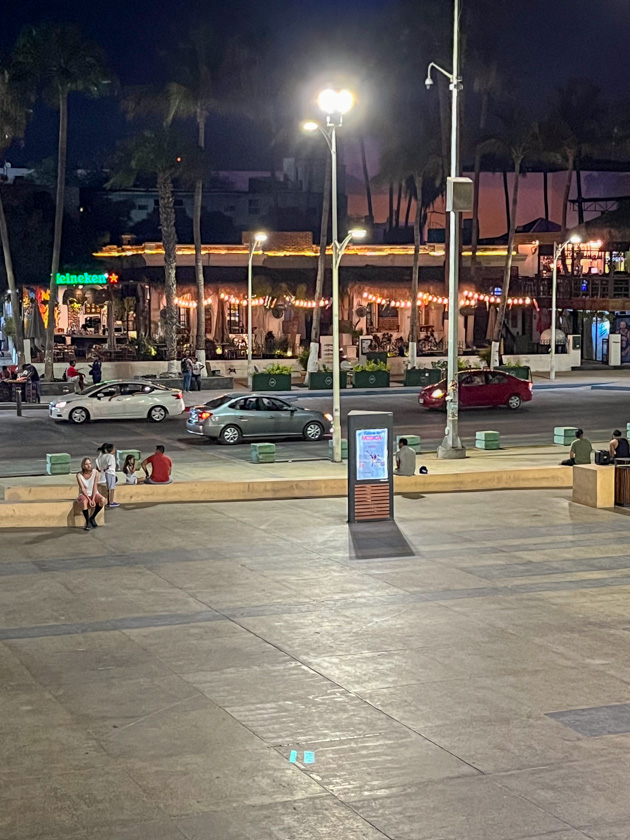
When the sun goes down, the breeze comes up, and the heat of the day subsides. This is when the Malecon comes alive no matter the day of the week. Patrons crowd into restaurants where the aroma of spiced grilled meat and other tasty bites waft from kitchens. Music blares from cars cruising along the road, causing a traffic jam, which the drivers seem to relish.

Kids and adults pedal rented carts or ride bicycles between the yellow bumpers and the curb. Families, teens, and grandparents, some with dogs, walk or jog along the concrete boardwalk, or find a bench to sit awhile. The temperature drops a few feet out on the pier, cooling our skin. And a few feet up on the top the kiosco we gain a different perspective of the scene.

Restaurant where we ate our first meal the day we arrived

On one night, music blared from the Kiosco del Malecon. It was a “rap off” contest and some of the performers were quite talented.

Kiosco de Malecon

The sculpture below commemorates when Queen Elizabeth and Prince Phillip visited La Paz as part of their official visit to Mexico on February 22, 1983. Apparently, the pearl in the queen’s crown came from La Paz, which had a thriving pearl industry until commercial divers depleted the oyster beds. And then by 1941, there were none.

City Lights from the pier
Before the crowds arrive

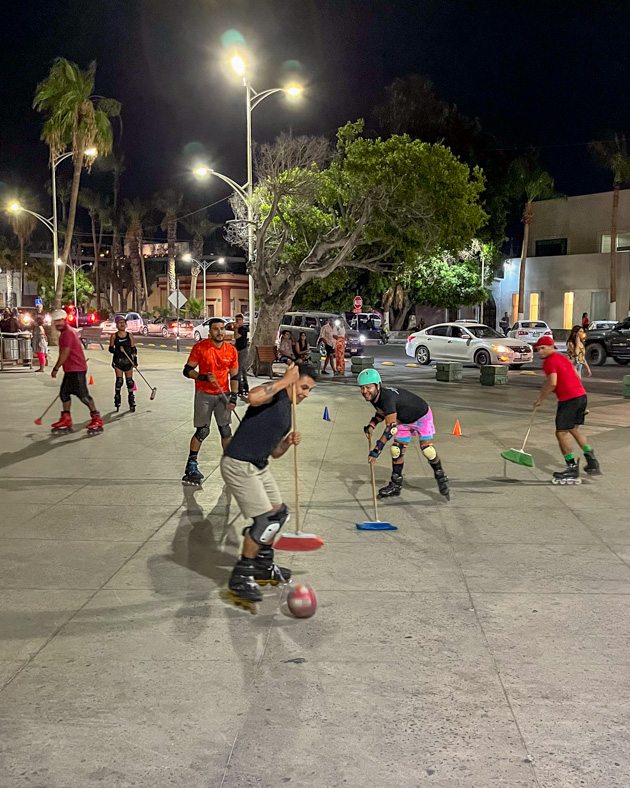
On another night, a game of rollerblade broomball was in progress. The players expressed their joy with lots of laughter and smiles.

Rollerblade broomball

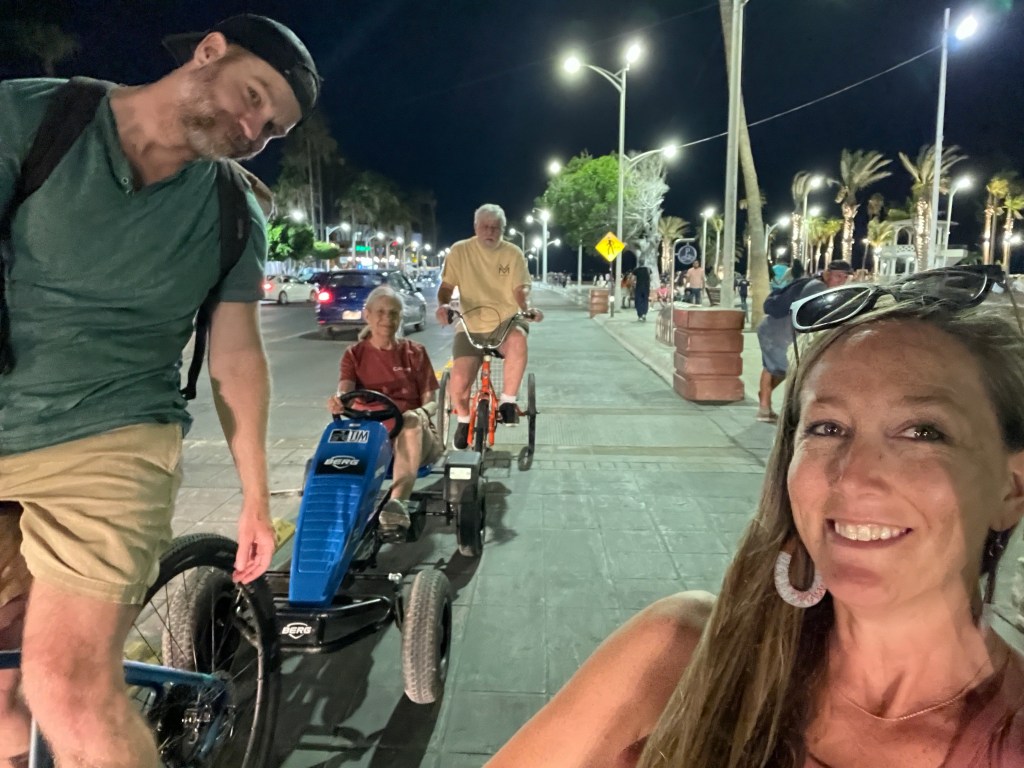
On our last night in La Paz, we searched for something fun to do. So we rented two bikes and two carts and rode up and down most of the 3.5 miles of the Malecon. I felt like a little kid. With the warm wind in my face I pedaled along, dodging bicyclists and joggers, and stopping for pedestrians in crosswalks.

Yahoo!

Can you tell we had fun? The Malecon was one big family party for tourists and locals alike that energized me every night we joined the chaos.

Next up: A guided hike, breakfast, and beach time; a sunset sail; art and anthropology museums; sights seen about town; and restaurants. This will take two or three more parts.

Safe Travels

Spring 2023 Adventure Episode 15: A One-Night Stop in Goodland, Kansas

We’re Back! And We’re Glad!

Our last post was on December 5, 2023, which featured our visit to the Dwight D. Eisenhower Presidential Library and Museum during our Spring Adventure. Jon’s hernia surgery, my broken arm, and various medical appointments limited my time at the keyboard for several weeks. I’ve been playing catchup ever since. A word of caution: Jetways may be slippery when wet, so hang onto the handrails.
Now, on to this week’s post. A short one as we get back into the groove.

We headed from Salina, Kansas, on May 1, 2023, and traveled to the Goodland, Kansas, KOA. We arrived early enough to poke around close by. Goodland’s claim to fame is the “Big Easel,” a reproduction of van Gogh’s painting “Three Sunflowers in a Vase” by Cameron Cross. At 80 feet tall, it is known as the World’s Largest Easel, according to the World Record Academy.

The Big Easel

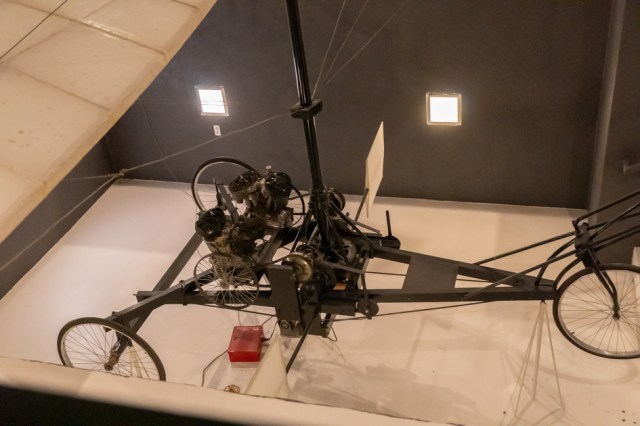
Down the road is the High Plains Museum, operated by the City of Goodland. Artifacts include items donated, such as a replica of the first patented helicopter, the Goodland’s Flying Machine co-invented by William J. Purvis and Charles E. Wilson.

Replica of first helicopter to receive a patent

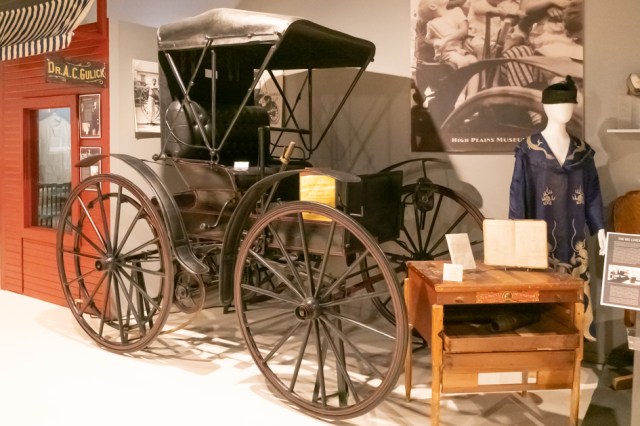
The displays also included a 1902 Holsman Auto owned and driven by Dr. A. C. Gulick, a Sherman County Physician. The car is missing a few safety features compared to our modern vehicles.

1902 Holsman Auto

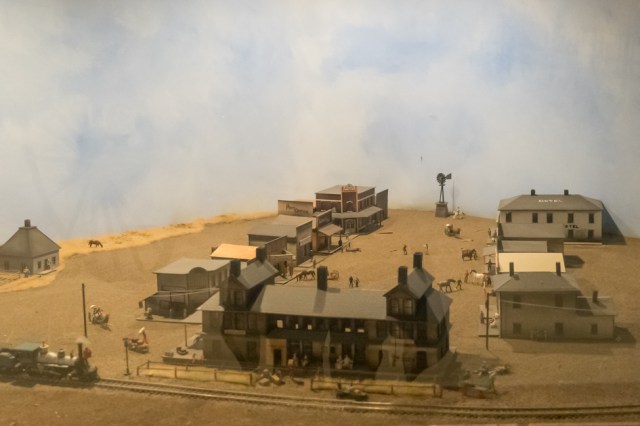
Dioramas reflect the town as it might have appeared during its founding, along with various machinery, equipment, and household goods.

One of many dioramas

Next door to the KOA sits a historic farmhouse under renovation. I wondered who once lived there and who might live there again some day. According to the owner, they bought the house 37 miles away and moved it to its new location. She was out watering the trees, which were not doing well because of the drought in the area.

Historic home under renovation

If we pass through this area again, we might stay more than one night and take in other roadside and historical sites. I hear the Giant Grasshopper made from tractor parts is a must see quirky tourist sight.

Next stop: Colorado Springs, Colorado

Safe Travels