2024 Northwest Adventure Episode 9: Tillamook Creamery and Meares Cove Lightouse

Our next stop on our way home was Tillamook Bay City RV Park on July 18, 2024. On WA-105 and US-101, we drove through a canyon of trees so thick I caught only a glimpse here and there of what looked like homes or commercial buildings amid the dense forest. Near the ocean, sloughs snaked their way through the wetlands. And folks tried their luck clamming in the muddy low-tide beach areas.

We pulled off the highway and found a long stretch to parallel park the rig in Seaside, Oregon. After a mile and a half walk, Dooger’s Seafood and Grill satisfied our hunger for lunch. It was too bad we had reservations farther south because I wanted to explore the town and area more.

We don’t know whether Apple Maps rerouted us inland onto Miami Foley Road for a reason, or if we made a wrong turn. It didn’t matter. Instead of sitting in traffic on US-101, we enjoyed driving through the narrow valley. Purple, yellow, white, and red wildflowers decorated the side of the road, and the green expanse of farmland acres created an idyllic landscape. The view sure beat looking at car bumpers on the highway.

We reserved the next day for exploring. On our list were the Tillamook Creamery and the Meares Cove Lighthouse.

Tillamook Creamery

In 2014, during a previous trip to the Pacific Northwest, if it hadn’t been pouring rain, we would have stopped to visit the creamery. Then, it seemed the visitor center sat farther back from US-101. We weren’t wrong. The new visitor center opened in June 2018.

For the convenience of visitors, the center is open daily from 10 am to 7 pm. Inside, visitors can take a self-guided tour or opt for a premium experience (reservations recommended). We took the self-guided tour, which took us on a journey through the cheese-making process.
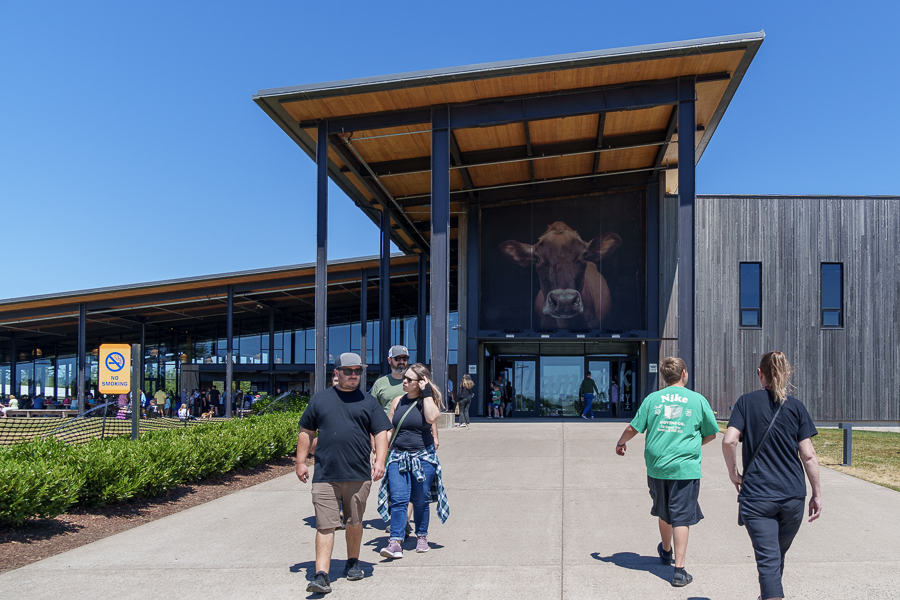
Tillamook Creamery Visitor Center

Upstairs in the Farm exhibit, we learned about the care and feeding of the cows throughout their lives. A factory viewing deck allowed us to watch the cheese production in process from a catwalk level. Diagrams and descriptions on posters gave explanations of what we saw. On the other side of the deck, we watched cheese move on conveyor belts and racks from one step to another. Human factory workers performed a quality check to verify the loaves were the correct size and weight. The workers even shaved off bits of cheese, if needed, before the cheese moved to the wrapping machine.

We would have bought lunch at one of the food counters and an ice cream for dessert had it not been so crowded and taken so long to get through the lines. Instead, we wandered through the gift shop and ended up waiting a few minutes for photos with the Yum Bus, where the crowds had thinned.

Delivering the goods

Meares Cove Lighthouse

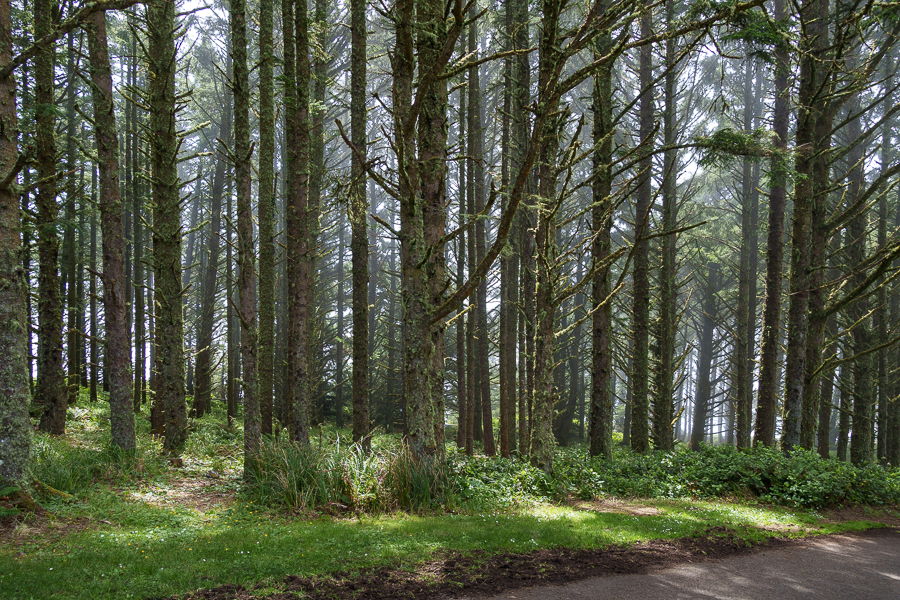
A beautiful drive along a cove and through a forest led us to the Meares Cove Lighthouse parking lot. The forest of trees wept droplets of water on us as we walked toward the lighthouse. The trees were still drying out from the heavy morning fog that hugs the coast most days. It reminded me of walking through the Hoh Rainforest in Olympic National Park.

Path to the lighthouse

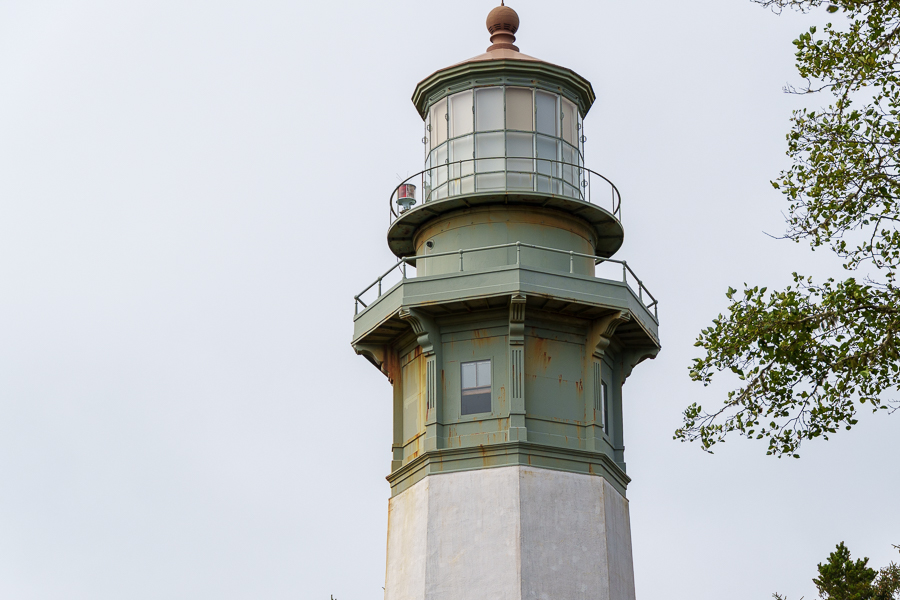
Meares Cove Lighthouse is the shortest lighthouse along the Oregon coast. It stands only 38 feet tall atop a basalt outcropping 200 feet above the Pacific Ocean. Captain John Meares, a northwest explorer who commanded the sloop North West America in the 1780s, named the area Cape Lookout. A mistake made on maritime maps in 1857 identified another location as Cape Lookout. This caused the name change to Cape Meares, since it was easier to change the name than reprint the maps.

During the 1840s and 1850s, prospectors from the goldfields and pioneers who crossed the Coast Range settled in the area for its rich soil. In 1886, the need for a lighthouse became clear, so the Lighthouse Board requested $60,000 for construction. By the end of 1889, the lighthouse, other supporting structures, and living quarters were complete, and on January 1, 1890, the light was lit for the first time.
Two Kohler generators supplied electricity in 1934. On April 1, 1963, a DCB aero beacon, mounted atop a concrete structure, replaced the lighthouse. Concerned citizens pleaded with the Coast Guard not to dismantle the lighthouse a few months later. On April 6, 1964, the Coast Guard agreed to lease the property to Tillamook County.

As often happens with historical buildings, the lighthouse fell victim to neglect and deterioration at the hands of weather and vandalism. Hippies lived in the dwellings and made a mess, and someone, or a group of someones, stole four bull’s-eye lenses from the first-order Fresnel.
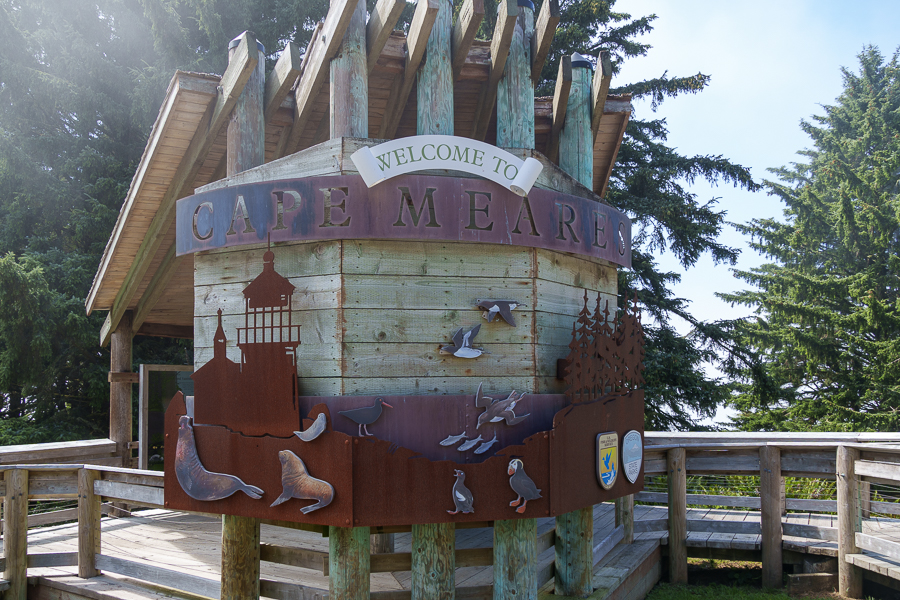
Years later, a drug raid recovered one lens. Then, a magazine published an article in 1986 that pleaded for the recovery of the other three. It took 20 years for all four lenses to be reunited.
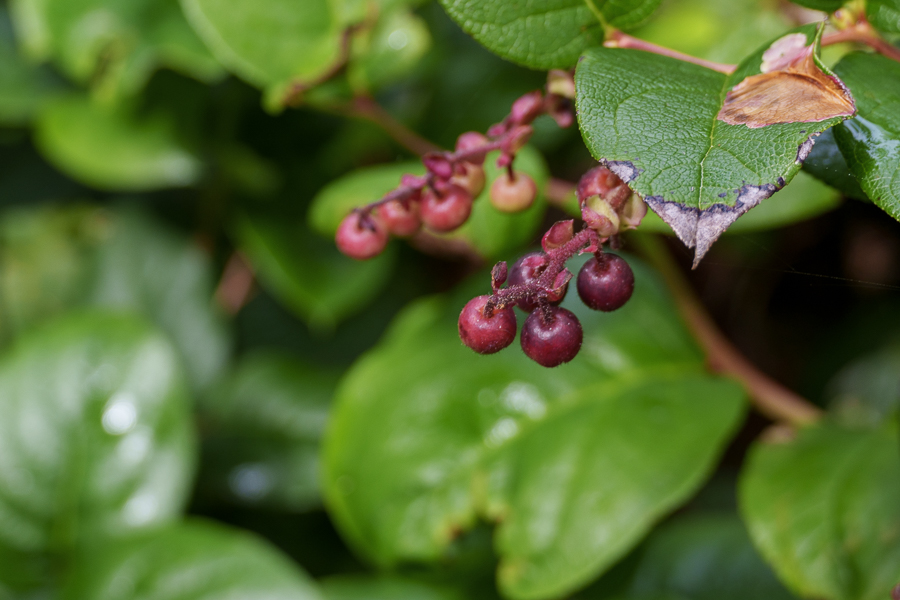
In 1968, Oregon State Parks Department took over the lease from the county. In 1978, the state built a replacement workroom and had the tower scraped and repainted, and on Memorial Day 1980 the lighthouse opened to visitors.

Inside the lighthouse, a docent took us up the steps to see where the light fixture sits. He told a story of a pair of men in their early twenties who tore up the grassy area around the lighthouse with their vehicle in 2010. They also shot several rounds of ammo into the structure. Their bullets destroyed numerous prisms that made up the antique first-order Fresnel lens. Overall, the damage amounted to $500,000. The Fresnel lenses contain over one thousand prisms and round bull’s-eye lenses that bend the light to produce a powerful beam. They can weigh over two tons.
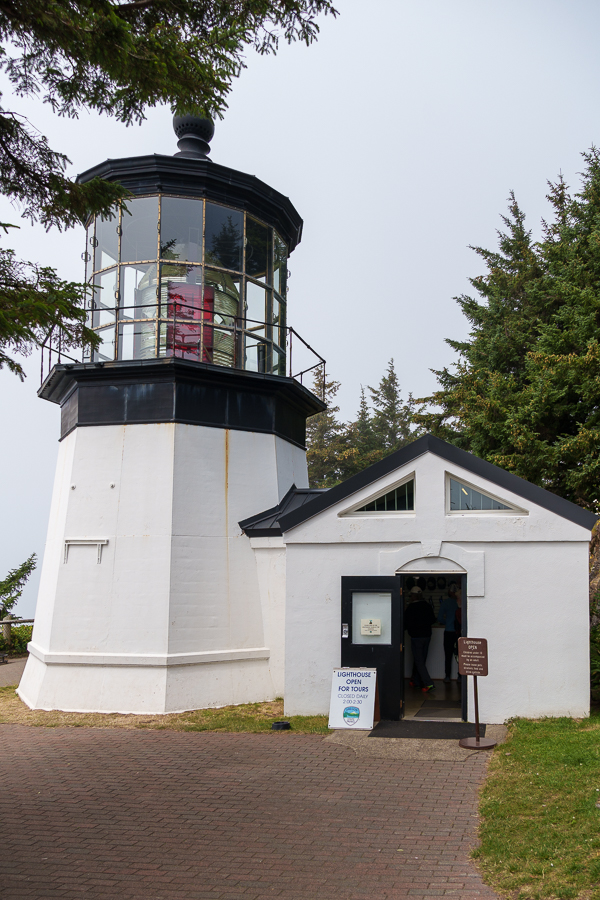
The judge could have sentenced the young men to seven years in prison for the offence. Instead, he sentenced them to three 16-day stints in jail to be served each year at Christmastime, plus $100,000 restitution. I hope they learned from their mistakes and became more productive citizens as they grew older.
Fifteen years later, their names and details of their crimes still pop up in a Google search. In case guilt and shame fill them with dread, I’ll not repeat their names here. Of course, it’s possible they may still laugh about what they did over a cold glass of beer.

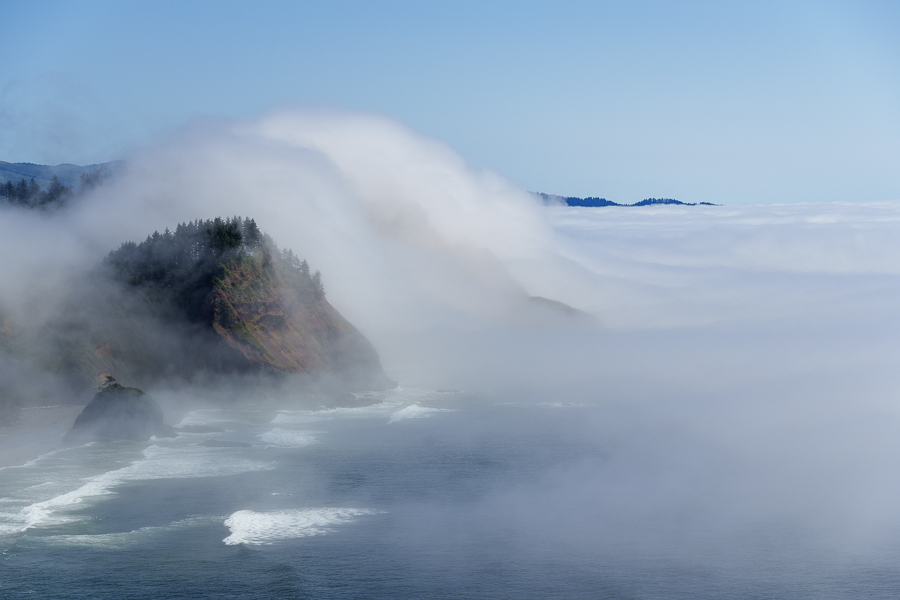
Out on the overlook, I had fun with fog. The formation of the white cottony water droplets suspended in air pushed its way ashore and up the face of hills seemed to mimic the wave action below.

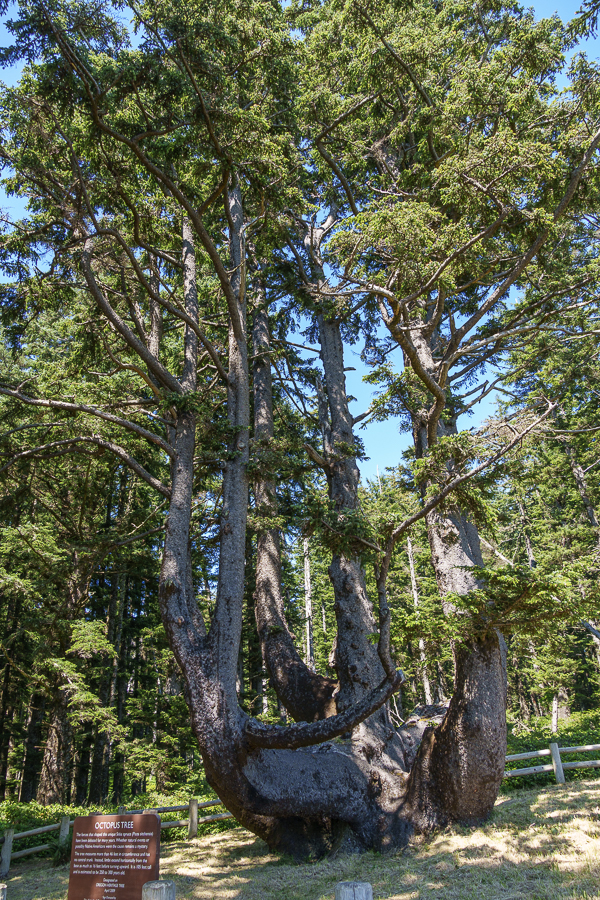
The docents recommended we take the short walk from the lighthouse to the 250- to 300-year-old Octopus Tree. Curious, we headed that way to see the attraction.

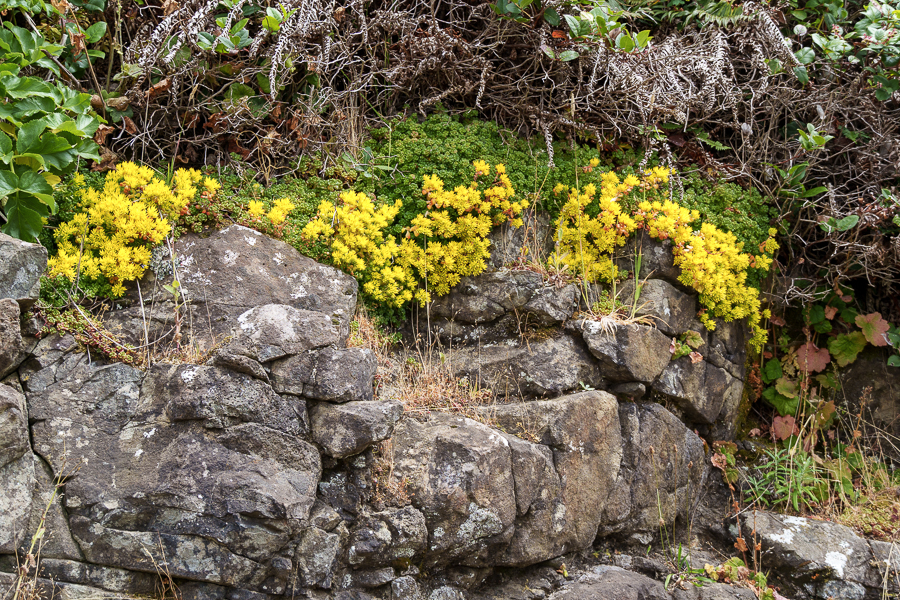
Colorful blossoms seen along the trail to Octopus Tree

The Sitka spruce tree developed a solid base that has grown to 14-15 feet across. The lack of a central trunk and the cluster of trunks around the perimeter create a curiosity to ponder.

Was the tree’s growth natural? Or, was it trained like a bonsai into its formation by Native Americans? Did they bury their dead in canoes built in the tree? No one seems to know for sure, so for now it remains a mystery.

,
The lighthouse is part of the Cape Meares State Scenic Viewpoint and is surrounded by the Cape Meares National Wildlife Refuge and operated by The Friends of Cape Meares Lighthouse and Wildlife Refuge, Inc a 501 © 3 nonprofit organization.

Next Up: Another lighthouse and sand dunes.

Safe Travels.
2024 Northwest Adventure Episode 8: Homeward Bound

Our first stop on the route toward home was American Sunset RV and Tent Resort in Westport, Washington, on the Point Chehalis Peninsula. We arrived around 3:00 pm on July 16, 2024, leaving plenty of daylight to explore before turning in for the night.

The Port of Grays Harbor’s Westport Marina is the heart of Washington’s seafood business. They claim to have the biggest fishing fleets on the West Coast for both charter and commercial use. That’s quite a feat for a town with a population of only 2,200 people within an area of 4.50 square miles (11.65 km2).

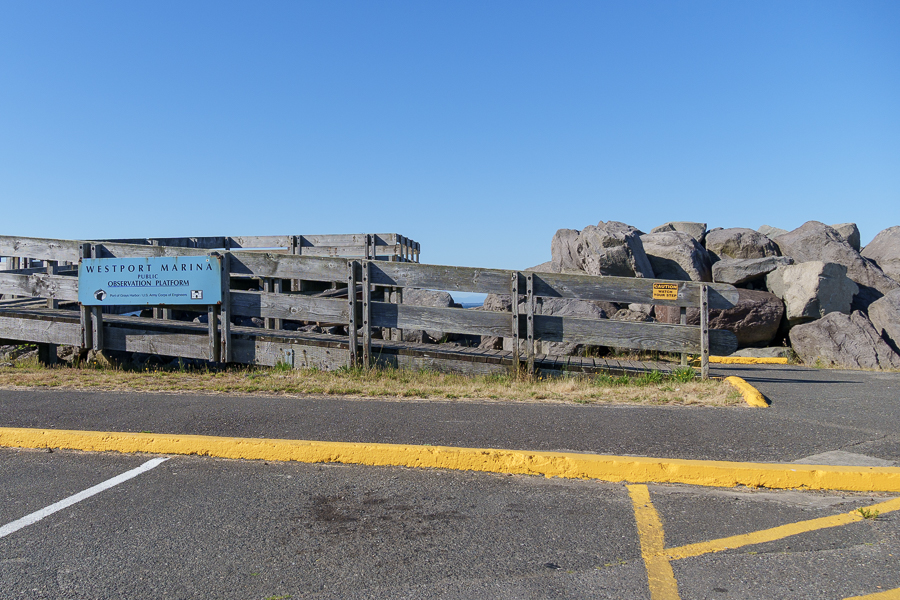
Westport Marina Observation Platform
The memorial honors those lost at sea.

Westport Marina lands, on average, 130 million pounds of commercial seafood by volume, ranking it 10th in the nation. Measured by value, they come in at $72 million, or 19th in the nation. Seafood landed includes: Dungeness crab, salmon, albacore tuna, shrimp, oysters, prawns, and much more. The marina welcomes commercial vessels from 35-feet long to over 100 feet.

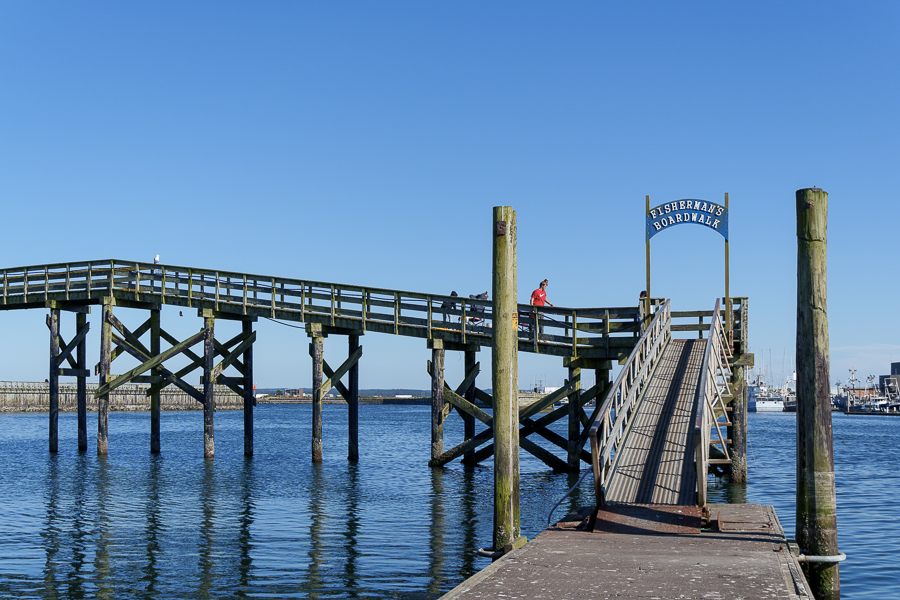
We walked on the Fishermen’s Boardwalk, where several families and couples held fishing poles and crab ring nets as they waited for fish to bite or crabs to crawl into the nets. Many of their buckets contained a dinner’s worth of seafood. Some children joined their parents in the fishing activities, while others stood off to the side engrossed in a separate world.

Fisherman’s Boardwalk
Anglers leaving for the day
The boardwalk
Just hanging out
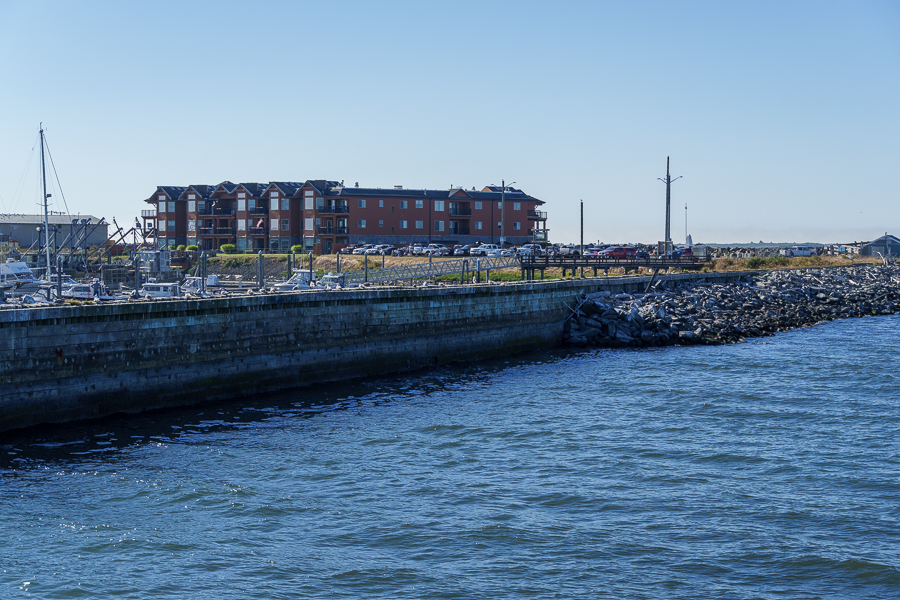
View of jetty and Point at Westport Harbor condominiums. Some units are short-term rentals.
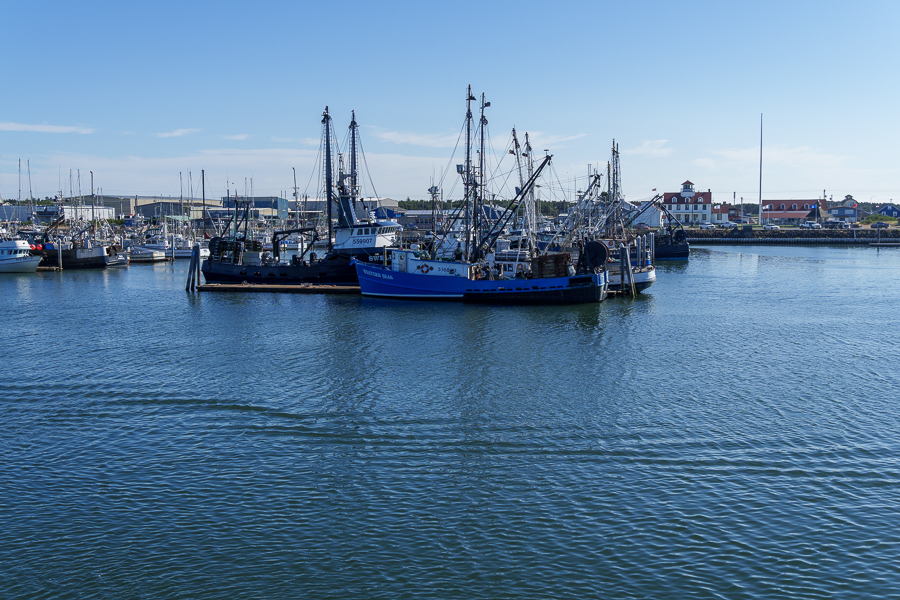
Harbor with Westhaven Street in the background
Close-up view of fishing boats
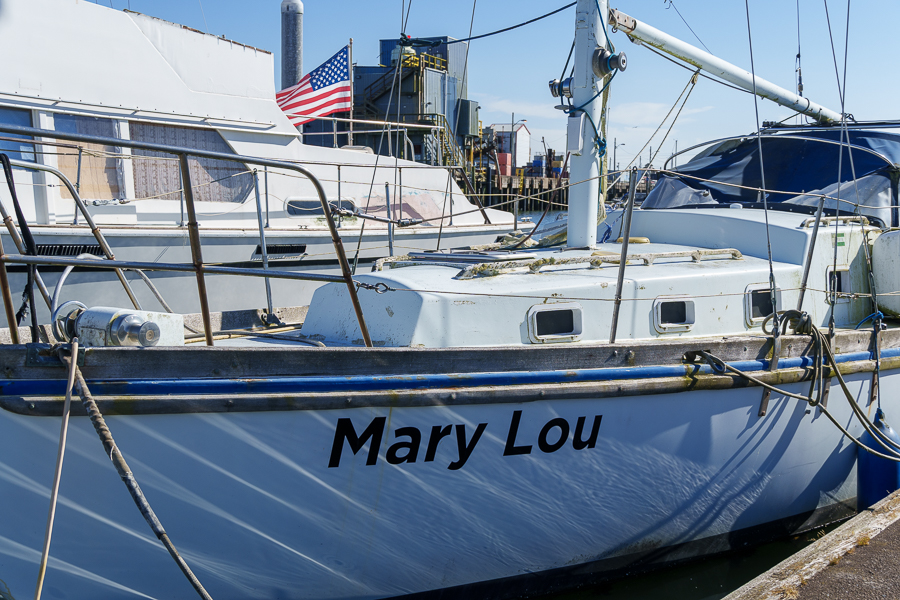
This boat’s name reminded us of our friend Marylou.

Other amenities for visitors at the Marina include the Centennial View Tower, a public boat launch, a plaza, and restrooms. People not interested in catching dinner or who have had no luck can always purchase directly from the fishermen and fish markets.

Go ahead, take my photo.

The Town of Westport

Nearby Westport is the Shoalwater Bay Indian Tribe. They are descendants of the earliest known settlers on the peninsula, the Lower Chehalis, Lower Chinook, and other people who called the area home.

We had their clam chowder and split half of a Dungeness crab. Should have ordered a whole crab. Jon had to eat leftovers when we got back to the trailer.

In 1857, Thomas Barker Speake arrived with his family and other white settlers and named the place Peterson’s Point. Westport’s history, which began in 1914, is a story of economic booms and busts impacting various industries over the past century or more that include: whaling, fishing, military installations, the rise of commercial and sport fishing, harbor safety improvements by the Army Corps of Engineers, introduction of pilot boats, fishing controversies, hard times, recovery, and renewal. For a more detailed discussion, go to: Experience Westport/History of Westport Washington.

One tidbit that piqued my interest was more current event than history: the building of a second tsunami evacuation tower. Made possible through a FEMA grant with a 10% match by Westport, the tower, with an expected completion of 2026, will hold 2,000 people. Long-term plans call for the building of an additional tower. Then, plans changed. The current administration canceled many of the scheduled federal grants on April 4, 2025, including the Westport Tsunami tower.

Because $13.7 million was already “obligated,” the community gained hope the project will move forward. Then at the end of May 2025, the grantee extended the period of performance until December 2027, further raising hopes of completion. Those in charge must feel like they had climbed aboard a roller coaster that had lost its brakes.

Ocosta Elementary School was the recipient of the first tsunami tower as part of the construction of a replacement school. This tower has a dual purpose. Classrooms, a library, kitchen, and administrative spaces occupy the structure, which can hold 1,000 people, withstand a 9.2 magnitude quake, and resist tsunami waves. The tsunami that resulted from the 8.8 magnitude earthquake in Russia on July 30, 2025, failed to reach levels requiring the use of the tower.

Westport has more to offer besides fishing and crabbing. Visitors can enjoy beach activities, wander through the history and maritime museums, or learn about growing cranberries at the cranberry farm and museum. Unfortunately, our days in town didn’t coincide with the museums’ open days. We’ll plan our trip better next time so we’re there Thursday through Sunday.

Westport Light State Park

With the museums closed, we settled on visiting the lighthouse at Westport Light State Park, even though it was also closed. The 560-acre park is day use only and includes 1,215 feet of shoreline for surfing, exploring, saltwater fishing, crabbing, and clamming. An outdoor shower and two indoor accessible showers are available for surfers and beachgoers.

Our search for the lighthouse took us on the trail from the parking lot east, then south, then west for four miles around an extremely lengthy block. We should have gone south from the parking lot, then east, and it would have only been one and a half miles.

The following photos depict the views on our trek to the lighthouse.

Parking lot for the state park.

Although most of the way was enjoyable, parts of it were not, so we had to ask for directions. We contemplated calling an Uber. Unsure the small town had one, we persevered and made the loop. Had we gone the short distance, we would have missed out on the magnificent views and photo opportunities.

Short sleeves and bare legs as if the weather was warm. Maybe they were from Canada.
Jon and I bundled up in our winter outerwear.
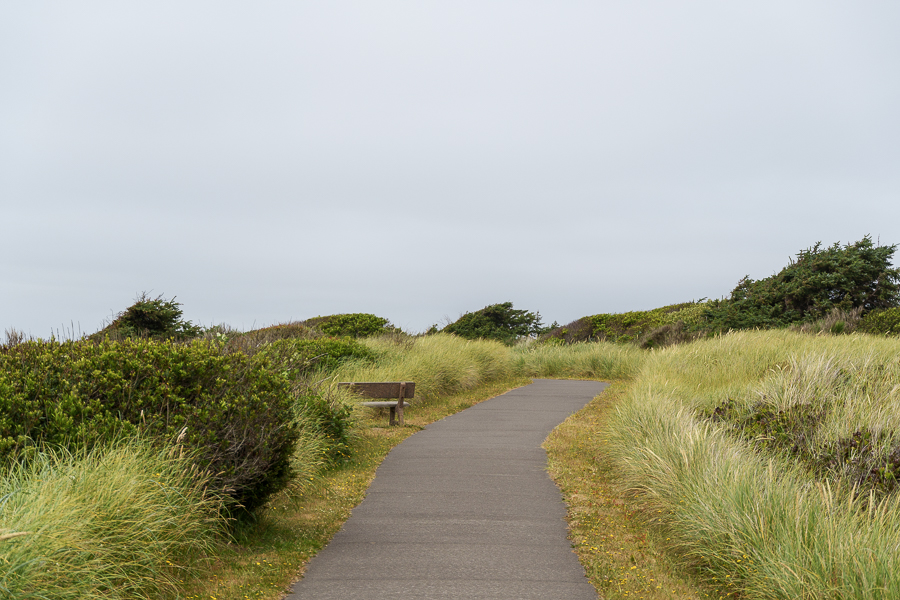
On the Westport Light Trail
Memorial plaques graced the benches we passed.

On August 9, 2025, I read on The Daily World website that someone had pried off and stolen several memorials embedded in cement and on the benches. Apparently, it’s the State Park’s responsibility, not the city’s. Either way, what a shame for the people who had them placed there to honor their loved ones.

Jetty and skyline across the bay
Old Coast Guard Lookout
We would have missed this deer had we taken the shorter trail

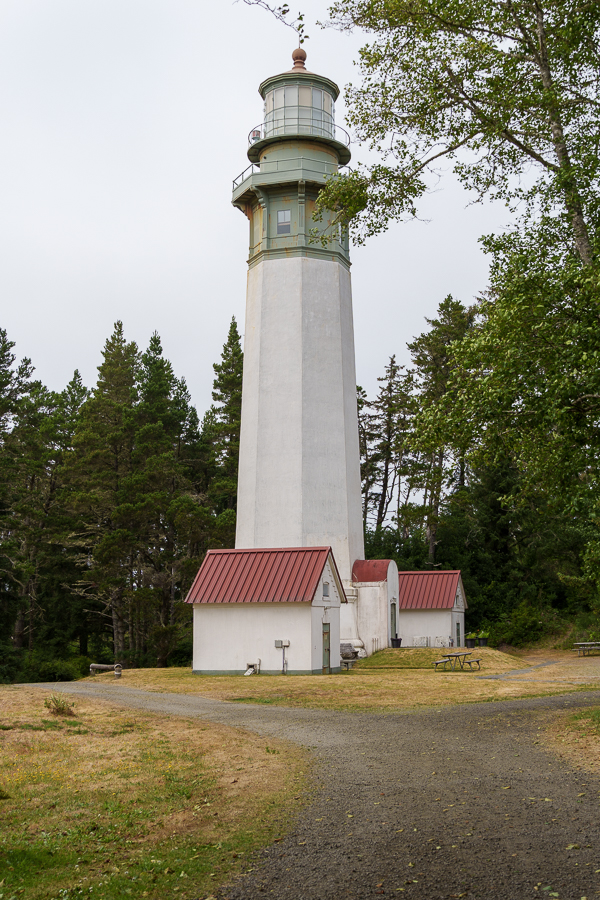
Built in 1897 and lit in 1898, Grays Harbor Lighthouse stands at 107 feet, the tallest lighthouse in Washington State. At that time, the lighthouse replaced more primitive gear to light the way for ships entering Gray’s Harbor.

The RVs next to the lighthouse belong to work campers who volunteer 20-25 hours a week, depending on the season, for a full hookup site. If interested in joining the ranks, check out the park’s website.

When the lighthouse began service in 1898, it stood 400 feet from the high tide line. Thanks to sediment from the rivers and streams that flow into the Pacific, accretion over 127 years has moved the shoreline 3,000 feet to the west.

The shape and colors of this building cried out for a photo. It sits across the street from the lighthouse and used to be a restaurant. I’m not sure what it’s used for now.

We enjoyed walking around the harbor, and visiting the lighthouse was the highlight of our walk. We got up close enough for more detailed shots of the buildings without disturbing the work campers in their RVs. No one came out, so we guessed they were off having an adventure of their own.

Next Up: We drop into Oregon and stop for a visit at the Tillamook Creamery

Safe Travels