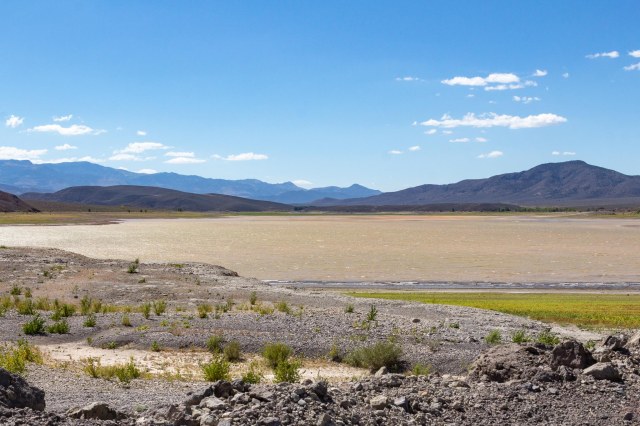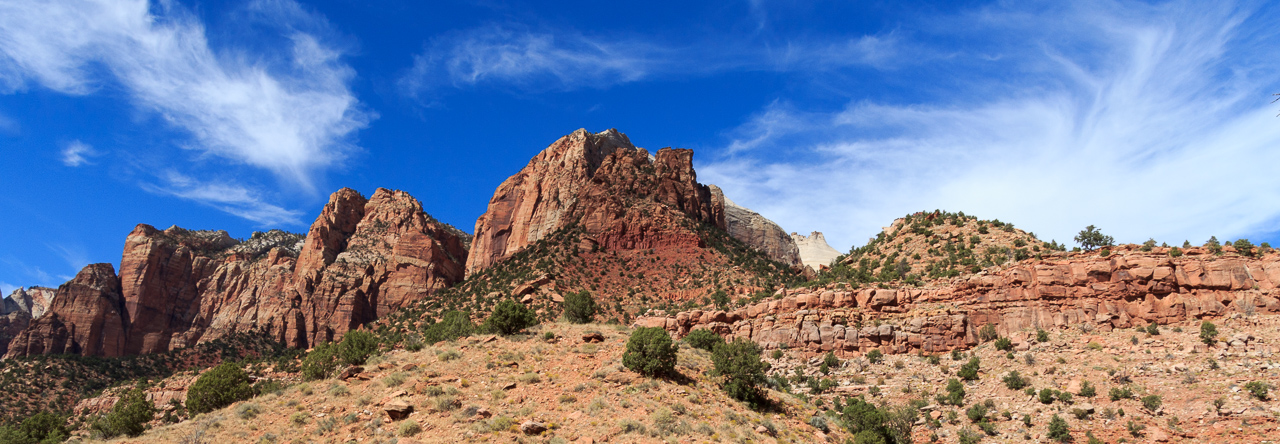
Cathedral Gorge State Park, Tonopah, Nevada, and Home Sweet Home

We continued our westward trajectory on September 16, 2018, the 55th day of our Summer 2018 Tour. Caliente, Nevada, seemed like a good distance to drive, except we didn’t get that far. Cathedral Gorge State Park popped up on the map so we decided to try it. With plenty of spots to choose from, we opted for paying $15.00 without electricity. We should have paid the extra $10.00.
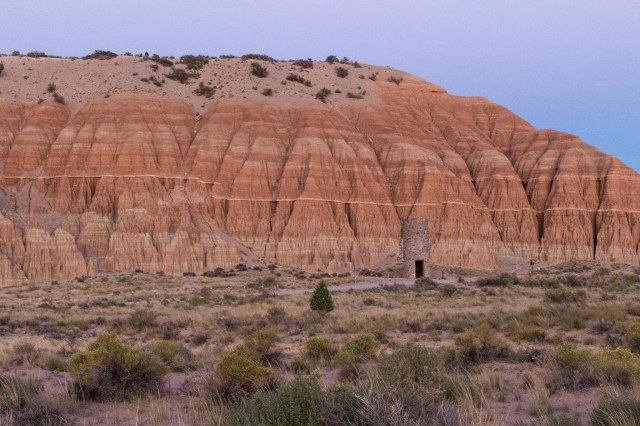
Cathedral hills and water tower

After about an hour, strong gusts of hot wind blew and sand pelted the side of the trailer until shortly before sunset. As if the fifth wheel wasn’t dirty enough, a thick layer of sand settled on the floor, the dining table, countertop, and every available surface. All I could see was a full day of deep cleaning ahead of me.
IMG_0185
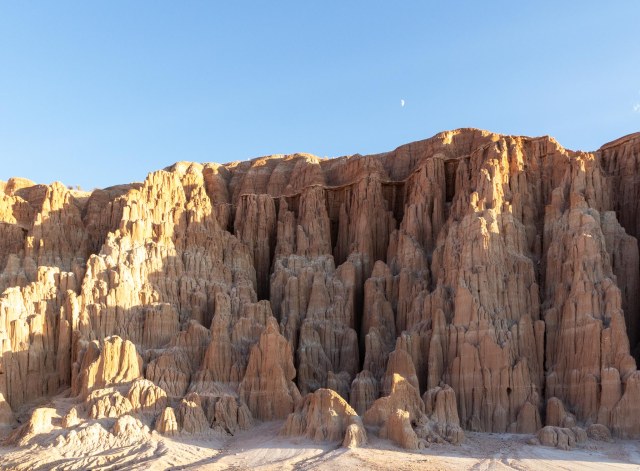
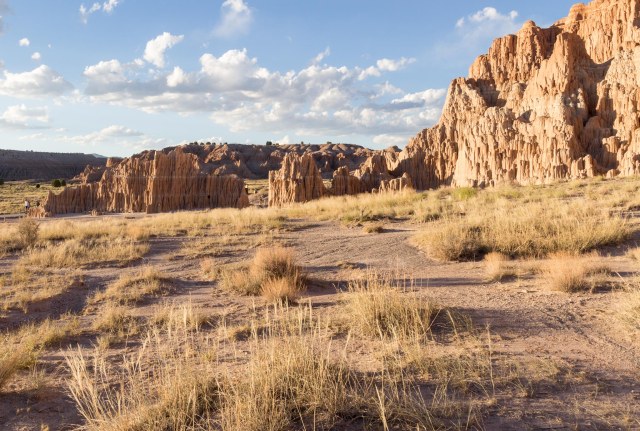
Cathedral Caves

Once the wind died down, we were able to stretch our legs and explore a little before the sun settled in for the night. Cathedral Gorge State Park, consisting of nearly 2,000 acres once occupied by the Fremont, Anasazi, and Southern Paiutes, became Nevada’s first state park in 1935.

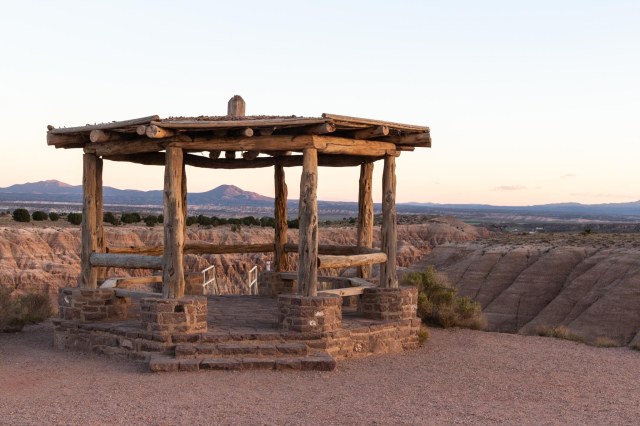
A stone water tower and restroom building built in the 1930s by the Civilian Conservation Corps (CCC) are no longer in use but still standing. The original picnic facilities continue in use today.
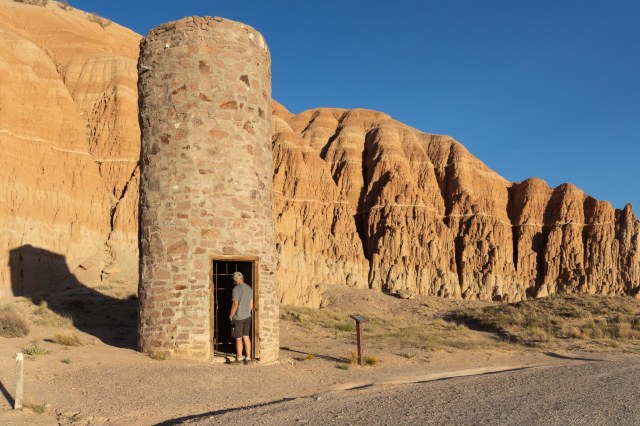
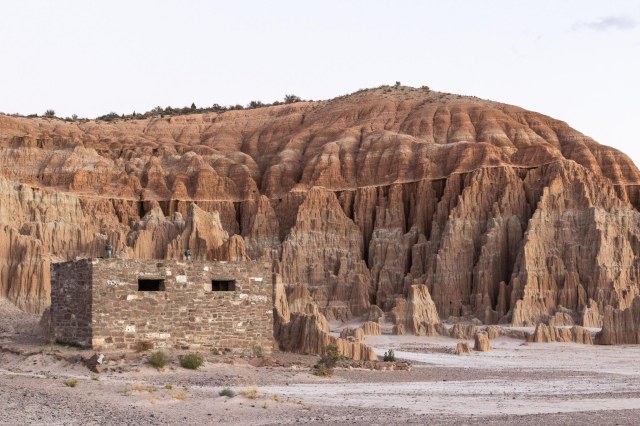
Water tower built by CCC
Restroom building built by CCC

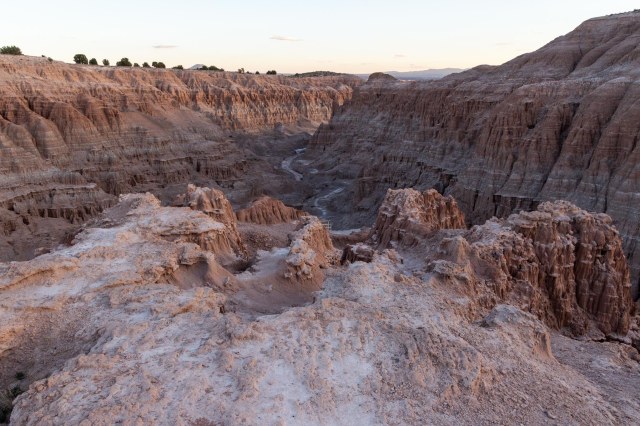
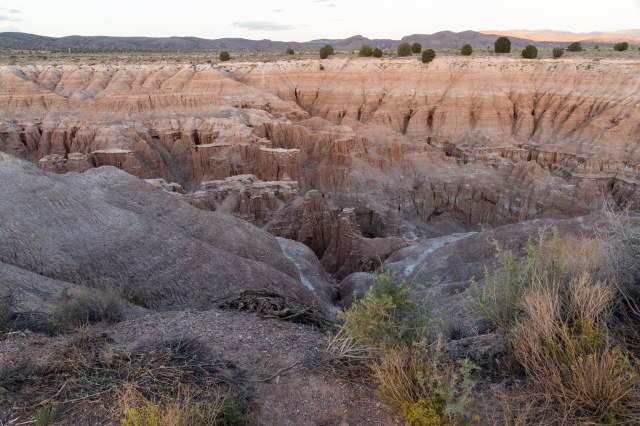
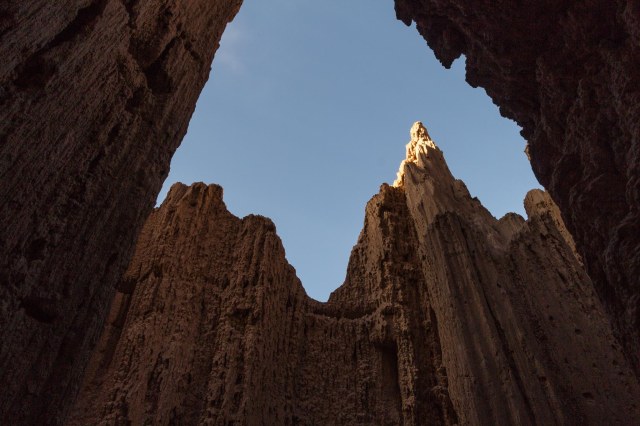
The formations, composed of silt, clay, and volcanic ash, aptly contain the reference to cathedrals, with their tall spires and skinny slot canyons and caves. It would be a great place to play hide and seek.
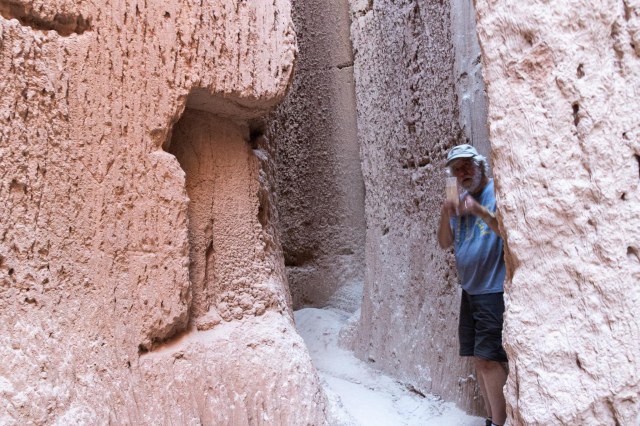
Peek a boo.
Inside one of the cathedral caves

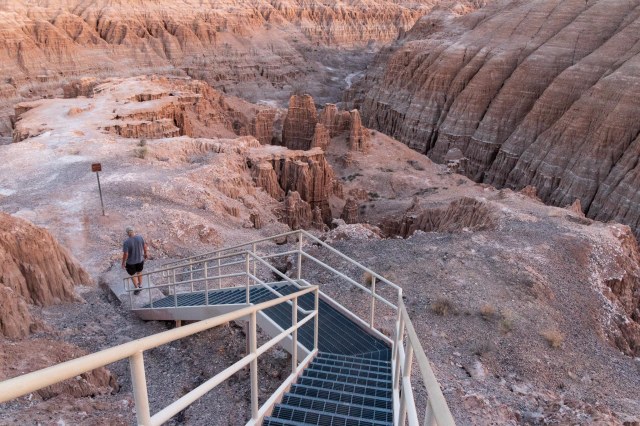
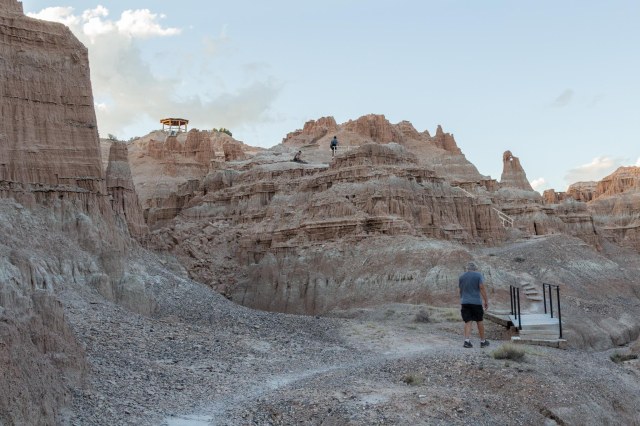
We took the Miller Point Trail which traveled up a canyon and through a dusty wash until a set of stairs appeared. The several sets of stairs took us to the point where we had wonderful views and watched the sunset.
On our way to Miller Point

Although the campground filled up with other RVs and tent campers, it was quiet outside. As the sky turned dark, and the campers across the road finished up their dinner, someone treated us to a little guitar music. I couldn’t remember the last time I heard a guitar while camping. In my younger years, it seemed like everywhere we went there was always someone playing guitar. Are people not interested in picking up the instrument nowadays?
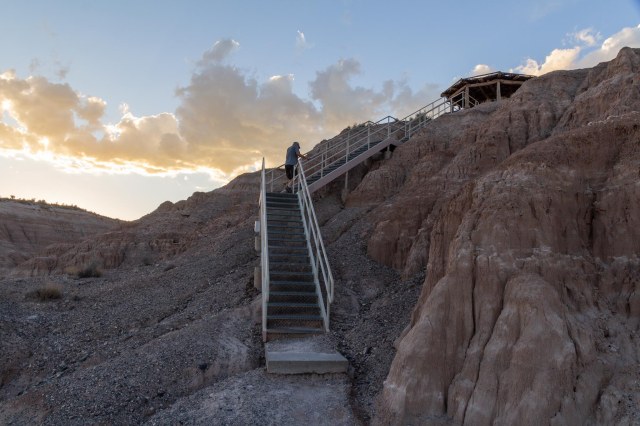
Not much further.
Almost there.
Whew! We made it.
View of canyon and trail from Miller Point
Another view from Miller Point
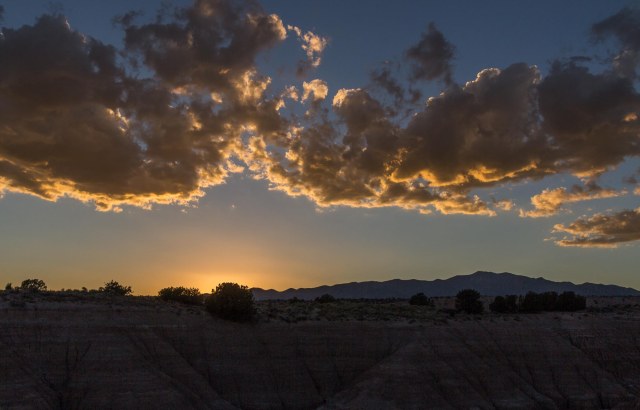
Goodnight sun.
On our way back.

When I woke up to close the windows in the middle of the night, I witnessed a spectacular show of twinkling stars along with the Milky Way streaking across the sky. That was something I hadn’t seen in a long time and it almost made up for the sand storm mess.

The next day, we drove through Caliente on our way toward Tonopah, Nevada. Young’s RV looked like it might be a decent place to stay. They even had tall shade trees and grass. The cute downtown area contained stores, restaurants, and shops. There was also a railway museum undergoing renovations that piqued our interest. Maybe we should have kept driving the day before. Oh, well chances are good that we’ll make it back there someday.

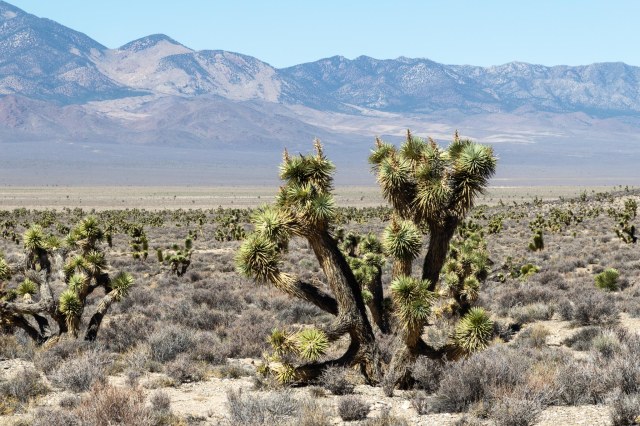
We drove the Extraterrestrial Highway 375. A couple of buildings and signs referred to aliens. And in Rachel, Nevada, where only about 50 people live, the Little A’Le’Inn Bar advertised food and lodging, but we weren’t in need of either so we drove on. For miles, there wasn’t much else to look at except the huge cattle ranches and open range. Pinon pines, junipers, and sage popped up going through Oak Summit, then we dropped into Tikaboo Valley, where Joshua Trees grow. We stopped at a BLM site that included information panels about the trees. This valley is unique in that both types of the trees are present, the tall tree-like western (Yucca brevifolia) species and the bushy eastern (Yucca jaegeriana) species. I found it interesting that each species of tree is pollinated by a different species of Yucca moth.
IMG_0214
Eastern Joshua Tree

Before we came into Tonopah, a group of hills looked like scoops of vanilla ice cream with crumbled Oreo cookies and caramel on top.
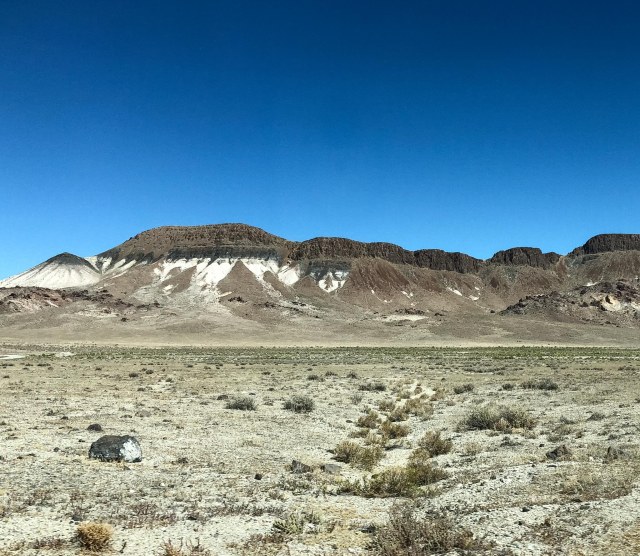
Yum! Vanilla ice cream topped with crushed Oreo cookies.

We were surprised to see a Tesla recharging center in Tonopah since we rarely see the cars in remote areas. It made sense once I thought about it though. The 7-hour 440-mile drive between Reno and Las Vegas on Interstate 95 puts Tonopah at about the halfway mark. The mileage range, depending on model and battery size, is 295 for the Model X to 335 for the Model S. The roadster, on the other hand, can make the trip with 180 miles to spare. (Mileage ranges obtained from Tesla’s website on February 8, 2019.)
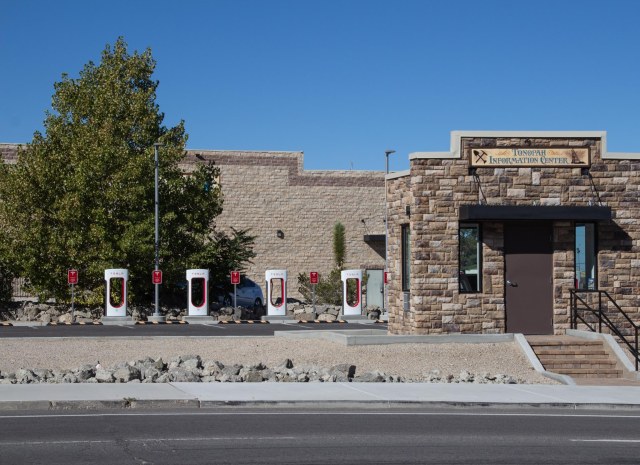
Tonopah Information Center and Tesla charging station.

We settled into our site for the night at the Tonopah Station Hotel, Casino, Restaurant, and RV Resort. Boy, what a mouthful. I sure wouldn’t call it a resort, but for a quick stop, it fit the bill. RVs park behind the building on an asphalt parking lot with utility towers and trash barrels between each unit. The Tap Room at the Tonopah Brewing Company served up tasty BBQ and a nice selection of beer to satisfy any beer drinker’s taste.
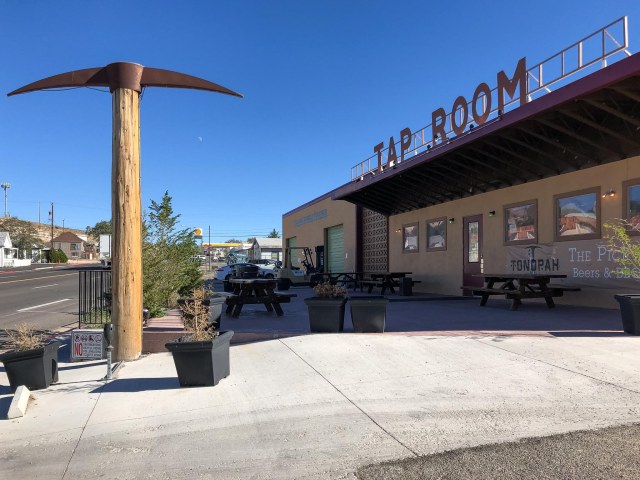
IMG_2340
Tonopah Brewing Company Tap Room

The next day we traveled through Yosemite, staying the night at Yosemite Pines, a campground nestled in a valley on Old Highway 120. It offered covered wagons, cabins, retro trailers to rent, RV sites of all sizes, and tent sites. Outdoor play equipment, a pool, trail around the park with exercise stations, and an animal yard that included goats, burros, alpacas, and chickens. It would have been nice to stay awhile, but that didn’t work out so we drove the rest of the way home on September 19, 2018, our 58th day on the road.

For those readers who like statistics, here they are for our 2018 Summer Tour:

  • Days – 59
  • Total miles driven – 4,723
  • Miles pulling fifth wheel – 3,414
  • Diesel Fuel – 419.4 gallons
  • RV Parks/Campgrounds – 18
  • States – 4
  • National Monuments and Parks – 4
  • Museums and Historical sites – 12

It is February already and my recovery from surgery is going well and nearing completion. We are both itching to get back on the road. But before we do, Jon has a few fifth wheel projects in the works and we have other tasks to complete that will keep us at home until at least mid-April. I’m hoping we’ll be able to fit in a short trip here and there before April, so stay tuned.

Safe Travels
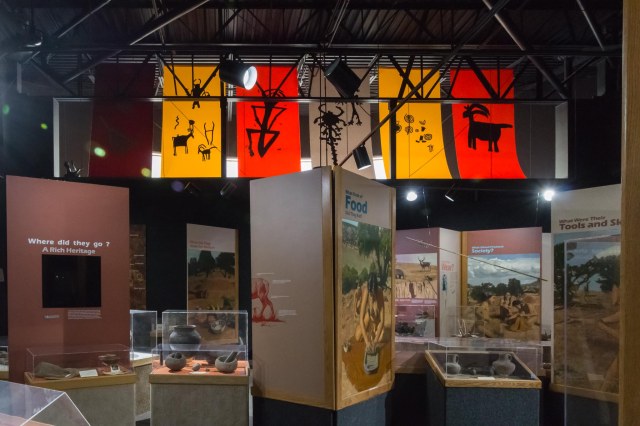
 

Richfield, Utah

We found the Richfield KOA to be one of the best places we have stayed. Their shaded sites are so large they can accommodate a tow vehicle and a large toy hauler or motorhome with plenty of room to spare for a few ATVs. Since our rig is not large and we don’t tug along ATVs we enjoyed the extra room to move about. The park also has easy access to the miles of trails that wind their way throughout Richfield and the surrounding area.

Fremont Indian State Park and Museum

Besides the ATV trails there is the Fremont Indian State Park and Museum, and Candy Mountain within a reasonable driving distance.

Fremont Indian State Park and Museum

We started out by visiting the Fremont Indian State Park and Museum where we watched a movie about how the museum came about. It all started with the construction of I70 during the 1980s. The plan was to take down four of the five-finger range hills and use them as fill to build up the valley after diverting the river/creek.

The last of the five finger hills

When the crew began digging, they found an ancient Indian settlement consisting of several pit houses and storage facilities. Archeologists rushed to the area to document and preserve what they could. It turned out that this was the largest Fremont Indian settlement found.

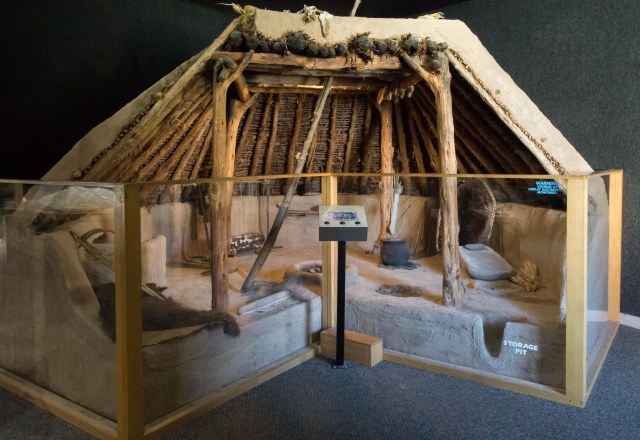
A depiction of family life in a pithouse
Possible trapper attire and tools of his trade

The neighboring community did not want the artifacts to sit in a university somewhere and pushed for the state park. Their dream came true and the park preserves the history of these ancient peoples.

What a find this jar was. It was found upside down in a pithouse

The museum depicts life as it was including a mockup of a pithouse with a vent that brought fresh air in and a hole at the top where smoke escaped.

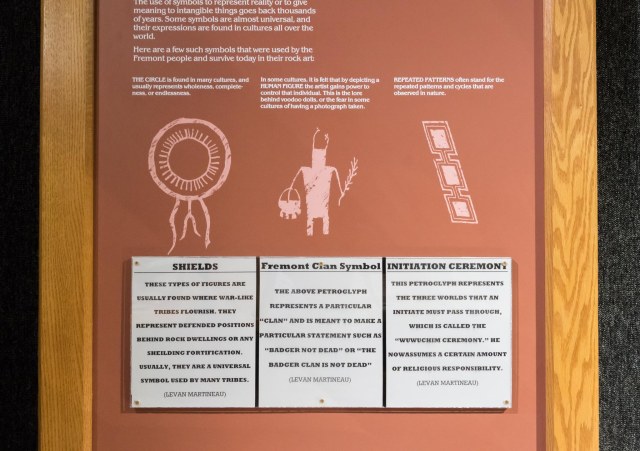
Possible meanings of petroglyphs

Cooking and work areas are also displayed. One of the most interesting objects was a recreation of remains that were found a few miles away. The recreation shows how the woman might have looked like when she was alive. A push of a button starts audio so visitors can hear her story and learn how tall she was, the condition of her teeth, the age when she died, and how she was buried.

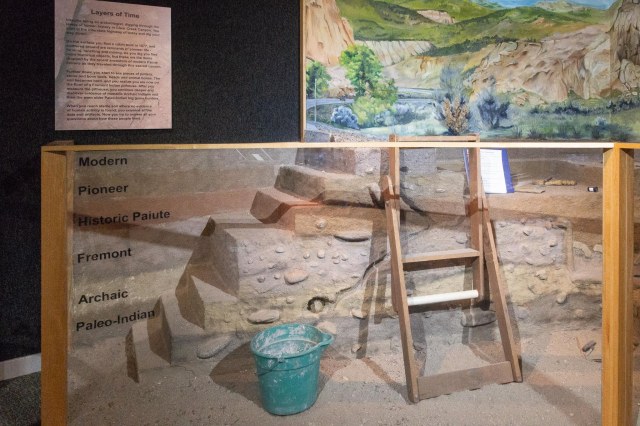
Layers of time

Clear Creek Road and I70 run through the middle of the narrow park with trails on both sides of the freeway to explore the terrain and view petroglyphs and pictographs. When we finished in the museum, we ventured outside to explore more. a short drive on Clear Creek Road took us to panels where petroglyphs and pictographs have survived erosion.

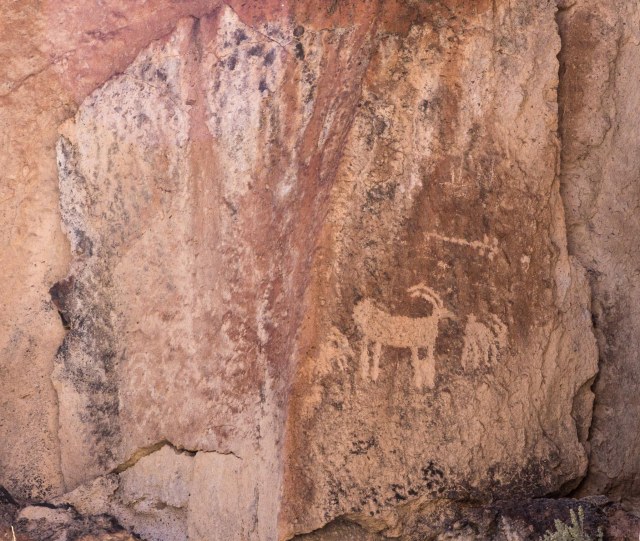
Petroglyphs are carved into the stone and depict a story, the meaning of which has been lost over 500 to 1,000 years
Pictographs are drawn using some kind of coloring or pigment. These seem to represent blankets.
It’s amazing that these have lasted so many years

Across the freeway are caves and the Sevier River.

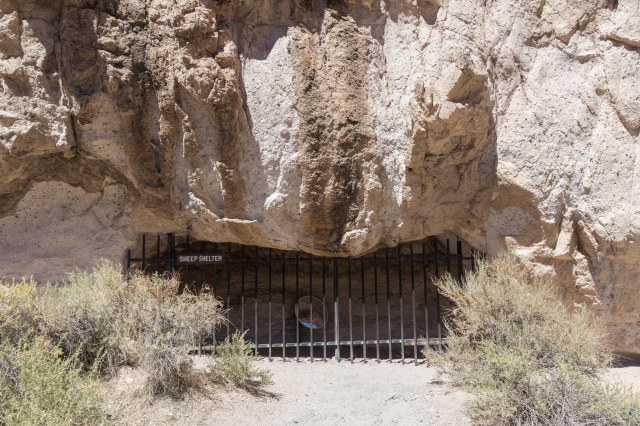
Sheep Shelter
The mirror in Sheep Shelter reflects a view of the ceiling where more petroglyphs are carved
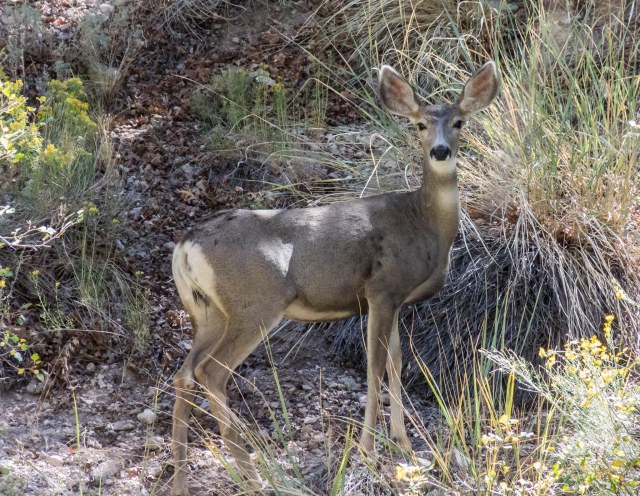
I love it when wildlife poses for a photo. It sure is better than when they show me their backside.

This cabin is similar to what the Joseph Lott family may have built on this site when they settled here in the 1880s.

1880s cabin

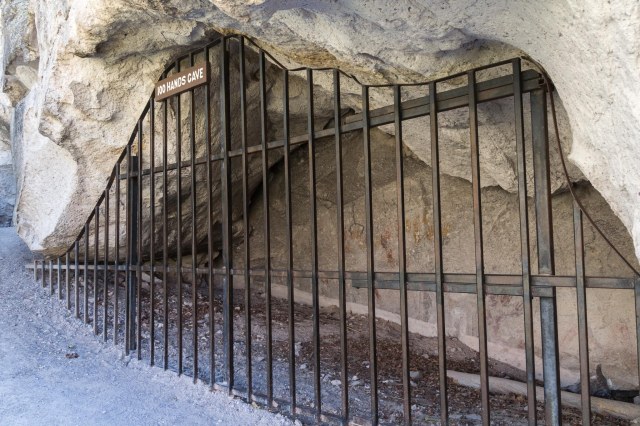
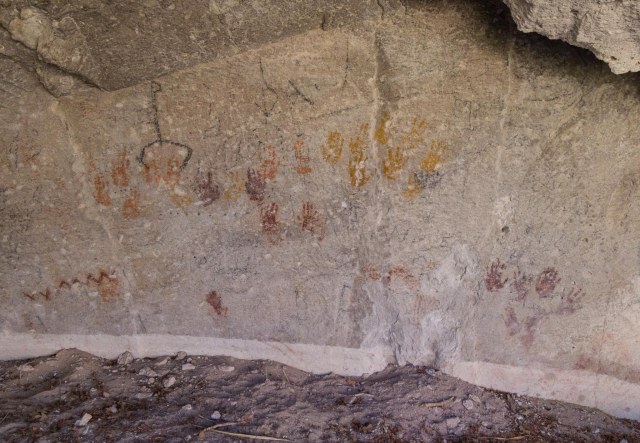
The 100 Hands Cave caught my interest. When were they placed here? Why did they make the pictograph? Was it some kind of ritual? How long did the pigment stay on their hands?

100 Hands Cave

It’s a good thing the park protects this art with a wrought iron gate. Given the evidence that modern day artists had a mind to destroy this artifact, I can’t imagine what it would look like if not for the protection.

Close up of 100 Hands Cave

The last stop on our adventure at the Fremont State Park was the Jedediah Strong Smith Memorial. Yes, the same hunter, trapper, and explorer of the American West who traveled through the Great Salt Lake, Colorado River, Mojave Desert, California, and Oregon. To think of all the changes made since the 1820s when Smith roamed the west, it boggles the mind. I wonder what it will all look like in another 200 years.

Jedediah Strong Smith Memorial

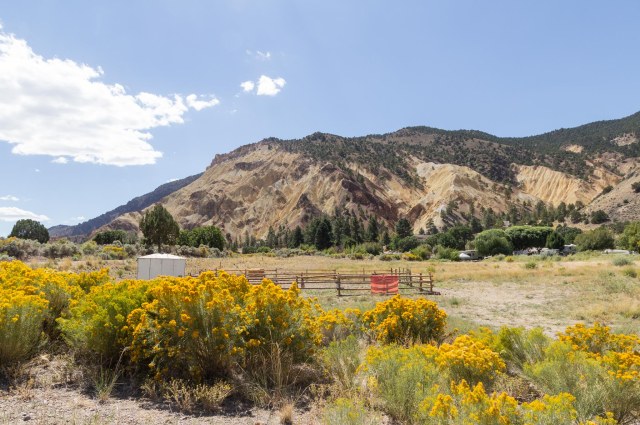
Big Rock Candy Mountain

What attracted us to Big Rock were the mountains that looked like cakes dripping with yellow, white, and caramel icing. Volcanic activity is what gave the mountains their colorful feature. Different types of minerals produced different colors.

Big Rock Candy Mountain

Besides the mountain, hiking and ATV trails and access to the Sevier River are also available.

Big Rock Candy Mountain across the field. On the far right and middle of the photo is the RV park under the cluster of trees

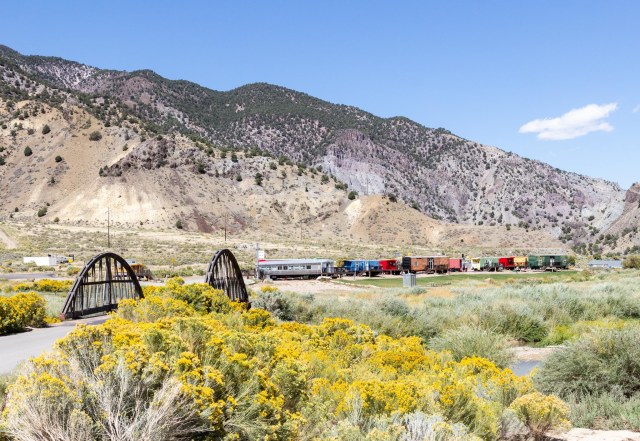
The Big Rock Candy Mountain Resort offers places to stay in an RV Park with about 30 sites including water, sewer, and electricity; eight suites in the lodge; and 12 converted train cars in the Caboose Village. It looks like Big Rock Grill and Smokehouse serves breakfast, lunch, and dinner. At least as I write this.

Caboose Village from across the river

Piute State Park

No, I did not misspell the word Piute. Although the park was named after the Native Americans who lived in the area at one time, the state legislature decided to change the spelling. I’m not sure why they would want to do that.

The park was abandoned when we visited, most likely due to the low level of water in September. The reservoir is used for irrigation purposes, so I guess it was all used up. I’m not sure how fish could remain alive in the reservoir at this low level, though. The water was quite murky, as was the runoff.

Low tide at Piute Reservoir. This is the boat ramp.

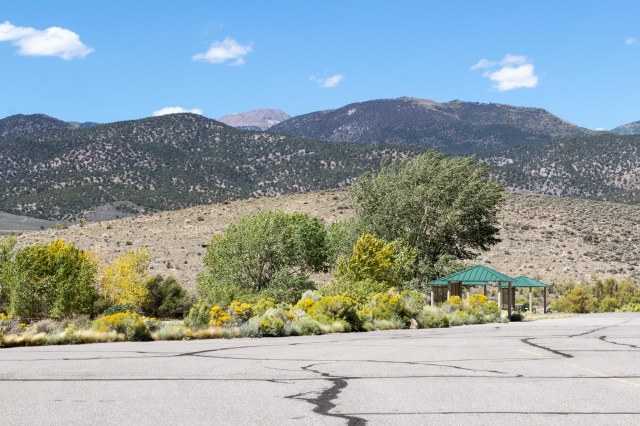
The park sits on the Sevier Plateau and contains a portion of the Piute Reservoir where anglers can try their luck for a trophy-sized rainbow, cutthroat, or brown trout. A boat ramp and day-use shade shelters are also available.

Day use shade cabanas

The park is quite primitive, including the campground. Only pit toilets are available and there is no water, so be sure to bring what you need. There are also three ATV trail systems accessible from the park.

Looking south across the Piute Reservoir

Next up we continue our trek west toward California.

Safe Travels