Flagstaff, Arizona – Part Two

Flagstaff Part Two

We managed to fit into our schedule a couple more Flagstaff sights while in town: the Lowell Observatory, founded in 1894 by Percival Lowell, and the Walnut Creek National Monument, where a civilization once lived and farmed 1,000 years ago.

Lowell Observatory
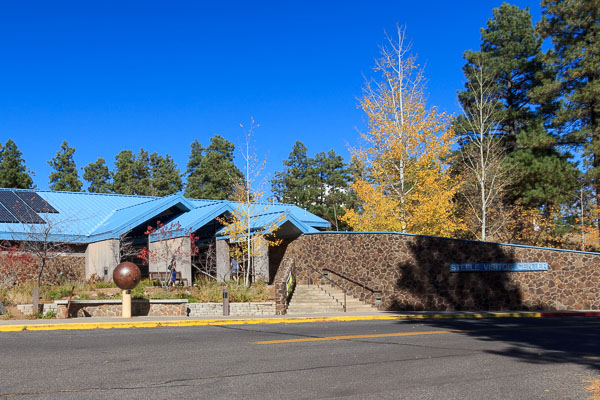
IMG_4763
Lowell Observatory Visitor Center

Percival Lowell had a theory about life on Mars, mainly, that water flowed through what he thought were canals. Although controversial, Percival was undeterred. Using a 24-inch Alvan Clark refracting telescope installed in 1896, Lowell spent fifteen years mapping Mars and creating hand-drawn globes of the planet that showed details of the canals.

IMG_4773
Clark Refractor

Later, he was devoted to searching for Planet X, a planet located beyond Neptune having a gravitational impact on Uranus and Neptune. The Pluto Discovery Telescope, currently under renovation, was built in 1928-1929. The year before Lowell’s death in 1916, astronomers at the observatory photographed what would later be identified as Pluto, which was reclassified as a dwarf planet in 2006. The scope is an astrograph with three 13 inch diameter lenses and designed to take photos of the night sky for survey purposes and to detect objects, such as meteors. Today, I understand astronomers are searching for Planet Nine which could be ten times the mass of Earth. Mauna Kea Observatory in Hawaii and its Subaru Telescope is one such tool being used to find the elusive planet.
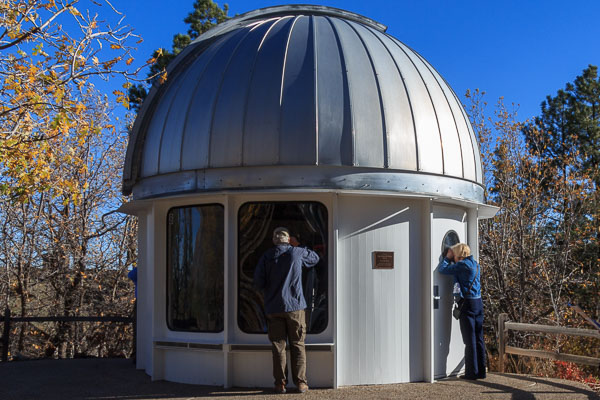
IMG_4774
John Vickers McAllister Public Observatory

Other discoveries made at the Lowell Observatory include V. M. Slipher’s observations that lead to the theory of an expanding universe and the measurement of motions and properties of stars, some of which were used in the 1960s to create maps of the moon.

While at the observatory, we had an opportunity to view the sun through a solar telescope. After a lifetime of being told not to look directly at the sun, I had a strange feeling as my eye focused on the orange ball for a minute or so. Although the sun was quiet that day with no solar flares evident, it was still an awesome sight to see.

Other buildings of interest include the Rotunda Museum where the public can view the first telescope Percival Lowell received when he was 15 years old, his hand-drawn Mars globes, instruments built by Lowell scientists, and classic scientific books.
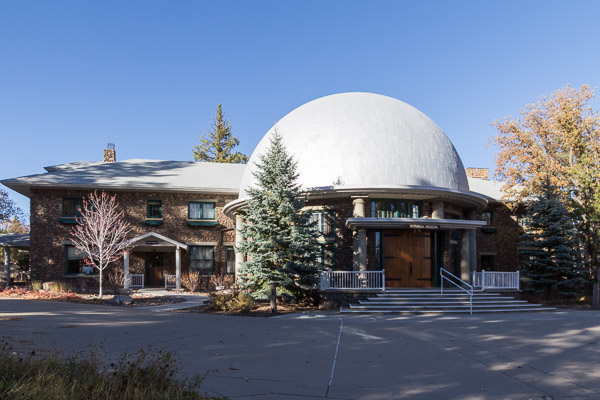
IMG_4777
Rotunda Museum

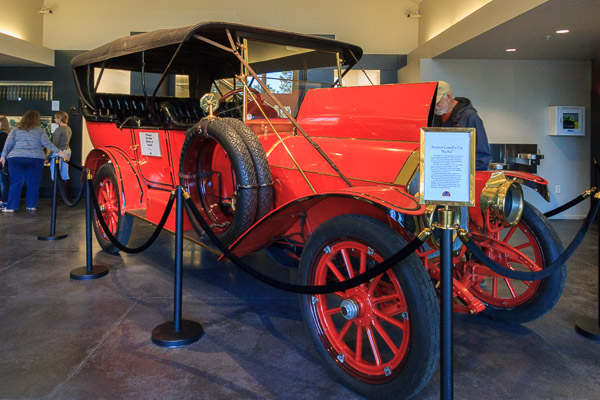
The Putnam Collection includes Percival Lowell’s state-of-the-art horseless carriage, a 1911 Stevens-Duryea still in working order.
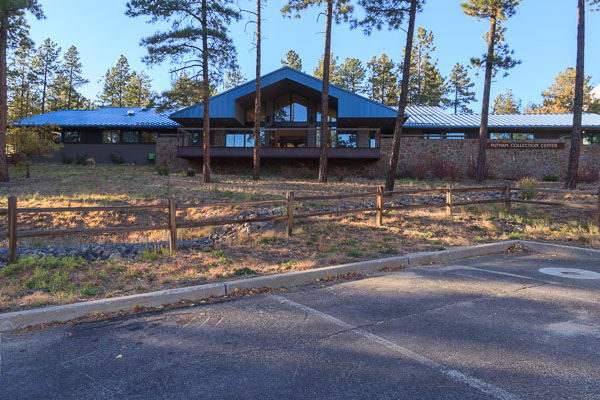
IMG_4780
Putnam Collection Building
IMG_4778
1911 Stevens-Duryea

And don’t forget Percival Lowells Mausoleum, a perfect resting place for the astronomer.

IMG_4768
Percival Lowell’s Mausoleum

Daytime guided tours, films, and evening programs will please the amateur and professional astronomer alike.

I admire Percival Lowell for embarking on his pursuit of water on Mars and a new planet. His theory of water on Mars may not have panned out, but his persistence led to further searches for objects in the night sky beyond what we can see with our naked eyes.

Walnut Creek National Monument

Walnut Creek National Monument, established in 1915, is accessed a few miles east of Flagstaff off Highway 40.
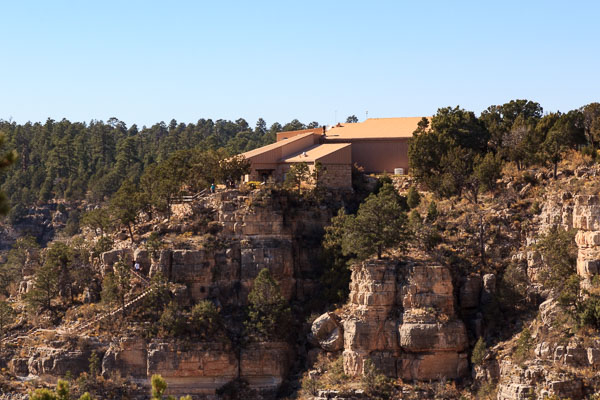
IMG_4808
Walnut Canyon Visitor Center

The Island Trail takes visitors into the canyon 185 vertical feet on 273 stair steps. The reward for this effort is to walk among the 25 cliff dwelling rooms where the Sinagua people made their home among the cliffs 1,000 years ago.

IMG_4784
Bottom of Stairs on the Island Trail
IMG_4787
On the Island Trail
IMG_4791
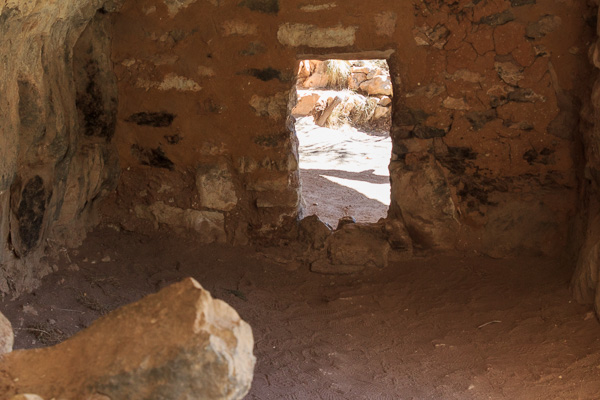
Inside one of the Cliff Dwellings
IMG_4792
Doorways Led Into Adjoining Rooms
IMG_4796
Imagine the Work Required to Build the Stonewalls

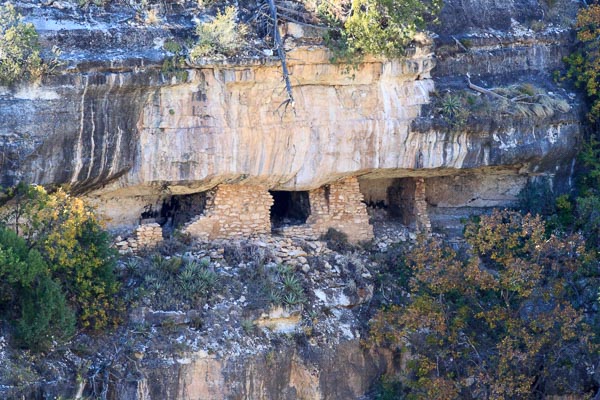
Views of other structures etched into the surrounding cliffs are also visible. Were these rooms used only for storage, or did the people make their homes in the small structures? I tried to imagine how the people accessed the caches. Did they use ropes? Or maybe they constructed ladders? Either way, it must have been treacherous.
IMG_4782
View from Across the Canyon

The self-guided Rim Trail follows the canyon rim to two overlooks, and loops around to a pit house and pueblos set back from the rim. This is the area where the Sinagua grew their crops. Signposts along the way describe the vegetation and other information about the people who lived there.

IMG_4803
Claret Cup Hedgehog Cactus
IMG_4822
Blue Grama Grass

I think I would have felt more comfortable living in a pueblo like the two-room structure below, but I’m sure there were other dangers there as well.

IMG_4815
Excavated Pueblo Along the Rim Trail

Across the path stands a pit room where, presumably, the people stored their food and other possessions. Or, perhaps this was someone’s home.

IMG_4818
Excavated Pit House

I tried to imagine the sounds and smells of life when the Sinagua lived on this land: the squawk of birds overhead, the echo of children laughing, men joking while they work, meat cooking over an open fire. How would I have managed along the cliffs with a baby swaddled to my body or toddlers underfoot and in constant fear of a child falling into the canyon abyss? Not very well, I guess.

Flagstaff has so much more to offer visitors than what we were able to see during our short stay. When the desert valleys turn hot, head to Flagstaff to beat the heat, go on a hike, or explore the downtown. Or visit in winter to shuush down slopes, cross-country ski, or set out with snowshoes strapped to your feet. Any time of year would be a great time to visit Flagstaff.

Next stop? Prescott, Arizona.

Safe Travels

Spending Time in Flagstaff, Arizona – Part One

U.S. Route 89 heading south of The Gap Trading Post in Cameron, Arizona, was like driving over asphalt moguls. With the fifth wheel chugging behind the truck, we rocked side to side, up and down, and forward and backward as we rolled over the recently paved road. Motion sickness set in for the duration. I can’t imagine why Arizona DOT would intentionally pave over bumps and hills.

The AAA tour book listed a few places to explore in Flagstaff, so as we rolled into town we scanned the signs for places to park the rig. J and H looked promising with its pull-through sites and thick gravel roads. We checked in for three nights on October 12, 2017. We would have gone for four or maybe even five nights, but the park closed on the 15th.

Although they are an RV park with a number of restrictions—no kids, no smoking, no campfires, no motorcycles, no rig washing—we would stay there again for the quiet and the mature trees. We don’t have kids or motorcycles, don’t smoke, can do without campfires, and can wait to wash the rig in another location.

Historic Downtown Flagstaff and Railroad District

Thomas F. McMillan established the first permanent settlement in 1876 when he built a cabin at the base of Mars Hill before the city’s establishment in 1882. By 1886, the surrounding area had grown into the largest city on the railroad line between Albuquerque and the West Coast of the United States. In a 1900s journal entry, Sharlot Hall described the town as a “third-rate mining camp.” A description, I believe, accurate for a lot of towns in the west during that time.


IMG_4717
Coconino County Superior Courthouse


Timothy and Michael Riordan moved to the Arizona Territory in 1880 and formed the Arizona Lumber and Timber Company shortly after. They later married women from Cincinnati who were sisters and built a home in 1904 (see Riordan Mansion State Park below). The brothers were instrumental in bringing electricity to the city, building a dam to create a lake and water source, and medical care for not only their employees but visitors and members of the community. They also founded a normal school, or teacher’s college, which eventually became Northern Arizona University (NAU).


IMG_4721
Historic Weatherford Hotel


The city prospered through the 1960s but experienced an exodus of businesses during the 1970s and 1980s when the companies either closed down or relocated to the new mall. In 1983, the railroad was added to the historic district and in the 1990s a downtown revitalization attracted new businesses and restaurants to set up shop. The historic district is now a vibrant business and commercial destination.


IMG_4715
Independent Book Store


At an elevation of 7,000 feet, Flagstaff sits at the foot of Mount Elden, which is a large lava dome. The mountain offers plenty of trails to hike and explore. Unfortunately, we did not have time to pull on our hiking shoes and wander in the forest.

Restaurants

 With our limited time in Flagstaff, we opted to try out a couple of restaurants instead of spending our time cooking and cleaning dishes.

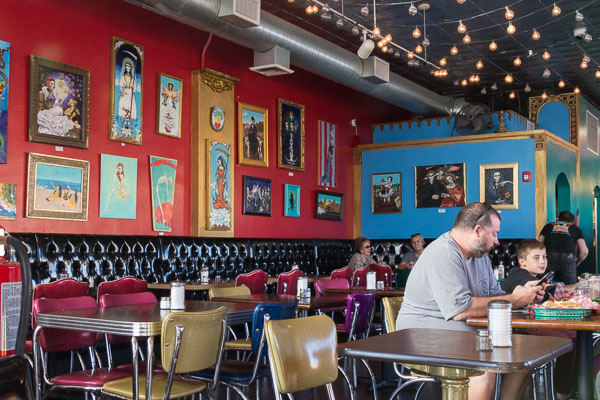
We loved the casual atmosphere, bright colors, and Day of the Dead décor of MartAnne’s Burrito Palace where we ordered a tostada plate with chips and salsa to eat while we sipped our margaritas. We’ll definitely try other menu items the next time we are in Flagstaff.


IMG_4712
MartAnne’s Burrito Palace


Beaver Street Brewery, located in the Halstead Lumberyard Building,  was the place to go for pizza and beer. The menu includes a full bar and beer on tap, along with an assortment of appetizers, fondues, hearty salads, sandwiches, and dinner selections. Diners are sure to find something to suit their palates.


IMG_4762
Flagstaff’s First Brewpub Opened in 1994


Riordan Mansion State Historic Park

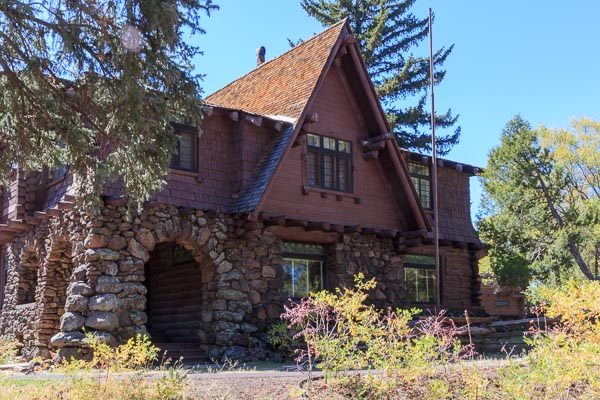
Located in the Historic Downtown near NAU, is the Riordan Mansion State Historic Park. In 1904, Michael and Timothy Riordan built the Arts and Crafts style duplex for their families. Built by Charles Whittlesey, the 13,000 square foot home is similar in style and architecture to the Grand Canyon’s El Tovar Hotel, which was also built by Whittlesey. Ponderosa pine slab siding and volcanic stone arches adorn the exterior of the home. The wood siding was milled at the brother’s Arizona Lumber and Timber  Company.


IMG_4741
Riordan Mansion Rear 


Timothy’s family occupied the east wing (on the right), and Michael’s family occupied the west wing (on the left). They shared the common area in between. Docents conduct 60-minute interpretive tours daily (except Christmas day) of the east wing, which is furnished with Edison, Stickley, Ellis, and Steinway family heirlooms.

No photos are allowed in the east wing where the tours are, so I only managed shots of the exterior and the west wing, which primarily housed information on the construction of the house and of the families and included a few roped off areas on the first floor.


IMG_4727
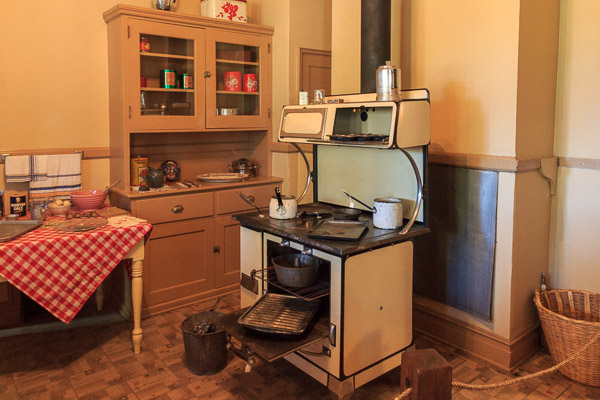
Kitchen in West Wing
IMG_4733
Fireplace Made From Local Resources 
IMG_4735
Stain Glass Window
IMG_4746
Entrance to East Wing
IMG_4750
Entry Gate to Patio and Middle Portion of the House
IMG_4748
Kachina Tile Embedded in Archway. For good luck?


Next up we continue our Flagstaff visit, take a tour of the Lowell Observatory, and learn about the cliff dwellers who made Walnut Canyon there home.

Safe Travels