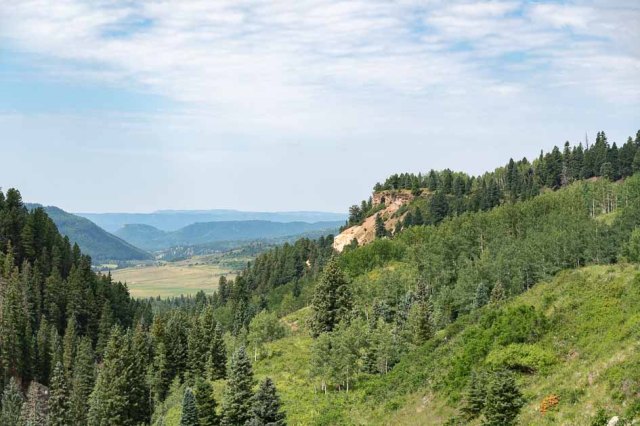
On Friday, July 16, 2021, we moved our base camp to Chama, New Mexico. The short two-hour drive on US Highway 64 through lush canyons and meadows was a delight. About halfway, we stopped at an overlook and picnic area where wildflowers were in full bloom.
Yellow-orange daisies
Green, lavender, white, and yellow among the thistle
I imagined where we live in the Bay Area, the drought would have already forced the wildflowers to shrivel up and die. So, it was a treat to see their smiley faces at their peak in New Mexico’s higher elevations.
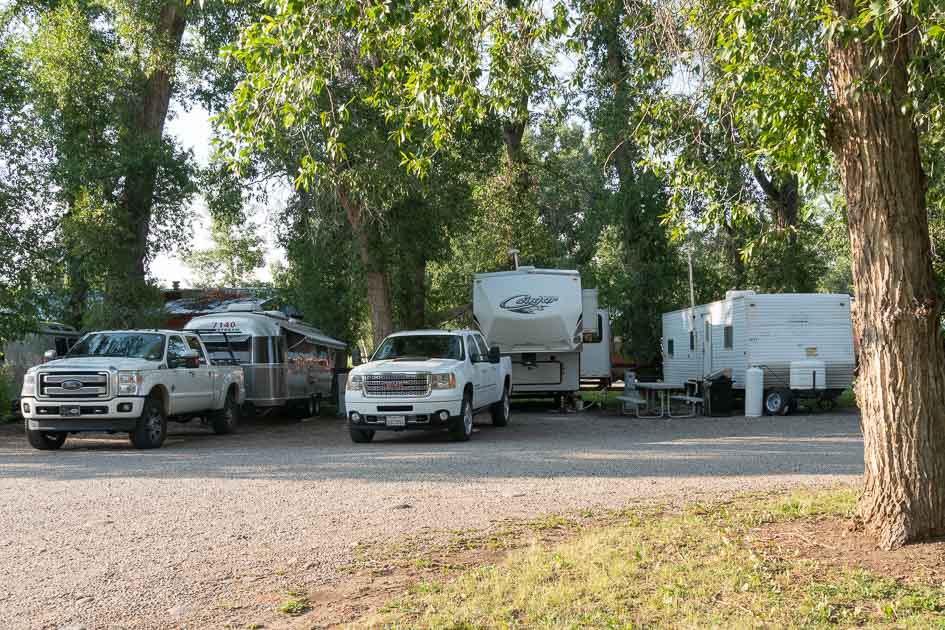
Little Creel RV Park in Chama squished us into a small space that crowded the trailer next to us. The park owner said not to worry. The men next to us would leave over the weekend and might not return on Monday, and they didn’t all week.
Although the room slide encroached on the neighbor, the awning and picnic table area had plenty of room, especially since no one pulled in next to us until two days before we left.
All set up
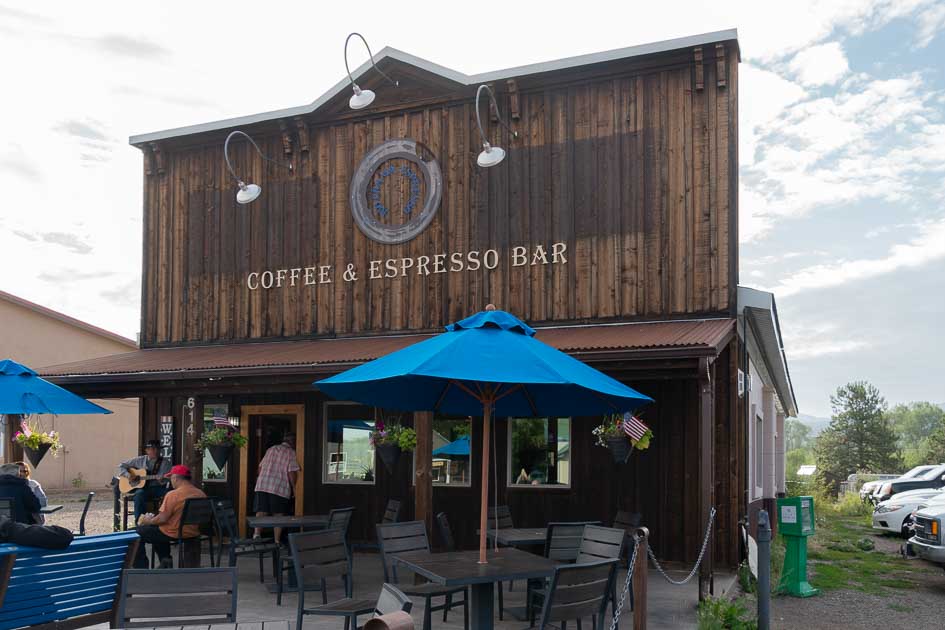
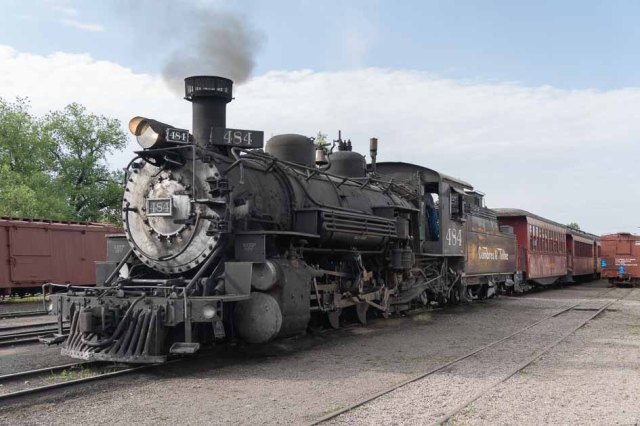
First on our agenda while in Chama, was to ride the Cumbres & Toltec Scenic Railroad. At Coffee & Espresso Bar, we started our day with a breakfast sandwich, Danish, and a cup of coffee, and then we watched the volunteers prepare the engines and hook up the cars.
Listen to live music while sipping coffee
Cozy up to the fire pit and stay nice and toasty
Chama depot, store, visitor center, and restrooms
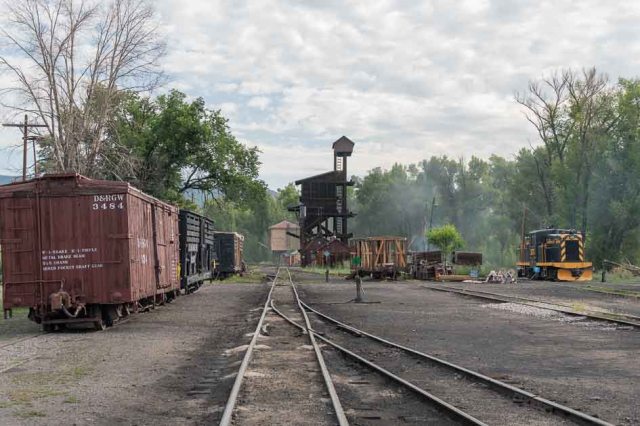
Rail yard
Fire ‘er up
Coupling the cars
All aboard
We ended up in the first seat in the first car behind the engine. One would think a steam engine would be preferable to diesel because of the smell. In order for the steam engine to work, it needs fire to heat the water to create the steam. And what fuel did they use for the fire?
Our car behind the engine
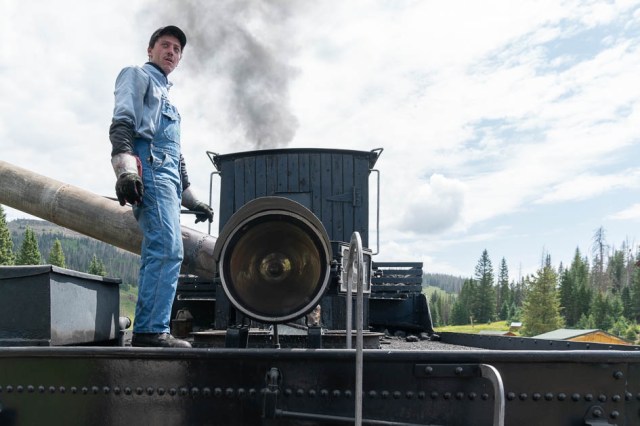
Coal. I could barely stand two minutes outside on the platform. Soot and red-hot embers of coal swirled around me and flew in the door whenever it was open. And forget about resting your arm on the windowsill unless you wanted a holy shirt sleeve.
View from the train
It was comical to see one passenger—a man in his fifties—so excited about riding the train. He stood on the platform for the entire trip while soot and embers rained down on him. His grandson brought him snacks and drinks, but the man never budged.
The train, the train.
Whoa! Where are we going?
Pulling the mountain was not much faster than walking due to the incline. We were thinking it would be faster on the way back, but we were wrong. The Engineer/Conductor told us the old-fashioned brakes required they keep the downhill speed to a minimum to avoid becoming a runaway.
Say cheese
Hmm . . . settings, settings.
New Mexico State Road 17
Quick stop in Cumbres for water
Filling the tank
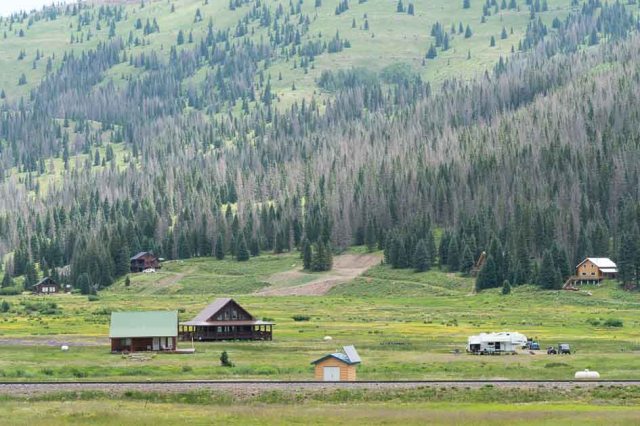
Homes and cabins in the meadow
Join the party in the open car
Los Pinos water tank and rail crew
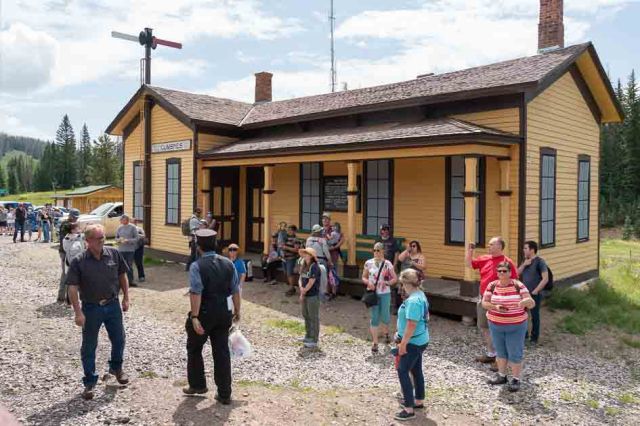
At the Osier train stop in Colorado, we all disembarked for a buffet lunch in the dining hall. On one side of the building, they served a turkey dinner, and on the other side, they served meatloaf. Salads were also available downstairs.
Dining Hall
I opted for the turkey dinner. The turkey and gravy were tasty. All I can say about the canned green beans is that they weren’t fresh, and a couple of bites of dressing were more than enough. The best part of the meal was the not-too-sweet pumpkin pie with whip cream and flaky crust. I should have had two slices.
Livestock loading pen
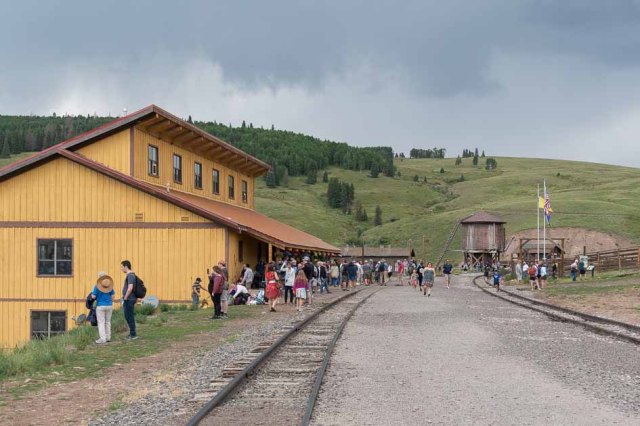
After lunch, everyone gathered outside, wandered around the other buildings, and waited for the train to return.
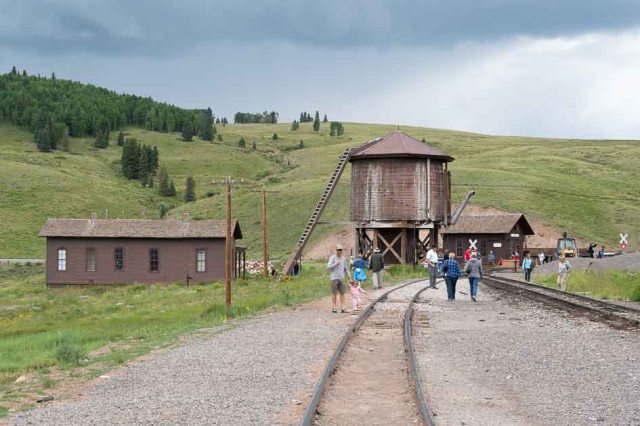
Osier was once a small community with a store, rooming house, and depot. The volunteers built the water tower in 2000 using materials and specifications as the original.
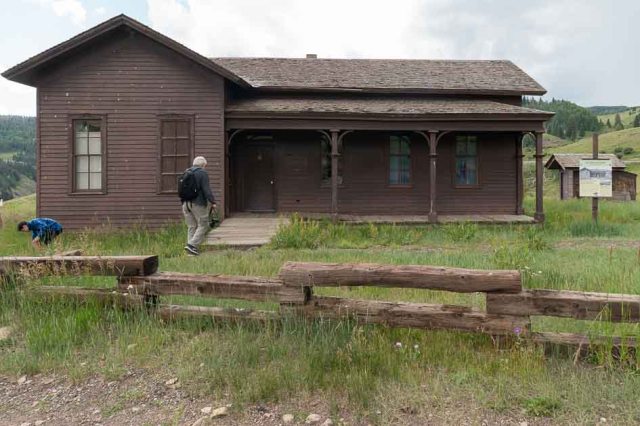
Section House built in 1881 for the section foreman and family. Restored and renovated from 1993 to 2003.
Original or replicas?
Cascade Creek
Tiny blue daisy-like flowers dotted the grass
Trains use the double tracks and loop to turn around
All the passengers climbed aboard for the trip back to Chama, taking the same seats as before. The atmosphere in the car was a stark contrast. Those of us in the front were mostly quiet, enjoying the scenery outside the windows, or nodding off into a tryptophan coma. In the rear, a group of women may have had more than their share of the alcohol served during lunch.
Covered bridge waiting repairs
Picture the aspen dressed in their fall colors?
The women giggled, they laughed, they squealed, and they teased one another. When we stopped to refill the water tank, one lady came up to the open seat across from us and alternated hanging out the window to yell at someone to get the water guy’s attention, and ducking back into the car to yell at her sister, “Alma, come here.”
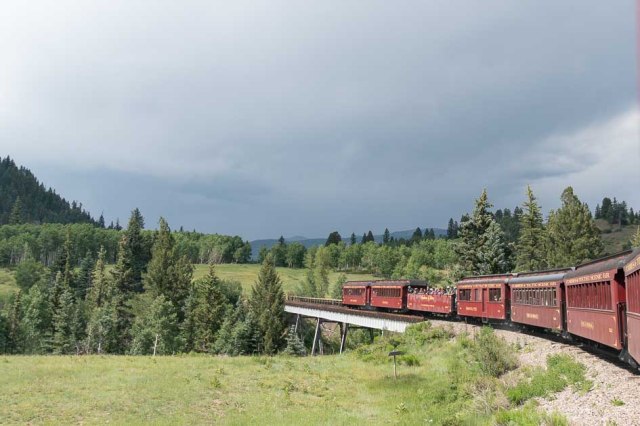
Approaching Lobato Trestle, the second highest bridge on the line at 100 feet (30.5 meters) above Wolf Creek
Apparently, the water guy was good-looking and Alma was single. And then there was the man who showed up at each road crossing. The women would hang out the windows, and wave and squeal like teenage girls.
Wolf Creek below the trestle
Bringing up the rear
It was a kick to watch a group of middle-aged women acting like teenagers and the grandpa acting like an excited boy. Their antics were just as engaging as the scenery outside the window. It was also cool to see all the people who parked and got out of their cars to take photos and wave at us.
Bustle racks above the seats. It’s in the details.
Time to go
What could be better than riding on a historic train, gazing out at the scenery passing by, listening to the docent tell stories about the people and history of the railroad, and snuggling in the seat with a best friend and spouse? Not much in my book.
A few facts about the Cumbres & Toltec Scenic Railroad (CTSRR)
The Denver & Rio Grande Western Railroad (DRGWR) operated from 1880 to 1968, transporting ore, livestock, freight, and passengers.
Cumbres Pass, Colorado, is at 10,015 feet.
The 1920s ushered in automobiles and graded roads, reducing the need for passenger rail service.
DRGWR discontinued passenger service in 1951 and freight shipments in the late 1960s.
The States of Colorado and New Mexico jointly purchased 64 miles of the Denver & Rio Grande Western Railroad in 1970 and renamed it the Cumbres & Toltec Scenic Railroad.
CTSRR was designated as a National Historic Landmark on October 12, 2012.
Since 1981, Friends of the Cumbres & Toltec’s vibrant volunteer program has and continues to preserve and restore the buildings, property, track right-of-ways, signs, and rolling stock. Through its assets and scenic tours, they also interpret the history of the railroad.
Each summer, the Friends hold volunteer work sessions in Antonito, Colorado, and Chama, New Mexico. Volunteers can choose from “mechanics, woodworking and painting to landscaping, food service, photography, and record-keeping.”
Catch a train ride at either Chama, New Mexico, or Antonito, Colorado.
In our final episode on Taos, New Mexico, we find the San Francisco de Asis Mission Church, drive out to the Rio Grande Gorge Bridge, and tour the Earthship Biotecture Site.
San Francisco de Asís Mission Church Ranchos de Taos, New Mexico
Built between 1772 and 1816, the San Francisco de Asís Mission Church is a National Historic Landmark. Located in the heart of the Ranchos de Taos Historic District, the church and plaza continue as the heart of the community.
Front of church faces the plaza
Shopping, food, and art galleries occupy the historic adobe homes and buildings surrounding the plaza where festivals are held. Some buildings are over 300 years old. Unfortunately, we had arrived way too early to poke around the shops.
Side view of church
A major restoration of the church in 1967 included the application of hard plaster to protect the exterior and prevent future damage. June of each year, parishioners and visitors alike gather at the church for the annual “enjarre,” or re-mud, of the exterior using a mixture of mud and straw. This process continues to protect the church.
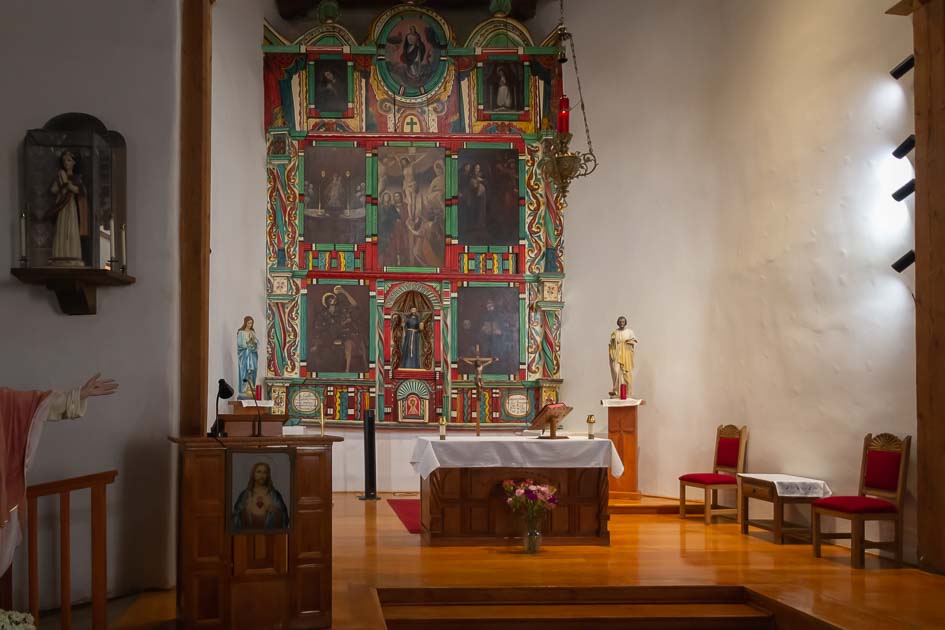
Altar inside the church
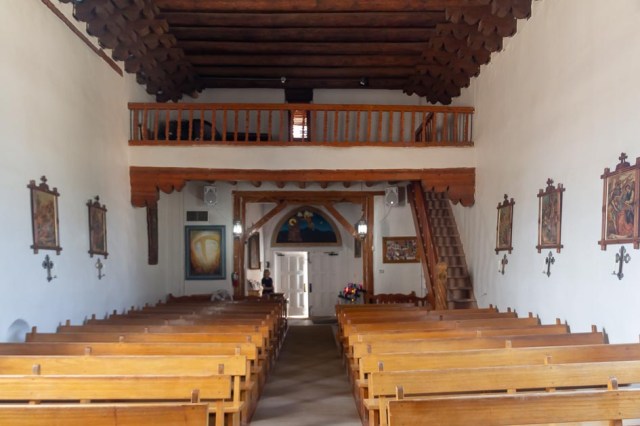
Inside the church, visitors will find stairs that lead to the choir loft above the entrance and an altar decorated with original Spanish woodworking and religious iconography. We missed out on the church tour, but I found an article by Teresa Dovalpage in the Taos News, in which she detailed her experience on such a tour.
Closer look of the altar
According to the article, the painting is “a life-size image of Jesus standing on the shore of the Sea of Galilee.” At the end of the documentary movie on the church’s history, the docent turned out the lights, and the “image of Jesus turned almost three-dimensional.” I wish we had arrived later in the day, caught the tour, and seen the painting.
Stairs lead to the choir loft
Before its donation to the church in 1948, the painting hung in the Dore Galleries of London and was on exhibit at the 1904 World’s Fair in St. Louis, Missouri.
Ansel Adams photographed the church, Georgia O’Keeffe painted the church, and other artists have used the church as their subject, often depicting the rear of the structure.
Rio Grande Gorge Bridge
We found parking on the east side of the bridge and walked across to the rest area, where additional parking and facilities were located.
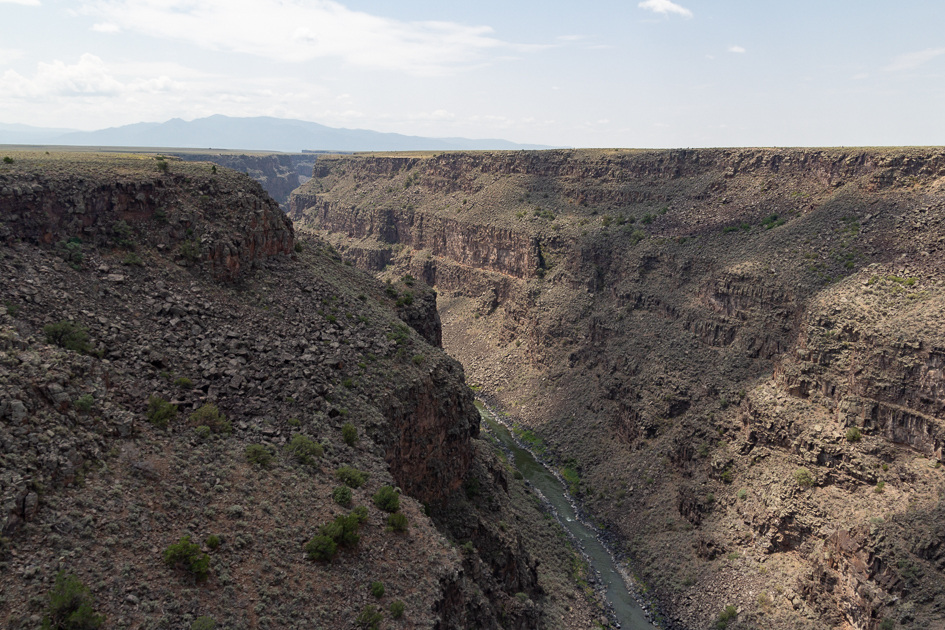
Rio Grande Gorge Bridge
The Rio Grande Gorge Bridge on US Route 64 spans 1,280 feet (390 m) and rises either 565 feet or 650 feet above the Rio Grande River. The exact height depends on who measured the distance and what gear they used.
Rio Grande
Completed in 1965, the bridge received a facelift in September 2012. The renovation comprised structural steelwork, a new concrete deck surface, new sidewalks, ramps, and curbs and gutters. The bridge has served as The National Register of Historic Places listing in Taos County, New Mexico. Natural Born Killers, Twins, Terminator Salvation are but a few of the movies in which the bridge appeared.
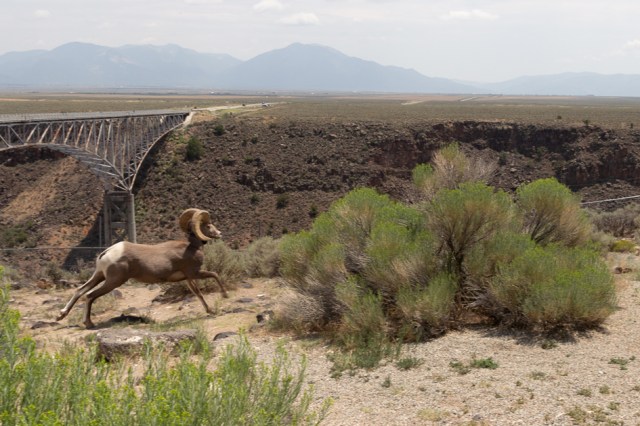
Run, Bighorn, Run
The best part of our visit to the bridge was when a bighorn sheep climbed up the hill and ran past us as we stood, taking photos. At one point, the animal charged toward me, and I had to duck behind a wall to get out of its way. I’ve seen bighorn sheep somewhat up close before, just not close enough to fear a collision.
Earthship Biotecture
Are you looking for an unusual bed-and-breakfast for your next adventure, complete with Wi-Fi and TV? Rent a Biotecture Designed Earthship for a night or two. In the Greater World Earthship Community in Tres Piedras, New Mexico, are several Earthships to choose from. [insert website]
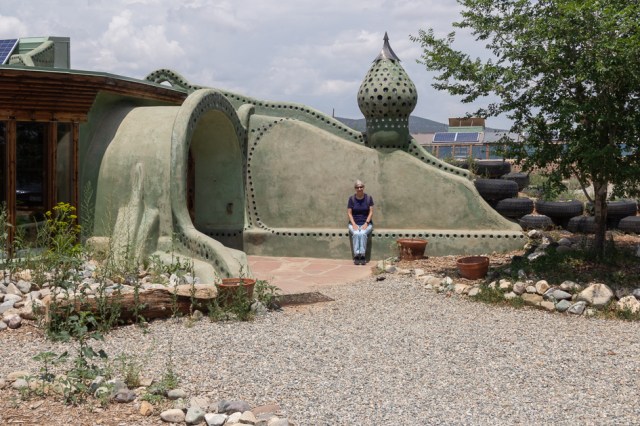
Built using natural and repurposed materials, the off-grid homes include thermal/solar heating and cooling, solar and wind electricity, water harvesting, a contained sewage treatment system, and food production. These are the six design principles of Earthship Biotecture.
Me outside of the visitor center
A visitor center includes posters and displays describing the buildings and details of the building methods and materials and continues through the home.
Houses across the dirt path from visitor center
Another Earthship
Wrap Up: A hidden Valley and a Surprise Sunrise
Several yards out our back RV window, a parade of cars, trucks, and motorcycles motored along a gravel and dirt road every day. Where were all these people going and coming from? A sign at US Highway 64 and Valley Escondido Rd. advertised the Valle Escondido golf course.
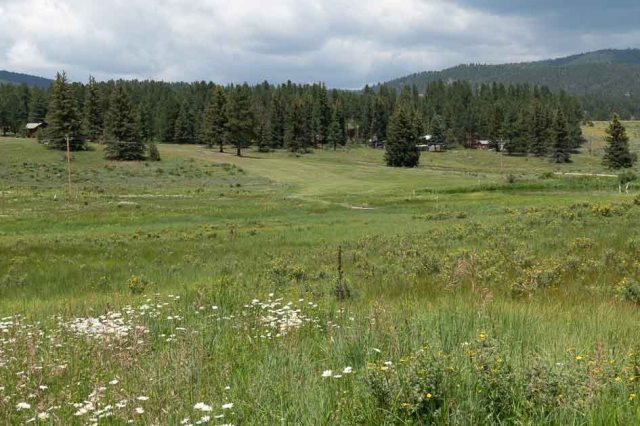
Recent monsoons made for lush green grass
On our last day at Taos Canyon Stop RV, we drove to see what attracted all those vehicles. Sure enough, there was a golf course, a clubhouse, and a bright green valley sparsely populated with a community of residential and vacation homes.
Wildflowers still in bloom
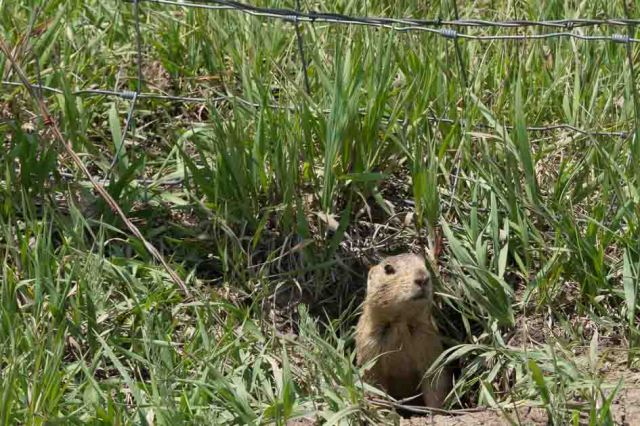
Oh, and I can’t forget the prairie dogs popping their heads up out of their holes to see what was happening over yonder.
I’m ready for my photo
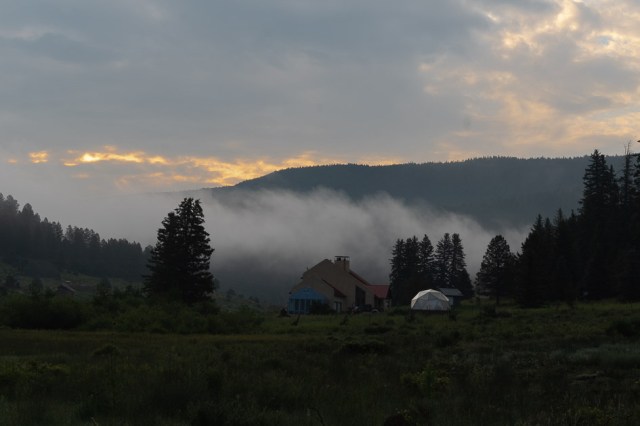
The morning before we left Taos Canyon, the sunrise gave me a present. Clouds hung low in front of the mountains, reaching the ground in a few places as the sun rose and poked through the cloud breaks. I pulled on my jeans and jacket, tied my shoes, and grabbed my camera.
Fog at sunrise
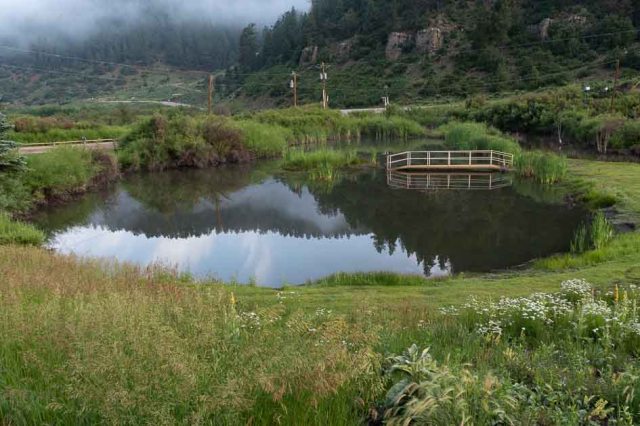
Reflection lake
The office at Taos Canyon Stop RV Park
There’s nothing more peaceful than walking among nature early in the morning, spying subjects to photograph, and clicking the shutter. It was a perfect ending to a perfect week of exploring Taos and its surrounding area.
Next up: We head to Chama, New Mexico, for a ride on the Cumbres and Toltec Scenic Railroad, a visit to Ghost Ranch, Heron Lake State Park, and a bit of relaxing.
In this episode, we travel a portion of the Enchanted Circle Scenic Byway and stop at a few spots along the way. New Mexico Routes 38 and 522 join with a portion of US 64 to create the circle and connect the towns of Taos, Angel Fire, Eagle Nest, Red River, Questa, and Taos Ski Valley. We previously included Angel Fire and Taos in episodes 1 and 2.
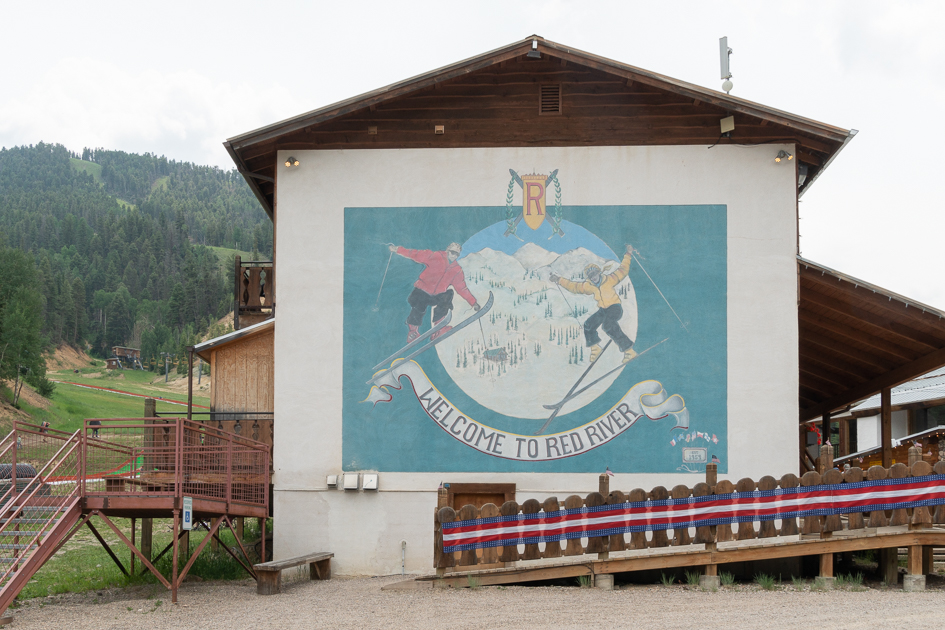
Red River
Ski Area Summer Fun
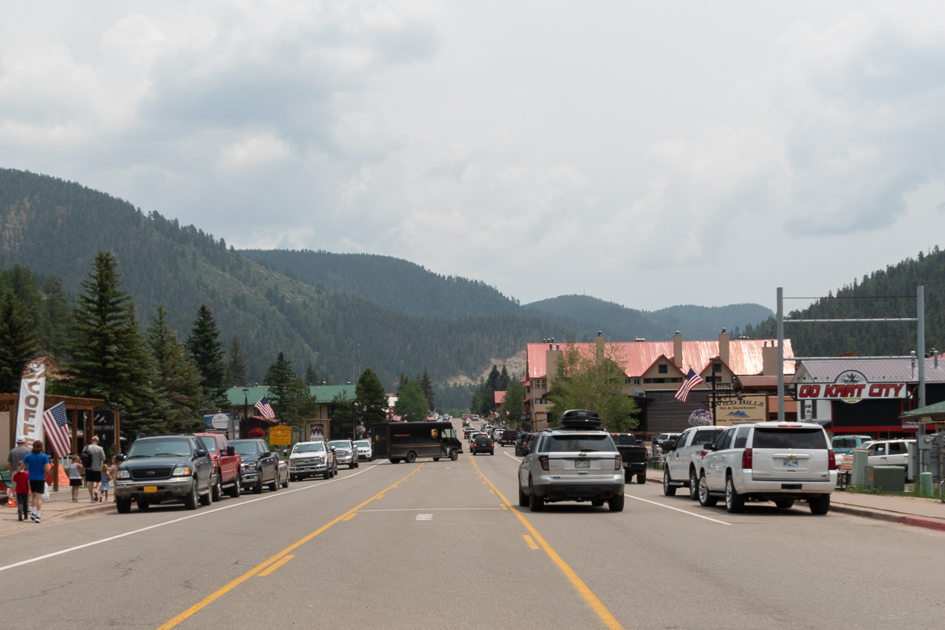
The town of Red River is appropriately named after, you guessed it, the Red River. The short perennial river begins its journey high in the Sangre de Cristo Mountains at the top of Mount Wheeler. As the stream flows down the north slope of the mountain, springs add their water, and the river makes its way through the towns of Red River and Questa before turning south and merging with the Rio Grande.
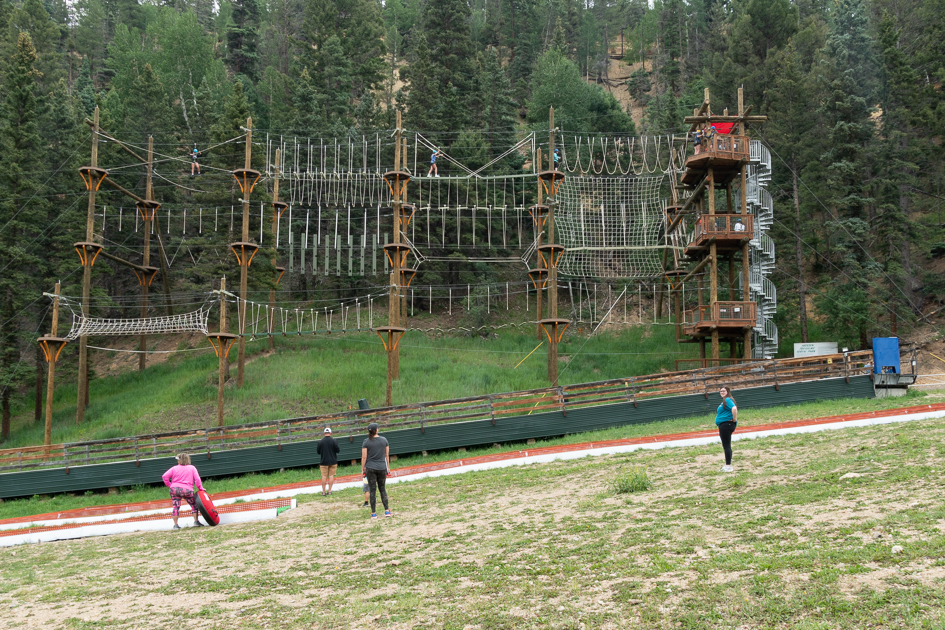
Combo zip line and obstacle course at ski area
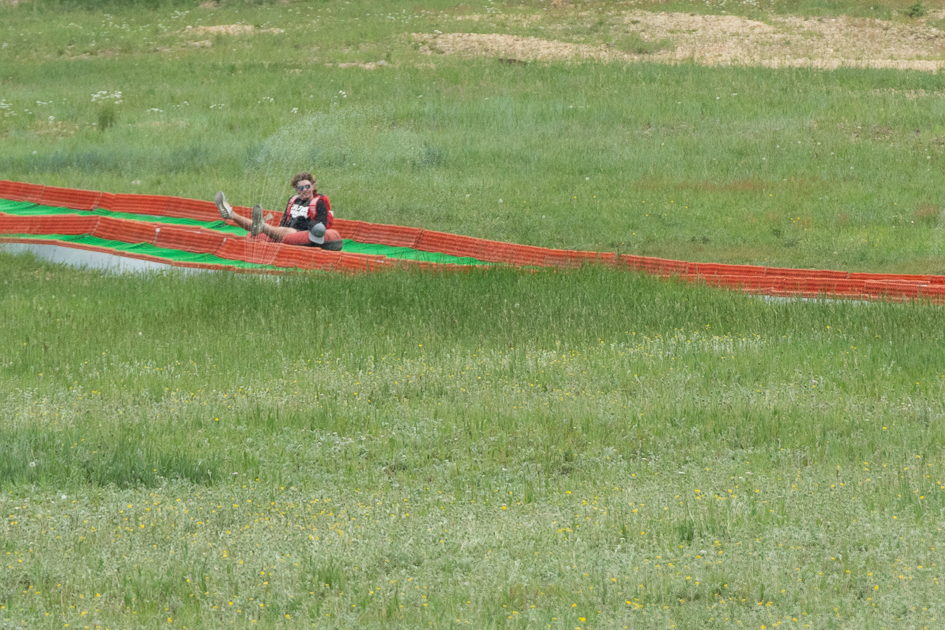
Inner tube sliding looked fun
Red River started its life like other towns in the western regions. After the US government forced the Jicarilla Apache and Utes, who called the place home for centuries, to move to reservations, miners rolled into the valley in the late 19th century with visions of gold and silver in their eyes. Established in 1895, Red River’s mining activities were roaring. But they peaked in 1897 and faced a speedy decline until 1905.
Monsoon is on the move
Fortunately, the town did not suffer the ghost-town fate of other mining towns. Enterprising residents recognized trout fishing as a draw for residents and travelers in lower elevations to escape the summer heat of the valleys. And so Red River’s economy switched from mining to recreation.
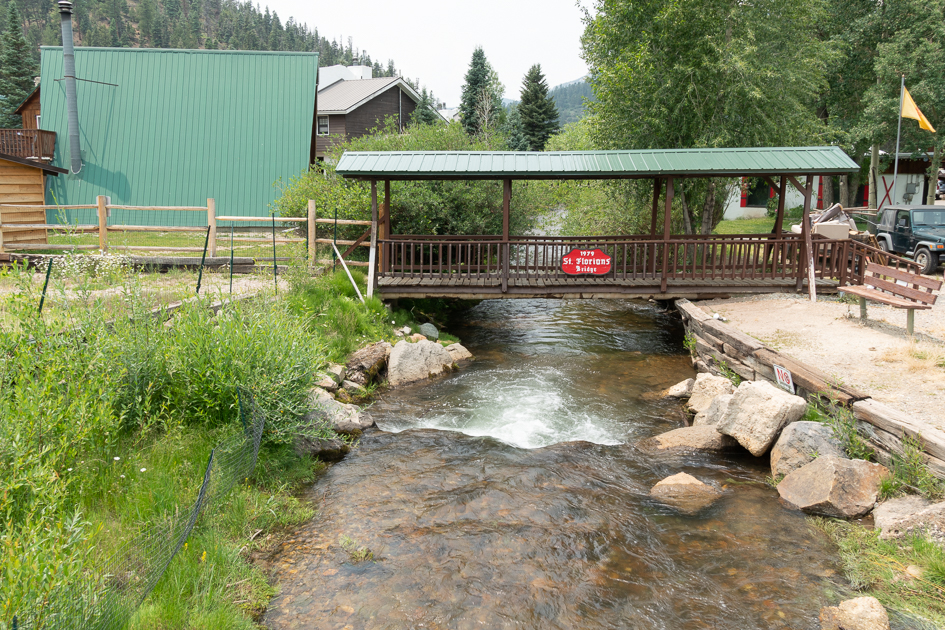
A river runs through it
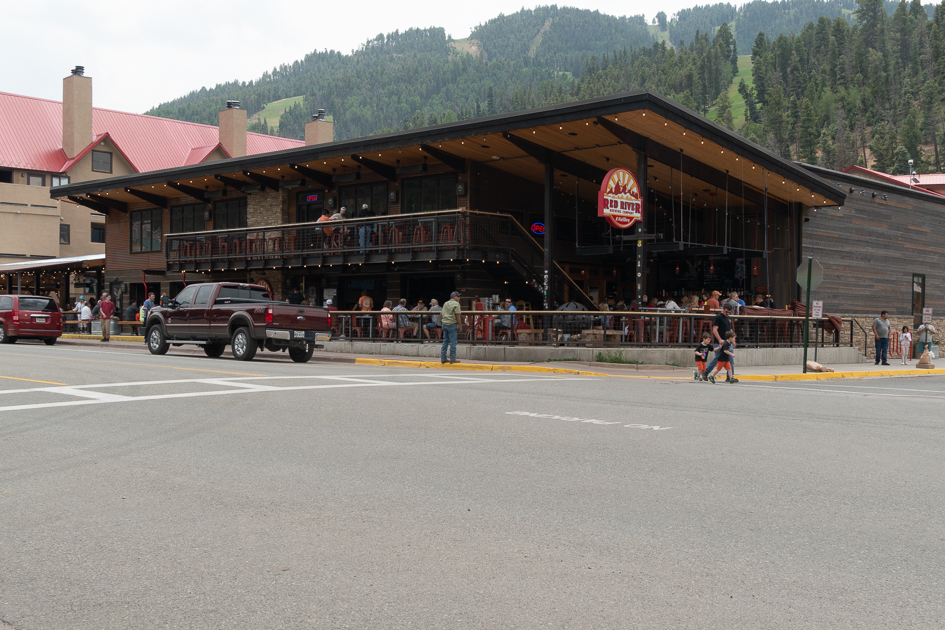
Red River Brewing Company was mighty popular
In December 1959, Red River Ski and Summer Area opened for the first time. Partially within public lands under a long-term special use permit with the Forest Service, the family who owns and operates the resort provides activities in both winter and summer.
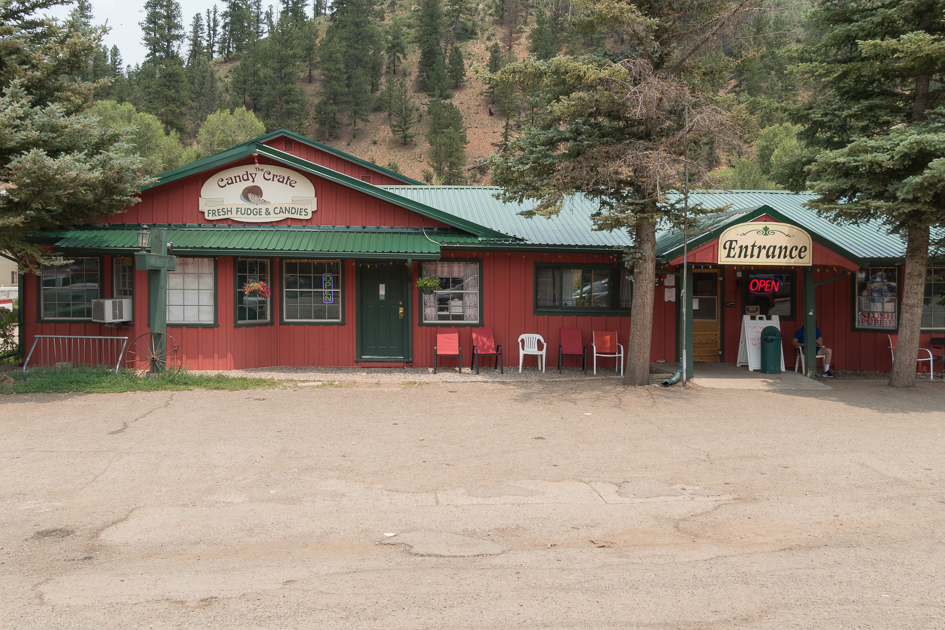
For those with a sweet tooth
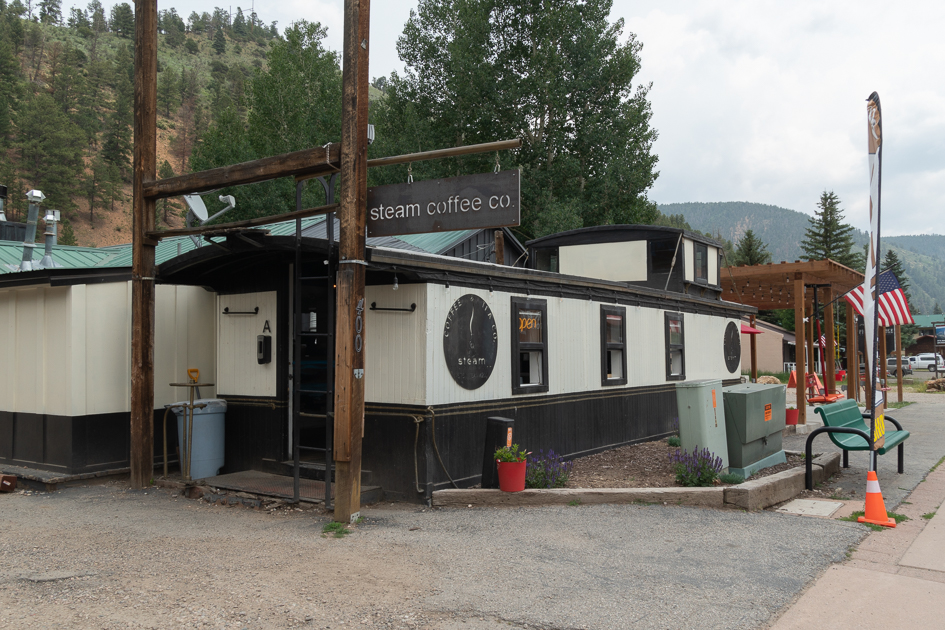
Cozy spot with patio
Besides fishing and skiing, other events are held throughout the year to attract visitors and keep the town hopping. It’s amazing how a town of only 460 people manages to offer so many celebrations like the Songwriters Festival and Mardi Gras in February and the Memorial Motorcycle Rally over Memorial day. Car shows, art and wine festivals, music festivals, and Oktoberfest are other reasons to make the 36-mile trip from Taos or drive up from West Texas.
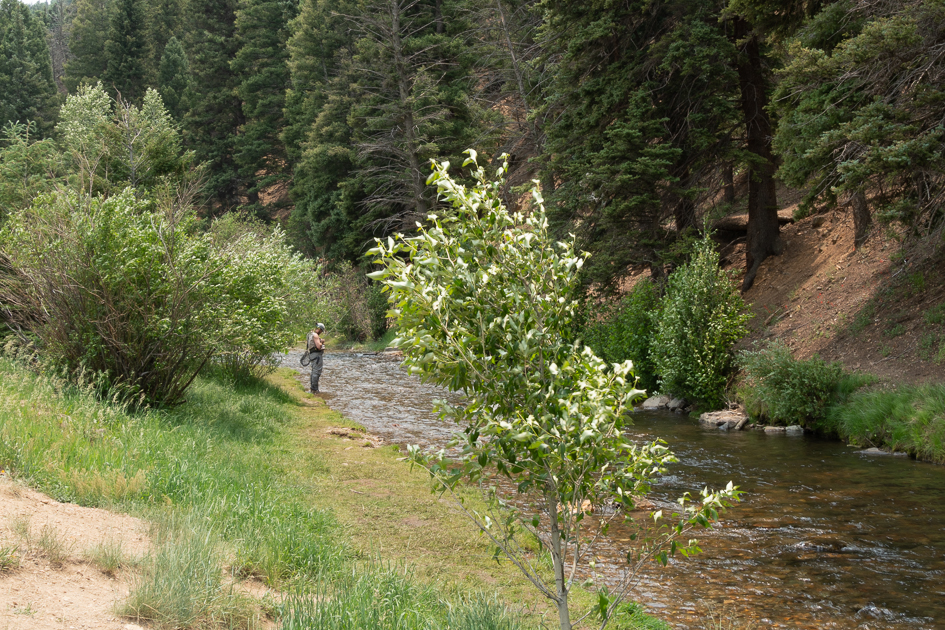
Fishing allowed in town
Cimarron Canyon State Park
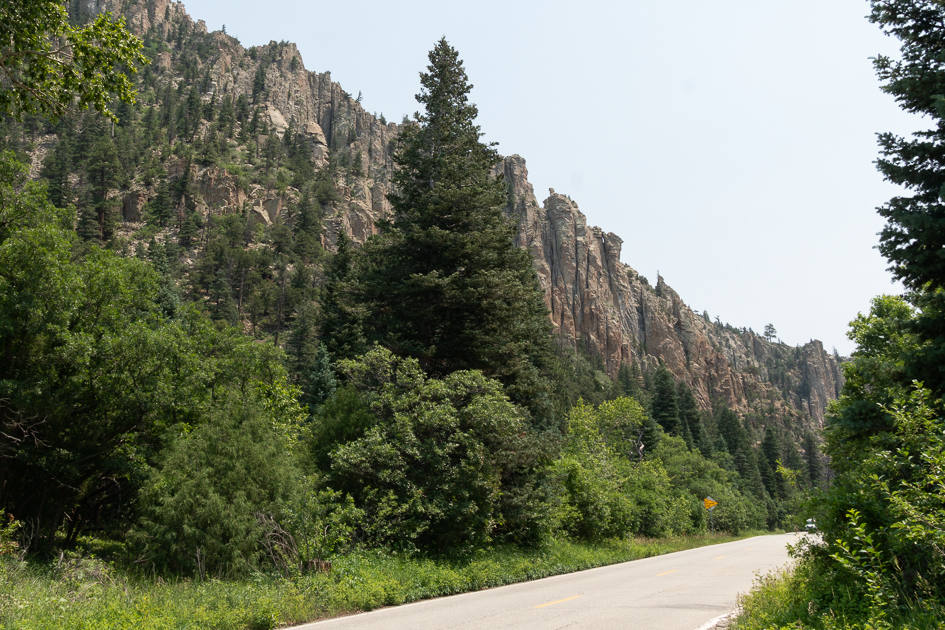
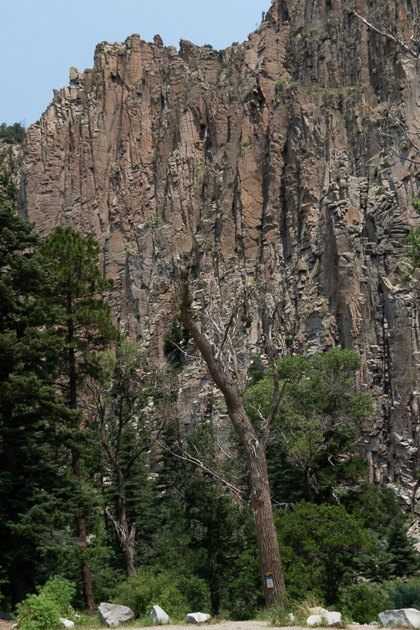
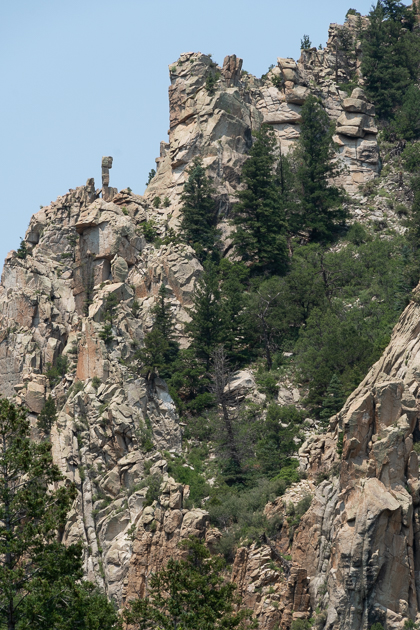
Hiking trails, trout fishing, picnic areas, and campgrounds await travelers and visitors east on US 64 from Eagle Nest Lake. On our way to the Village of Cimarron through the 8-mile long narrow canyon, we stopped to gawk at the craggy cliffs at Palisades Sill. The cliffs are a scenic, historic site and worth a stop. Be sure to pay the $5.00 entrance fee if enjoying the sites. Every bit helps to protect our parks, and pay stations are nearby.
US 64 highway through Cimarron Canyon
Make a wish
The walls rise 400′
Up periscope
Cimarron
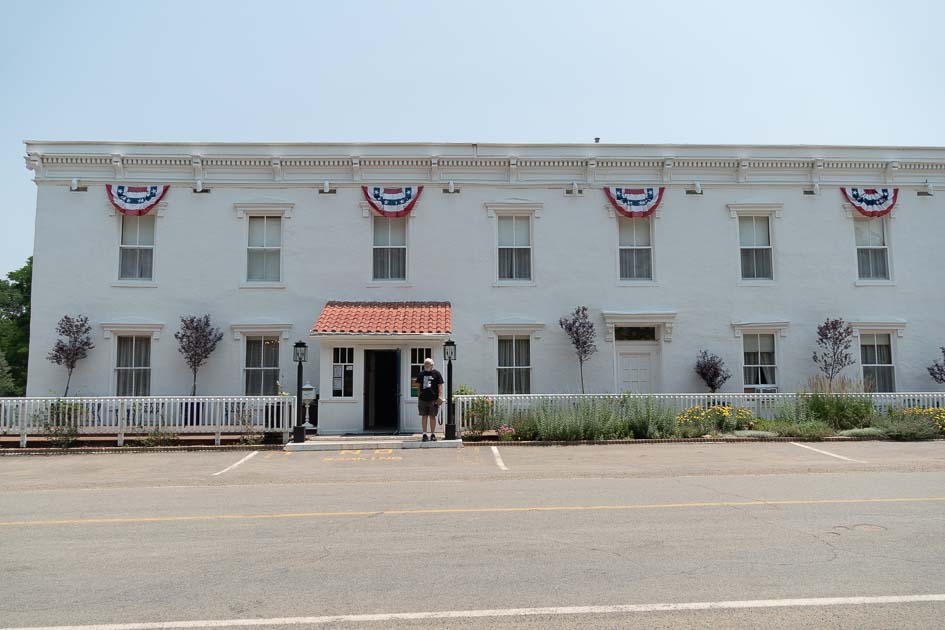
About 10 miles from the state park is the small Village of Cimarron, New Mexico, with a population of approximately 865, down 155 people over the past 10 years. Our main goal for driving to Cimarron was to try the restaurant at the St. James Hotel.
St. James Hotel
Our neighbors at Taos Canyon Stop RV Park told us they enjoyed a quiet lunch at the restaurant. We were not so lucky. The day of our visit was Wednesday, and the hotel and restaurant are closed on Tuesday and Wednesday.
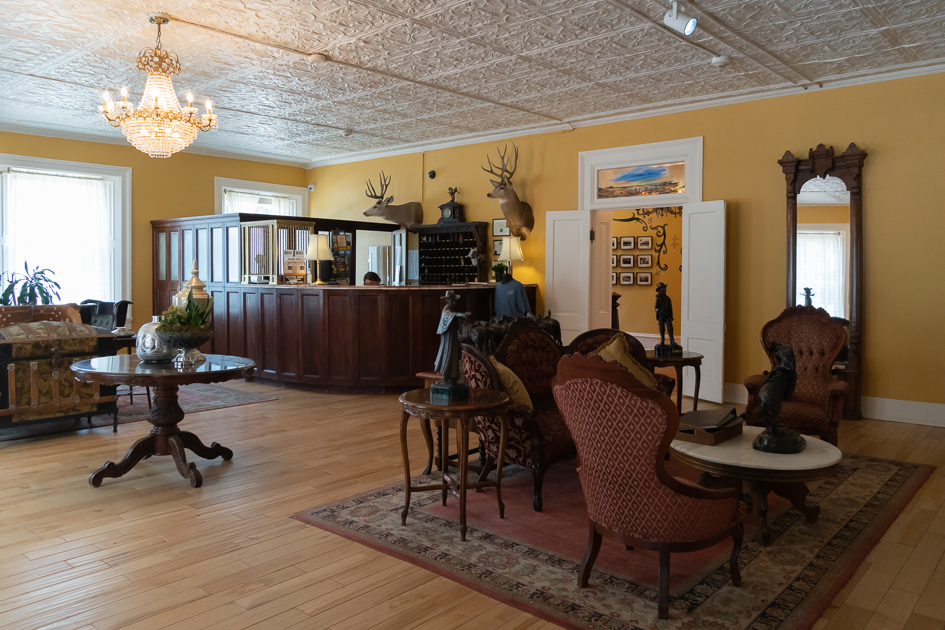
St. James Hotel lobby
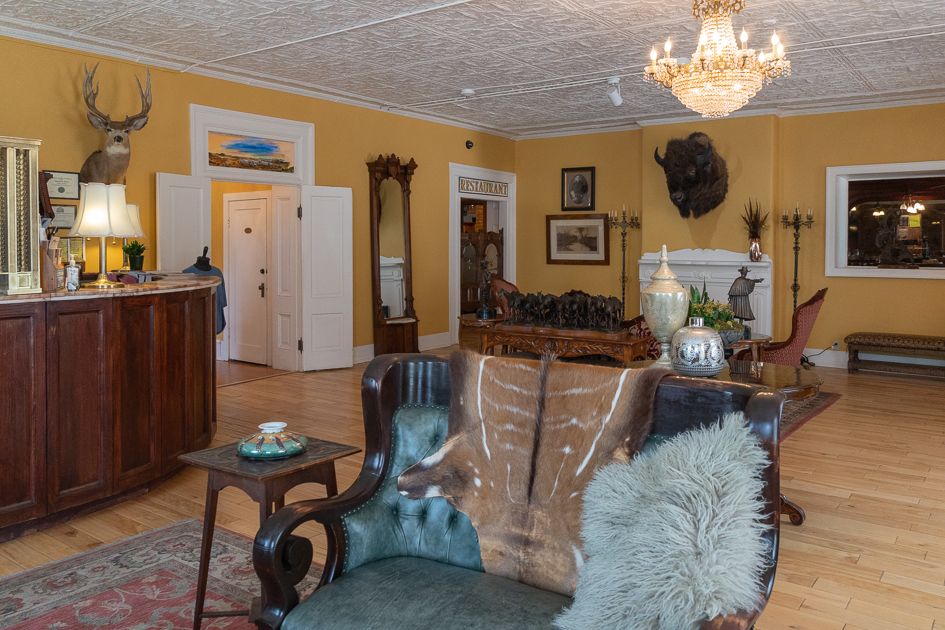
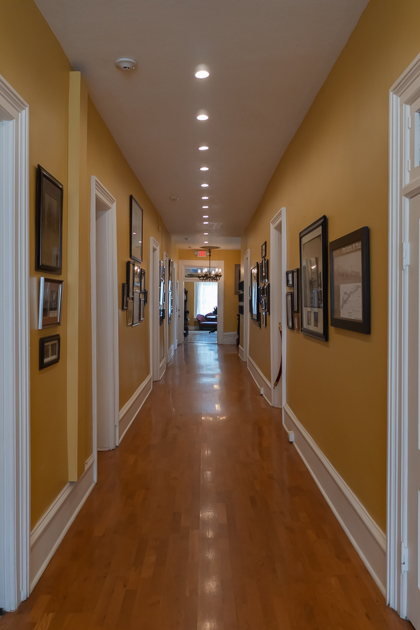
With the door open, at least we could wander around the bottom floor and peek into a few rooms. In the hallway, we found photos and signs with historic information about the town, hotel, and people.
St. James Hotel lobby
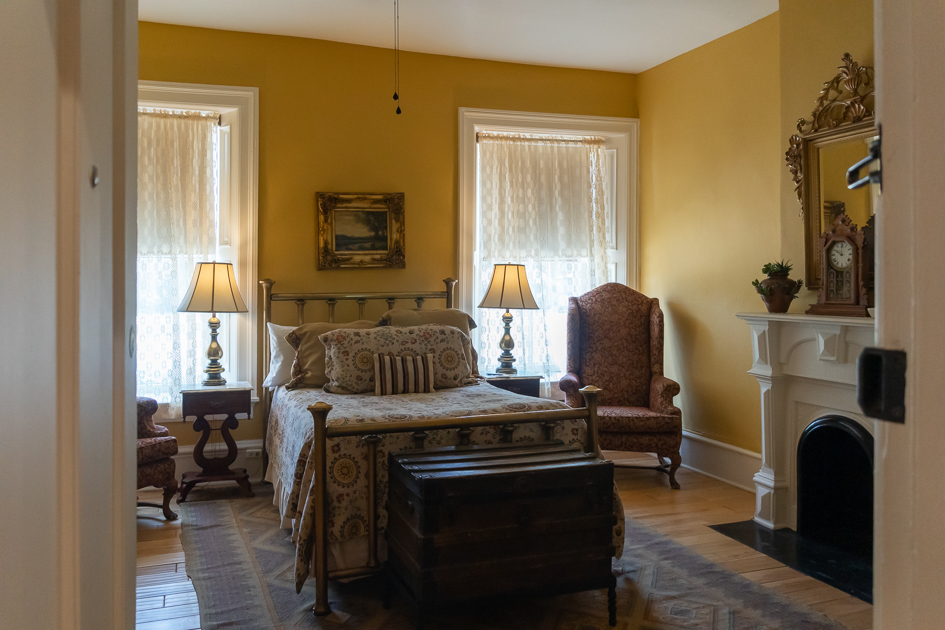
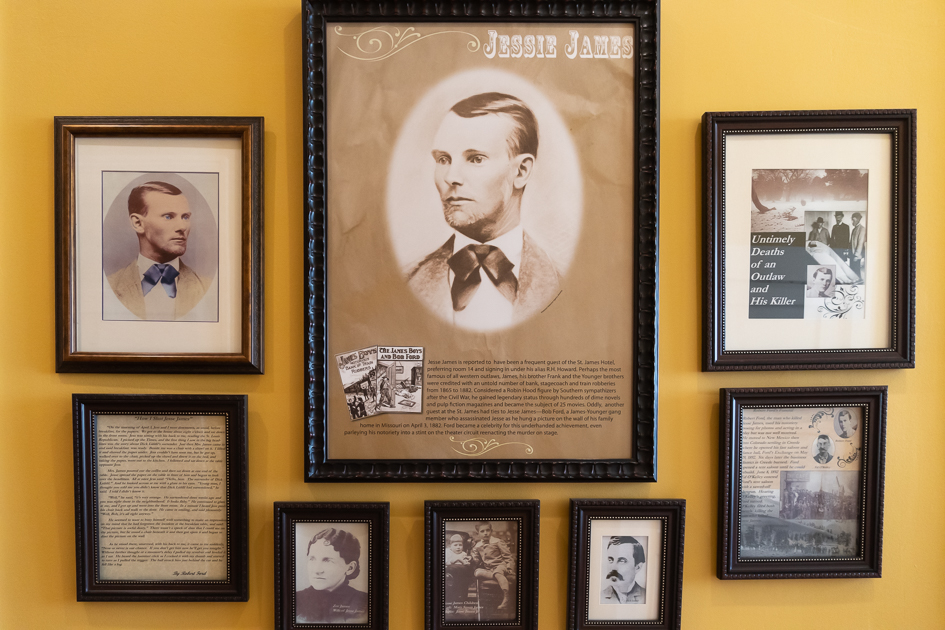
How cool would it be to stay in a room named after Bill Cody, Annie Oakley, or Doc Holliday? Or how about room 14, where R.H. Howard, A.K.A. Jesse James, reportedly preferred to lay his head while in Cimarron?
St. James Hotel hallway
Looks comfy to me
The Life and Times of Jesse James
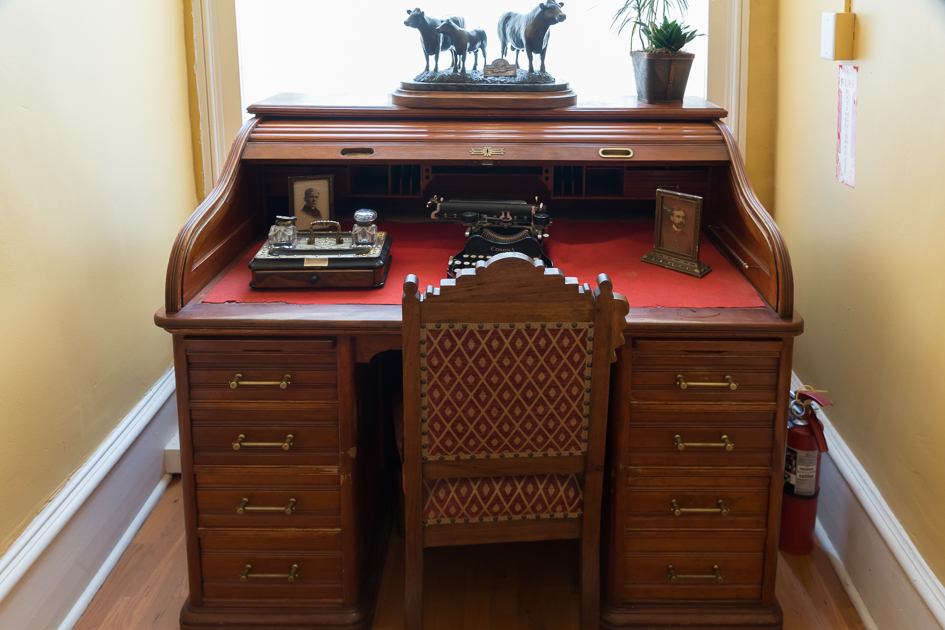
We have it so easy with our laptops and keyboards
St. James Hotel courtyard
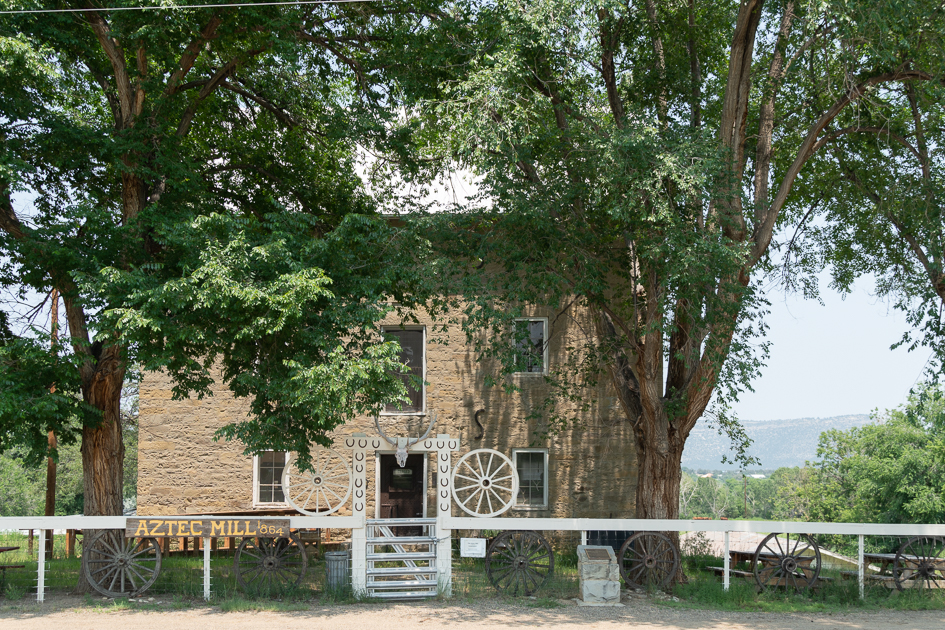
Aztec Grist Mill Museum
Down the road from the St. James Hotel, towering trees hid the Aztec Grist Mill Museum, and a locked gate barred my entry. Another pandemic victim. While taking photos of the stone building, a ranch hand happened by. While we talked, he ticked off all sorts of treasures sequestered inside the locked museum, whetting my appetite to take a peek.
Aztec Grist Mill Museum
Unfortunately, he didn’t have keys to let us in the locked door. I did learn the Aztec Grist Mill was built in 1864 to provide ground grains for the Maxwell Ranch and the Jicarilla Apache Indian Reservation.
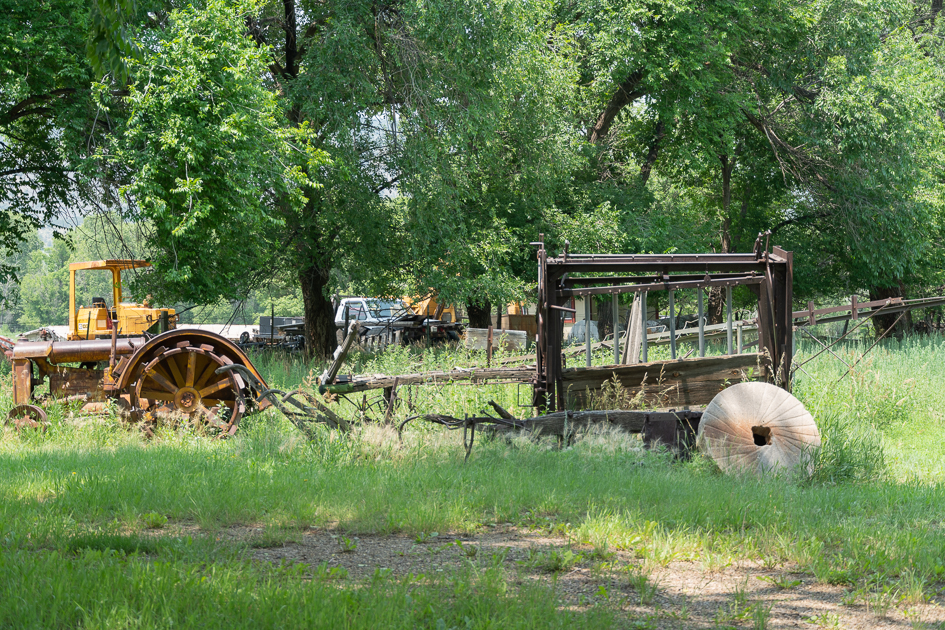
Antique farm equipment at the museum
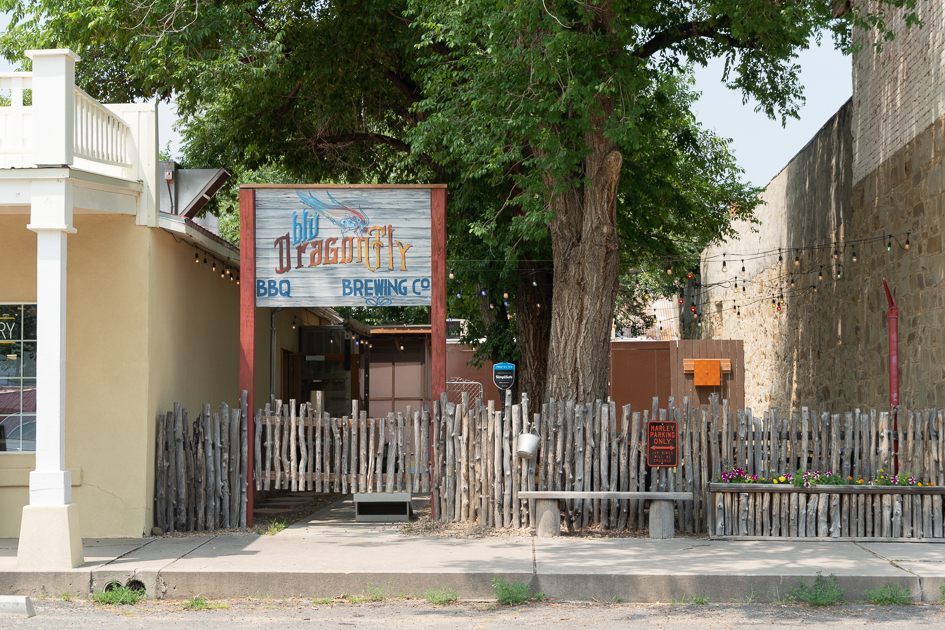
Blu Dragonfly Brewing Company
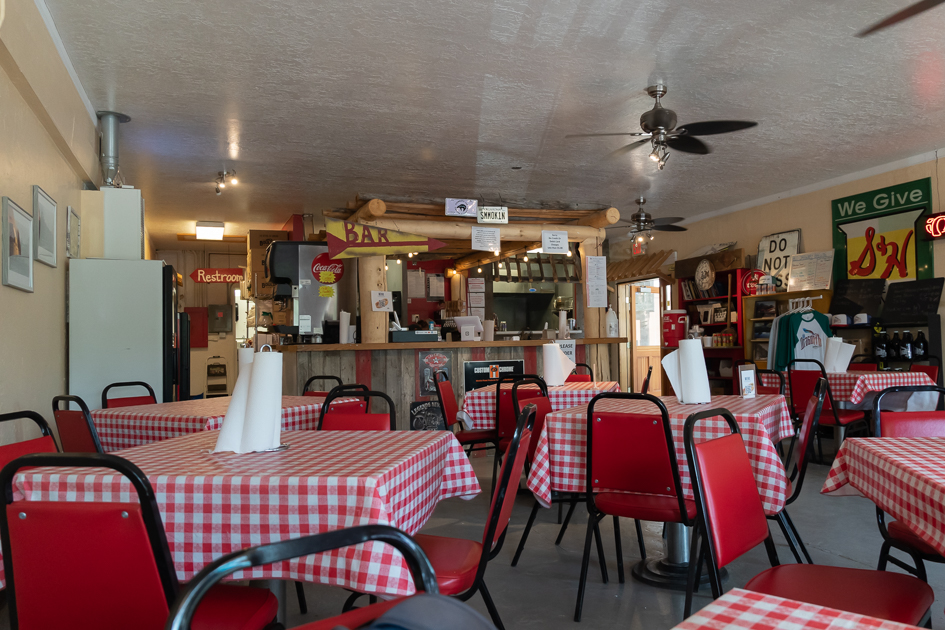
We searched for somewhere to have lunch, and the only place we could find open was the Blu Dragonfly Brewing Company. Their sign said BBQ, which I read as pulled pork sandwich. Inside it was the Dog House Taproom, and the only thing on the menu was hot dogs.
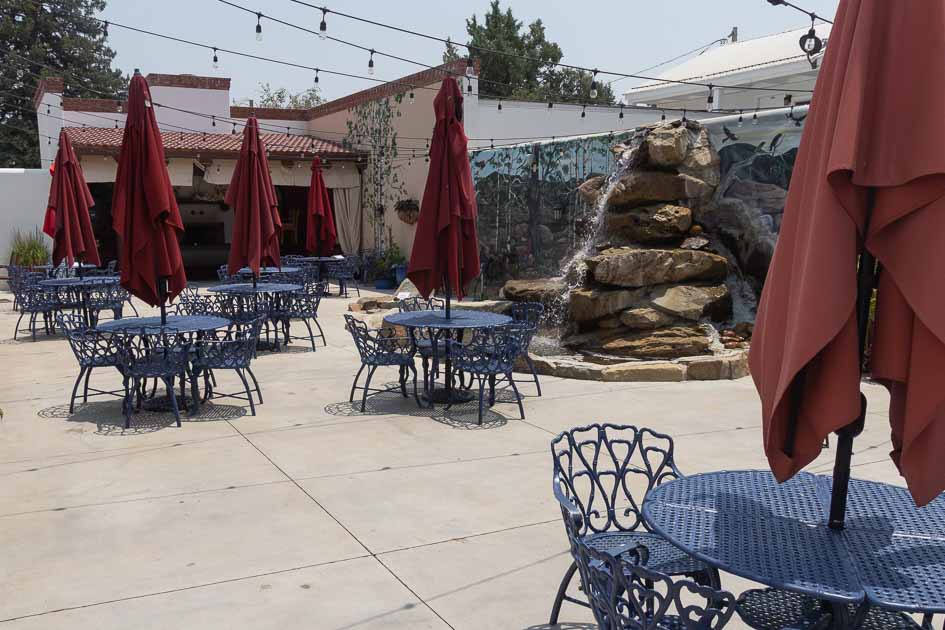
Outdoor seating at Blu Dragonfly Brewing
The menu included a Plain Jane Pup, similar to the classic Nathan’s Famous; Man’s Best Friend, a classic coney with meat sauce, mustard, cheese and onions; and many other dogs in a bun with various toppings. Jon was happy to sit down with his dogs. Me, not so much. I was promised a pulled pork sandwich, so I wanted a pulled pork sandwich, although I did eat my plain hot dog. My craving for the sandwich, though, lasted for more than a week before we found a place that served what I wanted.
Inside eating at Blu Dragonfly Brewing, or was it the Dog House Taproom?
With most everything closed for the day and only a few people about, the village looked as if it was heading toward ghost town status.
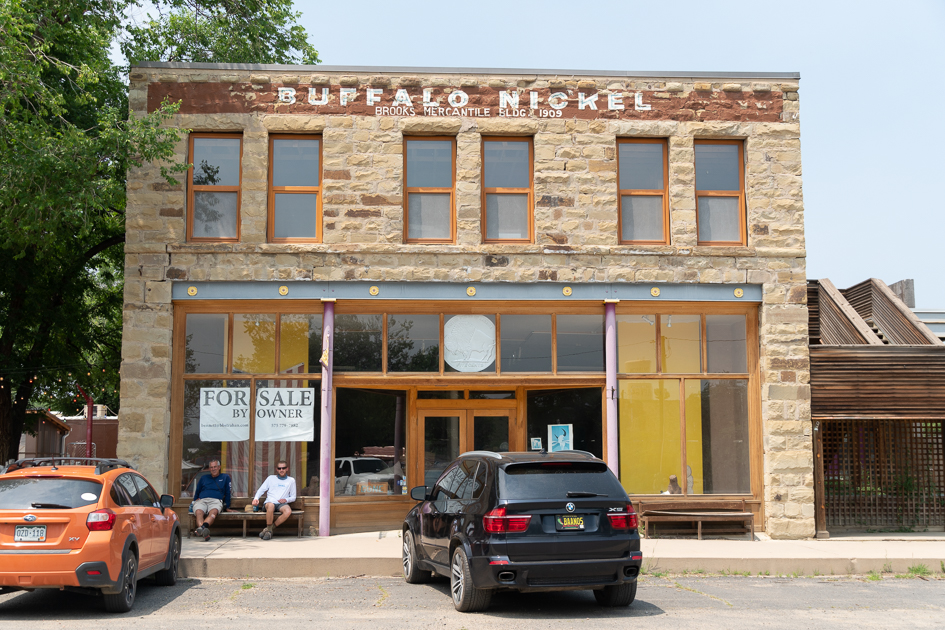
Were the businesses closed for the day or permanently? It was hard to tell
Looks like someone is over there in one of those buildings
A sturdy building looking for an owner
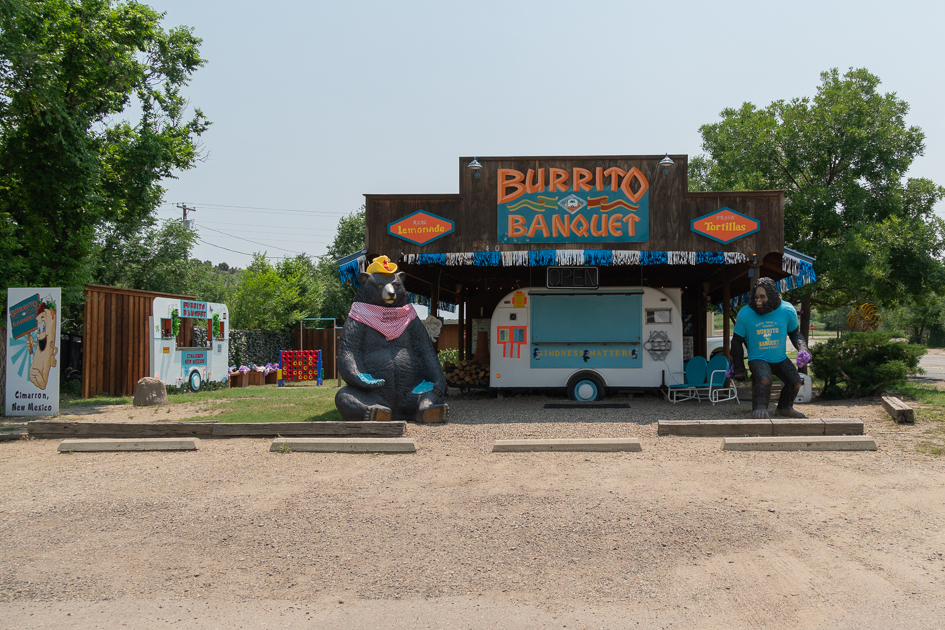
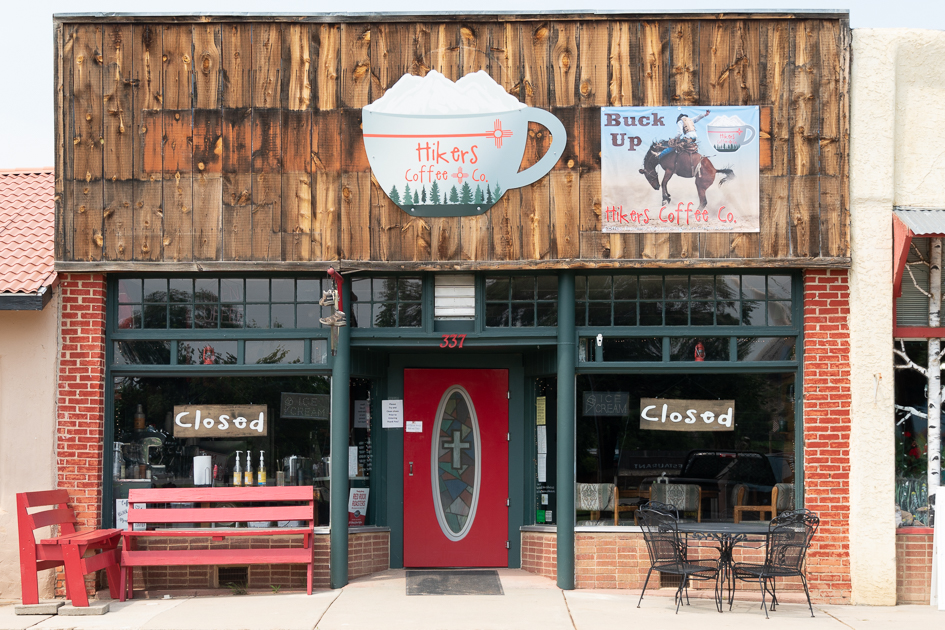
I preferred the more promising future told by Burrito Banquet, Hikers Coffee & Co., and the colorful park and hope other enterprises come along soon to revive Cimarron.
No burritos for you today
No coffee either
Cute little park for kids
We hope to make it back to the area some day so we can see and do more than we could during this trip. We missed out on hiking, riding the ski lift, visiting the Taos Pueblo, the D. H. Lawrence Ranch, and many other sites.
Next up: San Francisco de Asis Mission Church in Ranchos de Taos, the Rio Grande Gorge Bridge, and the Earthship Biotecture site.
























 The Traveling Todds