Spring 2023 Adventure: Episode One – On the Road Again

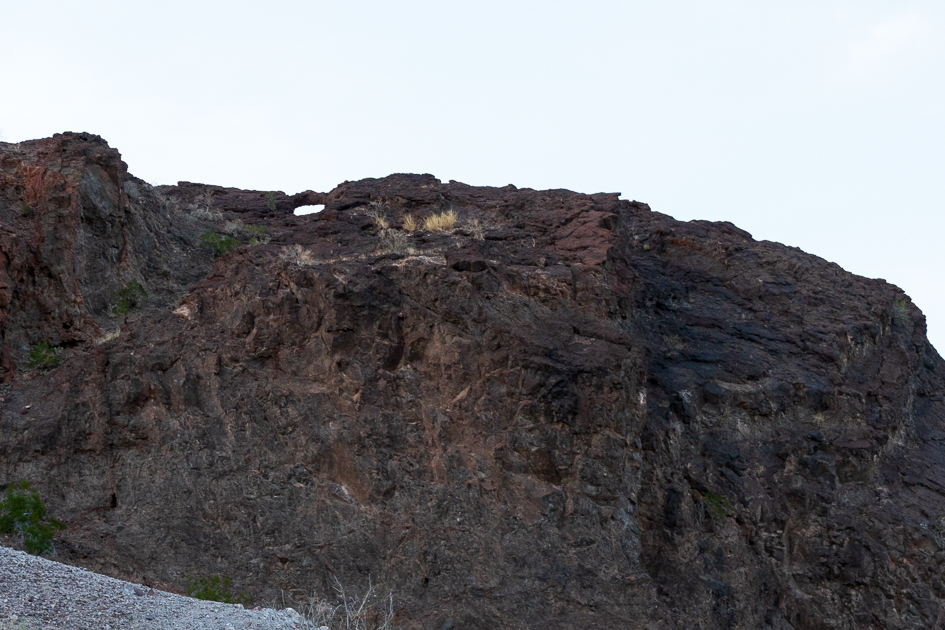
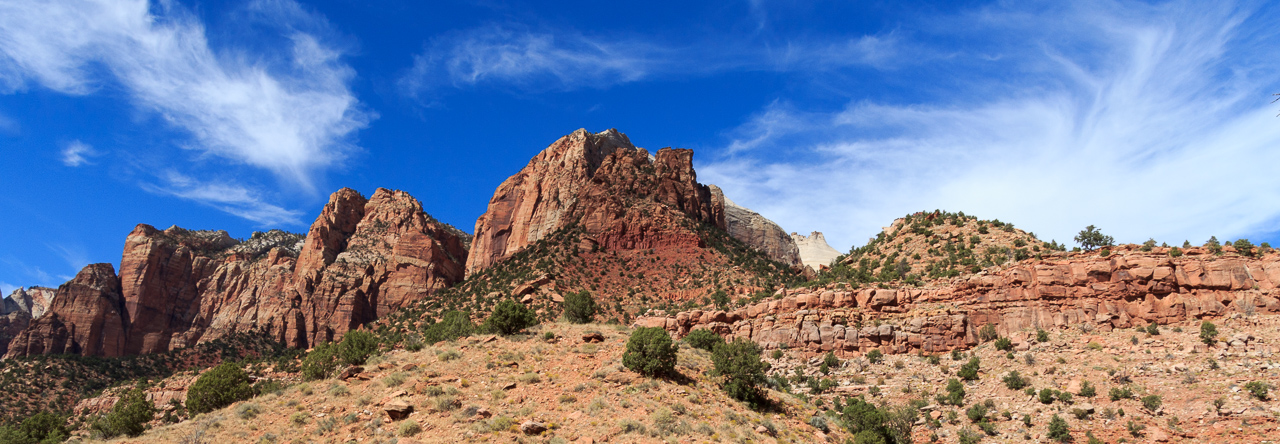
Our Spring 2023 Adventure to Springfield, Missouri, began on March 13, 2023, with a one-night stay in Tehachapi, California, followed by one-night stays in Barstow, California, and Kingman and Holbrook in Arizona. We enjoyed mustard fields and green hills on I-5 through the central valley of California, and flashes of yellow and purple wildflowers and gum drop-shaped pinon pines nestled atop yellow grass as we drove along I-40 in Arizona. Clearly, evidence of the bountiful rain this winter in the southwest.

Mustard fields
Jets making contrails in the sky
Gliders waiting for sunshine in Tehachapi

What we didn’t enjoy was the teeth-rattling, pothole-strewn pavement we had to drive on. Calling it a freeway was an insult to all other freeways in the country. It was easy to see three or four layers of the roadbed in the potholes, some spanning nearly 12 inches in diameter. And trying to dodge the smaller ones was an impossible task because there were so many of them clustered together.

The Troubles

On our fifth day, we left Holbrook, Arizona, toward Albuquerque, New Mexico, on I-40. Finally, the New Mexico welcome sign was in sight, followed by the Manuelito Welcome Center and rest area. It was a good place to stop, eat lunch, and release stress.

Jon did his usual cursory check of the trailer, and we were back on the road. I took the wheel and headed toward Albuquerque with only two and a half hours to go. My mouth watered for the dinner I’d have at El Pinto, one of our favorites in Albuquerque. A half-hour later a woman in the neighboring lane rolled down her window and waved to tell us, “Your tire is on fire.”

A tire on fire. How could that be? The side mirror revealed nothing. Was she playing a joke on us? I pulled into a Gallup, New Mexico, Maverick Gas Station and parked in the back, making sure the truckers could maneuver around us in their big rigs. We stood dumbfounded as smoke poured out of the trailer’s left rear wheel hub—its plastic cap melted and red-hot metal visible on the axle.

After spewing a string of choice words not fit to print, Jon said. “This will either be a quick fix or a very expensive one.” I hoped for the quick fix, although the pit of my stomach worried our bank account would take a beating.

Time slipped by as Jon talked with the insurance company’s road service and made arrangements with the tow truck driver. After a five-hour wait for someone to arrive to help us, my dinner at El Pinto disappeared with the sinking sun.

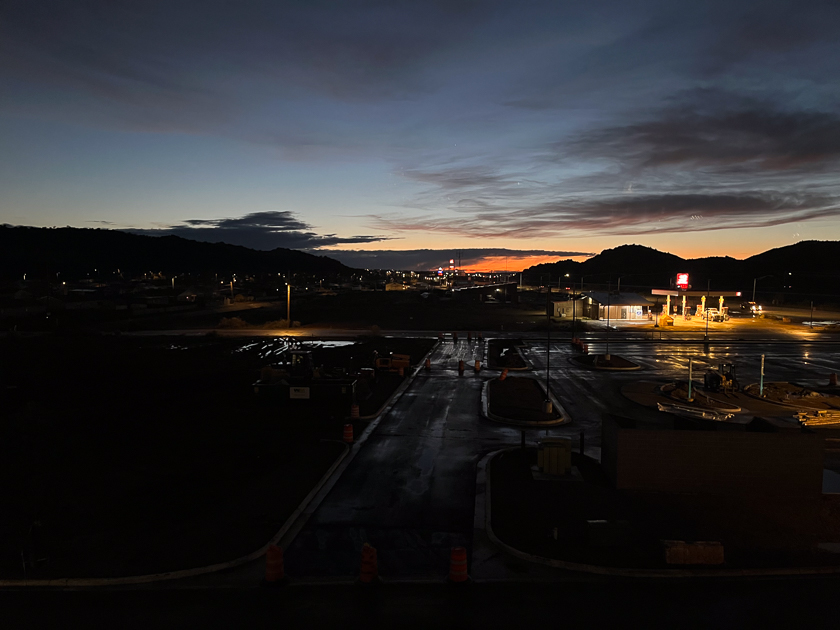
No El Pinto tonight, but Jerry’s was tasty
Hey! It’s snowing out there.

Dennis, the tow truck driver, assured us he could help by removing the axle and reinstalling it if we drove to Albuquerque to either get it fixed or buy a new one. And when he removed the axle, he found the cause of our issue: the right rear leaf spring had broken, causing the weight to shift, putting too much pressure on the left bearing, resulted in disintegrating the bearing and ruining the axle. It’s possible I-40 through Arizona was also a contributing factor. We left the fifth wheel on jack stands in the Maverick parking lot, spent the night in the motel next door, and drove in a snowstorm to Albuquerque and back.

Tell me about it.

We didn’t return to Gallup until 5:30 pm. Dennis came and finished installing the new axle (new axle including new leaf springs and brakes and drums $1,159) at 11:00 pm (Dennis’s rate $844). We extended our one-night stay in Albuquerque to four since all the RV service and tire stores were closed by the time we arrived on Saturday, March 18.

With a new rear axle, packed bearings, and brakes, we felt it necessary to have the front axle bearings packed and brakes replaced, all 4 tires replaced, and both axles aligned. New tires were the easy part ($1,054). The axle alignment ($1,054) required us to grovel to get it done on the day they promised it, and after waiting all day for the brake work ($569), we learned they couldn’t look at until the next day. We brought it back at eight in the morning and they promised it by noon. It was three until we left Albuquerque, putting us in our Amarillo, Texas, site at ten. We hate driving and setting up in the dark. Unfortunately, when you’re depending on others to do what they promised, you are at their mercy.

National Museum of Nuclear Science and History, a Smithsonian Affiliate

While we waited for the brake work, the National Museum of Nuclear Science and History, established in 1969, promised us a respite from our troubles and helped to keep our anxiety in check.

Through its displays and exhibits, the museum traces the timeline of nuclear science from its infancy, the development of the WWII bombs, the cold war, and current and future uses. Outside is a nine-acre exhibit that includes various planes and rockets and missiles.

For several minutes, I stood in front of the Critical Assembly, the Secrets of Los Alamos 1944: An Installation by American Sculptor Jim Sanborn.

All the objects on display amazed me. Many of the items are actual instruments, hardware, furniture, and tools used by the Los Alamos National Laboratory during the 1940s. Sanborn fabricated any items he could not locate.

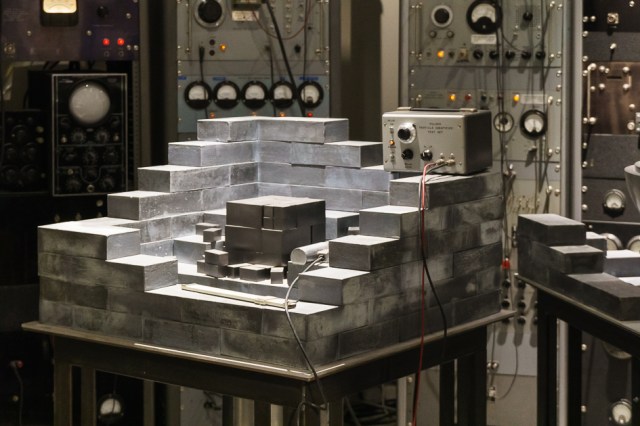
Critical Assembly, The Secrets of Los Alamos

Curated by The National WWII Museum in New Orleans, the Bob Hope exhibit brought to mind memories of watching him entertain the troops on television. This exhibit closed on April 30, 2023.

Various missiles
Play space for the kiddos

The Delorean is part of the Atomic and Pop Cultures exhibit. Remember the Flux Capasitor from the movie Back to the Future? It’s what made time travel possible.

The Delorean is part of the Atomic and Pop Cultures exhibit.

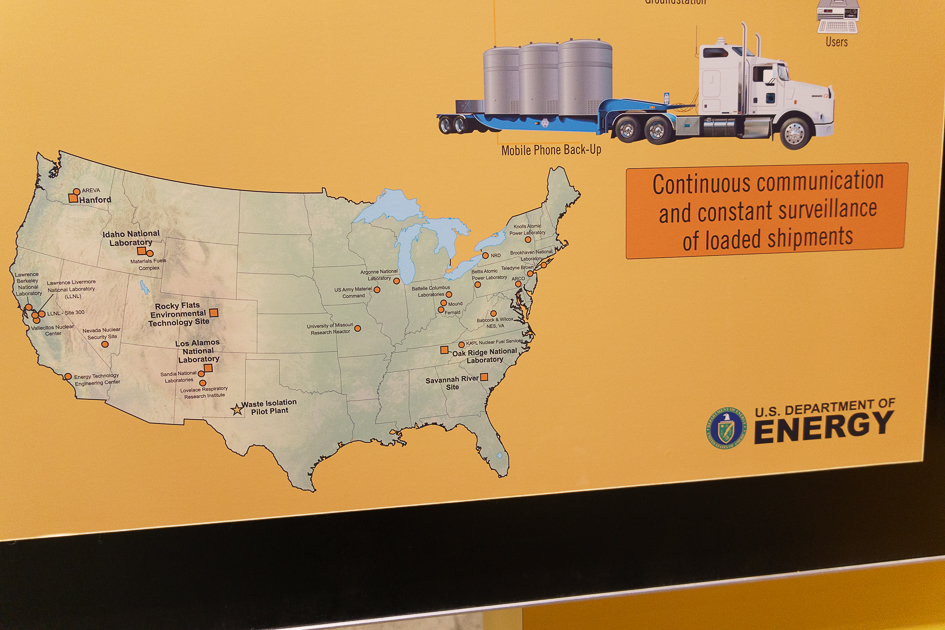
I found the nuclear waste exhibit interesting. I knew about the Livermore and Berkeley Labs and Vallecitos Nuclear Center when we moved to the San Francisco Bay Area nearly 30 years ago, but seeing the cluster of orange circles on the map gave me pause. I also liked learning about the communication and transportation precautions taken when waste materials are moved. I’ll be on the lookout in the future for anything that looks like the cargo truck below.
The museum continues outside in Heritage Park, a nine-acre outdoor space. The exhibits include planes, rockets, missiles, various missiles, an F-16 fighting Falcon, and an F-104 Thunder Chief.

Heritage Park behind the museum

The black object with the number 645 in the photo below is the sail from the USS James K. Polk nuclear submarine. Powered by a pressurized-water nuclear reactor she served from 1965 to 1999.

Nuclear submarine sail

This is a replica of the Trinity Tower from which the first atomic device (plutonium bomb) was tested. It is similar in design to the Fat Man bomb used to attack Nagasaki. Near Alamogordo, New Mexico, the Gadget was raised to the top the hundred-foot steel tower, and detonated on July 16, 1945. The bomb vaporized the tower, transforming the asphalt and sand into green glass, justifying the US military’s use of plutonium for an atomic bomb.

Trinity Tower replica with Gadget
Close up of the Gadget

The B-52B Stratofortress began its Air Force career in 1955. Its mission was to drop atomic bombs during testing. Restored in 2016 at a cost of $120,000. It is the only remaining B-52 that dropped an atomic bomb during testing.
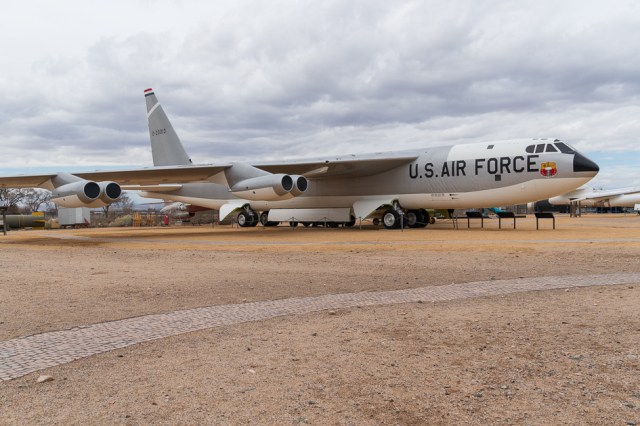
The B-52 is so big it was hard to fit within the frame.
Bundled up against the cold and wind.
Replica of Fat Man bomb

I’m glad we took the time to visit the museum, although it raised mixed feelings. It reminded us of the negative aspects and devastating potential of the use of nuclear energy for good and evil. And we learned of the many positive uses. It also reminded me that the Livermore Lab recently opened its Discovery Center, so I’ve added it to my Things To Do list.

Next stops: One night stays in Amarillo, Texas, and Oklahoma City, Oklahoma, and then Springfield, Missouri for a couple of weeks.

Safe Travels
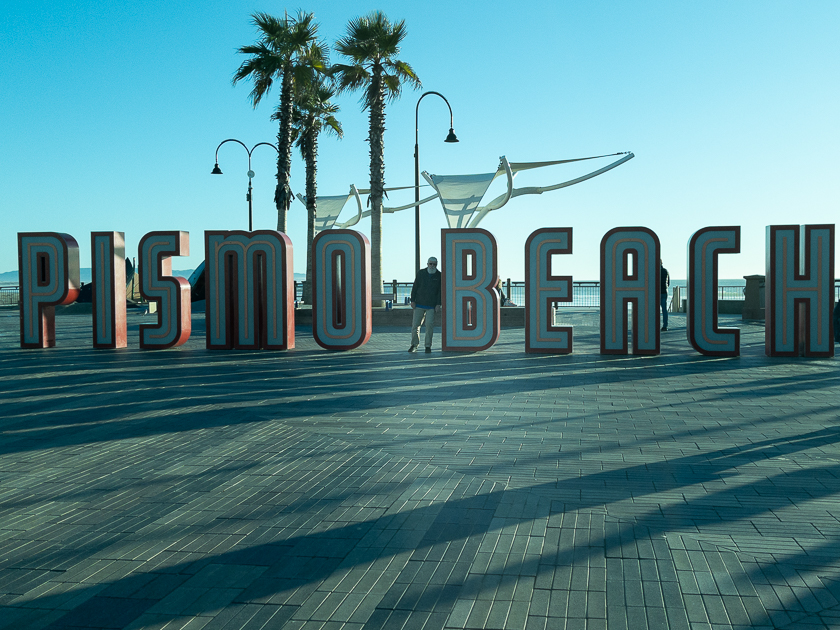
Fall 2022 Episode 7: Pismo Beach, California

We didn’t begin our fall 2022 journey intending to explore four major California macro climates, but once we visited big cities (San Francisco and Riverside), a lake in the mountains (Big Bear), and a lake in the desert (Part 1 Lake Havasu and Part 2 Lake Havasu), the only logical location to end our trip was the beach. So after a one-night stop at Mountain Valley RV in Tehachapi, it was on to Pismo Beach.

On November 5, we drove to Pismo Coast Village RV Resort where we had enjoyed staying in February 2020. Fortunately, they had a spot to accommodate us for a week. A storm was brewing offshore, so we spent the first few days of our stay cleaning the trailer, washing clothes, and stocking the pantry to prepare for rainy days ahead.

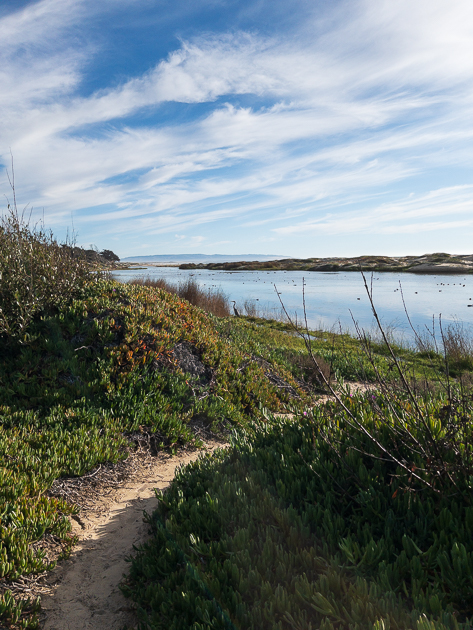
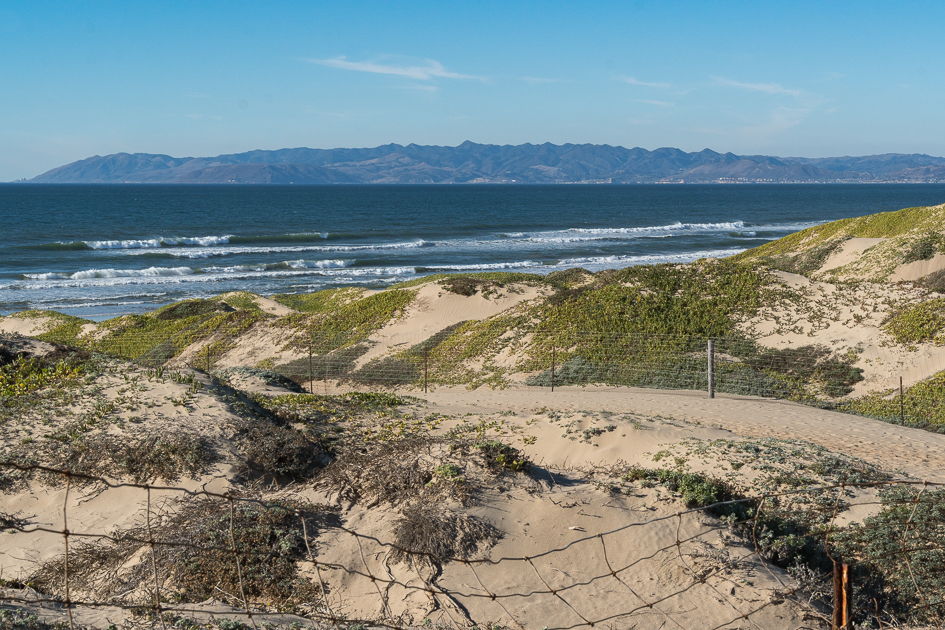
Beyond Pismo Creek and a strip of more dunes is the ocean
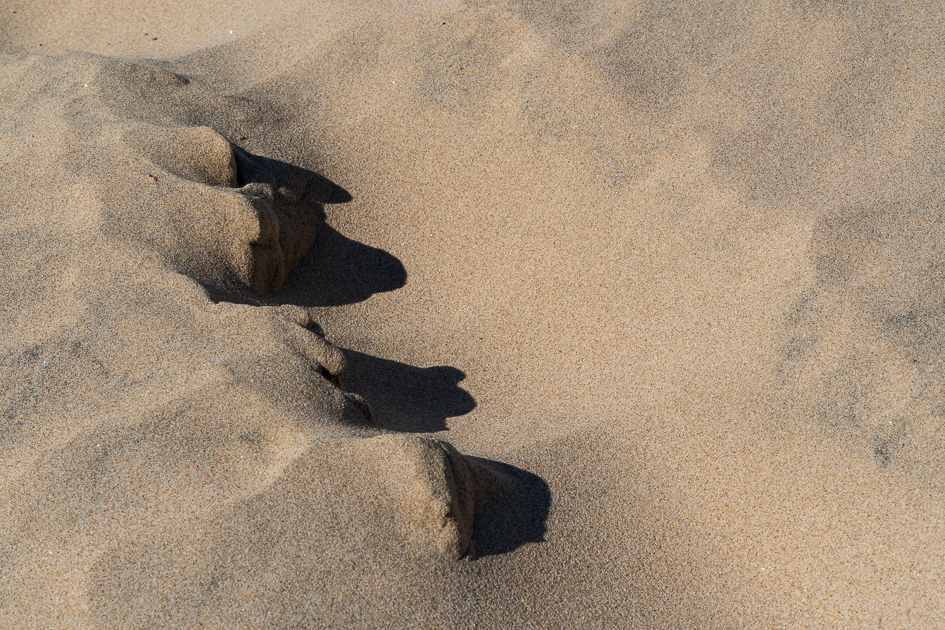
Watch your step

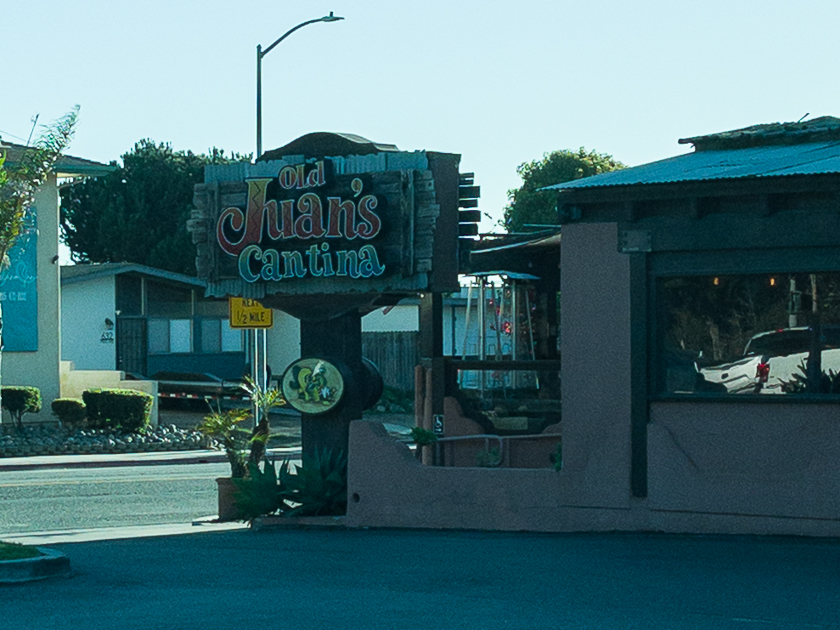
Once the rain cleared, we went hunting for a vegetable and fruit stand where we picked up fresh-from-the-fields produce. Then we ate at Old Juan’s Cantina. They served one of the best mole chicken enchiladas I had ever tasted. We’ll stop there again if we ever get a chance.

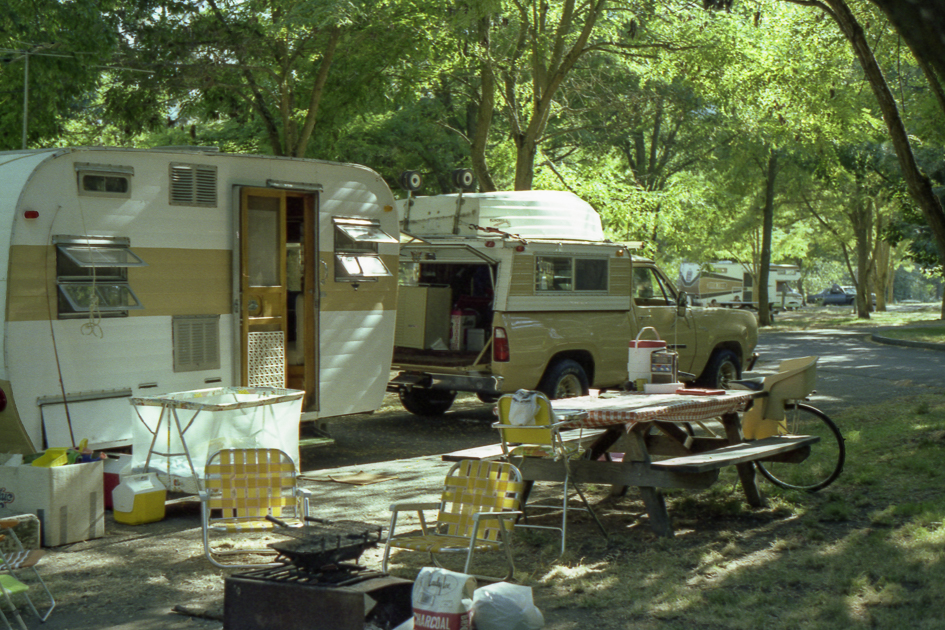
It had been a long time since we had seen rain, so we settled in the fifth wheel with our blankets and turned on the tube. The Long, Long, Long Trailer starring Desi and Lucy Arnez was only a few minutes into the beginning. This was perfect timing since the resort was hosting a Vintage Trailer Rally, filling the resort with restored old-time travel trailers of all sizes and shapes. Someone even had the kind of trailer featured in the movie with posters of Lucy and Desi. As we walked the lanes gawking at the rustic and newly refurbished rigs, we thought the first trailer we had purchased in the early 1980s would have fit right in. Our rig included a 1977 Dodge pickup with a 1954 Kenskill painted to match. We had good times in that trailer with our kids.

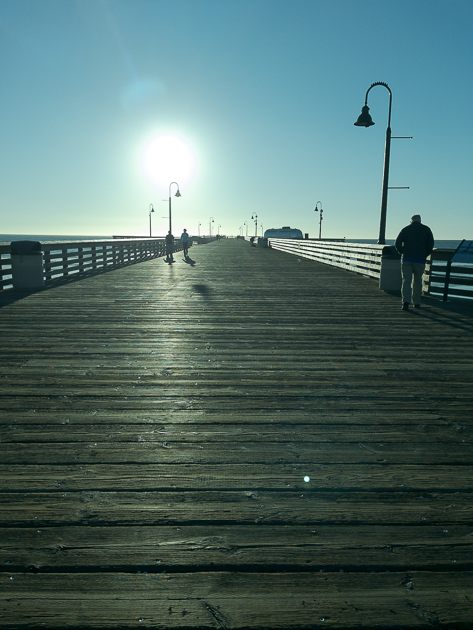
Pismo Beach Pier

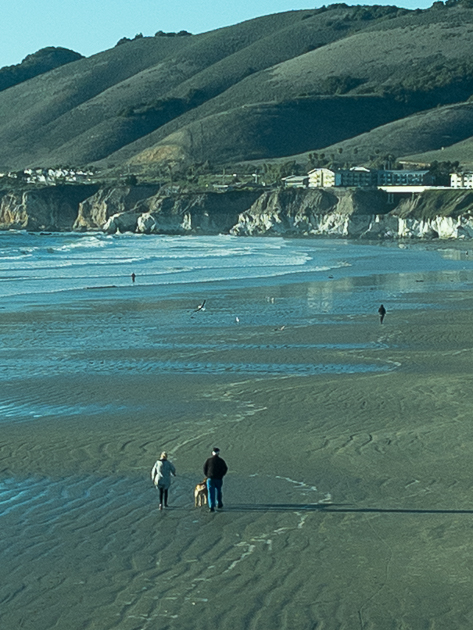
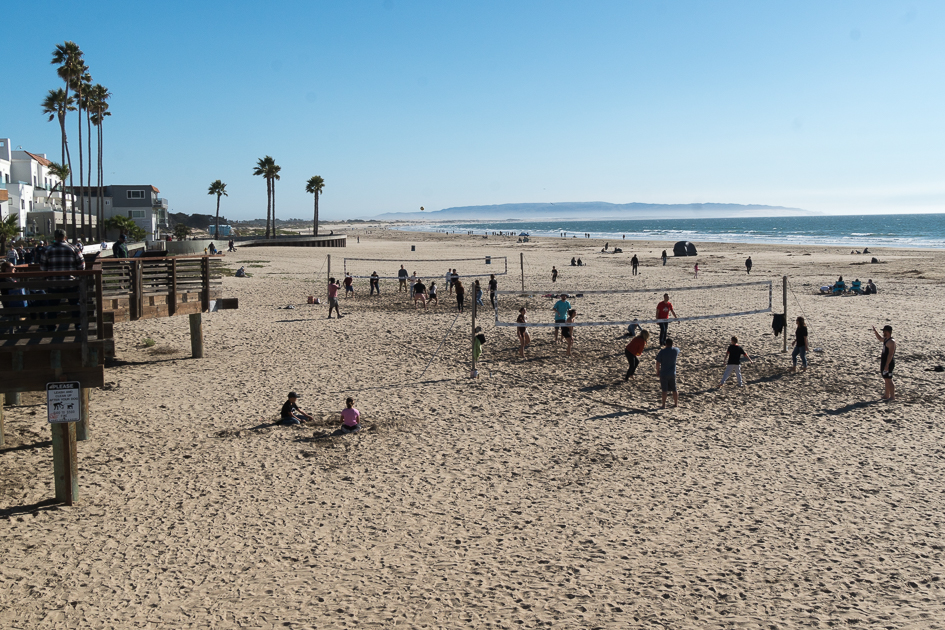
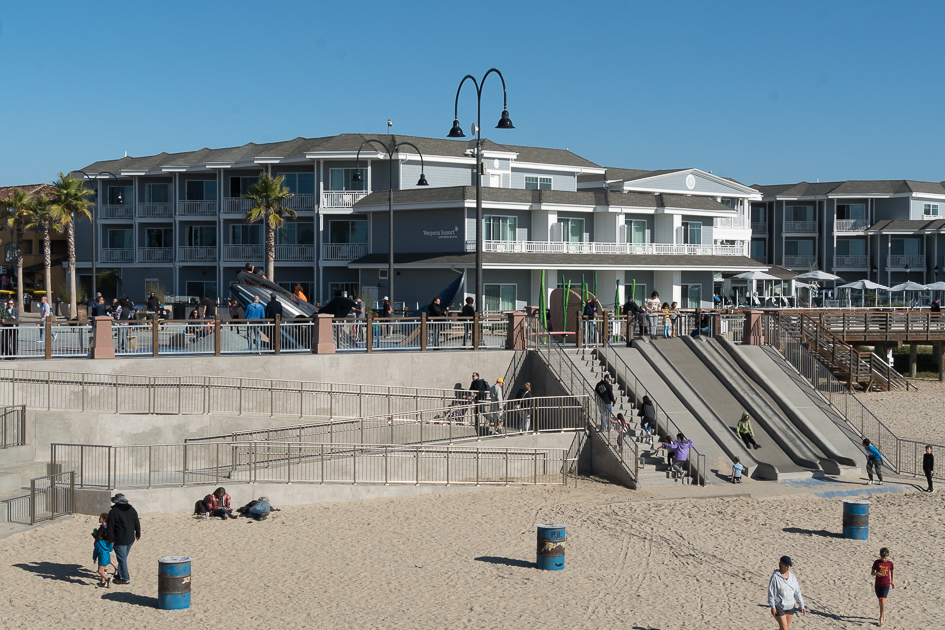
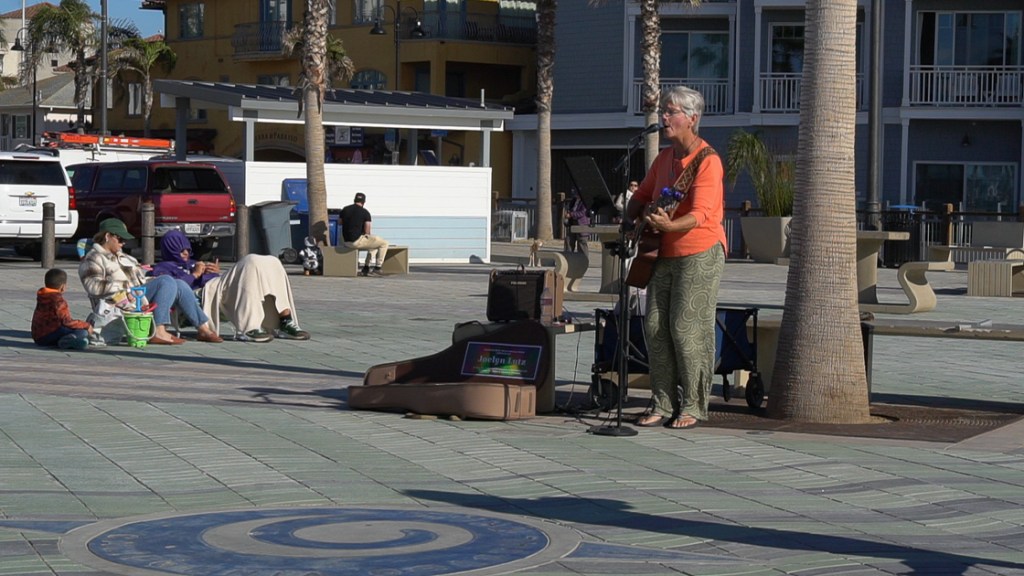
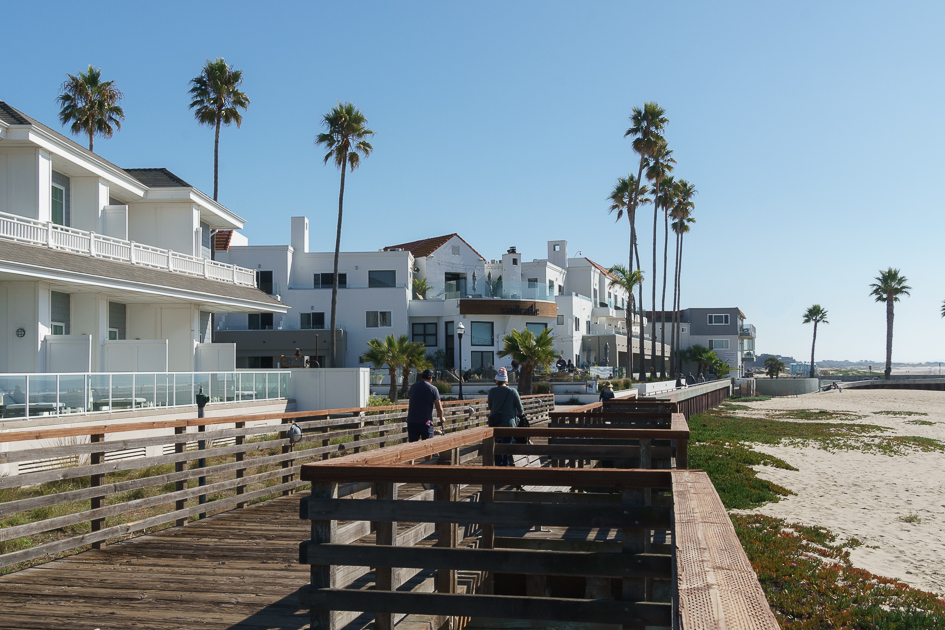
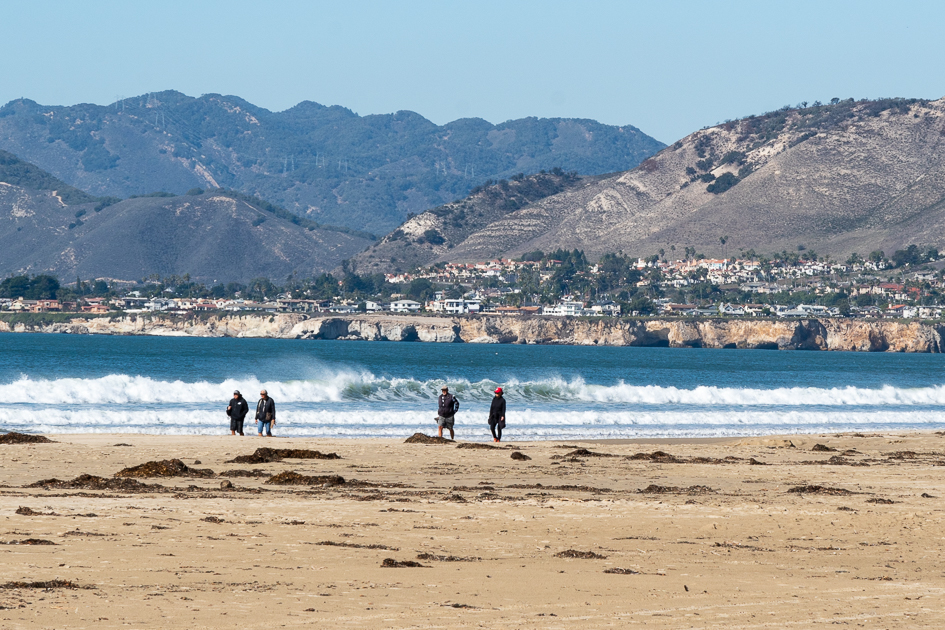
Walking distance from Pismo Beach Pier is a benefit of staying at Pismo Coast Village RV Park. Not too many people out and about walking the length of the pier. Fishing, surfing, swimming, playing in the sand, or setting up chairs near the busker to hear the tunes were some activities enjoyed by other visitors.

Storms in 1884 damaged the first pier built in 1881. It was rebuilt with an additional 100 feet in 1884. In January 1904, a storm took 100 feet of the wharf, and by 1905 only a row of pilings remained across the beach. The current pier, originally constructed in 1924 and the victim of additional storm damage over decades, reopened in October 2018 after a full rehabilitation project that took 18 months.

From the information panels on the boardwalk, we learned the commercial harvest industry hauled out an estimated 6.25 million pounds of Pismo Clams along the coast between 1916 and 1947. Today, regulations permit only recreational clammers. Be sure to follow the licensing, size, and limit amounts designated by California Fish and Wildlife. It takes Pismo clams five to eight years to reach the harvesting size of 4.5 to 5 inches. Any clams found on the beach that measure less than 4.5 inches are required to be reburied at the site found. This will help the recovery of the Pismo clam population.

A few blocks up the street, we found Brad’s Restaurant and lucked out, getting a table right away. A bowl of clam chowder, sourdough bread, and a glass of wine was all we needed to satisfy our hunger.

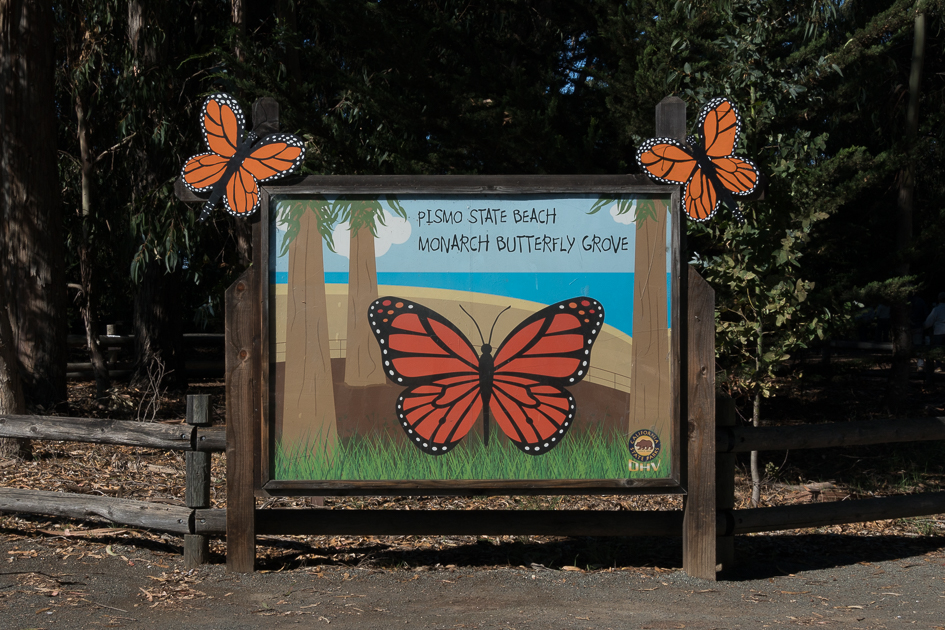
Pismo Beach State Park Monarch Butterfly Grove and Dunes

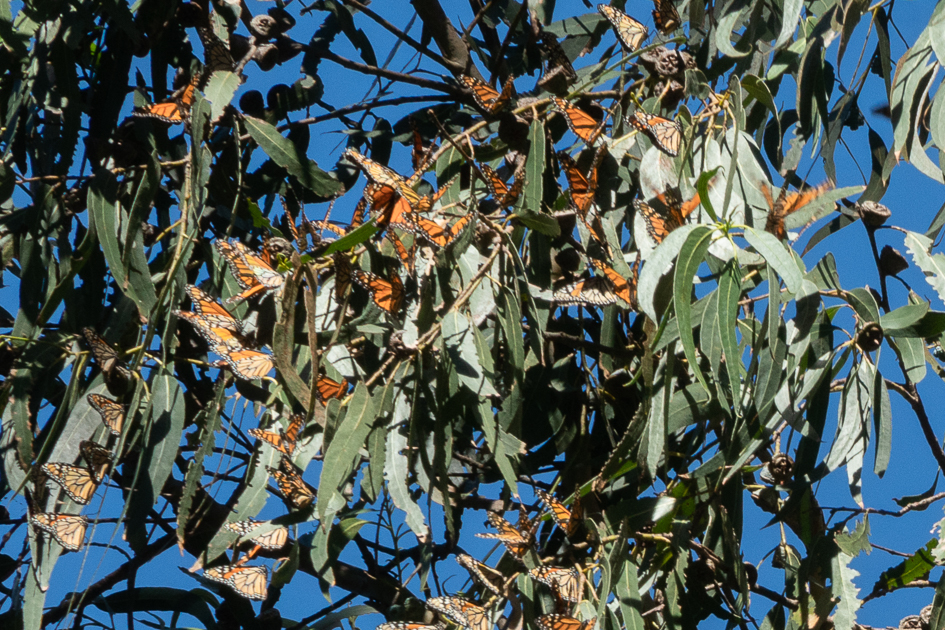
The Pismo Beach State Park Monarch Butterfly Grove was also only a walk away. The Western Monarchs arrive in Pismo in late October and early November, migrating from parts west of the Rocky Mountains and as far north as Canada. How is it possible for such delicate creatures to travel up to 2,000 miles a day at a 10,000-foot elevation? Imagine the strength and endurance they possess to accomplish such a feat. They’re definitely hardier than me.

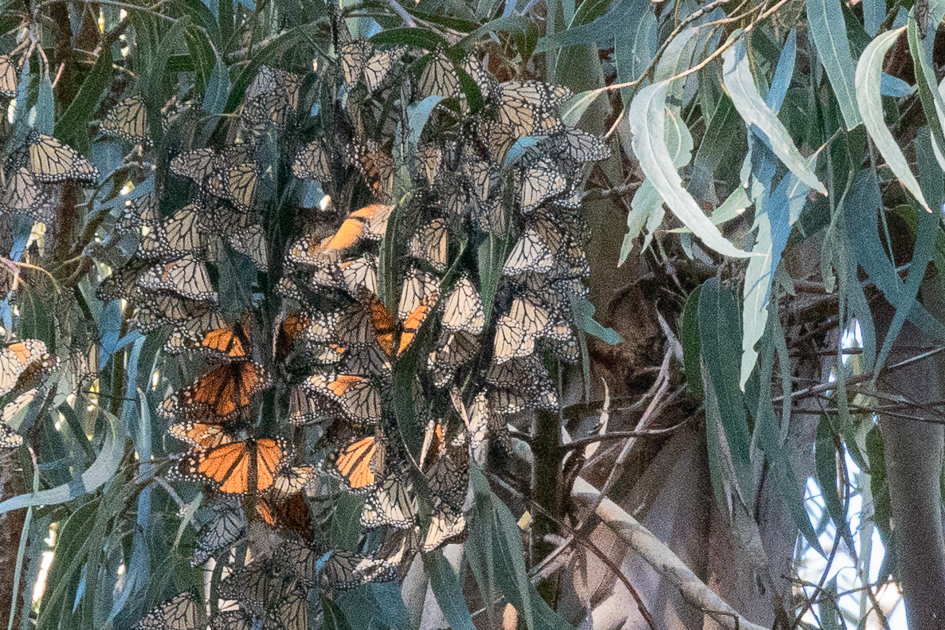
When the storms blow in with strong winds and rain, the butterflies cluster together on the eucalyptus tree branches to protect the individuals from blowing away. The temps were cool during our visit, so it was hard to locate the clusters. They looked like brownish leaves.

The Monarch Grove butterfly count in January 2022 was 22,000 and in 2016 28,000. Between 2016 and 2022, the low count was 1,995 in 2020 and the high count was 12,075 in 2017. It will be interesting to see what the numbers show in late January 2023. It sure seemed like a good turnout to us.

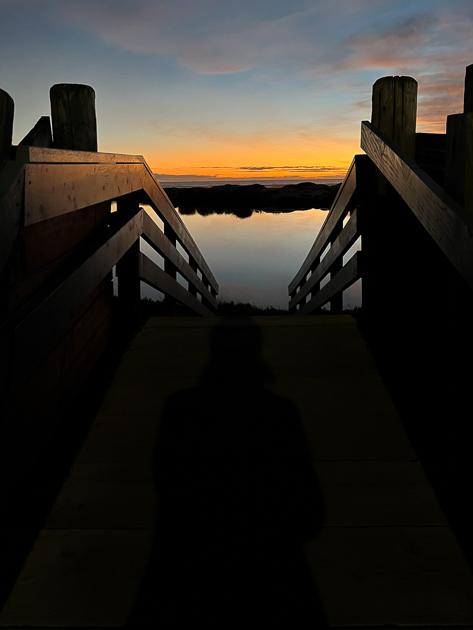
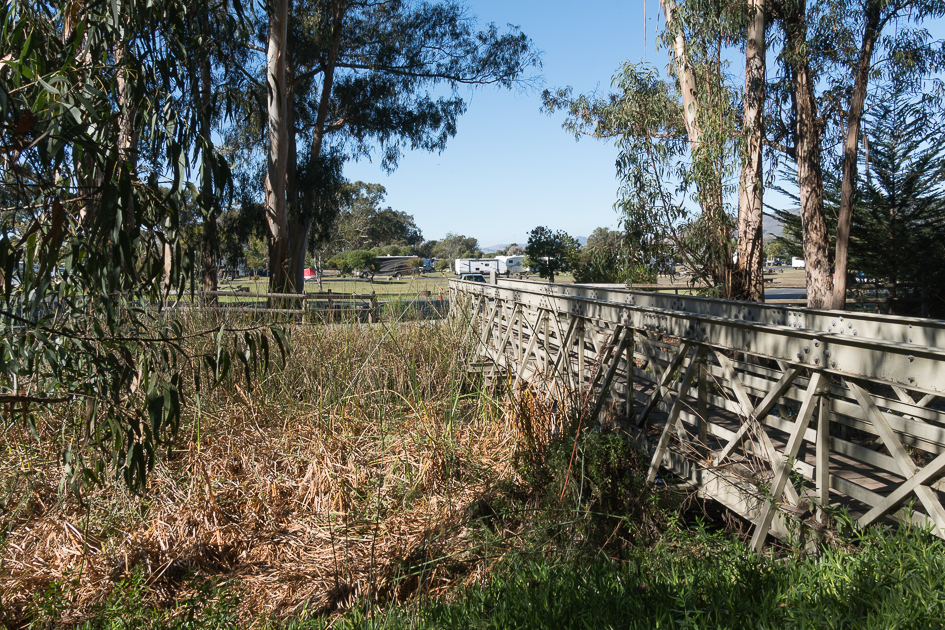
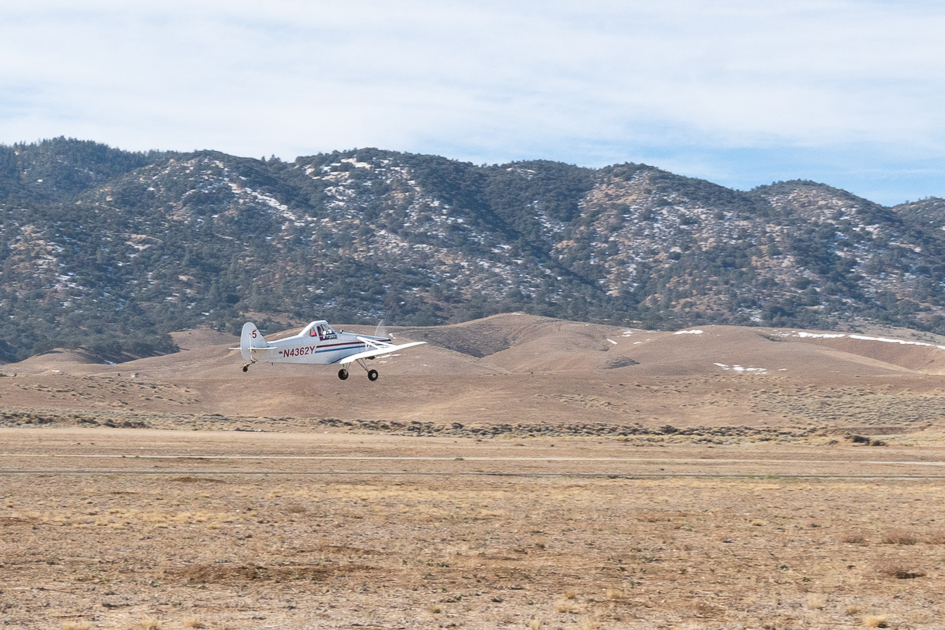
We finished our stay at the butterfly grove by crossing the bridge spanning Carpenter Creek and into the campground area to access the dunes. The crisscrossed trails took us over and around the sandy peaks.

Oso Flacko State Park

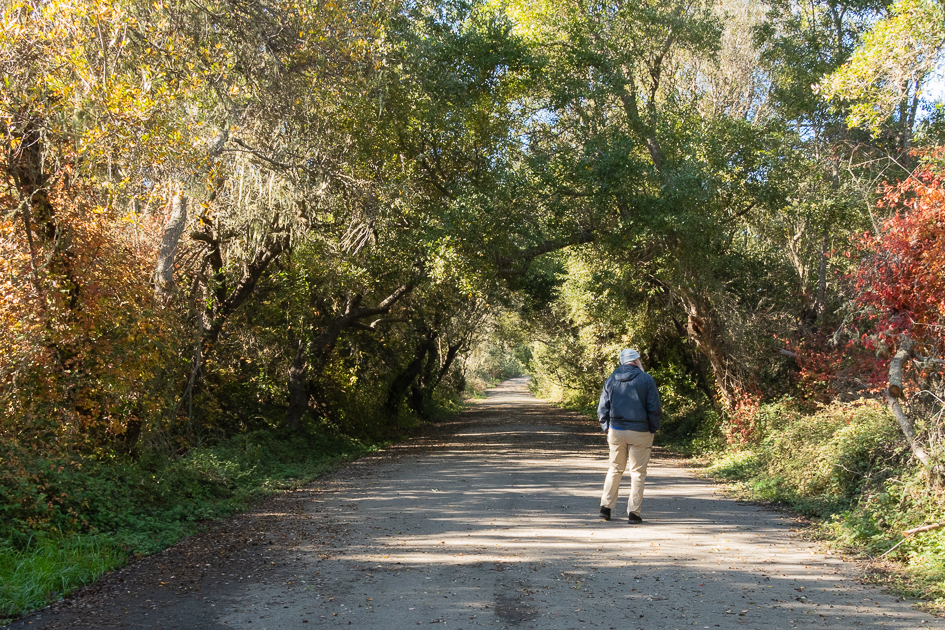
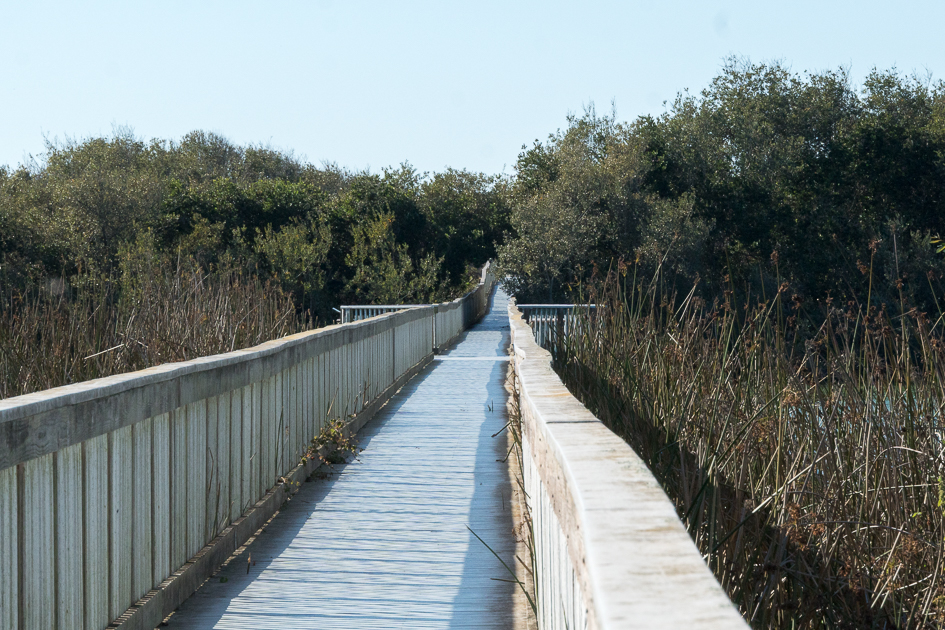
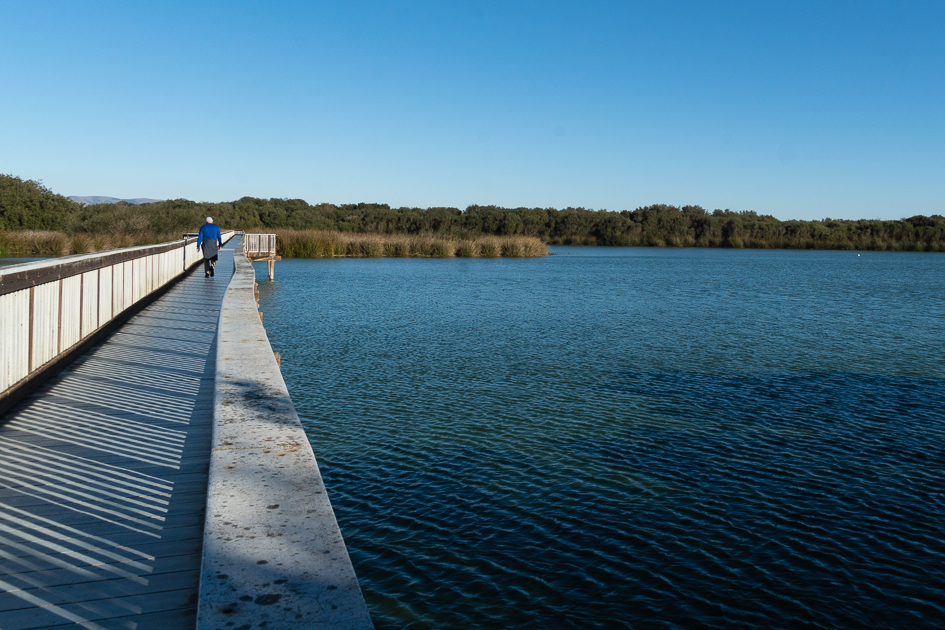
The boardwalk over Oso Flack Lake was our first time walking across a lake. But first, the trail took us through a tunnel of arroyo willows, wax myrtles, and Spanish moss. It was easy to spot the poison oak that was flashing its fall colors.

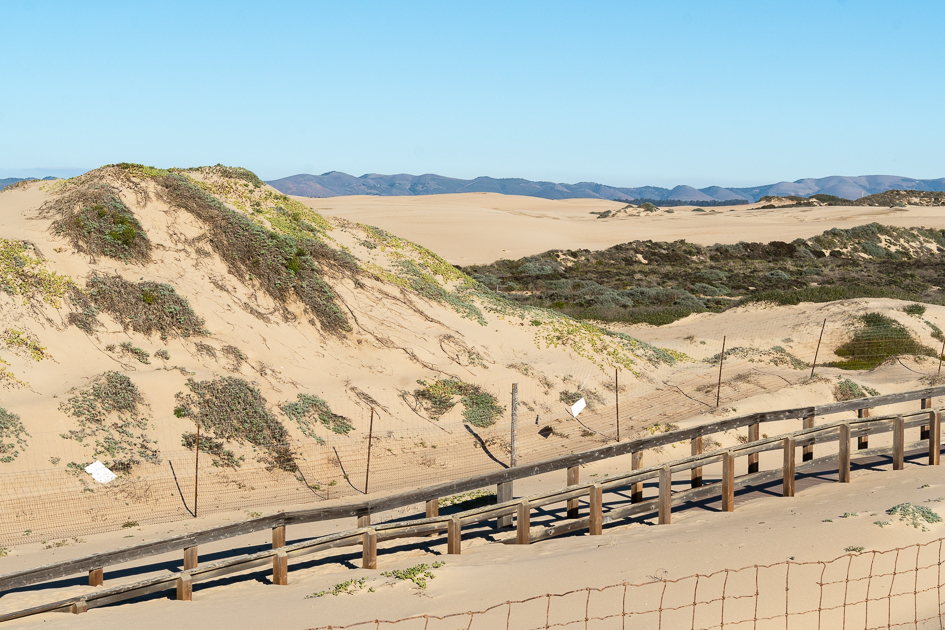
On the other side of the lake, the dunes took shape. Clumps of silver dune lupin, coyote bush, deer weed, and dunes paintbrush dotted the landscape.

We stopped at the viewing platform to enjoy the views and warily eyed the steep sandy hill that led down to the beach. We passed on going farther. This was a leisure walk on mostly flat surfaces, after all. Climbing back up a steep sandy hill would have turned it into a workout for which we were unprepared.

And so, our Fall 2022 adventure came to an end after our week at Pismo Beach. The holidays, doctor visits, house upgrades, and a backyard landscaping project have kept the fifth wheel parked beside the house since November. We’re not yet sure when we’ll load up and drive off for another adventure, so this will be our last post for a while.

Safe Travels
Fall 2022 Episode 6: Lake Havasu Part 2

Our two-week stay was too busy to pack into one post, so here is the rest of the story about our time in Lake Havasu City in October 2022.

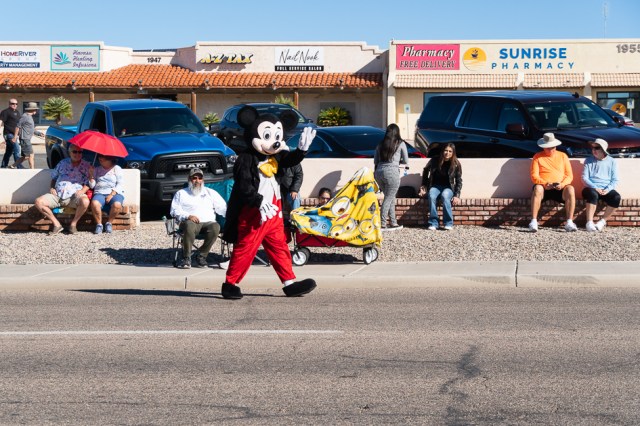
We’re suckers for a parade, especially small-town parades like the London Bridge Days Parade. So we packed up our lawn chairs and headed to McCulloch Blvd. to celebrate the 51st Anniversary of the London Bridge. The parade theme was Life is Better at the Lake.

Hey, Mickey. Over here.
Side-by-side owners showed off their off-road buggies
A show of force by the Lake Havasu City SWAT team
US Border Patrol’s Horse Unit
Parker Marching Broncs

Later in the day, it was on to the London Bridge Marina to watch the costumed paddle boarders and kayakers navigate the Bridgewater Channel from Rotary Park to the bridge. It would have been fun to join the Annual Witches Paddle, but my wrist hadn’t quite healed enough.

Here they come paddling up the channel
Moms, dads, kids, and even dogs joined the event
Big turn out for the Annual Witch’s Paddle

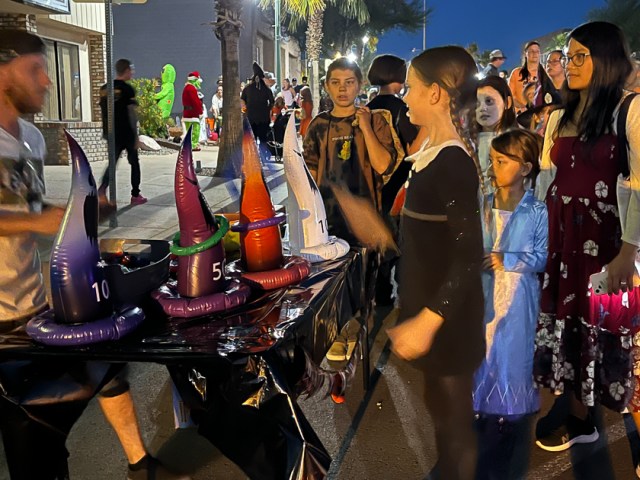
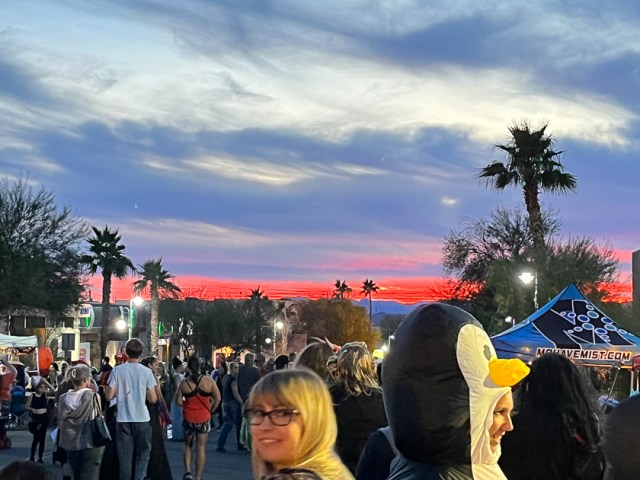
It seemed like the whole town comes out for Lake Havasu Fright Night on October 31. We joined my sister Merri, her daughter Tracy, and her daughter Bobbi. I liked the idea of concentrating the trick-or-treating in one location. Given that many of the homes are built in hilly areas, and some are second homes and unoccupied full-time, gathering downtown worked out well for the kids and parents alike.

Outta my way. I’m here for the treats
Bobbi (dressed as Wednesday) and friend checking out the dragon
Hey, Garfield
Don’t look up
Bobbi tries the ring toss and gets a five
I’ll take one from this bucket, and another handful from that bucket
Isn’t that the red-headed witch paddler we saw a few days ago?
Turn around, Tracy and look at the sunset.

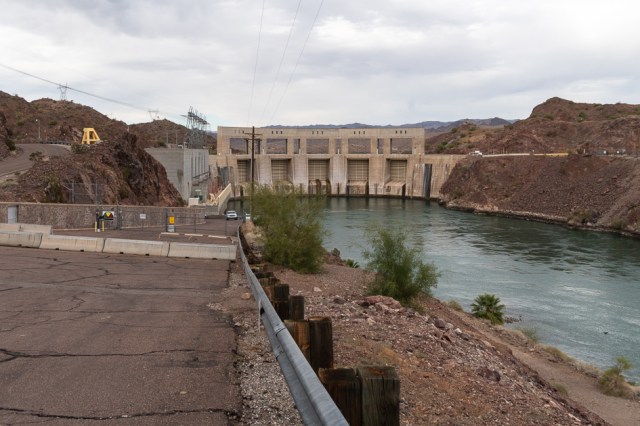
Parker Dam at Take Off Point

After a busy few days, my sister Merri needed time to herself to take care of chores, so Jon and I went for a drive along the California side of the river. We can’t drive that route when we’re pulling the fifth wheel because trailers are banned from crossing over Parker Dam.

Before crossing the river, we stopped at Take Off Point, where there is a boat ramp, fishing piers, shade structure, picnic table, and if the fish are biting, there is a fire pit to cook lunch or dinner. Parker Dam is close enough to capture a few photos of the lakeside of the dam.

View of the lake side of the dam
Darn, Jon left his fishing gear in the truck

We were lucky this great blue heron was unafraid of people. He or she posed for us from its perch on the rocks.

Great blue heron posed for our photos

BLM Rock House Visitor Center

Next, we crossed the bridge and stopped to take photos of the river side of the dam before heading south on Parker Dam Road. Boy, how things had changed. The Bureau of Reclamation used to give tours of the dam. Not anymore.

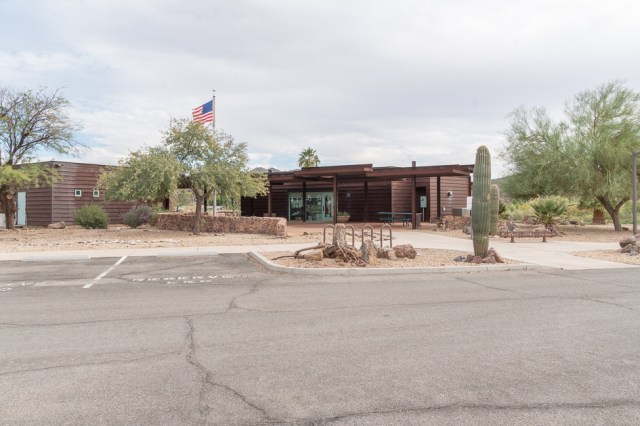
About eight miles south of the dam, we pulled into the BLM Rock House Visitor Center. Neither of us remembered a visitor center along the river. Signs appeared at the entrance of all the resorts along the river, noting that the RV resort or campground operates in cooperation with BLM.

Rock House Visitor Center

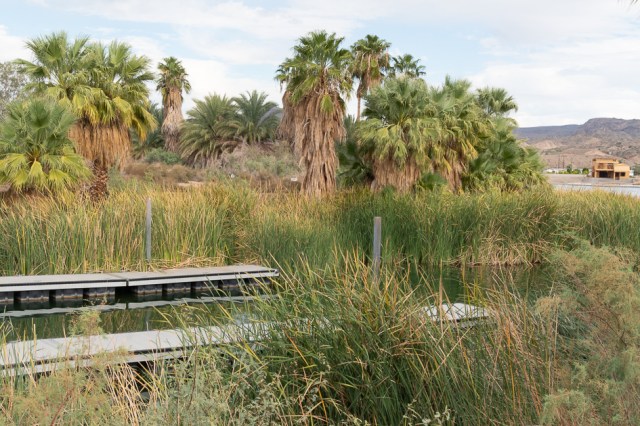
There wasn’t much to the center other than a few displays inside and a clean restroom. The facility host said it had recently reopened after having been closed for a few years. The landscaping looked okay out front, but in the back and on the side, the plants and hardscape were definitely in need of attention.

Rock House Visitor Center
Boat launch at Rock House Visitor Center
View of the Arizona side of the river

Oatman

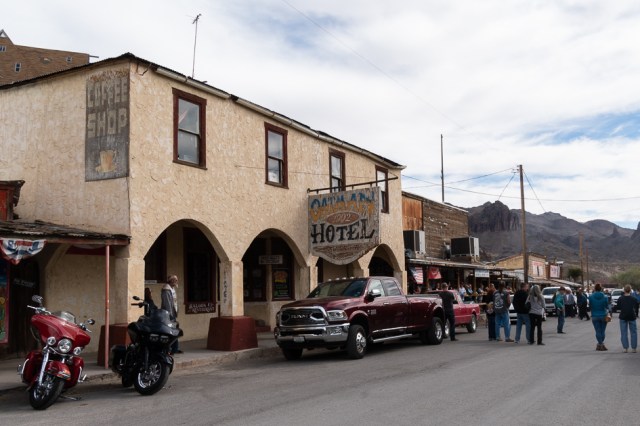
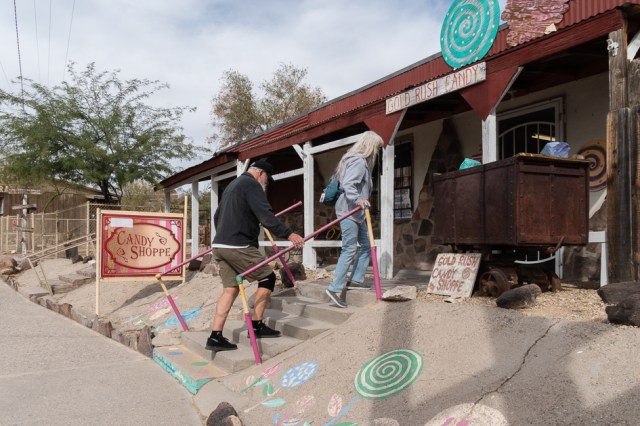
My sister Merri hadn’t been to Oatman ghost town for a while, so we took the drive out there. This is a Route 66 attraction for those interested in traveling the historic route. It was a gloomy day and a bit windy and cold too. The burros were a no-show in town. It wasn’t until we left we saw them moseying toward town. We wandered around, stopped in a few shops, and raided the candy store.

Merri walks past Jenny and Jacks Artifacts
A tinkling sound of wind chimes came from Fast Fanny’s porch
The Oatman Hotel established in 1902.
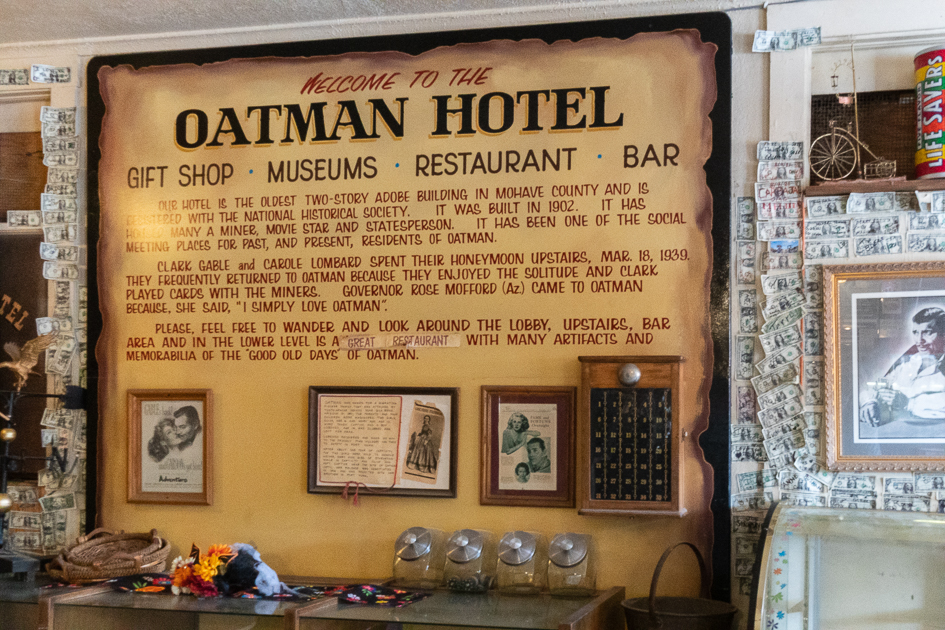
A few facts about the Oatman Hotel
“Look, Jon. A candy store. Maybe they have the penuche fudge you’ve been looking for.”
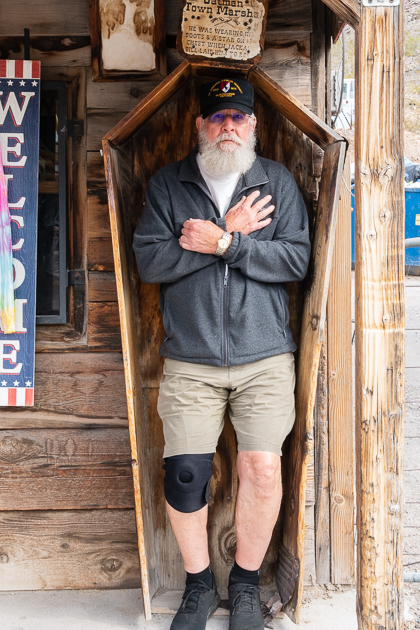
Nope. It’s too short. Do you have a longer one?
Step right in for a whiff of leather

More sunsets

As the sun slips below the horizon, painting another awesome sky, we close out this post and say goodbye to Lake Havasu.

And to all a goodnight

And that’s a wrap of our Lake Havasu visit. What’s up next? Let’s see. We’ve been to the mountains, then to the desert. How about the sea? Join us next time for another stay at Pismo Beach.

Safe Travels
Fall 2022 Episode 5: To the Desert and Lake Havasu City

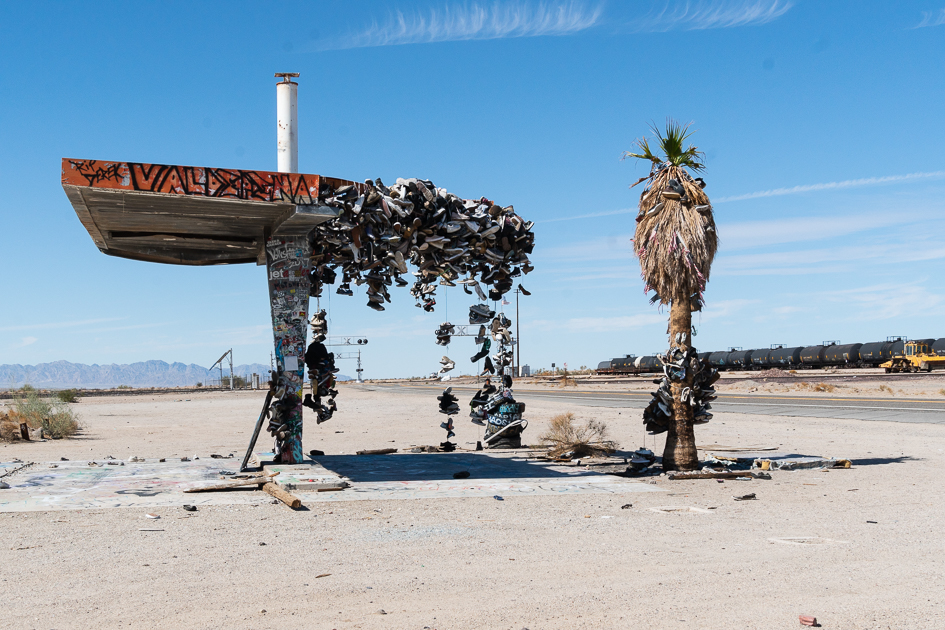
From Joshua Tree National Park, we traveled east to Lake Havasu on Twenty-nine Palms (SR 62) road on October 21. A short distance from the railroad crossing in Rice, something up ahead caught our attention. Folks on the internet call it the Gas Island Shoe Tree.

Gas Island Shoe Tree

Someone expanded the idea and created a Mask Bush (my words). Close by stood the ruins of a concrete and stone building adorned by spray-can artists. There was an old school at this spot when my family drove this way to and from the Colorado River during the 1960s and early 1970s. I’m not sure if it is the same building.

Mask Bush
Spray-can artists were here

After our brief respite, we continued on up the Arizona side of the Colorado River to Lake Havasu City and soon arrived at Havasu Hills, pleased we had found reservations to accommodate us since no other RV park had vacancies.

Havasu Hills Resort RV Resort

Lucky for us the 2022-23 season opener at Havasu 95 Speedway gave us something to do for a night out. Unfortunately, our friend Chris Blackwell had a bit of trouble with his #99 car and had to give up in the middle of the race. We still had a good time visiting with him and his family and watching the go-carts, flat karts, and factory stock cars race around the track. I liked the Bandoleros the best. The speedway operates races once or twice a month, from October through April each year.

Havasu 95 Speedway

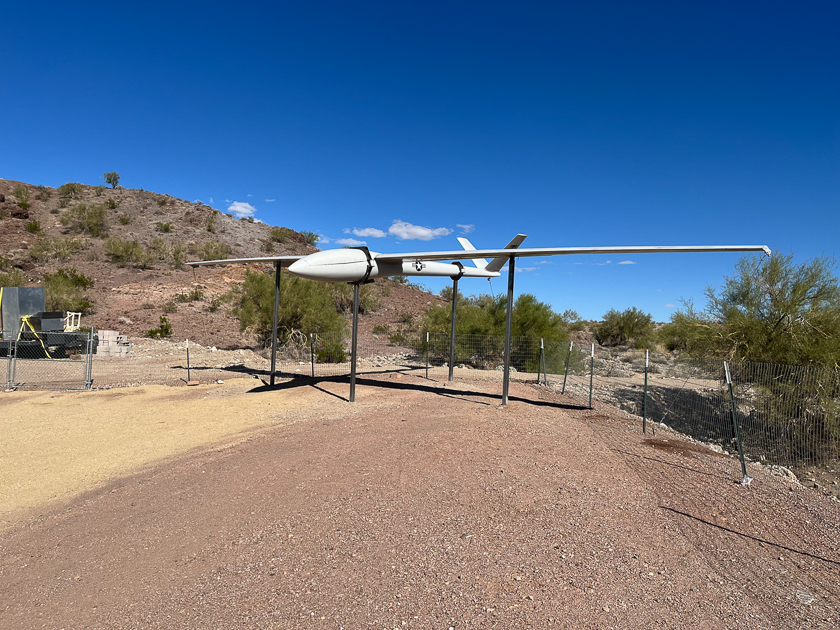
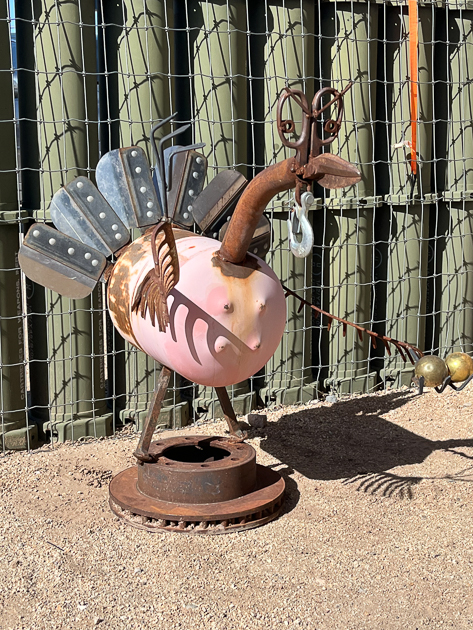
It’s hard to pass up live music at the Bunker Bar while in Lake Havasu City. What could be better than rocking out,out,out,out, drinking a can of beer, and eating a hamburger or hot dog while watching a couple show off their dance moves in front of the bandstand? Checking out the collection of military equipment and dinosaurs installed since our last visit was a bonus.

Busy day at the Bunker Bar
Can you hear the Jurassic Park music?
Drone on display
Cock-a-doodle-do, you all

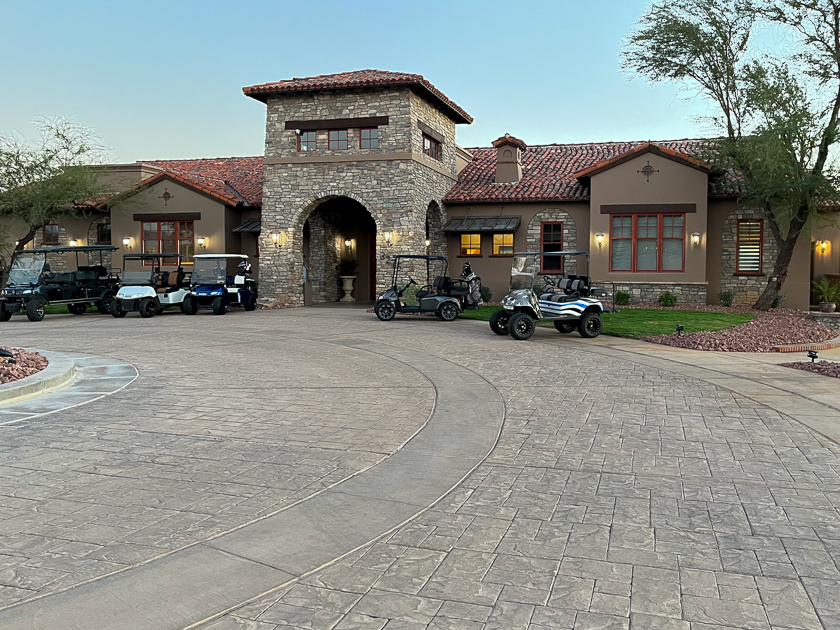
We had a new restaurant to try during this visit. Next to Havasu Hills is Iron Wolf Golf and Country Club, where we ate at Bogeys and Stogies Sports Lounge and Grill. The golf course was, and still is as of the posting date, under renovation, but the restaurant had recently reopened. The typical sports bar with plenty of TVs hanging from the walls served up crispy-on-the-outside and flaky-on-the-inside fish and chips, paired with a delicious salad.

Bogey’s and Stogies Sports Lounge and Grill
Sunset from our table

We hadn’t been on the lake in several years, so we reserved three seats on the Sunset Copper Canyon Cruise. The 90-minute narrated tour set out from Lake Havasu Marina, passing by one of the 28 lighthouse replicas installed along the 400 miles of shoreline. Formed in 2000, the Lake Havasu Lighthouse Club builds and maintains the replica lighthouses. Each of the lighthouses is a scaled-down replica of a famous one gracing the shores of the East Coast, West Coast, and the Great Lakes. They all serve as working navigation aids.

Currituck Beach Lighthouse, original is at Corolla, NC, installed October 31, 2004

While the boat headed south, our tour guide regaled us with tales of Robert McCulloch, the founding father of Lake Havasu City, and the historical and military uses of the land prior to his arrival. I remembered as a child listening to my parents and grandparents talk about McCulloch. They laughed at the crazy man who bought the London Bridge and rebuilt it in the middle of a desert.

Partial view of the city from the boat

A lake perspective of the city showed us how much growth had occurred over the years and yet there remains stretches of untouched desert hills, much of which is owned by the Bureau of Land Management. I’ve watched the London Bridge Village during its bustling periods and in the lean years. By the looks of things during this visit, the businesses and restaurants have survived the pandemic and are thriving. With a population that has grown from 4,111 during the 1970 census to 57,144 in 2020, and adding in the approximately 835,000 visitors during a year, I guess Mr. McCulloch wasn’t so crazy after all.

Sunset red hills of Lake Havasu

As the sun began its descent behind hills, we entered Copper Canyon. Shadows revealed the gray and green and red tones of the canyon walls, which fade away under harsh sunlight, as if an artist had come along and splashed the walls with a touch of paint. It’s no wonder why this canyon is one of the most scenic on Lake Havasu.

Colorful Copper Canyon
Volcanic uplifting
Natural arch window
Mine tailings are a reminder of mining activity in years past
Permaquid Point, original in Permaquid Point. ME, installed on February 11, 2017
Three oldsters taking a ride in a boat
Final sunset photo of the tour

The sunset photo is a good place to say adieu for now. More on our Lake Havasu visit to come.

Safe Travels