Summer 2021 Tour Santa Fe, New Mexico Episode 4: Santa Fe Railyard Arts District and Guadalupe Historic Area

Santa Fe Railyard Arts District and Guadalupe Historic Area

We set out to replenish our fresh fruits and vegetables on Saturday, June 26, 2021, and found a thriving Farmer’s Market in the Santa Fe Railyard Arts District. Still feeling jittery around crowds without masks, we grabbed what we needed and left. The market runs year round on Saturdays and on Tuesdays from May through November.

Farmer’s Market Rush

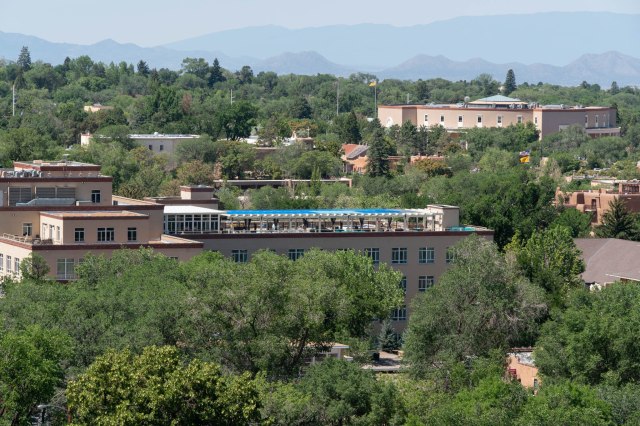
The main objective for our visit to the Railyard the following Wednesday was to see the Santuario de Nuestra Señora de Guadalupe. On our walk toward the sanctuary, we strolled along the nearby streets, admiring the adobe houses and other buildings unencumbered by herds of people.
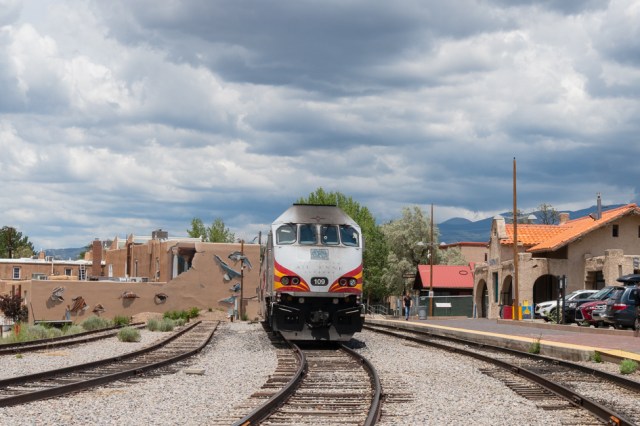
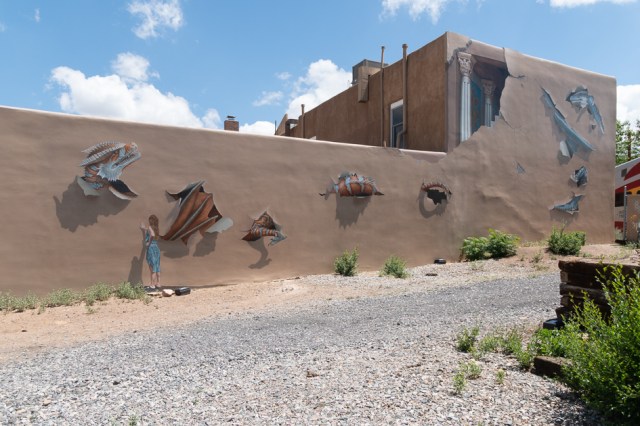
Mind the Tracks
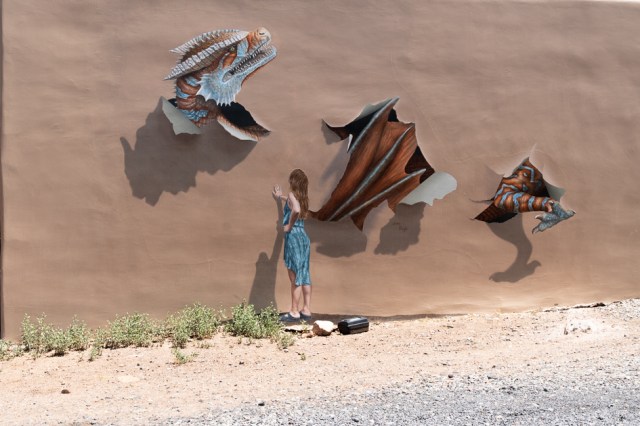
John Pugh’s 3-D Mural
Even close up, the lady looks real

The Guadalupe District is listed as one of the oldest neighborhoods in Santa Fe. It became a farming market place in 1880 when trains arrived. The prevalence of the automobile and decline in rail travel led to the community’s decline.
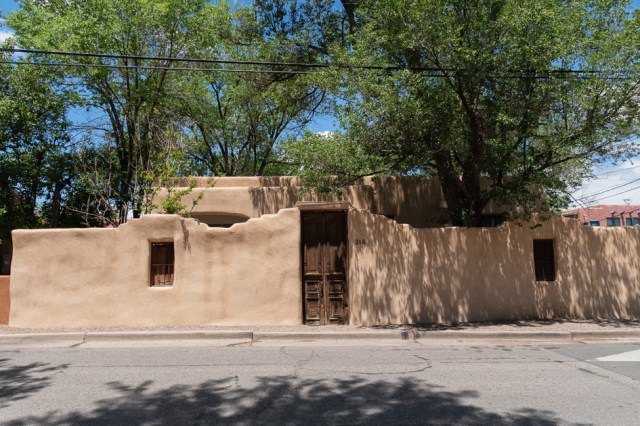
Historic adobe home

In the 1960s, vitality emerged, and the district continued to thrive. In response to the return of train service when the Railrunner Express came to town in 2008, the city kicked off the transportation district revitalization project. Preservation of a public space, local history, and culture were among the project’s priorities.
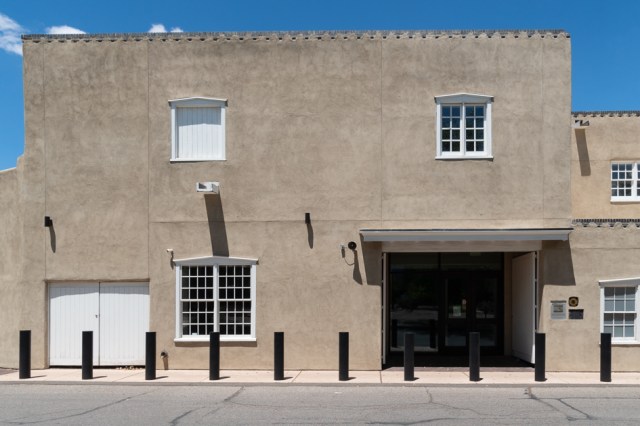
Renovated historic business building
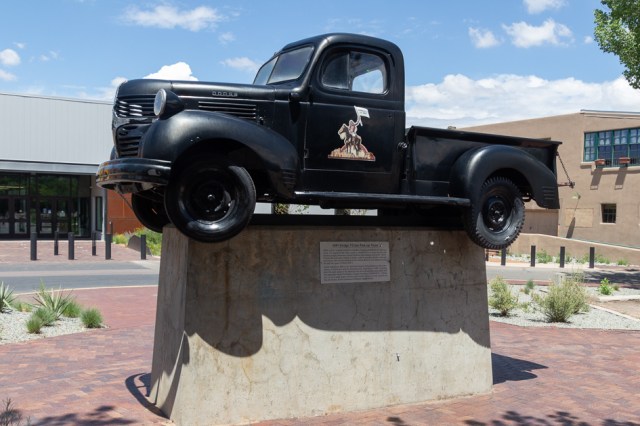
1941 Dodge 1/2-ton Pickup Truck similar to those used to deliver materials from the train to Los Alamos during WWII

I recently read John Grisham’s Camino Island and Camino Winds that featured a book seller who traded in collectible books as the protagonist. So when I saw the Beastly Books sign advertising collectibles and autographed books, I had to duck in and take a look.
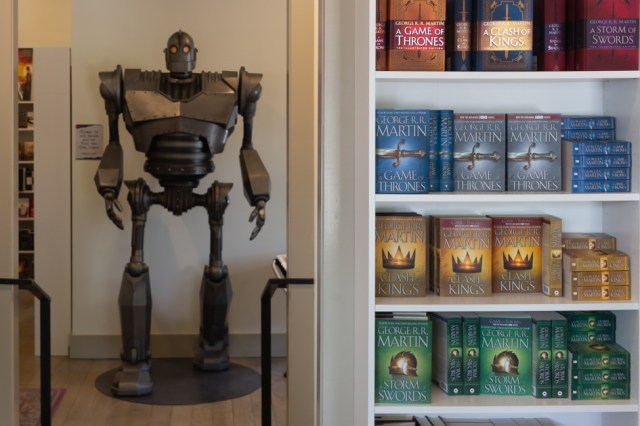
Robots and books

Fans of A Game of Thrones and George R.R. Martin’s other titles would love this bookstore. Martin’s books and books by other authors who write in science fiction, fantasy and horror genres fill the shelves in Beastly Books.
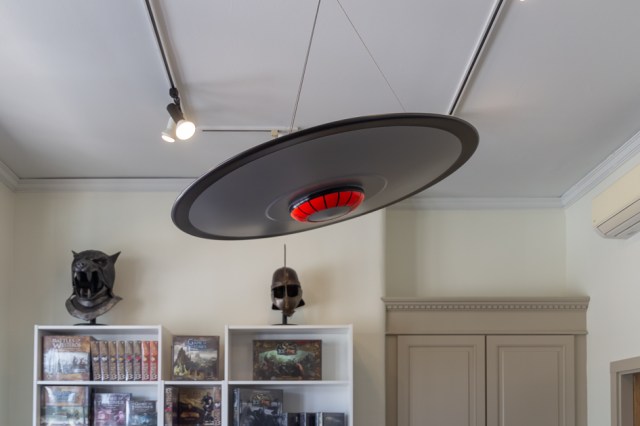
Flying saucers and masks

From the coffee bar in the corner came the aroma of fresh brewed coffee that followed us throughout the store as we admired the collection of memorabilia.
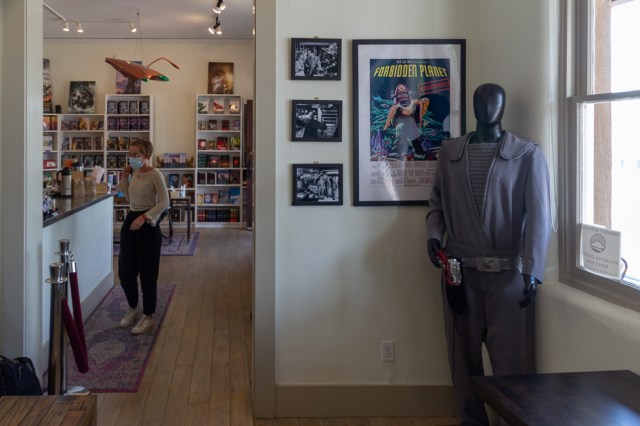
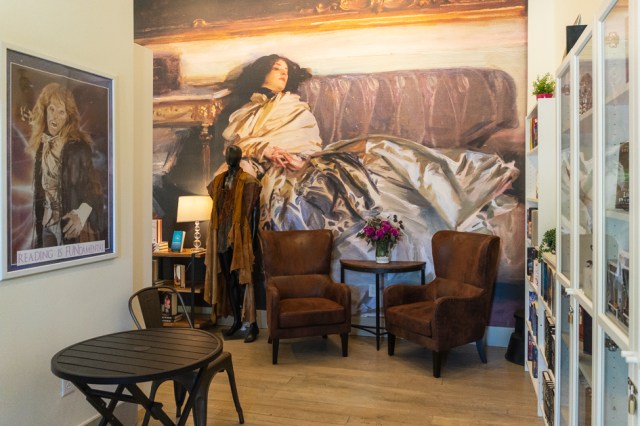
Coffee bar to the left, costume to the right
Reclining Lady

Santuario de Nuestra Señora de Guadalupe

Our Lady of Guadalupe is the oldest church dedicated to the Virgin Mary that is still standing. The shrine commemorates Mary’s four apparitions in 1531 to Juan Diego, an Aztec Indian from Tepeyac, Mexico. The twelve foot statue, Dona Georgina Farias’s Nuestra Señora (Our Lady) de Guadalupe, was installed in 2008.
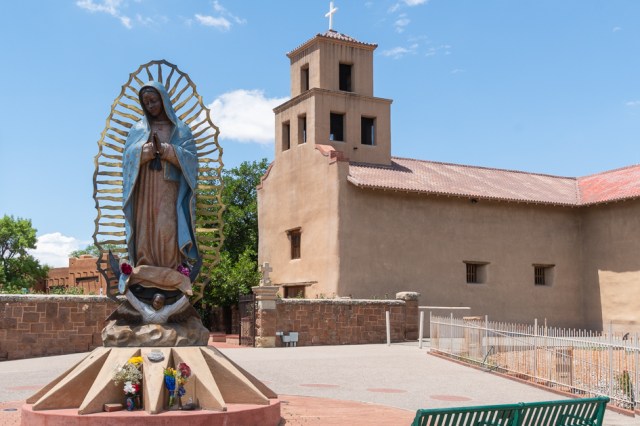
Our Lady of Guadalupe statue and sanctuary

The sanctuary, originally built by Franciscan missionaries between 1776-95, was constructed on a Latin cross floor plan like other churches and cathedrals. The adobe building had a flat roof, walls three feet thick, and a dirt floor. At some point, a pitched roof covered the flat one, and a spire replaced the original adobe bell tower.
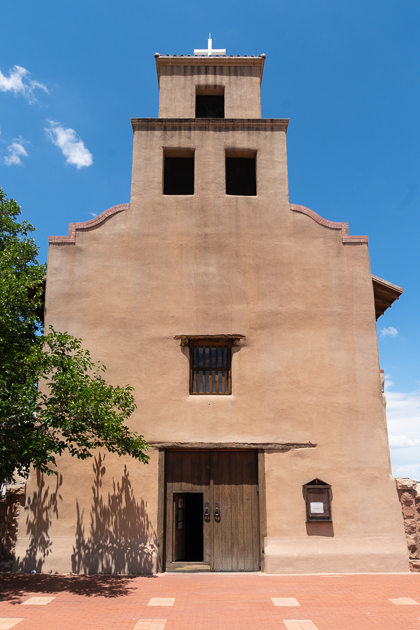
Santuario de Nuestra Señora de Guadalupe

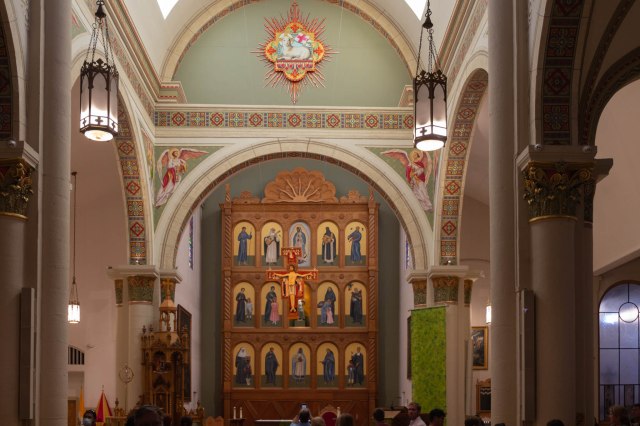
A fire in June 1922 destroyed the church’s roof, collapsed the spire, and damaged painted frescoes inside. The walls and altar survived. Saved from the fire is one of the most valuable treasures in the church, the altar screen. The painting, signed by Jose de Alzibar, a renowned painter from Mexico, depicts Our Lady of Guadalupe in the center. The images in the four corners represent the 1531 encounters with Juan Diego.
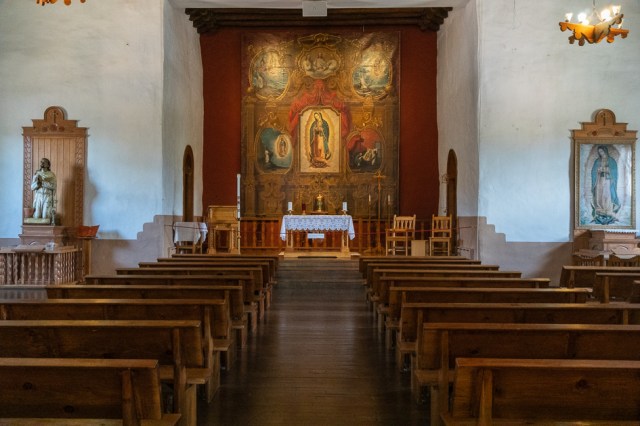
Painting behind the altar survived a fire in 1922

The church was rebuilt and used continually until 1961, when the new church opened next door. A restoration project in 1976-78 added a bell tower and a new wooden floor.
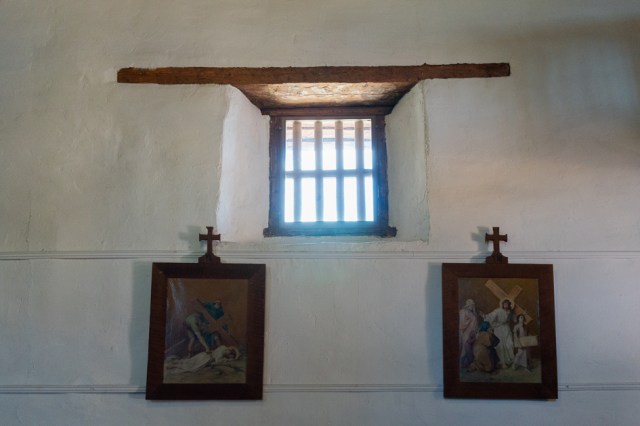
Thick adobe walls and paintings

The chapel is now used as an art history museum that contains Archdiocese of Santa Fe’s collection of New Mexican Santos (carved images of the saints) Italian Renaissance paintings, and Mexican baroque paintings. The chapel celebrates mass daily and is a place of prayer.
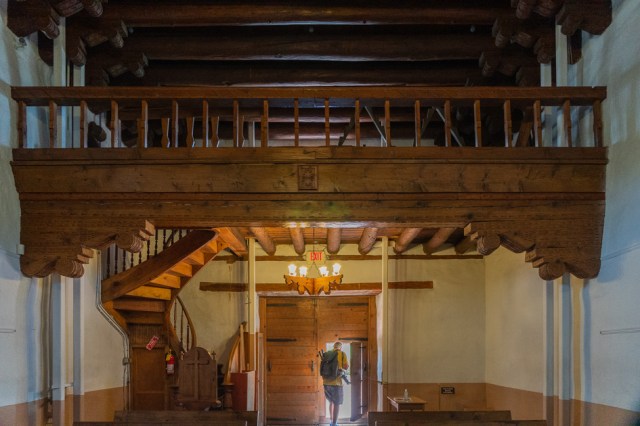
Visitors not allowed up the stairs

On our way back to the truck, we stopped in at Iconick Coffee Roasters to see if they had decaf coffee beans. Music played in the background, and most of the headphone-wearing patrons sat in front of laptops. When a few of the coffee drinkers looked up, their faces seemed to say, “What are you doing in here?” which gave me an eerie feeling.
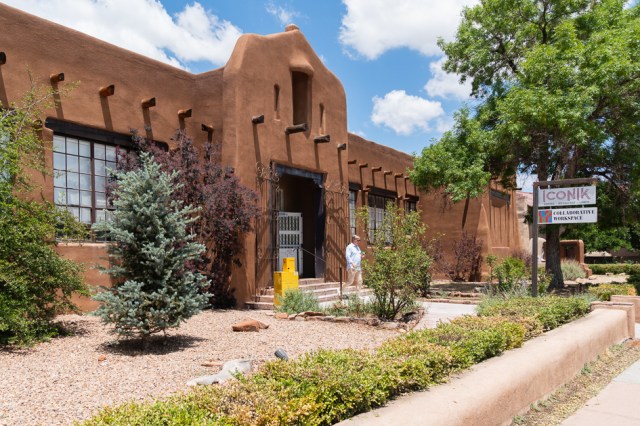
Iconick Coffee Roasters

A similar vibe came from the three baristas who stood behind the counter. None of the young men looked busy, nor did they smile or acknowledge our presence until Jon asked if they sold decaf beans. We made our purchase and left out the back door as soon as we could.
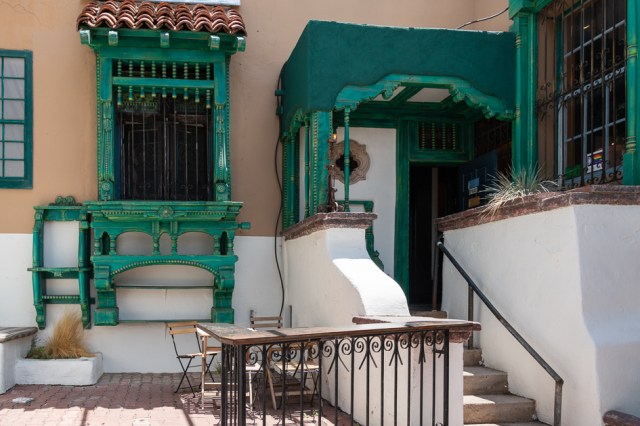
Iconik back entrance/exit

We used the beans a few days later and were sorry we hadn’t sampled the coffee before buying. It was a light roast, and we prefer darker varieties. A lesson learned.

A few blocks down the street from Iconik we found Boxcar Bar and Grill where we ate lunch. This was a great people-watching place with soccer fans cheering and groaning as the action played out on the big screens and busy servers dodging patrons who got in their way as they ran from table to table taking orders, delivering drinks and food, and checking to see if all was well. I suspect they kicked off their shoes and passed out on the couch when they got home after their shift.
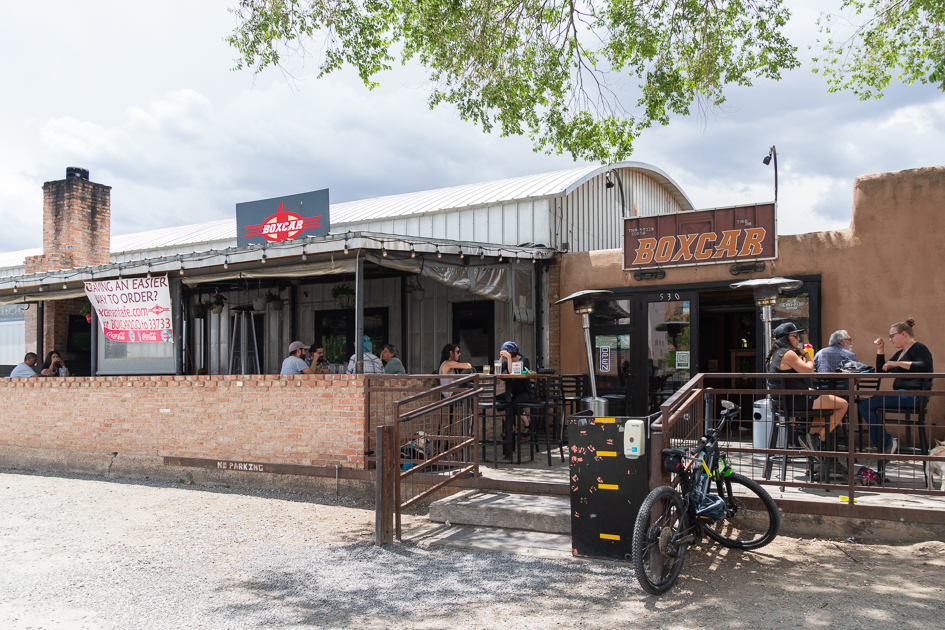
Boxcar Bar and Grill

What we didn’t have time to explore at the Railyard were the seven contemporary art galleries, nor did we join the historic walk which is offered during the summer months on Tuesdays. These are activities we have added to our list if we ever make it back to Santa Fe.
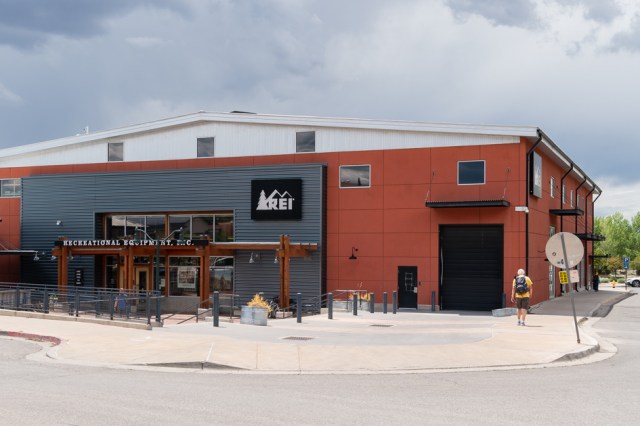
Need outdoor gear?

Next up: We take a few day trips to see more historical sites.

Safe Travels
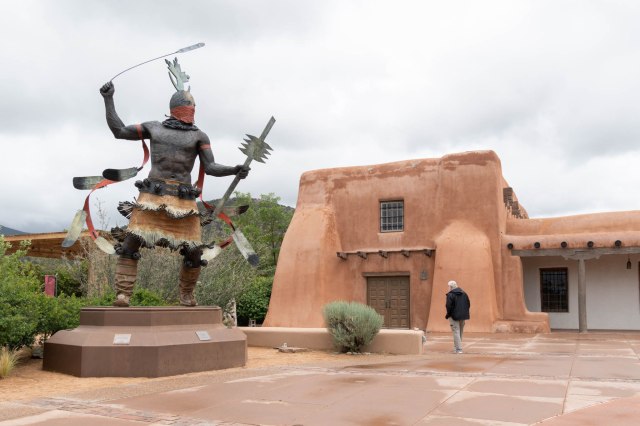
Summer 2021 Tour Santa Fe, New Mexico Episode 3: Museum Hill

New Mexico Indian Art and Culture Museum (MIAC)

A rainy day sent us out to explore the museums on Museum Hill. The New Mexico Indian Art and Culture Museum was our first stop. Sadly, the museum did not allow photos. As I walked inside, I wondered how I would remember my visit if I had no photos as evidence. Photos trigger my memory about the day, the weather, our experiences, and other details. I worried I’d have nothing to say without them.

Glad they couldn’t stop me from taking photos outside.

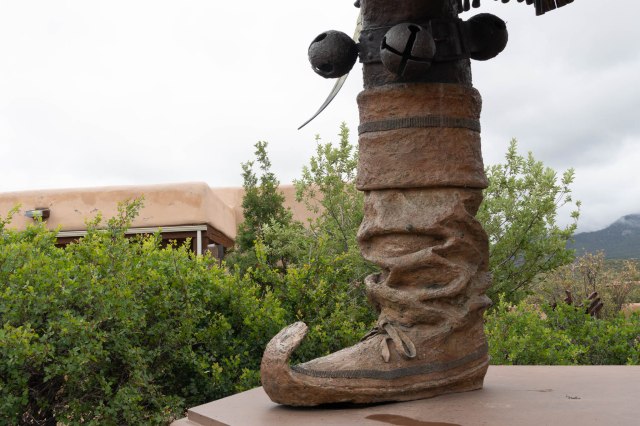
Craig Dan Goseyun’s Mountain Spirit Dancer

Here is what I remember from the inside:

  • Silver and turquoise rings, necklaces, earrings, and belts nestled in glass display cases with little cards detailing the date, cost, and location purchased. Native Americans created all the items, and a curator purchased them through trading posts.
  • The Clearly Indigenous: Native Visions Reimagined in Glass exhibit featured 33 indigenous artists, and work from Dale Chihuly who, according to the museum’s website, “introduced glass art to Indian Country.”
Costume detail

Individual pieces drew me in and my shutter finger itched to take a photo or two or three or more on the sly. All that’s left in my memory are vague words like beautiful, gorgeous, fantastic, and how-did-they-do-that. Those words lack the specificity needed to evoke emotion, so I lean on photos to reveal the story and elicit meaning. Perhaps a sketch might work the same.

Boot Detail

Although MIAC opened its doors to the public in 1987, its history began 78 years earlier when anthropologist Edgar Lee Hewett founded the Museum of New Mexico. In 1947, the museum merged with the Laboratory of Anthropology, founded by John D. Rockefeller in 1927 to study Southwest indigenous cultures. It took thirty more years for the New Mexico state legislature to appropriate $2.7 million for the museum’s design.

Allan Houser’s Singing Heart
George Rivera’s Lightning Boy

The tiny sliver of objects on display during our visit, along with art created by contemporary artists, gave us only a glimpse of the treasures MIAC has collected over the past 112 years. We hope to see more during a visit in the future. Maybe I can learn to sketch before then. The result doesn’t have to be gallery worthy, only enough to trigger my memory.

Museum of International Folk Art (MIFA)

Across the courtyard is the Museum of International Folk Art. Visitors have Florence Dibell Bartlett to thank for this museum. She founded MIFA with her 1953 donation of 2,500 craft items. Her vision and funding of the building was the seedling needed to support a collection that has grown to more than 130,000 pieces of folk and traditional art created throughout the world.

Wall of masks
Sign of the Times
Hunger grows as they wait
Eeny, meeny, miny, moe, which one can I take home
Clash of costumes
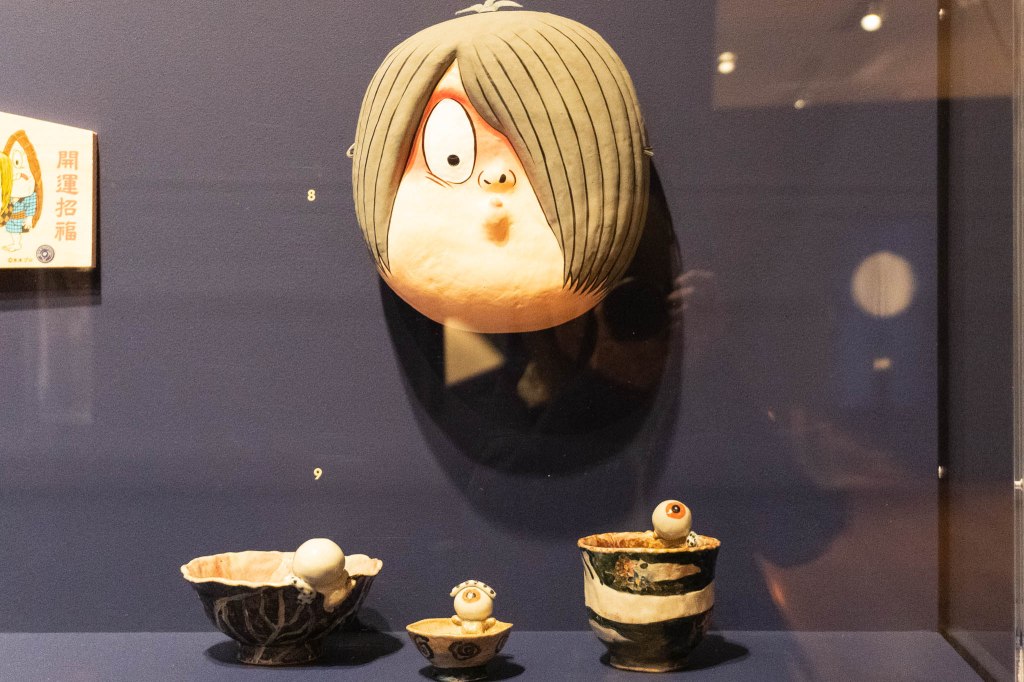
Guitar face
Whimsical
Scary creatures in this exhibit

With five wings to explore, visitors are sure to find something engaging from among the ceramics, costumes, jewelry, paintings, and wood carvings. My camera made up for the lost opportunity at MIAC, clicking away to capture the colorful objects.

Santa Fe Botanical Garden

We avoided the afternoon monsoon by visiting Santa Fe Botanical Garden in the morning. The garden is a relatively new addition to Museum Hill. First, the City of Santa Fe offered a long-term lease of 11 acres in December 2006.

Raya Friday’s People of the Fire
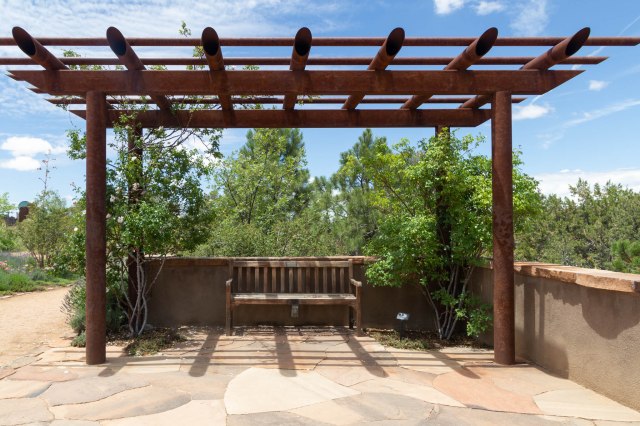
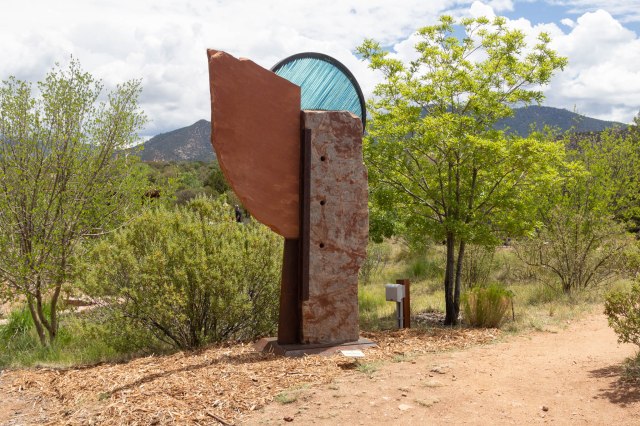
A place to rest under weathered steel

Over the next five years, landscape architect W. Gary Smith created a master plan, and the city launched an intensive review process with final approval in 2011. An additional three acres were added, and in July 2013, the garden opened to the public.

Lavender abounds
Greg Reiche Sentinel II
Greg Reiche’s Wind Song

Subsequently, additional leases and work over the years expanded the garden to 20.5 acres. The newest project, Pinon-Juniper Woodland, opened in 2021.

Take the picture already
Kearney’s Gap Bridge

It must have been the season for glass displays like we saw at MIAC. The garden’s current art exhibition, Capturing the Light, featured several glass art works strategically positioned among the plants and flowers.

Piñon Juniper Woodland, the newest addition to the garden
A gate is not just a gate at the garden, it’s art
On the trail

We found the botanical garden a delightful place to wander around, exploring the varieties of trees, shrubs, flowers, succulents, and cacti.

Mojave Sage
The Gathering Place

Weldon’s Museum Hill Café serves lunch from 11 to 2 Wednesdays through Sunday. We can’t vouch for the food or service because they were closed before we were ready for lunch.

Next up: Santa Fe Railyard Arts District

Summer 2021 Tour Santa Fe, New Mexico Episode 2: Beyond the Plaza

In this episode, we venture beyond Santa Fe Plaza a few blocks, gawk at art inside the New Mexico Capitol and dive into history at Fort Marcy, the Cross of the Martyrs, Loretto Chapel, and the oldest house and church.

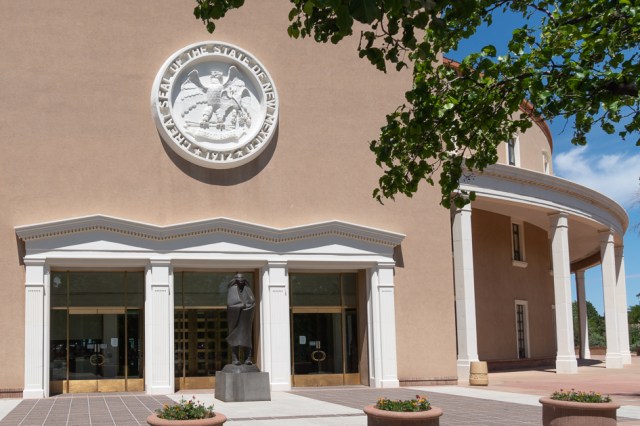
New Mexico Capitol

On the trolley tour, we heard about the art that graces the walls of the “roundhouse.” I don’t know why it doesn’t appear when searching for art museums and galleries. It should.

Allan Houser’s Morning Prayer in front of the capitol building

W.C. Kruger designed the round building using the Zia Sun symbol as inspiration. Robert E. McKee constructed the territorial-style building with neoclassical influences. The 1966 building was renovated in the 1990s, and since then has amassed upwards of 600 pieces of art created by New Mexican artists through the state’s Capitol Art Foundation. Artists donated many of the paintings, sculptures, and other art pieces, or the foundation purchased them through private donations.

The art display begins outside with sculptures. Self-guided tours inside are available Monday through Friday year round and on Saturday from Memorial Day to the last Saturday in August.

Bob Haozous’s Gate/Negate
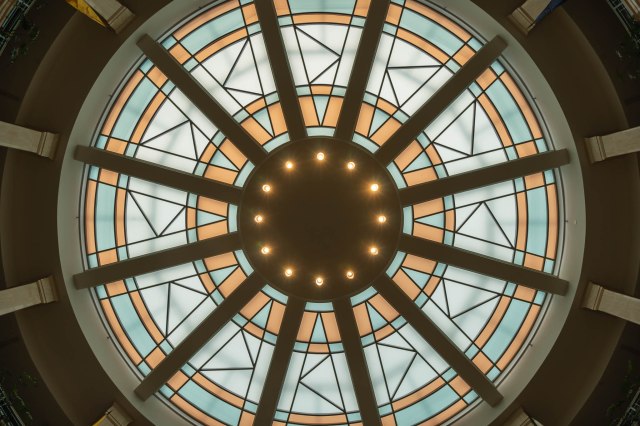
Skylight over the rotunda

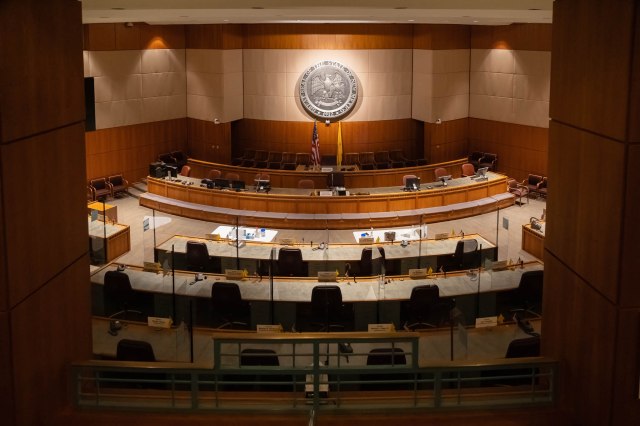
Enter on the second level, grab a pamphlet, and take a walk along the curved walls. Be sure to check out the skylight in the rotunda. On the north side of the building is the Senate gallery where visitors can watch proceedings, on the south side, the House gallery. The chambers are on the first level, which is underground.

Senate Chambers

The third level contains most of the Capitol Art Collection. This level has a bird’s-eye view of the state seal in the rotunda.

Third-floor view of rotunda and state seal
Depiction of the early days of Santa Fe
Triptychs are always fun
Buffalo mixed media sculpture by Holly Hughes [added 9/21/2021]
Artistic furniture
Douglas Johnson’s Hoshonzeh
Januscz Kozikowski’s Chair with Egyptian Colors

We passed on seeing the fourth level where the governor, lieutenant governor, and Legislative Council Service are housed and where the Governor’s Gallery and governors’ portraits are located.

Go girls, you can do it.

Fort Marcy

The U.S. Army arrived in Santa Fe in August 1846, during the Mexican-American War. Led by General Stephen W. Kearny, 1700 troops seized Santa Fe and staked claim to a flat-top hill with a view of the town.

View of town from Fort Marcy. Capitol in upper right corner.
Another Fort Marcy view

Although the fort remained during the Civil War, the troops never had to defend Santa Fe during the war. In 1868, the Army abandoned the fort. Reports of gold coins found in the ruins attracted treasure hunters who destroyed the remaining walls. Was the report a hoax? Perhaps since it appears no one else found treasure.

Information panels detail the history
Mounds identify where buildings once stood

In 1961, the City of Santa Fe purchased the site for use as a park and scenic overlook.

Cross of the Martyrs

A trail from Fort Marcy Park led us to The Cross of the Martyrs. Visitors can also climb the stairs from Paseo Del Peralta, where plaques detail Santa Fe’s history. The Caballeros de Vargas, a fraternal organization, owns the land and cross.

The Cross of the Martyrs we visited is the second cross to commemorate the deaths of 21 Franciscan friars in the 1680 Pueblo Revolt. The Original Cross of the Martyrs, erected in 1920 in a different location, is owned by the Historic Santa Fe Foundation.

The 1680 Pueblo Revolt successfully exiled the Spanish colonists until General Don Diego de Vargas returned twelve years later with settlers to recapture Santa Fe.

Cross of the Martyrs

On September 16, 1712, the Villa of Santa Fe designated September 14 a day of “celebration with Vespers, Mass, Sermon, and a Procession through the Main Plaza for the purpose of recalling how this Villa had been reconquered on September 14, 1692 by General Don Diego de Vargas…”

Over the centuries, the one-day celebration expanded into multi-day activities, introduced commercialization, and added parades and an Entrada reenactment. Controversy developed over the story told in the reenactment depicting a “bloodless” reoccupation by Vargas and colonists.

Native tribes and historians expressed their opposition to the reenactment’s version of history. They worked for at least fifty years to correct the narrative without success. After angry protests and a large police presence during the 2017 fiesta, the Santa Fe Fiesta Council and the Caballeros de Vargas agreed to discontinue the reenactment. In subsequent years, except 2020, the celebration has continued without the Entrada.

On the last day of celebration, St. Francis Basilica holds mass, followed by a candlelight procession to the Cross of the Martyrs, preserving the original intent of the proclamation of 1712.

Loretto Chapel and the Unsolved Mystery

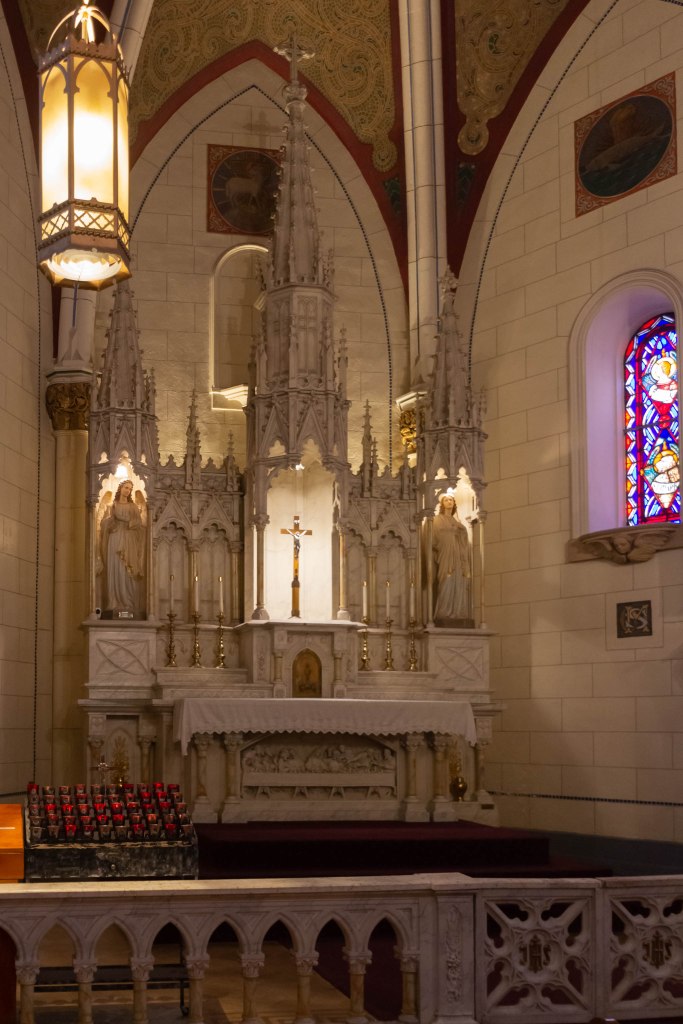
For five years, the sisters of Loretto Academy watched the Gothic Revival style building take shape until its completion in 1878. With its spires, buttresses, and stained glass windows imported from France, it was the perfect building where the sisters could hold services and sing hymns.

Loretto Chapel

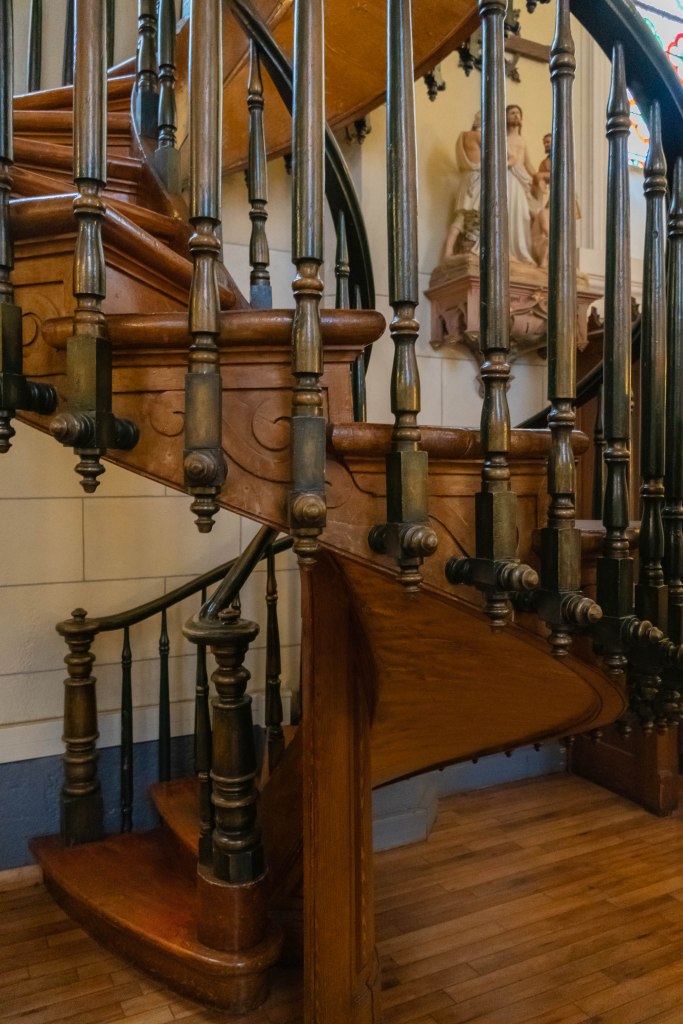
There was just one problem. No one figured out how to build a staircase to reach the choir loft twenty-two feet above the floor. So they prayed to St. Joseph, the patron saint of carpenters. Following the ninth day of prayers, a man appeared with a donkey and a toolbox, looking for work.

Mysterious spiral staircase
Detail of staircase

The man toiled for months, cutting planks, fitting them together like puzzle pieces, joining them with dowels, no nails. When the carpenter completed his work, he packed up his tools and disappeared, leaving without compensation and depriving the sisters of their expressions of gratitude.

Stained glass windows imported from France

Some people thought the man was St. Joseph, answering the sisters’ prayers. Carpenters and engineers inspected the staircase with its 360-degree turns and no visible means of support. They marveled at the wood and other materials used and at the relative height of the risers to the height of the choir loft.

Scary stories circulated of frightened nuns and students using the staircase built without handrails. They were added in 1887. Nuns and students used the chapel until 1968, when the academy closed.

Today, the chapel is privately owned. Open 364 days a year, the chapel hosts over 100 weddings and events each year, and guests line up to tour the building and photograph the staircase.

San Miguel Chapel

San Miguel Chapel is billed as the oldest Catholic Church in the continental United States. Franciscan friars constructed the church between 1610 and 1626 to serve the small community of soldiers, laborers, and Indians who lived in the Barrio de Analco. It was partially destroyed in 1680 during the Pueblo Revolt.

The church was closed during our visit

Archeologists believe an early pueblo settlement from 800-1300 CE is underneath the church. The current 1710 building has needed structural changes over the centuries and a major preservation project began in 2008. During the project, cement stucco was removed, adobe repaired, and a finishing coat applied. If interested, their website includes videos of the process. The church is open to visitors throughout the week and is available for live performances and video and sound recordings.

Oldest House

Signs for the oldest house led us down a narrow path toward an adobe building. We stepped inside the attached 1800s building to the right, which houses the Oldest House Gift Shop, selling Indian gifts and art. Inside to the left was the entrance to De Vargas House, the oldest house.

Credit: Historic Santa Fe Foundation historicsantafe.org

The actual build date of the house is unknown. A few of the lower wall sections resemble pre-Spanish pueblo construction. The best guess is 1610 before Spanish colonists arrived.

View from doorway
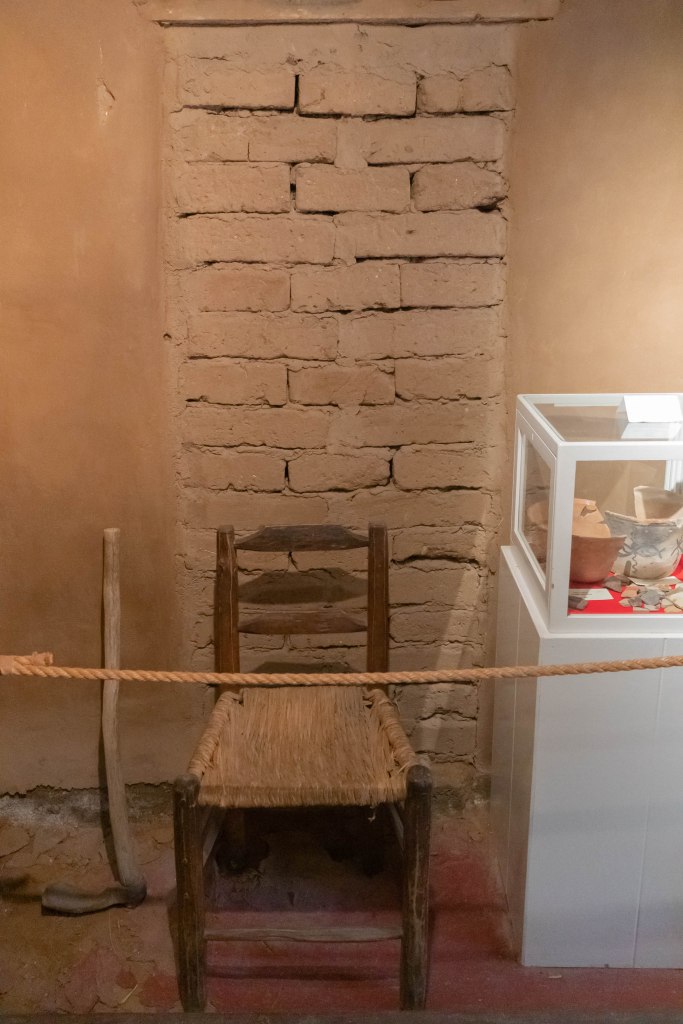
Exposed adobe bricks
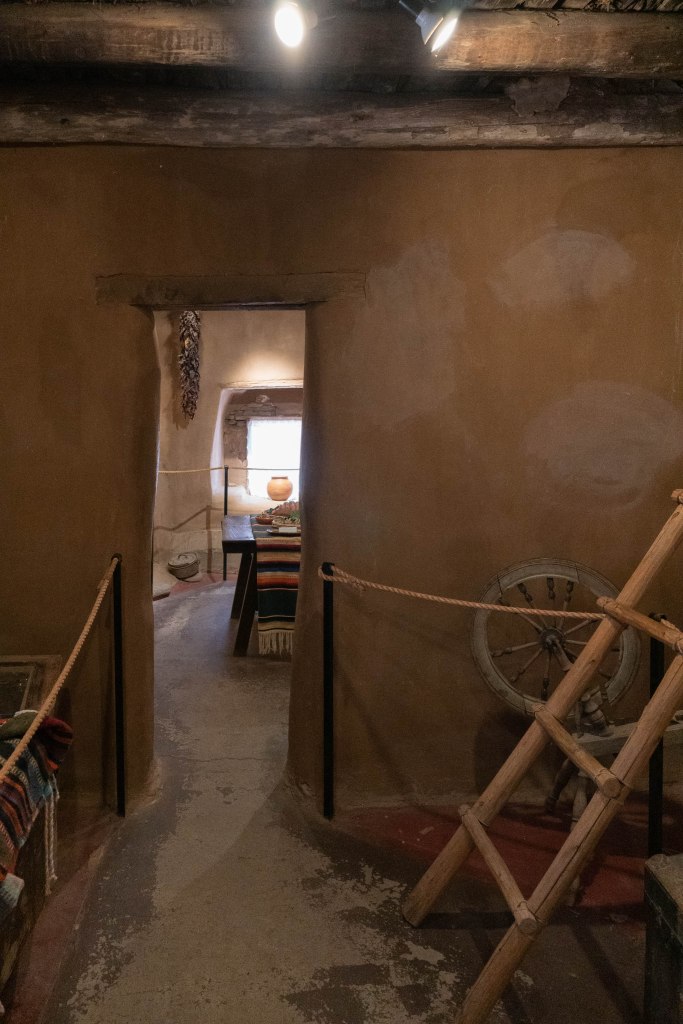
Thick walls to stay cool in the summer and warm in winter

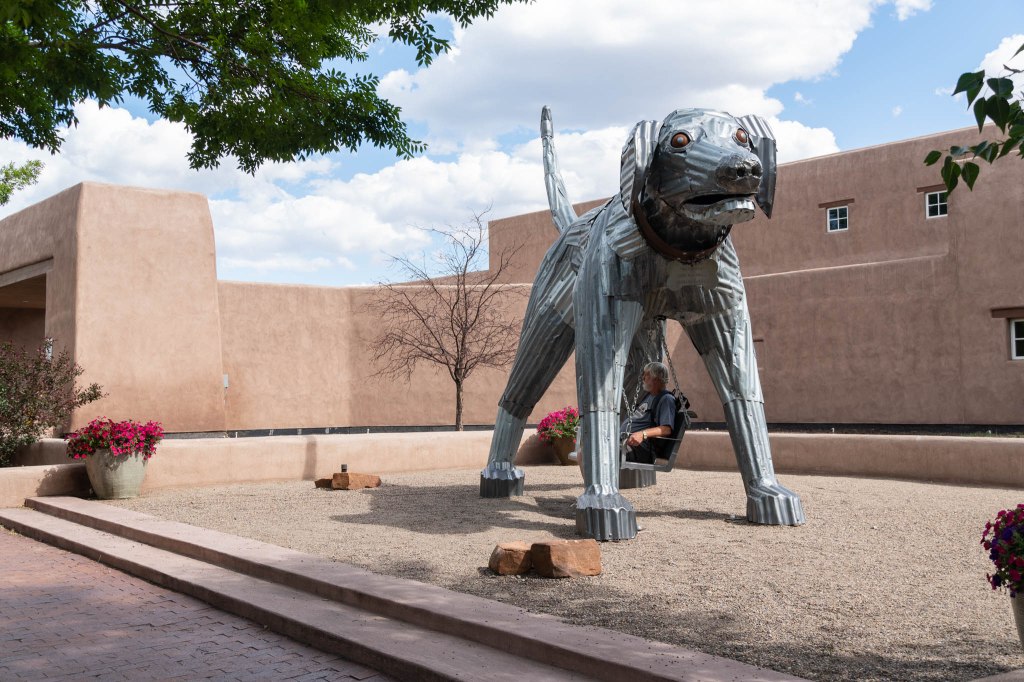
And finally, we’ve reached the end of this long post. How about a bit of whimsy?

Swinging under Don Kennell’s Barn Dog.

Safe Travels
Updated 9/21/2021 to add Buffalo photo

Summer 2021 Tour Santa Fe, New Mexico Episode 1: Santa Fe Plaza

Pulling into Los Sueños de Santa Fe was a challenge on June 24, 2021. First the horrendous traffic on Cerrillos Road came as a shock. Then the lack of a sign for the RV Park made us think the GPS lagged behind. If it hadn’t been for a patrol car blocking traffic behind us, we might still be sitting in the median waiting for cars to clear.

Was it the drive, the traffic, or the campground that made Jon lose his happy camper attitude? He hated everything about the campground: no sign, uneven site, too close together, only one washer and dryer. I counted us lucky, given the Fourth of July weekend fell in the middle of our stay, and we had only made reservations two weeks prior.

Our home for two weeks at Los Sueños de Santa Fe

Once he confirmed reservations elsewhere were not possible, he was back to his happy self. In the long run everything turned out okay. We only had neighbors on our patio side during the weekends, neighbors on the street side were quiet, and we found a clean laundry place a few blocks away.

To start off this series, here are a few Santa Fe details:

  • Founded as the capitol of Nuevo Mexico, a kingdom of the Spanish empire in 1610
  • New Mexico became a US territory in 1848 and Santa Fe continued as the capitol
  • In 1912, US granted New Mexico statehood with Santa Fe as its capitol
  • Soon after statehood, artists, writers, and retirees arrived for the dry climate, picturesque landscapes, and cultural wealth
  • Population in 2020: 87,505, a 20,000 increase from 2010
  • Santa Fe boasts 12 museums housing historic, cultural, and artistic creations

The Santa Fe Plaza downtown is first on our list of places to see. We hopped on The Loretto Line, an open-air trolley tour of the historical downtown to get our bearings. The driver concentrated on driving, while the guide entertained us with historical stories—some true, some maybe not—and gave us ideas about places to see. He also included tips and tricks about where to park, eat, and shop. We would have missed a few sites had we not taken the trolley.

New Mexico History Museum

Plenty to see at New Mexico History Museum

Three connected buildings house the New Mexico History Museum. The oldest building is The Palace of the Governors, built in 1610 by European settlers.

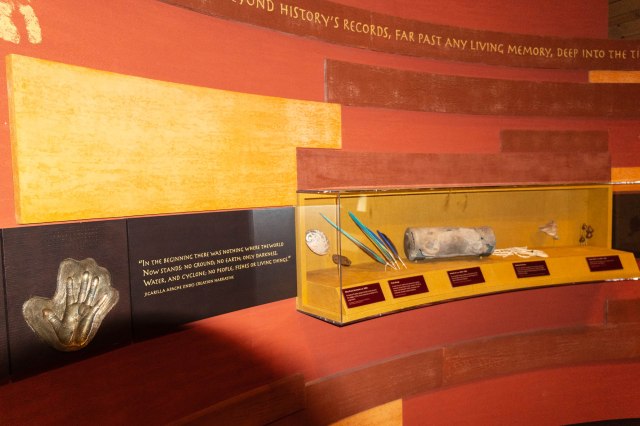
“In the beginning” story of indigenous peoples

The museum’s website states the 1610 Palace of the Governors is the “oldest public building in continuous use in the continental United States.” Various renovations and installation of modern amenities have occurred over the centuries.

Artifacts depicting Spanish rule over territory that became New Mexico

We spent most of one day at the museum following the historical record from the early indigenous habitants, through the Spanish rule, early settlers, and artists such as Georgia O’Keeffe, and writers such as D. H. Lawrence.

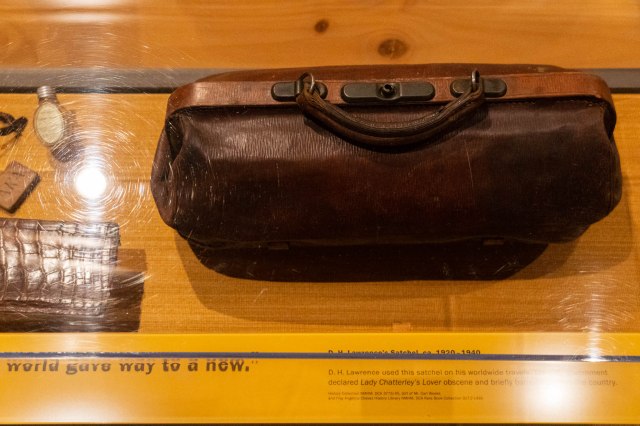
D. H. Lawrence’s satchel used between 1920 and 1940 during his worldwide travels
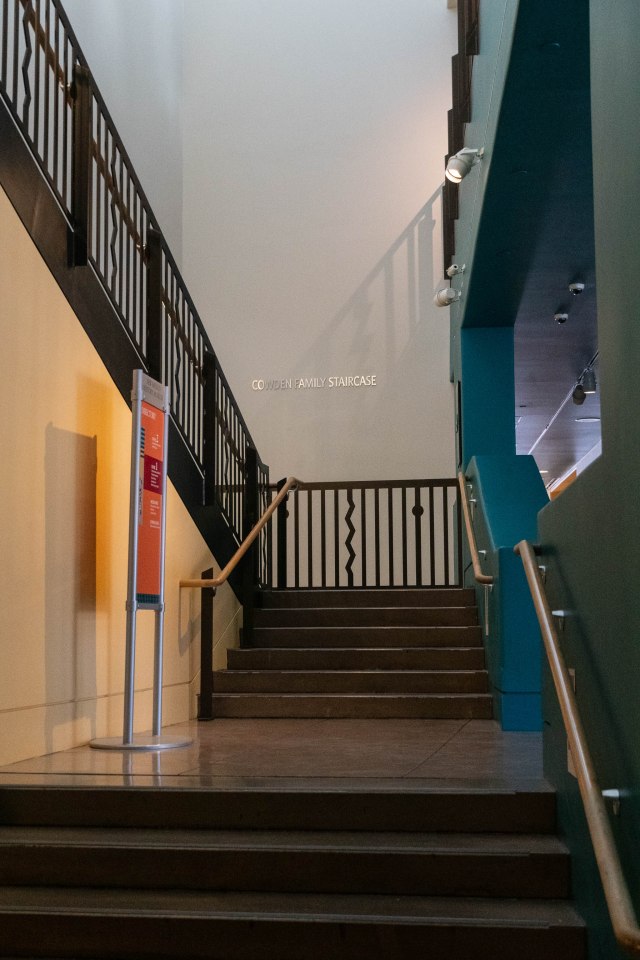
Up the stairs (or take the elevator) for more history

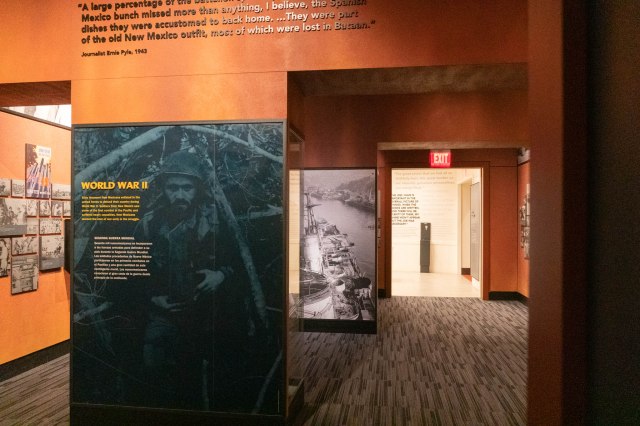
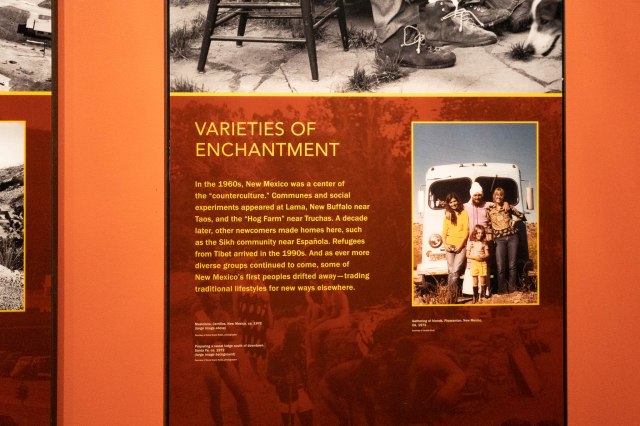
We learned about railroad activities, the impact of World War II on the community, and even the communes and social experiments of the 1960s and 1970s.

Part of railroad exhibit
Exhibits pay tribute to the New Mexican men who fought in the Battle of Bataan and faced the Bataan Death March in the Philippines, and to the Navajo Code Talkers
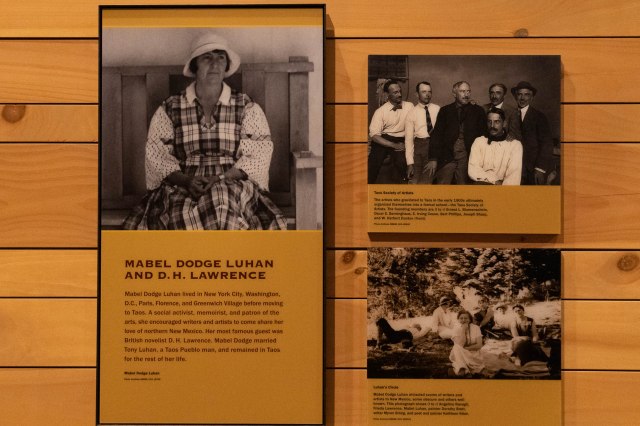
Mabel Dodge Luhan attracted writers, including D. H. Lawrence, and artists to Taos, New Mexico
Here come the hippies
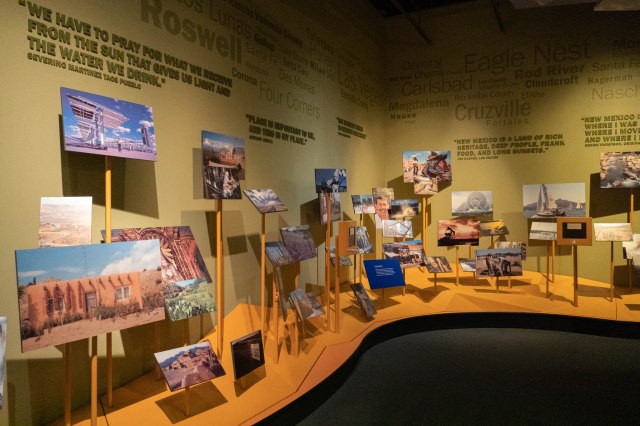
Significant and historic places around the State of New Mexico

After viewing the museum’s first floor, we took a break for lunch at Tres Colores.

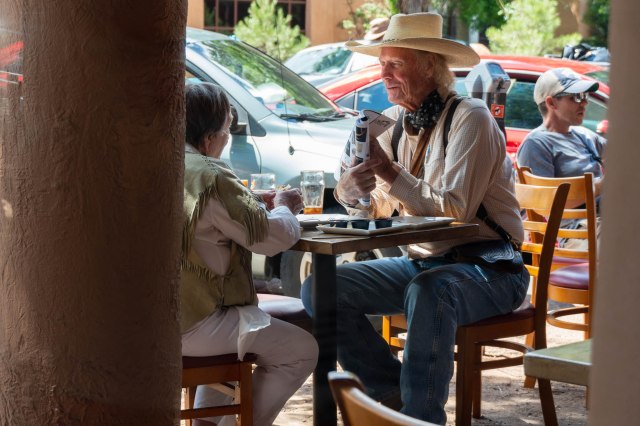
I spotted this couple while eating my lunch. The man’s gallant gestures toward the woman and the expression of appreciation and happiness on his face gave me the impression they were very much in love and had been for decades.

Simple Love

No selfies, no social media, just two people enjoying each other’s company while sharing a meal. In this age of technology and the internet of everything, the couple reminded me that it’s the simple joys of life that are the most meaningful.

The Cathedral Basilica of St. Francis of Assisi Archdiocese of Santa Fe

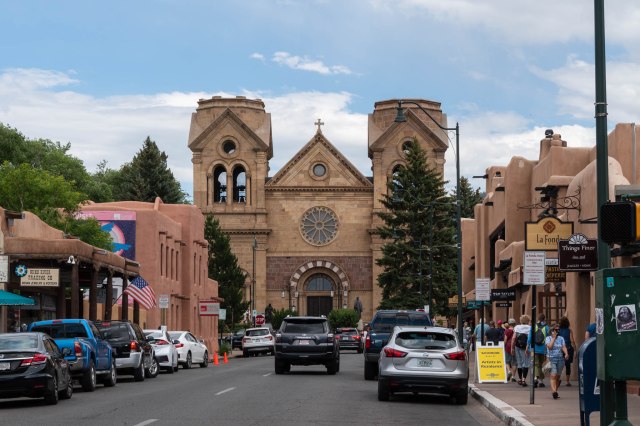
Archbishop Jean Baptiste Lamy built the Cathedral Basilica between 1869 and 1886. The limestone block masonry, round arches, columns, and towers are typical of the Romanesque Revival style. Rooted to the earth at the end of the street, the building’s magnificence exudes a sense of superiority, strength, and security that commands a viewer’s attention.

Original plans for the church called for spires atop the towers. Lack of funds prevented their addition.
The keystone in the arch contains a triangle with the Tetragrammaton, the four letter Hebrew word YHWH, or Yahweh.
Arch Bishop Jean-Baptiste Lamy spent much of his life seeking funding to complete construction. Statue created by Jeno Juszko
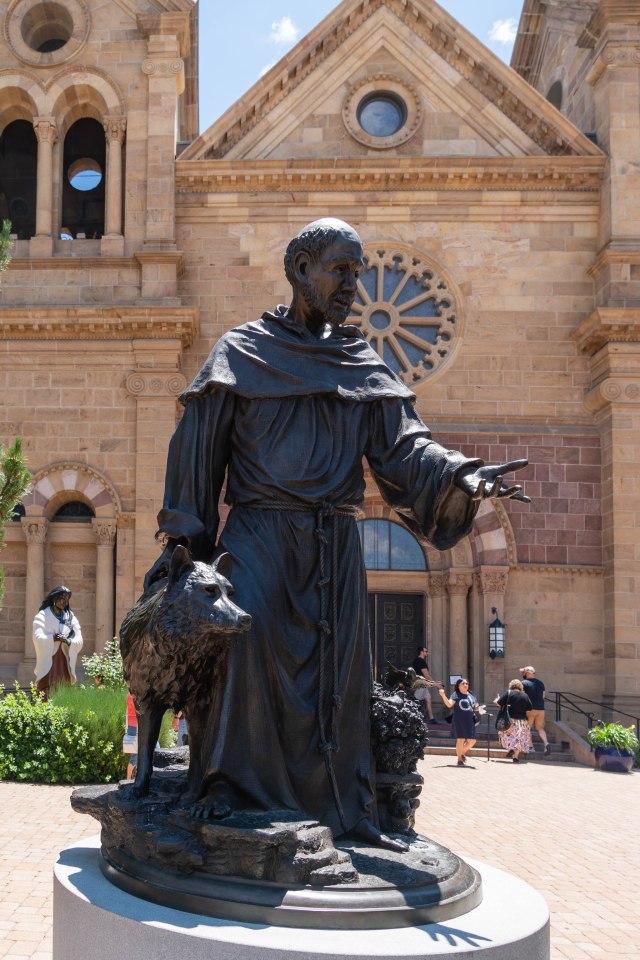
Statue of St. Francis of Assisi, the patron saint of the dioceses, installed during 1967 renovations
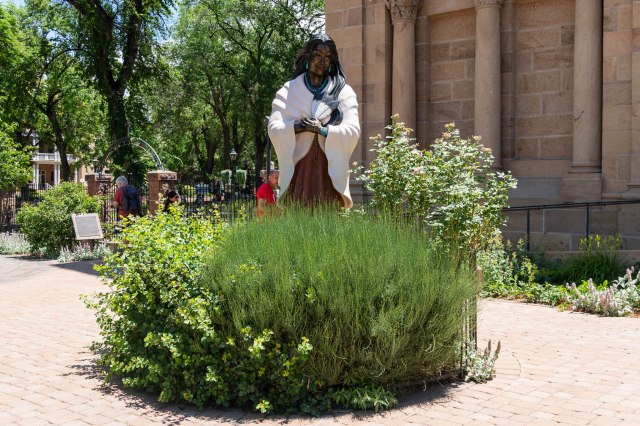
Patron Saint of the Environment Kateri Tekakwitha (1656-1680) “Blessed Kateri Tekakwitha” created by Estella Loretto from the Jemez Pueblo and installed in August 2003

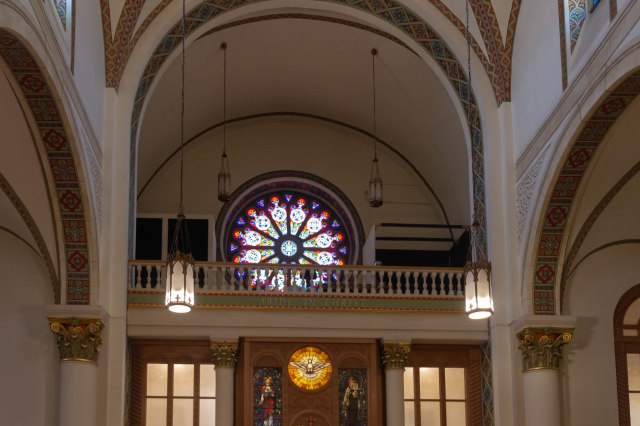
Visitors and cameras are welcome inside the church for a self-guided tour on Tuesdays through Saturdays. Check website for times.

The stained glass window was imported from Clermont-Ferrand in France.
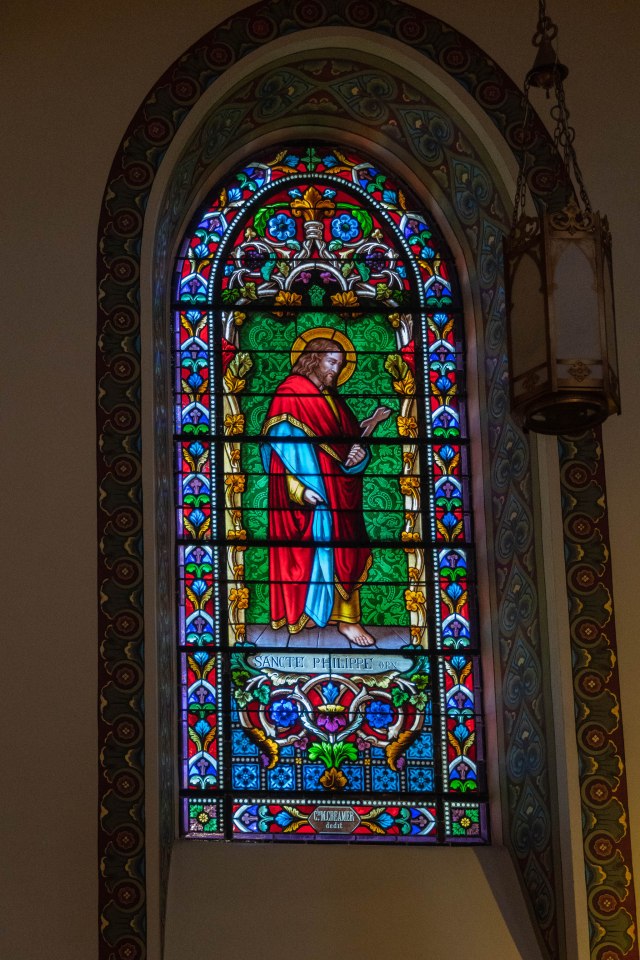
Twelve apostle windows also were imported from France
The reredos (ornamental screen behind the altar) depicts Saint Francis surrounded by saints of the New World
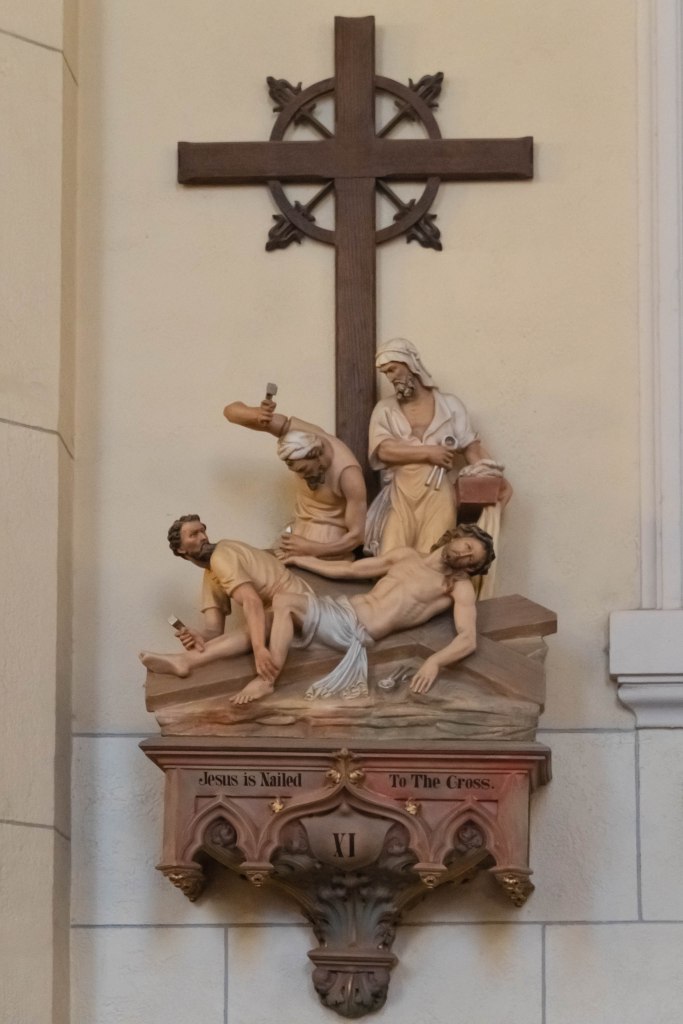
Women at crucifixion

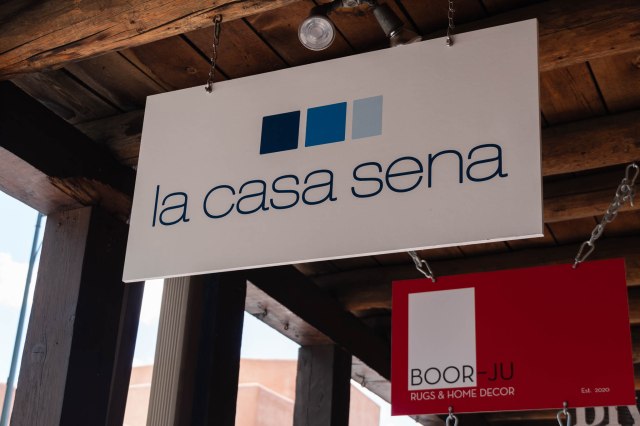
Across the street from the Basilica is the Sena Plaza where visitors will find shopping and La Casa Sena Cantina. Originally built in 1846 as a house in an old hacienda style.

Find shopping and have a bite to eat at the Sena Plaza
La Casa Sena Cantina uses a common color scheme seen in Santa Fe. Is it true the turquoise doors and window frames prevent evil sprits from entering?
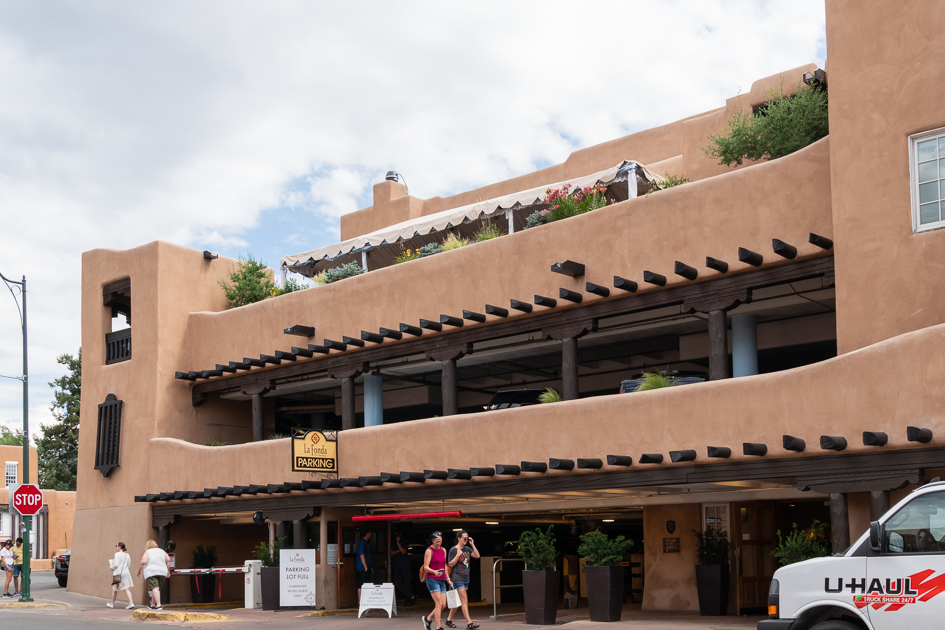
La Fonda on the Plaza is also across the street from St. Francis Cathedral

IAIA Museum of Contemporary Native Arts

The Institute of American Indian Arts (IAIA) is one of 37 tribal colleges in the US. The school was established in 1962 as a high school formed under the Department of Interior’s Bureau of Indian Affairs. Two-year associate degrees began in 1975 and in the 2000s, the school expanded its offerings to include baccalaureate degrees. IAIA ventured into graduate programs in 2013 when it began the low-residency MFA in Creative Writing program. They have since added an MFA program in studio arts.

Statuary garden behind the gate

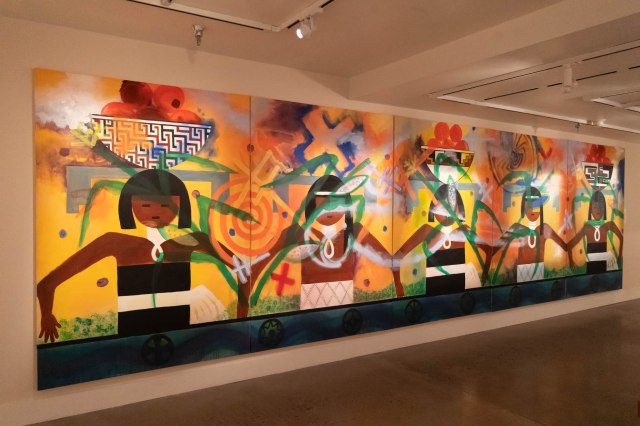
IAIA moved its Museum of Contemporary Native Arts to downtown Santa Fe in 1992. We enjoyed the opportunity to walk through the exhibits and admire the colorful paintings and murals created by the talented students. Each exhibit included a bio of the artist so we could get a sense of who the person was and what inspired their art.
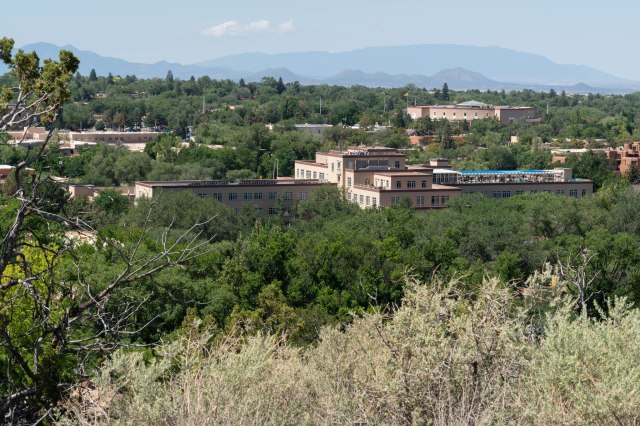
Architectural contrast
Sculpture with a corn theme
Mural depicts American Indian themes

The museum had on exhibit works created by Linda Lomahaftewa. Lomahaftewa was among the first group of Native American youths to study art at the high school when it opened in 1962.

A study of horizon and sky in abstract
More colorful abstracts
“Weaving Memories of our South Pacific Ancestors” by Linda Lomahaftewa

Other Plaza Sites

The pink-clad Scottish Rite Temple sports a different type of architecture from what is typically seen in Santa Fe. This building was used in Tina Fey’s 2016 movie Whiskey, Tango, Foxtrot.

Scottish Rite Temple built in 1912 in the Moorish Revival style

During one of our excursions downtown, we came across a gay pride and celebration at the plaza.

Pride celebration in the plaza

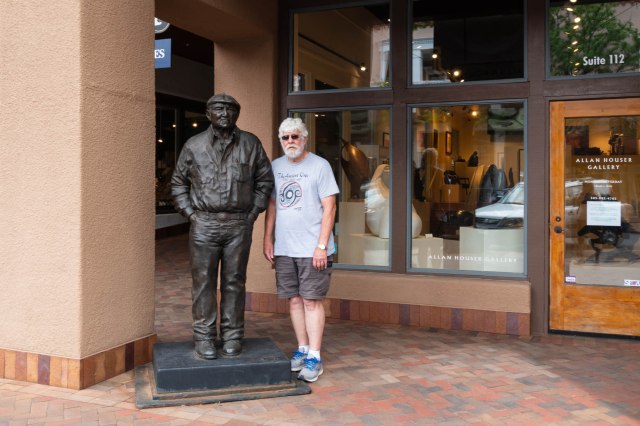
Allan Houser (1914-1994) was an Apache Indian artist, painter, and sculptor. He was honored in 1992 with the National Medal of Arts. His works can be seen in the Smithsonian Museum of American Art, the National Museum of the American Indian, the National Portrait Gallery in Washington, D.C., as well as in numerous museums.

JT cozies up to Allan Houser

Next up: We explore a few sites beyond the plaza: the capitol building, Loretto Chapel, oldest church and oldest house.

Safe travels