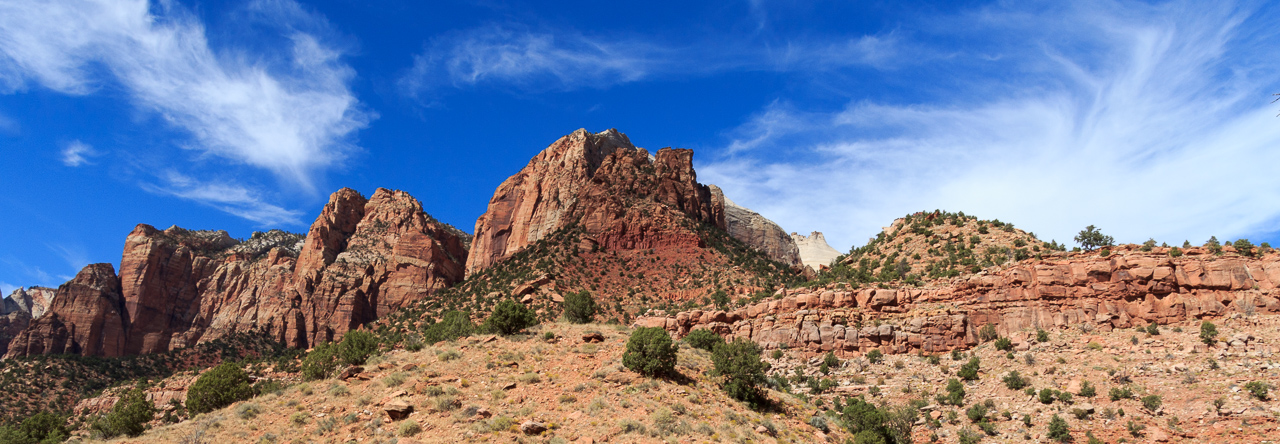
Exploration of the California Coast Continuation

Before we continue our exploration of the California Coast and our visit to Año Nuevo Point and Island, Pigeon Point Light Station State Historic Park, and the Town of Pescadero, a brief update about our absence from WordPress.

As I write this, it is November 4, 2020, the day after the quadrennial presidential election, and the results of the election are still up in the air. Are we all biting our fingernails? We spent the past month in Utah, Arizona, on the eastern side of the California Sierras, and Nevada. Often we lacked reliable cell and WiFi service that hampered our ability to publish posts. The lack of connectivity was not always a bad thing. It kept us unaware of the pandemic marching across the nation and away from the bickering political campaigns for large chunks of time. We’re back in the real world now, and will publish future articles on our October 2020 COVID-19 Adventure.

Until then, here’s a look at what else we encountered along the California Coast in September. To see the first article, click here.

Año Nuevo Point and Island

We had visited Año Nuevo State Park several years ago and were excited about seeing this unique location again. The park includes the Año Nuevo Coast Natural Preserve, which protects the breeding colonies of northern elephant seals. The seals are year-round residents that peepers like me can normally view by permit or guided walk.

Trail leading toward Cypress Dairy
Trail to and from elephant seal viewing area

We took the trail to the preserve, walking through walls of poison oak trimmed back from the trail. Little blue daisies dotted the path along the way.

Poison oak and blue daiseys
Poison oak and blue daisies

At the end of the trail, a ranger told us that guided walks were canceled because of COVID-19. The sound from the other side of the hill made me think the seals were having a party and enjoying their secluded cove without the prying eyes of tourists. I so wanted to watch them in action. I’ll be keeping tabs on the website for when the viewing area reopens. These eyes want to pry.

We walked around the short trail while fog hung close to the shoreline, partially obscuring the view of the nearby hills and pelican colonies that breed on the little islands.
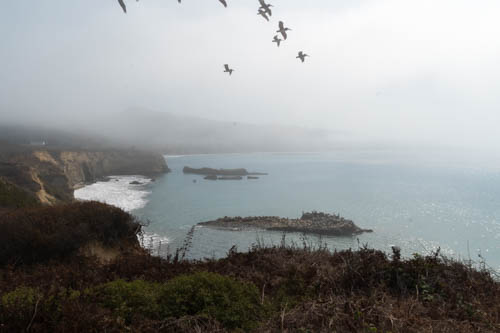
Foggy view of coastline and flying birds
Foggy skies
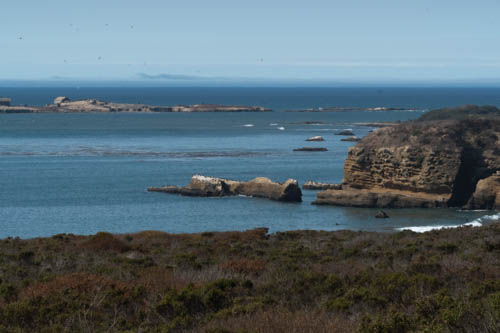
Coastline with islands
A touch of blue

Along the way, several species of birds enjoyed splashing in a freshwater wetland, cleaning their feathers.

Birds in a lagoon
Wetland attracts birds of all types

Other features at Año Nuevo are the historic buildings of the Cypress Dairy. Edwin and Effie Dickerman built the farm in 1881 to make butter and cream. In the 1930s, the family switched to growing artichokes and Brussels sprouts, crops which still grow in the area today.
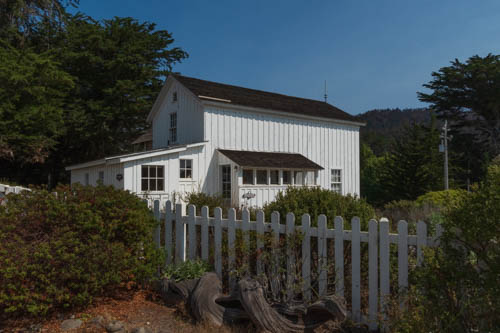
White farmhouse
Cypress Dairy house

The State of California added the farm to Año Nuevo State Park in 1968 when they purchased the ranch. We enjoyed being the only ones walking around the buildings and taking photos. Had the buildings been open and docents nearby, I’m sure we would have heard interesting stories about the Dickerman family.

Wagon wheels in a garden
Cypress Dairy farm equipment on display

Pigeon Point Light Station State Historic Park

A short distance from where we stayed at Costanoa stands Pigeon Point Lighthouse, one of the tallest lighthouses in America at 115 feet. The lighthouse began service on November 15, 1872, when the five-wick oil lamp was first lit. An automated LED beacon replaced the original Fresnel lens and is still an active U.S. Coast Guard navigation aid.

Coastline with Pigeon Point lighthouse on a bluff
Pigeon Point lighthouse across the bay

The lighthouse has been closed for repairs since December 2001 when the iron belt course fell off of the exterior. In August 2019, California State Parks announced funding for the stabilization and restoration project to begin the spring of 2020. In mid-2020 a request for proposals was to be released for the $9 million projects. Maybe next year they can start the project.

Lighthouse and buildings
Pigeon Point lighthouse
Lighthouse close up
A whole lotta rust up there

We missed out on seeing the elephant seals at Año Nuevo, but the harbor seals sunbathing on the little island near the lighthouse did not escape our notice.

Harbor seals on rocky island
Soakin’ up the rays

Next to the lighthouse are three rental houses for up to 10 people at a nightly rate of $350 to $500, depending on the time of year.
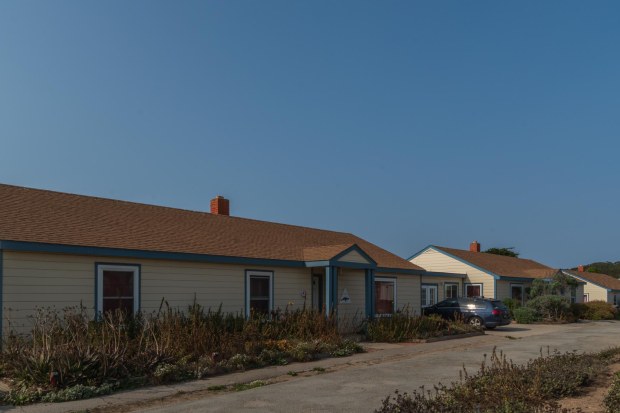
Hostel houses for rent

Twelve ships wrecked along the shore between Año Nuevo and Pigeon Point, between 1853 and 1953. The Point Arena, a steam schooner built in 1887, carrying cargo along California’s central coast, was one of the twelve ships that succumbed to the power of the sea.

Remnants of Point Arena hull
Remains of the Port Arena schooner

While loading tanbark at Pigeon Point, rough seas forced her on the rocks and tore a hole in the hull. The sailors watched in horror as the waves ripped her apart. They burned the remains to prevent danger to other ships, and everyone thought there was nothing left. Eighty years later in 1983, a five-ton section of the hull washed ashore at Año Nuevo as a testament to the power of storms and oceans. They hid from view a five-ton hunk of a hull for eighty years and then spit it out one day.

Pescadero, California

I had the pleasure of working near Pescadero a few times during my accounting days and was introduced to Duarte’s Tavern, where I remember having one of the best pieces of pie.
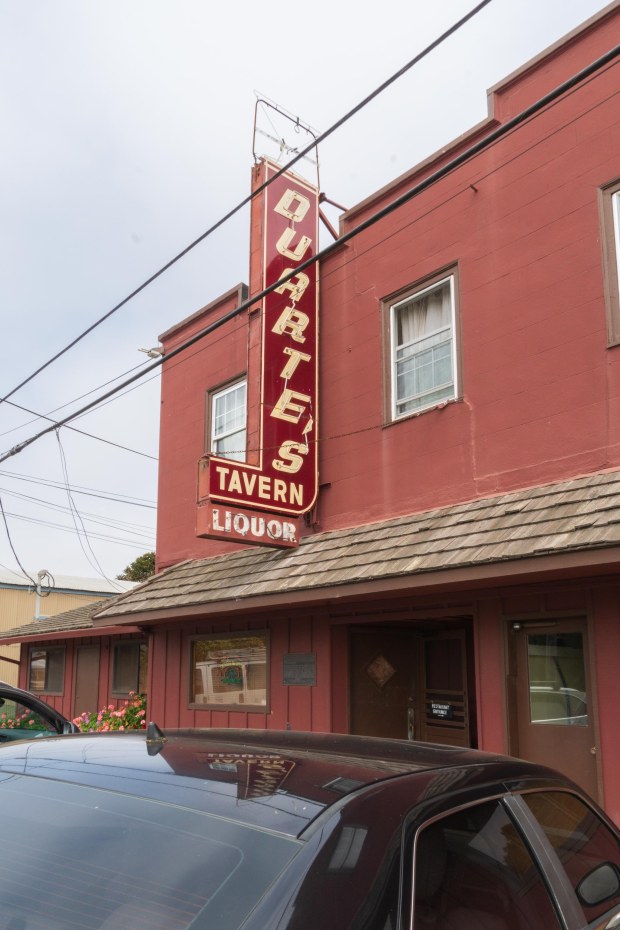
Duarte's Tavern building and sign
No pie for us. Duarte’s was closed.

We drove there expecting to buy a slice to take home. Unfortunately, they were closed. A couple walking by told us the restaurant hadn’t kept regular hours since the county enacted pandemic health restrictions.  I hope they survive the restrictions and the economic downturn. I’d sure love to taste the best pie I ever ate again. Will it taste as good as I remember?
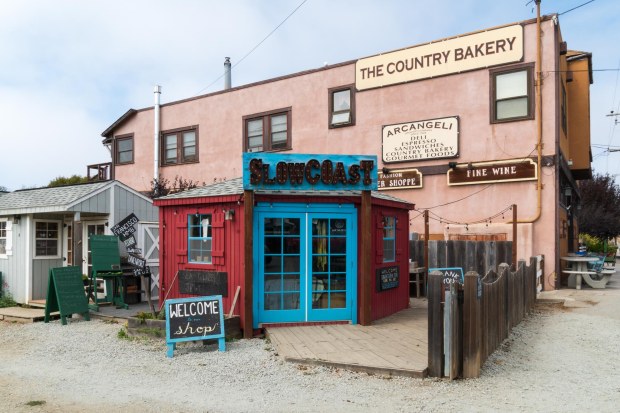
The Country Bakery building and shops in sheds
Shops in sheds

A plaque on the building dated September 29, 1990, states the Duarte’s Tavern is run by the third and fourth generations of the Duarte Family. The plague also states that Frank Duarte started it all when he brought a barrel of whiskey from Santa Cruz in the 1890s and set up his bar.
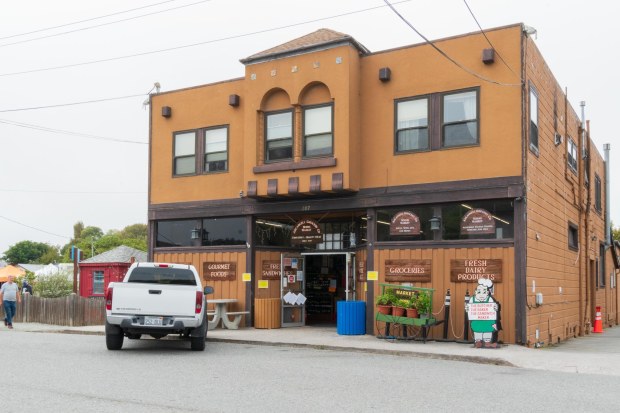
Grocery building
Popular place for groceries and sandwiches

Closed during prohibition, Duartes reopened and expanded with the restaurant in 1937. The original building burned in 1926, but the bar was saved and is still in use today.

Old-fashioned white house with green trim.
House in Pescadero

Cemeteries

I recently learned there’s a name for people like me who like to wander around cemeteries. I’m a taphophile, a person who is interested in cemeteries, funerals, and gravestones. I’m not so enamored with funerals, but cemeteries and gravestones pique my interest. And the more historic, the better. Pescadero has two cemeteries side-by-side on a hill at the end of the downtown area.
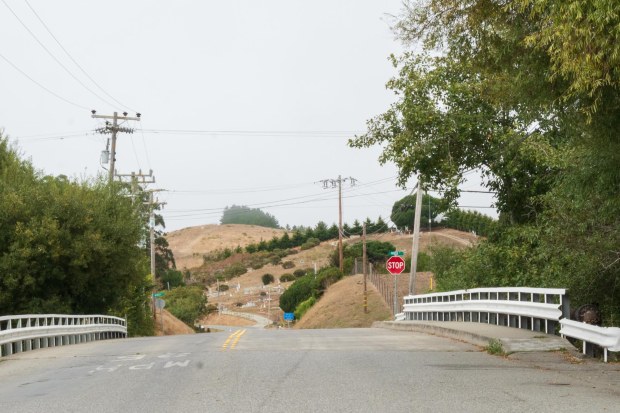
Bridge leading to a cemetery on a hill
Cemetery on the hill
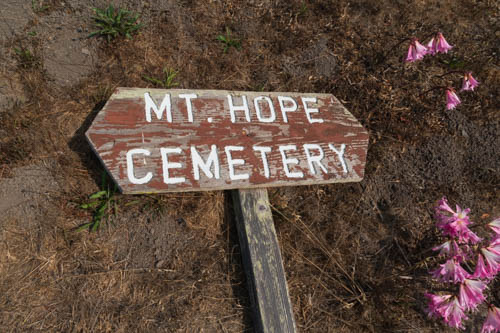
Mt. Hope Cemetery sign
Mt. Hope Cemetery’s sign fell down

Mt. Hope Cemetery and St. Anthony’s Catholic Cemetery are not your typical modern-day cemeteries. No manicured grounds there. One must walk carefully around the plots to avoid tripping over a molehill or twisting an ankle in a gopher hole.

Trees and headstones in a cemetery
St. Anthony’s Cemetery

Family plots, containing generations of ancestors and relatives, are sectioned off. Some plots are well maintained while others appear abandoned. New headstones, small and large, mix in with the faded and eroded markings from historic eras.
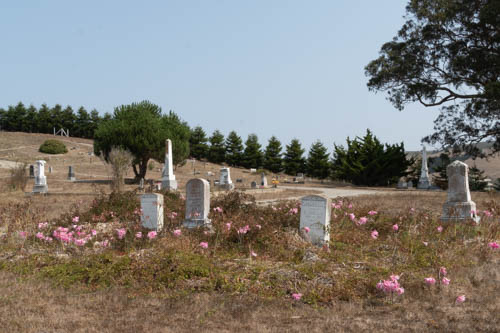
Trees, lillies, and headstones in a cemetery
Lillies add color to this family plot

Why do I like cemeteries? I’m intrigued by the people buried there. Each grave represents a person who lived on this earth, who was loved, who was special in their own right. There are so many stories buried in graveyards, and I yearn to know them all.
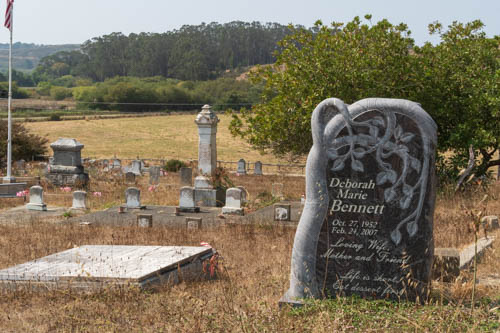
Headstones in a cemetery
Old and new

What kind of life did they lead? What were their goals and achievements? What were their hardships and struggles? Who did they love? Did they have big families or small families? What were their views on politics, religion, and faith? Did they suffer, or did they lead happy lives?
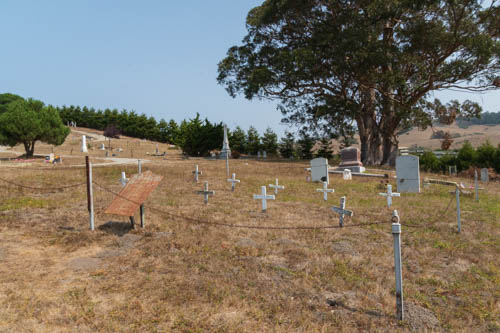
Tree, crosses, and headstones in cemetery
Older family plot

And when I see a grave that holds the remains of a child, my heart breaks to think about the pain suffered by the parents, or the life that never grew and matured and loved.

Trees on a hill with gravestones
Tree protects the headstones

Maybe it’s the emotions that attract me to cemeteries, the happiness I feel for the person who lived a long life, the sadness for the person who did not, combined with the stories I imagine in my head from reading the names, the dates, and epitaphs. Whatever it is, I’m sure I’ll continue to turn my head whenever I pass a cemetery and want to stop the car, get out, and walk through the graves.

Well, that concludes our brief visit to the California Coast. Next up we’ll start our October 2020 COVID-19 Adventure.

Stay Safe
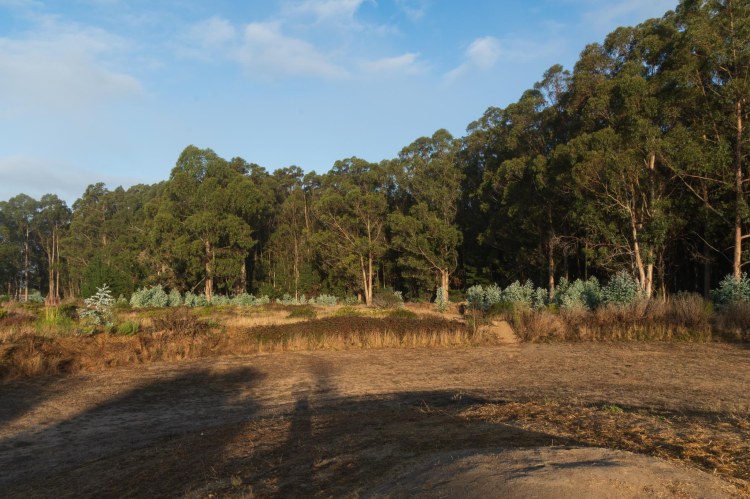
Exploring the California Coast between Half Moon Bay and Santa Cruz

Stand of eucalyptus trees, tall grasses, and mowed are in foreground
Eucalyptus grove

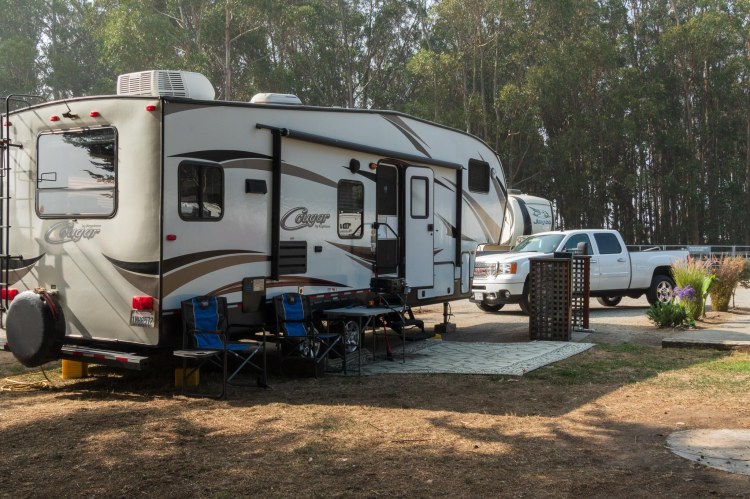
We were eager to try the renovations Jon completed on the fifth wheel these past months, yet hesitant to go too far from home. The coast looked like our best bet, so I booked five nights at the Santa Cruz North/Costanoa KOA for the week after Labor Day.

Fifth wheel trailer and white pickup campsite
The Todd’s Basecamp

Three days after reserving our site, approximately 7,000 lightning strikes in the San Francisco Bay Area ignited 350 fires. Many of the individual fires merged into huge infernos, including the SCU Lightning Complex south of us, which has burned 397,000 acres and finally reached full containment after 44 days on October 1, 2020.

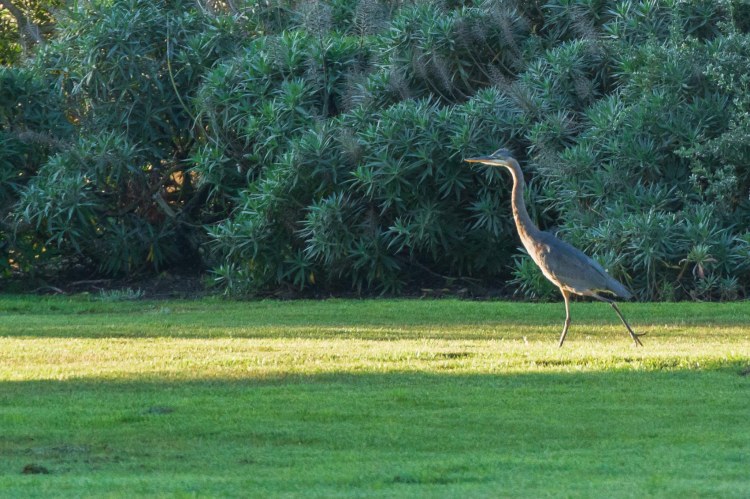
Great blue heron strutting across green grass
Great blue heron

Cal Fire issued evacuations soon after the blazes expanded. Not only did I worry about the fire near us, I also worried about how close the KOA was to the CZU Complex Lightning fire since its perimeter stretched from Santa Cruz north to halfway to Half Moon Bay. Where was the campground in relation to the fire?

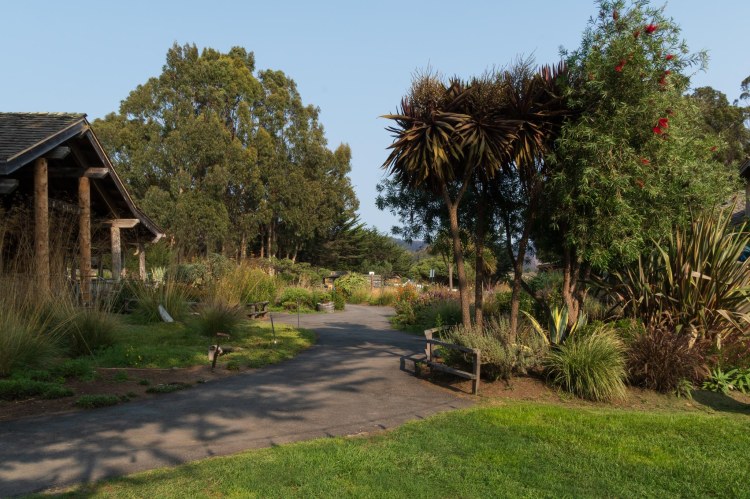
Path meanders between a wooden building and trees and grass
Path between restaurant and general store

The evacuation map showed them just north of the perimeter, and a message on their website confirmed their evacuation. Two weeks later the posting said they planned to open the day before our scheduled arrival. I was so glad to hear they were safe.

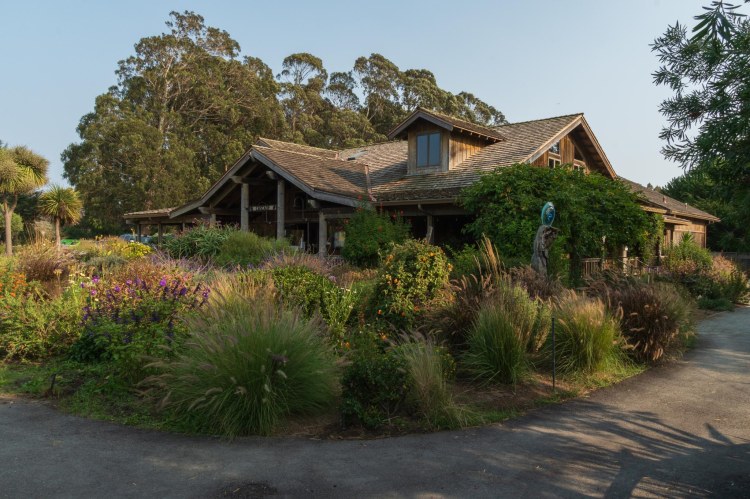
Wooden building with vegetation in the foreground
Cascade Restaurant and Bar

The CZU fire was about 85% contained when we drove to the coast. We didn’t see any signs of active fire other than the smoke that tinted the sky a pale orange and mixed with the low clouds and fog.

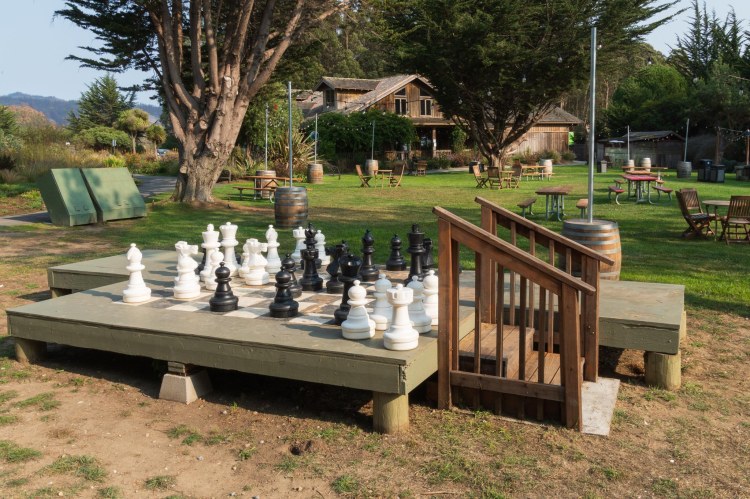
Giant chess game on platform with grass and a building in the background
Game of chess?

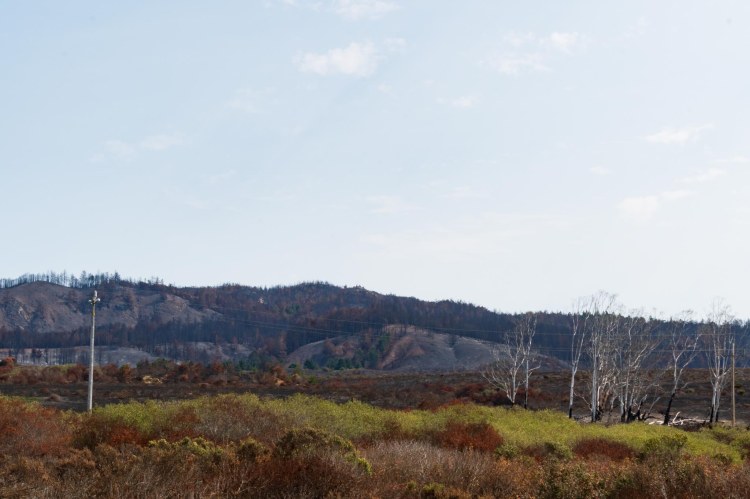
It wasn’t until the next day when we drove south to Santa Cruz that we saw the blackened hills, burned trees, and scorched earth next to what looked like the campground’s property line. The firefighters had saved the property from destruction. Many other buildings, farms, and ranches were not so lucky.

Landscape of green grasses in foreground, burned trees, and fire scared hills
Fire scarred hill across the highway from Año Nuevo State Park

Nearly 1,500 structures were destroyed, including the visitor center and headquarters of Big Basin Redwoods State Park. I could not find statistics on the number of redwoods lost. Due to their hardiness and fire-resistant bark, most should survive. Although I heard some were cut down because they posed a danger to nearby trees. By spring, new trees should sprout and in three to four years, the sprouts will have grown 6-8 feet tall, assuming they receive plenty of sun and water. Drought could stunt their growth. It’s possible the park could open for hiking early in 2021. There’s no estimate on the opening of the campground or other facilities.

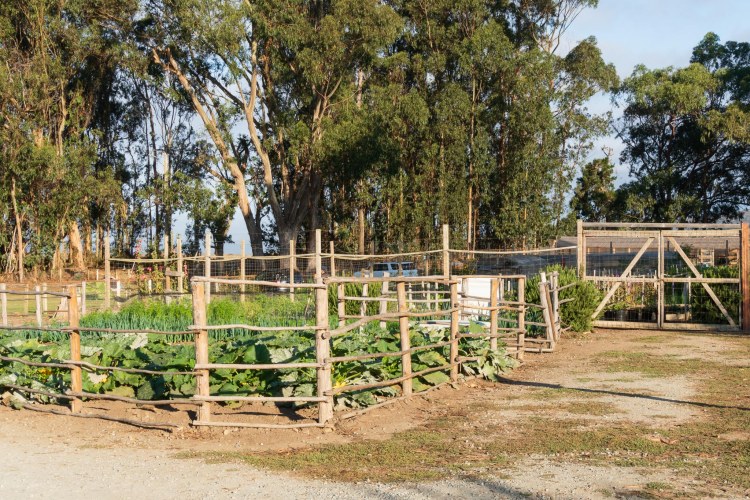
Vegetable garden
Entrance to the Costanoa garden, where a crew worked the soil and tended the plants

When we arrived at Costanoa, a crew from Servpro Disaster Recovery was onsite finishing up their work to get the resort back online. We did without cell service and reliable Wi-Fi access during our visit, which was fine with me. I enjoyed taking a break from the news and my email for a few days. Jon still watched cable television while I went outside to read or go for a walk.

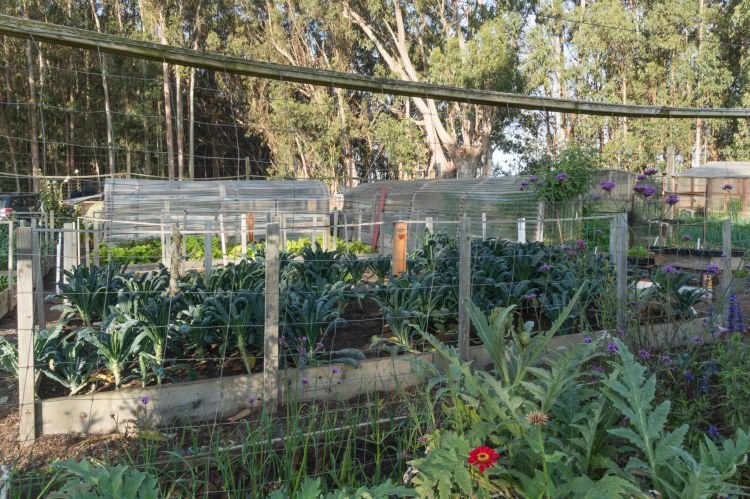
Vegetable and flower garden
Corn, onions, tomatoes, and more growing in the garden

This park has a lot to offer its guests. The calming green grass, relaxing scent of eucalyptus, and a flower and vegetable garden were my favorites. Accommodations include the RV sites, various makes and sizes of cabins and tents, and a lodge. Add in a restaurant serving breakfast, lunch, and dinner; a small general store; and a parklike setting to complete the eco-adventure resort.

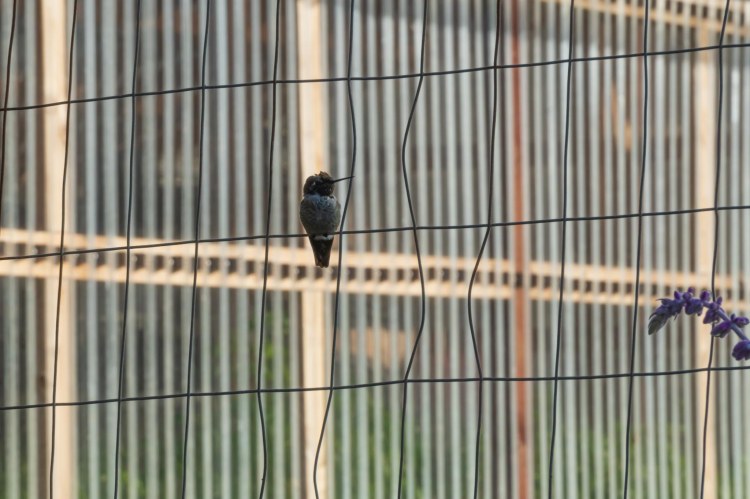
Humming bird sitting on a wire fence
Bees and hummingbirds swarmed around the garden

Equestrians can even bring their horses. Although there were none in residence during our stay, I could imagine the swishing of tails, snorting, and nickering of horses in the corrals.

Purple thistle of a globe artichoke
Globe Artichoke, cynara cardunculus

Año Nuevo Coast Natural Preserve is a short walk across Highway 1 from the campground. Trails lead through or next to eucalyptus groves, across Highway 1, and end at the beach. One trail is north of the property and the other is south.

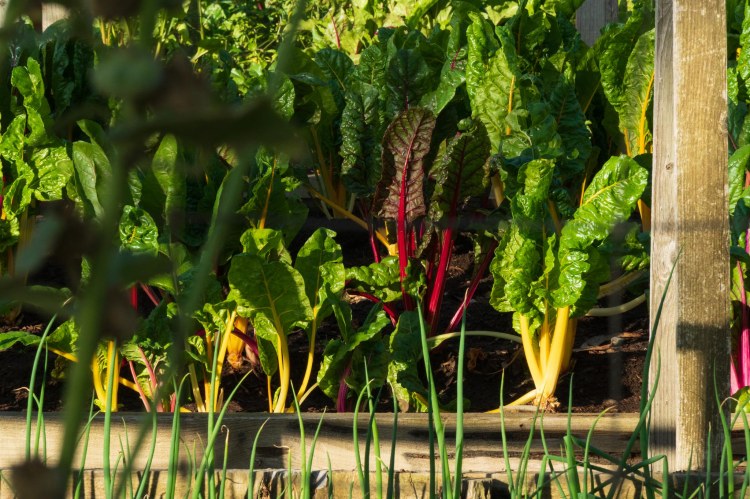
Vegetable garden of swiss and red chard
Swiss and Red Chard

To avoid the news programs, I took off by myself on the north route one afternoon. There was a soft breeze blowing while I walked beside the eucalyptus grove. The sound of someone chopping wood in the grove made me question my adventure. I didn’t bother taking my wallet and cell phone since I wasn’t going shopping, and there was no cell service. I felt naked, carrying only my camera.

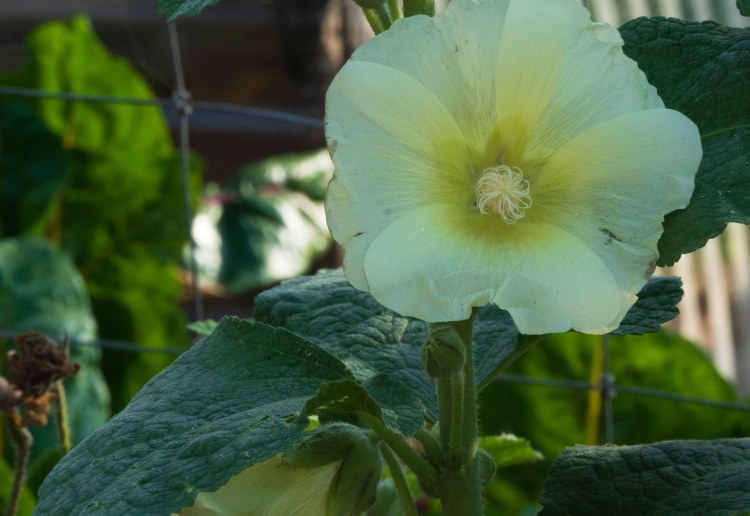
Yellow common hollyhock flower
Common Hollyhock, alcea rosea

I stopped and determined what I heard was only twigs and leaves rustling as they floated or crashed to the ground. No one chopping. So I continued, reciting an I’ll-be-okay mantra as I continued on the path.

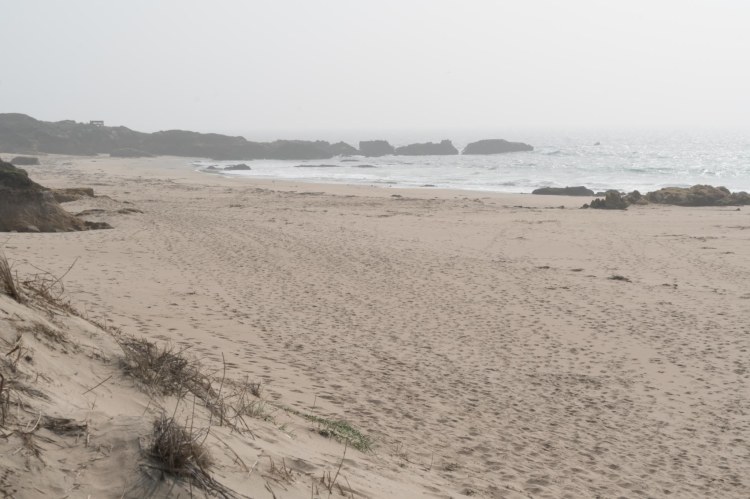
Beach, ocean, and rock formations muted by fog and smoke
Secluded beach across Highway 1 from Costanoa
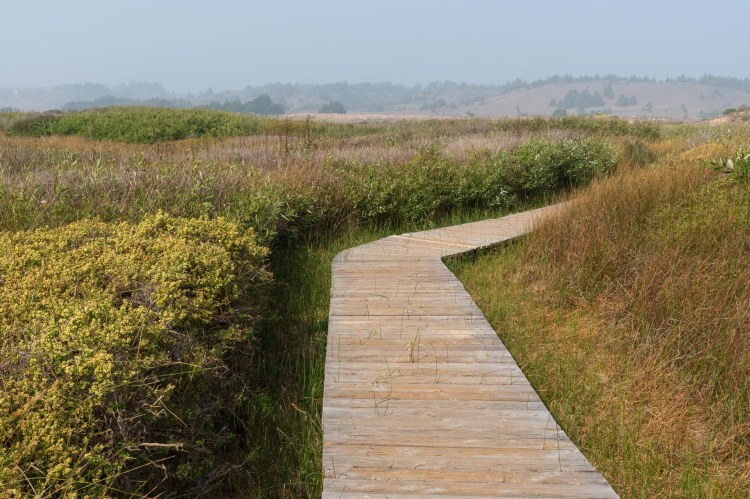
Boardwalk trail through a marsh
A boardwalk keeps feet dry over the marsh
Landscape of sandy trail, clumps of trees muted by fog and smoke
Campground is to the right of the clump of trees in the background

On another day, Jon and I took the south route to find the tide pools I’d seen on the map. We didn’t check the tide charts before setting out. That was okay. The exercise was our main goal, and now we know how to get there when we go to Costanoa again.

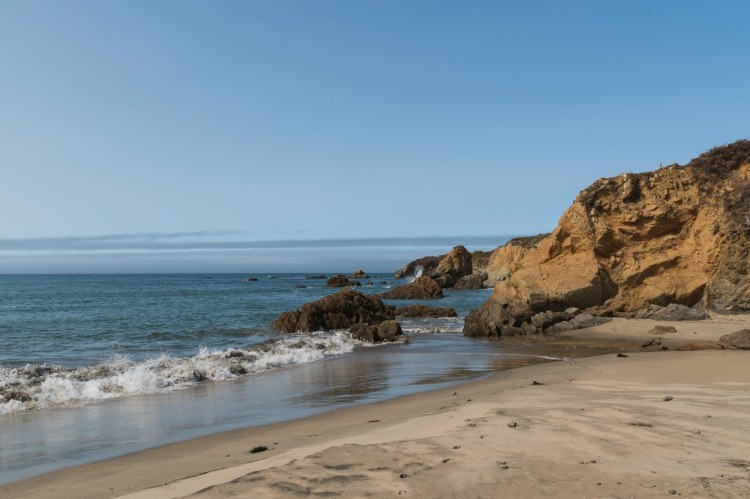
Beach scene with blue skies, rock formation and sand
High tide reveals no pools
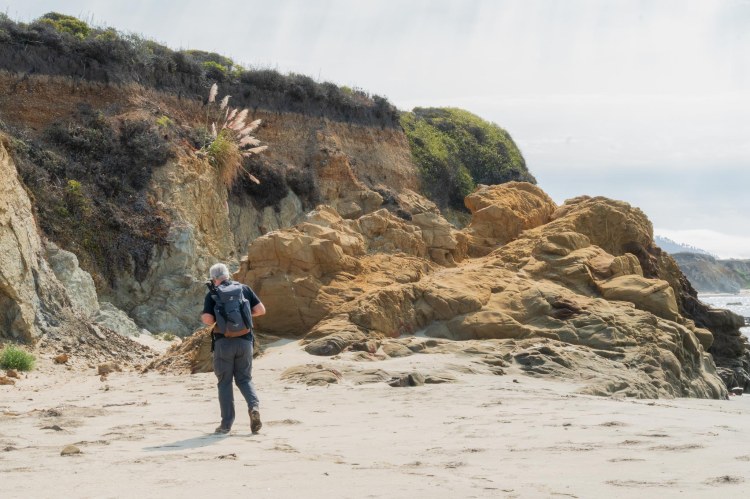
Man with backpack walking near an ocean cliff
Around the rock to another cove
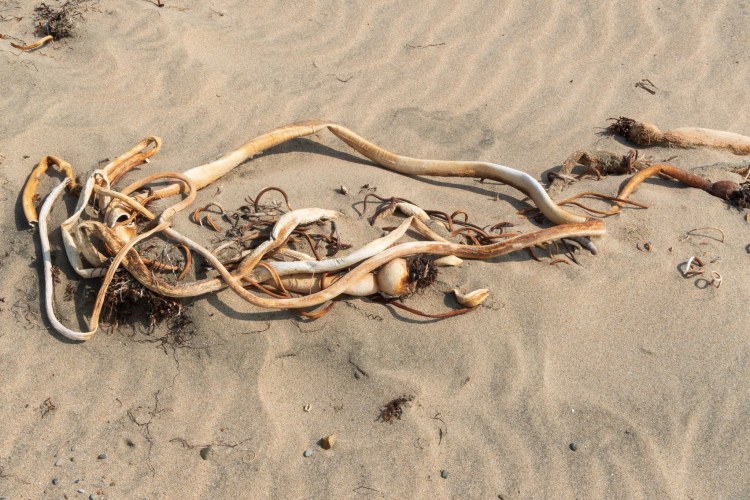
Dried bull whip kelp on sand
Bull whip kelp
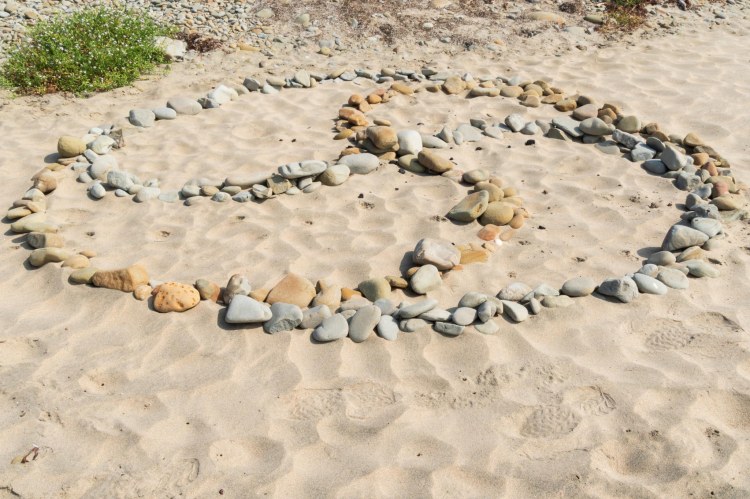
Rock art on sand
Rock art

On our third morning, the fog cleared, and with it the smoke. Seeing blue skies for the first time in three weeks had me rushing outside and filling my lungs with the moist sea air to clear out the soot.

Some places we park our RV seem like ideal locations for a writing retreat. Costanoa is top on my list of such places. One of these days I’ll go on a retreat. In the meantime, I’ll fit in my writing whenever I can, wherever I am.

Next up we visit Año Nuevo Point and Island, Pigeon Point Light Station State Historic Park, and the Town of Pescadero.

Stay safe.

More COVID-19 Fun in the Garden and Other Activities

Our past six months have not been all about gardening vegetables or going to the farmer’s market or store to pick up food and supplies. We picked up wine orders at the wineries, stopped for breakfast or lunch at outdoor dining establishments, and even went to the dentist. We got much-needed haircuts too. There wasn’t much else we could do since museums and similar establishments were all closed. And then lightening strikes started fires all over the state, emitting ash and soot that hung over us like a scratchy woolen blanket.

Back in February, I never dreamed we would hunker down in our home without venturing out into the world for this long. At first we were told to shelter in place for two weeks, then it turned into a month, and then another month, and on and on.

When COVID-19 first hit, my son-in-law said, “We’re going to be dealing with the virus into 2021 and maybe even 2022. There’s no way we’ll be making the trip to Hawaii.” I didn’t believe him then. We moved our April trip to October. I was positive the situation would get better by fall. All my positivity was for naught. And here we are with no end in sight, just like he said, and our trip canceled again.

So here are a few things we’ve done during our lockdown besides gardening and fifth wheel trailer maintenance and renovations.

I was a little leery about going to the beach after seeing news reports of overcrowding and people flaunting social distancing and masks. At Half Moon Bay, I didn’t feel unsafe at all. Everyone kept their distance and wore masks while walking around.

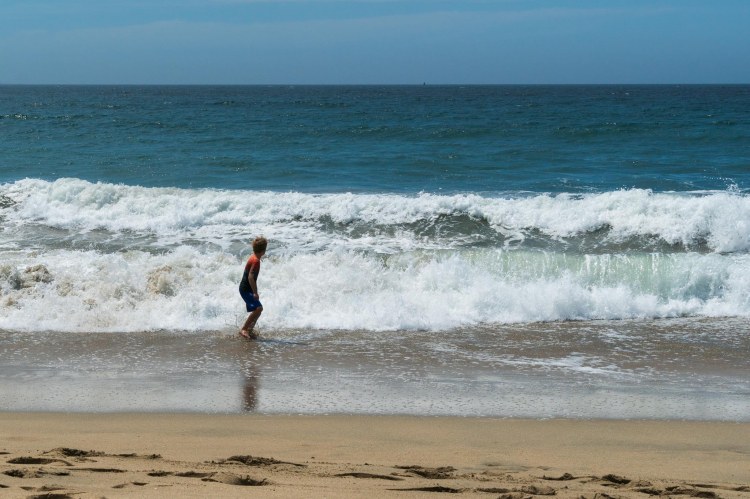
Ocean waves chasing boy on shore
Grandson Jackson dared the waves to catch him
Shore bird on sand
The shore birds posed for photos
Red, yellow, and blue kite with red and blue streamers against the sky
Kites flew in the sky
Boy digging in sand on beach and woman wrapped in towel sitting in a chair
Towels kept my daughter and me warm while Jackson dug to China

Jigsaw puzzles kept us from the ever worsening news reports on some days.

Puzzle of old time gas station, old time cars, and trees in the background, cloudy skies, and eagle flying
Road Stop Service

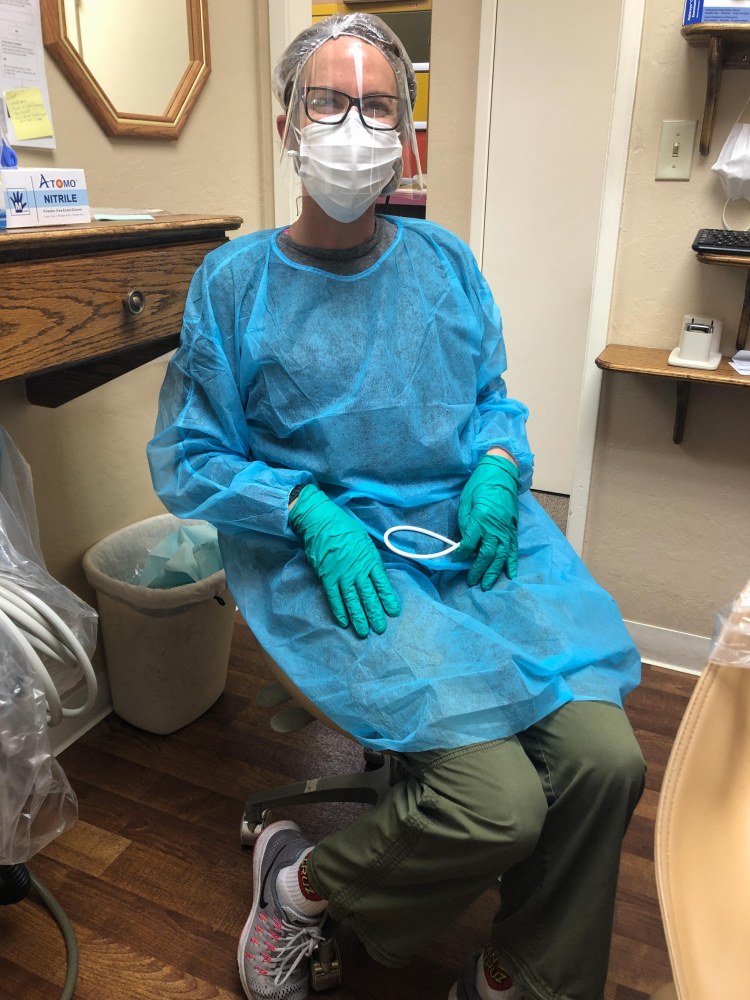
When I heard our dentist was open and learned about their protocols, I didn’t hesitate to schedule my bi-annual appointment. My hygienist, protected by her PPE, met me at the door, took my temperature, and walked me to the room. Everything else was just the same, and I felt as safe as ever.
Dental hygienist wearing mask, glasses, protective plastic mask, blue gown, and green gloves
Dental hygienist at Andre & Judson Dental Corp.

We enjoyed outdoor dining for breakfast, lunch, or coffee and danish a few times. Bill’s Cafe serves breakfast and lunch.

Door entrance to restaurant, server in the background
Patrons not allowed indoors for dining
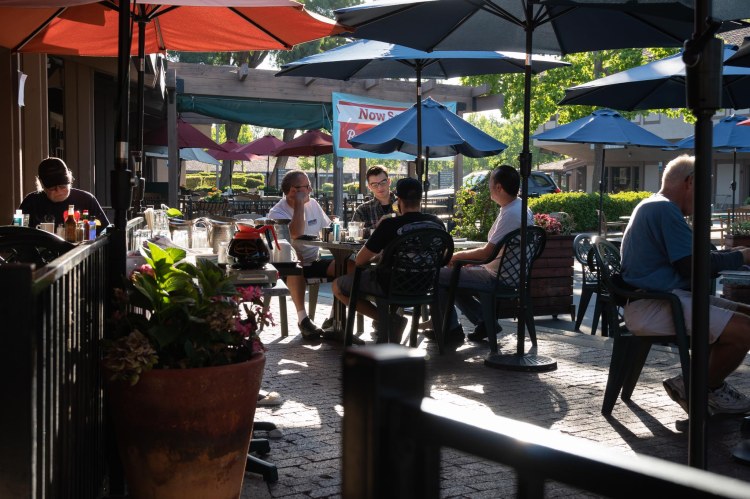
People sitting under blue and red umbrellas at tables
Ample umbrellas and extra set-ups in the parking lot made it feel like business as usual

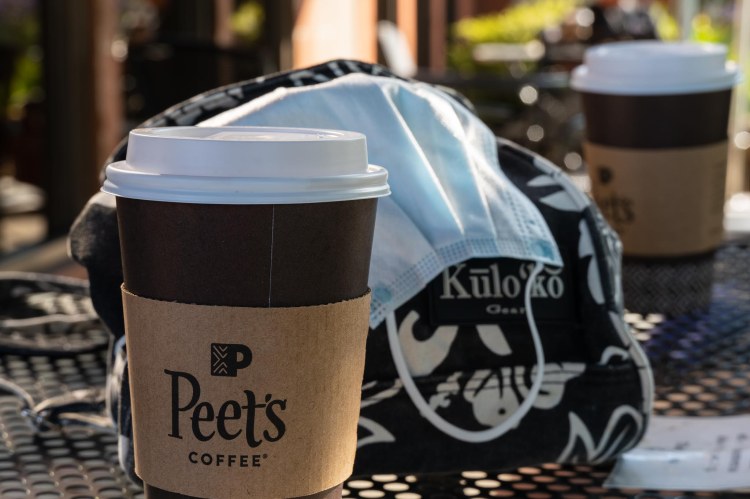
At first we had to take our coffee and go, and a few weeks later patrons could sit outside and finish their drinks. But no hogging the table and pretending the coffee house is your office.

Peet's paper coffee cup, blue mask, Hawaiian style purse
A cup of coffee and danish for a quick snack

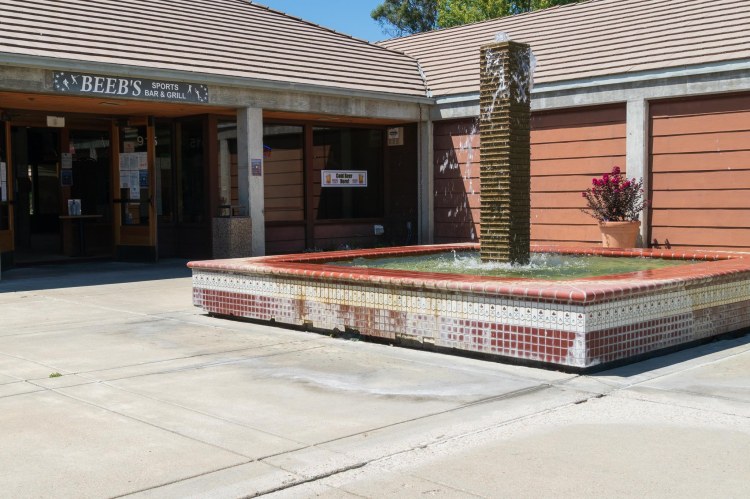
My favorite was lunch at Beeb’s Sports Bar & Grill at the Las Positas Golf Course in Livermore, where we grabbed a table on the shaded patio. The bonus was watching planes take off from the airport next door and the golfers practicing their putts before their tee times.

Restaurant building with water feature
Water feature outside Beeb’s
Parts of umbrellas, Edison lights, and a plane flying in the sky
The roar of airplanes filled the sky
Green golf course, trees, golf cart, and bench
What’s more relaxing than a green golf course?
Black bird with red on shoulder standing on a table
Watch out for the birds. They are aggressive and will steal your food if you’re not paying attention.

In Downtown Pleasanton, they block off Main Street every weekend to allow the stores and restaurants to serve their customers outside.

Blue cabana and tables and chairs set up on the street next to the restaurant
Setting up dining for the day.

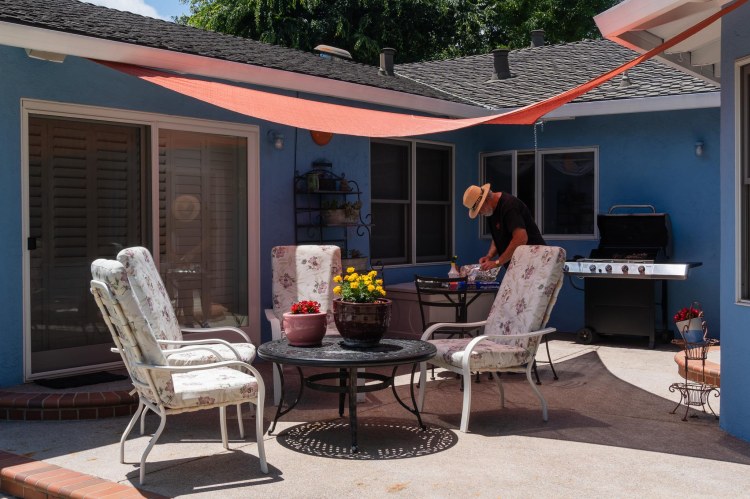
A few family birthdays fell during June and July, so while practicing social distancing, we had barbecues, desserts, and good times.

Back of blue house, man cooking, deck chairs, and wrought iron table.
Jon cooking up baby back ribs
Plate, fork, and knife with lemon meringue pie
Our daughter requested lemon meringue pie instead of birthday cake
Man, woman, teen girl, and young boy on a couch with presents in foreground
Our daughter Laura, granddaughter Maya, grandson Jackson, and son-in-law Chris. Yes, you can use Christmas wrapping for birthdays during a pandemic.

And now, to continue with the gardening theme, we present photos of flowers and succulents growing in our yard. Jon enjoyed watering and trimming the plants, while I reveled in the opportunity to set up my tripod and take my time capturing images. When we’re traveling, my photography is more fly-by then a slow methodical approach.

Roses

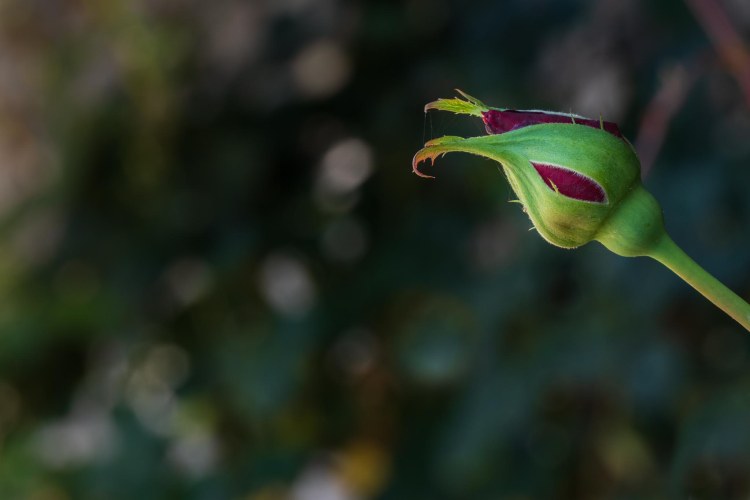
Red rose bud closed
Red Rose Bud
Red rose bud opening
Red Rose
Peach colored roses on bush
Peach Rose
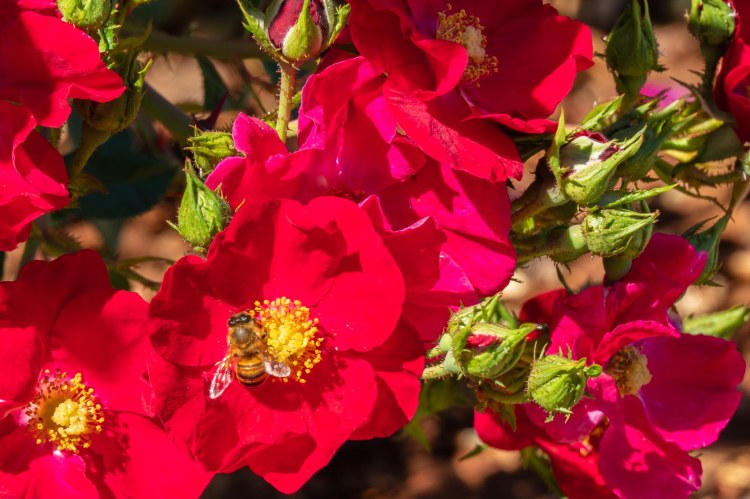
Red heirloom roses plus bee
Bees love the heirloom roses

Gerbera Daisies

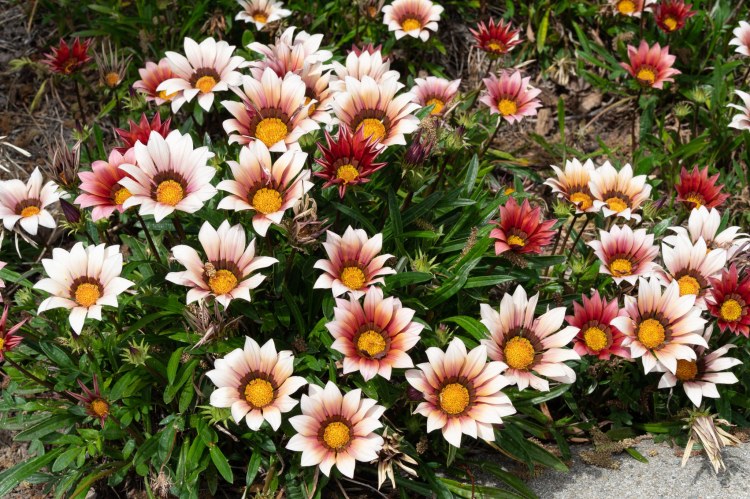
Many gerbera daisies in a flower bed
Gerbera daisies multiply each year
Close up of gerbera daisy
A close up look of a gerbera daisy

Other Flowers

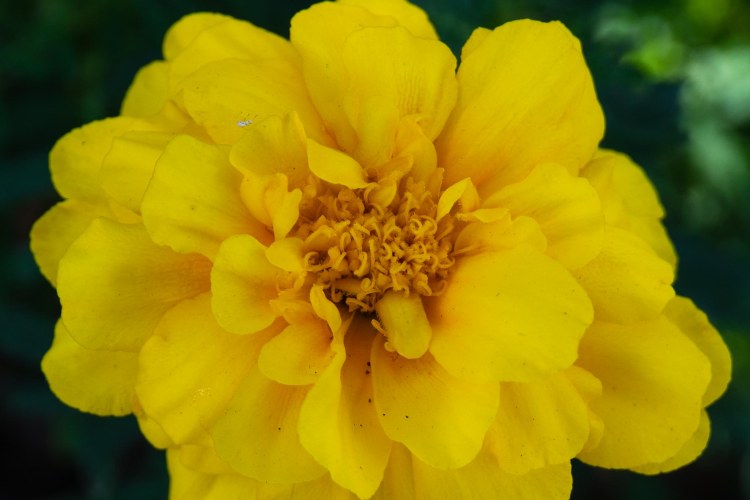
Yellow marigold flower
Marigold
Pink and white geraniums
Begonias
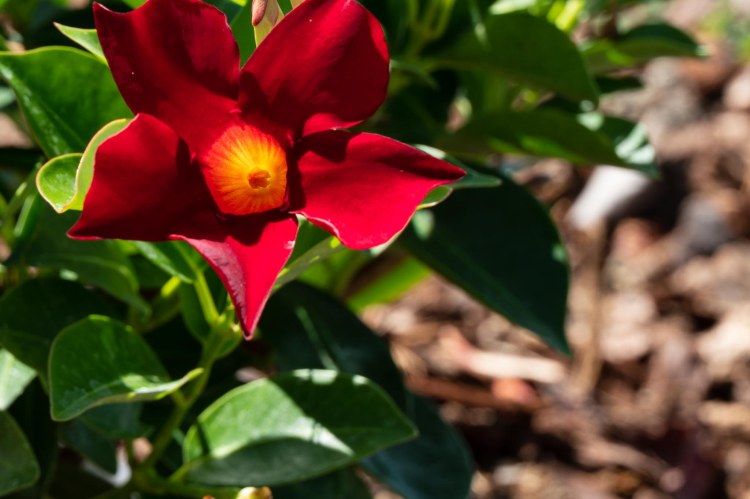
Red flower and green leaves
Shining Mandevilla (Mandevilla splendens)

Succulents

Succulents in oval pails on bakers rack
The Succulent Collection
Succulents in an oval pail
Ghost Plant (Graptopetalum) sprouting flowers
Yellow ghost plant blooms
Ghost Plant Blooms
Blue rose succulent sprouting blooms
Blue Rose (Echeveria imbricata) sprouting
Blue rose buds on blue background
Buds of the Blue Rose
Blue rose blooms on blue background
Blue Rose Blooms

At the end of September, California’s COVID-19 cases and deaths are finally coming under control. I feared the opposite would materialize after the Labor Day weekend. Perhaps the fires and weeks under Spare-the-Air days kept people inside more than usual.

No one knows if we’ll continue to see an improvement in cases and deaths, or if we’ll go backward on the economic opening. Whatever happens, we plan to get out on the road more for at least a few weeks.

Coming up next is our maiden voyage in the fifth wheel after this long spell so we can try out all of Jon’s renovations. Destination: Pescadero, California.

Gardening During the Summer of COVID-19

Writing this post is like writing a back-to-school essay on what I did during my vacation. Everyone else’s essays were always more exciting than mine, and I fear this essay is not much different.

While Jon gardened and worked on household and trailer maintenance and upgrades, I fit in a bit of photography while keeping tabs on the progress of the virus as it marched around the world and across the United States. Most recently, the California fires that erupted from lightning strikes on August 16, 2020, have grabbed my attention.

Unable to travel to see historic buildings, majestic mountains or deserts, hiking trails, or sparkling lakes and rivers, I journeyed into our backyard and our garden became the subject for my photography this summer.

Like many people faced with staying-at-home or sheltering-in-place, Jon filled our long-ignored raised beds with vegetable plants. We marveled at the little shoots that seemed to grow by the minute.

Raised garden with vegetable starts and marigolds
Vege starts and marigolds

Marigolds attract good insects, right? We learned they are a buffet for unidentified critters. Jon added marigolds to the raised beds, only to have something eat the blooms and leaves. When a bell pepper neared its harvest, Jon gave it one more night. That was a mistake. The next morning, the only thing left of the bush was an anemic-looking stem sticking out of the soil.

Raised bed garden with zucchini and tomato plants
Oh, my, how you’ve grown

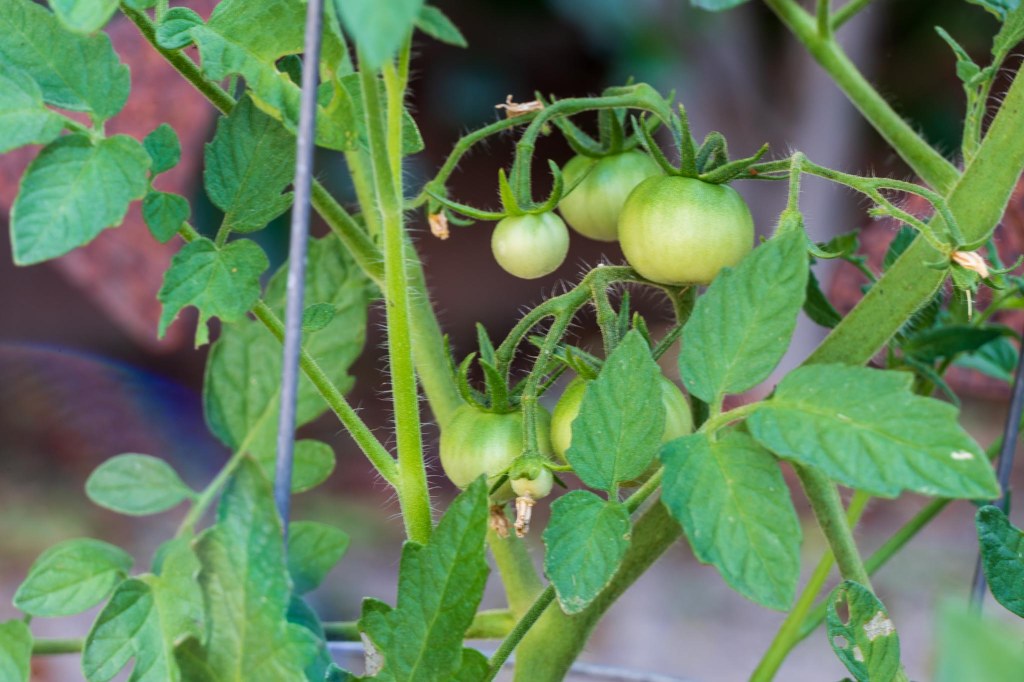
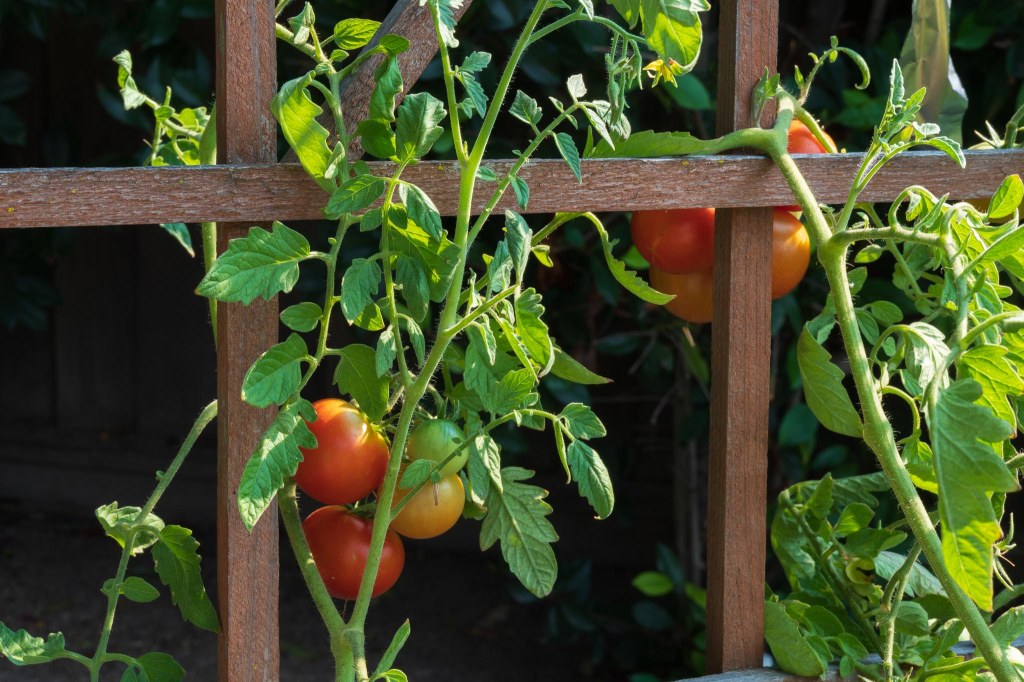
Soon the early tomato blooms transformed into little green globes of fruit, and one of our favorite vegetables grew from the zucchini blossoms.

Green tomatoes on the vine
Delectable tomatoes

Critters got to a few first tomatoes by eating out a small round hole in one side. Why just a little round hole? Why didn’t it take the whole dang tomato?

Tomatoes on the vine entwined on wood support
Ready for picking

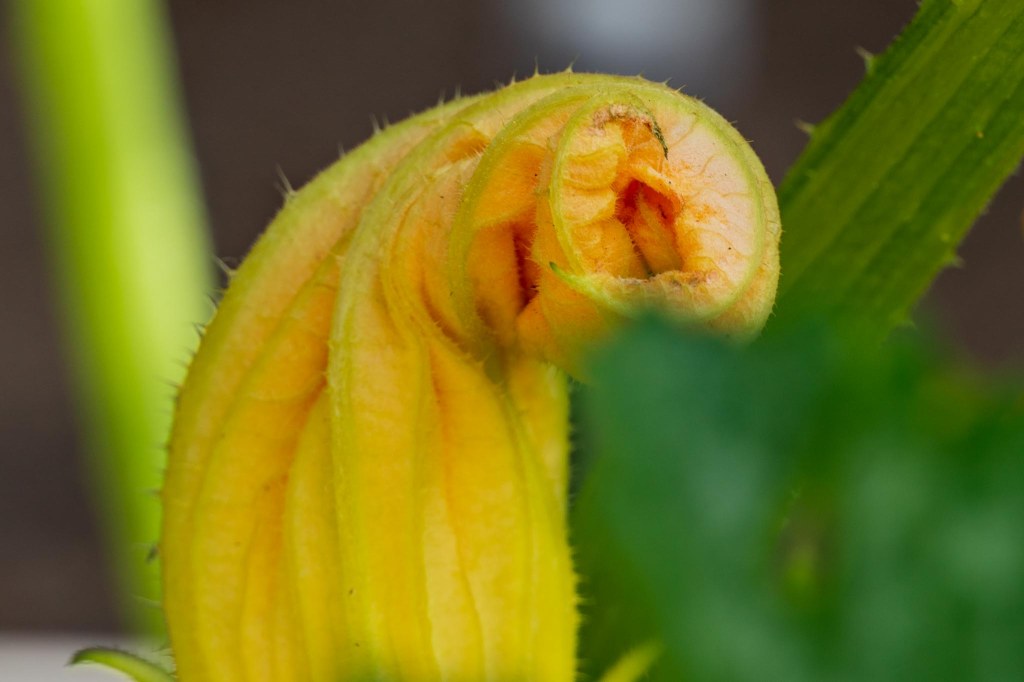
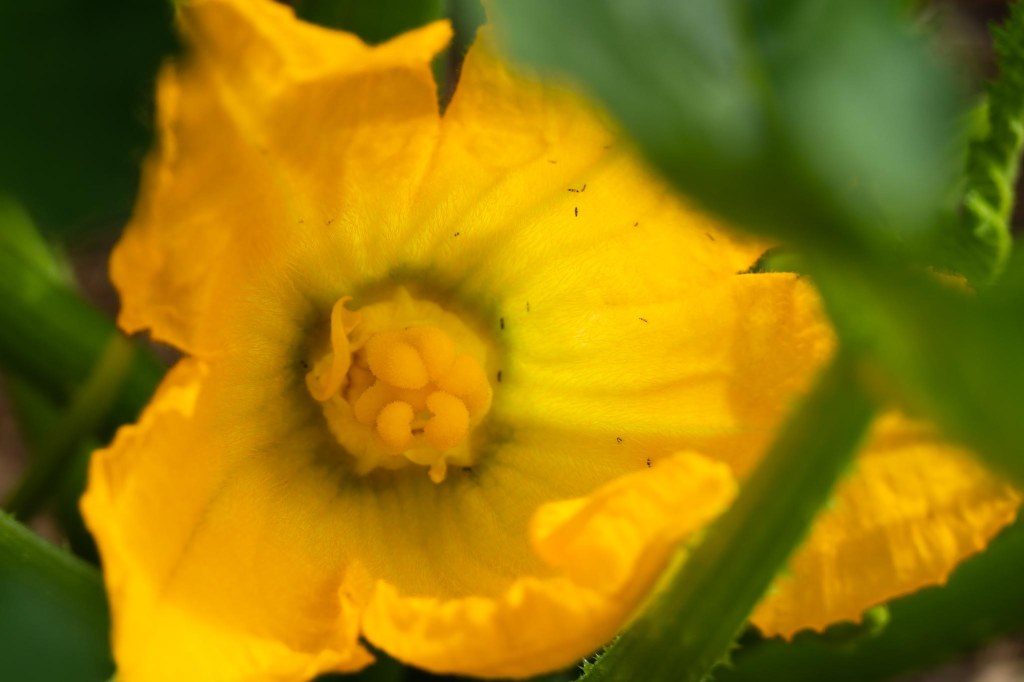
The zucchini plants were my favorite, and my camera got a workout while trying to capture the perfect photo of the flowers. I had to document them from the buds that unfold over the course of a few days to the blooms that open wide in perfect splendor.

Zucchini plant with blossoms and zucchinis
Future zucchini
Closed yellow zucchini blossom
Zucchini bud
Open yellow zucchini blossom
Zucchini flower

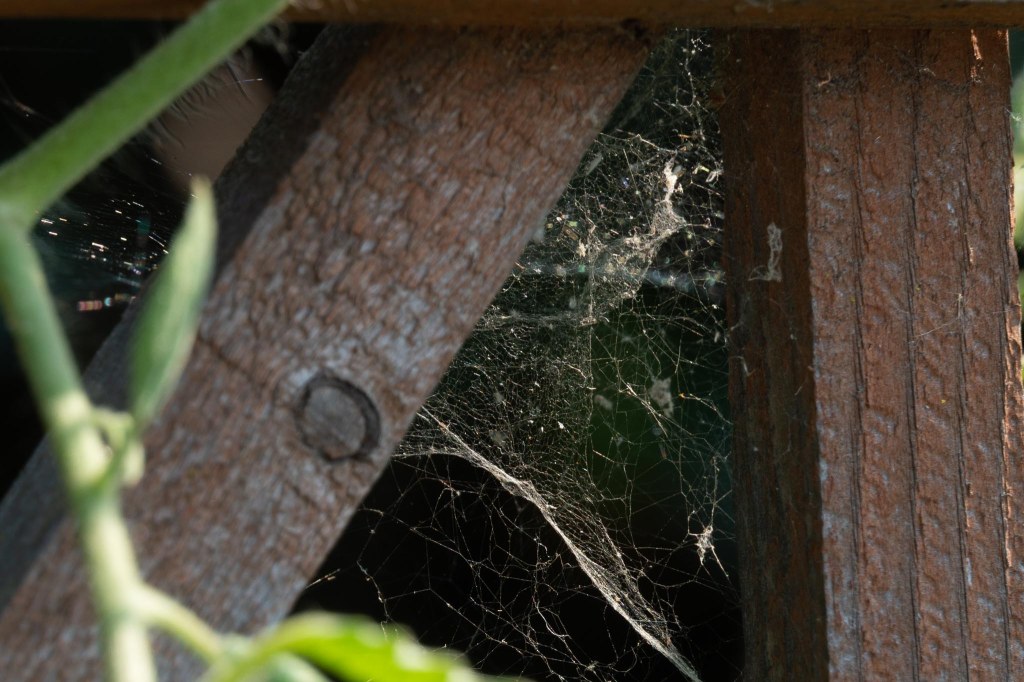
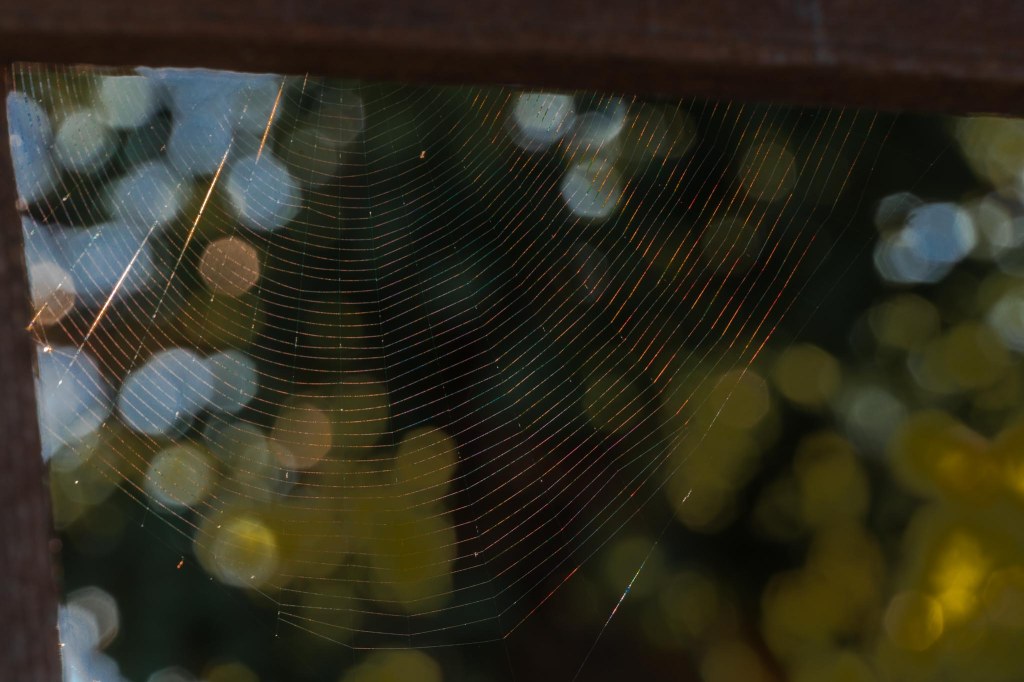
Spiders in our yard set up camp in the tomato trellis, keeping all the nasty insects from our crops.

Spider web in triangle shape
Spiders take care of bad bugs

And another spider protected our boysenberry plants.

Half circular spiderweb in labyrinth pattern
Labyrinth web

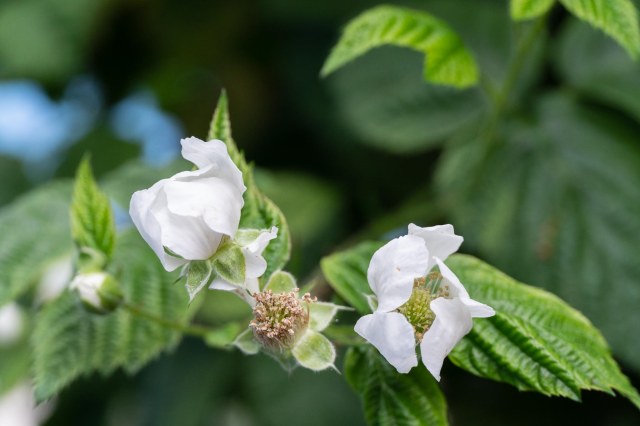
Speaking of boysenberry plants, ours produced more than we thought they would. I was so excited to see the green berries form inside the white blossoms. And then we waited patiently for the berries to reach maturity.

Boysenberry blossoms on the bush
Future boysenberries

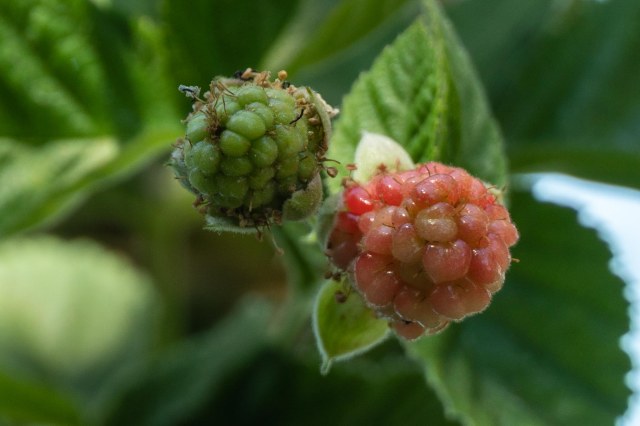
While some fruit never matured enough to pick off the vine, we plucked several large bowls of the sweet-tart berries to enjoy over several weeks.

Boysenberries on the bush
Ripe for the picking

I don’t have a favorite way of enjoying boysenberries. I put them on my waffles, in my cereal or a smoothie, and stirred them in yogurt. Sometimes, while I gently pulled them from the bush, I popped them in my mouth. Boysenberries are best any which way.

Waffle with boysenberries on top and cup of coffee
Yummy homegrown boysenberries on waffles

Soon the crop slowed down to only a handful every other day or so. And then one day only two remained. My mouth is already watering for the taste of the berries to return next year.

Unripe boysenberries
The last two boysenberries of the season

Jon has kept busy watering the plants, trimming the spent leaves, and harvesting the crops. We still have a few tomatoes to pick, and red bell pepper and jalapeno plants growing, but the zucchini plants have completed their cycle.

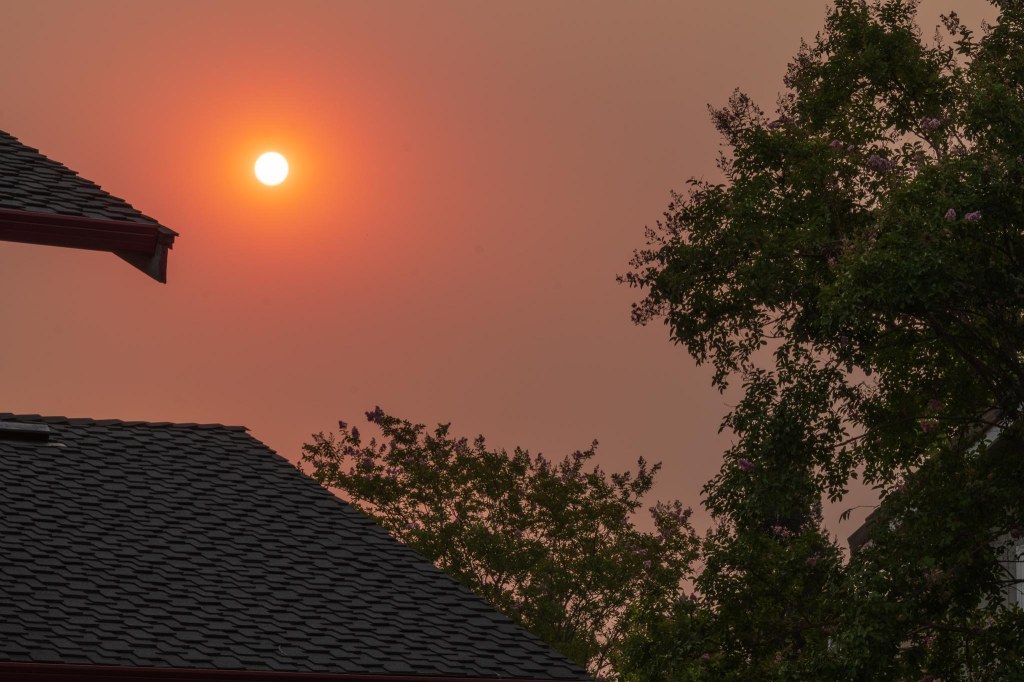
While much of California is still on fire, the ones close to us that started on August 16 are nearing full containment. That hasn’t improved our air quality, though. We’ve had Spare the Air Days for several weeks now. On Tuesday morning, September 8, 2020, this was the sky when I woke up.

Red sky, sun rising, rooftops, trees
Red sky in the morning

On Wednesday, the forecast was for 90-degree weather. A thick cloud cover combined with smoke swirling and ash falling obliterated any sunlight and kept temperatures to 70 degrees and under. And it looks like the air quality conditions will not improve until Saturday.

Stay safe and stay healthy.