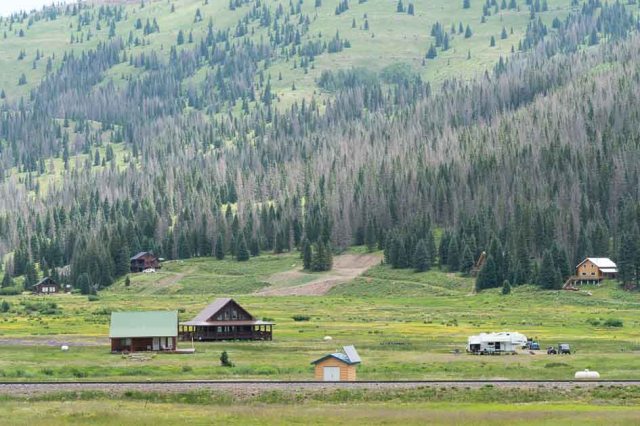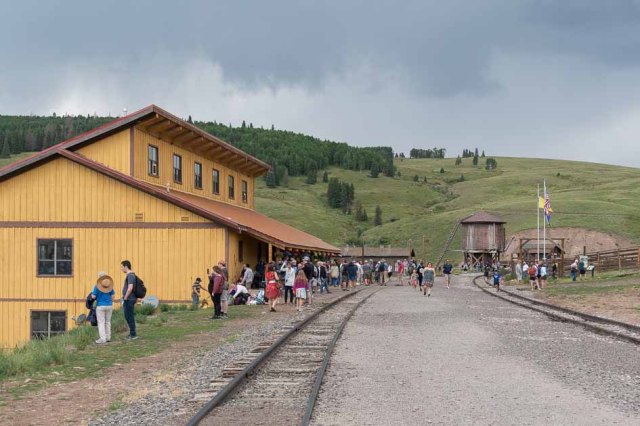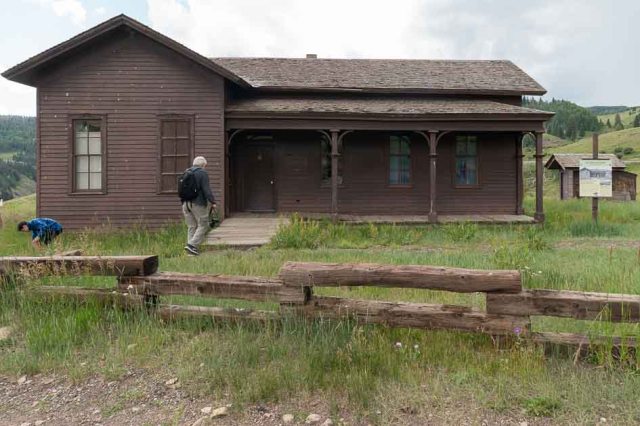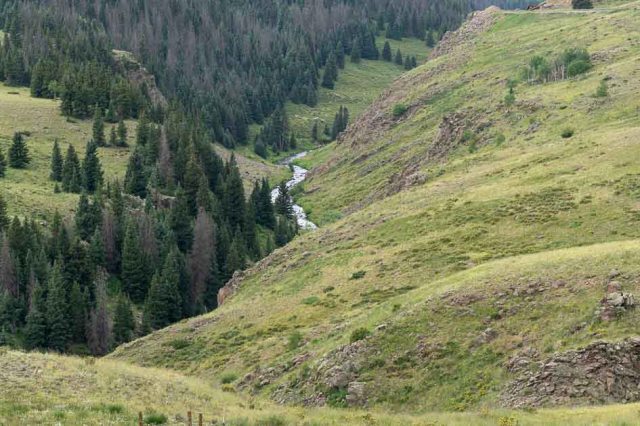
Summer 2021 Tour Chama, New Mexico Episode 2: Ghost Ranch

Our second activity while in Chama, New Mexico, was a trip to Ghost Ranch in Abiquiu about 46 miles from Chama.

Ghost Ranch

I learned of Ghost Ranch about 15 years ago when I visited the Georgia O’Keeffe Museum in Taos. Ever since then, I have wanted to see the place where O’Keeffe found creative inspiration and spent much of her life.
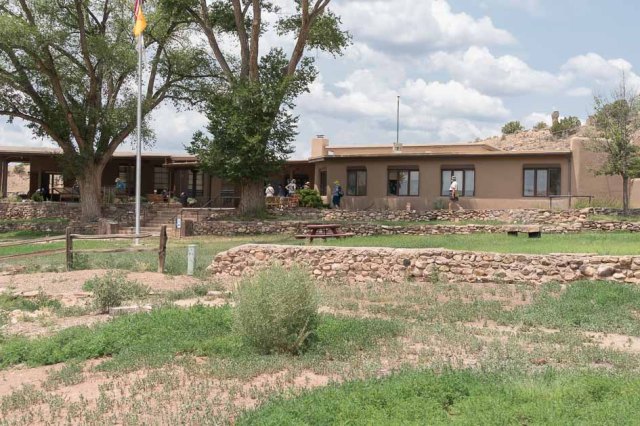
Ghost Ranch Welcome Center

Ghost Ranch History

  • During the Triassic time period, we would have seen dinosaurs roaming through jungles and swamps along a seacoast. Contrast that terrain with the multicolored canyons and cliffs, plains and grasslands, and streams we see today.
  • The ranch’s archaeological record predates adobe walls and kivas. Hearths and other sites found on the property are dated 6,000 BCE, or 8,000 years ago.
  • More modern times saw cattle rustlers hide their stolen property on the land.
  • A working ranch became a Dude Ranch in the 1920s.
  • Georgia O’Keeffe came to the ranch in 1934 and bought 12 acres at the edge of the ranch in 1940.
  • Arthur and Phoebe Pack bought the 21,000-acre ranch in 1936.
  • New Mexico’s state fossil Coelophysis was found at the ranch in 1947.
  • The Packs donated Ghost Ranch to the Presbyterian Church in 1955.
  • The National Ghost Ranch Foundation was established in 1972.
  • Several movies used the ranch for their setting, including Indiana Jones, Cowboys and Aliens, City Slickers, and Silverado, to name a few.
  • In 2018, the Presbyterian Church transferred operations of Ghost Ranch to the Foundation.
  • The year 2020 marked the 65th Anniversary of Ghost Ranch.

What to do and see

The ranch offers several tours: some on a shuttle bus, some on horseback, and others traversing one or more of the nine trails on foot.

We chose the Georgia O’Keeffe Landscape Tour. Our mask-wearing group climbed aboard the bus. The tour guide’s skill in telling stories about O’Keeffe and the history of the ranch while driving down a dirt road amazed me. Maybe navigating dirt roads with no traffic made it look easy.
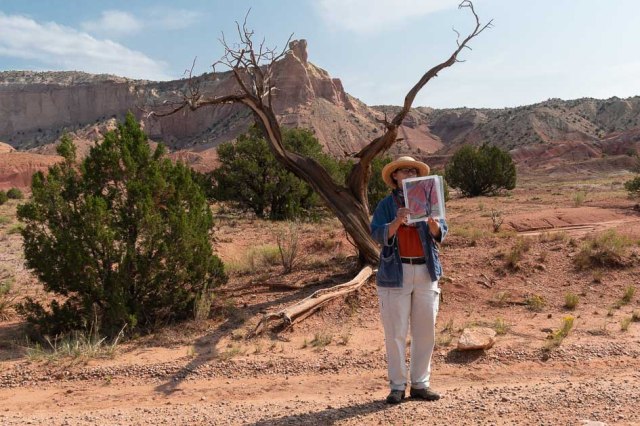
Our tour guide holds up a photo of O’Keeffe’s painting of the dead tree

She pointed out subjects of O’Keeffe’s paintings and passed around laminated photos of them for us to compare to what we saw.
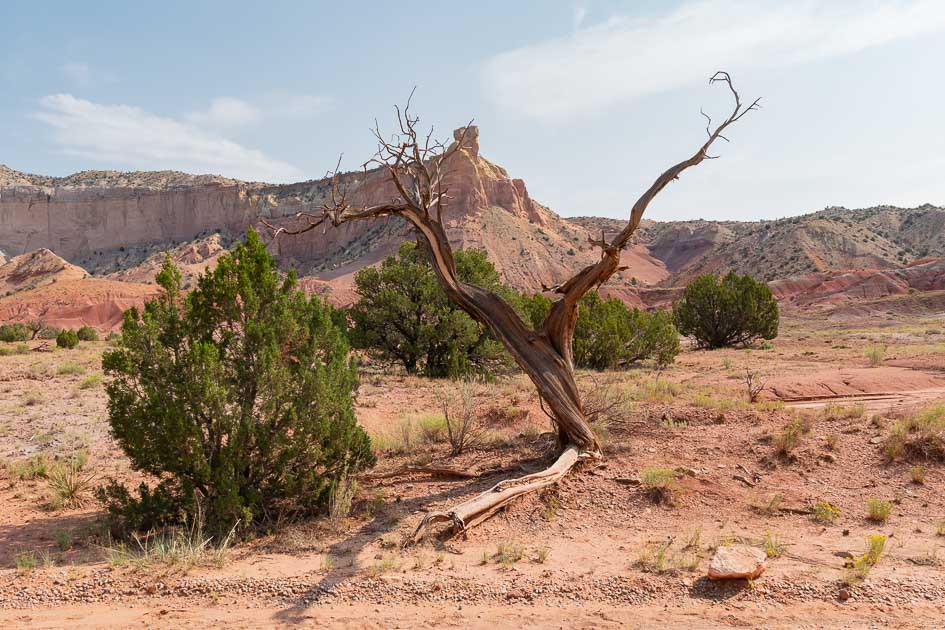
Without the tour guide, we can see what O’Keeffe might have seen

I could almost see O’Keeffe standing in the middle of the desert with her easel and paints and brushes as she captured an image on canvas.
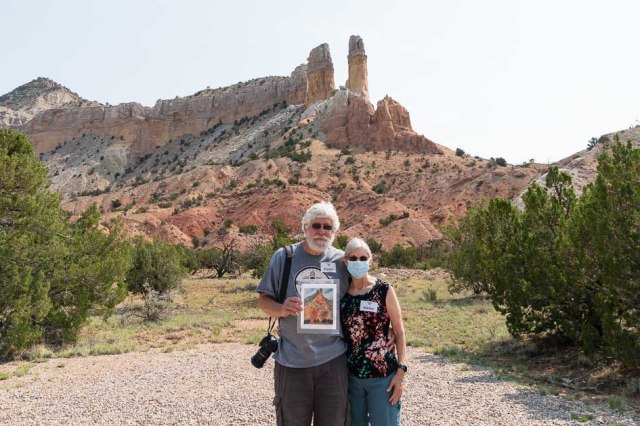
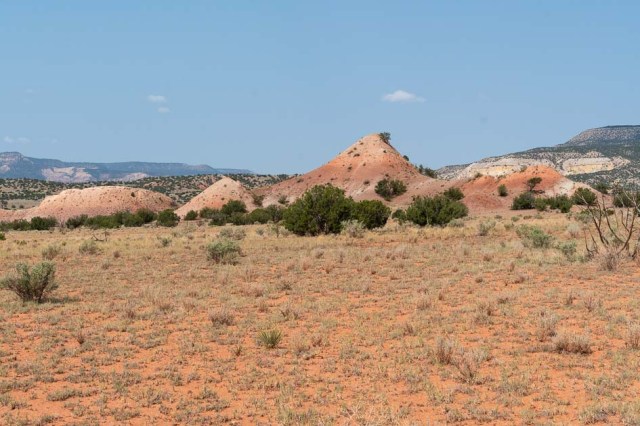
Standing in front of another painting subject of O’Keeffe’s.
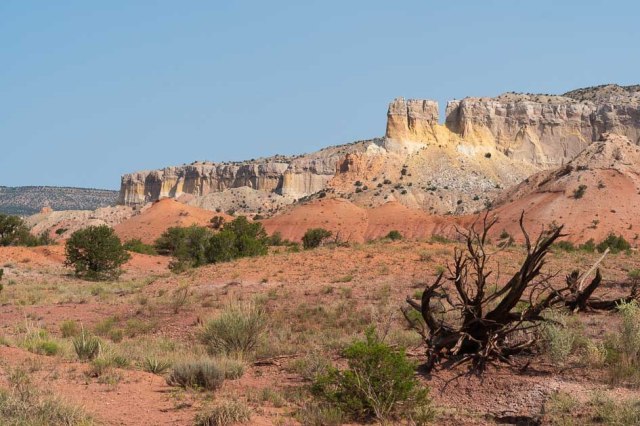
What do you see in the shape of the mounds?
O’Keeffe’s summer home is not open to the public
Colors shift from muted to bright, depending on the sun’s light

After our tour, we visited the Florence Hawley Ellis Museum of Anthropology and Ruth Hall Museum of Paleontology to see the ancient artifacts from Paleo-Indian culture through contemporary pottery and weaving from local Pueblos. Although small, the museums had informative displays, which kept us busy for about an hour.
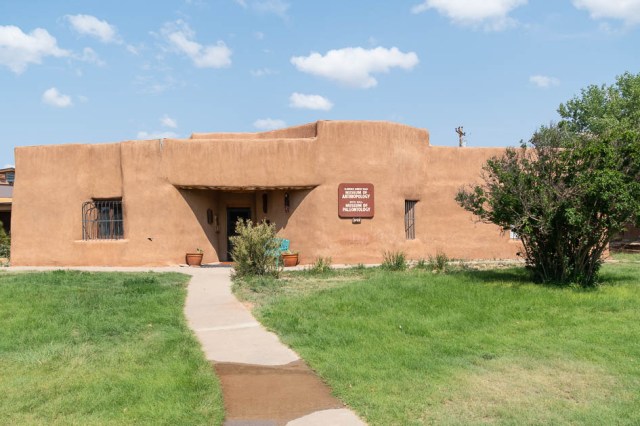
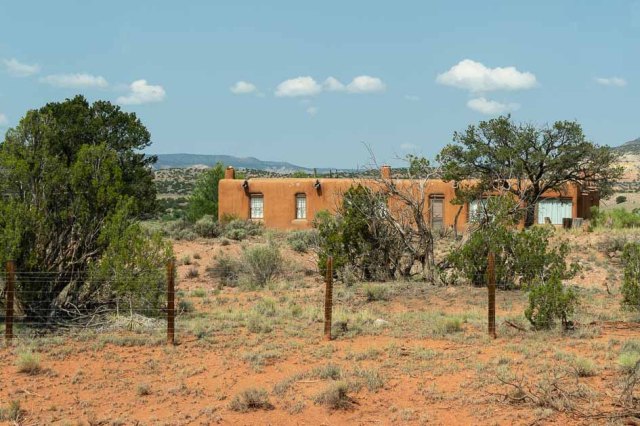
Museum building
Example of Indian Rug sold in federally licensed trading posts established after the American Frontier Wars ended in 1890
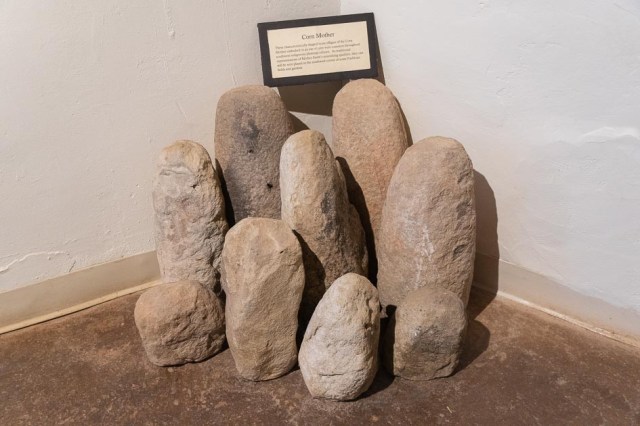
Indigenous farmers placed Corn Mother effigies—representing nourishing qualities of mother earth—in their fields
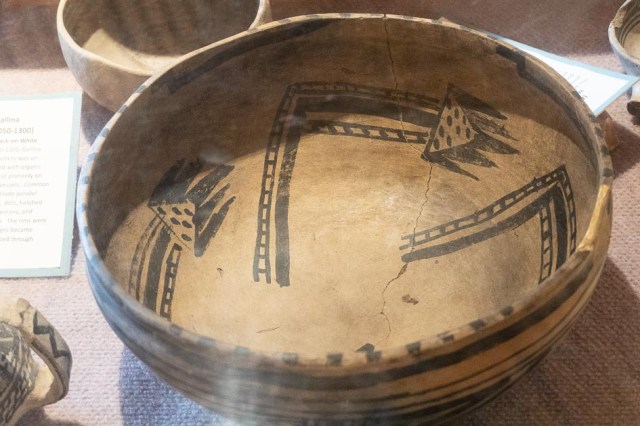
Black and White pottery found around Piedra Lumbre Valley
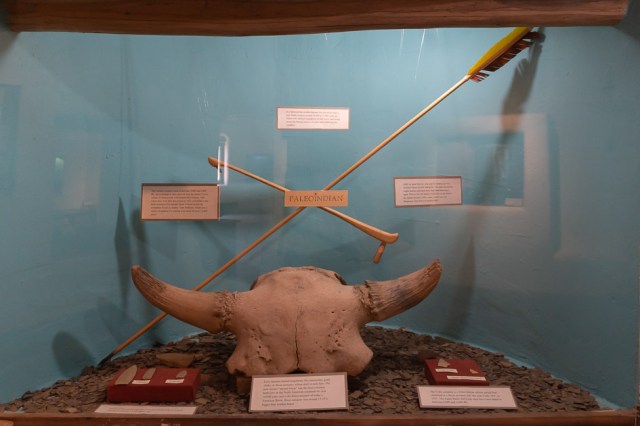
Paleo-Indian display of bison head, a modern atlatl and spear, and various spear points.
Museum’s Courtyard

Besides tours and museums, Ghost Ranch is a place for relaxation, reflection, and spiritual rejuvenation through its many retreats and workshops offered during the year. Visitors can hop on a horse for a guided trail ride on the property and, in the summer, jump in the pool to cool off.

Not sure if the Georgia O’Keeffe Cottage was a meeting place or overnight rental

Various “simple and rustic” accommodations are available, ranging from private rooms with baths to communal living spaces and shared baths, to tent and RV camping facilities.

Meals are served cafeteria style in the Dining Hall. Since we didn’t see any other places nearby to grab a bite to eat, we bought meal tickets for lunch at the Trading Post.
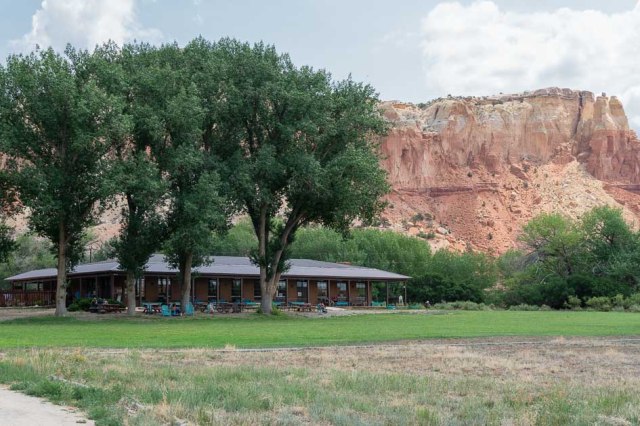
Eat inside our outside at the Dining Hall

Wrap up

I hope to return to Ghost Ranch, spend a few days, and perhaps sign up for a retreat or workshop. I’d also like to wander around on the trails and explore more, ride a horse, or go to the nearby lake and paddle board. It was too hot the day of our visit to do much more than ride around in an air-conditioned bus and walk through the museums. I’d also like to take the tour of the O’Keeffe House and Studio in Abiquiu. It’s open with limited reservations available.

Next up: Our last Chama, New Mexico, episode will feature a quick peek at Heron Lake State Park and Echo Amphitheater.

Safe Travels

Summer 2021 Tour Chama, New Mexico Episode 1: Cumbres & Toltec Scenic Railroad

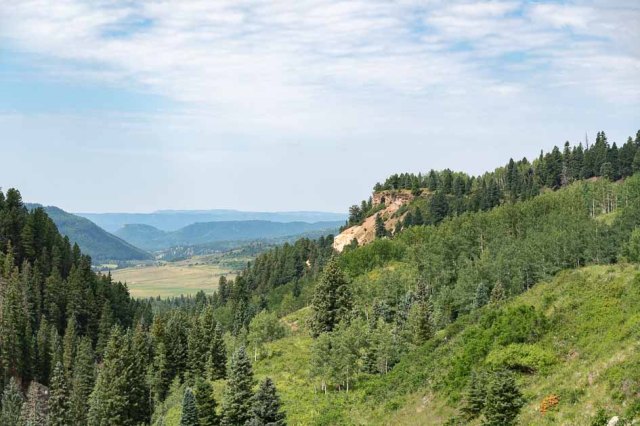
On Friday, July 16, 2021, we moved our base camp to Chama, New Mexico. The short two-hour drive on US Highway 64 through lush canyons and meadows was a delight. About halfway, we stopped at an overlook and picnic area where wildflowers were in full bloom.

Yellow-orange daisies
Green, lavender, white, and yellow among the thistle

I imagined where we live in the Bay Area, the drought would have already forced the wildflowers to shrivel up and die. So, it was a treat to see their smiley faces at their peak in New Mexico’s higher elevations.

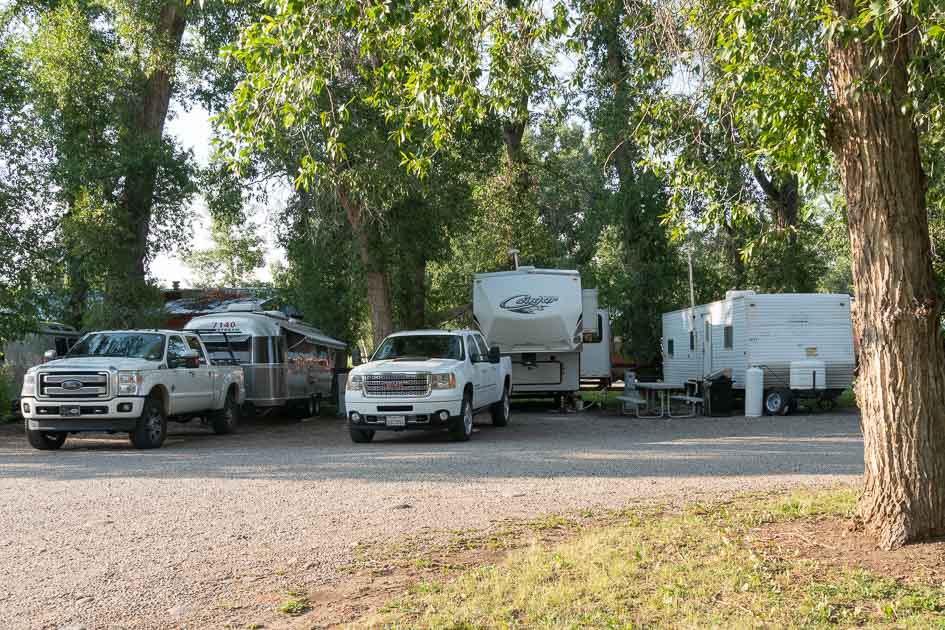
Little Creel RV Park in Chama squished us into a small space that crowded the trailer next to us. The park owner said not to worry. The men next to us would leave over the weekend and might not return on Monday, and they didn’t all week.

Although the room slide encroached on the neighbor, the awning and picnic table area had plenty of room, especially since no one pulled in next to us until two days before we left.

All set up

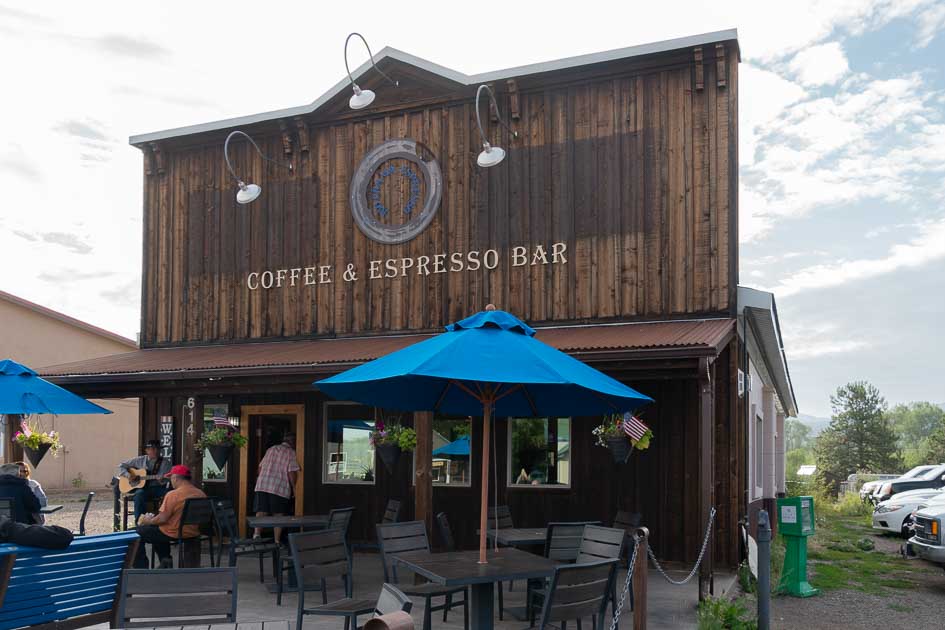
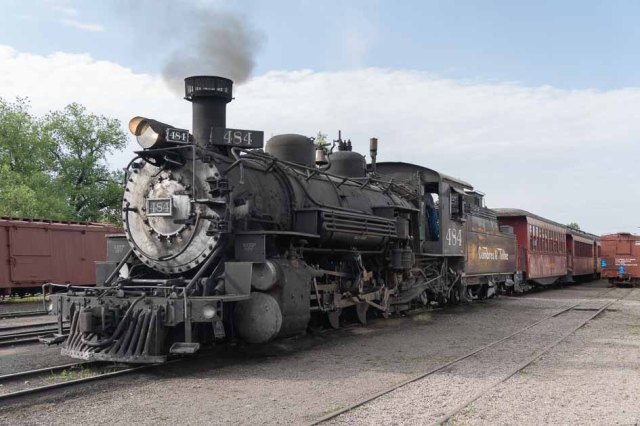
First on our agenda while in Chama, was to ride the Cumbres & Toltec Scenic Railroad. At Coffee & Espresso Bar, we started our day with a breakfast sandwich, Danish, and a cup of coffee, and then we watched the volunteers prepare the engines and hook up the cars.

Listen to live music while sipping coffee
Cozy up to the fire pit and stay nice and toasty
Chama depot, store, visitor center, and restrooms
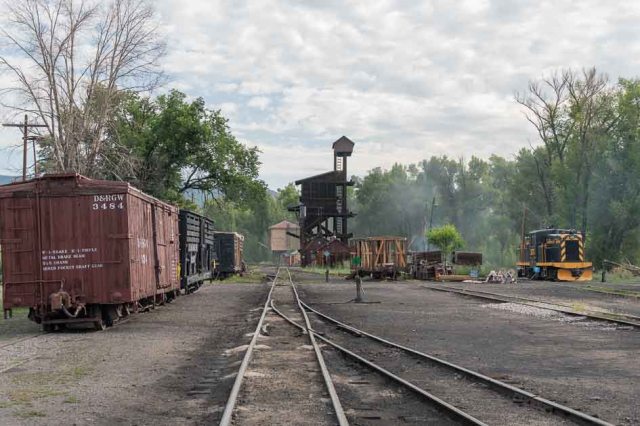
Rail yard
Fire ‘er up
Coupling the cars
All aboard

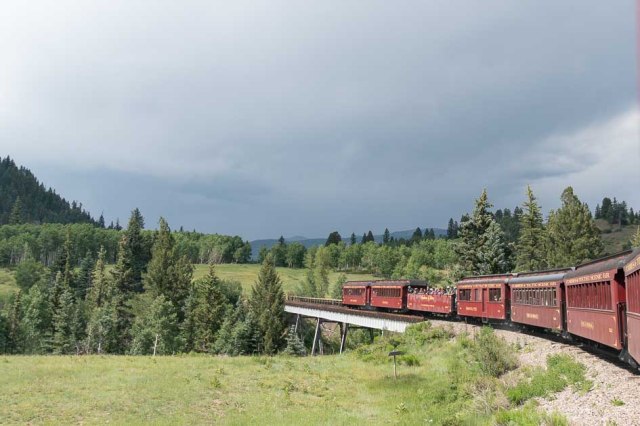
We ended up in the first seat in the first car behind the engine. One would think a steam engine would be preferable to diesel because of the smell. In order for the steam engine to work, it needs fire to heat the water to create the steam. And what fuel did they use for the fire?

Our car behind the engine

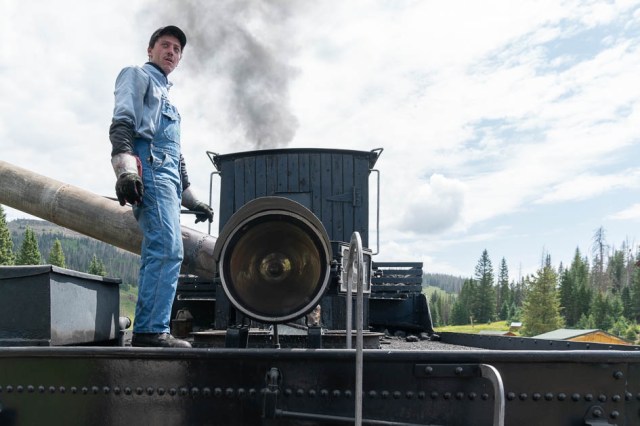
Coal. I could barely stand two minutes outside on the platform. Soot and red-hot embers of coal swirled around me and flew in the door whenever it was open. And forget about resting your arm on the windowsill unless you wanted a holy shirt sleeve.

View from the train

It was comical to see one passenger—a man in his fifties—so excited about riding the train. He stood on the platform for the entire trip while soot and embers rained down on him. His grandson brought him snacks and drinks, but the man never budged.

The train, the train.
Whoa! Where are we going?

Pulling the mountain was not much faster than walking due to the incline. We were thinking it would be faster on the way back, but we were wrong. The Engineer/Conductor told us the old-fashioned brakes required they keep the downhill speed to a minimum to avoid becoming a runaway.

Say cheese
Hmm . . . settings, settings.
New Mexico State Road 17
Quick stop in Cumbres for water
Filling the tank
Homes and cabins in the meadow
Join the party in the open car
Los Pinos water tank and rail crew

At the Osier train stop in Colorado, we all disembarked for a buffet lunch in the dining hall. On one side of the building, they served a turkey dinner, and on the other side, they served meatloaf. Salads were also available downstairs.

Dining Hall

I opted for the turkey dinner. The turkey and gravy were tasty. All I can say about the canned green beans is that they weren’t fresh, and a couple of bites of dressing were more than enough. The best part of the meal was the not-too-sweet pumpkin pie with whip cream and flaky crust. I should have had two slices.

Livestock loading pen

After lunch, everyone gathered outside, wandered around the other buildings, and waited for the train to return.

Osier was once a small community with a store, rooming house, and depot. The volunteers built the water tower in 2000 using materials and specifications as the original.
Section House built in 1881 for the section foreman and family. Restored and renovated from 1993 to 2003.
Original or replicas?
Cascade Creek
Tiny blue daisy-like flowers dotted the grass
Trains use the double tracks and loop to turn around

All the passengers climbed aboard for the trip back to Chama, taking the same seats as before. The atmosphere in the car was a stark contrast. Those of us in the front were mostly quiet, enjoying the scenery outside the windows, or nodding off into a tryptophan coma. In the rear, a group of women may have had more than their share of the alcohol served during lunch.

Covered bridge waiting repairs
Picture the aspen dressed in their fall colors?

The women giggled, they laughed, they squealed, and they teased one another. When we stopped to refill the water tank, one lady came up to the open seat across from us and alternated hanging out the window to yell at someone to get the water guy’s attention, and ducking back into the car to yell at her sister, “Alma, come here.”

Approaching Lobato Trestle, the second highest bridge on the line at 100 feet (30.5 meters) above Wolf Creek

Apparently, the water guy was good-looking and Alma was single. And then there was the man who showed up at each road crossing. The women would hang out the windows, and wave and squeal like teenage girls.

Wolf Creek below the trestle
Bringing up the rear

It was a kick to watch a group of middle-aged women acting like teenagers and the grandpa acting like an excited boy. Their antics were just as engaging as the scenery outside the window. It was also cool to see all the people who parked and got out of their cars to take photos and wave at us.

Bustle racks above the seats. It’s in the details.
Time to go

What could be better than riding on a historic train, gazing out at the scenery passing by, listening to the docent tell stories about the people and history of the railroad, and snuggling in the seat with a best friend and spouse? Not much in my book.

A few facts about the Cumbres & Toltec Scenic Railroad (CTSRR)

  • The Denver & Rio Grande Western Railroad (DRGWR) operated from 1880 to 1968, transporting ore, livestock, freight, and passengers.
  • Cumbres Pass, Colorado, is at 10,015 feet.
  • The 1920s ushered in automobiles and graded roads, reducing the need for passenger rail service.
  • DRGWR discontinued passenger service in 1951 and freight shipments in the late 1960s.
  • The States of Colorado and New Mexico jointly purchased 64 miles of the Denver & Rio Grande Western Railroad in 1970 and renamed it the Cumbres & Toltec Scenic Railroad.
  • CTSRR was designated as a National Historic Landmark on October 12, 2012.
  • Since 1981, Friends of the Cumbres & Toltec’s vibrant volunteer program has and continues to preserve and restore the buildings, property, track right-of-ways, signs, and rolling stock. Through its assets and scenic tours, they also interpret the history of the railroad.
  • Each summer, the Friends hold volunteer work sessions in Antonito, Colorado, and Chama, New Mexico. Volunteers can choose from “mechanics, woodworking and painting to landscaping, food service, photography, and record-keeping.”
  • Catch a train ride at either Chama, New Mexico, or Antonito, Colorado.

Interested in learning more about Cumbres & Toltec Railroad? Visit their website at https://friendsofcumbrestoltec.org.

Coming up in future episodes: Ghost Ranch and Heron Lake State Park

Safe Travels

Summer 2021 Tour Taos, New Mexico Episode 3: Village of Red River, Cimarron Canyon State Park, Village of Cimarron

In this episode, we travel a portion of the Enchanted Circle Scenic Byway and stop at a few spots along the way. New Mexico Routes 38 and 522 join with a portion of US 64 to create the circle and connect the towns of Taos, Angel Fire, Eagle Nest, Red River, Questa, and Taos Ski Valley. We previously included Angel Fire and Taos in episodes 1 and 2.

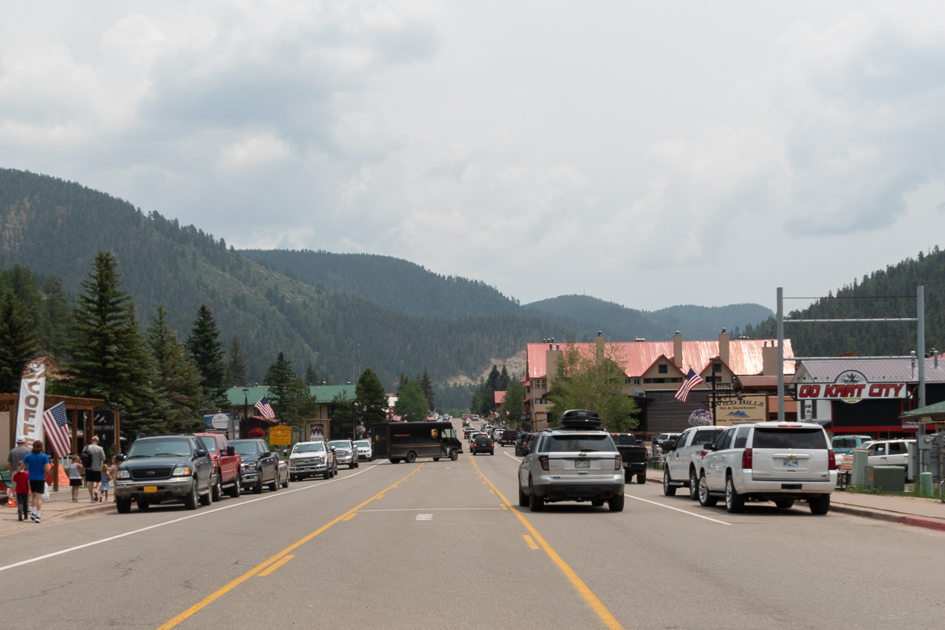
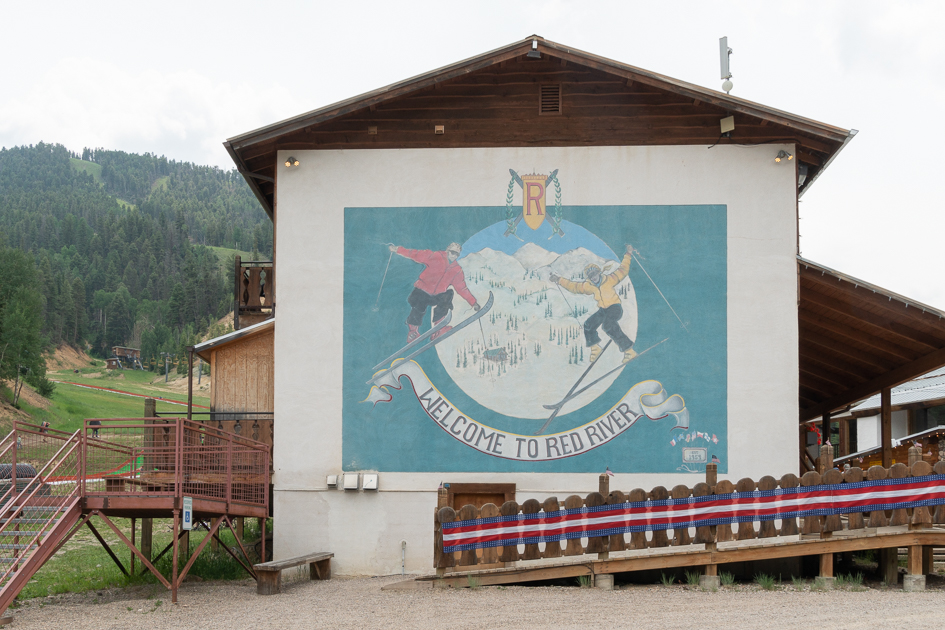
Red River

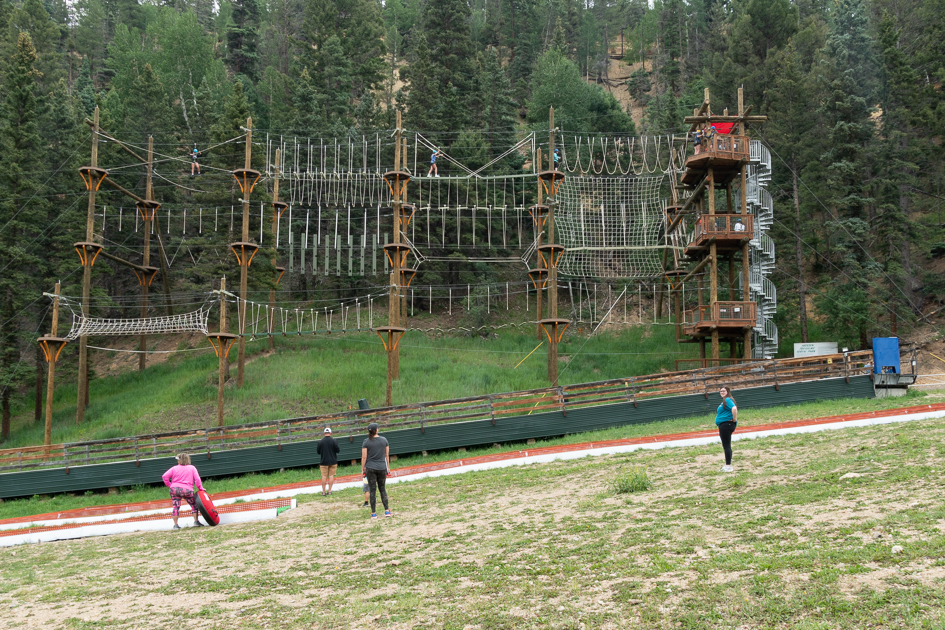
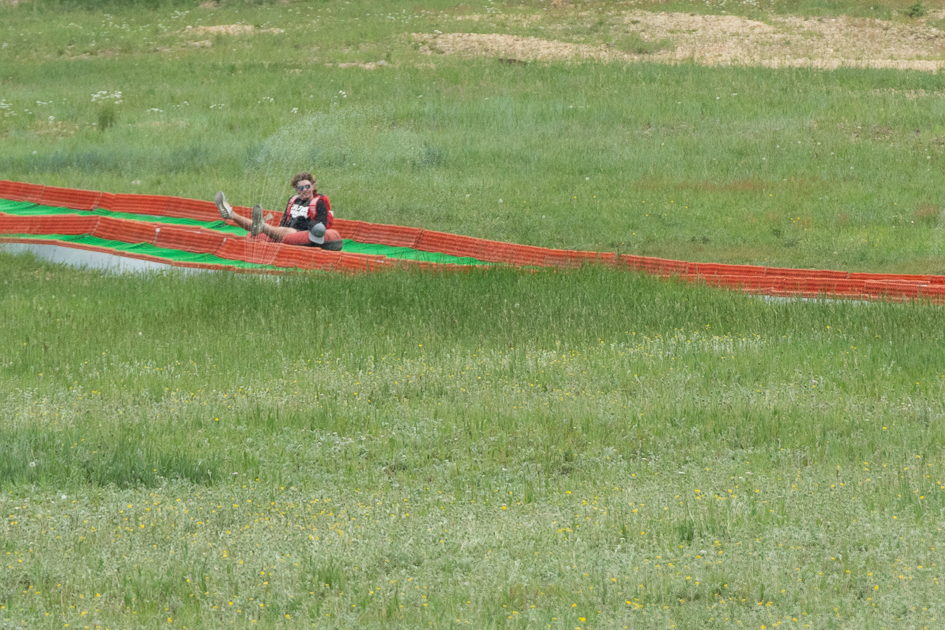
Ski Area Summer Fun

The town of Red River is appropriately named after, you guessed it, the Red River. The short perennial river begins its journey high in the Sangre de Cristo Mountains at the top of Mount Wheeler. As the stream flows down the north slope of the mountain, springs add their water, and the river makes its way through the towns of Red River and Questa before turning south and merging with the Rio Grande.

Combo zip line and obstacle course at ski area
Inner tube sliding looked fun

Red River started its life like other towns in the western regions. After the US government forced the Jicarilla Apache and Utes, who called the place home for centuries, to move to reservations, miners rolled into the valley in the late 19th century with visions of gold and silver in their eyes. Established in 1895, Red River’s mining activities were roaring. But they peaked in 1897 and faced a speedy decline until 1905.

Monsoon is on the move

Fortunately, the town did not suffer the ghost-town fate of other mining towns. Enterprising residents recognized trout fishing as a draw for residents and travelers in lower elevations to escape the summer heat of the valleys. And so Red River’s economy switched from mining to recreation.

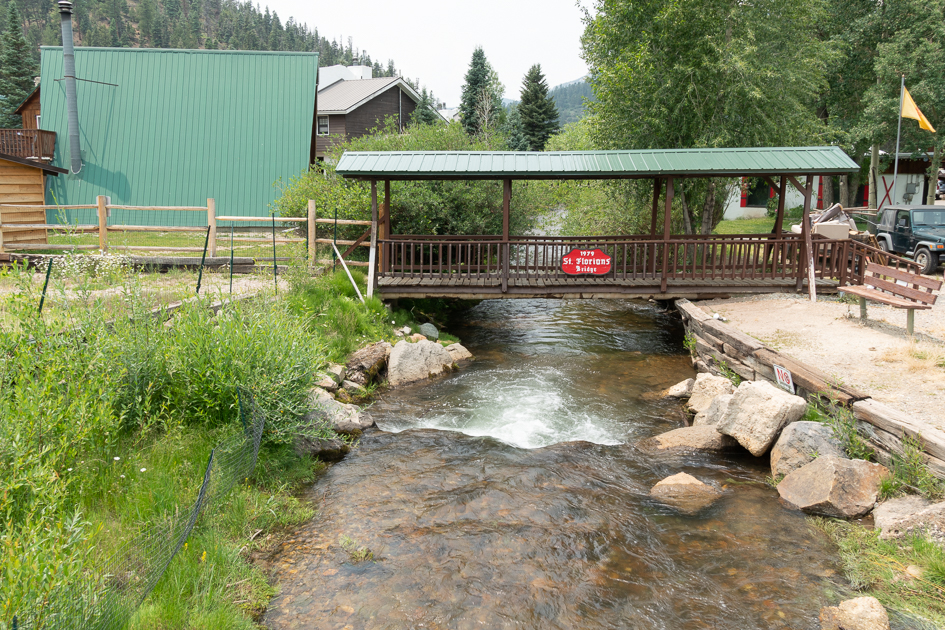
A river runs through it
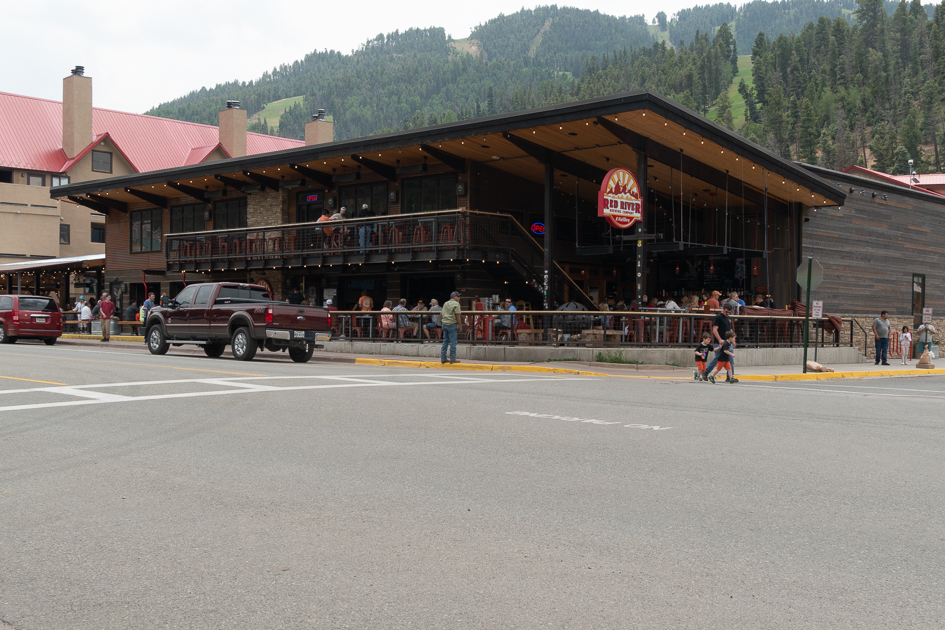
Red River Brewing Company was mighty popular

In December 1959, Red River Ski and Summer Area opened for the first time. Partially within public lands under a long-term special use permit with the Forest Service, the family who owns and operates the resort provides activities in both winter and summer.

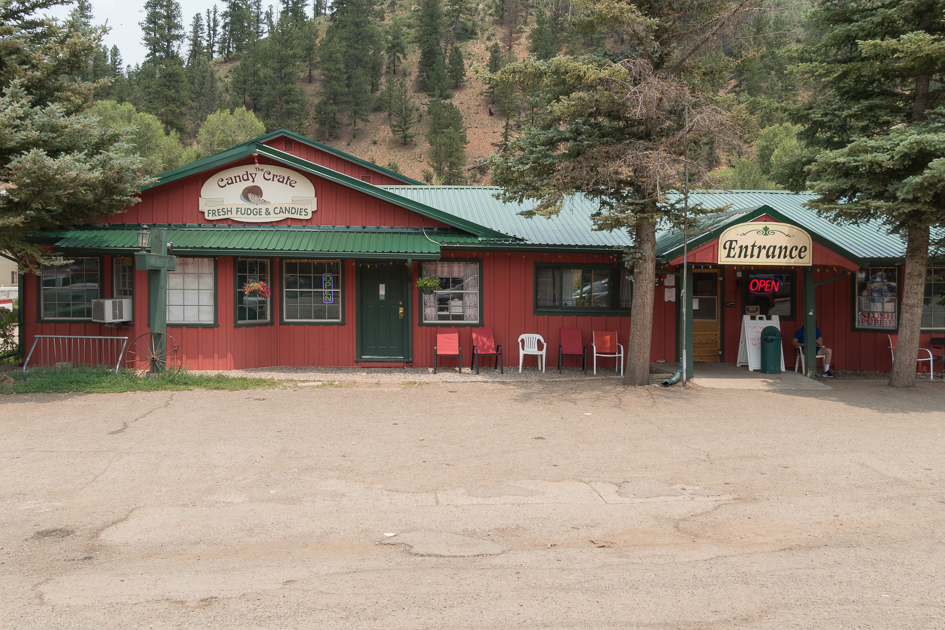
For those with a sweet tooth
Cozy spot with patio

Besides fishing and skiing, other events are held throughout the year to attract visitors and keep the town hopping. It’s amazing how a town of only 460 people manages to offer so many celebrations like the Songwriters Festival and Mardi Gras in February and the Memorial Motorcycle Rally over Memorial day. Car shows, art and wine festivals, music festivals, and Oktoberfest are other reasons to make the 36-mile trip from Taos or drive up from West Texas.

Fishing allowed in town

Cimarron Canyon State Park

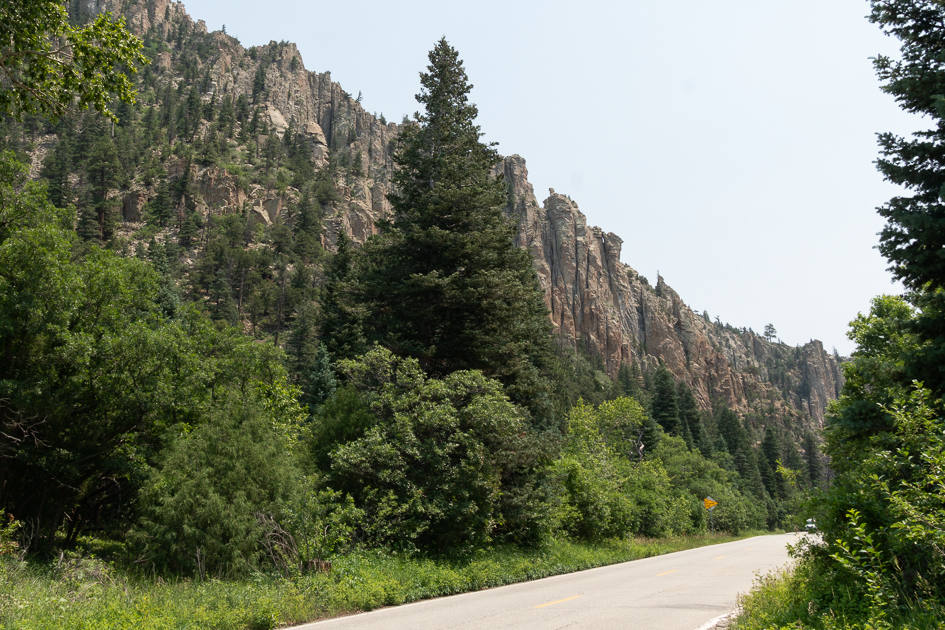
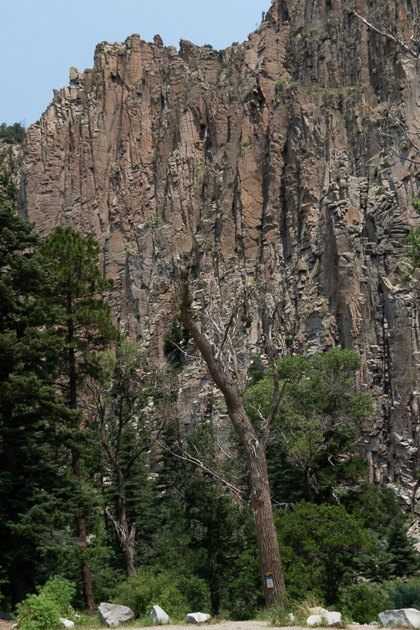
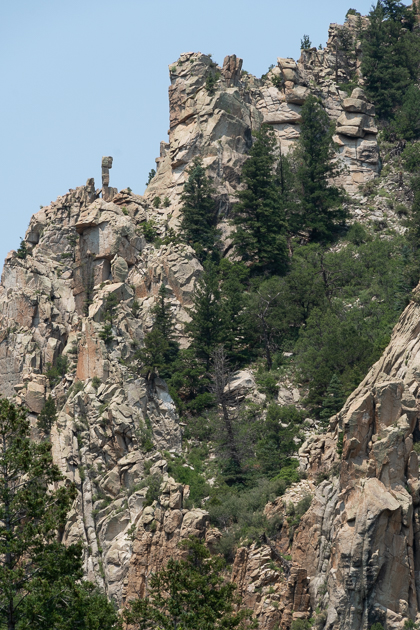
Hiking trails, trout fishing, picnic areas, and campgrounds await travelers and visitors east on US 64 from Eagle Nest Lake. On our way to the Village of Cimarron through the 8-mile long narrow canyon, we stopped to gawk at the craggy cliffs at Palisades Sill. The cliffs are a scenic, historic site and worth a stop. Be sure to pay the $5.00 entrance fee if enjoying the sites. Every bit helps to protect our parks, and pay stations are nearby.

US 64 highway through Cimarron Canyon
Make a wish
The walls rise 400′
Up periscope

Cimarron

About 10 miles from the state park is the small Village of Cimarron, New Mexico, with a population of approximately 865, down 155 people over the past 10 years. Our main goal for driving to Cimarron was to try the restaurant at the St. James Hotel.

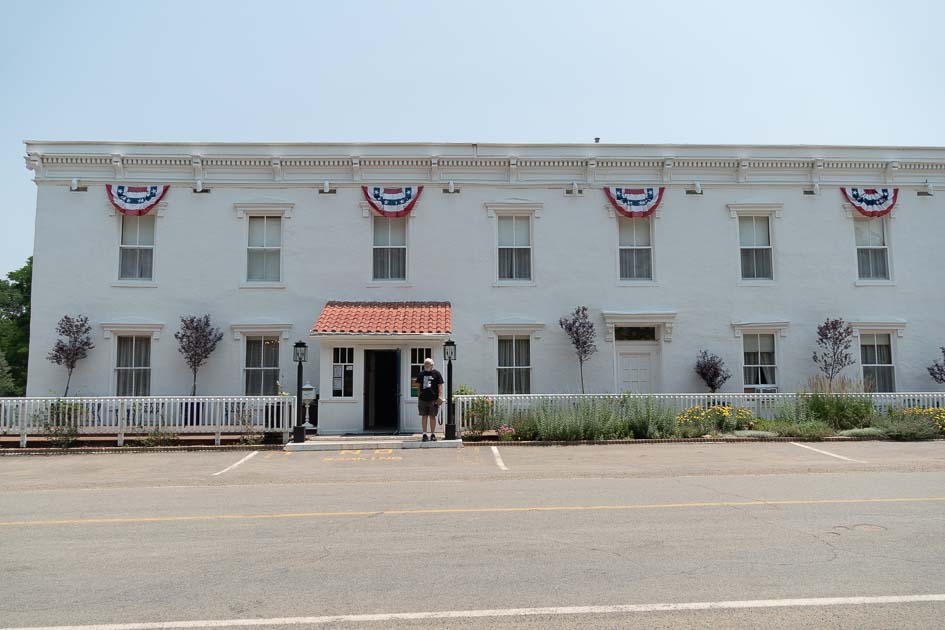
St. James Hotel

Our neighbors at Taos Canyon Stop RV Park told us they enjoyed a quiet lunch at the restaurant. We were not so lucky. The day of our visit was Wednesday, and the hotel and restaurant are closed on Tuesday and Wednesday.

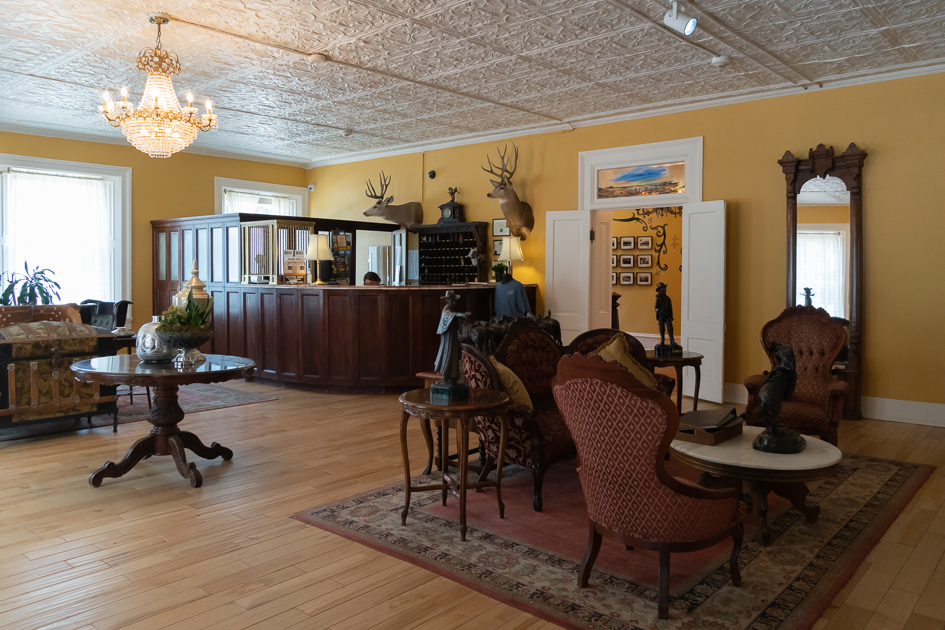
St. James Hotel lobby

With the door open, at least we could wander around the bottom floor and peek into a few rooms. In the hallway, we found photos and signs with historic information about the town, hotel, and people.

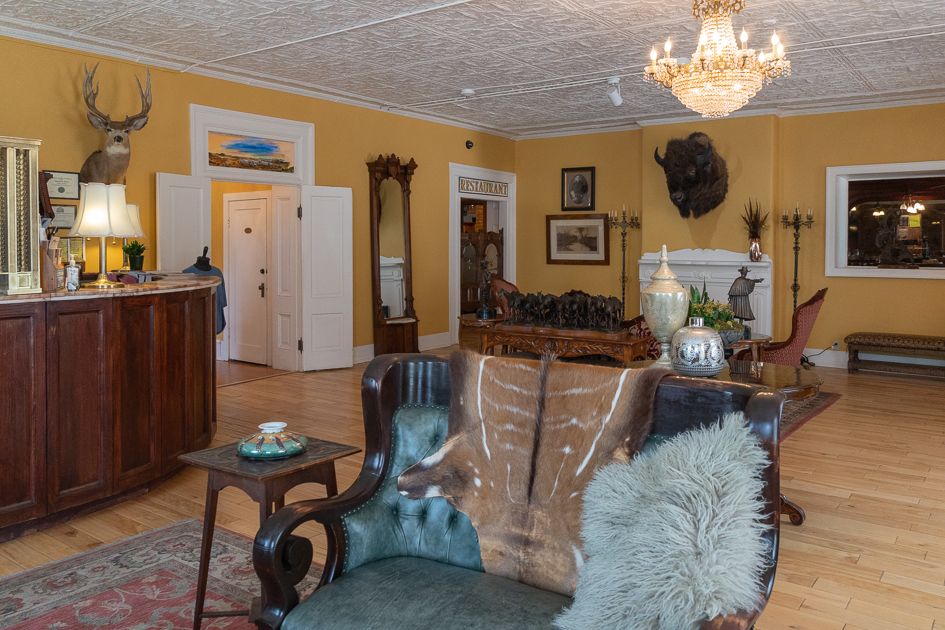
St. James Hotel lobby

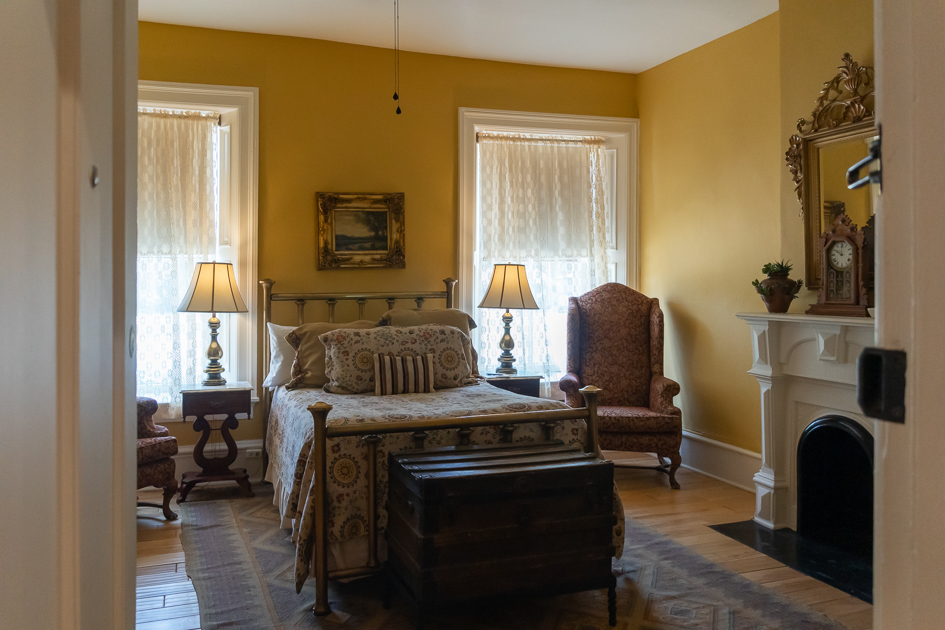
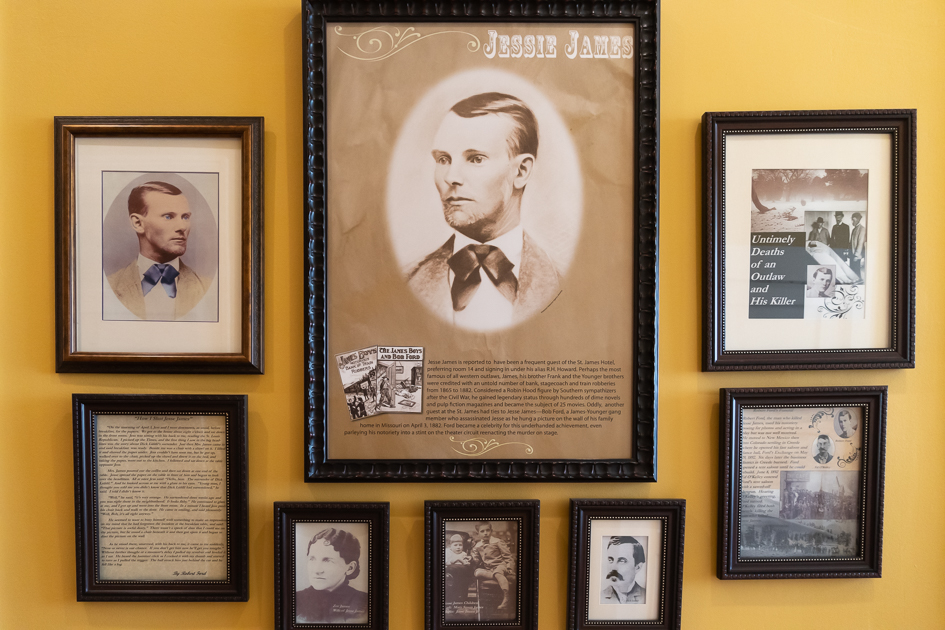
How cool would it be to stay in a room named after Bill Cody, Annie Oakley, or Doc Holliday? Or how about room 14, where R.H. Howard, A.K.A. Jesse James, reportedly preferred to lay his head while in Cimarron?

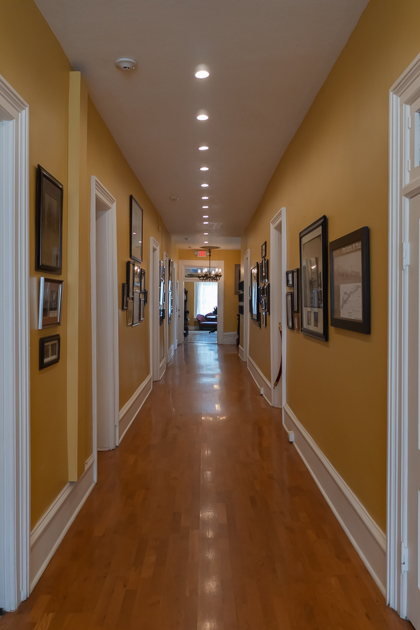
St. James Hotel hallway
Looks comfy to me
The Life and Times of Jesse James
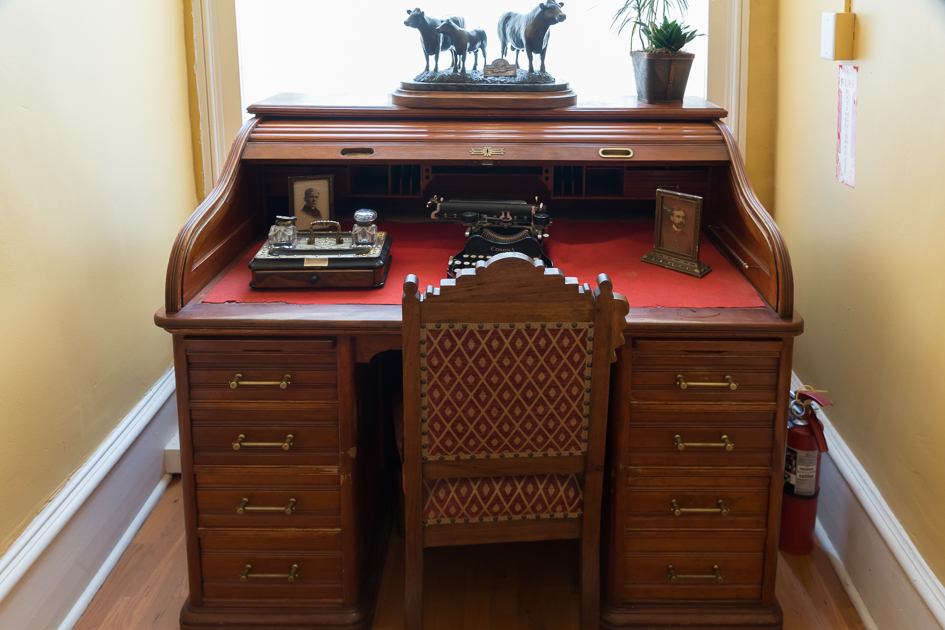
We have it so easy with our laptops and keyboards
St. James Hotel courtyard

Aztec Grist Mill Museum

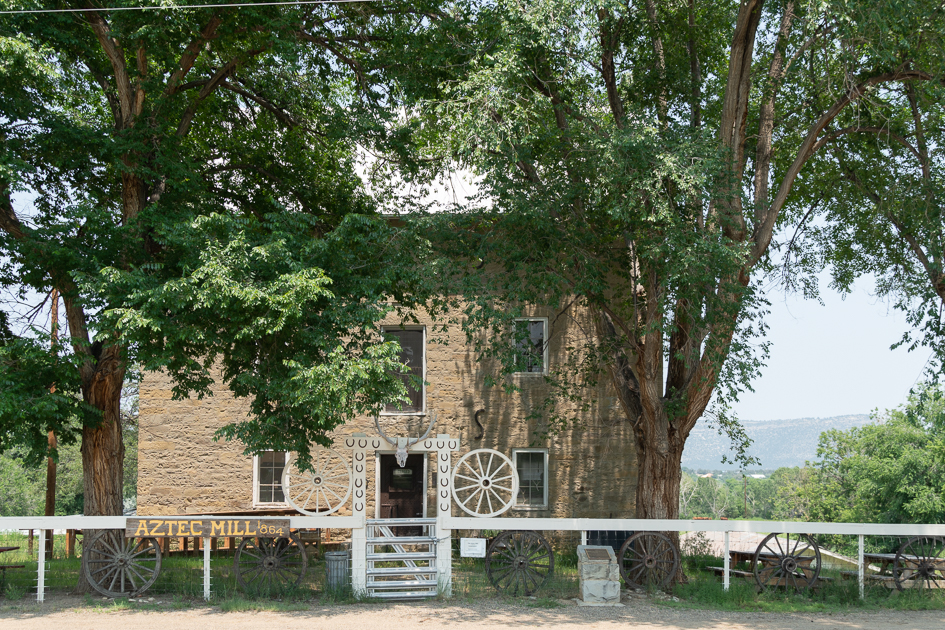
Down the road from the St. James Hotel, towering trees hid the Aztec Grist Mill Museum, and a locked gate barred my entry. Another pandemic victim. While taking photos of the stone building, a ranch hand happened by. While we talked, he ticked off all sorts of treasures sequestered inside the locked museum, whetting my appetite to take a peek.

Aztec Grist Mill Museum

Unfortunately, he didn’t have keys to let us in the locked door. I did learn the Aztec Grist Mill was built in 1864 to provide ground grains for the Maxwell Ranch and the Jicarilla Apache Indian Reservation.

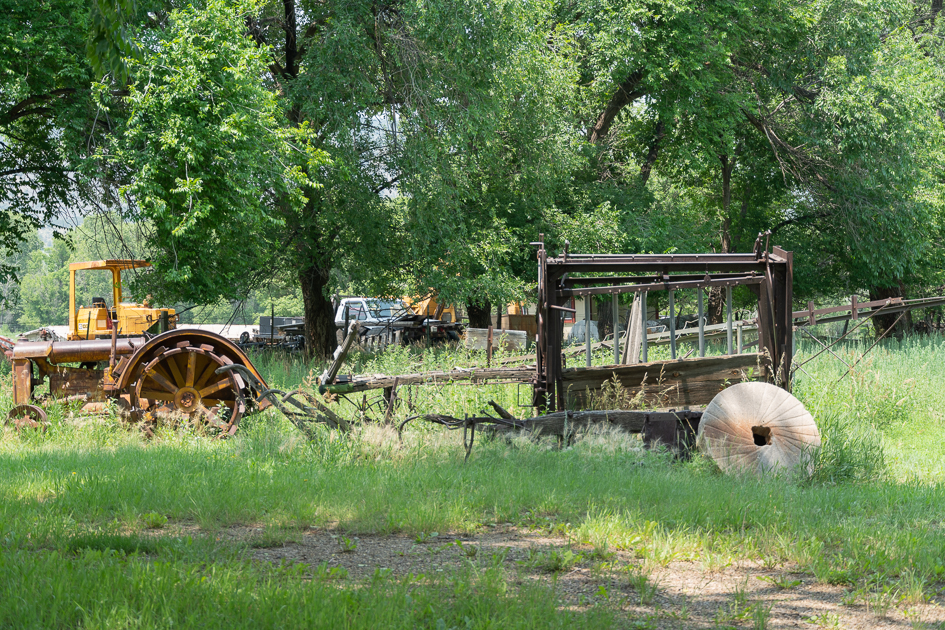
Antique farm equipment at the museum

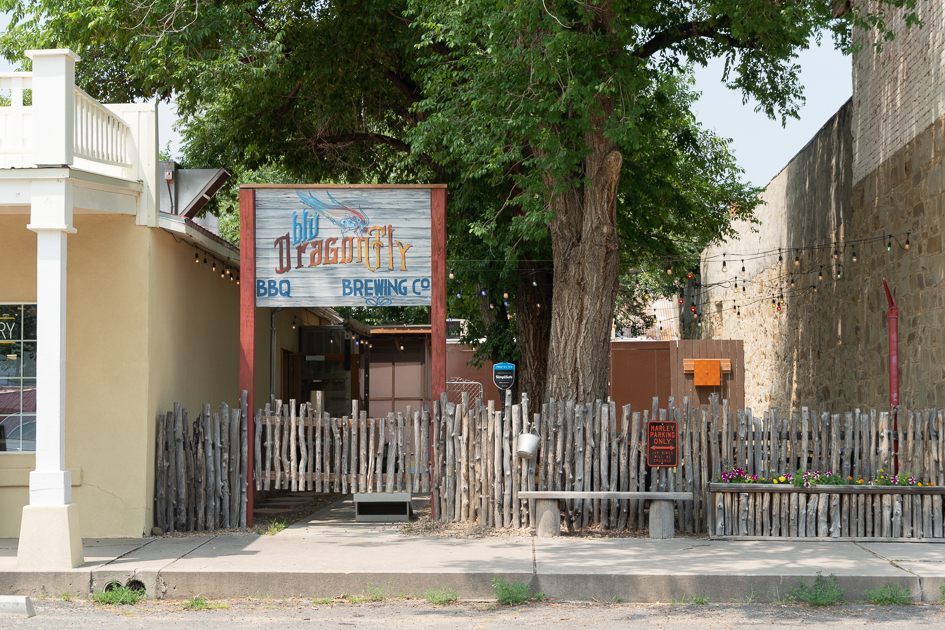
Blu Dragonfly Brewing Company

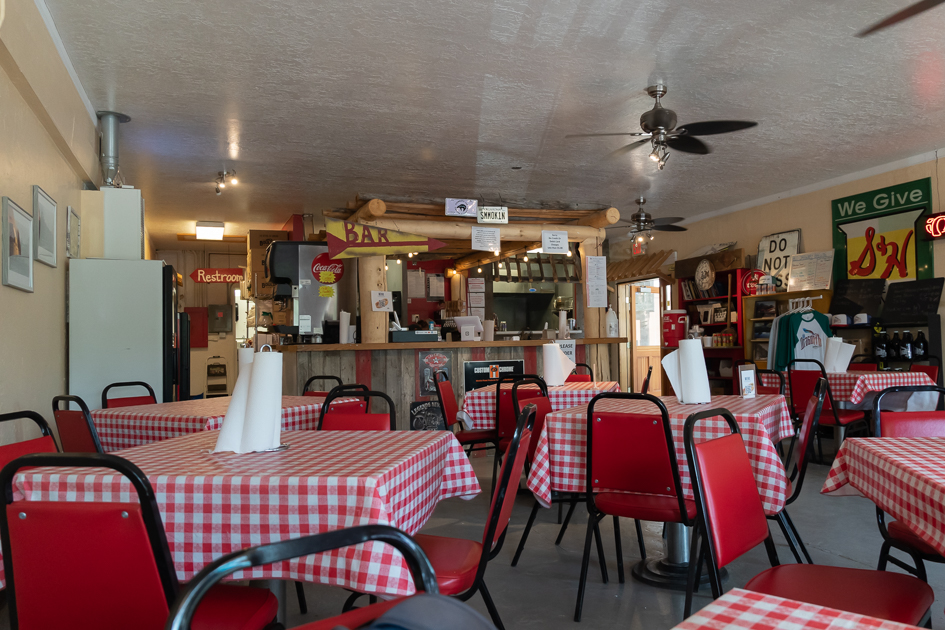
We searched for somewhere to have lunch, and the only place we could find open was the Blu Dragonfly Brewing Company. Their sign said BBQ, which I read as pulled pork sandwich. Inside it was the Dog House Taproom, and the only thing on the menu was hot dogs.

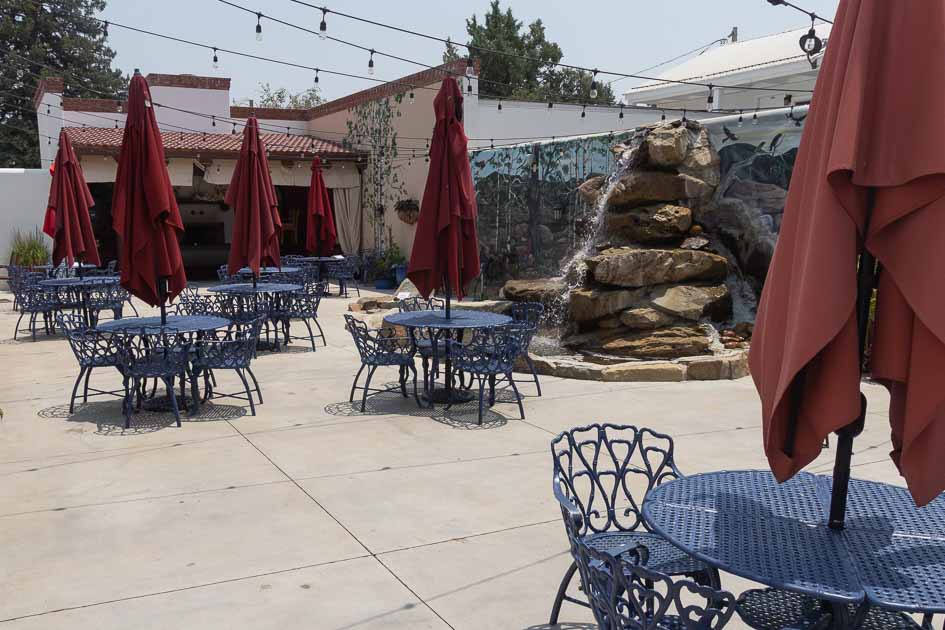
Outdoor seating at Blu Dragonfly Brewing

The menu included a Plain Jane Pup, similar to the classic Nathan’s Famous; Man’s Best Friend, a classic coney with meat sauce, mustard, cheese and onions; and many other dogs in a bun with various toppings. Jon was happy to sit down with his dogs. Me, not so much. I was promised a pulled pork sandwich, so I wanted a pulled pork sandwich, although I did eat my plain hot dog. My craving for the sandwich, though, lasted for more than a week before we found a place that served what I wanted.

Inside eating at Blu Dragonfly Brewing, or was it the Dog House Taproom?

With most everything closed for the day and only a few people about, the village looked as if it was heading toward ghost town status.

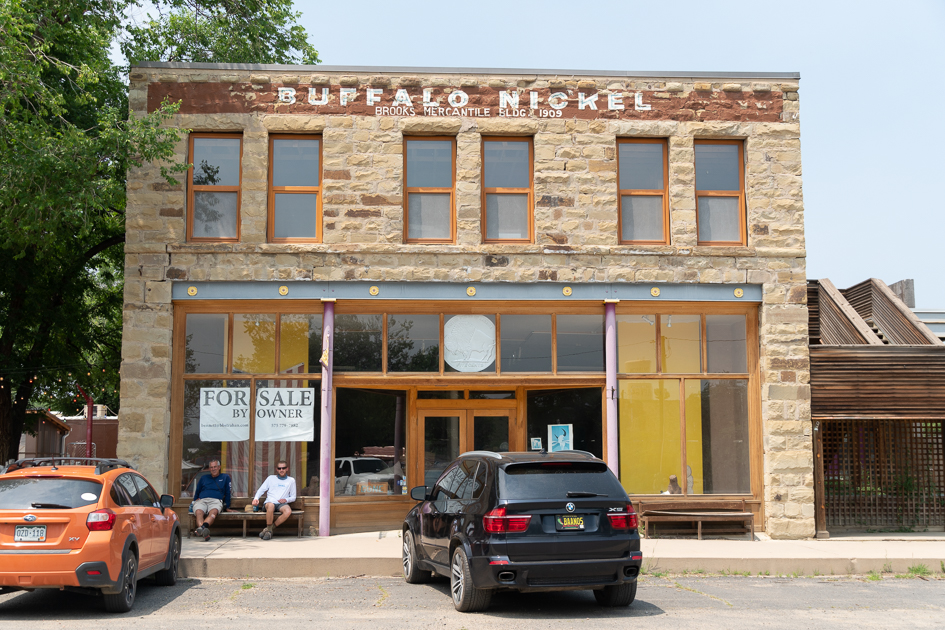
Were the businesses closed for the day or permanently? It was hard to tell
Looks like someone is over there in one of those buildings
A sturdy building looking for an owner

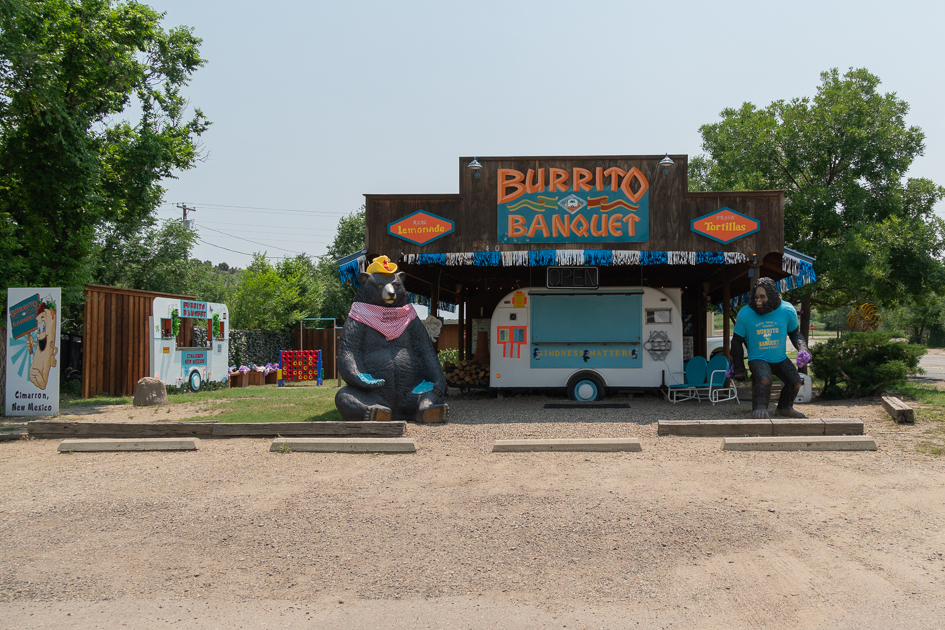
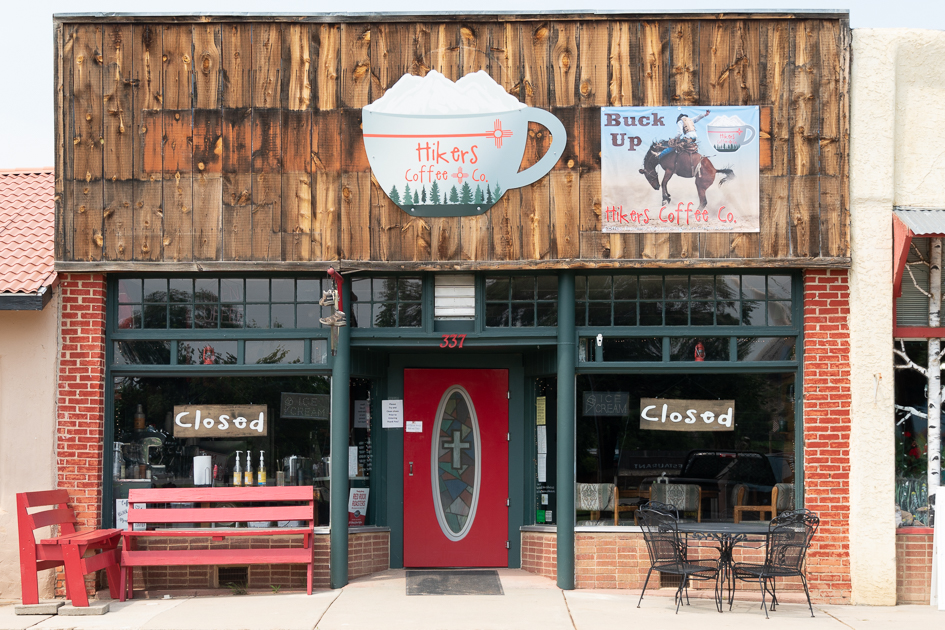
I preferred the more promising future told by Burrito Banquet, Hikers Coffee & Co., and the colorful park and hope other enterprises come along soon to revive Cimarron.

No burritos for you today
No coffee either
Cute little park for kids

We hope to make it back to the area some day so we can see and do more than we could during this trip. We missed out on hiking, riding the ski lift, visiting the Taos Pueblo, the D. H. Lawrence Ranch, and many other sites.

Next up: San Francisco de Asis Mission Church in Ranchos de Taos, the Rio Grande Gorge Bridge, and the Earthship Biotecture site.

Safe Travels
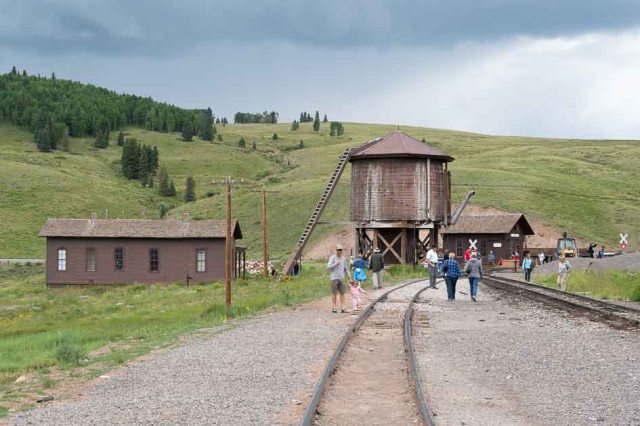
Summer 2021 Tour Taos, New Mexico Episode 2: Taos Plaza and Kit Carson House and Museum

In this second episode of our Taos visit during July 2021, we visit the Taos Plaza and Kit Carson Home and Museum.

Taos Plaza

The plaza is the place to be for gatherings, the farmers market (May through October), live music, parades, demonstrations, and art displays. Surrounding the plaza are various shops, studios, and galleries. A day or so before we arrived, there was a big to-do because city staff had mistakenly covered up a public art display in the crosswalks. Oops! Sorry! What else could the city say?

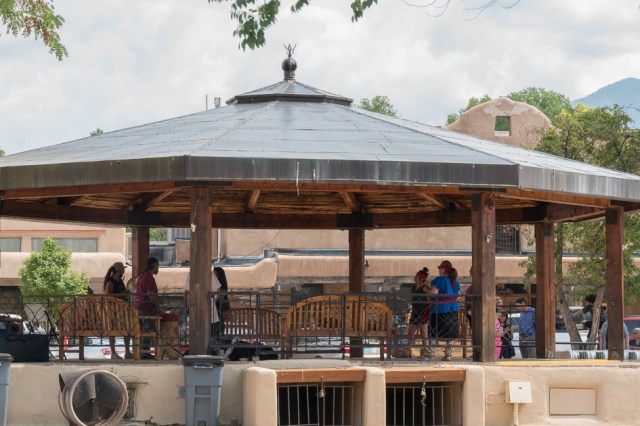
From a distance, the gazebo looked in fine shape. Although, a closer look revealed trip hazards of broken and sunken bricks in the walkway.

Native American music and dance at the gazebo
Watch your step

The veteran’s memorial recognizes all military branches. The black cross is dedicated to New Mexican service members involved in the Bataan Death March during WWII.

Honoring heros

Prominently displayed nearby is a statue of Padre Antonio Jose Martinez (1793-1867). He is recognized as a person of influence in New Mexico’s history through the Spanish, Mexican, and American territorial periods.

Padre Antonio Jose Martinez

Here are a few buildings that surround the plaza. Some of them are holding up pretty well, while others are showing their age.

Pull in to shop

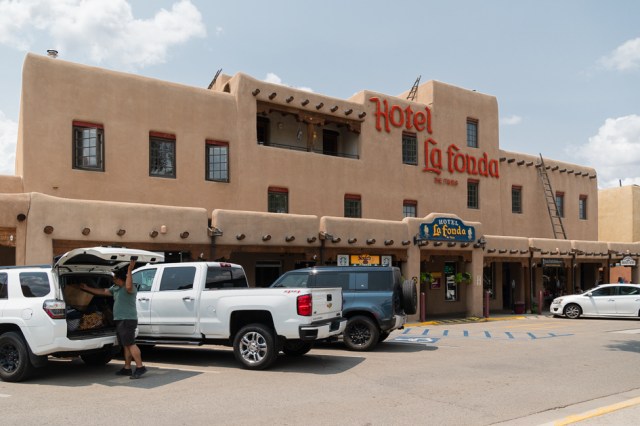
The Hotel La Fonda de Taos is an appealing-looking place to stay. Hotels have occupied the site since 1820 when a mercantile store that also rented rooms opened. According to the website, a recent renovation of the building retained many historical features while including modern amenities for 21st-century travelers.

A historic place to stay

One store had emptied out its stock, and a sign in the window said it had to close because of pending demolition. Further research revealed the building, which once served as the former county courthouse, was slated for demolition and renovation.

The building includes ten murals created by four Taos artists in 1934 under the commission of the Works Progress Administration (WPA) Public Works of Art Project (PWAP). I had to look them up online because we couldn’t see them in person. I hope the contractors can save the paintings from destruction. It would be a shame to lose such a treasure. To see the murals, go to The Living New Deal.
Former County Courthouse

Lunch at The Alley Cantina

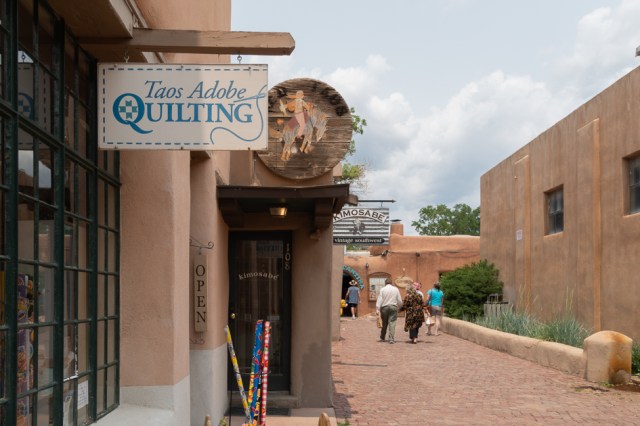
After walking around the plaza and visiting Kit Carson’s home, our stomachs growled with hunger. Our map app led us away from the plaza, down an alley, and past Taos Adobe Quilting to The Alley Cantina. We ducked in for a plate of chicken enchiladas and adovada, a red chile pork stew. Both were delicious, as were the margaritas.

We see quilt shops in almost all the small towns we visit
The Alley Cantina has good food
Watch sports under the skylight

Kit Carson Home and Museum

The Kit Carson Home and Museum (owned by Bent Lodge No. 42 of Taos and operated by the Kit Carson Memorial Foundation) seemed like an excellent place to soak up a bit of history, so we sought it out.

Kit Carson Home Courtyard

One might think Kit Carson would have found a fancy mansion for his family. Not so. As I walked through the four rooms, I tried to imagine seven children running around, plus several Indian children Carson took in after he rescued them from their captors and countless other extended family members from time to time.

Enter the door for the Kit Carson visitor center

We started our visit with a movie where several of us gathered along with a docent. When the movie ended, she told other stories of the man and his family and described the home, explaining the use of the various rooms.

Watch a movie about Kit Carson

She led us through the four small rooms, stopping to point out photos, memorabilia, and artifacts. Much of the furniture was not original to the home because Carson’s heirs sold off most of the belongings along with the house when he died. Luckily, collectors have donated some of the objects back to the museum.

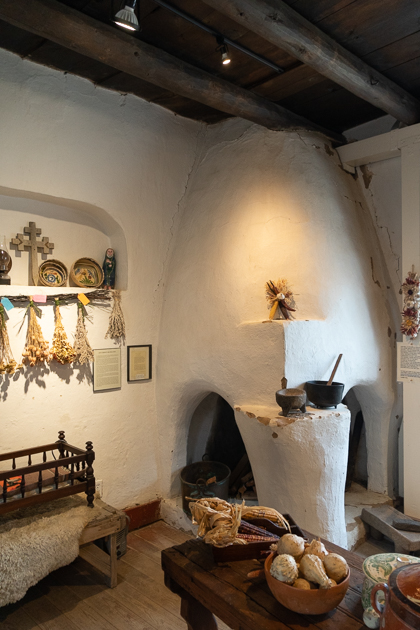
Cozy place to snuggle against those cold winter nights

Kit Carson purchased the adobe home in 1843 as a wedding gift for his bride, Josefa Jaramillo. They lived there for twenty-five years, although Carson traveled extensively while on scouting trips with John C. Fremont and serving as an Indian Agent and Army Officer during the Civil War.

Kit Carson’s desk used during his time as Indian Agent

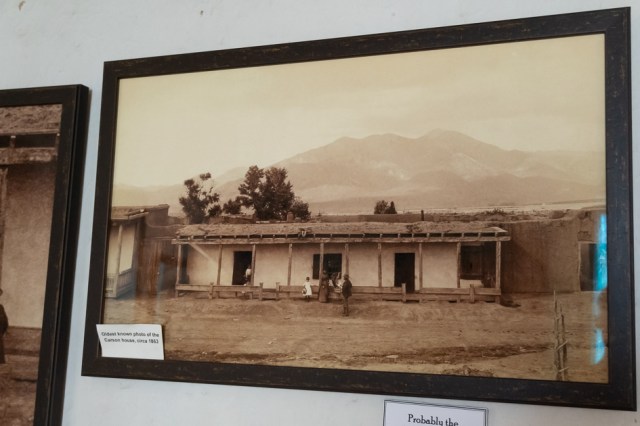
Historical photos show a humble home in this circa 1863 photo

A 1920 photo shows the home when one room housed a licensed Indian Trading Post.

The sign says, Kit Carson’s House 1858 to 1866 Trading Post
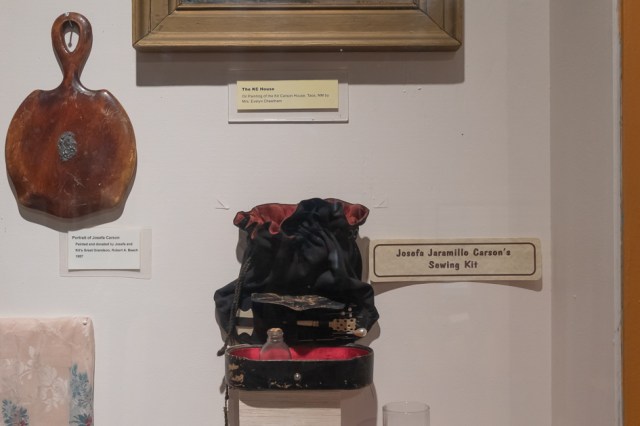
Josefa Jaramillo Carson’s sewing kit, including needles and pearl topped pins
Silk dress worn by Josefita Carson, youngest daughter of Kit and Josefa. Six weeks after her birth on April 13, 1868, both of her parents died.
A place to rest
Window, wagon wheel, and stump

Thanks go out to the masonic lodge and foundation for having the forethought to purchase the home in 1910 and turn it into a museum to honor their Freemason brother, Kit Carson.

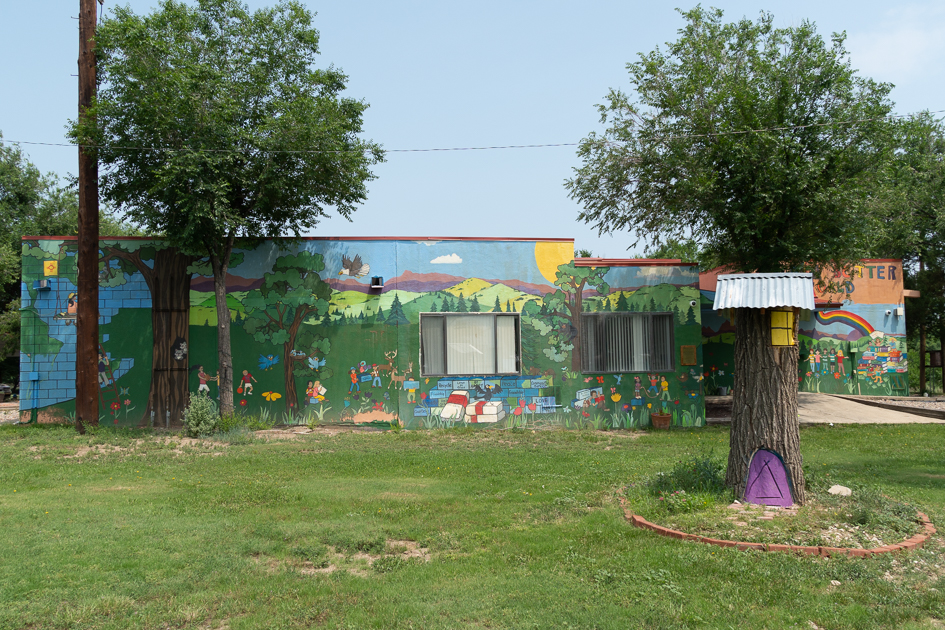
Murals are a common sight in historic towns, and Taos was no exception. Across the street from the Kit Carson Home and Museum, I spied the mural shown below.

Created by George Chacón 1989

When we returned to our campsite at Taos Canyon Stop, we found a not-so-nice surprise. Before we left for the day, Jon had secured the awning to our picnic table to keep it from flying away during the afternoon wind. What we didn’t count on was a hail storm rolling through the canyon that unleashed rocks of ice the size of marbles. Rain we expected. Hail? No way.

On the bright side, replacing the awning fabric gave Jon a project to work on when we got back home.

Next up: Red River, Cimmaron, and Cimmaron State Park

Safe Travels