Escaping Smoky Skies in Nevada – Part 2

Continuing with our 2018 Summer Tour, we visit a historic railway, Ward Charcoal Ovens State Park, Cave Lake State Park, and a mining town, all within a short drive from Ely, Nevada.

 Nevada Northern Railway Museum, a National Historic Place and a National Historic Landmark District

Originally owned and built in 1905 by the Nevada Consolidated Copper Company, the railroad and yards served the copper mining region of White Pine County.
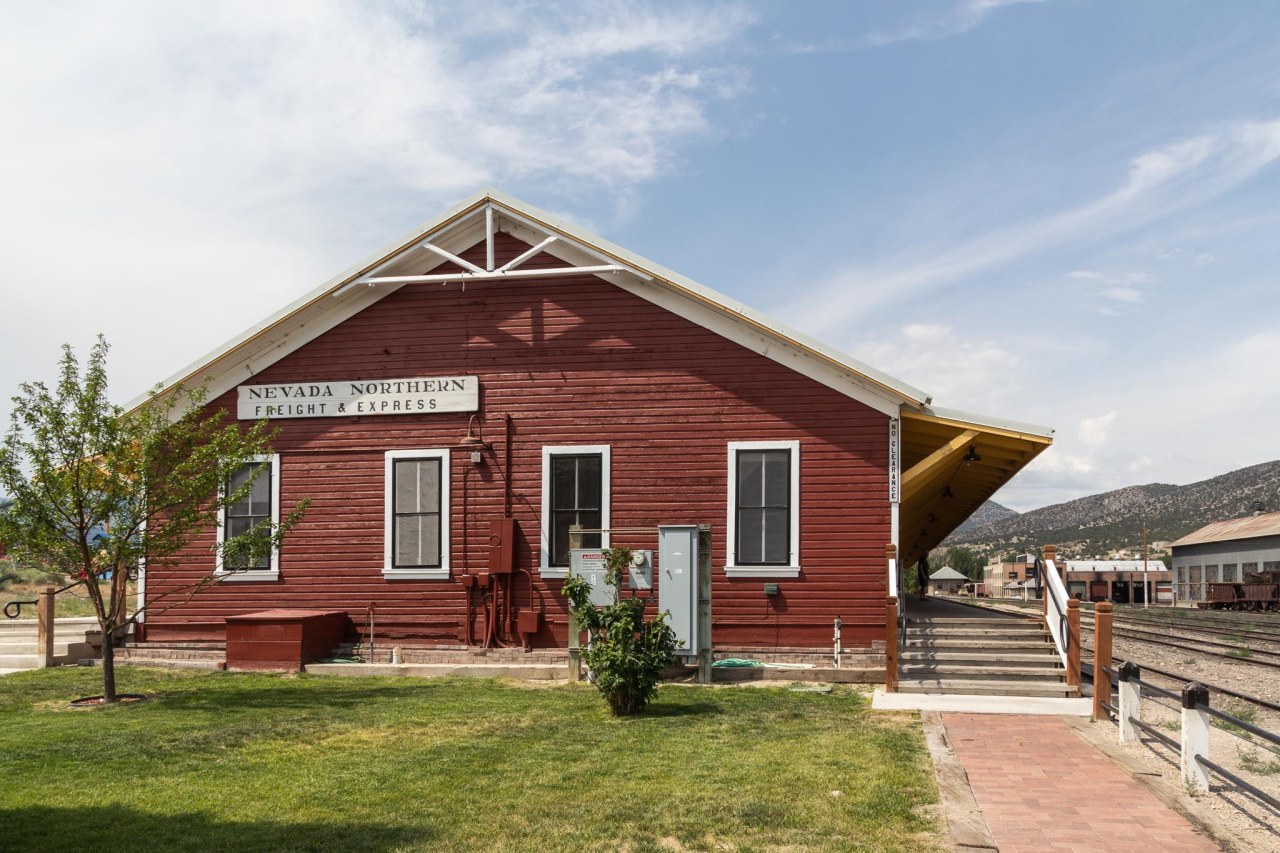
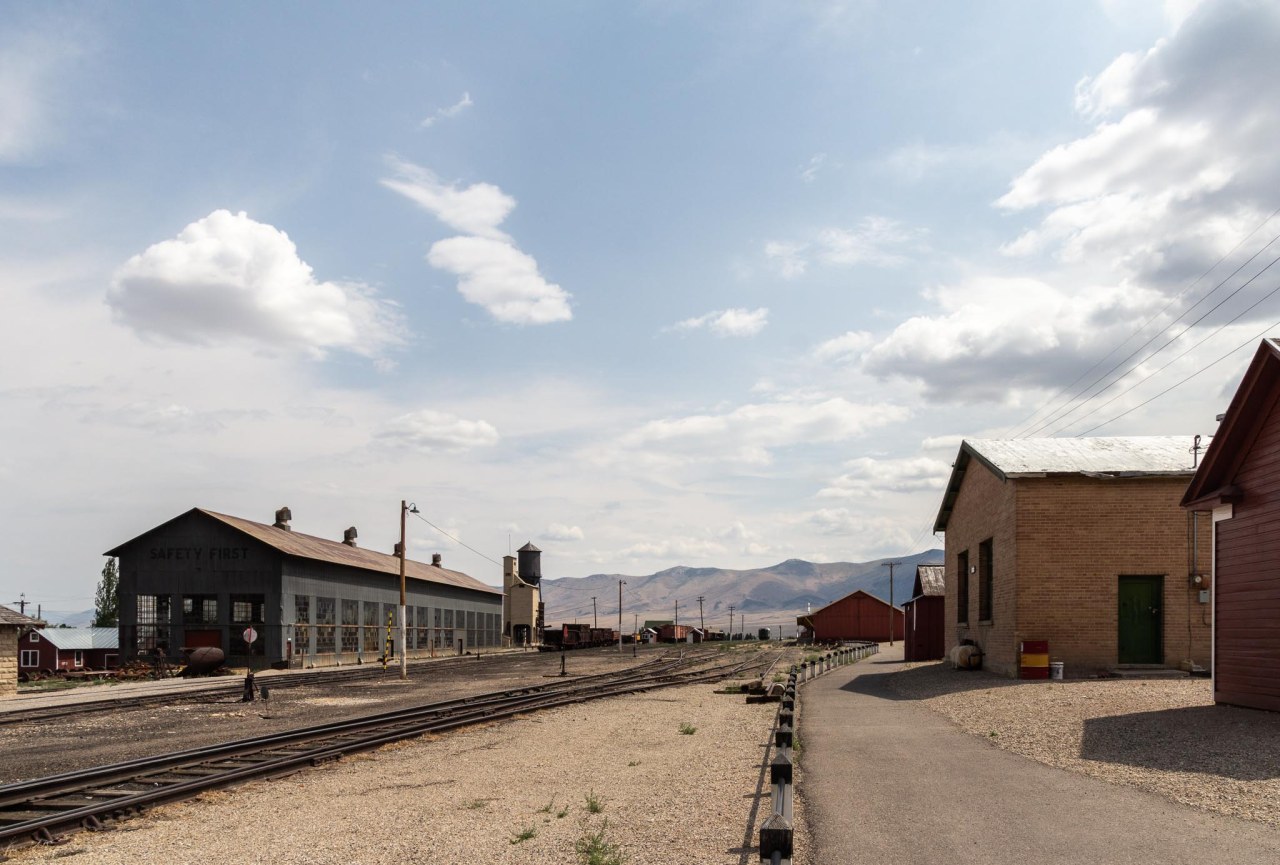
Nevada Northern Depot
View of railroad yard at Nevada Northern

The depot, built in 1907 in the Mission Revival and Renaissance Revival, provided service for both freight and passengers.

Nevada Northern Railway Museum

Kennicott Copper Company took over the mining operations in 1933 and gained control over the railway, yards, and depot. Kennecott discontinued passenger service in 1941 although they continued to occupy the offices until 1985 after donating the yard and railway to the local non-profit for preservation.

Not only did Kennecott leave behind train engines and cars, they also abandoned office equipment and all of the accounting records dating back to the inception of the Nevada Consolidated Copper Company. The state of Nevada then acquired the depot for the museum in 1990.

After riding the rails in Skagway, Alaska, and the Black Hills of South Dakota, we decided a guided tour of the machine shop might be more interesting to us.

Waiting for the train to cross
All Aboard

On the tour, we saw building after building of old train engines, train cars, and all the equipment needed to keep them in working order.

Engine 40 at Nevada Northern
A cat named Dirt is the mascot of the maintenance yard
IMG_8729
Dies for casting various wheels
A 200-ton steam-operated press
Maintenance building with a crane and a complete machine shop for restoration and repair still in use today
View from inside maintenance building looking out

We’ve seen recreated and renovated train depots before, but never have we come across one that contained mostly original furniture, office equipment, and documents that date back 100 years. It was a researcher’s treasure trove of payroll and other accounting records. Genealogists would be in heaven if they wanted to fill in the story of an ancestor that happened to have worked for the railway in the past.

The docent who gave us a tour of the offices
Supply room with office equipment and supplies
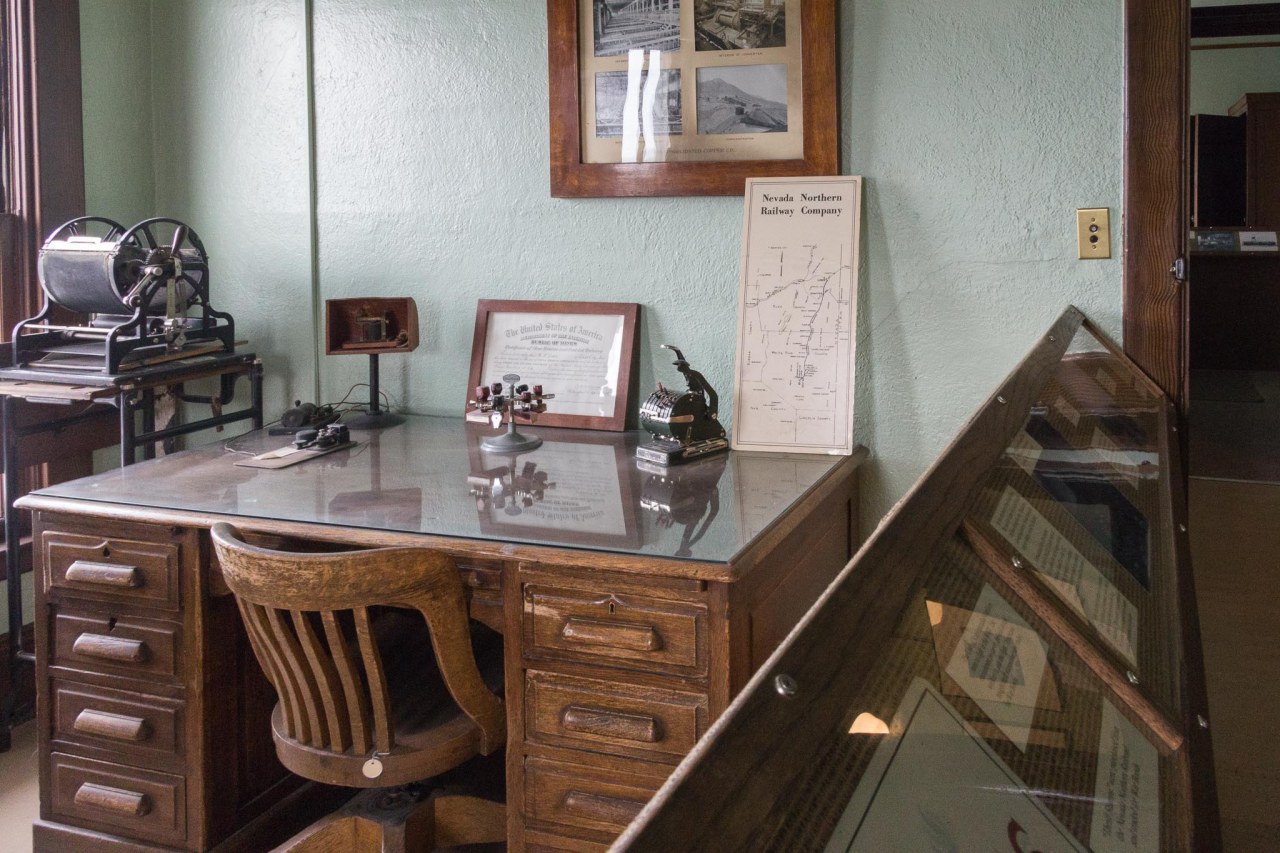
Note the ergonomic desk. I didn’t know they made them like that. I sure could have used one when I worked in an office and typed all day.
Mimeograph, check printer, and rubber stamps of all kinds

Cave Lake State Park

Cave Lake is a 32-acre reservoir open for fishing and boating for catching rainbow and German brown trout. The no reservation camping facilities looked nice with a fire pit and grill, a table, and space for parking. Showers and flush toilets, but we didn’t see any sites with hookups so campers need to come prepared.

Cave Lake and dock
View of canyon driving to Cave Lake

Ward Charcoal Ovens State Historic Park

The Ward Charcoal Ovens are accessed on a seven-mile gravel graded road about 10 miles outside of Ely. When I see gravel roads on the map I cringe, but there is no need for shying away from Nevada graded roads. They are sometimes in better condition than our California concrete or asphalt roads.

Charcoal Ovens

So what was the purpose of these beehive structures? The 27-foot diameter and 30-foot high ovens, constructed during the mid-1870’s, were stacked with up to 35 cords of wood which was burned for 12 days to produce 50 bushels of charcoal per cord. The smelters required 30 to 50 bushels of charcoal to separate silver and lead from one ton of ore.
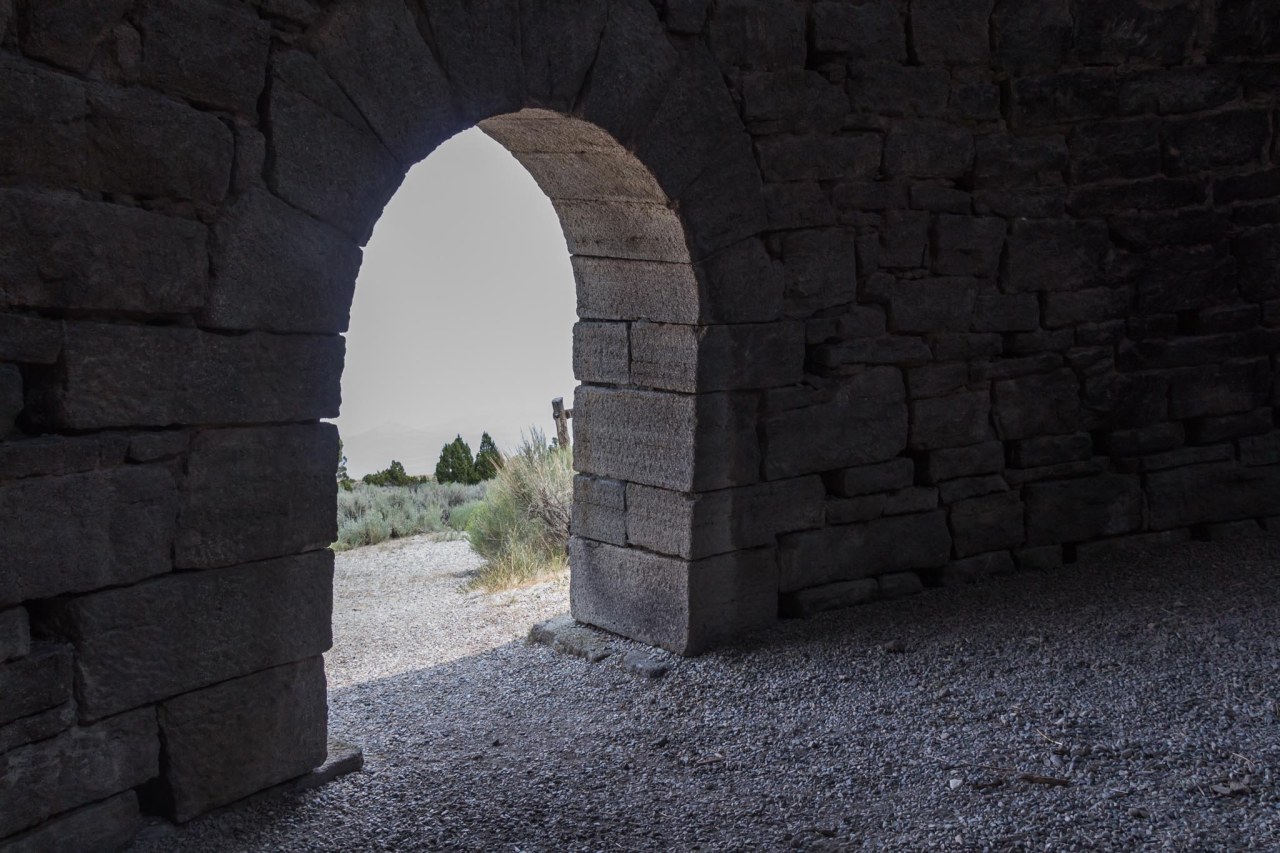
View from inside a charcoal oven

In three short years, the silver boom went bust, the trees were stripped from the mountains, and the need for charcoal ended. Prospectors, stockmen, and maybe even a few stagecoach bandits, used the ovens for shelter until it became a State Historic Park.

We took a short trail to the remnants of kilns, and along a stream that gave us great views of the valley.

Remnants of a kiln
View from Charcoal Oven trail
Equipment found along the Charcoal Oven trail

Today the ovens stand as a reminder of Nevada’s history and allow us to peek into the past.

Ruth Mining

Someone recommended that we drive out to the town of Ruth where mining operations are still underway. I’m not sure what I expected to see in Ruth, but the last thing I thought I’d see is a town looking to be swallowed up by the stair steps of a mine.
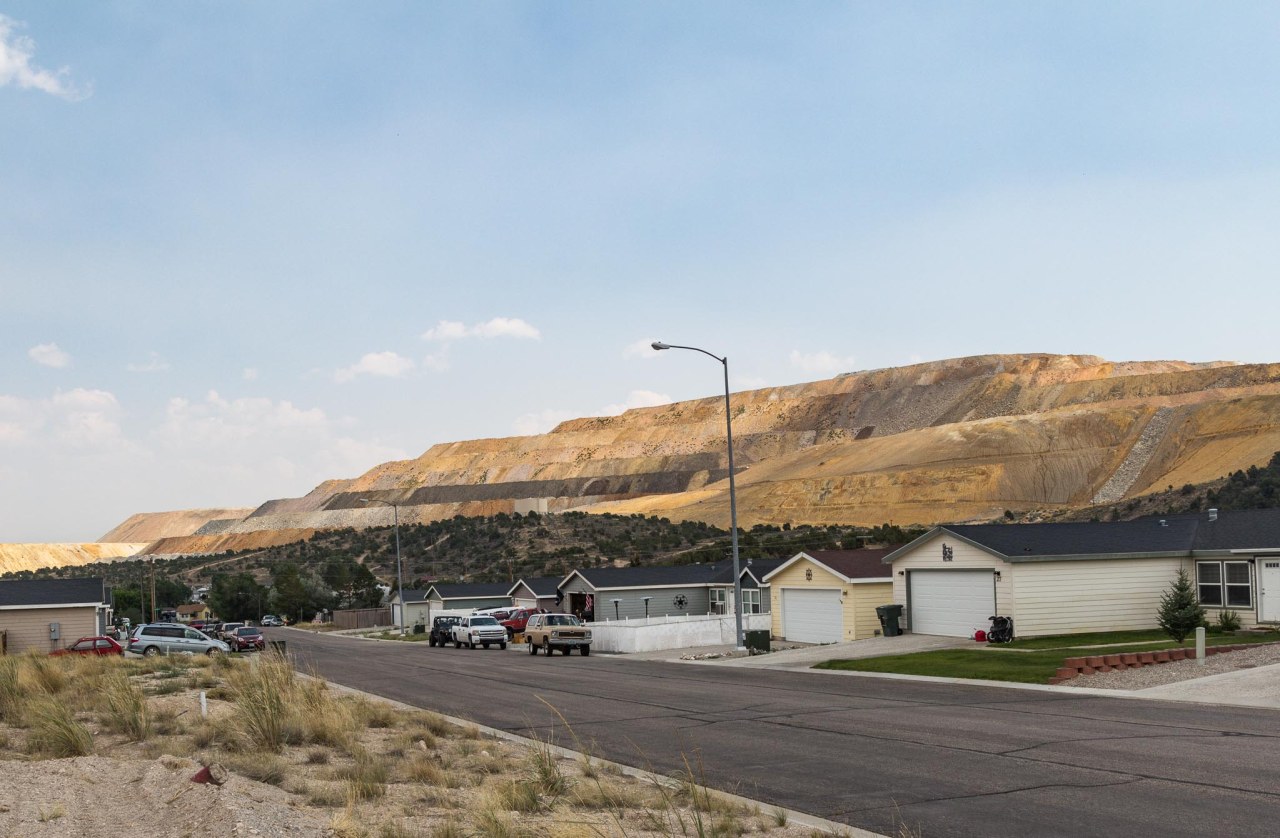
A neighborhood in Ruth, Nevada

Ruth was founded in 1903 as a company town for the Robinson open-pit copper mine, which as of 2018 was still in operation. In 1955, the houses were offered for sale to the occupants who had been renting. In 1978 Kennecott closed the mines in Ruth and the town went into decline. The mine reopened in 1996 only to close in 1999 and reopened again in 2004.

While some of the homes showed signs of pride of ownership, other buildings looked like they were sitting there waiting for the bulldozer to show up.
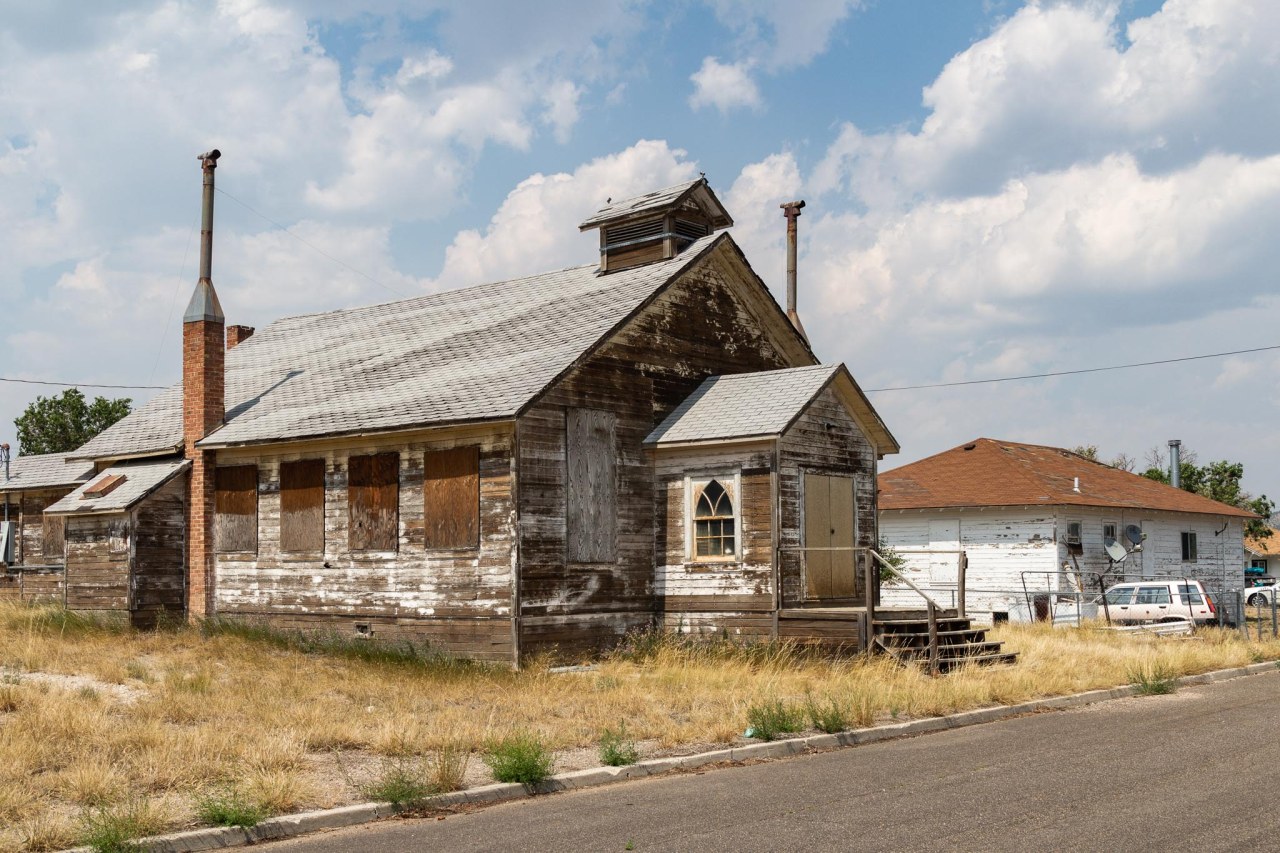
This old church has seen better days

Where did that deer come from?

We didn’t expect to see deer near here

Current mining operations not far from the town continue in 2018.
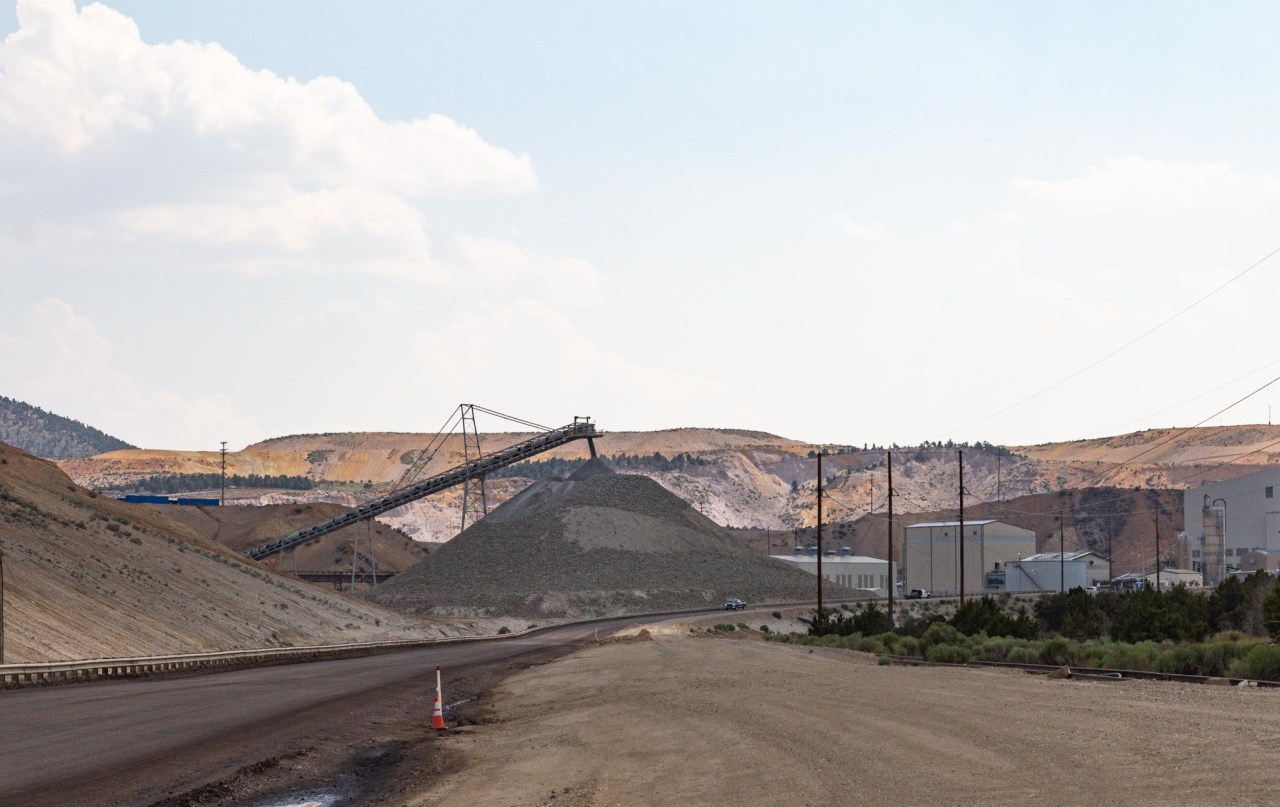
And the mining continues as of 2018

As much as we enjoyed our visit to Ely, Nevada, it was time to pack up and continue our forward motion toward Colorado. Next up, we move out of Nevada and into Utah where we make our first stop in Fillmore.

Safe Travels
Escaping Smoky Skies in Nevada – Part 1

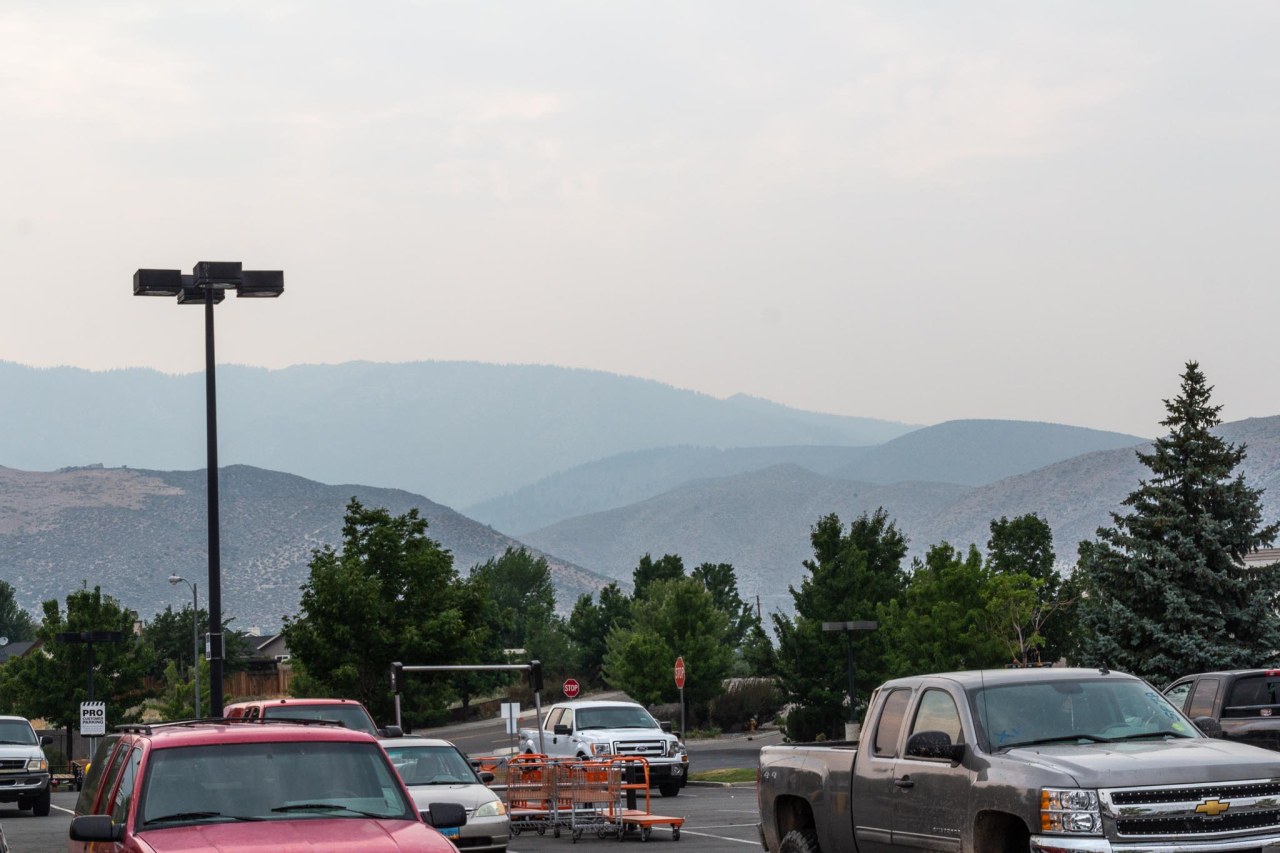
While in Mammoth Lakes, smoke continued its invasion into the Eastern Sierras making the sky look as bad as when we drove through Yosemite a week earlier. On July 28, 2018, we headed north on Highway 395 toward Carson City, Nevada. A four-night stay at the Silver City RV Resort in Minden would afford us time to clean out the trailer, wash our clothes, restock the pantry and fridge, and plan our route to Colorado.

We gulped the clean air free from wildfire smoke when we got to Bridgeport, only to be disappointed to roll into Minden, Nevada, where a layer of smoke hung over the valley. Each day the foul air from California consolidated with that from a fire north of Reno.

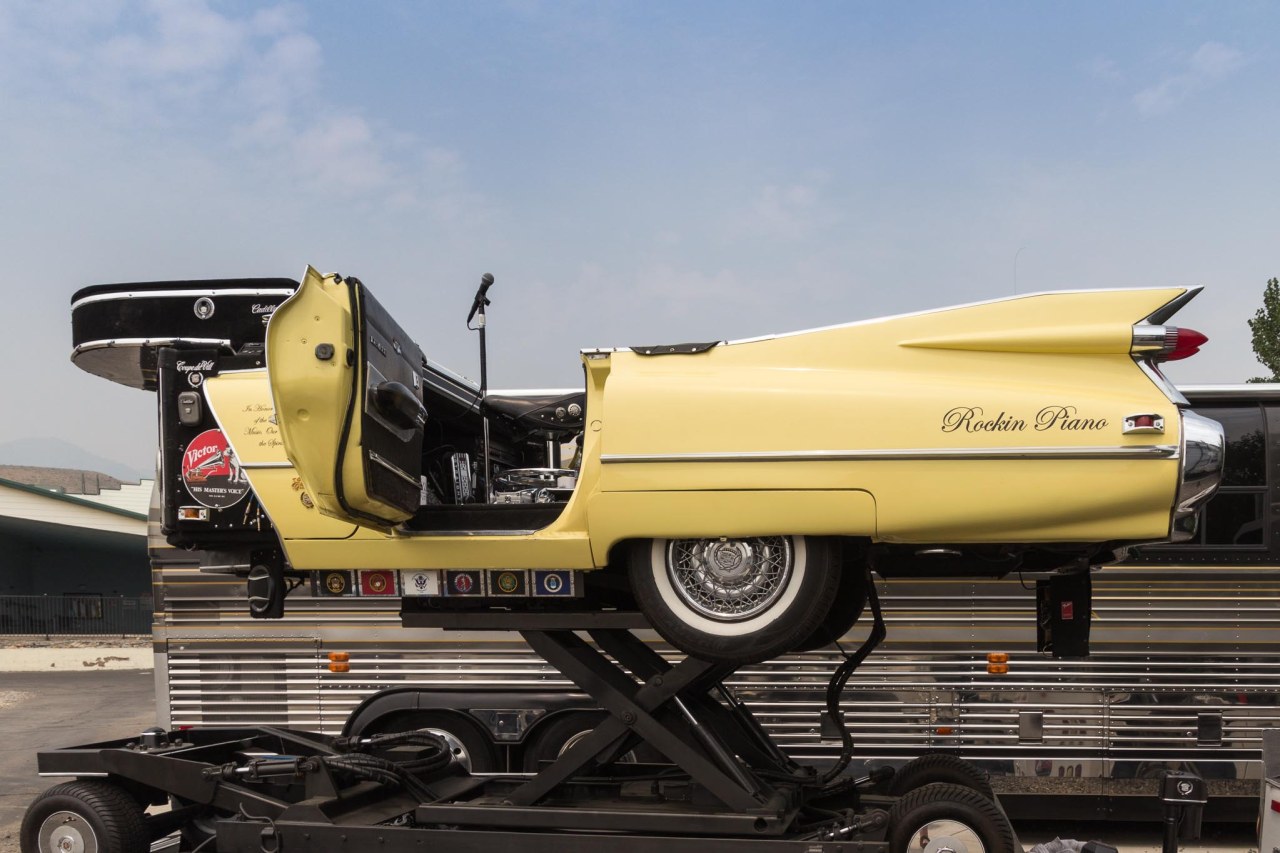
We scrapped our sightseeing plans around Carson City, turned on the AC, and stuck close to the trailer to avoid breathing in the particulates. The highlight of our time in Carson City was seeing Bobby Freeman’s 1959 Rockin’ Piano in the RV Park.

Rockin Piano

The owner turned it on and played a couple tunes for the other RVers in the park. He was on his way to Hot August nights in Reno/Sparks, which is held each year during the early part of August.

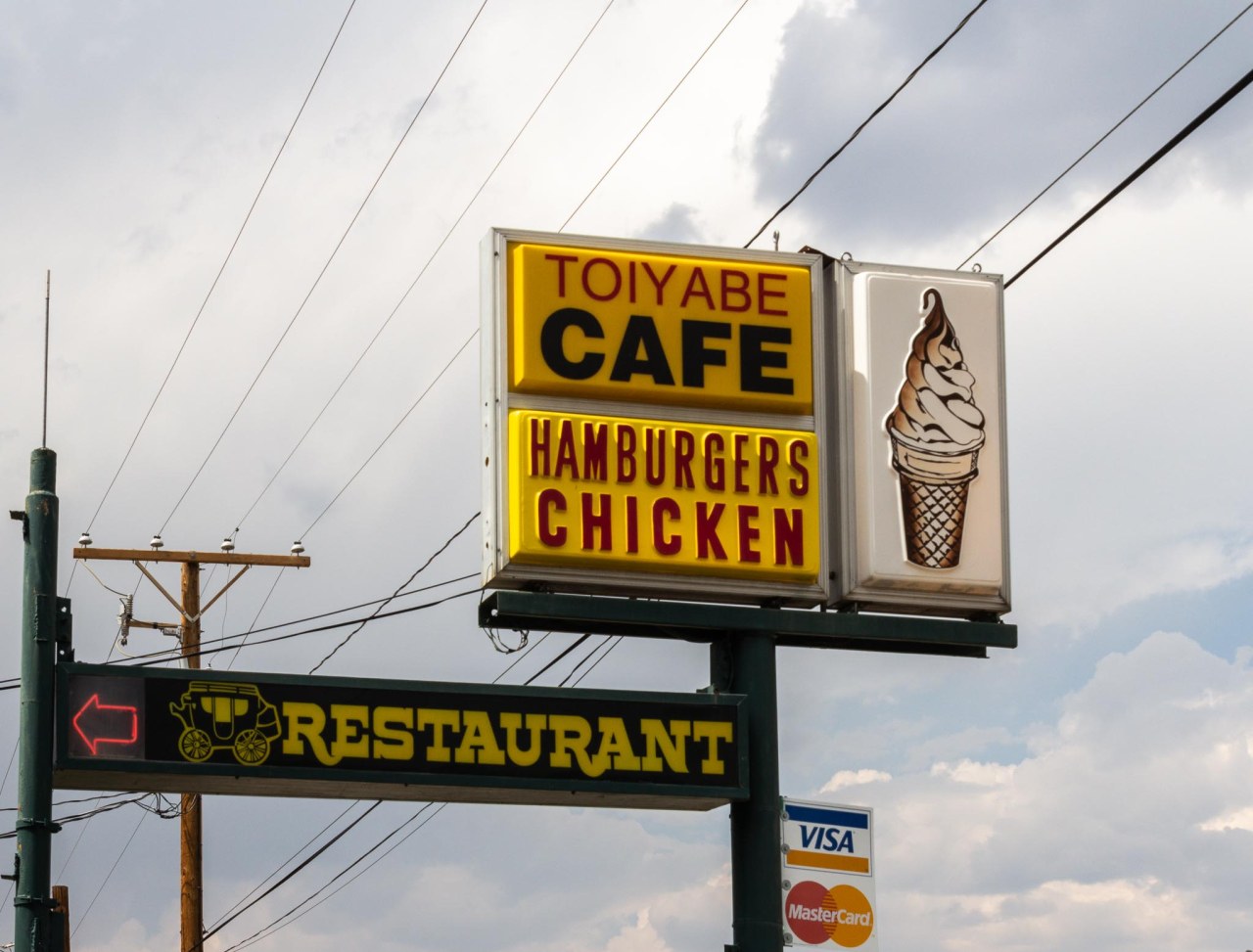
By August 1, the smoke was at its worse as we drove east on Highway 50 toward Ely, Nevada. The smoke finally started to clear a few miles past Fallon allowing us to make out puffy white clouds in the sky. We stopped in at the Toiyabe Café in Austin, Nevada, for lunch where we found space to park and enjoyed a good old-fashioned hamburger and salad.

The weather was cooler in Ely than it was in Minden and much less smoky. Lightening streaked across the sky with very little thunder and no rain. The KOA was a perfect place to stop and explore the area. I loved waking up to the sound of doves cooing and we had a clear view of the goat pen where we could watch the animals play king of the hill while we ate our breakfast.

With air that we could breathe, it was time for some Ely, Nevada, sightseeing.

City of Ely and Renaissance Village

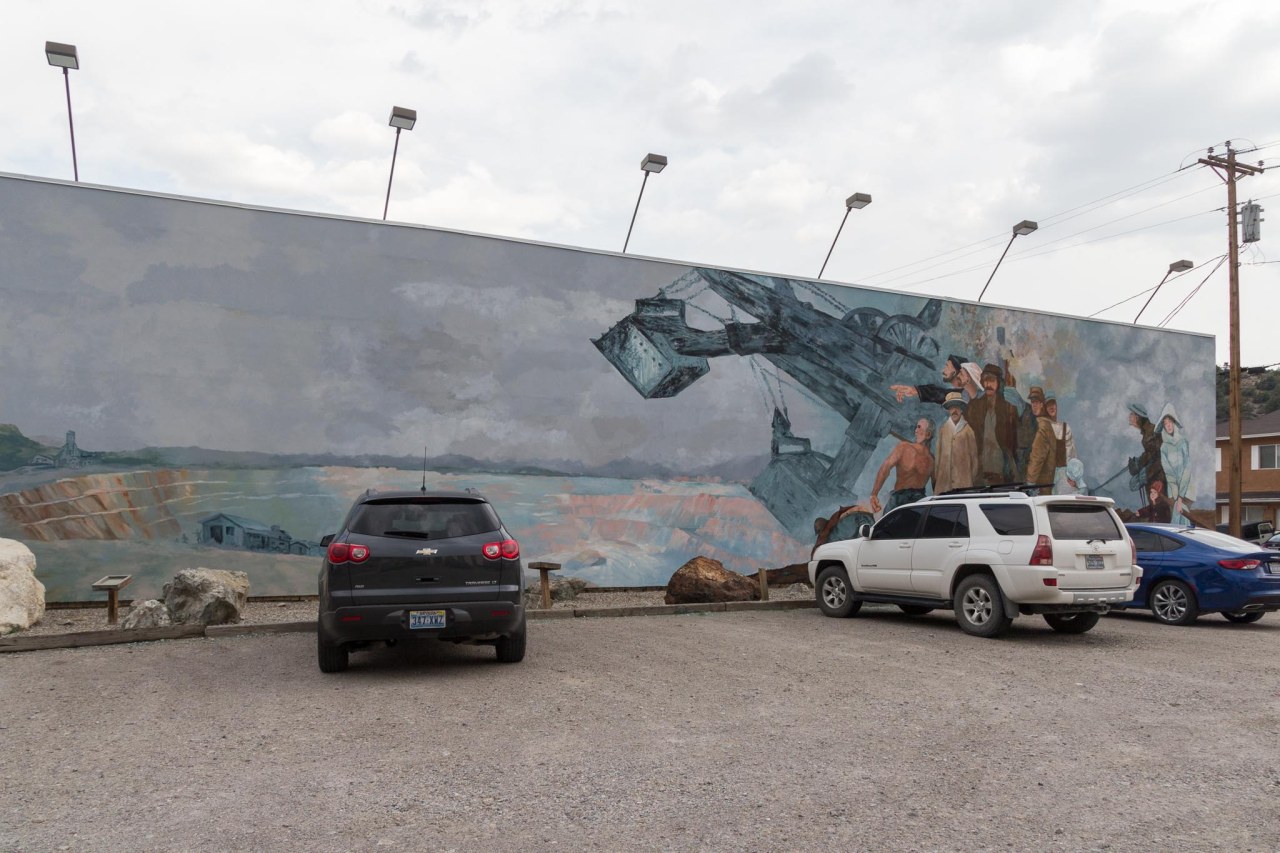
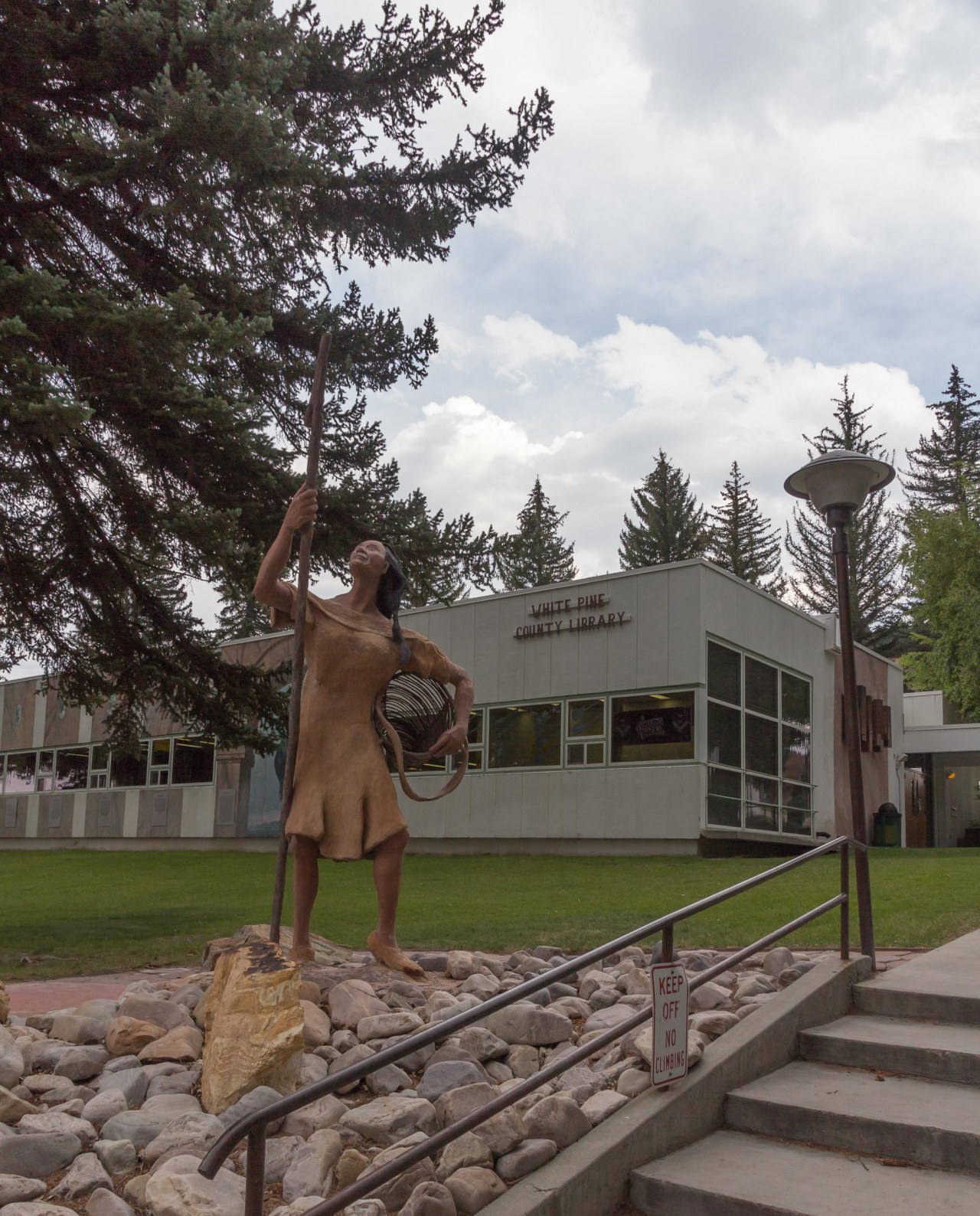
With murals decorating sides of buildings and statues planted out front, visitors get a sense that the City of Ely celebrates the arts. The city also celebrates its heritage with restored historical buildings. The art focus is thanks to the Ely Renaissance Society, which was founded in 1999. They commissioned the murals to depict the history of the city.

Mining Mural
Train coming to town
Communication past and present
Tsaam Pll Wai Hyunna Yewekante (“Living Well Because of Mother”) by Joe Pachak
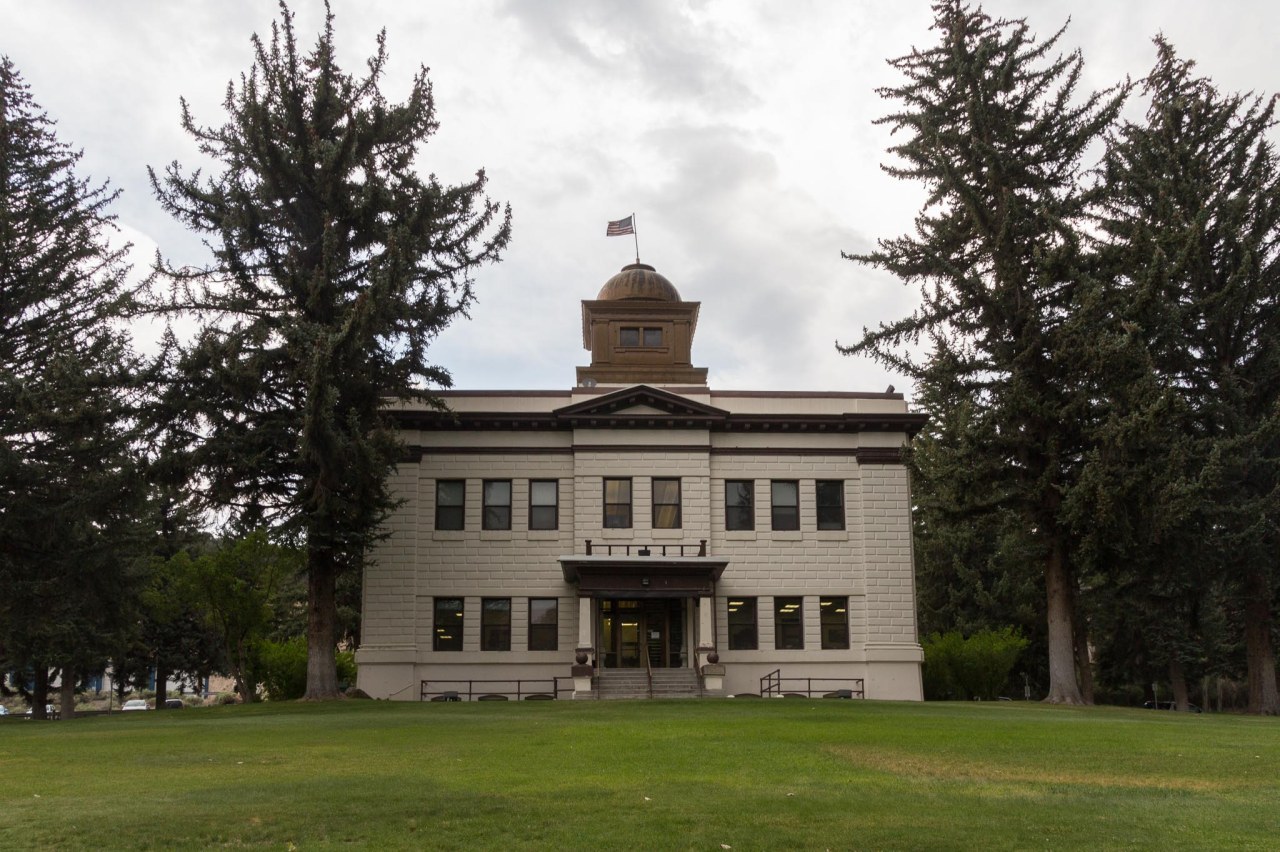
White Pine County Courthouse
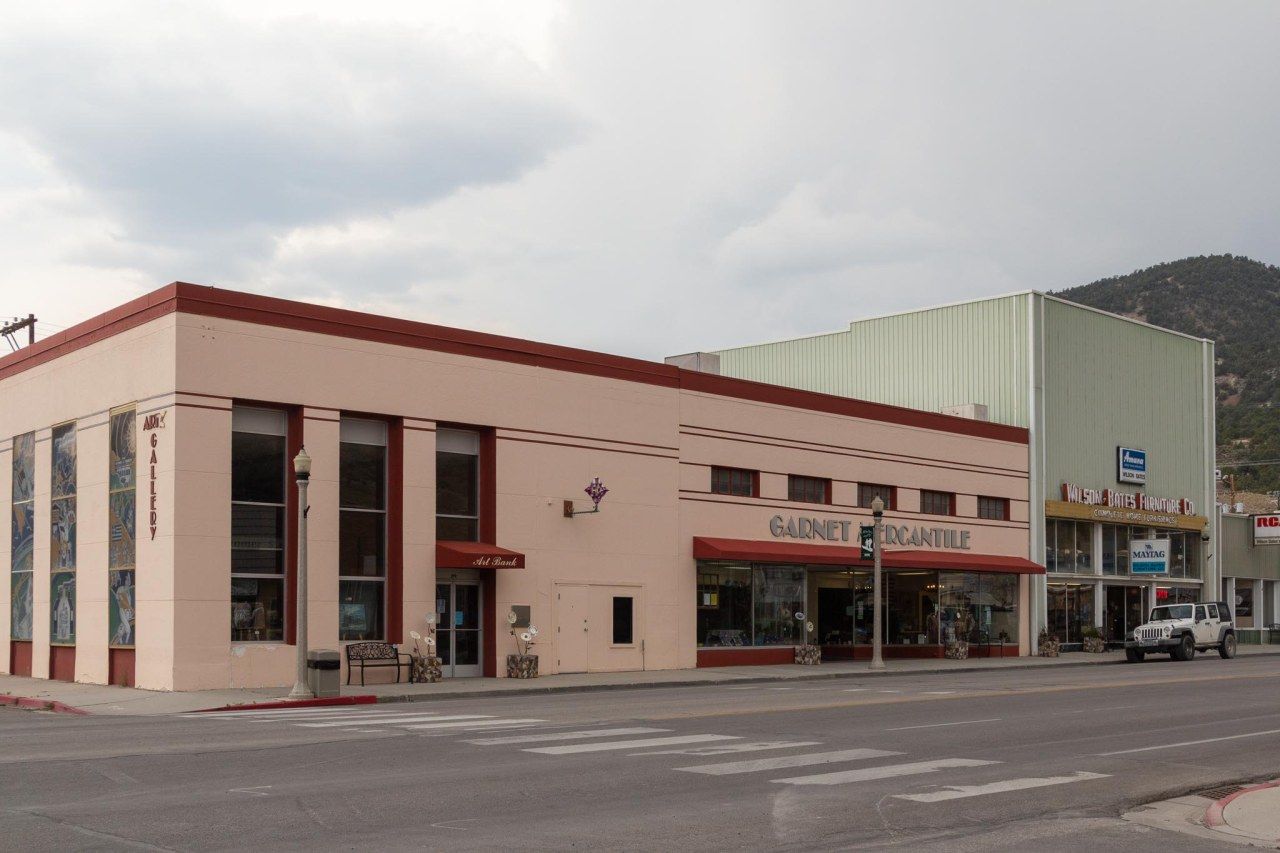
Garnet Mercantile Restored in its 1920 Art Deco style

The group also purchased a piece of property made up of 12 shotgun houses and a barn that we were told once housed brothels. Each of the houses is decorated with a different nationality.

IMG_8776
Village General Store

Living history presentations and re-enactments are held in the village. Although the village was closed on the day we visited, a woman watering the beautiful gardens opened a few of the houses so we could peek inside.

IMG_8763
Shotgun house bathroom
IMG_8764
Shotgun house kitchen
IMG_8765
Shotgun house living room

Not all of the buildings in town have undergone renovations and gambling and bordellos continue to draw people to the city. This is Nevada, after all.

IMG_8760
A little TLC, please
IMG_8758
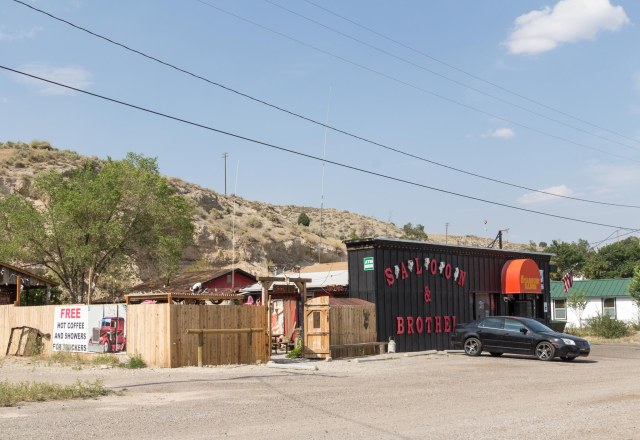
Local Saloon & Brothel
IMG_8759
Hotel Nevada Gambling Hall

It may not look like Ely, Nevada, has much to offer while driving by. Digging a little deeper, though, we came to embrace the small town charm that brings tourists in to stay awhile and visit. There are no fancy highrises or gourmet restaurants, just good old-fashioned western establishments that bring to mind American history and a slower pace of living.

Next up we continue exploring the area around Ely, Nevada, visiting the Nevada Northern Railway Museum, Cave Lake State Park, the Ward Charcoal Ovens State Historic Park, and Ruth Mining.
Safe Travels


Mammoth Lakes Fishing, Fishing, and More Fishing

Coldwater Creek Campground in Mammoth Lakes was our next destination on our 2018 Summer Tour. We met our daughter Laura and her family at the campground on Monday, July 23. Laura had procured reservations for two sites across the street from each other, which made it convenient for visiting and sharing meals.

IMG_8491
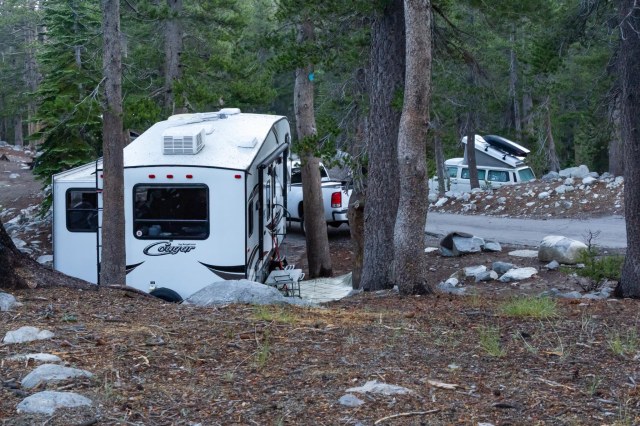
Coldwater Creek Campground Campsites for the Cougar and Westfalia

There are plenty of things to do in Mammoth Lakes: ride the gondola, hike, horseback ride, bicycle around the lakes, visit Devil’s Postpile National Monument, wander around town, shop, and much more, all of which we have done at one time or another during our many vacations at Mammoth. This trip turned out to be all about fishing.

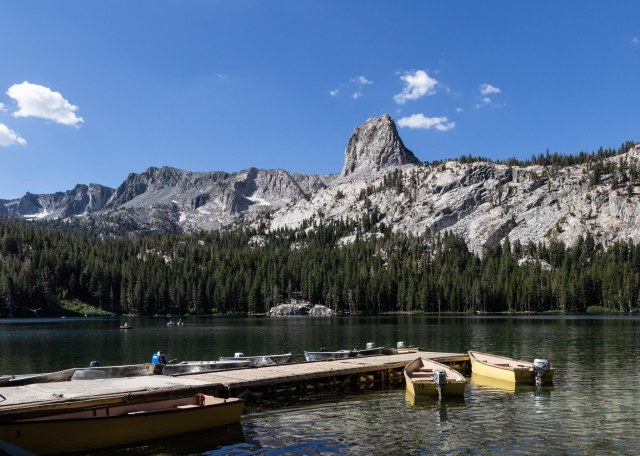
It was time for the grandkids to catch their first fish so off to Lake George with poles, tackle boxes, and a stringer to secure all of the caught fish.

IMG_8495
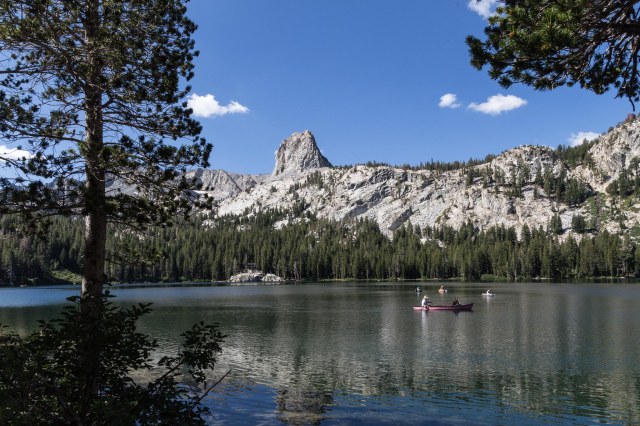
Lake George

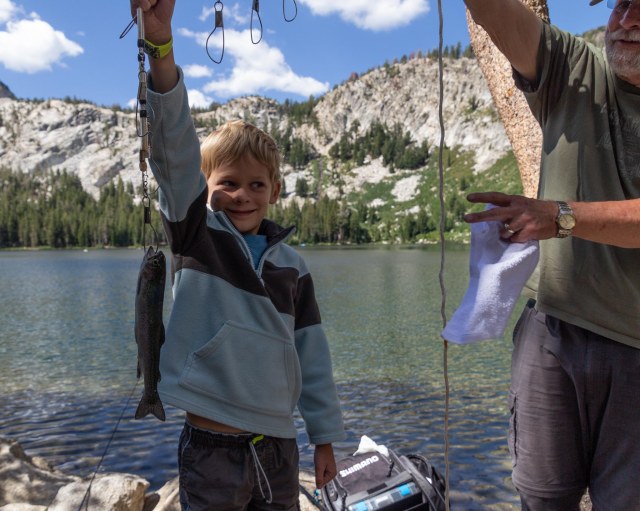
Our grandson Jackson caught the first fish of the day, which was his first fish ever caught. Way to go Jackson!

IMG_8518
Jackson Silvey not only catches his first fish, he catches the most fish for the day

Papa Jon demonstrates the perfect cast while Maya considers his technique.

IMG_8502
Hmmm, was that the right spot?

The hatchery truck showed up, not too far from where the gang was fishing, and dumped out a load of fish to add to the lake.

IMG_8529
More fish to catch

All in all the day was successful. Well, at least for the grandkids. Jackson caught three fish, Maya caught one, and they skunked Jon. That’s okay, though. He had fun showing the kids how to put on the bait, cast the line out, and reel the fish in. Even our daughter Laura and son-in-law Chris helped with the tasks.

IMG_8555
Maya Silvey catches her first fish while Mom and Dad look on

My job was taking photos to document the event and when the action slowed, I sought out other things to photograph.

IMG_8565
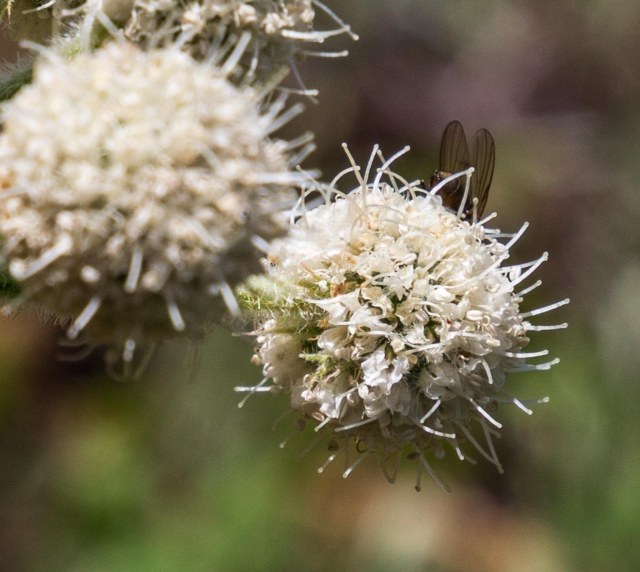
Mountain Whitethorn

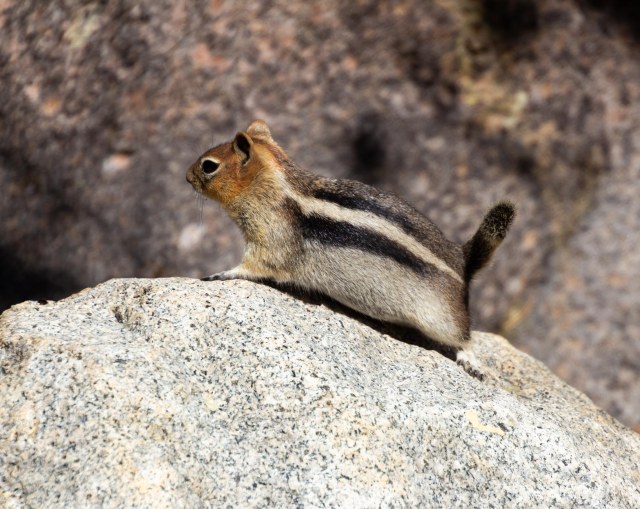
Squirrels and chipmunks can usually be counted on to pose for a photo.

IMG_8508
Chipmunk

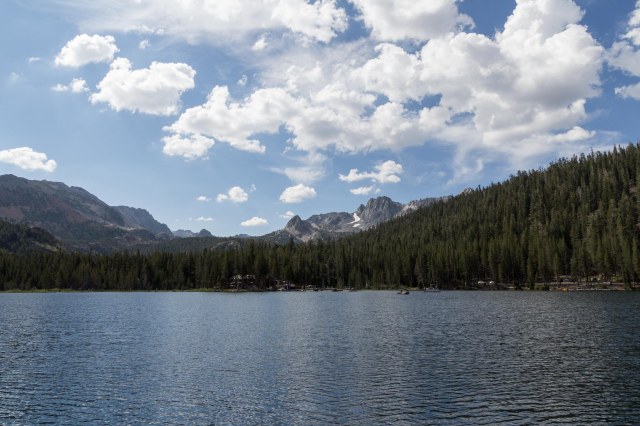
The surroundings and the view are also good subjects.

IMG_8498
Lake George

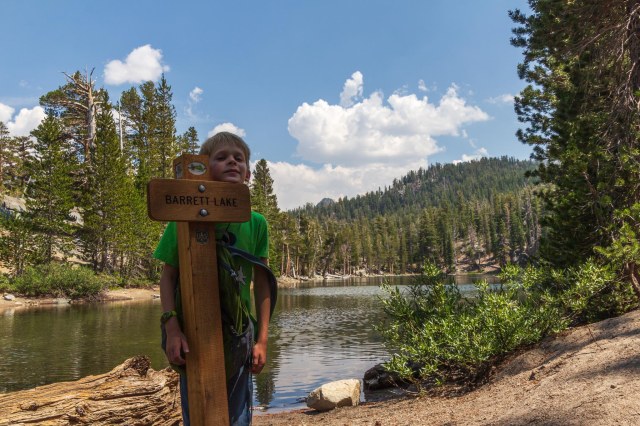
The next day, my daughter Laura, Jackson, and I took a hike up to Lake Barret while we waited for our son Kevin, his girlfriend Bailey, and Bailey’s nephew Patrick to arrive. No fishing included on this day, just a walk through nature. When we returned from our hike, Kevin, Bailey, and Patrick had their tents set up.

IMG_8569
Barrett Lake
IMG_8570
We arrived!

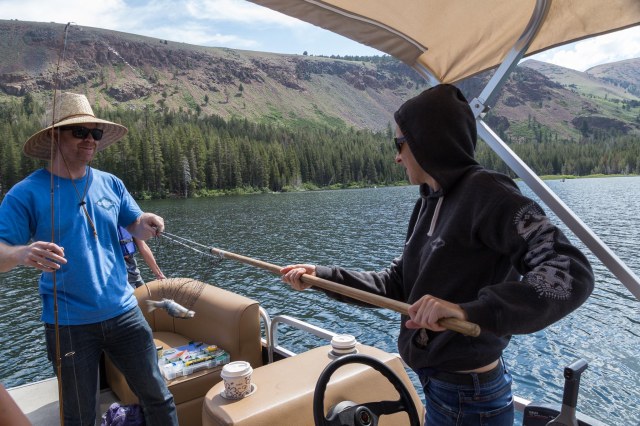
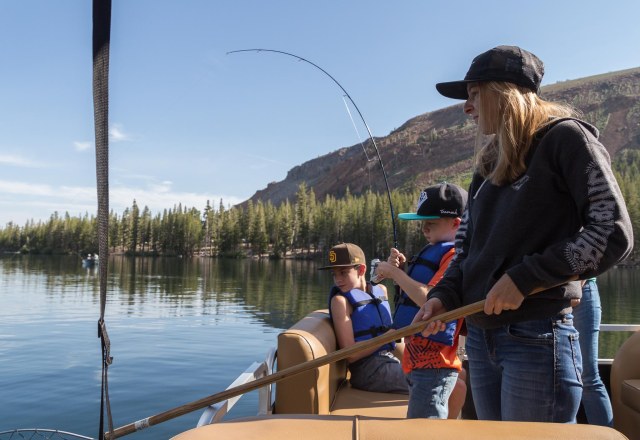
The next morning, we all chipped in on a pontoon boat for a half-day of fishing. It was well worth the investment. Everyone fishing caught at least one fish and Jackson and Kevin competed for the most caught.

IMG_8617
A great day for fishing

A Croman helicopter flew overhead at one point. It must have been on its way to or from one of the fires on the other side of the Sierras.

IMG_8623
Croman Helicopter

One of Kevin’s many fish caught for the day.

IMG_8583
Come to Papa

Brother and sister work together for our dinner.

IMG_8624
Is it too small? Should we put it back in?

Maya and Bailey work together.

IMG_8577
Maya, I’ve got a secret
IMG_8590
Jackson catches another fish

The gang waits patiently for a bite.

IMG_8654
Here, fishy, fishy, fish

On our last day together as a family, we chose an activity other than fishing, or so we thought. Devils Postpile National Monument won out over a drive to Bodie Ghost Town, no one wanted to sit in a car for an hour drive. We loaded into two vehicles and took off only to find out that we had to ride a shuttle to the monument and no one wanted to wait for the shuttle. Instead, we stopped off at the Earthquake Fault before going to back to our campsites.

IMG_8659
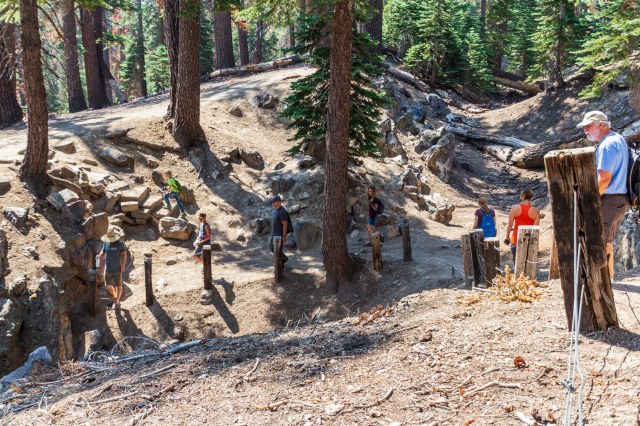
The trail to the fissure

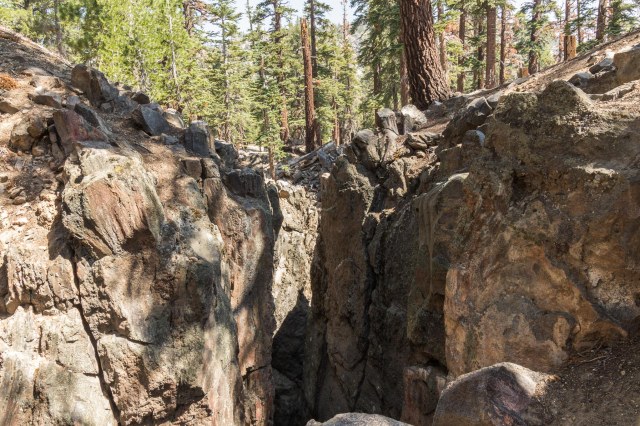
The Earthquake Fault, which is not a fault at all. It is actually a fissure that opened around 550 to 650 years ago when magma pushed its way to the surface.  Although the sides are 6′ to 10′ apart, in places you can see that the sides would fit together like a puzzle. Other areas have experienced erosion and the sides don’t quite match up anymore.

IMG_8660
Fissure

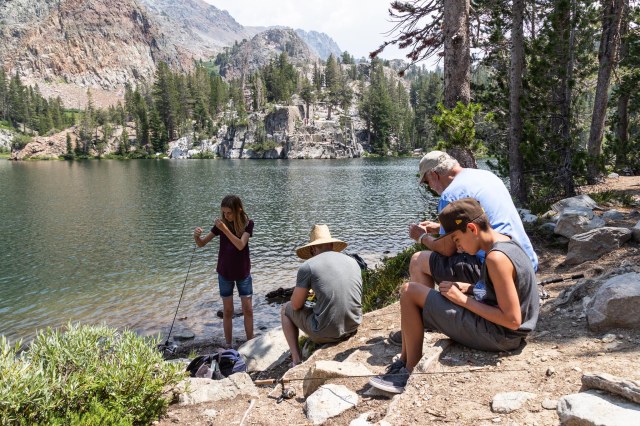
When we got back to camp, everyone agreed that a hike up to Arrowhead Lake for more fishing would be a great way to spend the rest of the day. Jon left his fishing gear back at the trailer and helped out the others when needed.

IMG_8670
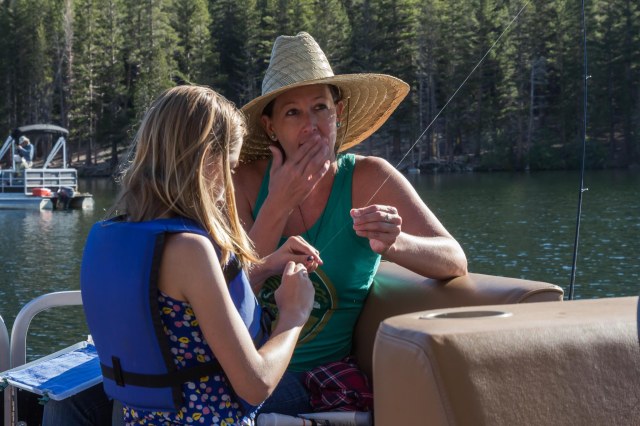
Baily works with a lure while Patrick raids her tackle box
IMG_8673
Mom and Dad kick back while Jackson enjoys a snack
IMG_8675
The tedious part of fishing, tying leaders

While the gang fished, I wandered around the lake catching the cliff jumpers in action and finding remnants of wildflowers.

IMG_8682
Cliff jumpers
IMG_8677
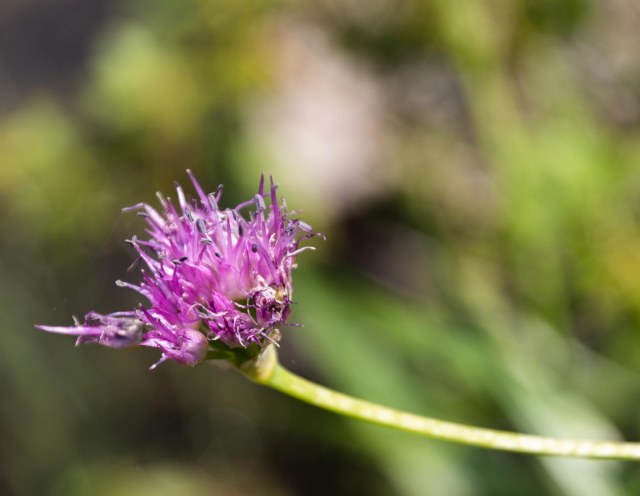
Spent purple wildflower

Camping with our kids again brought back so many memories of the vacations we spent in the Eastern Sierras and we had plenty of fun camping with them again. Seeing the smiles of the grandkid’s faces when they caught a fish was priceless and watching Maya cast a line as if she’s been doing it for years made me so proud of her. I’m hoping we can all find the time to have more camping adventures in our future.

On Saturday, July 28, we said our goodbyes and went our separate ways. While our kids headed to their respective homes, Jon and I turned north to Carson City, Nevada, for a few days to clean the trailer, wash clothes, and relaxation, then a stop in Ely, Nevada, as we worked our way to Colorado.

Safe Travels
Summer 2018 Tour – Mono Lake

We headed out on the road again a month after our Alaskan Cruise. With the truck and trailer in tiptop shape after regular maintenance, we had the State of Colorado in our sights. Before leaving California, though, we headed up to June Lake, California, on July 21 for altitude acclimation before meeting our family at Mammoth Lakes for a week.

It was sad to see that smoke from the Ferguson Fire, which had started on July 13, had filled Yosemite and surrounding areas. Smoke followed us through Yosemite on CA-120 until we transitioned onto US-395 toward June Lake where blue skies and cottony clouds prevailed.

IMG_2190
View from Vista Rim of the World Overlook on CA-120

Although we took it easy while in June Lake, we did manage a trip to Mono Lake Tufa State Natural Reserve. A few years ago, we had visited the south side of Mono Lake taking the trail to the tufas. This trip we stopped in at the visitor’s center, too.

IMG_8437
Mono Basin Visitor Center

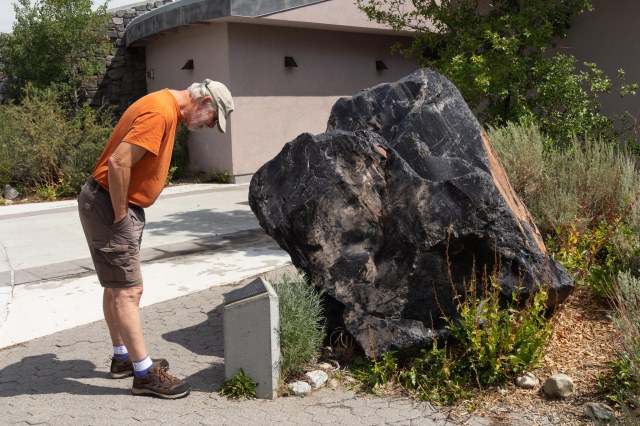
Outdoors is a display of huge boulders of the types of rocks that are found in the area ranging from obsidian to granite and a trail around the center with information signs pointing out the views and discussing the types of birds that visit each year during their migration.

IMG_8438
JT takes a look at the obsidian boulder

Inside, we watched a movie on Mono Basin, which summarized the history of Mono Lake from the Paiutes to Los Angeles stealing water in 1941 and ruining the ecological environment.

Mono Lake, one of the oldest lakes in North America, is estimated to be at least 760,000 years old. With no outlet, minerals carried into the lake by streams and evaporation of fresh water has created a lake that is 2.5 times saltier than the ocean with an alkaline content of 100 times more. No fish can survive in the lake but brine shrimp and alkali flies thrive in the sodium chloride and baking soda enriched water, providing food for migratory birds.
IMG_8480
California Gull

The efficient food chain in Mono Lake is the key to keeping the migratory birds healthy for their long trek. Bacteria break down decaying matter providing nutrients for algae. Trillions of brine shrimp, along with the alkali flies, eat the algae. Then the millions of birds that stop at Mono Lake during their migration, eat the shrimp and flies.

Designated as an International Reserve in the Western Hemisphere Shorebird Reserve Network, thirty-five species of shorebirds, totaling nearly 2 million water birds, stop along their migration route. Each year, 44,000 to 65,000 California Gulls fly into Mono Lake to breed on the islands. Unfortunately, after a couple of days, smoke had pushed its way over the Sierra Nevada Mountain Range, shrouding the islands in a haze.

IMG_8441
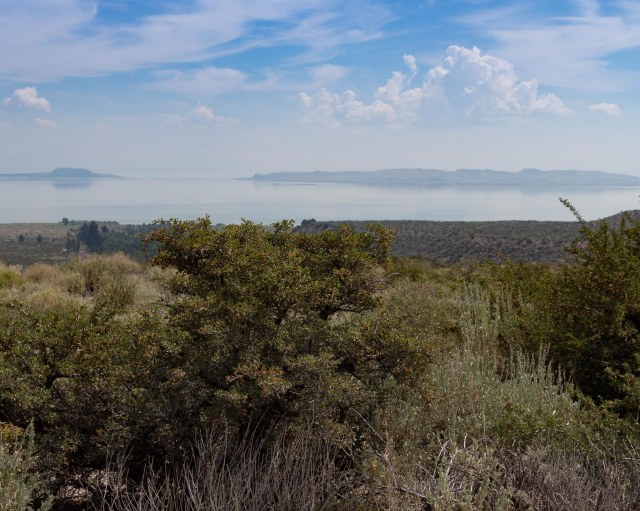
Negrit and Paoha Islands

The larger island, Paoha, formed about 300 years ago when magma rose underneath the lake and pushed sediments above the water level. Volcanic eruptions occurring between 300 and 1,700 years ago, formed Negit, the smaller island on the left.

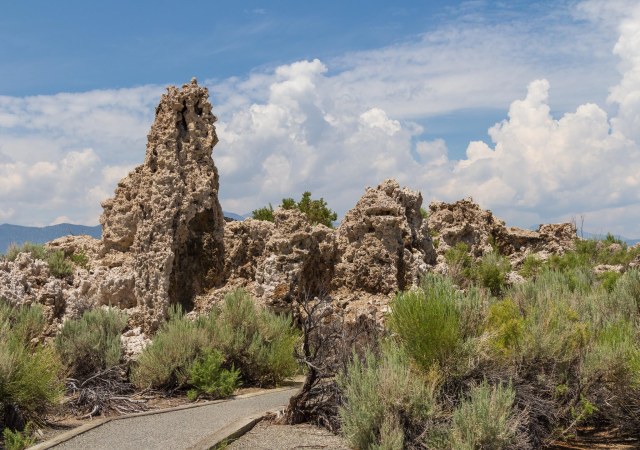
On the south side of the lake, a trail leads to the tufas. Along the way are signs that indicate the level of the lake at certain points in time and one sign shows where the water’s edge will be once the level of the lake reaches its mandated 6,392 feet, the elevation in 1963. Some of the tufas may no longer be visible when the lake achieves its goal.

IMG_8448
Trail to tufas

A few wildflowers lined the sides of the trail in addition to the tall grasses.

IMG_8449
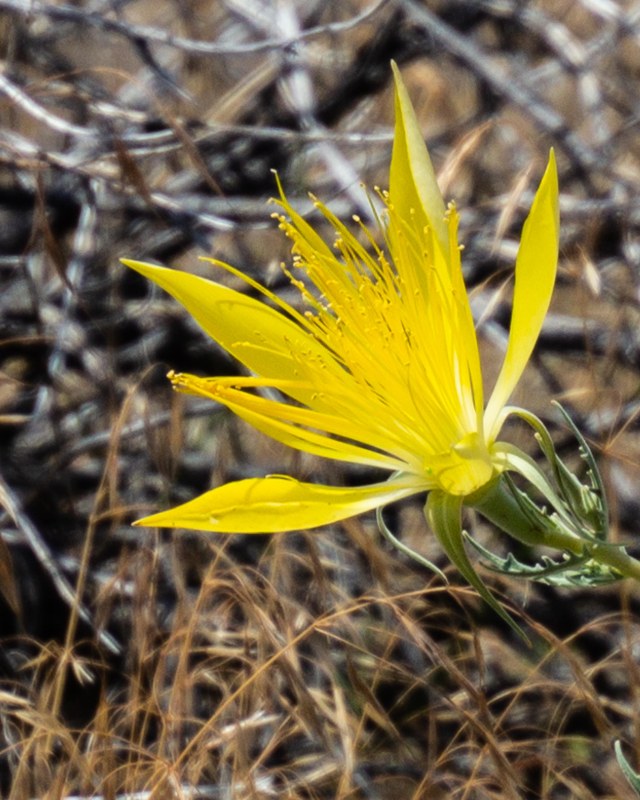
Blazing Star

Up close the tufas look pretty gnarly. I wouldn’t want to get scraped by one.

IMG_8453
Tufa formations

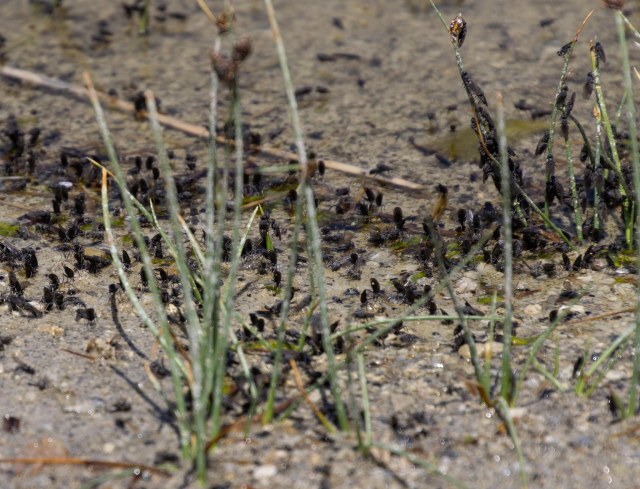
Those black spots in the photo below are the alkaline underwater flies. The flies were a delicacy for Native Americans who also traded the food with other tribes. The many birds that fly in during their migration also feed on the flies. When I heard there might be flies I wasn’t sure I wanted to go to the water’s edge. I had nothing to worry about. As people walked by the pools, the flies would hover above the water for a few seconds before settling back underwater. They had no intention of bothering us humans.

IMG_8458
Alkaline underwater flies

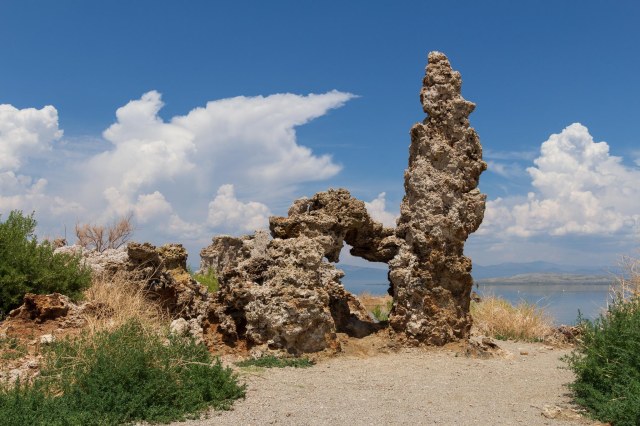
The tufas come in all shapes and sizes. Freshwater springs bubbled up through the carbonate-rich lake water to form the tufa shapes under water. They are composed of calcium carbonate, a whitish limestone deposit that forms the basis of the tufa formations. In 1941 Los Angeles diverted the streams that entered Mono Lake causing the lake to decrease in size revealing the tufas.

IMG_8460
Strange tufa formations

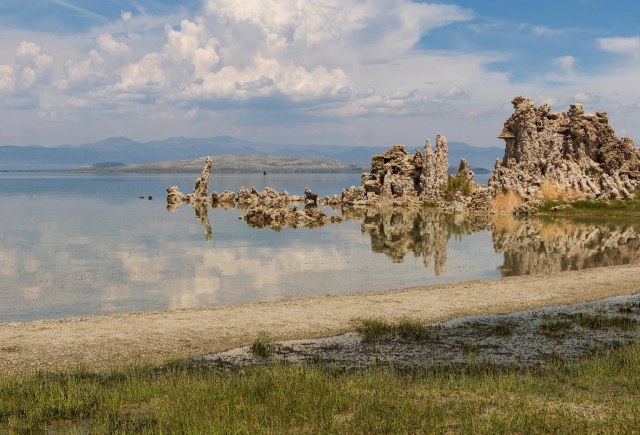
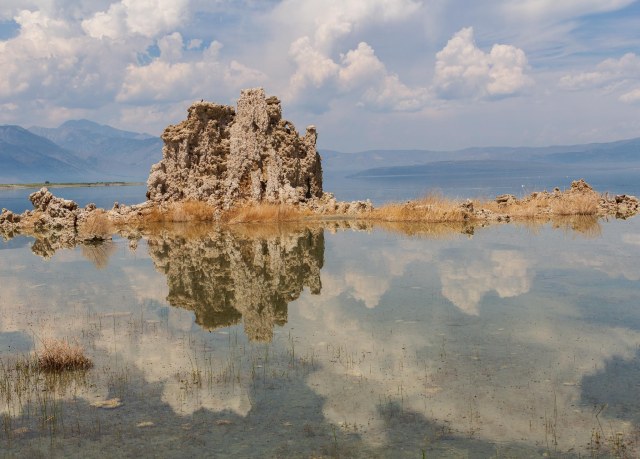
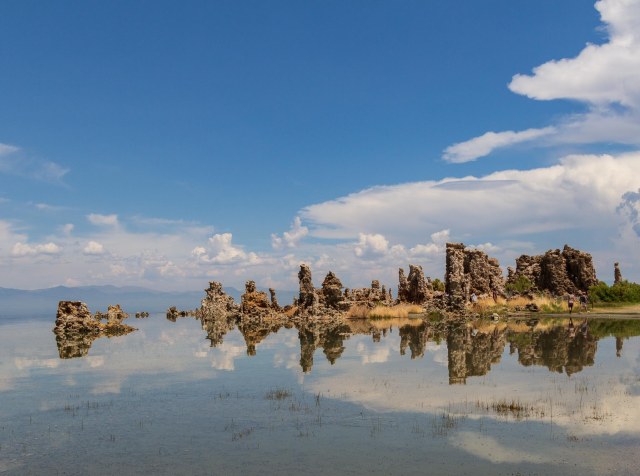
The hazy cloudy skies made conditions perfect for picking up mirror images on the smooth-as-glass water surface. I could have sat for hours watching how the light changed across the surface of the water and played with the tufas. I couldn’t pick just one, so here are four.

IMG_8457
Reflections 1
IMG_8461
Reflections 2
IMG_8462
Reflections 3
IMG_8468
Reflections 4 – Can you find the peregrine falcon’s nest at the top of one of the columns?

While traveling along US-395 each year on vacation during the 1980s, we watched Mono Lake decrease in size and wondered about the white formations that stood like sentries at the south end of the lake. In 1982, the lake was only 69 percent of its 1941 surface area, and by 1990 it had lost 50 percent of its volume. While the tufas are interesting to look at and photograph, I’m glad to see the lake recover and continue as a stopover for migratory birds and a breeding ground for the California gulls.

What would have happened had universities not performed studies to sound the alarm that LA’s diversion of the streams had caused significant ecological damage? Where would all of the migratory birds have gone? It took over a decade of litigation for the California State Water Resources Control Board to issue an order to protect Mono Lake and its tributary streams on September 28, 1994. A lake level of 6,392 feet above sea level is the goal for restoring the lake. On August 1, 2018, the lake’s level was 6,382.1 feet according to Monolake.org.

Safe Travels