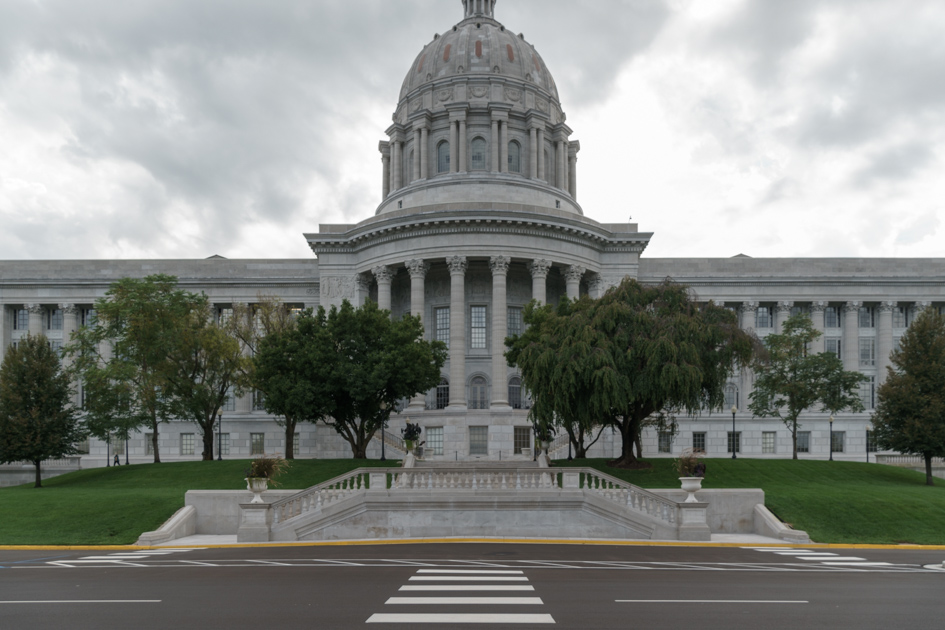
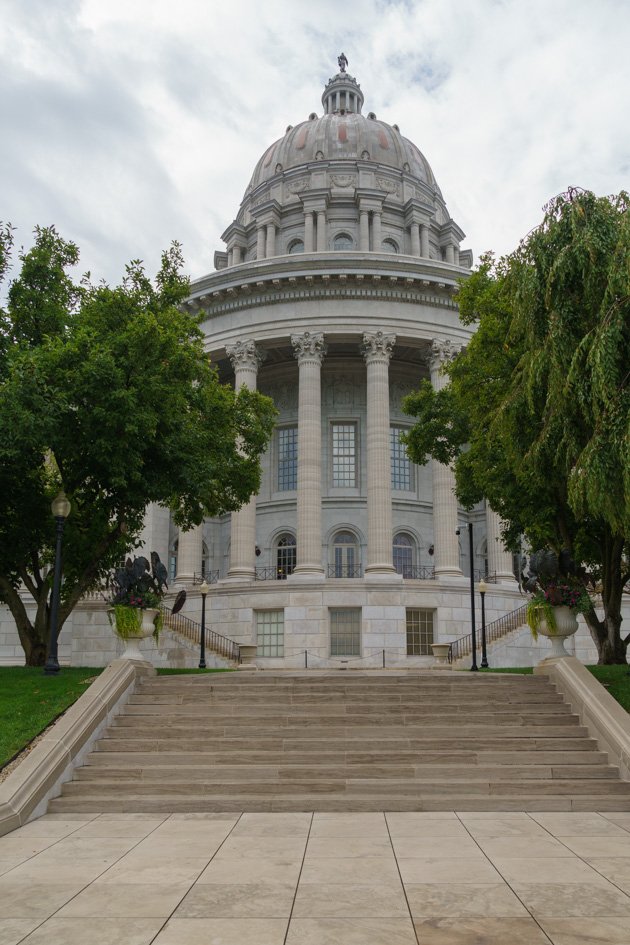
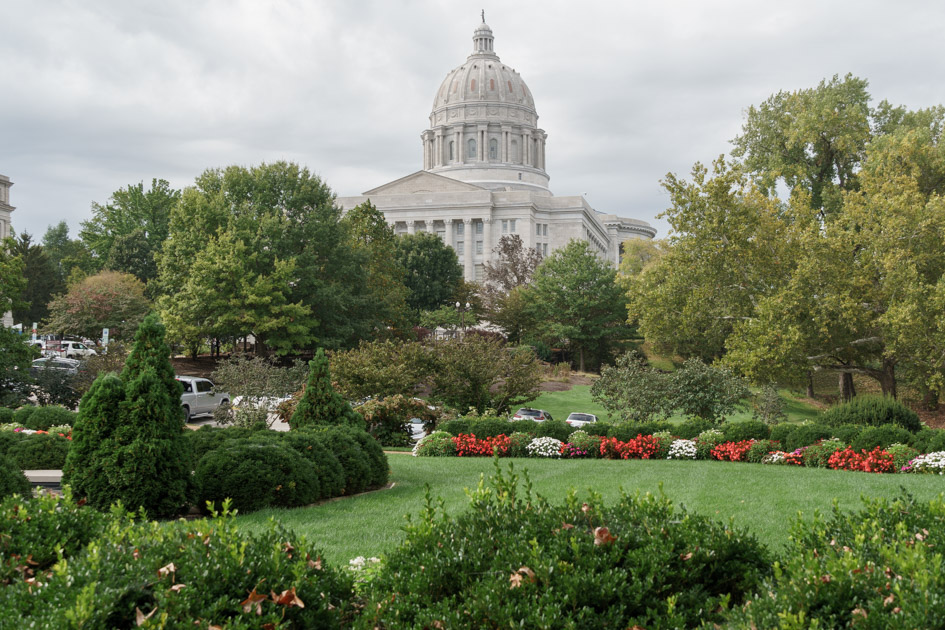
The current capitol building is the third for the state, after the first and second buildings were both damaged by fire. As soon as we neared the city, the Baroque dome (rising 238 feet (73 m) was easy to spot and beckoned us to come take a glimpse. The structure is listed on the National Register of Historic Places and is a contributing property in the Missouri State Capitol Historic District. Over the past 107 years, the state has done a great job of upgrading, expanding, and preserving the building, originally completed in 1917.
We don’t dare pull our truck into a parking garage because they rarely are tall enough for our beast. So we circled around the capitol, searching for a parking spot on the street. Then I saw the Reserved Veteran Parking sign. Ding, ding, ding. With Jon’s veteran status, we had hit the parking jackpot.

Across the parkway from the building is the Fountain of Centaurs and a bronze relief depicting Monroe, Barbe-Marboise, and Livingston, signing the Louisiana Purchase, which doubled the size of the United States. The state purchased much of the art inside and outside of the capitol building with $1 million dollars left over from construction.


Relief of the Louisiana Purchase signing by Karl Bitter


Symbols are displayed everywhere in the building and the House Chambers is no exception. To name only a few, the large stained glass window represents the glory of Missouri peace. Created by H.T. Schlader Mundt in 1924. To the left of the dais is a light-colored painting of Abraham Lincoln representing the republican party. On the right side is a dark-colored painting of Thomas Jefferson representing the democratic party.

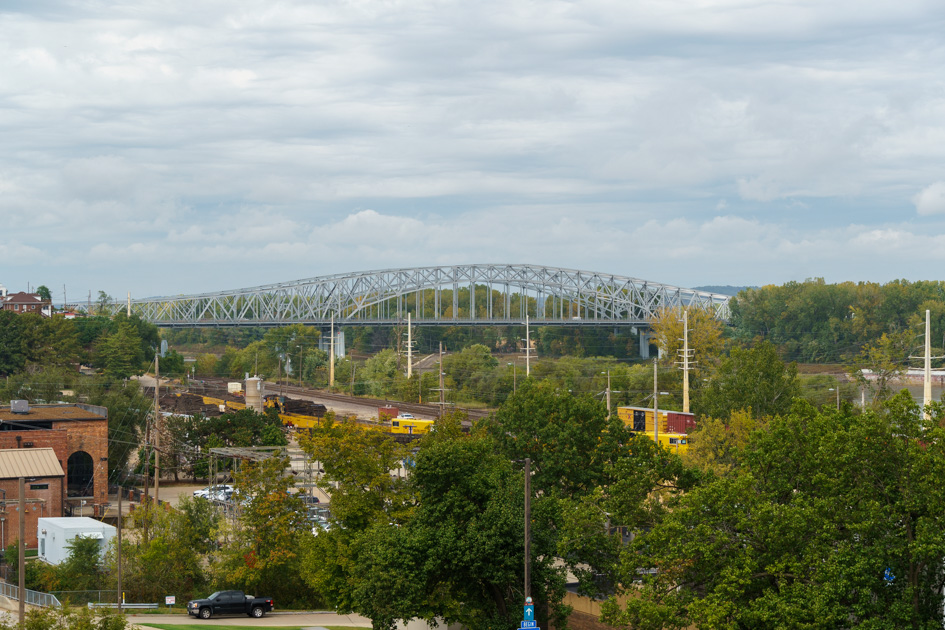
We found a few spots around the building where we had expansive views of what lies beyond. Here are a few of those photos.


The half-moon paintings below are called lunettes. Forty-one of these paintings grace the second floor walls. They depict historic events in Missouri’s history.


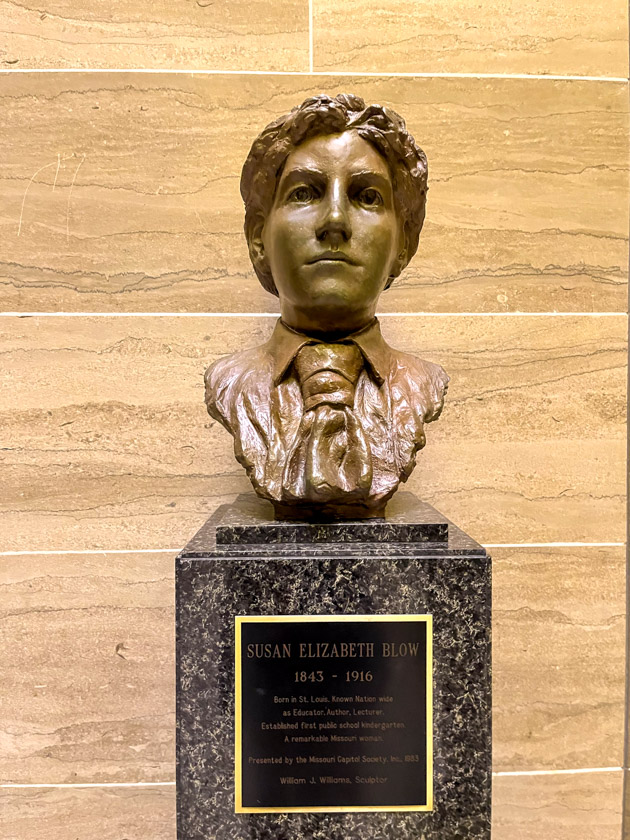
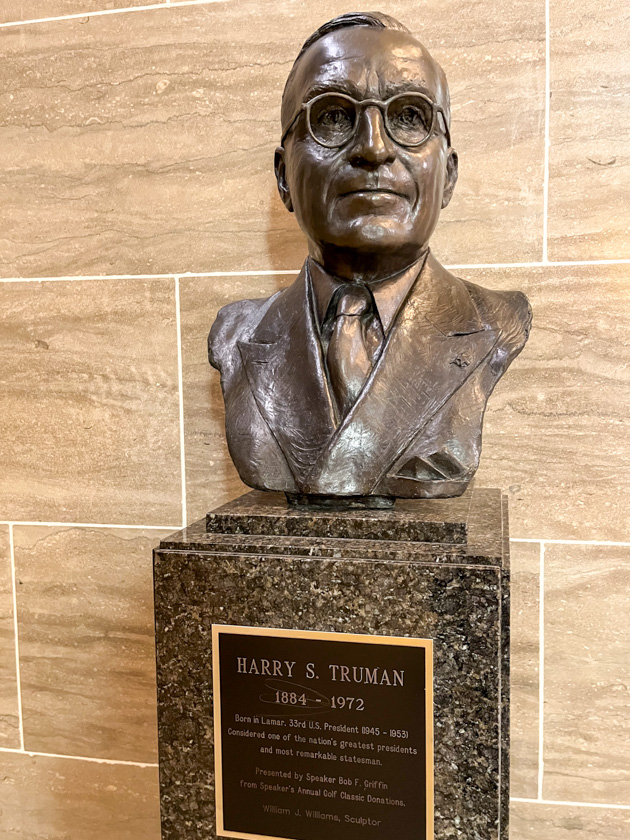
The third-floor rotunda is where visitors will find the Hall of Famous Missourians. Bronze busts honor their achievements and contributions to the state. I had fun finding the well-known and not so well-known people, at least by me, who had made a difference in the world.


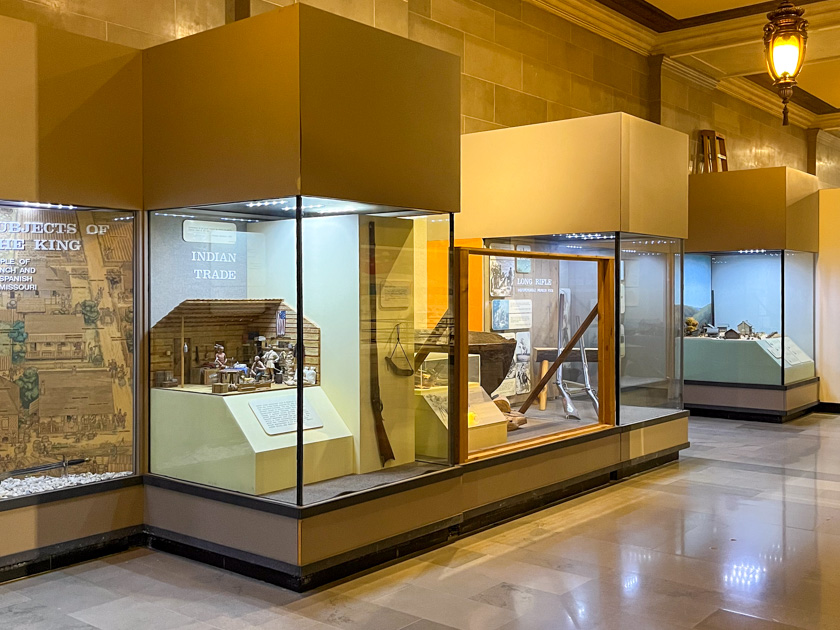
The Missouri State Museum occupies much of the first floor of the capitol building. On one side of the rotunda are displays about the historical events that shaped the state, including a timeline. On the other side, the state’s resources take center stage.
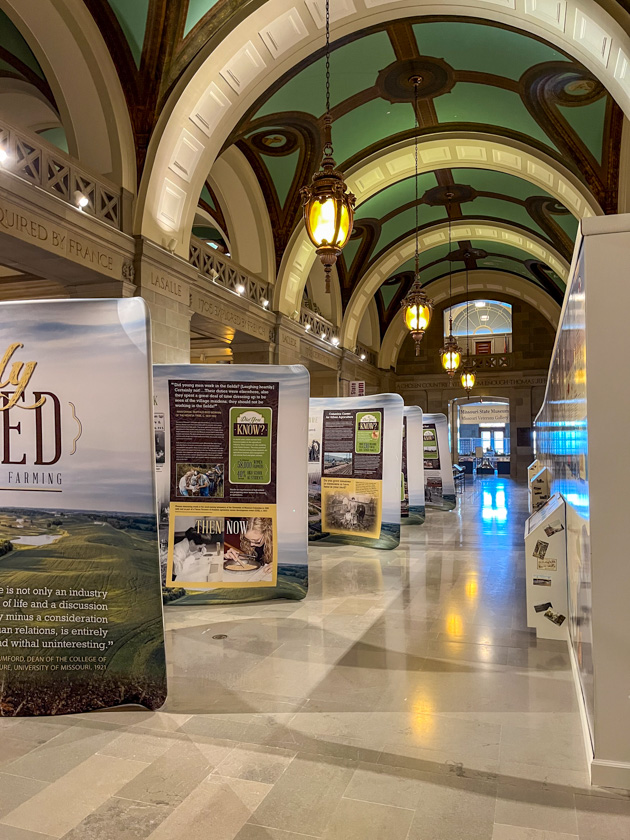
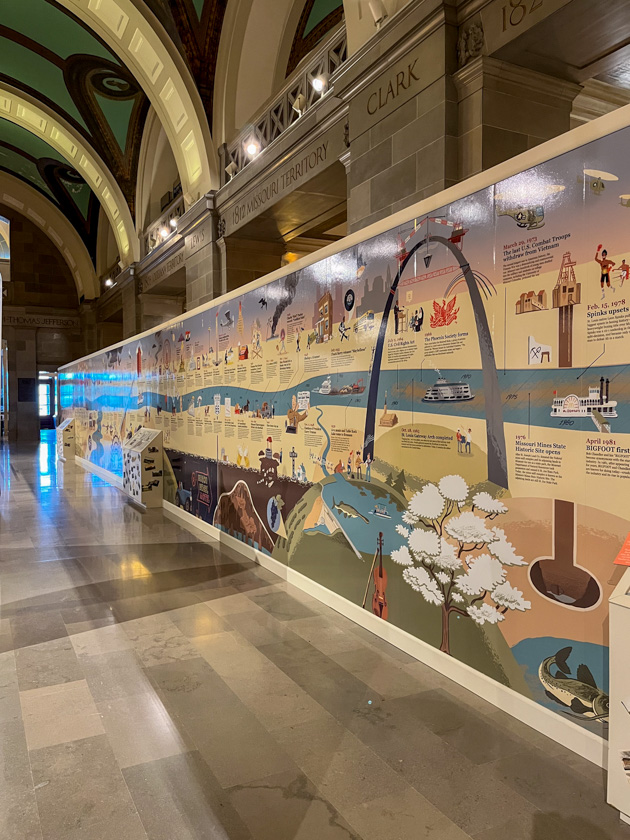
Various displays tell the stories. These displays discuss the Osage people who roamed the lands before the white settlers arrived.
After our tour of the capitol, we found two other places to explore within a short walk: the Governor’s mansion, which has served as the governor’s residence since 1872, and the Jefferson Landing State Historical Site.

Imagine living in the mansion that sits up on a knoll and encompasses 10 acres of gardens. With views of both the Missouri River and the State Capitol, the governor can keep a watchful eye on their domain.
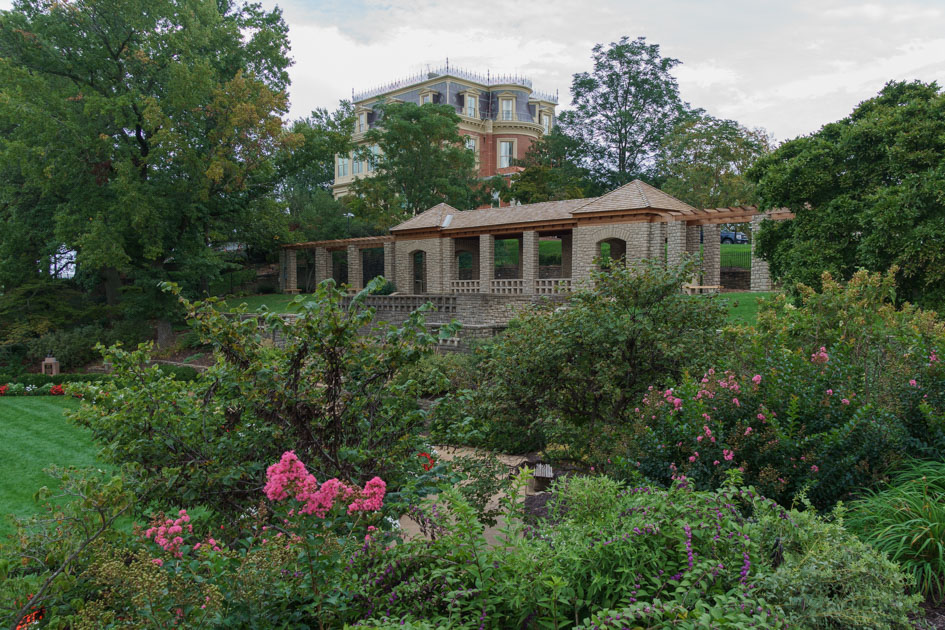
George Ingham Barnett designed the building in the Second-Empire architectural style. It took eight months to construct, with the help of prisoners from the nearby penitentiary.

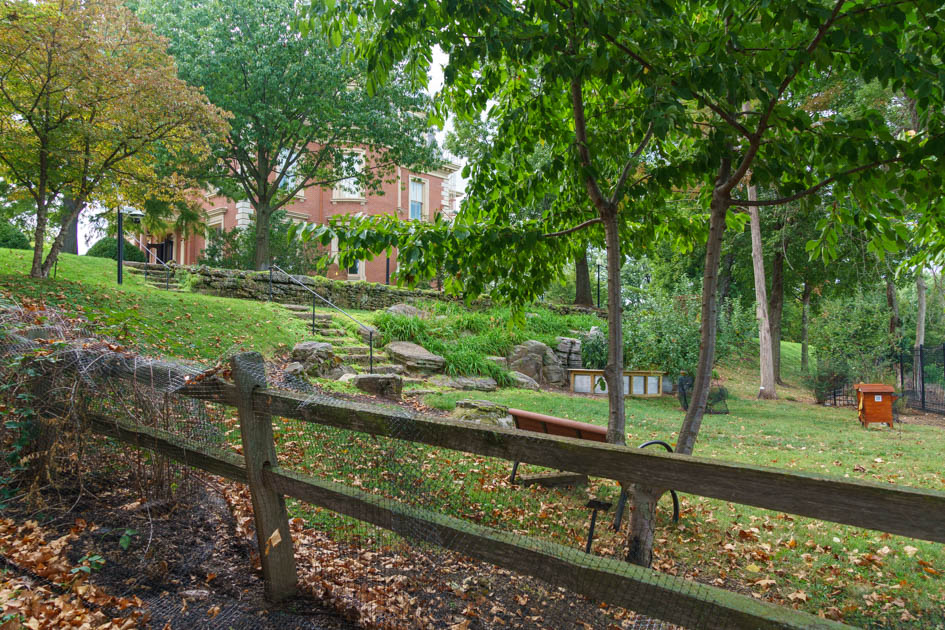

The Landing comprises two buildings. The Union Hotel and the Lohman buildings.
The Lohman Building is the oldest existing building in Jefferson City. Charles Maus and his brother-in-law, Charles Lohman, bought the east section of the Crump’s building and opened a general store in 1852.


Maus built the hotel across the street in 1855. The state acquired the hotel and the Lohman Building in the 1960s and surrounding land to use it as a parking lot. Concerned citizens had other ideas. In 1974, the state’s official bicentennial project adopted the Jefferson Landing as its project. Restorations took place and the Lohman building opened to the public on July 4, 1976. Today, Amtrack uses the first floor of the hotel as a train station.


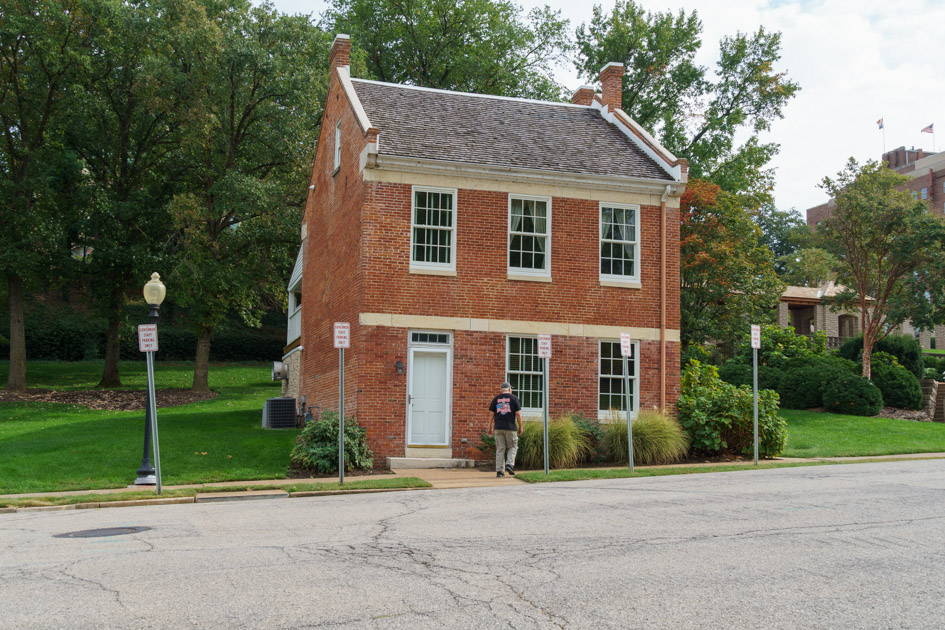
Christopher Maus, a stonemason, built the pre-civil war brick home (pictured below) near The Landing around 1854. Christopher Maus was the brother of Charles Maus. The state maintains the house along with the State Historic Site. Unfortunately, it is not open for tours.
I saw this plaque and read that it marked the place of a time capsule. Oh, wouldn’t it be great to come back and see what’s inside when they open it? On closer look, I realized that trip, would not be possible.

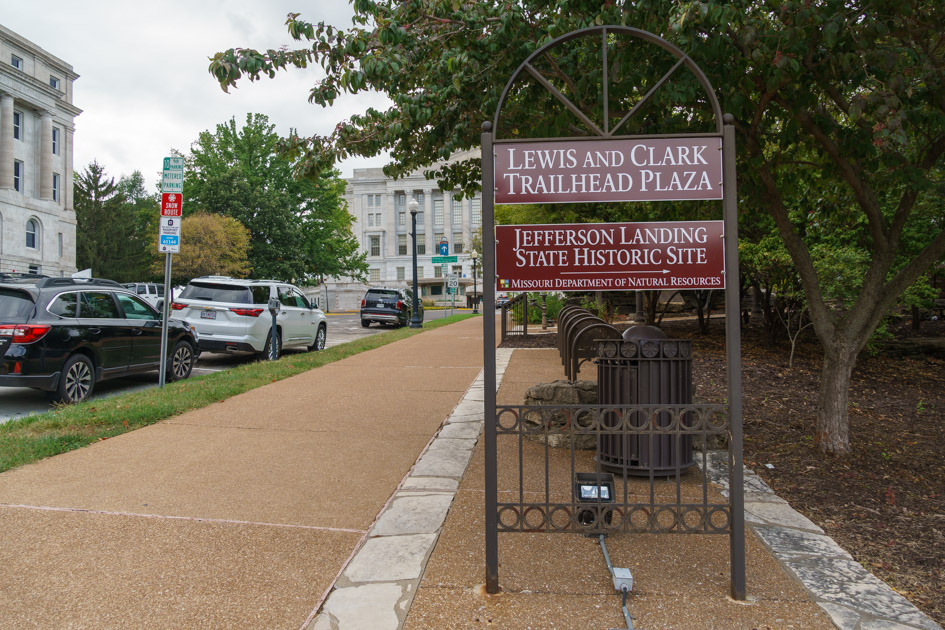
As we walked back to the truck, I noticed the Lewis and Clark Trailhead Plaza. The sign led to a memorial that commemorates the famous expedition. I couldn’t help but think about how different the area looks today compared to when the company camped in the area on June 4, 1804.

History captured my attention and imagination on this day. While grocery shopping an hour later, I thought about how people lived in the 1700s and 1800s and even the early 1900s. Their struggles to provide for food and shelter and safety made me thankful for how easy we have it today. All we need to do is walk into our local grocery store and pick what we need or want from the abundance of produce and other products available. How lucky we are to live in these times.
Next up: We visit the Runge Conservation Center in Jefferson.
Safe Travels
 The Traveling Todds