On July 12, 2024, we headed back to Gig Harbor for a few days. The time had arrived for us to prepare to leave Washington and head home. We spent the weekend washing clothes, cleaning the trailer, completing other tasks, and visiting one more attraction. When I read about the Chihuly Bridge of Glass, I couldn’t imagine what it looked like. So off to Tacoma, Washington, we drove.

It took us a while to find the place. We passed under the bridge and drove off in different directions, on this freeway and that one several times until we found the Museum of Glass and a place to park. While doing so, we wondered what hid inside the huge cone-shaped structure pointing toward the sky.
Museum of Glass
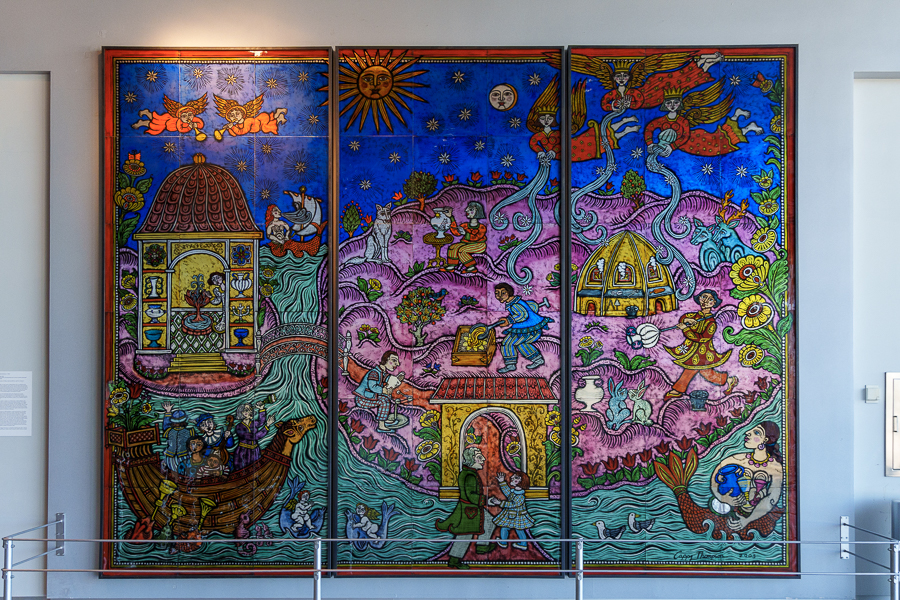
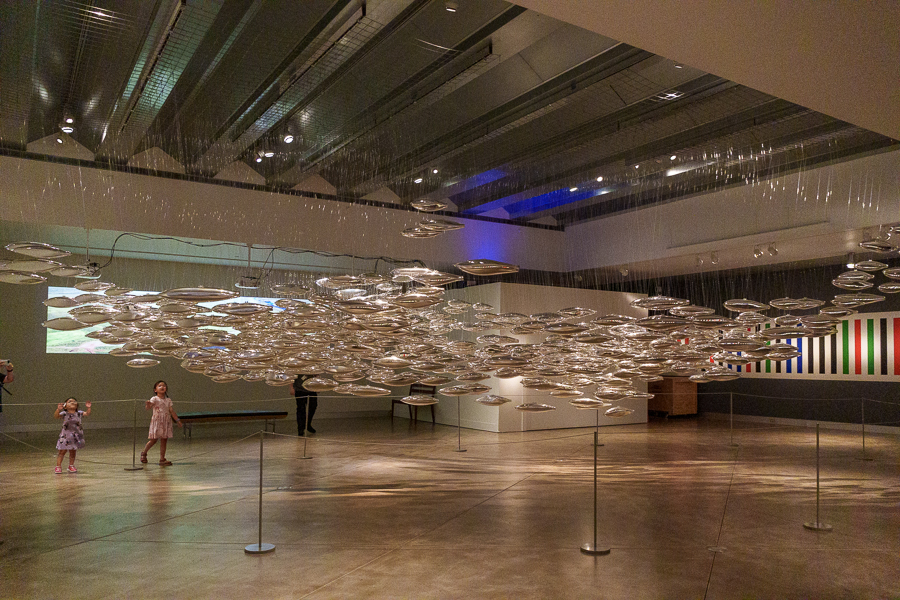
We had seen plenty of museums during this adventure. Was I ready for another one? I’m so glad we paid the entrance fee because the Museum of Glass was more than just a museum. The museum describes itself as a contemporary art museum with glass and glassmaking as its focus and so much more.

We stepped into the Hot Shop on the upper level of stadium seating and thought we had stumbled into a theater where actors might appear on the stage below. A screen hung from the ceiling on the opposite side above a wall of furnaces blasting red hot. The video captured the activity on the stage, giving the audience a closeup view of the work going on down below. In the middle of the furnace wall, hung a thermostat pegged at 100 degrees.
A glass artist stood outside a furnace, holding one end of a pole that stretched inside the flame. Other people stood a few feet away, watching and talking. They all wore short-sleeved T-shirts and shorts. One woman wore a tank top. Given the heat, they may have thought beachwear more appropriate.

We watched as the artist removed the pole with a glowing glob of glass at the end. Two other folks helped to turn the poles while the artist worked to shape and form the piece of art into his vision.


When we could no longer tolerate the heat, the air-conditioned gallery cooled us off allowing us to enjoy wandering through the exhibits.


The Museum of Glass structure, opened in 2002 at a cost of $48 million, was the first building completed on a Superfund site as part of the Thea Foss Waterway restoration. Since then, five other museums within walking distance have sprouted. We only had time to visit the one.


This museum isn’t just a place to walk around and look at the exhibits; it also offers a variety of programs:
- The Hot Shop – Artists can apply for one-day and week-long residency programs at the museum, where they can experiment with new ideas and techniques.
- Kids Design Glass – Children age 12 and under can submit their designs via email. If selected, an artist will create the design in glass at one of their Hot Shot presentations.
- Science of Art – This is an outreach program for K-8 students enrolled in the Tacoma Public Schools or other local schools.
- Virtual Science of Art – Beginning in 2020, the museum expanded access to school classrooms across the State of Washington.
- Hot Shop Heroes – A program for soldiers and veterans with post-traumatic stress disorder and traumatic brain injury.
- Junior Curator Academy – This virtual series, geared toward middle and high school students, consists of six 45-minute lessons led by Museum of Glass educators.
- Curator High – Teens work with each department to conceive and develop an exhibition by working with each of the museum’s departments. At the end of the program, the exhibit is installed in the Grand Hall.
Chihuly Bridge of Glass
The Chihuly Bridge of Glass opened in 2002 along with the Museum of Glass. Design, building, and art installation expenses cost $12 million. The steel and concrete pedestrian bridge spans 500 feet (150 m) over a rail yard and Interstate 705 at a height of 70 feet (21 m).


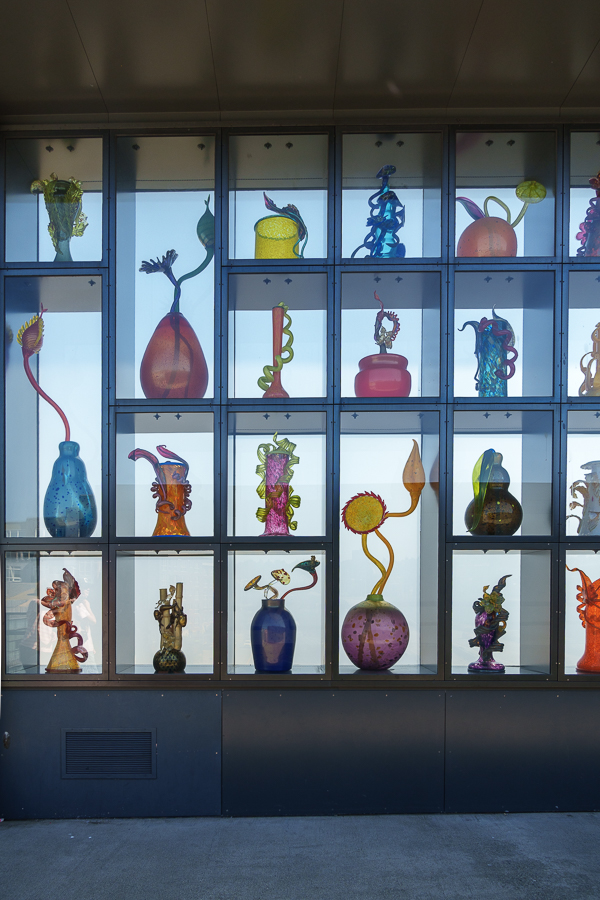
From atop the Museum of Glass roof, we walked up a series of ramps to the bridge. The first Chihuly installation we encountered was the Venetian Wall. On either side of the walkway, steel-and-glass walls for a length of 80 feet (24.4 m) display 109 blown glass sculptures. Natural light illuminates the sculptures during the day. When the sun goes down, fiber-optic lighting does the trick at night.

Toward the center of the bridge rise the Crystal Towers. Each 43-foot-tall spire supports 63 crystals. Polyvitro, a polyurethane material created by Chihuly, is the material used to give the crystals their blue coloring and transparency, without the weight of glass. Although the crystal’s appearance changes during the day as the sun shines through, I suspect they are more impressive at night when lit from below and join the city’s skyline.


The Seaform Pavilion is the third installation. The 49-foot (15 m) covered portion of the bridge delighted us with a colorful display of 2,364 glass sculptures inspired by marine life on the ceiling.

I worried about the safety of the artwork up there on the bridge in all kinds of weather and open 24 hours a day. Then I remembered Chihuly had created other outdoor installations, so he must have done this before. And after twenty-five years, the art still stands. Still, I kept my ears open for the tinkling sound of broken glass announcing the destruction of a piece of translucent art. The noise never came.

My camera failed to capture the feeling evoked by viewing the pieces in person. I sense a facsimile of that feeling when I look at them, except it’s not the same. We highly suggest visiting the museum when nearby. We would love to see the Chihuly Garden and Glass in Seattle if we ever get back to the area.
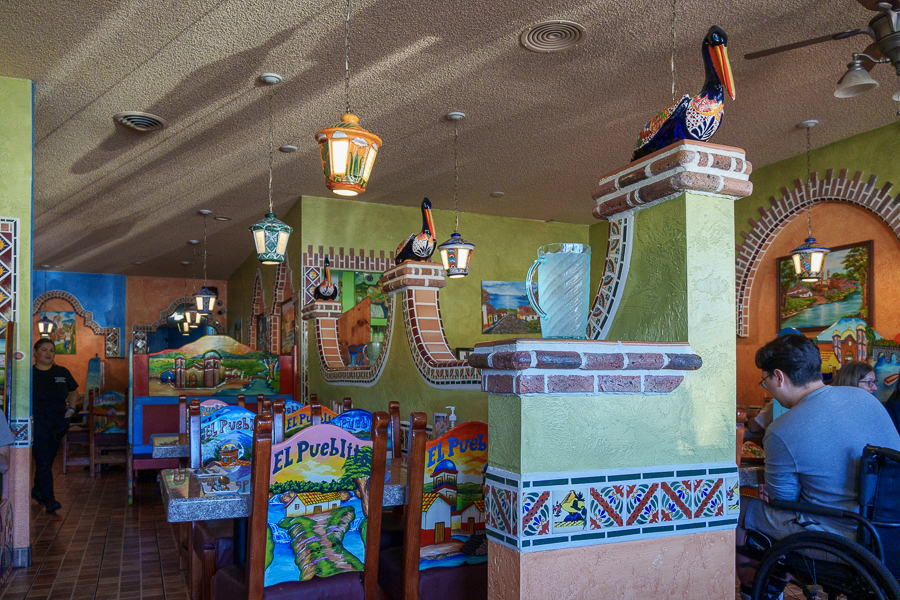
Dinner time had arrived by the time we returned to the trailer. Not wanting to cook, we chose El Pueblito for our last meal in Gig Harbor. Another fine meal to enjoy before we waved goodbye in the morning and turned the truck south toward home.
Up Next: We take our time making our way home, stopping to explore a few more attractions.
Safe Travels
 The Traveling Todds