Colorado Springs, Colorado

Moving day arrived on Tuesday, September 4, 2018, the 43rd day of our Summer 2018 Tour. We checked in at Garden of the Gods RV Park in Colorado Springs for five nights. We had no problem whatsoever getting reservations. In fact, the RV park never reached full capacity during our time there. We must have entered the shoulder season, that time before and after peak season.

Pikes Peak

Speaking of peaks, the campground sat nestled below the foothills of Pikes Peak, America’s Mountain, and only three miles from Pikes Peak Cog Railway in Manitou. Unfortunately, the railway had closed due to the need for repairs. Their website now says they plan to reopen in 2021. I hope we are able to make a trip there when the railcars once again traverse the steep grade to the top of Pikes Peak.
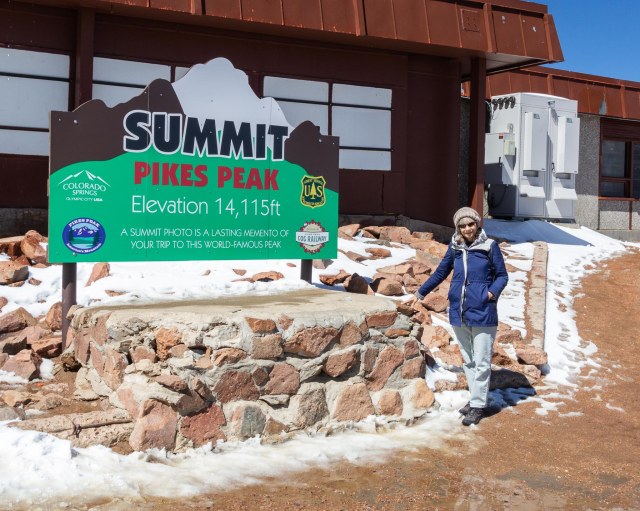
Watch your step

Of course, had the railway been running, we would have missed the beautiful drive up the mountain and the many W turns. Vehicles can only drive so far up the 14,115-foot mountain due to the ongoing construction at the top. Parking and shuttles are available at two locations. The first is at the 7-mile marker and the second is at the 16-mile marker. We opted for the 16-mile marker. The less time I spend in the back of a crowded van on a twisty-turny road the better. Motion sickness is not my idea of fun.

Parking lot and shuttle pick up

When we first arrived at the top, cold seeped through to the bone of my face and legs. Why did I not wear a base layer under my jeans? After a trip to the bathroom and a spin around the gift shop, I walked out onto the back patio and it didn’t seem so cold even though the ground was covered in snow.

View from the visitor center and silent railway

With all the construction, melting ice, and snow, we walked gingerly to avoid falling on our butts on the muddy walkways. The need for reconstruction was evident in the condition of the bathroom and gift shop. I’m sure it had been at least 30 years since the building last saw upgrades.

A few people (not pictured) hadn’t planned ahead, wearing flip-flops, shorts, and no jackets or sweaters, in the slushy snow and mud. Crazy.
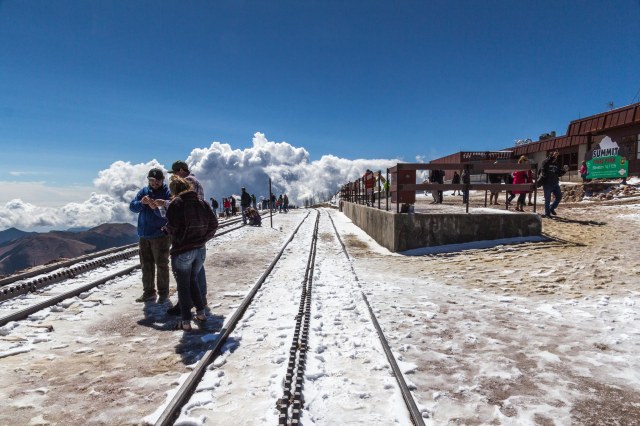
Railway and buildings at top of Pikes Peak

The views from the peak were the best part of our trip and we saw that the cog railway ended conveniently at the back of the visitor building.

View from Pikes Peak
This photo shows switchbacks in the form of a W on Pikes Peak road

Miramont Castle High Tea

We missed out on tea at the Dushanbe Tea Room in Boulder, so when we saw that Miramont Castle in Manitou served High Tea we called for reservations. They serve the goodies different from what we have experienced in the past. Instead of displaying all the food onto a tiered serving tray, each course comes separately. We started with scones. Then a dish of fresh fruit with strawberries cut to look like a tulip flower, spiraled grapes stuffed with blueberries, and melon balls of cantaloupe and watermelon.
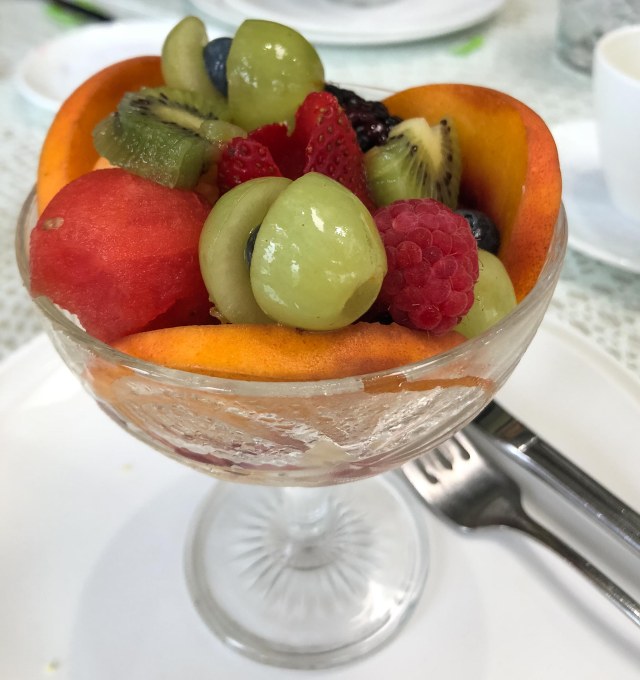
Fresh fruit served icy cold.

Next came the sandwiches. I liked the fig and chicken Paninis the best. The pickle and mayonnaise sandwich was not as tasty, but I ate it anyway.

Dessert was an assortment of bread pudding, yellow cake with buttercream frosting, and a salted chocolate caramel truffle. I can’t believe I ate it all along with a pot and a half of two types of tea.
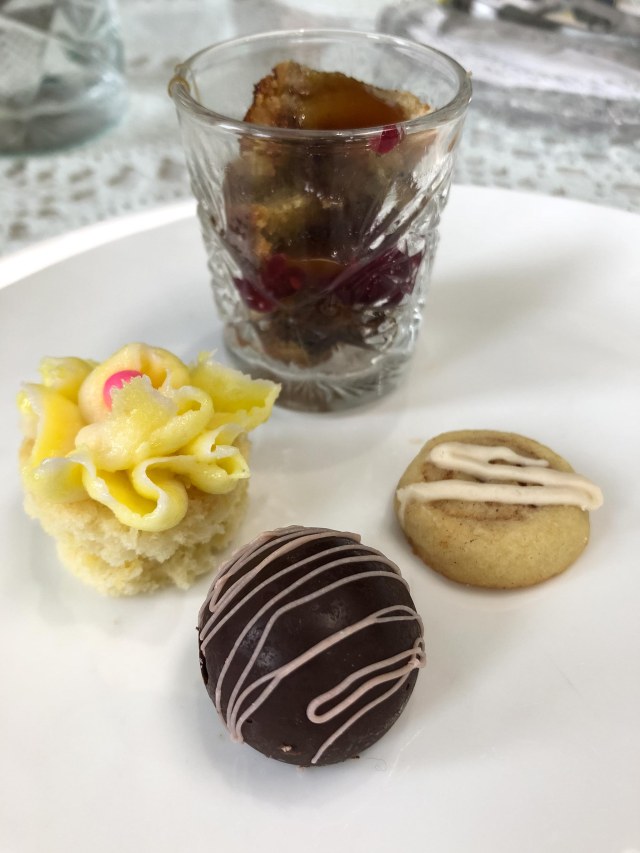
Yummy goodness
Two choices of tea included

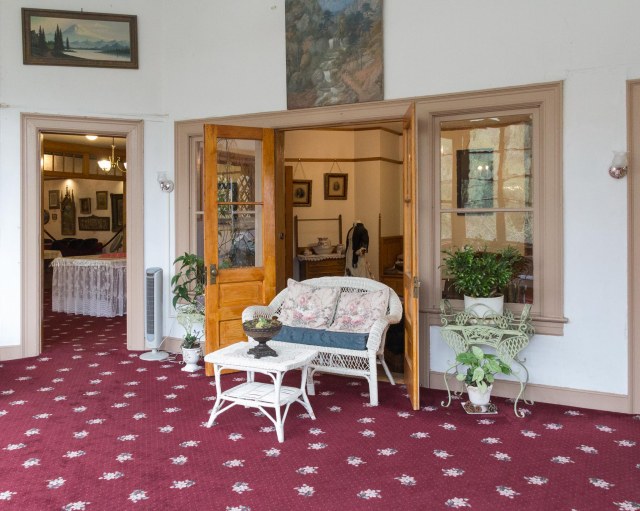
Before and after our reservation, we had time to poke around the castle. Contractors Angus and Archie Gillis constructed the building in 1895—adding a wing in 1897—using plans developed by the owner, Fr. Francolon, and his father.
Solarium Photo 1

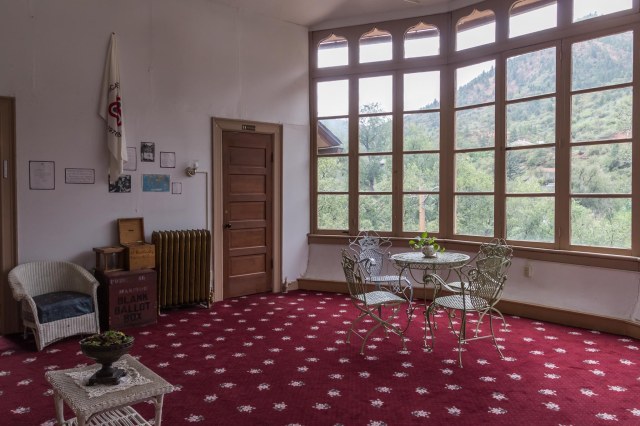
The 14,000 square foot home features 40 rooms, some of which are eight-sided. There is also a sixteen-sided room, a solarium, and arched doors and windows. There are nine separate architecture styles represented in the construction including Queen Anne, Romanesque, English Tudor, and Moorish. With two-foot thick walls made of native green sandstone, indoor plumbing, and electricity the castle was ahead of its time.
Solarium photo 2

Fr. Francolon came to Manitou for its popular healing waters and clean air hoping to restore his failing health. His mother arrived from New Mexico in July 1893, bringing four French-speaking servants because she did not speak English.
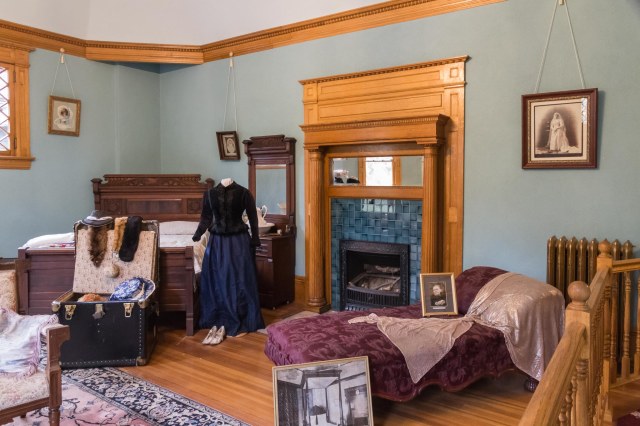
Bedroom 1

It is believed that the Francolons left for France unexpectedly in 1900 taking valuable artwork with them but leaving furniture. They never returned to Colorado.

Staircase

The Sisters of Mercy, who operated the Montcalme sanitarium nearby for the treatment of tuberculosis, purchased the castle in 1904. After a fire in 1907 destroyed Montcalme, they moved their operation to the castle until 1928 when they discontinued their treatments.

Bedroom 2

The property then served as a boarding house for the wealthy and a retreat for clergy. It stood vacant until 1946 when it was sold to private owners. Manitou Springs Historical Society purchased the castle on February 17, 1976, and began restoration. It was listed on the National Register of Historic Places on May 3, 1977.

Example of Moorish architecture?

Besides a photo gallery, there are five other exhibits throughout the castle including history and displays about the Manitou Volunteer Fire Department and Pikes Peak International Hill Climp, which will hold its 97th Race to the Clouds on June 30, 2019.

Garden of the Gods

We visited and returned to Garden of the Gods a few times during our stay. Our first trip was to the visitor and nature center where they have interactive exhibits on geology, wildlife, and history of the park. On subsequent trips, we hiked one or more of the trails.
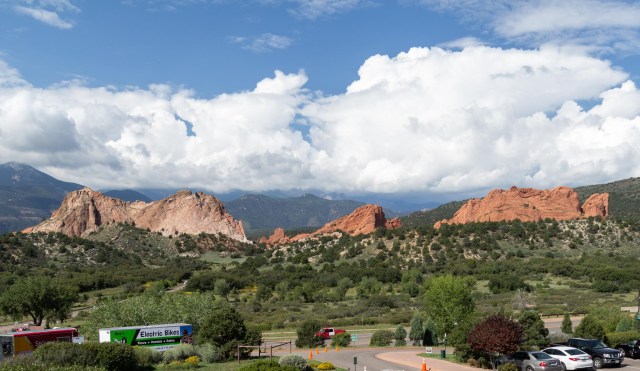
View of Garden of the Gods from the visitor center

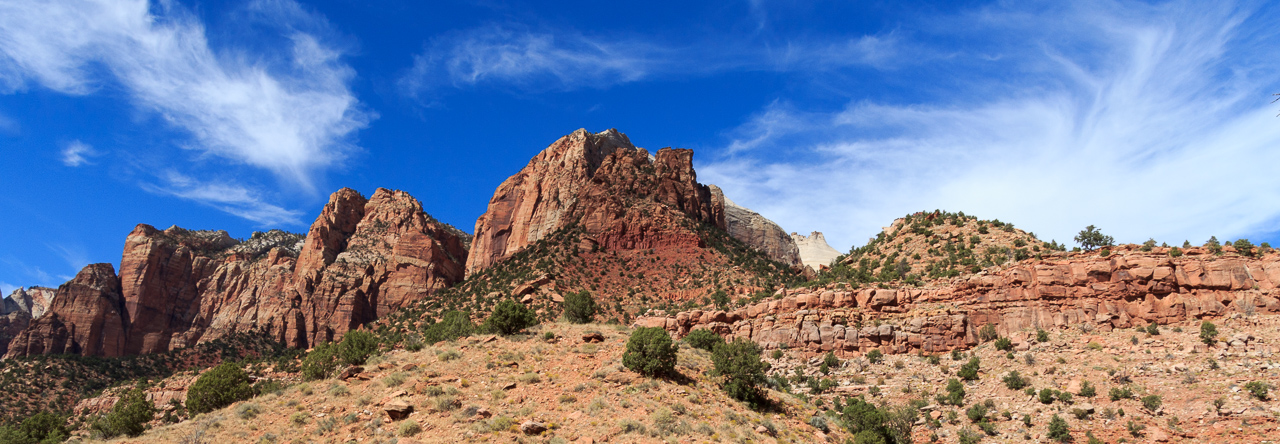
The city park, registered as a National Natural Landmark, has free admission. Highlights include red rock sandstone formations that attract over one million visitors each year.

Kissing Camels

Fifteen miles of loop trails intersect as they wind their way around and through the formations, giving hikers, bicyclists, and horses plenty of places to roam around the 1,364 acres.

Hikers yield to horses

Perkins Central Garden trail is accessible for wheelchairs and strollers along its concrete paved 1.5 miles. The city only allows climbing in certain areas with a permit.

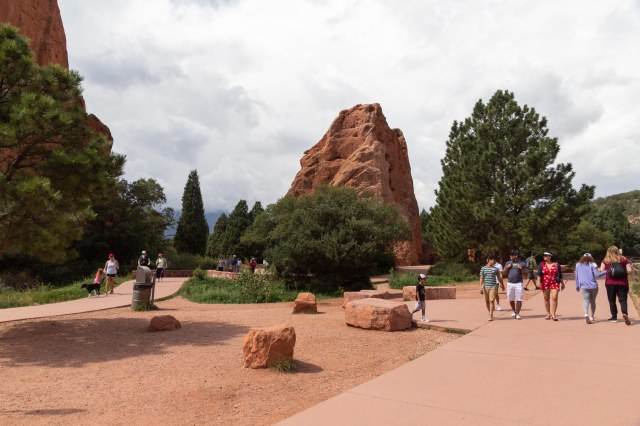
Siamese Twins – Hello out there
Central Garden Trail

We have Charles Elliott Perkins and his family, William Jackson Palmer, and  Colorado Springs to thank for public access to these unusually shaped rocks.
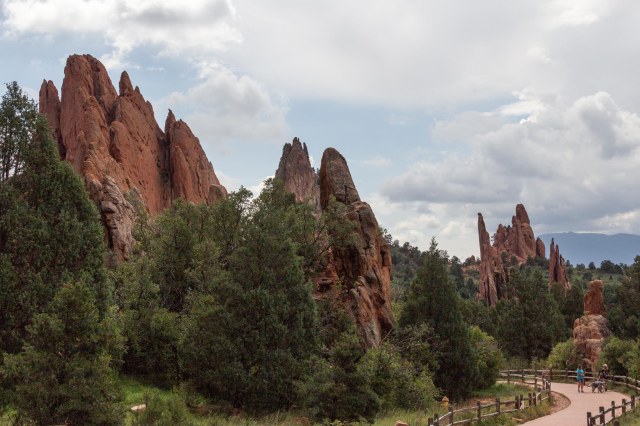
Cathedral Spires

A portion of Garden of the Gods was included in 480 acres of land Perkins purchased in 1879. When he died in 1909, his family gave the land to Colorado Springs with the stipulation that it would be a free public park.

Steamboat on the left and Balanced Rock on the right

When Palmer died, he donated his Rock Ledge Ranch to the city. Today, Colorado Springs parks and recreation staff operate and maintain the visitor center and park.

No, Jon. You won’t fit through that crack.

Old Colorado City

We happened upon a huge farmers market at Bancroft Park in Old Colorado City. The colorful canopies, mouth-watering aromas, and friendly people laughing and talking was a delight to see. Had we known about the market we would not have loaded up on fruits and veggies the day before.

Bancroft Park Farmers Market

Lunch is what we were after. Bon Ton’s Café looked like a good bet and we were not disappointed.
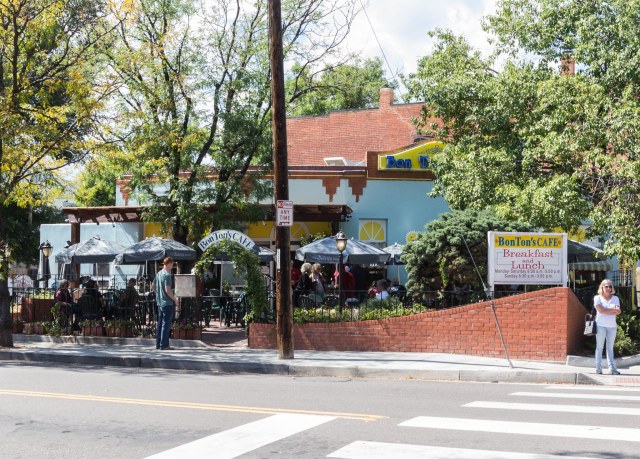
Bon Ton’s Cafe – a great place for breakfast and lunch

We both had coffee and the apple streusel pancake. It was so huge it covered the entire large plate. There was no way we could have eaten more. Well, perhaps Jon could have.

Then we spent about an hour scoping out the historic buildings.

This 1904 public library has been in continuous use as a library since it opened.
This cabin, built in 1859, has had many lives, even as the capitol of territorial Colorado in 1862.
Example of architecture in Old Colorado City
Old Colorado City in reflection

It was nice to settle in Colorado Springs for the few days we were there. We had plenty to see and do without driving long distances. This we appreciated after our stays in Strasburg, Lyons, and Rocky Mountain National Park. We saved other attractions for our next visit when we have more time.

Safe Travels


Strasburg, Colorado, and a bit more in Boulder

Happy New Year One and All!

Jon and I wish everyone a healthy, joyful, and prosperous 2019. Thank you so much for joining us on our journeys. We appreciate all of our followers, their likes, and comments.

Now, back to our travels in Colorado during August and September 2018.

Our short drive to the Strasburg, Colorado KOA on Wednesday, August 29 was clear sailing with very little traffic. The campground, often typical for RV parks, was near a railway and a freeway. Neither of these transportation infrastructures bothered us too much, to our delight. Besides, after numerous phone calls the day before, we were grateful to procure space in Strasburg on the Labor Day weekend. Shame on us for not making reservations earlier, but we had completely forgotten about the holiday. Retirement is such a joy!

Suburban sprawl has hit the small farming community of Strasburg with new housing developments going up, including some with a good amount of property included. The best restaurant in this town of 2,500 was the Patio Café. The good food and friendliness of the servers and patrons compensated for the lack of charm on the outside.

Patio Cafe in Strasburg, Colorado

We drove around town and found a few fascinating old buildings. I liked this one for the colors and geometric shapes.

Commercial Building

The Historic Strasburg Inn did not look like it was still in operation. On their FaceBook page, there is a photo from 2016 with the name of the place stenciled on the white sign. Now it is a blank slate.

Strasburg Inn no longer in business?

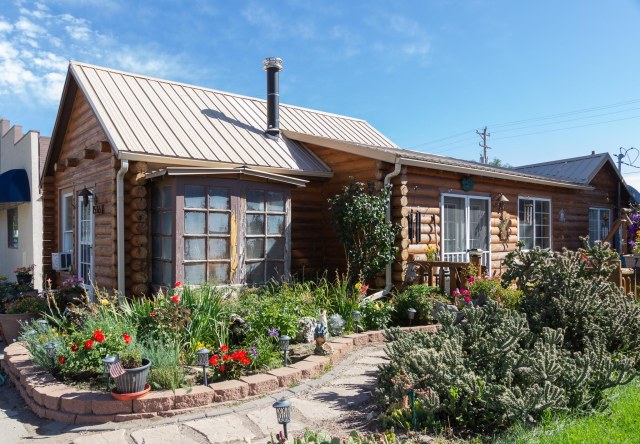
We wondered how long this log cabin had been standing. It looked like it may have started out small and then expanded. The garden and winding pathway to the door is what drew me in.

Log cabin house

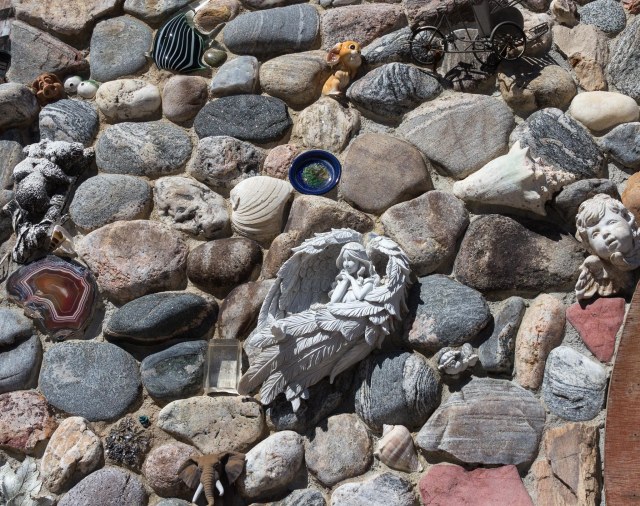
Then there was this commercial building with little figurines and other trinkets embedded in the rock wall. I could have stood there for an hour finding all the little treasures that someone painstakingly cemented into the wall.

Rock wall building
Detail of rock wall building

We spotted an old tractor and piece of farm equipment in a field next to the railroad tracks. It would be nice if it ended up in a museum somewhere.

Chautauqua Park

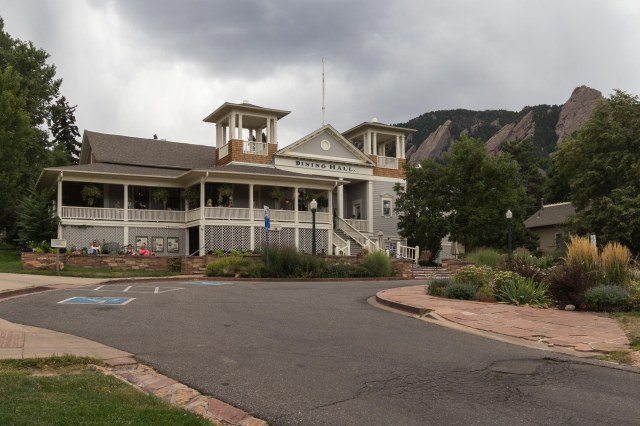
On Friday, we made the hour drive to Boulder. Our objective was to visit the Chautauqua Park National Historic Site where we could enjoy the outdoors, take a hike, and maybe eat lunch at the dining hall. The City of Boulder purchased the 80 acres of land over 100 years ago to be used as a Chautauqua. What is a Chautauqua? We didn’t know. Merriam-Webster dictionary lists Chautauqua as “a stationary or traveling institution that flourished in the late 19th and early 20th centuries providing popular education usually combined with entertainment in the form of lectures, concerts, or dramatic performances often presented outdoors or in a tent.”

Chautauqua Arbor

Boulder’s Chautauqua began its life in 1898 as a Texas summer school for teachers. Through the efforts of the City of Boulder and the Colorado Chautauqua Association, the property has been in continuous operation since it began. Today the park offers lodging, concerts, cultural events, education programs, and recreation.

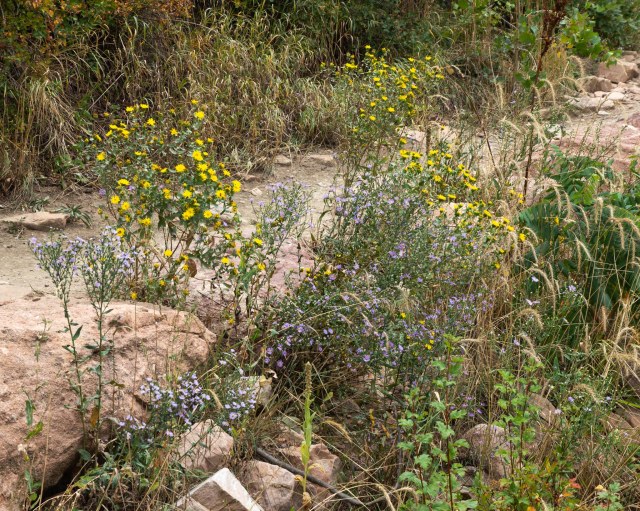
Wildflowers still in bloom

Situated at the foot of the Flatirons, the Chautauqua property contains a variety of trees that number over 500. Along with the native Douglas fir and spruce trees, there is an array of maple and oak plus other species. I can only imagine the wonderful color show the trees produce when the seasons change.

JT consults the map

We picked up the McClintock Trail near the auditorium, then transitioned on to the Bluebell Trail to the ranger visitor center. We walked along a slightly rocky route under tree limbs that intertwined overhead.

McClintock Trail

The shade kept us relatively cool in the 80-degree weather. For half of the hike, we only encountered one other person. Then a few people here and there until we got close to the trailhead where we encountered quite a few people making their way up the hill.

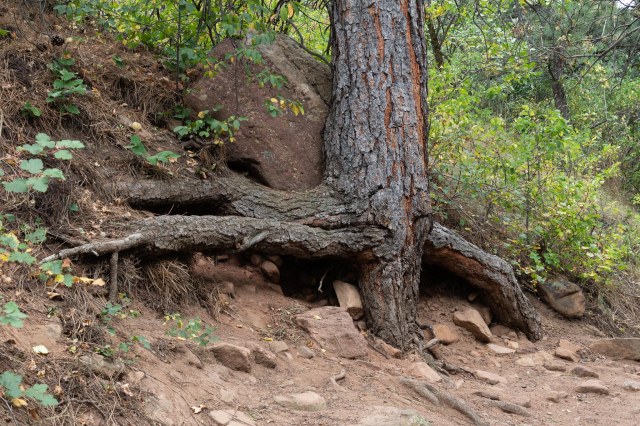
This tree isn’t letting a little erosion ruin its life
Bluebell Hiking Trail going uphill toward the Flatirons
Bluebell Hiking Trail going downhill

Afterward, we checked in at the Dining Hall for a scrumptious lunch. I had some kind of fondue dish that included ham and fingerling potatoes and poached eggs on top. Although the eggs were cooked through and no juicy goodness spread throughout the rest of the ingredients, the dish was still yummy.

Chautauqua Dining Hall
View from Dining Hall

How wonderful for the Boulder community to have such a special place to visit and spend time. With so many activities offered, the Chautauqua is a place people can return to throughout the year. We would have liked to have stayed longer.

A road above Chautauqua that leads into the mountains is a nice drive to see some awesome views of Boulder.

Overlook of Boulder and the Baseline Reservoir

Dushanbe Teahouse

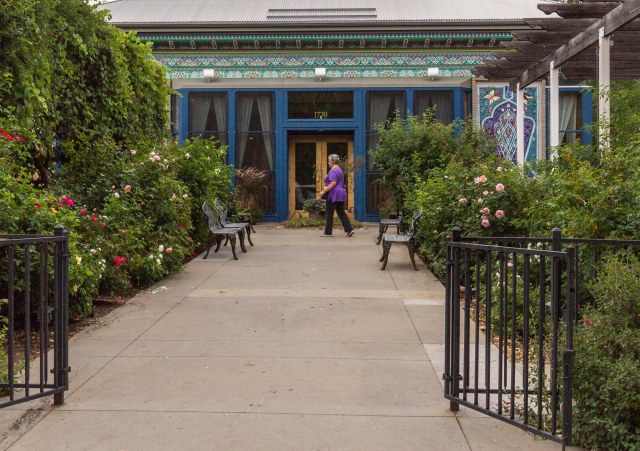
On the way out of town, we stopped at the Dushanbe Teahouse in downtown Boulder to take a photo. Boulder’s sister city Dushanbe, Tajikistan, created the teahouse as a gift. The building is a work of art made by artisans in Tajikistan using skills that date back 2,000 years.

Dushanbe Teahouse entrance

Inside, the ceilings and columns are hand carved and painted. Carved plaster panels and copper sculptures also contribute to the design elements. Eight ceramic panels adorn the exterior. The artist sculpted the panels, cut them into smaller tiles, and fired them in Tajikistan. Then the tiles were shipped to Boulder where the artist positioned them in place.

Side patio of Dunshabe Teahouse showing artistic panels

Photo of teahouse

The teahouse serves breakfast, lunch, tea time, and dinner Monday through Friday and brunch, tea time, and dinner on Saturday and Sunday. Reservations for tea time are required 24 hours in advance and are probably needed for other mealtimes, too.

Detail of crafted panels at Dushanbe Teahouse

A trip back to Boulder was definitely in our future when we pictured ourselves sipping tea and biting into tiny sandwiches and other delectables at the Dushanbe Teahouse.

We nixed any plans to return to Boulder or head into Denver during this visit to Colorado when we hit the freeway from Boulder back to Strasburg. Friday afternoon was not a good time to head out of town with the thousands of commuters making their way home in the suburbs. Our one-hour drive into town took us two hours to return.

During the rest of our Labor Day weekend, we stayed close to base camp, relaxing and completing chores. We did, however, find a couple places to explore that didn’t require a drive to the population centers. Stay tuned for the next post.

Safe Travels
Lyons and Boulder, Colorado, and Rocky National Park East

We had reservations for three days starting August 26, 2018, in Lyons, Colorado, so we packed up and left the western side of the Rocky Mountains behind. The Trail Ridge Road through the tundra was as stressful as we had imagined. The lack of barriers between the road and the steep cliffs seemed like certain death so I kept my eyes alert for a vehicle that might fail to negotiate a curve and slam into us. We felt a little better once the terrain turned to subalpine and forests, even though we had to navigate through 15 and 20 MPH hairpin turns.

On the east side of the Rockies, we noted teepee piles of brush, branches, and logs a few yards from the road. Although the park service does not remove most of the dead lodgepole and ponderosa trees killed by the pine beetle, they do gather up any trees that pose a threat of injury or death to people and burn the piles during the winter when the risk of a forest fire is at its lowest.

LaVern M. Johnson Park in Lyons, Colorado

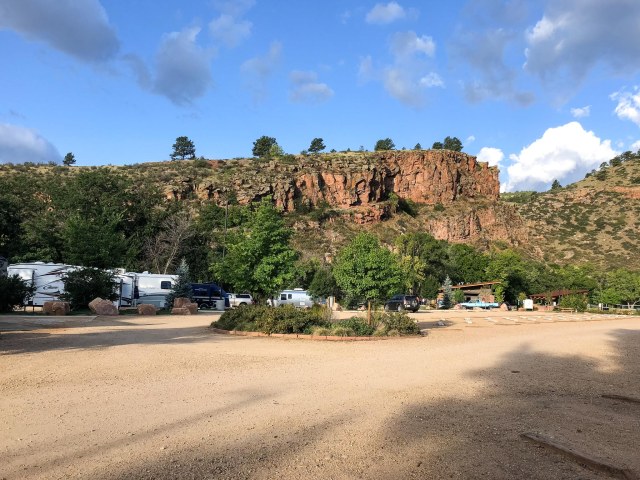
The LaVern M. Johnson Park campground turned out to be a good choice for a place to stay outside of the west entrance to Rocky Mountain National Park. We learned of the location from campers we met earlier on our trip and felt lucky to have snagged a spot. All of the RV parks closer to the Rockies laughed at my inquiry about sites. They had been booked for months.

Day use parking lot and RV park at LaVern M. Johnson Park

Besides RV sites, the Lyons park offers tent camping with concrete slabs, picnic areas, and playground equipment. Sandstone cliffs and the St. Vrain Creek border the park on three sides. Add in the large shade trees and visitors have a perfect place to escape the heat of a hot summer day.

St. Vrain Creek at LaVern M. Johnson Park
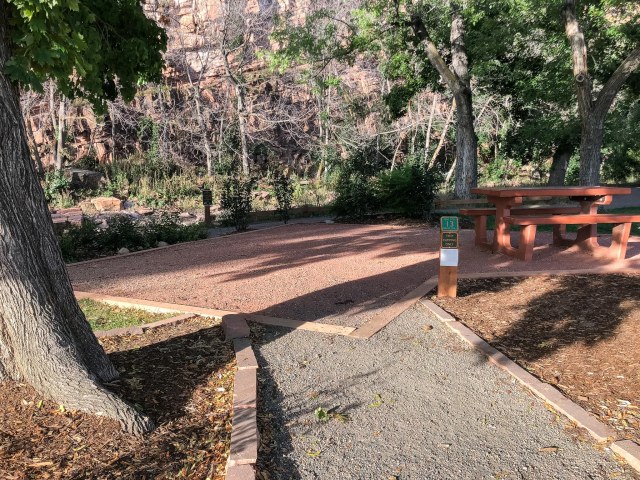
Tent site at LaVern M. Johnson Park in Lyons, Colorado

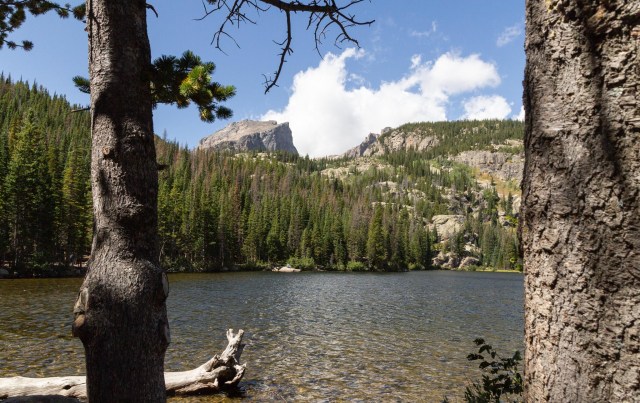
Bear Lake in Rocky Mountain National Park

The next day, we drove into the Rocky Mountain National Park, left the truck at the park-and-ride, and took the shuttle to Bear Lake Nature Trail. With the guidebook in hand, we set out on the trail that surrounds the lake. The booklet explained in detail each item designated by a numbered post and was worth the price of $2.00.

Hallett Peak framed by the trees

There is no fishing allowed in Bear Lake. Once considered extinct in 1937 due to overfishing and toxic waste from mining, greenback cutthroat trout now thrive in Bear Lake after efforts were made to reintroduce the species in 1975. The State of Colorado adopted the greenback trout as its state fish in March 1994.

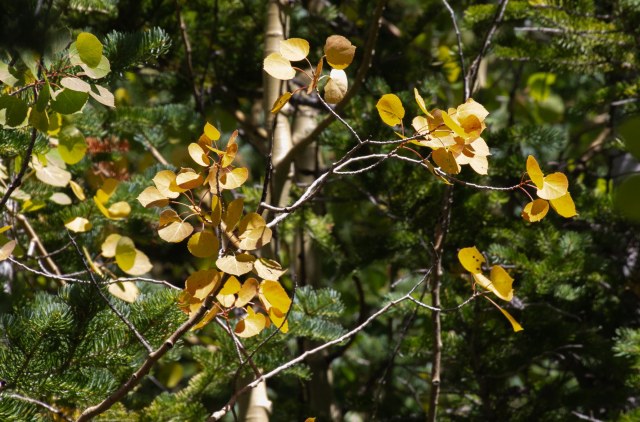
Aspen leaves already turning yellow

A close-up of bark on a mature Douglas-fir. While the bark on young trees is thin, smooth, gray, and covered with resin blisters, mature trees are about 2-1/4 inches thick and have a cork look to them.

Douglas-fir bark

The eyes on aspen trees designate where limbs were once attached. Aspen self-prune the shaded lower branches which allows the upper branches to reach for the sun. These eyes look droopy to me.

Aspen eyes
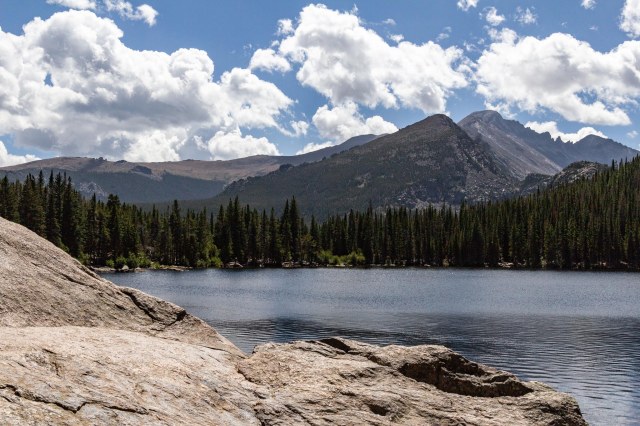
Longs Peak (14,259 feet) is shown in the upper right quadrant of the photo
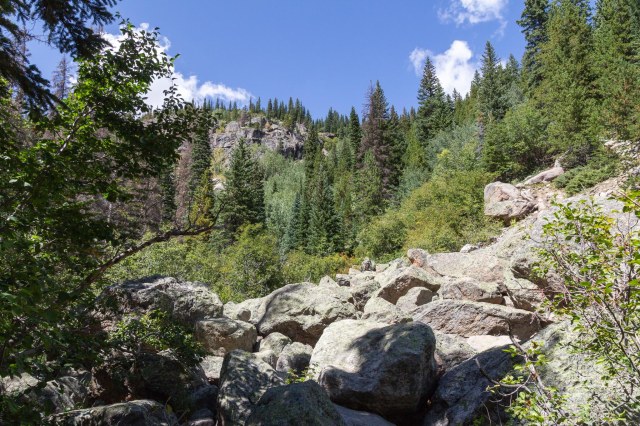
The pile of rocks is a glacial moraine left behind by a glacier

At the end of August, wildflowers still bloomed along the trail.

Heartleaf Arnica

Sprague Lake

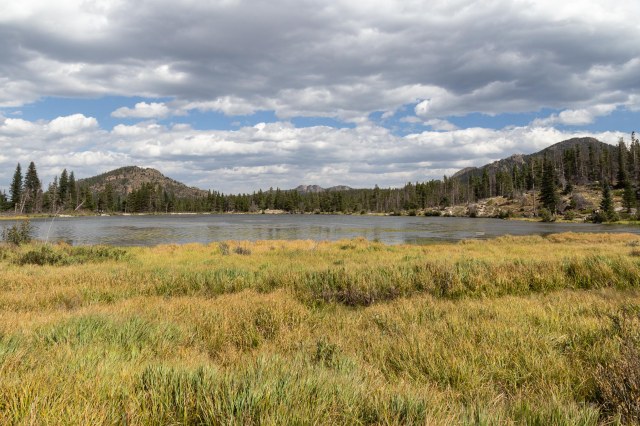
Sprague Lake, a shallow 13-acre lake, also had a trail that surrounded it. Although there were a few information signs, there wasn’t a guidebook. While the weather was perfect at Bear Lake, in the afternoon it turned cold and windy at Sprague Lake. We rushed through the trail, scanned the information signs, took a few pics, and headed back to the shuttle stop.

Sprague Lake and Hallett Peak
Sprague Lake

Abner Sprague, who homesteaded in the area, created the lake by damming a stream. This provided recreation for guests at his resort which operated from 1910 – 1940.

Discovery Center and Historic Moraine Park

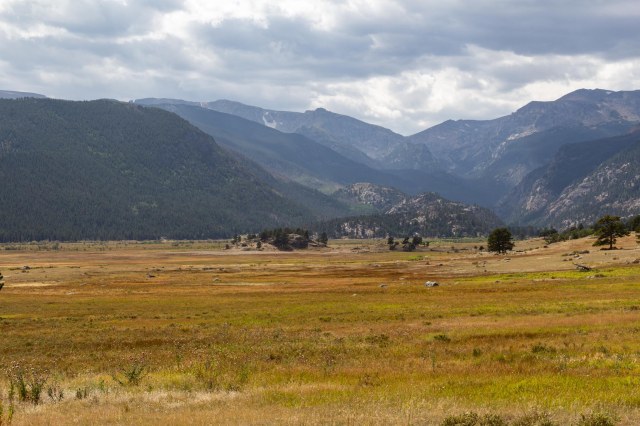
Our final stop was the Discovery Center where they have informative exhibits explaining the geological forces that created the unique terrain and the animals that inhabited the area eons ago. The valley in the photo below sits across the street from the Discovery Center. It’s hard to imagine the valley dotted with lodges, stores, cabins, a golf course, and a post office. When the National Park Service purchased the property in 1962, they removed the structures and the meadows revegetated. Fifty-six years later, there’s no sign of the Historic Moraine Park where visitors once stayed and played.

Historic Moraine Park

On our way back to base camp, we stopped at Smokin’ Dave’s BBQ & Brew in Estes Park. The large portion on the pulled pork platter with coleslaw and green beans gave us enough food to enjoy our meals again the next day for lunch. It was as good the second time around as it was the first.

Enjoy great food at Smokin’ Dave’s BBQ in Estes Park and Lyons, Colorado
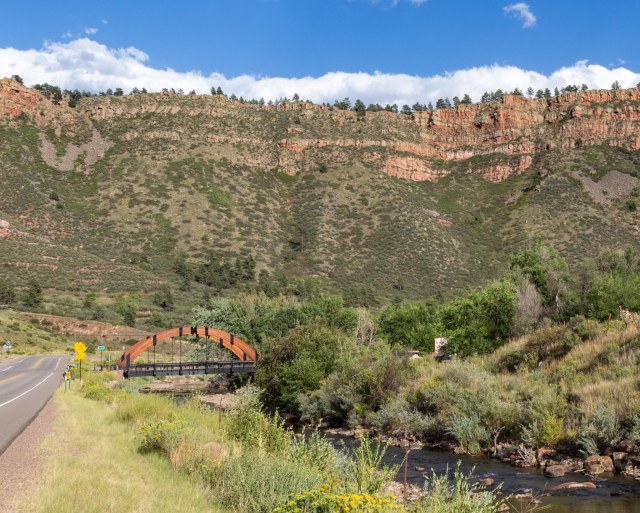
Wood Arch Bridge crosses the St. Vrain River

Boulder, Colorado, and Pearl Street Mall

We were able to poke around Boulder for a few hours one day when we drove into town to pick up a few things. I shook with excitement when I walked into Mike’s Camera. The multi-story building was filled with all manner of photographic equipment and paraphernalia. The building must have been ten times the size of Mike’s Camera in Dublin, California, near where we live. Apparently, Boulder is where the company began its business in 1967. I was almost embarrassed to walk up to the counter and ask for such a small purchase as the little rubber goody that wraps around my camera’s eyepiece. Had I stayed in that store much longer, I would have ended up spending money on things I wanted but really didn’t need.

Next, we headed to the Pearl Street Mall where we walked around looking for a place to eat lunch.  We settled on Hapa Sushi Grill and Sake Bar and were not disappointed.

Boulder County Courthouse

Shopping, dining, and art appreciation are activities enjoyed at Pearl Street Mall.

Pearl Street Mall Scene

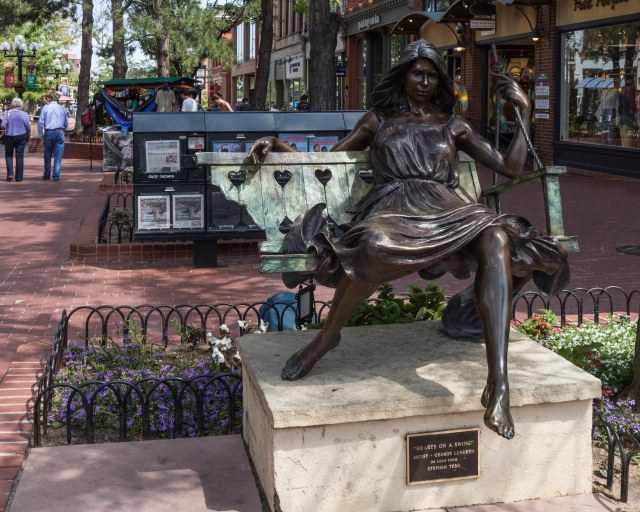
Several outdoor art objects are strategically placed throughout the plaza.

“Hearts on a Swing” by George Lundeen
Boulder Bookstore
Hapa Sushi Grill and Sake Bar
Pearl Street Pub & Cellar

We wished we had more time to explore Boulder, Colorado, and the surrounding area. There was so much more we wanted to see and do. The Museum of Boulder at the Tebo Center, Fiske Planetarium, Boulder Farmers’ Market, Boulder Creek Path, and the Celestial Seasoning tour are all places we would have liked to visit. Hikes and trails nearby would also have given us plenty to explore. Ah, perhaps another time.

Next, we find a place to settle for the Labor Day weekend, which we didn’t realize had arrived on the calendar.

Safe Travels

Rocky Mountain National Park – Part 2

We finish up our time at the west end of Rocky Mountain National park with a visit to a historic site, an encounter with a group of elk, a walk in a valley, and lunch in Grand Lake.

Holzwarth Historic Site

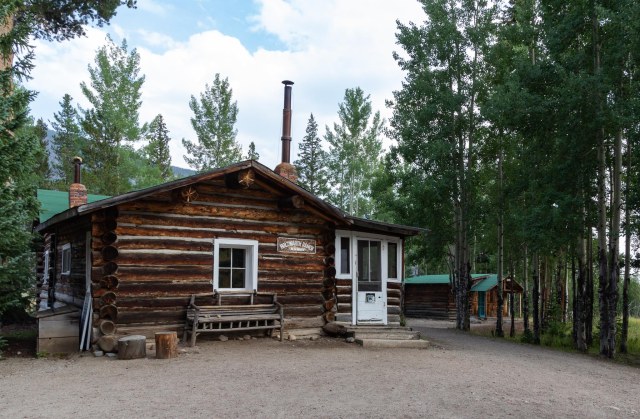
A short 1/2-mile walk from Timber Creek Campground brought us to the Holzwarth Historic Site. The Holzwarth site became part of Rocky Mountain National Park when the park service obtained the property in 1974.

Trail to Holzwarth Historic Site

John and Sophia Holzwarth, both immigrants from Germany, operated a saloon and boarding house in Denver while caring for their five children. When World War I and prohibition made it difficult to earn a living, John homesteaded a piece of land in the Kawuneeche Valley on the west side of the Colorado River in 1917. Over the years, he built cabins for guests transforming the property into a guest ranch known as the Holzwarth Trout Lodge and eventually increased the family’s land holdings to 800 acres.

Holzwarth Ranch Cabin

Continuing the family business into the 1950s, Johnnie, their eldest son, recognized that horseback riding and sightseeing was more popular than fishing. He added a lodge, dining hall, more guest rooms, and a barn creating the Never Summer Ranch.

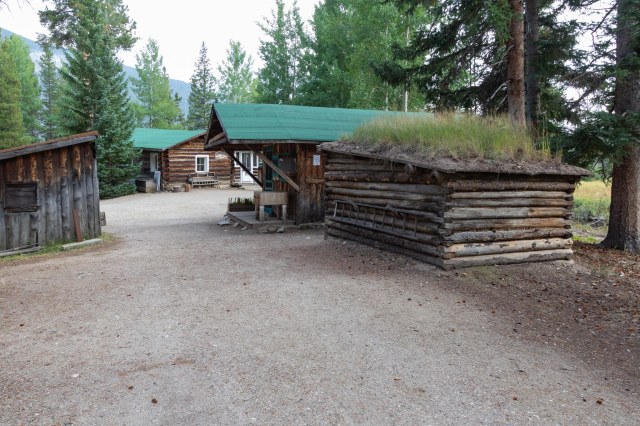
A few of the outbuildings on the ranch

The park service began purchasing other dude and guest ranches that lined the road leading to the national park increasing its footprint. Johnnie refused to sell the original homestead that started the family’s successful business after seeing that the park service tore down everything, hauled it away, and let the land return to its natural state.

The Tent House

After reaching an agreement to maintain the property and the buildings as a historic site, Johnnie finally agreed to sell in 1974.

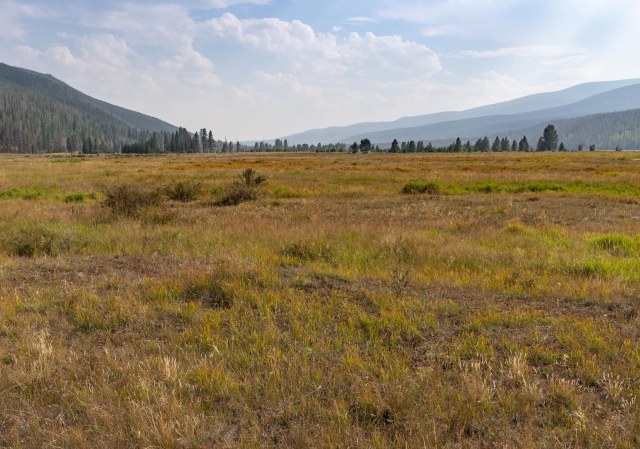
Imagine horses or crops growing in this valley

Today, VIPs (volunteer-in-park) greet visitors from June through the beginning of September to tell the Holzwarth family story. They also give visitors a glimpse into the history of a homestead life, and what it was like to visit a dude ranch back in the day.

The Colorado River is pretty tame in August

We walked into a cozy two-room cabin. One room contained a stove, a small table, a cupboard for dishes and food, and a work shelf with bowls served as a sink. The second room contained a queen-sized brass bed. What more does one need after a day of fishing? A bathroom perhaps? Remnants of outhouses stood a few yards from the porch, which had a wonderful view of the Colorado River.
Holzwarth irrigation dam

I’m glad Johnnie Holzwarth held out for the promise that the park service would preserve his family’s property for future generations. Otherwise, this piece of history would have been lost. How disappointing it would be to read a sign that says, “this happened here once upon a time” and find no evidence that it existed at all. I much prefer to gain insight into history through experience.

Ranch equipment

I don’t think it necessary to retain all of history for future generations, but a nice sampling is definitely worthwhile for us to learn how people lived years ago.

Wildlife Sighting

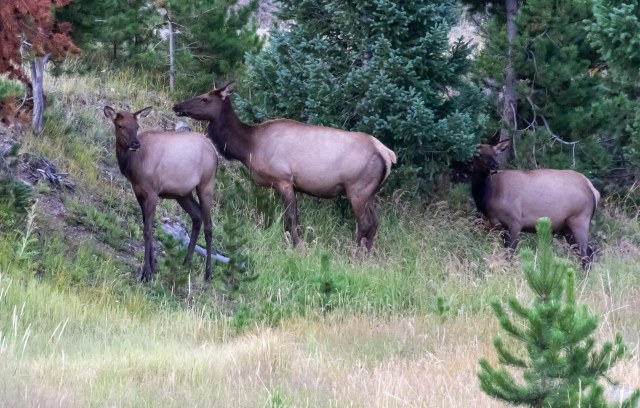
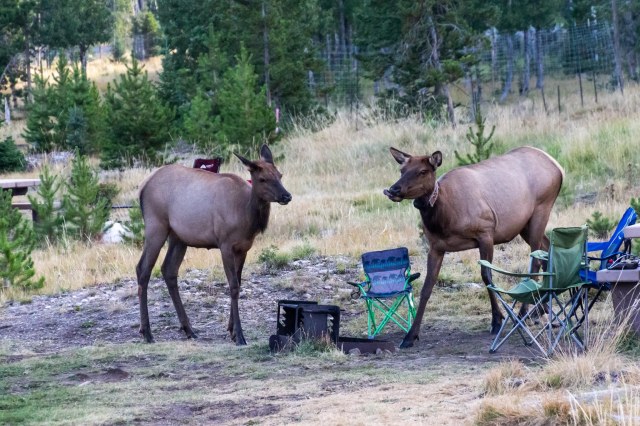
One morning, we woke to Elk grazing their way through the campground. They managed to stop traffic on the road and ignored the campers gawking and taking pictures as they ambled through the grass.

Munch, munch, I see campers staring at me

I found it comical when they sniffed around our neighbor’s trailer and campfire ring. They must have been looking for a taste of the s’more’s the family roasted up the night before.

This grass is tasty. I wonder what’s in the trailer.
Check out that tongue. Talk about licking the old chops. Yum, charcoaled marshmallow.

Coyote Valley Hike

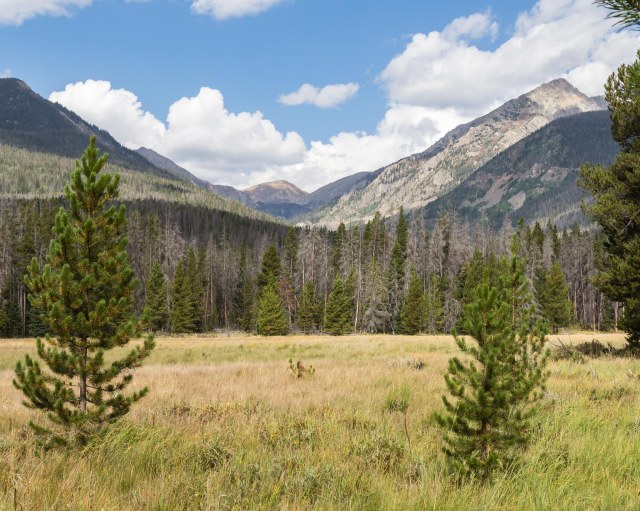
 The Coyote Valley Hike turned out to be a leisurely walk in the valley. We met a ranger volunteer and stopped to talk with her awhile. She told us that the mountain pine bark beetle infestation happened ten years ago and the beetles had moved on. The lodgepole pine trees most affected had reached the end of their lifespan of 90 to 100 years at the time of the infestation. Small trees reaching for the sun between the dead trunks and limbs was a sign that a new forest would soon replace the dead one.

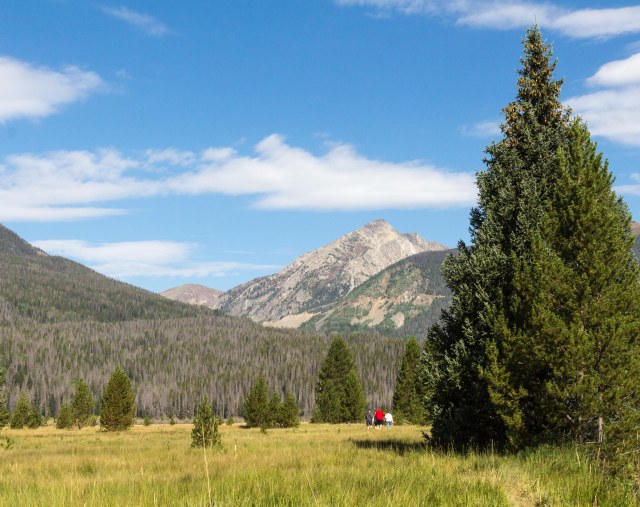
Coyote Valley

The Colorado River Glacier carved out the valley which measures 20 miles long. Remnants of glacial ice still occupy the east-facing valleys high in the Never Summer Mountains.

The trail is marked well with information signs along the way
Colorado River meanders through the valley

Recent history saw the Utes and Arapahos hunting in the valley until the 1870s when a mining boom pushed them out. Homesteaders tried their hand at ranching after the mining boom ended in 1886. In the 1920s, tourism brought fortunes to the homesteaders who operated the dude ranches, providing places to stay including meals. The valley has now returned to a more natural state.

Grand Lake

We made a run into Grand Lake to refill the truck, a propane bottle, and gas can. Then we searched for a restaurant for lunch. The Blue Water Café turned out to be a good choice. They served a chicken avocado sandwich on a toasted croissant with crisp lettuce and sweet tomatoes. The side salad, topped with tomatoes, cranberries, and cheese, was equally delicious. The ranch dressing was one of the best I’ve had. On the thin side and packed with herb flavoring, I wished I could have taken a bottle home.

Grand Lake Street Scene

Grand Lake is the largest natural body of water in Colorado and part of the Colorado River headwaters. The city, established in 1881 and incorporated on June 23, 1944, sits at an elevation of 8,369 feet. Once an outfitting and supply depot for mining settlements, it is now a tourist destination. Wikipedia lists Tim Allen, the actor, as a notable resident who married his wife Jane Hajduk there in 2006.

Blue Water Bakery Cafe
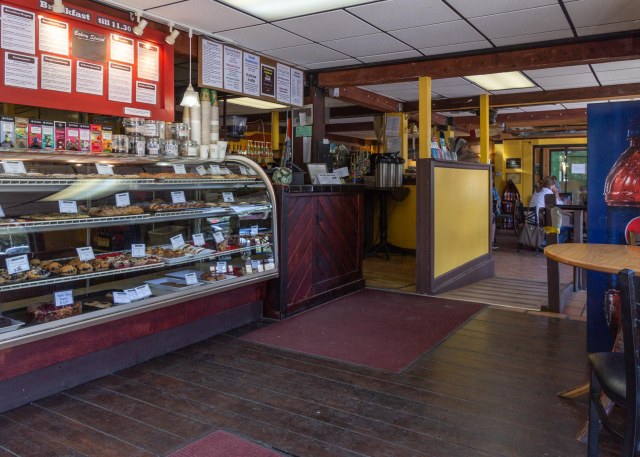
Inside Blue Water Bakery and Cafe
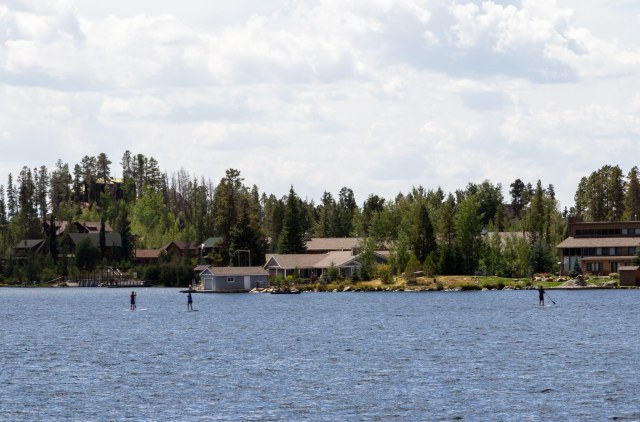
View across Grand Lake

Mountain Food Market and the People of Colorado

A trip to the market followed our lunch. It was such a tiny little store with every nook and cranny crammed with merchandise. The narrow aisles made it difficult when more than one basket wielding shopper was searching for items to buy. Even so, everyone was polite, saying excuse me and trying to get out of each other’s way.

It seemed like everyone we had encountered in Colorado had smiles on their faces and positive polite attitudes. Could this be because we had mostly been in rural and recreation areas so far? Would things be different closer to the metropolitan areas?

Next up we head to Lyons, Colorado, about 20 miles east of the park and 17 miles north of Boulder.

Safe Travels