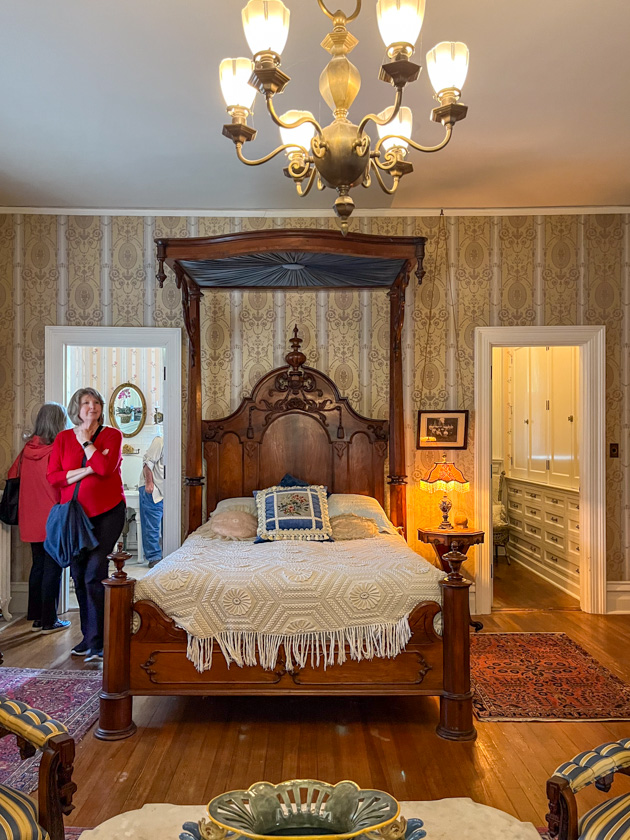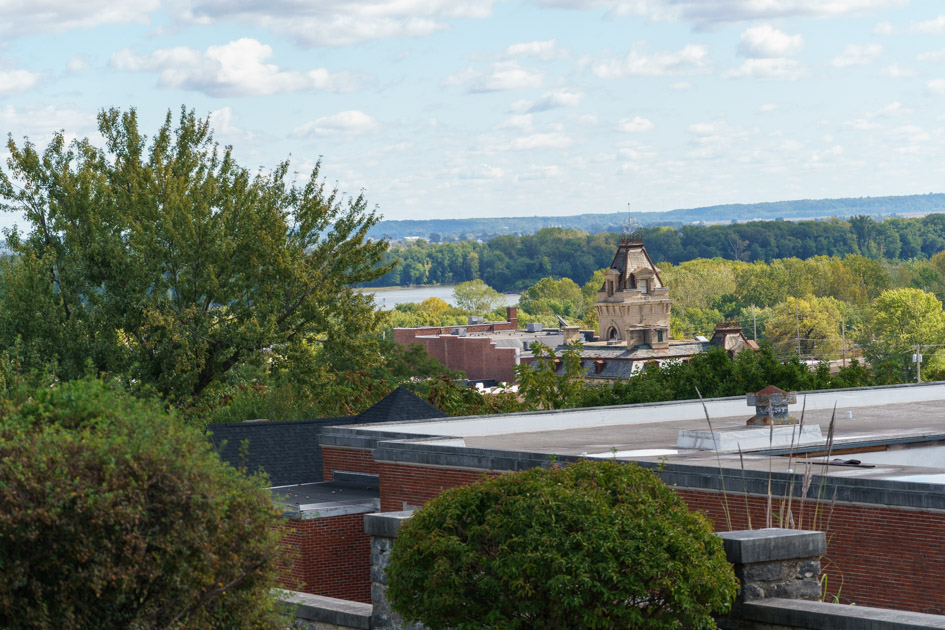
2023 Fall Adventure Episode 8: Hannibal Missouri, Mark Twain Boyhood Home and Museum

October 8, 2023. Finally, time to explore Mark Twain’s Hannibal, Missouri. I fell in love with my fellow Sagittarius writer at an early age. About the time in my life when I was looking for people to admire, I read the Adventures of Tom Sawyer and Adventures of Huckleberry Finn. Learning more about the author convinced me that Samuel L. Clemens must be on my list of most admired people.

The town has gone all out to honor their favorite son. His name graces business signs, a statue in the harbor honors him as a steamboat captain, a museum details his life story. And homes where he and his friends lived extend the museum experience.

The Boyhood Home

The Boyhood Home was built in 1843 or 1844. The Clemens family lived there until they moved above Grant’s Drug Store.
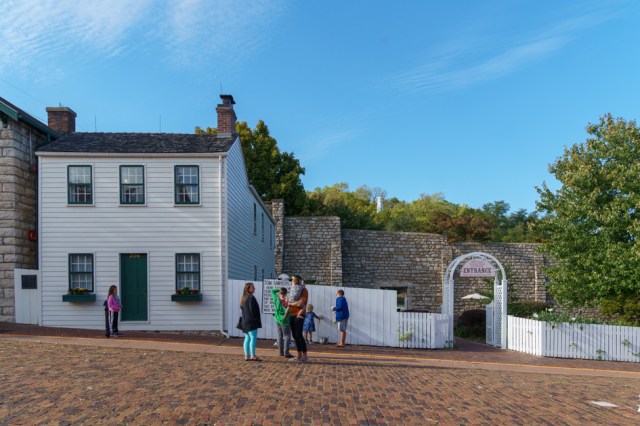
The Boyhood Home where children can try their hand at painting the fence.
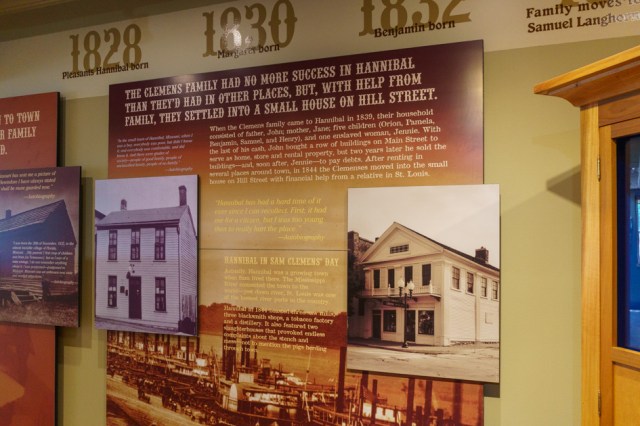
Timeline of the Clemens family in Hannibal, Missouri

A bit of history reveals the John Marshall Clemens family of five moved to Hannibal, Missouri, in November 1839. Eight years later, Samuel’s father died from pneumonia, leaving the family in poverty. Samuel left school to work and help keep the family afloat. He hopped from one job to another, getting fired or quitting work he found boring. These included stints as a grocery, bookstore, and apothecary clerk; he also worked for a blacksmith and delivered papers for the Hannibal Gazette.
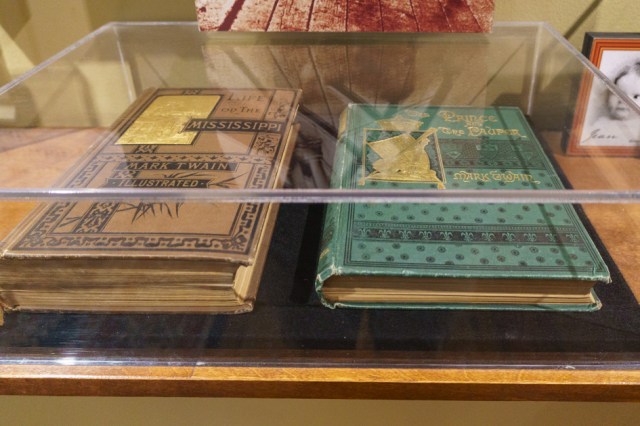
Life on the Mississippi and The Prince and the Pauper books by Mark Twain
Twain with his characters

Eighteen months after his father’s death, his mother Jane apprenticed the boy to Joseph P. Ament, the new publisher of the Gazette. Typesetting suited Samuel better than his previous forays in the working world. Later, he worked for his brother Orion on his paper and started writing articles and short stories. And the rest, as one might say, is history I’ll leave to readers to explore on their own. The photos below are but a few of many I took on our self-guided tour.

Sample of interpretations in the museum and homes
Twain stood 5′ 8″, by his account
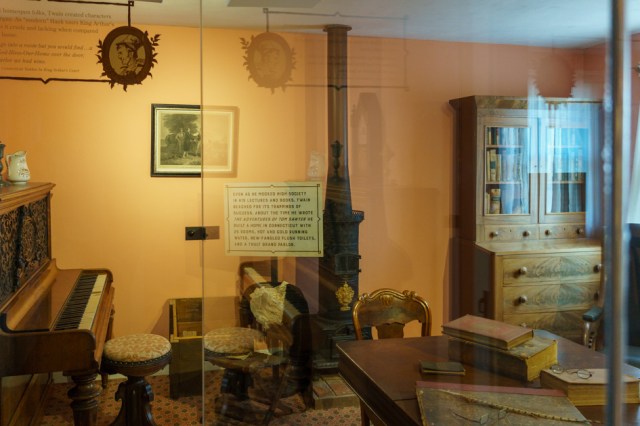
The parlor room
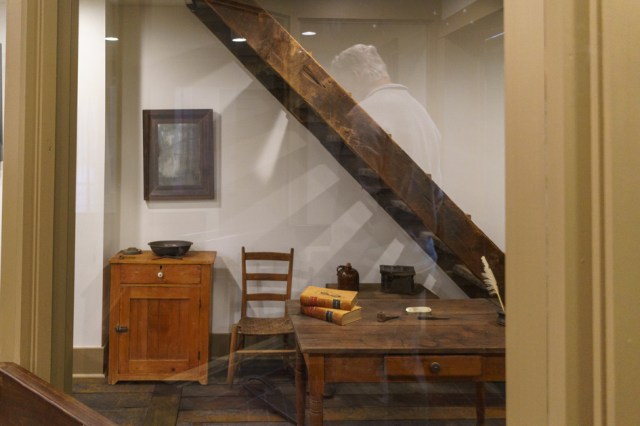
The boys’ room

The Blankenship Home (Huck Finn)

The following photos are of the rebuilt Blankenship Home, identified as the home of Huck Finn. The original Blankenship house was demolished in 1911. Chris Coons owned the land in 1998 and donated the property with a stipulation the home would be reconstructed.

Rebuilt Huck Finn house

The Parham family funded the reconstruction. The builder used the original plans and materials as a guide, making modifications to correspond to a photo that showed the original house was framed and not built as a log cabin.
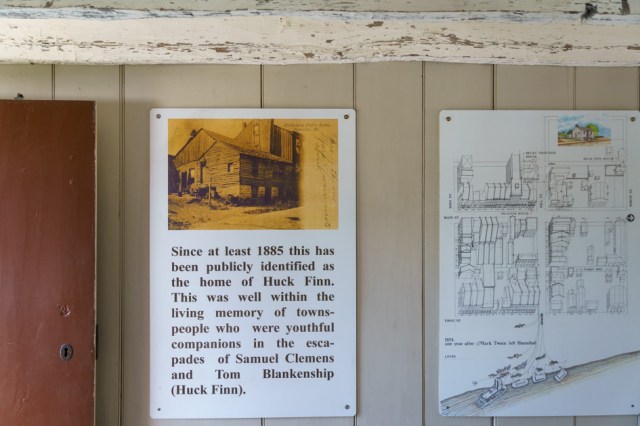
The house was completed and dedicated on May 26, 2007.

The Hawkins Home (Becky Thatcher)

The following photo is of the Elijah Hawkins’ house where his daughter Laura (Becky Thatcher) lived. The home went through a full restoration in 2013 and in 2020, a new interpretation was installed.
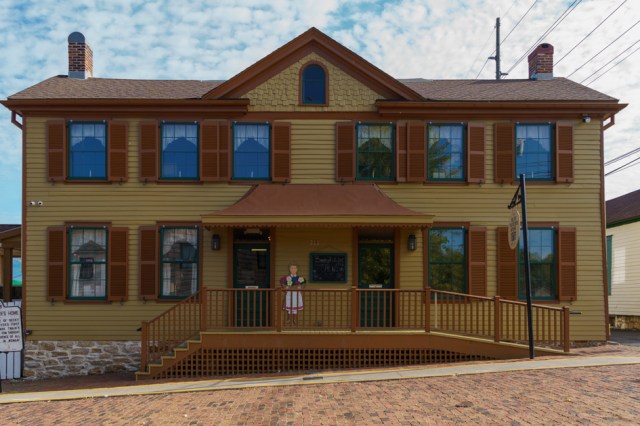
Becky Thatcher House

Justice of the Peace Office

Inside Judge John Marshall Clemens’ justice of the peace office

Grant’s Drug Store

Hard times hit the Clemens family in 1846, so they moved above Grant’s Drug Store. Samuels’ father died in one of the rooms on March 24, 1847. Mrs. Sarah Marshall Mahan gave the building to the city in 1955. (Imagine living in a house where Twain slept) The building opened for tours to the public in 1959 after extensive rehabilitation. Additional restoration took place in 2017 and the museum installed a new interpretation in 2020.

Grant’s Drug Store, also known as the Pilaster House
Grant’s Drug Store building
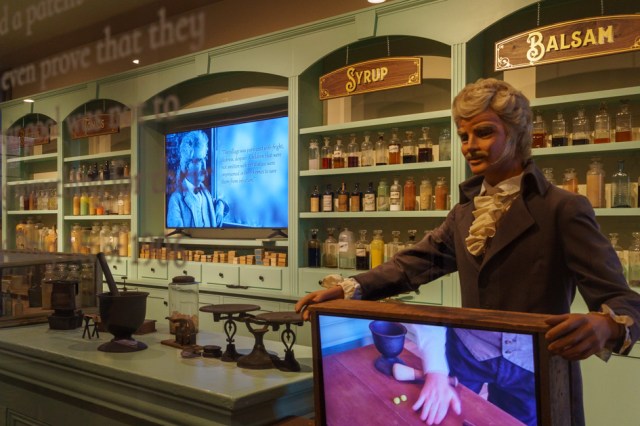
Apothecary
Upstairs dining area
Upstairs office

Mark Twain Museum

The museum holds a collection of Norman Rockwell paintings, books, and artifacts.
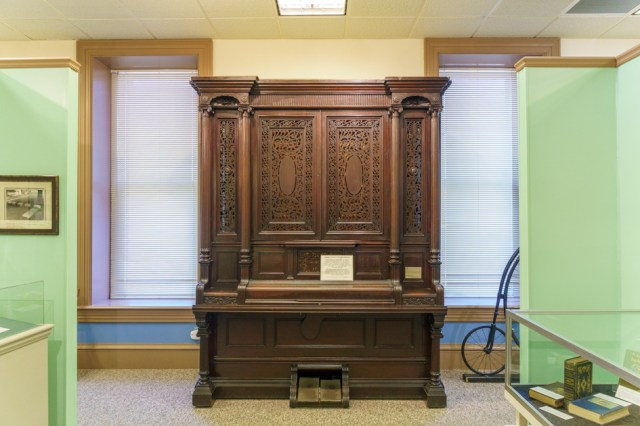
Mark Twain’s Orchestrelle
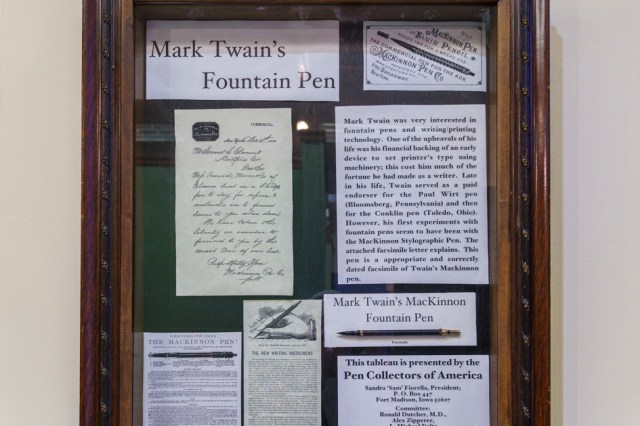
Mark Twain’s Pen

In 1935, Heritage Press commissioned Norman Rockwell to illustrate special editions of The Adventures of Tom Sawyer and The Adventures of Huckleberry Finn

Norman Rockwell paintings

Rockwell completed preliminary sketches of the paintings before he visited Hannibal. He had to redraw one of those sketches because it did not match the actual house.

This photo shows a roof and shutters, but this did not match the actual house.
So, Rockwell revised the sketch to include a drain pipe and eliminated the shutters.
Twain converses with his characters

Several years ago, I visited Twain’s home in Hartford, Connecticut, and gained a deeper understanding of the man in his prime. We’ve seen the replica cabin near Angels Camp, California, where Twain gathered material for his short story, “Jumping Frog of Calaveras County” and the semi-autobiographical book Roughing It. And in Virginia City, Nevada, Mark Twain popped up as an editor of the Territorial Enterprise.

On this day, I gained a deeper understanding of the town, the boy, and the friends and neighbors that inspired many of the stories Twain wrote. One of these days I hope to visit Elmira, New York, where Twain and his family spent many summers with his sister-in-law’sfamily.

Up Next: A riverboat cruise, a lighthouse, lover’s leap, and a walk through Sodalis Nature Preserve

Safe Travels

2023 Fall Adventure Episode 7: Rockcliffe Mansion in Hannibal, Missouri

We had a short two-hour drive from Jefferson City to Hannibal Caves and Campground on October 6, 2023. I was eager to explore Mark Twain’s childhood stomping grounds, which inspired his books, The Adventures of Tom Sawyer and The Adventures of Huckleberry Finn.

But first we checked out the Marina and Riverfront Park where a memorial to Mark Twain stood and the American Serenade had docked.

Mark Twain as a Steamboat Captain

We noticed a discernible difference between the Mississippi that flowed by Hannibal and what we saw in St. Louis. Here the water looked cleaner, not as muddy, and the river banks were prettier to look at, not as industrial.

American Serenade in dock

Before we gorged on all things, Mark Twain, we visited the 125-year-old Rockcliffe Mansion that served as J. J. Cruikshank’s family home from 1900 until his death in 1924.

Rockcliffe Historic Mansion

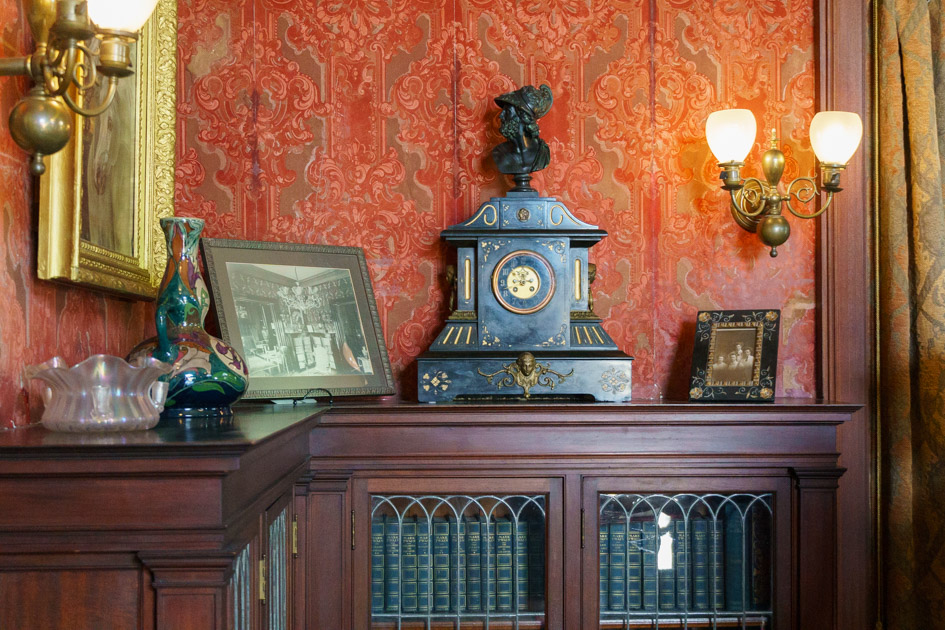
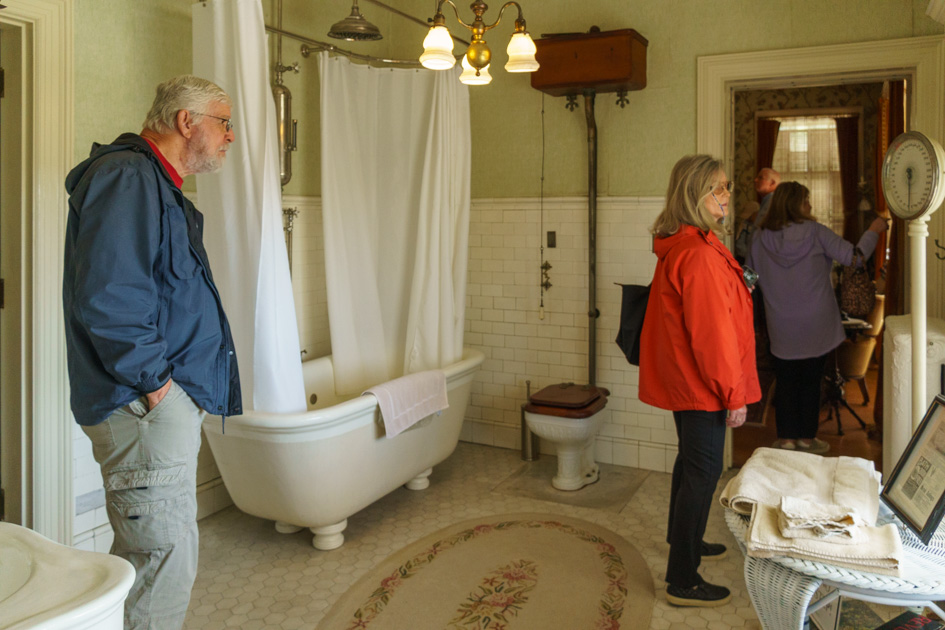
What’s unusual about this historic home is that, except for caretakers who lived there for several years, the family had abandoned it for 43 years. J. J. Cruikshank, a lumber baron, spared not a penny to decorate and furnish the 12,500 square foot home with lavish amenities, art, and possessions, much of which remain intact. The family of six moved into the mansion during the year 1900.

Welcome to the Mansion
Marble fireplace
Restored chair
Unrestored chair
Thermostat

Upon Cruikshank’s death, the remaining family members moved next door to smaller accommodations. They left most everything behind until the mid-1960s when city officials ruled the building an eyesore and slated it for demolition.

Although teenagers often entered the home during its abandonment, they left the bookcases and books untouched. Typical teenagers.
Sitting room with desk
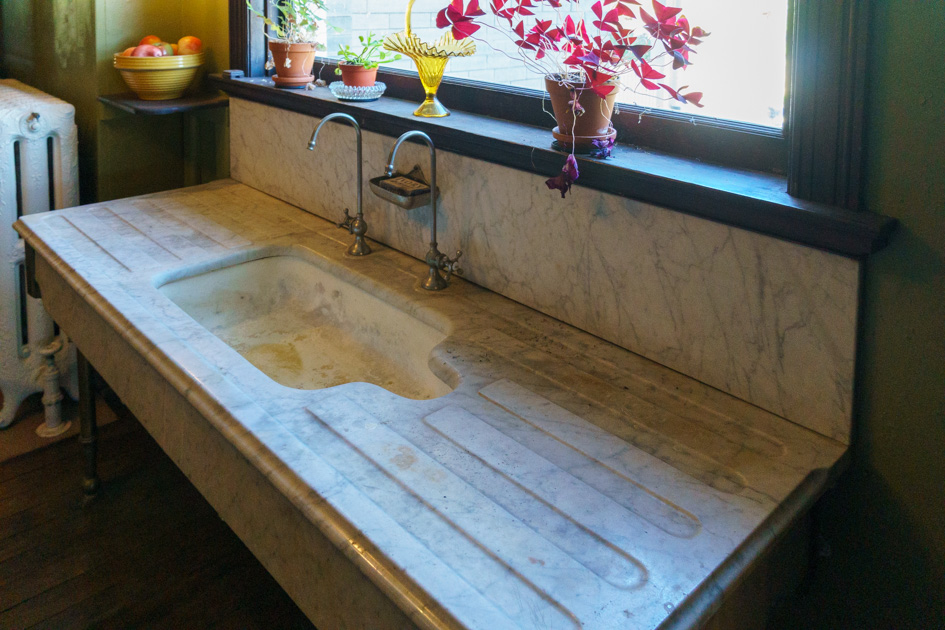
Marble sink counter
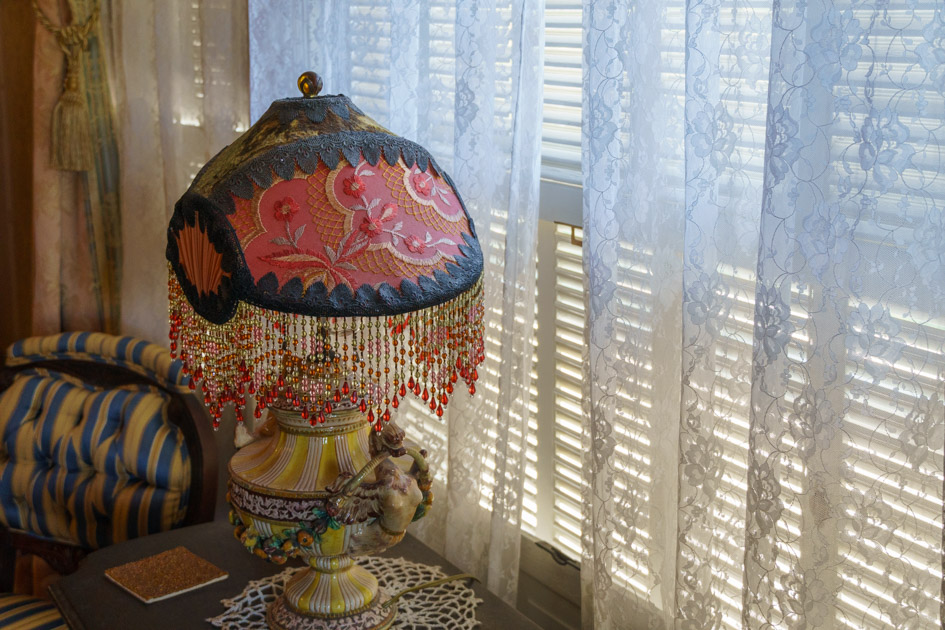
Tiffany lamp
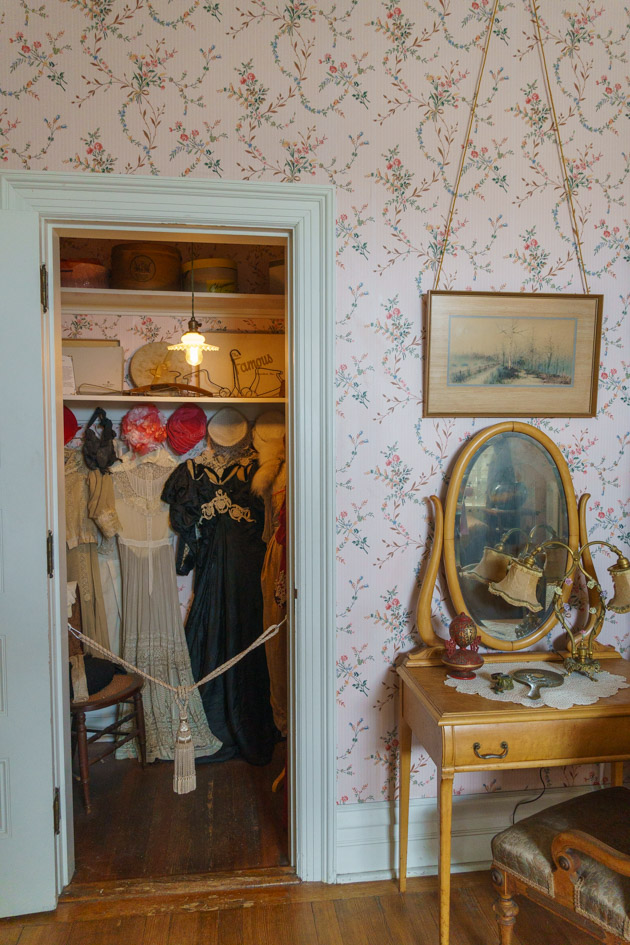
Walk-in closet with dresses from the era.
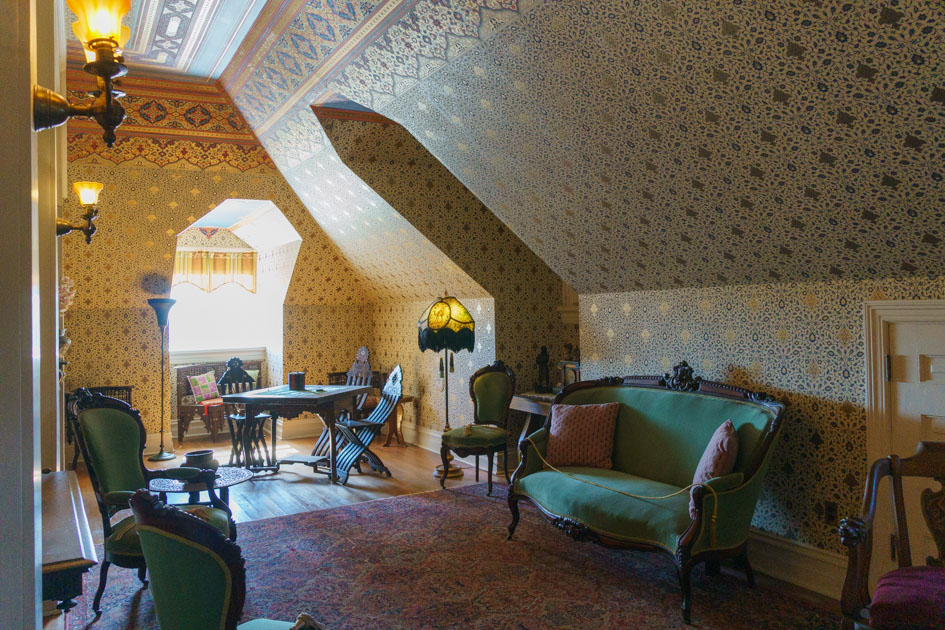
I thought this bedroom had a safari feel to it.
Modern conveniences
Sink and linen closet
Dresser with mirror and trunk in the closet
Card room
Billiards room
Sitting room
Servant’s room with sink
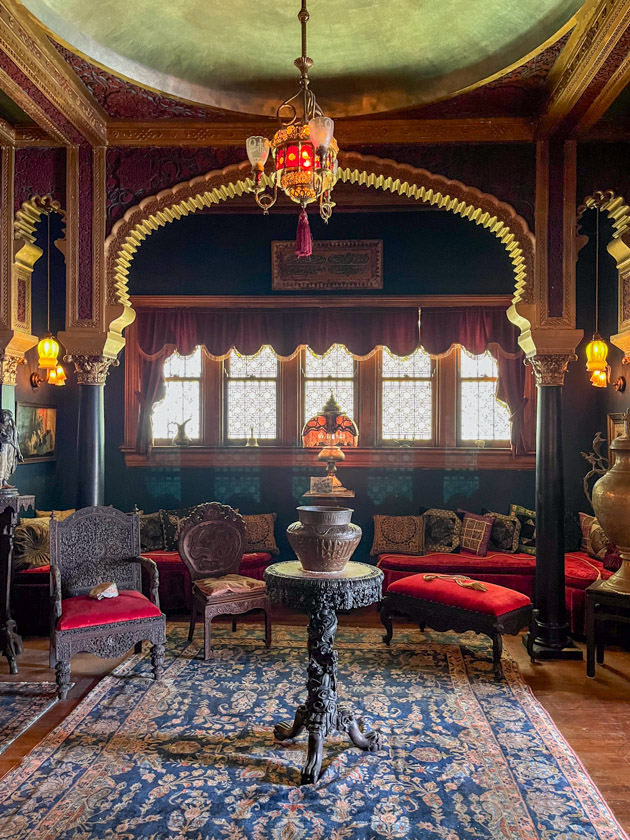
Morocco came to mind when I entered this room.
Formal dining room

Three local families realized the value of the mansion, formed a corporation, purchased the property in 1967, and saved it from destruction. The corporation cleaned up the house and surrounding property and opened it to the public for tours.

Antique stove
Icebox
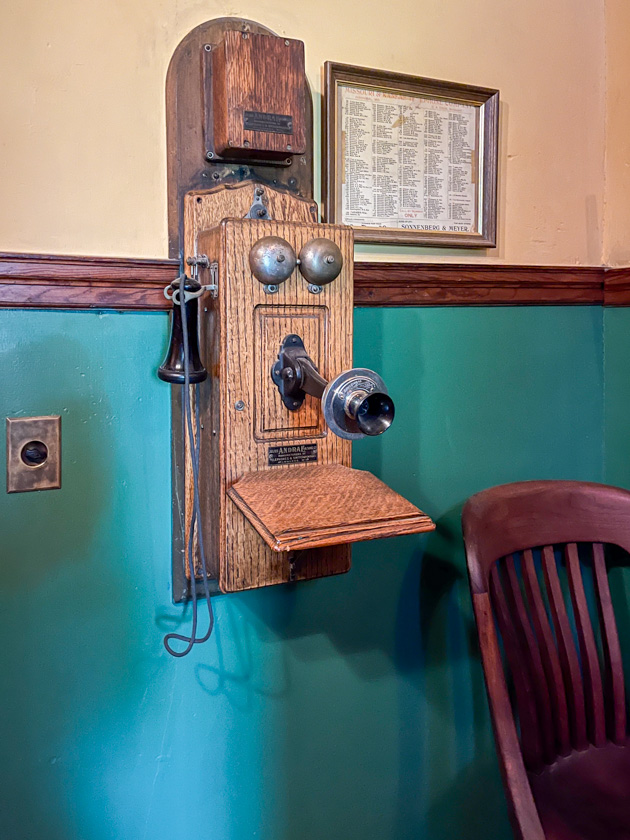
How far phones have come in 100 years

In June 2005, Rick Rose purchased the mansion and had grand plans for further restoration, adding tours, and offering other activities at the property. Falling on hard times, the property fell into bankruptcy five years later.

Another bedroom and bath
Another closet
Detail of bedspread

Through the bankruptcy court, Warren Bitnner, an attorney from Miami, and Juan Ruiz, a banker, bought the house for $567,000 in April 2010. Bittner and Ruiz continue to operate the tours and renovate the mansion as funds are available. Included on their reno list is rebuilding the original porches that once wrapped around the building on either side of the entrance.

Stained glass window on double staircase landing
Closeup of window and table articles
Back and side of mansion with porte-cochere

Fancy a stay in the Rockcliffe Mansion? The Bed-and-Breakfast offers a handful of rooms to choose from. Amenities include a free tour of the house upon check-in at 4:00 pm, a wine and cheese reception from 5:00 pm to 6:00 pm, and a three-course home-cooked breakfast at 8:30 am. Coffee and tea are available at 7:30 am. Enjoy a private bathroom, room air conditioners, and radiator heating while gazing out at the expansive views of the city and river. Book rooms from March 15 through November 15.

View of city and Mississippi River

Next Up: Finally, all things Mark Twain and a riverboat cruise.

Safe Travels
2023 Fall Adventure Episode 6: Runge Conservation Nature Center, Jefferson City, Missouri

On October 5, 2023, our last day in Jefferson City, we explored the Runge Conservation Nature Center, one of several centers throughout the state. The Missouri Department of Conservation, which was founded in 1937, operates the center. The department’s purpose was to restore, conserve, and regulate Missouri’s fisheries, forests, and wildlife. Once funded through hunting, fishing, and trapping permits, a 1976 program dubbed Design for Conservation, also provides funding of 1/8 of 1% of all sales tax dollars.

Runge Conservation Nature Center Visitor Building

Inside the rustic wood building, we found displays of live fish, turtles, and snakes. Also included were taxidermy displays of animals in their natural habitat. These displays rivaled similar scenes at Johnny Morris’s Wonders of Wildlife Museum, although much smaller in scale.

Water turtle
Alligator Snapping Turtle
Rattlesnake
Eastern Copperhead
Mountain Lion
Hoot, hoot, where’s my food? Oh, wait, I don’t eat.

Other exhibits featured a more educational focus by explaining the importance of marshes, wetlands, and timber in the state.

Alcoves were set aside for children to play and learn through hands-on activities and an indoor wildlife-viewing area overlooked several bird feeders.

Play and learn area for little ones
Through the viewing windows
The upside down cone keeps the squirrels away.

And art gallery of display boards featured paintings by local artists.

Art display

We wandered around inside the building for an hour or more and then headed outside where five loop trails crisscross each other. Some trails are paved and accessible for all while woodchips mark the way on other trails.

Note: The center does not allow pets on any of the trails.

Along the way we crossed bridges, climbed steps, stopped at ponds, wetlands, a savanna, a tallgrass prairie, and forested environments.

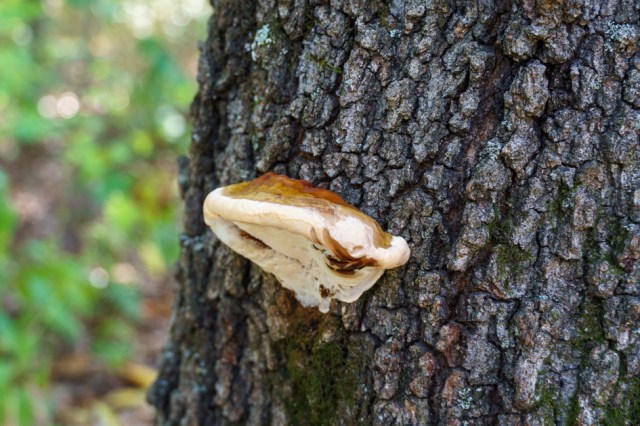
Fungi on bark
Come on, let’s see what’s on the other side
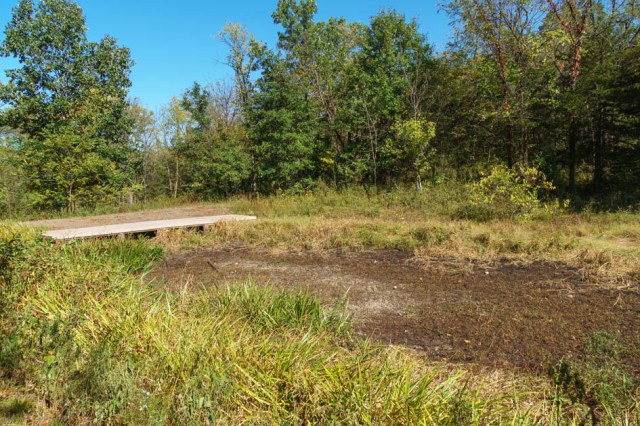
Marshy area
Fall’s a comin’

We caught glimpses of the 70-foot fire tower. Built in 1949 to replace two previous towers, the structure provides historic interpretation. It stood at the Rocky Mount Tower site southwest of Eldon until 2000, when Runge Conservation Center took possession. PA Hess was the towerman from 1956 to 1987. For thirty-one years, he climbed up and down those stairs to keep his neighbors safe from fire.

Fire tower from a distance
Fire tower close up

During much of the 1900s, lookout towers were the primary way to detect fires in the state and communicate their location to authorities. Out of 260 fire towers in Missouri during the 1900s, there remain about sixty, thirty of which are still sometimes used for spotting fires.

The landscape at Runge was once overgrown and thick with invasive plants. A dedicated team of employees and volunteers turned the messy area into a vibrant and diverse environment. An environment that supports animals and plants of different habitats. It’s clear the employees and volunteers continue to maintain the area for future guests.

Having a stressful day at work or at home? Take a nature bath at the Runge Conservation Center, or your local outdoor space, by walking the trails. The center’s compact size will tame the stress and soothe the soul in an hour, or more, if you like. Listen to the birds calling each other, watch lizards and squirrels dart in and out of underbrush, and feel the breeze on skin. We did and still had time to wash a few loads of clothes when we returned to our home away from home.

One of the best parts of the nature center is that it doesn’t empty your bank account. Free makes Runge the right price and right size for young families.

Up Next: Hannibal, Missouri

Safe Travels

2023 Fall Adventure Episode 5: State Capitol Jefferson City, Missouri

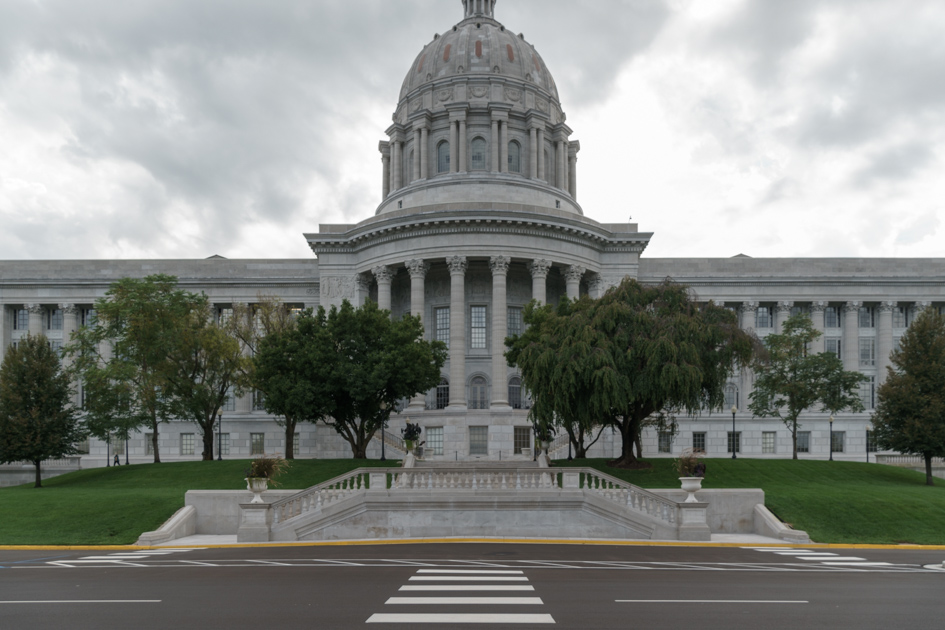
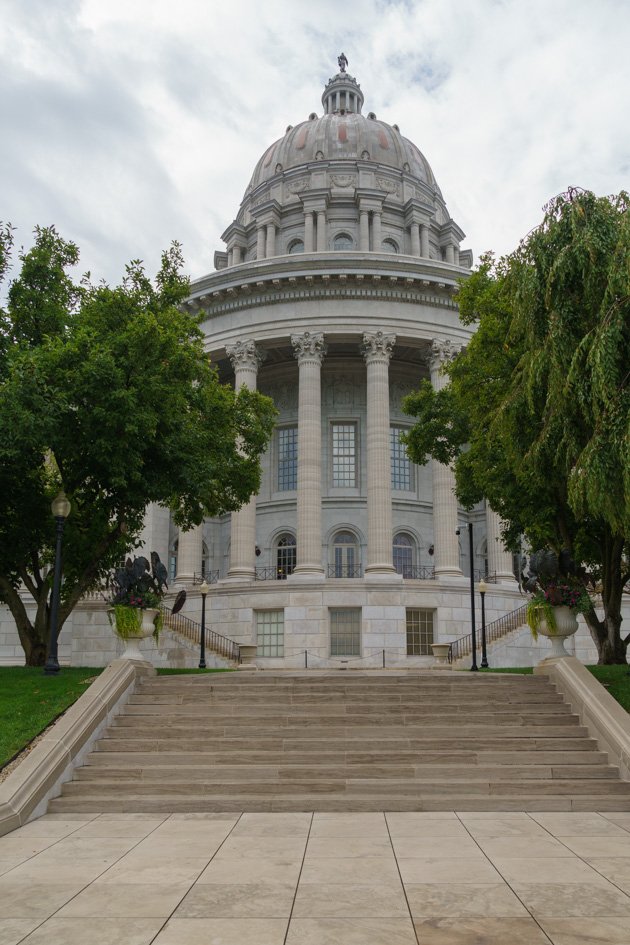
State of Missouri Capitol Building

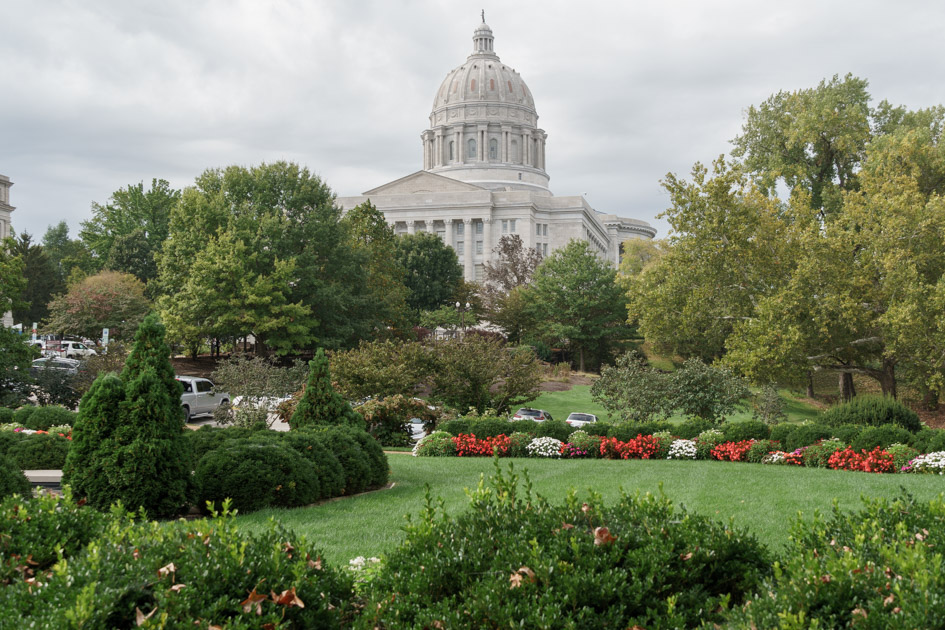
The current capitol building is the third for the state, after the first and second buildings were both damaged by fire. As soon as we neared the city, the Baroque dome (rising 238 feet (73 m) was easy to spot and beckoned us to come take a glimpse. The structure is listed on the National Register of Historic Places and is a contributing property in the Missouri State Capitol Historic District. Over the past 107 years, the state has done a great job of upgrading, expanding, and preserving the building, originally completed in 1917.

At the top of the dome stands a bronze statue of Ceres, the Greek goddess of agriculture.

We don’t dare pull our truck into a parking garage because they rarely are tall enough for our beast. So we circled around the capitol, searching for a parking spot on the street. Then I saw the Reserved Veteran Parking sign. Ding, ding, ding. With Jon’s veteran status, we had hit the parking jackpot.

Reserved veteran parking? Yes, please.

Across the parkway from the building is the Fountain of Centaurs and a bronze relief depicting Monroe, Barbe-Marboise, and Livingston, signing the Louisiana Purchase, which doubled the size of the United States. The state purchased much of the art inside and outside of the capitol building with $1 million dollars left over from construction.

Fountain of the Centaurs by Alexander Weinman

Relief of the Louisiana Purchase signing by Karl Bitter
Visitors will notice the Missouri Seal replicated throughout the building. This one was above the elevator doors.
Historic artifacts lend to the authenticity and age of the building
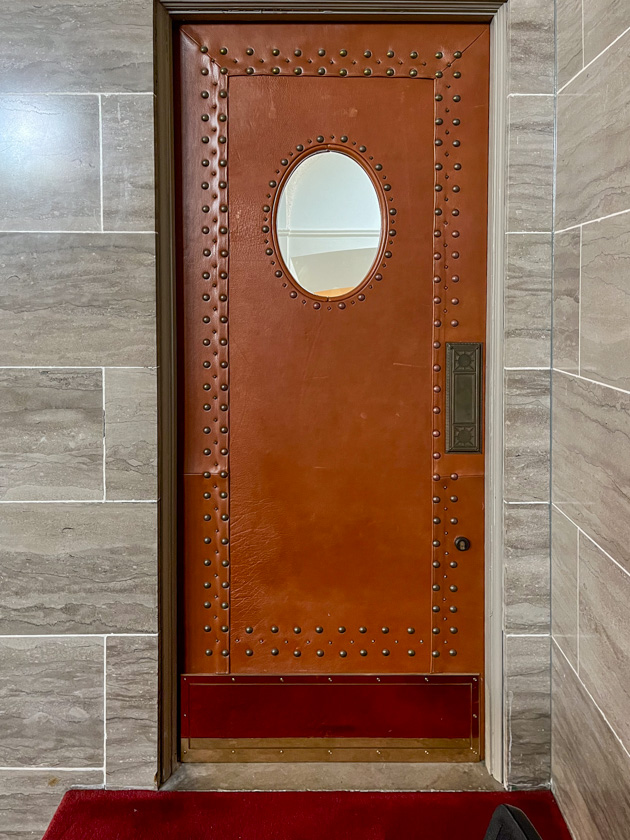
Leather covers the doors to the House and Senate Chambers

Symbols are displayed everywhere in the building and the House Chambers is no exception. To name only a few, the large stained glass window represents the glory of Missouri peace. Created by H.T. Schlader Mundt in 1924. To the left of the dais is a light-colored painting of Abraham Lincoln representing the republican party. On the right side is a dark-colored painting of Thomas Jefferson representing the democratic party.

House Chambers

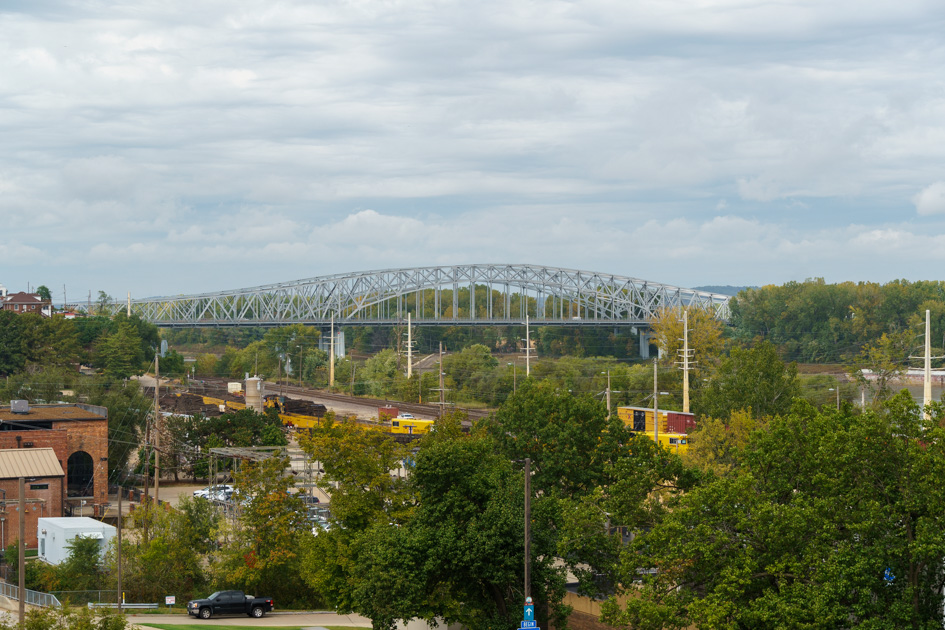
We found a few spots around the building where we had expansive views of what lies beyond. Here are a few of those photos.

View of parking garage entrance and the bicentennial bridge that leads to Deborah Cooper park on Adrian’s Island.
View of the Jefferson Bridge, which was renamed Senator Roy Blunt Bridge by the state legislature in 2022.
St. Peter Catholic Church was established in 1846 and the building erected in 1883. Listed on the National Register of historic places on June 18, 1976.

The half-moon paintings below are called lunettes. Forty-one of these paintings grace the second floor walls. They depict historic events in Missouri’s history.

The Battle of Wilson’s Creek August 10, 1861
The Battle of Westport October 23, 1864

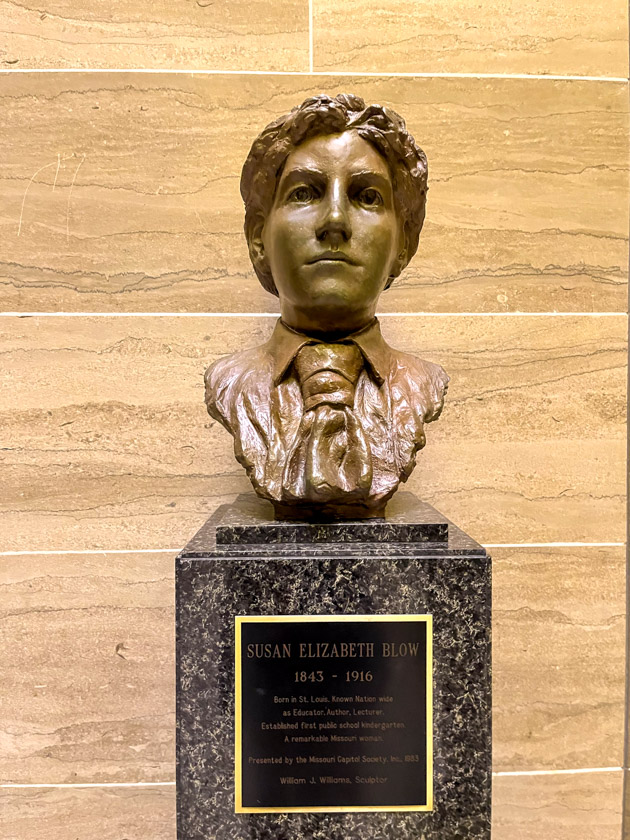
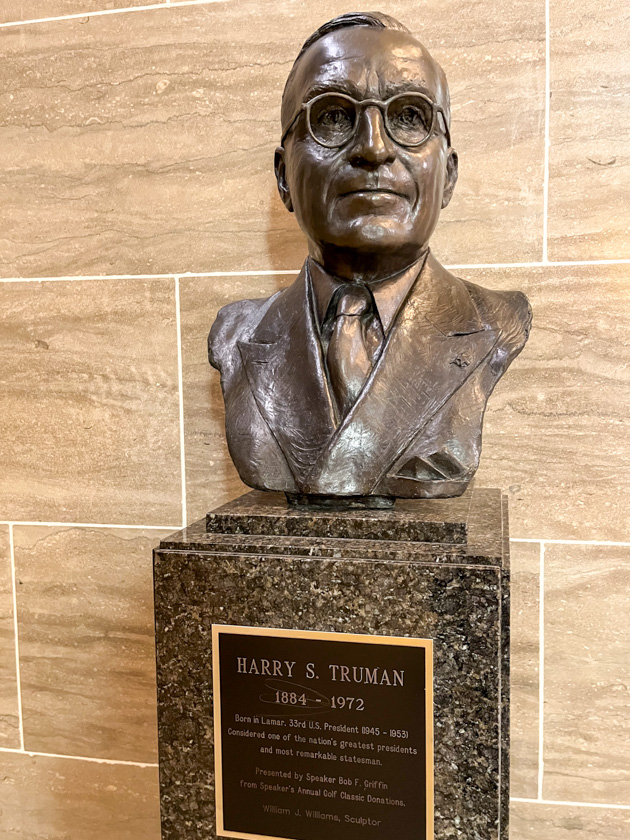
The third-floor rotunda is where visitors will find the Hall of Famous Missourians. Bronze busts honor their achievements and contributions to the state. I had fun finding the well-known and not so well-known people, at least by me, who had made a difference in the world.

Of course, Samuel Clements (aka Mark Twain) would be so honored.

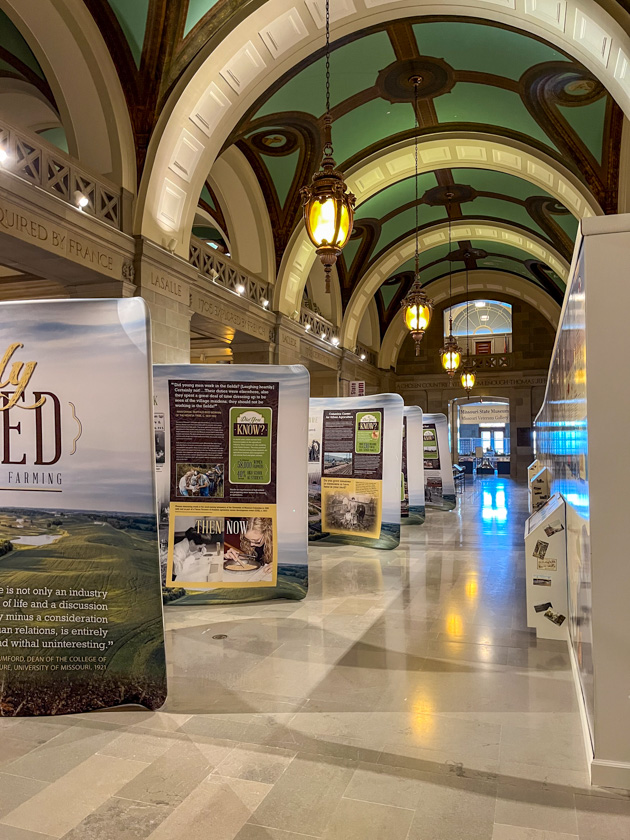
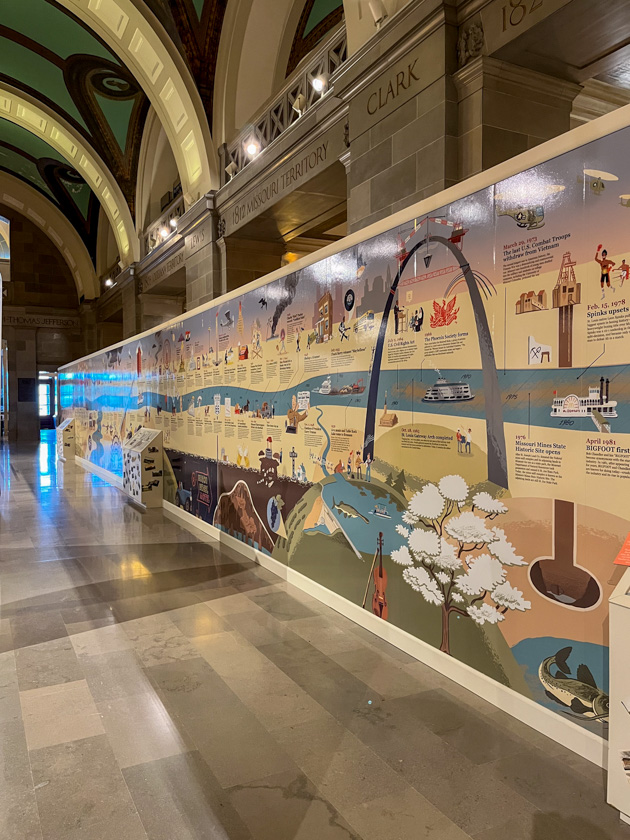
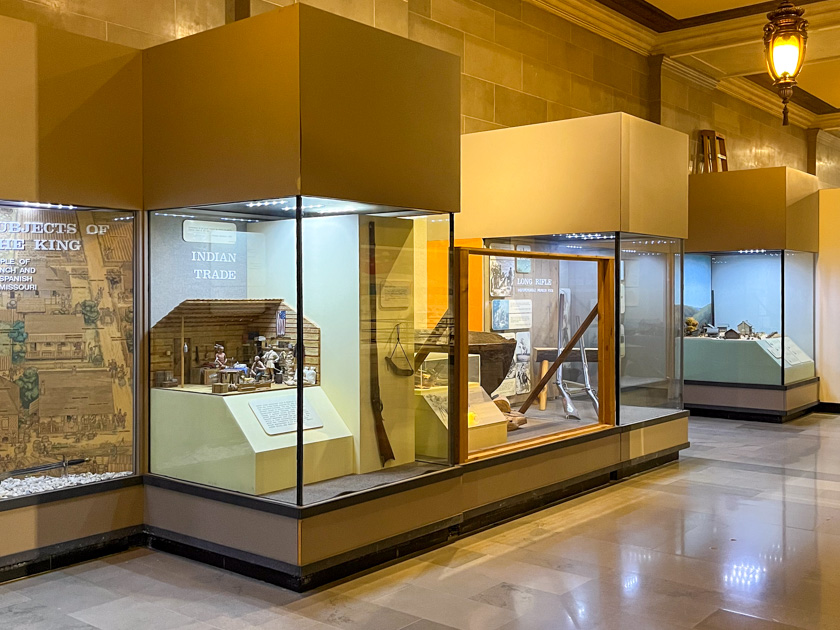
The Missouri State Museum occupies much of the first floor of the capitol building. On one side of the rotunda are displays about the historical events that shaped the state, including a timeline. On the other side, the state’s resources take center stage.

State resources portion of the museum
Historical timeline mural tells the Missouri story.

Various displays tell the stories. These displays discuss the Osage people who roamed the lands before the white settlers arrived.

Museum displays

After our tour of the capitol, we found two other places to explore within a short walk: the Governor’s mansion, which has served as the governor’s residence since 1872, and the Jefferson Landing State Historical Site.

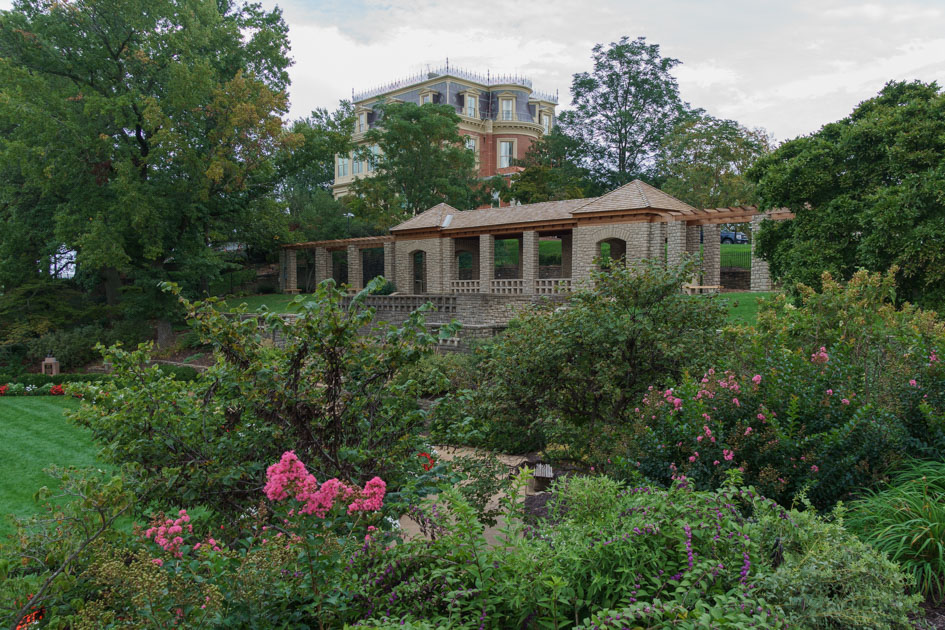
Governor’s Mansion garden with the historic Lohman Building and Union Hotel of the Landing site in the upper left background

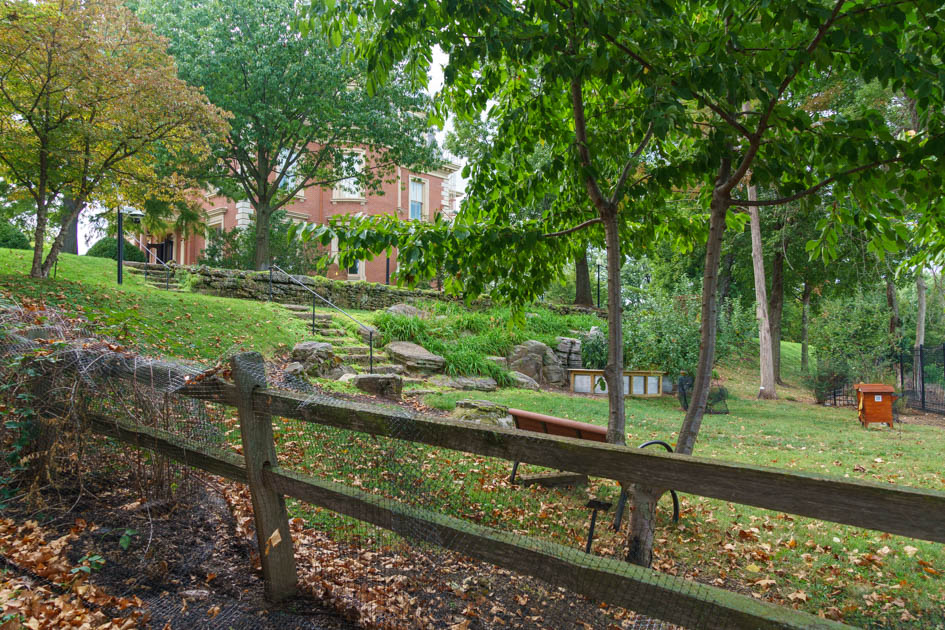
Imagine living in the mansion that sits up on a knoll and encompasses 10 acres of gardens. With views of both the Missouri River and the State Capitol, the governor can keep a watchful eye on their domain.

View of mansion from the garden

George Ingham Barnett designed the building in the Second-Empire architectural style. It took eight months to construct, with the help of prisoners from the nearby penitentiary.

Front of the Governor’s Mansion
Back of Mansion
Side view
View of capitol building from the mansion garden

The Landing comprises two buildings. The Union Hotel and the Lohman buildings.

The Lohman Building is the oldest existing building in Jefferson City. Charles Maus and his brother-in-law, Charles Lohman, bought the east section of the Crump’s building and opened a general store in 1852.

Lohman building
River side of Lohman building

Maus built the hotel across the street in 1855. The state acquired the hotel and the Lohman Building in the 1960s and surrounding land to use it as a parking lot. Concerned citizens had other ideas. In 1974, the state’s official bicentennial project adopted the Jefferson Landing as its project. Restorations took place and the Lohman building opened to the public on July 4, 1976. Today, Amtrack uses the first floor of the hotel as a train station.

Union Hotel
Rear of Union Hotel
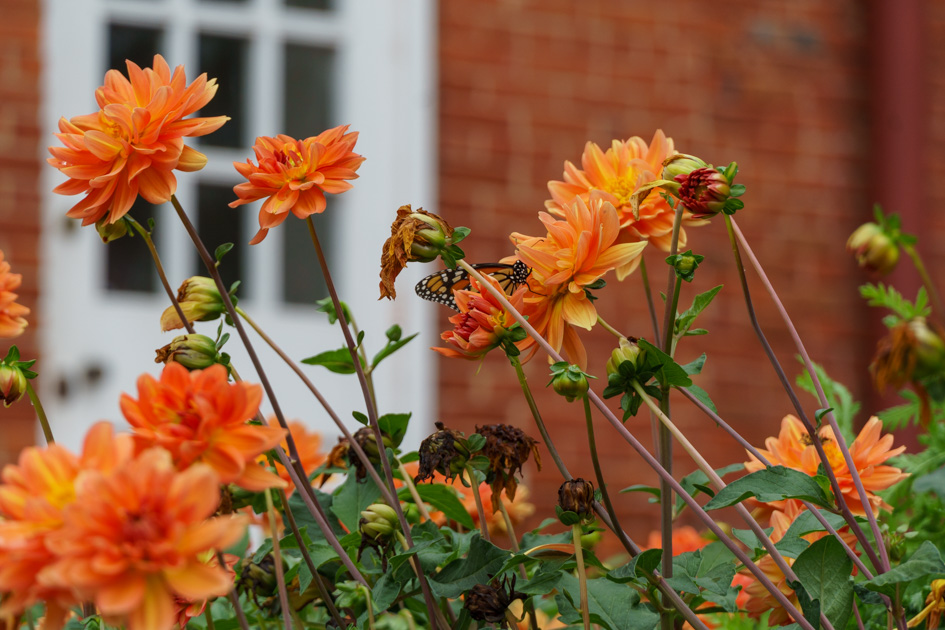
Butterfly in orange blossoms

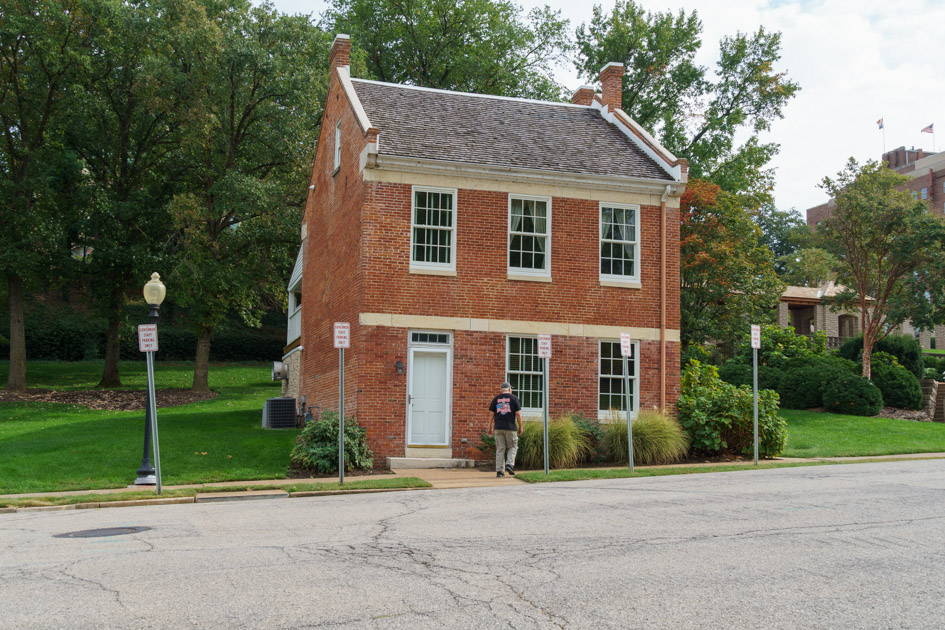
Christopher Maus, a stonemason, built the pre-civil war brick home (pictured below) near The Landing around 1854. Christopher Maus was the brother of Charles Maus. The state maintains the house along with the State Historic Site. Unfortunately, it is not open for tours.

Christopher Maus House

I saw this plaque and read that it marked the place of a time capsule. Oh, wouldn’t it be great to come back and see what’s inside when they open it? On closer look, I realized that trip, would not be possible.

Missouri State Parks time capsule

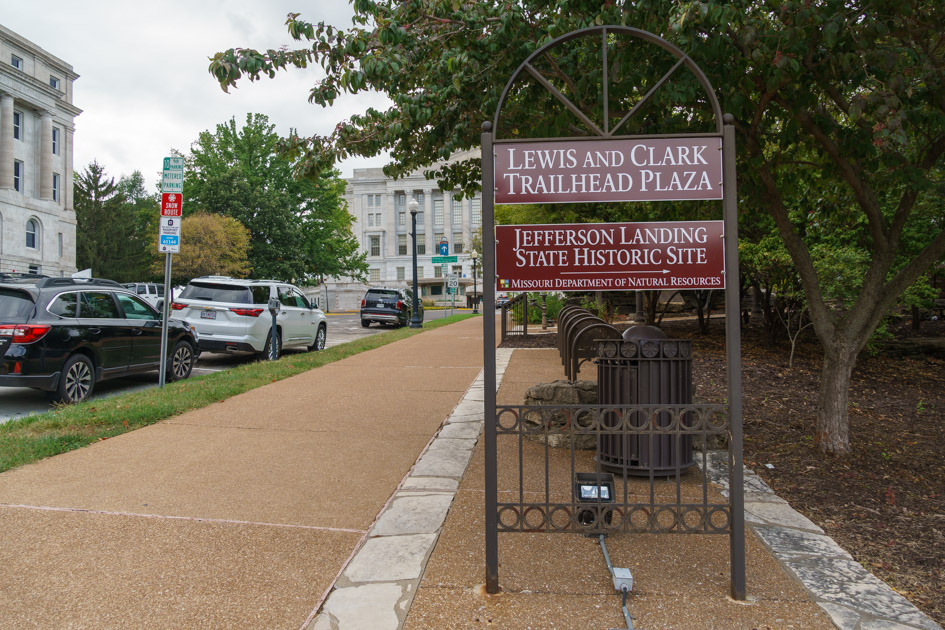
As we walked back to the truck, I noticed the Lewis and Clark Trailhead Plaza. The sign led to a memorial that commemorates the famous expedition. I couldn’t help but think about how different the area looks today compared to when the company camped in the area on June 4, 1804.

History captured my attention and imagination on this day. While grocery shopping an hour later, I thought about how people lived in the 1700s and 1800s and even the early 1900s. Their struggles to provide for food and shelter and safety made me thankful for how easy we have it today. All we need to do is walk into our local grocery store and pick what we need or want from the abundance of produce and other products available. How lucky we are to live in these times.

Next up: We visit the Runge Conservation Center in Jefferson.

Safe Travels