On October 5, 2023, our last day in Jefferson City, we explored the Runge Conservation Nature Center, one of several centers throughout the state. The Missouri Department of Conservation, which was founded in 1937, operates the center. The department’s purpose was to restore, conserve, and regulate Missouri’s fisheries, forests, and wildlife. Once funded through hunting, fishing, and trapping permits, a 1976 program dubbed Design for Conservation, also provides funding of 1/8 of 1% of all sales tax dollars.
Runge Conservation Nature Center Visitor Building
Inside the rustic wood building, we found displays of live fish, turtles, and snakes. Also included were taxidermy displays of animals in their natural habitat. These displays rivaled similar scenes at Johnny Morris’s Wonders of Wildlife Museum, although much smaller in scale.
Water turtle
Alligator Snapping Turtle
Rattlesnake
Eastern Copperhead
Mountain Lion
Hoot, hoot, where’s my food? Oh, wait, I don’t eat.
Other exhibits featured a more educational focus by explaining the importance of marshes, wetlands, and timber in the state.
Alcoves were set aside for children to play and learn through hands-on activities and an indoor wildlife-viewing area overlooked several bird feeders.
Play and learn area for little ones
Through the viewing windows
The upside down cone keeps the squirrels away.
And art gallery of display boards featured paintings by local artists.
Art display
We wandered around inside the building for an hour or more and then headed outside where five loop trails crisscross each other. Some trails are paved and accessible for all while woodchips mark the way on other trails.
Note: The center does not allow pets on any of the trails.
Along the way we crossed bridges, climbed steps, stopped at ponds, wetlands, a savanna, a tallgrass prairie, and forested environments.
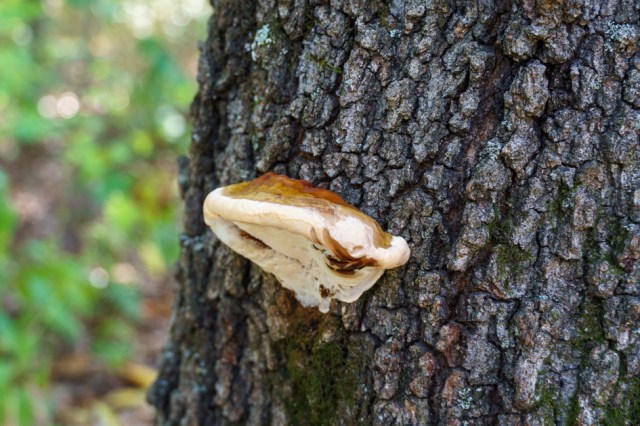
Fungi on bark
Come on, let’s see what’s on the other side
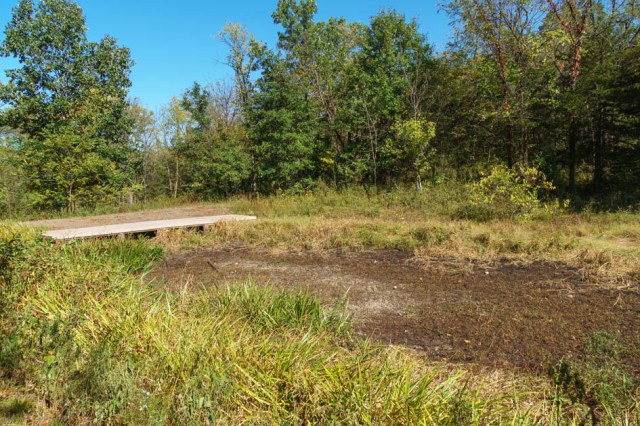
Marshy area
Fall’s a comin’
We caught glimpses of the 70-foot fire tower. Built in 1949 to replace two previous towers, the structure provides historic interpretation. It stood at the Rocky Mount Tower site southwest of Eldon until 2000, when Runge Conservation Center took possession. PA Hess was the towerman from 1956 to 1987. For thirty-one years, he climbed up and down those stairs to keep his neighbors safe from fire.
Fire tower from a distance
Fire tower close up
During much of the 1900s, lookout towers were the primary way to detect fires in the state and communicate their location to authorities. Out of 260 fire towers in Missouri during the 1900s, there remain about sixty, thirty of which are still sometimes used for spotting fires.
The landscape at Runge was once overgrown and thick with invasive plants. A dedicated team of employees and volunteers turned the messy area into a vibrant and diverse environment. An environment that supports animals and plants of different habitats. It’s clear the employees and volunteers continue to maintain the area for future guests.
Having a stressful day at work or at home? Take a nature bath at the Runge Conservation Center, or your local outdoor space, by walking the trails. The center’s compact size will tame the stress and soothe the soul in an hour, or more, if you like. Listen to the birds calling each other, watch lizards and squirrels dart in and out of underbrush, and feel the breeze on skin. We did and still had time to wash a few loads of clothes when we returned to our home away from home.
One of the best parts of the nature center is that it doesn’t empty your bank account. Free makes Runge the right price and right size for young families.
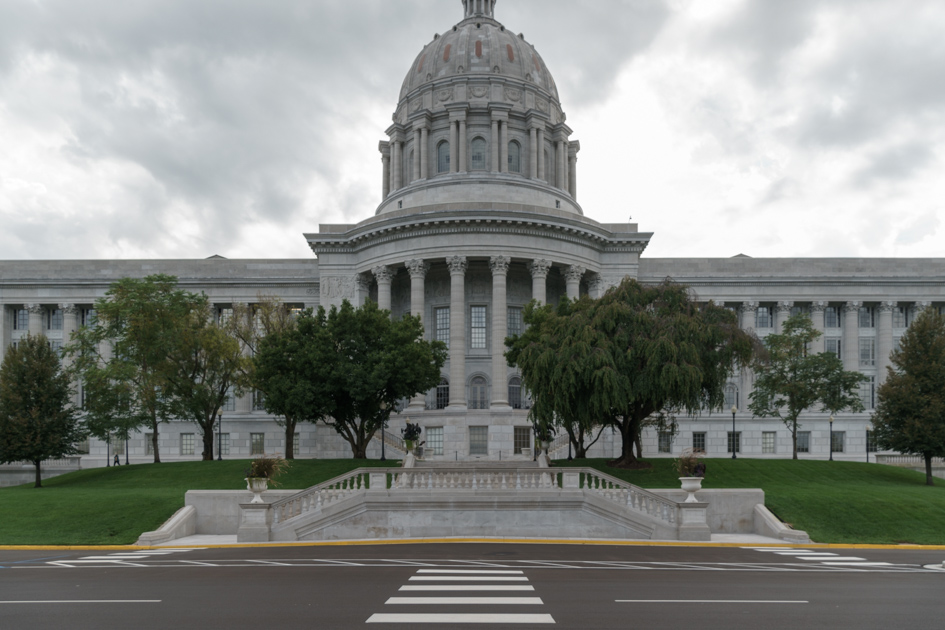
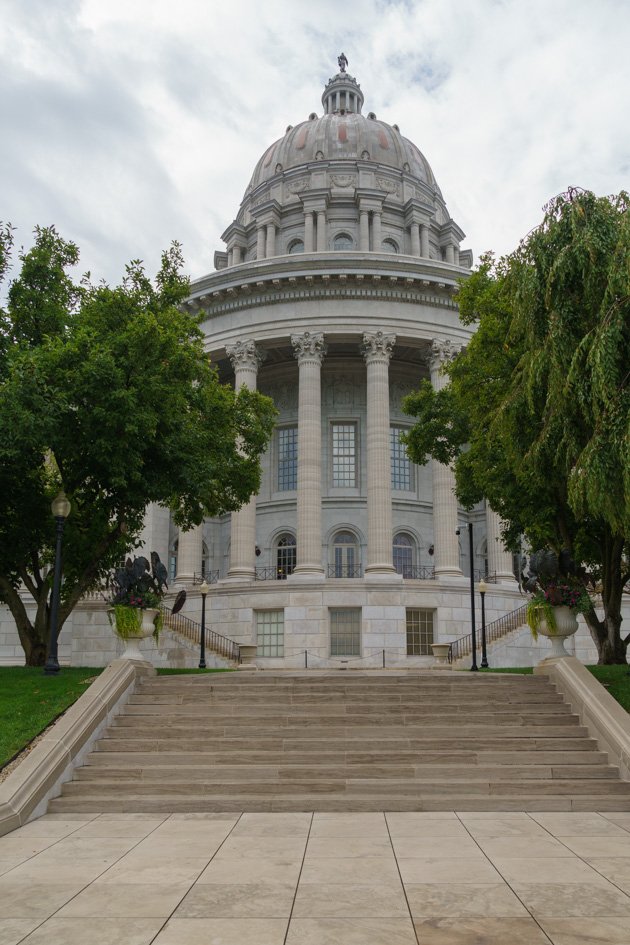
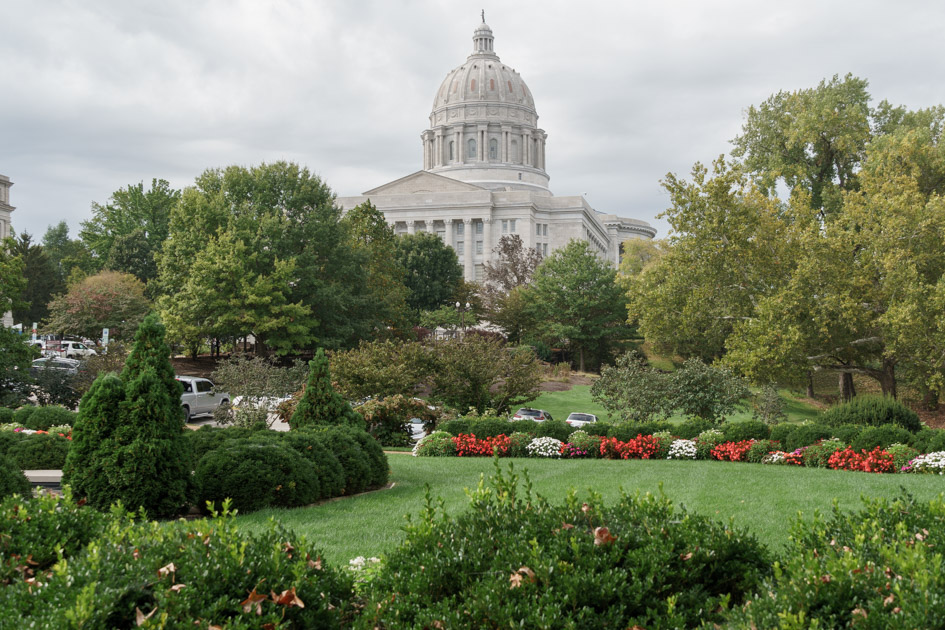
The current capitol building is the third for the state, after the first and second buildings were both damaged by fire. As soon as we neared the city, the Baroque dome (rising 238 feet (73 m) was easy to spot and beckoned us to come take a glimpse. The structure is listed on the National Register of Historic Places and is a contributing property in the Missouri State Capitol Historic District. Over the past 107 years, the state has done a great job of upgrading, expanding, and preserving the building, originally completed in 1917.
At the top of the dome stands a bronze statue of Ceres, the Greek goddess of agriculture.
We don’t dare pull our truck into a parking garage because they rarely are tall enough for our beast. So we circled around the capitol, searching for a parking spot on the street. Then I saw the Reserved Veteran Parking sign. Ding, ding, ding. With Jon’s veteran status, we had hit the parking jackpot.
Reserved veteran parking? Yes, please.
Across the parkway from the building is the Fountain of Centaurs and a bronze relief depicting Monroe, Barbe-Marboise, and Livingston, signing the Louisiana Purchase, which doubled the size of the United States. The state purchased much of the art inside and outside of the capitol building with $1 million dollars left over from construction.
Fountain of the Centaurs by Alexander Weinman
Relief of the Louisiana Purchase signing by Karl Bitter
Visitors will notice the Missouri Seal replicated throughout the building. This one was above the elevator doors.
Historic artifacts lend to the authenticity and age of the building
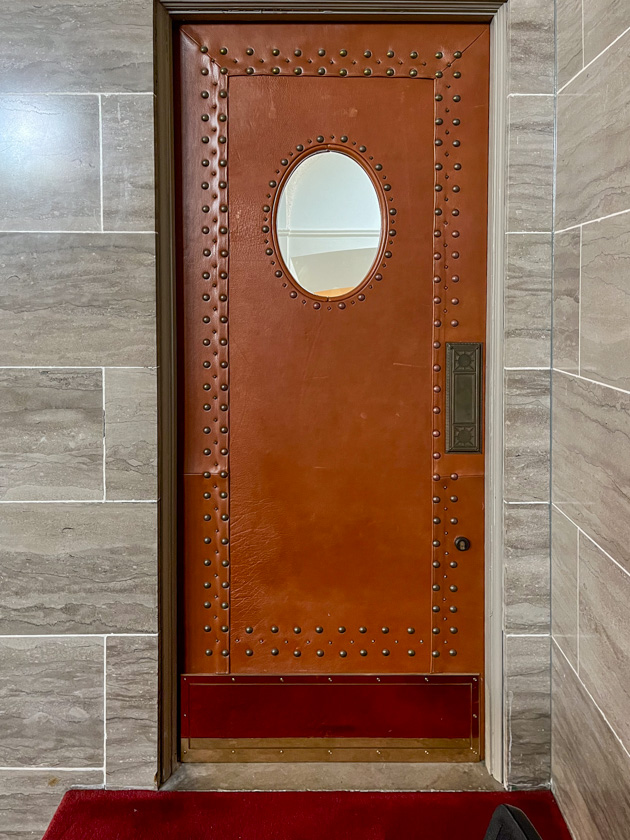
Leather covers the doors to the House and Senate Chambers
Symbols are displayed everywhere in the building and the House Chambers is no exception. To name only a few, the large stained glass window represents the glory of Missouri peace. Created by H.T. Schlader Mundt in 1924. To the left of the dais is a light-colored painting of Abraham Lincoln representing the republican party. On the right side is a dark-colored painting of Thomas Jefferson representing the democratic party.
House Chambers
We found a few spots around the building where we had expansive views of what lies beyond. Here are a few of those photos.
View of parking garage entrance and the bicentennial bridge that leads to Deborah Cooper park on Adrian’s Island.
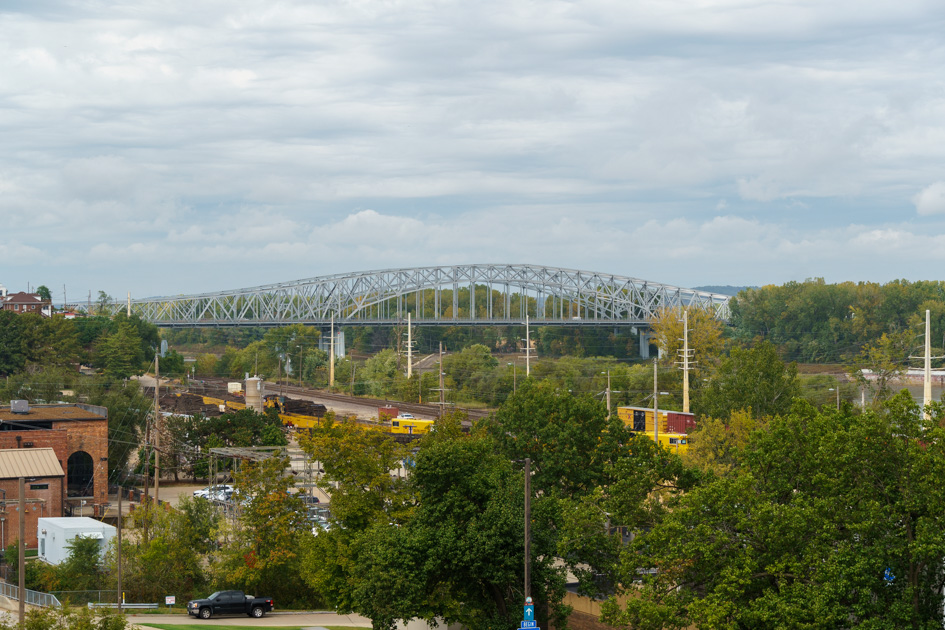
View of the Jefferson Bridge, which was renamed Senator Roy Blunt Bridge by the state legislature in 2022.
St. Peter Catholic Church was established in 1846 and the building erected in 1883. Listed on the National Register of historic places on June 18, 1976.
The half-moon paintings below are called lunettes. Forty-one of these paintings grace the second floor walls. They depict historic events in Missouri’s history.
The Battle of Wilson’s Creek August 10, 1861
The Battle of Westport October 23, 1864
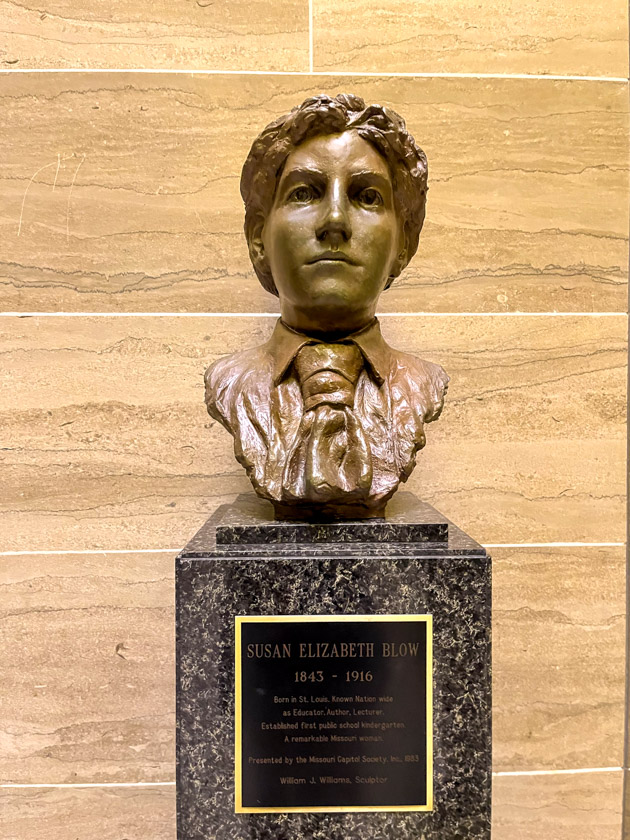
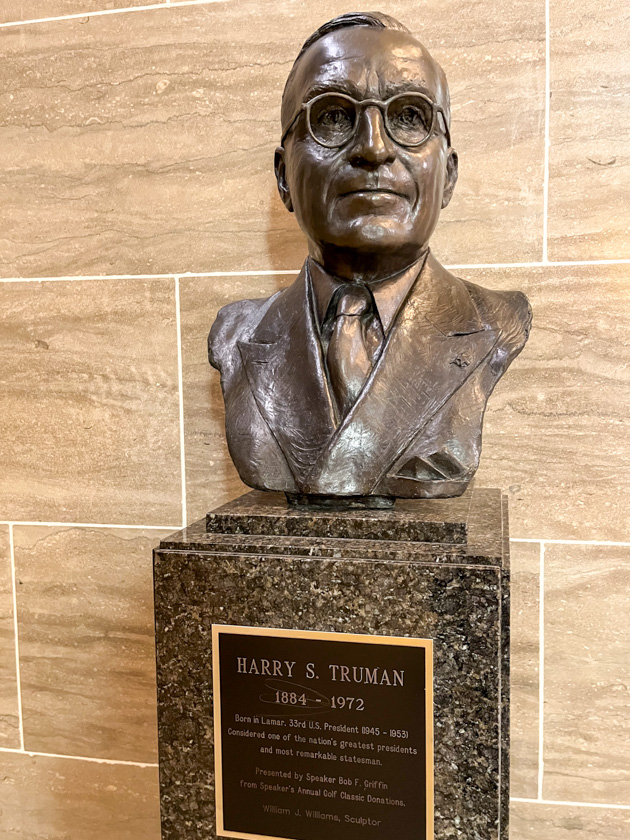
The third-floor rotunda is where visitors will find the Hall of Famous Missourians. Bronze busts honor their achievements and contributions to the state. I had fun finding the well-known and not so well-known people, at least by me, who had made a difference in the world.
Of course, Samuel Clements (aka Mark Twain) would be so honored.
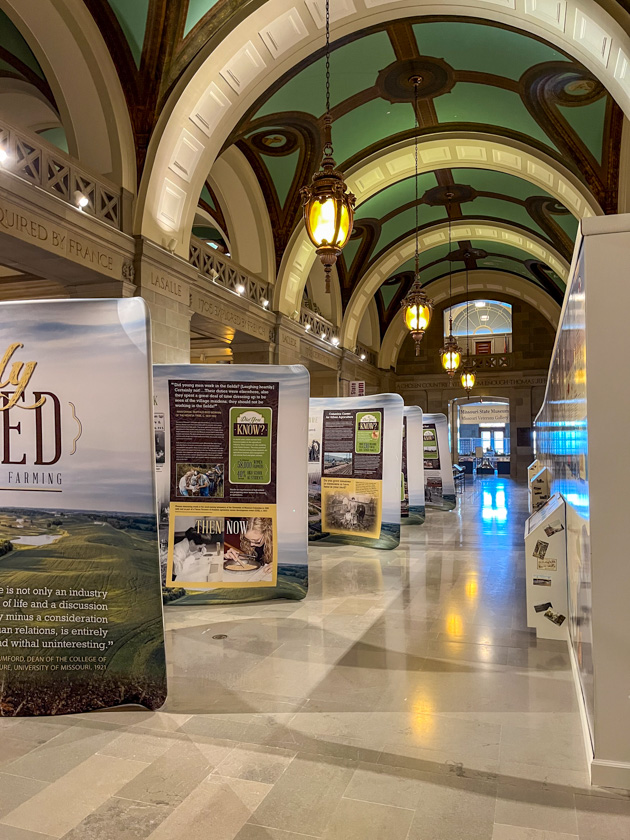
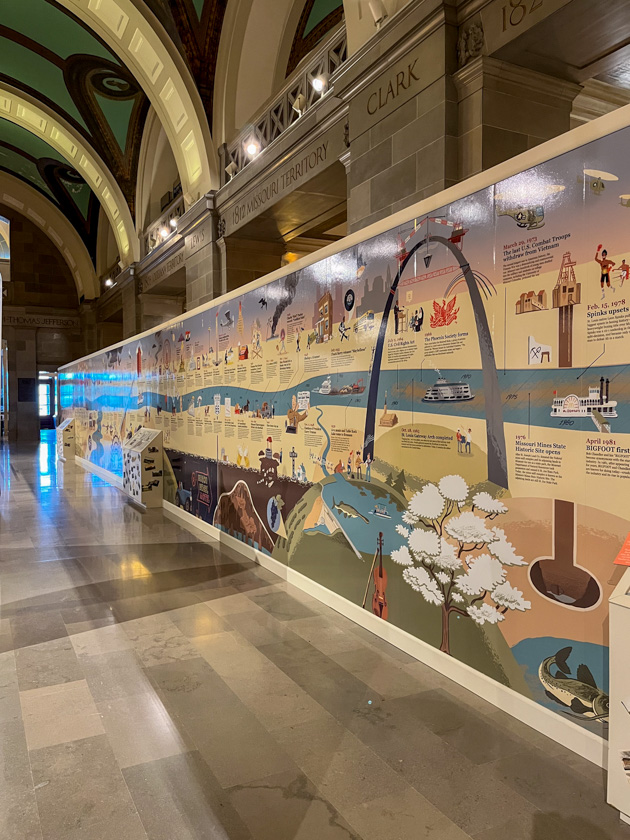
The Missouri State Museum occupies much of the first floor of the capitol building. On one side of the rotunda are displays about the historical events that shaped the state, including a timeline. On the other side, the state’s resources take center stage.
State resources portion of the museum
Historical timeline mural tells the Missouri story.
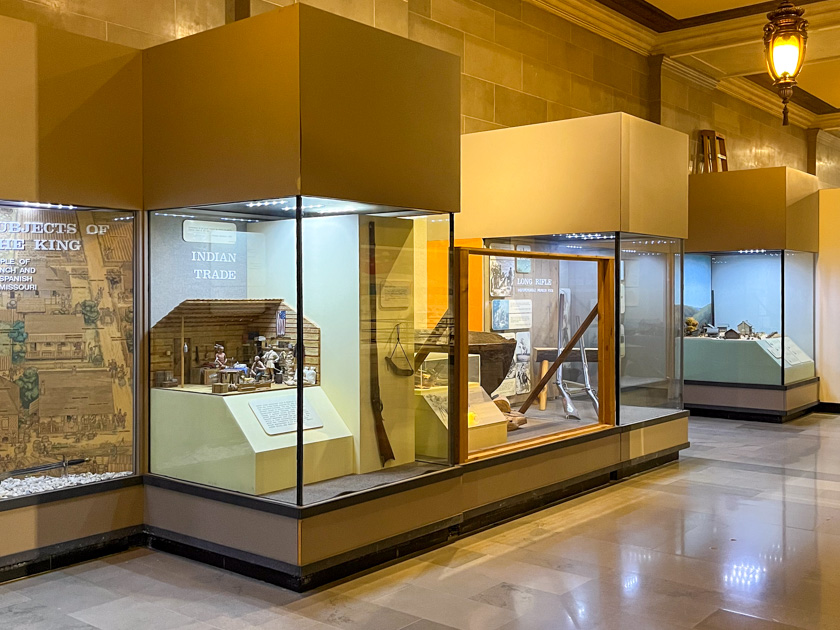
Various displays tell the stories. These displays discuss the Osage people who roamed the lands before the white settlers arrived.
Museum displays
After our tour of the capitol, we found two other places to explore within a short walk: the Governor’s mansion, which has served as the governor’s residence since 1872, and the Jefferson Landing State Historical Site.
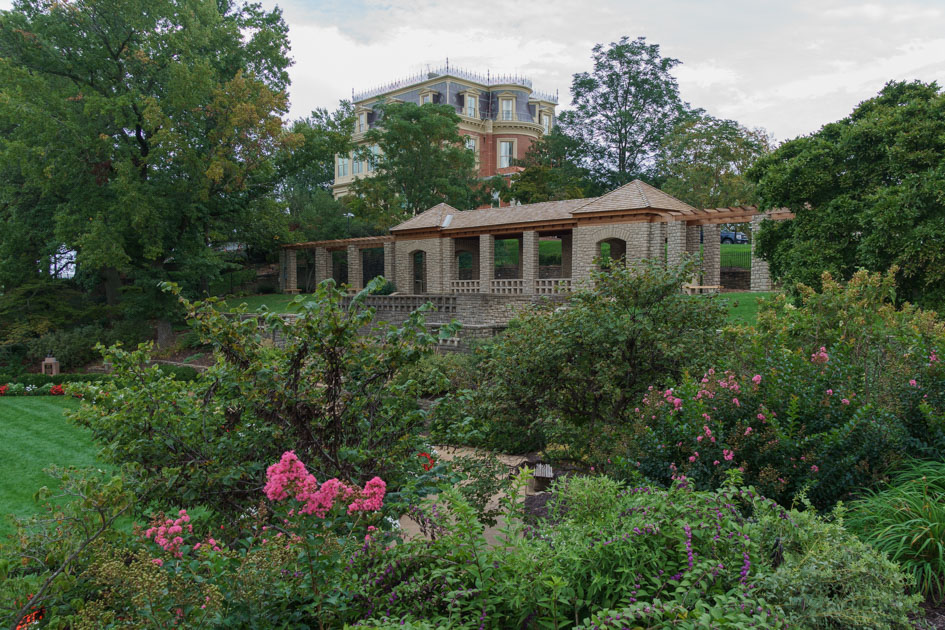
Governor’s Mansion garden with the historic Lohman Building and Union Hotel of the Landing site in the upper left background
Imagine living in the mansion that sits up on a knoll and encompasses 10 acres of gardens. With views of both the Missouri River and the State Capitol, the governor can keep a watchful eye on their domain.
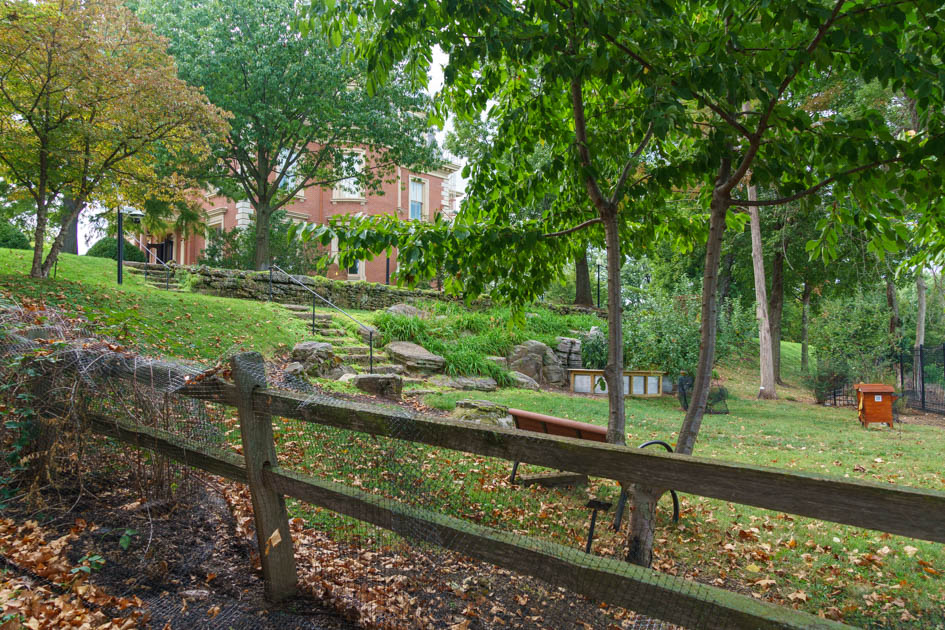
View of mansion from the garden
George Ingham Barnett designed the building in the Second-Empire architectural style. It took eight months to construct, with the help of prisoners from the nearby penitentiary.
Front of the Governor’s Mansion
Back of Mansion
Side view
View of capitol building from the mansion garden
The Landing comprises two buildings. The Union Hotel and the Lohman buildings.
The Lohman Building is the oldest existing building in Jefferson City. Charles Maus and his brother-in-law, Charles Lohman, bought the east section of the Crump’s building and opened a general store in 1852.
Lohman building
River side of Lohman building
Maus built the hotel across the street in 1855. The state acquired the hotel and the Lohman Building in the 1960s and surrounding land to use it as a parking lot. Concerned citizens had other ideas. In 1974, the state’s official bicentennial project adopted the Jefferson Landing as its project. Restorations took place and the Lohman building opened to the public on July 4, 1976. Today, Amtrack uses the first floor of the hotel as a train station.
Union Hotel
Rear of Union Hotel
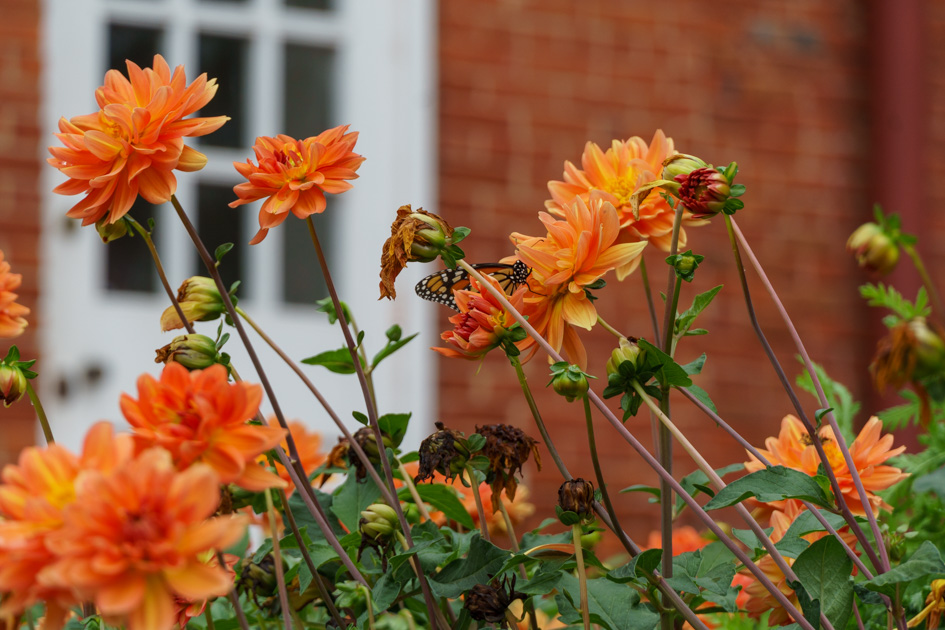
Butterfly in orange blossoms
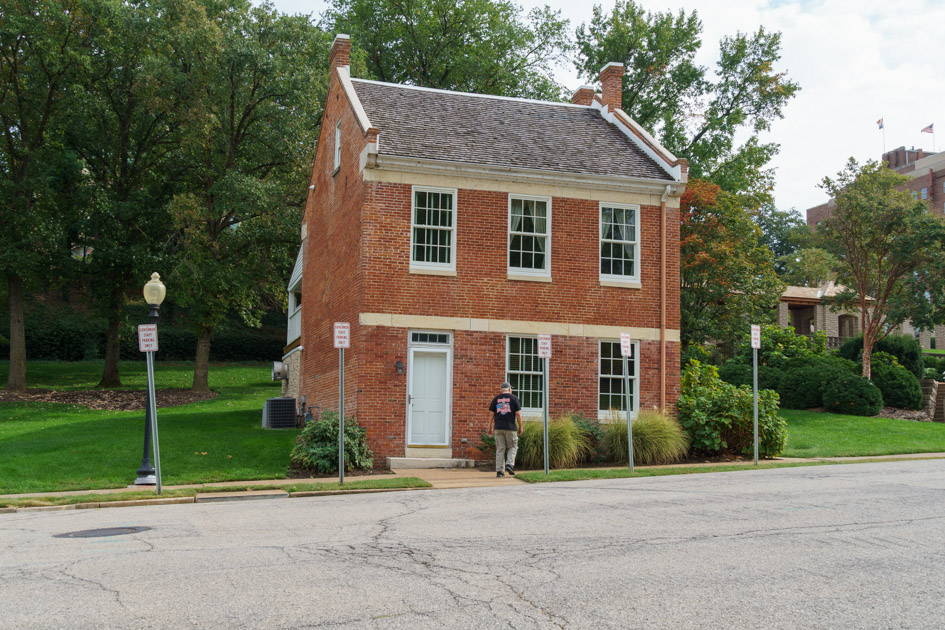
Christopher Maus, a stonemason, built the pre-civil war brick home (pictured below) near The Landing around 1854. Christopher Maus was the brother of Charles Maus. The state maintains the house along with the State Historic Site. Unfortunately, it is not open for tours.
Christopher Maus House
I saw this plaque and read that it marked the place of a time capsule. Oh, wouldn’t it be great to come back and see what’s inside when they open it? On closer look, I realized that trip, would not be possible.
Missouri State Parks time capsule
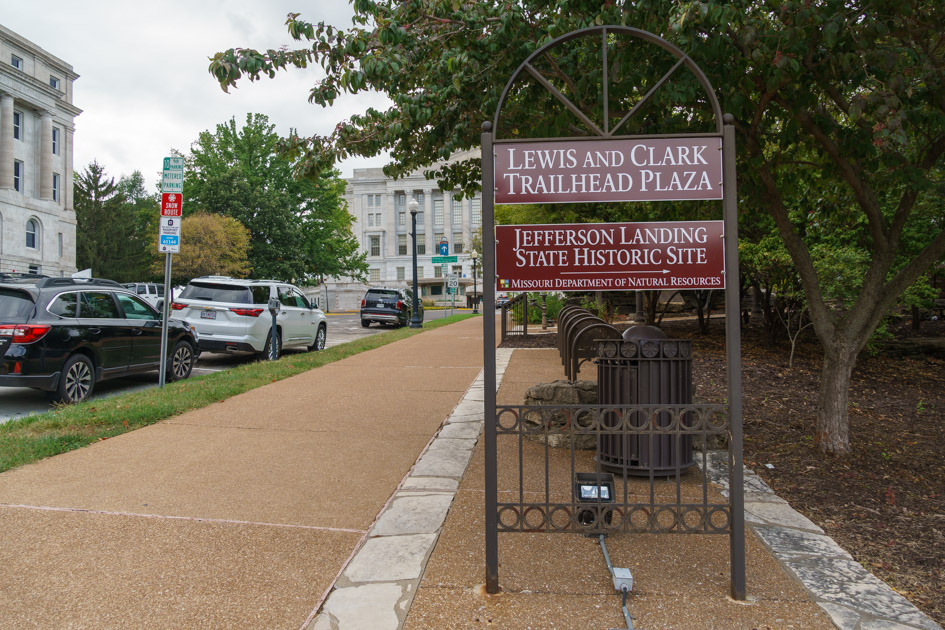
As we walked back to the truck, I noticed the Lewis and Clark Trailhead Plaza. The sign led to a memorial that commemorates the famous expedition. I couldn’t help but think about how different the area looks today compared to when the company camped in the area on June 4, 1804.
History captured my attention and imagination on this day. While grocery shopping an hour later, I thought about how people lived in the 1700s and 1800s and even the early 1900s. Their struggles to provide for food and shelter and safety made me thankful for how easy we have it today. All we need to do is walk into our local grocery store and pick what we need or want from the abundance of produce and other products available. How lucky we are to live in these times.
Next up: We visit the Runge Conservation Center in Jefferson.
It’s all about the animals in part 3 of our 2023 Fall Adventure as we visit the Wonders of Wildlife National Museum & Aquarium and Wild Animal Safari.
Johnny Morris’ Wonders of Wildlife National Museum & Aquarium
A popular outing in Springfield, Missouri, is the Wonders of Wildlife National Museum & Aquarium. Johnny Morris is the man behind the museum and aquarium. As majority owner of Great American Outdoors Group, he owns Bass Pro Shops and Cabela’s sporting goods and outdoor stores.
Located adjacent to the Bass Pro Shops National headquarters and store, Wonders of Wildlife operates as a not-for-profit educational conservation-themed attraction. It definitely should be at the top of any what-to-do-in-Springfield, Missouri list.
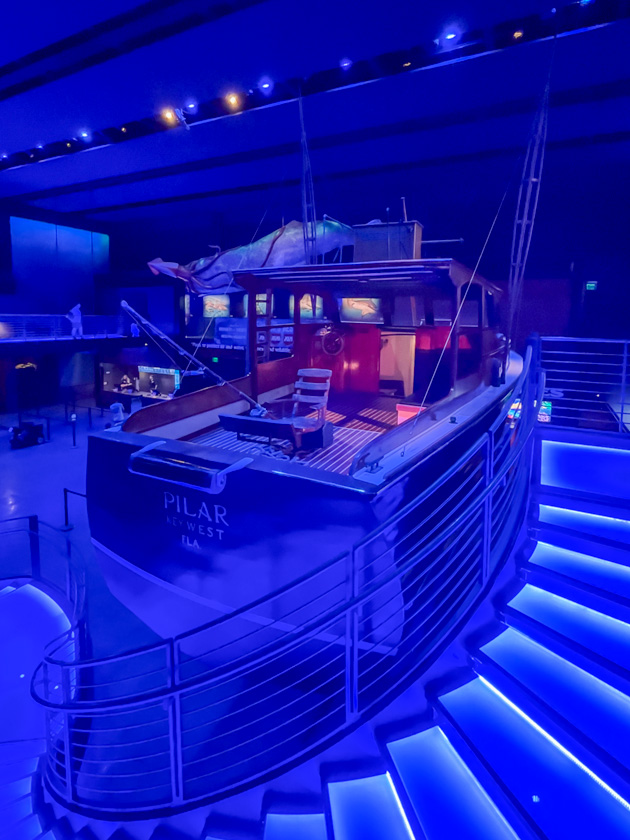
Wait a minute. Is that boat Ernest Hemingway’s Pilar? Can’t be. The original resides at the Museo Ernest Hemingway in Finca Vigia, Cuba. And I believe the Pilar sister boat is in the Bass Pro Shops in Islamorada, Florida. The boat in Springfield, Missouri, is a replica.
Massive murals throughout the facility depict various background scenery. It took six years and a dozen artists to paint all the murals.
One of the many hand-painted murals that add context to the displays
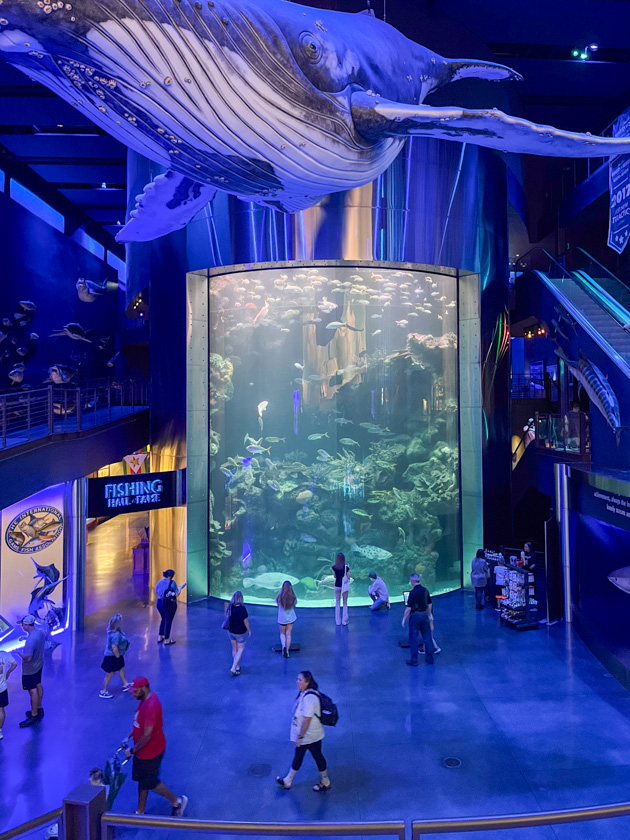
The current wildlife museum and aquarium opened to the public on September 22, 2017, after an $80 million expansion to 350,000 square foot facility. The project took a decade to complete.
The wildlife museum includes a Louisiana swamp, an Ozark forest, and an Amazon rainforest. The aquarium holds 1.5 million gallons (5.7 million liters) of water, and 35,000 individual fish, amphibians, reptiles, birds, and mammals call the museum and aquarium home.
Fishing gear and trophies
Throughout the aquarium are tunnels where kids and kids at heart can pop up and see what it’s like to have fish swimming around their heads.
Looks like fun
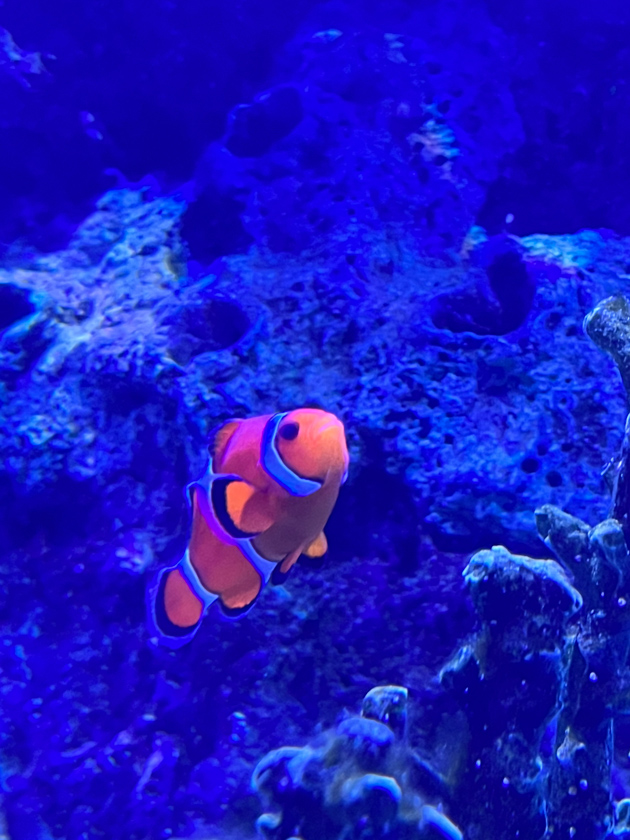
There’s Nemo
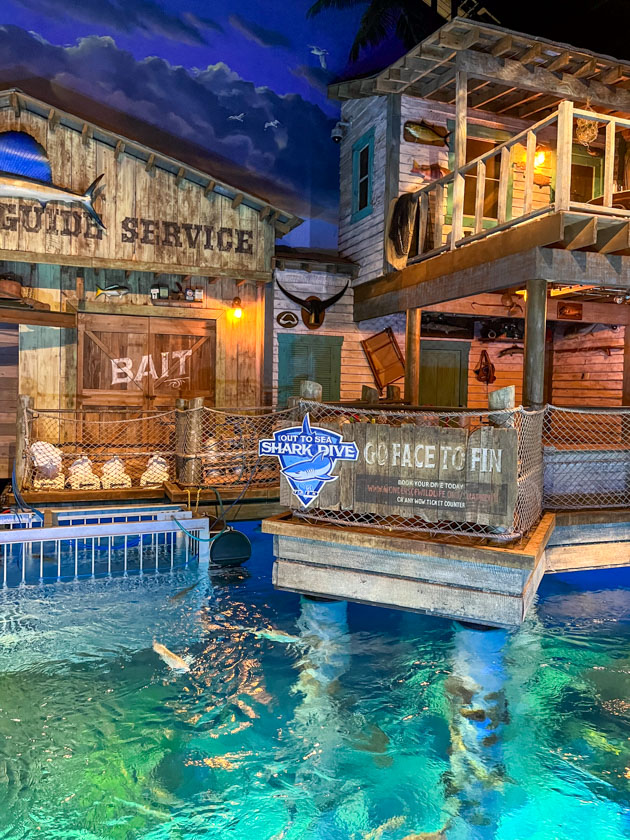
For guests craving a safe way to have a shark encounter, they can opt for the shark dive or shark dive feeding frenzy for ages 10 and up. There’s also a penguin encounter for ages four and up.
Shark dive pool
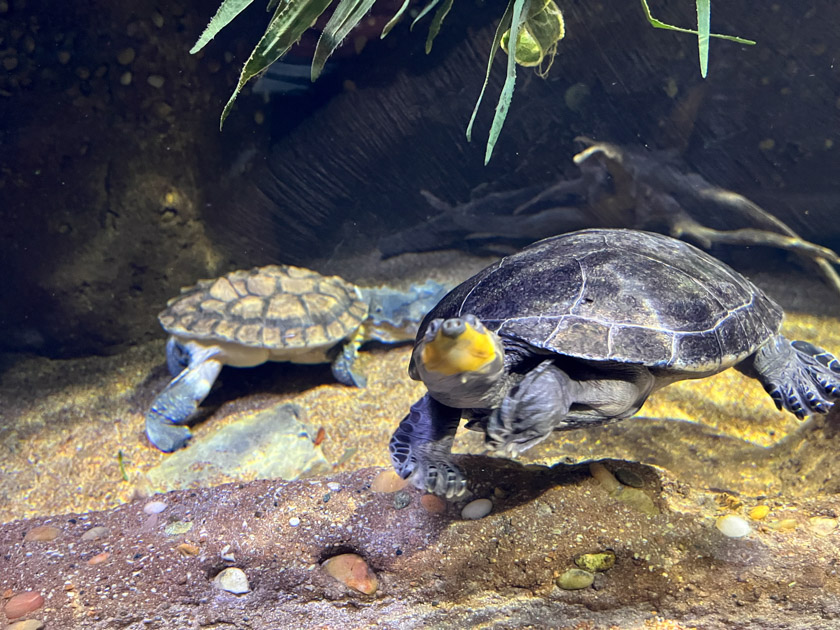
The turtles were fun to watch
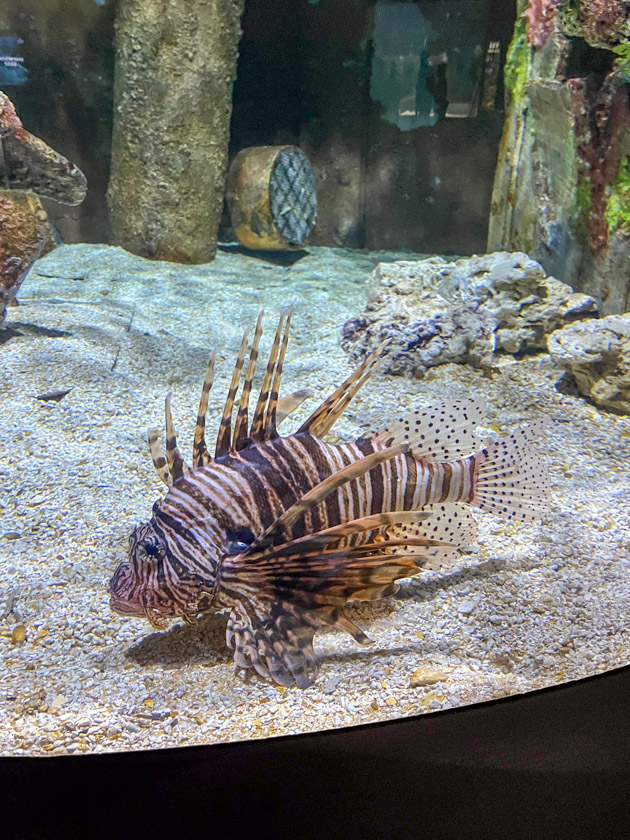
Brightly-colored fish attract the eye
Graceful movements of jellyfish mesmerize
Sea anemones are always a hit
Sea stars (starfish) cling tight
Japanese spider crab has skinny legs
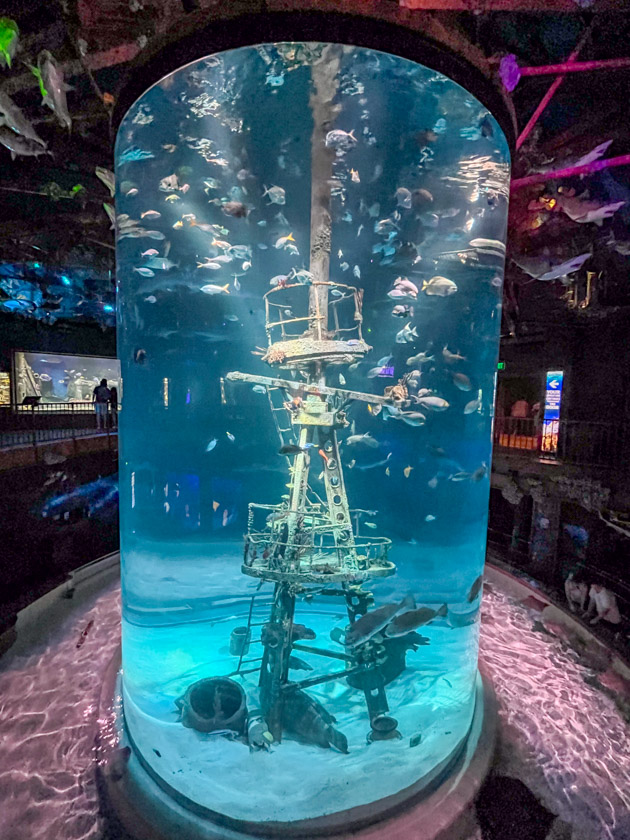
The Shipwreck Reef exhibit depicts how artificial reefs protect coral and boost tourism for diving and fishing. The Johnny Morris Offshore Angler Reef off the coast of Florida is such a reef. It contains the Sucre, a 237-foot vessel. A placard discusses the benefits the reefs provide to marine life and research opportunities.
Artificial reef exhibit
Albino Aligator sleeps all day
A sign outside the replica of the original Bass Pro Shops Store says the “original doors, cabinetry, lighting, fixtures, roof, ceiling, and aquarium” were used to create the replica. Morris began his bass fishing business at the back of his father’s liquor store in Springfield, Missouri.
Jackson imitates Uncle Buck, who made bass flies from sow bellies to sell in the original Bass Pros Store
Hall of artifact collections
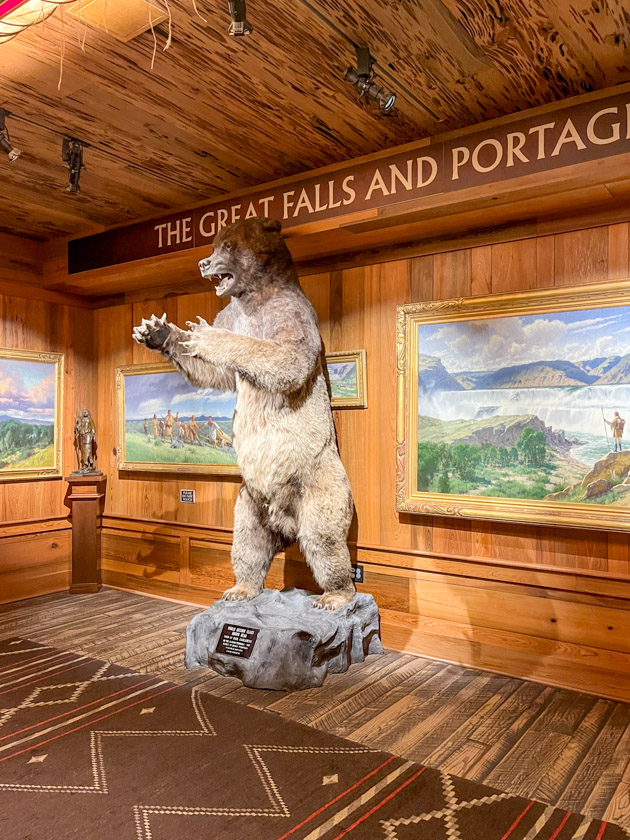
I’d hate to meet up with one of these giants on a hike
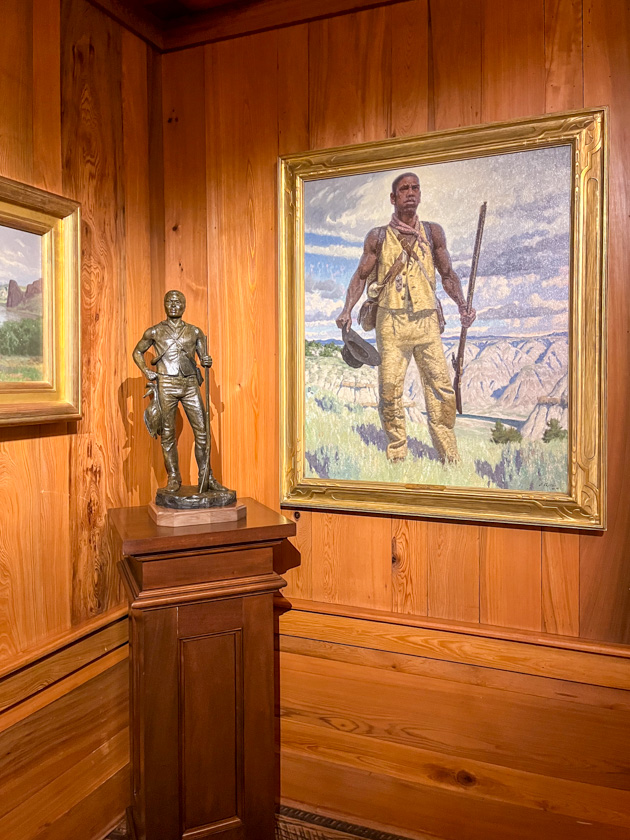
Glimpsing Freedom: York’s Journey with the Corps of Discovery by Charles Fritz
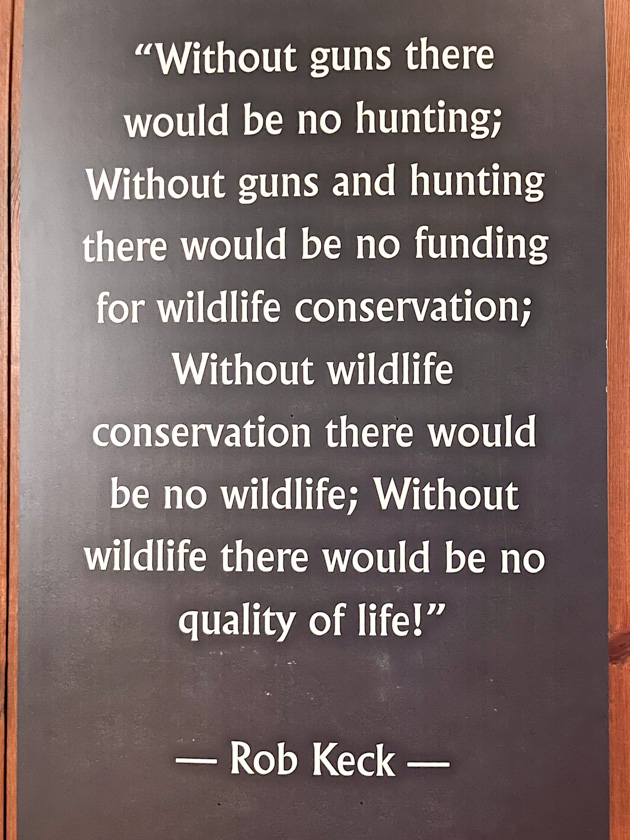
One of many quotes throughout the museum
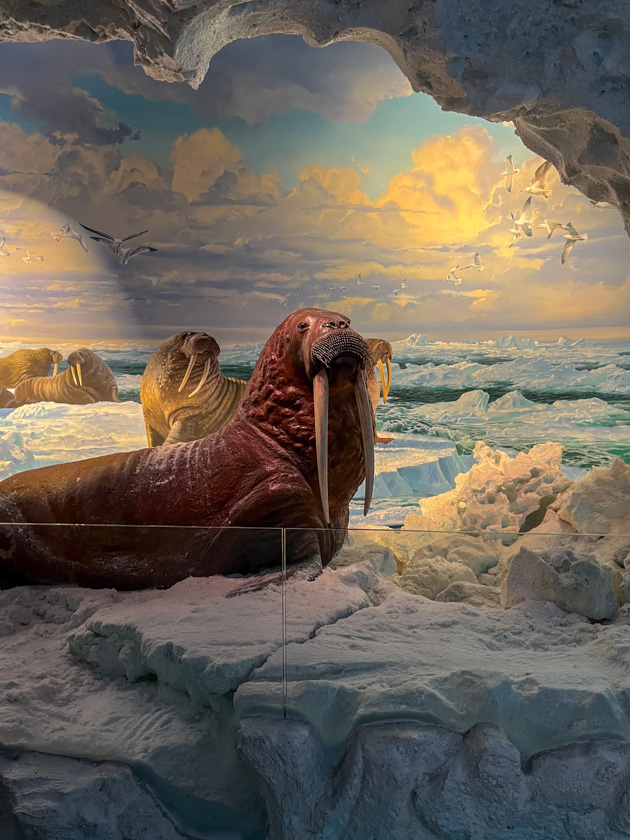
My, what big tusks you have
One section of the museum is dedicated to the various presidents who showed off their trout and bass fish catches.
Bass Pro Shops got its start within 8-square feet inside a liquor store for the first 13 years. For more history about Bass Pro Shops and Johnny Morris, visit https://about.basspro.com/our-founder. As of this writing, there are around 200 Bass Pro Shops in North America, each reflecting the community in which they were built, along with a commitment to community and conservation.
Taxidermy animals stand in for the live animals in the dioramas that depict their natural habitat.
Plan spending an hour or more to see the all the exhibits and displays. Our whole family enjoyed wandering around. And if hunger strikes, take a break and grab a bite to eat.
Wild Animal Safari Springfield/Strafford
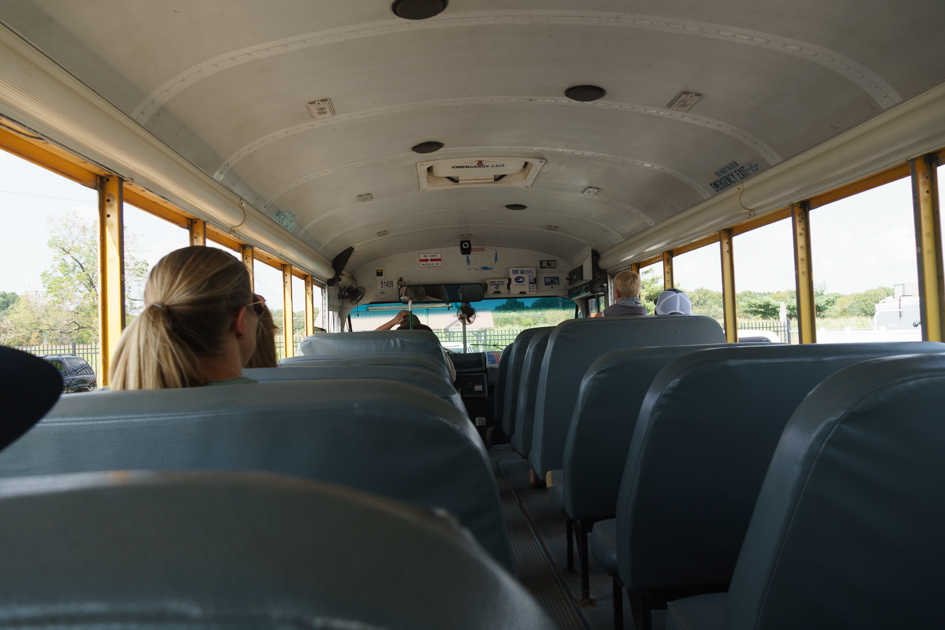
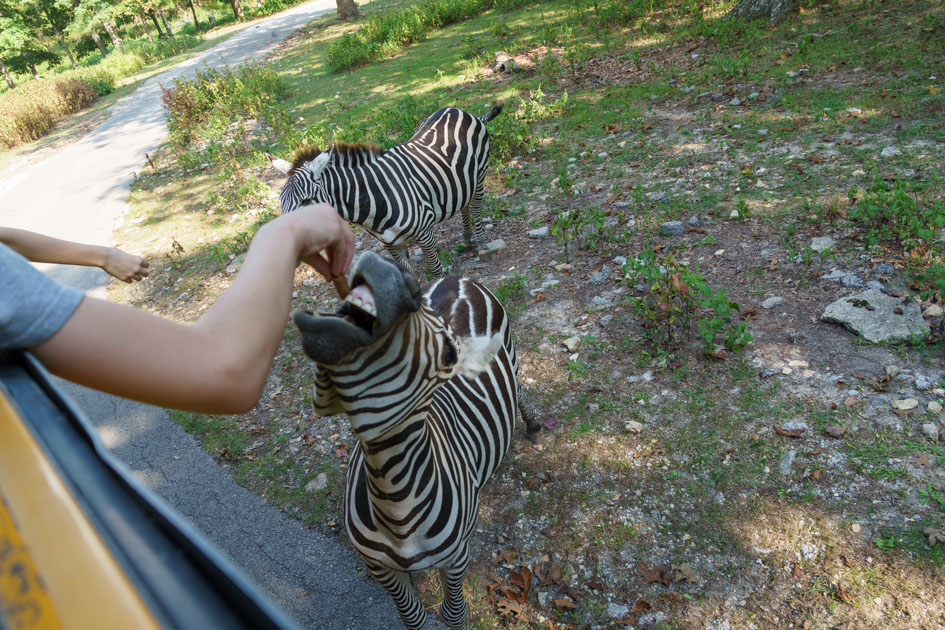
Board a bus for a tour of the park and learn about the animals and their habits, or drive your vehicle through the park. Food is available for purchase to feed the animals. But watch out for the camels. They have no qualms about sticking their big heads in the window and stealing bags of food from the passengers. They are fast, as Jackson can attest to, as he was a victim of one of their attacks.
Our driver and guide regaled us with stories about the various animals
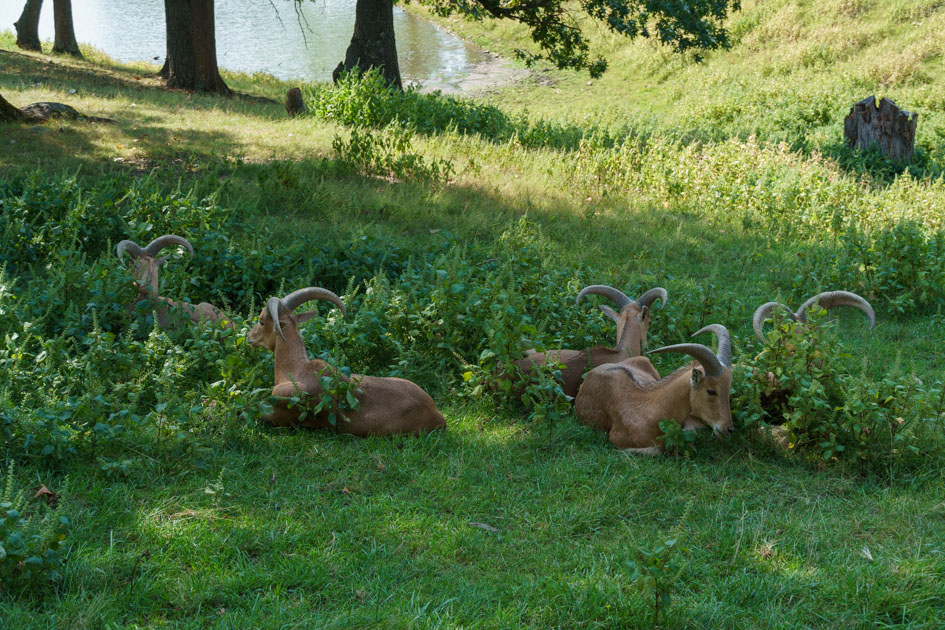
The safari contains sixty-five animal species along a five-mile trail within 350 acres of land. The animals have learned that food is on the way whenever the bus comes through. Some of them come running as if they hadn’t eaten for days, while others take their time ambling along to reach the bus. The bus driver always accommodated the slow pokes.
Don’t those eyes say, “please, feed me.”
For an additional fee, guests can arrange for an up close encounter with the animals, under the watchful supervision of a zookeeper, of course. These encounters allow small groups to learn about the animal’s habitat, feeding, and conservation efforts.
Animals taking their time to reach the bus. Note the drive-through vehicles. We thought it best to leave the driving to the bus driver.
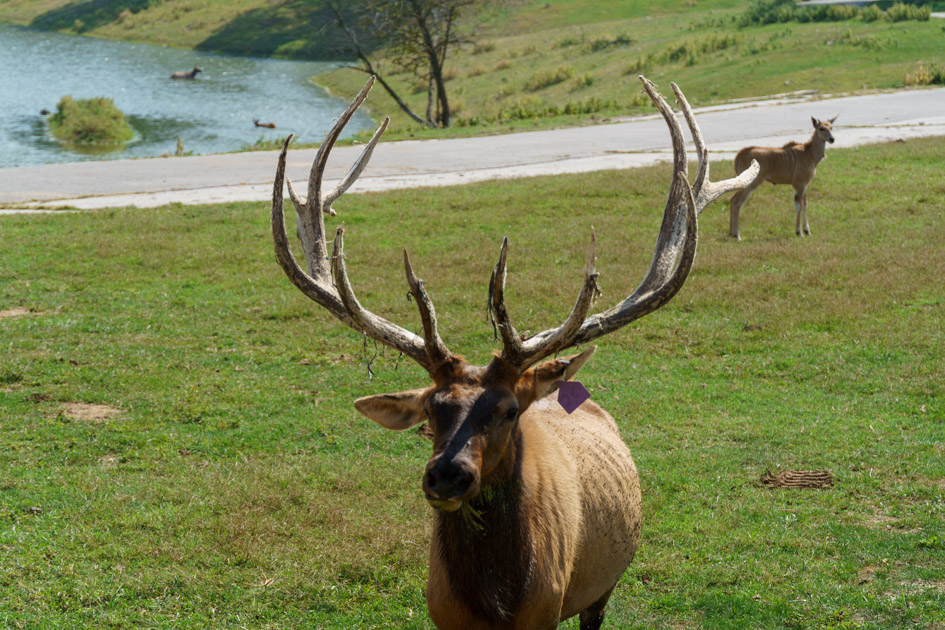
Nice rack you got there
Be sure to read the safety considerations listed on the website to avoid any situations that might put the animals or people in danger.
Showing off the antlers
Don’t forget me.
I’ll have some, too.
Move along. I don’t want any of those little pellets.
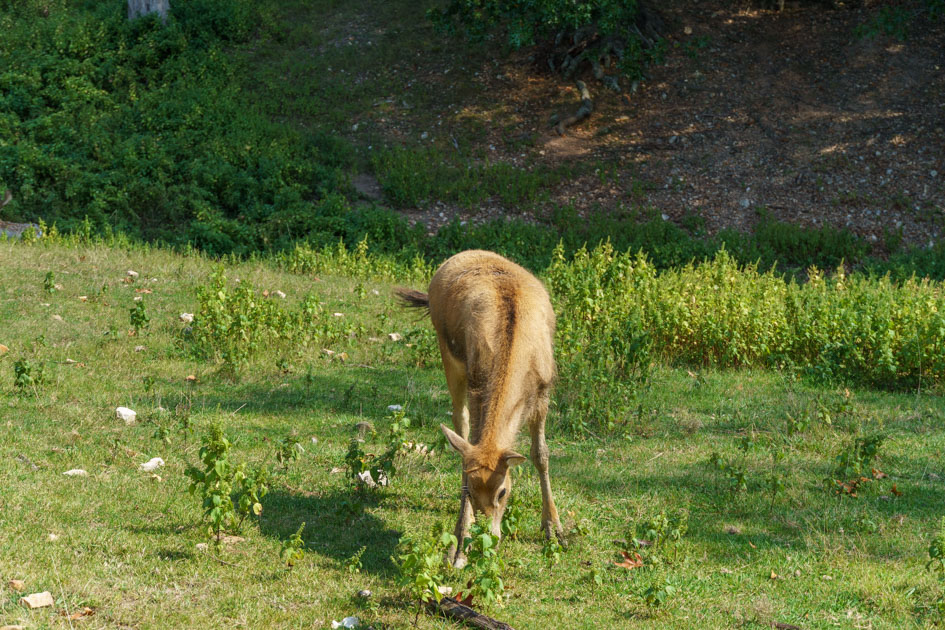
Don’t mind me. I’ll just nibble on this fine grass here.
Too hot and tired to eat
We’ll take a pass and enjoy this here grass.
Mr. Stripey knows who butters his toast
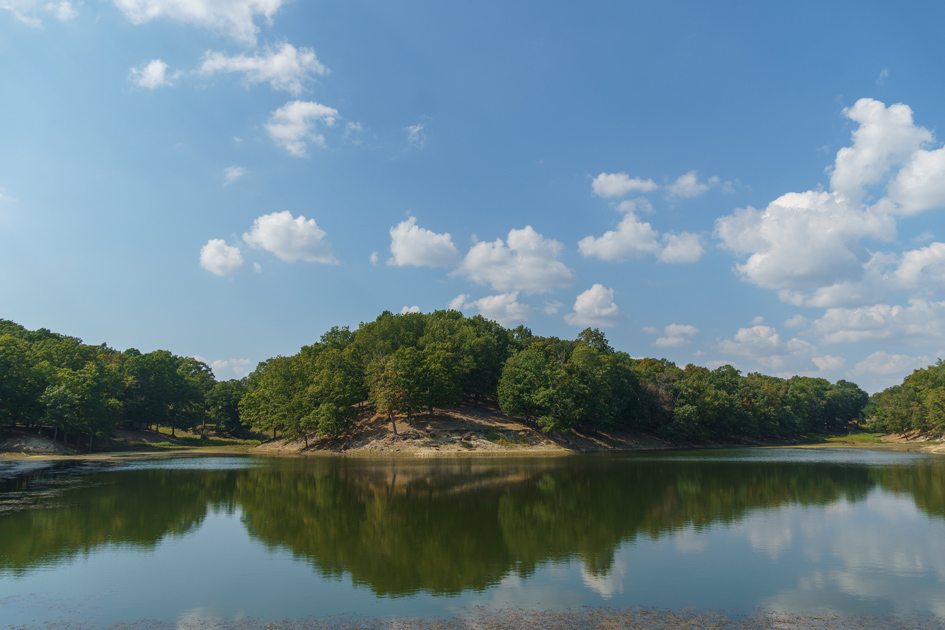
Ponds keep the animals hydrated
Watch out for those teeth
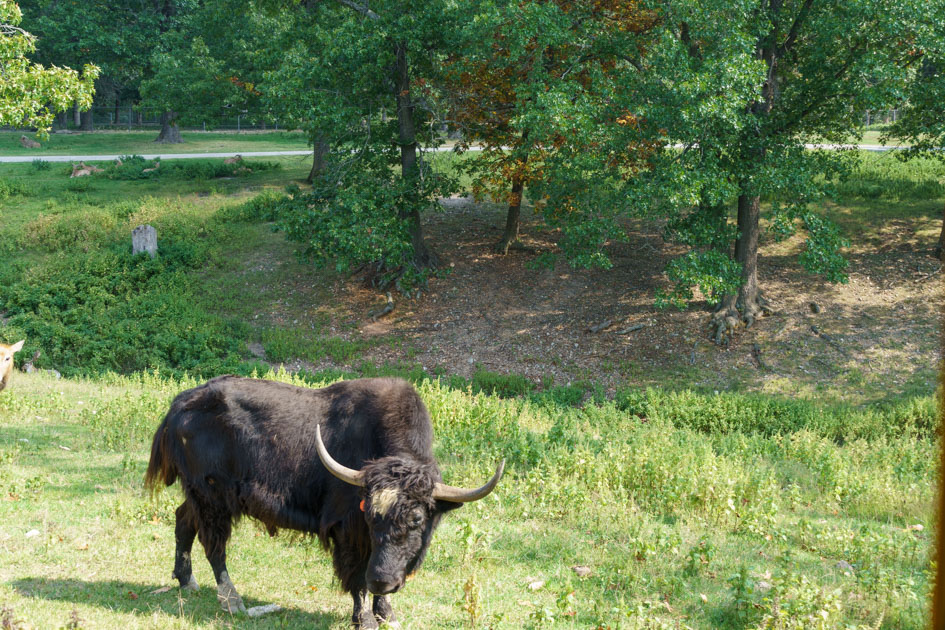
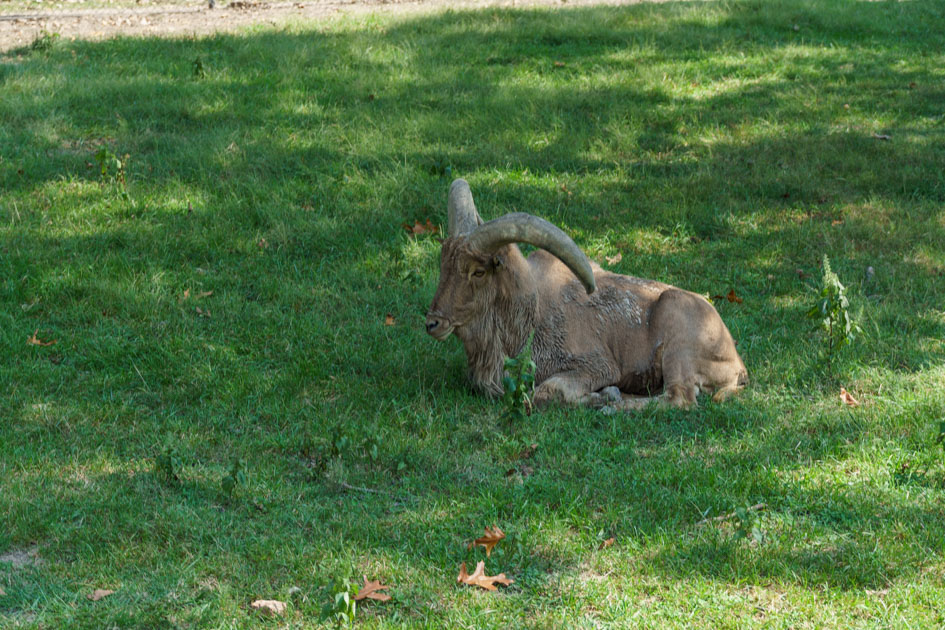
Those are some long horns you’ve got there.
I’m a comin’
The safari also included a walkabout zoo. It was hard to take photos through the cages.
What did I do to deserve this?
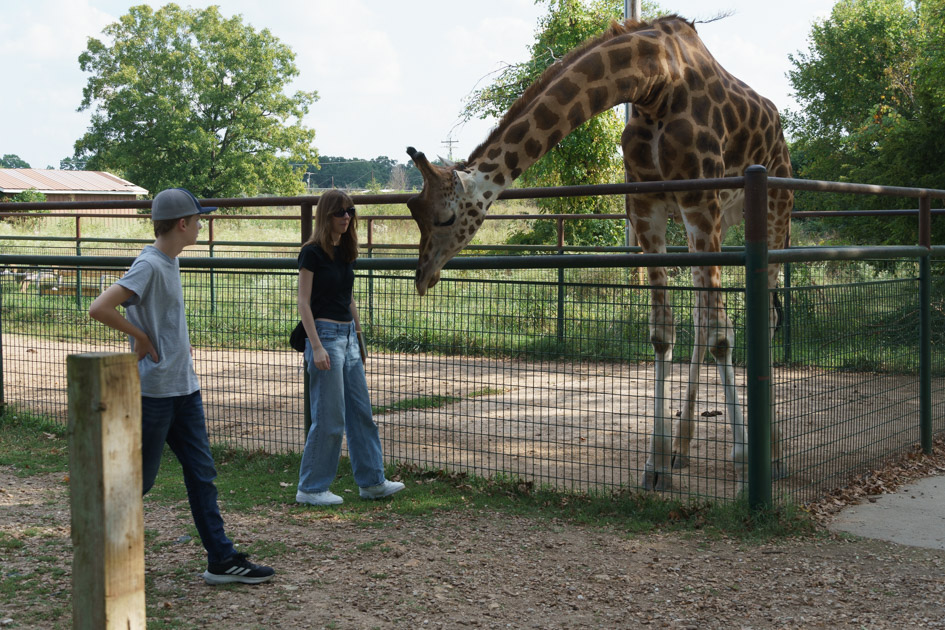
Jackson and Maya say hello to the giraffe.
As we compared our experience at Wild Animal Safari to Safari West in Santa Rosa, California (see the Safari West post), we much preferred the one in California. Safari West comes out on top for its larger acreage, safari-like vehicles, and knowledgeable guides. They also had a better walk-around portion with more animals, birds, and vegetation. Although we still had fun at Wild Animal Safari.
Up Next: From Marshfield, Missouri, we take a side trip to Little Rock, Arkansas, and check out the Clinton Museum.
Continuing with our travels in the fall of 2023, we shine a spotlight on Laura, our daughter, her family, and their homestead.
Jackson, Laura, Chris, Maya, and the chicks
Around the homestead
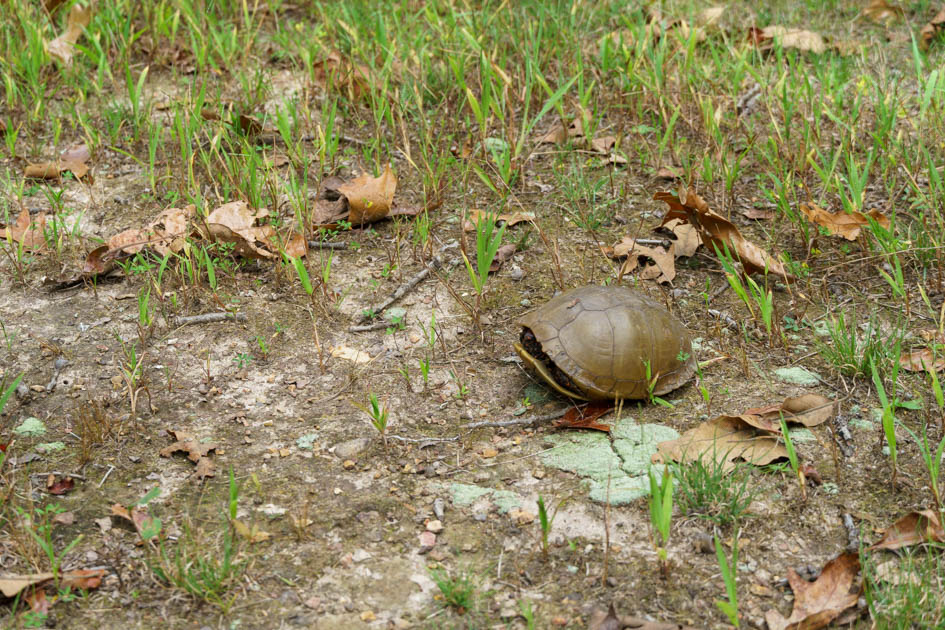
Their land is home to a variety of animals, from deer to frogs, mountain lions to turtles, various snakes, and other critters too many to mention. Other than hearing the frogs at night and seeing armadillo roadkill on the roadside, we saw a turtle outside our kitchen window one morning and waking up to chirping birds was also a treat.
Come out, little turtle.
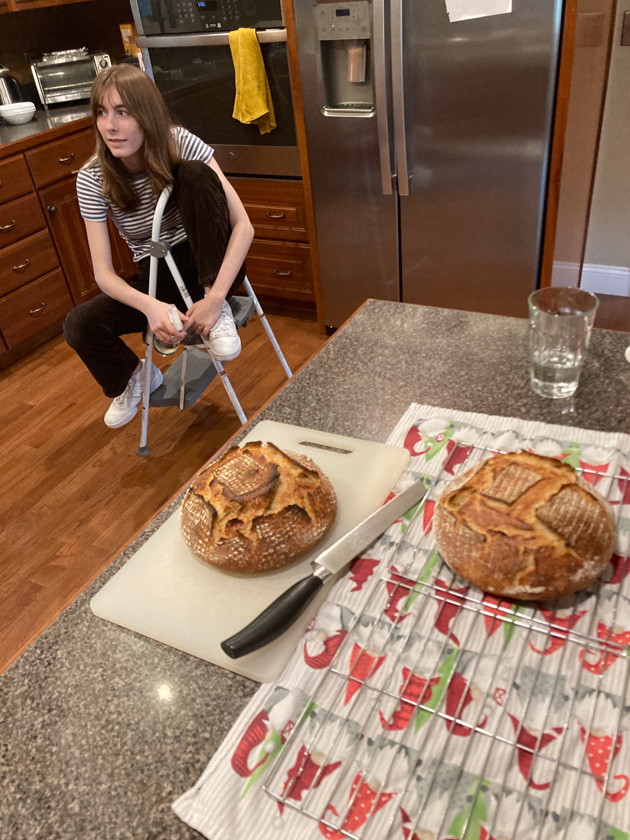
During our visit, we could find Laura making bread, driving the tractor, shoveling dirt in her garden, tending to the chicks, or engaged in other household chores. She even removed a tick from my neck. I guess the beauty and the benefits of living off the land have chased away her fear of spiders, which once induced blood-curdling screams when she was a child. We’re proud of what she’s accomplished and how she’s carved out her space in the world.
Is the bread ready yet?
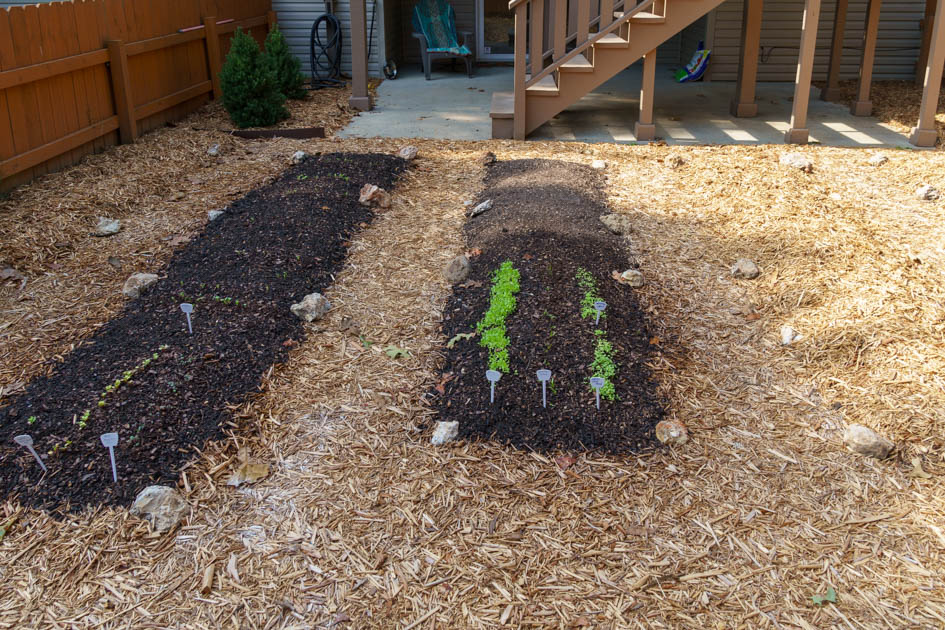
Seedlings are planted. Now we wait.
Beep, beep
Chris does most of the mowing
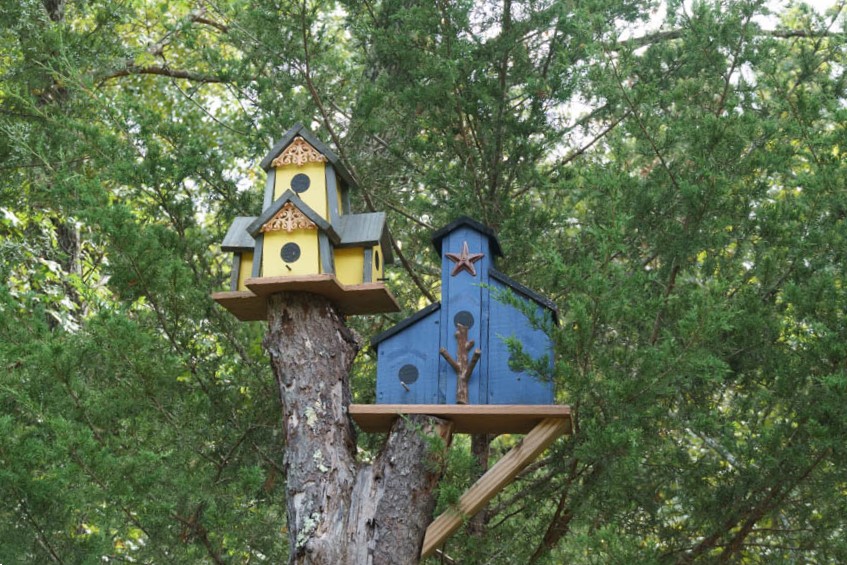
Waiting for birdies to make a home
The baby chicks not only fascinated us, they entertained us. We laughed as the baby chicks scratched around in the dirt, climbed over each other, ate their meals, and flicked dirt on themselves when taking dust baths.
Maya bonds with the chicks
Laura does her own bonding
Chicks in their brooder
Chris was under pressure to complete the chicken coop on wheels in time for the brood to move in. Fortunately, he made it on time.
Chicken coop frame
Ahh! More room in their new home.
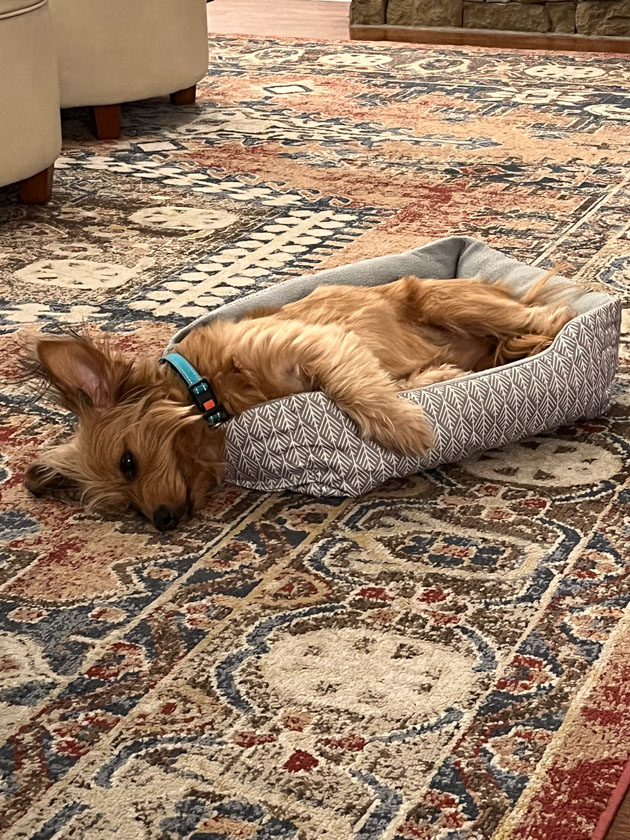
Natty just wanted to nap
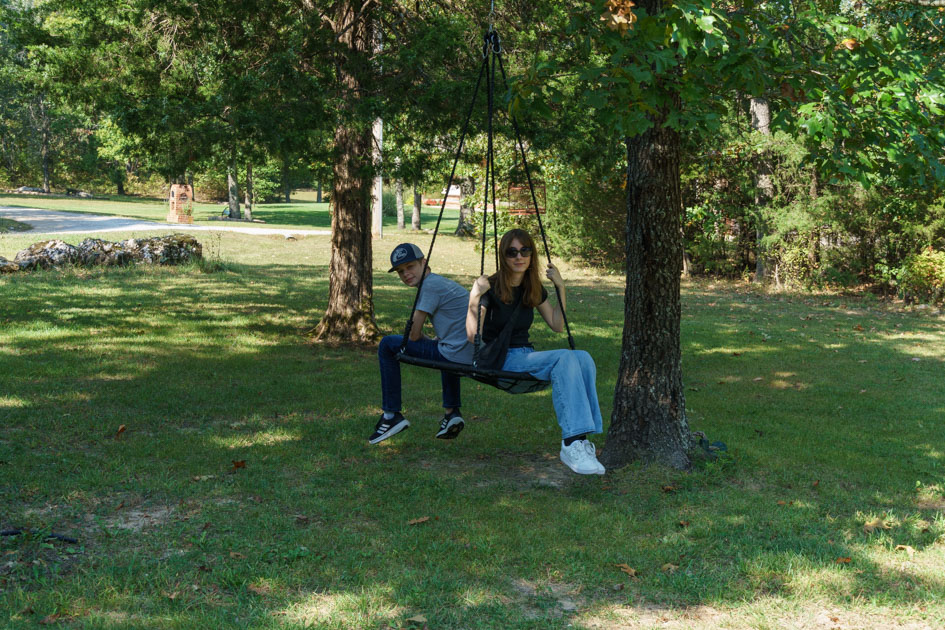
Jackson and Maya taking a break in the shade
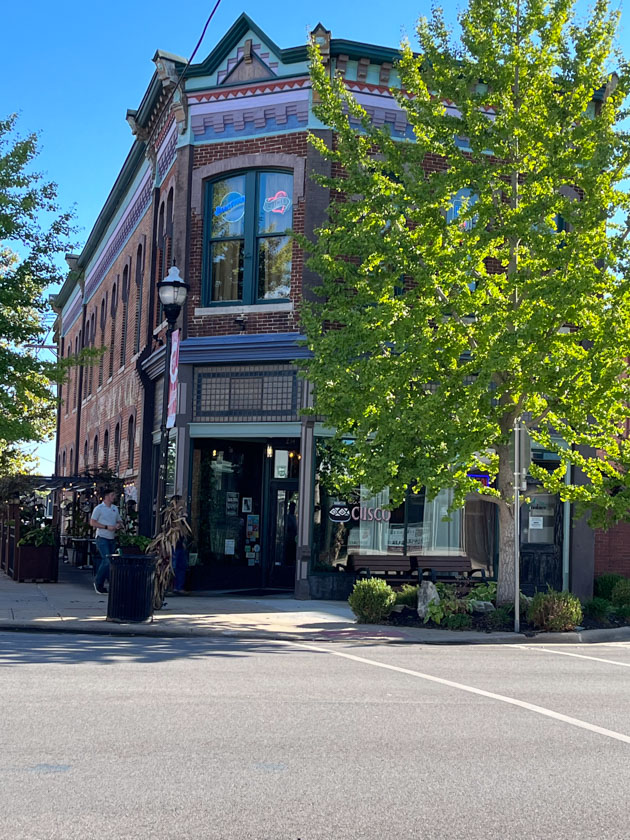
We also enjoyed goofing around while grabbing a meal at Cafe Cusco on C-Street in Springfield, Missouri.
Great lunch at The Little Clay House Tea Room
Although there was plenty of work to do around the house, we managed to take time to explore a few sights while there.
Hidden Waters Nature Park
Nearby is Hidden Waters Nature Park, a segment of the Trail of Tears. Through journals, it was determined that in 1837 the B. B. Cannon group, composed of Cherokee Nation people, passed through the Hidden Waters acreage and used the spring to replenish their water supply.
The 11.3-acre park includes walking trails, ponds, gardens, and plenty more. The Callaway Cabin survived the devastating 1880 tornado and 170 years of development. The cabin stands as a reminder of the modest living pioneers carved out for themselves as they settled in Missouri.
The park is where fourteen springs provide a constant flow of water to the headwaters of the West Fork of the Niangua. After combining with several rivers and tributaries, the water flows into the Gulf of Mexico.
Planning for the park began in 1998 when Dan and Zoann Beckner purchased three acres of land in the center of Marshfield. The couple had something besides a planned housing development in mind for the property. They added a trail, built three bridges to cross the streams, and enlarged three of the natural ponds. Jack Watters, a city alderman, persuaded the city to establish the acreage as a park in 2003.
Come armed to repel mosquitoes. I was not prepared, and the pesky mosquitoes feasted on my legs and arms.
Downtown Marshfield
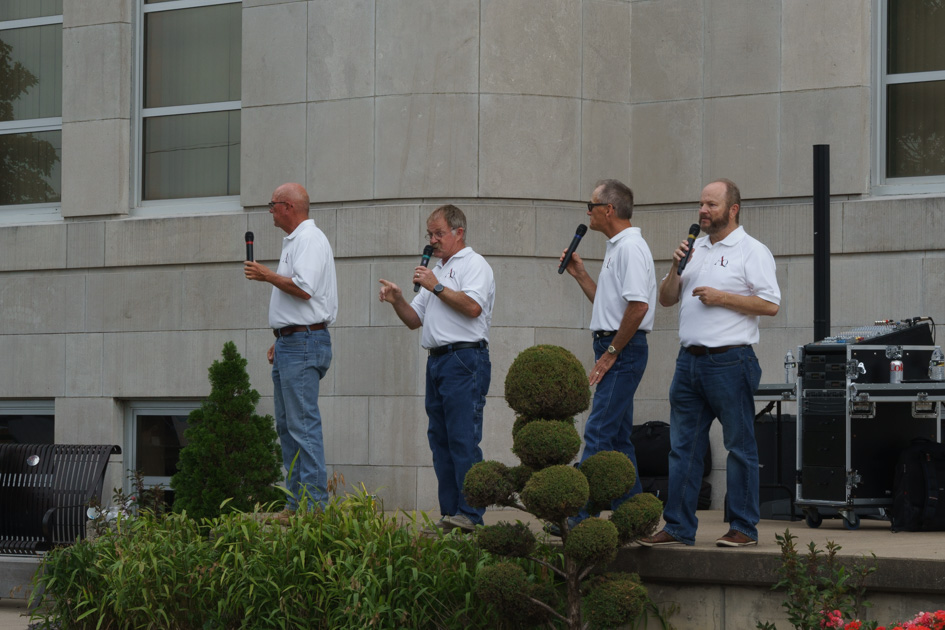
Our visit coincided with Marshfield’s Harvest Festival, which gave us a chance to check out the town square surrounding the Webster County courthouse. The town of approximately 7,600 had a good turnout, with vendors lining the sidewalk selling their wares, along with food and drink trucks offering refreshments. The music and singing added a lively energy to the atmosphere.
The entertainment
Memorials for those who lost lives during war times are a common site in any town, and Marshfield is not an exception.
War memorial
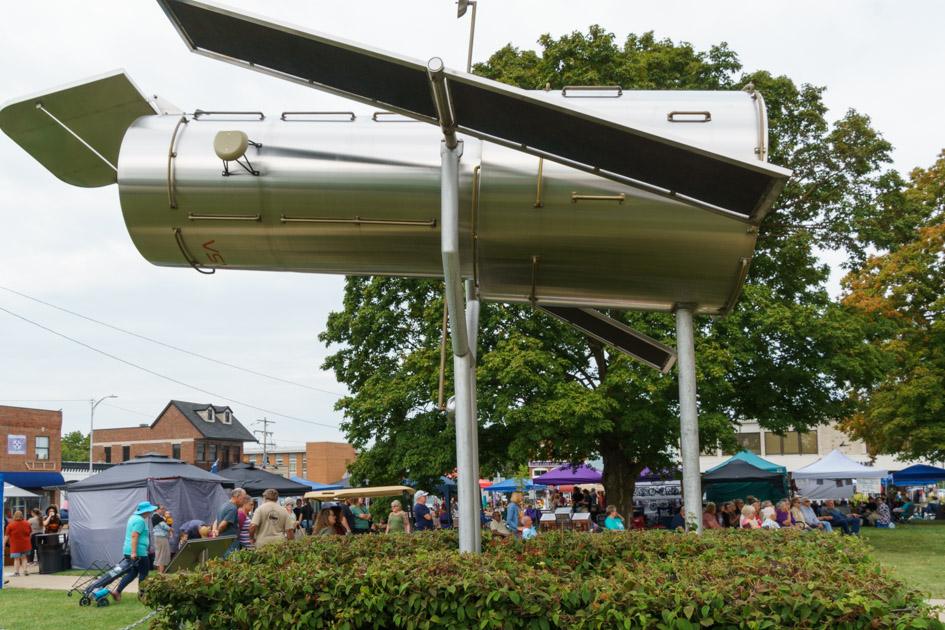
What’s that? The Hubble Space Telescope? How is it related to Marshfield, Missouri? A quick search revealed the telescope was named after Edwin Hubble who was born in Marshfield, Missouri, in 1889. It was his discovery and study of the Andromeda Nebula that led to the knowledge that the galaxy in which we live is but one galaxy among millions in the universe. Hubble also has a road named after him in Marshfield.
This Replica of the Hubble Telescope honors Edwin Hubble who was born in Marshfield, Missouri and is 1/4 the size of the actual Hubble still in space
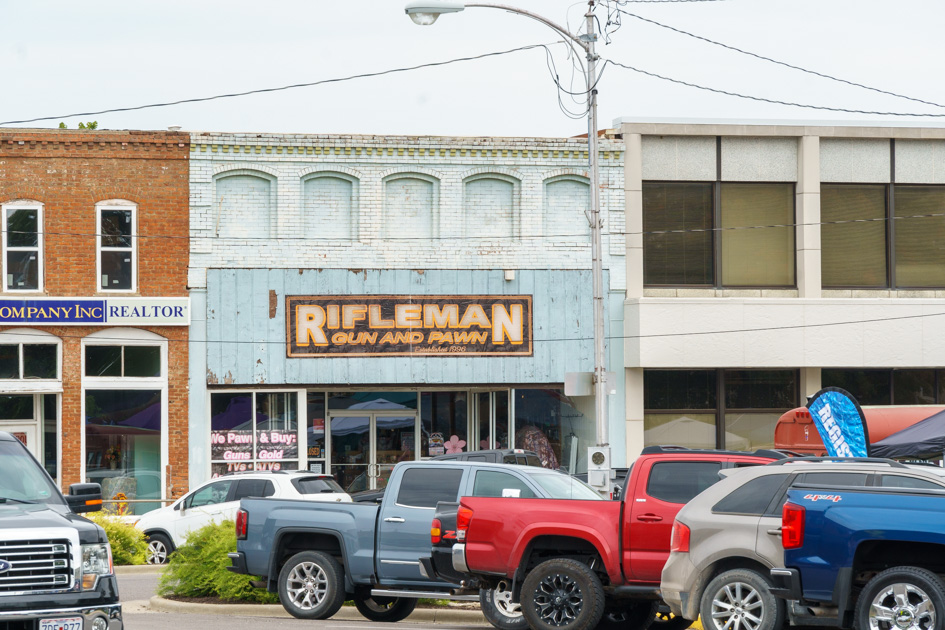
And here are a couple shots of the downtown buildings.
Round Hay Bales
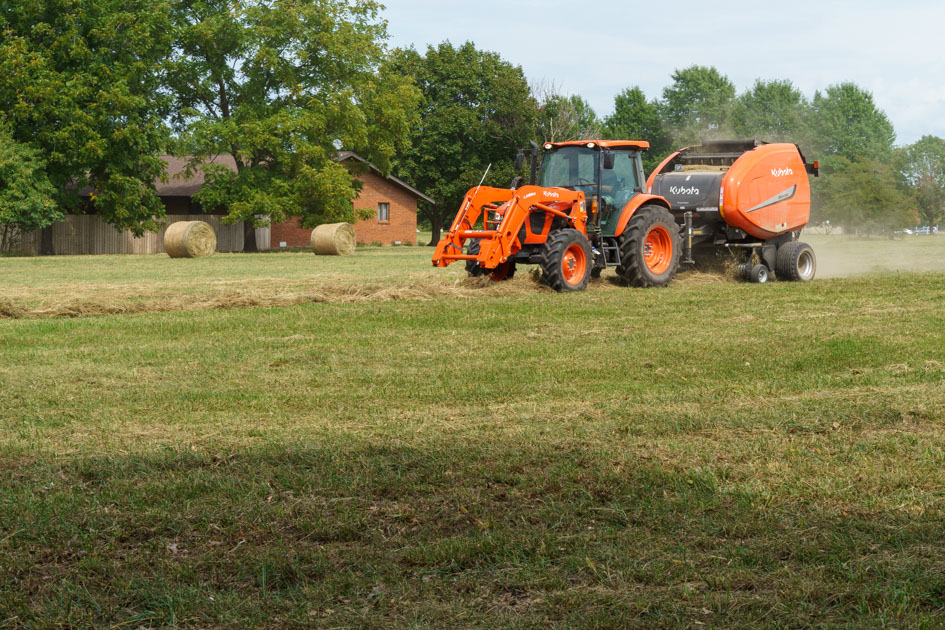
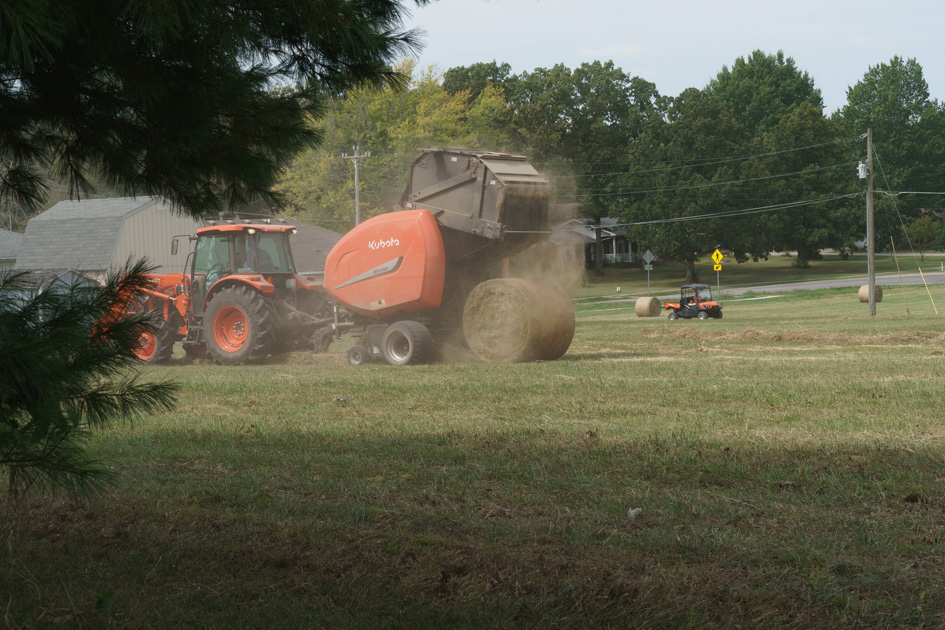
On our way back from the harvest festival, I saw something I’ve waited years to learn more about: round hay bales. I know, it’s silly, but all I ever saw were the cylinder-shaped boulders of hay in fields. I wanted to know how the farmers created those huge round bales. So we drove back to the farm where we saw the men and equipment working.
This piece of equipment rakes the cut hay into a long row.
Then another piece of equipment comes by and vacuums up the hay until it’s full. The equipment wraps a netting around the bale and . . .
Tractor pulling a round hay baler
Voila! Out pops a round hay bale.
Tractor pulling a hay baler
The bales can range from 1.2 to 1.8 meters wide and weigh up to 2,200 pounds (1,000 kg). One large round bale is equivalent to 10 – 15 square bales. Finally, my curiosity satisfied.
Beyond Marshfield
Fair Grove Heritage Reunion
A trip to Fair Grove Heritage Days sounded like a fun outing. The exhibits featured a demonstration of a McCormick threshing machine, a lineup of historic tractors, and another tractor with a pulley that might be a log splitter. I’m not sure.
Jon lends a hand
As with most community celebrations, vendors displayed their items for sale under canopies while others sold food or drinks. And the few stores that occupied the buildings had their doors open for business.
Something for everyone
Tractor row
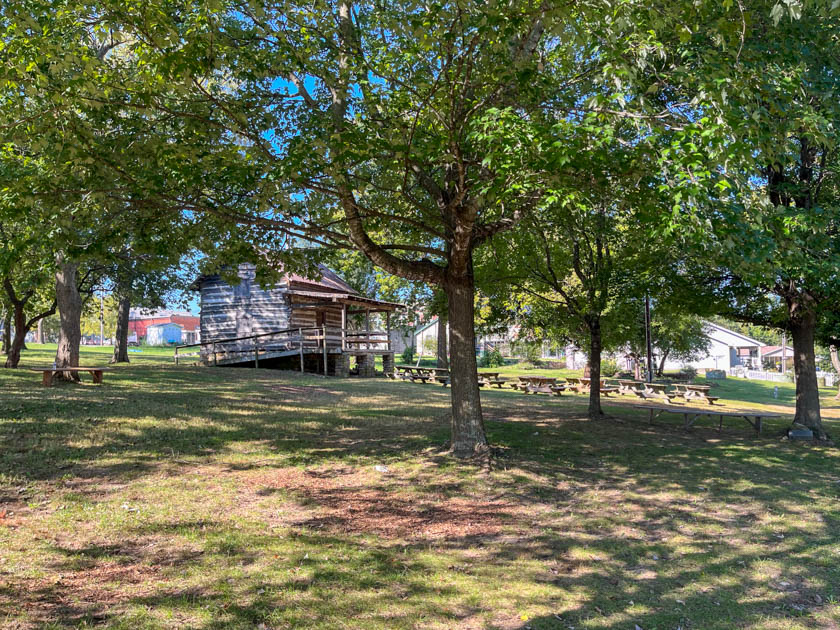
The Duke School is named after the first teacher, Chatham Duke, who was known to use the rod a time or two during his tenure. The original schoolhouse was built in 1846.
Replica Duke School
The replica school building was reconstructed in 1979 from a log building once owned by Mr. Duke.
A peek inside the schoolhouse
I think the antique tractor with the pulley in the photo below had something to do with wood, perhaps log splitting? I noticed a bunch of split wood piled up in stacks.
Log splitter?
The heat finally got the best of us, so we didn’t stay too long. A few days later, Laura and I returned to Fair Grove to pick up a dresser she saw, and I spent a few minutes taking photos of the place without the crowds.
Old Mill Flea Market
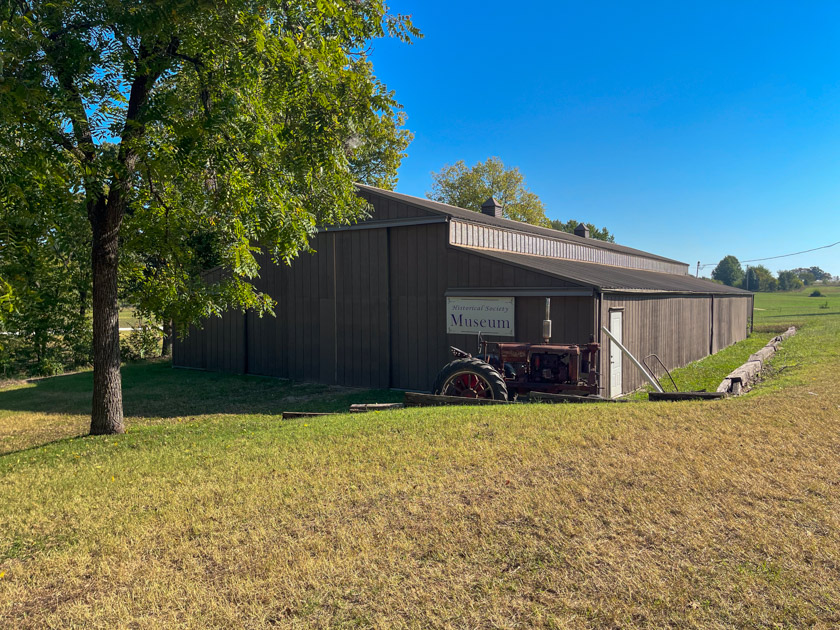
Historical Society Museum
Womack Mill
Side view of the Womack Mill
Historic bank building
I wish the museum would have been open. I can only imagine what treasures hide behind the barn doors.
Askinosie Chocolate Candy Factory
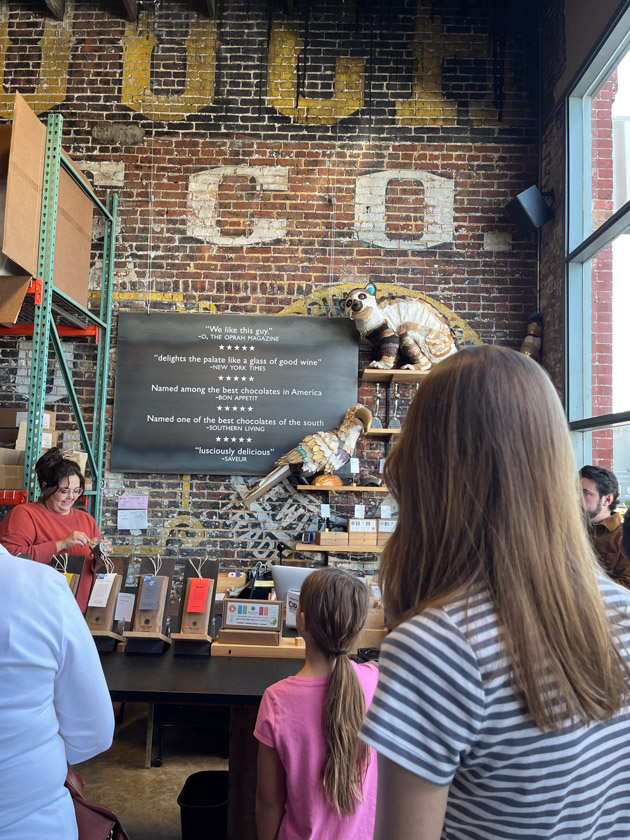
It doesn’t matter how large or small a factory is; we are suckers for a tour of the facilities. The Askinosie Chocolate micro factory did not disappoint. They’re on the famous Commercial Street (also known as C Street) in Springfield, Missouri.
Chocolate time
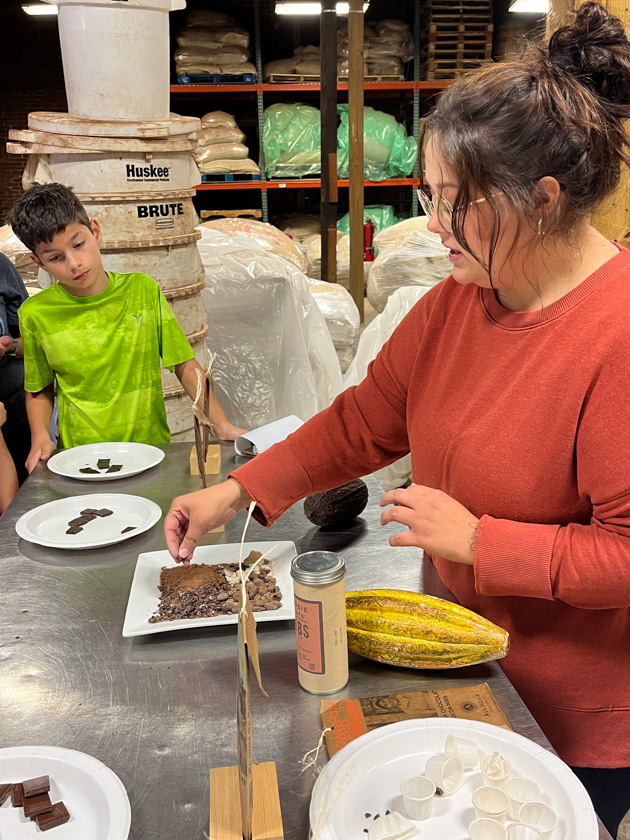
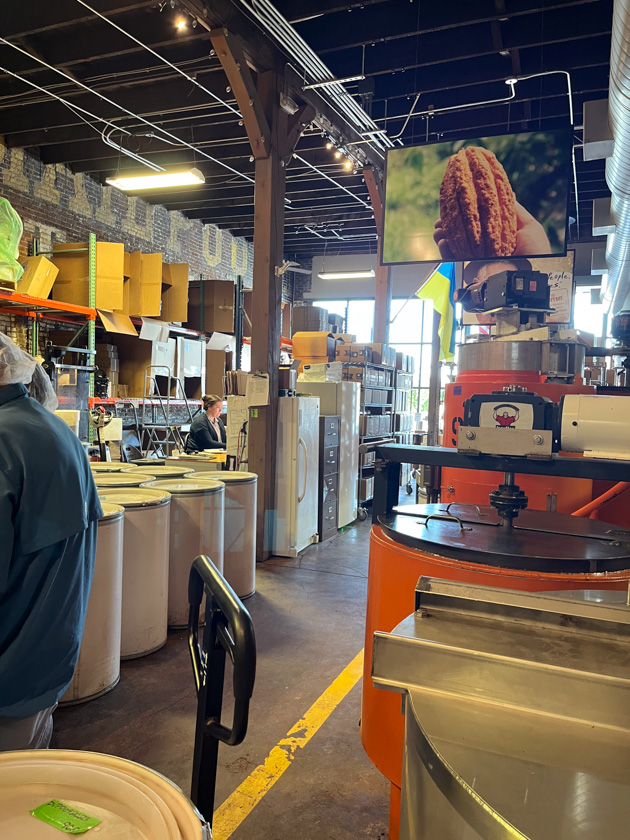
Our guide led the way to where the cocoa beans arrive from around the world. They only use beans from small cocoa farmers who prioritize sustainability, following a Direct Trade approach.
Our guide explained the different types of chocolate and beans
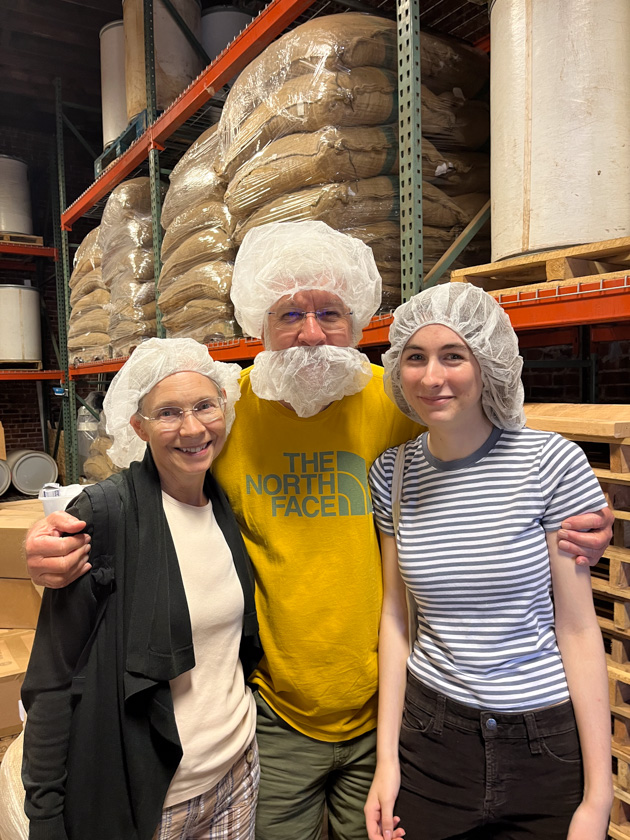
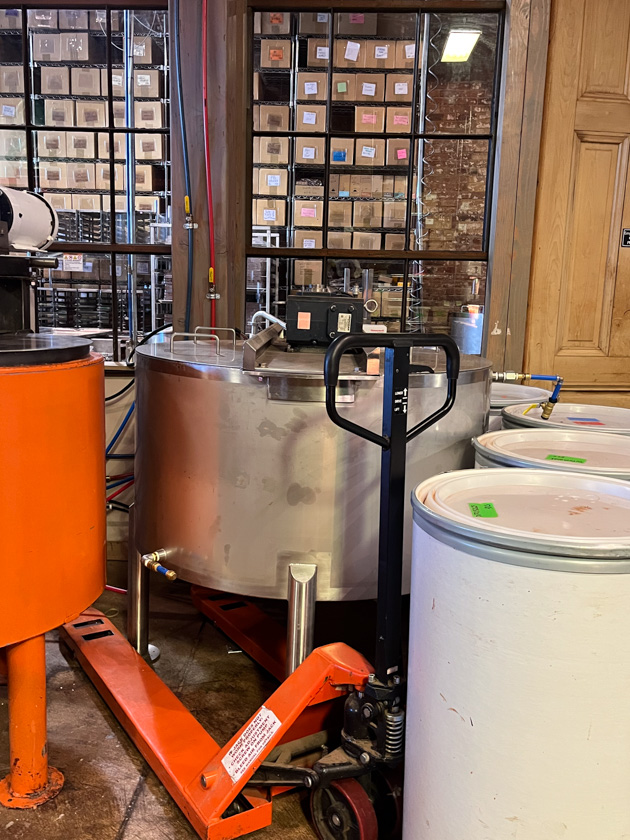
We donned our hair nets before entering the processing section, where our guide detailed the purpose of each machine’s role.
We look mavalous!
On to the lab, where all the magic happens.
Guide explains the process
Magician at work
Waiting to taste samples
Although I had fun during the tour and found the information interesting, I don’t remember much about the process and that’s okay. I do remember how the chocolate felt on my tongue as it melted in my mouth. Oh, no. Now I have a craving. I better take a break from typing and order a supply of Askinosie chocolate bars.
After our tour, we checked out a couple of buildings nearby on C Street where visitors will find galleries, shops, dining, and regular events to explore.
Culture C-Street and Eurasia Coffee Co.
Cafe Cusco
Up Next: Wonders of Wildlife Museum & Aquarium, Wild Animal Safari, then a trip to the Clinton Presidential Library in Little Rock, Arkansas





























































 The Traveling Todds