Point Arena Lighthouse Plus Horse Racing

Point Arena Lighthouse

On our way home from Fort Bragg on October 3, 2024, we stopped at the Point Arena Lighthouse, one of about 40 still standing along the 800 miles of the California coastline. Not all of them allow visitors. Our timing didn’t align with the tour, so we wandered around outside and inside the gift shop and museum.

Point Arena Lighthouse from a distance

The first-order Fresnel lens wasn’t something anyone walking into the store and museum could miss. The imposing seven-foot diameter lens with nine eyes drew me in for a closer look, and I forgot all about the clothing, jewelry, books, and other items sold in the store.

Lighthouse and museum/gift shop

Constructed in 1870, the first Point Arena Lighthouse included a large keepers’ residence. Additional housing nearby accommodated four lightkeepers and their families. The brick-and-mortar structure did not fare well during the 1906 San Francisco earthquake, even though the epicenter was 145 miles away.

Once condemned and torn down, the replacement lighthouse, standing 115 feet tall, began operations on September 1, 1908. To withstand an earthquake, the builder used steel reinforcement rods encased in concrete to build the new structure.


Checking out the information posters

The lightkeepers had to adhere to a strict schedule to keep the first-order Fresnel lens in operation. The keepers had to hand crank a 160-pound weight up the center shaft every 75 minutes. The kerosene lamp needed refueling every four hours, and the wicks required regular trimming.

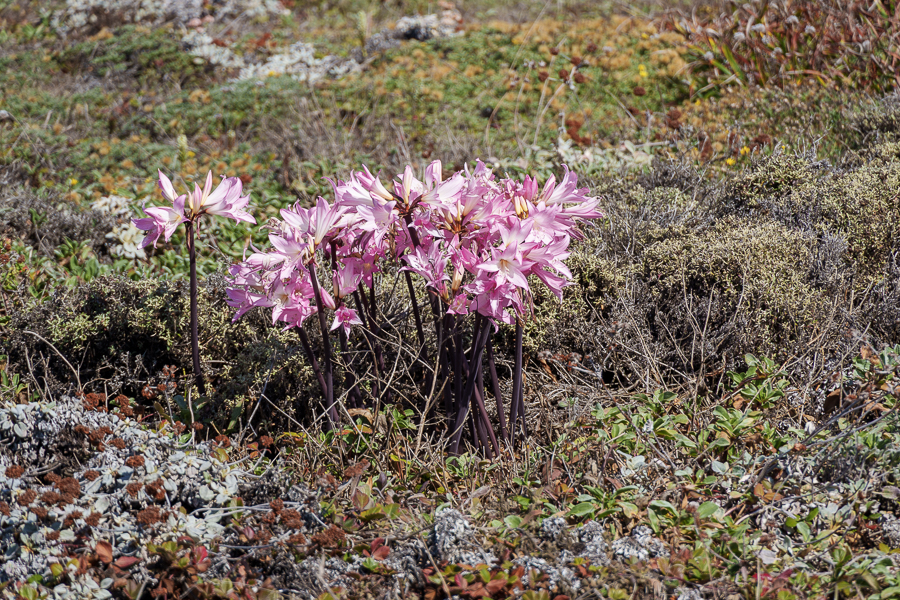
Garden identifying local plants
Naked Lady Lily (Amaryllis belladonna), poisonous to humans and pets

The keepers’ workload lessened when electricity arrived and replaced the lamp. I wonder how many keepers lost their jobs after the installation of the 1,000-watt electric lamp, powered by a 1/8 horsepower electric motor. As new products became available, so did more changes at the lighthouse. In 1977, a beacon replaced the electric lamp and the lens, and in 2015, an LED array replaced the beacon.
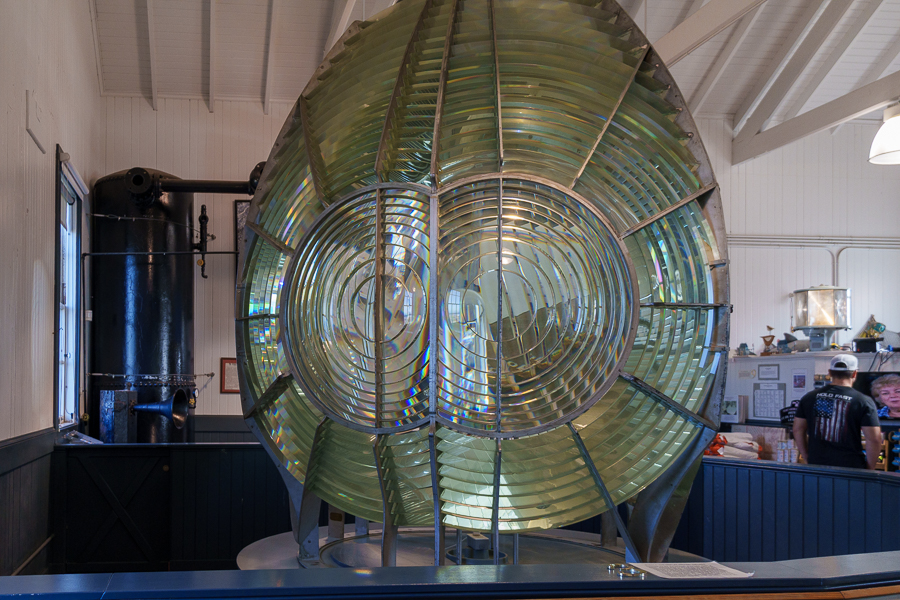
First-Order Fresnel Lens

For a unique place to stay, reserve a cottage or studio at the lighthouse. All the refurbished keepers’ housing is available for reservations. The accommodations range from a one bedroom one bath for two people, up to a three bedroom two bath that accommodates up to six.

View of cliffs and breaking waves

What I liked best about this lighthouse was the preservation that went into making it what it is today. It didn’t seem to have gone through decades of neglect as much as other lighthouses we have visited. Point Arena Lighthouse Keepers, Inc. has done a wonderful job of explaining the lighthouse’s history. Of special interest to me was how the early keepers kept the light on for the ships passing by at night.

We had wanted to stop at the Point Reyes Ligthouse too, but ran out of time. We’ll catch that one on a future trip. Another adventure awaited us at home.

Horse Racing at the Alameda County Fairgrounds

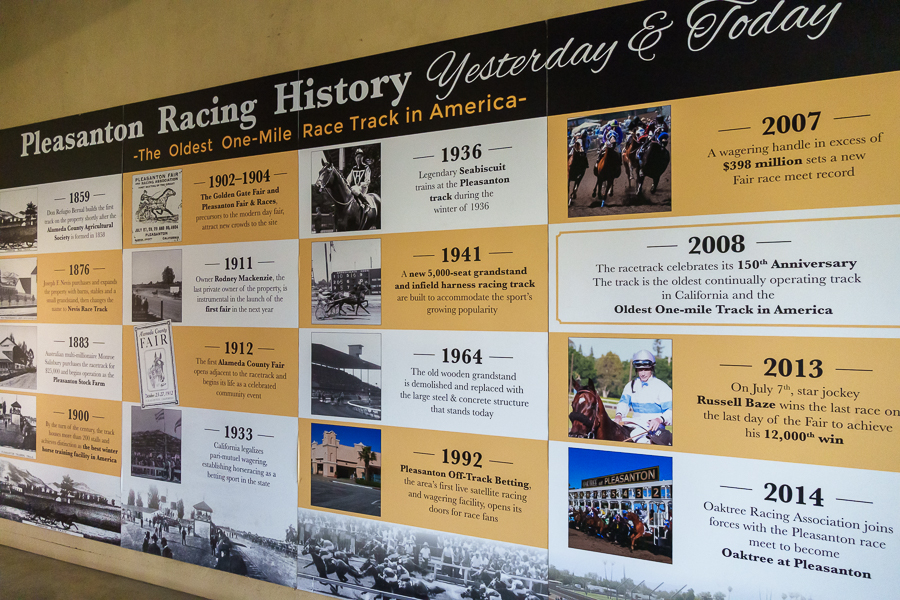
A few weeks later, we were off to the races. The Alameda County Fairgrounds is home to one of the first 1-mile horse racing tracks in the United States. Augustin Bernal is credited with building the racetrack many years before the founding of the current operators, the Alameda County Agricultural Fair Association.

Starting gate

Here are a few facts:

Pleasanton Racing Timeline
  • Originally built in 1858
  • Hosted horse racing for the Golden Gate Fair in 1902
  • The inaugural Pleasanton Fair and Races commenced in 1904
  • In 1912, the modern-day Alameda County Fair began, but the venture was not financially successful. This was due to competition from San Francisco’s 1915 Panama Pacific International Exhibition, and World War I
  • California legalized pari-mutuel wagering in 1933
  • Businessmen provided funds to repair the fairgrounds and revive the fair
  • The Alameda County Agricultural Fair Association was founded in 1939, and the fair returned
  • The horses arrived in 1941 during the fair for 9 days and continued through 2024
Racing tote board

At the time, we had no idea that our day at the races would become a cherished memory. We watched the post parade as the trainers led the horses and their jockeys to the starting gate. It gave us a chance to see which horses we wanted to bet on. Then the announcer called, “And they’re off.”
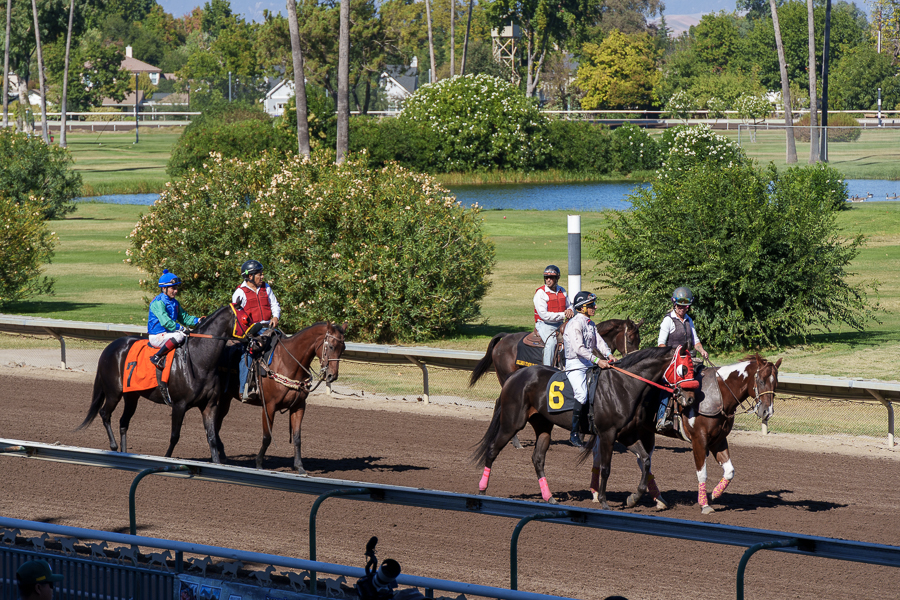
Post parade

I loved the sound of pounding hooves on the track as they raced by, and I loved the cheers of the people in the stands, and the announcements of which horses were ahead. My excitement increased with each race, even though the horses I bet on never placed.

And they’re off.
Heading for the finish line

Kevin was the lucky guy in our group for the day. Beginner’s luck or expert at picking winners? Who’s to know? As we walked out of the stands and back to our car, we looked forward to attending the promised future races and getting together for one or more of the races in 2025.

Bailey and Kevin show off Kevin’s winnings

It was a sad day when the Alameda County Fairgrounds announced the cancellation of horse racing at the fairgrounds on March 25, 2025, along with the closing of the stabling facilities. The future of horse racing in Pleasanton had ended.
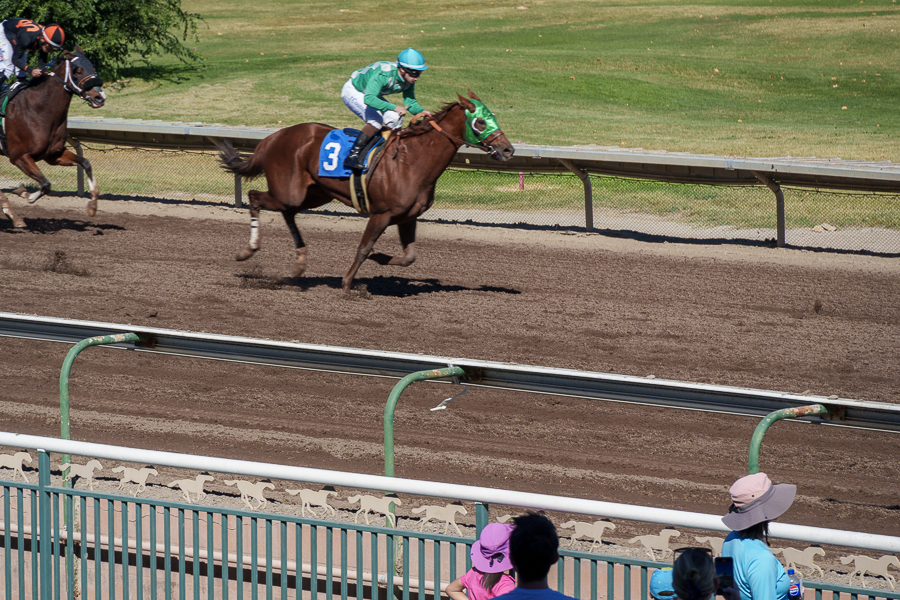
Out in front

Two main events led to the closure. First, the California Authority of Racing Fairs (CARF) stopped issuing wagering licenses to fairs for live races. The second was the cost of upgrading the wastewater treatment system at the fairgrounds.
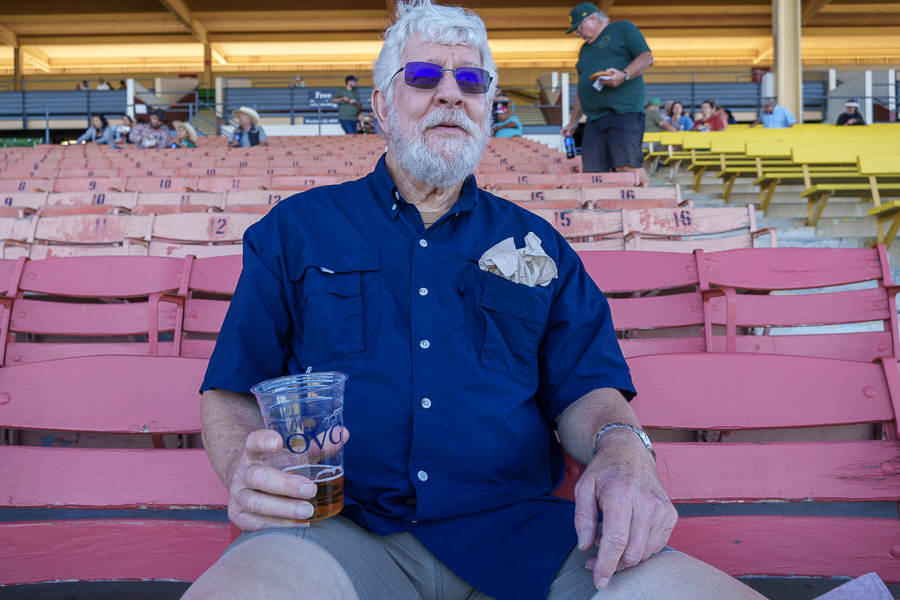
Jon enjoys a beverage while watching the race

Stable guards, maintenance workers, groomers, and other racetrack employees lost their jobs. Many of the workers lived in RVs on the property, and they had to scramble to find new stables for their horses and places to live.

Mt. Diablo in the background and the 9-hole golf course in the center of the track.

I wondered how the annual Alameda County Fair, held in late June and early July, and all the other county fairs would fare without the horse racing events. Based on attendance numbers during 2025 compared to 2024, the Alameda County fair enjoyed an increase of 13%. Of course, weather plays a big part in attendance, and 2025 experienced milder weather than in 2024. New programs and activities introduced to replace the horseracing event can also account for some of the increase.

Although the Tri-Valley area may no longer be known for horse racing, it still has a lot to offer. Dublin, Livermore, Pleasanton, and San Ramon offer small hometown amenities for families. Farmers’ markets, parades, outdoor concerts, restaurants offering cuisine from around the world, shopping, history museums, galleries, the Bankhead and Firehouse theaters, parks, trails, hiking, golfing, medical care, and plenty more.

After all our travels so far over the past few years, Jon and I have yet to find a place we would rather live. With or without horse racing, we’re here to stay for now.

Up Next: Unfortunately, 2025 did not see us on the road much. We’re hoping to travel during the second quarter of 2026, if all goes well. Over the next few posts, we’ll share the rest of our 2024 adventures and the few we slipped in during 2025. Then we’ll be on hiatus for a few months.

See you then.

Safe Travels

2024 Short Trip to Fort Bragg, California

After our trip to Wisconsin, we settled in at home for a few weeks and caught up on chores. One chore we weren’t ready for was the purchase of a new car. I loved my 18-year-old Acura MDX and wasn’t eager to give it up. “We’ll just look,” I said when we left to visit the Toyota and Hyundai dealers.

Ha, ha, ha. We didn’t know how impossible it would be to walk away without leaving a deposit after a test drive in a Hyundai Santa Fe. As owners of our new car, we couldn’t just park it in the garage. We needed a place to take it. “Fort Bragg, California, here we come, and a ride on the Skunk Train will be fun.” That was something I’d wanted to do for years.

On the road again.

We stayed two nights at the North Cliff Hotel, which sits upon a bluff with views of waves crashing against boulders and cliffs below. We arrived with plenty of time to check in and watch the sun dip into the ocean while eating dinner.

View of Noyo River Bridge from the Wharf Restaurant, Lounge, and Bar
Morning, Noyo Bay

The next day, October 2, 2024, we started our day with breakfast at the Home Style Cafe. Then we rode the Pudding Creek Express, otherwise known as the Skunk Train. The 7-mile round-trip excursion to Pudding Creek Estuary stops at Glen Blair Junction.

Home Style Cafe is great for breakfast
A US Army Air Corps vehicle parked outside the cafe

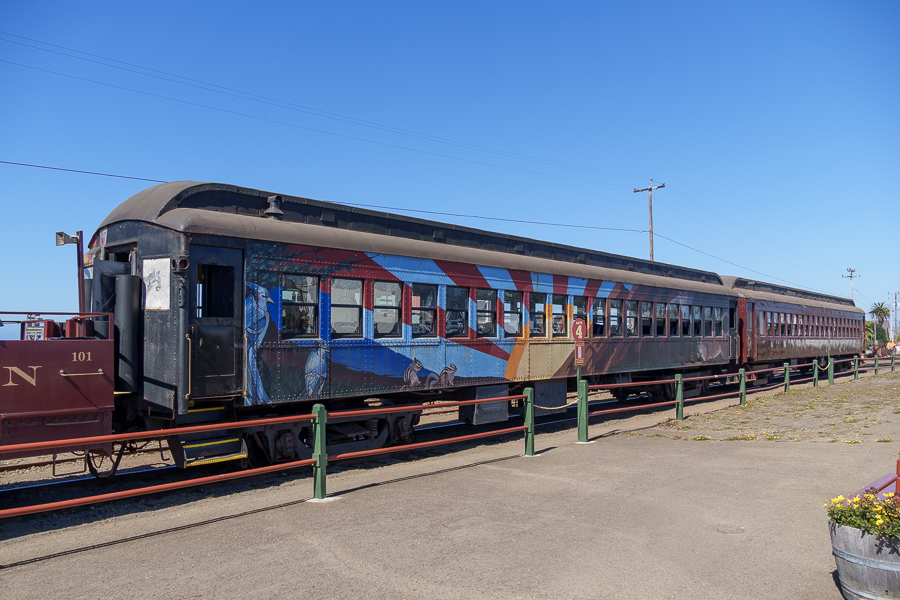
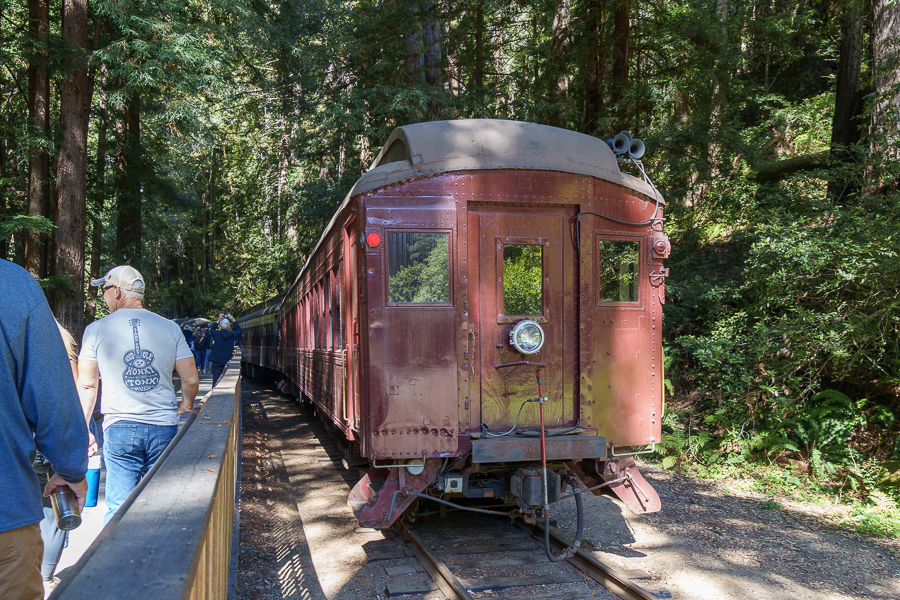
The Skunk Train

Skunk Train Depot and Boarding
Boarding Area
Hooking up the locomotive
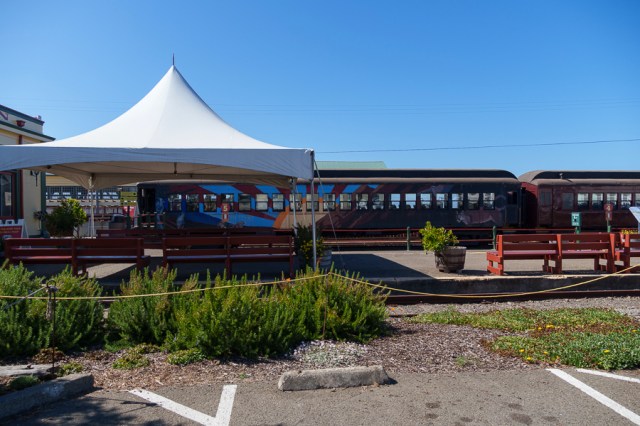
Three cars waiting to go.
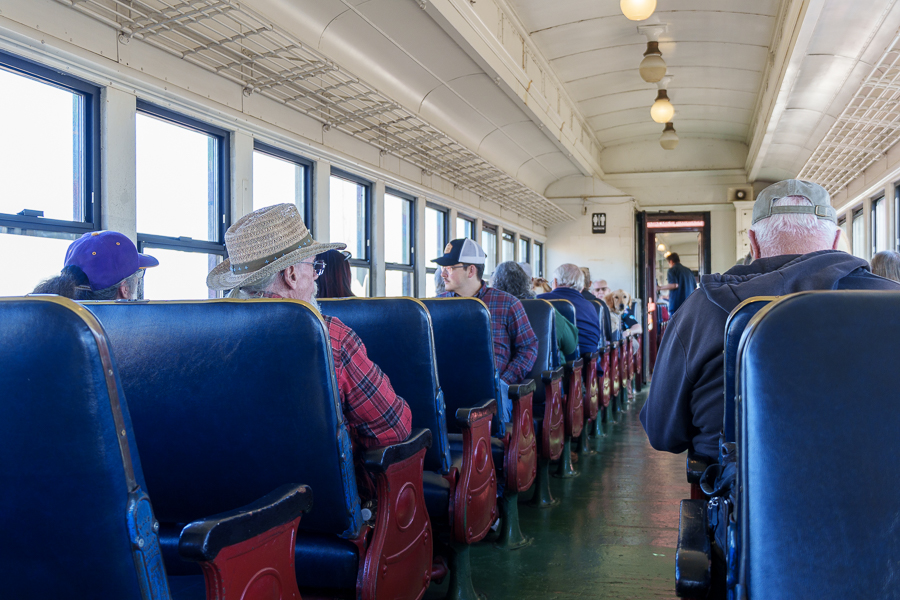
Comfy seats inside

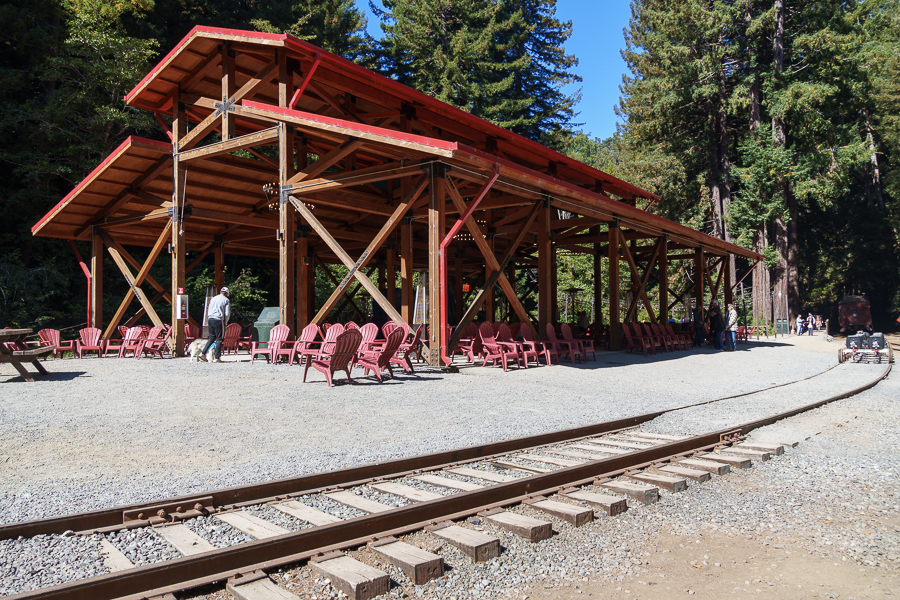
At Glen Blair Junction, the conductor encouraged us to stretch our legs, play yard games, and explore the path through the redwood forest for 45 minutes.

Glen Blair Junction shelter, firepit, heaters, and games

Other adventures are available from Fort Bragg. Ride the train up to Glen Blair Junction and take about a 1-hour walk back to town, or walk up, catch the train, and ride back. Railbikes for two are also a popular way to get to Glen Blair.

The railbikes arrived before us and went on a guided hike

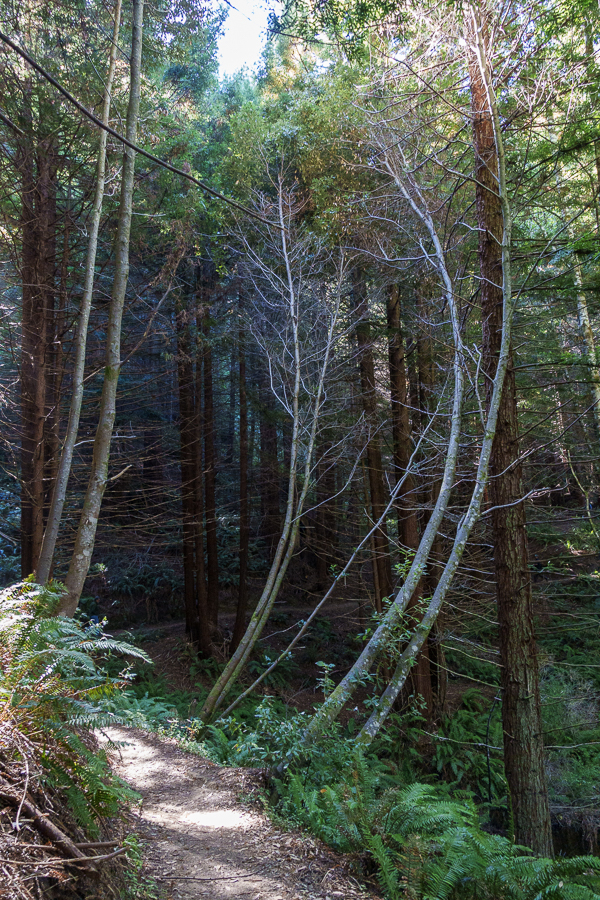
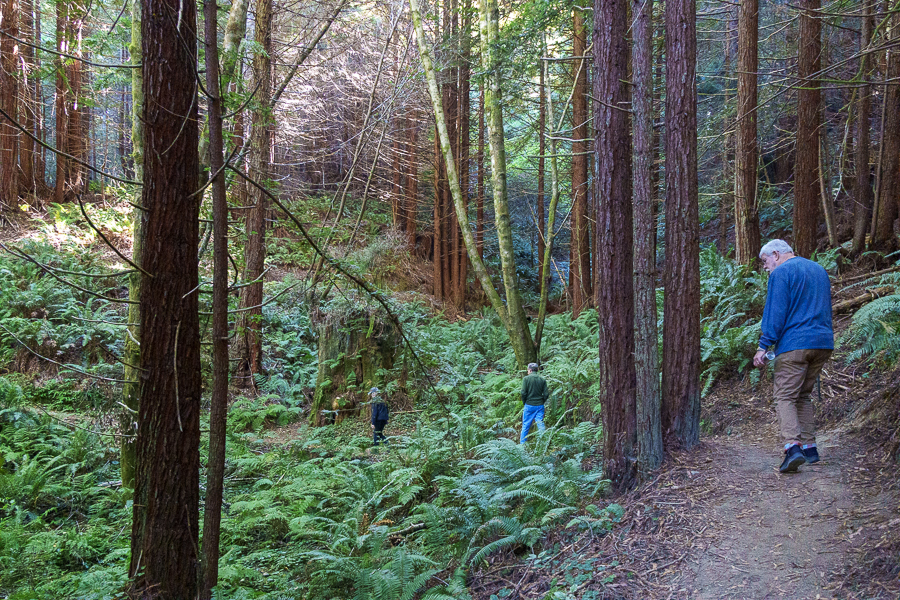
We moseyed along the path, enjoying the sights punctuated with earthy bark and pine aromas.

Interesting how these trees grew

The Skunk Train and the railbikes operate year-round, rain or shine. Be sure to check the schedule before going because weekend and holiday schedules may apply during the winter months.

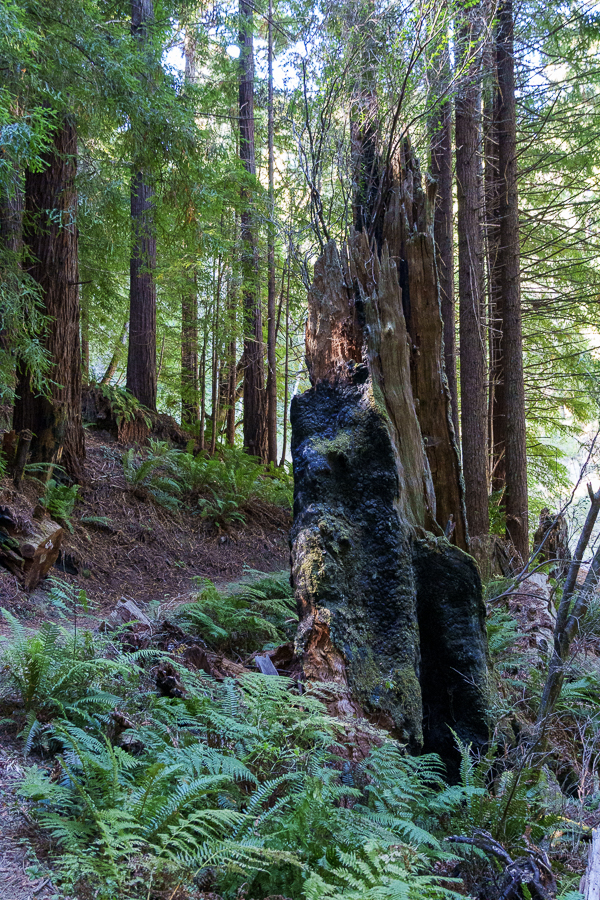
Remnants of a past blaze
Fungi growing in the forest
View of Glen Blair Junction from the trail

The train from Fort Bragg traveled to Willits, California, until 2015, when a tunnel collapse in 2015 cut the route in two. From Willits, the Wolf Tree Turn tour takes passengers on a 2-hour, 16-mile, round trip over a 1,740-foot summit, through Tunnel #2, and down into the Noyo River Canyon. The trip includes a brief stop at one of the oldest trees on the route. This train operates only from early spring through December.

Too much shadow in this photo
Too bad I missed this vantage point.
Making our way back to the junction

So, why is it called the Skunk Train? I found two possible reasons. The first is that its name comes from the skunk cabbage, which is a plant that grows along the train’s route in the wetlands and blooms during spring. It’s said the plants have a pungent odor when disturbed, like a skunk.

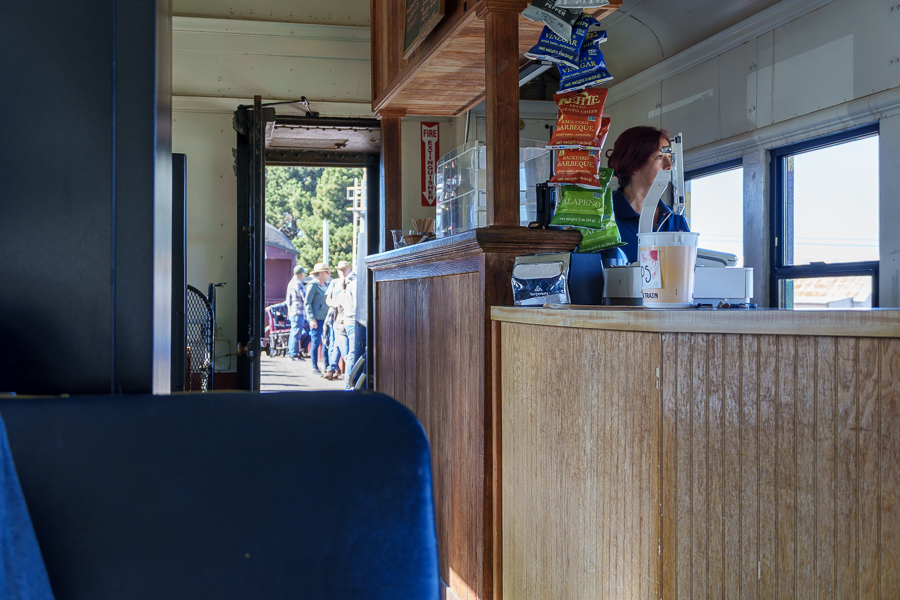
Bar for snacks and drinks

The second reason is that the name came from the motorcars that replaced the steam locomotives. Apparently, the new locomotives reeked of gasoline and oil burning, so passengers called them Skunks. I think I like the skunk cabbage story best. I’m sure the railroad workers disturbed the plants while laying tracks. Thus, setting off the plants’ protective odor, and impregnating the workers’ clothes.

All aboard

Other Skunk Train adventures from Fort Bragg include a guided redwood forest tour and a tour of the roundhouse. And for a late-night adventure, board the train to Glen Blair Junction, where firepits, heaters, group games, live music, and a world-class bar await. Check the schedule online for select Friday and Saturday nights.

The Depot Mall & Museum is up the street from the Skunk Train Depot. There, visitors will find the Laurel Deli & Desserts restaurant, shopping opportunities, restrooms, and Daisy. Daisy is a steam locomotive built by Burnham, Parry, Williams in 1885, according to the steamlocomotive.com website.

Daisy the locomotive

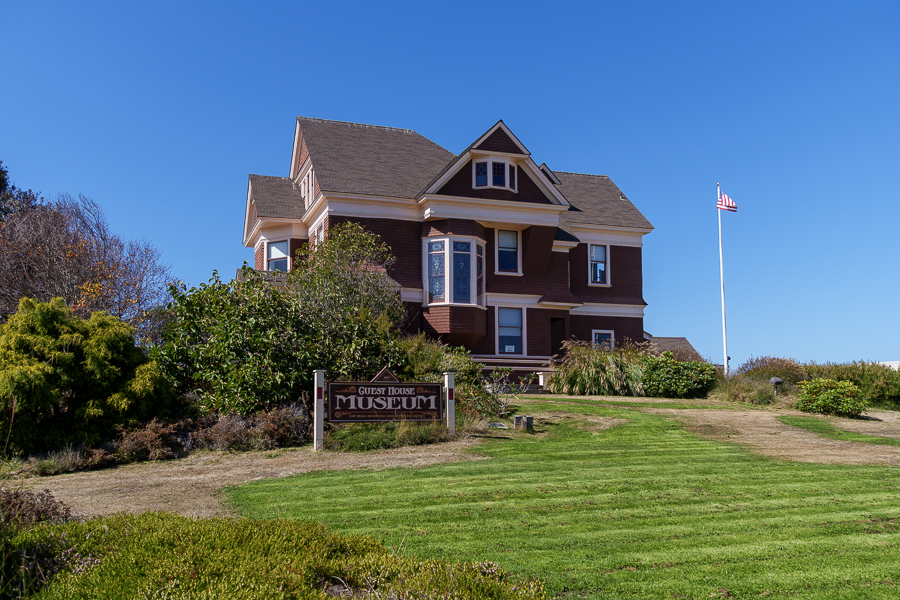
Guest House Museum

After our train ride, we walked up the hill to the Guest House Museum. Fort Bragg Redwood Company built this home in 1892 for the Johnson Family who owned the company.

Entrance

Constructed with 67,000 board feet of lumber, the home served as a showcase to exhibit the ornate woodwork, decorative moldings, and door and window trims. The spool-spindle banister and stain glass windows added extra design features.

Street side view
Examples of the architectural woodwork used in the home
Stain glass windows
A closer look at the windows

The company also used the house for guests from their San Francisco office, and for people visiting the mill and logging areas in Fort Bragg. All bedrooms included hot and cold running water and electric lights, the first home with such amenities on the Mendocino coast.

The museum is organized by theme. To name a few, they are: marine room, Pomo exhibit, train room, mill/loom room, and timber room.

Timber room
Mill/Loom room
Train room
Quilt designed and made by Our Town Ocean Wave Quilters in 1999

After a few ownership changes, Georgia-Pacific Corp. became the owners and used it as a department store and later a museum. They donated the property to the City of Fort Bragg in 1985 with the understanding it would remain a museum for Fort Bragg, Mendocino County, and the community.

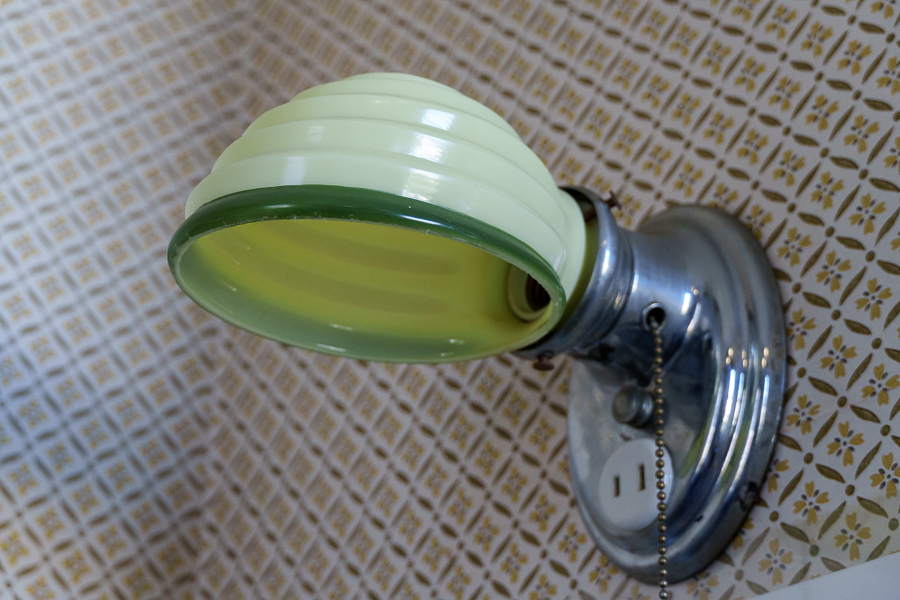
Reminds me of the light fixtures in my grandparents’ home during the 1950s
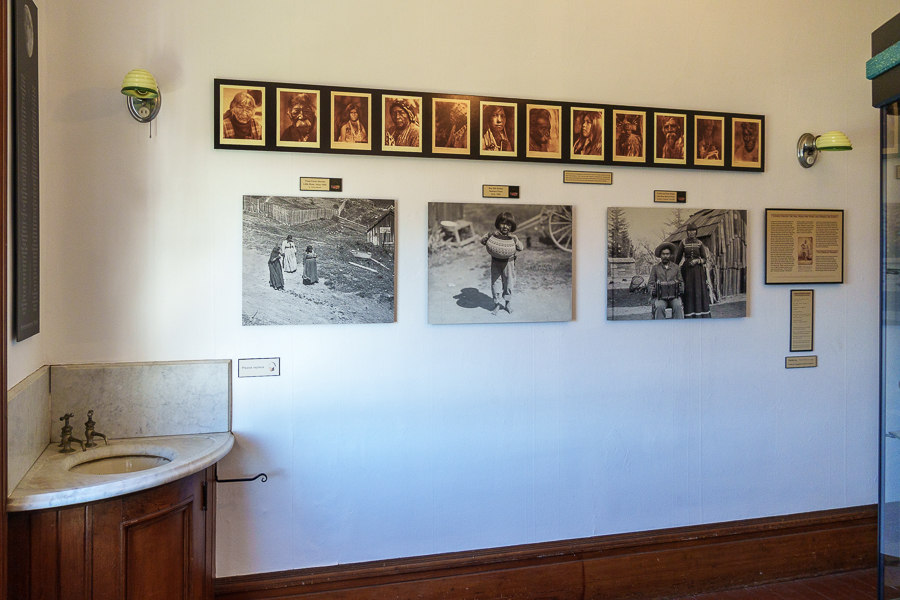
The Pomo Room
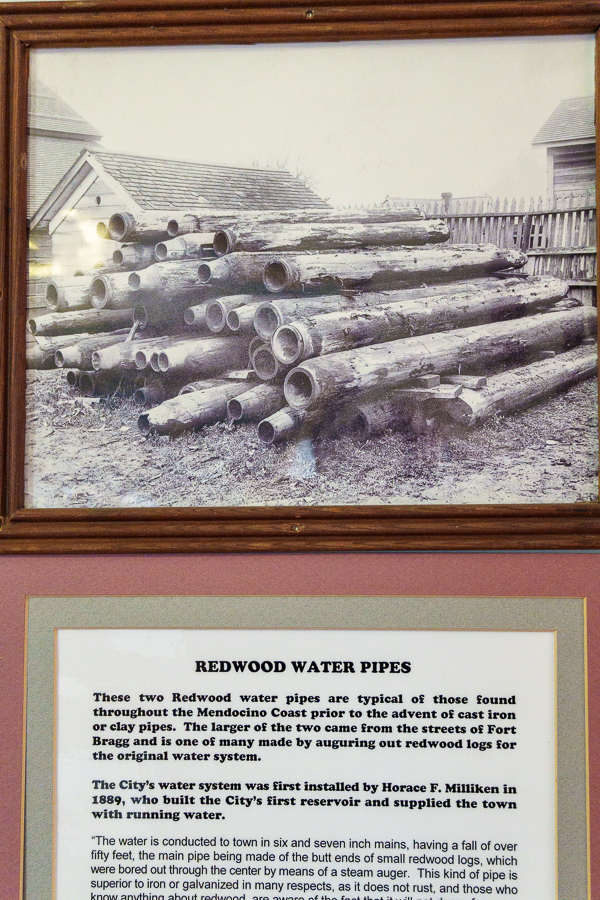
Redwood trees were used to make
the first water pipes in Fort Bragg
Leiser Bent Willow Rocking Chair

Jon admires a section of the largest known redwood tree in Mendocino County.
It stands as a memorial dated in 1943 and dedicated to Charles Russell Johnson, who founded the city in 1889.

Section of largest known redwood in Mendocino County

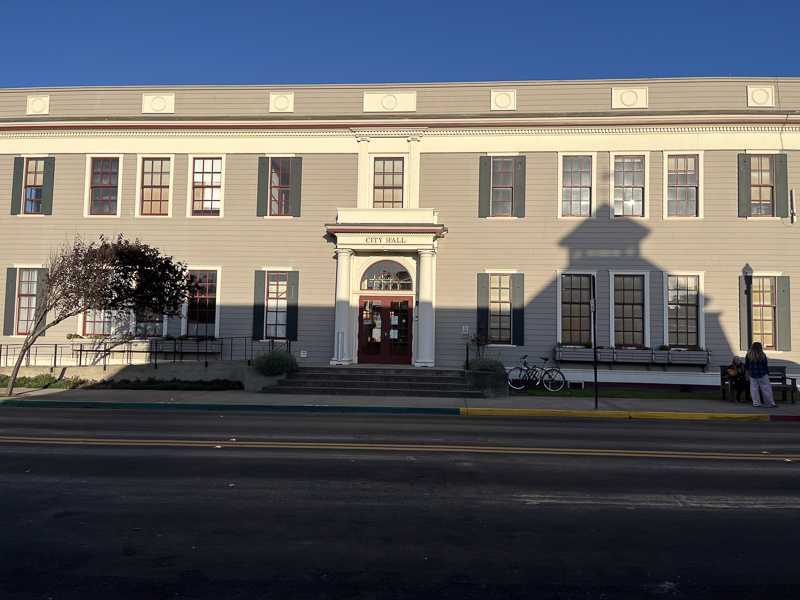
I like to capture a few buildings around town. Below are the city hall, a mural, the former Union Lumber Company Store, and the First Baptist Church.

Fort Bragg City Hall
I can’t figure out what I’m looking through. Do the circles represent a camera lens, a locomotive headlight, a first-order Fresnel lens, or . . .?
The former Union Lumber Company Store is now
a collection of various stores and restaurants.
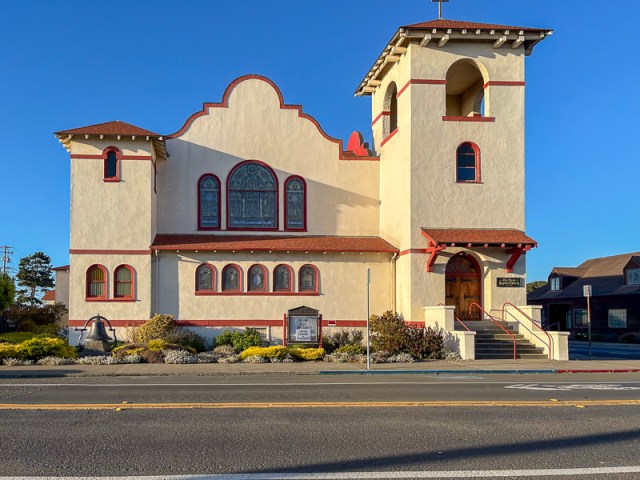
The First Baptist Church

Whew! What a full day we had in Fort Bragg. As always happens during our visits, I wouldn’t mind coming back again someday. There are plenty more sights to see and things to do. And I would also like to visit Willits and take the train going the other direction. Then I can imagine what it was like to travel the entire route.

Next up: we make a stop at Point Arena Lighthouse on our way home.

Safe Travels

2024 Wisconsin Vacation Episode 3: Peninsula State Park, Eagle Bluff Lighthouse, and Fish Creek Scenic Boat Tour

Peninsula State Park

The Peninsula State Park has a lot to offer Door County communities and visitors alike. With 470 campsites throughout the park, campers have plenty of sites to choose from when making reservations. Some sites can accommodate RVs up to 35 feet. Other sites may not. Primitive and electric-only sites are available.

Besides camping, visitors can enjoy an 18-hole golf course, a sandy beach, hiking and biking trails, a lighthouse, and the Northern Sky Theater. During the summer, the whole family can enjoy the musical comedies presented at the theater.

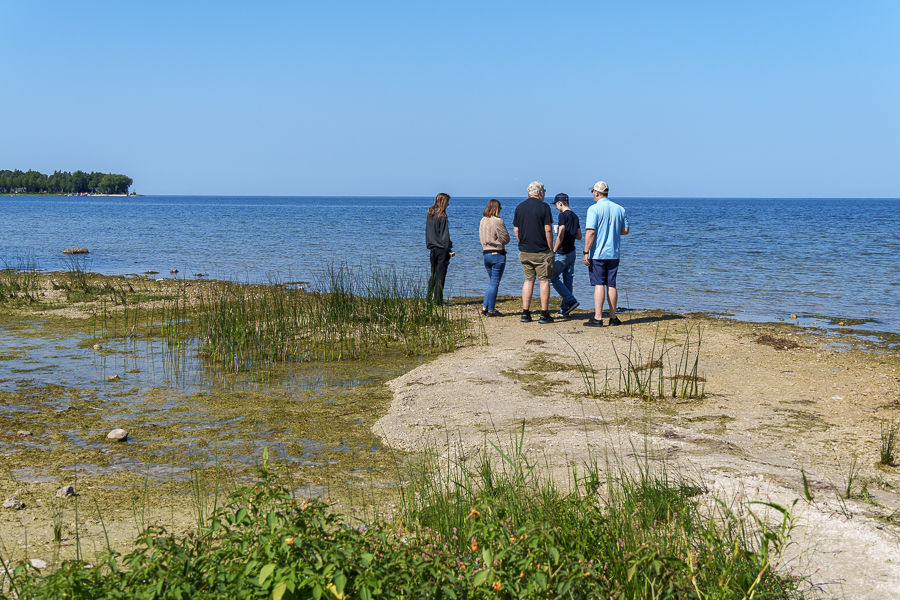
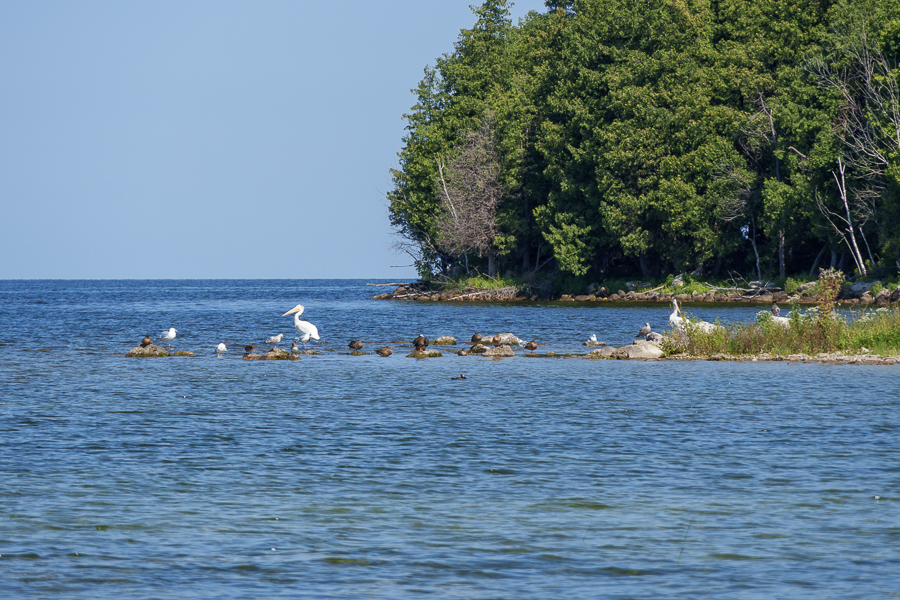
On August 13, 2024, our first stop in the park was the Weborg Marsh and Point. The marsh comprises a sedge meadow, or low-lying area composed of grass-like plants and saturated soil. Here, one might see sand-hill cranes feeding on snails, cattail tubers, and tussock sedge, along with other shorebirds.

The family
There’s the waterfowl.

I guess my interest in cemeteries means I’m a taphophile. Cemeteries draw me in and urge me to wander around, reading inscriptions and wondering about the lives of the people buried there. So, our next stop was the Blossomberg Cemetery. I find the trinkets people leave for their loved ones interesting. The items often tell me something about the deceased and/or the person who decorated the memorial.

Not all cemeteries allow trinkets like these
This was quite a headstone.
One of the older headstones in the cemetery

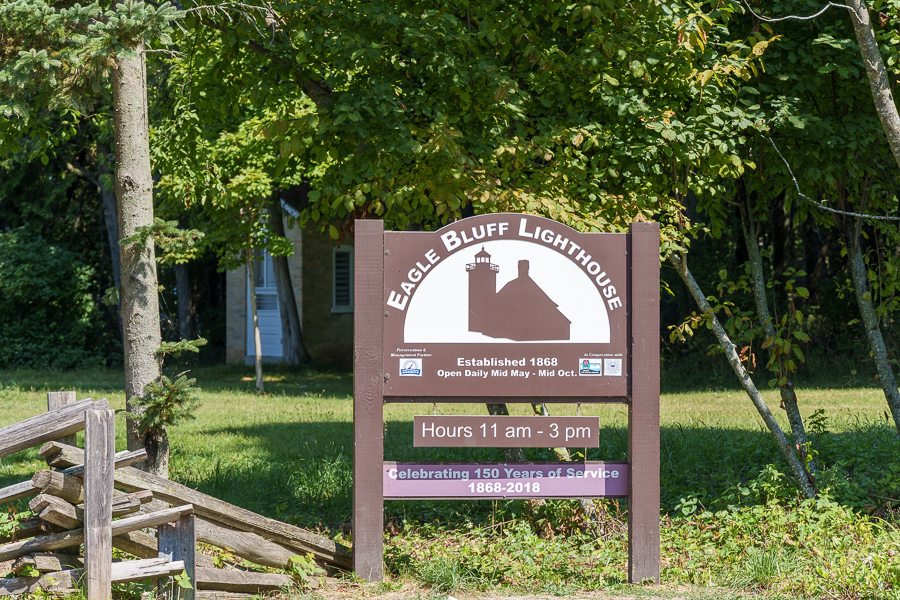
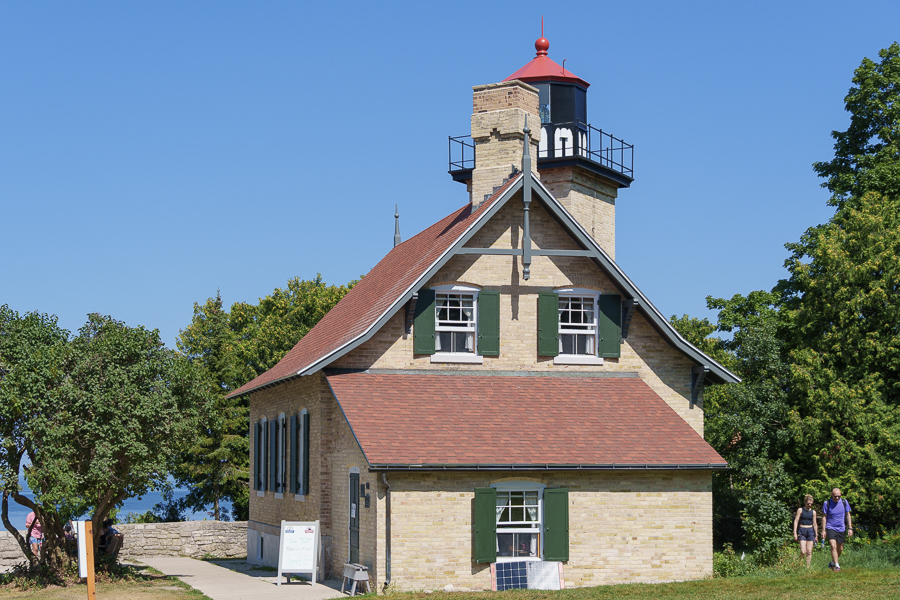
Since an advertisement said the most valuable asset of the state park was the Eagle Bluff Lighthouse, we stopped to have a look around. At the end of the Civil War, pioneers began settling in northeastern Wisconsin by boat over the waters of Green Bay. Subsequently, the lighthouse guided the sailors with a range of sixteen miles. To learn about life at the lighthouse during 1883-1918, take the 30-minute tour. The docent tells the story of Captain William Duclon, the second keeper, and his family. On display are pieces of original furniture used by the Duclons.

Maya and Jackson Silvey
Eagle Bluff Lighthouse building
So nice of this bee to pose for a photo
Another view of the lighthouse

Next up was the 60-foot-tall observation deck known as Eagle Tower. It stands 253 feet above Green Bay, has a staircase with 100 steps, and an 850-foot tree-canopy walk with a 5% grade or less to reach the top.

Across Eagle Harbor

Or walk along the 850-foot canopy walk with its 5% grade ramp. The ramp is fully accessible and includes level spots and benches to rest. No matter the method used to reach the top, panoramic views make it worthwhile.

The ramp leads to the tower platform
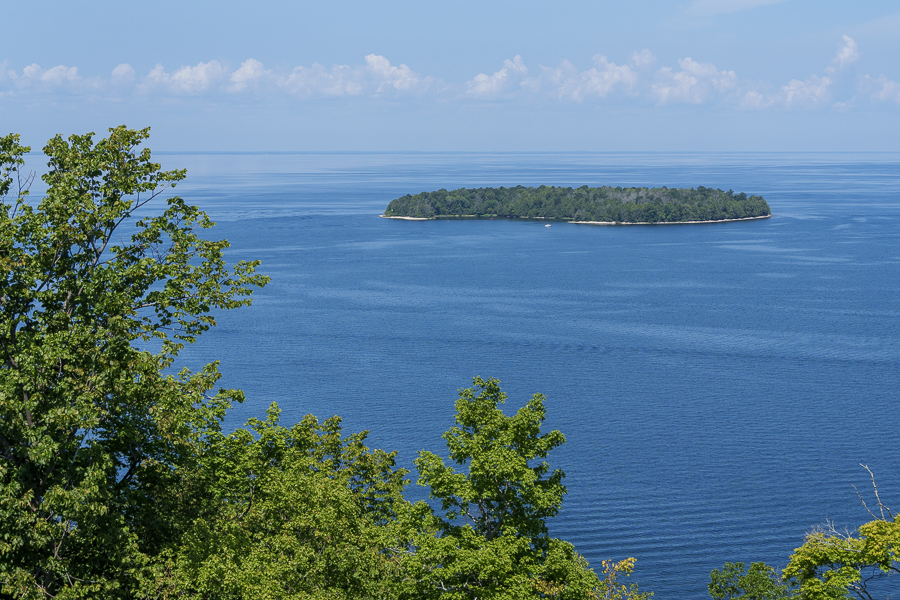
Horseshoe Island

The current tower, built in 2021 at a cost of $3.5 million, is the third tower. The first one, built in 1914, served as a fire lookout and lasted until 1932, when it was dismantled and replaced. Tower number two stood until 2016, when the third tower replaced it.

Nicolet Bay

With our tummies growling, it was time for a bite to eat, so we drove on to Sister Bay.

Al Johnson’s Swedish Restaurant & Butik

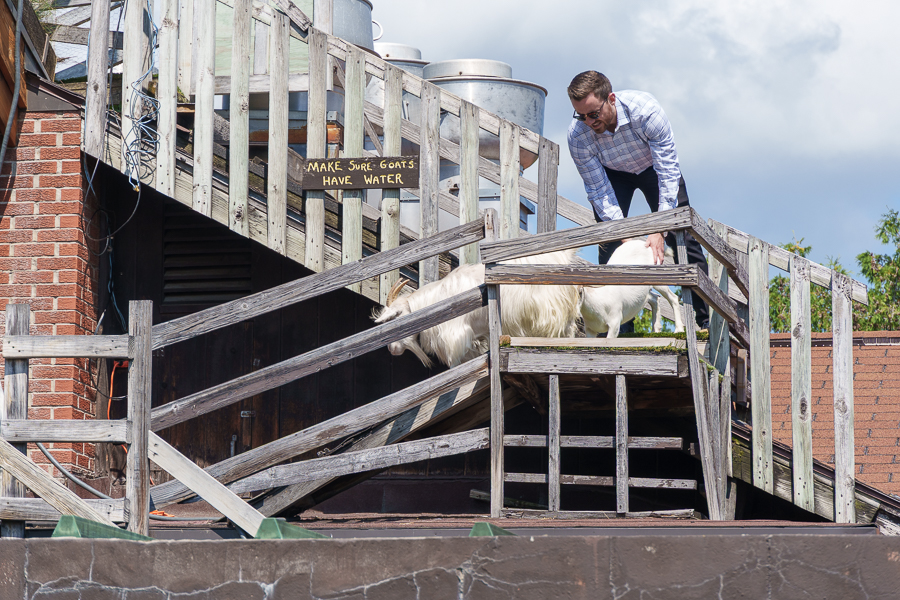
While visiting the land settled by Swedes, we wanted to sample the local cuisine. This restaurant is unique in that a group of four or five goats graze on the roof on most summer days that are not rainy, windy, or too hot. We lucked out and arrived just before their handler shuttled them down the stairs.

Yes, those two white blotches are goats, not clouds.

Seems like a lot of trouble to put the goats up and down the roof each summer day. But then guests wouldn’t be able to say, “I saw goats on a roof.” I guess it’s worth it, because we were all eager to see the goats.

Come on, goats. Your work is done, and it’s time for home.

Why goats on a roof? Apparently, Al and a friend of his, Wink, played jokes on each other for their birthdays. In 1973, Wink put goats on the restaurant’s roof as a gag gift for Al. Al took it one step further and arranged for the goats to be a semi-permanent fixture atop the restaurant. They feed on the sod, and live on a farm during the winter.

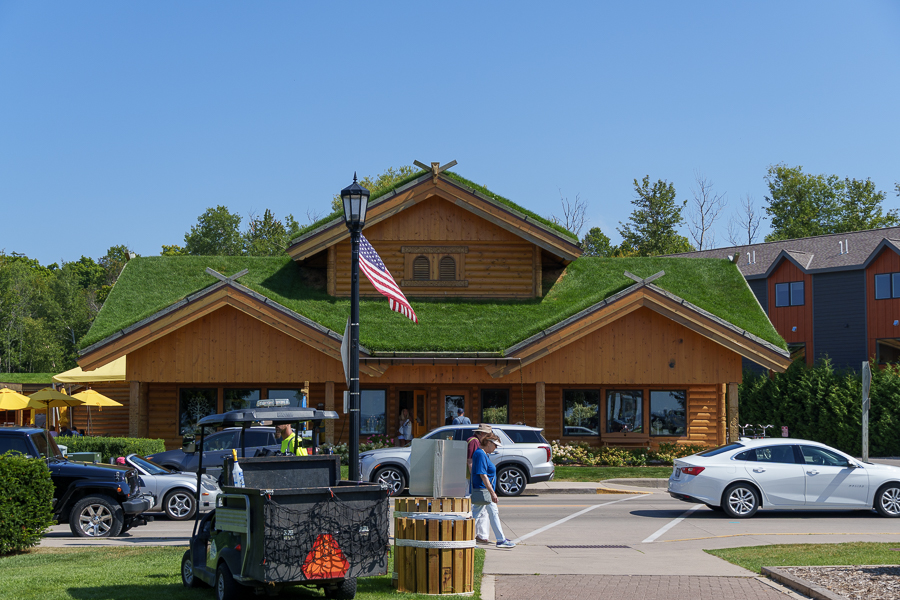
The bar is behind the yellow umbrellas. To the left is the restaurant.

Next door are a bar and boutique that gave us something to do while waiting for our table. Or head across the street to Sister Bay Beach for a stroll.

Al Johnson’s Butik (Boutique)

Unfortunately, we didn’t meet Al. He died in 2010. But the restaurant is still a family affair, run by his three children. The restaurant with a Swedish décor serves Swedish dishes, of course. We all enjoyed the meals we selected.

We saw plenty of these birds waddling around on the grass across the street.
Plenty of black-eyed Susans growing too. We need to plant some next season.
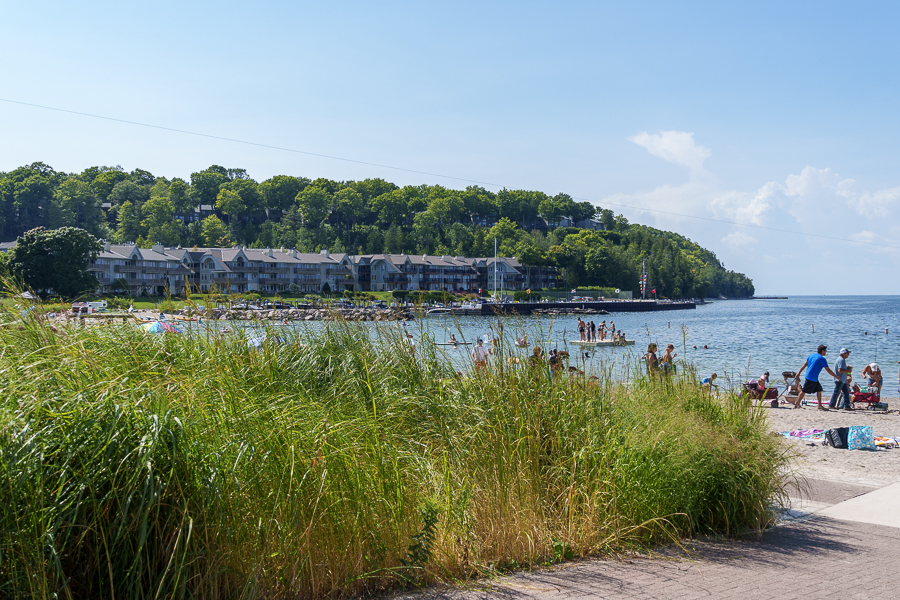
Sister Bay Beach

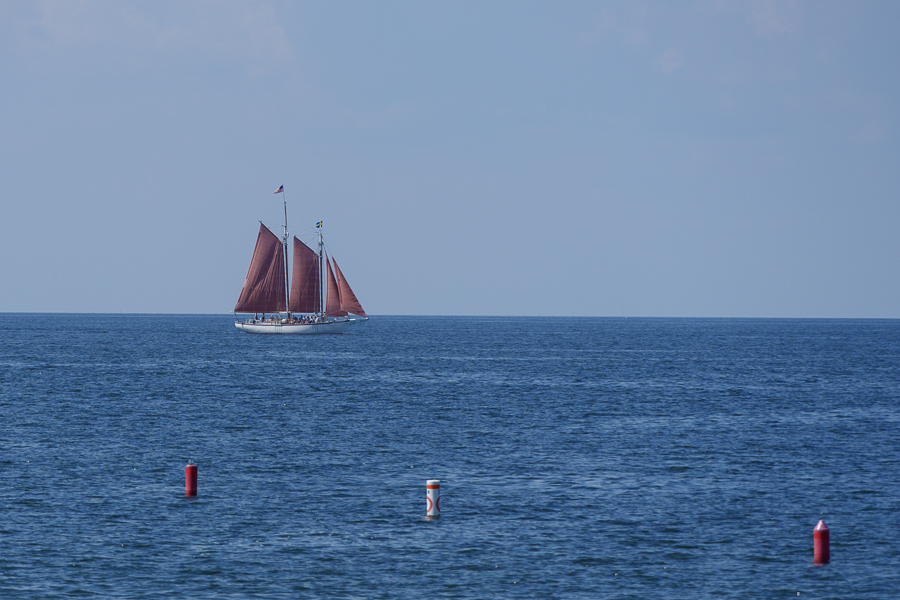
The Edith M Becker tall ship sailed by while we waited for our table. The vessel accommodates 22 passengers and sails out of Sister Bay. A captain and crew take passengers on a two-hour charter. Guests can help sail, or sit back and relax on the 56-foot schooner. Sign me up. For the relaxing part, not the helping part. I’ll book a ride on this boat if we make it back to Door County.

The Edith M Becker

On August 14, our last full day before heading home, we spent the morning and early afternoon relaxing, going to the beach, or shopping. We had reservations for a sunset boat tour and a fish boil in Fish Creek later that day.

Fish Creek Scenic Boat Tour

Our vessel, the Quo Vadis, was originally built as a military transport by Marinette Marine. When it had served its military purpose, the Catholic Diocese of Green Bay purchased it. They used it to transport passengers to the Chambers Island retreat house. When the retreat house closed in 2014, it was demolished, and the island residents purchased the property to maintain its quiet, secluded aesthetic.

The narrator sat here.

The Sunset Boat Tour began operations in 2011. The new owner, a captain for five years with the original company, purchased the company in 2019. Passengers may bring food and drinks on board, including alcohol.

View of Eagle Bluff Lighthouse from the water.

During the tour, the narrator regaled us with stories about local people and the various houses and other buildings perched on the bluffs above the lake. The speed of the boat and the buffeting waves made it too difficult to take photos. The only one that came out decent was the one of Eagle Bluff Lighthouse. Although I remember little from the narration, I would still recommend the tour, but I’m always eager to go for a boat ride. Other people may not be as comfortable.

Door County Fish Boil – Pelletier’s Restaurant & Fish Boil

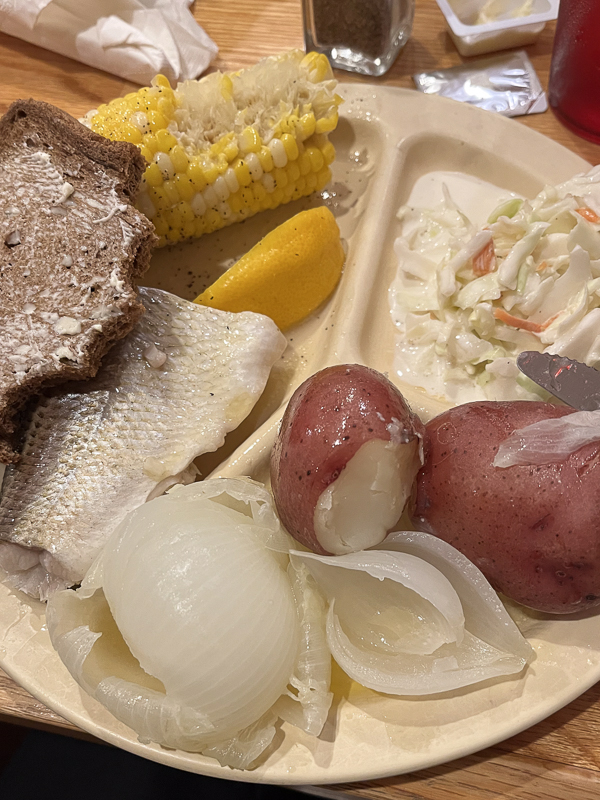
Visitors will find that downtown Fish Creek is the place to go for a fish boil. Dinner includes baby red potatoes, coleslaw, bread, a drink, and cherry pie for dessert. Add $3.00 for à la mode. And don’t forget to tip the server.

Our pick for the fish boil

Call ahead for reservations and serving times. Arrive 45 to 60 minutes early to buy meal tickets and enjoy the “Boil Overs.” The fish boil cooking process is out back. Pelletier’s also serves breakfast and lunch.

I could only watch the boil for a few minutes before the smoke chased me inside.
Simple tasty meal.

Egg Harbor Sunset Shots

I couldn’t leave Egg Harbor without more sunset photos, especially when the sky produced such a colorful display on our last night.

One thing I never got used to is calling the body of water a “lake” because instead of the opposite shore, all I saw was more water on the horizon. I kept thinking I was looking at the Pacific Ocean.

The trees silhouetted on the spit of land reminded me
of a cartoon bear cub, or maybe a puppy. I couldn’t decide.

And as the sun slid below the horizon, so did our time in Egg Harbor and Door County. This vacation goes down in the books as one of the best vacations ever. Too bad our son, Kevin, and his partner could not have joined us.

Next up: We take a tour of American Family Field, the Milwaukee Brewers baseball stadium.

Safe Travels

2024 Wisconsin Vacation Episode 2: Washington Island and Ferry

Washington Island and Ferry

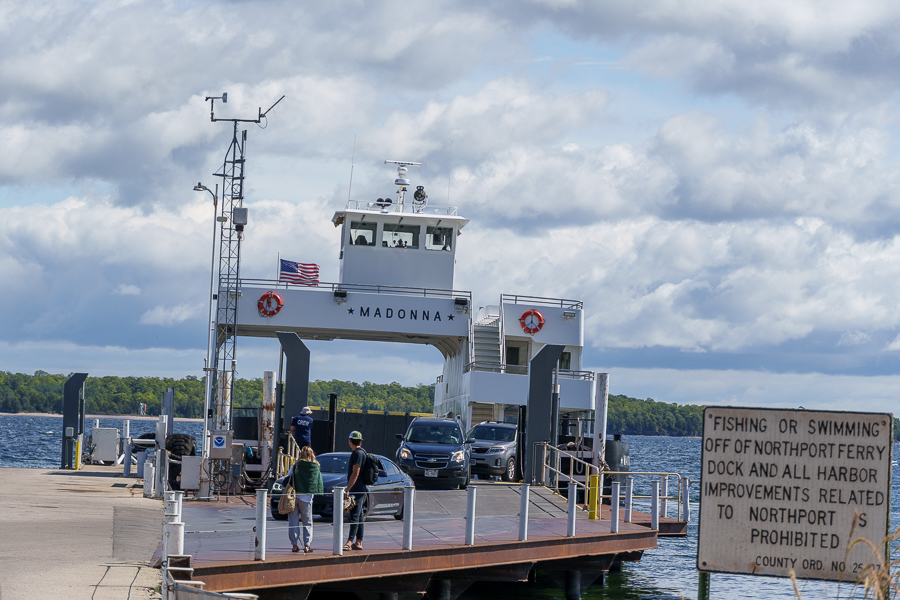
Oh, boy. A ferry ride to Washington Island. What will we see there? We drove north from Egg Harbor through Sister Bay and Ellison Bay to Northport to catch the ferry. While I enjoy riding ferries, I’m always nervous while watching the crew direct and organize the vehicles on the platform. One confusing hand signal or command could end in a crash or injury. I’ve never witnessed a mishap, so I’m not sure why I worry.
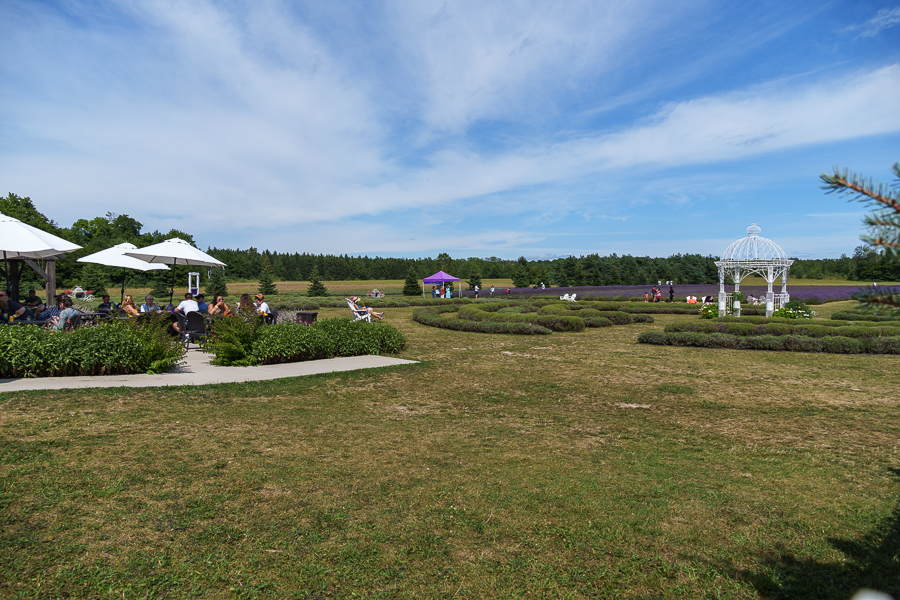
We piled into our rental Hyundai Palisade
Cars off loading
Waiting for our turn to board

Visitors can explore the 36-square-mile island, traveling by car or bike or by hopping aboard the 1½- to 2-hour Cherry Train tour. The tour operates from May to October. Activities include water sports, hiking, and swimming at beaches. Museums, restaurants, and overnight accommodations are also available.

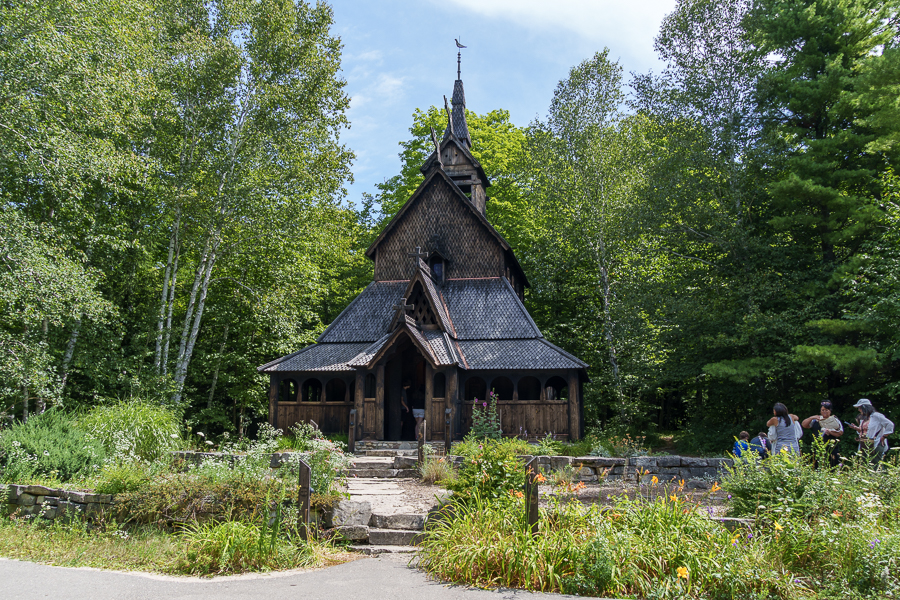
Stavkirke (Church of Staves)

Our first stop was the Stavkirke. Local carpenters and volunteers built the church in the style of the Stavkirke built in 1150 AD in Borgund, Norway. The Trinity Evangelical Lutheran Church of Washington Island owns, maintains, and operates the church that honors the island’s Scandinavian heritage.

The doors are open 24 hours for personal spiritual needs, and it’s also available for baptisms and weddings. The church conducts evening services on Wednesdays at 7:30 pm during July and August.

David Ranney—local author, actor, director—designed the four dragon heads from a Stavkirke book.

The work on the foundation began in October 1991, and by the summer of 1995, the church was completed and dedicated. Landscaping and the addition of the tower soon followed. Inside, 12 center staves, or masts, support the roof and walls.

Carpenters used Viking shipbuilding techniques that called for heavy-beamed, ship-like construction. These techniques included tongue-and-groove wood joints, wooden dowels, and heavy wrought iron fastenings. Twelve center staves (masts) support the ceiling and walls.

On the altar are the words “HAN ER OPPSTANDEN” Translation: He is Risen, or He is standing above us.

A model of a Mackinaw schooner named Deborah K hangs from the rafters. Sailors used this type of vessel during the 1800s for fishing and transporting goods around the islands. John Herschberger, head carpenter for the Stavkirke, created the schooner as a memorial from cedar net buoys used in the 1920s by Carl Richter, an island fisherman.

Model of the Deborah K

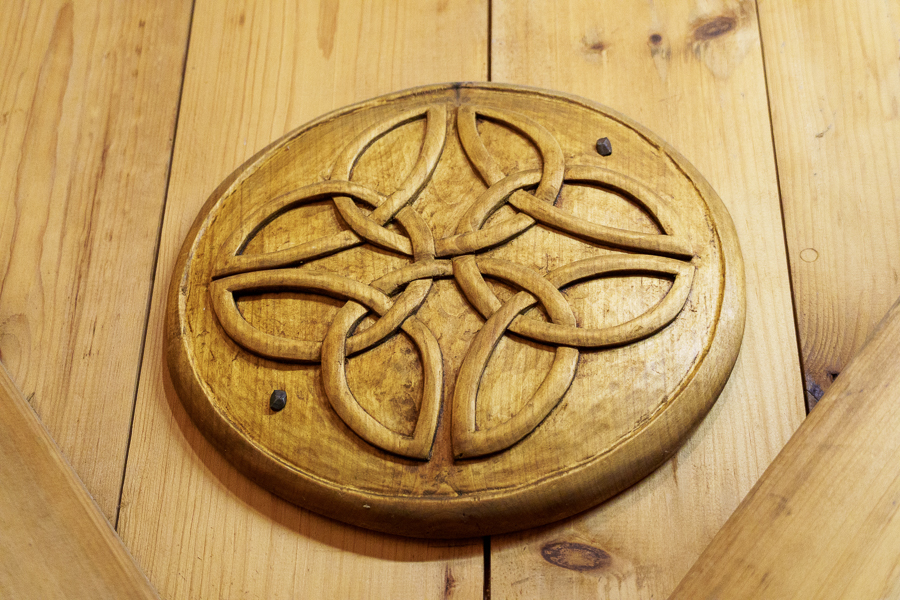
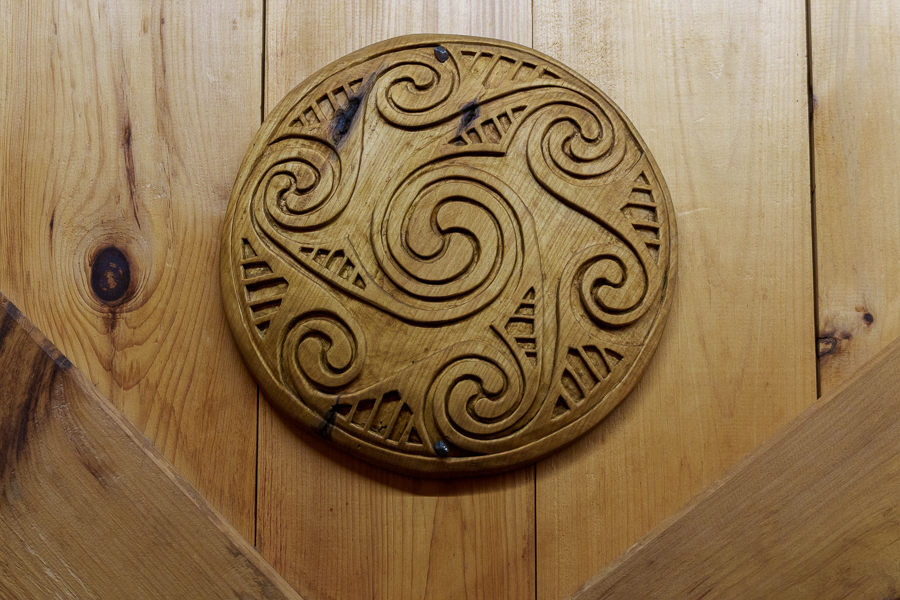
Carvings and adornments blend both pagan and Christian symbols.

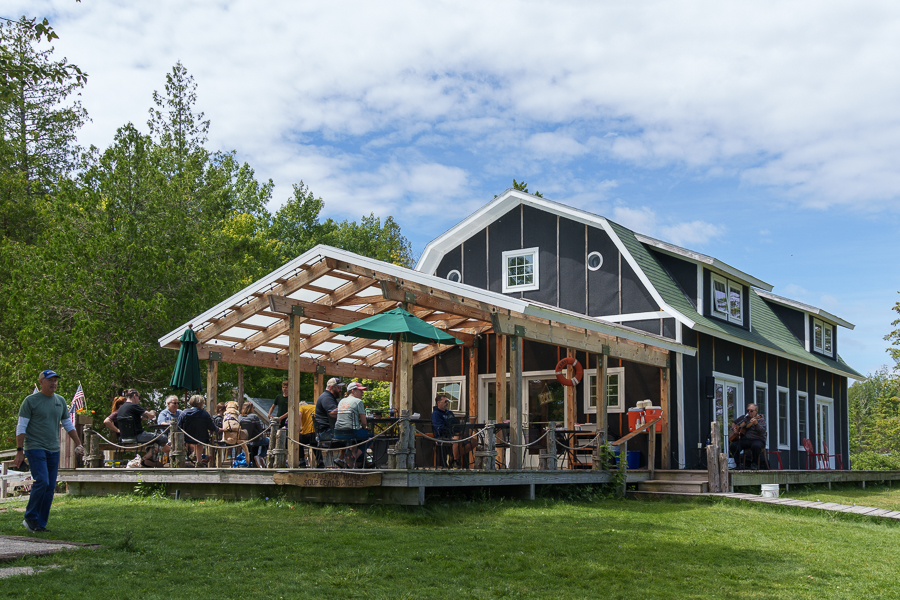
Jackson Harbor Soup and Sandwiches

Line up to order, find a spot to perch, and wait for the delicious food to come to you. This soup and sandwich shop has been in business since Memorial Day weekend 2016 after completion of a restoration project that began in 2011. The project included the restoration of a storage shed and its move to the current location.

Dredging for the State Dock in 2013 supplied soil that allowed for landscaping. The proprietors have strong family ties to the area. The Hanson and Gibson families trace their family trees back to great-grandparents and grandparents who once owned and/or lived and worked on island property.

Golden Lab photo bombs Laura

Jackson Harbor is the place to catch the ferry to Rock Island State Park. Bikes and motorized vehicles must remain at Jackson Harbor. Visitors may bring a cart or wagon. On the island, visitors will find a rustic Icelandic boathouse, an old-growth forest, a lighthouse in the woods, and trails. Primitive camping is available.

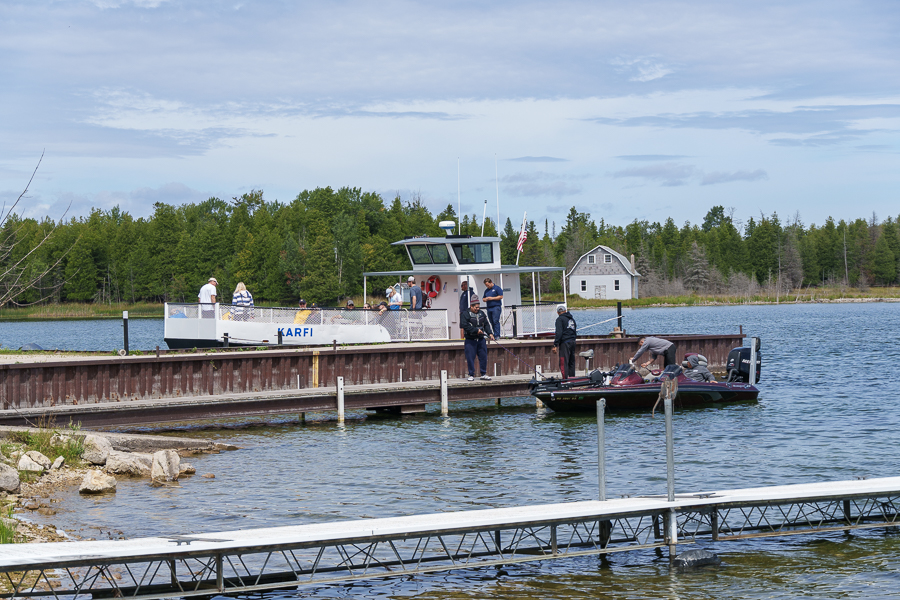
The Karfi ferry takes people across to Rock Island

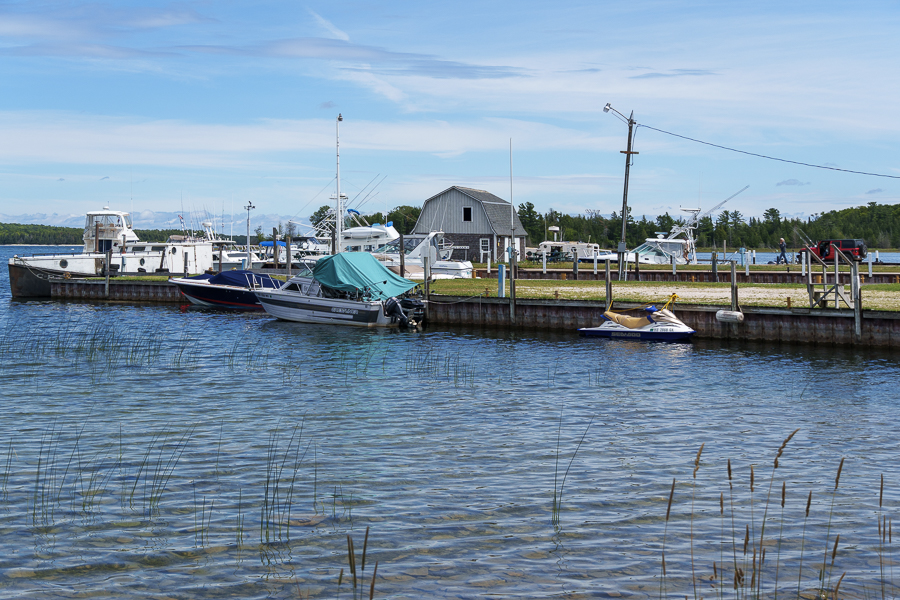
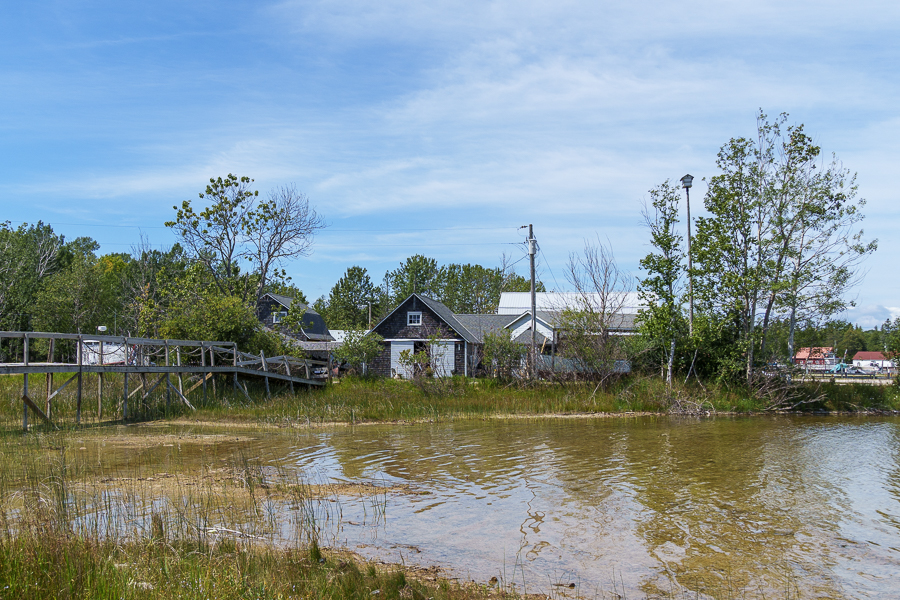
Here are a few views from the Jackson Harbor:

Next door to the restaurant are the Jackson Harbor Maritime Museum and The Ridges Nature Preserve. The museum occupies two sheds, and other outbuildings are remnants of a fishing village.

1930 Model A Snowmobile with a “Sno-Bird” conversion kit
Model ships and ferries and outboard motors
Riding on an ice sled
The Alex C needs a bit of restoration

School House Beach

This unique beach features limestone pebbles instead of sand. The pebbles, shaped over years of wave action, are the perfect size and shape for skipping across the water surface. The area is part of the Niagara Escarpment, a geological formation that runs from New York through Wisconsin, and into Canada. Refrain from putting any of the stones in your pockets to take home.

Swimming, sunbathing, and skipping rocks at School House Beach

Removing the stones may cost up to $250 in fines. Crystal-clear water, aquatic life, and snorkeling also draw visitors to the beach. Cedar trees, picnic grills, tables, benches, and restrooms are other amenities available to make the most of a day at the beach.

Chris, Maya, Laura, and Jackson pose on the pebble beach

Fragrant Isle Lavender Farm & Shop

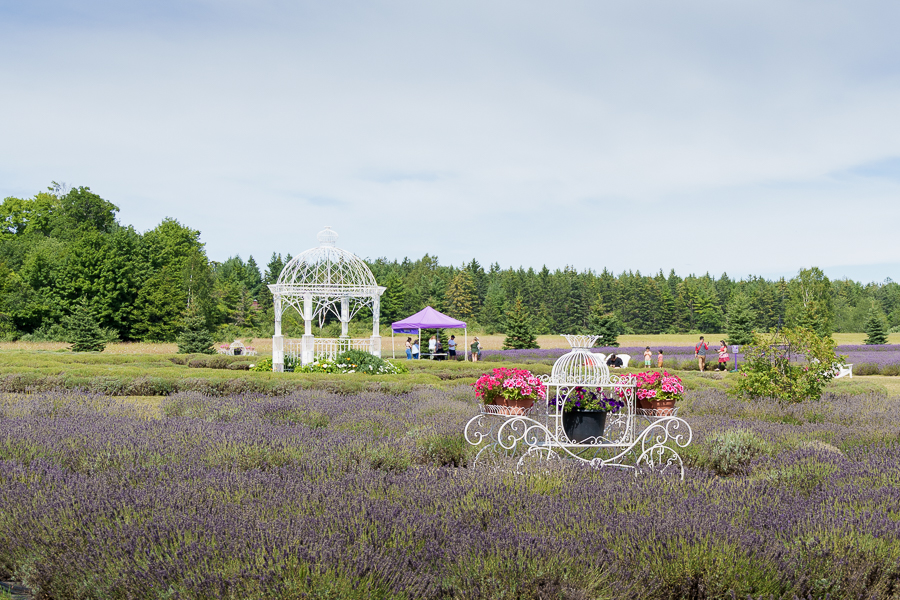
The lavender farm was a treat for the senses. Founder Martine Anderson and her husband have created a destination for visitors to explore on their own. Or, they may choose to join a curated 30-minute tour of the fields and oil distillery. Check the website for dates and costs.

The Shop at Fragrant Isle Lavender Farm

The farm has planted 20,000 plants representing 14 varieties of lavender and does not use any chemicals. Harvest is performed by hand and machine with care to protect the plants and the product.

Lavender-loving guests will enjoy “All Things Lavender” in Fragrant Isle’s Shop, where they will find 300 products to purchase. Products include personal care, fragrant candles, and essential oils.

Besides sandwiches and salads, Le Café has croissants, chocolates, cookies, and macaroons. Visitors can also purchase lavender lemonade, wine, and other lavender alcoholic drinks. Laura and Maya liked the lavender ice cream they bought.

Washington Island is a place I wouldn’t mind coming back to explore more of what the island offers, and maybe even take the ferry over to Rock Island for the day.

Next Up: Peninsula State Park, Eagle Bluff Lighthouse, Fish Creek Scenic Boat Tour

Safe Travels