I wasn’t sure what we’d find at the Baker Creek Heirloom Seed Company, but when Laura mentioned a Tulip Festival, I was in.
Baker Creek Heirloom Seed Company
Jon, Laura, the grandkids, and I drove out to the farm after reserving our parking online for $15.00. Cars had already packed into the spots marked with chalk. While walking along the path through the lot, a collection of canopies and tents came into view. While we rushed to meet the greenhouse tour time, we peeked into some of the displays with the thought of coming back and looking over the products in depth.

Our guide gave us a brief history of the company and how it had grown from five greenhouses to around 30 in the past five years. Saving, growing, and sharing rare seeds began as a hobby for Jere Gettle, the founder and owner.

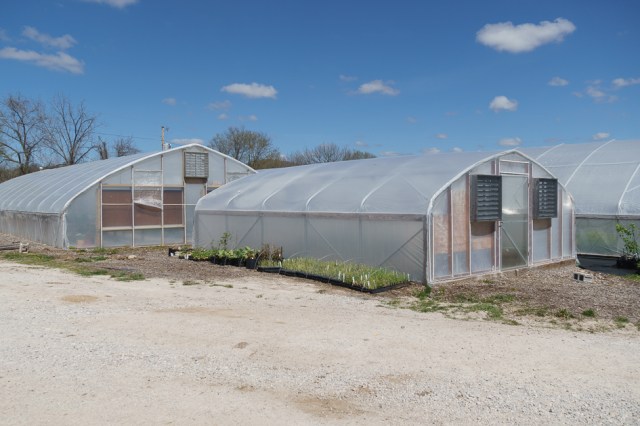

His Montana farming parents had selected the Rippee family homestead near Mansfield, Missouri, for its longer growing season. The move afforded twelve-year-old Jerre plenty of room to continue his passion for collecting, saving, and growing heritage seeds. And expand he did.


Jere started his business in 1998 at the age of seventeen. That was the year he sent out his first twelve-page catalog offering seventy-five varieties of seeds grown on his family’s 176-acre farm known as Baker Creek. The 2023 online catalog contains 89 pages and the 2024 print catalog (available for preorder) will contain 500 colorful informative pages displaying the products for sale. On the website, it mentions 1,500 products from which to search.
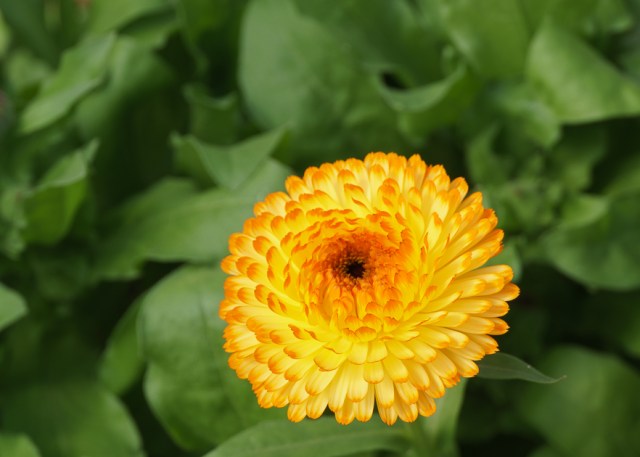
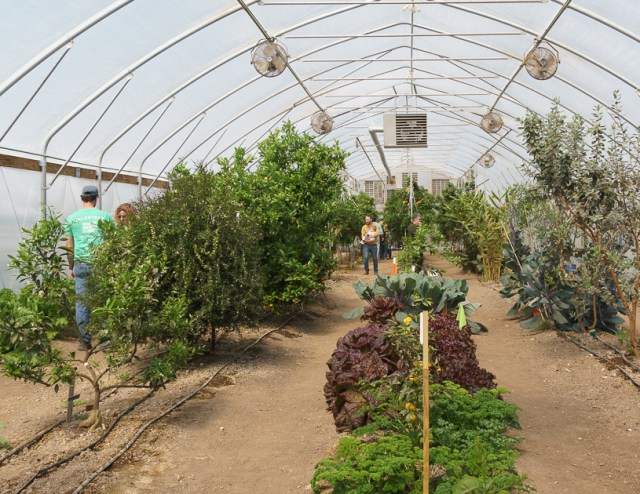

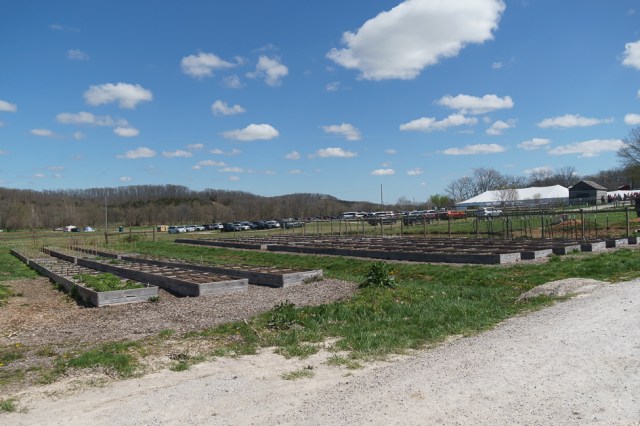
Plant and seed production, plant breeding, variety trials, and research occur in the 30 greenhouses. They conducted trials of nearly 2,500 “new and favorite varieties” in 2022. Our guide invited us to self-tour the greenhouses while he stood outside answering questions. We went from one greenhouse filled with seedlings to another with mature plants and annuals, and others with citrus trees or succulents.


I always wondered about businesses that started during Y2K. The notable year turned out to be a stimulus for Jere’s business. The panic instilled by Y2K and a push against genetically modified seeds brought customers to his door and increased sales from $1,000 in 1998 to $40,000 in 1999. And the rest, as they say, is history as the business has continued its trajectory north.


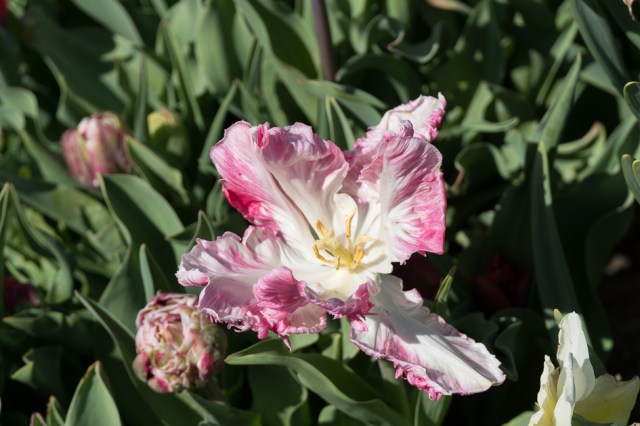
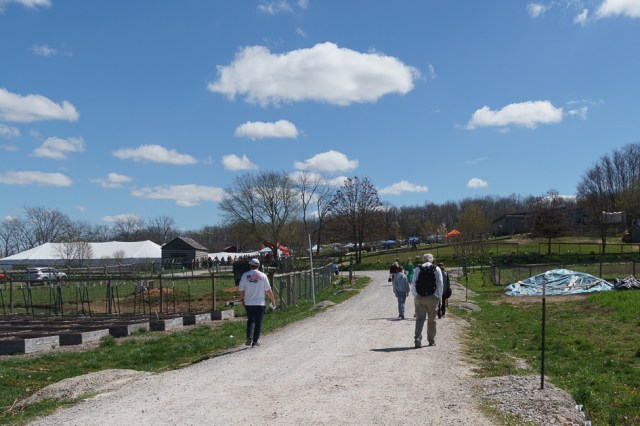
After the tour, we moseyed up the path toward Bakersville, the replica village. We passed by outbuildings, rows of raised beds, and green fields. The ponies came running when kids came to the fence to feed them.

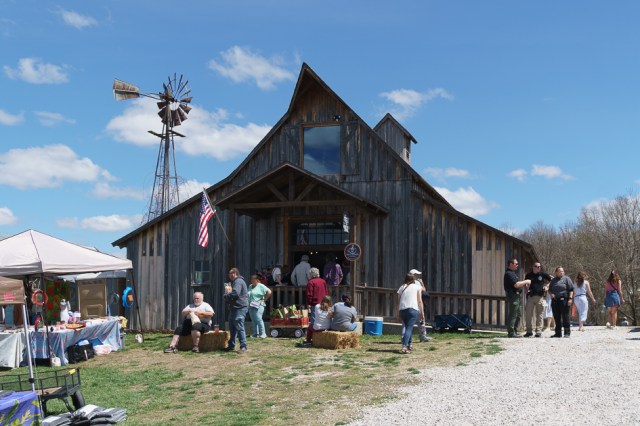
Finally, we reached Bakersville where crowds of tulips filled the planters in the square. And crowds of people filled the walkways and stood in line for food or goods at the Ozark Hotel and Nellie’s Restaurant and Mercantile. There’s also a bakery there, which had one of the longest lines.

Food and drink vendors supplemented the offerings in the village during the festival. Long lines snaked in front of most of them. The Jamaican Patty Co. food truck had the shortest line. (They also have brick and mortar stores in Springfield, Missouri) The patties were like empanadas but with a flakier crust. They were delicious and paired well with the huckleberry-flavored lemonade from another stand.


The village got its start in 2007 when Amish and Mennonite builders helped the seed company crew build the old-time mercantile store. The addition of the hotel, restaurant, and other buildings gave life to Bakersville.

There’s plenty to see and opportunities to purchase a variety of goods and of course the seeds. Don’t forget the seeds. Included in the village and on the farm are the Baker Creek Seed Store, a farm-to-table vegan restaurant, a speaker barn, an old-time mercantile, an herbal apothecary, a natural bakery, a blacksmith shop, two music barns, western jail, native rock ovens, a windmill, seed warehouses, and many breeds of historic poultry and livestock.

Check their website for current days and times open and for information on the three festivals during the year. There’s no charge to visit, but a $15 parking ticket is needed when attending the festivals. Not near Missouri and still want to buy seeds? Check out the Petaluma Seed Bank in Petaluma, California.
On our way back to the car, I stopped at one of the vendors selling aprons. It was time to retire the 40-year-old apron I use in the fifth wheel, so I splurged on a new one.
Safe Travels
Next up: We head to Branson, Missouri, for a few days.
Resources for historical events and other information are from the guided tour, a March 2023 issue of Missouri Life about Baker Creek Heirloom Seed Co., and the farm’s website.
 The Traveling Todds
Seeds are funny. I used to think of them as a few bits in a packet purchased from the garden store or dried at home and stuck in a labeled envelope.
But 20 years ago in a past life I hauled farm seed in super-sacks (4 foot by 4 foot by 4 foot) — 20 on a trai;Dr and I have never since thought of seeds as ‘tiny things” Funny how experiences change us.
LikeLiked by 1 person
How interesting. I never thought how many seeds farmers need. Definitely a lot more than we need for raised beds.
LikeLike
Hi!
I have a question, regarding one of these photos, for the author of this article.
Could you please message me back.
thank you!
LikeLike
And your question is?
LikeLike