Spring 2023 Adventure Episode 13: Lake of the Ozarks

After our visit to Springfield, Illinois, we headed back to Missouri to spend time at Lake of the Ozarks and meet up with our daughter Laura and her family. On the way, we stopped in Warrenton, Missouri, for a bite to eat. Social House 227 looked promising with parking for the rig nearby.

Social House 227’s décor caught my attention as I walked through the door. The framed boxes and crates with plants added a hint of comfort and coziness.

And then I saw a contraption hanging on the wall. What the heck? Ahh. A modern-day jukebox. That’s the source of the background music. It reminded me of cafes back in the day when jukeboxes sat against a wall or little ones sat at each table. We would select the song we wanted to hear, put coins in the slot, and wait for our song to play. Modern times call for modern ways to select music and pay. TouchTunes has an app for that to go along with their jukeboxes.

“Smash” burgers seem to be the foodie fad of the moment, so I tried one at Social House 227. The word “smash” refers to the patties being smashed by hand. Although, I submit it also means having to smash the two 4-oz patties topped with lettuce, tomatoes, pickles, peppers, bacon, cheese, onion rings, and a fried egg in order to stuff the thing in my mouth. I’m glad I tried it, although I’m not sure I’ll order another one anytime soon. It was the kind of messy where I had to hang on to the thing with both hands until the last bite as the juices and sauce dripped off my chin.

Here are few places we visited while in the Ozarks:

Bagnell Dam Strip

Bagnell Dam Strip seems the place to be for food and shopping in Lake Ozark, Missouri. There we saw Marty Byrde’s Gastropub. I wondered which Marty Byrde came first, the gastropub or the Netflix TV series Ozark? It turns out Jason Bateman’s character on Ozark was the inspiration for the name of the restaurant. I understand a few drinks are named after other characters in the series.
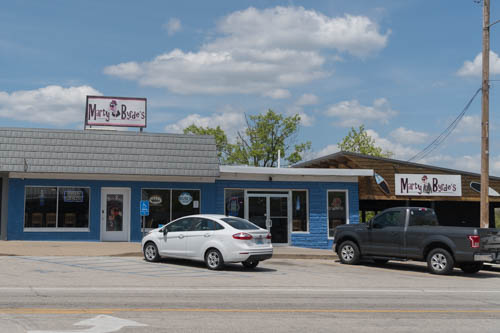
Marty Byrde’s Gastropub

There are several other restaurants on the strip, some with nighttime entertainment, waiting to cater to every hungry mob’s desire. Shoppers will also find stores where they can scratch their itch to find the perfect gift for someone special.
Willmore Lodge

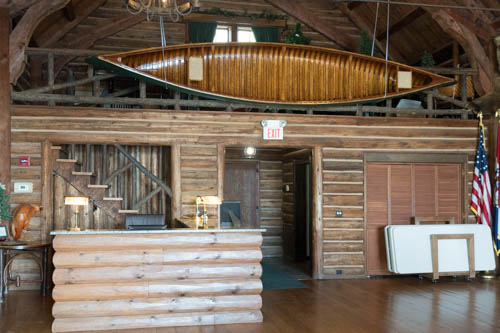
The Willmore Lodge contains the visitor center for the Bagnall Dam. The Adirondack-styled 6,500 square foot building contained twenty-nine rooms when completed in 1930 for Union Electric.

Willmore Lodge

I thought it fascinating to learn the entire building was cut and assembled in Oregon. Then it was marked, disassembled, and transported by train to Missouri. It took three months to reassemble the structure using square wooden pegs and “overlapping corner-saddle notching” to hold it together. I’m not a woodworker and have no idea what notching is, but “overlapping corner-saddle notching” sounds extra sturdy to me.

Jon waits patiently to go inside

Union Electric sold the property at some point, setting off an exchange of owners over the years. In 1996, Union Electric repurchased it with the purpose of retaining it as a National Historical site and housing the history of the region.

Inside, the massive fireplace and open beam ceiling should have given off a cavernous vibe. Instead, the warmth of the wood, the comfy-looking furniture, and the natural light made me want to curl up on one of the chairs, pull out a book, and settle in for a cozy reading session.
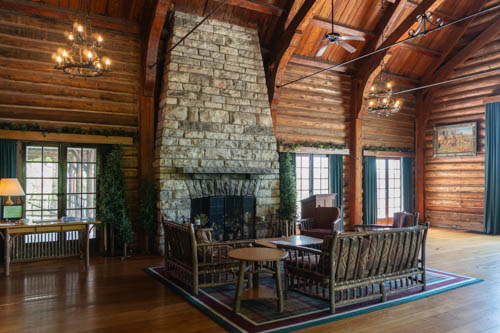
The lobby was the perfect spot to visit with our daughter and her family when they came to visit us.
Check out the carving on this chair
Reception area
Jon checks out the view from the window

A hallway on the fireplace side of the lobby leads to a museum. The museum contains artifacts, photos, and descriptions of the area before the dam was built, how the dam works, and the local wildlife visitors might see in the area.

A few Bagnell Dam facts:

  • Named after William Bagnell, a railroad man who founded a town on June 30, 1883
  • The dam was completed in 1931
  • To make way for the dam, houses and farm buildings in 22 communities were moved or destroyed.
  • The dam is one-half mile long and 148 feet high from bedrock (equivalent to a 12-story building seven blocks long)
  • It holds back 600 billion gallons of water in the Lake of the Ozarks (the largest man-made lake in the world covering 86 square miles)
  • The current owners, Ameren Missouri, upgraded the dam in 2017 and 2018 at a cost of $53 million.
  • Osage Energy Center produces more than 500 million kilowatt hours (equivalent to the needs of 42,000 average households)
  • Ameren Missouri’s goal is to achieve net-zero carbon emissions by 2050.

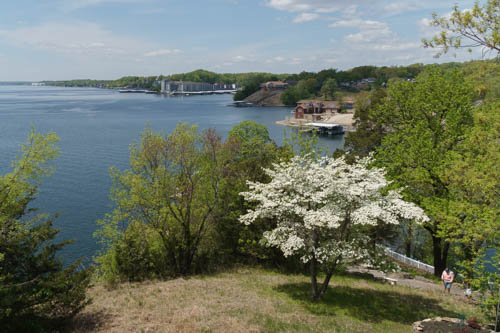
Outside, is a walkway around the building with views of the shoreline across the lake.
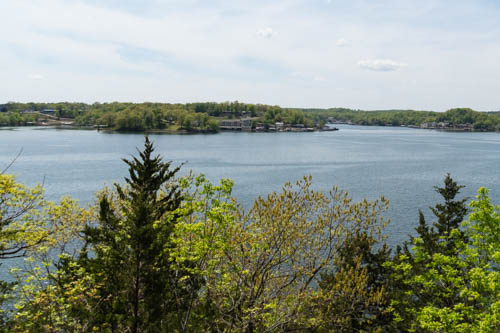
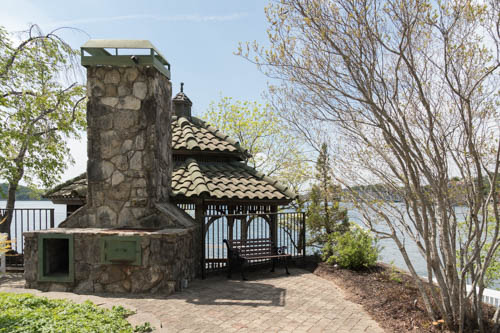
And a path leads to a garden, a huge fireplace with a grill, a gazebo, dogwood trees, and expansive views of Lake of the Ozarks.

Condo buildings next door to Willmore Lodge

Ha Ha Tonka State Park

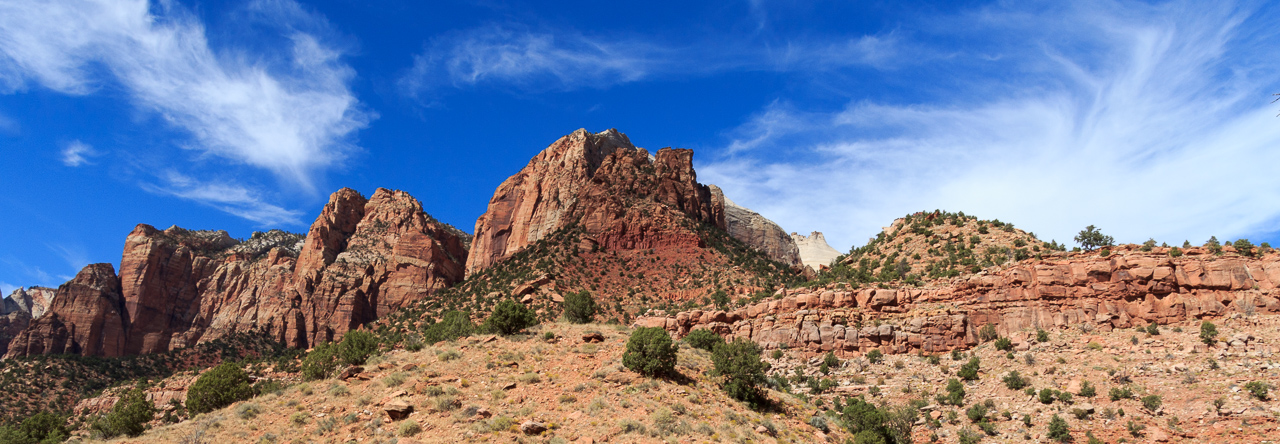
In need of stretching our legs, we found Ha Ha Tonka State Park. With 31 miles of trails, we were confident of finding something interesting. The park displays the karst geological formations for which Missouri is known. The dissolving action of water on bedrock is what created the caves (approximately 7,500 are known), sinkholes, springs, and natural bridges throughout the state.

Natural bridge
From under the bridge
Lakeshore park

The something interesting we found was the ruins of a European-style castle. The castle was the vision of Robert M. Snyder, a wealthy Kansas City businessman. Construction began in 1905, but one year later, Mr. Snyder died in one of the state’s first automobile accidents.

Jon, Laura, Chris, and Maya check out the ruins
Hey, Papa. Wait up.
The structure is unstable so stay behind the fence

It wasn’t until 1922 that the structure was completed under the direction of Snyder’s sons. The Bagnell Dam divided the property in the 1930s, much to the dismay of the Snyders. Eventually, the property was used as a hotel. In 1942, a fire broke out, gutting the castle, and destroying the carriage house.

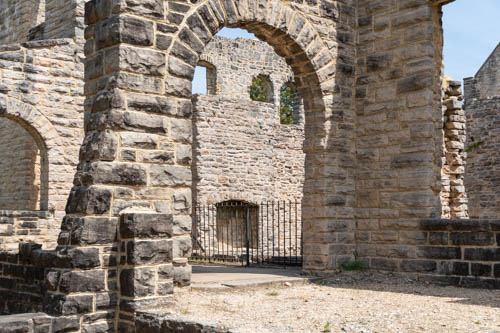
Then in 1976, vandals burned the water tower. In 1978, the property was included in the newly created Ha Ha Tonka State Park.

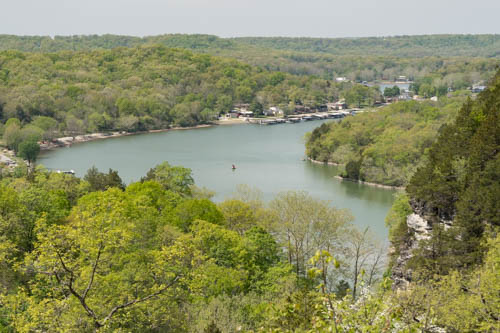
Don’t step on the prairie ring-necked snake
Lake of the Ozarks sprawls out into arms and fingers looking a lot like a tentacled serpent

From the castle ruins we saw heavy equipment at the water level and gravel haulers driving in and out along the sandbar. Apparently for years, gravel had washed from Dry Hollow Road into the underground karst system and deposited into the Ha Ha Tonka Spring. This created gravel bars in Trout Glen Pool. Besides dredging the pool and spring to remove 10,000 cubic yards of gravel, a paving project along Dry Hollow Road will prevent further problems.

Ha Ha Tonka Spring dredging project

.

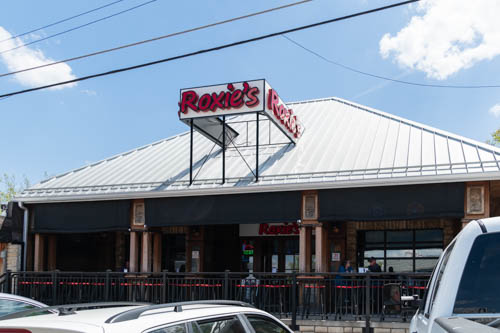
This brightly colored restaurant stood out among the green and blah

Although there was plenty more for us to do and see while at Lake of the Ozarks, we took advantage of down time before hitting the road toward home. Neither of us were looking forward to a week of back-to-back driving days, so I built in a few extra days along the way.

Next Up: Dwight D. Eisenhower Presidential Museum and Home in Abilene, Kansas

Safe Travels
Spring 2023 Adventure Episode 12: Springfield, Illinois

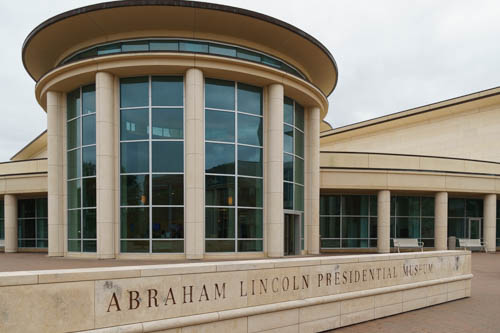
On April 21, 2023, we drove to Springfield, Illinois, to tick off another presidential museum: Abraham Lincoln’s.

Abraham Lincoln Museum

What can be said about Honest Abe that has not already been said, portrayed, or written? School history lessons, books, stage productions, television programs, and movies have all dealt with the man whose presidency consistently rates in the top three of all presidents.

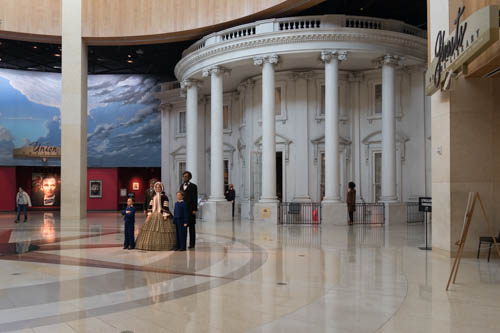
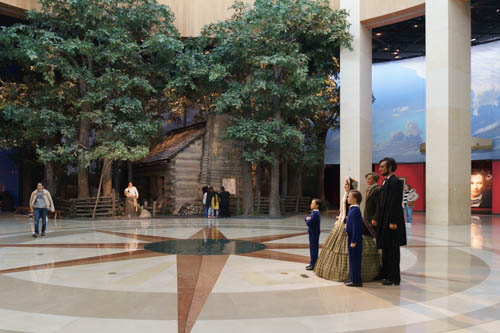
When I saw Abe and his family standing in the center of the plaza posing with visitors, I knew this museum didn’t follow the standard National Archives and Records Administration (NARRA) specifications for presidential libraries. In fact, the museum is operated by an agency of the State of Illinois and the Lincoln Library also contains the Illinois State historical collections.

The Lincoln family welcomes visitors in the plaza

The museum opened on April 19, 2005, generating around $1 million in its first six months with a steady increase in visitation each year. The museum also sparked debate over the design of the exhibits and how history is presented, which did not follow the standard used by most museums at the time.

The multi-media exhibits with a Disneyesque feel are what may have caused both the criticism and the museum’s popularity, especially after Steven Spielberg’s movie Lincoln premiered on October 8, 2012, at the New York Film Festival.

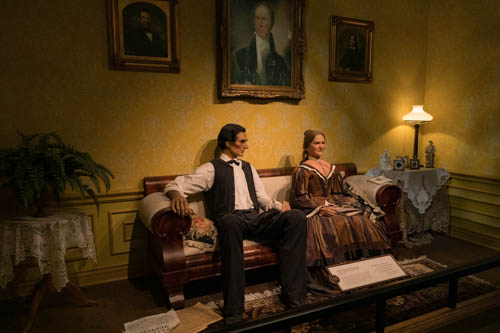
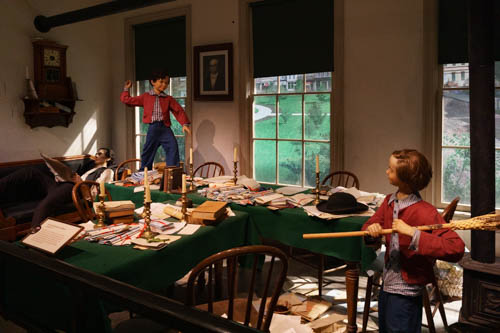
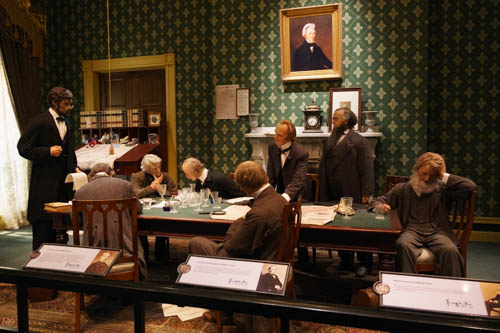
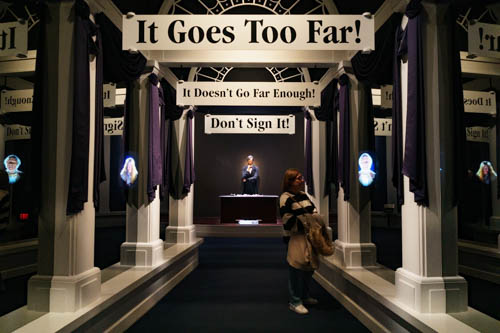
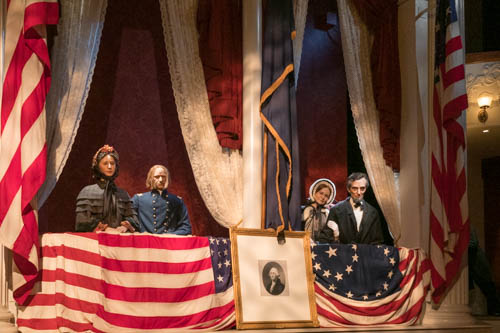
The set decorations and expressions on the mannequins dressed in 1800s attire, the hologram theater presentation, and the depiction of the assassination were like entering Abe Land at a Disney Amusement Park.

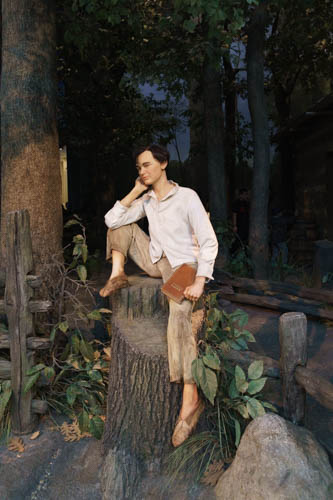
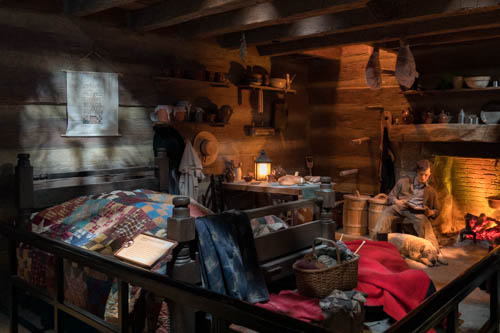
We started our tour at Journey 1 where we found exhibits and dioramas of Abe’s boyhood in a Kentucky cabin and ended with his campaign for president in 1860.

Abe in the background next to a cabin
Abe the thinker and reader
Cozy cabin
Abe and Mary at home
Imagine these two rambunctious kids in the room while working in the office

Journey 2 covers his presidency, the Civil War period, his and the country’s struggle with slavery, personal loss, and his assassination on April 14, 1865.

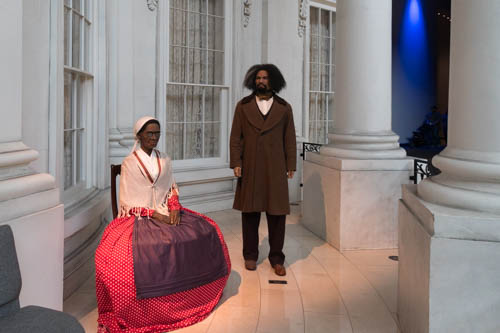
Frederick Douglass visited Lincoln’s White House in 1863 and Sojourner Truth visited in 1864
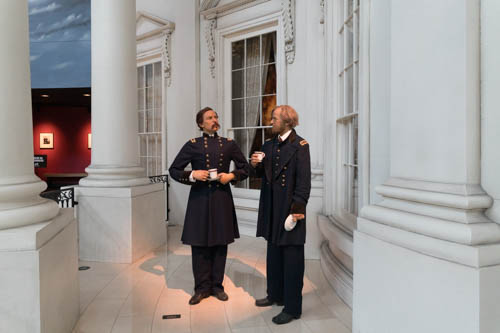
Union officers confer
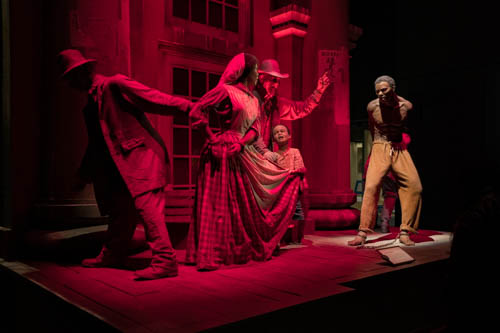
Family separated at auction
Cabinet debate over Emancipation Proclamation

Other exhibits included the Treasures Gallery where artifacts from President Lincoln, his family, and the Civil War were displayed.

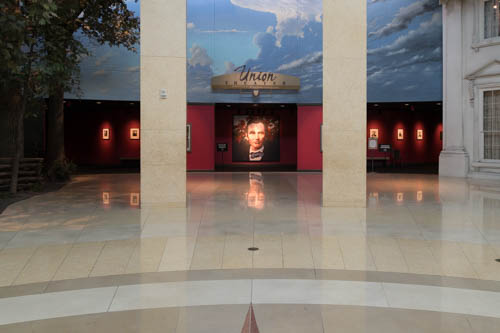
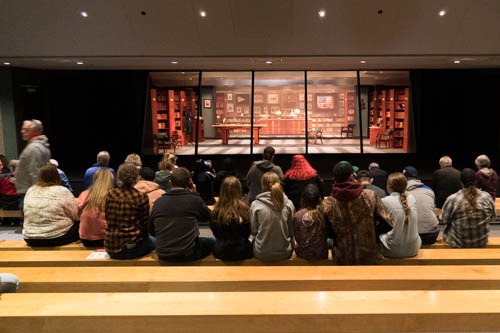
At the Union Theater, we watched Lincoln’s Eyes, a look at Lincoln’s life and legacy.

Lincoln’s Eyes played in the Union Theater
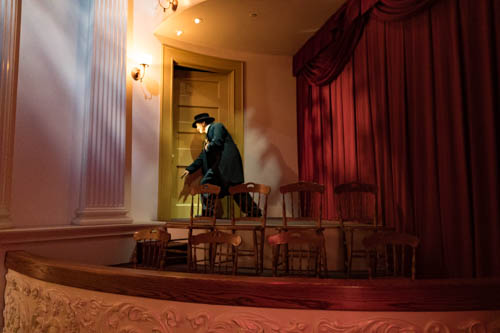
One fateful night at the theater
One angry actor gone wrong

In the Holavision ® Theater, we watched a hologram presentation about research libraries and their importance to society.

Various temporary exhibits are also included throughout the year.

Lincoln Home National Historic Site

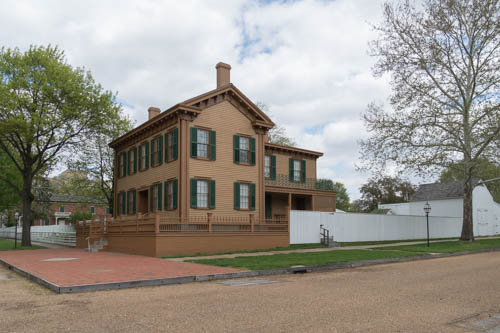
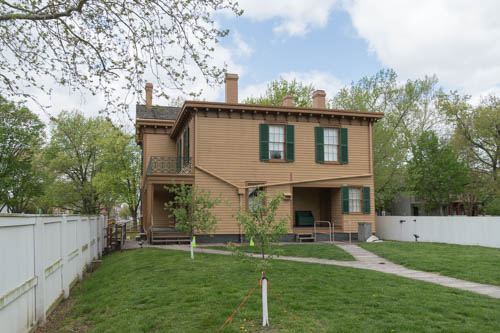
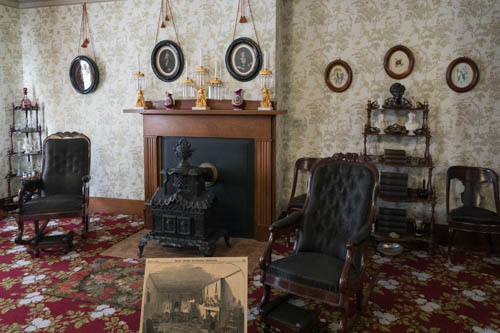
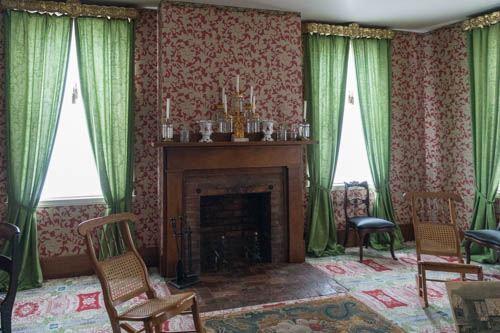
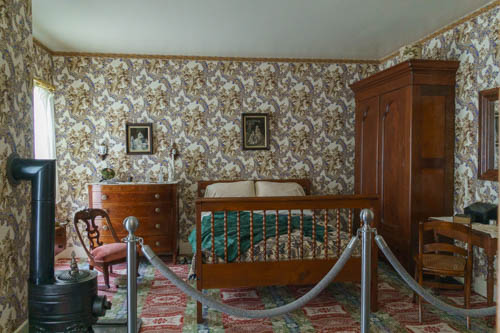
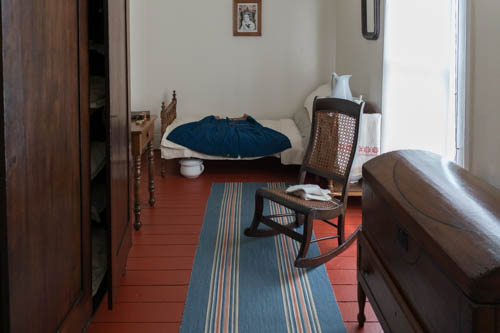
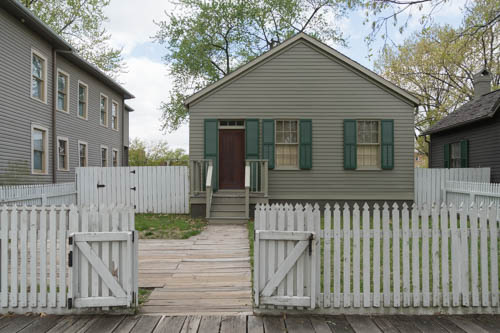
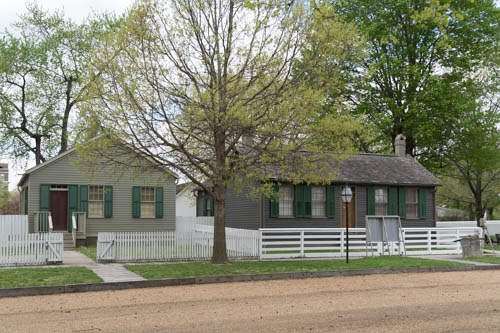
Within walking distance of the museum is the National Historic Site of Lincoln’s home and neighborhood, operated by the National Park Service. Take a tour in person, or click the link on the NPS website for a virtual tour of the home. Here are a few photos I took.

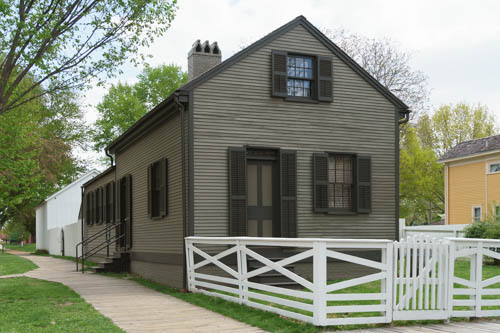
Side and front of Lincoln home
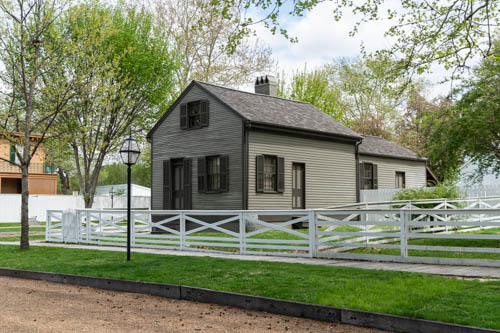
Rear of Lincoln home
Parlor 1
Parlor 2
Mary’s bedroom
Maid’s quarters
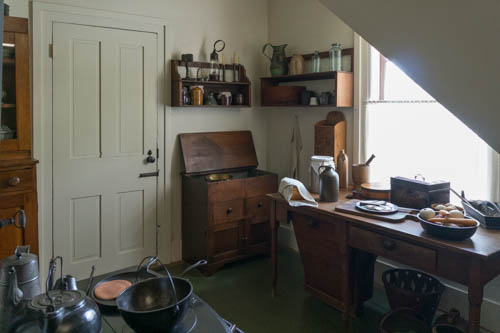
Kitchen

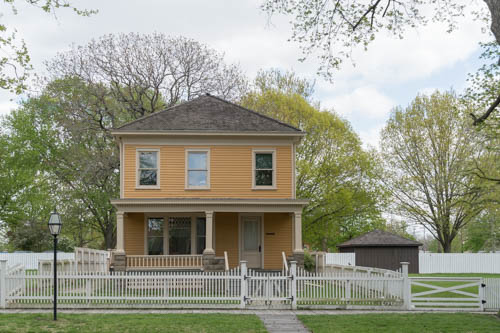
Then walk the neighborhood as Abe or Mary might have and learn about some of the neighbors who lived there. Some of the homes are open with exhibits inside.

A few lots down the street from the Lincoln home is an empty lot, which is part of the National Park Service National Underground Railroad Network to Freedom. It was where Jameson Jenkins, a free person of color, lived. It is documented that Mr. Jenkins successfully transported escaped slaves north to Bloomington, Illinois, on January 16, 1850.

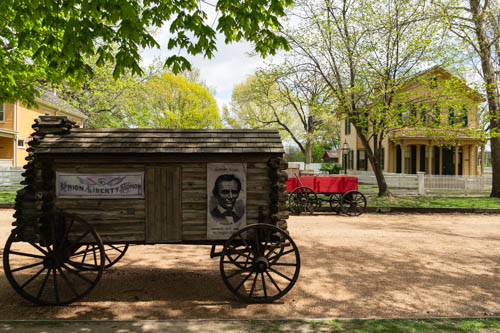
Political poster
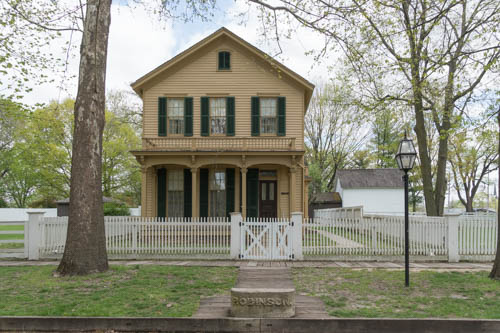
Note the step for accessing a horse drawn carriage in front of the Robinson house

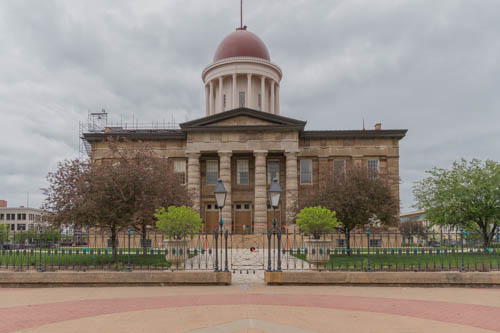
Old Illinois State Capitol Building

Across the street from the Lincoln Museum is the Old State Capitol Historic Site. The Greek Revival style building was constructed during 1837 and 1840 and served as the state house from 1840 to 1876. Unfortunately, the historic site was, and still is, undergoing a $15 million renovation project.

Old Illinois State Capitol Building

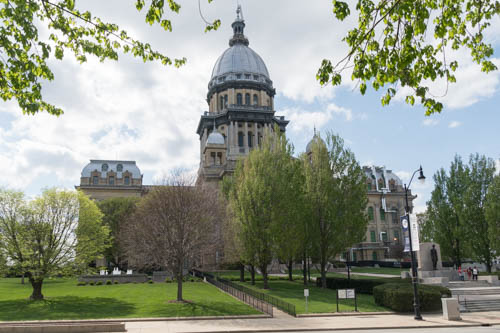
Current Illinois State Capitol Building

We only had time to take photos outside of the current state capitol building during our visit. Guided tours are available to visit the building which was constructed over twenty years beginning 1868 at a total cost of $4.5 million.

Current State Capitol Building
Quiet street scene on this cold and rainy day

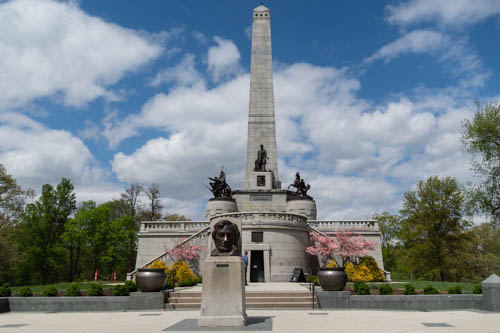
Lincoln Tomb at Oak Ridge Cemetery in Springfield

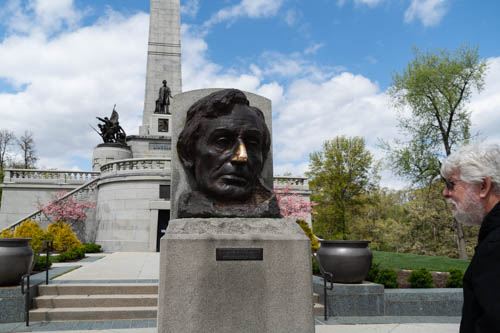
Mount Rushmore’s sculptor, Gutzon Borglum, sculpted the larger-than-life bust of Lincoln on the plaza outside of the tomb. In his hand is a copy of the Emancipation Proclamation allowing African-American soldiers in the Union Army.

The obelisk, an Ancient Egyptian symbol for leadership, is a fitting tribute to a man who is honored and respected by so many people.

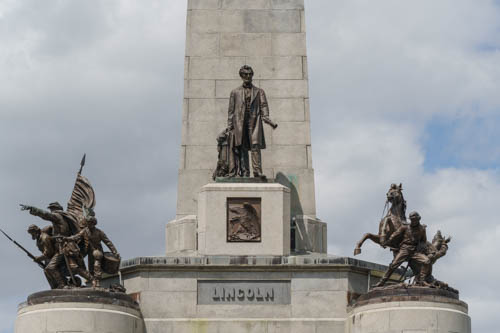
The bronze statues on each of the four corners honor soldiers during the Civil War Infantry, Artillery, Cavalry, and Navy. A chain of unbroken links lists the initials of each state in the union.

Notice how shiny the nose is on the bust below. Some people believe rubbing Abe’s nose will bring good luck. And yes. Of course, I rubbed his nose, followed by squirts of hand sanitizer. I could not resist. Who doesn’t want a bit of luck in their lives?

Rub my nose for luck

Inside the tomb are several bronze statues of Lincoln depicting the various stages and roles of Lincoln during his professional life. The hallways conclude at the burial chamber, the final resting place of Abraham Lincoln, Mary, and three of their four sons.

For people unable to visit the tomb, there is a YouTube virtual tour online here.

A close up Pink flowering Dogwood tree in bloom at Abe’s gravesite

Pink flowering Dogwoods decorate either side of Abraham Lincoln’s tomb
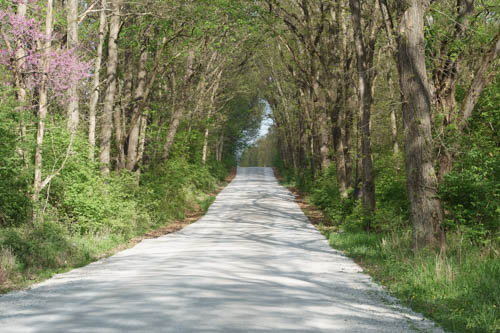
Love these tree tunnel roads

After our visit, I came to the conclusion that I liked how the museum presented the information. It made history come alive, especially the exhibit of the children playing in Abe’s office, the assassination portrayal, and the slave auction scene. It also made history less academic and accessible to more people through the multi-media stories told.

Next Up: Linn Creek near Lake of the Ozarks

Safe Travels
Spring 2023 Adventure Episode 11: Ulysses S. Grant Historic Site, St. Louis, Missouri

We continued our time in St. Louis on April 18, 2023, with a visit to Ulysses S. Grant National Historic Site. A woman at the visitor center recommended heading out to the White Haven house tour first since a busload of schoolchildren were watching the movie in the theater.

Pathway to White Haven House

White Haven Plantation

When Frederick Fayette Dent and Ellen Bray Wrenshall Dent owned the plantation, the original 850 acres of the White Haven Plantation consisted of fields of wheat, oats, Irish potatoes, and Indian corn, along with orchards of various fruit varieties, all tended by enslaved laborers.

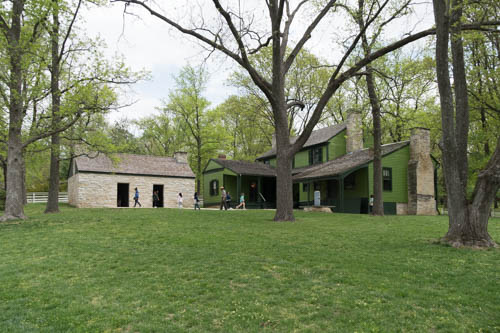
White Haven House (Painted Green in the style of the 1850s) and Summer Kitchen and Laundry

I wonder what was on Grant’s mind when he rode up to the White Haven plantation to visit his West Point roommate Frederick Tracy Dent in 1843? Did he look forward to a weekend spending time with his old roommate fishing and hunting? Or, was he there to meet Julia Dent, Frederick’s sister, to see if the two might make a good match?

From front door to rear

In either case, Grant and Julia fell in love and became engaged. But before they could marry, the Mexican-American War (1846-1848) called Grant to join the ranks. Five years later, they tied the knot.

One of the rooms in White Haven

After serving eleven years in the Army, Grant resigned his commission and from 1854 to 1859, the Grant and Dent families lived and worked at White Haven. Having been raised by an abolitionist father, how did he reconcile with the Dent’s slave ownership?

Another room
Did Grant visit with Julia in the parlor under the watchful eye of her mother?

According to The White House Historical Association, Grant and his wife benefited from slavery while living at White Haven with Julia’s parents. Julia’s interactions with slavery are well documented in her personal memoirs. However, Ulysses’ memoirs lack mention of his personal interactions with slavery even though documentation reveals he manumitted a slave he supposedly owned.

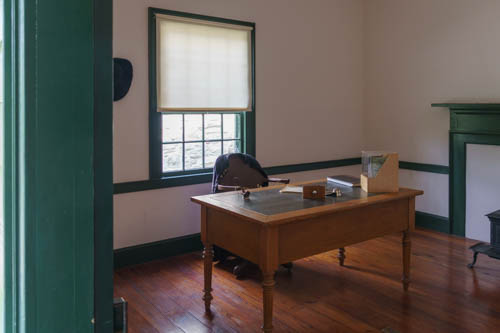
Depiction of Grant’s office

What is mentioned in his memoirs, or contained in historical documents, is his support for the recruitment of African-American soldiers during the Civil War while serving as Lieutenant General of all Union Armies for President Lincoln, his advocating for racial equality throughout his two terms as the country’s 18th president (March 4, 1869 to March 4, 1877), his support for the ratification of the Fifteenth Amendment, his opposition to the rise of white supremacy groups in the South, and the Enforcement Acts passed by Congress in 1870, and many others.

Shows log construction of original house

Grant purchased White Haven after the Civil War and hired a caretaker to manage Grant’s horse breeding enterprise. After his presidency in 1877, the couple toured the world for two years and then settled in New York. They regularly visited White Haven and sold the plantation a few months before Grant’s death.

The unadorned enslaved servant’s entrance

Summer Kitchen and Laundry

The stone building on the right housed the kitchen and laundry facilities. The red buildings on the left housed the ice house and the chicken house.

The stone building was used primarily as a summer kitchen and laundry. Considered a “double-pen” architecture with its British design of two side-by-side rooms with gable end chimneys. It may have existed as early as 1840. Enslaved laborers cooked the food and cleaned the laundry when the Dent family owned the property before the Civil War. Enslaved cooks may have lived in the attic of the structure.

Inside the kitchen

Purchased by NPS in 1990, the structure was used as a three-car garage. The garage had to be demolished and renovated to its nineteenth-century appearance. Broken dishes, crockery silverware, and other artifacts were discovered during archaeological digs around the area.

Ice and Chicken Houses

The ice house dates back to 1840 and the chicken house dates back to 1850 to 1870. Julia kept chickens as pets raising 14 – 18 baby chickens at a time. Enslaved laborers tended to the daily work of feeding the chickens and keeping the house clean.

Inside the chicken house

Stable

Completed in 1871, Grant designed the structure for his caretaker William Elrod to construct. It was large enough for 25 horses in stalls. Later owners moved the horse stable in 1962. The park service moved it again to its current location in 2007 and it now houses the park’s museum.

The old stable houses the museum today

Another location we wanted to see was Grant’s Farm, the Busch Family’s Home since 1903. General admission is free, parking tickets start at $16 and tours start at $26. as publication of this post. Sadly, it was not open the day we went to see it.

Blooming dogwood

The rest of our time in St. Louis was spent sharing a delicious meal with our niece and her family and wandering around the campground. I managed a few photos of the campground, but D’oh. I forgot to take photos of the family. I blame it on my wanting to be in the moment to enjoy the antics of the two little children we came to visit rather than hiding behind the camera lens.

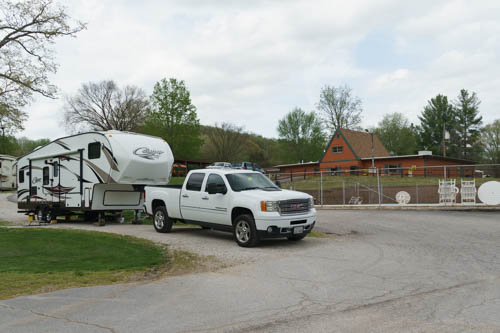
The end spot at the St. Louis West/Route 66 KOA
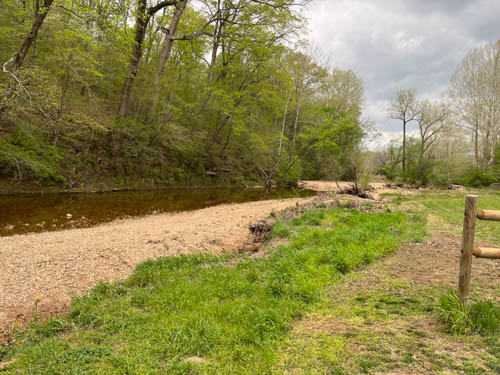
A creek runs along the campground
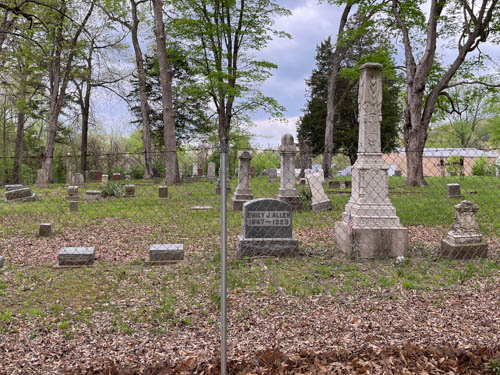
Next door is a cemetery

Next Up: Springfield, Illinois, to see the Abraham Lincoln Museum and National Historic Site

Safe Travels
Spring 2023 Adventure Episode 10: St. Louis, Missouri

We rolled into St. Louis West/Route 66 KOA on April 17, 2023, and spent the rest of the day on grocery shopping, other chores, and planning our next day at Gateway Arch National Park.

Sculpture inside the The Gateway Arch National Park Visitor Center

Gateway Arch National Park

I remember my grandmother sending me a postcard of the Arch while she and my grandfather were on vacation one year. I’ve wanted to see it in person ever since.

With our reserved tickets in hand, we waited outside the entrance for our turn to board. Claustrophobic vibes ran through me when I saw the five seats crammed into a small bubble of a capsule.

Up, up and away

It took about four minutes to reach the top, where, one by one, the eight capsules emptied. Our cabin mates debarked first. One guy was around 6’4”, the other guy may be 5’9”. Jon, 6’2”, exited, and then I, the shortest person at 5’3”, conked my head, getting through the door. Dang, that hurt.

We made our way to the tippy top, where we found a fabulous view. Standing atop the tallest structure in Missouri at 630 feet, we had a nearly 360-degree line of sight.

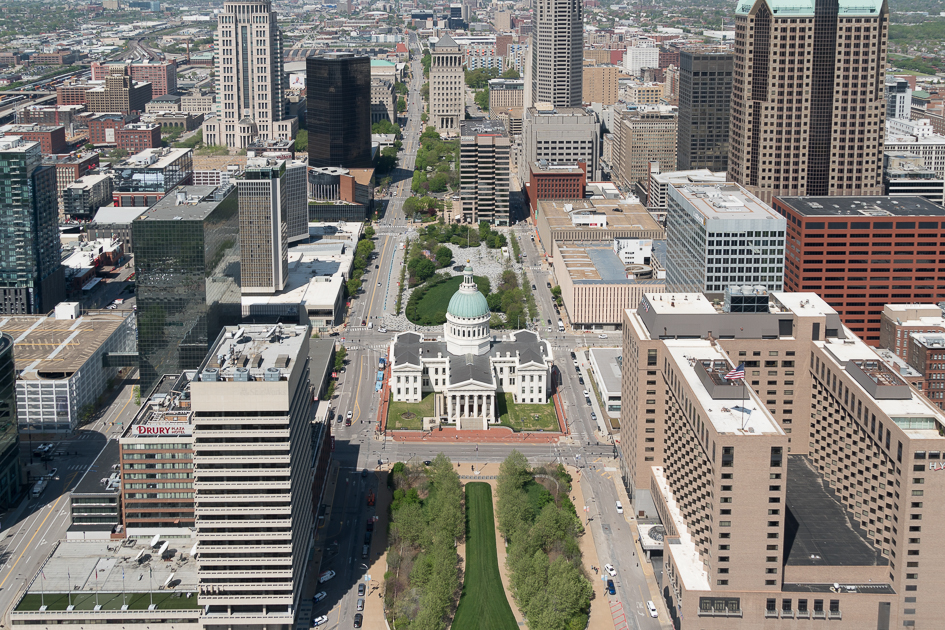
There was the St. Louis baseball stadium, the Old Courthouse, and downtown area on one side of the Arch.

St. Louis Cardinals Baseball Stadium
Old Courthouse and downtown views

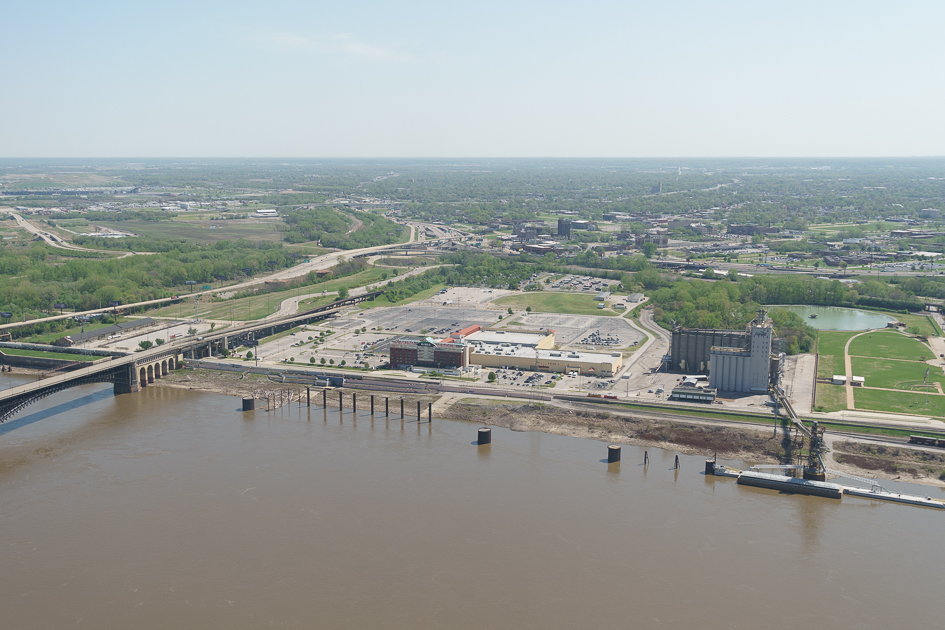
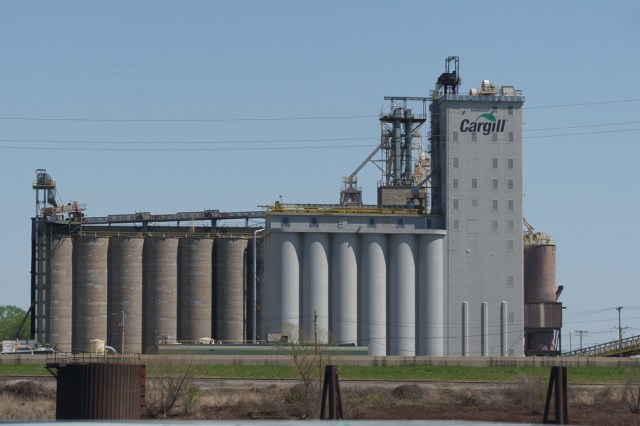
From the other side of the Arch and across the Mississippi River, trees, bridges, barges, a railyard; and the Draft Kings Casino and Cargill barge loading facility came into view.

Muddy Mississippi
Draft Kings Casino and Cargill facility

Ten minutes later, the docents ushered us back to the capsules and told us to wait for the occupants to unload before taking our seats. We laughed when the five men exited our capsule. Each man—weighed down with commercial cameras, booms, or sound equipment—emerged like a dozen clowns unfolding themselves from a Volkswagen. And not one of them bumped their head.

After the tram ride, we watched the 35-minute documentary film, “Monument to the Dream.” The movie showed the building process, including the sinking of the foundations 60 feet into the ground, and placing the last section in the top middle of the Arch.

Here are a few facts about the Arch:

  • Completed in 1965, it was built with an 18-inch sway allowance to withstand high winds and earthquakes
  • Composed of only 91 acres, Gateway Arch National Park is the smallest of all national parks.
  • At 630 feet, it is the tallest artificial monument in the United States
  • It weighs 43,220 pounds
  • Six ½” by 20” lightning rods protect it during storms, and aircraft lighting warns pilots

Besides the Arch, the park is a memorial to Thomas Jefferson’s role in opening the West and to the pioneers who helped shape its history.

We passed on exploring the Museum of Western Expansion because busloads of students had arrived. The museum features the History of the American West, the Lewis and Clark Boat House, and the Nature Center. Across the street is the Old Courthouse, also a part of the park.

Old Courthouse under renovation

I thought we’d get a chance to tour the Old Courthouse, but a major renovation and upgrade of the building were underway. The National Park Service and Gateway Arch Park Foundation partnered to fund the $24.5 million dollar investment. The courthouse is known for the Dred Scott Decision, among other freedom suits. For those who may be interested in seeing photos of the renovation, go to the Gateway Arch National Park website.

Riverboat Cruise on the Becky Thatcher

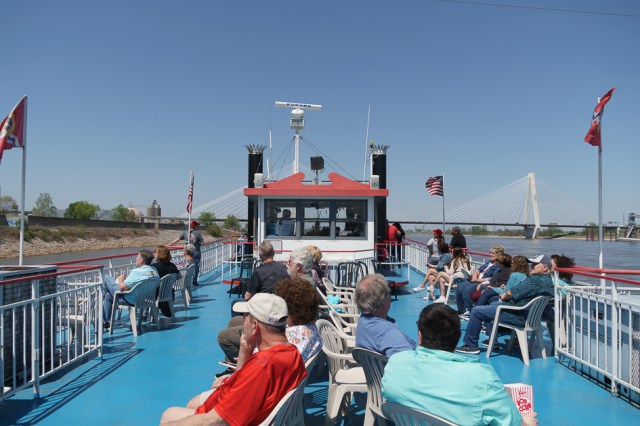
A riverboat cruise on the Mississippi sounded interesting, and we were just in time to catch the boat. I don’t remember much about the narration, but the photos below triggered a few bits and pieces once supplemented with research.

Captain’s pilothouse
Arch with bridges in background
So many views of the Arch
Cargill barge loading facility

Barges on the Illinois side of the river carry agricultural commodities and construction materials. One barge can transport the equivalent of 60 truckloads of goods.

Barges waiting for their cargo

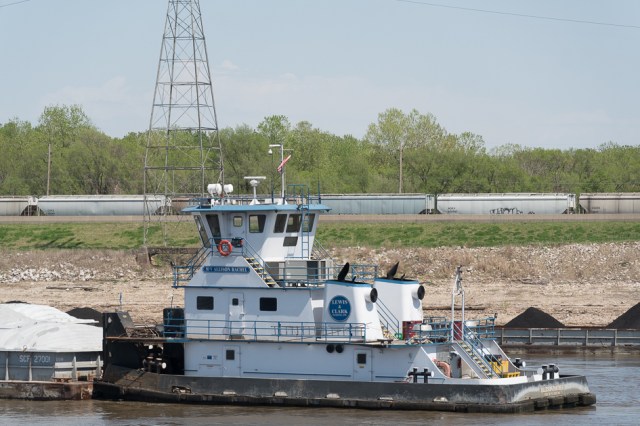
A towboat, or push boat, can move up to 15 barges at a time on the Mississippi River.

Push boat
Rollin’ down the river
Blowin’ in the wind

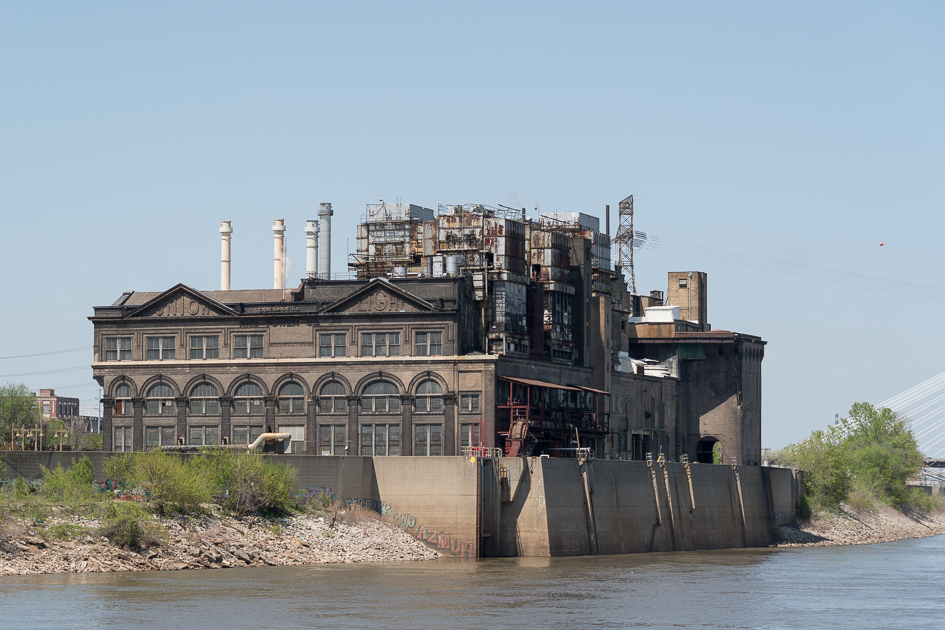
I kept my eye on the building in the next photo as we crept toward it. Constructed in 1902 in the Beaux-Arts style, I’m sure at one time someone thought the building beautiful. Words like suspense, thriller, torture, horror, and brutalism came to mind when I saw it close up. The Ashley Street Power House joined St. Louis City’s Landmark list at #46 in 1971. As far as I can tell, the powerhouse still generates thermal energy co-generation to provide steam for heating 70 downtown buildings.

Ashley Street Power House

The Four Seasons Resort-Style Hotel where rates start at $472 is a prominent structure downtown. I guess the State of California isn’t the only state struggling to house the unhoused.

I wonder if the hotel rooms have a view of the tents.
Under the bridge

Draft Kings Casino in East St. Louis, Illinois, celebrated their 30-year anniversary in June of 2023. The Riverboat Casino took its maiden voyage on June 23, 1993. Construction of the hotel on land began in 1998 and opened in January 2000.

Closer look at the casino
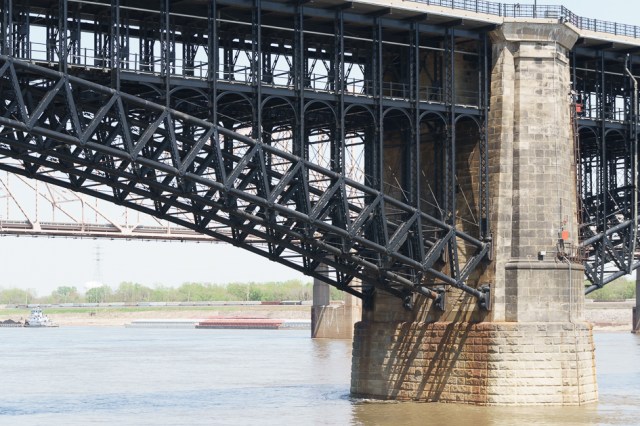
Headed toward the EADS Bridge
The EADS Bridge, completed in 1874, is the oldest bridge on the Mississippi River and the first large-scale use of steel rather than wrought-iron
Graffiti was a common sight along the waterfront
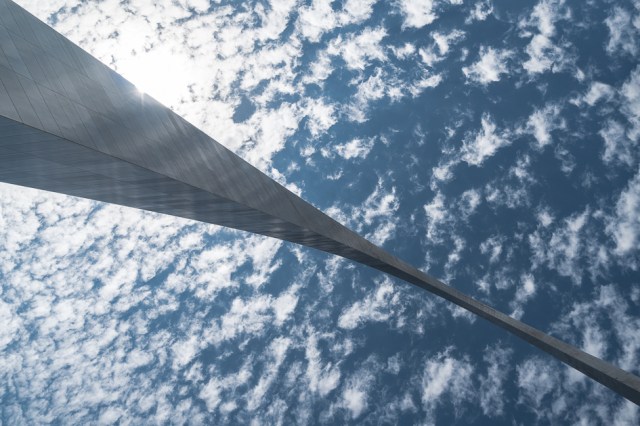
Arch piercing cirrocumulus clouds

Next up: We’ll finish our time in St. Louis with a visit to Ulysses S. Grant National Historic Site and a quick visit with our niece and her family.

Safe Travels