Spring 2023 Adventure Episode 11: Ulysses S. Grant Historic Site, St. Louis, Missouri

We continued our time in St. Louis on April 18, 2023, with a visit to Ulysses S. Grant National Historic Site. A woman at the visitor center recommended heading out to the White Haven house tour first since a busload of schoolchildren were watching the movie in the theater.

Pathway to White Haven House

White Haven Plantation

When Frederick Fayette Dent and Ellen Bray Wrenshall Dent owned the plantation, the original 850 acres of the White Haven Plantation consisted of fields of wheat, oats, Irish potatoes, and Indian corn, along with orchards of various fruit varieties, all tended by enslaved laborers.
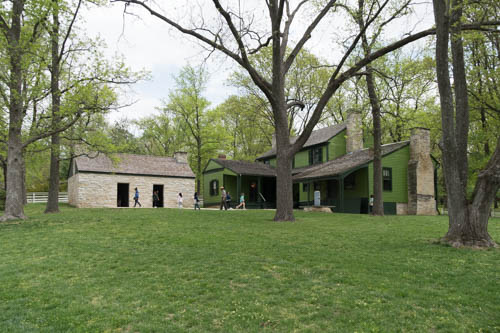
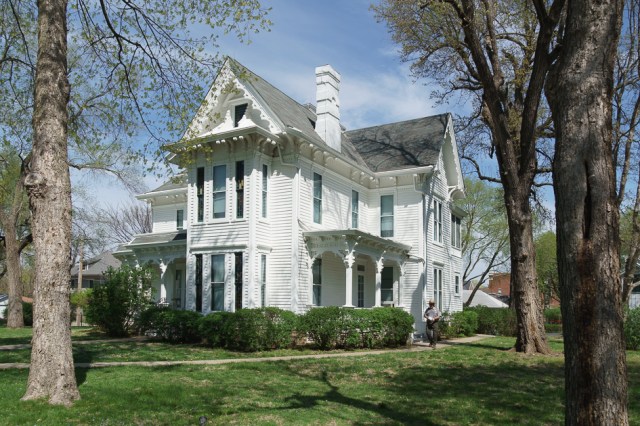
White Haven House (Painted Green in the style of the 1850s) and Summer Kitchen and Laundry

I wonder what was on Grant’s mind when he rode up to the White Haven plantation to visit his West Point roommate Frederick Tracy Dent in 1843? Did he look forward to a weekend spending time with his old roommate fishing and hunting? Or, was he there to meet Julia Dent, Frederick’s sister, to see if the two might make a good match?

From front door to rear

In either case, Grant and Julia fell in love and became engaged. But before they could marry, the Mexican-American War (1846-1848) called Grant to join the ranks. Five years later, they tied the knot.

One of the rooms in White Haven

After serving eleven years in the Army, Grant resigned his commission and from 1854 to 1859, the Grant and Dent families lived and worked at White Haven. Having been raised by an abolitionist father, how did he reconcile with the Dent’s slave ownership?

Another room
Did Grant visit with Julia in the parlor under the watchful eye of her mother?

According to The White House Historical Association, Grant and his wife benefited from slavery while living at White Haven with Julia’s parents. Julia’s interactions with slavery are well documented in her personal memoirs. However, Ulysses’ memoirs lack mention of his personal interactions with slavery even though documentation reveals he manumitted a slave he supposedly owned.
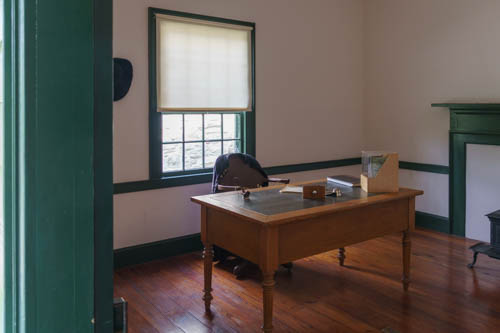
Depiction of Grant’s office

What is mentioned in his memoirs, or contained in historical documents, is his support for the recruitment of African-American soldiers during the Civil War while serving as Lieutenant General of all Union Armies for President Lincoln, his advocating for racial equality throughout his two terms as the country’s 18th president (March 4, 1869 to March 4, 1877), his support for the ratification of the Fifteenth Amendment, his opposition to the rise of white supremacy groups in the South, and the Enforcement Acts passed by Congress in 1870, and many others.

Shows log construction of original house

Grant purchased White Haven after the Civil War and hired a caretaker to manage Grant’s horse breeding enterprise. After his presidency in 1877, the couple toured the world for two years and then settled in New York. They regularly visited White Haven and sold the plantation a few months before Grant’s death.

The unadorned enslaved servant’s entrance

Summer Kitchen and Laundry

The stone building on the right housed the kitchen and laundry facilities. The red buildings on the left housed the ice house and the chicken house.

The stone building was used primarily as a summer kitchen and laundry. Considered a “double-pen” architecture with its British design of two side-by-side rooms with gable end chimneys. It may have existed as early as 1840. Enslaved laborers cooked the food and cleaned the laundry when the Dent family owned the property before the Civil War. Enslaved cooks may have lived in the attic of the structure.

Inside the kitchen

Purchased by NPS in 1990, the structure was used as a three-car garage. The garage had to be demolished and renovated to its nineteenth-century appearance. Broken dishes, crockery silverware, and other artifacts were discovered during archaeological digs around the area.

Ice and Chicken Houses

The ice house dates back to 1840 and the chicken house dates back to 1850 to 1870. Julia kept chickens as pets raising 14 – 18 baby chickens at a time. Enslaved laborers tended to the daily work of feeding the chickens and keeping the house clean.

Inside the chicken house

Stable

Completed in 1871, Grant designed the structure for his caretaker William Elrod to construct. It was large enough for 25 horses in stalls. Later owners moved the horse stable in 1962. The park service moved it again to its current location in 2007 and it now houses the park’s museum.

The old stable houses the museum today

Another location we wanted to see was Grant’s Farm, the Busch Family’s Home since 1903. General admission is free, parking tickets start at $16 and tours start at $26. as publication of this post. Sadly, it was not open the day we went to see it.

Blooming dogwood

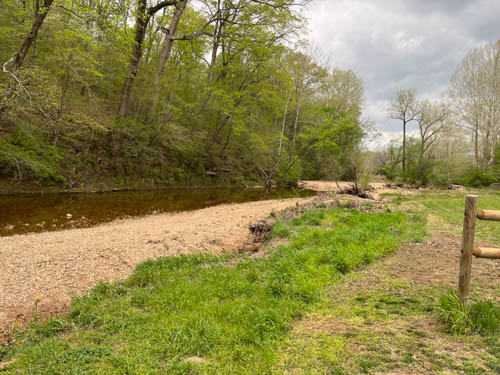
The rest of our time in St. Louis was spent sharing a delicious meal with our niece and her family and wandering around the campground. I managed a few photos of the campground, but D’oh. I forgot to take photos of the family. I blame it on my wanting to be in the moment to enjoy the antics of the two little children we came to visit rather than hiding behind the camera lens.
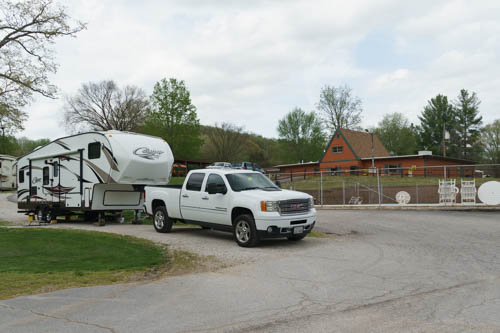
The end spot at the St. Louis West/Route 66 KOA
A creek runs along the campground
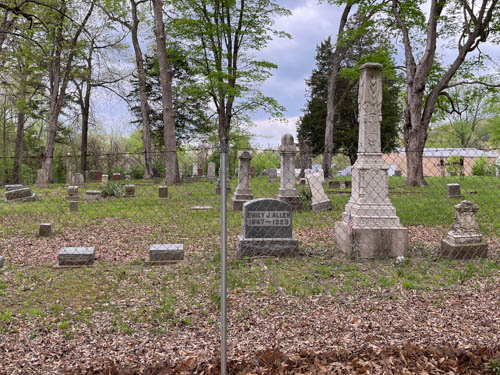
Next door is a cemetery

Next Up: Springfield, Illinois, to see the Abraham Lincoln Museum and National Historic Site

Safe Travels

Spring 2023 Adventure Episode 10: St. Louis, Missouri

We rolled into St. Louis West/Route 66 KOA on April 17, 2023, and spent the rest of the day on grocery shopping, other chores, and planning our next day at Gateway Arch National Park.

Sculpture inside the The Gateway Arch National Park Visitor Center

Gateway Arch National Park

I remember my grandmother sending me a postcard of the Arch while she and my grandfather were on vacation one year. I’ve wanted to see it in person ever since.

With our reserved tickets in hand, we waited outside the entrance for our turn to board. Claustrophobic vibes ran through me when I saw the five seats crammed into a small bubble of a capsule.

Up, up and away

It took about four minutes to reach the top, where, one by one, the eight capsules emptied. Our cabin mates debarked first. One guy was around 6’4”, the other guy may be 5’9”. Jon, 6’2”, exited, and then I, the shortest person at 5’3”, conked my head, getting through the door. Dang, that hurt.

We made our way to the tippy top, where we found a fabulous view. Standing atop the tallest structure in Missouri at 630 feet, we had a nearly 360-degree line of sight.

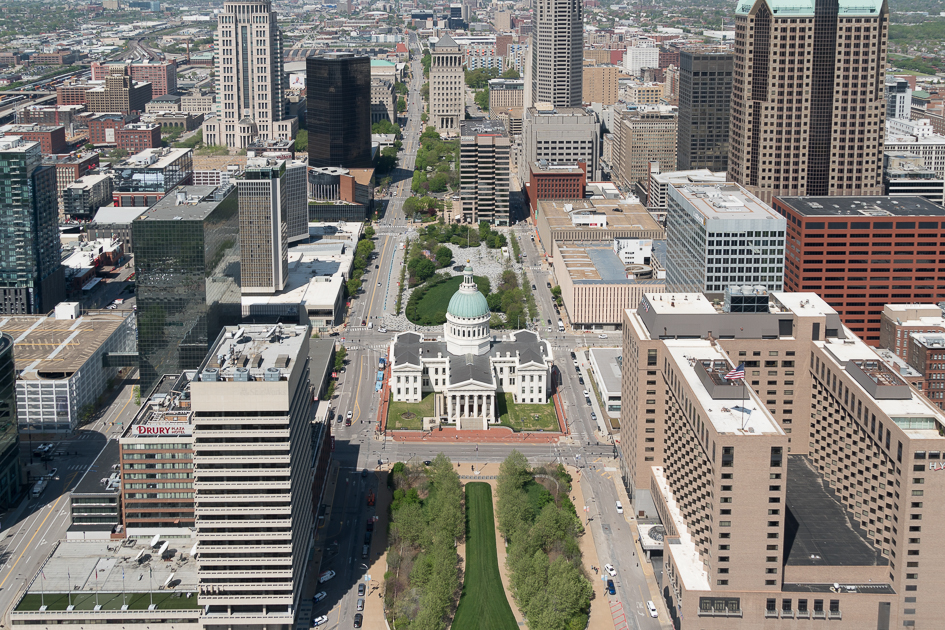
There was the St. Louis baseball stadium, the Old Courthouse, and downtown area on one side of the Arch.

St. Louis Cardinals Baseball Stadium
Old Courthouse and downtown views

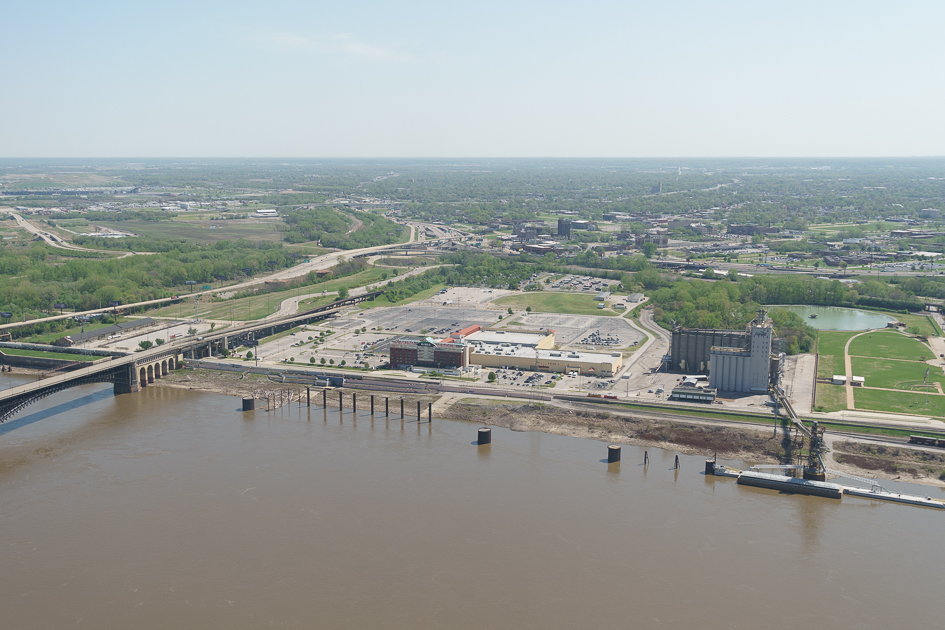
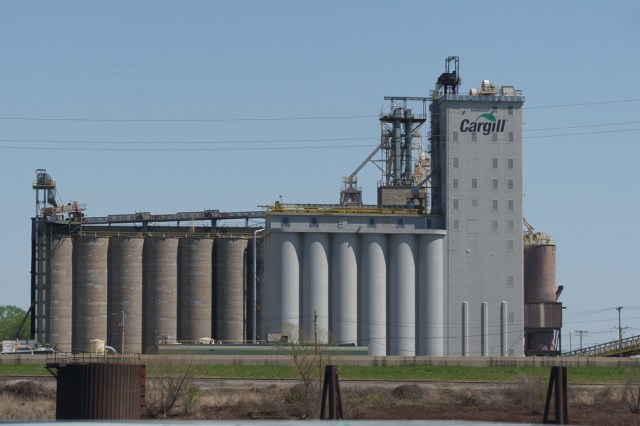
From the other side of the Arch and across the Mississippi River, trees, bridges, barges, a railyard; and the Draft Kings Casino and Cargill barge loading facility came into view.

Muddy Mississippi
Draft Kings Casino and Cargill facility

Ten minutes later, the docents ushered us back to the capsules and told us to wait for the occupants to unload before taking our seats. We laughed when the five men exited our capsule. Each man—weighed down with commercial cameras, booms, or sound equipment—emerged like a dozen clowns unfolding themselves from a Volkswagen. And not one of them bumped their head.

After the tram ride, we watched the 35-minute documentary film, “Monument to the Dream.” The movie showed the building process, including the sinking of the foundations 60 feet into the ground, and placing the last section in the top middle of the Arch.

Here are a few facts about the Arch:

  • Completed in 1965, it was built with an 18-inch sway allowance to withstand high winds and earthquakes
  • Composed of only 91 acres, Gateway Arch National Park is the smallest of all national parks.
  • At 630 feet, it is the tallest artificial monument in the United States
  • It weighs 43,220 pounds
  • Six ½” by 20” lightning rods protect it during storms, and aircraft lighting warns pilots

Besides the Arch, the park is a memorial to Thomas Jefferson’s role in opening the West and to the pioneers who helped shape its history.

We passed on exploring the Museum of Western Expansion because busloads of students had arrived. The museum features the History of the American West, the Lewis and Clark Boat House, and the Nature Center. Across the street is the Old Courthouse, also a part of the park.

Old Courthouse under renovation

I thought we’d get a chance to tour the Old Courthouse, but a major renovation and upgrade of the building were underway. The National Park Service and Gateway Arch Park Foundation partnered to fund the $24.5 million dollar investment. The courthouse is known for the Dred Scott Decision, among other freedom suits. For those who may be interested in seeing photos of the renovation, go to the Gateway Arch National Park website.

Riverboat Cruise on the Becky Thatcher

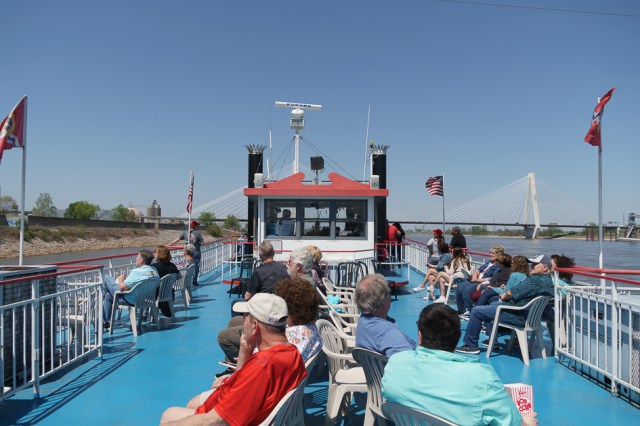
A riverboat cruise on the Mississippi sounded interesting, and we were just in time to catch the boat. I don’t remember much about the narration, but the photos below triggered a few bits and pieces once supplemented with research.

Captain’s pilothouse
Arch with bridges in background
So many views of the Arch
Cargill barge loading facility

Barges on the Illinois side of the river carry agricultural commodities and construction materials. One barge can transport the equivalent of 60 truckloads of goods.

Barges waiting for their cargo

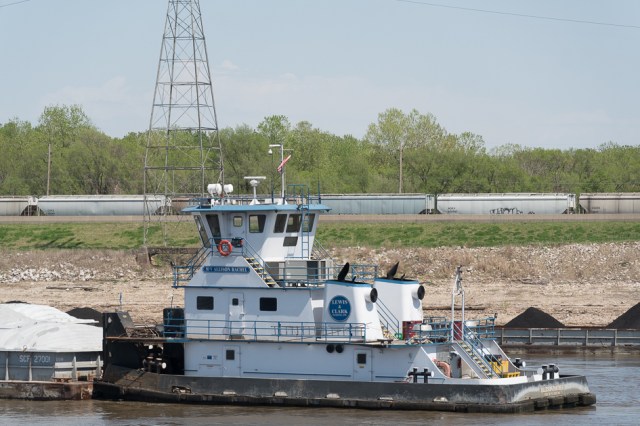
A towboat, or push boat, can move up to 15 barges at a time on the Mississippi River.

Push boat
Rollin’ down the river
Blowin’ in the wind

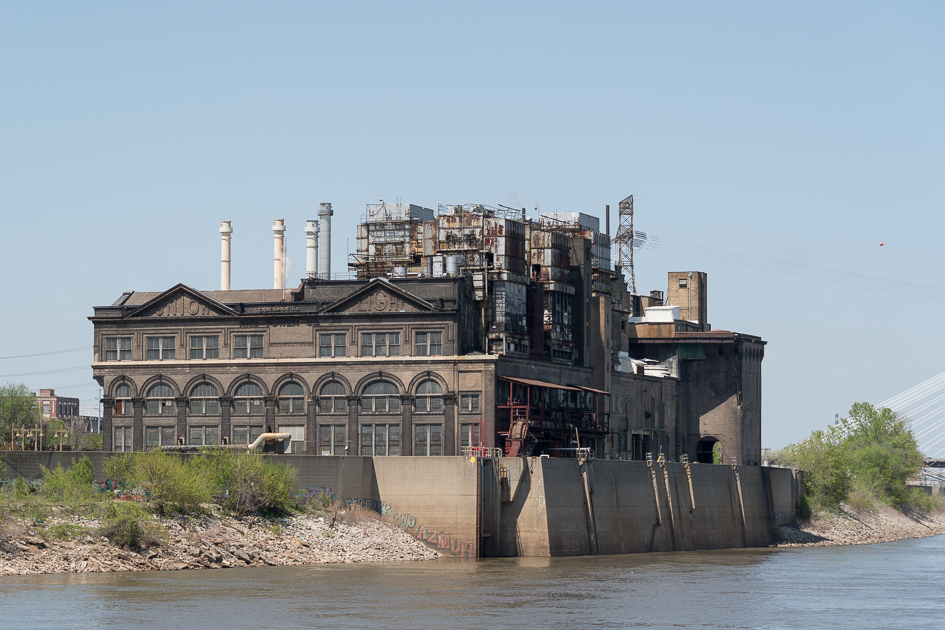
I kept my eye on the building in the next photo as we crept toward it. Constructed in 1902 in the Beaux-Arts style, I’m sure at one time someone thought the building beautiful. Words like suspense, thriller, torture, horror, and brutalism came to mind when I saw it close up. The Ashley Street Power House joined St. Louis City’s Landmark list at #46 in 1971. As far as I can tell, the powerhouse still generates thermal energy co-generation to provide steam for heating 70 downtown buildings.

Ashley Street Power House

The Four Seasons Resort-Style Hotel where rates start at $472 is a prominent structure downtown. I guess the State of California isn’t the only state struggling to house the unhoused.

I wonder if the hotel rooms have a view of the tents.
Under the bridge

Draft Kings Casino in East St. Louis, Illinois, celebrated their 30-year anniversary in June of 2023. The Riverboat Casino took its maiden voyage on June 23, 1993. Construction of the hotel on land began in 1998 and opened in January 2000.

Closer look at the casino
Headed toward the EADS Bridge
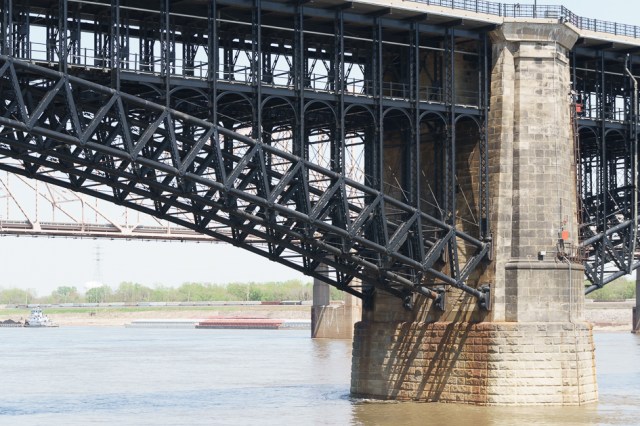
The EADS Bridge, completed in 1874, is the oldest bridge on the Mississippi River and the first large-scale use of steel rather than wrought-iron
Graffiti was a common sight along the waterfront
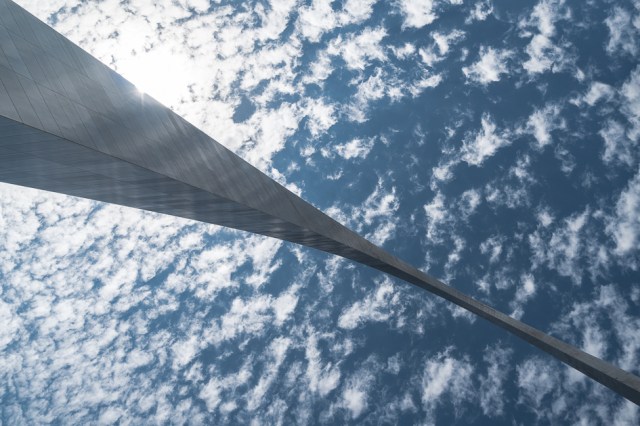
Arch piercing cirrocumulus clouds

Next up: We’ll finish our time in St. Louis with a visit to Ulysses S. Grant National Historic Site and a quick visit with our niece and her family.

Safe Travels
Spring 2023 Adventure Episode 9: Kansas City, Missouri, Continued

More About Harry Truman

Once we finished touring the Presidential Library, we drove about a mile to the Harry S. Truman National Historic Site. We wanted to see the house where Harry and Bess met and lived most of their married lives.

With our free first-come, first-served tickets in hand, we walked to the house a few blocks away to meet the docent. Photos of the interior were not allowed, but the NPS website has a virtual tour of 219 North Delaware, Independence, Missouri, for those who are curious.

Front view of the Wallace/Truman Home

Bess Wallace Truman’s maternal grandfather built the Queen Anne-style house. Modest and cozy inside, touring the house was like visiting my grandparents’ homes.

Harry and Bess held their wedding reception at the house in 1919. When Harry moved in with Bess, he also shared the home with his mother-in-law and grandmother-in-law. Bess’s two brothers, who built small homes on the property, rounded out the close-knit family.

During Harry’s two terms as president, the house served as the Summer White House and hosted the couple when they were home for the holidays.

Side view of the Wallace/Truman Home

It wasn’t until 1952, after Bess’s mother died, that the Trumans bought the home, modernized it and made it theirs until their deaths.

One story the docent told us was that the couple often found plants and other items missing from the yard. A short fence helped keep people off the property. We also learned that a lattice structure with a climbing vine gave the couple privacy from gawkers looking through the windows as Harry and Bess ate their meals.

How fortunate we are that Bess bequeathed the property, including furniture and other artifacts, to the United States of America in December 1982. Tourists get to learn about the simple life Bess and Harry created for themselves in Independence, Missouri, after his last term as president.

The Noland House at 216 North Delaware.

While Harry may have adopted the Wallace family as his own, he still had family nearby. His favorite aunt, Margaret Ellen Truman Noland (Harry’s father’s sister), and cousin, Mary Ethel Noland, lived across the street from the Wallace family.

The house was open to tour during our visit. Acquired by the National Park Service in 1991, it became part of the Harry S. Truman Historical Site after extensive renovation, rebuilding, and modernization.

The small rooms contained artifacts and posters that detailed the stories and history of the objects displayed. I wondered where Harry must have slept when he came to visit with the Noland clan and Bess. I imagine him wrapped up in a brown wool blanket on the parlor floor during the winter and sprawled out on the porch during hot summer nights.

Also included within the national historical site is the Truman Farm Home in Grandview, Missouri. Perhaps we will visit the 5.25-acre remnant of the family’s former 600-acre farm during a future visit to Missouri. And if we ever make it to Key West, we’ll need to stop in at the Truman Little White House, the only presidential museum in Florida.

Best BBQ in the State?

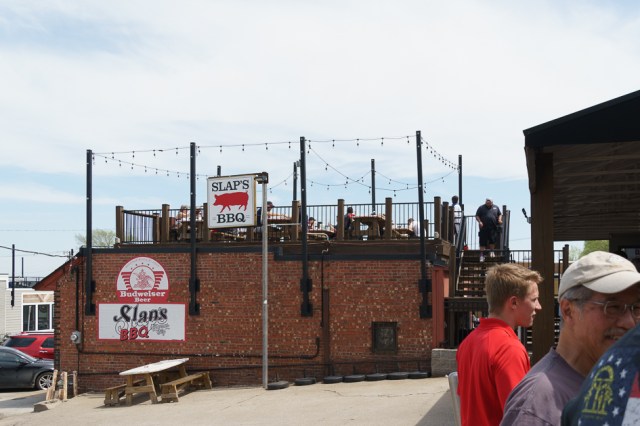
Someone had told us, “If you’re in Kansas City, eat at Slap’s for the best BBQ in the state.” So we made the 12-mile drive from Independence to the westside of Kansas City. The line told us the wait was worth it, and we agreed. But the best BBQ? We ate BBQ five times or more while in Missouri and I’d be hard pressed to choose which was the best. All of them were delicious in their own way.

Go to Slap’s for great tasting BBQ

Lexington, Missouri

On April 15, 2023, we met up with my cousin Jill and her granddaughter Scarlett in Lexington. Woo-hoo! A visit with Jill after all these years, and maybe a tour of a Civil War battlefield, and a quaint little town on the Missouri River.

After a big, long hug from Jill, she and Scarlett drove us around town while we gazed upon the beautiful historic homes, majestic trees, and the quaint downtown area where newly opened stores promised a resurgence.

Loving the porch on this corner house

In the photo below, the red brick, white trim, arched windows with black shutters impressed me with its character. Then I walked around the corner for another perspective.

What a surprise to find a much larger home from what I originally thought. Which door was the official entrance?

Battle of Lexington State Historic Site

To stretch our legs, we pulled into the Battle of Lexington State Historic Site. The Oliver Anderson House, once known as “the best-arranged dwelling house west of St. Louis,” was at the center of a bloody 3-day Civil War battle in 1861.

The visitor center’s displays depict the surrounding battlefield and back-and-forth control between the Federals and the Southerners.

Lexington’s location on the Missouri River served as a valuable commerce artery and the Union wasted no time in taking control. Col. James Mulligan commanded 3,500 Union soldiers of the Illinois Irish Brigade, operating from the Masonic College, and using the Oliver Anderson House as a hospital.

View of the Oliver Anderson House from the visitor center

When Mulligan caught wind that Maj. Gen. Sterling Price was marching toward Lexington with 15,000 Missouri State Guard troops to wrest control of Lexington, Mulligan called for reinforcements and had his troops prepare for battle. They built a maze of pits and double-row trenches to keep the enemy at bay.

When Price arrived in town on September 12, 1861, he demanded that Mulligan surrender. Confident reinforcements would soon arrive, Mulligan refused. The fighting began in earnest on September 18, 1861. On the second day, Price’s troops surrounded Mulligan’s cutting off supplies and freshwater. The reinforcements never arrived to support Mulligan so on the third day, he had no choice but to surrender.

Reminders of the battle dot the brick exterior with bullet holes

Price’s victory was short-lived when, two weeks later, the Union army reclaimed Lexington, forcing the Southern troops to retreat to southwest Missouri.

Around back is the main entrance. A more inviting view.

The tours had finished by the time we arrived, so Scarlett and I went out to at least see the building up close and peek in the windows. The windows didn’t give us much to look at, but we saw evidence of the battle where bullets penetrated the brick 162 years ago.

Miss Scarlett models at the top of the steps

After the tour of Lexington, Jill and her partner Al gave us a grand tour of their basement. Collections of antiques spanning all shapes, sizes, and types filled every nook and cranny and included wine bottles, Asian artifacts, jukeboxes, a piano, and on and on. I could have spent all day browsing through the well-organized aisles. But alas, it was time to go.

My cousin Jill and her partner Al

Family History

Two days later, we stopped by Jill’s California, Missouri, house to pick up a set of family photos. I had seen photos like these in antique stores before and never knew that my family’s history had likewise been documented. I’m honored Jill chose me to keep them safe for future generations.

The smaller fancy-framed photo is of my grandfather, William Frank Winebrenner, and his older brother, Virgil G. Winebrenner.

The small black framed photo of a family of nine is of Jill’s and my great-great-grandfather, William Franklin Winebrenner, and great-great-grandmother, Cordelia Stinson Winebrenner, my great-grandfather William Golder Winebrenner, and Jill’s great-grandfather Oren Elmer Winebrenner (both standing on the right side), and their siblings.

They were a handsome group of men with their full mustaches and dark hair. The brothers reminded me of a photo I’ve seen of Wyatt Earp and his brothers. Or maybe I’m thinking of Kurt Russell in the movie Tombstone. Either way, I think the men represent well the fashion of their days.

I’m not sure whose farm is represented in the larger framed photo and Jill didn’t remember. But I like the blue sky with puffy clouds, the buildings, and the wide open space of the field.

Up next: We head to St. Louis, ride the St. Louis Arch tram, tour the Ulysses S. Grant National Historic Site, and visit with our niece and her family.

Safe Travels

Spring 2023 Adventure Episode 8: Kansas City, Missouri

We had two goals in mind for visiting Kansas City, Missouri: Tick off another presidential library and visit my third cousin, Jill. On April 13, 2023, we pulled into the Kansas City East/Oakgrove KOA, which was a convenient location for our plans. First up is the Harry S. Truman Library and Museum.

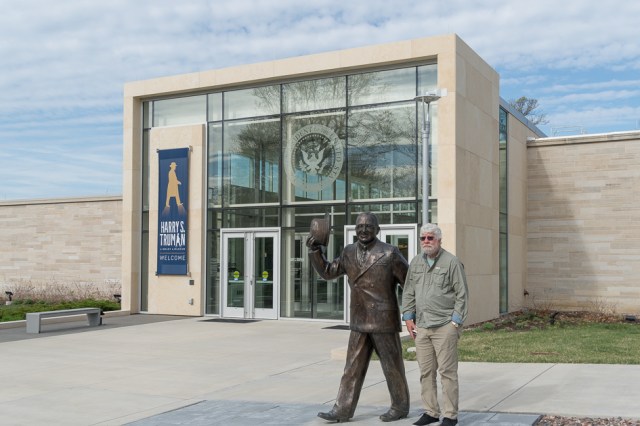
Jon hangs out with Truman

Harry S. Truman Library and Museum

I wasn’t sure what I’d learn at the Harry S. Truman Library and Museum in Independence, Missouri. During my school days, I must have learned that President Truman gave the order to bomb Japanese cities, but somehow had forgotten that fact. So I wondered what else I would learn about our 33rd president.

The museum layout was like other presidential libraries we’ve visited. With eleven exhibits inside and three outside, we were sure to spend plenty of time wandering around.

Plow to Politics, the first exhibit, tells about Truman’s youth and the professions that equipped him for being president. After graduation and with no money for college, he worked on his father’s farm, was a veteran of World War I, and lost his shirt as a haberdasher.

Truman was an avid reader and accomplished piano player.
Displays of the many jobs Truman held before politics
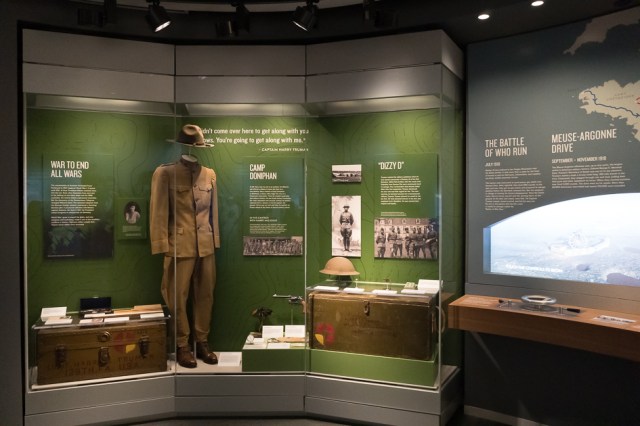
World War I display
Truman’s haberdashery failed to survive the 1920-21 depression

Then he turned to politics, serving as a county administrative judge followed by two terms as a US Senator. As Franklin D. Roosevelt’s running mate in the 1944 election, Truman became vice president on January 20, 1945. Truman had barely learned the ministerial and ceremonial duties as vice president when Roosevelt died on April 12, 1945, propelling Truman to the presidency.

Replica of oval office during Truman’s presidency

Twelve days later, his staff informed him of a secret atomic weapon.

Detailed in the second exhibit is The First Four months of Truman’s presidency. Having only spoken to Roosevelt two times since January, the unprepared Truman embraced the challenge and got to work.

Imagine being thrust into the presidency without knowledge of the Manhattan Project—authorized by Roosevelt on December 28, 1942—and the development of the first atomic bomb.

Victory always has its burdens and its responsibilities as well as its rejoicing –Harry Truman, September 1945

When his cabinet disclosed the secret, did Truman’s stomach churn, did he break out in a sweat, did his chest tighten? None of the options would have resulted in a peaceful end of the war and none would have prevented significant loss of life and property in varying degrees.

Which of these four options presented to Truman would you choose?

1) Continue the conventional bombing of Japanese cities (ongoing but not effective)

2) Invasion of Japan (too costly in lives and resources)

3) Demonstrate the bomb by dropping it on an unpopulated island (not likely to persuade Japan’s leader)

4) Drop the bomb on an inhabited Japanese city (seen as the quickest way to end the war and save lives in the long run)

Diplomatic attempts to get Japan to surrender did not work. Even the Potsdam Declaration developed with Britain and China, giving Japan an ultimatum did not work. Truman chose the fourth option and authorized the bombings of Hiroshima and Nagasaki in August 1945, ending the Pacific War. I suspect if Roosevelt had lived a few more months, he would have made the same choice.

Besides dealing with ending the Pacific War, other matters around the world also fell in Turman’s lap those first four months. Some of these include ending the war in Europe, altering the presidential line of succession, and signing the United Nations Charter.

Additional displays include the Post-WWII World, Israel’s Recognition, Truman’s Civil Rights, the President’s Second Term, and the Korean War.

In 1948 Truman signed an executive order to desegregate the armed forces. He also signed the Women’s Armed Services Integration act, which allowed women to join as permanent, regular members of the military.

One of my favorite exhibits in the museum was Dear Bess. The brightly lit tower in the middle of the room was a magnet drawing me in. I kept circling around and coming back to it several times, reading a letter here and there.

Display of letters written by Harry to Bess

As reported by The American Presidency Project at UC Santa Barbara, Truman’s approval rating was 32, one of the lowest of all the presidents. However, his presidency ranks in the top 10 by many historians and biographers. No wonder he’s become my favorite president after learning more about him.

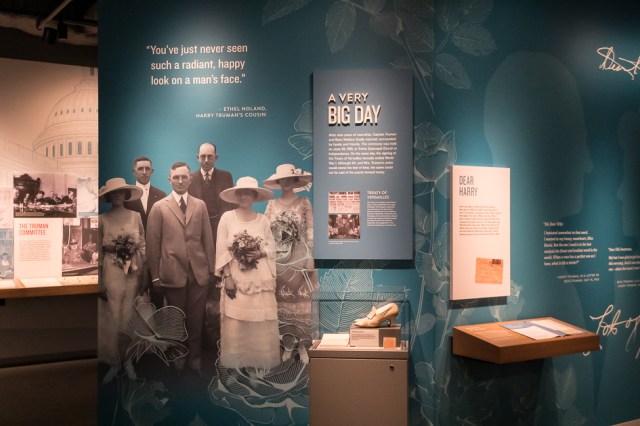
Another reason Truman is my top pick is his love story. Apparently, he was smitten with Elizabeth “Bess” Virginia Wallace when he first met her in 1890. He was only six years old. She was five. They attended the same school from fifth grade until graduation in 1901. But the closest Harry came to a relationship with Bess were the few times she allowed him to carry her books.

Bess must have remained in Harry’s heart after he moved to Kansas City and when he moved to Grandview to work on his family’s farm. Did he pine for the girl of his dreams during those nine years?

In 1910, Harry returned to Independence to visit his aunt and cousins. When an empty cake dish needed returning to Bess’ mother, Harry volunteered to return it. Bess answered the door and she and Harry developed a friendship through correspondence and Harry making several trips to see her.

Six months later, he proposed in a letter dated June 22, 1911. “Water and potatoes will soon be as much of a luxury as pineapples and diamonds. Speaking of diamonds, would you wear a solitaire one on your left hand should I get it?”

Her silence must have crushed him when she ignored him for weeks and then denied his proposal. But he persevered, and they were finally engaged in November 1913.

Unfortunately, circumstances and World War I conspired to keep them from marriage until June 28, 1919. Harry finally achieved his goal after being in love with Bess for nearly twenty years.

Harry and Bess were married on June 28, 1919
The Trumans had one daughter, Margaret
His and Hers 1941 Chryslers. A coupe for Harry and a 4-door sedan for Bess.

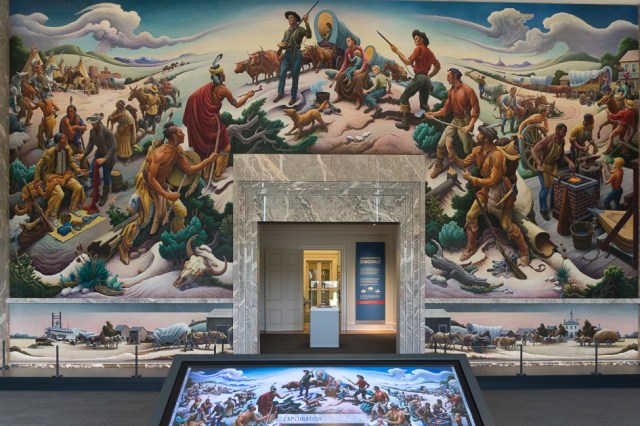
One exhibit not to be missed is the Thomas Hart Benton mural titled Independence and the Opening of the West. The mural depicts life along the Santa Fe, California, and Oregon Trails in the mid-19th century. One photo cannot capture all the images.

Independence and the Opening of the West by Thomas Hart Benton

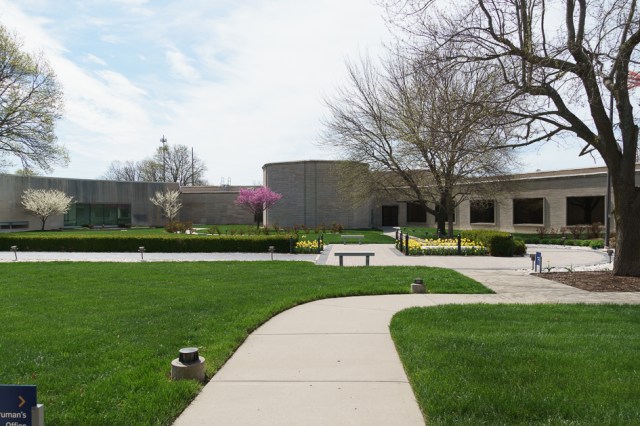
Outside are Harry’s and Bess’ gravesites, colorful gardens, Truman’s office, and the Eternal Flame of Freedom.

Tulips, redbud and dogwood trees, and green, green grass set a serene environment for contemplation
Harry and Bess Truman’s gravesites
Truman’s office on the opposite side of the courtyard
Truman’s office after presidency
Eternal Flame of Freedom dedicated to memory of Harry S. Truman by American Legion Post No. 21 Independence, Missouri, on March 15, 1991

I’m glad I had the chance to meet Harry S. Truman. I gathered from the exhibits that he was an honorable man, with principles, morals, fairness, and kindness toward other human beings. Yes, I know he made decisive and controversial decisions that affected not only the United States but the world. To ensure the museum had not deceived me, I fell down a rabbit hole of research when I returned home and found my first impression of the man stayed intact.

Up next: We visit the Wallace/Truman home in downtown Independence and visit my cousin in Lexington, Missouri.

Save Travels