Spring 2023 Adventure Episode 14: Dwight David Eisenhower Library and Museum Abilene, Kansas

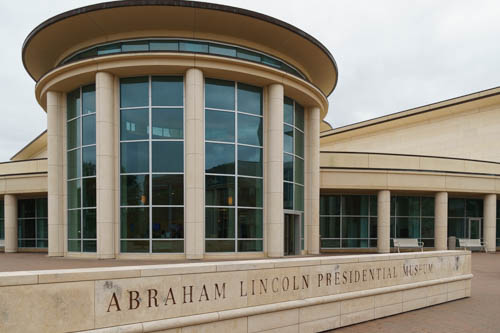
As we approached the Dwight David Eisenhower Presidential Library and Museum on April 29, 2023, I tried to remember what I had learned about this man. Only three tidbits popped up: 1) he was a military general, 2) had something to do with the country’s interstate system, 3) and his nickname was Ike.

Eisenhower had been my president for the first eight years of my life as I obliviously watched Romper Room, donned my cowgirl outfit—complete with pistol, holster, and boots—and later played with my Barbie. I also attended Eisenhower Junior-Senior High School in my hometown. Go Eagles! Shouldn’t I have learned more about the man, at some point? Maybe I did and don’t remember, or maybe I didn’t because my dislike of World War II history never held my interest.

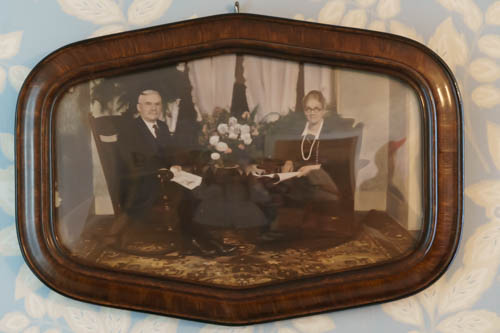
Eisenhower as a young boy

Here are the highlights of what I learned about the president that polls rank in the top 10 of all presidents. As with all the presidential museums we’ve visited, we walked through Ike’s life, starting with his boyhood.

Dwight David Eisenhower (nicknamed Ike) was born on October 14, 1890, in Denison, Texas. His family moved to Abilene, Kansas, in 1892, where Dwight lived with his parents and five brothers.

Ike entered West Point on June 14, 1911, and graduated on June 12, 1915, as a Second Lieutenant. Although he didn’t make the baseball team, he played varsity football as a halfback until a knee injury ended his sports career.

Ike, the West Point graduate

In October 1915 while stationed at Fort Sam Houston, Texas, Eisenhower met Mamie Geneva Doud while visiting friends in San Antonio. Was it fate she and her Denver, Colorado, family had rented a house in San Antonio for the winter? Dwight’s and Mamie’s romance was a whirlwind, announcing their engagement on February 14, 1916, and married by July 1, 1916. They had two boys, the first of which died of scarlet fever within four months. The military family moved extensively from post to post until World War II broke out and Mamie settled in at the Wardman Park Hotel in Washington, DC.

Fun Fact: Dwight David Eisenhower II, Ike’s and Mammie’s grandson, is married to Julie Nixon, Richard and Pat Nixon’s daughter. Richard Nixon was Eisenhower’s vice president.

Dresses worn by Mamie during Eisenhower’s presidency

Between 1915 and 1922, Eisenhower served in the Infantry and Tank Corps, earning promotions along the way. In 1919, he volunteered to participate as a Tank Corps observer in the First Transcontinental Motor Convoy. The lack of roads that could accommodate the heavy equipment the Army moved across the country made the task difficult.

During the 1920s and 1930s, Eisenhower racked up promotion after promotion while serving in various posts under the command of several generals. Then, on December 7, 1941, the attack on Pearl Harbor dragged the US into World War II.

The War Years

In May 1942, Eisenhower was designated Commanding General, European Theater, London England. By November 1942, he was named Commander-in-Chief, Allied Forces, North Africa. In December 1943, he was appointed Supreme Commander, Allied Expeditionary Forces and commanded forces of the Normandy Invasion on June 6, 1944.

On December 20, 1944, promoted to General of the Army with 5 stars and after the German surrender on May 8, 1945, he was appointed Military Governor, US Occupied Zone, Frankfurt, Germany.

He held the position of Supreme Allied Commander of NATO in Europe and had operational command of US forces in Europe from December 1950 to July 1952.
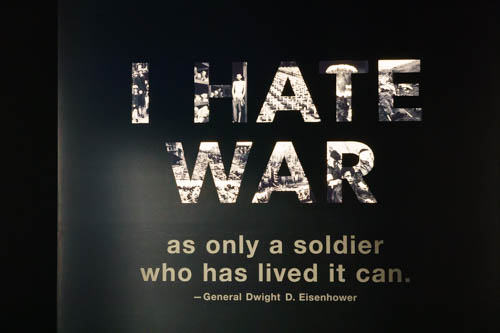
In Abilene, Kansas, on June 4, 1952, Eisenhower announced his candidacy for the Republican party nomination for president. He won the nomination and the presidency against Adlai Stevenson II and beat Stevenson again for a second term.

Campaign memorabilia

During Eisenhower’s presidency, the economy boomed. I suspect the pent up demand after the bans, restrictions, and rationing during the war had as much of a hand in the bounce back as the president in office did.

From 1950 to 1960, the number of cars on the road increased by nearly 22 million and home ownership increased from 55% to 62%

Eisenhower occasionally drove the car below. It belonged to Mamie’s mother, Elivera Doud. It cost $4,300 when new and the driver could use either the front or rear seat controls.
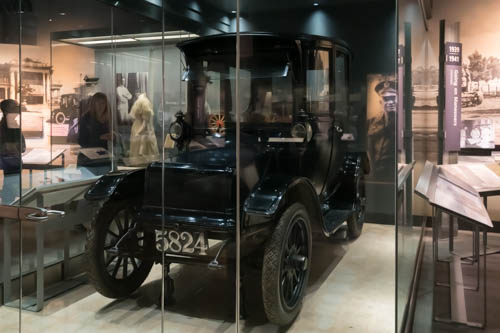
1914 Rauch & Lang electric car

The National Interstate and Defence Highways Act (1956) was one of Eisenhower’s notable achievements as president. This display claims, “No public works project comes close to equaling its impact on the country’s economy, security, people, and culture.”
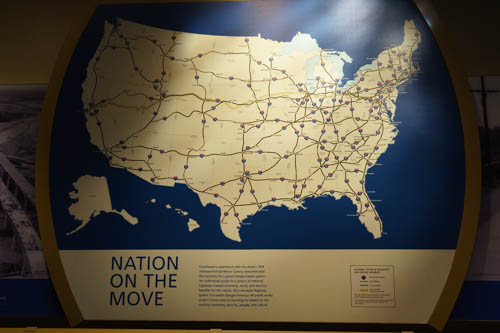
Map of projected Interstates by 1971

Eisenhower’s foreign policy focused on reducing military aid and preventing the spread of communism. These policies ended the fighting in Korea with the Korean Armistice Agreement signed in July 1953. They also increased the country’s nuclear weapons and delivery systems and prevented other countries from acquiring or using them against the US.

Eisenhower relied on secret CIA missions to fight communism in Southern Asia, South America, and the Caribbean instead of using the military. Some critics argue these actions have left the US with unresolved foreign policy issues that continue to cause havoc to this day.

Desegregation was another contentious issue his administration dealt with. Eisenhower continued President Truman’s orders to desegregate the federal workforce and armed forces. The Supreme Court decision in Brown vs the Board of Education, came down in 1954, which led to the Civil Rights bill.

The bill established a bipartisan congressional commission to investigate civil rights violations, created a civil rights division in the Department of Justice, and gave the Attorney General authority to pursue contempt proceedings against violators of civil and voting rights.

After exploring the museum, we took a break outside and discovered a statue of Eisenhower in the “Champion of Peace” circle. In the background are memorial pylons. Phrases on the pylons commemorate Eisenhower’s life from birth through presidency.

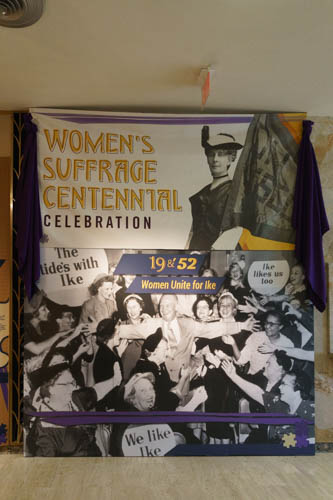
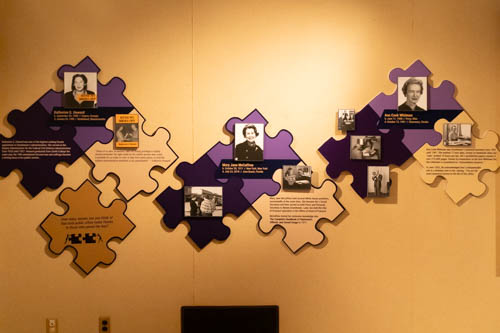
Across from the museum is the library building. During our visit, we found the Women’s Suffrage Centennial exhibit upstairs. It celebrated the women who campaigned for Eisenhower and those who served in his administration. His was the first presidential campaign to focus on the vote of women.
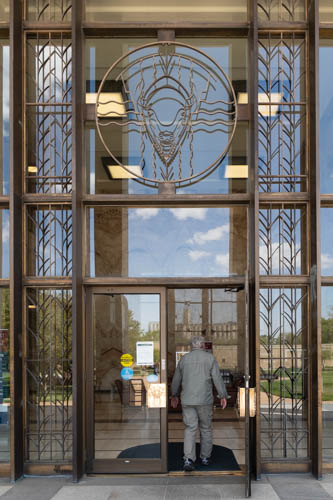
Library entrance
Eisenhower and troops in the library

Below is the chapel, or mausoleum, where Dwight and Mamie are buried.

Inside are quotes from Eisenhower’s speeches. The one on the back wall is from his Guildhall Address, London, June 12, 1945. It says, “Humility must always be the portion of any man who receives acclaim earned in blood of his followers and sacrifices of his friends.”

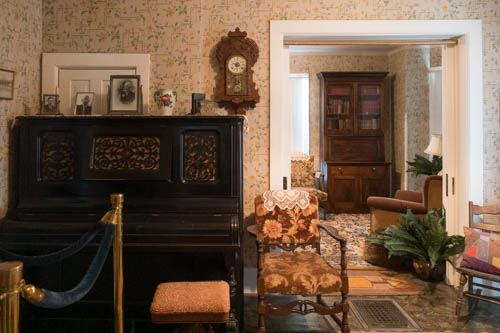
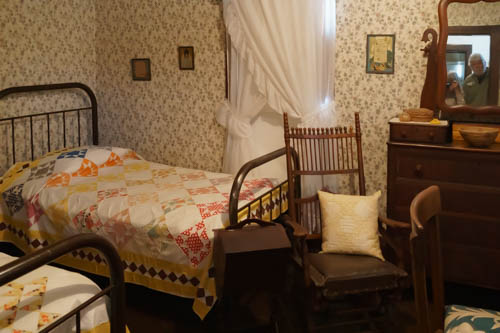
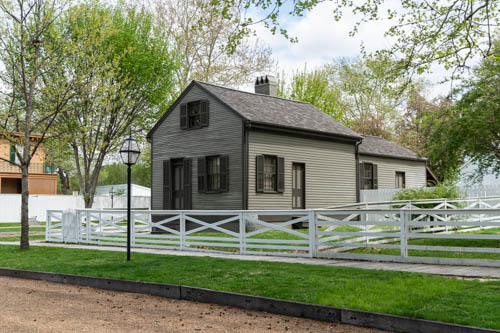
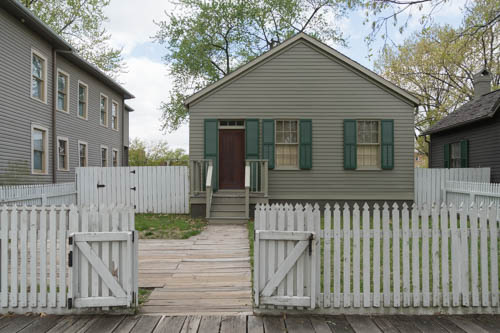
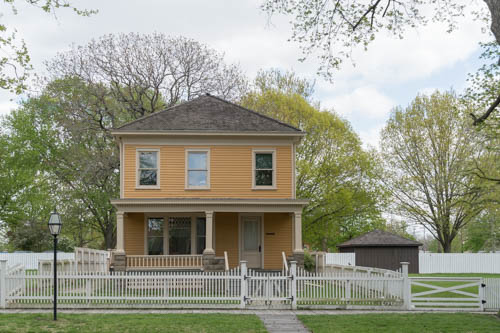
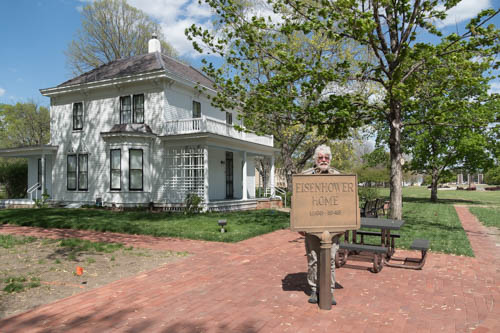
Also outside is Eisenhower’s boyhood home, which we toured with a guide. Under the National Archives website, is a video tour of the house and historical detail for those who are interested.
Eisenhower painting of his boyhood home

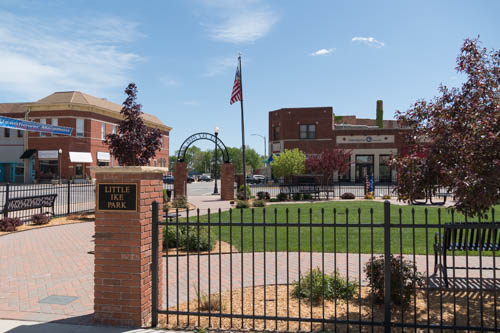
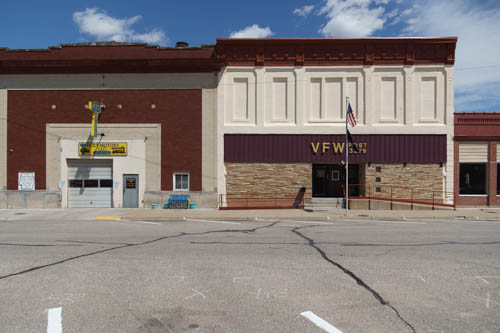
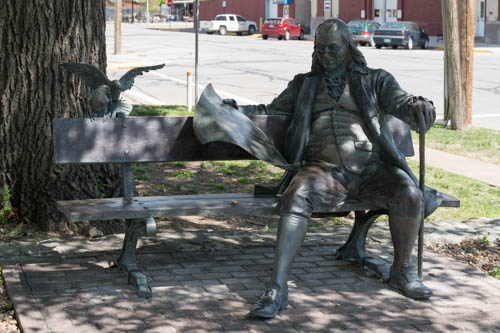
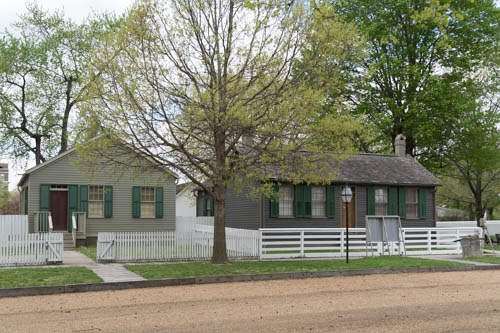
A few photos of the surrounding area in Abilene, Kansas.

Is that Ben Franklin reading the paper?

Well, I finally learned about my first president and I’m not sure what to think. He impacted the country in positive ways when you consider he ended the Korean War, authorized the construction of the Interstates and signed the Civil Rights act, among other good deeds. Yet the use of the CIA for covert operations has left lasting damage to relationships with other countries.

Analyzing all of his actions to determine if Eisenhower deserves a top ten rating would require more research than I wanted to do. So I read the Farewell Speech he gave before leaving the White House. He made several points I found interesting and relatable to current affairs around the world and in today’s political climate:

1) He talked about how the President and Congress need to work together to find the best solutions to shape the nation’s future.

2) He said, “America’s leadership and prestige” does not rely only on our “unmatched material progress, richs and military strength, but on how we use our power in the interests of world peace and human betterment.”

3) He spoke at length about the buildup of the country’s military-industrial complex during the previous years and the importance to “guard against the acquisition of unwarranted influence, whether sought or unsought, by the military-industrial complex.” And he recognized that “the potential for the disastrous rise of misplaced power exists, and will persist.”

4) On conservation, he said we must, “Avoid the impulse to live for today, plundering … the precious resources of tomorrow. We cannot mortgage the material assets of our grandchildren without risking the loss also of their political and spiritual heritage. We want democracy to survive for all generations to come, not to become the insolvent phantom of tomorrow.”

And his parting prayer at the end of his speech asked for a utopia for the world I fear will never exist. However, that doesn’t mean we should stop striving for the dream.

“We pray that peoples of all faiths, all races, all nations, may have their great human needs satisfied; that those now denied opportunity shall come to enjoy it to the full; that all who yearn for freedom may experience its spiritual blessings; that those who have freedom will understand, also, its heavy responsibilities; that all who are insensitive to the needs of others will learn charity; that the scourges of poverty, disease and ignorance will be made to diappear from the earth, and that, in the goodness of time, all peoples will come to live together in a peace guaranteed by the binding force of mutual respect and love.”

Reading the speech brought me closer to agreeing with Eisenhower’s ranking in the top ten of all presidents. I like how he laid out the threats to the country that existed then and gave warnings or advice about the future. And I’m sad more people didn’t pay attention.

Up Next: We stop in Goodland, Kansas, for a few days

Spring 2023 Adventure Episode 13: Lake of the Ozarks

After our visit to Springfield, Illinois, we headed back to Missouri to spend time at Lake of the Ozarks and meet up with our daughter Laura and her family. On the way, we stopped in Warrenton, Missouri, for a bite to eat. Social House 227 looked promising with parking for the rig nearby.

Social House 227’s décor caught my attention as I walked through the door. The framed boxes and crates with plants added a hint of comfort and coziness.

And then I saw a contraption hanging on the wall. What the heck? Ahh. A modern-day jukebox. That’s the source of the background music. It reminded me of cafes back in the day when jukeboxes sat against a wall or little ones sat at each table. We would select the song we wanted to hear, put coins in the slot, and wait for our song to play. Modern times call for modern ways to select music and pay. TouchTunes has an app for that to go along with their jukeboxes.

“Smash” burgers seem to be the foodie fad of the moment, so I tried one at Social House 227. The word “smash” refers to the patties being smashed by hand. Although, I submit it also means having to smash the two 4-oz patties topped with lettuce, tomatoes, pickles, peppers, bacon, cheese, onion rings, and a fried egg in order to stuff the thing in my mouth. I’m glad I tried it, although I’m not sure I’ll order another one anytime soon. It was the kind of messy where I had to hang on to the thing with both hands until the last bite as the juices and sauce dripped off my chin.

Here are few places we visited while in the Ozarks:

Bagnell Dam Strip

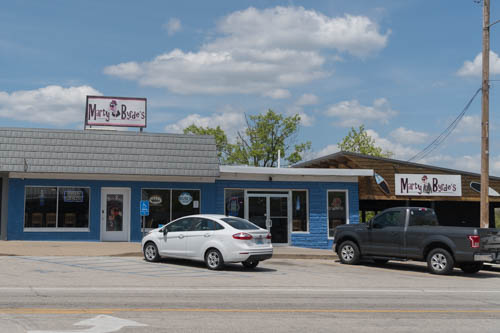
Bagnell Dam Strip seems the place to be for food and shopping in Lake Ozark, Missouri. There we saw Marty Byrde’s Gastropub. I wondered which Marty Byrde came first, the gastropub or the Netflix TV series Ozark? It turns out Jason Bateman’s character on Ozark was the inspiration for the name of the restaurant. I understand a few drinks are named after other characters in the series.

Marty Byrde’s Gastropub

There are several other restaurants on the strip, some with nighttime entertainment, waiting to cater to every hungry mob’s desire. Shoppers will also find stores where they can scratch their itch to find the perfect gift for someone special.

Willmore Lodge

The Willmore Lodge contains the visitor center for the Bagnall Dam. The Adirondack-styled 6,500 square foot building contained twenty-nine rooms when completed in 1930 for Union Electric.

Willmore Lodge

I thought it fascinating to learn the entire building was cut and assembled in Oregon. Then it was marked, disassembled, and transported by train to Missouri. It took three months to reassemble the structure using square wooden pegs and “overlapping corner-saddle notching” to hold it together. I’m not a woodworker and have no idea what notching is, but “overlapping corner-saddle notching” sounds extra sturdy to me.

Jon waits patiently to go inside

Union Electric sold the property at some point, setting off an exchange of owners over the years. In 1996, Union Electric repurchased it with the purpose of retaining it as a National Historical site and housing the history of the region.

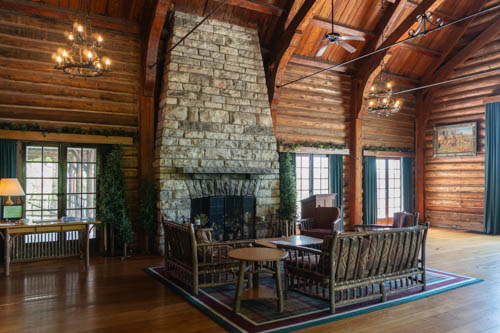
Inside, the massive fireplace and open beam ceiling should have given off a cavernous vibe. Instead, the warmth of the wood, the comfy-looking furniture, and the natural light made me want to curl up on one of the chairs, pull out a book, and settle in for a cozy reading session.

The lobby was the perfect spot to visit with our daughter and her family when they came to visit us.
Check out the carving on this chair
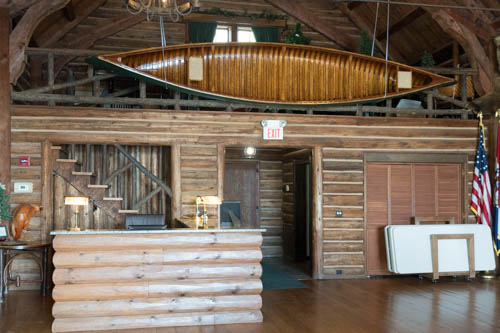
Reception area
Jon checks out the view from the window

A hallway on the fireplace side of the lobby leads to a museum. The museum contains artifacts, photos, and descriptions of the area before the dam was built, how the dam works, and the local wildlife visitors might see in the area.

A few Bagnell Dam facts:

  • Named after William Bagnell, a railroad man who founded a town on June 30, 1883
  • The dam was completed in 1931
  • To make way for the dam, houses and farm buildings in 22 communities were moved or destroyed.
  • The dam is one-half mile long and 148 feet high from bedrock (equivalent to a 12-story building seven blocks long)
  • It holds back 600 billion gallons of water in the Lake of the Ozarks (the largest man-made lake in the world covering 86 square miles)
  • The current owners, Ameren Missouri, upgraded the dam in 2017 and 2018 at a cost of $53 million.
  • Osage Energy Center produces more than 500 million kilowatt hours (equivalent to the needs of 42,000 average households)
  • Ameren Missouri’s goal is to achieve net-zero carbon emissions by 2050.

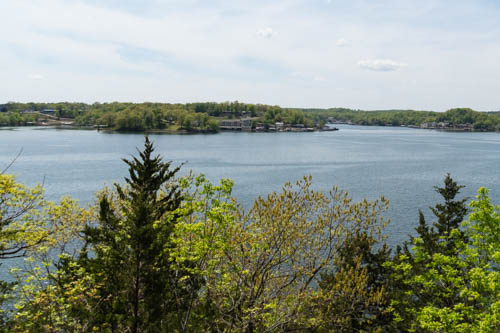
Outside, is a walkway around the building with views of the shoreline across the lake.

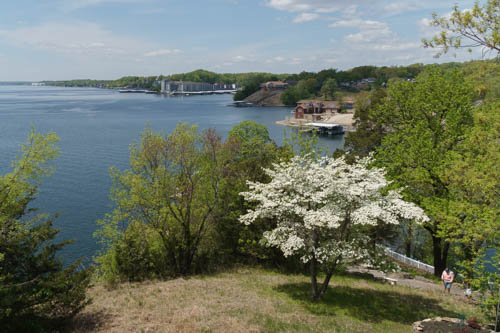
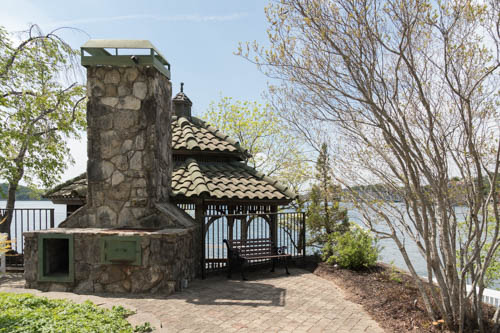
And a path leads to a garden, a huge fireplace with a grill, a gazebo, dogwood trees, and expansive views of Lake of the Ozarks.

Condo buildings next door to Willmore Lodge

Ha Ha Tonka State Park

In need of stretching our legs, we found Ha Ha Tonka State Park. With 31 miles of trails, we were confident of finding something interesting. The park displays the karst geological formations for which Missouri is known. The dissolving action of water on bedrock is what created the caves (approximately 7,500 are known), sinkholes, springs, and natural bridges throughout the state.

Natural bridge
From under the bridge
Lakeshore park

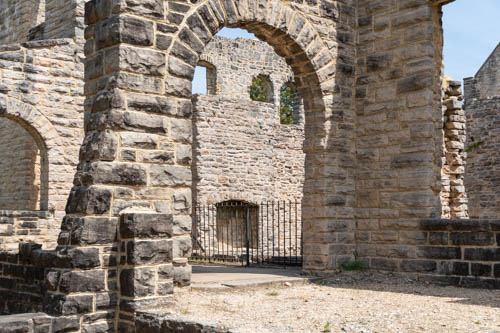
The something interesting we found was the ruins of a European-style castle. The castle was the vision of Robert M. Snyder, a wealthy Kansas City businessman. Construction began in 1905, but one year later, Mr. Snyder died in one of the state’s first automobile accidents.

Jon, Laura, Chris, and Maya check out the ruins
Hey, Papa. Wait up.
The structure is unstable so stay behind the fence

It wasn’t until 1922 that the structure was completed under the direction of Snyder’s sons. The Bagnell Dam divided the property in the 1930s, much to the dismay of the Snyders. Eventually, the property was used as a hotel. In 1942, a fire broke out, gutting the castle, and destroying the carriage house.

Then in 1976, vandals burned the water tower. In 1978, the property was included in the newly created Ha Ha Tonka State Park.

Don’t step on the prairie ring-necked snake
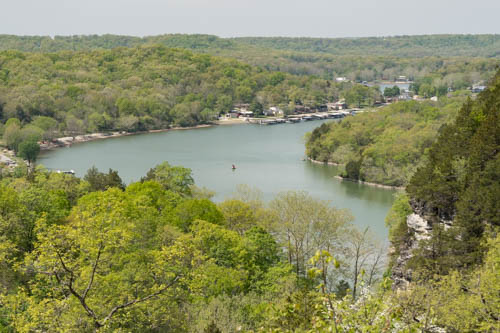
Lake of the Ozarks sprawls out into arms and fingers looking a lot like a tentacled serpent

From the castle ruins we saw heavy equipment at the water level and gravel haulers driving in and out along the sandbar. Apparently for years, gravel had washed from Dry Hollow Road into the underground karst system and deposited into the Ha Ha Tonka Spring. This created gravel bars in Trout Glen Pool. Besides dredging the pool and spring to remove 10,000 cubic yards of gravel, a paving project along Dry Hollow Road will prevent further problems.

Ha Ha Tonka Spring dredging project

.

This brightly colored restaurant stood out among the green and blah

Although there was plenty more for us to do and see while at Lake of the Ozarks, we took advantage of down time before hitting the road toward home. Neither of us were looking forward to a week of back-to-back driving days, so I built in a few extra days along the way.
Next Up: Dwight D. Eisenhower Presidential Museum and Home in Abilene, Kansas

Safe Travels

Spring 2023 Adventure Episode 12: Springfield, Illinois

On April 21, 2023, we drove to Springfield, Illinois, to tick off another presidential museum: Abraham Lincoln’s.

Abraham Lincoln Museum

What can be said about Honest Abe that has not already been said, portrayed, or written? School history lessons, books, stage productions, television programs, and movies have all dealt with the man whose presidency consistently rates in the top three of all presidents.

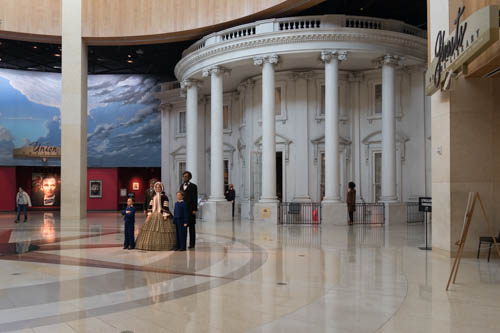
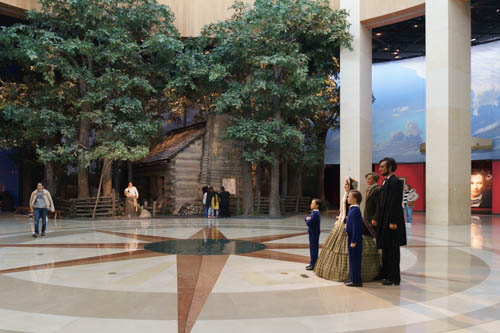
When I saw Abe and his family standing in the center of the plaza posing with visitors, I knew this museum didn’t follow the standard National Archives and Records Administration (NARRA) specifications for presidential libraries. In fact, the museum is operated by an agency of the State of Illinois and the Lincoln Library also contains the Illinois State historical collections.

The Lincoln family welcomes visitors in the plaza

The museum opened on April 19, 2005, generating around $1 million in its first six months with a steady increase in visitation each year. The museum also sparked debate over the design of the exhibits and how history is presented, which did not follow the standard used by most museums at the time.

The multi-media exhibits with a Disneyesque feel are what may have caused both the criticism and the museum’s popularity, especially after Steven Spielberg’s movie Lincoln premiered on October 8, 2012, at the New York Film Festival.

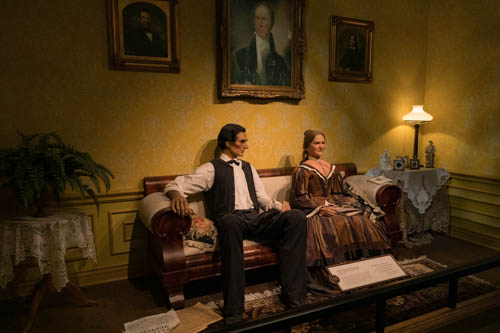
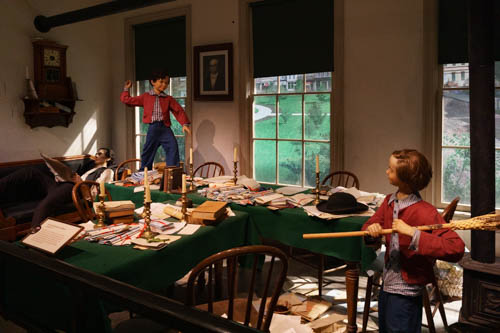
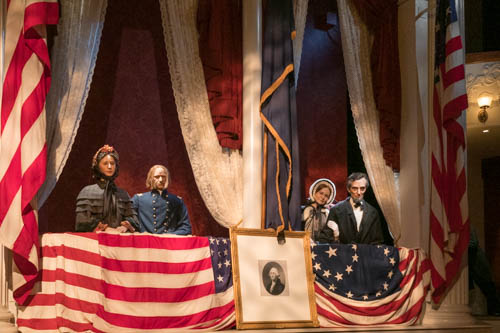
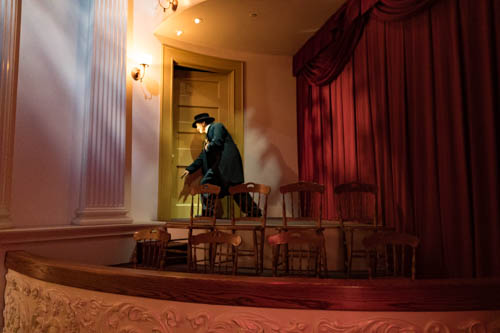
The set decorations and expressions on the mannequins dressed in 1800s attire, the hologram theater presentation, and the depiction of the assassination were like entering Abe Land at a Disney Amusement Park.

We started our tour at Journey 1 where we found exhibits and dioramas of Abe’s boyhood in a Kentucky cabin and ended with his campaign for president in 1860.

Abe in the background next to a cabin
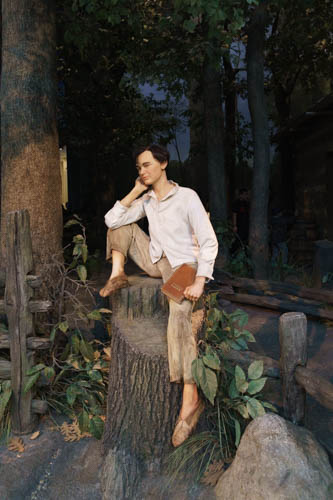
Abe the thinker and reader
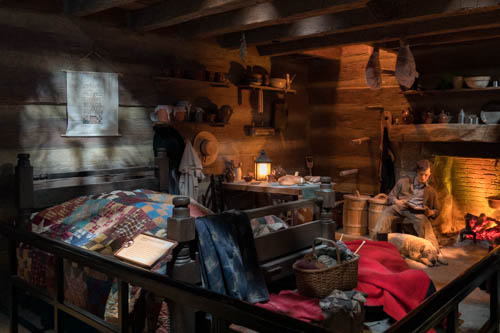
Cozy cabin
Abe and Mary at home
Imagine these two rambunctious kids in the room while working in the office

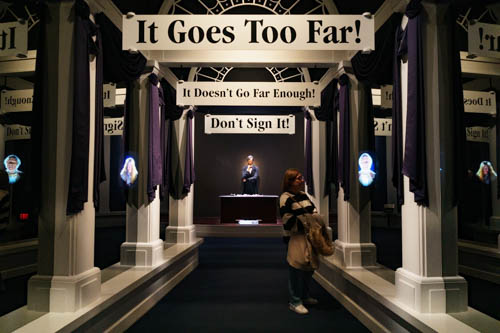
Journey 2 covers his presidency, the Civil War period, his and the country’s struggle with slavery, personal loss, and his assassination on April 14, 1865.

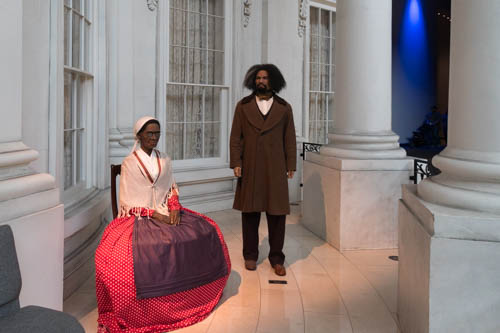
Frederick Douglass visited Lincoln’s White House in 1863 and Sojourner Truth visited in 1864
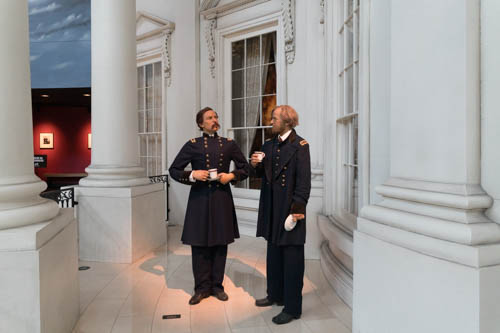
Union officers confer
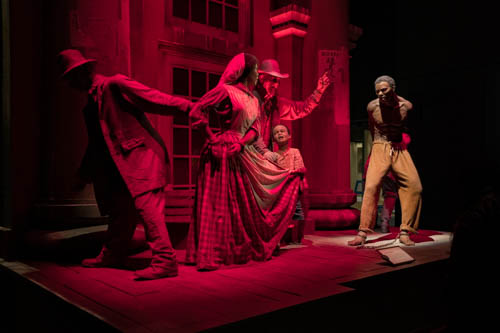
Family separated at auction
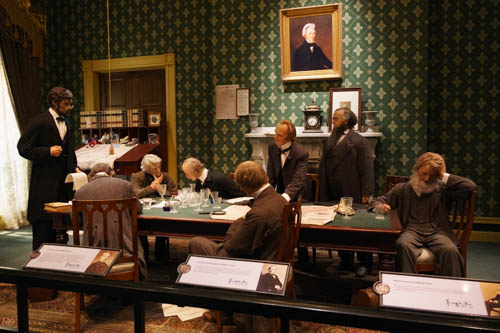
Cabinet debate over Emancipation Proclamation

Other exhibits included the Treasures Gallery where artifacts from President Lincoln, his family, and the Civil War were displayed.

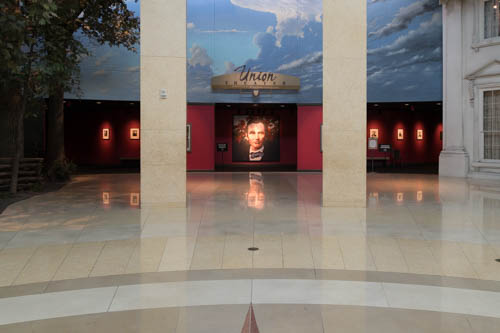
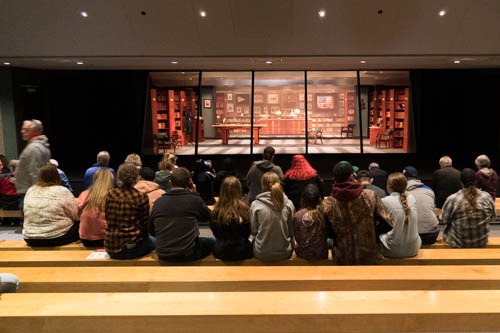
At the Union Theater, we watched Lincoln’s Eyes, a look at Lincoln’s life and legacy.

Lincoln’s Eyes played in the Union Theater
One fateful night at the theater
One angry actor gone wrong

In the Holavision ® Theater, we watched a hologram presentation about research libraries and their importance to society.

Various temporary exhibits are also included throughout the year.

Lincoln Home National Historic Site

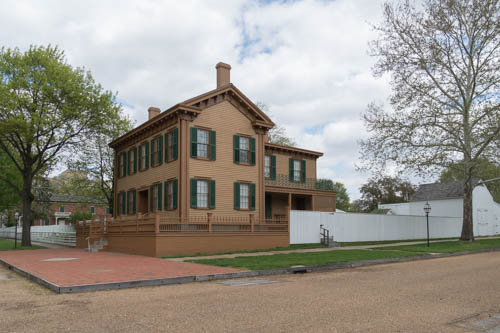
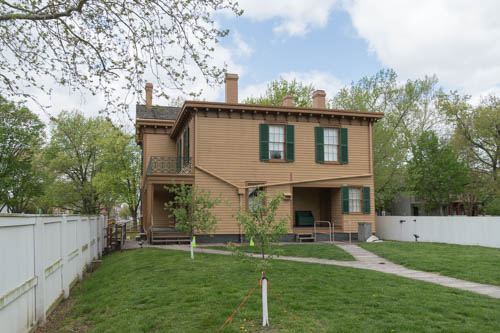
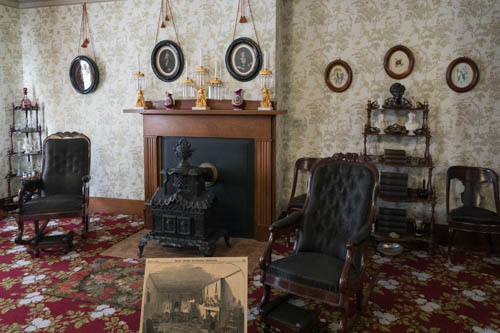
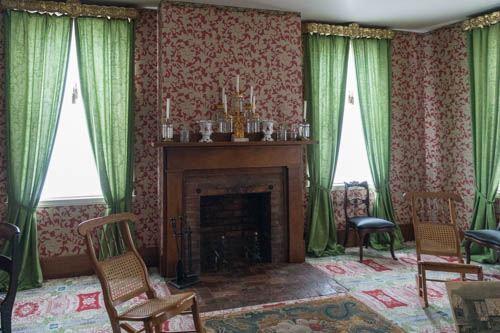
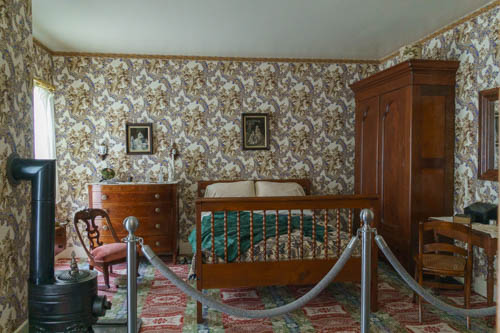
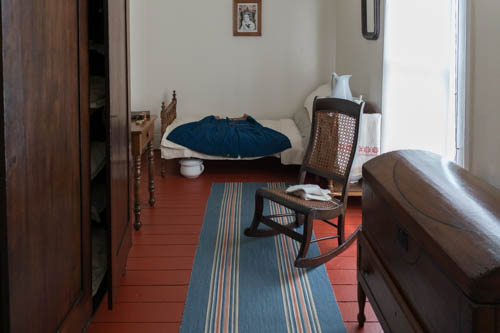
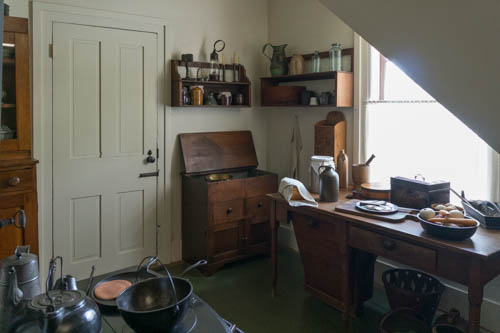
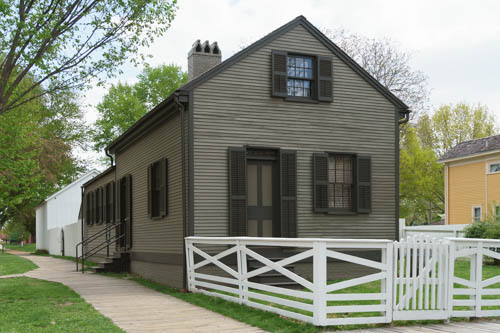
Within walking distance of the museum is the National Historic Site of Lincoln’s home and neighborhood, operated by the National Park Service. Take a tour in person, or click the link on the NPS website for a virtual tour of the home. Here are a few photos I took.

Side and front of Lincoln home
Rear of Lincoln home
Parlor 1
Parlor 2
Mary’s bedroom
Maid’s quarters
Kitchen

Then walk the neighborhood as Abe or Mary might have and learn about some of the neighbors who lived there. Some of the homes are open with exhibits inside.

A few lots down the street from the Lincoln home is an empty lot, which is part of the National Park Service National Underground Railroad Network to Freedom. It was where Jameson Jenkins, a free person of color, lived. It is documented that Mr. Jenkins successfully transported escaped slaves north to Bloomington, Illinois, on January 16, 1850.

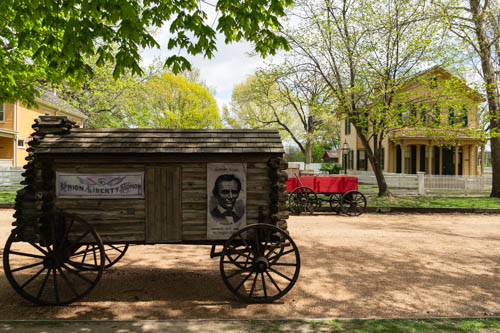
Political poster
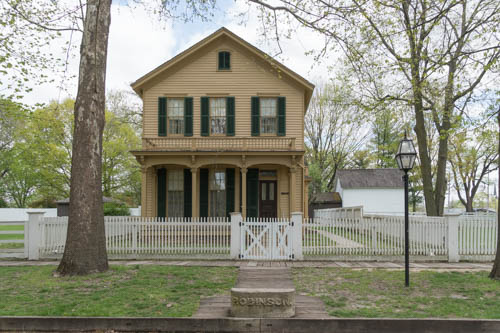
Note the step for accessing a horse drawn carriage in front of the Robinson house

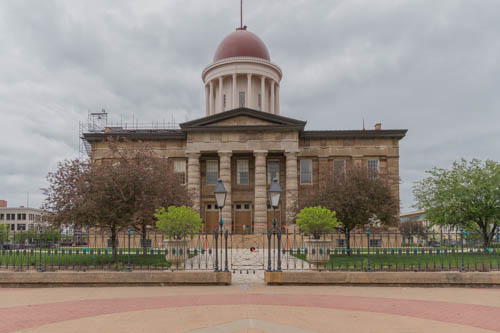
Old Illinois State Capitol Building

Across the street from the Lincoln Museum is the Old State Capitol Historic Site. The Greek Revival style building was constructed during 1837 and 1840 and served as the state house from 1840 to 1876. Unfortunately, the historic site was, and still is, undergoing a $15 million renovation project.

Old Illinois State Capitol Building

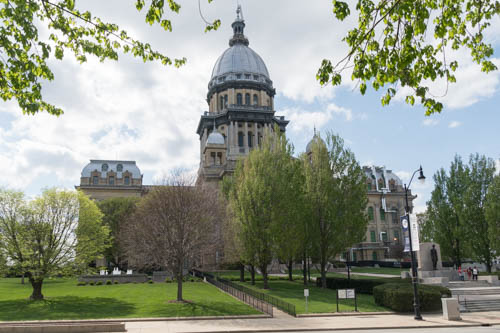
Current Illinois State Capitol Building

We only had time to take photos outside of the current state capitol building during our visit. Guided tours are available to visit the building which was constructed over twenty years beginning 1868 at a total cost of $4.5 million.

Current State Capitol Building
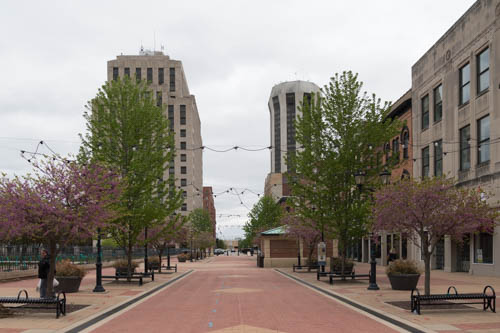
Quiet street scene on this cold and rainy day

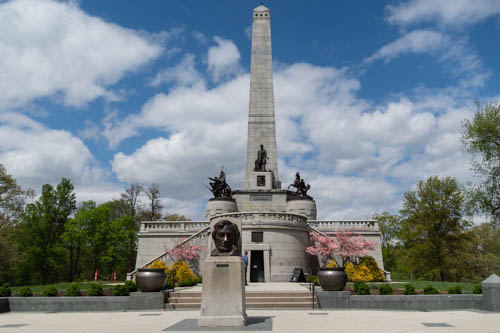
Lincoln Tomb at Oak Ridge Cemetery in Springfield

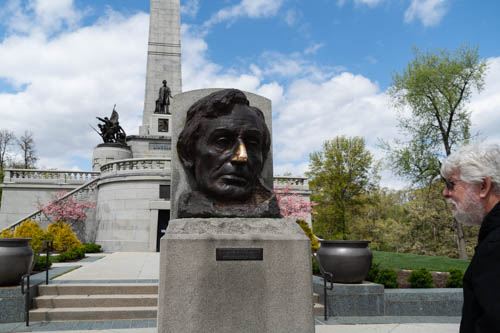
Mount Rushmore’s sculptor, Gutzon Borglum, sculpted the larger-than-life bust of Lincoln on the plaza outside of the tomb. In his hand is a copy of the Emancipation Proclamation allowing African-American soldiers in the Union Army.

The obelisk, an Ancient Egyptian symbol for leadership, is a fitting tribute to a man who is honored and respected by so many people.

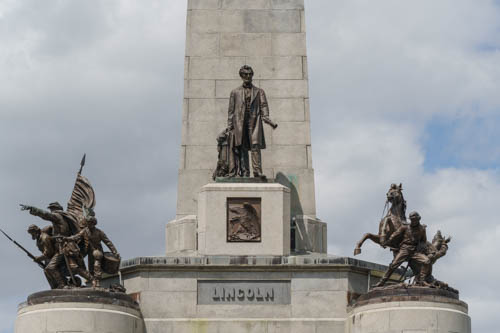
The bronze statues on each of the four corners honor soldiers during the Civil War Infantry, Artillery, Cavalry, and Navy. A chain of unbroken links lists the initials of each state in the union.

Notice how shiny the nose is on the bust below. Some people believe rubbing Abe’s nose will bring good luck. And yes. Of course, I rubbed his nose, followed by squirts of hand sanitizer. I could not resist. Who doesn’t want a bit of luck in their lives?

Rub my nose for luck

Inside the tomb are several bronze statues of Lincoln depicting the various stages and roles of Lincoln during his professional life. The hallways conclude at the burial chamber, the final resting place of Abraham Lincoln, Mary, and three of their four sons.

For people unable to visit the tomb, there is a YouTube virtual tour online here.

A close up Pink flowering Dogwood tree in bloom at Abe’s gravesite

Pink flowering Dogwoods decorate either side of Abraham Lincoln’s tomb
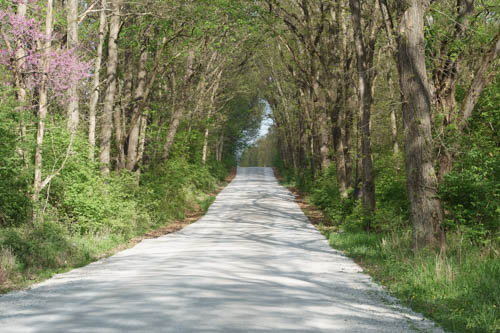
Love these tree tunnel roads

After our visit, I came to the conclusion that I liked how the museum presented the information. It made history come alive, especially the exhibit of the children playing in Abe’s office, the assassination portrayal, and the slave auction scene. It also made history less academic and accessible to more people through the multi-media stories told.

Next Up: Linn Creek near Lake of the Ozarks

Safe Travels

Spring 2023 Adventure Episode 9: Kansas City, Missouri, Continued

More About Harry Truman

Once we finished touring the Presidential Library, we drove about a mile to the Harry S. Truman National Historic Site. We wanted to see the house where Harry and Bess met and lived most of their married lives.

With our free first-come, first-served tickets in hand, we walked to the house a few blocks away to meet the docent. Photos of the interior were not allowed, but the NPS website has a virtual tour of 219 North Delaware, Independence, Missouri, for those who are curious.

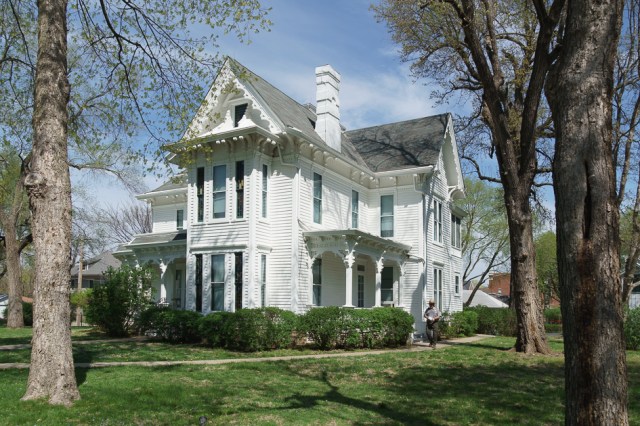
Front view of the Wallace/Truman Home

Bess Wallace Truman’s maternal grandfather built the Queen Anne-style house. Modest and cozy inside, touring the house was like visiting my grandparents’ homes.

Harry and Bess held their wedding reception at the house in 1919. When Harry moved in with Bess, he also shared the home with his mother-in-law and grandmother-in-law. Bess’s two brothers, who built small homes on the property, rounded out the close-knit family.

During Harry’s two terms as president, the house served as the Summer White House and hosted the couple when they were home for the holidays.

Side view of the Wallace/Truman Home

It wasn’t until 1952, after Bess’s mother died, that the Trumans bought the home, modernized it and made it theirs until their deaths.

One story the docent told us was that the couple often found plants and other items missing from the yard. A short fence helped keep people off the property. We also learned that a lattice structure with a climbing vine gave the couple privacy from gawkers looking through the windows as Harry and Bess ate their meals.

How fortunate we are that Bess bequeathed the property, including furniture and other artifacts, to the United States of America in December 1982. Tourists get to learn about the simple life Bess and Harry created for themselves in Independence, Missouri, after his last term as president.

The Noland House at 216 North Delaware.

While Harry may have adopted the Wallace family as his own, he still had family nearby. His favorite aunt, Margaret Ellen Truman Noland (Harry’s father’s sister), and cousin, Mary Ethel Noland, lived across the street from the Wallace family.

The house was open to tour during our visit. Acquired by the National Park Service in 1991, it became part of the Harry S. Truman Historical Site after extensive renovation, rebuilding, and modernization.

The small rooms contained artifacts and posters that detailed the stories and history of the objects displayed. I wondered where Harry must have slept when he came to visit with the Noland clan and Bess. I imagine him wrapped up in a brown wool blanket on the parlor floor during the winter and sprawled out on the porch during hot summer nights.

Also included within the national historical site is the Truman Farm Home in Grandview, Missouri. Perhaps we will visit the 5.25-acre remnant of the family’s former 600-acre farm during a future visit to Missouri. And if we ever make it to Key West, we’ll need to stop in at the Truman Little White House, the only presidential museum in Florida.

Best BBQ in the State?

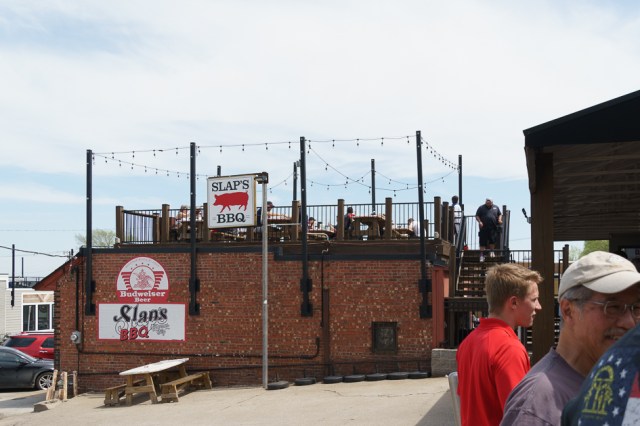
Someone had told us, “If you’re in Kansas City, eat at Slap’s for the best BBQ in the state.” So we made the 12-mile drive from Independence to the westside of Kansas City. The line told us the wait was worth it, and we agreed. But the best BBQ? We ate BBQ five times or more while in Missouri and I’d be hard pressed to choose which was the best. All of them were delicious in their own way.

Go to Slap’s for great tasting BBQ

Lexington, Missouri

On April 15, 2023, we met up with my cousin Jill and her granddaughter Scarlett in Lexington. Woo-hoo! A visit with Jill after all these years, and maybe a tour of a Civil War battlefield, and a quaint little town on the Missouri River.

After a big, long hug from Jill, she and Scarlett drove us around town while we gazed upon the beautiful historic homes, majestic trees, and the quaint downtown area where newly opened stores promised a resurgence.

Loving the porch on this corner house

In the photo below, the red brick, white trim, arched windows with black shutters impressed me with its character. Then I walked around the corner for another perspective.

What a surprise to find a much larger home from what I originally thought. Which door was the official entrance?

Battle of Lexington State Historic Site

To stretch our legs, we pulled into the Battle of Lexington State Historic Site. The Oliver Anderson House, once known as “the best-arranged dwelling house west of St. Louis,” was at the center of a bloody 3-day Civil War battle in 1861.

The visitor center’s displays depict the surrounding battlefield and back-and-forth control between the Federals and the Southerners.

Lexington’s location on the Missouri River served as a valuable commerce artery and the Union wasted no time in taking control. Col. James Mulligan commanded 3,500 Union soldiers of the Illinois Irish Brigade, operating from the Masonic College, and using the Oliver Anderson House as a hospital.

View of the Oliver Anderson House from the visitor center

When Mulligan caught wind that Maj. Gen. Sterling Price was marching toward Lexington with 15,000 Missouri State Guard troops to wrest control of Lexington, Mulligan called for reinforcements and had his troops prepare for battle. They built a maze of pits and double-row trenches to keep the enemy at bay.

When Price arrived in town on September 12, 1861, he demanded that Mulligan surrender. Confident reinforcements would soon arrive, Mulligan refused. The fighting began in earnest on September 18, 1861. On the second day, Price’s troops surrounded Mulligan’s cutting off supplies and freshwater. The reinforcements never arrived to support Mulligan so on the third day, he had no choice but to surrender.

Reminders of the battle dot the brick exterior with bullet holes

Price’s victory was short-lived when, two weeks later, the Union army reclaimed Lexington, forcing the Southern troops to retreat to southwest Missouri.

Around back is the main entrance. A more inviting view.

The tours had finished by the time we arrived, so Scarlett and I went out to at least see the building up close and peek in the windows. The windows didn’t give us much to look at, but we saw evidence of the battle where bullets penetrated the brick 162 years ago.

Miss Scarlett models at the top of the steps

After the tour of Lexington, Jill and her partner Al gave us a grand tour of their basement. Collections of antiques spanning all shapes, sizes, and types filled every nook and cranny and included wine bottles, Asian artifacts, jukeboxes, a piano, and on and on. I could have spent all day browsing through the well-organized aisles. But alas, it was time to go.

My cousin Jill and her partner Al

Family History

Two days later, we stopped by Jill’s California, Missouri, house to pick up a set of family photos. I had seen photos like these in antique stores before and never knew that my family’s history had likewise been documented. I’m honored Jill chose me to keep them safe for future generations.
The smaller fancy-framed photo is of my grandfather, William Frank Winebrenner, and his older brother, Virgil G. Winebrenner.

The small black framed photo of a family of nine is of Jill’s and my great-great-grandfather, William Franklin Winebrenner, and great-great-grandmother, Cordelia Stinson Winebrenner, my great-grandfather William Golder Winebrenner, and Jill’s great-grandfather Oren Elmer Winebrenner (both standing on the right side), and their siblings.

They were a handsome group of men with their full mustaches and dark hair. The brothers reminded me of a photo I’ve seen of Wyatt Earp and his brothers. Or maybe I’m thinking of Kurt Russell in the movie Tombstone. Either way, I think the men represent well the fashion of their days.

I’m not sure whose farm is represented in the larger framed photo and Jill didn’t remember. But I like the blue sky with puffy clouds, the buildings, and the wide open space of the field.

Up next: We head to St. Louis, ride the St. Louis Arch tram, tour the Ulysses S. Grant National Historic Site, and visit with our niece and her family.

Safe Travels