On July 3, 2024, we drove to Bainbridge Island to see the Japanese Exclusion Memorial. We have visited a few of the War Relocation Centers in the past, yet I had never heard of an exclusion memorial, so I wanted to visit.
Bainbridge Island Japanese American Exclusion Memorial, a Unit of Minidoka National Historic Site
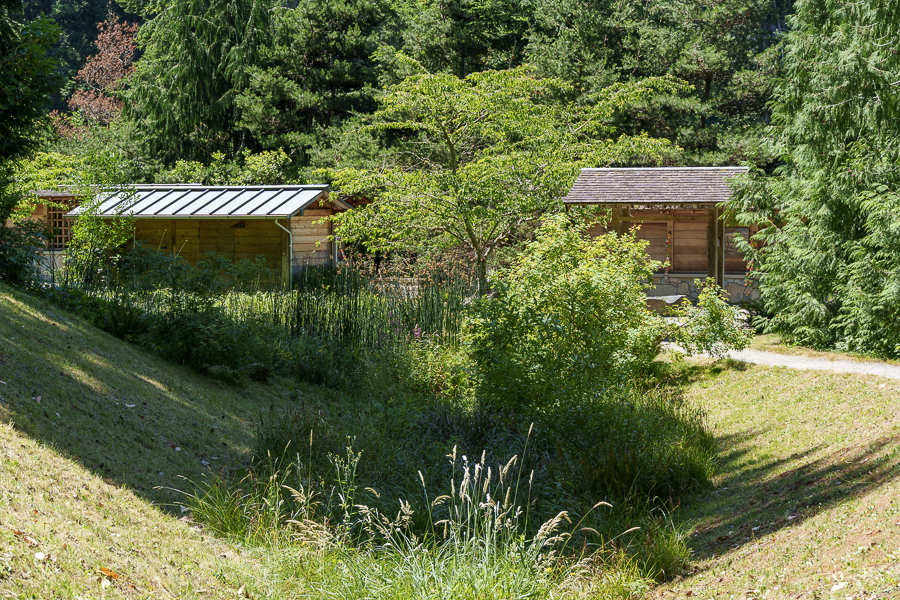
We accessed the memorial through the Pritchard Park entrance. Visitors will find a small temporary visitor center, and a shaded trail that leads to the “story wall” and dock area. The landscape provides a quiet place to reflect on the shameful treatment of U.S. Citizens.
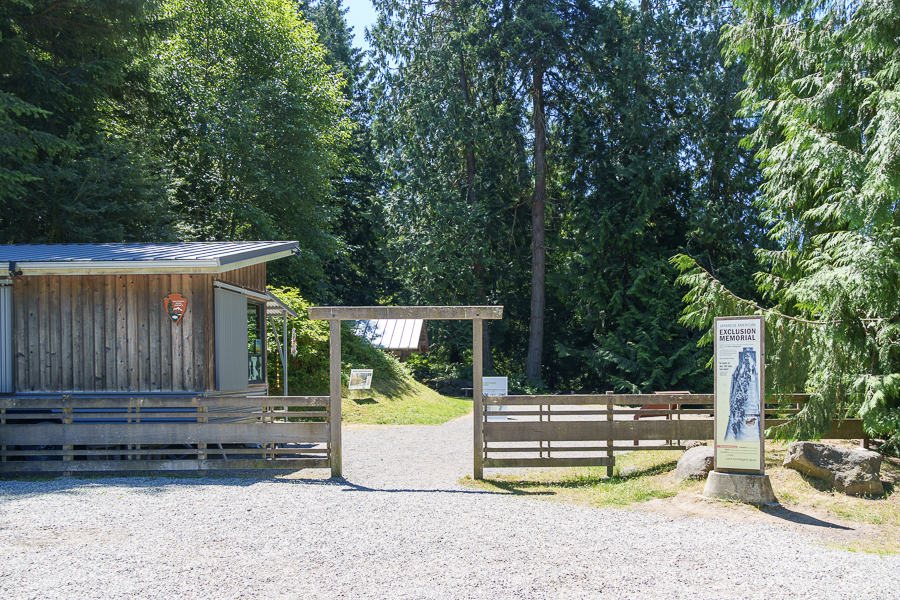

This memorial commemorates the first Japanese and Japanese Americans forced to leave the island and enter a war relocation center after the bombing at Pearl Habor. I use the term “war relocation center” here because the National Park Service used the term during World War II and still does. Other terms used include internment or concentration camps.
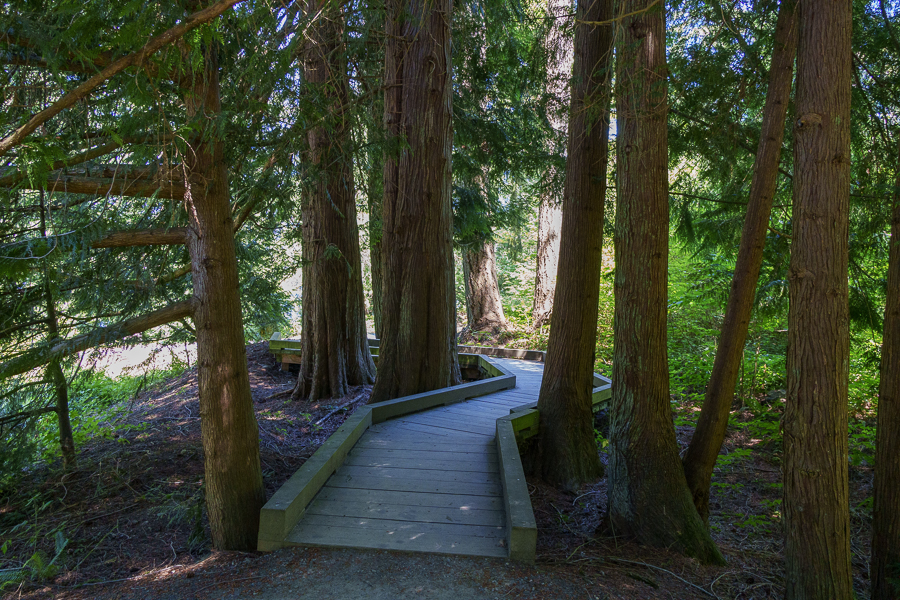

The “story wall” is constructed from old-growth cedar, granite, and basalt. It marks the path where the first 227 exiled Japanese and Japanese Americans walked toward Eagledale Dock. With the meager possessions they could carry, they boarded the Keholoken Ferry under the watchful eyes of armed guards and began a journey to where? They did not know.
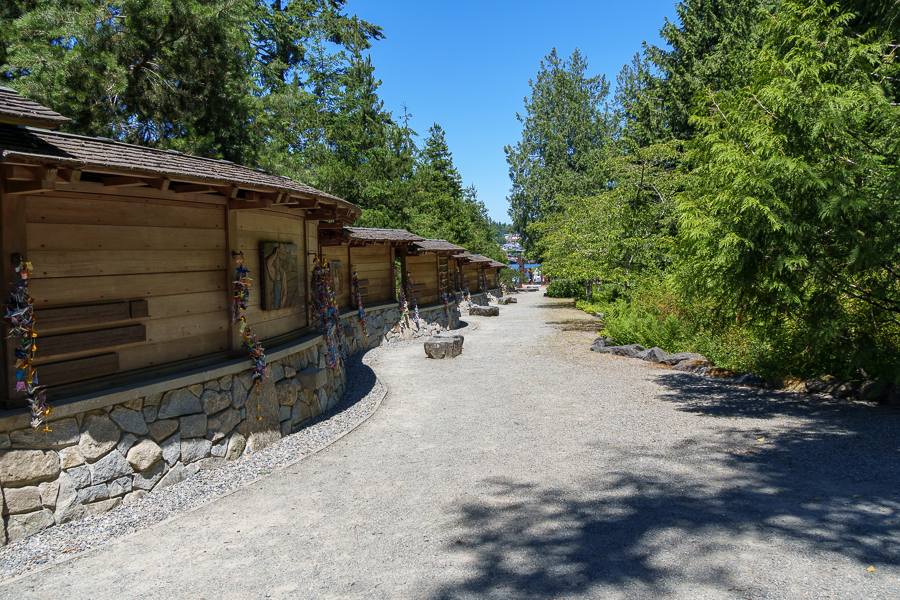
The military first took them to Manzanar Relocation Center in California. Later they were taken to Minidoka in Idaho, where they remained until the war’s end. More than half of the 227 people returned to Bainbridge Island.

Why was Bainbridge Island selected as the first place on the West Coast for the removal of Japanese Americans? Apparently, the Army considered them a risk because they were so close to the base. They had only six days to prepare to leave. Not much time when you consider they had to leave their homes, farms, and businesses behind and their children would have to leave school.
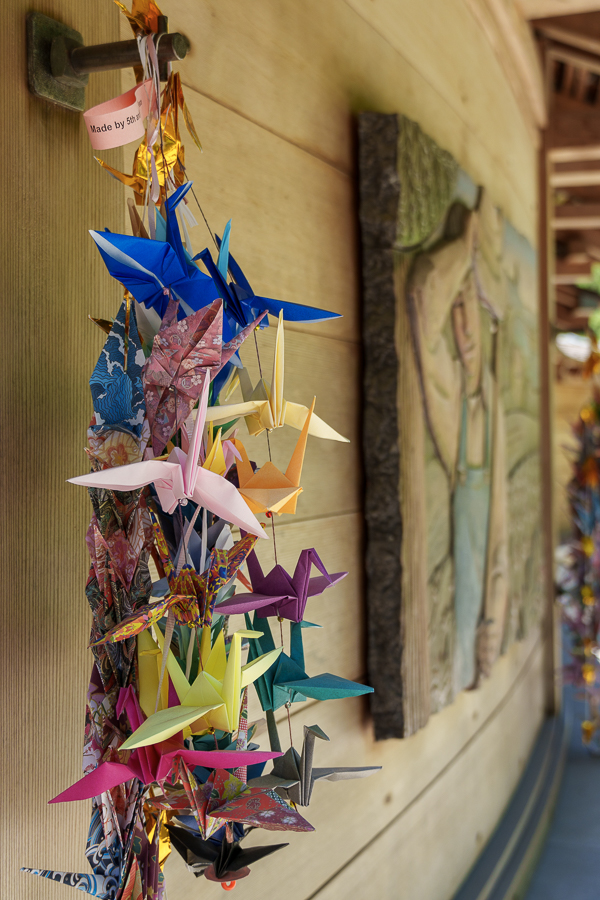


The Bainbridge Island Japanese American Exclusion Memorial Association is raising funds for a permanent visitor center project that will include indoor and outdoor space, an amphitheater, office space, plus exhibits and displays. As of June 2025, they have received $4.38 million in donations toward their goal of $4.5 million. However, threatened elimination of a promised federal grant may require them to raise more.
In 1987, the land occupied by the park and memorial was designated as a top priority Superfund. Once cleared of toxic waste, the community created a park and the memorial. I admire the community for honoring the people subjected to such cruel treatment with this memorial. It stands to recognize those who suffered—physically, financially, emotionally—and to spread their message to the world:
Nidoto Nai Yoni, Let it not happen again.
Bainbridge Island History Museum
Bainbridge Island History Museum in the Winslow neighborhood, or downtown area, of the City of Bainbridge Island, was our next stop. The museum celebrates the different cultural communities who make Bainbridge Island their home. Early settlers include the Suquamish. They continue to harvest traditional foods, retain their fishing rights, and are active in protecting the waters of Puget Sound.
The Filipino and Indipino Communities also have exhibits. Indipino refers to ancestors of the 36 Indigenous women from Canadian, Alaskan, and Washington State tribes who migrated to the island during the 1930s and 1940s. They came to pick berries for Japanese American farmers and eventually married Filipino immigrants. The women left behind their heritage and primarily adopted the Filipino culture until the 1980s when adult Indipinos began to embrace their indigenous way of life.

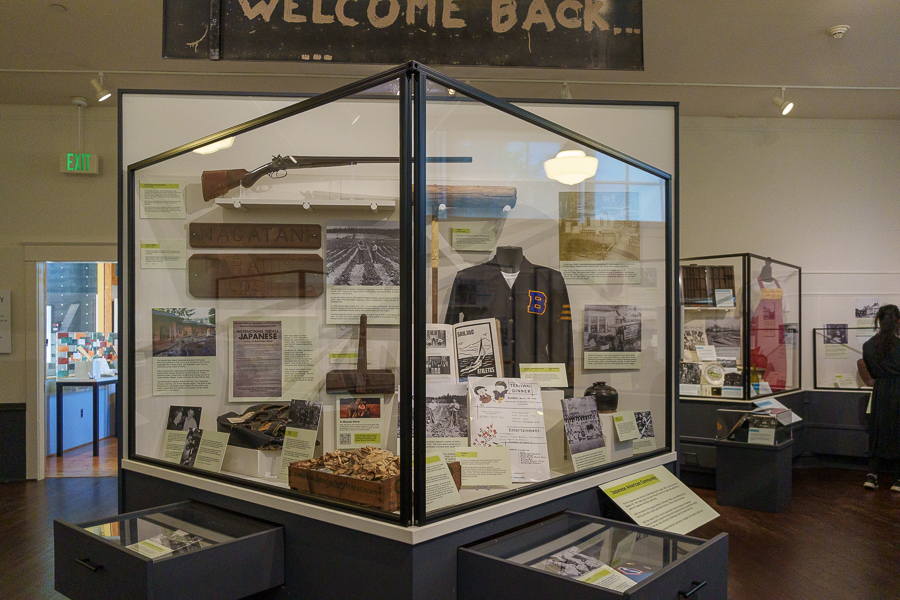
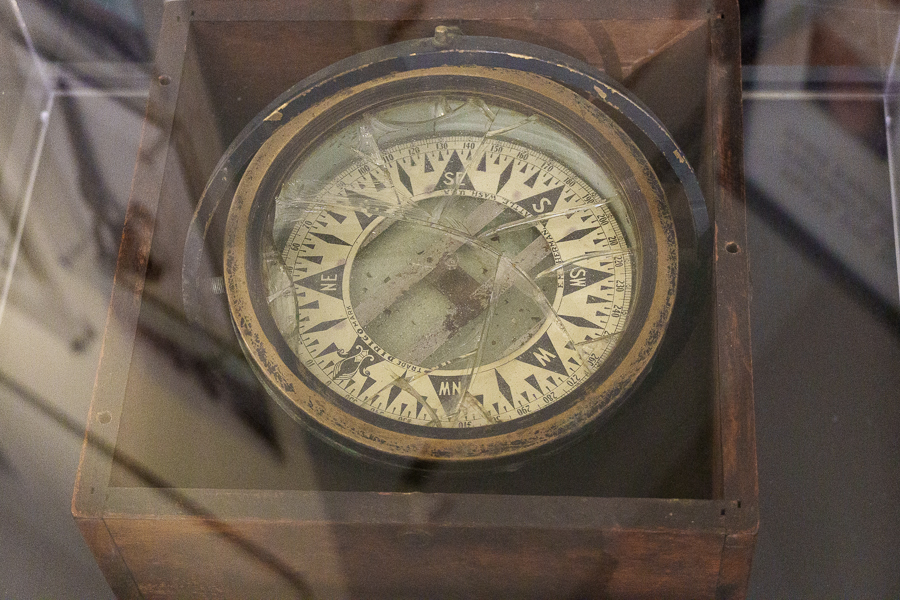
Japanese American Community display shows the community’s contribution to the island over the years.
In 1857, Douglas Fir and Western Red cedar comprised nearly 80% of the land, with Western hemlock and hardwoods covering the rest. By 1900 very few trees remained.
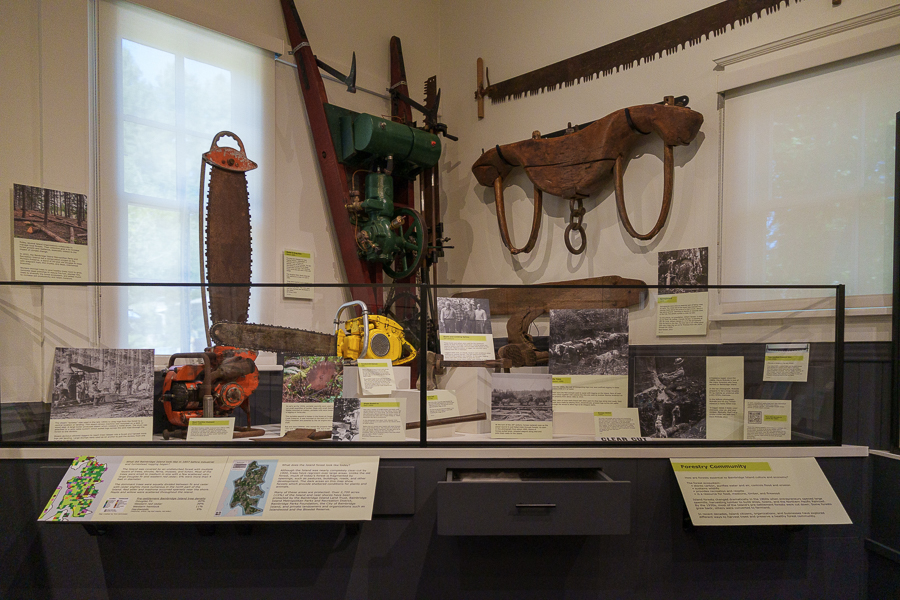
Today, over 2,700 acres, or 15% of the island, have recovered through the efforts of a land trust, the parks, and recreation district, the city, landowners, and other organizations. They protect and preserve these valuable resources.
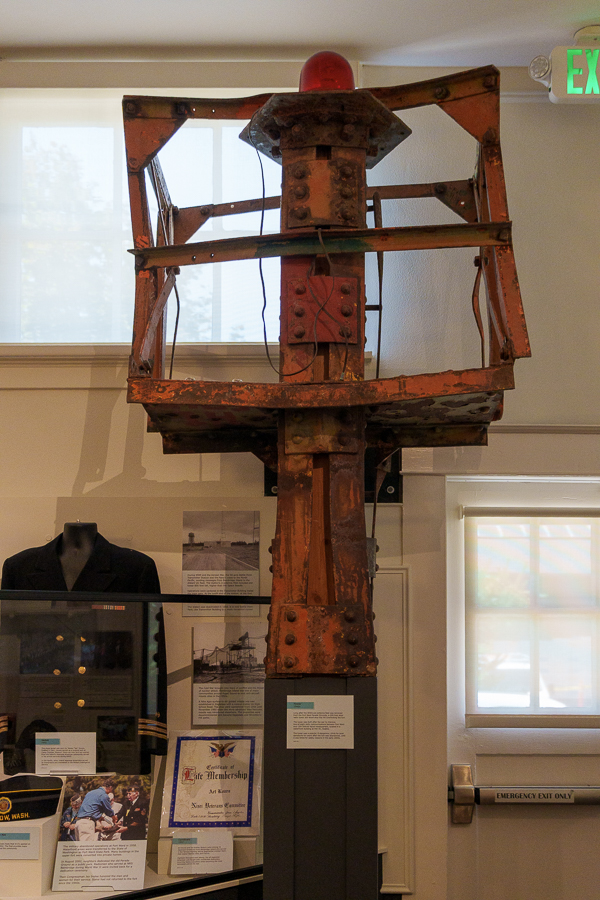
After World War II, the antenna tower in the photo below was built to improve line-of-sight radio communications between Fort Ward and the 13th District Naval Headquarters in a waterfront building at Pier 91 in Seattle. The navy decommissioned the fort in 1958 and sold it to Washington State Parks in 1960. For decades, the tower enticed thrill seekers to climb to the top, and was removed in the early 2000s for “safety” reasons. Hmm, it didn’t pose a danger for all those 40-plus years?
The popular sport of Pickleball began as a challenge for Joel Pritchard, Bill Bell, Barney McCallum, and their families one summer day in 1965 on Bainbridge Island. Boredom and the lack of a badminton shuttlecock motivated the group to create the new game. Over the summer, through trial and error and a series of iterations, they lowered the badminton net, tried different balls and paddles, and designed the court and rules. Pritchard, along with friends, formed Pickle Ball, Inc. in 1968 to manufacture wooden paddles and kits and promote the sport.

Today Pickleball is so popular local, collegiate, and professional teams have formed. The State of Washington named pickleball as the official state sport in 2022. The Sports and Fitness Industry Association named pickleball as the fastest growing sport in the United States four years in a row from 2021 through 2024. After hearing of the increase in pickleball injuries, Jon and I have not tried the sport, but we know a few people who enjoy playing.
Doc’s Marina Grill Bainbridge Island
We needed nourishment when we finished with the museum, so we found a spot near the water. We loved Doc’s clam chowder and ate everything we ordered, but we have to rate the blackened salmon sandwich and rock fish blackened tacos as okay. Maybe we just aren’t fans of blackened food.
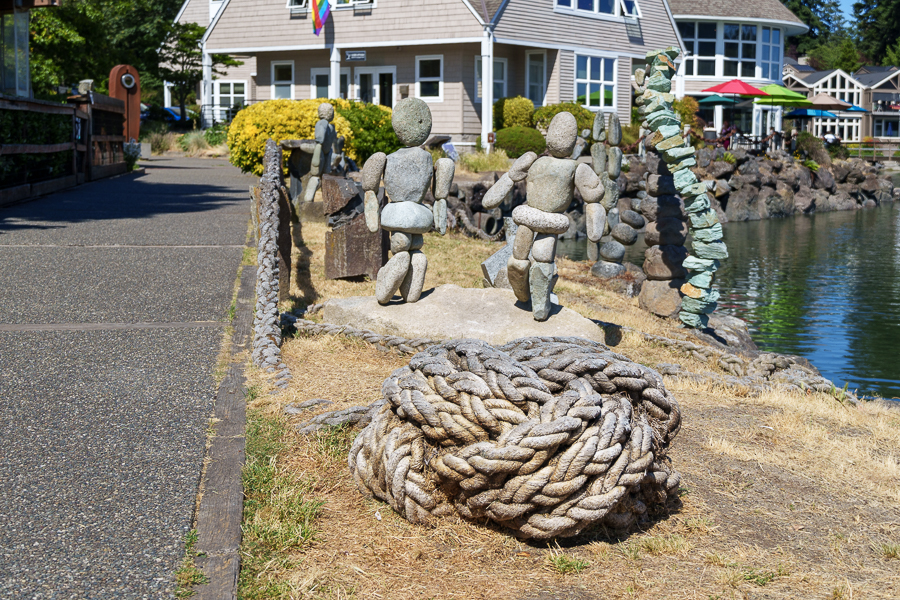

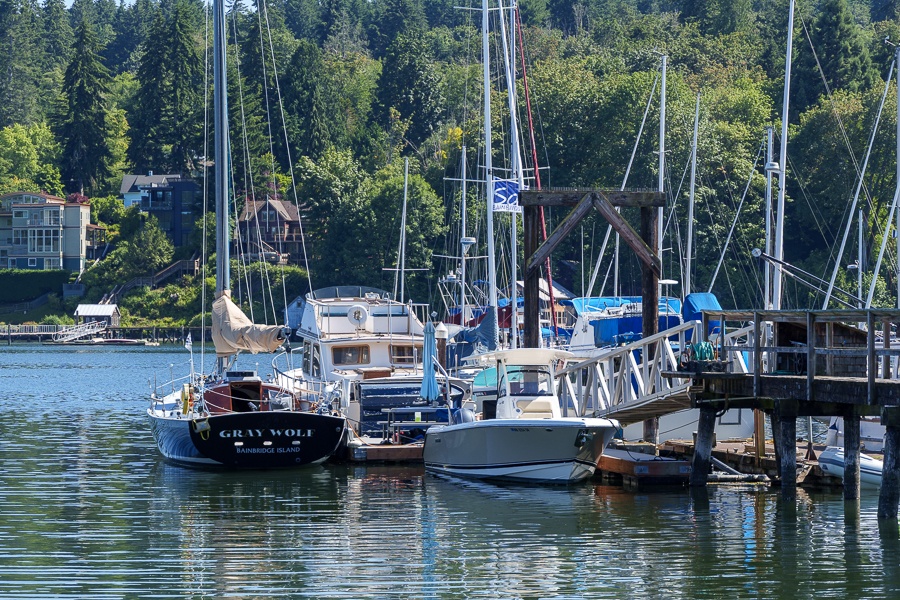
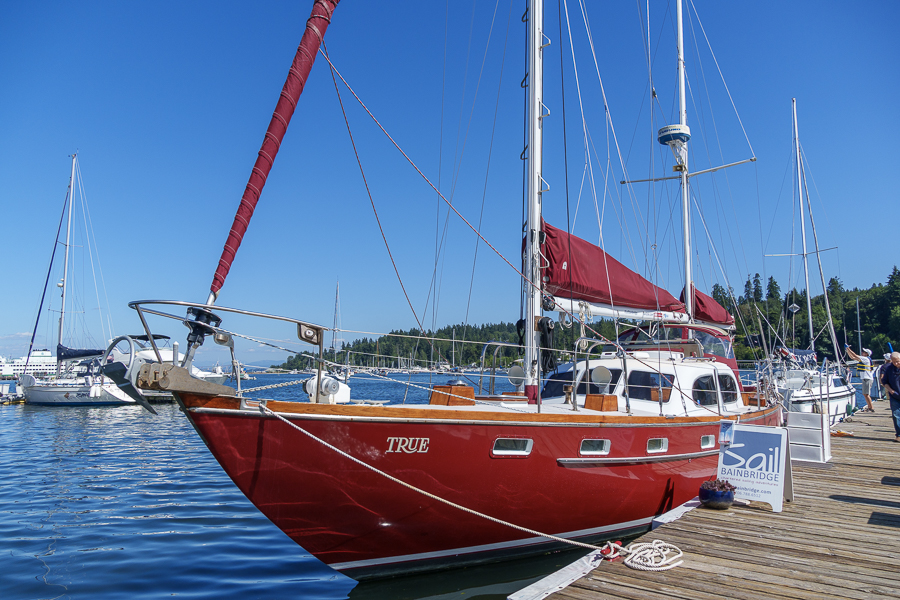
After our meal, we walked around the marina, gawking at the boats, enjoying the sunshine, and admiring the artwork.



Camp Yeomot
Unemployed residents, using local materials, built the cabin as part of a Boy Scout Camp in 1935 through Roosevelt’s WPA program. In 1942, the US Army 202nd Coast Artillery’s Bainbridge Island housed their headquarters and added a bathhouse, which is now a classroom.
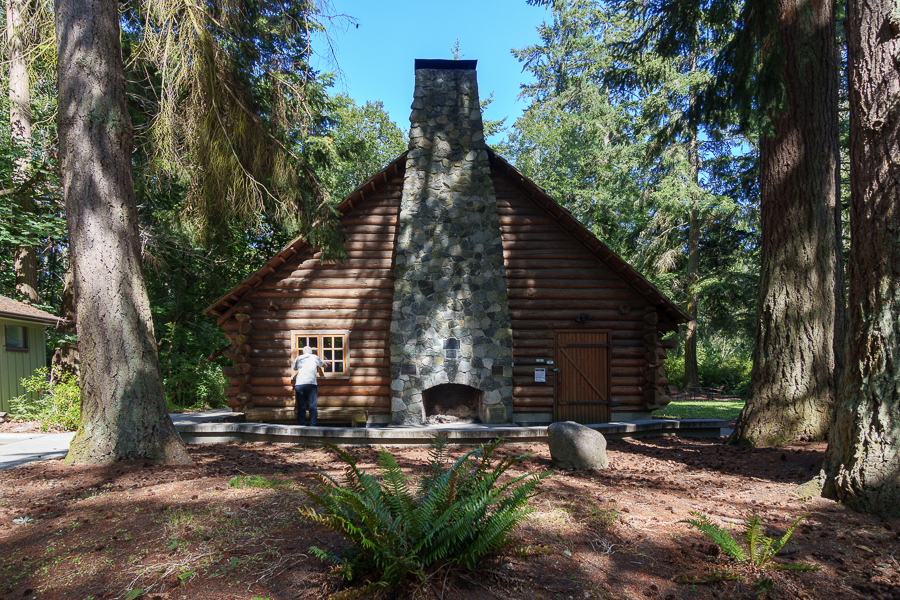
Ownership changed to Bainbridge Island Metro Park and Recreation District in 1987 and renamed Camp Yeomalt Park in 2000. When the need for restoration was announced, an anonymous donor came forth to begin the project. Restoration using authentic materials and methods earned allowed the cabin to be included on the National Register of Historic Places in 2005.
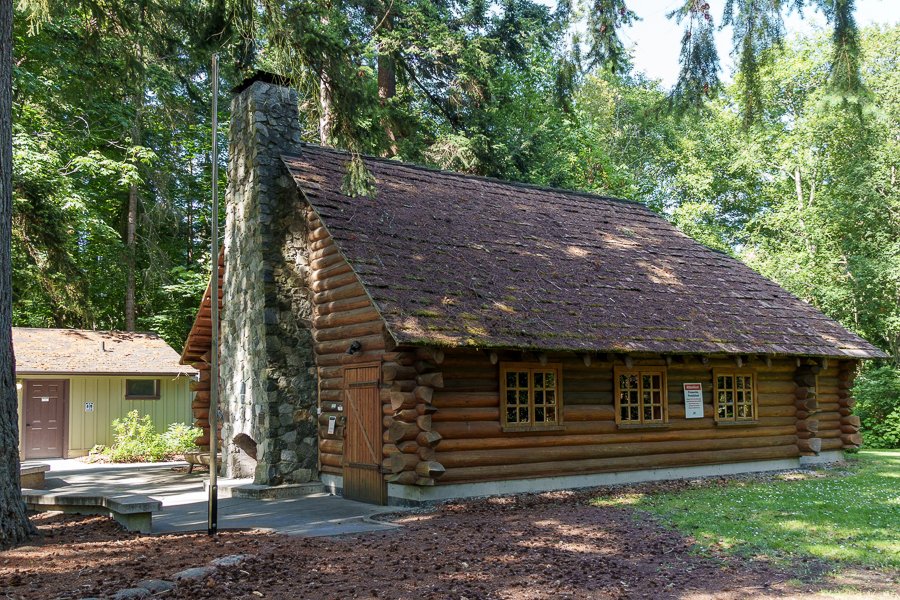

Today the park district preserves the cabin and uses it for programs, youth and community activities, education, performances, and classes.
Bainbridge Island Library Haiku Gardens
The “Haiku no Niwa” or Haiku Garden at the Bainbridge Library was the perfect place to end our tour on the island. From the moment I entered the garden, the rush of going here and there all day melted away.

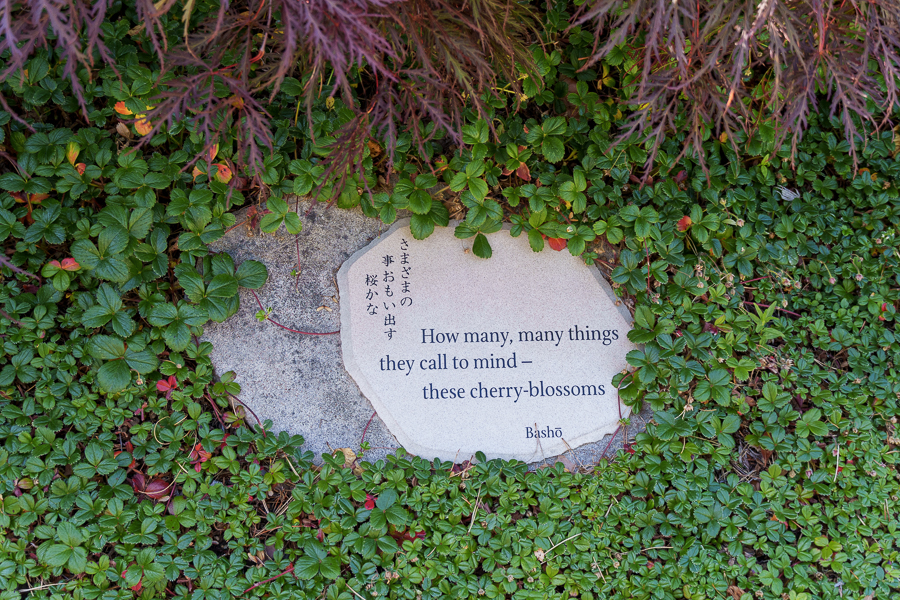
We followed a pathway on one side of the library that wound through verdant groundcover, shrubs, and trees, and led to a pond. Water flowed over rocks until cascading into the pond where koi lounged in the shady corners.

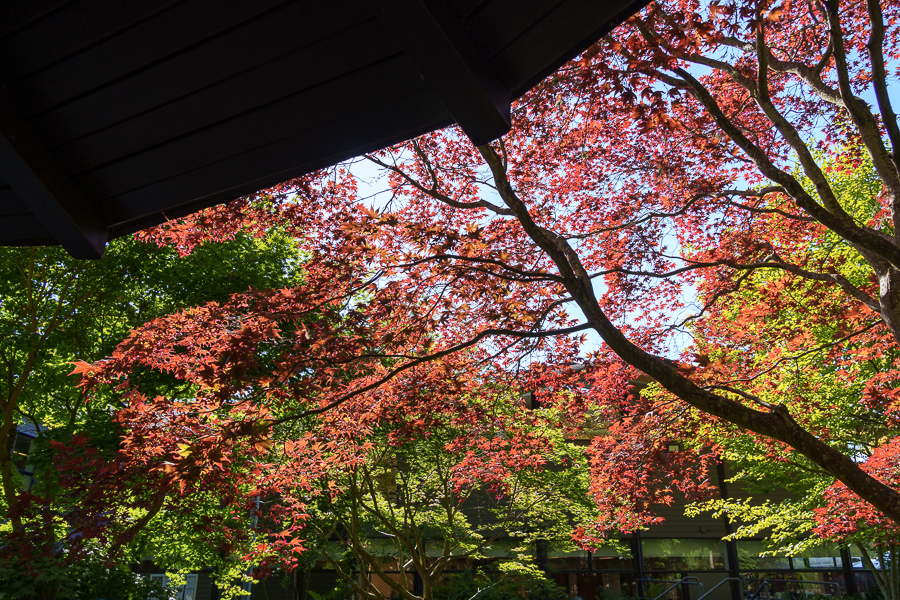
Nestled within the ground cover were concrete plaques on which haikus were written in both Japanese characters and English words. The Japanese maples furnished welcome shade and smeared splashes of red with varying hues, ranging from deep burgundy to burnt orange.
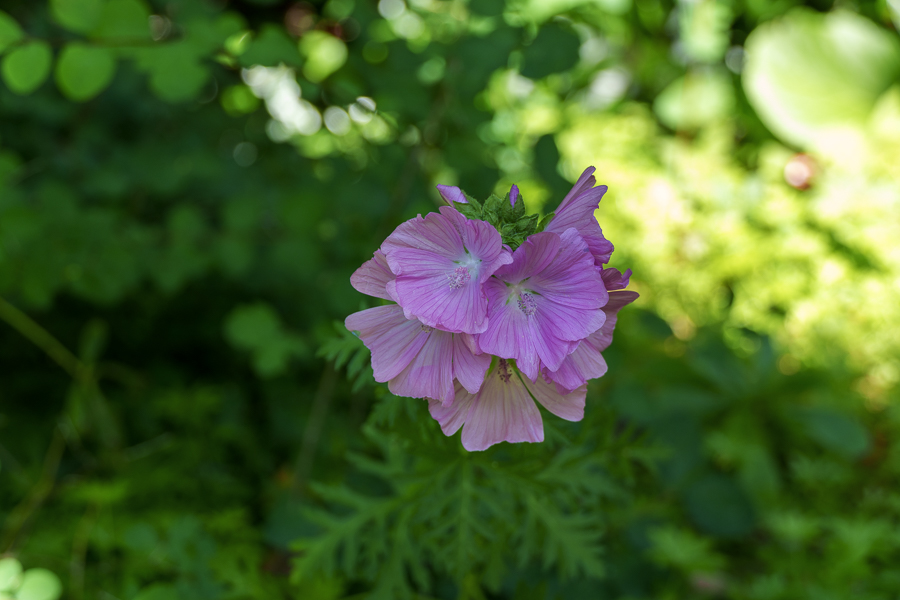
We had spent a full day wandering around the island and it was time to head “back to the barn,” as Jon might say. I was thankful for the respite in the garden. The haikus and the beauty of the place put me in a reflective frame of mind for the drive back to our trailer to settle in for the night.
Up Next: Community garden, Rosedale Gardens, and Riviera Sunset Cruise
Safe Travels
 The Traveling Todds
Thanks for the photographic tour and for your insightful essay.
LikeLiked by 1 person
You’re welcome. I appreciate you stopping by to take a gander.
LikeLiked by 1 person
Great post and photos. An interesting tidbit regarding pickleball. I didn’t realize it has been around for so long.
LikeLiked by 1 person
I had thought it was a newer invention too. It sure has taken off in past ten years.
LikeLiked by 1 person
One day, maybe I’ll give it a try.
LikeLiked by 1 person