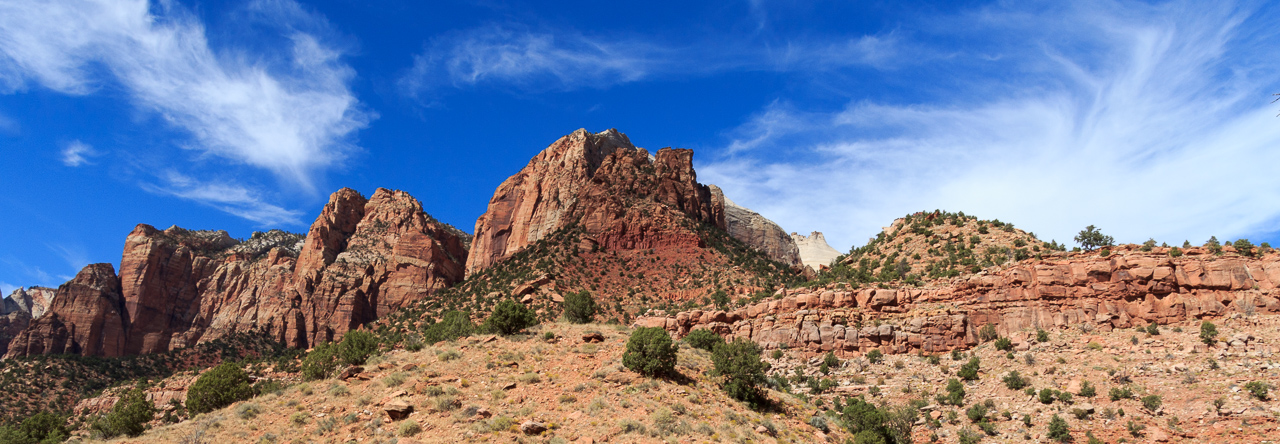
Geese and Ducks on a Pond
By Friday, October 13, 2023, I had become accustomed to the serenade of the geese and ducks waddling on land and swimming in the pond. The fawn and white runner ducks walked around the pond like penguins. Muscovy ducks, with their black splotches on white fat bodies, joined the runners to poke in the grass around our trailer and along the pond’s edge.
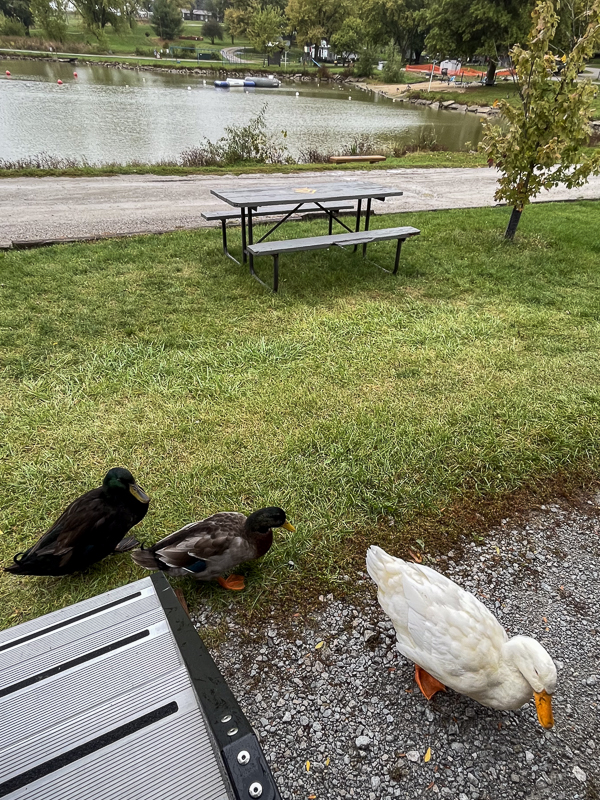
While the ducks ate their meal, a group of geese lined up on one side of the pond. Soldiers prepared for an attack. Across the pond, another gaggle of geese lined up. The aggressors. The armies paddled toward each other while quacking out their grievances. They paddled closer, and closer, and closer. Before the battle ensued, the attack group spread out across the waters as if to say, “Just kidding,” and the defenders did likewise. War averted. It’s too bad humans haven’t figured a similar way to resolve their differences.

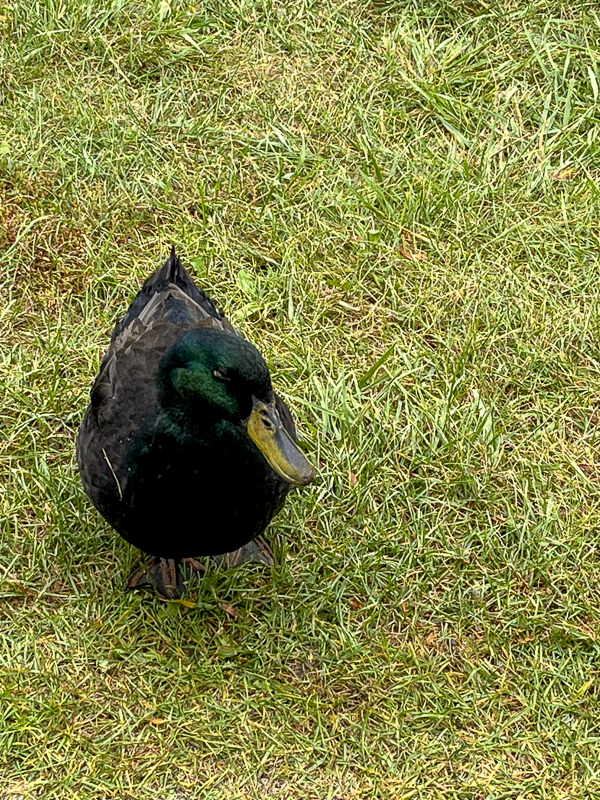
I knew I’d miss those waterfowl when we moved the next day, the same way I still miss the prancing and whistling of the great-tailed grackles we saw in Texas.
Amana Colonies
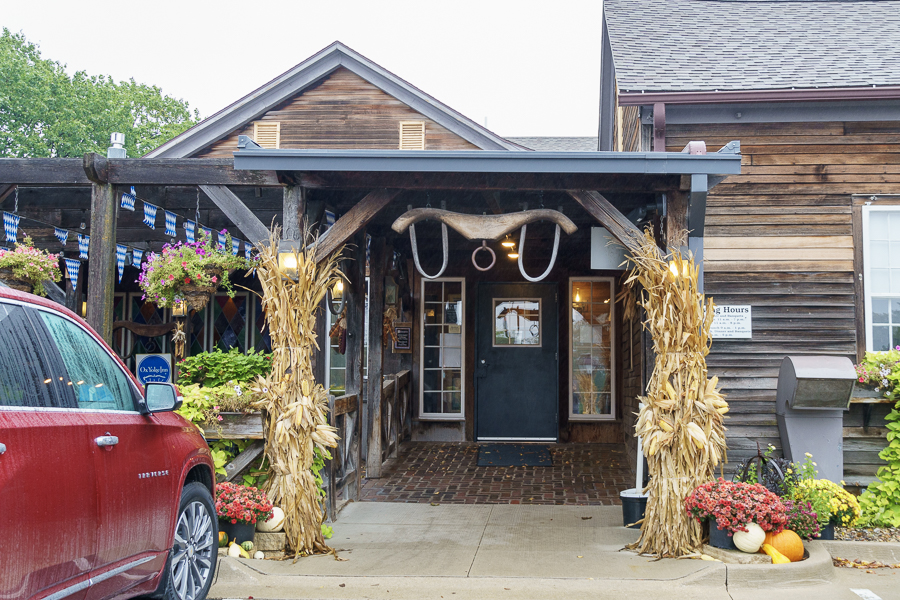
We braved another rainy day to visit the seven villages within the Amana Colonies about 20 miles north of our campground. This National Historic Landmark attracts thousands of visitors annually. I understood why when I saw each month’s calendar packed with activities, festivals, and celebrations. Any time of year is a good time of year to visit Amana.
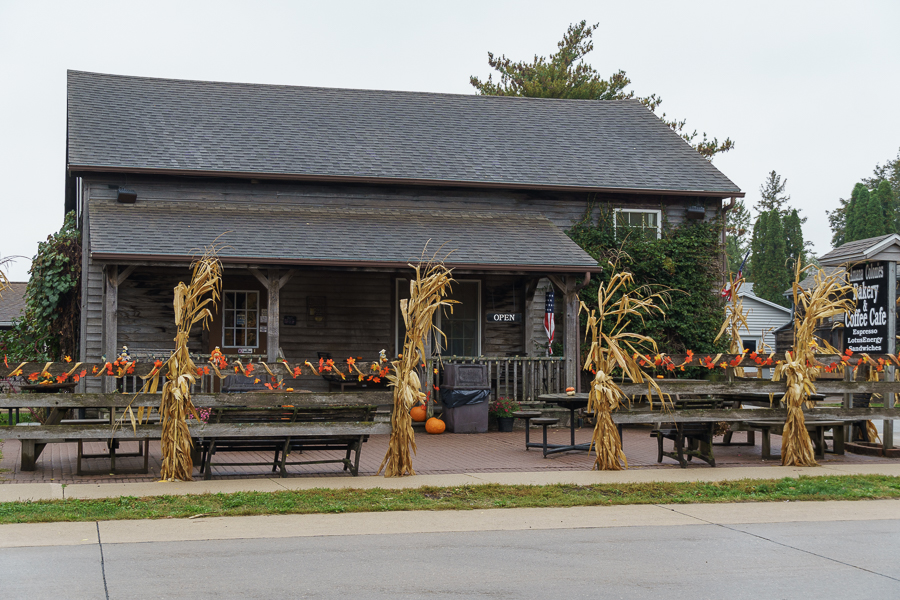
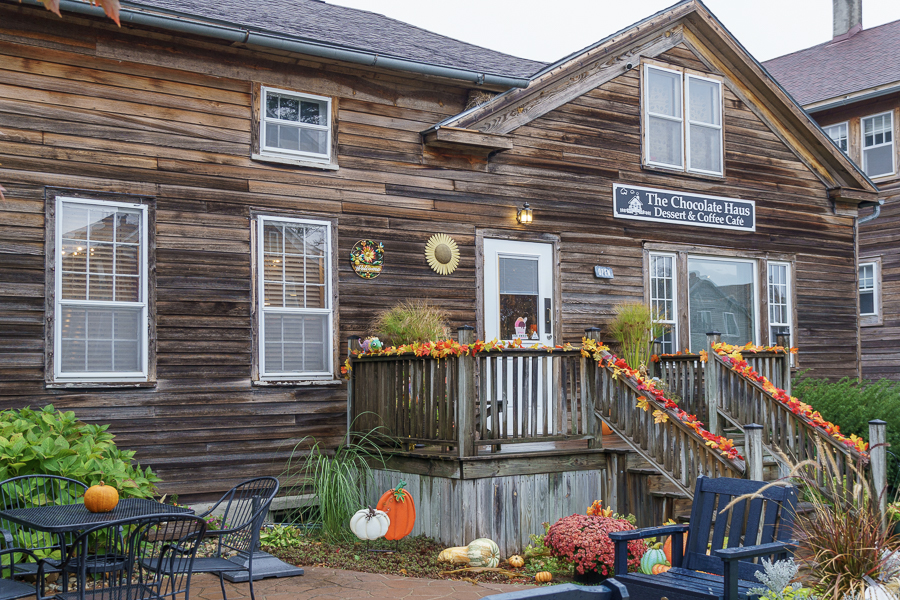
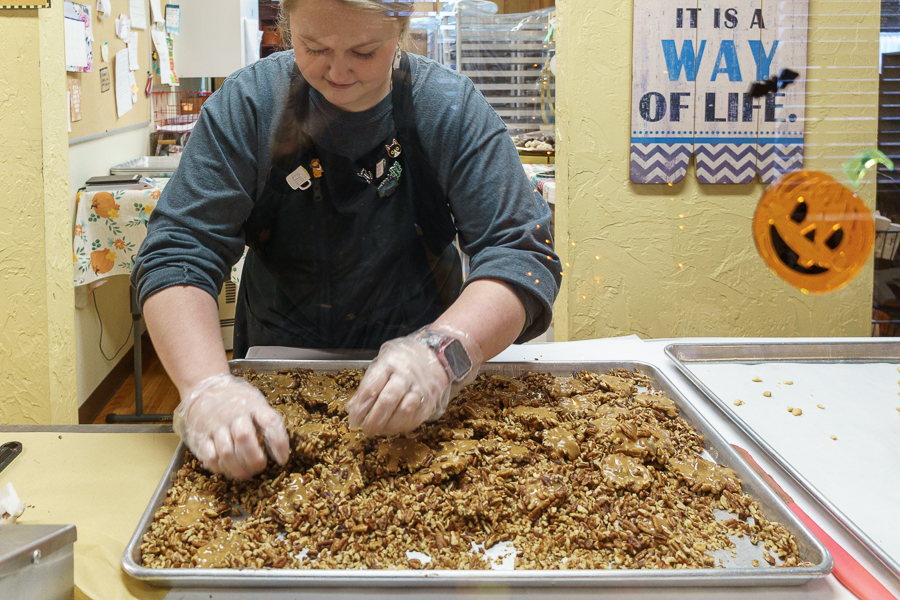
As first-time visitors, we started our tour of the downtown area at the visitor’s center. The lady who helped us pulled out a map and marked the best places to see. The bakery, chocolate factory, antique store, and meat shop landed on our must-see list and we headed out.
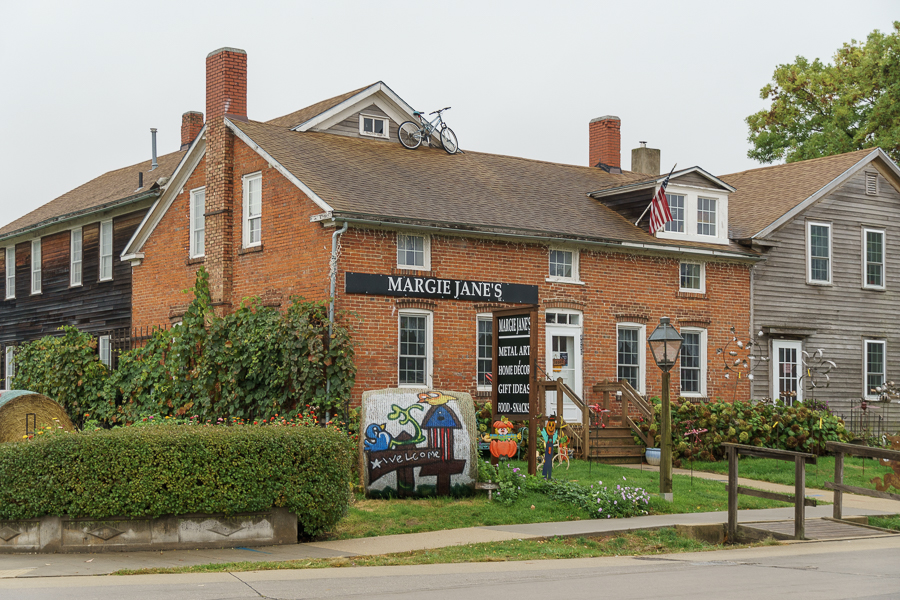
A Bit of History Gleaned from Their Website and Visitor Guide
Amana Colonies history began in 1855 when Christian Metz led his growing community of Ebenezer Society members (religious inspirationists) to the Iowa River valley. They established six villages a mile or two apart across 26,000 acres, which grew to seven. Previously, they lived in Buffalo, New York, where they had occupied only 5,000 acres after immigrating from Germany. The group had left Germany to seek religious freedom and economic opportunities.

Under the community’s communal constitution, the members shared their property and resources. No one needed to earn a wage because the commune provided housing, medical care, meals, household necessities, and schooling to all residents.
The residents engaged in farming, the production of wool and calico, and the crafting of other products to sell. They also supplied the residents with whatever they needed. Villagers operated the smokehouse, bakery, ice house, dairy, orchards, and vineyards. In addition, they supplied the 50-plus communal kitchens. The kitchens, where the women worked, created three meals and two snacks a day.
Children in the village attended school year round, six days a week until age 14. I wondered if this strenuous school calendar was a means to keep the women working on their tasks. Boys worked on the farm or in the craft shops. Girls worked in the communal kitchen or garden. Only a few boys earned college degrees as teachers, doctors, or dentists.
Life was not all work and education. At the center of each village stood an unadorned church where the inspirationists could incorporate quiet worship within their day. The churches offered 11 services a week.

The Stock Market Crash and the Great Depression brought about change to the Amana Colonies in 1932. To maintain their community, the residents established a profit-sharing corporation, the Amana Society, Inc. This corporation manages the farmland, the mills, and larger enterprises. And for the first time in 77 years, the community encouraged individuals to engage in private enterprises.
One interesting fact about Amana Colonies is its connection to Amana appliances. George C. Foerstner started a company in 1933 to manufacture beverage coolers after the repeal of Prohibition in 1933. Two years later, he sold to the Amana Society. The company grew, expanded, and sold again to Raytheon Corporation in January 1965. Other sales occurred in 1997 and 2001 and Whirlpool gained control in 2006. Since 2020, a Chicago-based limited liability company owns the Middle Amana Plant and assembles refrigeration products under the Amana, JennAir, KitchenAid, Maytag, and Whirlpool brands.
We had little time left to explore the other villages, so only drove, without stopping, through two more. With so much to see and do, Amana Colonies turned out to be another place I’d like to spend more time exploring. And its proximity to Cedar Rapids will make it convenient to return to both places.
To learn more about visiting Amana Colonies, visit their website at Amana Colonies. And to see the products and services available through Amana Society, Inc., visit their website at Amana Society Inc.
Next Up: Tour of the Grand Design RV Factory and the RV Hall of Fame and Museum in Elkhart, Indiana
Safe Travels
 The Traveling Todds
We have visited the Amana Colonies and enjoyed it very much. I enjoyed reading your post which reminded me of how nice that area is. I look forward to your next post!
LikeLiked by 1 person
Thanks, Betty. We could have seen more if the rain hadn’t dampened our experience.
LikeLike