2023 Summer Solstice Adventure La Paz California Sur – Part 3

In this post we visit an art museum, a history museum, and meet up with a guide who took us on an art walk.

Museo de Arte de Baja California Sur

Inaugurated in November 2020 in coordination with the Museum of Modern Art of Mexico City. The building is the first space in the south Baja Californian territory dedicated and equipped to receive, mount, and show modern and contemporary art. Included is a room dedicated to South Baja Californian art.

Museo de Arte de Baja California Sur

The exhibit room upstairs was in the process of installation, so we missed out seeing more of what the museum had to offer. One area of the museum depicted local and indigenous life.

Another exhibit presented art by Ander and Ferlun honoring the Mexican equivalent of America’s World Wrestling Entertainment.

Lucheria Nacional El Arte De La Lucha Libre Mexicana
Ander +Ferlun Exhibit
“Basados en las obras pictoricas Demon, La Leyenda de Plata y El Mil” by Ferlun
“La Lucha Sufrida” by Ander
“Cyber Man” by Ferlun
“La Lucharia National” by Ander

The character’s eyes in this painting seemed to follow me wherever I was in the room. Even through the mask, I detected an innocence that belied the costume. Those who draw him as a foe, must stay alert to foil any attacks.

El Mil

And then there were the interactive, colorful, and inspirational paintings by Ivan Guarderrama Torres which lifted my spirits as I examined each one. Scanning the image to the right of the painting combined technology with another perspective of the art on the wall. It was fun seeing how the painting came to life.

Messages of Love, Faith, and Hope by Ivan Guarderrama Torres

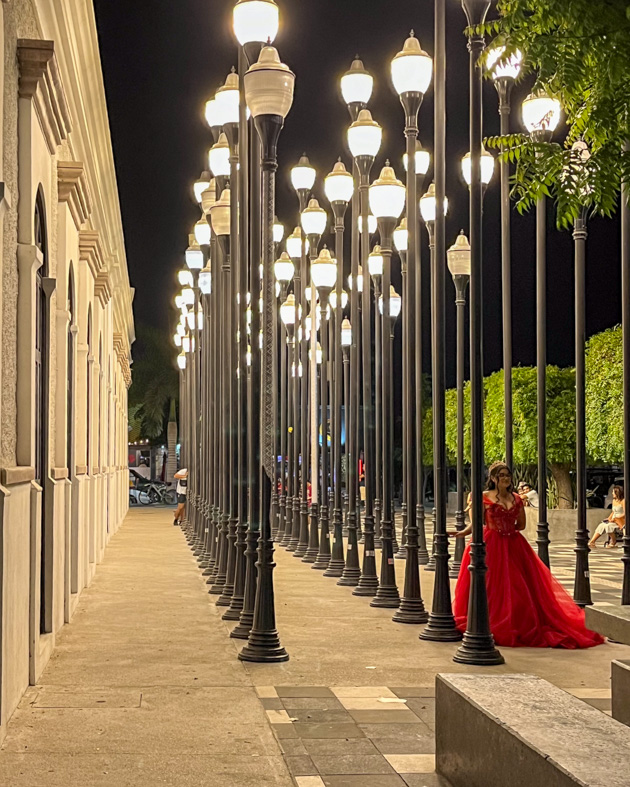
Below is the side of the art museum’s building lit up bright with street lamps, attracting photographers documenting such milestones as quinceaneras.

Regional Museum of Anthropology and History of Baja California Sur (Museo de Antropologia e Historia de Baja California Sur)

The peninsula history from ancient times to the start of 20th century is documented within four rooms of the museum through artifacts, murals, dioramas, and narratives. Originally founded in March 1981, the newly renovated space reopened on December 10, 2018.

Welcome

We wound our way through the exhibit space starting with the first room that discussed the ancient peoples who lived on the land and continued learning about the first European contact and the development of the Jesuit missionaries.

Ancient peoples celebrating?
Flora and fauna of the territory
Dioramas gave a sense of how the people lived in their environment
Burial grounds
Pictographs
Arrival of the Spanish

The Spanish encountered four main ethnic groups upon their arrival. The Pericues between Cabo San Lucas and La Paz, the Guaycuras north of the Pricu to Loreto, the Monquis near Loreto and Cochimi in the middle of the peninsula. All were hunter gatherers without agriculture or metal working, but they did produce pottery. They also fished, but only the Pericues had rafts.

Missionary objects
These columns are from the 1700s and thought to be part of an altarpiece
of a missionary church
Detail of altarpiece
Sextant and rifle
Diorama of a mission

The Baja California Sur covers the southern portion of Baja California. La Paz is the state’s capitol. It became the 31st state of Mexico in October 1974. It was previously the south territory of lower California.

Life sized diorama depicting a ranch hand
On the opposite side of the walkway is the rancher’s home
Intricate details in the saddle
Mining era

The last room depicts the great social movements: Mexico’s independence from the Spanish Empire, the interventions, the Mexican-American War (1846-1848), resulting in the US capturing Mexico City in September 1847 and subsequent Treaty of Guadalupe Hidalgo in 1848. La Reforma (1850s and 1860s, resulting in a new constitution of 1857), the dictatorial rule of Porfiriato (1884-1911), and events of the 20th century are also discussed.

Although I was able to comprehend the meaning of the displays through translation, I felt I missed out on more detailed information printed in Spanish on the many posters. Knowing how to read Spanish would have been a big help.

Art Walk Tour Cut Short

Early one morning before breakfast and before the heat of the day began in earnest, we joined Amélie Padioleau for an art walk. Amélie is a French anthropologist, journalist, and sailor who has lived in La Paz for the past 10 years. Her bio states, “She collects mythological stories, sea legends, but also true facts about fishermen and local heroes with the courage to rethink their life around sustainability and conservation.”

We met Amélie in front of the Peach Bakery and Coffee Shop. We had hoped to grab a pastry and drink before our tour started. Sadly, it was closed.

We were excited to learn the stories behind some of the many murals we saw around the city center. Her talk focused on murals painted in 2013 and those murals created under the Cuidad Mural project in 2017 initiated by Colectivo Tomate. For this project, 25 artists were invited to “paint stories of the community on the walls of the city.”

Her passion for La Paz, the murals, the artists, and the stories the murals represent came through in her presentation and I enjoyed hearing about the murals and their creators.

We started out in the shade created between the multi-story commercial buildings. At one point, we stood in full sun for several minutes admiring a series of paintings, then moved on to find shade while we admired another mural.

By then the heat an humidity was becoming oppressive and Jon was finding it necessary to find a place to sit down. When I saw Jon nod off while he sat on a concrete block, I rushed to keep him from falling. With him slumped over, clammy skin, and eyes rolled back in his head, we couldn’t rouse him from his slumber.

Amélie, said get a wet towel. We didn’t have one. Bailey stripped off her T-shirt, wet it with her water bottle, and draped it over his shoulders. Still no response. Amélie uncapped her water bottle and poured it over Jon’s head.

Finally, Jon stirred awake, a smile on his face. A young-boy smile all proud of himself. He had no idea he’d passed out.

We apologized to Amélie and thanked her for the tour, then called a Didi to take us to the house. Walking back wasn’t a good idea. A cool dip in the pool, a plate of breakfast, and a few hours of rest, chased the heat exhaustion away and returned our big guy to normal. Well, at least his normal.

As I look at the photos today, I can appreciate how the artists incorporated the La Paz history and themes into their creations with the sea and desert playing a large part in the stories the art reveals. If we make it back to La Paz someday, I’d like to take the tour again.

Next up: A sunset sail and restaurants that enticed us in for a meal.

Safe Travels

2023 Summer Solstice Adventure La Paz, California Sur – Part 2

We continue our visit to La Paz with a look at the sights we saw around town, plus a guided hike, breakfast, and beach time.

Sights Seen About Town

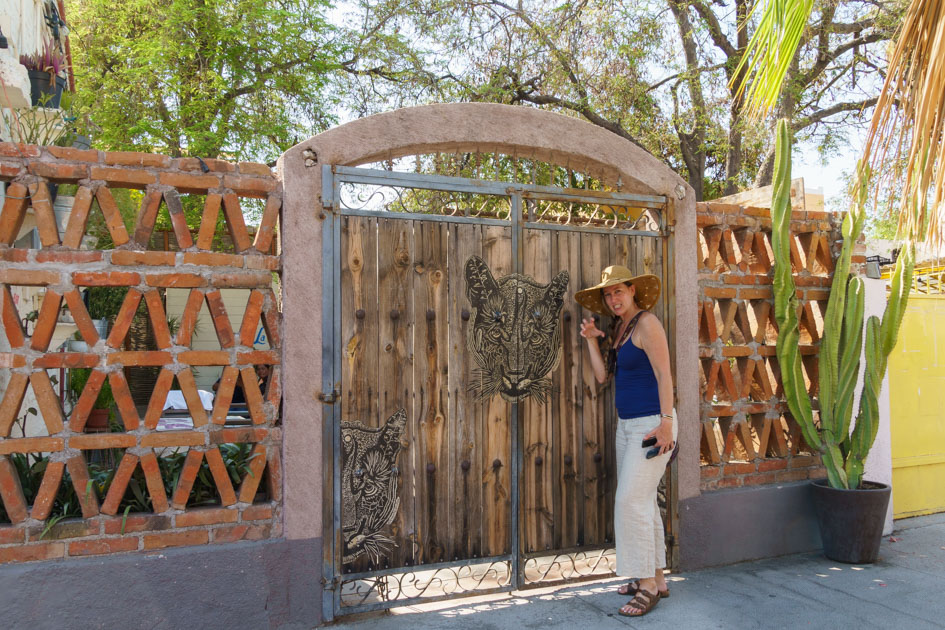
Murals and architecture, both new and old, gave us a glimpse into the history and lives of the locals. Walking, as our main mode of transportation around town, allowed us an up-close view of the newly renovated or constructed buildings and structures in their last days of decay and everything in between. Each building—some enhanced with painted murals—provided unique personalities my camera lens could not ignore.

Desert, sea, and land
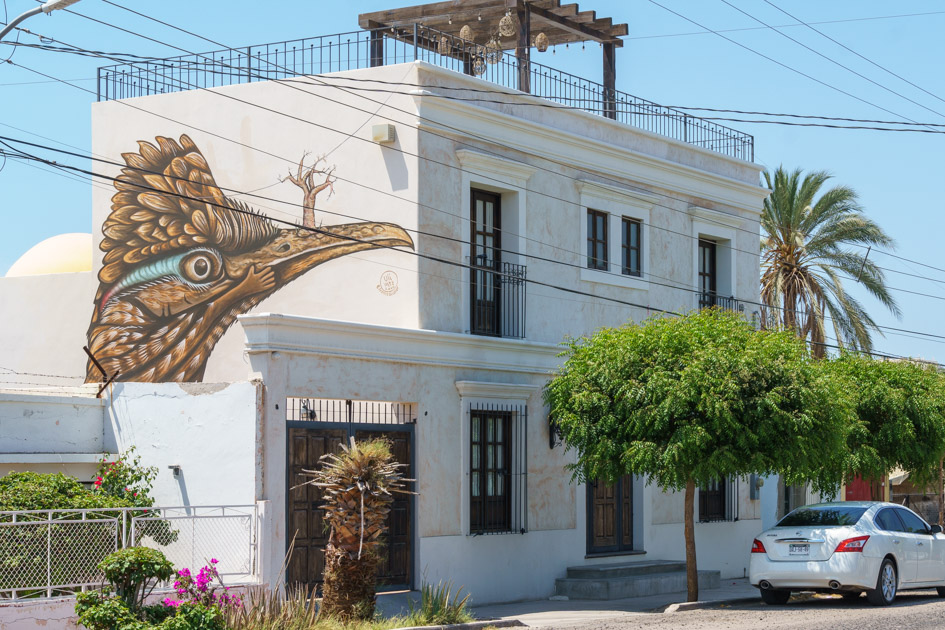
Roadrunner house
I see you and you see me
Pajaro
Hoo, hooo, hoooot
Watch out for the fangs
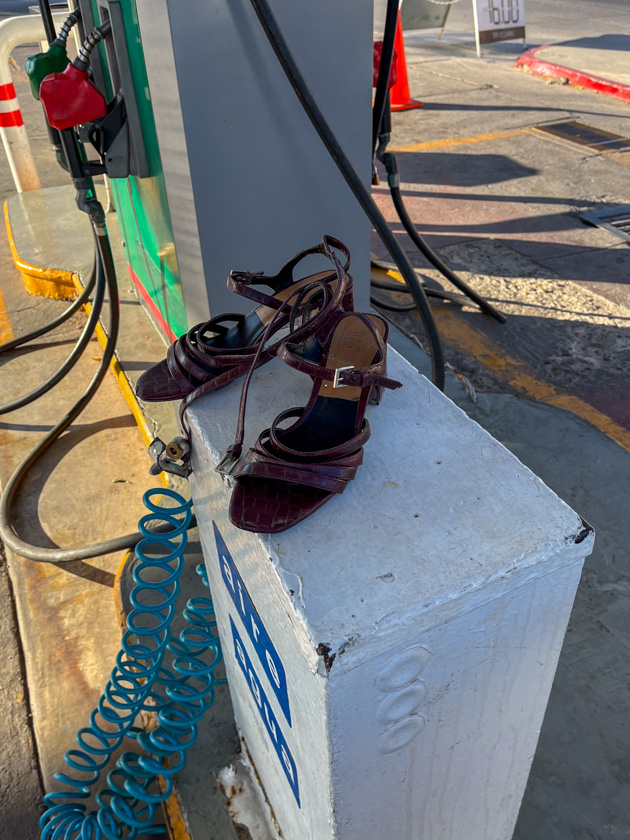
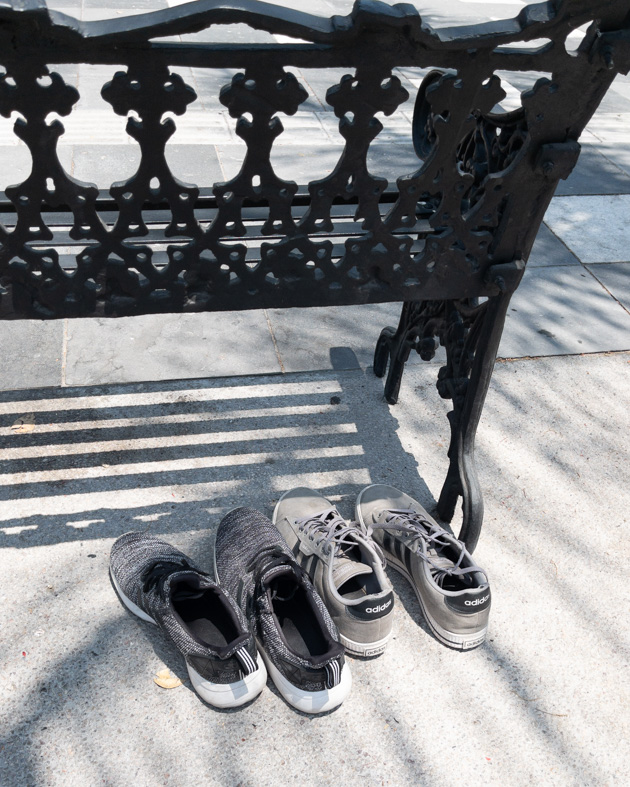
Abandoned shoes . . . broken strap?
These shoes look perfectly fine.

The contrast between daylight and nighttime tells a whole different story about the the building.

Day into . . .
Night
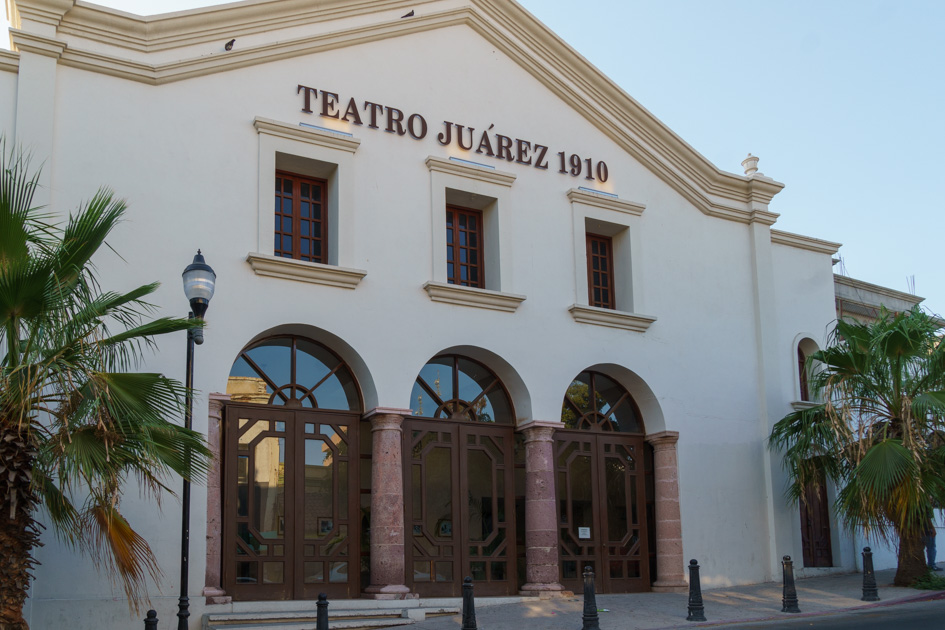
Oh, the music and dance and stories told here over the past century
No activities this night
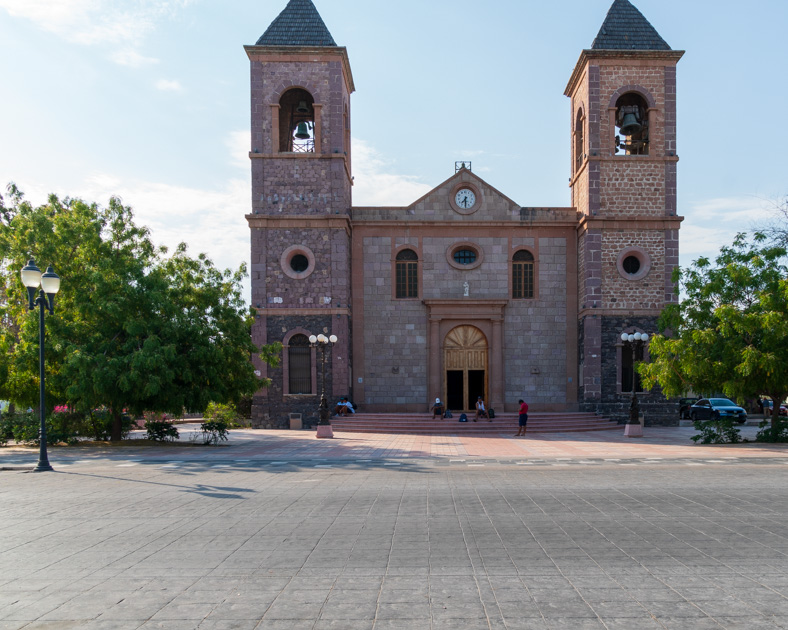
Our Lady of Peace Cathedral
Moon over cathedral
Day . . .
and Night
Tattoo anyone?
Museo de Arte de la Ciudad de La Paz at night
Quinceanera pose
Moon over hacienda
Did I mention the metal basket on the left is where trash goes for pickup?
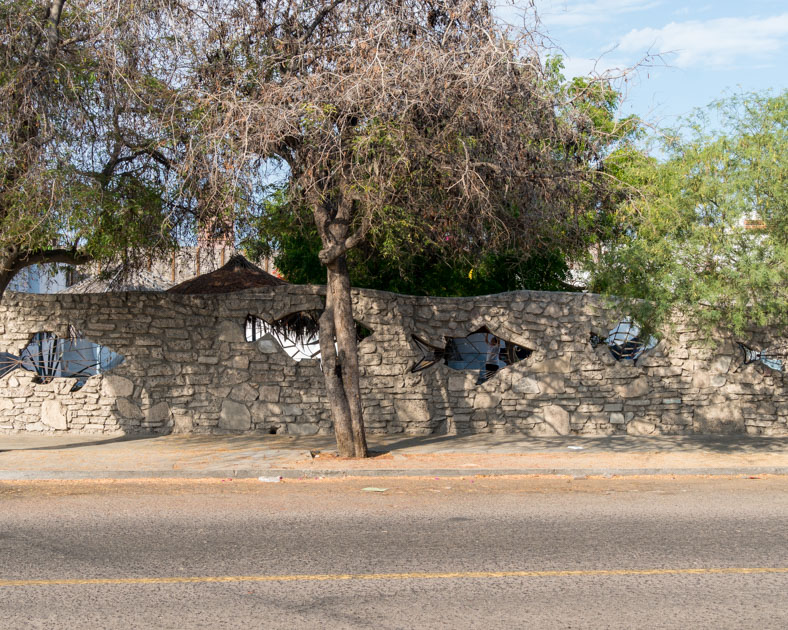
How did the stone mason make those cutouts?
Loved these colors together
Silly Bailey
The peeling paint and sidewalk debris of long-closed businesses often contrasted with the brightly colored storefronts and swept sidewalks.

This was an interesting little park and a great place to stop and cool off in the shade near the water feature. Coro en Armonia (Choir in Harmony) was created by Benito Ortega Vargas. Each mask appears to sing a different note of the musical scale.

Piedras y Pajaros
Do, re, mi, fa, sol, la, ti, do.
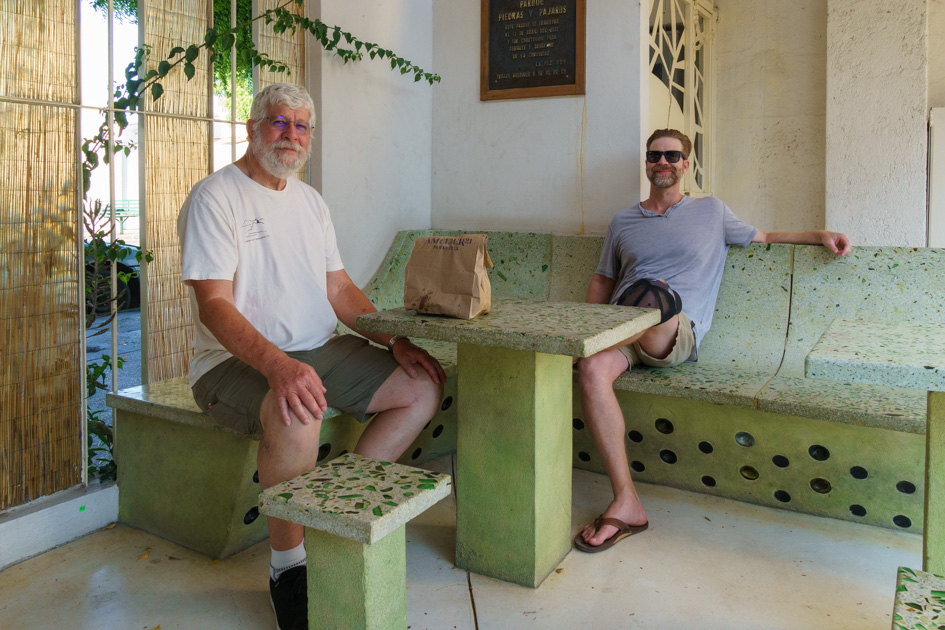
Jon and Kevin enjoy the coolness of Piedras y Pajaros
Smile, You’re on Candid Camera.

If we stood long enough under one of these cameras, we could see the face rotate. I pictured someone in a basement somewhere watching a bank of monitors for any trouble that might pop up.
A house squished between two commercial buildings.
The news stand was closed when we walked by
It looked like this building was under renovation.
A private room in Villa Lorena is listed as an Airbnb property
Looks like this house has a courtyard off the sidewalk
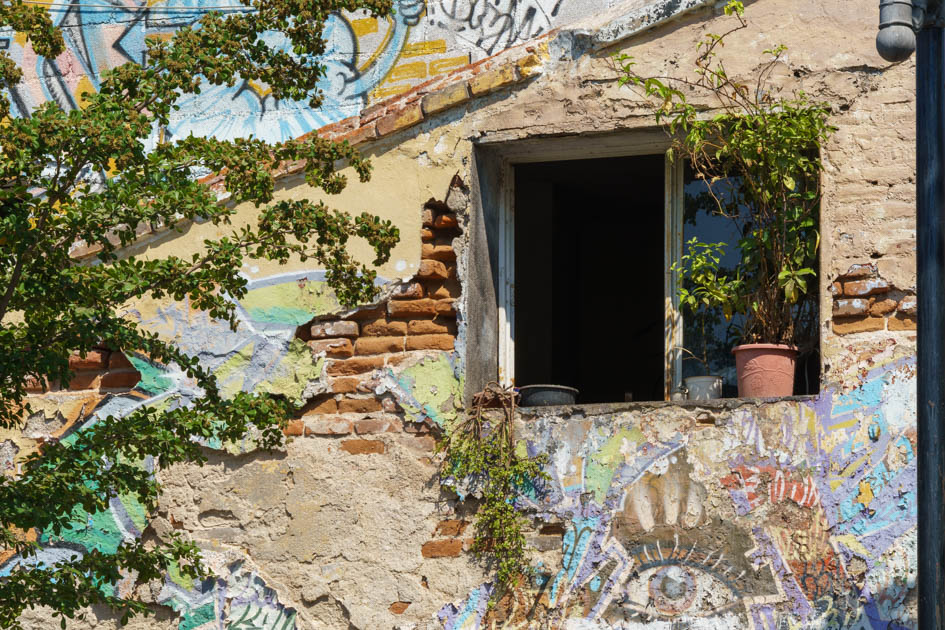
Art meets decay

If it hadn’t been so hot, I could have walked for hours taking photos of unique and interesting sites.

Rancho San Lorenzo Guided Hike and Organic Breakfast

We got up early for our Rancho San Lorenzo Guided Hike and Organic Breakfast at a working ranch. A rental car—picked up the night before—was required for us to make the trip to the tip of the peninsula north of La Paz. At 9:00 am, we piled out of the car to meet our guide Eduardo (Lalo) Mendez, from Guadalajara.

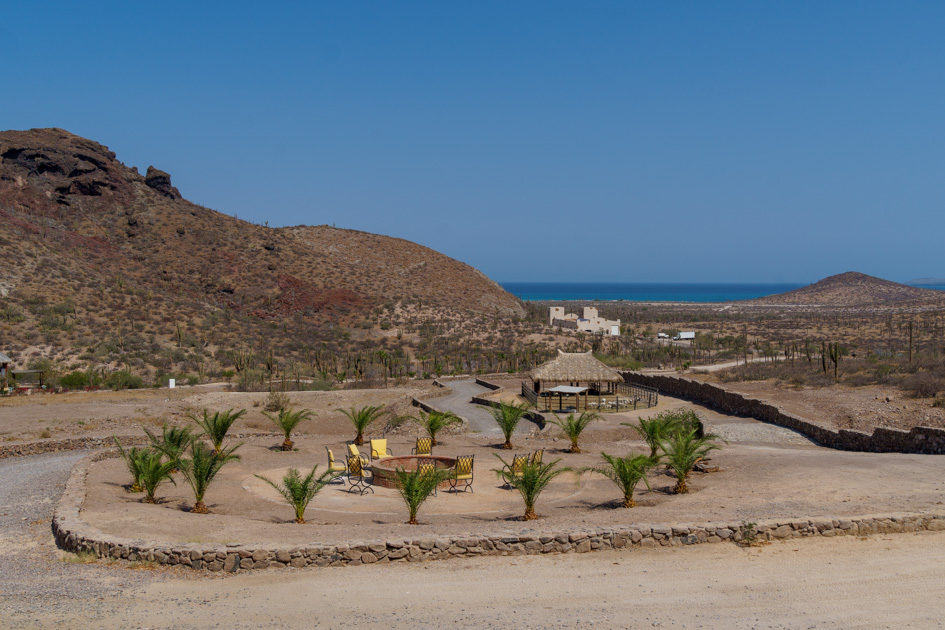
View of ranch house from the trail

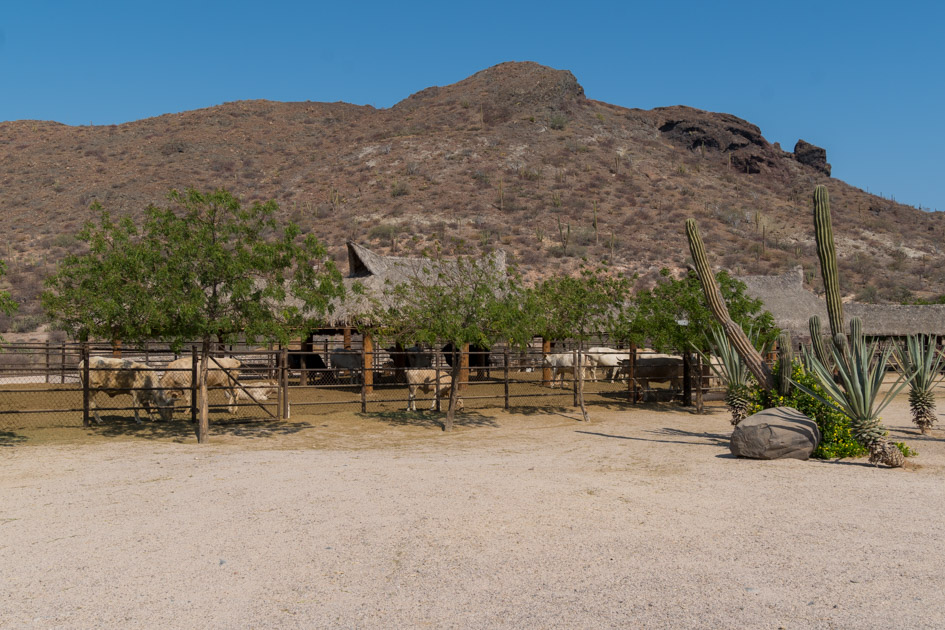
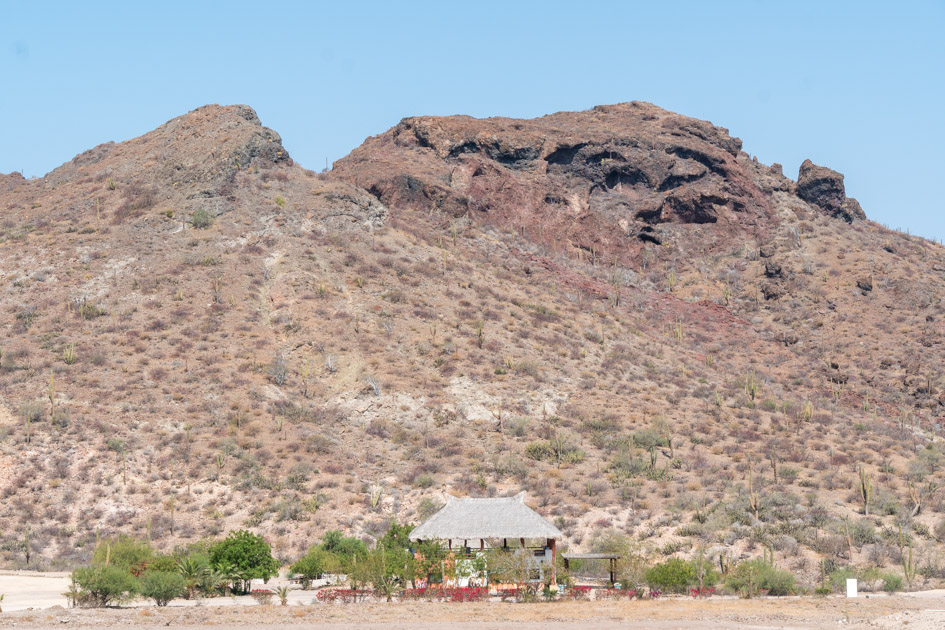
The 1,000-acre desert ranch and preserve are populated with wild and tamed animals alike. Siting between the Coyote Mountains and the Sea of Cortez, there’s plenty of diverse terrain for the animals to roam. Rabbits, foxes, deer, and the occasional mountain lion have the run of the place, while goats, donkeys, horses, chickens, and ostriches are safe, cozy, and well-fed in their respective pens or corrals.

Vultures cooling their jets

Lalo, gave us an option for a strenuous hike or one less strenuous. We agreed the less strenuous would be best, since I was still nursing my broken wrist and wearing the brace just in case I might fall. Along the trail, Lalo would stop to point out rock formations in the mountains and hills, small caves, and the local flora and fauna, or talk about the history.

Desert flora is tricky. From far away it looks dead.
Up close its leafing and budding out
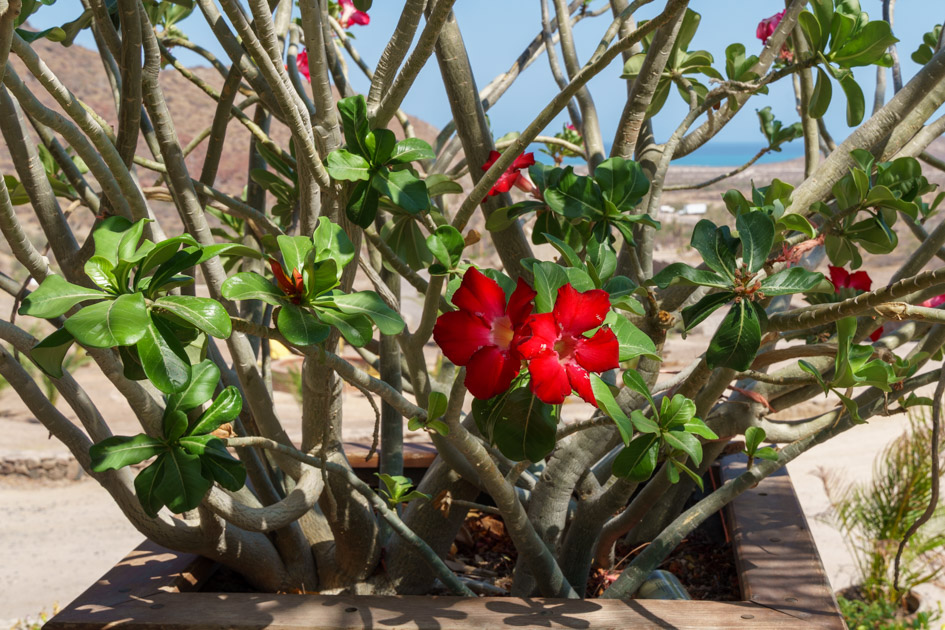
Even delicate florals survive in the desert
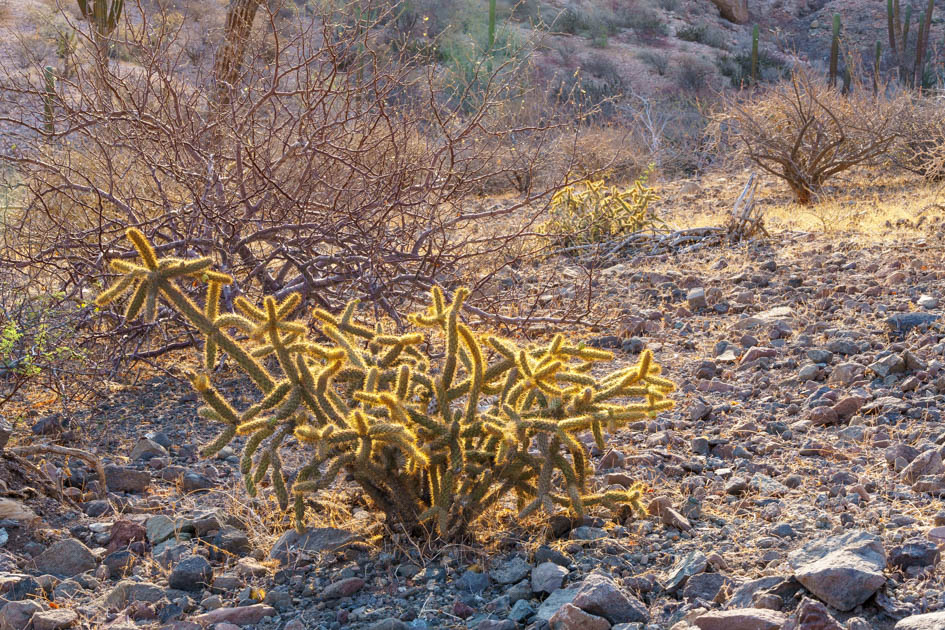
Steer clear of the cholla. It’s everywhere and known to jump and hang on.

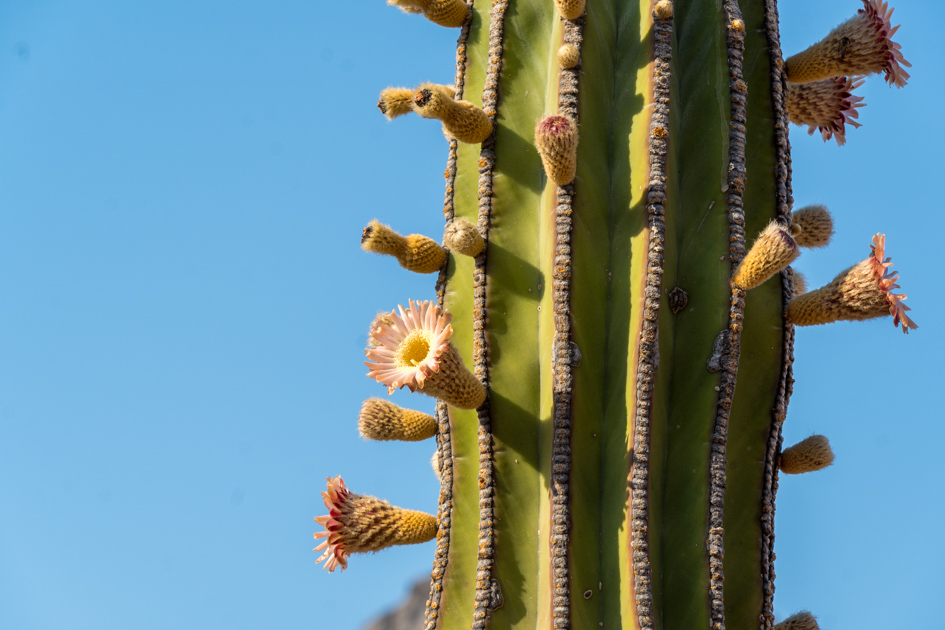
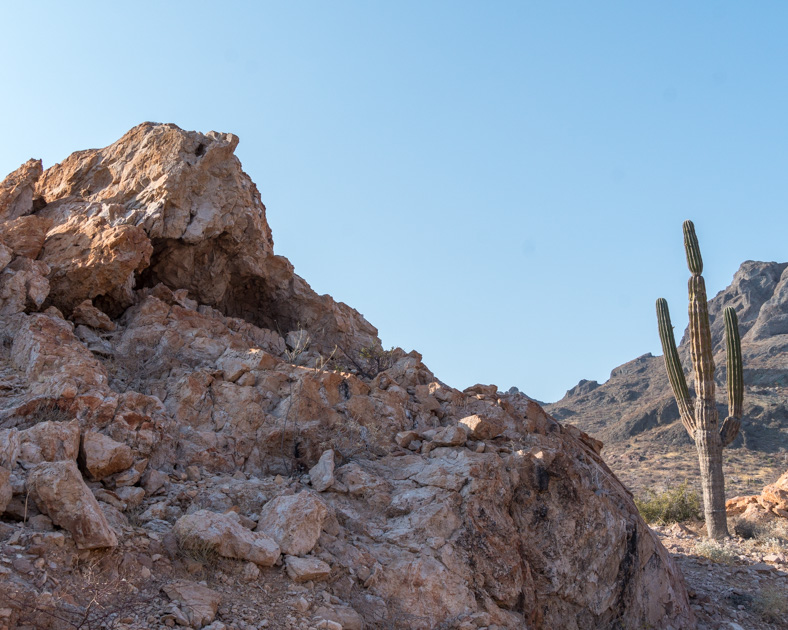
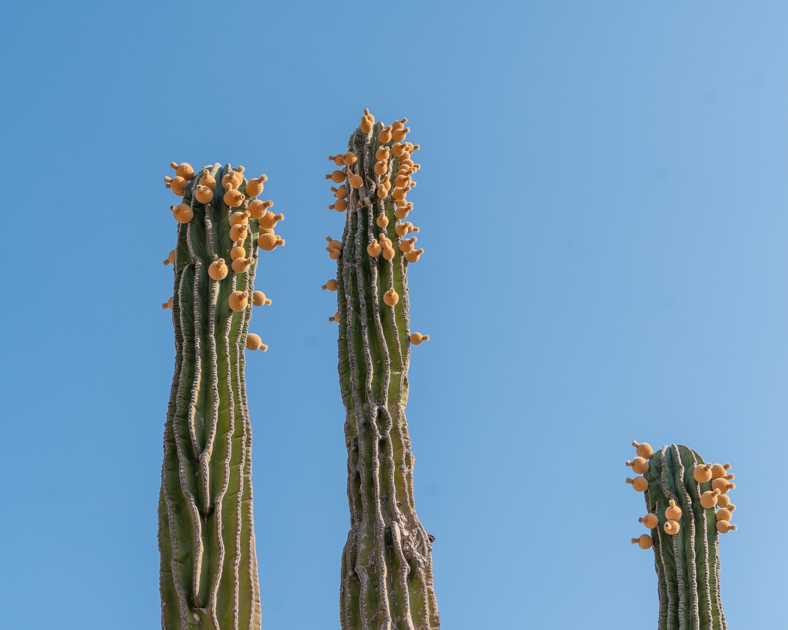
We spied a variety of birds in the sky or resting on desert cactus. The vultures were most interesting as they found their perch atop the spikey Mexican cardón, or elephant cactus. Lalo was quick to tell us these saguaro look-alikes are another species entirely. The cardón can grow double the height and weight compared to their cousins to the north and live nearly twice as long.

Paper bark

We stopped to rest and hydrate at a mesa that overlooked the sea before turning back to the ranch house where breakfast waited for us.

There’s a cave up there
A sign the ocean is nearby
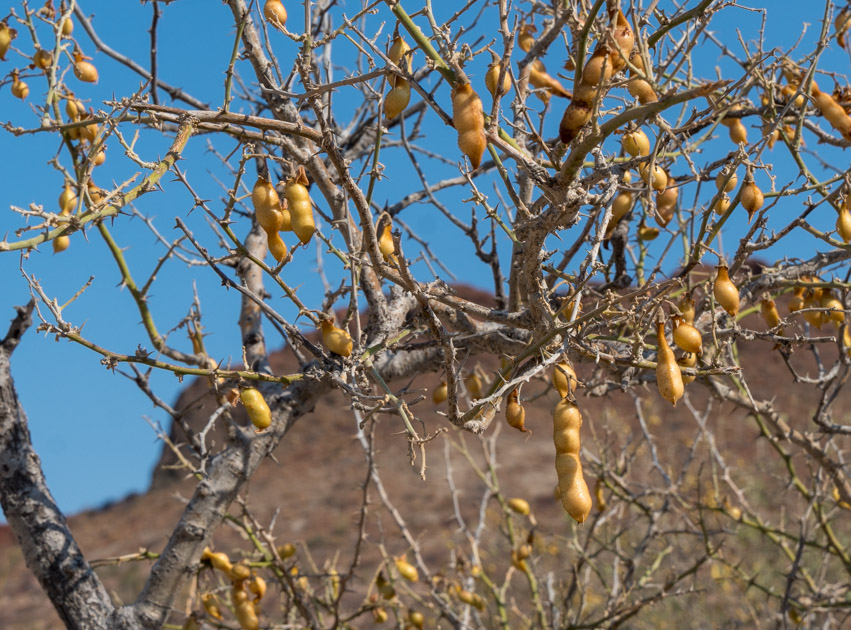
Palo Adán perhaps?
Donkeys eating breakfast
Barrel cactus
The cardóns are ready to bloom. Not sure what the orange flowers are.
“See how the nurse bush protects the cardón?”
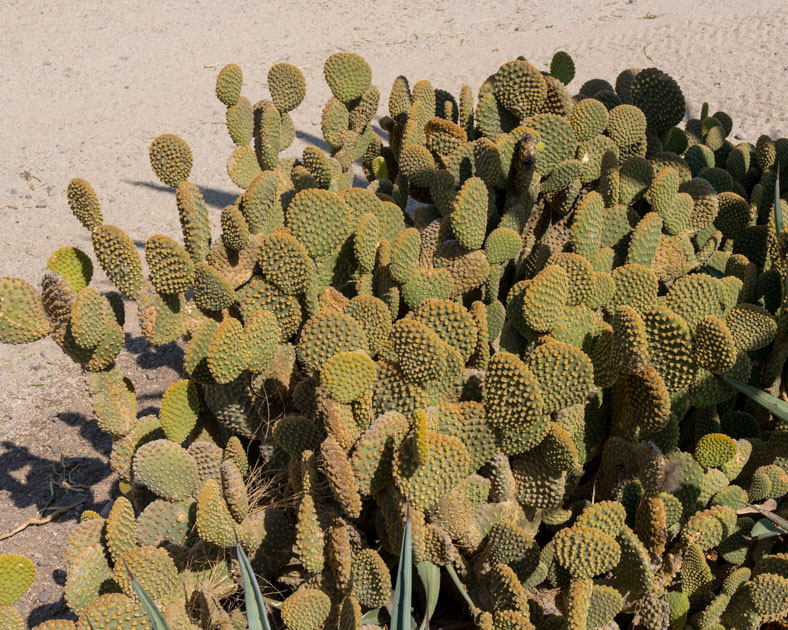
The pads may look soft and fuzzy, they are not.

On the outdoor patio, fresh squeezed orange and guava juice and plates of fresh fruit (pineapple, papaya, mango, plantains, grapes, cantaloupe) was the first course of our colossal breakfast. Then came the creamy beans, eggs, machaca, toast, and handmade tortillas. It was the best breakfast ever after a hike. Oh, and to top it all off, they brought Jon a giant slice of chocolate cake for his birthday. We all helped him eat it.

Anyone ready for a hammock?
Beach storage palapa
View from our breakfast table
Owl face hill

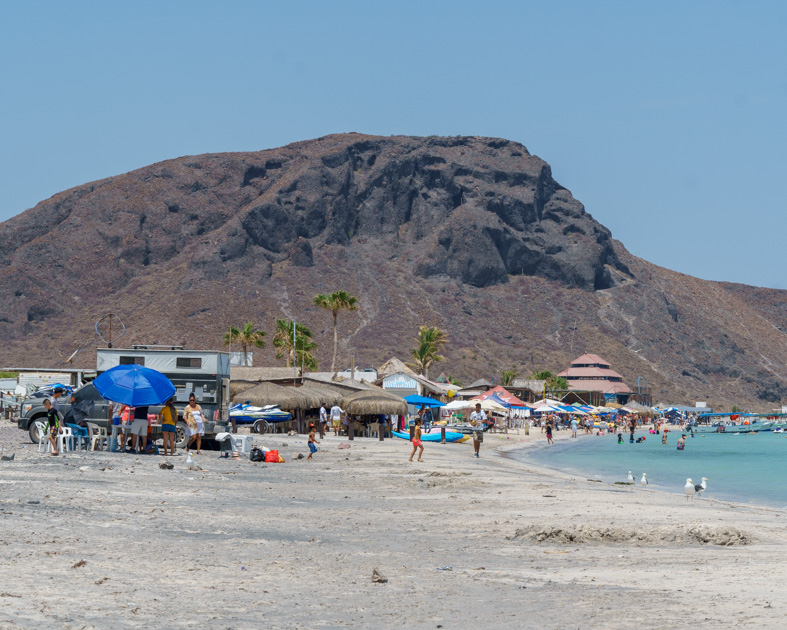
One would think the guided hike and the breakfast were enough for the day. But no, there was more. Included with the hike was a trip to the beach. Two rancheros loaded up a trailer with a cabana, chairs, kayak, paddle board, and drove us along a dirt back road to the beach. We stayed a few hours sinking our toes in the sand, wading and swimming in the warm water, and watching the pelicans patrol above us.

Playa El Tecolote
Row, Kevin. Row.

Hikes and breakfast are not all Rancho San Lorenzo offers its guests. How about a morning horseback ride and breakfast, or a sunset horseback ride and dinner? There’s also a house that accommodates 12 people, or select the smaller one that accommodates 4.

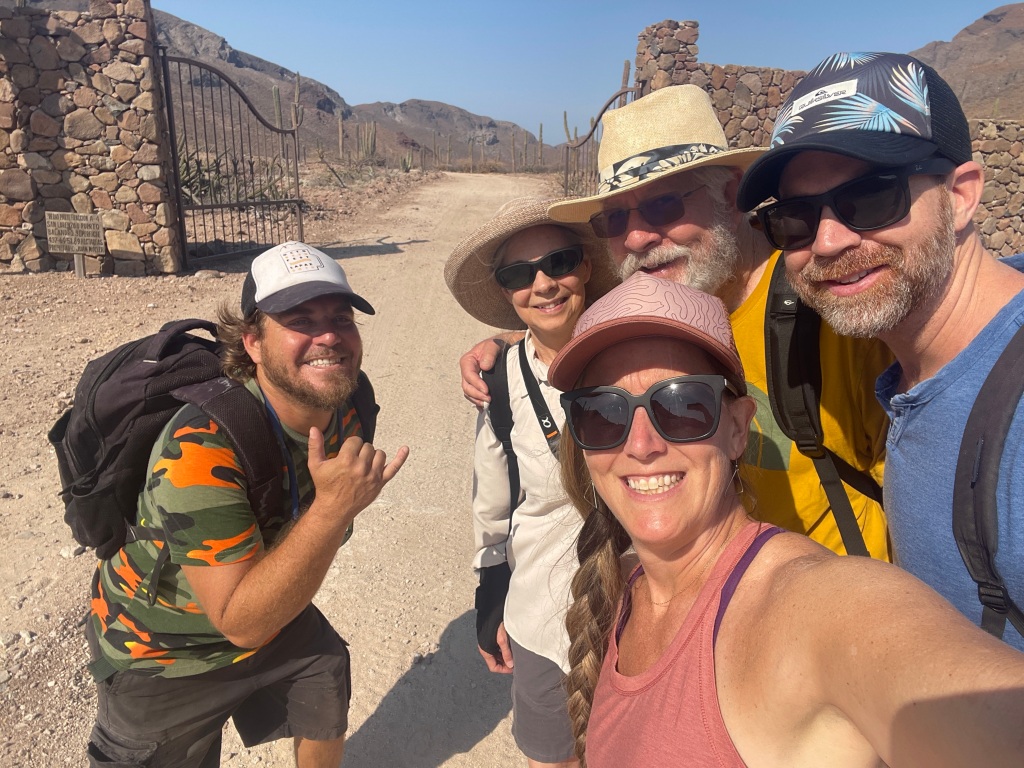
Lalo and the gang

Up next: We have two more parts to wrap up our La Paz adventure. We’ll look at the art and history museums, an art walk, restaurants, and a sunset sail.

Safe Travels