We continued our time in St. Louis on April 18, 2023, with a visit to Ulysses S. Grant National Historic Site. A woman at the visitor center recommended heading out to the White Haven house tour first since a busload of schoolchildren were watching the movie in the theater.

White Haven Plantation
When Frederick Fayette Dent and Ellen Bray Wrenshall Dent owned the plantation, the original 850 acres of the White Haven Plantation consisted of fields of wheat, oats, Irish potatoes, and Indian corn, along with orchards of various fruit varieties, all tended by enslaved laborers.
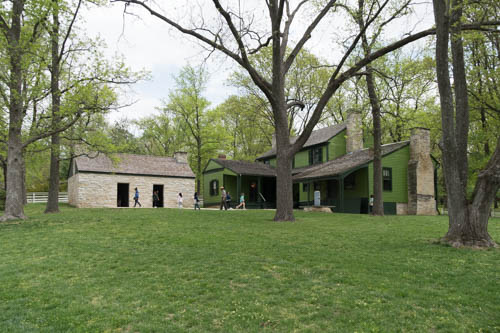
I wonder what was on Grant’s mind when he rode up to the White Haven plantation to visit his West Point roommate Frederick Tracy Dent in 1843? Did he look forward to a weekend spending time with his old roommate fishing and hunting? Or, was he there to meet Julia Dent, Frederick’s sister, to see if the two might make a good match?

In either case, Grant and Julia fell in love and became engaged. But before they could marry, the Mexican-American War (1846-1848) called Grant to join the ranks. Five years later, they tied the knot.

After serving eleven years in the Army, Grant resigned his commission and from 1854 to 1859, the Grant and Dent families lived and worked at White Haven. Having been raised by an abolitionist father, how did he reconcile with the Dent’s slave ownership?


According to The White House Historical Association, Grant and his wife benefited from slavery while living at White Haven with Julia’s parents. Julia’s interactions with slavery are well documented in her personal memoirs. However, Ulysses’ memoirs lack mention of his personal interactions with slavery even though documentation reveals he manumitted a slave he supposedly owned.
What is mentioned in his memoirs, or contained in historical documents, is his support for the recruitment of African-American soldiers during the Civil War while serving as Lieutenant General of all Union Armies for President Lincoln, his advocating for racial equality throughout his two terms as the country’s 18th president (March 4, 1869 to March 4, 1877), his support for the ratification of the Fifteenth Amendment, his opposition to the rise of white supremacy groups in the South, and the Enforcement Acts passed by Congress in 1870, and many others.

Grant purchased White Haven after the Civil War and hired a caretaker to manage Grant’s horse breeding enterprise. After his presidency in 1877, the couple toured the world for two years and then settled in New York. They regularly visited White Haven and sold the plantation a few months before Grant’s death.

Summer Kitchen and Laundry

The stone building was used primarily as a summer kitchen and laundry. Considered a “double-pen” architecture with its British design of two side-by-side rooms with gable end chimneys. It may have existed as early as 1840. Enslaved laborers cooked the food and cleaned the laundry when the Dent family owned the property before the Civil War. Enslaved cooks may have lived in the attic of the structure.

Purchased by NPS in 1990, the structure was used as a three-car garage. The garage had to be demolished and renovated to its nineteenth-century appearance. Broken dishes, crockery silverware, and other artifacts were discovered during archaeological digs around the area.
Ice and Chicken Houses
The ice house dates back to 1840 and the chicken house dates back to 1850 to 1870. Julia kept chickens as pets raising 14 – 18 baby chickens at a time. Enslaved laborers tended to the daily work of feeding the chickens and keeping the house clean.

Stable
Completed in 1871, Grant designed the structure for his caretaker William Elrod to construct. It was large enough for 25 horses in stalls. Later owners moved the horse stable in 1962. The park service moved it again to its current location in 2007 and it now houses the park’s museum.

Another location we wanted to see was Grant’s Farm, the Busch Family’s Home since 1903. General admission is free, parking tickets start at $16 and tours start at $26. as publication of this post. Sadly, it was not open the day we went to see it.

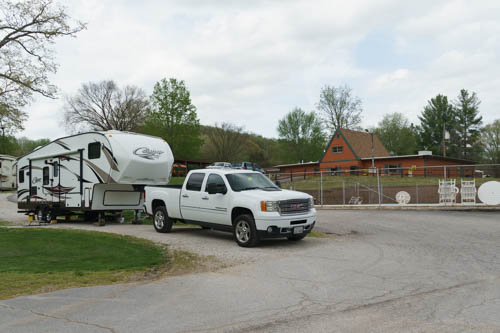
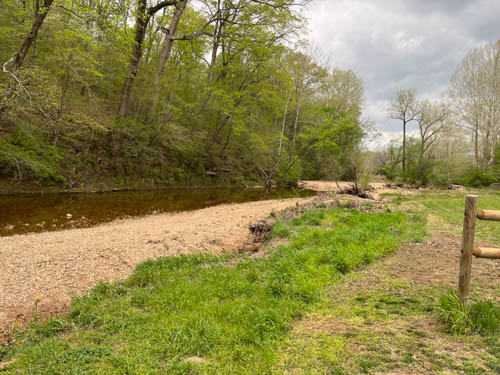
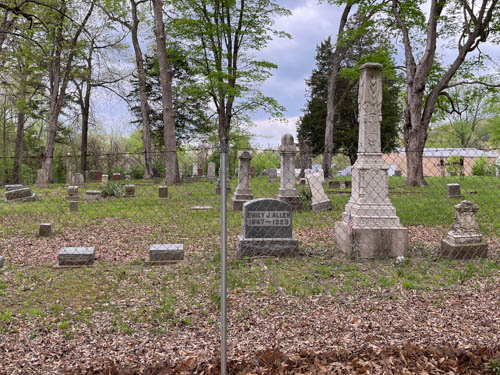
The rest of our time in St. Louis was spent sharing a delicious meal with our niece and her family and wandering around the campground. I managed a few photos of the campground, but D’oh. I forgot to take photos of the family. I blame it on my wanting to be in the moment to enjoy the antics of the two little children we came to visit rather than hiding behind the camera lens.
Next Up: Springfield, Illinois, to see the Abraham Lincoln Museum and National Historic Site
Safe Travels










 The Traveling Todds